 State of the World from NPR
2 Nov 2026 · 9m

 Add vo to ChatGPT or Claude to ask about everything you hear
vo listened to this episode to put together the overview and transcript, so there may be the odd mistake.
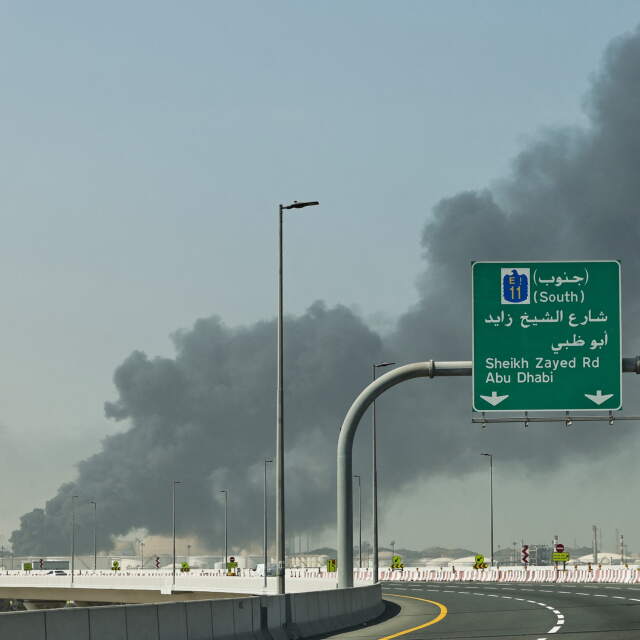
Gulf Arab states’ modernization plans are being disrupted by wars around them, especially U.S.-Israeli conflict with Iran and the Yemen war involving the Houthis.
Aya Batrawi (NPR reporter) reports from Riyadh, Saudi Arabia; Abdelilah al-Sheikh (Saudi country director for Jacobs, engineering/consultancy) discusses mega-project impacts; Abdelaziz Sagar (heads Gulf Research Center) comments on regional resilience and security; H.A. Hellyer (senior associate fellow, Royal United Services Institute for Defense; Center for American Progress) analyzes Gulf reactions to renewed hostilities.
Gulf states fear being targeted regardless of their actions; U.S. “unpredictability” is the biggest concern; regional security architecture backed by the U.S. isn’t protecting them.
Riyadh’s $20B driverless metro and mega-events (Expo 2030, World Cup 2034) are threatened; Houthi attacks disrupt flights and cancel events; Houthis block oil tankers and target refineries/oil fields.
0:00This midterm election season, the NPR app is your single stop for clear, independent coverage. Stay on top of national and local storylines with news, stories, podcasts and political analysis on demand. Download the NPR app and check out the Elections 2026 tab today. Today on State of the World, Gulf Arab states struggle under the cloud of war.
0:32You're listening to State of the World from NPR, a human perspective on global events. I'm Greg Dixon. Many parts of the Gulf, like Dubai, Qatar, and Saudi Arabia, have been spending decades modernizing and inviting investment from around the world. But that effort has been stymied by wars that have landed on their doorstep, including conflicts in Iran and Yemen. In a few minutes, with the possibility of more attacks against U.S. allies if strikes on Iran are renewed. An analyst gives us the view of the Gulf states on that conflict. First, NPR's Aya Batrawi takes us to Saudi Arabia to hear how these wars are threatening the kingdom's plans for the future.
1:13The Saudi capital Riyadh is racing to invite the world in and see its transformation. Sweeping social and economic reforms are changing life in the city. One place to see this is on the Riyadh metro. It opened two years ago, making it the newest metro system in the world.
1:34So one of the really cool things about Riyadh that I'm trying for the first time is the metro system. And it has completely changed the lives of people in the city who ride it. It is four rials for two hours any direction you're going and that's about a dollar. STC, please change here for me. Blue line. This fully driverless system costs more than 20 billion dollars to construct. It's one of the country's many mega projects. 30-year-old Saudi nurse Amjad Mansour rides it most days. I walk in the parking lot to the metro, the station. After I walk in the metro and I walk in the metro. She's on her way to work, and she tells me she drives 10 minutes to the station near her house, then hops on the metro to avoid Riyadh's gridlock.
2:21A decade ago, none of this was possible. Women have only been allowed to drive in Saudi Arabia since 2018, and this new metro system offers an added form of mobility. Hussain? No, no, not same. Not same, okay. How much is this one? 25. Also, why? One's metal, one's plastic. This small size is big size. Outside the Qasr al-Hokam metro station is a souk with Saudi trinkets and a more than century-old fortress that's now a museum, showcasing the battles fought and won by the ruling al-Saud family, who inhabited this desert region before oil was discovered. You can see a lot of history here. You can also find Saudi coffee shops.
3:04And this is the kind of thing that I think when they envisioned revamping it, they envisioned it also for foreigners and for tourists to come because all the signs are in both English and in Arabic. Saudi Crown Prince Mohammed bin Salman wants millions of tourists to see all of this, to ride the metro and to spend their money here. It's part of his broader plan to overhaul the economy. And to do this, he is spending billions on infrastructure to host the World's Fair in 2030 and the FIFA World Cup in 2034. But these hard deadlines are colliding with two open-ended conflicts, the U.S.-Israeli war with Iran, and a war in Yemen against the Houthis, who are supported by Iran, a longtime rival of Saudi Arabia.
3:45Without a stable region, you cannot have a stable economy and growth. Abdelilah al-Sheikh is the Saudi country director for Jacobs, an engineering and consultancy firm. He's at the Saudi mega-project summit in Riyadh. The Houthis are firing missiles and drones at the country, and I ask him if the war is affecting budgeting and planning for mega-projects. For sure, I mean, the government has taken lots of steps in reprioritization. We've seen it in programs and projects and focusing on matters that need to be delivered. So that goes without saying. Al-Sheikh, however, says these are short-term challenges, that Saudi Arabia is committed to hosting the Expo and World Cup.
4:23But flying into Riyadh has been mostly impossible since October 10th, following deadly Houthi attacks on the airport. The sound of booms from missile interceptions ring out over the capital almost daily now. These attacks have forced Saudi Arabia to cancel high-profile events this year. The Houthis are also blocking Saudi oil tankers at the mouth of the Red Sea and targeting refineries and oil fields in response to what they say are deadly Saudi airstrikes and a long-running blockade on Houthi areas of Yemen. Abdelaziz Sagar, who heads the Gulf Research Center, says it's important to remember the Gulf has seen wars before.
5:00We meet at an upscale hotel lobby in Riyadh, where the Gulf's prosperity is tangible, even in this time of war and economic recession. Somehow, being people from the desert, we are resilient. So we do have the ability to live with the situation and overcome it, yes. He says securing Saudi Arabia's southern border with Yemen is a top priority. But he adds, From my point of view, still the biggest challenge is the U.S. unpredictability. This is number one. That unpredictability and the possibility of new U.S. attacks on Iran means that Saudi Arabia's big plans for the future could be hit by even bigger blows now.
5:41Ayah Batraoui, NPR News, Riyadh, Saudi Arabia. For a broader view now on how Gulf countries are reacting to the potential for renewed hostilities between Iran and the U.S. and Israel, we're going to hear from an expert on the Middle East, including the Gulf. H.A. Hellyer is a senior associate fellow at the Royal United Services Institute for Defense in London and the Center for American Progress. He spoke to NPR's Leila Faddle. What specifically do these countries want to see happen, given that they're in the line of Iran's counterattacks? So what they would want and what they think they're going to get, I think, are rather different things.
6:18They don't want to be targeted by Iran in the aftermath of any strikes that were to take place by the United States or by the Israelis. I think that they know that they're in the firing line, irrespective of, frankly, what they do over the coming period, in the same way that they were when the war began earlier this year. They lobbied quite hard against having this war take place in the first place. If they made it clear to the Iranians that they weren't interested in supporting the U.S. or the Israelis in that war, it didn't matter. It didn't mean that they weren't targeted. They were targeted, and they fully expect to be targeted if this happens again.
6:58So what they would like is to lobby as much as possible the United States to not launch a new war. It's their region. They're the ones that are going to have to suffer the consequences. But I think that there's a resignation in most of these capitals now that the United States will proceed irrespective of the wishes of those capitals, because the calculations have little to do with their security and what Donald Trump thinks is in the best interest of his own administration. Well, given that, I mean, the Gulf states have historically hosted U.S. military bases, thinking that would serve as a form of protection.
7:39But now these are targets along with their civilian infrastructure. So how are Gulf allies thinking about those bases now? So I should point out, they're not all American bases, right? I think that in most Gulf countries, the United States has agreements that allow them to station troops in these different places, but there aren't bases in all of the GCC. You see, there's absolutely a presence. The presence is less of an issue than the fact that on a wider level, all of these Gulf states are part of a regional security architecture that is underpinned by the United States. And that's why they're being targeted by the Iranians.
8:22It's not about whether or not strikes took place from those bases or from those forces. It's about the fact that they're part of that architecture. And I think that the Gulf states more generally are now wondering, OK, is this really in our interest? The regional security architecture simply does not work. It is not protecting us. It is not defending us from these sorts of strikes on the country. We're being put into the line of fire. And I think this is why you have these discussions around the R4, which brought the Saudis and the Egyptians and the Turks and the Pakistanis together. The Mecca pact, which is the same, but not with the Egyptians.
8:57There are these different discussions taking place in the region about how to form a regional security architecture that is not dependent on the United States in the same way, that does not uphold Iran's access approach, or indeed Israel's project of regional paramountcy at all. That it's about rooting regional security in the interests of the region itself. H.A. Hellyer is a fellow with the Royal United Services Institute. Thank you so much for your time and your insights. Thank you. And he was speaking to Leila Faddle.
9:35And that's The State of the World from NPR. Thanks for listening.
9:43Stay tuned for the following announcements and messages from our sponsors. This week on Here and Now Anytime, In the closing days of the midterm elections, we're in Iowa and Arizona, two states where independent voters will decide who controls Congress for the next two years. Even though we're in a red district, we will get out the Democratic and independent vote. We will. Here and now, anytime. Listen on the NPR app or anywhere you listen to podcasts. Happy fall. Yes, the days are getting shorter and colder and the rain can be a drag. But this is also the perfect time of year to get cozy. LifeKit has lots of ideas so you can embrace the change of seasons, with episodes on everything from making soup to exercising outdoors.
10:29Listen to the LifeKit podcast in the NPR app or wherever you get your podcasts.
Scan the code with your iPhone camera
Listen in the app.