 State of the World from NPR
9 Oct 2026 · 7m

 Add vo to ChatGPT or Claude to ask about everything you hear
vo listened to this episode to put together the overview and transcript, so there may be the odd mistake.
The episode explores the roots and global spread of fandango, a centuries-old Mexican musical community celebration from Veracruz, focusing on son jarocho’s multi-ethnic origins, instruments, dance, and modern revival.
Reporter John Burnett (NPR) reports from Veracruz. Musicians and cultural figures interviewed include Tacho Utrera, a celebrated Jarocho musician and instrument maker; Gilberto Gutierrez, a giant of son jarocho and founding member of Monoblanco; Ara Veronica, a Puebla high school teacher and long-time dancer; Paloma Rizzo, a 28-year-old teacher.
Fandango grew from Veracruz’s post-Conquest multi-ethnic mix (European, Caribbean, indigenous). Zapateo on a tarima is both dance and percussion. Convivencia (“alive together”) helps explain its endurance and worldwide appeal.
Veracruz’s clock tower plays “La Bamba” hourly; a Saturday August fandango with harana guitars and a trance-like jam; Tlacotalpan fandangos with up to ~80 musicians; monthly events at El Cason Cultural Center (25th anniversary).
0:00This week on Here and Now Anytime, Facebook whistleblower Frances Haugen says it's time for AI workers to speak up, and she wants to help them do it. The last line of defense between us and potentially very, very, very negative outcomes from things like superintelligence is whether or not internal employees speak the truth. Also, we speak to the Nobel Prize winner in medicine. Listen to Here and Now anytime on the NPR app or wherever you listen to podcasts. Today on State of the World, we do the Fandango.
0:32You're listening to State of the World from NPR. a human perspective on global events. I'm Greg Dixon. On today's episode, we go to Mexico's Gulf Coast to learn about Fandango. No, I don't mean the movie streaming service or the ZZ Top album. The real Fandango is a joyous musical tradition born in the Mexican state of Veracruz. It's been going on for more than 300 years, and its popularity has spread around the world. Reporter John Burnett takes us to eastern Mexico. The historic city of Veracruz is so proud of its musical heritage that every hour on the hour, the clock tower in the central plaza plays La Bamba.
1:26This is not Ritchie Vallon's rock and roll hit from 1958. the original La Bamba has been played in this sultry, moldering port city for centuries. As one musician told me, it's our hymn.
1:49A Fandango is a musical community celebration. It came out of the multi-ethnic population that evolved here on the Gulf Coast after the conquistador Hernán Cortés dropped anchor and established Veracruz as Mexico's first port. As such, this music, called Son Jarocho, is a melange of European, Caribbean, and indigenous influences.
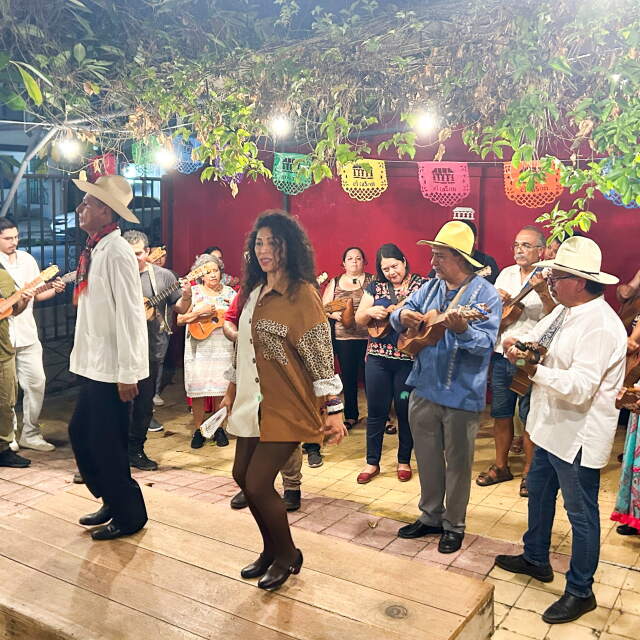
2:16Here's the scene. It's Saturday night in the middle of August. The villainous heat of the day has yet to subside. A couple dances on a wooden platform, the woman in a floral dress that fans out when she pounds her heels, the man in a traditional straw hat and a tropical shirt that's drenched with sweat.
2:37There's ice-cold Mexican beer and tamales wrapped in banana leaves. As the night wears on, the audience joins the trio of musicians so that it becomes a giant jam session. They are playing a diminutive 8-string guitar native to the region called a harana. Pretty soon La Bamba has two dozen harana players up there strumming, and the three-chord song goes on trance-like for 15 minutes.
3:07Eso es poquito. Por ejemplo, en Tlacotalpan, que son los fandangos más grande que me ha tocado ver, There may be 80 musicians. Fifteen minutes is nothing, says Tacho Utrera, a celebrated Jarocho musician and instrument maker. In Tlalcotalpan, where they have the biggest fandangos I've ever seen, you can have 80 musicians. Una bamba, un zapateado, un buscapies, which are the ones of the couple. La bamba and the dancing can go on for an hour, he says. You play and play, and the dancers keep changing and changing, and it's interminable. y son interminables. Time was in the 1960s and 70s, fandangos and son jarocho had fallen out of favor.
3:53It was considered low-class music with too much wild dancing and free-flowing alcohol. Think of the roots of the Delta Blues and Mississippi juke joints. Today, as Mexico and cities around the world reach for authenticity, originality, and soul, son jarocho is thriving. Every weekend in Veracruz, there are fandangos for baptisms, birthdays, wakes, saints' days, and just the joy of existence. The Fandango I attended in Veracruz is put on monthly by the Cason Cultural Center, which celebrates its 25th anniversary this year.
4:30It was started by Gilberto Gutierrez, one of the giants of Son Jarocho and a founding member of the seminal band Monoblanco. On a sweltering afternoon in his workshop, he serenades an adolescent rooster on a harana he built himself.
4:54Fandangos happen because there's a community around the musicians, dancers, singers, and the cooks who bring food, says Gutierrez. Humanity needs this coming together. We all need to belong to something, and I believe that's why Fandangos have spread far and wide. Indeed, today Son Jarocho can be heard in Argentina, Spain, Finland, Germany, Switzerland, Denmark, France, Tokyo, Canada, and in U.S. cities with big Latino populations.
5:33An essential element of this music is el zapateo, the tap dancing. It is performance and also percussion to keep the string players in rhythm. The wooden platform is called a tarima.
5:52To step onto a tarima is an act of respect and skill that you know how to dance, says Ara Veronica, a high school teacher from Puebla who's been dancing for 20 years. You shouldn't get up there if you don't know what you're doing. The classes in Jarocho Music and Dance offered at El Cason Cultural Center fill up quickly. While young Mexicans embrace genre-bending music like reggaeton and corridos tumbados, they're also flocking to fandangas.
6:23Paloma Rizzo, a 28-year-old teacher, took up the Jadana earlier this year. She was at the Fandango playing her heart out. Simplemente lo sientes, lo vives. You simply feel it, you live it, Rizzo says. Even if people don't know what a Fandango is, they want to be part of it. You watch the dancing and the playing and it calls you, it invites you.
6:49The word I encountered again and again while reporting the story is convivencia. The literal translation is coexist, but in the context of the Fandango, I think what they mean is alive together. For NPR News, I'm John Burnett in Veracruz, Mexico.
7:34That's the State of the World from NPR. Thanks for listening.
7:43Stay tuned for the following announcements and messages from our sponsors.
8:08Exactly how AI is reshaping work across every part of your organization and how to make sure you come out ahead. Get your free guide at netsuite.com slash story. This election season, you can streamline your news intake with Up First. Our team of reporters and editors works overnight so you can start every morning with three stories you need to know. In short episodes, 12, 14 minutes long to save you time and your sanity. Follow up first on the NPR app or wherever you get your podcasts.
Scan the code with your iPhone camera
Listen in the app.