 State of the World from NPR
30 Sep 2025 · 6m

 Add vo to ChatGPT or Claude to ask about everything you hear
vo listened to this episode to put together the overview and transcript, so there may be the odd mistake.
This episode focuses on the growth of Ukraine's domestic arms industry amid the ongoing conflict with Russia. As the United States withdraws from direct military aid, Ukraine is accelerating its own production capabilities to sustain its defense efforts.
0:00Today on State of the World, Ukraine's flourishing arms industry.
0:09You're listening to State of the World from NPR. We bring you the day's most vital international stories, up close where they're happening. It's Tuesday, September 30th. I'm Greg Dixon. Last week, after meeting with Ukraine's President Volodymyr Zelensky on the sidelines of the UN, President Trump made an abrupt U-turn, now sounding supportive of Ukraine in its fight against Russia's invasion, and saying they could retake all their territory. Still, the U.S. is not providing direct military aid to Ukraine. Trump says he will allow arms to be sold to NATO countries who can then give them to Ukraine.
0:46The uncertainty has caused Ukrainians to race to be able to build weapons on their own. As we reported in this podcast last week, Zelensky's speech at the U.N. largely touted Ukraine's arms industry, and he offered to do business with other countries. We are ready to make our modern weapons become your modern security, your modern weapon. And we have decided to open up arms exports. These are powerful systems tested in a real war when every international institution failed. NPR's Greg Myrie recently got to see what the Ukrainian weapons industry has to offer at an arms conference in the city of Lviv in western Ukraine.
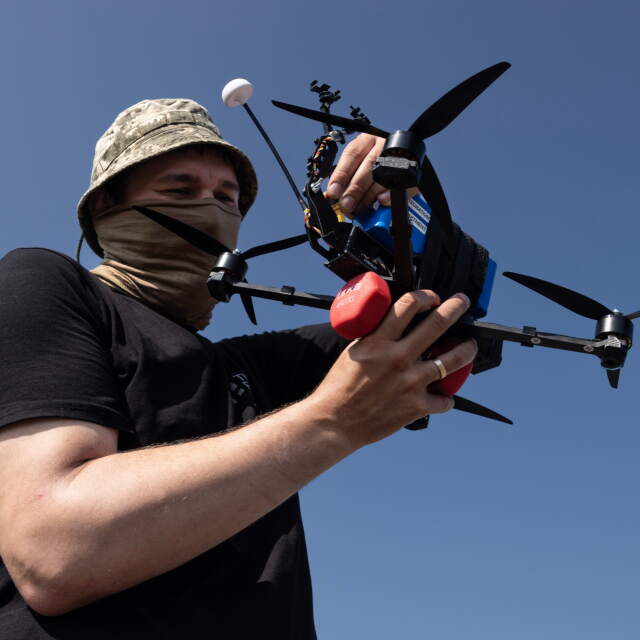
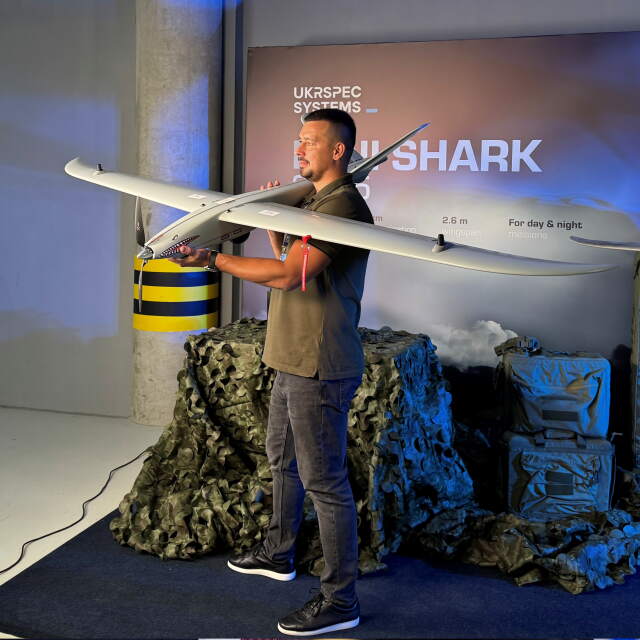
1:29The emerging arms industry here is on display at an odd place, an underground parking garage beneath a gleaming new office building known as Lviv Tech City. Conference organizers chose this secure space so the event couldn't be disrupted by one of Russia's frequent airstrikes. We're a Ukrainian company. We're building drones, all different kinds of drones. Maksim Yakovlev is with the Armsmaker Freedom Group. Many Ukrainian drones are used only once, flying into a Russian target and exploding. This one on display is a high-end model. It has six propellers, carries 30 pounds of weaponry, and can be reused.
2:12So it's heavy drones which flies and carries grenades and explosives and throws it into the target and comes back. When Russia launched its full-scale invasion in 2022, two, Ukraine's arsenal consisted largely of aging hardware, dating back decades when Russia and Ukraine were both part of the Soviet Union. Ukraine burned through those stockpiles at a furious pace and then became dependent on U.S. and European weapons. Now, Ukraine makes many of its own. Yaroslav Oznuk runs two tech startups. Well, I lived in Silicon Valley for six years. I went through a very classic startup journey. In California, he launched PetCube, a company that makes cameras to keep watch on pets.
2:58He brought that expertise back to Ukraine and now makes cameras for drones. He says Ukraine is rapidly emerging as a Silicon Valley for the defense industry. Ukraine today is the defense valley of the world. This has already happened. You sit in a cafe in Kiev and you met one defense founder and then 30 minutes later another defense tech founder passes by. The energy here is just incredible. Ukraine's president Volodymyr Zelensky says the country makes at least 40 percent of its own weapons, including virtually all of its own drones. The country had no real drone industry three years ago. It's expected to make 4 million of them this year.
3:40The latest models travel hundreds of miles, striking Russian oil refineries and causing significant damage to that country's most important industry. Aleksandr Mareshko is a member of Ukraine's parliament and heads the Foreign Affairs Committee. We are outnumbered. Russia has more human resources. That's why we need more sophisticated weaponry to make up for this difference, to fill this gap. Ukraine still relies on the U.S. for its most powerful weapons, such as the Patriot Air Defense System and F-16 fighter jets. President Trump has halted U.S. military aid to Ukraine, but he says the U.S. will sell American weapons to NATO countries, which can then give them to Ukraine.
4:23This is happening, though, on a limited scale so far. So Ukraine is starting to make its own heavy weaponry. The current buzz centers on the Flamingo, a cruise missile that can travel 1 ,800 miles. Some skeptics think the Flamingo may be overhyped, but if it performs as advertised, Ukraine will have the ability to strike deep inside Russia with a large weapon. Again, Alexander Mareshko. In terms of military technologies, we are not a burden for NATO, for Europe, and for the United States. We are a very good partner, very promising partner. For now, Ukraine's arms makers are relatively small and in need of foreign investment.
5:07Yet Yaroslav Oznuk sees potential. There is a big, big financial opportunity for the investors to come here. You know, Ukraine is this wild east. It's the eastern frontier of the Western civilization. Outside help is welcome, but he knows much of the work in the near term is up to Ukrainians like himself. Greg Myrie, NPR News, Lviv, Ukraine.
5:41That's the State of the World from NPR. Thanks for listening.
The United States is no longer providing weapons to Ukraine directly in their fight against Russia, so Ukraine is building their own as fast as they can. Ukraine’s president has suggested their weapons industry is advanced enough export their goods to like-minded countries. Our correspondent explores Ukraine’s arms industry and views Ukrainian-made weapons on display at a conference held in an unusual place.
Learn more about sponsor message choices: podcastchoices.com/adchoices
NPR Privacy Policy
Scan the code with your iPhone camera
Listen in the app.