

 Ask ChatGPT


NPR’s State of the World visits Kherson, southern Ukraine, describing life during a brief Russia-Ukraine ceasefire and what residents face when it ends.
Joanna Kakissis, NPR Ukraine correspondent, reporting from Kyiv after visiting Kherson during the truce.
Ukraine correspondent for NPR; previously visited Kherson about a year earlier.
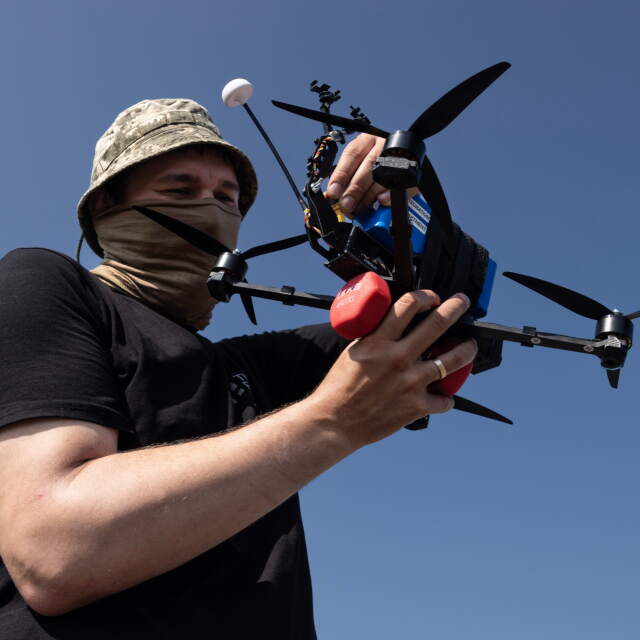
Kherson has been largely under siege since Russian forces withdrew across the Dnipro; residents face frequent shelling and drone attacks, including FPV drones that target civilians (“human safari”). The ceasefire was enabled by negotiations involving Pope Leo and Russian agreement after Melania Trump’s involvement, and it followed Russian-mined conditions around the occupied town of Alashki.
drone detectors beeping during walks; hospitals and playgrounds underground; residents returning to monuments, cemeteries, bus stops, and cafes; two 21-year-old friends enjoying coffee outside, then returning to fear when the truce ended Sunday night.
Written by AI. May contain mistakes.
Discussion on the current conditions in Kherson and the impact of the ceasefire.
“Just a fraction of those people live there today.”
Report on residents' experiences and emotions during the temporary ceasefire.
“The highway into the frontline city of Kherson is shrouded in tunnels of heavy mesh nets.”
Discussion on the end of the ceasefire and the return of danger in Kherson.
“I mean, wow, friends seeing each other once a month, even though they live on the same street.”

Get the gist, explore an idea or ask about something said.
 Claude
On State of the World from NPR, what are the key points of this episode?
Searching your listeningAutomatic transcript. May contain errors.
0:00We will learn something on election night, but not everything. There's a lot we will not know, especially when it comes to close races. And we'll know much more the next morning and the morning after that. So save yourself a little time scrolling and listen to Up First. We'll be there when you wake up each and every morning this week with the latest midterm election news.
0:24Today on State of the World, we visit a Ukrainian city under siege. You're listening to State of the World from NPR, a human perspective on global events. It's Tuesday, November 3rd. I'm Greg Dixon. Kherson is a city in southern Ukraine whose population numbered in the hundreds of thousands before Russia's invasion of the country. Just a fraction of those people live there today. Russia occupied Kherson for a few months in the early days of the war. And ever since Russian forces withdrew across the Dnipro River, the city has largely been under siege with frequent shelling and drone attacks. But a limited ceasefire between Russia and Ukraine this past weekend gave residents of Kherson a break from the fighting, allowing them to walk the streets and see friends again.
1:15NPR's Ukraine correspondent Joanna Kakissis visited Kherson during the truce. She joins me now from Kiev. Hey, Joanna. Hey, Greg. Tell us how this break in the fighting was allowed to happen. So this happened because there's this town across the Dnipro River from Kherson called Alashki. It's a town that's been occupied by Russian troops since the beginning of the war in early February 2022. And Russian troops mined the land around it. So it was very hard for food and medicine to get in. And as a result, lots of people were starving there. We had spoken to the families of many residents there who said that their loved ones were subsisting on pickles and boiled weeds.
1:56I mean, they didn't have anything to eat. So what happened is Pope Leo was negotiating for several months, trying to convince Russia to agree to a ceasefire. Ukraine said it was on board. And then what turned the tables was Melania Trump getting involved. After the First Lady got involved, then Russian President Vladimir Putin also agreed to the ceasefire. So this ceasefire to bring relief to this really battered city of Oleschke had the benefit for the residents of Kherson of getting a break as well. You visited Kherson about a year ago, and you told us about the difficult and sometimes terrifying conditions residents were living under there.
2:36Can you remind us what it was like when the ceasefire wasn't in place? When I was there, I mean, I heard explosions all the time. Everywhere I walked, I heard one. and everyone that I talked to also had a drone detector with them, so I would hear the beep, beep, beep of a drone detector, which meant that drones are flying overhead. And what Kherson is known for are these drone attacks, these first-person view FPV drone attacks. Russian troops across the river would navigate these drones into the city and hunt and kill civilians. Locally, the people of Kherson called it the human safari. I mean, they felt very targeted, obviously, But it was really dangerous to walk out of your house.
3:17Hospitals, playgrounds, offices, all of these were going underground. And these attacks, after I left, these attacks started stepping up. And it wasn't just drone attacks. It was also heavy bombs, like these guided aerial bombs that are very destructive. Wow, just a deep impact on life. Yeah. So to contrast that with what it was like during the truce, let's listen to your report during your visit to Kherson last weekend. The highway into the frontline city of Kherson is shrouded in tunnels of heavy mesh nets. They help keep out the Russian drones that hunt and kill civilians here every day. This weekend, cars pulled up next to the city's monumental gateway, its name written atop Greek-style columns.
4:07Svetlana Vorobjava, a retired police officer, drove here from a safer city where she now lives. She took photos with her children at the monument. I have a place here in Kherson, and my parents are also here, she says, and then begins to cry. I brought my son with me. He hasn't been here in four years. He said, I cannot believe I'm in my hometown. Inside the city, the tunnels of mesh nets stretch tight over streets and buildings. Volodymyr Mikolaenko, a former mayor of Kherson, strolled past the crushed remains of a once grand administrative building. I walk around the city a lot these days, he says.
4:54I cannot sit still at home. I'm always running around. Mikhailenko spent years in Russian prisons. Russian troops captured him in early 2022 when Kherson was under Russian occupation. Ukrainian troops liberated Kherson in late 2022. Mikhailenko was freed last year in a prisoner exchange and he returned to his hometown. This truce allowed him to go to his father's grave. The cemetery is in a part of the city that's usually filled with drones. I could not hold myself back, he says. I was able to do exactly what I have long wanted to do, to talk to my father, to pray, to thank him for my life, and to tell him what has been happening to our city.
5:43At a busy bus stop, oncology nurse Olena Yechorova smiles at a gray-haired accordion player.
5:55This truce has been such a relief, she says. The people in our city have been able to breathe. Of course, we still walk around with caution, because you cannot trust the Russians. The sidewalk's filled with families strolling with their kids, shoppers stocking up on supplies, and a steady stream of customers heading to a cafe filled with paintings of cats. Best friends Olena Soboleva and Ana Herasimenko, both 21, walked there together. Soboleva says she's thrilled they can enjoy their coffee outside in the sun in peace. There is no drones, there is no explosions. It is like a feeling that no one wants to kill you.
6:37Herasimenko says she also managed to walk to a salon, a rare treat. I did my nails, paint my nails. They're beautiful. Yes, thank you, Emilian. Really, it's definitely a lot of people now walking around, a lot of cars. The two friends live on the same street, but usually only see each other face to face about once a month. Now that the ceasefire is over, walking down the street is dangerous again. That was NPR's Joanna Kikisys reporting from Kherson, Ukraine. I mean, wow, friends seeing each other once a month, even though they live on the same street. Joanna, you could hear the joy and relief in people's voices in your report there.
7:22But I guess this truce for them was short-lived. Yeah, yeah. The truce ended on Sunday night, actually. And Anna and Olenna, those two best friends, they're back to FaceTiming each other every day because it's so much more dangerous to meet in person. And it's just back to fear and danger for them. Yes, it's back to fear and danger and the constant threat of drones, drone attacks. One woman that I spoke to said, we're going to start looking up at the sky again to see if the drones are coming for us. Thank you, Joanna. You're welcome. That's NPR's Ukraine correspondent, Joanna Kikisis.
8:08And that's the State of the World from NPR. Thanks for listening.
8:16Stay tuned for the following announcements and messages from our sponsors. This midterm election season, the NPR app is your single stop for clear, independent coverage. Stay on top of national and local storylines with news, stories, podcasts and political analysis on demand. Download the NPR app and check out the Elections 2026 tab today. This week on Shortwave, truth and fraud. That is the beating heart of the movie You Can See Everything. But can you spot a liar in action? Lying doesn't come with emotional and behavioral stereotypes that we think. How to detect deception for real. On Shortwave, the science podcast from NPR.


