 State of the World from NPR
27 Oct 2026 · 6m

 Add vo to ChatGPT or Claude to ask about everything you hear
vo listened to this episode to put together the overview and transcript, so there may be the odd mistake.
A limited Russia-Ukraine ceasefire agreed for the occupied city of Oleshki (Oleschke) to allow humanitarian aid and evacuations, brokered Friday by First Lady Melania Trump. Guests/backgrounds: The episode includes reporting by NPR’s Joanna Kikisys in Kyiv; interviews with a woman from Oleshki (“Solomia”) and her mother (“Helena,” both unnamed for safety); and commentary from Tatyana Hasanenko, Oleshki’s top official in exile, plus Yevgen Voronecki, spokesman for Ukraine’s 34th Separate Marine Brigade, and Ksenia Arhipova, who runs an escape network.
Oleshki’s residents (about 2,000) face starvation, lack electricity/water/food, mined land, drone “kill zones,” and bodies left in streets; aid drops often don’t reach people.
Helena’s reported grass/weed soup and pickles; a drone chase causing her broken arm; neighbors’ deaths and blocked burials; Ukraine drone parcel drops; protests including a sign “Can torturers be Christian?”; Pope Leo urging a humanitarian corridor.
0:00This week on Up First, we're in the final days before the midterm elections, and this is one of the wonderful things about humanity. One of the wonderful things about humanity, we have all this data, we have all this information, and nobody really knows what's going to happen. We're going to follow it day by day, through Election Day and beyond. And you can listen to Up First every morning on the NPR app or wherever you get your podcasts. Today on State of the World, why Ukraine and Russia agreed to a ceasefire in just one city.
0:34You're listening to State of the World from NPR, a human perspective on global events. It's Tuesday, October 27th. I'm Greg Dixon. There is a ceasefire between Russia and Ukraine, but it is very limited. A single city. Both Kiev and Moscow have confirmed their forces have paused attacks around the city of Oleschke, which has been under Russian occupation for five years. The deal, which was brokered Friday by First Lady Melania Trump, will allow aid workers to deliver food and medicine to residents and evacuate those wishing to leave. NPR's Joanna Kikisys is in Kiev, and she's been learning about the horrific conditions residents have been living under in Oleski.
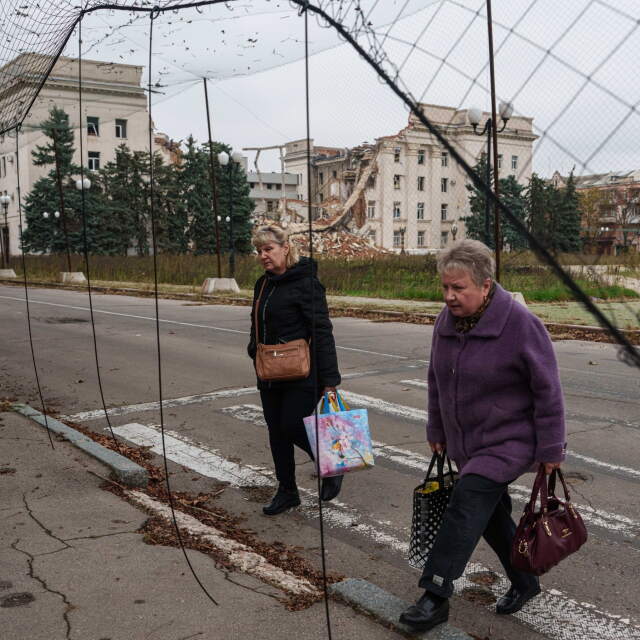
1:15Just to note, there are some graphic details in her story. It is nearly impossible to reach the town of Oleski, which sits on the Dnipro River in southern Ukraine. Russian forces occupied this town in 2022 and mined the land around it. The riverbank is a kill zone filled with Russian and Ukrainian drones. Food and medicine rarely gets through, and the roughly 2 ,000 residents remaining in Eleshky cannot get out. NPR spoke to a woman from Eleshky whose elderly mother still lives there. At her request, NPR is not using her or her mother's real name or voice for safety reasons. She says she fears Russian authorities will target them both.
2:03She gives her name as Salomia and her mother's as Helena. She tries to call every day. I make sure I never miss that call. Wherever I am, no matter what I'm doing, I will drop everything and talk to her. Nothing is more important than hearing her voice. Because that means her mother is still alive The people of Oleszki are not just starving, they are dying of hunger There is no flour, no electricity, there is no water unless it's from a well My mom eats pickles she makes from the vegetables she grows just outside her front door She says her mother also makes soup from grass and weeds from her yard, which she barely leaves Next to my mother's yard there are landmines on one side I worry they will explode at any moment.
2:50There are a lot of drones lying in her yard tangled in the flowers. A drone chased her in her own yard. She fell and broke her arm. Drones have killed her mother's neighbors. Their bodies are often left on the street for days because it's too dangerous to retrieve them. Solomia says her mother has seen stray dogs eating those bodies. The dogs are starving too. My mom says the Russians don't allow residents to bury the bodies. They are shut at if they try to. Eleshki's top official in exile, Tatyana Hasanenko, has been hearing such horror stories for months. Many residents know her personally and send her secure private messages.
3:37People want me to give them hope, she says, but what can I tell them? What can I promise them when we are dealing with criminals? Ukraine's military has tried to ease Oleski's humanitarian crisis by using drones to drop parcels of food and medicine near homes. Yevgen Voronecki is a spokesman for the 34th Separate Marine Brigade.
4:03We are not just sending them this food so they can make it through the winter, he says. We want them to regain their strength and get out of Eleshki. Salamia's mother, Helena, says many of these packages do not reach residents. And only a few locals have managed to escape in the last month, guided by a network run by Ksenia Arhipova, who grew up in Eleshki.
4:31It is impossible for residents to drive out of the town, she says, so they have to walk on roads full of landmines and with Russian drones flying over them.
4:46Ukrainians have tried to get the word out about Oleski, both online and at protests like this one outside the Vatican's embassy in Kiev.
4:59Art historian Oksana Ivanchenkova holds up a handmade sign that reads, can torturers be Christian?
5:11I understand it's impossible to negotiate with Vladimir Putin, she says. Still, we must try, because God sees everything. At the Vatican, Pope Leo has taken notice. Earlier this month, he urged Putin to create a humanitarian corridor for food, medicine, and the evacuation of residents. First Lady Melania Trump also joined the effort. On Friday, Ukraine and Russia said they had agreed to a ceasefire for Oleshki. We checked back with Solomia about her mother, Helena. My mother says residents have been informed that they would be lauded onto buses and taken to a shut-down children's camp. After that, it's not clear.
5:55Solomia says Helena sounded frightened and suspicious, because after nearly five years of all-out war, she does not believe in ceasefires. Joannica Kissis, NPR News, Kiev.
6:19That's the State of the World from NPR. Thanks for listening.
7:14wherever you get your podcasts.
Scan the code with your iPhone camera
Listen in the app.