In short
This is the final solo episode of Strategy and Tragedy. Stephanie Melodia explains why she’s winding down after 2+ years and 120+ entrepreneur interviews, then shares her “top three observations” about highly successful founders, behind-the-scenes lessons on podcast production/marketing, and answers listener questions.
Guest backgrounds (named examples)
No new guests appear; it’s a solo wrap-up. She references past guests including Jodie Cook (Team GB powerlifter, serial entrepreneur), Maya Ritura (book Visualize; mental fitness/social presence), Lottie White (Myo Master; Sunday Times fastest-growing), Ben Coomber (serial entrepreneur), Timothy Armu (FanBites; sold for millions), Deborah Williams (Women’s Association; gender inequality), Padman Vamadevan (Astron; doctor turned entrepreneur; cancer-focused), Anna Sophie Hartvigson (Female Invest; women in investing), Simon Alexander Ong (Energize; energy management), Thomas Panton (Olympic swimmer turned entrepreneur), Varon Banut (Magic AI; supply-chain disruption story), Nick Tilson-Sillett (Design My Night; exit drama), Sam Smith (IPO on London Stock Exchange).
Key claims
Success looks easy due to reps; mission-driven “reluctant entrepreneurs” have a burning desire; resilience is built via fun/joy and energy management; podcast performance depends on brand-name/trending topics/engaged communities; exits often become emotional roller coasters.
Notable examples
Lottie White curates media like a “diet”; Varon’s Russia-Ukraine supply-chain shock; Simon Squibb episode underperformed vs expectations; listener Q&A covers core value proposition, cofounder “charters” with exit clauses, and a personal “spectator vs player” tragedy.
Written by AI. May contain mistakes. Listen to the episode to check what was said.
Chapters
Tap a time to open that second in VOReflecting on the Journey
0:45 to 1:30
Host expresses gratitude to listeners and reflects on the show's significance.
Reasons for Winding Down
1:30 to 2:36
Host shares the reasons behind winding down the podcast and future projects.
Coaching and Mentoring
2:36 to 4:50
Host discusses new coaching opportunities and experiences with founders.
“But before I do, the other reason why I am winding down the show is to focus on all these other fun projects that just require my time and attention.”
Hacking Luck: New Concepts
4:50 to 7:46
Introduction of a new concept called 'hacking luck' and its principles.
“Now this is something I'm also very excited about and who knows maybe there's another show that gets launched all about that as well.”
Top Observations from Interviews
7:46 to 12:33
Host shares key observations from interviewing successful entrepreneurs.
“So what I thought would be the first most useful thing to share with you is my top three observations of the most successful people that I have interviewed.”
Lessons from Successful Entrepreneurs
12:33 to 14:03
Discussion on the lessons learned from successful entrepreneurs and their journeys.
Observations on Successful Entrepreneurs
14:03 to 24:52
Discover key traits of successful entrepreneurs, including resilience and mission-driven focus.
“So a few examples on this, Deborah Williams, I absolutely love that interview.”
The Importance of Audience Engagement
24:52 to 25:55
Learn about the significance of connecting with listeners and reflecting on show growth.
Insights on Business Exits
25:55 to 28:02
Explore unexpected lessons from business exits and the challenges entrepreneurs face.
“If you want to know some more specific exit stories, you can message me and I can point you in the right direction.”
Exploring Unplanned Exits in Entrepreneurship
28:02 to 29:48
Learn about the unexpected challenges entrepreneurs face during exits.
“kind of unexpectedly interesting kind of topic that came up a few times throughout the interviews, how exits didn't quite go to plan.”
Show all 24 chapters
Insights from Returning Guests
29:48 to 33:17
Discover the evolving stories and perspectives of returning podcast guests.
“I haven't I don't listen back to the episodes.”
The Reality of Podcast Production
33:17 to 36:51
Understand the complexities and strategies involved in producing a podcast.
“What I would say that, you know, the same thing that worked for and against me is the fact that the format is interview-based.”
Factors Influencing Podcast Success
36:51 to 42:00
Identify key elements that contribute to the performance of podcast episodes.
“And so if we see a name that we know, whether it's the name of a person or indeed a brand.”
Reflections and Audience Engagement
42:00 to 42:37
The host shares reflections on past episodes and invites audience questions.
“Okay I think that's the majority of my reflections, what I've noticed, observations.”
The Craziest Founder Story
42:37 to 43:31
A listener's question prompts a discussion about the wildest founder story the host has encountered.
Lessons from Bloom to Today
43:31 to 46:01
The host reflects on their journey from Bloom to current projects and shares key learnings.
Core Value Proposition Insights
46:01 to 49:59
The conversation delves into the importance of a solid value proposition in business.
Navigating Friendships in Business
49:59 to 55:04
Advice on how to manage friendships when turning projects into businesses.
Psychological Insights from Youth
55:04 to 56:01
The host shares a personal story that shaped their entrepreneurial perspective.
“He's asked, what's a tragedy that happened when you were younger that shapes you still today?”
The Illusion of Future Success
56:01 to 56:53
Explore the psychological insights gained from observing tourists and the reality of entrepreneurship.
“I actually do have a very clear answer to this one.”
Key Advice from Interviewed Guests
56:54 to 58:08
Learn the essential advice from successful entrepreneurs about focus, mission, and resilience.
“He broke down his fundraising process in the part two, the second interview that we did.”
The Limits of Strategy
58:09 to 59:26
Understand why having a flexible strategy is crucial in navigating unexpected challenges.
Managing Overwhelm and Burnout
59:27 to 1:01:18
Discover effective strategies for managing stress, energy, and productivity.
Self-Care as a Founder
1:01:19 to 1:05:48
Learn the importance of prioritizing self-care as a key to success in entrepreneurship.
Transcript
Automatic transcript. May contain errors.0:00Welcome to Strategy and Tragedy. I'm your host Stephanie Melodia and as you've probably already gleaned from the episode title, this is a very special solo piece because it is the last installment of Strategy and Tragedy.
0:31you heard me right after over two years publishing pretty consistently every wednesday morning and interviewing over 120 entrepreneurs including some of the country's best literally i am putting this baby to bed now who's to say when she wakes back up again i don't know but for the moment i am pressing pause on strat and trudge so first and foremost a huge deep heartfelt thank you a huge thank you for tuning in, for listening, for subscribing and if you've been here since day one, oh my god, special shout out to my OGs. Now I've had some awesome questions from listeners, I'm very excited to do a fun audience Q &A but before I do I'm sure the first question that you're all wondering is why, following that announcement, why am I winding down the show?
1:24well there's a number of different reasons for one it's kind of taken its natural course now that's not to say that there isn't still gas in the tank I still love what I do in fact I have a pipeline of more guests that I would love to interview I am innately curious I love asking questions and just getting permission to do so with microphones in our faces and I just I think that the process has been very helpful in refining my interview skills which is definitely a skill I cannot go back and listen to those early episodes way too cringe and there's almost a way of thinking of this as a huge research project right having sat down had quality time and deeply interviewing one-on-one these incredible entrepreneurs has also been a wonderful kind of source of data and I am actually going to be analysing that data so watch this space but for now I can share a load of reflections from the host side of the table, having sat across the table from all of these entrepreneurs, what stuck with me throughout the process, who have been, I'm not going to name names obviously, but my favourites, what I've learned, what stuck with me.
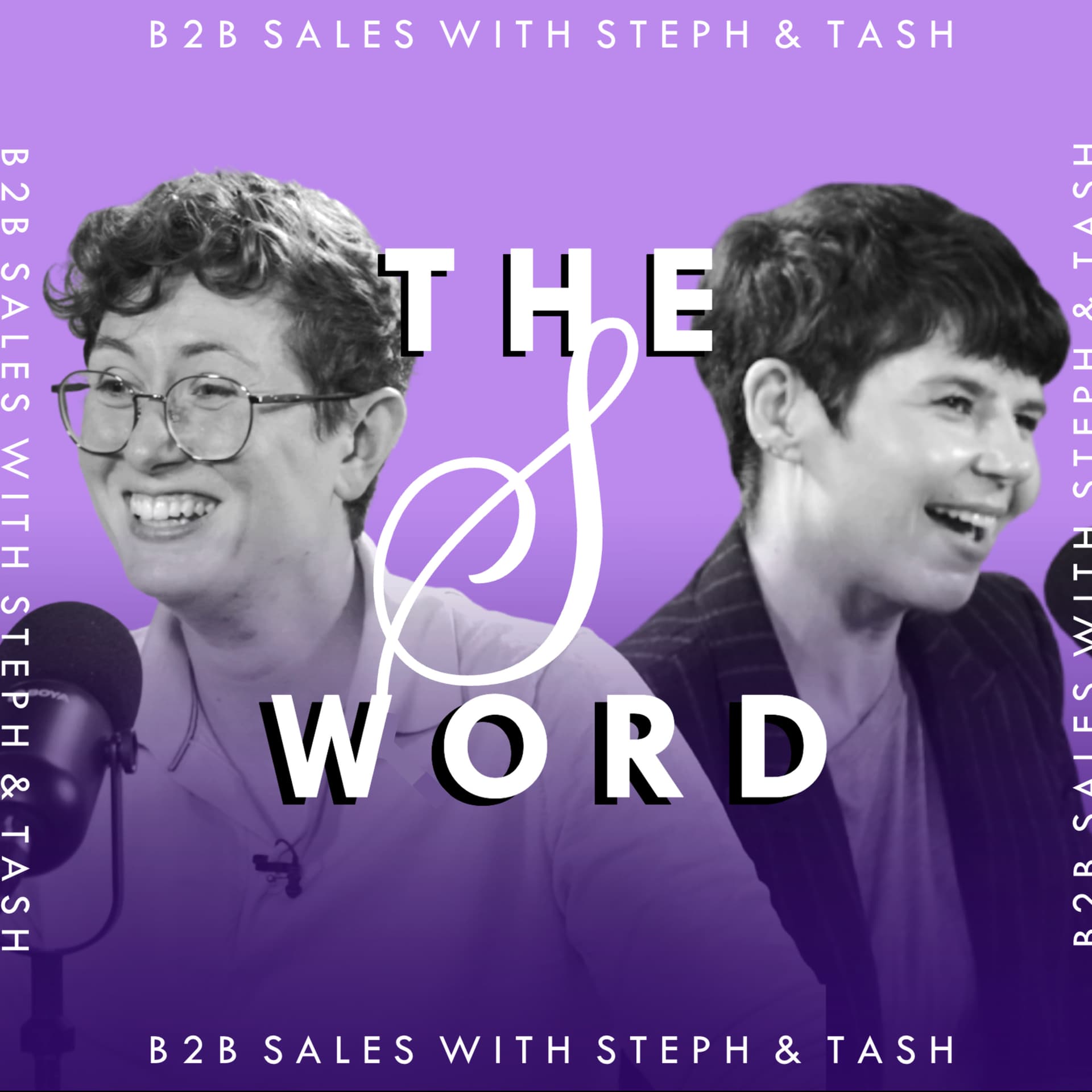
2:35So I'm going to be sharing all of that. But before I do, the other reason why I am winding down the show is to focus on all these other fun projects that just require my time and attention. For one, I have launched a new show with a comedian turned sales expert called Tess Rebuck. Hopefully you've already seen me talk about it. Hopefully you've seen some of the teaser episodes I've posted on the Strategy and Tragedy feed here as well, but it's called The S Word. So I am not disappearing from the airwaves, far from it. you will not be missing my voice you can head on over to the s word to hear both myself and tash talk all things sales it is so fun i hope anyone who has already checked it out is enjoying it so far please do let us know your feedback as always we love to hear from you but it is really fun we are both combining humor with this professional kind of subject matter expertise in sales uh the yes word the dirty word in business if you hadn't already figured that out all about sales so that's one thing for example I'm applying all the lessons learned from the past two years producing managing marketing my own show doing most of it by myself and I'm getting to apply that to the yes word to shortcut and ramp us up and hopefully enjoy even more success with Tash so that's one of the new projects.
4:04The other thing that I am doing is I am coaching one-on-one founders and absolutely loving it. That side of the business is growing so if anyone is intrigued, would like to learn more about what that looks like or is interested in hiring me as your professional big sis then do get in touch. Not only have I learned tons of lessons vicariously through those 120 interviews with these entrepreneurs but of course run my own businesses a very successful one which was an award-winning marketing agency and helping lots of incredible founders navigate this roller coaster journey I do that officially as a mentor with One Day which is an 18-month MBA program but I have these private clients that I work with as well which is lots of fun of course the public speaking I'm still doing that which is super fun as well very international who would have thought that's one that is taking me around the world which is amazing and exciting and I'm sharing more vlogs and behind the scenes of what that looks like for anyone who's curious and wants to kind of get a peep into that world on YouTube and finally last but not least I am world building my signature topic of hacking luck.
5:26Now this is something I'm also very excited about and who knows maybe there's another show that gets launched all about that as well. I am Miss Content Creator having lots of fun getting those creative juices flowing and producing all of this fun content but of course it's meaningless unless you're all enjoying and getting lots of value from it. So hacking luck, what is this about? Let me fill you in on this one really briefly. So hacking luck is all about how do we actually stack the odds in our favour. Now, some very interesting scientific research has been released that shows that between talent, effort and luck, it is actually luck that has the biggest bearing on our success or failure.
6:15Now, luck, what does that mean? Essentially any externality that is outside of our control. Now having lived, eat and breathed the world of entrepreneurship for the past 15 years or so, I have learned from the best, literally the best segment of the population at creating their own luck. Entrepreneurs, entrepreneurs are the ones who create their own luck. And so I have refined this concept honestly over the past year now and distilled it down to eight core principles four that focus primarily on mindset first and foremost and then the other four that are more about the practical actions that we can take to again literally stack the odds in our favor so a really interesting subject there's loads and loads of content that I can dive into on there I'm already posting about it on LinkedIn and Substack if you're not already following me so do check it out and as ever let me know your feedback.
7:13So that is my, I guess, long winded answer to why I'm winding down the show. As I say, it's kind of like some breakups, right? It's not as if there's like one specific reason my show didn't go and cheat on me. It's just kind of a culmination of all these different things. I've had so much fun producing the show, hosting these incredible entrepreneurs. But as I say I'm still getting to scratch that itch with Tash in the studio and as I say focus on all these other fun projects and who knows maybe there'll be another podcast for you to follow along soon. So moving things along I mentioned that I've had some awesome questions from some listeners I will get into those but before I do I'm going to share some of my reflections, observations from doing this show for the past couple of years because there's only so long that you can sit in the host seat and interview all these incredible entrepreneurs and not start pattern matching, not start noticing some common themes and of course some fun stories from behind the scenes.
8:27So what I thought would be the first most useful thing to share with you is my top three observations of the most successful people that I have interviewed. So first of all, they make it look easy. Now, a few of the guests that come to mind here, Jodie Cook, Team GB powerlifter, serial entrepreneur, Maya Ritura, who has got more of a social presence, so you may have heard of her. she has written the book called visualize and her thing is all about mental fitness lottie white whose business myo master was named in last year's sunday times fastest growing companies ben kumba the founder of awesome supplements pt turned entrepreneur timothy armu the founder of fan bites which sold for millions uh the list goes on i've got a few more I've written down here Mike Bander serial entrepreneur Jenny Quigley Jones she incredibly exited her business at such a young age she scaled it up and just had this humongous success so these are just a handful of names from that 120 list that do come to mind for me in terms of making it look easy they make it look easy and it's actually kind of frustrating when you're sat in the host seat because I know it's not that easy I know myself firsthand I know from the private clients that I coach one-to-one I know from my founder students um on the MBA program that I mentor like it is not that easy but these guys in particular they're just like I think they're built different I think they're built different and definitely Lottie White I remember I kind of challenged her a little bit more towards the end of the show because I felt like there was just more under the surface.
10:30Timothy Armu as well, maybe Jenny Quigley-Jones, like those are again just kind of three of those I mentioned. When I did kind of scratch beneath the surface, because they've put in so many reps over the years, it has now become second nature to them. And I think it's like so many things in life that we do, that we take for granted. and actually I think there's a really important lesson here to um in how we can undervalue ourselves sometimes because we don't always realize the things that we are good at whether it's a natural talent or whether we have put in that effort over the years but because it has been so many years it has now become second nature to us but we forgot that there was once a point where it wasn't that easy i know a friend of mine for example who's a very talented marketeer another one who just finds it really easy to strategize in situations and these are just some of the examples off the top of my head of real life people who just it's the fish in water syndrome they just forget that not everyone has this ability not everyone has this strength And crucially, just because it comes easy to you doesn't mean that you shouldn't be charging for it, basically, if you are in in kind of a service based field.
11:55So going back to these entrepreneurs, Lottie White in particular, when I did challenge her a bit more on that, she did share that actually she she very strictly curates her media consumption. She strictly curates who she's following online. she is very strict about the time that she does spend on social media the podcast that she listens to she curates the information in the same way that we would be strict with ourselves if we were on a diet right if we're on a diet we're trying to lose weight or there's a specific goal that we've got again it's the same thing it's actually that mental strength that mental resilience and I think also spending time kind of with yourself the meditating the journaling the going out in nature touching grass you know whatever works for you but these practices are very very vital especially when you're on the roller coaster ride that is entrepreneurship they're very vital in maintaining that center of gravity that inner balance that you need so that you don't so easily get thrown off course when the inevitable happens and the inevitable does happen we get these things that are thrown at us from left field and it's always always this is another lesson always the things that are completely unexpected that do the most damage which you know sounds obvious but when these unexpected things come out of left field it's having that inner center of gravity to not get pushed over so quickly.
13:35I think the other thing here on this point on making it look so easy is perhaps there's an element of what doesn't kill you makes you stronger and I think that having been through a lot of trials and tribulations obviously for everyone that looks completely different but knowing that you bounce back and that you came back stronger than before as well does help these entrepreneurs to recognise that actually it's not that bad and do you know what that leads me perfectly into one of Timothy Armou's sayings which is it's not that deep so they make it look easy the second observation they have had a really strong wind in their wings with some sort of mission now I think that first list that I mentioned whether it's Jodie Cook, Ben Coomber, Mike Bander like they are born entrepreneurs they are serial entrepreneurs they are built different but with this next category where they've got the wings in sorry the wind in the wings with this mission that's driving them there's kind of a different breed of entrepreneur here actually which I'm going to call the reluctant entrepreneurs this is where they are so just like eaten up from the inside out can't sleep it's every waking thought that obsesses their mind on solving this one particular problem it's this burning fire it's this passion to more often than not wrong oh sorry right some sort of wrong, not wrong, some sort of right, is to right some sort of wrong, there is this burning desire to just kind of fix this problem that they see in the world.
15:28So a few examples on this, Deborah Williams, I absolutely love that interview. And I had some feedback from listeners who said that they could really, they really enjoyed it. And they could really tell that chemistry that we had. And I love to hear that as well. And you know, there's a lot of entrepreneurs, a lot of guests who have been on the show who I've met for the first time in person in the studio and so you don't always know what that chemistry is going to be like you don't always know how you're going to get on with each other but yeah Deborah Williams is definitely at the top of the pile with just instantly immediately getting on like a house on fire such a joy to spend that quality time in the studio with her she is the founder of the Women's Association and so the mission that she's solving is gender inequality.
16:14Another example that I would put in this camp is Padman Vamadevan, such a lovely guy, oh my goodness, one of the loveliest guys I've ever met, let alone interviewed. He's the co-founder of Astron, a health intelligence platform to help literally cure cancer. When we talk about solving problems in entrepreneurship, there is arguably no a greater problem to solve than cancer so this guy's literally doing it he is of course doctor so doctor turned entrepreneur and that's what I mean right like super successful in his career very sought after day job and yet discovered this problem seen it from the inside out so an expert in the field as well and actually saying you know there are other ways that we can solve these problems I'm going to try my hand at it in entrepreneurship I need to mention a third entrepreneur that has done so so well super successful and again in large part has been thanks to the mission that's been driving them and it is Anna Sophie Hartvigson Hartvigson I hope I'm pronouncing the name correctly I haven't had to say her surname out loud for a while but She is one of the three co-founders of Female Invest, which, as the name suggests, is all about getting more women into investing and true empowerment through financial education.
17:48They are doing phenomenally well. I'm very, very, very happy to see it again. I got on with Anna Sophie like a house on fire. So I hope that you've enjoyed some of these interviews. I'm kind of name dropping here if it feels like I'm also kind of name dropping a lot of different guests I feel like I could go through I won't do this because I don't think anyone has the time but I think I would have the capacity to sit through like go through the list of every single interview and sort of share like my comments what stuck with me like key takeaways so I'm just kind of peppering my my top like favorite ones here for you guys the third observation of the most successful people that I've sat across from is that they are insanely resilient like next level resilience but what's been interesting is there's a subset of people who have strategically found a very interesting way to build their resilience and it is by having fun now I've posted about this a lot as well and I think we need to talk about this a lot more because for me at least the word resilience let me ask you first and wherever you listen to this leave me a comment find me on social let's try and make this a bit two-way because obviously I'm sat here just monologuing but the word resilience to me conjures up these images of like gritting your teeth clenching your jaws like fisting up your hands like white knuckling through like a challenging time right it's like I gotta like be resilient um to be honest with you as a girl of the 90s it's the um tv ads for shampoo where they do the CGI of the strands of hair and they're all like broken and split ends and they talk about kind of building resilience that also comes to mind for me when I think of resilient but when you think of like a resilient person it's kind of like someone who can like roll with the punches someone who can you know take the hits and get back up again but this strategy of having fun of being joyful being playful um definitely cultivating a fun atmosphere at work developing a more kind of joyful culture um is the best way it really if it sounds kind of it sounds like such a juxtaposition right it sounds counterintuitive but it kind of goes back to the first point on helping people retain that sense of perspective it's a bit like timothy armu's mantra of you know it's not that deep but more crucially and i think on an individual level for some of these entrepreneurs it really boils down to energy management i'm obsessed with and actually another one of my favorite interviews was with simon alexander ong who is the author of a book called energize so we do talk about this topic as well but we are in this for the long haul in business everything takes much longer than you expect it to we get these market shifts coming left right and center if you're in b2b sales as a quick stat research shows that only three percent of your audience is ever in market at any one time so that means you need to stick around you know even longer and create an even bigger window of opportunity there are all these reasons that point to the need to be resilient to be to be in it for the long the long haul um in fact i also mentioned chris ducker who's the author of the long haul leader right um there's no such thing we all know right there's no such thing as like get rich quick or you know even if you were able to find product market fit scale your business and sell it honestly like between five to ten years like you're lucky okay so this is where resilience is such a non-negotiable because you just need that staying power you need to stay in the game for long enough and so managing your energy to be able to stay in the game for the long haul means having fun while you're at it and having fun is the best strategy to energizing yourself to keep going right one other quick comment here is I've also had the pleasure of interviewing athletes turned entrepreneurs and there is definitely definitely something to be said for this other subset of entrepreneur I feel like maybe there's another kind of post I should do here on like the different categories of of entrepreneurs like there's the ones who are just like built for it it's in their bones they dropped out of school at 16 and that's all they've ever known and they're completely unemployable so to speak there are those that are reluctant and they're just so driven by a particular mission and trying to solve a problem that keeps them up at night and then this other subset is is these athletes that are so just again like they they've trained themselves to have all of those entrepreneurial non-negotiables the resilience the work ethic I will say it in this post hustle era you have to have the work ethic you have to have a bit of that hustle at least to build a business and some of them that come to mind so one is with Thomas Panton who was an Olympic swimmer and just built for it again like absolutely built for it the the persistence the tenacity the overcoming hurdles Thomas is also one of the few guests who have been on the show twice and I love that as well I actually really love doing a part two with the guests the first one feels very much getting the lay of the land scratching the surface and so second time around you get to go deeper and even more interestingly for me and I hope this has been good for you too is seeing what has happened and checking back in with them like a year, a year and a half later and seeing what state the business is in at this point, right?
24:20So anyway, my point is that Thomas Panton is one of those who's been on the show twice and Maya Rochura as well, she was also in sports and so that also makes sense, connecting it with this idea of mental fitness and so if any of you have got any sort of like sporting background then that is the best breeding ground for entrepreneurship I would say.
24:46so those are my top three observations of some of the most successful entrepreneurs that i have had the privilege and pleasure of sitting down with they make it look easy they have a mission that drives them and they build that resilience through having fun i didn't name drop a few on that one but some people that come to mind are daniel sherbakov farah kabir johnny birch there are so many so if I haven't said your name yet and you're listening apologies honestly I've interviewed over 100 incredible entrepreneurs so I feel super privileged for that as well I thanked you listeners at the top of this episode for of course supporting the show for tuning in whenever I hear from you I just it makes my day it honestly makes me so so happy to hear that someone's tuning in and listening because obviously when you're just sat in the studio or recording at home like I am now you don't always know who's on the other side so do get in touch if you're listening I always love to hear from you now I wanted to share a few other reflections a bit of kind of the behind the scenes some lessons even from like the production and marketing perspective of what it's taken to build and promote a show and I will wrap this up with the audience Q &A I'm really excited to get to that bit at the end so that's going to be like the cherry on top exits business exits was one that I wrote down here as well I didn't expect to talk about exits as much in business given that the show is more focused on kind of early stage entrepreneurs or at least that's the audience right is to hear from entrepreneurs who are at least a few steps ahead learn from their lessons especially the tragedies um the best the best lessons come from some of the worst mistakes sometimes so very much that has been the mission of the show um and so that's why i wasn't really expecting kind of talk so much about sort of selling businesses exiting and where it's come up in some of those conversations the number one that comes to mind is my interview with nick tellson sillett who built and sold design my night which and i actually think the title of that episode is the craziest exit in history the drama oh my god it always seems like the whole exit part of the story never goes to plan it's almost like if you were producing a film on a whole kind of life cycle of a business it's almost like the exit it's like the final showdown it's the final chapter it's coming to the end of the film and this is the opportunity for a plot twist and it does it does seem to be another pattern that's emerged I've noticed I don't know whether that's because it's so kind of high pressure and it's almost like that culmination of so many years hard work effort Sam Smith that was another story of finally exiting the business they IPO'd on the London Stock Exchange.
27:53There's a handful of them. If you want to know some more specific exit stories, you can message me and I can point you in the right direction. I found that to be a really kind of unexpectedly interesting kind of topic that came up a few times throughout the interviews, how exits didn't quite go to plan. I mean, the Nick Tilson-Sillett story includes, oh, it's so funny, the way he tells it as well. I mean, they end up in like A &E and it's just like, is like the biggest emotional roller coaster that you can have in like 24 hours i mentioned before how interesting it's also been to have returning guests i mentioned thomas panton before i really enjoyed both those interviews with him if you haven't already tuned in do check them out varan banut another one that needs to be name dropped here he's the co-founder of magic ai he has won like every award under the sun i think he's forbes 30 under 30 as well maybe um but they've also been really interesting and actually having just mentioned those two they are very good examples where one is still in the same business and the other one isn't and obviously we're not kind of comparing apples and oranges here but it has been interesting to check back in with these founders and see like how they're getting on now it's an opportunity to dive deeper in their stories and how much of their perspective has maybe changed since I last interviewed them what's happened in life how have things evolved I think what was really eye-opening for me on the part two with Varon was when I first sat down with him and he was one of my very first guest like at the start of the show we had a different studio and everything so it all looks different he was recounting all of these like crazy stories these dramas honestly perfect guest for a show called strategy and tragedy i am super super grateful to him for being so open so honest he was probably one of i think everyone is very open and honest um that being said there's definitely been at least one or two that are maybe a bit too kind of media trained and almost like reading off a script and I'm like I want you to just be real right like open up share the share the story you know warts and all this is what the show is about and so again very very grateful to Varen for doing so and so yeah anyway so going back to that first interview like one of the stories I remember him telling me about was how Russia invading Ukraine had this knock-on impact in his supply chain and how much of a headache it created with getting the products, with getting in different parts, manufacturing.
30:44It was such a dramatic challenging story that he shared with me and then catching back up with him about two years later was kind of like yeah that was just one of many things and And I think it's like, to me, I hear that story and I still remember it to this day. I haven't I don't listen back to the episodes. I just remember these interviews. And I remember being like, wow, like that almost like took down the business. That was such an existential threat. And then it just kind of goes back to that resilience point of how it was like, yeah, it's that's that hasn't even been the worst of it. And and taking it in his stride.
31:27and definitely again it's not easy and he since became a dad as well between the two episodes and so many life changes all these different things going on I mean he also has a co-founder again so maybe that does make it easier to kind of have somebody there in in the rough waters with you but yeah that just kind of struck me as well it was kind of like oh wow
31:53now from a podcast production perspective hands up my alliteration fans no this is something that I do get asked about as well and actually it's funny I've noticed this really meta thing happen which Mike Bander actually called effectual thinking on our episode but it's where you do something with a particular goal in mind or with a particular intention and then being open to these other adjacent opportunities so for example mentioning the podcast is of course I'm producing this for you all to listen into but I have actually been getting these requests on like the actual production like consulting on like how do we launch and start and scale the show in the same way with public speaking right you may have seen some clips of me on stage giving talks and then actually that's led to me privately coaching people on their public speaking or delivering workshops on public speaking.
32:47Do you see what I mean? Where it's like led to these other unexpected but very lovely consequences. So anyway so with that in mind because I do get asked about that I will share a bit on that front as well as part of this chunky wrap-up episode. So the number one thing I need to mention about podcast production is that there is an expectation to be everywhere now across multiple channels at once and that's totally fine obviously that's how the game works but what I've realized is the difference between social media YouTube and pure audible podcast they are three completely different strategies for each and then even within that social media bucket you've of course got to contextualize depending on Instagram TikTok LinkedIn whatever and so I would just I guess heed my warning on on this it's more just a word of warning of being everywhere and that's where people do say you know podcasting is a lot of hard work because of course the actual you know the actual episode itself or the actual interview itself really is the tip of the iceberg you know even leading up to the actual studio slot that I might have with the guest there is researching the guest there is all the logistics around it it's the scheduling it's aligning with the studio availability and the guest availability it's all of the prep it's all of the comms and everything beforehand and then of course once you've done the actual episode you've got the editing the chopping up slicing and dicing to put across social media and they are very it's having the same show but very much kind of different versions of it across different things right and I think it's a very different consumer across those different channels it's kind of weird right because it obviously it is the same show but somebody passively scrolling on Instagram definitely does not have the same level of intentionality as they would if they were actively tuning in to listen to me on Spotify right and so I think it's compulsory now to do that as part of the marketing.
35:02What I would say that, you know, the same thing that worked for and against me is the fact that the format is interview-based. Now, where that works against me is just the level of saturation, right? There are so many interview-based shows out there and I'm not gonna lie, like definitely DOAC was an inspiration a few years ago I am a consumer as much as a creator I do love listening to other podcasts and there was a time I was listening into that and as a bit of a sidebar it prompted me to look into the media landscape and especially within business podcasts of course notice this was another yet another male-dominated space and so having a female voice in the mix that wasn't necessarily talking about relationships or fashion or dating or advice in that sense which is awesome and I love it but that having a female voice in the business space was definitely sorely missed that has changed since we've got shows with like Emma Greedy is a top one that comes to mind Grace Beverly obviously there are more and more female voices in the podcasting space which is great but that was honestly another motivation for me so going back to the interview-based format working against me because it was so saturated but then where it did work for me linking to the podcast growth here is leveraging your guest audience to help grow the show which brings me to the next point that I wanted to mention which is I don't think a single episode has ever performed as well or as badly as I expected case in point one specific episode that I got myself so worked up about that I thought was going to be the before and after that was going to like make or break and catapult me to brand new heights was interviewing Simon Squibb he's probably the most famous one that I've had on the show and released it pretty much I'm not going to say quite tumbleweeds but I am not sat here like Stephen Bartlett and what I realised through that obviously hindsight's a wonderful thing we can always form conclusions based on existing data that we've got and so it was after it was released and it didn't perform anywhere near as well as I was expecting it to it did make me realize well actually if you've got a name that's that big you're already following them anyway and so there's kind of like what's the reason to tune into my particular episode especially if you don't know me I think also Simon Squibb has been so generous and he has done so many other shows as well so there is that question mark as to like why would you want to tune into this one it's not as if he shared you know he saved an exclusive scoop to share with me on strategy and tragedy the flip side is I have had other episodes perform surprisingly well just better than expected and so again it's kind of easy to go and look for reasons after the results are in I would say the ones that have performed the best have either been down to one of three things it's either been because there's like a famous brand name in the thumbnail artwork on YouTube or the episode title.
38:32Obviously, you know, this is I learned this from my marketing training as well anyway, which is brands carry a level of value that can't be measured because humans, we just like that familiarity, that familiarity breeds trust. And so if we see a name that we know, whether it's the name of a person or indeed a brand. In fact, I've actually done a bit of spring cleaning by selling quite a few bits on vintage and even with that as well i've noticed when i put if it's like a good brand name i've noticed that you know those pieces sell a lot more quickly so it's either there's like they've either worked for a famous company we would have all heard of or they are the founder of more mainstream brand especially in the consumable space for example olivia furdy who's the co-founder of trip trip cbd drinks which i love i'm addicted to um so it's either that it's either a famous brand name it's either something that happens to be trending at the moment and with that in mind you can't go wrong with two vowels you can guess which two vowels they are in today's day and age if you put ai into any episode title into anything i'm even seeing this already with the s word we've only just published a few episodes but already that trend is coming across and then the third ingredient for high performance in podcasting especially if you have guests to leverage as I have is individuals who have very highly engaged communities I know that's another buzzword but hear me out because somebody like Simon Squibb obviously incredible he's got a huge following but I think where he has kind of entered that mainstream and his numbers are so high I'm not going to say quantity over quality that would be unfair but I think that it is a bit of it's more of that kind of volume play whereas actually what really does move the needle is somebody who has got a lesser following i.e just not in the millions but you know hundreds of thousands but the level of engagement with their audience is just through the roof so as an example a recent example that comes to mind is let's take Anne-Laure LeCoumpf who is a neuroscientist and she has been consistent releasing her newsletter every week for the past six or seven years or something it's absolutely incredible she's putting strategy and tragedy to shame only doing mine for just over two years but something about I think I honestly think it is the quality and the depth of her work and being consistent with it has cultivated a highly engaged community I think maybe also the fact that it is via newsletter so it's more long form writing so that's a parallel with podcasting as well is somebody is sticking around to listen to your voice for between half an hour to an hour there's going to be so much more intentionality and more of a connection there than say somebody just kind of thumb scrolling past you on the feed so I think those are my three takeaways the three kind of learnings from you know what makes a particular episode do well a famous brand name something that is hyper relevant that's trending at the moment or a guest that has a highly engaged community.
42:06Okay I think that's the majority of my reflections, what I've noticed, observations. As usual if you have any follow-up questions or you want me to answer anything more specific either as it relates to entrepreneurship having sat across the room from 120 entrepreneurs or indeed podcast production the marketing behind it do of course get in touch and as much as I could keep talking and reflect on the 100 plus episodes I think I'm gonna leave it there for now and come over to the audience questions this was the bit I was the most excited about
42:47okay um what's really fun i'm not gonna name names but what's funny is a question i've had from a listener is what's the craziest founder story you've heard if you're listening to this and you know who you are then it is your story that is the craziest founder story i've ever heard I am not going to name any names I'm not going to share any details it is really crazy it wasn't publicly shared on the show for reasons that would become obvious if you knew all the details of it but yeah if you're listening it's you it's your story it's the craziest founder story I've ever heard all right I think the other listeners I can name uh okay so we've got one from Shen Solon shout out to shen she's do you know what fun fact she has been on both she's the only person so far to have been on both strategy and tragedy and my new show with tash reebuck the s word so she's a very lucky girl she's asked to linkedin dm or not uh it's a hell yeah from me definitely i'm all about reaching out i'm pretty shameless with that making new connections next question what's your biggest learning from bloom to strategy and tragedy and onwards that one is from thomas panton thank you so much for the question biggest learning do you know what i think it's the fact that we have two resources in life and they are our time and our money it's only one of them that is finite we have limited time on this planet and as much as i started bloom that was my marketing agency when I was 29 I think it was 2017 like BC before COVID I was so naive you know this has also been the driving force with strategy and tragedy as well is like Jesus the amount of stuff that I just didn't know like you don't know what you don't know right and I think I didn't I didn't appreciate enough like I have time I still have time but I didn't I don't think I had almost like enough urgency and I think this is where that fail fast mantra comes from with like Silicon Valley and I've definitely brought that forward with like other ventures and things that I've tried since then which is just you know one thing is to be persistent to stay you know stay the course to be determined to be resilient like that that it all stands that is all still very true but I actually think you know I can only speak for myself I do think of other people when I say this as well but I think knowing where to draw the line and knowing when to say that's enough is is a really underrated skill and it's something that we don't talk enough about and actually I think this is super relevant to this closing episode right which is of course everyone has been asking anyone that I've shared that I'm winding it down I've been like oh why why are you stopping and it's obviously a very valid understandable question but I don't think I got half the questions about why I'm starting it when I first announced that I was going to do the show right like I've definitely had more questions when I've decided to end something than starting it and I think it's kind of wrong I feel like when you appreciate the fact that we're not here forever and I don't just mean our time I think more important than our time is our energy and so it's like do you have yes the time but also the energy to build something and turn it into a success within a certain time frame instead of just kind of like you know chugging along and I think I just I think that's a big strength and a weakness of mine I think I am very consistent but that's not always a good thing right I think I can be I can consistently execute but possibly in the wrong direction and so I think that's something I've really taken with me is how much time do we have how much energy have we got let's put this into but you know funnel that into building something successful so I think that would be my biggest lesson thank you for the question another great question from Thomas Panton which is both the best and worst piece of advice I've ever received I think I wouldn't say necessarily that this is the best piece of advice that someone has explicitly given me but definitely a very very very underrated learning that I myself have had to learn the hard way that's taken me too long to learn and it's what I help a lot of other founders with which is not spending enough time energy resource investing into the core value proposition of your business what I mean by that is the crux of what's the pain point that you're solving what's the value that you're adding in the marketplace what's the headache that you're alleviating for the client that ultimately gets them to part with their cash to give it to you to solve and it sounds obvious it sounds pretty simple but the truth is myself included many many many entrepreneurs and especially first-time founders have gone into business because they've got an idea and that's great that's great but it is the very first baby step the idea is not enough you have to you have to validate it through market demand you have to see whether customers like actually want this you have to avoid the hypotheticals in customer discovery so you know happy is avoid that just because you want something is you know you don't lead them down a path like oh would you be interested in this that and the other because you've got this idea like obviously you're leading them down that path of like yeah yeah sounds great and I think especially in the UK being diplomatic being people pleasers you know we're going to say what people want to hear but what we want to hear is the truth and so whether it is through customer discovery you know market research or what I'm more a proponent of is MVPs and actually actions speak louder than words and getting people to join a wait list sign up to a newsletter pay a deposit part with some cash for for what you've got to offer sign a letter of intent these are all early stage signals these are all leading indicators that help denote whether or not you've actually got a strong enough core value proposition to then build a solid business off the back of it so yeah very very practical and honestly kind of uncomfortable advice because again people just they have this idea and they have a vision of what they want to build and what they want to create and I honestly reckon again I'm going to put myself in the same category there are a lot of entrepreneurs that just need to scratch that itch and I think the first business in my case it was the marketing consultancy the first business is almost like the pancake and I think you know it's like the first pancake right um I think depending on how you look at it I was either incredibly successful with the first pancake or just took too long to like learn that product market fit lesson so I think that that would be what I would answer to kind of best piece of advice worst piece of advice I had again this wasn't like explicit advice to me but it was during an interview on the show as the guest was saying this thing I knew that it would stay with me like for a long time like as they were saying it and they are again one of the most incredible people they've had just tremendous success with their business but where they've taken kind of that laser focus to the extreme they have made a conscious decision to neglect a lot of other parts of their life and I get it like I love how Maya she said on the show about going through seasons and how of course it's just completely unsustainable to keep hustling and you know just keep going keep going it's just not not realistic um but this particular guest was just they kind of took it to the extreme and look it clearly works for them they have had a lot of incredible success but I think just for me like I need it kind of goes back to the to the resilience strategy like I need fun I need joy I need friends I do need to just kind of catch up with people not all the time again we do go through seasons but again I wouldn't say it's the worst piece of advice but that is probably what comes to mind with that question uh thank you so much for submitting the question Thomas another one from Skylar how to turn a fun project with friends into a successful business okay that is a good question this one is obviously very dangerous territory just because you are friends with people does not mean that you are going to have a successful business together obviously it can provide a very lovely and healthy solid base to your relationship and perhaps um you know provide a little bit more leeway and tolerance with each other because you do already know your you know you do know each other as friends but I think you need to be really really careful with it I think that in some ways it can be as much as it can be helpful it can be a lot harder because you have only known each other through that friendship capacity like in that context you haven't actually worked together like I've seen a lot of very successful co-founder relationships emerge from having worked together at another company before friends is a tricky one it has worked you know actually one of the guests that I interviewed where this did work was with Farah Kabir but my advice would be if you've never worked together is to draw up a charter between yourselves even you know a contract to make things a bit more legal and professional and I would include in it things about ways of working, core values, you know, how you align, how you don't necessarily align, what's your vision for the business.
53:53In fact another great episode to check out on this was with Nicole Posner who is a conflict coach. So I think even that is a good exercise in and of itself, being formal being professional and and sort of taking that step it might feel awkward in the moment but but making that shift from the more kind of friendly conversations to something that's more official and formalized the other piece of advice I would give is as part of that contract is to have an exit clause and to and this again is what we talked about in the episode with Nicole is to talk about what happens if this doesn't work and talk about it up front before you do get stuck into the business before any tragedies have hit so that you don't have those emotions getting in the way what are those kill switch moments as part of that decision making process and how do we feel about you know being friends and returning to having this friendship after after potentially you know this business not working out um I should have also mentioned I can't believe I totally blanked on this one but another good example to check out is Richard Harpin and Jeremy Middleton I've interviewed both of them they both co-founded HomeServe which was a humongous success they went public they IPO'd they were they have been friends for a very long time so if you want to deep dive on any of those farah kabir richard harpin jeremy middleton and nicole poster gang i've got a repertoire of like 120 episodes so there is a wealth of content to be diving into here okay another question from akash meta who again was another guest on the show he's the co-founder of fable and main a very successful hair care brand And so Akash, thank you so much for the question.
55:53He's asked, what's a tragedy that happened when you were younger that shapes you still today? Do you know what? I actually do have a very clear answer to this one. It wasn't my own personal tragedy. It was actually growing up on an island that attracted a lot of tourists and actually witnessing through all of these holidaymakers how much we have this idealised version of our future selves. and so this was I guess a deeper psychological insight that I had when I was like seven years old. Relating it to entrepreneurship specifically is you've got the players on the field and you've got the spectators of the sport until you actually go and do it for real it's it's very different it's like oh suddenly all of these pieces are going to come together when the truth is wherever you go there you are it's actually putting in the work to achieve it as opposed to just expecting this like postcard fantasy of your future it's all going to come true next question from ben coomba what three bits of advice stayed with you from all the guests you've interviewed okay so i guess kind of similar to thomas's question i think i've shared a lot of reflections already so far so I think it is the level of focus that you need the the strength of the mission that you've got you know the mission that does feed into the core value proposition that I was talking about as well and the third one it is that next level resilience it's like it's not taking no for an answer it's like keep going keep going keep going especially as it relates to fundraising like Like you get so many doors slammed in your face.
57:39There's so many great examples of that. I'll shout out Varon again. He broke down his fundraising process in the part two, the second interview that we did. Olivia Parks, shout out to her. She's phenomenal too. She also broke down how she fundraised hundreds of thousands for her business. And so, yeah. And so just that, you've got to be a beast. you know that's what I was saying before about some of these athletes as well anyone that's had this more kind of like physical training ground has been perfect training for entrepreneurship I think what's one thing that one of your guests said that rewired your brain this one is from Mostyn Wilson thank you so much for the question Mostyn do you know what effectual thinking by Mike bander tune into that episode that conversation around effectual thinking that that definitely rewired my brain can strategy prevent tragedy no hence the title of the show strategy and tragedy do you know what a bit of the backstory for the name there is one of my favorite quotes uh i believe is by muhammad ali which is a business plan is great until you get punched in the face right and so that's what it is you can have the best strategy you can have the best plans but then suddenly world war three kicks off or russia invades ukraine or trump's announcing tariffs or ai's developing at breakneck speed like all of these unexpected events coming out of left field mean that again you can have the best strategy in the world but honestly the best the best one is is one of agility or flexibility is being able to navigate those changes the only constant is change as they say right so no strategy can't prevent tragedy was there any episode or part of an episode you pulled the plug on but can now talk about oh my god that is such a great question um i mean look i'm still not going to talk about it at least publicly to respect the guest wishes and their privacy but there was one episode that was really difficult for a number of reasons and afterwards with the edit requests as well there was a bit of back and forth and I asked my guest the traditional closing question which is my long-term listeners will know one tragedy that's taught you an unforgettable lesson and yeah kind of annoyingly they wanted to to just cut all of that and that's kind of the point of the show and it is a long-standing tradition that I did like to keep so yeah okay couple more questions oh my god I love all of these you guys have asked such great questions um one from Laura Blanco Moreno muchas gracias so she's asked how do you juggle the 100 things that you do um yeah i'm very organized definitely having systems having people you can rely on um and you know what i'll go back to the point on time versus energy management i think it's much more about managing your own energy versus the time because you could have a hyper productive one hour versus dragging yourself through like a full eight hour work day so I think if you've got the energy if you you know care about what you do if you're passionate about it as I am you know it doesn't it's not difficult when you just love what you do right I know that's such a cliche I know it's such an old kind of like trope but loving what you do means that it's a lot easier to energize yourself to keep going and how to deal with stress or burnout in the process well actually do you know what that links back to the energy management piece right I think if you are feeling overwhelmed which of course don't get me wrong I definitely have in the past and I think sometimes you need to do what feels very counterintuitive so by that I mean the moments that you're feeling the most overwhelmed or at most risk of burnout is exactly the time that you need to be doing less not more the moment where you feel like you like there's no there's no chance come hell or high water that you can meditate or journal it's probably the exact moment that you actually need to I think going out you know for walks getting daylight if you can touching grass you know going back to nature is always very helpful the journaling the meditating you know I feel like these are kind of all the typical kind of go-tos but I think honestly more for me personally it's about doing what you love and having the fundamentals in place having the foundation set like I need a lot of sleep actually I need a lot a lot of sleep like I'm not here like 5am hustling away I do prioritize my sleep I do have good kind of routines I also prioritize my fitness as well so working out and so yeah that's what I mean by the foundations like taking care of your mind and body if you can I know we don't all have that privilege but doing doing whatever you can to release the valve to let that pressure out is is helpful and then yeah if you are doing what you love if you're doing things that you enjoy like I give myself treats as well I do give myself kind of rewards for getting through something um it makes it a lot easier you know my interview with Anne Law she was saying about how we a lot of how we visualize time especially with like calendars and how you know especially like yeah just our work calendars are kind of organized they're they're visualized as these kind of blocks and actually we perceive time on a more elastic basis and so if you can lose yourself doing something that you love then yeah suddenly you lose a lot of time gang oh my goodness thank you so so much for listening thank you for all the fun questions I love doing this if you want to do the same we're going to do um audience Q &A on my other show with Tash Rebug as well on the S word I would love to get more audience involvement with my new show as well if I do launch that so watch this space and thank you of course for submitting all your questions thank you for listening thank you for supporting the show big thank you to the guests as well who have dedicated some of their very valuable time to allow me to ask them lots of questions I hope you found this helpful I hope you've taken something from the episodes that you have tuned into and before I finally leave you here I mentioned before my traditional closing question on the show is what's one tragedy that's taught you an unforgettable lesson one of the most common answers to that question is not taking better care of yourself especially as a founder especially if you're fundraising if you've got a team if you've got investors to answer to if you've got board members, the list goes on and on and on, it can be very, very easy to deprioritise yourself when in fact you need to be treating yourself as the company's greatest asset.
1:05:12A helpful reframe here is if you were the executive assistant and it was your role to take care of your CEO, how would you take care of them? How would you make sure that they do get enough quality sleep that their diary setting them up for success that they're not overloaded that they are still integrating moments of fun it might be a walk and a talk with a friend it might be prioritizing your fitness it might be doing just something fun like having a hobby whatever it is utilize that reframe to see yourself as the company's greatest asset self-care isn't selfish as the instagram kind of hashtag quote goes and so I want to leave you on that note that has been the most common answer to that traditional closing question across 120 episodes take better care of yourself gang a huge thank you and I look forward to welcoming you to one of my new shows thank you so much and I'll hear from you soon
1:06:35We'll be right back.
From the publisher
🧚♀️ Want Steph to mentor you? Apply for 1:1 founder coaching here: https://docs.google.com/forms/d/1SAXdIlDj-Qvr0lr2r0mrUCDPdFdyTnkUgH2j82zZKsY/edit
Top 20 UK Business Host, Stephanie Melodia, shares her reflections on 120+ interviews from 2+ years of Strategy & Tragedy. From the top 3 observations of the most successful entrepreneurs interviewed to reflecting on core themes and the most common answer to the traditional closing question, 'What's one tragedy that taught you an unforgettable lesson?'
Steph also answers your questions, from avoiding burnout to best & worst advice from guests.
Interviews mentioned:
- Varun Bhanot
- Olivia Parkes
- Thomas Panton
- Jodie Cook
- Timo Armoo
- Maya Raichoora
- Mike Bandar
- Jonny Burch
- Daniil Scherbakov
- Deborah Williams
- Anna-Sophie Hartvigsen
- Jenny Quigley-Jones
- Lottie Whyte
- Farah Kabir
- Simon Squibb
- Nick Telson-Sillett
Authors and their books mentioned:
- Energise by Simon Alexander Ong: https://www.goodreads.com/book/show/57951376-energize
- Long Haul Leader by Chris Ducker : https://longhaulleader.com/
Stay in touch:
- Instagram https://www.instagram.com/stephmelodia/
- LinkedIn https://www.linkedin.com/in/stephmelodia-keynotespeaker/