Ask ChatGPT
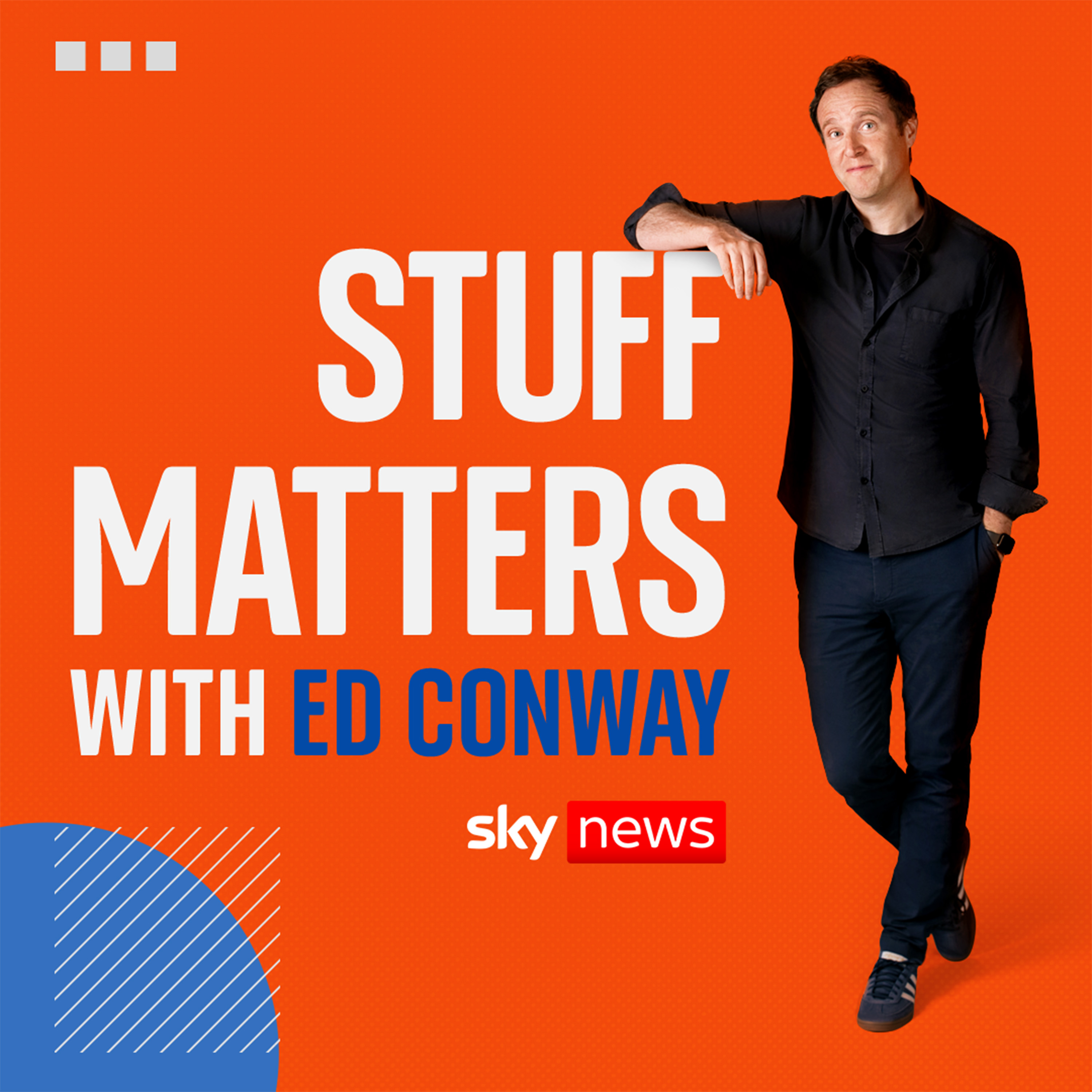
 Stuff Matters with Ed Conway
19 Jun 2025 · 23m · 8 chapters
Bank of England interest-rate decision (expected hold at 4.25%), how higher oil prices from Israel-Iran tensions could affect inflation and recession risk, and Guernsey’s push to attract non-domiciled (non-dom) wealthy residents after UK inheritance-tax changes; plus brief market/legal updates (Google Android antitrust fine; Thames Water restructuring/nationalisation talk).
Ed Conway, Sky News economics editor; Ellie Grose, State Street Global Advisors; Chris Beauchamp, Chief Market Analyst at IG; Paul Gorman, CEO of Bank Aston (Guernsey); Lindsay James, investment strategist at Group of Investments.
Rates likely held today; future cuts depend on minutes, inflation details (road tax, Easter flight costs), and wage weakening; oil volatility may pressure consumers but major oil crisis is less likely due to changed supply dynamics and OPEC mitigation; non-dom tax changes are driving wealth out of the UK, with Guernsey/Jersey benefiting; top earners already pay large shares of tax, so growth is needed.
Oil reaction after a surprise Middle East attack; shipping-lane vulnerability near Iranian straits; London homes £5m+ for sale rising (Lundres research); Bank Aston launched Nov 2023; ECJ upholding Google Android-related fine (~€4bn); Thames Water creditors seeking exemptions; Russia urging de-escalation around Iran’s nuclear sites.
Written by AI. May contain mistakes.
Discussion on the expected interest rate decision by the Bank of England.
“Business Live with me, Darren McCaffrey.”
Analysis of factors that could influence future interest rate decisions.
“Looking at what most analysts and kind of what people in the markets expect, they think it's going to keep on going down, but relatively slowly now.”
Discussion on how geopolitical events and oil prices impact the economy.
“Yeah, and it's really quite hard to, you know, to divine, just looking, you know, first of all, people don't really know what Donald Trump is going to do on any given moment.”
Insights on how different central banks are navigating current uncertainties.
“the detail and the nuance rather than that overall decision today.”
Exploration of the oil market's influence on the global economy amid current tensions.
“Ellie Groves there from State Street Global Advisors.”
Discussion on Guernsey's strategy to attract wealthy individuals amidst UK tax changes.
“So we can't just say, well, it increases the need to move towards renewables.”
Explore the trends of wealthy individuals leaving the UK and the implications for the economy.
“And there are some other jurisdictions offshore that haven't done so well in their financial crime assessments and have gone on to the greatest.”
Stay informed on breaking news, market updates, and significant business developments.
“We're just going to bring you up to date with a little bit of breaking news coming into us here at Sky.”

Get the gist, explore an idea or ask about something said.
 Claude
On Stuff Matters with Ed Conway, what are the key points of this episode?
Searching your listeningAutomatic transcript. May contain errors.
0:00Darren McCaffrey: The top business stories live from the Sky Newsroom. An interest rate decision in the next 30 minutes with the Bank of England expected to leave rates on hold for now. Oil prices surge as Israel steps up its attacks on Iran's nuclear sites. Plus why Guernsey is seeking to attract non-DOMs, even the UK.
0:30Darren McCaffrey: A very good morning on this Thursday. Business Live with me, Darren McCaffrey. The Bank of England is set to announce its latest interest rate decision in just under half an hour's time. Most analysts are predicting that the Monetary Policy Committee will keep rates at 4.25%. Yesterday's inflation figures came in slightly higher than predicted and remain above the bank's target of 2%. And now with Israel and Iran potentially involved in all-out war, it's adding to the uncertainty with oil prices on the rise. Well, let's bring in our economics editor, Ed Conway. Ed, very good morning to you. So the assumption is we're not going to see a change at midday.
1:12Yeah, on hold. I think that's what everyone expects. It would be a big shock if they did anything. And obviously they have signalled that they're going to keep on cutting interest rates. So, obviously, rates have come down from their highs of 5.25 % down to 4.25 % now. Looking at what most analysts and kind of what people in the markets expect, they think it's going to keep on going down, but relatively slowly now. So, we might have now seen the kind of, you know, the big fall interest rates. The big question is what happens next? And, you know, the things to look out for. So, look out, obviously, the decision itself, that's more or less going to be as expected.
1:51so on hold. Like I say, you never say never, but it would be a total shock if they did cut interest rates. The second thing to look out for is what's the composition of the vote? So how many of the members of the Monetary Policy Committee are voting for a cut? How many are not? And I think economists think maybe it's going to be kind of seven, two, it's nine members of the committee, but you're kind of getting a sense from that as to where people might be heading in the future. And then I think the third thing to look out for is, alongside that decision, and I know most people are looking at it for that number, and the number, as I say, is going to be unchanged, so it might look like there's nothing going on beneath the surface.
2:29But alongside that decision, we also get the set of minutes from the Bank of England, and those minutes contain often all sorts of interesting hints as to where they are heading in the future. It's not like a big kind of revision to the economic growth forecast. We tend to get that, you know, you get that every quarter when they do their monetary policy report. so this isn't as vast as that but you do get hints often about look it looks like we think that inflation is is edging a bit higher than we expected it looks like growth is a little bit lower than expected all of those things and there might well be some words along those lines again very difficult to know until we see uh those numbers and until we see that report um but between all of that we might have a better sense this afternoon or at least you know after 12 o 'clock once we looked at some of those those those bits and pieces we might have a better sense as to where they're going in future because that's that's the real question now are they going to cut interest rates in august which is the next obvious time that a lot of people thought they might do it or are they going to wait until november how or indeed might might they not cut at all given as you were saying just in your introduction darren you know there's a lot of other things going on
3:30Darren McCaffrey: right now in the global economy and isn't that the point ed as you say you know you have to take into essentially factor in the inflation rate you have to factor in growth rates but also clearly a very uncertain, unstable world at the moment. Yeah, and it's really quite hard to, you know, to divine, just looking, you know, first of all, people don't really know what Donald Trump is going to do on any given moment. I mean, that was one of the things that, as if you've been watching our coverage of the geopolitics, everyone's trying to second-guess this and no-one has a clue. Secondly, you're trying to second-guess what the economic permutations of that are going to be.
4:04And traditionally, when something like this is happening, traditionally that means oil prices go through the roof, gold goes through the roof all of these different things but do all of those things stack up in the way that they do historically i mean you know the us is now the world's biggest oil exporter an oil producer and that that is something that wasn't the case you know for instance the last two gulf wars so certain things have changed um but broadly speaking you would expect for if oil prices are going up for that to feed obviously into petrol prices and into everything else in the economy we've learned that haven't we in recent years higher energy prices means higher broader inflation.
4:41I think the question mark is so many of these things are so difficult to model, so it's not just what's going on with the Middle East. It's also tariffs. Economists find that very difficult to model. And when the Bank of England last looked at tariffs and what that might mean for the UK economy, they kind of said, oh, well, it's probably not going to have that big an effect. We're not talking about recession. It might dampen down growth a little bit. It might have an impact on inflation as well. But actually, you know, you're not, they weren't talking about it kind of going through the roof. They were talking about it being dampened down because there's less activity because, you know, tariffs kind of dampen that all down.
5:15But again, it's very hard to, you know, to really map that and model it. And so you're in this place at the moment where you have these two vast economic stories, which probably should have an impact on inflation, but no one's quite sure what that impact is going to be. And that means, frankly, interest rates might be going in a totally different direction to where we expect them to in the coming years, which is all of what I think why everyone's kind of looking towards the detail and the nuance rather than that overall decision today.
5:43Darren McCaffrey: OK. And as always, great stuff. And Ed will bring us that decision from the Bank of England at midday here on Sky News. Let's bring in, though, Ellie Grose, who's from State Street Global Advisors. Ellie, very good morning to you. As I say, we're all working on the assumption that rates will be held today at midday. But as Ed was suggesting, it'll be fascinating to see who thinks what when we get the details of those minutes. Thank you. And thank you so much for having me on. So I actually agree with a lot of what Ed has said, which is that fully expecting a hold today. But what that looks like into the future is incredibly uncertain.
6:28And the Bank of England is at a restrictive space at the moment. So there is room to potentially cut it, but they have to take into account the wider elements of the geopolitical outlook.
6:41Darren McCaffrey: And what's fascinating here, isn't it, is trying to work out, you know, we've kind of seen this ladder with rates being gradually cut over time. Is that going to continue? At what pace? Or even as Ed was suggesting, maybe it all stalled given the uncertainty. So I think at the moment where inflation is, which is higher than their 2 % goal. But if you actually are looking at some of the drill down into some of those numbers. So you're looking at April where inflation was ticked up slightly higher than they were expecting. Some of that is due, our analysis of looking at that, some of that is due to the road tax and also due to higher plane flight costs throughout the Easter break.
7:29So actually, if that doesn't continue, so if that kind of continues to actually see the baseline slow and steady, if you're looking at wage, we're entering into a time of wage weakening. So you're actually in a relatively good space there. You might see a cut in August, as it said. But again, that careful, gradual approach that looks at the data, that looks at the global wider impacts that we're in. August and November are still sort of base cases of a 25 basis point cut each time. Basically the same trajectory that they have been doing. So sort of one cut, one off.
8:13Darren McCaffrey: And just briefly, if you can, what about when we look at the ECB, we look at the Fed, how is the Bank of England compared to the other central banks? Again, if you actually look at how central banks are navigating this uncertain time, it's the slow, it's the steady, it's the taking cautious. The ECB took a 25 basis point cut, as we know, but that was because their inflation figures are at 2%. So they had that room. They're still in restrictive. There was that room for them to slow and steady cut. Fed hold. Everyone is just sort of waiting and seeing, seeing how the tariffs play out, see how the war plays out in the Middle East and see what happens to those oil prices.
8:55So I think that everyone, while they might be making slightly different decisions, the central banks are looking at it in the same way, which is data driven, which is slow, steady, gradual, cautious.
9:07Darren McCaffrey: OK, Ellie, really appreciate your insights this morning. Ellie Groves there from State Street Global Advisors. Thank you. Well, as we were hearing, one of the factors worrying central bankers at the moment is the volatility in the oil market because of the heightened tensions in the Middle East. Well, tonight we can speak to Chris Beauchamp, who is Chief Market Analyst at IG. Chris, good morning to you. I suppose my first question is there is a lot of uncertainty because we're still waiting to see how much the Americans may well get involved. But we have seen oil tick up reasonably significantly in the last couple of weeks.
9:44Certainly. And of course, markets don't really like surprises. And Friday's events in the Middle East were definitely a surprise. We sort of knew an attack might develop, but not quite as soon as it did. And I think that's partly why you saw such a sharp reaction on Friday in the oil price. It's calmed down since then. But as you say, the big wild card here is American intervention with the possibility that expands the conflict. And of course, the big worry is what happens to all those oil tankers transiting through those Iranian straits where they could come under attack by Iranian forces.
10:14Darren McCaffrey: Yeah, that's the fascinating thing here is, I mean, I want to get your take on what Ed Conway, I don't know if you listened to what he had to say earlier about the fact that, obviously, this is different from the 1990s and the early noughties, in that America is not as reliant, the global economy is not as reliant on Middle East oil. But, as you say, those shipping lanes are very vulnerable to either Houthi or Iranian attacks. tax. They are very much so. And I think you're right to say it's not the same picture as it was 20 years ago. OPEC is less important in a way. And so you do have more compensating factors.
10:48So we're not expecting a huge spike in the price of oil. Remember how much higher oil was in the wake of the Russian attack on Ukraine back in 2022. It's come down a lot since then, which in a way does make life a lot easier for central bankers. Yes, oil prices could go up from here and that impacts inflation at a very tricky time, but not as much as it used to. And the likelihood is, of course, if you do have another big spike in the oil price, OPEC and other producers will come in to mitigate that effect. So it's not, we're not expecting a major oil crisis at this point, certainly. It looks unlikely, but undoubtedly there could be further volatility, certainly in the short term, that puts more pressure on consumers and of course on the Bank of England.
11:24Darren McCaffrey: And Chris, just very finally on that, you know, if we do see those oil prices increase significantly, you know, if things do deteriorate, what type of impact would we look at that having on the global economy, for example? Well, given how important it is to most consumers, you can expect some material hit to consumer spending and you could then see that feed through into lower earnings for companies. We are still very finely poised here for a recession given the uncertain impact of tariffs and how much of an impact that's happening. We don't really know at the moment. It could just be enough to tip the balance towards a much gloomer outlook for the global economy in particular.
12:01Darren McCaffrey: And as you say, what's fascinating here is that, yes, the kind of sources of oil have changed, haven't they, to a reasonable degree over the last couple of decades. But our reliance on oil, whether it's still to fuel our planes or for plastic or for our cars and transportation, we're still pretty reliant on it, despite the changes in technology, even in the area of green energy, for example. Massively. It's no longer just about energy. It's about, as you say, plastics and so many other products that you wouldn't think have oil in them. So we can't just say, well, it increases the need to move towards renewables.
12:37Oil remains a crucial part of the whole economy. And Middle Eastern oil, which supplies some of these crucial energy elements, is still going to be crucial. And, of course, look at China, which is ignoring everyone else's push to renewable energy and continuing to consume oil on a vast scale, really far larger than what we're doing in the West. It's not as if oil is going to go away as a major issue, even in the medium to long term.
12:59Darren McCaffrey: OK, Chris, great stuff. Thank you very much indeed. Chris Beesham there from IG. Thank you. Now, the government's decision to make so-called non-DOMS assets liable for inheritance tax has reportedly seen many of the wealthiest people in the UK leave the country and seen the number of London homes for sale at£5 million or more rise to the highest on record last month. That's according to research from Lundres. So where are they taking their money? Well, Guernsey is hoping to attract the wealthy with its offshore banking. A new offshore bank, Bank Aston, has just launched there. And joining me now is Paul Gorman, the chief executive of that bank.
13:37Darren McCaffrey: Very good morning to you. You're pretty unashamed about this in some ways. You want these wealthy people to come and bank in Guernsey. Well, we'd expect them to want to, really. It's economically and geographically adjacent. It's got the same rule of law. And maybe some other places are less attractive. You know, a lot of people don't want to go back to the US at the moment. And there are some other jurisdictions offshore that haven't done so well in their financial crime assessments and have gone on to the greatest. So, you know, Guernsey is a very strong island, very well regulated, adjacent to the UK, 45 minutes out of Gatwick.
14:19And, you know, if the money is going to go somewhere, then why not? So I'm not encouraging people to move out.
14:25Darren McCaffrey: Well, that's the thing, isn't it, Paul? You say the money is going to go somewhere, but you are essentially encouraging people, aren't you, because of all the factors that you've just talked about? No, I mean, the economic data is already showing, you know, capital gains tax is all written down, which tends to be on the taxes paid by the wealthy, and the exodus is well documented. You know, the front page of the papers are showing it, including senior bankers who don't want to live in the UK or Europe, are choosing to just be elsewhere and manage their businesses from elsewhere. The other thing is, you know, trickle-down economics is a straw man that really nobody's ever tried to argue.
15:08Nobody quite knows where it came from. But these people are wealth creators and they help the economy overall. And, you know, if they're leaving the UK, that's bad for the UK. We started the process of setting up Bank Aston in November 2023, which was well before any of these things started hitting the press. The Tories got ahead of the Labour Party and announced that they were going to do it. So it wasn't a, you know, the politics suggests it would have happened anyway. and, you know, Guernsey is well-regulated, it's trust-friendly, has a lot of funds and fund administrators and family offices and we're already seeing Guernsey being a net beneficiary of this attack on the world.
15:56Darren McCaffrey: Just on that point, Paul, you talked about the fact there has been a lot of press coverage of this and there undoubtedly has of people, it seems, leaving the UK. Just in terms of, I don't know if you can give us specific numbers here, but what have you seen? I mean, have you genuinely seen an uptick in people going to Guernsey and elsewhere? Not just anecdotally, but actually in terms of that hard core kind of numbers, if you like. Yeah, I mean, I've seen it from people who we speak to in the UK who are leaving. And then I've also seen, I'm in Guernsey right now, and we hear of an influx towards Guernsey and also into Jersey as well.
16:36I don't know the numbers because a lot of the numbers are obviously going to be quite private. But the exodus is undeniable, and I don't think it's contentious to say Google's happening.
16:47Darren McCaffrey: And we're talking about, and we've seen an impact that this may be having on the housing market in London. We've seen in boroughs like Kensington and Chelsea and elsewhere that houses there just are not selling as much as one would have expected, given what we've seen in the past. So, you know, I think it is fair to say there are real world consequences. but it's also fair to say there are lots of reports that Rachel Rees may be looking at backtracking a little. Yes, there's a chance of some backtracking in certain areas, trying not to make it not look like a U-turn. But I think once you've started down the track of saying, you know, not just non-DOMs but taxing the wealthy, I think you've opened Pandora's box in that area and people are going to start making plans.
17:33I think, you know, plans were underway. already, but nobody had actually done anything about it until the changes were made. I think there was a bit of hope that it wouldn't actually happen, but now I can add that the exodus is clear.
17:48Darren McCaffrey: Well, and just finding on that, though, Paul, you know, people watching this programme who will understand that wealthy people have got the ability to move around, but will also think, you know what, this is essentially just getting some of the wealthiest in our society to pay a bit more, to help support things like the National Health Service and other public services that, frankly, have had a pretty tough time recently. What do you say to people who just say, you know, what Britain is just trying to extract a bit more money from some of the wealthiest in societies to make our society a bit more equal?
18:22It's an understandable sort of sentiment. But, you know, the top 1 % already pay 30 % of tax, top 10 % already pay 70 % of tax. and you know there's you could you can't tax it i think kia starmer said himself you can't tax yourself into prosperity i think what you need to do is is grow and hopefully grow faster than your national debt is going up um and if you're going to grow then you need to have people in the country who are going to be able to lead that growth okay okay you're pushing them away then they've got they're going to go somewhere else and if they're going to go somewhere else then why not to Guernsey or New Jersey?
19:04Darren McCaffrey: Okay, you got that in at the end there. Paul, appreciate your time. Paul Gorman there from Bank Aston. Thank you. Shaq here. What's it like to buy a car from Carvana 100 % online and get it delivered to your door? Let me tell you. Your car is here, Mr. Shaq. Thank you, Mr. Carvana guy. Can't wait to take it for a spin. Only the best for you, Mr. Shaq. Hey, have you always been so big, tall and handsome? Not always. I was 6 '10 once. Seven days to love it or return it, Mr. Shaq. Not that I would. You never do. No, I never do. So buy your car today on Carvana. Delivery fees may apply. See our seven-day return policy at Carvana.com.
19:42Darren McCaffrey: Very welcome back. We're just going to bring you up to date with a little bit of breaking news coming into us here at Sky. And that is coming from Moscow, from Russia, who have been urging, effectively, Israel and Iran and the United States to get involved in talks, given the increasing attacks that we've seen in the last couple of days. well, they're urging Israel to immediately halt air attacks on the Bashir nuclear plant. They say that is because Russian experts are working there and they're also warning the United States, Donald Trump, not to get militarily involved in the Israel-Iran situation.
20:19Darren McCaffrey: So Russia essentially saying and calling for de-escalation, telling Israel to stop their air attacks and also warning the United States not to get involved.
20:35Darren McCaffrey: OK, let's bring you over today with how the markets are doing this morning. Let's speak to Lindsay James, investment strategist at Group of Investments. Very good morning to you. And can we start with Google? They've been dealt a bit of a blow by the EU and their top court. Yes, that's right. We've had the European Court of Justice ruling today in support of earlier findings by Brussels that Google used its Android phone operating system really to pressure rivals. And they upheld the recommendation of a fine of just over€4 billion. So this could end up being the final chapter in what's been almost a 10-year investigation now by the European Commission, alleging that Google abused its dominant position in search, effectively requiring those device manufacturers to pre-install Google search and Chrome and preventing phone companies from using alternatives.
21:29And also, it's coming at a time when there's already been a fine of just over two billion euros for favoring the comparison shopping service as well ahead of rivals. But, of course, very sensitive time for U.S.-EU relations at the moment. Donald Trump's targeting the EU digital services tax with his own clause in the spending bill. And we've got also, of course, tariffs decisions upcoming, and he will not like to see this fine upheld.
21:58Darren McCaffrey: Tim's water also back in the news today. I just see The Guardian in the last couple of minutes saying apparently the Environment Secretary is stepping up preparations for temporary nationalisation. they're a company that seem to be in perpetual turmoil. Yes, of course, the latest chapter of this long-running saga. But I think some of the proposals that we've seen coming out of the group of creditors who are trying to take control of the business, they're really going to be quite outrageous, I think, for viewers. You know, they're really asking for exemptions for environmental laws, existing fines to be scrapped, and the power to raise prices at any time before 2030.
22:38And the existing fines are very significant. 104 million for failing to manage sewage works properly, 18 million for excessive dividends. And the creditors also acknowledge that there's what it terms a clear, deep rooted environmental non-compliance gap. In other words, they're a long way from being able to follow the law on this. So as it stands, 350 pollution incidents in each of the last two years, more fines likely unless the infrastructure is improved. So, you know, a lot of news on this story. I think we'll keep hearing more and more.
23:09Darren McCaffrey: Lindsay great stuff as always thank you very much indeed Lindsay James there That's all for today's Sky News Business Podcast you can follow the feed on your podcast app to make sure you don't miss an episode and there's plenty of business news and analysis on the Sky News app Goodbye for now