Ask ChatGPT

 Super Data Science: ML & AI Podcast with Jon Krohn
6 Oct 2026 · 1h 15m · 29 chapters

Episode 1033 is about “workslop”: AI-generated workplace content that masquerades as real work but doesn’t actually do the required task. The hosts argue the biggest harm isn’t productivity loss; it’s relational damage. They claim recipients experience cognitive confusion, frustration, and “interpersonal tax” (people don’t want to work with the sender again), leading to “relation slipping” when AI displaces human coordination and trust.
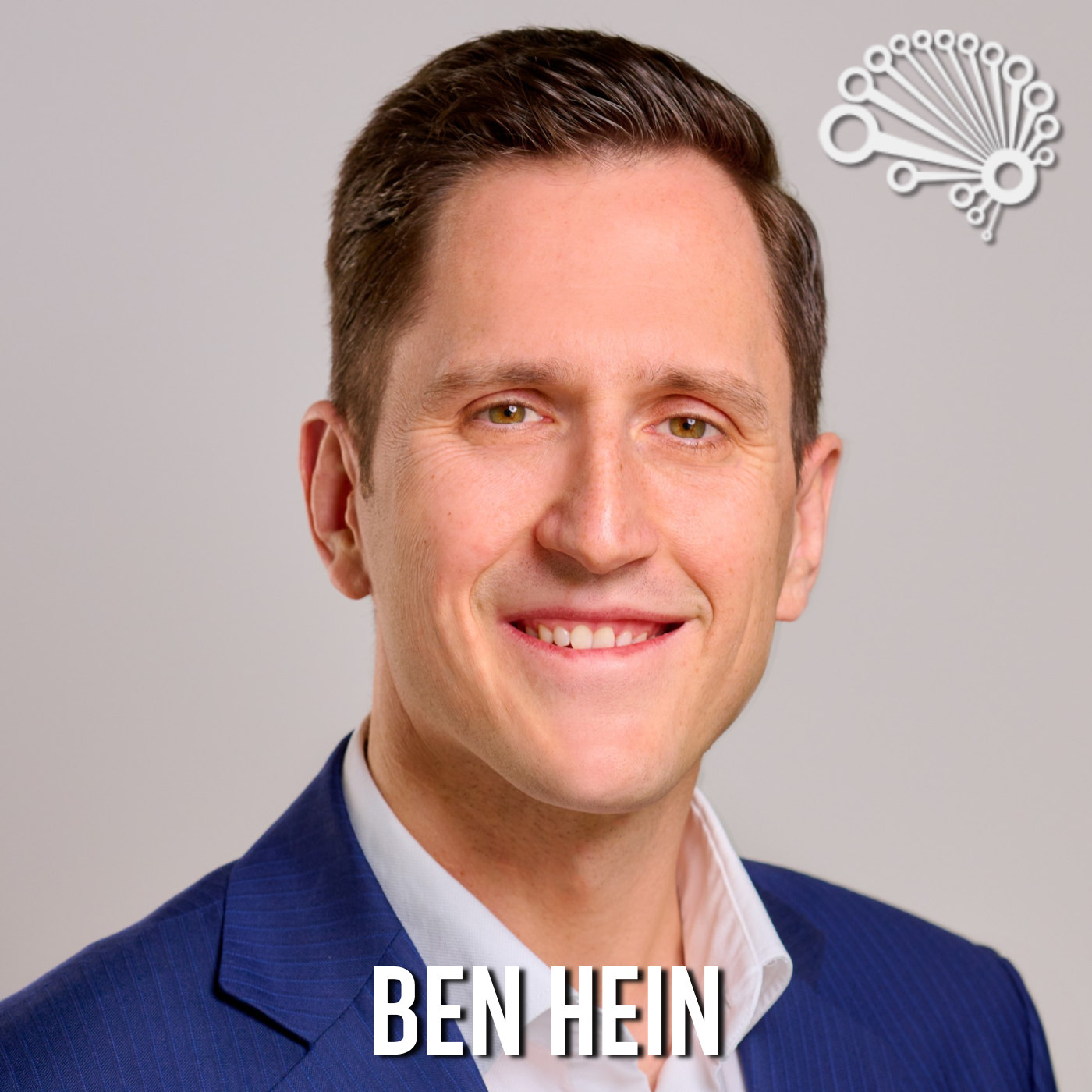
Prof. Jeff Hancock (Stanford Communication; founding director of Stanford Social Media Lab) and Dr. Kate Niederhoffer (Chief Scientist at BetterUp). They coined “workslop” after a viral Harvard Business Review article; the term later appeared in Merriam-Webster’s Words of the Year.
Over half (53%) admit producing workslop some of the time; a 10,000-person company may lose ~$9M/year in productivity, with additional costs from attrition (estimated ~$27M). Examples include long AI-like emails that dilute the real message, and “shrimp Jesus”/other AI slop as a workplace analog. They recommend combating it via psychological safety, clear expectations, transparency about AI use, and using AI relationally (not as a private “meat proxy”). They also introduce “relation slipping” and discuss incentives, observability, and team-based AI use.
Written by AI. May contain mistakes.
The guests explain the concept of Workslop and its relational costs.
“This episode of Super Data Science is made possible by Anthropic, Dell Technologies, NVIDIA, Origin, and Palo Alto Networks.”
Discussion on the difficulties of detecting AI-generated content at work.
“That is that does seem to be the main thing.”
The impact of Workslop on relationships and productivity within organizations.
“So you could argue that the tells are becoming less transparent.”
The hosts share their experiences dealing with AI-generated content in emails.
“Yeah, it's funny you ask because we'd been tracking it at my center where it was just sort of like weird, funny things like, you know, shrimp Jesus, which you may remember from 2025.”
Strategies for addressing Workslop and improving communication in teams.
“I'm the CEO of an AI software consulting business, and we have lots of different clients.”
Exploration of the high incidence of Workslop in the workplace and its implications.
“And like reinforcing, such a reinforcing way to approach this problem.”
Explore the phenomenon of 'work slop' and the underlying reasons behind it.
“We can all bond over these funny experiences of receiving like way too long emails that don't really get to the point or use specific words.”
Discuss the importance of empathy in understanding work slop and its organizational roots.
“Again, that's paloaltonetworks.com slash I-D-I-R-A.”
Understand how low psychological safety contributes to work slop and impacts team dynamics.
“So that condition of psychological safety that is really an investment of the organization into the talent infrastructure is one of the most important ways to dissipate work slot.”
Examine how AI affects team relationships and the importance of collaboration.
“So you describe Claude acting as an agent there to assist you with scheduling, what have you, leading to relationships slipping between the two of you, Kate and Jeff.”
Discussion on the barriers to sharing AI innovations in teams.
“slipping because now I don't know where Kate like came up with that.”
Exploration of the relation slipping phenomenon and its impact on teamwork.
“You guys were so kind to me that you didn't even correct me.”
Analysis of how misaligned incentives lead to inefficiencies in organizations.
“It's the way that we as humans are using these tools.”
Discussion on how distrust and relation slipping correlate with attrition costs.
“Oh yeah, we got to make sure that we get all the references, all the incentives right here as well.”
Sharing a personal story highlighting the impact of trust and work slop.
“And so we were like, oh, maybe we could look at the attrition costs.”
Exploring how AI can enhance team collaboration and the need for AI literacy.
“no human works like this where it's like every single, on all 40 pages, it's the same structure of nested bullets and two bullets at the lowest level, all of the exact same structure.”
Discussion on how AI has changed individual work but not team dynamics.
“I remember in 2019, trying to use Google Meet and it would always take 10 minutes to get it set up.”
Exploration of effective ways to utilize AI in workplace settings.
“So I hear your ask for these sort of practitioner-oriented use cases, and we'll get there.”
Importance of having an agency mindset when engaging with AI tools.
“And then there are a bunch of use cases that we can talk about that make sense.”
Discussion on the emotional responses generated by using AI.
“That was a way better answer than what I was asking for.”
Contrast between AI augmentation and automation in organizational strategies.
“I'm just about to get to S in my dictionary.”
Learn about the benefits of using AI to augment human roles rather than replace them.
“all the way fast forward to the end where there's an investment in hiring talent.”
Discover the story behind a deepfake incident and its implications for trust and expertise.
“we're not saying that automation is bad.”
Explore how a painful professional experience can lead to valuable lessons in humility and teamwork.
“there was this Minnesota election deepfake case that you were involved in as an expert and something kind of ironic happened in that environment.”
Learn about the BetterUp platform and its impact on organizational growth and development.
“Hey, hey, this is your host, John Crone.”
Examine how AI can enhance human relationships in professional settings.
“And now, you know, it's overshadowed, you know, the Minnesota case thing is overshadowed by the work that you two have been doing together in WorkSlop and the impact of that.”
Learn how AI is influencing workplace relationships and productivity.
“How do you be good at relationships at work?”
Discover the best ways to follow Prof. Hancock and Dr. Niederhofer's work.
“So what are the best paces on social media or email newsletters or whatever to follow you both?”
Reflecting on the discussion and potential future insights.
“Turns out you don't have to have a beer for it to be a fun conversation.”

Get the gist, explore an idea or ask about something said.
 Claude
On Super Data Science: ML & AI Podcast with Jon Krohn, what are the key points of this episode?
Searching your listeningAutomatic transcript. May contain errors.
0:00Jon Krohn: That AI-ridden email you fired off to save 10 minutes? It may have cost your colleague an hour and cost you their trust. Welcome to another episode of the Super Data Science Podcast. I'm your host, Jon Krohn. Today I've got two guests at once. Professor Jeff Hancock, Professor of Communication at Stanford and Founding Director of the Stanford Social Media Lab. And Dr. Kate Niederhoffer, Chief Scientist at BetterUp. Together, Jeff and Kate coined Workslop, AI-generated content that masquerades as good work, in a viral Harvard Business Review article last year that landed the term among Merriam-Webster's Words of the Year.
0:37Jon Krohn: In this episode, Jeff and Kate reveal why over half of workers admit to producing Workslop, how it could cost a large company tens of millions of dollars a year, and their new concept of relation slipping. Enjoy this one. This episode of Super Data Science is made possible by Anthropic, Dell Technologies, NVIDIA, Origin, and Palo Alto Networks. Jeff and Kate, welcome to the Super Data Science Podcast. Such a treat to have you guys on the show. You're calling in together, which is an unusual thing. I think it's only happened once on the show before. Where are you calling in together from? We're down in Santa Barbara, and we're at an event together, so the timing's perfect.
1:16Jon Krohn: It is perfect timing. We have been talking about this episode for a while. We met backstage at Web Summit Vancouver in the Speaker Lounge. And I think I might've been having a beer with lunch or something. I remember being a little bit silly with you guys, but yeah, we hit it off, stayed in touch. And now I get to have the people behind the concept of work slop, such an important thing for everyone that's on our show. So, you know, to have you guys here, it is an honor. You guys introduced the term work slop in a Harvard Business Review article that went viral. And it became such a big word that it was even mentioned as one of Merriam-Webster's 2025 words of the year.
2:03Jon Krohn: Can you take a crack at defining word slop for our audience here? Yeah, well, John, one thing that's cool is it's almost exactly one year since we put that article out. So this is a little bit like an anniversary podcast for us. Workslop is basically content at work that masquerades as real work, but is actually, you know, AI generated, doesn't actually do the work that is required. And while the focus of the piece, when people respond to it, was really about like the productivity costs, which we can talk about. So one of the things that Kate and I realized pretty early on was that it actually has a big relational cost because you're giving something that looks like work, but actually isn't to another person.
2:46And then they have to deal with it. And that's where the real costs come in.
2:50Jon Krohn: Right. Exactly. That is that does seem to be the main thing. So the idea behind WorkSlop is that you feel as an individual that you are saving your time by using an AI tool to generate something for you, but then by you emailing that to your colleagues or slacking it to your colleagues. I'm sure it's an experience that all of our listeners have had. I have it all the time. I have some anecdotes that I might lean into in a bit after I let you guys talk a bit longer. But it's super annoying. It's super annoying and it takes up so much time. And I feel like it's getting harder to deal with because for a while, up until probably this year for the most part, you could sense it right away.
3:37Jon Krohn: You could sniff it out. You could kind of open an email and you're like, no way, like this doesn't feel right. But it's getting harder this year, at least in terms of style. However, I still do think that you can kind of just tell by duration. Like you're like, really? Did someone write this three-page email? I don't know. What do you guys, how can we combat work slop or how do you detect work slop? Are there any advantages to work slop? I don't know. You have the floor. Yeah, I think it's really important to make a distinction between sloppy content and work slop. For us, one of the most important parts about producing low effort, low quality AI generated content is the shift of the burden onto the recipient, right?
4:18That's the relational piece that Jeff was talking about. And then it leads to that whole cascade that you sort of articulated by going through the cognitive confusion, some frustration, the time that's spent, then that really shifts into negative emotions like annoyance, frustration, even anger. It was high intensity, negative emotions. And then the third piece of it that we think is the most impactful for the organization is the interpersonal tax, that people say they don't want to work with the person again. So you could argue that the tells are becoming less transparent. AI models are good at adopting your voice, for example.
5:01but there are so many things that are involved in the shift of the burden that go beyond the tells. You know, it's really the effort that you're putting in to put your fingerprint in and to iterate and figure out like, what am I trying to express here? Which context is relevant to take into account that we have, you know, me as sender, Jeff as recipient that we have in common so that I can really produce a nice piece of work output and make that a smoother coordinated to transition. Yeah. And for me, I think what really stood out was in the messages that Kate and I got was like, thank you for putting a name to this thing I'm experiencing.
5:38Because as Kate said, you said, you're like that, that sense of annoyance and weirdness, it, it comes with a cost. A couple of years earlier, some colleagues at, at Cornell tech and I had done a piece on can, can people detect whether some like online dating profiles, Airbnb profiles were AI generated or not. And we found this thing we call the replicant effect, which is basically once you started suspecting some of the profiles, you started to suspect all of them. And replicant effect comes from one of my favorite movies, Blade Runner. And Harrison Ford's character has to use special gear to tell if this is a real person or an android.
6:19And I tell you, because Kate knows all about movies. She's super into pop culture. uh and um it's a cost it's like now you're like okay is this is my students work here is this their work or is it like ai generated to the degree to which i need to like really um dig in and question it kind of thing so i think naming it and and the experience was a big part of why
6:45Jon Krohn: it became viral what's the difference between ai slop and work slop is work slop kind of ai slop in the workplace? Yeah, it's funny you ask because we'd been tracking it at my center where it was just sort of like weird, funny things like, you know, shrimp Jesus, which you may remember from 2025. And just these like strange AI generating thing that people on social media were sort of sharing around. And slop was, it was negative in that it was clearly like AI generated so it didn't have like a certain quality but it was often kind of funny and then last summer Kate and I both sort of experienced on our own the thing that you mentioned of like getting something for me it was like students in class Kate had her own experience and we're like this is like that fun sort of slop stuff but it matters here this is like at work and so that's how we kind of ported it over was just taking that idea of like just pure AI generated stuff is slop, but like it's happening in this context.
7:50Yeah. I mean, at work, you have different expectations for content and different goals that you're trying to attain. And so I think part of the frustration is the missed expectations and the missed opportunity to collaborate effectively to reach a particular goal, to play the role that you have as your requirement and that you expect of others or you've come to expect over time in collaboration. So there are all sorts of different norms that create, I think, the intensity of sloppy, low effort, low quality, AI-generated content that shifts the burden. The burden is, for lack of a better word, This sounds so AI generated, but the burden is real.
8:34You know, when you receive work from someone else that just doesn't take into account the context that you need to get the work done, that you rely on other people for, it matters.
8:45Jon Krohn: For sure. And while AI swap in general, I think can be fun, it can be amusing. I was recently interviewed by a major news publication. I don't know if it will be out before this episode airs or not. I can't say who it is. But yeah, one of the news publications that everyone knows, they're doing an article on AI-generated food images in menus or in the real world. And that's just funny. It's maybe to the detriment a little bit of the business that has obviously AI-generated shrimp scampi on their printed out menu. But for most of us on the internet, it's just funny. And it's kind of like a nice break, whatever.
9:27Jon Krohn: But in the workplace, it can be infuriating. Work slop can drive you mad. I'm the CEO of an AI software consulting business, and we have lots of different clients. And my email inbox can get full quickly, but I do everything I can to make sure I'm at inbox zero, at least with that work email account every day. And we have one client that has great ideas. And I love, you know, being in person with this person because they're so vibrant and thoughtful about their ideas. But the emails that they were sending to me were obviously AI generated. And I just said it right off the bat, you know, I will not like even though even though they're the client, I was like, I do not have time to be trying to distill from this long email that you wrote, what is actually your opinion?
10:19Jon Krohn: and what just happens to be randomly generated. And I think that was well received. I think people understand that. What do you guys do to combat work slow? Well, so John, did you actually like confront the person and say, look, this is not working for me? And they changed or - Oh, I replied all. Uh-huh, uh-huh. I see. So you told everybody, look, like I can't figure out these long emails. Everyone that was in that thread, you know, when that email was sent, I said, you know, like send me three bullets that describe what you actually want, what you actually think, instead of all of this content.
10:54Jon Krohn: Because it dilutes, I think WorkSlop, it often dilutes what the real message is that someone is trying to get across. Yeah, I think that's right. And one is like you had to do that email. And so that was probably some emotional labor in there. Like, how is that going to be received? That's stressful. I've had the same experience and there's another cost which is so this person I don't know well enough to be able to just say it directly to them and it's very clearly like they've put in three bullet points into say Claude and Claude generates this long email and before I realized what was happening I was like okay I need to write back like a similarly thoughtful long email and so I was doing like a lot more work and this is something that Kate studied you know two decades ago, this kind of idea of reciprocity and language, we style match to other people.
11:50So I was starting to think like, man, I'm style matching with a machine. That's not cool. And so, yeah, I completely agree with that point. And yet also how difficult it is to reset expectations. The other thing that we've been studying more at BetterUp Labs is about sort of good management in this era of AI. And I think a lot of what we're seeing is the importance of human skills like relationship building, coaching, and alignment. And those come into play quite a bit when you're giving feedback on work slop that you received, even if it's not a hierarchical relationship. And that's to say, like, when I receive something from someone that doesn't sound like them, or I can't decouple the effort and quality that appears, then I often say, like, I have such specific expectations for what I receive from you.
12:40And it's sort of like a moment to look someone in the eye and say, like, I see you. I know the content that you produce. And I need that. You play a really important role in producing this work. And so, like, it sounds like, you know, Puritan models of management or, you know, sort of like this Pollyannaish view of what work should be like. And I don't mean to be so rose colored about the situation. But I think that that's the message that needs to be communicated is like, put yourself into this. You know, my expectations are specific to a role that I may have hired you to play or have come to expect you to play in our collaboration.
13:18And I want to see that in our work product because I'm habituated to it. And I know that's what it takes to get the work done.
13:24Jon Krohn: I like that a lot. That's a really nice way of approaching it. Such a friendly way of approaching it. I'm super friendly. Yeah. Yeah. And like reinforcing, such a reinforcing way to approach this problem. You said something important, which is about, you know, why would we be reinforcing our kind about it? And I think that was a transition in our research, you know, when we first detected the prevalence of it so high. 40 % of people have experienced low effort, low quality AI generated content. And, you know, we sort of roll our eyes at it. We can all bond over these funny experiences of receiving like way too long emails that don't really get to the point or use specific words.
14:08And I think our instinct was like, oh, this is so frustrating. But what we've come to realize is like when people say why they produce work slop and people do admit to producing it. In fact, we found something sort of uncanny, which is that over half of the population, 53 % of people will admit to producing some work slop some of the time. And that's a crazy thing to admit such a socially undesirable behavior that has such a negative impact on others. And when they say why they did it, they say, like, I have so much going on, everything feels important and urgent. And so that even creates some compassion.
14:44but that's not what we see actually predicts statistically speaking the production of work sloth there's some other factors that are much more situational that we can talk about but knowing that i think has brought about a renewed sense of kindness and managing it because people feel overburdened and it's actually like not their fault um there are some reasons as to why this is happening in the organization that we can really attribute the production to that make me realize like there are some things to address. If you're seeing a lot of work slop in your workplace, there are some things that you as receiver need to do.
15:20Jon Krohn: If you're like me, you've spent a lot of this year spinning up AI agents and cloud workloads. Here's something I hadn't thought hard about until recently. Every one of those deployments creates a new identity with permanent access to your critical systems. And the legacy tools most companies rely on were built to manage human employees, so all that machine and AI access goes largely unmanaged. That's the problem IDERA by Palo Alto Networks was built to solve. Human, machine, AI, one identity security platform for all of them. IDERA replaces standing permissions with dynamic access, so you can lock down every identity without slowing your team down.
15:58Jon Krohn: For those of us shipping agents into production, that's a big deal. Secure every identity with IDERA by Palo Alto Networks. Visit paloaltonetworks.com slash I-D-I-R-A. Again, that's paloaltonetworks.com slash I-D-I-R-A. Let's double click on that. Tell me more. Well, I think for me, it was like a little empathy, you know? How do we think about why that person is doing? I remember talking to a student, clearly had done that and they were student athlete and they were like, I'm just gonna be honest. I would, I've crushed, I I've got too much. They were, you know, preparing for like huge, you know, athletic event.
16:42Um, they're doing that plus being a student at Stanford. Like, I don't even understand how they did it. And that really helped me start thinking. And Kate was seeing it at work about the conditions that, um, that lead to it, you know? And so a lot of times, okay, well, look, there's always sloppy workers, right? Like we know there's going to be some people that are not great. And, you know, we want to separate that from what I'm about to say, which is sometimes people are trying hard, but under the conditions at their organization, they work slop seems like the best option, you know? So one is they've been told they should be using AI and that they kind of have to use AI, these AI mandates that were really popular in 2025, forcing people to work with it.
17:27You know, CEOs invested millions of dollars. You better use this. They're overburdened often. Like everybody feels stretched a lot right now and how people always are coming back home now, just like exhausted. And so they're really heavily burdened. And especially 2024, 2025, people were still developing those AI literacies, still trying to understand what its limits were in their own space. And so, yeah, for Kate, we wrote a second follow-up piece that really tried to say like, Hey, let's not like, you know, blame the person so much. Let's think about the conditions we as society, we in organizations are creating.
18:12And we sort of tried to lay out for leadership, like, here's the recipe for work slop. Don't produce it. Right? Like if you if you put these ingredients together it's going to happen and it's our responsibility not you know not as much just blame the individual and that was really important. You forgot the most important one. I mean besides mandates I think the thing that I think is is most responsible for this is low psychological safety. Yes. And that's something that we've seen in the past has always been an important factor in the conditions for great teams to work, to catch mistakes, and Amy Edmondson's original research about it, but really for collaboration to be efficient.
18:56And when people have low psychological safety and they're given this very powerful tool, they have to be able to appropriately take risks to get feedback, like the examples that we just talked about, to tell people when they're over-relying on it or under-relying on it, and just to be able to make mistakes and explore with curiosity and be transparent about the disclosure that I used it or I didn't use it here or have a great idea as to how you can use it. So that condition of psychological safety that is really an investment of the organization into the talent infrastructure is one of the most important ways to dissipate work slot.
19:39It's weird how psych safety just keeps coming up in our research. It's so important in our work around AI. It's important. Obviously, Amy has shown it in other work. But it comes back to the idea of like, quality and trust. Like if you have a team that isn't nice, per se, it's about like, being generous with criticism and being ready to accept it because you believe the other people are doing it for the common good for your good and oh man yeah like I couldn't believe I can't believe I missed it in our work psych safety was like one of the main things that reduced work because people feel like they can share it and they also feel like people will say like you did John hey this uh this long format's not working like it's not good let's do it in a higher quality way.
20:29We have psyched up enough that you're allowed to forget things. I'm here to remember them.
20:35Jon Krohn: Yeah. It's in reinforcement learning. There's a well-known paradigm called actor critic. We have one algorithm that acts and then another one that critiques it as it goes on. And you guys get to have that. It's not that one of you is fixed as the actor and the other is the critic. You sure can. So we have some brand new work that will be coming out in Harvard business review. And we'll be coming out hopefully in the next week or so. And if we think of work slop as content that was AI generated that we share between each other, what Kate and I and the team have been looking at is when we don't even communicate with each other.
21:17So instead of talking to Kate about something I'm working on or checking in on something. I just go to Claude. And that moment of doing that is totally reasonable at the individual level. It's very justifiable. Like it's hard to schedule time with Kate. Claude's pretty, pretty good and always available. Very supportive of me, always wants to help me. But what's missed if I don't sort of like use that to advance my conversation with Kate and I displace it is I lose that chance to coordinate with her so she knows what I'm thinking about and that helps us manage our memory system together. And I also don't have that relational maintenance that keeps trust built up.
22:05And so we've developed a term for those two costs when we displace people with AI and it's relations slipping. we're allowing the relationship that we have as a team members to slip and that's causing coordination to decline and it's causing trust to decline and so we've been thinking about moving from the work slop era which was focused on our individual experience to how we should be thinking
22:32Jon Krohn: about ai at the team and relational level i think that all of those concepts become particularly important in this agentic era that we're moving into. So you describe Claude acting as an agent there to assist you with scheduling, what have you, leading to relationships slipping between the two of you, Kate and Jeff. But as we start to roll out more and more agency and organizations, have you two thought much about how we can do that in a way that it's largely net beneficial as opposed to, you know, if we just relationship slip our way into kind of oblivion. Yeah. Yeah, a lot, actually. I think the big theme in all of our research over the last three or four years has been how social and relational AI usage is.
23:26And we maintain a really strong, positive belief that AI can transform relationships. It's a transformative technology that can have really positive, enhancing effects on relationship. if used in a particular way. Most of the foibles that we identify are human issues or investments of the talent infrastructure that have gone awry or that we've left neglected and this powerful technology is amplifying. So yeah, I think there are a few things that we've identified now that have become more important to make sure that we shift the organization from being so overly focused on individual AI adoption to understanding how it can be embedded in a team for productive collaboration and gains.
24:15Some of the things are similar to what we've been talking about, like psychological safety, ensuring that that's there, like maintaining eye contact with people and investing in human relationships at the same time as you're investing in the AI technology so that we can maintain that. And we never are in an instance where we're displacing people. Instead, we're using the AI as a mediator to augment the relationships that we have and our own expertise and contributions to that relationship. So we can talk about other ways, but I think that's the gist of it is like being aware of, in fact, how social AI is and how much human potential it takes for it to be effective in the organization and how it can have these enhancing experiences if you use it with agency, if you're aware of the people around you, if you talk about transparently your usage of the tool so that we can effectively coordinate.
25:16Jon Krohn: Yeah, somewhere in my research, and I'm just scrolling through to try to find it quickly, but not immediately, maybe you both will know exactly what I'm talking about. there has been recent research that I think you both published on related to how metaphors of AI indicate that people increasingly perceive AI as warm and human-like. Do you want to tell us more about that paper? Yeah, that was actually one of our very first projects. So when Kate and I first started working together in 2023, we wanted to track how people were conceptualizing AI because it was like all in the news, ChatGPT was like, it just blew it up.
25:58And so we wanted to get in early and track how people were thinking about AI. It's difficult to ask people about it. Like you can't do a scale because, you know, it's messy and it's never stated. So we use a technique where we ask people metaphors as a way of like kind of surfacing underlying kind of attitudes and and fears hopes mindsets in some ways and yeah we found early on it was like it's like a computer it's an encyclopedia it's and over from 2023 through I guess was it end of 2024 ish it was becoming more human so more anthropomorphic metaphors think assistant teacher child moving away from computers synthesizer encyclopedia.
26:45And then, you know, in psychology, we know that when we meet somebody or a thing like a robot, it goes, we measure something on warmth. So we immediately form a warmth thing and a competence. And we were seeing this track, whereas anthropomorphism also increased, so did warmth. So our kind of like liking it, thinking it was like working for us, It was friendly. It had our interests at heart. And so that changes the way we then interact with it and communicate with it. So for me, listening to Kate there and also thinking about our metaphor work, I think there's a second really big thing going on.
27:25I think Kate's right that AI is a multiplayer game or maybe a team sport. and yet almost all of the AI usage I see with students at Stanford when I meet with Kate and these companies that we talk to it's all individual so like people are working with Claude or Copilot or ChatGPT on their own then they take whatever product comes out of that and they insert it into the workflow a lot of times the workflow will be coming along and they pull it out so they can work privately on it and put it back in. And so this is a problem for relations slipping because now I don't know where Kate like came up with that.
28:08That's number one. Number two is if Kate did something really cool in her developing of an agent or prompting it or coming to that product, say the product was really great, that innovation is not observable because Kate is is holding onto it as they're sort of like private IP, right? And so innovation doesn't diffuse. We know that like there's, you know, a couple of main things for innovation to diffuse or an organization and observability is one. So how do we change those practices? Like it just feels weird to share your prompts right now. So there's like norm issues. We need to change the norms.
28:45And the second is incentives. Right now, if Kate like kills it and she's doing really great and super productive because she's got her really good AI IP, private AI IP, she's going to get rewarded for that. If she shares it with me, there's zero incentive to do that. So I was talking to a CHRO recently, and they were talking about how they changed the incentive structure so that they now work in joint teams with agents, or well, in particular with a clot. And so they can see who's prompting. They see how the prompt, they can understand clot's output now. And so it really helps deal with the coordination and team trust problems that we see with relation slipping.
29:29Jon Krohn: I was using the term wrong. You guys were so kind to me that you didn't even correct me. I kept saying relationship slipping. Well, Kate and I figured out that after four or five tries, it actually works. But the first few times, it's a bit like blah, blah, blah. You can also use slippage if you like, John. I like to figure a sentence that goes, how does this work in a sentence? How's your relation slip going? Or is your relation slip getting worse? Did your relation slip differently on the ship? Excuse me, I just came back from taking a... I was on a cruise and I relation slipped on the ship.
30:11Oh, my God. Okay. As long as you don't confuse it with like, I think people are tempted to talk about relation slop. And that's not what it is. It's not like work slop in a relational setting at all. It really is this very specific effect of displacement that we're seeing. That's the sorry to bring an end to all the jokes, boys. But it's very specifically, this decrease in trust and coordination because of displacement. And the reason why I think it's important to clarify that with all the jokes going on is because it's not AI that's the problem. It's the way that we as humans are using these tools.
30:48And maybe because of incentives or maybe because of the psychological safety of the team, or maybe because we haven't had training in how to have those human skills to relate to other people or to coach and align with others and our goals, that we're sort of missing this opportunity to use AI to augment our relationships and and our teamwork. And that's like, there, like a lot of this work on teams and transactive memory systems that we've been studying comes from this really sort of fun, relatable idea, which is like when you're in a couple, an intimate partnership, you come to develop these systems for who knows and remembers what.
31:28And it's not just the fact per se, it's like a meta memory of what your partner knows. So, you know, I may remember, this is the classic example of like, I remember it's, you know, my partner's stepmother's birthday. And, and then he's like, Oh, great. Okay. So Kate's the person who knows, you know, her birthday, but also Kate's the person who knows birthdays. And I can offload that to her for all the birthdays. And that's like, it's so efficient to operate like that. And I could do the same thing for other things, but it's like, you come to play these roles. And if you apply that to your team, you think about like, what do you rely on certain people to know, not just factual content, but like the person who consistently persists in knowing that type of stuff, that's what makes for a great team collaboration.
32:18All those different perspectives that you can rely on.
32:21Jon Krohn: I really like that. It is such another warm idea that you've brought to the conversation. I'm the nice one here. It's just such a nice little treat because normally he's the optimistic Canadian, but I'm the one who's reminding you guys, these technologies can be transformative and really positive. And you can be kind to people at the same time. For sure. Yeah. Well, you're just doing your Andy McKay impersonation. All right. McKay McAvee, Andy McAvee. It's awesome. It's going to do everything great. Thank God you didn't reference somewhere from pop culture and academic. I can handle. Yes. Spending too much on cloud AI costs?
32:58Jon Krohn: You're not alone. As agentic AI scales across organizations, cloud token costs can spiral out of control fast. But it doesn't have to be that way. Dell desk-side agentic AI lets you run your AI workloads locally and cut token spend up to 89 % over two years compared to the cloud. Keep your data secure, keep your costs predictable, and run AI on your terms. Today's episode is brought to you by Dell and NVIDIA. Explore how DeskSide AI can lower your costs at dell.com slash DeskSideAgenticAI. That's dell.com slash DeskSideAgenticAI. Oh yeah, we got to make sure that we get all the references, all the incentives right here as well.
33:44Jon Krohn: Talking about incentives being misaligned, you know, people having mandates to use AI tools. It reminds me of, in our world, with hands-on AI practitioners, data scientists that listen to this show as our primary audience, we obviously had the token-maxing nonsense of a few months ago. And so this kind of seems, the work slop idea is like a generalization of that across any kind of work function where there's mandates. And it seems from some of the research that we did on your research that there are quantifiable costs to businesses as a result of incentivizing things the wrong way. So one figure that we pulled out is that it costs, I think this comes out of an article that you guys wrote, although I'm not 100 % sure, that it would typically cost a 10 ,000 person company$9 million a year to be incentivizing things wrong and having work slop all over the place, causing relation slipping, causing all of this extra time for people having to tease through the slop to find the needle in the haystack, the meaning that's intended in there.
34:48Yeah. One thing I'll point out, and then I have a feeling that Jeff is going to enhance your thinking around the cost, is that for each of the instances where we can calculate the costs, that's sort of like that which is attributable, right? So with work slop, the time spent, which we already discussed in the beginning of this episode, is like maybe one third of the costs of work slop. There's the sort of time spent figuring out what to do or what the document even means. And then there's the negative emotions. And then there's the interpersonal tax of not wanting to work with someone. I think that's the hardest cost to calculate and the biggest one.
35:28So, right, we can calculate how many millions of dollars that costs an organization in lost time. But think about the deterioration of the fabric of your collaborations because people don't want to work with others when they don't have a good handle on the balance between the relational skills that it takes to do work and the investment in AI literacy. We have similar calculations for our new work too. And that, and that same adage, if you will, holds true. Whereas we can calculate the costs of some of it. And that's just a piece of the overall puzzle of the cost that of this relational tax. Yeah.
36:07So the other side, Kate and I were really like frustrated because we could figure out like the productivity, direct productivity cost, the$9 million for a 10 ,000 person org. But we were like, that annoyance, that like seeing the other person as less competent or less trustworthy, there was real cost there. You should have seen some of the comments we were getting, some of the participants giving us the quotes. I mean, they were leaving companies because of this. And so we started in our newer work to look at that. So relation slipping is the consequence of being displaced or displacing others.
36:44And so you don't have as much trust in your other teammates' work. You're not able to coordinate, which is really like perform as well with them. And so we were like, oh, maybe we could look at the attrition costs. So attrition costs are really well studied. And so these were done by some of Kate's team, Alex and Christina. And what we did is we said, okay, well, let's take the feeling of being displaced when that's happening at your team. And look at what might be the likelihood of you leaving. And so what we were able to do by looking at relation slipping is actually calculate the attrition cost.
37:27What's the likelihood that people would leave above and beyond the expected attrition? So there's sort of like baseline attrition for every company. What's the delta? And then what would that cost a 10 ,000 person org? So we're looking at about 220 departures above and beyond expected for a 10 ,000 person org. And that comes out to about$27 million. dollars. And so, you know, you've got the$9 million in productivity loss for work slop. Relations slipping might be more damaging, more costly to the bottom line.
38:04Jon Krohn: Makes so much sense to me. I had an experience a few years ago in a business I'm no longer involved with where there was an individual that I already had lots of questions about whether I could trust this individual. There were, you know, kind of each, all these suspicious instances on their own. Each one on its own wasn't enough to kind of be like, okay, this is definitely somebody you shouldn't trust. But there was so many of these unlikely circumstances that you're adding those all up seems very statistically unlikely is a big picture. But the straw that broke the trust camel's back in my mind was that he'd been, we'd had, it was this intensive We were in this intensive product design period, and we'd had this executive meeting late on a weekday evening, maybe like a 5 p.m.
39:01Jon Krohn: meeting or something. And at the end of the meeting, he was tasked with something that we'd review altogether in the morning. And he shows up in the morning, only a few work hours later, 40-page document. and starts off by saying, I have created this document based on my experience in this industry, my years of experience. And instantly, as soon as you start looking through, you're like, there's no way. Even if you had spent the whole night up making this, no human works like this where it's like every single, on all 40 pages, it's the same structure of nested bullets and two bullets at the lowest level, all of the exact same structure.
39:43Jon Krohn: no human things like that where you have the exact same weight across all the aspects of your documents there are going to be things that you know a lot about you end up writing a lot about and then there's other things where you're like you know I don't know as much about that you don't write as much and so that for me it was the final straw and I was like you know what I will have to continue working with this person in some respects but never again will I trust them and I even tried to give them exits during the meeting of like are you sure like it doesn't make sense that it would go this way and just kept doubling down.
40:15Jon Krohn: Anyway, longer anecdote than you probably wanted. No, it's an interesting one because it actually combines work slop and relation slipping in an interesting way. It's sort of like repeated instances of work slop where each one alone, you were sort of like suspicious replicant effect style. The AI might be involved, but then eventually they added up. And I think if it had impacted more players on the team and others were starting to have these like weaker signals of what that expertise that they claimed was in the document, like that's, so it's a convoluted example of both things happening because it's kind of like both the AI as mediating your relationship and then also your desire to now displace that person on the team and maybe find somebody else who has reliable expertise, who you trust more so you can better coordinate.
41:12Totally. Well said. Yeah. And I like to stay on the positive side too, that Kate so clearly leads. Red carpet. It's like, there'd be so many ways that that guy could have approached this project differently and brought in the team and say like, I'm working with AI. Here's how I'm prompting. This is what I'm doing. And I just feel like, it sounds like that was at a time maybe even where AI literacy was maybe just the beginning. But like, how do we move from that AI literacy period to a AI enabled team period? Like, what are the practices that we should bring in so that that experience that that guy had and you had go away?
41:51Right now, I feel like we're still working with teams that were sort of like designed and developed in the 60s. They got transformed a bit in 2020 with the pandemic. We can do this now, no problem. I remember in 2019, trying to use Google Meet and it would always take 10 minutes to get it set up. So we have transformed teams, but it's six years later, three deep years into AI, and we're still operating the same way. So nothing around AI has changed the way teams are working, just the way people, individuals are working. And I think that's the real, like 2027 has to be, how do we rethink teams?
42:29Jon Krohn: Makes a lot of sense to me. And to kind of continue down the positive road, as opposed to misuses of AI and losing trust, I'd love to hear from you guys what you think are the right ways to be using AI in the workplace. So some of the ideas that come to mind for me are, you know, when you're getting going. So, you know, that same story that I was just telling. If that individual had used AI to generate 40 pages of ideas for himself, and then he spent an hour whittling that down to like a page or a paragraph of the most valuable things for the executive team to work with, I think that that would have been a really good use of AI.
43:11Jon Krohn: I think that another great use of AI in the workplace is taking something that you've already drafted and polishing it, making sure that it is going to improve the readability to whomever you're sending it to. So I don't know if those are two ideas that I thought of. What are other ways that we should be using AI in the workplace? Yeah. So I hear your ask for these sort of practitioner-oriented use cases, and we'll get there. but I want to first address it from our perspective as psychologists who understand the human side of AI before we get to the practical application. And I think one of the things that we haven't really discussed here is one of our earliest findings is about AI mindsets.
43:53Jeff alluded to this a little bit in the metaphor research that you can detect the way that somebody is thinking about and approaching these tools through their metaphorical language or abstract ideas about it. And really concretely, when somebody has a mindset of agency and optimism, we call that the pilot mindset, high agency, high optimism about the technology per se, then they tend to use it in ways to do work that matters to them in a way that they're in control. And that, I think, transcends all of the use cases that we're about to talk about is to approach these tools with agency. Know that you are in control.
44:30You do not have to be like a meat proxy and take the info that comes from the machine and just paste it in. It's not always right. You need to still put yourself into it, iterate, be in control of what documents you want to feed in and what you want the output to look like. AI can be used in myriad ways. You know, it allows for such heterogeneous use that it would be impossible for us to sit here and say, like, these are the top five use cases, but all of them have in common. Use it with agency. And then I'll say one last thing, like on the bookend of that, is use it in a relational way. So talk about it.
45:10Make that a way that you can have more common ground with people around you by sharing how you've used it, what your use cases are. and tell them, you know, make a point of modeling the way that you're using it so that others feel safe to do that too. Yeah, I think that's like the sort of bookended thing. And then there are a bunch of use cases that we can talk about that make sense.
45:37Jon Krohn: If an AI agent caused an incident at your company tomorrow, what evidence could you produce? Most teams have the prompt and the final answer. Everything in between, the commands it ran, the files had changed, the credentials had picked up, are gone the moment the terminal closes. Origin closes that gap. A sensor on the endpoint records the agent's work as a trace. Who started the session? What was asked? What the agent reached? And what changed on one timeline? And because the sensor sits on the machine, you don't rely on the agent's own account of itself. Origin lives on the endpoint because that's where the work happens.
46:11Jon Krohn: Coding agents in a terminal, local agents, agents calling MCP servers on a laptop, none of that passes through a cloud gateway and Origin sees it anyway. When something unexpected happens, you read the session in order from prompt to outcome. Origin is endpoint AI observability. See what a trace looks like for yourself at originhq.com slash SDS. I love that. That was a way better answer than what I was asking for. We don't even need to go individual instances. is I also, you know, that was kind of a disparaging comment about meat proxies out there. I, since I was a kid, you know, parents, teachers, they would ask other kids what they wanted to be when they grew up, you know, teacher, astronaut, doctor.
46:56Jon Krohn: I always said meat proxy. Meanwhile, I was thinking of being a pilot, you know, with a pilot mindset toward AI. I wanted to be a sock puppet. So is that at all related? my next door neighbor wanted to be mr t growing up wow that is very specific that is very specific i've never wanted to be a sock puppet until this moment but for some reason that a proxy really yeah for sure well i'll add i'll add one other thing because kate reminded me so we're psychologists and one of the reasons and hockey goaltenders we're both actually i'm glad i reminded you of those things really not faster yeah thank you that's right i forgot and one of the reasons that people ask us to come and talk to them is because of the human side and so it's so easy to forget about it but like with the amazing evolution of ai you know especially this summer some of the things we saw with the agents escaping you know open ai and attacking hugging face like Like it's so fascinating, the AI, the tech is.
48:02But one thing that I'm always trying to remind myself and remind people I'm talking to is we have goals. We're trying to accomplish stuff. And the degree to which AI can fulfill those goals or transform our goals so that like, wow, I didn't know I could actually do that. We're starting to see that with students now where we can move the goals for them because they can accomplish more. And when you bring it back to goals, and I'm just thinking about your anecdote that you shared with us, like actually his goal was to signal like, Hey, I'm really trying hard at this. And I want to like make our team do better and show you guys like I'm committed and here's some ideas.
48:42And he failed to hold onto that goal. He allowed AI to just sort of like spew a bunch of stuff and, and not actually accomplish the goal he was, he was, he was reaching for. And so I think that's another reminder is like, what is it you're trying to accomplish? How is AI going to support that? And that's kind of the end of the story, really. The one other piece is like, okay, what is your goal? Could you have a different goal now? And so I think that's an important thing that psychology, I think, brings to this table, even though AI is just so fascinating as a technology itself. You reminded me of something, which is emotions, that I have them, that we have them about, using AI.
49:27And I think that, you know, it's part of the human side. That's really important to talk about that when you use AI, it leads to a plethora of emotions. It's good. No, it's good. You got a wide range of variable intensity. We are motivationally pluralistic and, and it can make you feel like ecstatic and prideful and curious and also like really anxious and afraid and fearful. And that's just, you know, within my experience as a user, it also can have a potpourri of emotions on the receiver, meaning, you know, whether you use it or not, it can lead somebody to feel, you know, like a sense of like genius that, you know, like, wow, I'm so impressed with what you were able to do.
50:20Or also like a total sense of like inadequacy. Like, why, why did you do this? You're like, are you that incompetent that you can't do it? Or like, what, what a wild use case that we can now improve the way that we work together, just like so many different feelings and emotions that surround the practical uses. And I think that's why I had that reaction is like, before we talk about like what you're going to do on Monday morning with AI, I think it's important to recognize all of the human that goes into it and also the human that surrounds it as you use it and you don't use it in the workplace.
50:56Jon Krohn: Yes. A rich cornucopia of emotions. I got plurality potpourri. Yeah. Plethora. Plethora was the first one. Plethora was perfect. I loved it. Plethora really nailed it. Yeah. It was good. I mean, one of the words that I used in Vancouver that really stopped him in his tracks was sequelae. I'll never use that again. It's all Greek to him. No. That is a word I do not know. Yeah. Thank you, John. Guys, read the dictionary. Read the dictionary. Come on. Ask Claude. I'm just about to get to S in my dictionary. You'll also encounter... Tomorrow. Tomorrow's the big day. On the note of positive takeaways from this episode, you both also wrote an HBR Harvard Business Review article titled, Why Companies That Choose AI Augmentation Over Automation May Win in the Long Run.
51:52Jon Krohn: Do you want to give us the spoiler on that title? Yeah, sure. And also, you know, we should probably take a moment to mention all of our colleagues along the way, because we've been talking about the workflop research. It's true. And the transactive memory stuff. And Jeff mentioned Alex Liebscher and Christina Rapuano, who are on my team at BetterUp Labs. Also, Angela Lee, his former postdoc, now a professor at Wisconsin. So we've been, you know, everybody has been seminal. If you guys aren't on S's yet, fundamental integral to this work and really the brains behind. Privital, because we've got our P's.
52:31We know P really well. Or important. Okay. They matter. They matter a lot to me and to this work. And I hope that you guys see this and know how much we appreciate your work and your roles in creating it. Yeah. So this work was with Jan, who is an economics professor at Oxford. Jan and Manuel Denev. Thank you, Kate. Jan and Kate and I were talking about some of the work slop stuff. And what we kind of landed on was Jan had done this like really amazing work. One of my favorite papers in 2023. He showed that well-being isn't just like nice to have at work. It's like causally related to productivity.
53:16Incredible paper showing that the weather at a call center, the weather that surrounds a call center, predicts the sales volume of the call center. Because he's an economist, he did all these crazy controls. It wasn't just the weather, it was how much window square footage the call center had mediated the effect of weather. He showed this really well. And he was thinking about our work with WorkSlop and how that like had this interpersonal effect, like it undermined well-being, if you will. So we started thinking about two kinds of companies, one that automates. So they tell everybody, we're going to get AI in and we're going to, you know, let go a bunch of people.
54:00So see, you know, I don't know, about 10 different companies just this last year that made those announcements. They blamed AI, whether it was true or not, whatever. That's what they're telling the world and they're telling their people. And what we argued was that they would initially get a really good boost because they're literally reducing their costs. So they're going to improve their bottom line. And so they get an initial boost. But what happens is the people are left behind have low well-being. So productivity goes down. They're being told they have to use AI and there's more work to be done.
54:32So that leads to work slop. People start leaving. No one wants to work there. ultimately their talent pipeline is destroyed because of this. They're not hiring young people. And so there's just this increasing decline in their productivity. Contrast that with the augmenting company. Yeah. So essentially the inverse of what Jeff just described of a negative cascade we think can be reversed with an augmentative strategy. And so this begins with the conscious commitment from the organization to put it in y 'all's terms, walk the walk, not just talk the talk, but to really say that we are using these tools to transform the organization and to augment the individual contributions of everybody here such that we can scale it to the team and to the organization.
55:25And that investment, that commitment is expensive. It is a big investment in the people that could lead to a relative decrease in performance as compared to removing the cost, you know, by automating people with technology, which creates this infamous J curve or like it gets worse before it gets better. Right. Because you're investing significantly in the people costs surrounding the technology, the infrastructure that's necessary to harness the potential. And so in that investment, that's when you're going to see the effort that it takes to adopt the pilot mindset, to approach these tools in the right way, to be aware of the relational cues that you can use to dissipate work slop.
56:11And then that upward spiral kind of acts like a virtuous cycle where people are really perceiving the confidence that the organization has in them to take the organization to the next level of transformation, to unlock the potential of these tools. all the way fast forward to the end where there's an investment in hiring talent. You become a talent magnet because people want to be associated with an organization that has those cues of resilience and modernity that are future-proofing themselves with technology. So that's kind of the nutshell theoretical argument that there are these two paths.
56:48The augmentative path is preferable. And along that path are so many different use cases, both at the organizational strategy level and at the sort of managerial individual contributor practices on a daily basis as to how you use these tools to signal that to the people around you.
57:08Jon Krohn: Really great summary there of the paper and tons of valuable takeaways for our audience from it. Thank you. It's nice. It has a nice feel good, positive feeling about it as well. to be augmenting as opposed to replacing people on tasks, which is nice. John, one quick thing I want to clarify too is like, we're not saying that automation is bad. Automation is really great. You want to automate things so that you can give people the space to augment and do new things that they couldn't do before. And I think part of that investment, the social investment that Kate said is I think we're starting to see this upturn.
57:47And now the cost for companies will be investing in teams to redesign themselves. I was talking to another CHRO who, they really hate how their performance management worked. And so they gave a team of six people one month, so time, gave them space, protected them, doesn't want anybody talking to them about how to rethink it. And like I said, like, what an amazing investment. And he hadn't really thought of it, but it was, he basically was like, please use AI, do whatever. I want you guys to come back and reimagine how performance management works at our company. And I'm giving you this one month.
58:25That's an investment in a team to rethink how it works. And I think that's probably the next kind of investment for many firms that are on the AI journey.
58:35Jon Krohn: I love it. More positivity, more great takeaways for the audience. Thanks both of you. one topic that I didn't want to wrap up this episode without getting into a little bit there's like two topics I want to cover left and then we'll start wrapping up both been very generous with your time this is really this is probably the only one that's specific to either of you this is just specific word p I know and this is around Jeff you made a lot of headlines in our research, you know, a lot of what came up was related to this one specific incident, um, where there was this Minnesota election deepfake case that you were involved in as an expert and something kind of ironic happened in that environment.
59:25Jon Krohn: Do you want to tell us about it? Yeah. The irony was, uh, I think very attractive for a headline. So, uh, I've, I've, uh, been studying deception and trust with technology for 20 years. You're even, you're a Canada border services agent, the first kind of guy you into deception right before you even. Yeah, a hundred years ago, I was, I was a border patrol guy. And, and I also studied, you know, deep fakes. We had a, a, a paper on it a few years earlier that was sort of talking about the social implications of it. And so I, I've been asked by the attorney general's office to just say like, could you explain to us what a deepfake is and what its psychological implications were.
1:00:06And it was on a relatively tight timeline, but I was using AI because the tools had sort of matured and I was really excited. In fact, I had told Kate this too. I was really proud of this declaration that I'd put together and just was like, wow, these new tools are transforming the way we work from the way you You can do the research like Google Scholar was like introducing AI, everything. And in the end, the way I'd used AI, which was to have it go through a pass of my work. And I'd sort of made notes to myself, like put the citation here from the previous paragraph. It, you know, tried to helpfully do that.
1:00:43And it just inserted made up hallucinated references. And I didn't share this with anybody. I was doing that thing that I told you about earlier, which was sort of private usage of AI. If I had known a lot now around like how important relationships are and teams are in this. And usually when I do expert witness work, I'm working with a team. In this case, I wasn't and I sent it to the AG's office. They were really amazing. Two people I was working with. And again, because it was a tight timeline, I didn't tell them that I was using AI in this way, which I think would have alerted them and they would have maybe checked it more carefully.
1:01:21so 100 % my responsibility and these hallucinations got picked up by the opposing counsel as they should and so I had to write a another declaration to the judge explaining what had happened and I was able to do that and really tried to lay out very clearly like here's how it happened and also I stand you know behind every single sentence that I'd had in there every study was real that I was describing. And the judge was appreciative of that, but also pointed out like, look, these are nonetheless citations in here that you put in under oath. And so it was this really very painful thing for me reputationally, like here's 20 years of work I've done in this space, undermined in one instance.
1:02:09And the judge rightfully pointed out that this declaration, I can't trust any of it. And so it turned into one of these episodes that was, I will be very honest, extremely painful. Like as an academic, we have one thing. And that really hurt. But more recently, I've been able to talk to my students about it. I think when the work slop worked, it helped me have some of that humility of like, hey, this can happen even when you're trying hard, you know. And it's also made me really think a lot about trust. I get asked this question all the time, how do we know how to trust AI? And I think the only answer I've kind of really come down to is human expertise and it's not necessarily your own.
1:02:54I was as good an expert as they could have had. I was the person that wrote the paper on deepfakes. And so even being an expert on the space, even being somebody that's done research on deception and trust with technology for two decades, even being a customs agent in Canada that studies how deception works. Even I was fooled by it. So how can we think like people that don't have all that training should be able to handle that? So what it comes down to right now and what I'll say tomorrow when Kate and I talk is like we, working with our team, that psychological safety that we talked about earlier, that I think is going to be the ultimate thing that allows us to decide whether we can trust something or not, whether it has the quality that you need.
1:03:42And I kind of think that's evergreen. I think even if you imagine, you know, AI, you know, three, four, five years out that has like massive context, because of the way they're designed, I think that human expertise and the sharing of it and the psychological safe evaluation of each other and criticizing each other, that's the only evergreen source of trust, I think. So thank you for asking. And yeah, it was the irony of it was just too good to not have in a headline.
1:04:13Jon Krohn: Hey, hey, this is your host, John Crone. In addition to hosting this podcast, did you know that I run an AI consulting firm called Y Carrot? Yes, that's the letter Y and the deliciously crunchy veggie. At Y Carrot, our team pairs decades of ML and software engineering experience with recognized expertise in the latest AI techniques, such as all the key generative and agentic approaches. From problem scoping and proof of concept through to high volume production deployments, we've got you covered at every stage of the AI project lifecycle. To learn more, head to ycarat.com. From there, you can click partner with us to give us some context on how we can help.
1:04:52Jon Krohn: We're looking forward to hearing from you. Again, that's ycarat, Y-C-A-R-R-O-T.com.
1:05:02Jon Krohn: yeah i think the irony is what made it such a big story but uh i think it's one of those things where i i mean i could imagine i or i can't imagine i i can only try to imagine how painful experience that would be at the time but it is also interesting how so many of these things that happen to us, how they can end up really, like, you know, it sounds like in your case, maybe improving your later work significantly. And now, you know, it's overshadowed, you know, the Minnesota case thing is overshadowed by the work that you two have been doing together in WorkSlop and the impact of that. And so, yeah, it's interesting how, I don't know, kind of a little takeaway for everyone that, you know, no matter, you know, what you're going through and how terrible it can seem at the time, you can learn lessons from it that end up building into something even bigger than ever would have been possible before.
1:05:56Yeah. Thanks, John. I appreciate that. And I, you know, when I came to Silicon Valley and started working at Stanford, everyone was like, failure, failure is the like way to, you know, change your team and grow and da, da, da. And I was like, yeah, I don't know. But yeah, it's true. That was a massive fail and it has transformed the way like I, you know, work with Kate and my own team, you know, so you can imagine my own PhD students seeing me having to go through that was really difficult for them too, but it allowed us to have all these conversations. And, you know, I think one of the things I've learned from listening to great speakers like, like Adam Grant and others in their writing that talk about bringing humility to your teams.
1:06:37And so this was definitely one way to do that. And the more I've been able to talk about and do it, the more I've been able to learn for sure. Nice.
1:06:46Jon Krohn: All right. And then my ultimate topic, and I appreciate we are really running out of time here, but I wanted to give the chance. Both of you are affiliated with BetterUp, which is an organization that we've alluded to in passing. But I'd love you to be able to tell our audience more about what the BetterUp platform is. I mean, so in Jeff's case, you know, your primary role is as a professor and researcher at Stanford in the Department of Communication. But you're affiliated with BetterUp, I understand. And then, Kate, you know, your main gig is chief scientist at BetterUp. It's, you know, from what I know, before we even started recording, it is pretty mind blowing the impact that you are having at BetterUp, the people that are involved in it.
1:07:28Jon Krohn: And so I'd love, you know, a few minutes for our audience on why maybe they should be thinking about the BetterUp platform themselves. Thanks so much. Yeah, I have an extremely impactful team who's behind all the work that we do at BetterUp Labs. And I'll start with BetterUp. We help people think, learn, and perform at their best. So we support transformations in an organization, primarily through different developmental interventions like coaching, human, digital, AI-based coaching. And in BetterUp Labs, we study that transformation process, how it is that people come to flourish in the workplace.
1:08:08So a lot of that involves the way that they relate to technology, the human side of that technology and the way that they relate to each other, how we can foster better collaborations and workplace relationships. Our team is privileged to work with a cadre of some of the most preeminent scholars and Jeff. Just kidding. Jeff is one of them. We work really closely with Jeff, particularly on the human side of AI and others like Barney Seligman, Adam Grant, Brene Brown, Yana Manuel Denev, and several others. And they are fundamental in helping us understand the data that we generate through members of large Fortune 500 organizations going through these transformations so that we can interpret what are the data that we're seeing that they generate?
1:09:01What are these trends in the workplace? How is it that people really come to flourish at work? and then what happens with the introduction of new technology and how can we really embrace this moment to be a meaningful change that can be growth enhancing and identity expanding for the workplace. Yeah, and I'll tell you, John, Kate was like, hey, would you be interested in working with BetterUp? And I'm like, why? I don't do executive coaching or anything. And Kate was like, well, we're really interested in doing research around AI, like the human sides of AI. I've got to say it has been fantastic.
1:09:36First of all, I think coaching is sort of amazing. It's just a space to think about yourself and the people around you and how you can be better as a human. But most of the work I've been doing is around this AI stuff. And what I have found is that BetterUp does what I'll call a class that I think is really important of human relationships. How do you lead, for example? How do you be good at relationships at work? But since then, I've been looking at other companies, other contexts in which it is a lot of it is around relationships, advising, selling, leading, managing. All this is around like, how do you drive relationships?
1:10:19And so almost all of these are now being impacted by AI. And so it's been actually really cool. Kate was ahead of her time. we're at a place now where with our relations slipping work, we're thinking about how can AI make us not more productive only, how can we actually become better people with each other, better humans? And so it's been really exciting, I have to admit. And I love working with her team, folks that are my team that work with them, just a lot of fun learning together.
1:10:51Jon Krohn: Awesome. Yeah. Sounds like a great organization. I won't take any more time away from your star studded retreat, except to ask you how our audience should follow you after the episode. So what are the best paces on social media or email newsletters or whatever to follow you both? I don't use social media. Please. We publish quite a bit in Harvard Business Review and you can use Google Scholar. LinkedIn always works well. I guess that might count as social media to some. And you can follow BetterUp, BetterUp Labs and see all of our latest and greatest there as well. Yeah. And I run the Stanford Social Media Lab at Stanford and I run the Technology Impact and Policy Center, the TIP Center.
1:11:41So if you want to check those out, we have email and social there and happy to share more that we're doing that. Thanks so much for your time, John. We really appreciate your question. Turns out you don't have to have a beer for it to be a fun conversation. It's also good when you don't have one. You owe it the knock on beer, so I will say that.
1:11:58Jon Krohn: All right, knock, knock. Who's there? Boo. Boo-hoo, it's over. You don't have to cry. It's just a knock-knock joke. All right. Yeah, that's it. No, I mean, thank you guys. You're both such huge figures in the space. It's been an honor to have you on the show. It's been fun to have you on the show. and yeah, maybe we could check in again in a few years and see how various kinds of slops and slips are slipping along. Love it, love it. Thanks so much. We look forward to it. Thanks, John. What a fun episode today with Professor Jeff Hancock and Dr. Kate Niederhofer. In it, Jeff and Kate shared how work slop differs from ordinary sloppy work because it shifts the burden onto the recipient, triggering confusion, then annoyance and anger, then an interpersonal tax where people no longer want to work with the sender.
1:12:51Jon Krohn: They talked about how 40 % of workers have received work slop and 53 % admit to producing some with AI mandates, overload, and above all, low psychological safety driving in. They talked about their new concept of relation slipping, returning to Claude instead of a colleague erodes coordination and trust. How a pilot mindset of high agency and optimism combined with openly sharing your prompts and AI workflows lets good ideas spread across a team instead of staying private. And why companies that augment people with AI may outperform those that automate them away. All right, as always, you can get all the show notes, including the transcript for this episode, the video recording, any materials mentioned on the show, the URLs for Jeff and Kate's social media profiles, as well as my own at superdatascience.com slash 1033.
1:13:36Jon Krohn: That's today's episode number, 1033. Thanks, of course, to everyone on the Super Data Science podcast team, our podcast manager, Sonja Breivich, media editor, Mario Pombo, partnerships manager, Natalie Zajski, our researcher Serge Masise and founder Kirill Arumenko. Thanks to all of them for keeping the lights on and allowing us to have fun episodes like we did today. For enabling that super team to create this super data science podcast for you, we are deeply grateful to our sponsors. You, yes, you can support this show by checking out our sponsors links, which are in the show notes. And if you yourself would ever like to sponsor an episode, you can find out how at johnkrone.com slash podcast.
1:14:16Jon Krohn: Otherwise, please support the show by sharing this episode with other folks that would like to hear about work slop and how to counter it. Review the podcast on your favorite podcasting app or on the YouTube video. Subscribe if you're not already a subscriber. But most importantly, I hope you'll just keep on tuning in. I'm so grateful to have you listening and I hope I can continue to make episodes you love for years and years to come. Until next time, keep on rocking it out there and I'm looking forward to enjoying another round of the Super Data Science Podcast with you very soon. We'll see you next time.
In Episode #1033, Prof. Jeff Hancock (Professor of Communication at Stanford) and Dr. Kate Niederhoffer (Chief Scientist at BetterUp) join Jon Krohn to explain the hidden cost of AI-generated work. A year ago they coined "workslop" in a Harvard Business Review article that went viral and landed the term among Merriam-Webster’s words of the year: content that masquerades as real work but quietly shifts the burden onto whoever receives it. Their research finds that 40% of workers have been sent workslop and 53% admit to producing it, at a cost running to millions of dollars a year for a large organisation. In this episode, they separate workslop from ordinary sloppy work, name the organisational conditions that produce it, introduce their newer concept of relation slipping, and make the case that augmenting people with AI beats automating them away.
Additional materials: https://www.superdatascience.com/1033
Interested in sponsoring a SuperDataScience Podcast episode? Email [email protected] for sponsorship information.
In this episode you will learn:
(00:04:03) What separates workslop from ordinary sloppy work
(00:16:21) The organisational conditions that produce workslop
(00:41:50) The pilot mindset, and using AI relationally
(00:56:21) Jeff on the deepfake case and what it taught him about trust