Ask ChatGPT
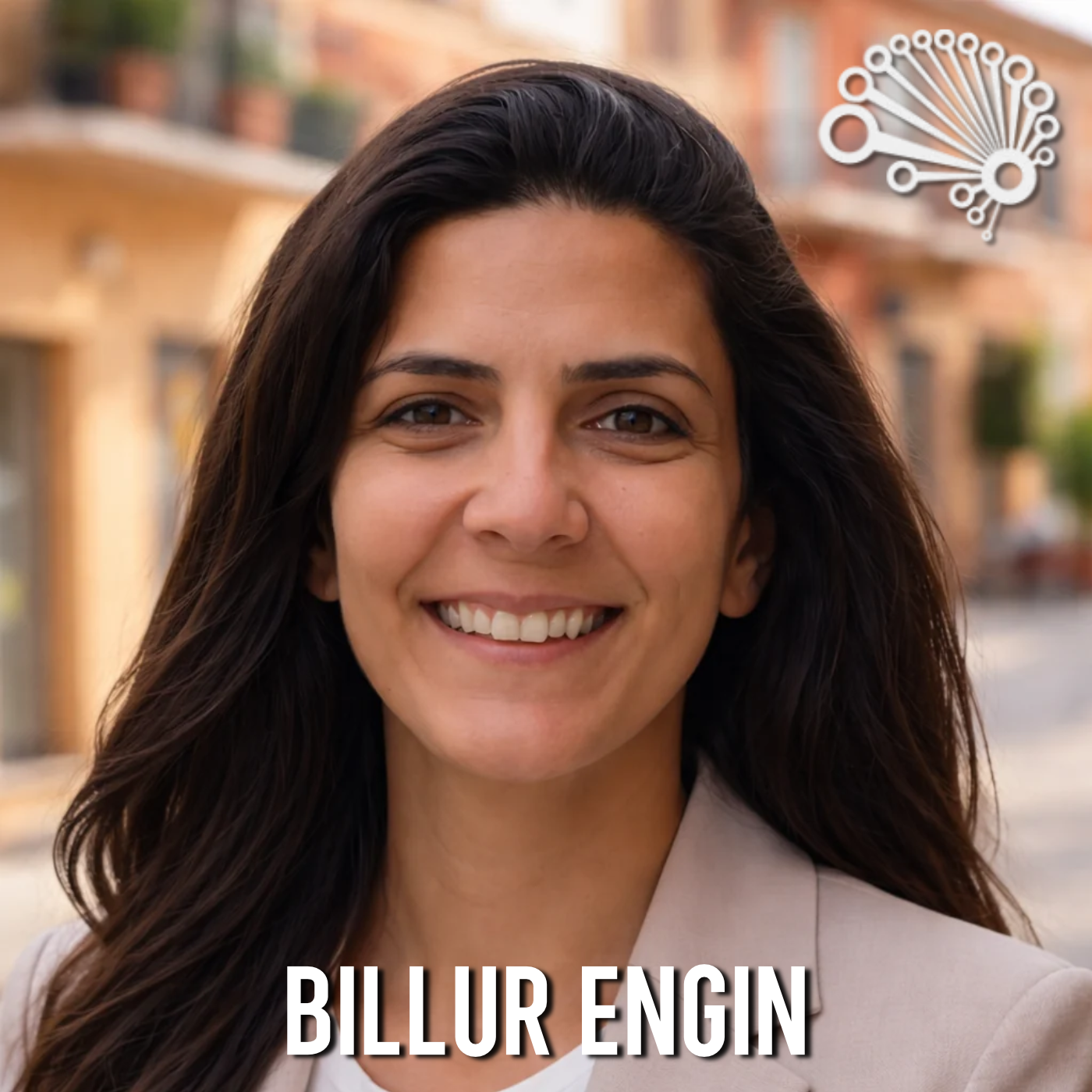
 Super Data Science: ML & AI Podcast with Jon Krohn
23 Oct 2026 · 13m · 5 chapters
AI-generated mathematical breakthroughs, centered on OpenAI’s claim to have resolved a Clay Mathematics Institute Millennium Prize Problem (3D Navier-Stokes singularity), plus a broader release of hundreds of preprints across major open problems and the controversy over proof verification, credit, and legitimacy.
No guests are interviewed in this transcript; it cites mathematicians and researchers including Tristan Buckmaster (NYU), Levant/Levan Alpagi (Anthropic), and multiple Fields Medalists and other academics.
OpenAI used ~10,000 agents to find a Navier-Stokes blowup, then formalized/verified parts in Lean; later withdrew manuscripts due to sign errors and admitted limited verification. Fields Medalists argue AI “solves” without delivering human understanding.
Navier-Stokes (forced vs unforced variants A/B), 722 manuscripts/372 families; unique games conjecture, exponent of matrix multiplication, Hadwiger’s conjecture, chromatic number of the plane; Erdos unit distance conjecture counterexample.
Written by AI. May contain mistakes.
Exploration of OpenAI's claim regarding a solution to a complex math problem.
“In the 26 years since, humans have solved only one of them, the Poincaré Conjecture, hopefully I'm pronouncing that correctly.”
Discussion on the limitations and concerns regarding OpenAI's findings.
“OpenAI's fluid has a smooth external force applied to it the whole way from rest until the singularity forms.”
Analysis of the credit dispute surrounding the results and implications for the mathematicians involved.
“The second caveat is a messy credit dispute.”
Overview of the mixed reactions from the mathematical community regarding AI's impact.
“But this is where the third caveat comes in, verification.”
Speculation on the future implications of AI across various scientific fields.
“These are wild times for sure, and for many mathematicians, probably unsettling times indeed.”

Get the gist, explore an idea or ask about something said.
 Claude
On Super Data Science: ML & AI Podcast with Jon Krohn, what are the key points of this episode?
Searching your listeningAutomatic transcript. May contain errors.
0:00This is episode number 1038 on AI's contentious math breakthroughs.
0:08Welcome back to the Super Data Science Podcast. I'm your host, Jon Krohn. Today's episode covers the remarkable and remarkably contentious run of mathematical results that AI systems have produced over the past few weeks. The headline is OpenAI's claim to have resolved one of the Clay Mathematics Institute's Millennium Prize Problems. I'm going to cover what was claimed and why it's exciting. I'm also going to cover why many of the world's top mathematicians are alarmed. Some background first. To mark the turn of the century, the Clay Institute selected seven of the most important unsolved problems in mathematics and attached a million-dollar prize to each.
0:47In the 26 years since, humans have solved only one of them, the Poincaré Conjecture, hopefully I'm pronouncing that correctly. Back in 2000, Alain Kahn, winner of a prestigious Fields Medal, which is roughly analogous to a Nobel Prize in terms of prestige, but, you know, specific to mathematics, that guy Alain Kahn said these problems were totally inaccessible to computers. But that was 26 years ago. AI has changed a fair bit. Last month, OpenAI announced that about 10 ,000 autonomous AI agents running on an unreleased internal model had found a singularity in the three-dimensional Navier-Stokes equations.
1:28The Navier-Stokes equations describe how fluids move, such as air flowing over an aircraft wing, oil moving through a pipe, or plasma circulating inside a star. Engineers rely on these equations every day. However, mathematicians have never been able to prove whether solutions in three dimensions always stay well-behaved or whether they can blow up by producing a point where a quantity like the fluid speed becomes infinite in a finite amount of time. That is the singularity. Not like the future, the singularity when artificial superintelligence happens, but just the mathematical term singularity.
2:04So OpenAI says its agents found such a blowup, such a singularity, a swirling vortex whose velocity grows without bound. The agents started working on September 1st. After 50 hours, a team of about 100 agents had answered a closely related question, so OpenAI's researchers redirected the entire swarm toward Navier-Stokes. After 88 hours and nearly 3 million messages passed between agents, a team of roughly 10 ,000 agents had a solution. How much would something like that cost? By The Economist magazine's estimate, the effort used at least$6.5 million of compute. Wow. OpenAI then spent another 17 hours formalizing it and verifying the proof in a programming language called Lean, in which every step of a proof can be checked by machine, and they did that all using GPT-6 Astra.
2:56OpenAI has made the write-up, the paper, and the Lean code public so anyone can machine check the results. This is a staggering achievement on its face, but a balanced picture requires three big caveats. The first caveat concerns what exactly has been proved. The Millennium problem has four official variants. OpenAI's fluid has a smooth external force applied to it the whole way from rest until the singularity forms. On that basis, OpenAI says it has established statements C and D of the four official variants. The unforced variants, options A and B, remain unsolved. Many mathematicians consider those unforced variants at the heart of the problem.
3:39Tellingly, OpenAI has said it does not intend to claim the prize. The Clay Institute has acknowledged that the problem has apparently been settled, but says its verification process is intentionally slow, and it now lists the problem status as active. Clay won't even consider a proposed solution until at least two years after publication, so we will be waiting a while for that official result. So that's the first caveat. The second caveat is a messy credit dispute. Tristan Buckmaster of New York University and Levant Alpugi of Anthropic, I'm probably butchering Levant's name, the two of them had been using AI to hunt for blowups in related fluid equations.
4:18So in mid-August, they found blowup results for simpler cousins of Navier-Stokes, including in something called the three-dimensional Euler equations with forcing. OpenAI says it launched its own effort after hearing a rumor about their work. Buckmaster, the NYU guy, says OpenAI proposed that he alone write up the Navier Stokes result while acknowledging that OpenAI's model had resolved it. The proposal excluded Alpoghi, the Anthropic guy, citing a conflict of interest because he works at Anthropic. Buckmaster declined. OpenAI denies drawing on the pair's unpublished work. However, the two mathematicians, Buckmaster and Alpoghi, had used OpenAI's products, and OpenAI told The Economist, it cannot rule out that their drafts ended up in its training data.
5:02OpenAI has since credited Buckmaster and Appalge for their concurrent work and offered a joint priority announcement. The Navier-Stokes claim turned out to be the opening act. On October 6th, OpenAI posted 722 manuscripts to a public GitHub repository, grouped into 372 result families. The claimed results span famous open problems such as the unique games conjecture, the exponent of matrix multiplication, Hadwiger's conjecture, and the chromatic number of the plane. Yes, I am just reading those four famous open problems. I was not personally familiar with them. But I do have a citation here. An academic named Alvaro Lozano-Robledo of the University of Connecticut called this posting of more than 700 manuscripts on all these famous open problems.
5:55He called it possibly the single most important day in the history of mathematics thus far. Wow.
6:03Jon Krohn: Claude Cowork now runs in the cloud and that's changed how I work. Recently, I asked Cowork to pull my scattered notes from Gmail and Google Drive into a research brief for an upcoming podcast guest. Then I closed my laptop and headed out. I checked in from my phone on the subway and Claude was still going strong. By the time I got home, a polished, well-cited brief was waiting for me. Claude is the AI for problem solvers. It's the collaborator that understands your entire workflow and thinks with you, not for you. Whether you're debugging code at midnight, building a financial model, or strategizing your next business move, Claude extends your thinking to tackle the problems that matter.
6:40Jon Krohn: Ready to have an AI that can tackle real work? Try Claude Cowork today on any paid plan at claude.ai slash superdata. That's claude.ai slash superdata. And check out Claude Pro, which includes access to all the features mentioned in today's episode, claude.ai slash superdata. But this is where the third caveat comes in, verification. The very next day, OpenAI withdrew three manuscripts after a sign error, so positive or negative, broke one proof and the two papers that depended on it, leaving 719. Over the following week, OpenAI revised 14 more manuscripts and told an organization called Retraction Watch that about half of the released results had been published without full verification.
7:27OpenAI says 42 % of the top-line results are formalized in Lean, that programming language I was talking about earlier, but it doesn't define what counts as formalized. And independent recounts put the figure between 24 % and 36%. So yeah, not much verification and a bunch of recounts. So how have mathematicians reacted to all of this? Many are distressed. On September 11th, 25 Fields Medalists, again, that's kind of like the equivalent to a Nobel Prize in mathematics in terms of prestige. These 25 Fields Medalists published a joint declaration warning that the goals of AI companies and the goals of mathematicians are severely misaligned.
8:08More than 8 ,000 researchers have since endorsed that declaration. Their core argument is that solving a problem is a means to an end, not the end itself. The end is human understanding, and the long struggle toward a solution is what produces new tools. Imaginary numbers, for example, were dismissed as useless in the 16th century and now underpin electrical engineering and quantum physics. The Fields Medalist Hugo Dominell-Kopen specifically wrote that I am paralyzed. Columbia's Michael Harris told the journal Nature he considers the bulk release illegitimate and won't be reading the papers. Dana Moschkowitz, an expert on the unique games conjecture, said OpenAI's preprint on that problem was so poorly written that it can't be read without AI assistance.
8:55Harvard's Melanie Wood pointed out that when a model solves a problem, nobody understands the solution yet at release, so that's when the human work begins. A newly formed group called the Association for Human Mathematics described the release as a demonstration of power. So yeah, largely negative feedback, but other reactions are more positive. Alpagi himself, the guy that works at Anthropic, despite his own dispute with OpenAI, called the release a historic moment. Ying Xie at Kennesaw State University, apologies to Ying if I'm pronouncing their name incorrectly, is treating the release as a mine of new lemmas, L-E-M-M-A-S, lemmas, which are constructions and proof techniques to extract and study.
9:39That work cuts against the claim that the papers contain no new ideas, though the novelty assessments are preliminary. There's also an earlier precedent for how this can go well when an OpenAI model disproved something called the Erdos unit distance conjecture in May, five mathematicians posted a digested human verified version of the counter example that same day. In that case, the machine found the result and humans turned it into understanding and very quickly. So yeah, that's kind of the critical feedback and some of the positive feedback on this big open AI release. But all of this is specific to mathematics.
10:18Beyond mathematics, a University of Chicago analysis of 41 million scientific papers found that researchers who use AI publish more and are cited more. However, AI use also narrowed the range of topics studied by almost 5 % and cut engagement with other scientists' work by 22%. Theoretical physics, a close relative of mathematics, is probably next in line for this kind of disruption. For those of us who build AI systems, I see a lesson here that extends well beyond mathematics. When a model can generate hundreds of plausible proofs or thousands of lines of code in hours, generation stops being the bottleneck, of course.
10:54Verification is what becomes the bottleneck. The results from this period that will hold up best are the ones paired with machine-checkable evidence, such as a lean proof or a strong test suite, and with humans who take the time to understand them. Results released in a rush without that evidence and understanding will draw much of the skepticism. These are wild times for sure, and for many mathematicians, probably unsettling times indeed. The capability leap here seems to be real. Whether that leap ends up enriching human understanding or bypassing it will depend on the norms we build around verification, around credit, and around explanation.
11:33And yeah, we might need to start building those norms over the coming months. Capabilities are moving quickly. And math is surely just the beginning here. Theoretical physics, I already mentioned, may be next, but computer science and perhaps scientific discovery in general may be automated by AI to a large extent in the coming years. Lots to process, but hopefully this largely ends up being for the best for humankind. For more on how AI-enabled breakthroughs could herald a positive new era for all of us, check out the preceding episode of this podcast, number 1037 with Dr. Richard Socher, as well as you can go back to episode number 975 from earlier this year with Zach Kass.
12:15Those are both very positive, optimistic episodes on how AI breakthroughs could mean lots of positive outcomes for us. I, for one, will continue to maintain as much optimism as I can. All right, that's the end of today's episode. If you enjoyed it or know someone who might consider sharing this episode with them, leave a review of the show on your favorite podcasting platform or YouTube. Tag me in a LinkedIn post with your thoughts. I will respond to all of those. And if you aren't already, obviously subscribe to the show. Most importantly, however, we hope you'll just keep on listening until next time.
12:53Keep on rocking it out there. And I'm looking forward to enjoying another round of the super data science podcast with you very soon.
13:05you
In Episode #1038, Jon Krohn unpacks the remarkable and remarkably contentious run of mathematical results AI has produced in recent weeks, led by OpenAI’s claim to have cracked part of a million-dollar Millennium Prize problem. He lays out what was actually proved, the three big caveats that temper it, the chaotic bulk release of 722 manuscripts that followed, and why 25 Fields medallists are alarmed. His throughline for anyone building with AI: when generation gets cheap, verification becomes the bottleneck.
Additional materials: www.superdatascience.com/1038
Interested in sponsoring a SuperDataScience Podcast episode? Email [email protected] for sponsorship information.