Ask ChatGPT

 Super Data Science: ML & AI Podcast with Jon Krohn
24 Nov 2026 · 1h 11m · 31 chapters
NVIDIA’s Kumo open-weight foundation models for structured/tabular data—how they predict from single tables (Kumo Tabular), across connected tables (Kumo Relational), and for time series (Kumo Forecast, Kumo Anomaly). The episode also covers why Kumo models are trained on synthetic data, how their attention mechanisms work, and how they fit into agentic enterprise workflows and biomedical research.
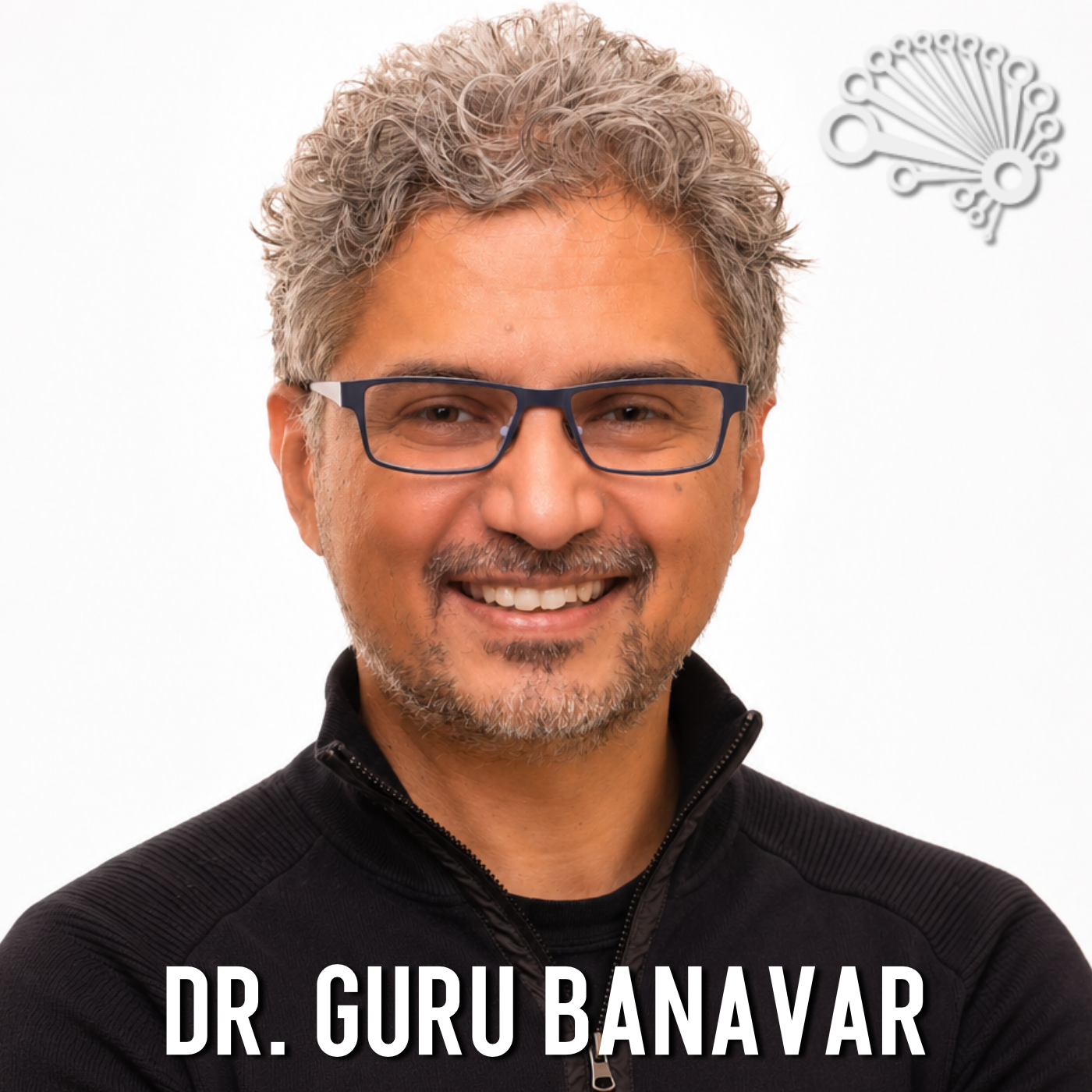
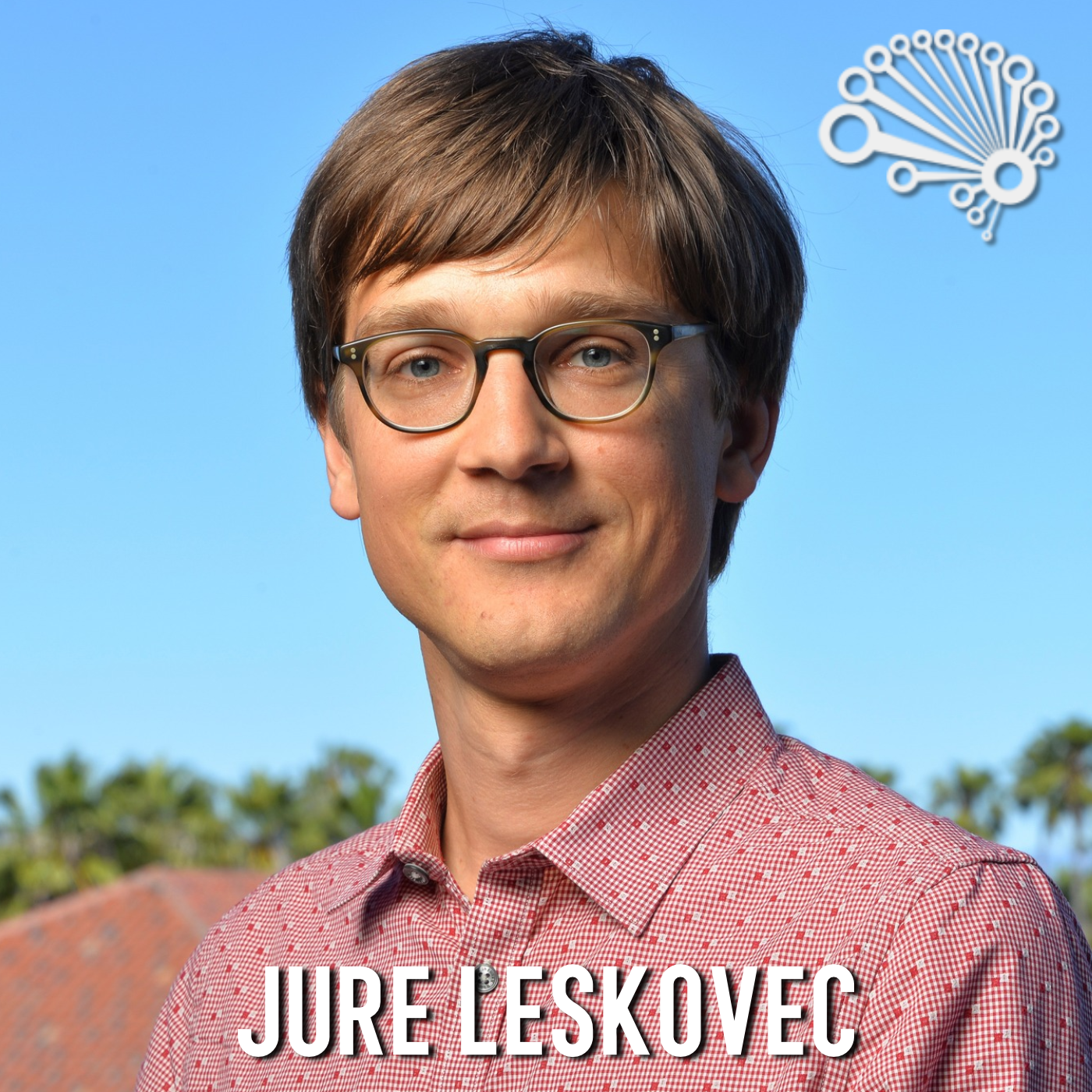
Dr. Jure Leskovec is a Stanford CS professor who pioneered graph neural networks, co-founded Kumo AI (Series A $18.5M), and now works at NVIDIA after NVIDIA acquired Kumo. He discusses Kumo’s open-weight releases and their use in production.
Kumo models can outperform hand-built models without feature engineering or training, using in-context learning during inference. They are trained on purely synthetic data from structured causal models, enabling out-of-sample generalization and calibrated probability estimates. They attend over up to 500M cells; largest model is ~200M parameters.
Fraud/churn/revenue prediction from a target column; customer-product-transaction relational modeling via primary/foreign keys; anomaly detection for rare operational events; biomedical “Bio/Omni” agent Biomni orchestrating tools/databases, reaching 10,000+ scientists and winning the Alzheimer’s Insights AI Prize.
Written by AI. May contain mistakes.
Dr. Leskovec shares the story behind Kumo AI's founding and its acquisition by NVIDIA.
“This episode of Super Data Science is made possible by Anthropic, Parallel, and YCaret.”
Discussion on the significance of structured data and how Kumo aims to leverage it.
“So I'm known as a graph guy, and we actually founded Kumo as a company from the inside that it seemed like that, you know, there was this huge excitement around AI on unstructured data.”
Exploration of the different types of Kumo models released for structured data processing.
“Yeah, interestingly, so the next week's episode, the one that airs after your episode, is going to be with Gael Verocco, who also is a big specialist in relational data.”
A detailed explanation of how Kumo Tabular works and its applications in predictions.
“Let's talk about the specific NVIDIA Kumo models that have now been released.”
Dr. Leskovec discusses the advantages of Kumo's foundation models over traditional ML methods.
“Foundation models are fundamentally different in this respect, right?”
An in-depth look at the architecture and mechanisms behind Kumo Tabular and its unique features.
“Because you could textify a table and just throw those rows in and then say, hey, what do you think?”
Learn about the challenges and solutions related to data size and context in models.
“And then maybe another important thing is in terms of the size of the context, the amount of data you need to attend over.”
Explore synthetic data generation and its benefits for model training.
“Tell us more about the synthetic data since that is such an important point.”
Understand the importance of generalization and how models are evaluated.
“One thing that is beneficial from having trained this with synthetic data is that prediction is all about generalization.”
Learn about the Kumo relational model and its capabilities with multi-table data.
“The first thing is that these models, they don't require any semantics.”
Learn how to structure customer and transaction data for predictive modeling.
“You can imagine, I know I have a customer table where for every customer ID, you know, I have a customer ID, I have their first name, last name, address, I don't know, and so on.”
Discover how Kumo relational models simplify feature engineering using attention mechanisms.
“So you could say, let's count the transactions.”
Explore how graphs enhance data representation and model performance in Kumo.
“They are also fully trained on synthetic data.”
Understand the advantages of neural networks over manual feature engineering for predictions.
“And I think why this is interesting is, you know, early on, we were just saying, oh, the graph is given.”
Learn the differences between Kumo forecast and Kumo anomaly models for time series.
“Thanks for taking us that one layer deeper on the graphs and data simulation.”
Discover why specialized models are essential for varied time series analysis scenarios.
“And then many times what we see when working with our partners and collaborators is that they actually would like to also have this notion of for anomaly detection.”
Find out how companies are successfully implementing Kumo models across industries.
“We should have them as one model or, you know, maybe all four of these models, tabular relational forecast and anomaly are all dealing with tabular data in one way or another.”
Learn when to rely on zero-shot predictions versus fine-tuning models in practice.
“I'm not saying that they should be bigger.”
Learn about the application and advantages of foundation models like Kumo Tabular in tabular data tasks and their impact on accuracy.
“and every, you know, 0.01 % difference in accuracy means a lot.”
Explore the significance of agents in AI and how NVIDIA's auto-ontology library enhances enterprise data understanding.
“we can't have an episode today seemingly without talking about agents.”
Discuss the essential components of agent systems, including knowledge graphs and decision-making models, particularly in the context of NVIDIA-KUMO.
“The way I would think of this is that enterprise data comes in many modalities, many forms, right?”
Learn about Biomni, an AI that assists scientists in biomedical research and its recent accolades in the field.
“Thanks for walking us through those various agentic use cases with these open-weight tabular models.”
Understand how Biomni optimizes scientific workflows and the importance of specialized tools in AI for biology.
“So, you know, I'm a graphs guy in the in the old days.”
Examine the continuing importance of human judgment and solid fundamentals in an increasingly automated world.
“biomedical science and streamlining that, looking at a lot of charts, it seems like in 2027 or not that far after, we might have recursive self-improvement, AI models improving themselves without humans in the loop.”
Discuss the critical role of context in guiding AI agents and ensuring effective research outcomes.
Discusses the necessity of providing context for AI systems to function effectively.
“provide a lot of value in this increasingly automated world is thinking about what all of the right context is and kind of what the right questions are for setting an agentic process off in the right direction.”
Explores the balance between automated solutions and the need for human decision-making.
“And I think that's related to what you're saying.”
Examines how AI agents like Biomni enhance scientific research and collaboration.
“I think, you know, in that respect, I think, as kind of I said, I think the value of human judgment is getting higher and higher.”
Highlights Jure's teaching contributions and popular courses available online.
“And hopefully more peace comes along with all of that prosperity.”
Jure shares his favorite children's books and thoughts on teaching.
“is that when you basically, I come to the students and I say, hey, look, this will be hard, but it will be good learning experience, right?”
Provides information on how to stay connected with Jure and his work.
“Or whatever you think is important here for us to ensure we have in the show notes for people to be able to follow along after the episode.”

Get the gist, explore an idea or ask about something said.
 Claude
On Super Data Science: ML & AI Podcast with Jon Krohn, what are the key points of this episode?
Searching your listeningAutomatic transcript. May contain errors.
0:00Jon Krohn: What if a foundation model that has never seen a row of real data could beat your hand-built models with no feature engineering and with no training? Welcome to another episode of the Super Data Science Podcast. I'm your host, Jon Krohn. Today's guest is the legendary Dr. Jure Leskovec, a Stanford computer science professor who pioneered the field of graph neural networks. He also co-founded Kumo AI, which NVIDIA recently acquired, and he now works there. And one of the things that NVIDIA and Yura have recently done is they've released all of Kumo's foundation models open source. In this episode, Yura explains how these models make predictions across enterprise tables and databases, how his Stanford group's AI co-scientist won over 10 ,000 scientists within weeks, and why he believes human judgment has never been more valuable.
0:45Jon Krohn: Enjoy this sensational technical episode. This episode of Super Data Science is made possible by Anthropic, Parallel, and YCaret. Yuri Leskovic, welcome to the Super Data Science Podcast. What a treat to have you on the show. How are you doing? Great. Yeah, excited to be here. Yeah, you're a big wig that we've wanted to have on the show for a long time. So delighted that it all came together. You are a Stanford computer science professor and you pioneered the field of graph neural networks. We're going to talk about that, I mean, at points throughout the episode, but I also have some targeted questions about graph neural networks coming up.
1:21Jon Krohn: The thing that I want to focus on first, though, is that you were co-founder of a business called Kumo AI, K-U-M-O, and that had a big Series A,$18.5 million, and then it was acquired by NVIDIA. So tell us about that journey a bit, and then I'm going to ask you about the open-weight releases of all these NVIDIA Kumo models next.
1:42Jure Leskovec: Yeah, great. Excited to be here and give the story. So I'm known as a graph guy, and we actually founded Kumo as a company from the inside that it seemed like that, you know, there was this huge excitement around AI on unstructured data. But these enterprises are collecting huge amounts of structured data, right? Data in operational data, in data warehouses, databases, and so on. And this type of data comes in a form of tables, right, with rows and columns. And then the tables are connected through primary foreign key relations, right? A customer ID and a transaction maybe points to the customer and things like that, right?
2:30Jure Leskovec: So that's this most valuable operational data that organizations have. But kind of it seemed that that got completely missed, let's say, by the AI revolution. So the reason why we founded the company was to bring AI to this structured data world. I can explain later how and why. And then we got acquired by NVIDIA about, I know, at the beginning of summer, let's say this way, with the goal to basically take our technology and release it to the world as a set of open source, open weight models, libraries, training recipes with a super permissive open source license that allows free commercial use and so on to basically bring it to the community and lift up the data science, machine learning, structured data reasoning ecosystem.
3:29Jon Krohn: Yeah, interestingly, so the next week's episode, the one that airs after your episode, is going to be with Gael Verocco, who also is a big specialist in relational data. You must know him. And in that episode, I know because we've recorded it before we recorded yours, that we talk about how the only truly open weight or open source projects in this structured data space are the models from them and the models from you guys, from Kumo.
4:03Jure Leskovec: Yeah, I think the idea here is to really support the ecosystem and provide basically models that are the easiest for the enterprises and everyone else to put in production, play with them, experiment with them, and so on. So from that point of view, the more permissive, the more open it is, the easier it is for others to build upon and work on the top of it, the more we can help the ecosystem. And I think maybe one thing to explain, right, is NVIDIA in some sense is a hardware, is a cheap company, right? But what enables NVIDIA is this super rich, open, broad software ecosystem on top. So our effort, in a sense, is part of this broad, open software ecosystem on top that is supported by the hardware, by the chips that the company is developing.
5:05Jure Leskovec: So that's kind of the connection and in some sense why we are doing this, because we want a very good, let's say, accelerated computing ecosystem and structured data is integral part of that. And AI on structured data is an important part of that.
5:21Jon Krohn: From CUDA to PyTorch to newer or more specialized things like you guys have been releasing with Kumo, that provides a lot of firepower for GPUs to be powering. Let's talk about the specific NVIDIA Kumo models that have now been released. They were released at the end of October at the big NVIDIA GTC conference in Berlin. and I've got it here that there are kind of four different kinds of models that were released as part of the Kumo structured collection. So there's Kumo tabular, which predicts outcomes from a single table, like we were kind of just talking about. Kumo relational, which works, makes predictions across connected tables, which sounds pretty cool.
6:06Jon Krohn: We're going to have to dig into that. Kumo forecast for time series forecasting and Kumo anomaly for exploring unusual behavior and time series data. I guess we should start with Kumo Tabular since we've already been talking about tabular data.
6:18Jure Leskovec: Yeah, I think Kumo Tabular is the easiest to explain. Basically, the problem is you have a table with some business enterprise data and there is a target column that you would like to build a model to predict that target column. That target column could be a probability for a customer to churn, probability of a transaction being fraudulent, the forecast about the revenue forecast for next quarter. Maybe we are imputing some data about users that is missing. All this can be formulated in this tabular use case where you have a set of columns that are given and from the set of columns that are given, you want to kind of predict or impute a column that is not given.
7:11Jure Leskovec: And the way these foundation models work is actually quite remarkable, right? The way we would solve this problem today is that we would train a machine learning model, I don't know, some kind of tree-based model or a neural network or a regression model or whatever the thing is that takes the set of given columns to predict the, let's call it the target column. And, you know, we would need to feature engineer and build the model and train the model and tune the model. And then we could apply it to the new unseen data and make those predictions. Foundation models are fundamentally different in this respect, right?
7:50Jure Leskovec: What they get is basically they get this historical labeled data as part of the input. They get the unlabeled examples as well as part of the input. and then in a single forward pass of the architecture, without any training, without any gradient updates, they give you those predictions, right? So Kumo Tabular is a family of purpose-built foundation models that are, you know, and I can touch on that a bit, are kind of analogs to LLMs, but built to reason over structured data to give you accurate predictions.
8:23Jon Krohn: And on many benchmarks, capital competitions, and so on,
8:27Jure Leskovec: these models are getting more accurate than your traditional ML, data science, purposefully built with sweat and tears kind of models. So the idea is... The bitter lesson. Yeah, we've all been there. It's very hard. It's very tedious to do. But now we have a pre-trained model that is basically data agnostic, domain agnostic, table structure agnostic that allows you basically to do this in-context learning or predictions on the fly. You know, maybe the next question you could ask, okay, how is this different from large language models? Because you could textify a table and just throw those rows in and then say, hey, what do you think?
9:17Jure Leskovec: Is this fraud or not? And tell me, right? And it turns out that that kind of doesn't really work. Even JAV-like or these decision LLM models kind of don't really perform well. They're able to kind of extract knowledge from their background, do well in zero shot. But as you give it more examples of what fraud is and what fraud is not, they are not able to kind of improve their performance. While these, let's call them tabular foundation models, have been built purposefully to do this in-context learning, right? So you give it a set of examples. You say, here are examples of fraud. Here's examples of not fraud.
9:54Jure Leskovec: Here's unlabeled row. Tell me what's the probability of fraud. And in a single forward pass of this neural network architecture, kind of transformer-based, you will get a well-calibrated probability estimate out. So you truly get a statistically quantifiable, non-hallucinated in that respect probability.
10:20Jon Krohn: Yeah, help me understand a little bit more what's going on under the hood. You gave a pretty good example there. Like I'm understanding that it's transformer based, it's pre-trained based on similar kinds of business data. If I were to do this in say Claude, if I had a table, what I would be trying to do, I probably wouldn't be trying to convert the table into tokens for ingesting into the LLM as input tokens. What I would probably do is I would say something like, you know, here's a table of data. You know, I might have some understanding, some context that I can provide around what the columns mean, but it could also maybe be able to figure it out based on context.
10:58Jon Krohn: And then I would say, you know, create a model that you think would be appropriate. And so it could go off and maybe create a regression model and kind of iteratively add in features, remove features, maybe adjust some of my features, normalize them, these kinds And so that's kind of like my small-minded, old-school, all the way back in 2024 kind of thinking with how an LLM might be able to help me with analyzing tabular data. From everything you've said so far, it sounds like it's something completely different where the data are going through the foundation model. Yeah, so I guess maybe just go one level deeper on what that's like, on what's happening behind the scenes when you use Kumo Tablet or a model like that for analyzing your tables.
11:51Jure Leskovec: Yeah, and thanks for providing this contrast because I think it's very important, right? What you are talking in a sense is let's automate, let's have a harness that kind of automates the data scientist. what I'm doing, what Kumo Tabular is is something complementary. Complementary in a sense that it's a neural network architecture through which you pass the data. So this neural network architecture is, as we said, it's transformer based, it's pre-trained, but the attention mechanism is different. So you have two types of attention, specialized attention mechanisms. One is the attention mechanism across the column.
12:34Jure Leskovec: So when you have a particular cell of interest, the attention mechanism attends to other values inside the same column to get an understanding of where does this value, you know, in a given cell sit with respect to other values of that same column, right? Is it at the extreme? Is it somewhere in the middle? And things like that. So that's the first type of attention you do. And then the second type of attention you do is you do attention across the columns in a single row. So it's all the cells in a single row. So that that attention mechanism can understand and learn the dependencies between these different columns.
13:08Jure Leskovec: And through basically stacking these two attention mechanisms and interleaving them, you are now basically able to pre-train a neural network that kind of, you know, you could think of it as builds a model in its brain while doing inference, right? To be able to give you a proper prediction. Of course, you can still go back to your agent harness doing feature engineering and all that. You can still do all that with this foundation model-like approach to basically have an outside harness that is trying to improve the inputs and the outputs of the foundation model. So, you know, the harness does not exclude the underlying foundation model.
13:55Jure Leskovec: But these are two very different things. One thing that's important, maybe we'll come to it, I assume, later is that these tabular models, foundation models are trained purely on synthetic artificial data. And that's important. And then maybe another important thing is in terms of the size of the context, the amount of data you need to attend over. We are attending, for example, over 500 million cells, right? So if you were to tokenize this and throw this into an LLM, you exceed the context limit far before you were able to textify or throw in 500 million cells worth of tokens. Because cells can have text, there's a lot of different data that can be hidden in those cells.
14:46Jure Leskovec: But these purpose-built models have this scalable attention infrastructure that allows you to attend over humongous tables.
14:54Jon Krohn: You spent weeks choosing the right model for your agent. How long did you spend choosing its web search? Agents need reliable and accurate access to the web to do their best work, and that's where Parallel comes in. Parallel is web search built for agents, not people, and it delivers the best quality results at every price and latency tier. Building a voice agent, Parallel Search Turbo answers in about 200 milliseconds for only a dollar per thousand requests. Tackling thorough research, Parallel Search Advanced digs deep to answer your toughest questions. Parallel works with any model and drops straight into Cloud Code, Cursor, Vercel, or Langchain.
15:34Jon Krohn: And it goes beyond search with web monitors, deep research, and batch record enrichment. Get started with a free MCP plus$5 of free credits every month at parallel.ai.sds. That's parallel.ai.sds. Yeah, it sounds like orders of magnitude more data than you could get with most of the cutting edge with the Frontier LLMs. That is pretty interesting indeed. Tell us more about the synthetic data since that is such an important point. That's probably helpful from a privacy perspective. It also probably enables you to handle lots more edge cases that would have rare data. It allows you to continue scaling.
16:15Jon Krohn: You can just keep creating more and more data and improve your model more and more.
16:19Jure Leskovec: Yeah, those are great questions. So maybe before I get there, right? So you have the models. These models are relatively small. So we are, you know, compared to LLMs, right? Our largest model, I think, is 200 million parameters, right? So they are small, they are super efficient, they are super fast. We have the Kumo tabular, which is the largest 200 million, and then we have also a medium, and we have small size model that is like 60 million parameters. So these are small, in some sense, in this respect, small, efficient, compact models. Now, how are they being trained? They are trained on purely, I would say, artificial synthetic data.
17:03Jure Leskovec: And why am I saying artificial? Because they are trained kind of on the data that is truly generated from scratch and kind of has no connection to the real world. And the way this data generation mechanism works is through this formalism of structured causal models. Where basically the way you can think of it is that you are randomly or you are instantiating for every column, you can think of it as a different variable, And now you are instantiating like a graphical model, like a structured causal model. How do these different columns relate to each other? And you generate that causal structure.
17:46Jure Leskovec: And then you initiate the causal structure with random noise and see how the class variable pops out. And that's essentially, you know, what the data generation mechanism is. So now you can generate a different number of columns. you generate, let's say, random causal dependency structures, and then you push the data through to get the dependent variable out. And that's how this data is being generated. In reality, it's more interesting because you have different data distributions, you have different dependency structures, different functions that how parents affect the children variable. you can start playing with all kinds of noise type things.
18:37Jure Leskovec: You can start teaching the model to deal with missing data. So for example, one good feature is that we actually teach the model to automatically impute the data. So the input to the model is not just a row with the columns given, but it's also you can do basically not available. You can say, okay, we don't know what is here. And then the model actually learns how to impute that without the data scientists needing to worry about that or to worry about extreme values and things like that, right? So the synthetic data generation mechanism allows you to be very strategic about what you want the model to learn, and you can basically engineer those capabilities inside the data, where with the real data, you don't have that possibility, right?
19:26Jure Leskovec: The real data is kind of, is given, it's static. We don't know how to make it more missing or less missing. We don't know how to make it more noisy or less noisy or, you know, the prediction to be more complicated or less complicated. We don't have those levers. But if you generate this synthetic data, you as a model developer, you have all those levers. And, you know, as we are training model through different stages, we can introduce different types of tables, different shapes of tables with different missing structures, with different heavy-tailed extreme value type distributions and so on.
20:05Jure Leskovec: So that flexibility turns out to be super useful because, yeah, as you said, we can generate more and more data. We can keep scaling up these models as much as we like.
20:17Jon Krohn: Getting all of these different kinds of permutations right around what kinds of simulations you're going to need must be critical. A big part of the secret sauce to having this work effectively. And then I guess you can kind of evaluate based on how they perform in, say, the Kaggle competitions you mentioned earlier with real-world data. So all these simulations, downstream, you can say, okay, I know that even though I only worked with simulated data throughout my training process, we know that it applies to the real world because when we tested on real-world data, it hits it out of the park.
20:47Jure Leskovec: That is an excellent point, right? One thing that is beneficial from having trained this with synthetic data is that prediction is all about generalization. It doesn't matter, making decisions about the past is easy. Making decisions about the future is much harder. And when we use LLMs, we never know, is it generalization? Has it just read this information somewhere? Has it memorized this thing? We never really trust it, whether it's doing some real kind of inference or is it just kind of recalling from memory. But for these tabular models, because it's purely synthetic data trained, there is no real data in there, so there is no contamination.
21:40Jure Leskovec: So when we apply this to any real world data set, we can guarantee that that real world data set is out of sample, right? The model has never seen it in any training, has never seen those numbers, has never seen those specific patterns that actually occur in the real world. So that's great because then our, let's say, accuracy estimates and so on, either from Kaggle competitions or things like that are true and real, and they are really kind of out of sample, right? And that's great. And on the other hand, I think what is also amazing and impressive is that through the synthetic data, you can actually generalize to the dependencies and the data shapes and structures and noise patterns and so on from the real world, right?
22:33Jure Leskovec: And I mean, maybe just to say, right, for people who wonder, the way you evaluate is kind of as in classical machine learning or is in classical AI, you basically have this holdout, you make predictions, and then you compare them how close they are to the truth, to the reality. Mm-hmm.
22:50Jon Krohn: Something else that's interesting when comparing to, say, classical machine learning or classical AI approaches is that if we were to use, say, a simple logistic regression model or linear regression model to try to explain how some features in a table are predicting some label in a table, the way that we would historically have come up with our confidence about the predictions would be using statistical approaches, you know, like using beta weights, you know, dividing by variance, these kinds of things. And so it's kind of interesting here where we are relying on a neural network to, I don't want to say magically, but I think you know what I mean.
23:32Jon Krohn: When it kind of just based on all the training data, the neural network comes up with reasonable estimates that obviously hold up when tested with real world evaluations.
23:44Jure Leskovec: That, I think, is a good point. And it's kind of the remarkable thing that happens here is that through this, you know, basically generating this random causal graphs, sampling, filling them with noise, getting the dependencies out, putting that into a big table, and then telling the neural network to kind of learn the patterns, that it's able to generalize so much that it allows us to transfer, again, with no post-training, with no fine-tuning, nothing like that, right? to a brand new data set, to a brand new tabular structure, to a brand new domain, being pre-trained only on synthetic data. What is also maybe a few things that are important to say.
24:27Jure Leskovec: The first thing is that these models, they don't require any semantics. So they don't require column names, understanding what the columns are. It's like in classical machine learning or in a decision tree. You just care about the value and I know how to split on that variable. So in that respect, it's about kind of this pattern matching more than some kind of semantics. And then what is also important is that the training objective is not the next token prediction. There is no next token. It's really the logic. It's the output. It's a cross-entropy type loss. So the model is actually trained to give these accurate, let's say, predictions over underlying numerical, categorical, textual data.
25:18Jure Leskovec: And what we see is that basically the model learns to be very well calibrated. Kind of if you create these empirical QQ plots and things like that to understand the calibration of the model. we see that those probability estimates outputted by the model are nicely correct. And of course, what is also interesting is because you give it this set of in-context examples, you basically have this mini-labeled data set that you can use to almost do on-the-fly cross-validation and things like that to get not only the probability estimate, but also uncertainty or kind of sense of the accuracy of the model of the prediction it's making, right?
26:04Jure Leskovec: So you always know what you are getting out. The model will give you the certainty or uncertainty as well as the estimate in its own accuracy.
26:14Jon Krohn: It's very cool stuff. What a world we live in these days. I couldn't have imagined these kinds of things. You wouldn't know this about me because there's no reason why you would know anything about me, Yuri, But I did a PhD focused on machine learning and AI, finished that in 2012. And this kind of stuff that we're doing today, it's like I would never have had, I would never have expected in my life to be having, you know, neural networks doing this kind of work with tabular data.
26:42Jure Leskovec: It's a very different world today. Yeah, I agree.
26:44Jon Krohn: For sure. All right. So that's QMOTABULAR. I said that there were these four open way models and we probably spent more time on Kumo tabular than, uh, than the others that we'll talk about now, but let's talk about Kumo relational next, which can make predictions across multiple different tables. So where Kumo tabular was designed for working with a single two dimensional, uh, grid of information, a matrix in with Kumo relational, we're able to kind of add a dimension of, of combining information across connected tables. And so that sounds pretty powerful. And I imagine the simulations, the data simulations must get a lot more complex in that scenario.
27:27Jon Krohn: Yeah, I can explain.
27:28Jure Leskovec: I think the tabular models are good, but kind of no real world data comes in a single table, right? And usually the data scientist has to take this raw multi-tabular data, relational data, and then feature engineer aggregate into this one nice training table or table, right? So we were very interested to say, okay, how could we now generalize these tabular models to just be able to attend over the entire database, right? And what do I mean by connected tables? You can imagine, I know I have a customer table where for every customer ID, you know, I have a customer ID, I have their first name, last name, address, I don't know, and so on.
28:09Jure Leskovec: Then maybe I have a product catalog where, again, I have a product ID column and then I have a product description and name and brand and weight and price and so on. And that's maybe in my product catalog table. And then maybe I have another table in between called the transactions table who just says, what is the time? What is the customer ID? What is the product ID? And what was the method of payment, for example? And this would mean that now particular user ID, particular customer ID bought a particular product ID. And now this is a set of three different tables that are interconnected. In the old days, imagine if you wanted to build maybe a customer churn model.
28:54Jure Leskovec: You could say, okay, I'm just going to predict churn from whatever I know about the customer, from their demographics and so on. And that model won't be very accurate because it's not capturing customer behavior. So then how do you bring in customer behavior? You need to take your customer table and your transactions table, join the two, and then aggregate information. Because now every row in that table is on a transaction level. You have to aggregate transactions to get some feature, some variable that is per customer. So you could say, let's count the transactions. Let's maybe count them by the hour of the day.
29:34Jure Leskovec: Let's count them based on the weekday. Is it over the weekend? Is it on a holiday? And that's only the count. And then it could be, okay, let's consider the price. Let's consider the method of payment and things like that, right? And this feature engineering step gets super manual and super kind of arbitrary in a sense because the space you are exploring is super huge. So our idea was to say, can we take this super successful, you know, attention is all you need, and can we find an attention mechanism that allows me to attend across tables that will just automatically grow from the user and just attend over all their transactions?
30:17Jure Leskovec: And it won't stop there. It can go a step further and now attend over all the products that were part of those transactions and all their properties and images and descriptions and so on, right? And that's what relational models are doing, right? They are learning directly on top of the database where you don't even have to do feature engineering, but you let the attention mechanism kind of do the attention and aggregation, which is kind of a core part of feature engineering for you. So similarly, these models are now called Kumo Relational. They are also fully trained on synthetic data. The data generation process is kind of similar to a single table, but more general because now you first have to generate the schema and dependency between tables.
31:10Jure Leskovec: And now you can use the structured causal models to generate the data. And then in terms of attention mechanisms, you have a column attention, you have a row attention, And now you also need the cross-table attention. And this cross-table attention is essentially a graph-based attention mechanism, right? You can think of this schema and the entities inside it as a graph of relationships. So that's the Kumo tabular. Sorry, Kumo relational.
31:40Jon Krohn: Kumo relational, yeah. It kind of brings everything together, you know, given your pioneering of the field of graph neural networks, this, you know, you ended it nicely there talking about Kumo relational, how, you know, you can think of the relational entities as a graph of these connected items. But it also, it seems like more broadly, whether we're talking about Kumo tabular or Kumo relational, being able to simulate graphs effectively and realistically is a big part of any of these models working out in the end.
32:12Jure Leskovec: That's a great point. I think, you know, all our prior work on graph generation, scale-free networks, small world networks, and all that work, right? Plus then the work on graph neural networks that are basically a way to bring this deep learning to the graph structured data now naturally came together in this foundation foundation model era of the world, where now essentially the attention mechanism is the attention across the graph. And I think why this is interesting is, you know, early on, we were just saying, oh, the graph is given. And maybe here the insight is, and it's a well-known fact, right, is that any database can be basically thought of as a graph, of a graph, right, where every entity is a node, and then there are this primary foreign key.
33:13Jure Leskovec: Those are the relationships between the entities. And the intuition why we started doing this was basically to say, look, the way we build computer vision models today is nobody does feature engineering in computer vision, even though in the past they did, right, there were shift features, Gabor filters, all those things. Nobody in the right mind does that. Today, we just say, here's the raw pixels, here's the attention mechanism, convolutional operator, vision transformer, whatever it is, and let it figure out how to add these little pixels together to tell me what's in the image. And we were saying, okay, if I can now take any tabular structured database type object represented as a graph, I can now start applying the attention mechanism over this graph of nodes and let the neural network learn how to combine this information into a prediction.
34:02Jure Leskovec: right and and i think the effect here is first you don't have to do the manual feature engineering yourself and then the second thing is that this neural network combining things is so much more expressive than any manual you know feature engineered in sql will ever do you know what i mean it's like it's very hard to write this as a query and say and now here is a single number Neurons are these non-discrete continuous type thingies that can just combine the data in so many different ways that is, at the end, much better for the final prediction.
34:43Jon Krohn: Yeah, very cool. Thanks for taking us that one layer deeper on the graphs and data simulation. Let's move on now to Kumo Forecast and Kumo Anomaly, which are both designed for dealing with time series forecasting. And my understanding is that they're useful for different kinds of scenarios. So Kumo forecast is useful for, I guess, when we kind of have more balanced, more balanced events happening. So, you know, or kind of like continuous inputs where, you know, we have different amounts of ads being like ad money spend is like going up and down kind of gradually different quantifiable levels. So we could do things like demand planning, capacity management with Kumo forecast.
35:32Jon Krohn: And then Kumo anomaly is designed for handling situations where you have rare events. so things like operational issues manufacturing issues infrastructure issues where you know 99.999 percent of the time there's no anomaly and then all of a sudden boom something weird happens
35:49Jure Leskovec: that we need to be notified about right away yeah good it is true that yeah there are these two quite different use cases right one is really about kind of forecasting the future the future values, a future set of values from one time series or from multidimensional or multiple connected time series. And then many times what we see when working with our partners and collaborators is that they actually would like to also have this notion of for anomaly detection. Is something abnormal? Is something that we should pay extra attention to? And even though, you know, anomaly is something that is far away from the predicted state or from the expected state, the two are actually so different that actually they require a bit different approach, a bit different model.
36:44Jon Krohn: It's interesting that you say different model because it also, it is an interesting decision to have four different open weight models for different kinds of scenarios. How did you end up coming into that, you know, coming into that situation? Like you might think, you know, maybe Kumo forecast and Kumo anomaly, they're both dealing with time series data. We should have them as one model or, you know, maybe all four of these models, tabular relational forecast and anomaly are all dealing with tabular data in one way or another. Let's just have one big model.
37:13Jure Leskovec: There are several different answers I can give to you, right? Like, yes, we can go and build one big model and that's very doable, but then the model becomes big and big things are expensive to run and slow to run, right? So whenever you then say, oh, I want to put this in production, what you want to have in production is small and fast model because you will kind of use a bit less compute, right? So you want something maybe a bit smaller and more specialized. On the other hand, there might be some benefit in the big model because it learns from all these different tasks and all these different types of patterns is that the big model will be able to generalize better and so on.
37:58Jure Leskovec: So our goal is to really support the entire, I would say, range in this ecosystem so that people who want cutting edge, the biggest, maybe are not making so many predictions, can use big things. And people who want something that is fast, efficient, easy to run, can use smaller versions of the models.
38:20Jon Krohn: Cool. That makes a lot of sense. That makes a huge amount of sense. Especially because, you know, the vast majority of our compute costs come at inference time. So we should want to have these smaller models. And it is impressive how small these models are. You know, hundreds of millions. Yeah, hundreds. Yeah. which is, I think your biggest models were like hundreds of millions of parameters, right? Which in this day and age, that's unusual to say that's the biggest one in the family.
38:46Jure Leskovec: It's a good question. So our biggest is a bit over 200 million parameters. There is no fundamental reason why the model couldn't be better. We felt that it gives kind of the best throughput, latency, see computational cost type balance with the accuracy. But we plan to build, you know, as the field moves forward, also bigger models and further push up the accuracy.
39:22Jon Krohn: That's cool. I'm not saying that they should be bigger. I think small is great. So let's talk about how these are being used in the real world. at GTC in Berlin, with a big announcement, it mentioned that a number of well-known names are already using Kuma models. So Databricks, DoorDash, Coinbase, and Snowflake customers are using them in a broad range of areas with clients that have advertising, energy, financial services, retail data. For our listeners, when should they decide to pick up a model like this and use zero-shot predictions and be confident that the zero-shot predictions provided by Kumo models or models like this are going to be good enough?
40:07Jon Krohn: When could they be confident that zero-shot is going to be great out of the box? And when should they maybe be thinking about fine-tuning, if ever?
40:13Jure Leskovec: That's a good point. Maybe when you say zero-shot, we really mean this kind of in context, right? You still have a little kind of training label data set, but it all happens kind of at inference time. Yeah, that's a good point. So right now, these models can attend over 500 million cells. Okay, so if your data is on the smaller side, then no need to fine-tune, right? If it's less than 500 million cells, you can just use these models, especially with smaller amounts of data, because these models have been pre-trained. They are so much easier. They will have better generalization properties, right?
40:49Jure Leskovec: They won't kind of overfit and things like that, which is the danger when you start building custom models. What we also see is that when you have a very specific task and a large amount of data, then maybe you just want to specialize the model for that single specific task, right? Because the point is, it's kind of the question is, are you doing this for a very specific task that you know it's a specific question that you'll be kind of always asking? Or is it more like, hey, I can apply this to any predictive task, any type of question, and just use it immediately, right? And both have their merits, right?
41:37Jure Leskovec: If it goes for questions that are more like one-off, data science, something figures something out. Just use a foundational, very quick, super, right? Now, if we are talking about, I don't know, predicting the click-through rate of an ad, which is kind of the most valuable prediction out there, right, because all the web advertising depends on estimating how likely somebody to click on an ad and every, you know, 0.01 % difference in accuracy means a lot. Then there, I think, you know, you want to explore all kinds of fine-tuning, you have huge amount of data and so on. So I think, again, it's kind of the spectrum, depends what you are doing.
42:16Jure Leskovec: But for iteration and for understanding, I would definitely start with these foundation models. And today, Kuma Tabular is essentially a drop-in replacement for XGBoost and all these tabular models, right? Classical machine learning models. And we see all kinds of customers being very successful in just deploying them, ripping out their customers, throwing in our foundation models and getting improvement in accuracy. It doesn't happen always. I think also us getting feedback, where are these models lacking, is very useful because then we can go to our synthetic data generator and just tell it, hey, we need more data like this and we can generate infinite amounts of that type of data to improve the model.
43:06Jure Leskovec: So the synthetic data generation loop becomes super attractive because we can generate more data than any enterprise in the world has.
43:17Jon Krohn: That's really cool. Speaking of real world applications now, as we talk about how we can be using these models in the real world, we can't have an episode today seemingly without talking about agents. And we haven't said the word agent yet 45 minutes into this episode. Over the past year, graphs have been a big topic in part because of the popularization of GraphReg and graph ontologies for agentic AI. And NVIDIA has joined in. So NVIDIA's Agent Knowledge Foundation includes something called a new auto-ontology library that translates raw company data into business concepts like customers, products, orders, and maps how they relate in a graph.
44:03Jon Krohn: and so as an example Databricks pairs Kumo Anomaly which we've been talking about earlier in the episode with Databricks Genie Ontology to power context aware agents. What do you think about this? I'm also going to have some after this I'm going to ask you some questions about some pretty amazing automations that you're doing in the biomedical space with your research but I feel like this just talking about agents a bit in general will be a nice way to get there.
44:31Jure Leskovec: The way I would think of this is that enterprise data comes in many modalities, many forms, right? From documents, databases, transactions, business events, and so on, right? And the first thing you kind of need is to build an ontology, like a catalog of what these data are and what do they mean. And you can think of that as some kind of knowledge graph or a semantic model or something like this, right? And then you basically have two components in this world, I think, that are important. One is this retrieval component to find facts and extract evidence. It's a question about what do we know.
45:09Jure Leskovec: And NVIDIA has an open source solution that people can use called Nemo Retriever. And then for decision making, for predicting outcomes from structured data, anticipating what might happen or what the evidence shows may happen is done through this NVIDIA-KUMO family of models, right? And that's the way I would think of it. Another place where we see a lot of use cases for KUMO is in terms of agent safety and understanding and having basically systems that are essentially predictive that are saying, based on the activity of the agent, what's the safety concern? What's the probability that something goes wrong?
46:04Jure Leskovec: Especially long-running agents are generating so much context that you cannot have another LLM just process that context. You need to be smarter. So these structured data, tabular data foundation models that have a much more scalable attention mechanism are able to help in those use cases as well.
46:25Jon Krohn: Claude Cowork now runs in the cloud, and that's changed how I work. Recently, I asked Cowork to pull my scattered notes from Gmail and Google Drive into a research brief for an upcoming podcast guest. Then I closed my laptop and headed out. I checked in from my phone on the subway, and Claude was still going strong. By the time I got home, a polished, well-cited brief was waiting for me. Claude is the AI for problem solvers. It's the collaborator that understands your entire workflow and thinks with you, not for you. Whether you're debugging code at midnight, building a financial model, or strategizing your next business move, Claude extends your thinking to tackle the problems that matter.
47:03Jon Krohn: Ready to have an AI that can tackle real work? Try Claude Cowork today on any paid plan at claude.ai slash superdata. That's claude.ai slash superdata. And check out Claude Pro, which includes access to all the features mentioned in today's episode. Claude.ai slash superdata. Brilliant. Thanks for walking us through those various agentic use cases with these open-weight tabular models. Now let's dig into some of your applied research in biomedical AI. So your research over the years has applied machine learning to interconnected systems at huge scales from human societies to biological networks, with computational biomedicine and drug discovery becoming a major part of the research that you've done.
47:47Jon Krohn: To wit, you led the development of something called Biomni. You can tell me if I'm mispronouncing that, but that's Biomni, which is an autonomous AI co-scientist that orchestrates hundreds of tools and databases to streamline scientific workflows. And it seems to be doing pretty well because it recently won a million dollars from, it's It's called the Alzheimer's Insights AI Prize at the ADPD conference in Copenhagen, which I'm guessing is Alzheimer's and Parkinson's maybe conference. Yeah. So tell us about Biomni.
48:24Jure Leskovec: Yeah. So, you know, I'm a graphs guy in the in the old days. You know, I was building people you may know, algorithms at Facebook and things like that. Right. And studying information virality on what was called Twitter and so on. But if you think about biology, human cell life, it's all about interactions. It's a giant, humongous graph of interactions of molecules, proteins at the level of the cell. Where are these things and how do they work together? Then, you know, cells organize into tissues and then, you know, kind of an organism emerges, right? And you have a phenotype and then, you know, there are diseases and things like that, right?
49:09Jure Leskovec: So I've been very, very interested in my research group at Stanford to thinking about how does AI push forward these disciplines and what can we do to make, let's say, drug development, our understanding of biology, life, medicine improve. So one of the projects we developed here at Stanford, it's an agent called Biomni. Bio and Omni. Omni means everything, right? So that's kind of the name. And we think of it as a co-scientist, right? It's basically a companion to a human biologist scientist who is executing daily tasks. and this agent can help a human with all kinds of, let's say, bioinformatics types, experimental data analysis, reasoning, and so on.
50:07Jure Leskovec: And what's interesting, or how is this different than ChatGPT or something like that, is that the agent becomes useful when it's able to use tools. And let's say in biology, bioinformatics, and so on, you have these super specialized tools, right? AlphaFold won a Nobel Prize, but it's just one of many tools you can use, right? And this expertise about what tools to use and how to use them is very narrow and very specialized. So what we decided to do was to first build an environment for the agent that it can operate in. And the way you can think of this environment is, you know, just think of it as a, I don't know, a very beefy machine or a compute cluster where all these tools are pre-installed and have been modified so that they've been accessible to agents, right?
51:00Jure Leskovec: A lot of tools are built for humans, and the kind of ergonomics of the way humans use things is different than the ergonomics the way agents use these tools, right? So what we basically did is we built another agent who is reading archive and bioarchive papers, figuring out what tools are human scientists using, And those are the tools, those are the databases, ontologies, knowledge bases, resources, software tools, software packages that this agent has access to. And we implemented this at Stanford, launched it between basically using Anthropic Cloud as a set of, basically as an orchestrator, as an LLN, and then having access through this big compute environment where these tools can be used by basically cloud writing code, having a knowledge base and things like that.
52:01Jure Leskovec: And it worked amazingly well. And the project exploded. And, you know, in a few weeks, we had over 10 ,000 scientists using this practically every day for their daily tasks. And what was amazing is that the agent, you know, was able to do basically the work of a well-trained senior PhD student in a sense of, I don't know, helping with some cloning design protocols or doing some single cell data analysis or looking at some multi-omics data and so on. So it was huge boosts in productivity of human scientists because now you can just tell it what to do and it does it for you.
52:43Jon Krohn: With agents being able to handle more and more of what I do and what my listeners do as data scientists and AI practitioners in general, and with tools like Biomni being able to handle more and more of biomedical science and streamlining that, looking at a lot of charts, it seems like in 2027 or not that far after, we might have recursive self-improvement, AI models improving themselves without humans in the loop. And, you know, some people think that that will very quickly trigger, you know, broad artificial super intelligence and, you know, and, and, you know, things like the singularity, I guess.
53:27Jon Krohn: What do you make of all that? What do you think, where do you think we're going and how fast are we getting there? You know, where can we as practitioners find solid ground in this fast-moving environment to be confident that the skills we're investing in are still going to be relevant years from now? Yeah, that's a great question.
53:45Jure Leskovec: And right, like I teach students here at Stanford. So this question is very important to me because I need to prepare my students for the future. My view is maybe this is kind of what I would say. I actually think that human knowledge and human judgment has never been so valuable in the history, right? And the reason for this is that humans have this unique ability to judge and to make decisions. And you can command an army of 100 agents or 1 ,000 agents, whatever it is, they will generate slop, right? Unless you have this human who is making the right decisions, setting them on the right path, and so on.
54:43Jure Leskovec: And, you know, yes, maybe in some domains where the objective function is super clear, and, you know, it's called a verifiable reward, I can always get the exact estimate how well did the agent solve the task. And then, of course, the agent can kind of keep iterating and looping. But if you think about these harder, more open-ended problems, it's not like that. You need that human judgment. You need that human component of identifying, okay, what is correct? What is incorrect? Where do we want to go deeper? Where did the agent steer off? And so on. And I mean, even in coding, you know, in just writing code, we see that the best people are able to command this agency in a great way and just multiply their skills, while to somebody else is just kind of generating slop over slop over slop, right?
55:37Jure Leskovec: So I think that rigor, super strong fundamentals is what is not getting obsolete. It's actually getting more valuable and much more important.
55:51Jon Krohn: I like that a lot. And it makes a lot of sense to me with the intuition that I have and something, if people listen to the show, like every episode, they will have heard me say this before, but one of the things, one of the places that I find I provide a lot of value in this increasingly automated world is thinking about what all of the right context is and kind of what the right questions are for setting an agentic process off in the right direction. Like you're saying, you know, kind of getting it going in the right direction. I think we, if, if all we, if we just provide a generic little bit of information, we don't provide much specialized context, that AI slop scenario is very likely because we're just going to end up with an average response.
56:31Jon Krohn: Whereas if we can be really thoughtful about what call transcripts, what data, what information that I had on the phone that wasn't recorded, that I've got to make sure these points get in their critical context for these agents to be able to do their research and come to the answer that I'm looking for. I think I've said on the podcast before, I haven't tested this definitively, but I think the plurality of my time, I think the single biggest category of anything that I do in my work week now is coming up with the right context. And I think that's related to what you're saying. And then of course, when some output comes back from the agentic process running, then my human judgment can still provide some value.
57:20Jon Krohn: It seems, you know, I guess when you're talking about areas where, you know, you can definitively know a right answer. So now we're seeing in 2026, you know, lots of long unsolved math problems being solved. And so in that kind of area, you know, to some extent in computer science where either the code runs or it doesn't run, you know, you kind of have these ways of verifying in those kinds of domains, I'm just kind of repeating what you said in a different way. It does seem like, okay, a lot can potentially be automated. A lot can be simulated going back to our conversation earlier in the episode and a lot can be automated.
57:52Whereas with real,
57:54Jon Krohn: you call them hard problems, but it's almost kind of like messy problems. Like real world problems don't have a right answer and real world problems never have all of the context that we'd like to have. And we still have to make some kind of decision. We have to put one foot in front of the other and, you know, make a business decision. And it does seem like we might, humans might continue to provide a lot of value there, even in an artificially super intelligent future.
58:22Jure Leskovec: I agree. I agree with you. I think, you know, in that respect, I think, as kind of I said, I think the value of human judgment is getting higher and higher. That ability to manage messiness, context, and being able to direct and judge the output of these agents, I think is very important. And that is very valuable. But, you know, in some sense, I feel like, you know, these agents feel like candy or feel like sugar. It requires a lot of self-discipline to not say, oh, it's good enough. Yes, let me send it. I'm done. It's actually, no, no, no, let's, let's think through it. Let's analyze it. Let's, let's be rigorous.
59:07Jure Leskovec: Right. And, and being rigorous and thinking, as you said, right, is like, it's super hard. Nobody wants to do that. Right. I don't like, you know, my, my brains are lazy. I don't want them to, to think too much, you know? So, I mean, I'm joking a bit, right? So, so that's why I think it's so, in some sense, so important to, to validate, to bring in this, let's say, additional context, think about the messiness, Think what are all the inputs, let's say, the agent needs to be able to do its work and then guide it, judge where it's going, stop it when it's going off track and so on. And, you know, if you connect now to Biomni, human scientists love it because it's not built to say, hey, I will replace you.
59:49Jure Leskovec: It's built to say, I am here to be super transparent. You can stop me. You can talk to me. So now all of a sudden, science gets more digitized. Science does not live in these notebooks and pieces of code and Excel spreadsheets and so on. It lives kind of inside this agentic environment. Everything is traceable. Everything is auditable. Everything in some sense is documented. And I think another benefit is that now a scientist kind of gets access to an entire specialized team, which they may not have at their home institution or in their home team, right? So that means also that the speed of science at which we can be making is accelerating.
1:00:40Jon Krohn: Hey, hey, this is your host, John Krohn. in addition to hosting this podcast, did you know that I run an AI consulting firm called YCarrot? Yes, that's the letter Y and the deliciously crunchy veggie. At YCarrot, our team pairs decades of ML and software engineering experience with recognized expertise in the latest AI techniques such as all the key generative and agentic approaches. From problem scoping and proof of concept through to high volume production deployments, we've got you covered at every stage of the AI project lifecycle. To learn more, head to ycarat.com. From there, you can click partner with us to give us some context on how we can help.
1:01:19Jon Krohn: We're looking forward to hearing from you. Again, that's ycarat, Y-C-A-R-R-O-T.com.
1:01:29Jon Krohn: Yeah, yeah. From that perspective, it does seem like we're going into an even more exciting period in history where we can accelerate great discovery and, you know, we can live longer, healthier, better, uh, nutrition lives with better nutrition. Um, yeah. And hopefully more peace comes along with all of that prosperity. I think it's an exciting future ahead and, uh, I'm glad that we'll, uh, we'll get to see it happening and you get to play a big part in realizing all of it. Uh, one last, uh, one last question for you just related to your teaching work, I want to highlight for people that you have a very popular course, CS224W from Stanford, and it's machine learning with graphs.
1:02:16Jon Krohn: It's a very popular course. You can watch it online for free. It's got open source code associated with it. And yeah, obviously we talked about Kumo and how it's open source. You mentor top tier AI researchers. you continue to shape how the next generation learns, scales, and applies machine learning expertise through your teaching and all this mentorship. In Slovenian podcasts, we translated the transcripts to be able to get a little bit more context for our questions here. You said that you have to be very meticulous preparing for your students, realizing that creating a single homework question might take a hundred hours of work and treating every lecture like a rock concert while you simultaneously, you know, you put all that work in on the front end and then you give it all away for free.
1:03:08Jon Krohn: And so I guess I wanted to thank you for that. I don't know if you have anything to add. There isn't really a question here at the end. I just wanted to make sure that people were aware that you're doing all this and that if they want to be learning more about graph neural networks, machine learning with graphs in general, the CS224W course is available for them online.
1:03:25Jure Leskovec: Yeah, thanks for saying this. I think, you know, what's the most amazing to me is that when you basically, I come to the students and I say, hey, look, this will be hard, but it will be good learning experience, right? And the most amazing thing is when basically students say, okay, I'm willing to put in the work because I'm going to learn a lot. And then, you know, the happiest student is the student who kind of excels beyond what they thought they can do. That's why I think we are putting in all this work. And that's why we are also making all these teaching materials, slides, videos, homeworks, and everything publicly available.
1:03:57Jure Leskovec: And, you know, I encourage others to take my slides, take my courses and build on them because it helps the world. It helps spread the excitement about AI computing, machine learning, graphs, and all this super cool stuff.
1:04:14Jon Krohn: Yeah, it's enormously helpful. 10 years ago, having finished a PhD focused on machine learning and AI in 2012, that was right when neural networks and deep learning took off. And so I didn't have that as part of my formal education. And so to pick that up on my own as a professional, a decade ago, it was these various Stanford 200 level CS courses that were useful to me. You know, Andre Carpathi, Richard Socher, Christopher Manning, those kinds of people, Yuri Leskovich, you know, you guys were key to being able to help me understand what the heck is going on here and build some real world applications and talk about them on air.
1:04:51Jon Krohn: So thank you. Before I let my guests go, and I usually remember to warn them, but I forgot to warn you before we started recording. I always ask my guests for a book recommendation. Do you happen to have any book recommendations that come to mind for you? They don't need to be technical. It can be just anything you've enjoyed recently that our listeners might enjoy as well. You know, the books I read, I have three little kids, so I can give you book recommendations.
1:05:20Jure Leskovec: yeah yeah yeah i like uh julia donaldson i think those books are very nice um those are my book recommendations there is a i think a german illustrator alex schaeffler or something like this and then yeah julia donaldson they they nicely rhyme and they're fun to read that's what
1:05:38Jon Krohn: i recommend if you have small kids i love it thanks for that recommendation and for people who want to follow you after this episode, to continue to get your thoughts, how should they follow you? How should they follow Kumo? How should they follow NVIDIA? Or whatever you think is important here for us to ensure we have in the show notes for people to be able to follow along after the episode.
1:06:01Jure Leskovec: Yeah, they can find me on LinkedIn. They can find me on X. I'm at Jure. So it's very easy. Those are basically the two places where I talk. and then all our work, all our papers, software is open source for people to see and play with, both at NVIDIA and also what we do at Stanford.
1:06:28Jon Krohn: Brilliant. Thank you for taking the time, Jure. This has been such a fun episode for me. And something that's pretty wild is we did this without any cuts. There were absolutely no breaks in conversation. This was just one continuous flow. So thanks for doing that with me. And yeah, maybe we can check in in a few years and see how all of your various journeys are coming along and the big impacts that you're making.
1:06:54Jure Leskovec: Excited, excited to chat again about whatever is next, you know, but I'm sure I'm already working on it, as they say.
1:07:04Jon Krohn: Fantastic episode today. In it, Yuri Leskovich detailed how Kumo Tabular takes labeled and unlabeled rows as its input and returns well-calibrated predictions in a single neural network forward pass with no training or gradient updates required. He talked about how these models learn entirely from synthetic data generated with structured, causally linked graphs, how Kumo Relational treats a whole database as a graph, how Biomni gives scientists an agent with access to hundreds of specialized tools and databases doing work on par with a well-trained senior PhD student, and why strong fundamentals are becoming more valuable in the age of agents, even though those agents can feel like candy, tempting us to accept output that seems good enough.
1:07:44Jon Krohn: All right, as always, you can get all the show notes, including the transcript for this episode, the video recording, any materials mentioned on the show, the URLs for your social media profiles, as well as my own at superdatascience.com slash 1047. Yes, this was episode number 1047. And if you'd like to engage with me in person, as opposed to just through social media, I'd love to meet you in real life next week at the Open Data Science Conference's AI for Work Summit running from December 2nd to 3rd in Midtown Manhattan. It's a conference focused on building AI agents and applications for your everyday work.
1:08:15Jon Krohn: There will be workshops for hands-on practitioners as well as no-code workshops for more business-oriented folks. I'll be delivering the opening keynote on how to thrive in the agentic AI era. I hope to see you there. Thanks to everyone on the Super Data Science Podcast team, Podcast Manager Sonja Brejevich, Media Editor Mario Pombo, Partnerships Manager Natalie Zheisky, researcher Serge Massis, and our founder Kirill Aromenko. Thanks to all of them for producing this sensational episode for us today for enabling that great team to create this free podcast for you. We are deeply grateful to our sponsors.
1:08:47Jon Krohn: You can support the show by checking out our sponsors links in the show notes. And if you'd ever like to sponsor an episode yourself, you can get the details on how by making your way to johnkrone.com slash podcast. Otherwise, share this episode with someone who loves tabular data and would love to be doing something new with it, getting more efficiencies in their business. Review the podcast on your favorite podcasting platform. Subscribe if you're not a subscriber, but most importantly, I just hope you'll keep on tuning in. I'm so grateful to have you listening and I hope I can continue to make episodes you love for years and years to come.
1:09:19Jon Krohn: Until next time, keep on rocking it out there and I'm looking forward to enjoying another round of the Super Data Science Podcast with you very soon.
1:09:34Thank you.
In Episode #1047, Jure Leskovec (Professor of Computer Science at Stanford and co-founder of Kumo AI, now part of NVIDIA) joins Jon Krohn to explain how a foundation model that has never seen real data can beat hand-built models on enterprise tables. These models need no feature engineering and no training. Jure pioneered graph neural networks, and since NVIDIA acquired Kumo, his team has released the full Kumo family as open weights under a license that allows commercial use. In this episode, Jure breaks down the four Kumo models for tabular, relational, forecasting and anomaly-detection tasks, explains how they are pre-trained on synthetic data, describes how Biomni came to be used by more than 10,000 scientists within weeks and lays out why he believes human judgment has never been more valuable.
Additional materials: www.superdatascience.com/1047
Interested in sponsoring a SuperDataScience Podcast episode? Email [email protected] for sponsorship information.
In this episode you will learn:
(00:06:18) How Kumo Tabular makes predictions without any training
(00:15:20) Pre-training tabular models on purely synthetic data
(00:26:28) Kumo Relational and treating a database as a graph
(00:51:47) Why human judgment is becoming more valuable