
In short
TBPN Podcast Episode Notes: Full Interview with Eric Seufert on AI and Advertising
Episode Overview
- Podcast Title: TBPN (Technology's Daily Show)
- Hosts: John Coogan and Jordi Hays
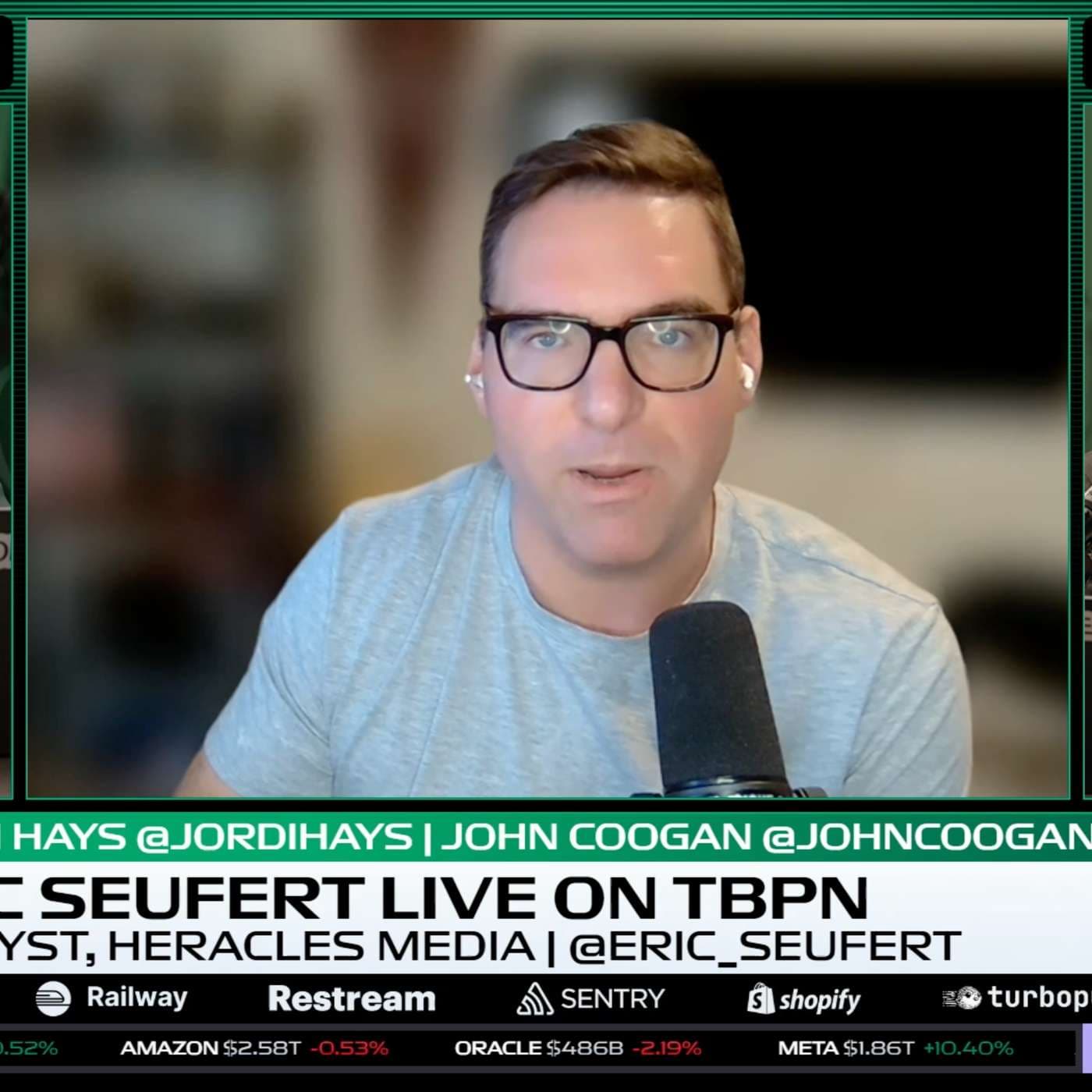
- Guest: Eric Seufert, Analyst at Heracles Media
- Recording Date: Live episode
- Episode Focus: Discussion on AI and advertising, covering topics related to Apple, Meta, and Google.
---
Key Topics Discussed
- Monetization of ChatGPT through Ads
- Introduction of Ads in ChatGPT:
- Eric Seufert predicted the monetization of ChatGPT with ads back in May 2025.
- Notable hire of Fiji Simo, known for leading Facebook's successful ad products, indicates a strategic direction.
- Current Status of Monetization:
- Initial ad offerings based on CPM ($60 per 1000 views) similar to Netflix's launch strategy.
- Current phase viewed as a primitive MVP (Minimum Viable Product) with limited measurement and targeting capabilities.
- Challenges in Evolving Ad Platform
- Evolution Timeline:
- Seufert speculates on the timeline for ChatGPT's ad platform to evolve into something more sophisticated, comparing it to Meta’s advertising model.
- Current offerings may require 6 to 18 months for improvement.
- Internal Dynamics:
- Internal hesitations towards an ads-driven business model may have delayed quicker advancements.
- Advertising as a Necessity
- Inevitability of Ads:
- Seufert emphasizes that ads are a necessity for monetizing at scale—“If you want to reach humanity scale, ads are inevitable.”
- Comparison with Netflix:
- Similarities drawn to Netflix's ad launch, noting that both companies had to pivot from previous stances against ads.
- Instant Checkout and its Implications
- Concerns about Fee Structures:
- Discussion on the 4% fee for retailers using Instant Checkout, with implications for ad spends and potential customer acquisition challenges.
- Attribution and Data Gathering:
- Instant Checkout may serve as a means to gather conversion data to enhance future ad targeting.
- Attribution Models in Advertising
- Differences in Attribution:
- Attribution in CTV (Connected TV) versus click-based models discussed, highlighting various methodologies for measuring ad performance.
- Outlook for LLM Ad Networks
- Opportunities in Long Tail Ad Networks:
- The potential for smaller ad networks to emerge, servicing long-tail companies, was noted, while larger firms like OpenAI and Google are expected to maintain control over their ad stacks.
- AI's Impact on Digital Advertising
- Compounding Effects of AI:
- Seufert argues that even small performance improvements in AI-driven ad platforms compound over time, leading to increased ad spending.
- Future of TikTok and Advertising
- TikTok's Commerce Strategy:
- Insights on TikTok's fluctuating commerce strategies under new ownership and its implications for advertising models.
- Apple's Position in Advertising
- Ad Integration Challenges:
- Discussion on Apple’s approach to privacy and advertising, speculating on potential ad integrations in Apple products like Siri and Maps.
- Miscellaneous Topics
- Updates on Netflix and Warner Brothers:
- Observations on the state of the entertainment industry and implications for ad revenues.
---
Conclusion Eric Seufert's insights on the evolving landscape of AI and advertising highlight key trends, challenges, and strategies that major players like ChatGPT, Meta, and Google are navigating. The conversation underscores the necessity of ads for monetization while also addressing the complexities of implementing effective ad solutions in a competitive environment.
---
Key Takeaways
- Ads are crucial for the growth and monetization of AI platforms.
- Evolving ad capabilities will be a key determinant of success for platforms like ChatGPT.
- Attribution and measurement remain critical challenges for advertisers.
- Consumer sentiment towards ads is evolving, with users often preferring targeted ads over other monetization methods.
- Strategic pivots in advertising approaches are essential as companies navigate market demands and consumer preferences.
Written by AI. May contain mistakes. Listen to the episode to check what was said.
Chapters
Tap a time to open that second in VOThe Arrival of Ads in ChatGPT
0:45 to 2:10
Discussion on the introduction of ads in ChatGPT and its implications.
“She's kind of known for having led the mobile news feed ads product to Facebook.”
OpenAI's Ad Strategy and Evolution
2:10 to 4:50
Exploration of OpenAI's advertising strategy and its gradual evolution.
“Or do they do they need to worry about certain edge cases that people might not be aware of?”
The Inevitable Nature of Ads
4:50 to 5:30
Insight into why ads are seen as essential for large-scale monetization.
“And I think they made the decision independently, of course, but they're running ads now.”
Comparing ChatGPT and Netflix's Ad Journey
5:30 to 7:50
Comparison of the advertising strategies of ChatGPT and Netflix over time.
“is just conversion-optimized advertising is very different from what they're offering.”
Challenges in Performance Marketing on Ads Platforms
7:50 to 10:05
Discussion about the challenges faced by marketers in utilizing new ad platforms.
“The information report, they have 700 ex-Meta employees.”
Attribution and Measurement in Advertising
10:05 to 12:20
Understanding the complexities of attribution and measurement for ad campaigns.
“you're going to want to actually advertise against that.”
Understanding CAPI and Attribution
14:05 to 14:57
Learn about the role of CAPI in data collection and attribution measurement.
“But if I'm clicking out, I've got the click, right?”
The Future of LLM Ad Networks
14:57 to 16:19
Explore the potential for LLM ad networks and the competitive landscape.
“I got pitched at least a few companies that were maybe a year or so ago saying like, hey, LLMs are going to be free.”
Meta's Compounding Growth in Advertising
16:19 to 17:31
Discover how Meta's ad performance improvements compound over time.
“So like with meta, I've been banging this drum since Q1 2025.”
Generative AI's Impact on Advertising
17:31 to 18:32
Understand how generative AI is influencing ad creation and targeting.
“What people, like the criticism is like, Zuck is being so ballsy with CapEx.”
Show all 21 chapters
The Evolution of Ad Personalization
18:32 to 20:04
Discuss the shift towards personalized advertising and its implications.
“I mean, first of all, generative AI is not just what you see in the output.”
User Perception of Ads and Monetization
20:04 to 21:08
Examine user attitudes towards ads and preferred monetization models.
“Is that like an ad free like meta offer?”
Prospects for Ads in Apple Products
21:08 to 22:34
Discuss the potential for ad integration in Apple's ecosystem.
“You know, obviously, by definition, those are going to get used less.”
Monetization Strategies for Google's Gemini
22:34 to 24:53
Explore how Google is monetizing Gemini and the implications for ads.
“They got to do ads in the alarm clock app.”
TikTok's Shift Towards Commerce
24:53 to 27:35
Analyze TikTok's approach to commerce and its impact on ad strategies.
“AI overviews is the results that basically takes up now the whole above the fold on Google search.”
The Future of Streaming and IP Valuation
27:35 to 28:06
Discuss the implications of IP valuation in the streaming landscape.
“I mean, they did two rounds of layoffs in the commerce division.”
Analyzing the Netflix-Warner Brothers Deal
28:06 to 29:24
Discussion on the implications of the Netflix Warner Brothers deal and IP importance.
“And now they seem to be embracing it again.”
Apple's AI Challenges and Strategies
29:24 to 30:52
Exploration of Apple's AI approach and privacy concerns in collaborations.
“because if people don't hear it explicitly, they just lose interest because they're on their phones.”
The Future of AI and Hardware at Apple
30:52 to 33:04
Speculation on Apple's hardware evolution and AI integration into devices.
“They talked about the private cloud compute, they were so adamant that when we do this, we're doing it the Apple way, we're doing the privacy-centric way.”
Market Dynamics and Device Upgrades
33:04 to 35:16
Insights on the challenges of convincing users to upgrade devices in a saturated market.
“They're starting to open the pocketbook a little bit.”
Closing Thoughts and ChatGPT News
35:16 to 36:24
Wrap-up of the interview and an update on the retirement of ChatGPT 4-0.
“is because of the self-driving push of the car that ultimately failed, allowed them to do the R &D that is now being rolled out of devices.”
Transcript
Automatic transcript. May contain errors.0:28Eric Subert, how are you doing? ads in ChatGPT? Well, the saga begins where ChatGPT begins. We all knew we were going to end up here. We all knew ads were coming. I mean, I wrote a piece May 2025. I said, obviously, ChatGPT will monetize with ads. Why did I feel so confident in that? Because they just hired Fiji Simo. She's kind of known for having led the mobile news feed ads product to Facebook. That's obviously been one of the most successful ads businesses in the history of mankind. And so it seemed natural that they would bring, given the domain expertise they had acquired, that they would bring ads to bear for ChatGPT.
1:05And they have. Now, the launch looks like the launch of Netflix ads, right? And if it remains that way, it probably doesn't bode well for the business. But I think they're going to evolve it over time. And what they've said now, or what's come out, the information has had a lot of good reporting on this. They're charging on a CPM basis, which is not standard for kind of direct response ads. It's more like a brand average. advertising formulation, but so it's$60 CPM, which is exactly what Netflix came out of the gate charging. They're asking for commitments of less than a million dollars. So this is clearly like a testing phase.
1:38And they're going to offer very little in the way of measurement or targeting. So this feels like a very sort of primitive MVP. But you know, the question is like, how quickly can they evolve it into something that looks more like the Facebook ads platform? So what do you think got us to this place where you get Fiji Simo? She's done this before. She has massive connections and skill set, but it still takes eight months to roll something out that feels not as mature as something else. Is it a talent issue? Are there other regulatory concerns? Or do they do they need to worry about certain edge cases that people might not be aware of?
2:19Or is it specifically strategic to actually, is there some secret reason why they're taking this approach? So here's my hypothesis, right? And so it's not just about, you know, Fiji Simo, she's the CEO of apps, but they acquired Statsig, which is, you know, staffed by a lot of ex-meta people, that was an experimentation platform. That's the exact kind of talent that you'd want to ingest into a company if you're going to roll out an ask platform, which needs to be aggressively experimented on. Here's what I think happened. I think, you know, ChatGP, so OpenAI kind of evolved over time. It was a research lab.
2:53Then, you know, obviously they've had the drama around trying to pivot into a for-profit corporation. My guess is the investors wanted them to bring in somebody that was a little bit more sensitive to, you know, the commercial sensitivities, right? And so, you know, Fiji Simo would be a very good fit for that profile. They brought her in, and my sense was there probably was a little bit of animosity internally towards the idea of this being an ads-driven business, right? Primarily an ads-driven business, which I think it ultimately will be. Only like two years ago, Sam said, I look at ads as like a failure state.
3:29Yeah, and then he started pivoting the rhetoric. started saying, well, I like some of the Instagram ads. When they're targeted well, they're actually delightful. And in the right context, they can be good. And he was coming around to the three of our worldview, which is that advertising is great. But he did have to message that externally. And then obviously had a whole bunch of work to do, messaging it internally. And maybe that's why there was a little bit less energy internally to really push towards that. That makes a lot of sense. Well, he may have been the one that was messaged too. He may not have been the one controlling the message there.
4:00He may have been the one that was messaged too. We need ads because ads are inevitable. It's not that ads are great. Ads are inevitable. If you want to reach what I call humanity scale, ads are inevitable. If you want to monetize that at the scale it can be at its total potential, you need ads. That's how you do it. And so he may have been the one that was convinced. And bringing someone external in who had been there, done that, may have been part of an investor strategy. But putting aside my hypothesis, look, I think this has the potential to be an incredibly successful initiative. The question is, how quickly can they pivot into something that looks like the meta model?
4:32So if you look at it right now, it's – and I think, look, everything you just said mirrors what happened at Netflix. For years, Netflix said we would never do ads. Ads are offensive. They're an affront. They're an affront to my sensibilities as a consumer. That's what the leadership said. And then one day they weren't, right? And the exact same thing happened with OpenAI. And all in. Six months? All in. Don't forget all in. All in was anti-ad, and we begged them. We begged them. We begged them. And now? And I think they made the decision independently, of course, but they're running ads now. Are they always coming around?
5:05Yeah, I've been banging the drum since May of 2025. But I think the question is, is it six months? Is it 12 months? Is it 18 months to get something that looks like meta ads, right? And that means targeting, right, based on behavioral profiles. That means measurement. That means explaining to advertisers the sort of impact of what you've delivered on their behalf. And that means a whole lot of tech that needs to be built out, right? And that means creative optimization, all these things. is just conversion-optimized advertising is very different from what they're offering. And is it six months?
5:35Is it 12 months? Is it 18 months to get there? That's a big question, right? But that'll determine the success. And if you say, look, this mirrors what Netflix did, well, that's not really a playbook that you want to draw inspiration from, right? I mean, they had to pivot. They had to do a hard pivot. I mean, the ad steer has been alive for three years. They did 1.5 billion in 2025, right? So, you know, it's not a significant chunk of the revenue yet. I think it could be a much larger chunk of the revenue, but Netflix has other concerns, right? They've got quality concerns. They've got consumer sentiment concerns where they can't just fully embrace ads.
6:05I don't think ChatGPT is limited in that way. Yeah, yeah. Take me back to that initial launch of Netflix. You said similar CPM,$60 per 1 ,000 views. But what was the response? Were there any advertisers that were like, yes, this is great. I got my money's worth. It worked out. Was it just vague and unattributable? My perception is great performance marketers are always excited to try new channels, especially a channel that's driving high-intent traffic. So if you tell a performance marketer, hey, I've got a billion users, and I'm going to let you advertise to them, they're going to be excited no matter what the general setup is because they just want to get in there with a test budget.
6:45And you'll talk to marketers, and at a certain scale, they're like, yeah, let's try 100K here. Let's try 100K there. It's just like you're just kind of throwing around money and then you're going to double down on what really works. Right. For the initial rollout, this is how you launch an ads platform. Don't get me wrong. This is how you launch an ads platform. That's why I'm talking about six months versus 12 months. This is how you do it. This is how you bootstrap the data. This is how you get people on board. This is how you get feedback. You have to launch it like this. There's no other way.
7:12You can't launch a conversion optimized ads platform because by definition, you don't have any conversions data yet. Right. Now, that's that's another reason why I think they they launched Instant Checkout. I think instant checkout is a stalking horse. I think that's a method of gathering conversion data that they can use to then target against with ads. I think that was the whole purpose of that. Right. I don't think that was seen as a long term revenue opportunity. I think that was seen as a way to bootstrap the data. But this is how you launch in an ads platform. I mean, it's got to evolve into a conversion optimized platform, but you can't be that at the start.
7:40You can't intuit the settings. You can't intuit the tuning that you need to implement to make this work. But the question is, how long does it take them to get there? And so that we'll just see. But my sense is they've got the DNA. The information report, they have 700 ex-Meta employees. Essentially, everyone at Meta is working on ads, whether they're working as an account rep or they're working as an ML engineer. They're all sort of growing in that direction. Yeah. What's been your reaction to instant checkout? There's been a lot of debate on the fee structure. Some people saying no retailer can afford this.
8:15we were pushing back on that in a number of different cases. There's plenty of brands where you say, like, would you spend, like, 4 % of AOV to acquire a customer? I can also see the other side of it. A concern that I have is, like, you know, you're running an ad on a meta platform to find a customer. The customer then goes to Chatshubut if that's where they're searching for products, and then the brand is effectively paying twice to, like, actually find the customer, drive them, get them interested, And then at the bottom of the funnel, they're paying like another 4 % fee. That feels like not great.
8:48But what's been your reaction? Yeah, so I was in the former camp. I said that that's not a workable fee. Let me come back to that, though, because you asked a question about what happened when Netflix offered ads. They had too many advertisers sign up. They had too many. They were supply constrained, not demand constrained. They had to return money. I think that's exactly why OpenAI is saying, no, look, we're setting an upper limit on this. A million is the max, right? Because they won't have enough people to advertise to. This is just a way to test it out and to start scaling. And the problem Netflix made was they never act.
9:15So the problem that Netflix had from day one was they had the partnership with Microsoft with Xander. So they were using external tech to run the ads, right? Xander is an ad platform. And so that's the problem. They couldn't implement, you know, custom placements. They couldn't do a lot of measurement stuff. They couldn't do a lot of targeting stuff because they weren't operating the actual pipes, the actual plumbing that was delivering the ads. There's a lot of, like, data issues, just access to data issues. That's not what OpenAI is doing here. OpenAI is starting out by building their own tech.
9:42And Netflix, by the way, pivoted to that. But they pivoted to that very late. That's why I think the ad initiative at Netflix was not successful and hasn't really delivered that much revenue. But going back to the 4 % fee, first of all, here's what I think is going to happen. I think they're going to drop that to zero or very low. It'll be tiny because I think the whole point of this is to just drive conversions. And the whole thing is like when you see performance in ChatGPT as a retailer who's just basically paying for the conversions essentially with the fee, you're going to want to actually advertise against that.
10:10You're going to want to control it because you have no control if it's just surfaced based on what ChatGPT believes is relevant. And at some point, you're going to have too many retailers to place into a single placement, so you're going to have to mediate that by bids. So ultimately, I think this gives way. In the main, this gives way to advertising. But whether the 4 % is sustainable or not actually comes down to how you view what those purchases are because it's not user acquisition. You're not acquiring a user. If you were, then you'd compare that to LTV. But since it's not user acquisition, you're not acquiring that user with a long-term relationship in mind.
10:45You're essentially trading a percentage of the checkout for the checkout, but that user doesn't interface with you. And in a lot of terms— So there's not going to be pass-through to the underlying vendor, you're saying? Well, no. I mean, look, you're the merchant of record, right? And you get their information because you have to fulfill the order. But OpenAI specifically says in the terms that you can't use your email address for remarketing. And Amazon says this too. So the thing is you're not capturing the customer. You're just giving 4 % for that one-off transaction. But you have no control over whether you reach that customer again, whether that customer is brought into your orbit.
11:22That's a very different proposition from advertising to someone and acquiring a customer. You acquire that customer, you get a whole stream of opportunities to remarket to them. If you're just trading 4 % for the transaction, that's all you get. So it's not actually customer acquisition. If you think about 4 % per transaction, now consider that if you thought about the people talking about, you know, when that number came out, they talked about, well, some people spend, you know, 50%, 60 % on Facebook ads. Why is that different? Because that's over the life cycle of that customer, not for the one of transactions.
11:51Or even one time they pay for the customer one time and then they come back, you know, 15 more times or they end up subscribing and they've actually owned the customer relationship. Yeah. Exactly. And, you know, think about it also this way. you know that four percent that might be all the margin you're getting as an e-commerce ever you know as an e-commerce you know operator right and the thing is that's not preventing you from advertising that's not saying okay you have to save your entire advertising but you're going to still have to advertise everywhere this is going to be a tiny sliver of your orders that you're not in control of you can't control it this could be lumpy this could be up one month down the next right you can't control that you're gonna have to continue to advertise now you have no idea to your point whether this is cannibalizing uh purchases that would have happened from the people that you advertise on other platforms, right?
12:34So this ends up just being a cost, a drag, probably on your advertising expenditure elsewhere. Can you explain attribution and the evolution of Netflix's ad product? Because if I'm sitting on my couch watching a movie, and I see an ad, and I go to my phone, it feels really disconnected. Even in a pre-ATT world, it feels extremely hard. How do they do attribution? How good can this get? And then with ChatGPT, what's the upper bound on attribution for OpenAI, given that we are in a post-ATT world? Upper bound is basically what you see with Facebook, because it's going to be direct response. It's going to be click-based, right?
13:14With Netflix, it's a little different. So with CTV, the way that companies do measurement and attribution in CTV is traditionally they set up what's called a clean room. So I set up this environment, it's a centralized environment. I push all the ad interaction data that I have. So basically when I know I showed an ad to someone, I push all the data into this clean room. A lot of times it's IP address and device information. And then the advertiser pushes that information into the clean room and I match it up. That's attribution for CTV traditionally. Now, there's other ways to do it. There's other ways to do measurement that's just totally probabilistic.
13:44This is like media mix modeling and stuff like that. But with attribution when you want to use that term, traditionally it's done with a clean room like that. So I'm just like linking the data sets together based on some key, a lot of times it's the IP address. But if you think about clicks, like clicks out, right? So that's like I'm viewing, I'm on second screen, I can look at time, like there's time elements, you look at temporal elements to do attribution. But if I'm clicking out, I've got the click, right? I've got the click. And so that carries a lot of information. I can still look at temporal aspects of that, but I can do a lot with the IP address too.
14:13And so that's, you know, if you look at a CAPI, that's what CAPI is. A CAPI is just a way to get this data on the back end so it bypasses the apps you know the bypasses the mobile device it bypasses the browser so there's no way for you know apple to interfere with that with itp or atp or att and so you're able to get you know it's still probabilistic in that way if you consider you know the the decay of the validity of the ip address over time to induce probabilistic measurement but that's traditionally how it's done and then a pixel as well but i mean that's what open ai has at its disposal it's got the capi and the and the pixel because it's going to be click-based.
14:48So there's a high degree of fidelity that'll come with the measurement there, the attribution. That's way higher than what you can do with CTV. What do you think the prospects are for the number of companies that are trying to build LLM ad networks? I got pitched at least a few companies that were maybe a year or so ago saying like, hey, LLMs are going to be free. They're going to insert ads. We're going to build this kind of network to serve ads across a bunch of different apps. I was super bearish on those, specifically just because I thought that OpenAI would want to own the full stack. Obviously, Google would own the full stack.
15:23And I think we're heading towards an oligopoly of sorts in consumer AI. And where's the scale really going to come from? But any kind of takes on that front? Well, there'll be a long tail of agents that are going to want to monetize with advertising. So I think there might be space for an ad network to exist that services them. i don't know why that wouldn't be an existing ad network um i don't know why that wouldn't be or you know just sort of dsp like i don't i don't i don't know why that wouldn't be the trade desk to say um but but yeah i mean i think there's probably an opportunity to monetize some of those long tails of agents with uh with ads but if you think about like a chat of course they're going to build their own i would you know perplexity is apparently restarting its ads initiative um i think these companies it would be silly to not build their own i mean you want to have that ad stack so you can make everything bespoke right and and and and maximally perform it right If we look at meta earnings, I mean, that's exactly what delivered that big beat.
16:18And I think what people forget about the prospects of this sort of like AI enablement with advertising in digital advertising is that these effects compound over time, especially when you're talking about direct response based ad platforms. Right. So like with meta, I've been banging this drum since Q1 2025. These effects compound like people point like 3.5 percent or 5 percent or whatever increase in click through rates or increase in conversion rates from Andromeda or from Gem or from Lattice. Who cares? These are tiny. No, but first of all, that's every quarter they're noting these performance improvements, but also they compound over time.
16:50If I'm targeting 90 % a 90 day recoup on my ad investment and 120 day, 110 % ROAS, what am I doing after 120 days? I'm reinvesting 110 % in advertising on your channel. And so if you're giving me 3.5%, 5 % bumps every quarter, that's just going to end up getting reinvested. That's why we're seeing the growth reaccelerate. Growth is re-accelerating going into Q1 2026. That's amazing. That's why Facebook was up 10 % last night, because growth is re-accelerating. They're going to see growth rates they haven't seen since the post-ATT doldrums. That's incredible. That's incredible growth. And anybody who doubted the CapEx historically has to accept that reality now.
17:29And they did. They did yesterday. Yeah. Yeah. What people, like the criticism is like, Zuck is being so ballsy with CapEx. Specifically on Gen.ai, which they haven't shipped Gen.ai products. And the criticism is like, hasn't launched a hit Gen.ai product yet. Our take earlier on the show was like, look, this guy is serving more Gen.ai content than almost anyone on Earth. Even if he doesn't have like a breakout net new product, his product has massive tailwinds because of all this. Like he's in a perfect position to decide, yeah, I'm going to be one of the biggest spenders in this category and plan however many years out in advance.
18:10They're making more money on AI than anybody except for Google. Look, the idea that they're not utilizing generative AI, have you seen the ads on Facebook? Those are all generative. There was a revolt. There was an advertiser revolt. There was a scandal recently because Meta was being too aggressive with the ads generation. The idea that they're not implementing generative AI is absurd. I mean, first of all, generative AI is not just what you see in the output. I mean, they talked about pairing LLMs with ad ranking. that's really fascinating cutting-edge research in advertising using llm to sort of give you feedback on the ad does this resonate is this something that someone would click on like pretend you're this demographic there's already research that shows that that has a really beneficial impact on advertising it's not just like what you see in your feed but also the stuff that you see in your feed is generated the idea that they're not utilizing generative ai in advertising that's absurd.
19:02You can see it. Just go on Facebook right now. Yeah. I want to move on to other companies, but I want to have one more question about opening. Do you think that there's any, um, any sort of risk to like push back of like the creepy ads, like being too well-targeted. Uh, Facebook went through that with like the t-shirts that said your name on them basically in like your whole career path. Uh, my, my assumption is that eventually like you're only getting ads that were specifically generated for you. Like this idea of like, historically you'd have, you know, one ad that a brand would make and they'd run it at the Superbowl.
19:38They're like, we're going to send this to all of America. And then eventually with, you know, on platforms like Meta, I would assume that every ad is like a one-off generated and it knows, it knows exactly how to position a product, what color, what environment to put it in. And it'll be insane that we used to have ads that we'd make one piece of creative and then run it to like 10 million people because it was like good and it's like no this will all just niche niche niche niche down uh more and more yeah what do you think look i mean it's like the idea that everyone would see the same feed when they opened up facebook is absurd now right i mean like look if if people truly hated creepy ads facebook user numbers wouldn't you know monotonically increase every quarter right and uh you know europeans would be lining up to buy the subscription in europe and when in fact only one percent of users in Europe has taken that offer.
20:30Is that an offer to eliminate? Is that like an ad free like meta offer? Is that what you're talking about? Because I know they're talking about rolling out. So they've got the less personalized ads option in Europe as a result of the DMA compliance. So they have three options. They have a full on subscription, no ads. They've got the less personalized ads and they get the normal experience. 1 % of people opted into the subscription. Like people hate ads. They just hate them less than every other monetization model, Right. People love ads. And if you look at, you know, demonstrated behavior, people love ads.
20:59People love access to free tools. People love access to sort of like endless capacity. Right. You start capacity constraining things or you start putting up paywalls. You know, obviously, by definition, those are going to get used less. Right. Or most likely by definition. And so the thing is, like the idea that like ChatGPT is going to run into this problem that's unique to chatbots, I just don't buy that. And first of all, maybe they will because maybe they'll design this the wrong way. But I give them the benefit of the doubt. I think they can do it in the right way. And one way to do it is to just not tether the ad at all to the chatbot context.
21:33You could just say, look, this is a display ad for what we know you're in market for based on Cappy, based on the pixel. And we're going to make sure it has nothing to do with what you're talking to the chatbot about. So you never have to even question whether the chatbot has your best interest at heart. That's a very easy way to sidestep that problem. But I think they've got very skilled people there. They know exactly what that trap is, and they're going to avoid it. Do you think we're going to get ads in Siri in the next 24 months? No, just because of the optics of Apple doing that. I think Apple would probably love to do that.
22:05I think there's probably people inside Apple that are pitching that, but they won't because it's not in alignment with their optics around advertising. But nonetheless, Apple is also increasing. We were talking, like, I think people will be normalized to ads in Apple products. They obviously are in the App Store today. German was talking about ads in Apple Maps coming in the near future. And then I think from that point, if people are starting to use Siri as a search engine, there will be ads eventually. It will just be to be able to serve ads like basically natively in the UI to iPhone consumers will just be too tempting.
22:43They got to do ads in the alarm clock app. I want to wake up to a different ad every day, get out of bed, start buying, get online. It's time to check out. Yeah. Morning to night, you should be consuming. I don't know. Maybe. I think Maps podcast for sure. But the thing is, I wrote this piece when Apple introduced ATT. I said, Apple robbed the mob's bank. I said, look, this is just an opportunity for them to shift some of the budget that's going to meta into their own ads ecosystem. They did that because they expanded their Apple search ads. They just doubled the number of impressions per search.
23:18They've got two placements now in Apple search ads, and they're also blurring the lines between ads and organic results there. So the idea that Apple hates ads, I think, is mistaken. I think what Apple needs to do is they need to sort of walk this tightrope of appearing to hate ads while also benefiting from ads because they are such a, you know, an accretive sort of margin-expansive way to make money. Right. So maps for sure. I think podcast is another prime piece of real estate for ads to be inserted into. I don't know about Siri. That feels like maybe a little bit too on the nose, but who knows?
Read the full transcript
23:51What about Gemini? What was your reaction to Demis talking about ads in Gemini? That makes total sense because they're already monetizing Gemini with ads. They're doing it with AI overviews and AI mode. They're monetizing ads and AI overviews at parity with search. Why would they rush to put ads in Gemini, the chatbot? Keep in mind, Gemini is two things. Gemini is the family of models and Gemini is the chatbot. Why monetize with ads in Gemini the chatbot? You never need to. You could just drive adoption of that. They're already monetizing Gemini the family of models through AI overviews and AI mode.
24:24AI overviews reaches 2 billion people a month. That's the biggest single LLM output ad surface that exists. They're already monetizing Gemini through there. Yeah. And is that product just what's the shape of that product? Is that just the exact same as just branded keyword search on Google? Like what is there? Are there anything different or any learnings from the the ads in AI search overviews or AI powered search? So AI mode is essentially the chatbot. AI overviews is the results that basically takes up now the whole above the fold on Google search. But it's better. It's better than search. You know why?
25:03Because the whole point with search is I want this to be one shot. I want to type in my keyword, and I want to get the best possible result in that first list of results. And if I don't, then I think your product is bad. And so Google is incentivized to make sure that there was one click, and that's it. So you get one chance to show ads. With AI overviews, the whole point is to then prompt further queries, right? So you get a bunch of opportunities to show ads, right? So if that's monetizing at parity, it's probably also driving impressions up. I think that's a much better ad surface area than traditional search.
25:32Yeah. How should startups, business owners be thinking about TikTok under new ownership? TikTok is funny because they're going all in on commerce again, it seems. Like they had a really big kind of Black Friday, you know, whatever event, you know, revenue pop, revenue spike. But, you know, they seemingly had had we're walking back the TikTok commerce opportunity. Now they seem to be leaning into it. I'm not quite sure what to expect there. I think, you know, TikTok, I think they were in a little bit of the stasis for a while just because of the uncertainty around what was going to happen with the with the spin out.
26:09My sense is now that they have the certainty, they'll probably lean into where they feel like their best position. And that might be commerce now that Meta has completely abandoned it. You know, and I but I think like I just don't think that that's the right approach. I don't think Western audiences really appreciate that as much as just the ads driven model. And so, you know, the pure play ads driven model. So we'll see if that ends up working for them. But yeah, I mean, I think TikTok, you know, if Meta can do what they did to snap with TikTok, they're going to be in a pretty difficult position.
26:39And they may have to just adapt in ways that that Meta won't. And that would be leaning into commerce more heavily. Yeah. I always assumed maybe naively that they would lean out from commerce because it seemed like it was just a money pit. They were just lighting money on fire. And the new owners would say, like, okay, we just bought this. We have to pass back 50 % of our revenue to ByteDance. Like, the whole, like, economic model of the business seems, like, super upside down. Let's just serve ads and try to run the business lean and maintain the user base. but leaning into commerce just feels like, I don't know, there's so many brands that I've heard about over the last 12 months that are scaling into the hundreds of millions of revenue and it's almost all on TikTok shop and it just feels like that was, you know, basically subsidized by ByteDance for a long time and will the new owners want to subsidize these brands that are driving real volume, but ultimately, I don't know if they would be able to stand on their own two feet.
27:38Yeah, I mean, they did walk it back. I mean, they did two rounds of layoffs in the commerce division. Yeah, I mean, the thing about, one thing you have to remember about TikTok and the ByteDance and the whole, like, the parameters of this deal is that they're still licensing the algorithm, right? So, like, I think that impacted the kind of the valuation, and that may impact some of these other economics. But, yeah, I mean, I just feel like they maybe sense that that's an area where Meta retreated, and so that's where they could potentially flourish. But it was odd because they did walk that back.
28:08And now they seem to be embracing it again. Yeah. What's your current thinking about the Netflix Warner Brothers deal? It feels like we're in a lull. It's moving forward. But would be interested to see. Yeah, I'm also interested just how do you think about Paramount's prospects as an ad platform without all of that IP? Yeah. Yeah, well, so it's interesting. So the thing is, the IP is so important, right? So one of the aspects that I found really interesting about the Netflix deal was that they essentially valued WB Games at zero. So WB Games makes, whenever they're big hit games, it makes their Game of Thrones game on mobile, and they've got Mortal Kombat games and a lot of different console games, Batman Arkham.
28:51And at one point it was for sale in the multi-billions price range. And so Netflix essentially valued it at zero. Why? Because ultimately there'd have to be an IP licensing agreement that allowed them to continue to monetize those games. Right. So I think the same is probably true on the IP side, just generally with WB. My sense is like what this indicates to me is like, you know, and this was just I mean, this was said explicitly in the earnings call. It's like, you know, we're going to pay for content one way or the other. And like we need this high end IP. Right. And like, you know, if you look at I mean, everyone saw the Joe Rogan clip with Matt Damon and Ben Affleck talking about like Netflix makes us restate the plot of the movie like every couple of minutes in dialogue.
29:32because if people don't hear it explicitly, they just lose interest because they're on their phones. You wonder, okay, well, is that a result of people's attention spans declining? Or is that just because the stuff you're pumping out isn't that interesting and people are not really paying attention because they're kind of bored? And so I think maybe it's the latter. And so if you bring in a bunch of top-notch IP, maybe that keeps people more engaged. And then, hey, maybe that boosts the ad CPMs and ultimately boosts subscription numbers. But my sense is, like, they're going to pay for content one way or the other.
30:03And, like, you know, maybe just buying a lot of it in bulk at once is the best way to do that. What else are you tracking this week across earnings? You know, Microsoft and Tesla. I don't know if you follow those stories. But what else is interesting to you this week? Well, we've got Apple right now. Yeah. um yeah i mean uh i think like you know you had you had uh german on uh yesterday and um you know he's just always an amazing wealth of leaks it's pretty impressive that he's able to get those uh apple's pretty buttoned down um but uh but yeah i mean i think just the ai story there is is kind of embarrassing um and you know uh like i wrote this piece a while back apple is besieged on all fronts and i was talking about like look if you look at ai if you look at some of the threats to ATT and Europe, you know, there's a lot of issues that they face.
30:57I think, you know, one of the big questions for me when they announced the deal with Google to use Gemini for, you know, Apple intelligence, you know, which among other use cases includes Siri, was how they would just manage the privacy aspects of that, because they were so adamant, right? They talked about the private cloud compute, they were so adamant that when we do this, we're doing it the Apple way, we're doing the privacy-centric way. And then they do the privacy-washing thing, which is just then to partner with Google and allow them to do all the dirty work of sourcing the data, right?
31:27Sourcing the data to train the model, right? Or of just monetizing with ads, like, and they just get a cut on the back end. And in this case, Apple's paying, but at some point, Google will be paying for penetration into iOS and the exposure. And I think, you know, that's just a question of like, is that really the reason? Is that part of the reason why they never invested here? Because they couldn't really do it in the Apple privacy-centric way. And if you want someone, you know, if you understand that the dirty work of sourcing this data in ways that maybe are not completely above board or just monetizing with ads, I mean, Apple makes so much money from advertising.
31:58They just don't do it directly, right? They do it through the partnership with Google. Now they're gonna be making money through AI interactions, but they're not actually the ones training the models and sourcing the data in ways that could be questioned, right? So I think that maybe plays a part in it. And I think maybe when you get to a point where all of this can be done on device, right? When the device is actually powerful enough to service most of these use cases. Maybe you have smaller models. You don't have like foundational models. We have smaller models that can all run on device and maybe Apple be more interested in that.
32:25But I mean, like you have to look at the AI thing as either as a massive whiff, which seems to be what German's take was, or it was just a sense of like, look, this is actually going to be really difficult for us to reconcile with our brand imagery and the sort of messaging that we've relied on for years and years, like privacy that's Apple. Maybe we'll just outsource this in the same way that we outsource search, right? and advertising to Google until we're able to all process everything on device and ensure that we can maintain that messaging. Yeah. I mean, my take is I agree with the whiff narrative.
32:58But also, it does feel like there's the seeds of a rebuild between this new acquisition that they're doing. They're starting to open the pocketbook a little bit. The hardware really is best in class. We saw that with the Mac mini boom to some degree. People are excited about the silicon, Apple silicon. And then just the partnership with Gemini, like they're going to have access to something frontier so they can start to vend it into different places. But it's just on Apple's timelines, which have been slow lately. So, yeah. Yeah, but the iPhone Air was a flop, right? I mean, you know, we'll see what happens with the foldable.
33:33But like, I mean, I think they are facing, you know, obviously the replacement cycle is really long now. I think one thing that's kind of under-discussed is I wrote this piece a while back, years ago, where I said, what are the implications of a billion iPhones? And this is well before there were a billion iPhones in circulation. And my point was the implications are that a lot of those are in the developing world. They're secondhand, thirdhand iPhone devices. And that's kind of like there's this strange dilemma that Apple faces. The more powerful the devices get, obviously, the longer you can go without replacing them.
34:04Because the demands of Spotify aren't changing. The demands of Facebook and Instagram aren't changing from like a hardware perspective, right? And so the question is like, how central can you make AI to the core use case, which is a lot more compute intensive, if you do everything on device? How central can you make that to instigate a need to replace the device more frequently, right? Not just like the – because the power of the device at some point doesn't even matter. Like, okay, you tell me like the compute capacity of the next iPhone is 10x what I have now. Okay, well, are the demands of Spotify 10X?
34:37Because that's the only app I use for hours and hours every day, right? And so that's kind of the question. And so it's like, if all that functionality can sort of like percolate down to like the iPhone 7, right? And no one really sees a difference in sort of like lifestyle between like the brand new iPhone and the iPhone 7 with their only using Instagram and Spotify. How do you actually convince people to upgrade on every cycle? Because keep in mind, as that sort of install base, that iOS install base grows, most of that's going to be through secondhand. Yeah, yeah. Yeah, German, it was interesting yesterday, he shared that a lot of Apple's advantage on the hardware side in AI is because of the self-driving push of the car that ultimately failed, allowed them to do the R &D that is now being rolled out of devices.
35:29Apple had a huge quarter, beat estimates on the revenue side by$4 billion with China specifically. That's great. And up after hours. The other news that's kind of interesting, I'd be curious before you leave, Eric, ChatGPT is retiring 4-0 as of today. Yeah, that's interesting. Putting it to bed. I'm sure that'll make a lot of people mad. but it's simpler process for them yeah well yeah but they also launched uh uh go yeah right which is the uh sort of like lower price point um uh subscription tier so my sense is like you know if you're trying to push people to adopt that which i think they are you maybe have to get rid of some like the the older models that the free tier relied on well thank you so much for taking the time to join this is a blast uh yeah i really enjoyed it come back on soon yeah we'll talk to Have a good one.
36:23Goodbye.
From the publisher
This is our full interview with Eric Seufert, analyst at Heracles Media, recorded live on TBPN.
We discuss Apple’s AI and privacy tradeoffs, Meta’s AI-powered ad rebound, and how Google is monetizing Gemini at scale.
TBPN is a live tech talk show hosted by John Coogan and Jordi Hays, streaming weekdays from 11–2 PT on X and YouTube, with full episodes posted to podcast platforms immediately after.
Described by The New York Times as “Silicon Valley’s newest obsession,” TBPN has recently featured Mark Zuckerberg, Sam Altman, Mark Cuban, and Satya Nadella.
TBPN.com is made possible by:
Ramp - https://Ramp.com
AppLovin - https://axon.ai
Cognition - https://cognition.ai
Console - https://console.com
CrowdStrike - https://crowdstrike.com
ElevenLabs - https://elevenlabs.io
Figma - https://figma.com
Fin - https://fin.ai
Gemini - https://gemini.google.com
Graphite - https://graphite.com
Gusto - https://gusto.com/tbpn
Labelbox - https://labelbox.com
Lambda - https://lambda.ai
Linear - https://linear.app
MongoDB - https://mongodb.com
NYSE - https://nyse.com
Okta - https://www.okta.com
Phantom - https://phantom.com/cash
Plaid - https://plaid.com
Public - https://public.com
Railway - https://railway.com
Ramp - https://ramp.com
Restream - https://restream.io
Sentry - https://sentry.io
Shopify - https://shopify.com
Turbopuffer - https://turbopuffer.com
Vanta - https://vanta.com
Vibe - https://vibe.co
Sentry - https://sentry.io
Cisco - https://www.ciscoaisummit.com/ai-virtual-summit.html
Follow TBPN:
https://open.spotify.com/show/2L6WMqY3GUPCGBD0dX6p00?si=674252d53acf4231
https://podcasts.apple.com/us/podcast/technology-brothers/id1772360235

