
In short
TBPN Podcast Episode Summary
Episode Title
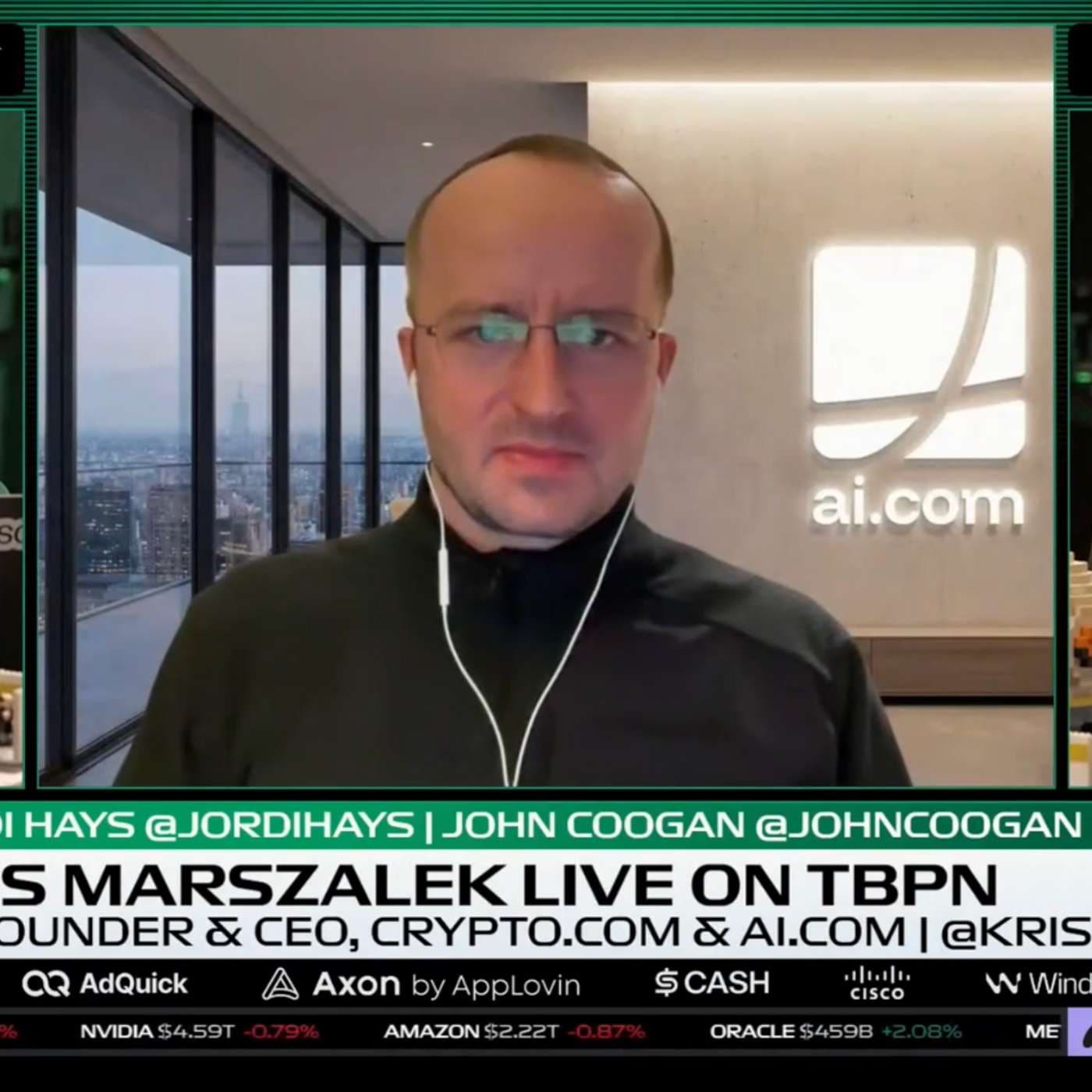
FULL INTERVIEW: Why I Spent $70M to buy AI.com
Podcast Description *TBPN* is a daily technology talk show streaming live on X and YouTube. The episode features Kris Marszalek discussing his acquisition of the domain AI.com, his vision for a personal assistant AI, and the strategic decisions surrounding the launch of his product.
---
Key Points Discussed
Acquisition of AI.com
- Motivation for Purchase: Kris Marszalek recognized the importance of the domain AI.com when it became available and acted quickly to acquire it.
- Previous Experience: Marszalek previously bought the domain Crypto.com for $12 million during a challenging market, which laid the foundation for understanding the potential value of premium domains.
Vision for AI Product
- Long-term Goals: Marszalek envisions AI.com as a platform for a consumer “chief of staff” personal assistant that aims to serve billions of users by providing proactive assistance rather than just chat capabilities.
- Consumer Interaction: The goal is to create a user-friendly product that integrates with everyday tools like email and calendar while ensuring data safety and ease of use.
Super Bowl Ad Strategy
- Ad Purchase: Marszalek secured a Super Bowl ad spot in May, shortly after acquiring AI.com, even before the product was fully developed.
- Execution and Challenges: The ad generated significant attention but faced website issues due to high traffic, resulting in around 300,000 sign-ups despite some users experiencing downtime.
Market Positioning and Competition
- Consumer AI Landscape: Marszalek discussed the competitive environment where established players like Google have not fully captured the consumer market as expected, creating opportunities for new entrants.
- Unique Selling Proposition: AI.com aims to differentiate itself by enabling users to accomplish tasks efficiently, rather than merely offering AI interactions.
Future Plans and User Engagement
- User Feedback: Marszalek emphasized the importance of listening to users and iterating based on their experiences.
- Gamification: The onboarding process will be critical, with plans to gamify interactions to encourage early engagement and demonstrate the product's value.
Financial Decisions
- Rejection of $500M Offer: After acquiring AI.com for $70 million, Marszalek declined a $500 million offer shortly after closing, indicating a strong commitment to building the product over quick financial gain.
---
Key Takeaways
- Quick Action: The importance of timely decision-making in tech acquisitions is highlighted through Marszalek's swift purchase of AI.com.
- Visionary Thinking: A clear, long-term vision for consumer AI can differentiate emerging products in a crowded market.
- Strategic Marketing: Leveraging high-profile advertising opportunities can create significant attention but also requires robust backend support to handle traffic.
- Commitment to Development: Rejecting a lucrative offer illustrates a strong commitment to the product's potential rather than immediate profit.
---
Conclusion The episode provided insights into Kris Marszalek's ambitious plans for AI.com, emphasizing the intersection of technology, marketing strategy, and consumer engagement in shaping the future of personal assistant AI technology. The discussion underlines the challenges and opportunities in this rapidly evolving field and highlights the importance of visionary leadership in tech innovation.
Written by AI. May contain mistakes. Listen to the episode to check what was said.
Chapters
Tap a time to open that second in VOThe Journey to Acquire AI.com
0:46 to 1:30
Discussion on the process and significance of acquiring AI.com.
“So I immediately recognized the importance of it and just jumped on it.”
Reflections on Previous Domain Purchases
1:31 to 2:30
Insights into past domain purchases and their impact on the business.
“It was bang in the middle of the 2018 bear market.”
Vision for AI and Product Development
2:31 to 3:18
Exploration of the vision behind AI.com and product development goals.
“the role of kind of a chief of staff for your entire life with great contacts, being proactive, getting things done for you rather than just chatting.”
Preparing for the Super Bowl Launch
3:19 to 4:26
Details on the decision to launch an ad during the Super Bowl.
“Before we get into the product and kind of more of the vision, let's fast forward again to the Super Bowl specifically.”
Post-Super Bowl Reactions
4:27 to 5:23
Analysis of the response to the Super Bowl ad and website performance.
“It felt like it was coming together quickly, but we know we ran a much, much smaller ad.”
Understanding Consumer AI Opportunities
5:24 to 6:32
Discussion on the current landscape of consumer AI and opportunities.
“You know, these things need to be able to develop an emotional connection with the product in order for this to be sticky and retentive.”
Challenges and User Experience in AI
6:33 to 8:07
Exploration of the technical and user experience challenges in AI.
“And then you got a whole other kind of amount of attention from people being like, Like, wait, I just got an ad for AI.com and I landed on the website and the website's down.”
Feedback and Product Rollout Plans
8:08 to 9:45
Plans for rolling out the product and gathering user feedback.
“Like, where is the consumer AI opportunity now that we're three years into the chat GPT boom?”
Gamification and User Engagement
9:46 to 10:44
Discussion on gamifying the AI experience for better user engagement.
“So, I'm pretty excited about the wandering aspect of it.”
The Legacy of AI.com Ownership
10:45 to 12:04
Insight into the original owner of AI.com and its historical significance.
“That feels unique because maybe OpenAI can't go over to WhatsApp because Mark Zuckerberg doesn't want to let him.”
Show all 13 chapters
The Journey of Acquiring AI.com
14:03 to 15:10
Learn about the intriguing process and challenges of acquiring the AI.com domain.
“Because his initials, his first name starts with A, last name starts with I.”
Vision for the Future of AI
15:10 to 16:18
Explore the speaker's commitment to the project and their vision for its growth.
“And you're just going to, you know, listen to your users and figure it out.”
Personal Insights and Experiences
16:18 to 17:10
Hear about personal experiences and interests related to AI and entertainment.
“And then I'll slowly forward myself data from my real account to give you a little bit more to see what it can do.”
Transcript
Automatic transcript. May contain errors.0:28Chris, good to meet you. on the market. I think they had been trying to sell it for a while, I imagine, and you came in as a buyer. But walk us through that whole journey. Yeah, I bought another domain and the agent who was brokering this told me about AI.com being in a process of being sold, if you will. So I immediately recognized the importance of it and just jumped on it. Got on the phone the same day um got the deal done we shook hands um there were some ups and downs through the through the process but we managed to uh to get this done uh you've had some good success buying uh buying iconic uh domains what did you pay for crypto.com have you ever disclosed that i don't think we ever did, but we paid$12 million.
1:22I would argue that that was a more difficult decision, if you will. We were a small company back then. $12 million was about a third of our capital. It was bang in the middle of the 2018 bear market. People were discussing whether the crypto is going to survive or not. Yeah, the person selling it to you was probably like, this guy is an idiot. I'm not going to be walking my hands with this thing. Of course, you ended up looking smart. Now it's on the Staples Center. I drive by it all the time. Okay, so yeah, you see this domain is on the market. Do you have any idea what you wanted to do with it at the time of acquisition?
2:02Or did you just think that, hey, this AI thing is probably pretty important. Maybe I should own AI.com. Look, we were building products ever since ChatGPT launched and playing with consumer facing side but also internal tools. So constant experimentation. And the vision from day one was, you know, we want to build a consumer product. We believe that you will have 4 billion people having personal assistants that should play the role of kind of a chief of staff for your entire life with great contacts, being proactive, getting things done for you rather than just chatting. So the vision didn't change from day one.
2:50And then, yeah, I guess fast forward. How did you process, before we get into the kind of Super Bowl and that whole strategy, how did you process kind of the open claw launch? It sounds like you guys are integrating the, are you building? some of those patterns? Yeah, at least some of those patterns. Are you kind of forking the project? Talk about that. So as we started building this product about mid-2025, it was never just... It just didn't click. It didn't have this... You couldn't pass the uncanny valley. And I think the pivotal moments where we started seeing these changes, the Opus 4.5 release, it started working much much better and we obviously saw CloudBot going live and adding some elements of their architecture to it I think it gets it done in terms of how it feels as a product you just need to solve a whole litany of issues to make it consumer friendly like how do you set it up without being technical the security issues around your data those are serious serious issues when you want to bring something to the mass market so I think we we're combining everything that we've built over the last, say, eight months into something that we can roll out to the end users, and we're starting doing this tomorrow.
4:15Wow. Tomorrow. Okay. Before we get into the product and kind of more of the vision, let's fast forward again to the Super Bowl specifically. How did that all come together? It felt like it was coming together quickly, but we know we ran a much, much smaller ad. We ran a regional ad. You do have to lock these things in ahead of time, but walk us through the process of kind of preparing and then experiencing the Super Bowl Sunday. So I bought the domain in April, the deal closed, and we got the domain successfully. So I'm like, okay, we need to launch this and it deserves a global stage. And in May, we were one of the first companies to actually buy the spot.
5:02Oh, no way. At that time, we had just the domain and idea what we want to do with it, but the product didn't exist. And, you know, I know that we only have one shot to get this done correctly, and I didn't want to release the product until I felt that it's there for the end user. You know, these things need to be able to develop an emotional connection with the product in order for this to be sticky and retentive.
5:40So I only made a decision that we're actually going to pull the trigger on this a couple of weeks ago. And that's why the ad felt like it was quickly put together. It was quickly put together. Wait, so you bought the Super Bowl spot. But you could always fall back to crypto.com if you wanted to? Yeah, what was the idea? Like, hey, if we don't run it for AI.com, we have the crypto.com ad ready, we'll just run that? We have the crypto business, we have a prediction markets business. There's always some level of optionality, right? But this is the moment to run an AI ad, as you guys have seen. And timing is really important in life.
6:24You know, skill, timing, and a combination of these things. That's a good reference. Okay, so you put the ad together in effectively two weeks, and then you run it, and what happens then? Because I think you got the attention from buying the world's most expensive domain ever, and you got the attention of like, hey, there's this new AI product I've never heard of with a crazy domain running a Super Bowl ad. You should pay attention to it. And then you got a whole other kind of amount of attention from people being like, Like, wait, I just got an ad for AI.com and I landed on the website and the website's down.
6:58So what kind of happened? You spent the$70 million on the domain, the$8 million on these spot, and then you didn't have enough to host it? What happened? I'm assuming a lot of people got through, but certainly a lot of people got stuck as well. I think we are happy with the outcome. Okay. We had about 300 ,000 people signing up. Wow. Wow, let's go. That's a lot. Can we get the gong for 300 ,000 signups? There's been a lot of big numbers. That's a big number for one day.
7:37But on a more serious note, how do you even prepare for that amount of traffic? What was going on in the war room? As you know, we're on a platform that is used to spikes, right? And we've got a great DevOps team, and we've got all the stuff that you usually would expect, auto-scaling and whatnot. So there were intermittent problems for some people, but largely it held up. So I think fundamentally it's the name and the fact that there is a certain element of curiosity there and we designed it in a it was a very simple call to action yeah go and uh and sign up yeah um so i think it worked yeah talk to me about consumer ai chat gpt is broken through gemini and google they've been leveraging you know the google platform and the network to onboard consumers nano banana was a big moment sora and the meta vibes app sort of made a splash but it haven't been super sticky, but where do you see the gap in breaking through with consumers in a new way, or just doing what consumers already expect, but better, cheaper, faster?
8:55Like, where is the consumer AI opportunity now that we're three years into the chat GPT boom? I think fundamentally, you're able to actually get stuff done right now. So that's a big differentiating factor for the user experience. and we don't really know where this experiment is going to take us given how the domain is resonating with people. We can introduce social network elements to it. I think the fact that every single person on earth is going to have an assistant of this sort can unlock new type of interactions and make our lives just better through serendipity,
9:46So, I'm pretty excited about the wandering aspect of it. We try to keep an open mind and not really be set on one thing. We now have 300 ,000 people waiting for us to give them the product. We're going to very quickly iterate on it. I'm a huge believer in moving quickly and listening to actual customers. and we will see where the journey takes us. I take a very long-term view. What can we do with this in 10 years? I think it worked in the crypto space and the opportunity here, the size is much, much bigger. Yeah, so much of what happened in crypto was sort of permissionless, bankless, this open source, these networks, anyone can set up a node.
10:32And part of this latest open claw, clawed bot hype cycle is driven by the fact You get a Mac Mini, it can talk to iMessage, it can talk to WhatsApp, it can talk to Telegram, it can go sort of wherever you go as a person. That feels unique because maybe OpenAI can't go over to WhatsApp because Mark Zuckerberg doesn't want to let him. So I'm wondering about how you're thinking about the tradeoff between certain things that are only possible with an open source AI system that is sort of acting as an imposter as a human versus you're a company. If you want to integrate with WhatsApp, you might have to give Meta a call.
11:13So how do you think about delivering the vision of a truly universal AI agent that can do things with the realities of the business community? There are a lot of business and UX challenges here. So we'll have to resolve them one by one. And our view is we want to stand on the side of the consumer and help them make these technical choices, make sure that their data is safe, make sure that they can do what they want to do without putting themselves at risk and solving these issues with access to data, with user experience. It cannot feel like a chore. Today, you need to be really technical to get value out of it.
11:59So there's plenty of work and it's difficult and that's part of the opportunity. Yeah, one of the, some unrequested feedback for me, I had kind of heard that AI.com was like potentially something like some type of, you know, leveraging some open claw technology. And then I got hit with the Google login. And I was like, I don't have time to read through kind of the full terms of service and privacy policy and really understand. So I would love to see, I mean, maybe there's plans for it, but I'd love to see just like being able to create an account on the platform to play around with it. Just because I was looking at my Gmail, which my life is on, my work email, which obviously has its own privacy concerns, all that stuff.
12:45You said you're rolling out the product tomorrow. What's the first thing that you want people to do with it? I think this is the big part of the product figuring out how do you onboard people to it and get them to do a couple of things so that they can see value very quickly and connect with it I think today it's pretty hard to get the feeling for what it can do without really connecting your email and calendar we will see I feel that there is going to be a lot of experimentation there and we will look for user feedback and truth in data in numbers of what really works and what doesn't. To a certain degree, you need to gamify it until such point where users are deep enough that it actually gives them the feeling of, wow, this is special, this is different.
13:36Yeah, that gamification is so important. You see the Studio Ghibli moment where the latest images in ChatGP launches and you don't even have to think. You just have something in your camera roll and you're going to type Studio Ghibli and you're going to get the value prop. And then a couple months later, you're still going to be going there for slide inspiration and stock photography and all the other things that you can do. But there's a killer app on day one that you come in and you get joy out of. Did you ever talk to the original owner of AI.com? I heard he sat on it for 30 years. 30 years.
14:08Because his initials, his first name starts with A, last name starts with I. So he had bought the domain. Wow. I'm shocked that he held onto it for so long. you would think like i've been agi's coming ibm watson in like 2010 oh totally we'll give you a million yeah yeah but uh he held on look uh we spoke um on the day when we closed the transaction because he had a it was a little bit of a bidding war he had a very serious bidder on the other side and uh it required uh connecting in order to get it done that's good your deals by the way And by the way, right after we closed the deal, I got approached from the other side offering$500 million plus, not for$500 million for the domain.
14:57I think I could have pushed it to a billion if I wanted to, but I didn't want to. So I think you guys need to understand I am pot committed. I love it. I love it. You are committed. I love that you're just thinking, you're viewing this, like, obviously you're taking it very seriously, but you're also taking the approach of, like, it's very early days in, you know, what will be a long journey for the project, but also the industry. And you're just going to, you know, listen to your users and figure it out. But the conviction to turn down what would have been turning 70 million into 500 or a billion in 24 hours is admirable.
15:37Will you train a foundation model?
15:43I think I'm more focused on getting this to scale and getting the data flywheel going so that we can deliver for our users. Our users don't really care about which model runs in the background as long as the job gets done and their data is safe. But once you get to a certain scale, who knows? Anything's on the table. I like it. Well, I'm sure you'll be back on. That's very exciting. I'm excited to see this roll out. I'm signing up tomorrow. I might be using a dummy Google account, but I will be signing up and testing this out. I'm excited. And then I'll slowly forward myself data from my real account to give you a little bit more to see what it can do.
16:25But I'm excited for the launch tomorrow. And congratulations. I mean, a fantastic career, but also this particular project, really, really fun execution and a wonderful story. So thank you for coming to show with us. You're basically the mayor of Los Angeles through the Crypto.com arena. Do you come through much? You're a Lakers guy? I've been in DC last week and then I stopped over in Silicon Valley. I have never been to the arena. Never been to the arena. Wow. You got to come sometime. Catch a game. Maybe we should catch a game. Yeah. They also do monster truck rallies there. Underrated Crypto.com arena experience, especially if you have kids.
17:07This is a big monster truck guy. I'm a big monster truck guy. I don't really follow basketball that much, but I will be watching Grave Digger live in the Crypto.com arena. Anyway, thank you so much for taking the time. Have a great rest of your day. We'll talk to you soon.
From the publisher
This is our full interview with Kris Marszalek, recorded live on TBPN.
We discuss why he bought AI.com the moment it became available, the long-term vision for a consumer “chief of staff” personal assistant for billions of people, how he locked in a Super Bowl spot before the product existed and pulled the trigger just weeks before airing, what happened when the ad drove massive traffic and signups, and why he turned down a $500M+ offer for the domain right after closing because he’s going all-in on building the product.
TBPN is a live tech talk show hosted by John Coogan and Jordi Hays, streaming weekdays from 11–2 PT on X and YouTube, with full episodes posted to podcast platforms immediately after.
Described by The New York Times as “Silicon Valley’s newest obsession,” TBPN has recently featured Mark Zuckerberg, Sam Altman, Mark Cuban, and Satya Nadella.

