 Ask ChatGPT

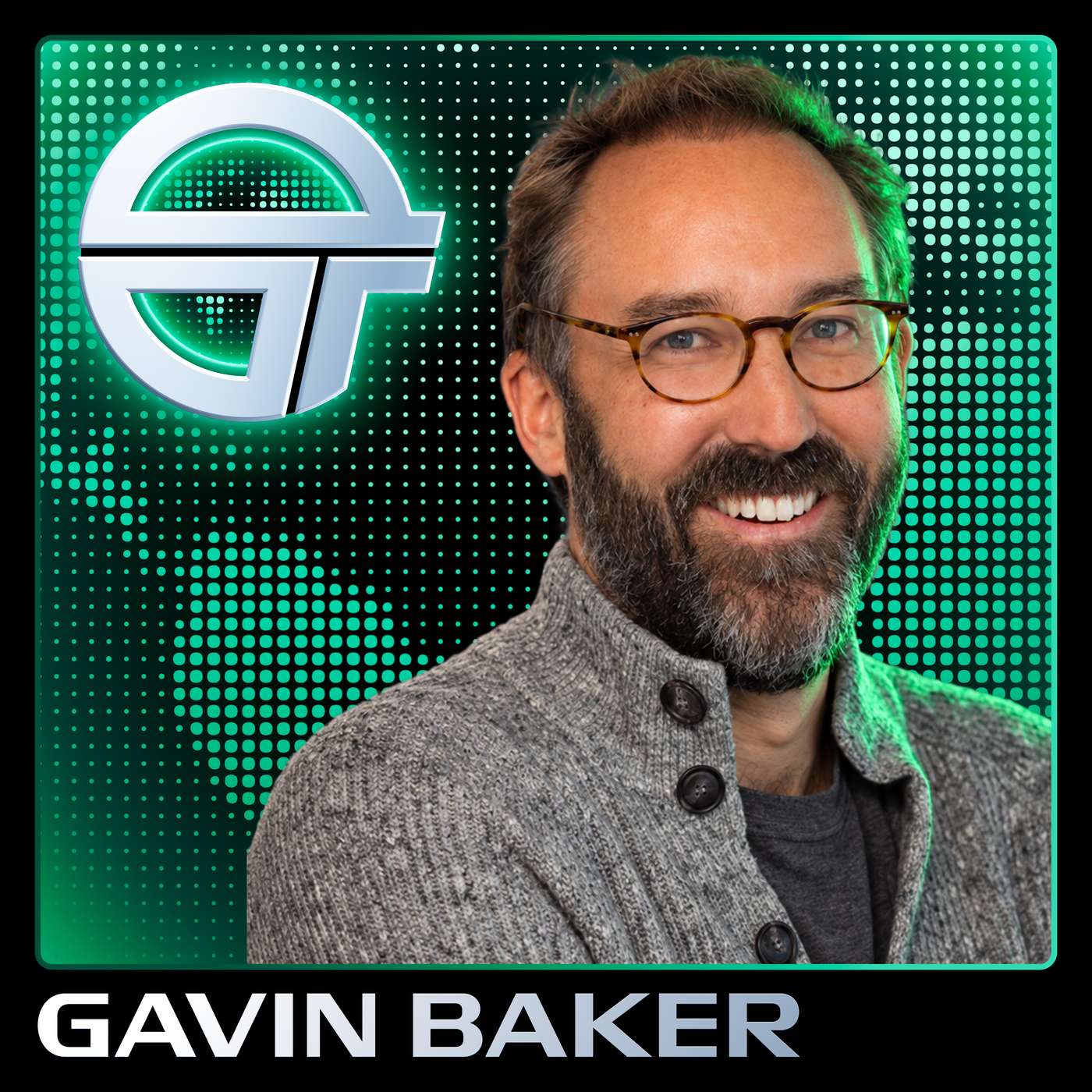
Gavin Baker (Atreides Management) reacts to Anthropic’s S-1, argues AI adoption and unit economics are stronger than skeptics expected, and discusses GPU pricing/compute market dynamics (contango, backwardation), GPU financing, and who can “energize” GPUs. He also covers AI agents in personal/professional life via GrokBot, and touches biology investment timelines and AI’s real-world benefits.
Gavin Baker is managing partner at Atreides Management (and previously appeared on the show). Atreides led a Fireworks round; he also invests in compute/infra ecosystem companies (e.g., Silicon Data mentioned; CoreWeave discussed).
Anthropic’s S-1 is an “upside surprise” (about $10B burned) with encouraging profitability/cash generation; adoption is surprisingly broad (e.g., “half the Fortune 500” stat cited). GPU compute is tightening and forward pricing is expensive; market is shifting away from backwardation. Long-term compute contracts signed earlier can be sold at large premiums.
Anthropic training compute allocation (74% cited as a bearish angle); open-weight model acceleration (Fireworks, Base10, Together, Modal, Cognition). SpaceX insourcing Cursor compute boosting XAI/GrokBot growth. CoreWeave “locked in” long-term fixed-price contracts. DSX pod (pre-assembled racks) to reduce GPU energization time. Biology example: repurposing older drugs for rare diseases; “Montana” new drug program.
Written by AI. May contain mistakes.
Discussing the positive outlook on Anthropic's S-1 and its market impact.
“But what has your interpretation been this week?”
Examining the slow adoption of AI among Fortune 500 companies.
“I mean, if anything, maybe earlier than I thought we were.”
Discussing the concentration of AI spending among a few companies.
“In S1, there are only 250 accounts spending more than$10 million.”
Exploring the impact of GrokBot and AI agents on personal and professional life.
“And I do think it will be great for the market to get away from these monthly ARR things.”
Analyzing the rapid growth of AI startups and their fundraising challenges.
“We haven't seen the models from XAI stunned on a particular benchmark, but the cursor team has always been fantastic on product and distribution.”
Discussing the current state and pricing trends of the GPU market.
“So much of investing is making sure that the right information gets to the right person at the right time.”
Speculating on future compute capacity and pricing implications.
“the forward curve of compute and the future price of compute.”
Explore how GPU pricing is evolving and the challenges companies face.
“But just the number of companies we have in our portfolio who are like, OK, we got a cluster of 4 ,000 Blackwells and we got it in May or June of 26.”
Discuss the implications of different financing models for GPU investments.
“You can kind of finance these GPU purchases two ways.”
Understand the complexities involved in deploying GPU clusters successfully.
“you, bringing on the power, standing up the cluster, it's like running a Formula One team.”
Investigate the intersection of AI and biology and potential market impacts.
“One is just one click higher from the Neo clouds or the Neo labs.”
Delve into how the AI sector can improve its public image.
“It feels very exciting and that there's tremendous potential.”
Learn about efforts to make investment opportunities more accessible.
“coming and I do, you know, there are unannounced speakers that are, you know, comparable in caliber to some of those you referenced.”
Learn about the revenue potential and risks related to Anthropic's compute resource allocation for training AI models.
“You know, like there was an interesting post.”
Discover Gavin's views on the positive impact of AI on American industrialization and the necessity of data centers.
“So just understanding that, like, I understand why, you know, some people are worried.”
Explore Gavin's insights on investing in energy infrastructure and rare earths, including the challenges of refining.
“Jordy mentioned getting sharp on bio, starting to think about opportunities there.”
Understand how the sources of capital for AI investments are shifting and the implications for the market.
“And so want to cast as wide a net as possible, but then also kind of focus maybe a portfolio on the areas where I do feel like maybe we have the biggest competitive advantage as a firm.”
Examine how the transition of AI companies to public status will reshape investor sentiment and market dynamics.
“I mean, Atreides and Valor, we co-led Crusoe with Mubadala.”

Get the gist, explore an idea or ask about something said.
 Claude
On TBPN, what are the key points of this episode?
Searching your listeningAutomatic transcript. May contain errors.
0:00Next guest is Gavin Baker from Atreides Management, the managing partner of CIO. He's been on the show before. The Baconator. We're going to bring him into the TBP and Ultradome and catch up with him. How are you doing, Gavin? Good to see you. I'm awesome, man. Happiness is a choice. I'm only ever fantastic, awesome, superb, phenomenal. I mean, I completely agree. I love that happiness is a choice, but also it feels like this is a week to be extra happy. Like the Anthropica S1 went out and it seemed like a beat. It seemed like if you were worried, oh, the economics are not working secretly behind the scenes and there's going to be some bombshell in there.
0:39The haters have been kind of quiet. Ed Zittrin hasn't posted. Like things are, you know, it seems like things are on track. But what has your interpretation been this week? I do think the Anthropica S1 was pretty clearly an upside surprise. Yeah. The fact that they've only burned$10 billion. Yeah. The profitability, the cash generation, the unit economics, they're all very encouraging. I put it on X, but I just cannot believe that whatever it is, half of the Fortune 500 has adopted Anthropic, and it's 0.1 % of their expenses. It's just a wild stat. The funny thing is that I read that as the… No, we can still hear you.
1:25No, we can hear you. I read that 50 %… No. What? Yeah, yeah. Oh, just as like, okay, yeah, that's incredibly impressive for a company in just a few years to get half the Fortune 500 or the S &P 500 on as customers. But I was kind of like, what are the other half of the S &P 500 doing? I felt like every Fortune 500 or S &P 500 would be multi-product using everything. But there's a lot of companies that just haven't really gotten through the adoption hiccups of rolling out AI broadly. Maybe some of them are all in on Google or OpenAI, but by and large, I think some of them are just still figuring out how AI can be deployed in their organizations.
2:04But is that your read on it, that we're still sort of early on the diffusion story in enterprise? Yeah, very early. I mean, if anything, maybe earlier than I thought we were. And it's just astonishing. Whatever the number is, 67 billion annualized if you annualize the reported third quarter uh the um you know wherever the arr is right now but to be that big with such low penetration into the fortune 500 yeah is it is pretty extraordinary yeah totally yeah how do you how have you processed the like some of the criticism right now of the ai trade is that you have a very small number of companies driving the majority of the spend.
2:48I think if you can look historically and say that that same dynamic probably played out with like social media ads, where like a very small number of companies were driving a massive amount of the spend. And so you're going to kind of see power laws in a lot of places. My read on it is that you have, like, there are companies based in San Francisco that are just 1000 times more obsessed with AI than the then the say, let's say like the long tail of public company employees. And so of course they're going to spend dramatically more. And it's possible that that long tail never actually cares enough, but they sort of fade to relative obscurity.
3:25And you have the disruptors that are saying like, yeah, this technology is real. It works. It's not perfect yet. It's not like a drop in coworker that will immediately, you give it a dollar and it'll give you$10 back, but it's very capable. And so if you obsess over it and so that's been sort of my overall read, Like, I don't think it's necessarily, of course, you'd want a more diversified revenue base if you could. But in general, it feels very natural that all this spend is coming from a very small group of people that, like, realize that something fundamental has changed and they're trying to take every advantage of it while the rest of the world is asleep.
4:02I might respectfully disagree a little. In S1, there are only 250 accounts spending more than$10 million. So actually, you know, somebody in the New York Times said that, you know, maybe 10 days ago that 80 % of the revenue came from eight customers. I was actually shocked how diversified their customer base actually was. And if you are... Well, the number to me was something like$11 ,000 or$12 ,000 spending over$100 ,000. Like that feels diversified. Oh, yeah. But I'm talking about like the ramp data that's saying like, look, like 1 % of companies are spending, you know, 90 % of the dollars. Well, I mean, the ramp data is what it is, but we have much more authoritative data now from the Anthropic S1.
4:51And it shows a very diversified spending base for Anthropic. Now, maybe the ramp data is correct for AI overall. But the Anthropic S1, like relative to a thought that, you know, Meta was spending 10 billion and there were these multiple billion dollar plus accounts that were driving it all. That just, it's much more diverse by customer base for Anthropic. And then for the AI broadly, I do think that something that has happened since June is you've really seen, you know, first we saw OpenAI really accelerate in the summer. and has OpenAI accelerated, so did open weight models. And there are so many companies, whether it's Fireworks, whether it's Base 10, whether it's TGET, whether it's Modal, whether it's Cognition, that are at scale, really open weight first, and they're all growing faster than either OpenAI or Anthropic.
5:49And that was true when OpenAI was really accelerating in the summer, And it's still true in October when Anthropic has had clearly a pretty big reacceleration. Like I just – I'm pretty skeptical that they would have put the blank space for the October ARR in the S1 if they didn't know it was going to be pretty good. And I do think it will be great for the market to get away from these monthly ARR things. Yeah, it's interesting. Yeah. Like seeing the modals, the base tens, the fireworks, the togethers all out, I feel like this is common knowledge, basically they've all been out in market. And so private markets investors have been getting these sort of updates.
6:34And a lot of these companies have been like starting fundraisers, growing dramatically from the period where they got their first term sheet to when they're actually like pulling in capital. And so that data is like broadly, like I would say the East Coast is just not aware of that at all. Some of them are picking it up, but it's not like sort of common knowledge. Whereas on the West, I would say like over here, people are like, yeah, these companies are already at scale. And then they're growing, you know, double digits just during the period of like first term sheet to close or like first close.
7:10well my firm atreides led the last fireworks round and it was actually hard to price it because they were growing so fast um like we thought i thought we had a handshake yeah like well we increased revenue yesterday's price this is not today's price yeah you're like please like let's just get the deal done yeah i mean literally it's like the valuation was going you know the multiple was effectively going down you know every day every day yeah that's crazy and if anything it feels like that ecosystem has accelerated and diversified because earlier this year cursor was a real big driver for all those inference clouds and i mean i the x cursor growth i think you know is what's really extraordinary and that's just because you know spacex has been insourcing the cursor compute yes so on on cursor spacex like the post merger integration it feels like uh grokbot has stepped forward in terms of capability is the key to growth there.
8:12We haven't seen the models from XAI stunned on a particular benchmark, but the cursor team has always been fantastic on product and distribution. In the prior era, Grok was putting up pretty remarkable results on the benchmarks, but then there were all the political considerations and the product was banned in some companies. It feels like Grokbot might be in a particularly different slot because they have that go-to-market in motion through cursor with the cursor design team behind it. Is that what's driving growth there? What are you seeing on the GrokBot side that's actually showing acceleration in that product category?
8:49I mean, as a user, GrokBot is the most impactful AI product to me and to the firm that we've had yet. like i you know i clued together all this stuff with cloud code and it like really you know i'm sure it was user error on my part you know 50 years old yeah i'm doing my best but grok bot it just makes it so easy i think i'm up to like 17 grok bots and every day i think of a new one to add um yeah you're getting a layer of uh somebody uh the the senior manager senior grok bot um how are How are you personally dividing AI agents across your personal life and your professional life? Because a lot of people will have a family office with a personal assistant who manages getting gifts for their family members or planning birthday parties.
9:44And then separately they'll have an executive assistant who plans their business travel and their calendar for work stuff. And it feels like we might be entering a world where those two merge together and you have one agent that does everything. But we also might wind up in a world where people are using GrokBot at work or Cloud Code at work and then Instinct or Muse and Personal and OpenAI has products in both. And there's sort of like an array, but it's a decision for everyone. How have you been grappling with it? Well, I guess you would say I guess I have executive assistant privilege because my assistant Susan is exceptional.
10:17Yeah, exactly. Not going anywhere. I felt the need, you know, to. Yeah, I've, of course, downloaded Instinct and played around with Muse. Sure. But, and I could see they would be super amazing if I didn't have someone like Susan in my professional life, but I do. Yeah. But for the more professional use cases, I mean, GrokBot has just been transformative for me. Yeah, there is something. So much of investing is making sure that the right information gets to the right person at the right time. And GrokBot is so good at that. And there's also something so satisfying with the AI agents of like, it can be 10 p.m.
11:05on a Sunday and you can kick off like a real research effort that, yes, you could probably call someone on your team and say, I need you to like, that would be crossing a professional line. all of a sudden you'd be like kind of a hassle of a work of a boss and people might not want to work there because like yeah he calls me every time he takes a shower he has a shower thought and then i gotta work for six hours but instead uh the ai's like yeah boss i'm right here oh i'd love to look that up for you and spend a million tokens figuring out you know with the market size of something or other but yeah well my policy is actually anybody at tradies is always welcome to call me on any time on the weekend.
11:42I try not to call people on the weekends. Yeah. So how so. I think like, you know, rewind this week is, you know, anthropic s one week. And so there's there's a lot of focus there. Last week, it felt like the focus was like the general attention was towards how much supply is coming online next year, how many gigawatts SpaceX is going to bring online. How are you, what's your, you know, generally you've maintained a sort of bullishness that some other people on the timeline have lost here and there. But how are you processing, like, how the industry can sort of absorb all of that supply if we hit the higher end of some of the ranges being discussed?
12:35And is it just Jevin's paradox again and again and again and again until we finally – everyone likes to say it, but it's hard to fully internalize. I think that's right. It's easy to say. It's hard to internalize and believe. And October has kind of been a strange month because the price to rent, essentially any kind of a GPU, has gone up every day. So the spot market for compute is getting tighter. And it's not just the spot market. You know, it is. I do love reading these primers on X from, you know, commodity and macro investors about these super complicated concepts called backwardation and contango and what they might mean for the forward curve of compute and the future price of compute.
13:29You know, these are Contango backwardation. But, you know, Silicon Data, which I do think is, you know, my firm is an investor in them, but I do think they're the most authoritative data source. Carmen Lee, the founder, stood up at GTC and said that the compute market is now in Contango. The forward, it's not just that the spot market is tight. If you want to cluster a year from now, you have to pay a lot of money. And this is maybe another discontinuity between public and private markets. But just the number of companies we have in our portfolio who are like, OK, we got a cluster of 4 ,000 Blackwells and we got it in May or June of 26.
14:19And we want to bring on another cluster of 4 ,000 in September of 2027. And they are shocked by how much more they have to pay in the future. And it's not like everybody is aware of the supply that's coming on. But even with all of that supply coming on, it is hard for the companies in our portfolio to find compute even well into 27. So for all the commodity experts who are focused on backwardation and what that implied, I got news for you. We're not in backwardation anymore. And then I do think as far as how much capacity is going to come online, one thing that I think is actually healthy about what's happened in these financing markets is I hope it concentrates capacity and supply in the competent operators where they can finance it through prepayments.
15:20You can kind of finance these GPU purchases two ways. By the way, CoreWeave is great. CoreWeave runs GPUs well. They bring them out. They are very, very good. They just sadly locked in a vast amount of compute and long-term contracts that are now way, way under market. You know, and I think they're doing 100 % yes. So they sold their GPUs for fixed prices, and that's why they're getting hammered right now. It's not that they don't have compute. They're not bringing it on. They have the semi-analysis diamond tier. Everyone knows that the clusters work. They're good. They are reliable. But they just sold for too cheap.
15:57and they should have hold held on or had variable pricing is is you think elon studied that and said like we're not going to make that same mistake and that's why they're adopting this more short-term contract i don't elon is a first principles thinker i don't think he was probably studying core weave or nebius or anyone else yeah he was probably reasoning from first principles but the conclusion he came to is prices are going up we if we are willing to sell into the spot market we can have paybacks well under a year yeah get big prepayments and that's i think that's a better probably financing model for the market we're in and what i also like about it and by the way core weave i think is very aware of this they're trying to get more spot exposure they're trying to you know um do less of these big long-term off-take agreements um but standing up a big gpu you, bringing on the power, standing up the cluster, it's like running a Formula One team.
17:01And a bunch of people who have no real relevant experience, you know, whatever, they acquire some land and some power, and then, you know, they get a zero down payment off-take agreement from someone. And a lot of that is being cleaned up. And I think supply is being... This is a forcing function to allocate GPUs to people who can actually bring on a cluster, energize the GPUs, run it well. Running a Formula One team, it's really hard. You've got to pack everything up, put it on a plane, go to a new city, unpack it, set it up, set the car up. You need all the people to change the tires, to change the rear wing if you get in a collision, to do whatever needs to be done during the race, to do the strategy, to communicate with the driver.
18:00It's really, really hard. It's not like some of these people, they don't have the relevant experience. you know, Corweave, Crusoe, Nebius, SpaceX, the big hyperscalers, you know, these are companies that can bring on GPUs and energize them and run them. And I do think something that was announced at GTC Berlin is actually pretty important for this, and that's that DSX pod, which is going to make it a lot easier, you know, it's seven racks, it comes pre-assembled, you know, you just kind of literally plug it in and it works and right now when you get the GPUs you know maybe if you're if you're SpaceX and you're really really exceptional at execution in the physical world you can get them energized quickly but a lot of people it takes them six months you know three months six months to get them energized really get them working and if we can through you know this new product from Jensen get that time down I think that that's also healthy because that effectively takes a lot of working capital out of the market you know you have as these numbers are getting bigger if it takes six months to energize them you know that could be hundreds of billions of dollars of assets that are not generating revenue so I think that's another that's a product innovation that's gonna help with this but I think this is you know we we will see who who energizes GPUs in 27.
19:30I'm confident that the companies I named, I think they're going to, I mean, the future is always uncertain, but these are companies with a proven track record of execution. And we'll see about others. So I have a follow up on that. One is just one click higher from the Neo clouds or the Neo labs. And there's been this speculation that Neo clouds might, Neo labs might sort of pivot into Neo clouds. Is that dynamic going to look like they signed a multi-year offtake agreement with a NeoCloud, and then they want us to just sell into the spot market, that's what's gonna happen? Yes, I mean, what Sarah Fryer said, and Sarah Fryer is an exceptional CFO.
20:07She said, you know, everybody made fun of us for signing all these compute commitments, and we could sell them all at a three, four, five X premium. Today. And she was being literal. Yep, yep. And so if you signed a long-term compute contract, really at any point prior to May of 2026, you are way in the money. You're buying compute for maybe$10 or$15 a watt, and you could sell it at a massive premium to that two-day. And then the point that Carmen made about the forward curve being in Contango is actually really important. And just like it's not just a spot market. It's tight today. You have to pay vast amount, even with all this capacity coming online, you have to pay a truly vast amount to bring on a cluster in mid to late 27.
21:03And I think that's something that just maybe public markets are not appreciating, even though, you know, it's not all of this is public. You know, Sarah Fryer said that, you know, the all these inference clouds have kind of given press releases. You hear a bunch of people on X talk about how hard it is to find compute into 27. Carmen Lee stands up and says, you know, like the market in 27 is crazy strong. So it's all out there. But I think for whatever reason, it's not legible to the public markets. Sure. Talk about your outlook on biology as an area that the labs are investing in. It feels very exciting and that there's tremendous potential.
21:48But I think the overall concern is around timelines. It's like there's very real costs like coming online, infrastructure costs and opportunities in biology seem like they're very real, but may take, you know, years to get these, you know, will almost certainly take years to get drugs in market and actually drive, you know, revenue that would then finance. Yeah, I mean, we'll see how long it takes. You know, Montana has an interesting new program for new drugs, which I think is helpful. but I think a really big unlock we we have a lot of compounds and people have used AI to figure out that you can use um maybe a drug that we've had for 50 or 60 years for a very rare disease that's devastating for like 10 ,000 kids a year and effectively cure that disease and a friend of mine did this and it's you know it's it's it's his story to tell so i'm not going to tell it but ai has already saved a lot of lives and i do think you know the ai industry it's you know they're like negative five out of 100 from like a pr perspective but we got to be more like pharma the popular kids yeah exactly well no they need to start telling these stories yeah yeah um and by the way are you guys are coming to tomorrow we are we are november 17th 18th we'll be there with you lineup the lineup is unbelievable the lineup is crazy jensen wong david solomon mike rowan lisa sue stan drunkenmiller so many more so many people yeah yep but the one thing i just want to say is yeah i get like 25 emails or texts today saying hey man can i come to your conference and the answer is you can just sign up yeah you can just sign up anyone can come now there's going to be a security screen sure because of some of the people who are coming and I do, you know, there are unannounced speakers that are, you know, comparable in caliber to some of those you referenced.
23:53So we're going to have a lot of security at the conference and everybody's, you'll be screened, but you can just sign up. You do not need to ask me. You don't need to ask Antonio. You can just come. And it's like the whole goal is to kind of democratize investing. And in addition to those companies, you know, we are, we're going to have lynn from fireworks chase from crusoe scott from cognition we're gonna have max from lagora we're gonna have a lot of companies yeah based two and two and from base 10 yeah um we are gonna have a lot of these ceos there that are gonna be on a stage and then we're gonna have you know dozens of other private ceos and you know it's a it's an attempt to kind of like open up the aperture of you know information for retail investors and democratize this so like if you're wondering about coming just sign up you don't need to ask me tomorrowxsummit.com not gavin baker's email you can go to a url once you're there you can get you can get gavin to sign and they will email you When you sign up.
25:09Yes. Yeah. What do you think will change in the content and the conversation between last year's event and this year's event? What are you hoping to get across? This is the first time we've done it. This is the first one. Oh, sure. Yeah, yeah. Oh, sorry. Yeah, yeah. I'm excited. We're going to have, you know, we're going to have by-siders doing the fireside chats. Yeah, yeah. We're going to have, you know, management teams are going to have the opportunity. If you are an active contributor on X, Substack, Reddit, you get to come for free. And then management teams are going to be able to do a breakout session with all of those X accounts.
25:48So if you're one of the, you know, four or five hundred, you know, kind of, you know, financial commentators that we've given a scholarship to, you're going to get, you know, a lot of management teams are going to opt in. And you're going to be able to kind of have your own session with the management team to ask your questions. Then you're going to be able to go write what you learned for your audience. And, you know, I think we have a really high quality. You know, I picked most of them. And you don't have to be bullish. You know, I want you know, I love skeptics. I love bears. You just you just have to be polite and nice and constructive.
26:26And you can be bearish while being polite, nice and constructive. and we have loads of skeptics, we have loads of optimists. I think it's going to be great. And then I hope every CEO does kind of a hit on your show after they're on stage or before. I'm pretty excited about it. It might be the longest TBPN episode ever. I think so. How do you deal with all the attention, positive and negative? Do you mean for me? Yeah, for you. for you. I just feel like I, you, I, you, you talked about your, your mindset right at the beginning of the show. Just, you know, you know, it's a choice to be happy, but, uh, I feel like when it comes to the, the, the, the spotlight, you know, once every week shines directly on you, there's a lot of love, a little bit of hate sprinkled in there.
27:21The whole, the full spectrum of human emotions. We can call it what it is. I mean, there, there, there are a lot of, there are a lot of detractors, let's say. I would just say, look, Antonio, who I'm doing the conference with, he says being on X is an exercise in cultivated equanimity. I don't take any of it personally. I'm not on X to be right. I'm right now I would, you know, I'm a responsible optimist, but I'm trying to be open minded to new negative facts and constantly search them out. But I'm really on X, you know, to learn. And I, you know, all of the hate, like I try to sift through it for, oh, wow, that is actually a very good, compelling, bearish argument.
28:01You know, like there was an interesting post. I forget, it was like PE analyst or LBO analyst. And it just said, hey, you know, the fact that Anthropic is dedicating 74 percent of their compute training, you could read it. And on the one hand, it's bullish because they could be generating a lot more revenue. On the other hand, if all this compute is being dedicated towards training and for any reason somebody decides you need less compute for training, that's a lot of supply that could hit the inference market. And, hey, wow, that's like a really interesting, you know, bearish perspective. And so, you know, I'm human.
28:43I don't like I'm human. But it's also just like I'm here to learn. I want to get to the right answer. I'm sharing my views. If somebody shares a helpful negative perspective, I try to thank them. I need to go thank that person, LBO analyst, I think it was. I didn't have time. But yeah, it's an exercise in cultivated equanimity. You can't take it personally. But I do, I am trying, you know, doing what little I can, you know, his like Gavin Baker, you know, I don't have millions or tens of millions of followers. But I am trying to help paint, I think, a more optimistic vision for AI, doing what I can to help the American public understand that, hey, like, you actually want a data center in your in your town, you You know, one of my favorite exchanges was somebody said, well, I'll wait until they start building data centers in the wealthiest county in America.
29:48Well, Luton County is the wealthiest county in America. They have the highest per capita data centers. Yep. Virginia, U.S. East. We know it on Amazon. U.S. East availability zone. Yep. So just understanding that, like, I understand why, you know, some people are worried. There's been a lot of fear. There's, you know, we've all seen scary movies. But a lot of awesome things are happening today because of AI for ordinary Americans, for blue collar Americans, for these small towns. We're reindustrializing America. We're, you know, massively increasing our electrical generation capacity, which is you cannot reindustrialize without power.
30:29That's job number one. So I think a lot of good things are happening. And I'm just trying to do what little I can to at least tell that side of the story and then be pretty balanced. Like, you know, Anthropic, I called it like I saw it in the summer. They were losing market share. I'm calling it like I see it in October. They are reaccelerating and gaining share. The S1, it was an upside surprise to me. I'm trying to call balls and strikes because my job is to just get it right. Yeah. Yeah. And it's funny because people will get so flustered by seeing different posts on X, but imagine how boring X would be if no one ever took a stance.
31:12It was just like, well, it might be this, it might be that, and it might be this. No, no, no. Every post has to be it's over or we're back. This is the best thing ever. Because then we can have a debate. At least you took a stance. Yeah, it's great. Jordy mentioned getting sharp on bio, starting to think about opportunities there. How deep have you gone in the AI stack? I saw a funny post that was like, you could spend all your time thinking about OpenAI and Anthropic and Google and then meet all the Neo clouds and meet Lin and Tuin and figure out what's going on in the private markets. Or you could just buy copper and you could just sit there and hold copper, right?
31:49Because it's almost a perfect proxy or something like that. But how far have you gone down into energy infrastructure, commodities like how how sharp are you on those how how relevant or interesting is though are those markets to you in this world since they do seem adjacent no i pay close attention to all of those i ran a diversified fund in prior life for nine years you know i was an energy investor um you know natural resources i always um for many years i did um would do like kind of marketing meetings with the uh with the uh gold analyst at at uh my prior employer fidelity so i'd always you know knew about the merits of gold from a portfolio construction perspective would always have it in the fund by the way just because it triggers people i want to say it i find it so amusing how upset gold bulls get at the idea of asteroid mining
32:47no one no one has ever been i've never gotten more hate than from the gold crowd about the idea of asteroid mining and the asteroid supply i mean it was like talk about a challenge to your world's you have to like you need to imagine technological disruption right like look at the diamond industry Yeah. Right. Like, yes, if you if you understood that the technology disruption was possible, you probably built labs like, you know, 20 years ago. Maybe you would have done something different with that, you know, with the diamonds in your family. But as far as, I mean, I do, we have spent a lot of time on like energy, on the industrial infrastructure, on natural resources.
33:37But we have not made it a big part of the portfolio. We've done some things in private markets as far as trying to help with rare earths. But this is not through acquiring mines. It's more, you know, the problem with rare earths, it's not that they're rare. It's that refining them is a very dirty process. So we've invested in a company that has a chemical process for refining rare earths. And I actually think DARPA has done some pretty smart stuff. They kind of have a lot of different efforts around this. But yeah, I mean, I try to pay as close attention to all of it as I can, because you, you know, as an investor, you never know where a weak but important signal is going to come from.
34:24And so want to cast as wide a net as possible, but then also kind of focus maybe a portfolio on the areas where I do feel like maybe we have the biggest competitive advantage as a firm. How are you thinking about the evolution of the marginal capital decider changing in 2027 potentially? If you go back a couple of years, you have essentially seed stage VCs making bets on these AI labs, and then eventually some more scaled up venture firms being important capital partners. Some of them have taken board seats, but they are not deciding the race now. It's big hedge funds, pre-IPO rounds, but we're coming up to a world where the fidelity is of the world, the insurance agencies are going to be involved in the insurance funds and sovereign wealth funds are going to be increasingly involved in financing the build-out.
35:20Like, what does the next year look like from a perspective of like how we get the big dollars into the AI build-out? I mean, I think you named all the big dollar sources. And something that I think is pretty underappreciated is, you know, American mutual funds. You are limited in the percentage you can hold in a liquid asset. And so SpaceX and Anthropik going public is actually going to free up a huge amount of buying power in private markets once those are fully unlocked. Because they have to be public and unlocked. Interesting. So I think you will see mutual funds, you know, and they've always been involved.
36:10You know, my former colleagues, Capital Research, T. Rowe Price, MSAM, G. Sam, you know, Franklin Templeton. If I forgot anyone, I'm sorry. I love you all. But they've been pretty involved. I mean, the sovereigns have been very involved, particularly, you know, particularly the ones in the GCC and particularly the ones in the UAE. Yeah. Like MGX, Mubadala, all the sovereigns there. I mean, Atreides and Valor, we co-led Crusoe with Mubadala. Yeah. So I think the the UAE in particular has been extremely front footed with all their sovereigns with respect to AI. And now Apollo is taking a stake in Mubatala, which sort of completes the cycle.
36:57Yes. Yeah. But I mean, that's going to have to evolve. But it's also, I do think we're probably getting, has these underpriced, so all these clouds, they signed contracts at well below what are below market values and has those contracts reprice higher as they bring on more compute with more spot like we discussed with you know the same thing that core weave is is is trying to do i do think you're going to see like there's a pretty big acceleration in the clouds last quarter and you know forget relative to expectations this or that but i think you're going to see a pretty continuous acceleration in the sum of the big hyperscaler cloud revenue growth, the neoclouds, that number is just going to continue to accelerate.
37:54And then, you know, it's dropping down at very high margins so that, you know, operating cash flow is following. And then you're going to be able to, I think, finance probably more than people think of the 2027 build out out of cash flow. Like, I don't know if we've seen the peak of external financing, but I think we're getting close. And that'll be really helpful. Totally, yeah. No one can complain about that. That's just investing in the future. AI skeptics will be in a horrible place. We're going to have to check on them. You're going to have to go around. And look, maybe I'm wrong, but I will change my mind when the facts change, and I'm just going to try and keep calling balls and strikes, and then trying to be an advocate to help understand ordinary Americans that this technology can and should be awesome for them.
38:54Yeah. Yeah. Yeah. I'm very interested to see how Anthropik and OpenAI becoming public companies impacts X like overall sentiment specifically on X, because right now you have such a small number of people that actually hold shares in these companies. Right. And so like maybe there's 50 ,000 people that have some incentive to be relatively optimistic one, you know, or, you know, you should be able to see both the bull case and the bear case for, for any company. But when that changes and you have millions of people globally that suddenly can have exposure, how does sentiment change? Right. And I think, I think people are going to be, I think it will be less, much less extreme once you have the, the, the sort of middle of the road investor has some exposure.
39:43Right. And it's not like totally binary where like very, very small number of people have exposure, like, and, and, and it's direct exposure, right? Cause if you happen to own shares, there's some retirement fund or through a hyperscaler or things like that um it uh it's maybe and maybe some of them will do what elon did you know every child in america is going to have a share of spacex sure that's awesome i think that's way better for america than setting up some foundation yeah that you know a board or a bunch of bureaucrats are going to decide how to allocate the money yeah you know just give people the money yeah like i hope like simple just let people make individual decisions yeah and you know i would I would encourage more company and more wealthy people in America to do what Elon and Michael Dell and of course, Michael and Brad Kirshner have done.
40:35I think that's awesome for America and great for capitalism. Yeah, and it feels so important that that infrastructure got built before the big liquidity wave, before SpaceX goes public, so that it's there and it's been tested and it's been implemented and rolled out so that anyone who wants to participate in that can actually go and take advantage of it without needing to say, oh, it'd be nice if the government had a program that would let me give shares directly to the American populace. Like, nope, it's there. It works. It's up to date. Like, it's in the app store. You can go download it. Yeah, just give that.
41:08Give people the money. Give everybody a stake in capitalism. Yeah, no, I completely agree. That's great. Well, thank you so much. We'll see you very soon. We'll see you. Yeah, thank you. TomorrowXSummit.com. Check it out. November 17th, 18th, Austin, Texas. We'll see you there. Have a great rest of your day. Cheers, guys. Good to see you. Goodbye.
This is our full interview with Gavin Baker.
We discuss his biggest takeaways from Anthropic's S-1, the growing demand for GPUs and why compute prices keep rising, how SpaceX and Anthropic going public could unlock more capital for AI investment, the rise of AI agents, and why he believes Wall Street is underestimating the AI boom.
TBPN is made possible by:
Ramp - https://ramp.com
Public - https://public.com
Cisco - https://www.cisco.com
Console - https://www.console.com
CrowdStrike - https://www.crowdstrike.com
Figma - https://www.figma.com
MongoDB - https://www.mongodb.com
NYSE - https://www.nyse.com
Railway - https://railway.com
Shopify - https://www.shopify.com/
Codex - http://openAI.com/codex
Sign up for TBPN’s daily newsletter at TBPN.com
Follow TBPN:
https://TBPN.com
https://x.com/tbpn
https://open.spotify.com/show/2L6WMqY3GUPCGBD0dX6p00?si=674252d53acf4231
https://podcasts.apple.com/us/podcast/technology-brothers/id1772360235
https://www.youtube.com/@TBPNLive