
 Ask ChatGPT
 The Angel Next Door
20 Aug 2026 · 28m · 15 chapters
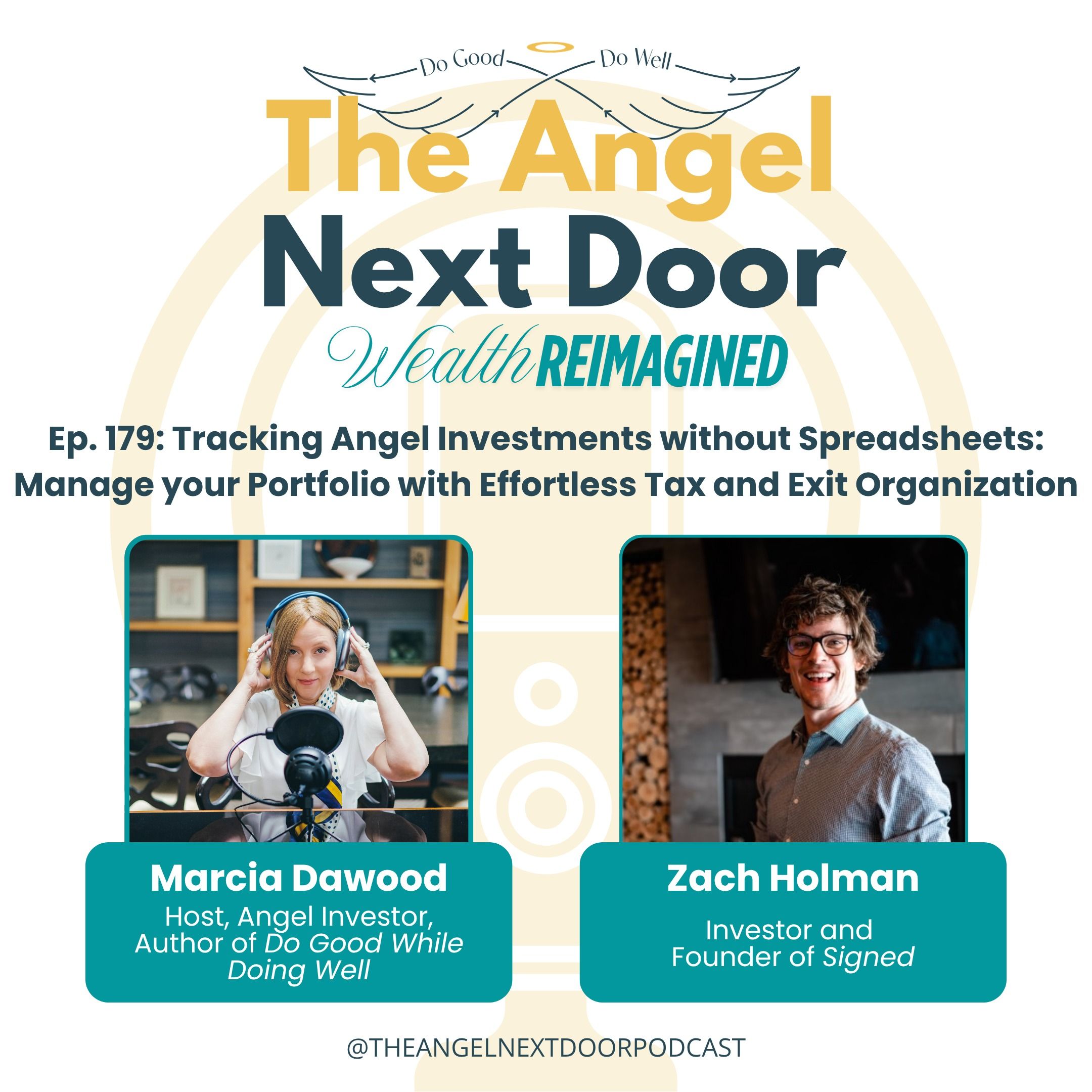
Zach Holman explains why angel investors struggle with messy spreadsheet tracking and how his platform, signed.com, uses AI to automate portfolio tracking, parse investor updates, organize tax documents (especially K-1s), and help analyze predictions vs. actual results after revenue is reported.
Zach Holman is an early GitHub engineer (joined in 2010; GitHub acquired by Microsoft in 2017) who later advised companies (including GitLab) and became an angel investor for ~7–8 years. He founded signed.com.
Spreadsheets become unworkable after hundreds of investments; signed can ingest forwarded updates, extract metrics and next-month predictions, and compare them to later actuals. It also aims to reduce tax headaches by wrangling K-1s and supporting QSBS/tax workflows.
He invests in Oakland Roots (via WeFunder; many investors received K-1s) and European women’s soccer (club ownership groups and a women’s league fund). He contrasts Carta (share/custodian tracking that can lag) with signed’s document + transaction workflow, plus an importer for AngelList exports.
Written by AI. May contain mistakes.
Learn how AI can enhance tracking of investment metrics.
Discover Zach's journey from GitHub to angel investing.
“investor and founder of signed.com, a platform that's redefining how investors track their portfolios.”
Zach discusses the difficulties faced by angel investors using spreadsheets.
“I know personally, I have a spreadsheet to track my personal angel investments, and it's gotten a little gnarly, let's just say, over the last couple of years, which is I'm sure what you've heard a lot.”
Zach explains what GitHub does and its impact on software development.
“I started a small company before GitHub.”
Zach shares his transition into angel investing and its appeal.
“And then they got acquired by Microsoft in 2017 or so.”
Zach describes how Signed.com improves the investment tracking process.
“and trying to figure things out and where to go from this.”
Discussion on data privacy concerns and future features for sharing investments.
“I always said like, maybe there's only going to be one user in the world, but it's still worth it for me because I really want this for myself.”
Zach explains how Signed.com handles fund tracking and updates.
Zach discusses how to track exits and the complexity involved.
“there's a lot of more interesting things you can do once you start building that portfolio out and stuff okay and then what happens when somebody has an exit it's we're all people yeah first of all what's an exit?”
Exploration of K-1 forms and managing tax-related headaches for investors.
“Oh, you got to do some sort of intermediary.”
Zach differentiates between Signed.com and Carta's functionalities.
Learn about the differences between Carta and Angel List for tracking investments.
Discover the challenges of tracking investments using spreadsheets and the need for better documentation.
“Like, how hard is it to get it uploaded?”
Explore how AI can assist in analyzing investment documents and provide insights.
“So if somebody sends me a pitch, I just immediately forward it to signed, or you could also submit through signed and I might get all that data inside of your pipeline right away.”
Hear about personal investment experiences in soccer and the growth of women's sports.

Get the gist, explore an idea or ask about something said.
 Claude
On The Angel Next Door, what are the key points of this episode?
Searching your listeningAutomatic transcript. May contain errors.
0:00You can forward your investor updates from your companies to it and then we'll use AI because you have to use AI for everything now, but use AI to parse it, figure out what metrics they're saying, what metrics they're predicting for next month, and then you can actually go back a month from now and see if their prediction actually match up with the actual revenue that they posted and stuff like that.
0:24Zach Holman: Welcome to the Angel Next Door podcast, your gateway to the dynamic world of angel investing. I'm your host, Marsha Dawood, and together we will demystify what it means to invest in early stage companies, who's behind it, and how anyone can be a part of it. If you've ever wondered how you can affect the change you want to see in the world, then tune in to learn more. In this episode, I'm talking with Zach Holman, early GitHub engineer turned prolific angel investor and founder of signed.com, a platform that's redefining how investors track their portfolios. Zach reveals why even the savviest investors struggle with messy spreadsheets and how AI can automate the grunt work of portfolio tracking and what it's really like to invest in both hot startups and sports teams.
1:10Zach Holman: Yes, including European women's soccer. We also discuss how signed can help with wrangling your K1s and avoid tax headaches. Enjoy the show.
1:23Zach, welcome to the Angel Next Door podcast. Thanks for having me. All right. I am interested to hear what you've been building. Okay. I know personally, I have a spreadsheet to track my personal angel investments, and it's gotten a little gnarly, let's just say, over the last couple of years, which is I'm sure what you've heard a lot. And so you built a company that we're going to talk all about. But I would love to hear more about your early work. You were with GitHub and exited that as a founder, right? And then became an early employee. Okay. And then became an angel investor yourself, which led you to this horrific problem that we have as angel investors and how do we track everything.
2:12So tell us a little bit about your background. Yeah. I started a small company before GitHub. It was one of those where you learned a lot about how not to run a startup. But I had good people. It was fun. It was interesting for a couple of years. And then a lot into getting a job at GitHub in 2010. There for five years. Afterwards, moved and started doing advising. So advised GitLab and a couple other companies. And then I realized advising is like this whole investing thing, except without money or something. So it's like, I guess angel investing is kind of the next best step. So I've been doing that for seven, eight years now.
2:49I find I really enjoy it. And I think it's a really interesting way, especially coming from where I was coming from, where GitHub was like, I was so focused on this one thing for five years. And this is what I'm going to do and become an expert at. And then Angel is just, you get to learn this company and then you talk to this company and you get to experience a whole bunch of different people and setups and target markets and stuff like that. Tell us, what did GitHub do exactly? Exactly. GitHub is like the center of where software development is done. So GitHub helps you basically as you write code, unless you're doing it by yourself, or even if you're doing it by yourself, you're going to have to share that code with somebody else, another developer, your manager or something like that.
3:26So it's a centralized place to code together, basically. That's a very simple way of putting it. But yeah, it grew pretty big. Pretty much every part of software is impacted by GitHub at this point for better and for worse. And then they got acquired by Microsoft in 2017 or so. So yeah. Nice. All right. So now you've become an angel investor and you're realizing we got a substantial problem when it comes to tracking. Yes. I remember, so I did my first investment in 2018 or something like that. And I remember we were asking like, Leah Culver, like the only close friend I knew that was really into angel.
4:06I was like, okay, you're a techie. This, you invest in tech companies. is like how do you track all this sort of stuff and she's just like i don't know i got like a spreadsheet and i always thought that was really weird because it's like investors especially in tech investing like you'd think they would have really cool bespoke things built for the industry and i was like maybe they're just focusing on their portfolio companies or something so i did my spreadsheet and then another spreadsheet and another i went through three four iterations of different spreadsheets of varying amounts of i hate this this is terrible because at this point, I guess I've invested in a couple hundred companies.
4:42It's really hard to do that just in a spreadsheet form and trying to figure things out and where to go from this. So I've worked at a couple other sort of startups over the last 10 years or something like that. One in calendar space, one in kind of sports and stuff. And the last one was like in sports and I was kind of like, this is great, but I'm not a high school soccer player anymore. So I can't use this on my day-to-day basis. And that's what I miss about GitHub so much is I could build stuff and then dog food it and then fix the product in my own kind of use case. That whole cycle is really great for me.
5:18So this was one where I was like, angel investing, spending a lot of my time doing that. I kind of miss having that dog fooding ability. Let's just productize what I've been doing, angel investing, and make it what I've always wanted for the last seven, eight years of tracking this sort of stuff. So kind of came from that. Wow. Oh, okay. So explain signed. What does it really do? How hard would it be to get all the things, all of the spreadsheets onto it? it mostly stemmed from just me being unhappy with my own spreadsheet and very simple things of am i tracking price per share or a number of shares or safe conversions or anything like that at the very basic level and it's no i wasn't or i was trying to and then i got out of date and all the things that you probably run into your own spreadsheets and stuff like that so i started just building something around that for myself to just track the finances and that side of things and then it's just grown into a lot of other things too you can forward your investor updates from your companies to it and then we'll use ai because you have to use ai for everything now but use ai to parse it figure out what metrics they're saying what metrics they're predicting for next month and then you can actually go back a month from now and see that their prediction actually match up with the actual revenue that they posted and stuff like that so there's a bunch of things you can do around how do i become a better advisor for these companies that i've invested in at least certainly There's a lot of ways to be an angel investor, but I want to be more of an active one and talk to my founders when I can or figure out when the last time I've heard from them.
6:56Just being able to answer that question with a spreadsheet was very difficult. And now I can sort all my companies, which one it's been a quarter since I've heard from them. Maybe I should reach out and see what they're doing and stuff like that. But it's all of these things where it's once you actually start building it and you're like, wow, I can do this and I can improve this and keep notes on founders and things like that. So it's been really fun for me personally. I always said like, maybe there's only going to be one user in the world, but it's still worth it for me because I really want this for myself.
7:25That's cool. Okay, so let's break this down. So if hypothetically two people are invested in the same company and one of them puts the company up on the platform, then does the other person, can they say, oh, I'm an investor in that and it'll pull the information or do you have to, how does that work? Not yet. I have some ideas for that in the future, but the biggest thing is just privacy of data. And like you say you've invested in SpaceX when you have all private information or something. And then I just say, I've also invested in SpaceX and then I can get all your, it will not be cool. So there is some things we can do around that, especially around the non cap table or legalese and stuff like that.
8:07We'll probably investigate in the future. but a lot of it is just like how do you get your own house in order rather than a bunch of other cool sharing a pitch for example if you find a company that you really like usually that's in a weird email thread and then you do a cc dance to go cc here's the founder if you want to talk to them then it gets awkward so i have a lot of things in mind for like how to improve that workflow as well and make it more of a kind of a social you know i guess a social network what investing as you talk to other founders other investors and stuff like that there are things in mind for that but it's also the biggest thing is you just don't share this important financial data and stuff as well right okay then what about funds so you've got the funds and then you've got the companies within the funds how do you handle that so right now it's just mostly just tracking at a fund level or a if you've invested in fund one fund two fund three you can get a breakdown of all three of those funds within that main fund manager i think down the line we launched last month or something so there's still a lot okay we're in the early days i got early the bed's definitely something i want to do is when you get kind of like the quarterly updates and stuff from your fund being able to match the breakdown of this how much we invested in this company and then being able to look through your own profile into whatever funds you've invested in and figure out oh i've 0.005 of this company through this fund or something so i think there's a lot of really interesting ways right now it's just opaque it's just kind of like i'll get a weird pdf from the fund i'm like cool what do i do with this information but i think there's a lot of more interesting things you can do once you start building that portfolio out and stuff okay and then what happens when somebody has an exit it's we're all people yeah first of all what's an exit?
9:59Yeah, lately. Nobody knows. But yeah, it's similar with a lot of what you might do in a spreadsheet type of thing, either tracking the full exit, at least in my experience, it's not usually here's your money, it's here's your money and then 12 months from now you get some more and then a little bit more or converts into public stock or a mixture of cash. So it's a pain. There's a lot to do along those levels too, but just being able to track like this is money in versus money out. We're also trying to help out with the QSBS treatment or any other tax related stuff. I speak in my language here.
10:32Yes. Because it's like I'll also invest out of Roth from time to time and it's my returns in this are a lot different from my returns in a taxable account type of thing. So there's a lot to do around that. And just it was funny as we launched in like February, March of this year, it was like tax days coming up soon. So we got some things ready for that. But I think by next year we'll be able to just push out, send this zip or file or something to your CPA. And then hopefully you have less of a headache around tax day and stuff. And also have some ideas for K-1s, which are just piling up. And I never, it's just so much fun these days, right?
11:11Yes. Yeah. Cause we're all sitting around waiting for K-1s till the 11th hour. Yeah. Yeah. I'll never get to file in April again. So yeah. Yeah. I try to explain that to new angel investors. are like i need it by april 15th i'm like you don't you gotta file an extension welcome i see that it's one of the one of my investments is okan roots which is a soccer team in oakland and they did a crowdfund campaign so a lot of the fans put money in to own a small part of the club as well and that was like the number one thing i was like wait i can't file my taxes until you do this but like you don't know when this is gonna be and i'm like oh honey this is my whole life now is just waiting on k1s to be finalized and stuff yay our tax system fantastic okay so wait a minute so crowdfunding you were getting a k1 because like what kind of platform were you because nowadays they usually just put it in a safe and then you don't have to get a k1 yeah that one was through we funder and they did a separate spb get in because it was also I don't know, four or five thousand investors or something like that.
12:19Oh, you got to do some sort of intermediary. So they were like, what am I doing with it? What is a K1 type of thing? So it's so much fun. Oh, yes. OK, so wait a minute. So what is your idea then with the K1s that you'd be able to keep them there and track them year over year on what? Yeah, having a much better idea of who issues K1s, who doesn't. I'm talking with friends who's a very active user and he's what if you just make like an audit page of this is what i expect to be able to turn over to my cpa or something at this point of the year based on what happened last year what returns i have had this year and stuff so there's a lot you can do around trying to figure out how this system even works which never seems like it does work at any given point but doing the best we can i guess so yeah no i think it would be good too like especially if you get a k1 for a fund the differences between what happened last year what happened the year before that now this year like this doesn't look well not that doesn't look right but it's different so like why is it different so that as an investor we can understand what happened because maybe there was like a liquidity event within the fund or they did a write-off or whatever the story is yeah and there's a lot of that stuff like mistakes do happen and it's you know this is not something we have currently but down the line it would be great to be able to look at your legal docs for the safe six years ago and then match it up with what you're actually getting or what the is reported to hit one or something like that it's just i don't know another kind of checkup on is this accurate basically but yeah okay so then carta because we a lot and i know as angels we don't use car i don't have to pay like for a carta account but i have a lot of stuff that comes to me through carta like either the report quarterly reports or my actual shares and all the k ones so like just i think i know but explain the difference between carta versus assigned.com yeah carta is more like a holding custodian of like how many shares do i have is the safe still active or did it cancel and then reissued as shares type of thing it can be frustrating because it's always it's not always up to date and you're like dependent on is the founder ever going to update this type of thing like many times i'll get the investor update and say oh yeah we just raised a series b or something like that and then carter won't update for nine months or something but it's helpful for me to be able to update or at least estimate what my holding is prior to and then all sorts of right notes and stuff like that or just keeping track of my own thing and then matching it up against what carta will eventually say fortunately it's tricky to deal with people like carta who don't necessarily have like apis and make it easy to extract that stuff out we do that for angel list so if you have an angel list portfolio or any syndicates you've invested in you can just export that and then anytime you want drag and drop it into signed and then it just does all the figures out what changes are because it's another thing i could go on for this for a long time but like angel list doesn't really tell you anything of what you've invested in like they'll just silently up to oh now this is gone to zero or this has gone up 20 they don't tell you that so that's been fun to just be able to export my portfolio every month usually in the start of the month and then it actually tells me like oh yeah this one that you invested in seven years ago is doubled now or something so little things like that it's like i don't know getting back to even if you don't use signed just being able to track this if setting up your spreadsheets to be able to have a monthly check-in and making sure how things have changed and stuff i think that was the biggest unlock for me it was just becoming much more serious about tracking this stuff because otherwise it's very easy you see this all the time with oh i'm gonna put a couple checks into a company and i'm gonna be an angel and then their first five checks go to zero and they're like oh i'm just gonna give up because this is silly or something and it's yeah if you're not gonna really pay attention and try to figure out what's happening how many bets you're making i can see why this is known as the money suck and where you just give your money away type of thing but it's no it's like an investment you should be serious about it and track this stuff as well as and be proactive about this stuff too yeah so So let's say there's somebody who may remain nameless like me, who has the spreadsheet with the stuff.
16:52Like, how hard is it to get it uploaded? And how does that really work in reality? Because I've tried to use a couple of things in the past, but it just seems so laborious just to get all the information. I was like, my spreadsheet's just easier. Yeah, wildly difficult. because like I built an importer where you can export your spreadsheet and upload it. And I was like, oh yeah, we have AI. It's very good at figuring this stuff out. I don't know. After talking with a lot of early users and seeing how their spreadsheets are, A, there are a lot that just didn't track anything. Didn't even have a spreadsheet.
17:29So that was like, you can't use the importer if you don't have data for it and stuff. Some that were just very, yeah, I put$10 ,000 in 2013 and that's it. I'm like, are you tracking price per share? was this a safe how does it converge or something and right right so let's if you update if you upload something like that it's a lot harder for any system to try and figure out what does this actually mean and how much is this worth regardless of sign and stuff that's the first step is tracking i think the unlock for me a couple years ago i was asking my friend about this sort of stuff and he was he sent me his notion template or something and he had set it up where one sheet was just companies and then background information urls stuff like that notes and then they also linked to a separate one that was just transactions so it's i bought this much of safe now and then that would later get converted or something and just having a list of just transactions that alone really opened up a better understanding of where am i currently at right now rather than just doing the ten thousand dollar check in this and never really updating it and the nice part if you do go to something like signed if you do have like transaction based stuff then it's super easy to just suck all that in and set it up present to you and graph it and all those fun things too but and it's a document holder also so if it's a place where you could keep all your documents in one yeah which i was horrible that i didn't realize that until i was starting to build it and i was like it's in my inbox so i can always go find it or something and then every now and And then I'd be like, what was the terms on this one?
19:08I really need to go back. And I'm like, then I got to go back. And Google search doesn't work as well as it used to and all this sort of stuff. So I've just been dropping everything into the signs. What about if you have a bunch of stuff in DocuSign? Can it import that? Not like directly, but if you download the PDF. Download it, yeah. And a lot of that things, one of the things I'm working on probably in the next week or two of shipping is once it's uploaded, just asking signs. like tell me about this company you can use like ai to read like the actual laborious safes or safe easy but like any sort of weird legal documentation or pitch decks or something and be like what tech platform are they building on or what type of terms are involved with this and stuff so there's a lot of that stuff where like i just never tracked any of my legal docs because i assumed i could get them or download them from docu-sign at some point or something will work out and it turned out in practice i would just never look at them again which is probably getting back to the point of just being diligent and keeping track of this stuff is for your benefit so yeah right right okay so you can upload the documents and then the ai that you're using for the platform will actually be able to you can interact with it is what you're saying you could get it to read the documents you could ask you questions you could also figure out if you had the data, what your percentage of ownership is, that type of thing.
20:35Yeah, a lot of that stuff. Then I also use it for pitch decks. So if somebody sends me a pitch, I just immediately forward it to signed, or you could also submit through signed and I might get all that data inside of your pipeline right away. And then we also go through the pitch deck, figure out like some competitors that it may not have seen, give it to be like a quick analysis of who am I talking to before I go to this meeting? try to figure out like what questions i should ask about what i should focus on um a bunch of that i'm like any better angel how do i look more interesting or how do i look more eligible of what i want to ask the question for rather than going into a call and just being like who are you what do you do you go from there type of thing so yeah yeah sports so you've invested in some soccer clubs you said women's sports of course is very hot right now tell us about that yeah I played soccer growing up only through like high school and then a little bit every now and then still but just fell in love with the being a fan and then at some point after I did a couple years angel investing and I'd always go to bars and be like I wish I could just invest in American soccer because I think it's just gonna grow up and stuff but eventually I was like well I guess I could it's like angel investing but in a very different context so I just cold DM'd the Oakland roots chairman and then put a check in not too long after that so i've been with them for five years i get hooked up with a new ownership group for colliery and syria and italy so i just joined their ownership group at the end of last year i invested in a fund that does they basically buy up a european women's league clubs in europe and stuff so they've been doing really interesting and european women's soccer has been growing like crazy so all this stuff it's just like I strangely my focus tends to be like developer tools and then like soccer or sports in general and I'm like this is not a combination that really has much to do with each other but that's also like why I like angel investing is I get to invest in what I'm interested in and stuff like you know and then I feel like one of the options is oh should I raise like a small fund and then really go into like developer tools or something and I'm like hey then you have to deal with LPs they're all jerks i want to be the jerk instead and then b i get to just invest in things that are interesting or things that don't necessarily mean gigantic returns it's just i really like you or i really like the space or i'm really interested this is fiscally irresponsible from a fund perspective but as an angel it gives you a lot more flexibility in doing something like that so i think that's one of the best parts about investing in the way that we all invest and stuff interesting zach this is so fascinating and actually i was looking at the website and your prices are reasonable it seems to have a free one if you just have a couple investments but then like you could be at the angel level or if you're more an institutional investor then you have that tier too is that right yeah yeah so it's originally i was going to do it based on like how much you have invested which sounded great in theory right yeah that'd be yeah but then it gets into the whole like i don't want to there's one beta tester that i had that i knew he had said they always put in his founder equity which on paper was million millions of dollars but it's also like it's not really a full paper money and stuff and i don't want you to get a point of oh on paper this investment is crushing it so i'm gonna end up paying more so that makes me want to not put put it in there yeah i'm like no i want more people to track stuff because i think this is helpful for the entire sector if everyone tracks this stuff so eventually it's mostly just on features so it's like the high end is if you need a lot of tax help if you have tons of k-1s and stuff will help you with that and then that makes sense to pay for rather than trying to gate the amount of money or investments and stuff that you make but yeah cool all right so i've i still we started talking about this before we started recording but i think it's cool that you have sign.com as the url because it's very hard nowadays to get a very simple word that's common a calm so cool so we will definitely send people to sign.com to find out more about what you're building where else can they find you zach holman.com it's where i write a bunch of stuff sometimes they're good posts sometimes they're average posts or terrible posts but i've been doing a lot more writing on angel investing and stuff too which again it's not billions of angel investors out there but i think it's important to talk about this stuff i mean that's why i was interested in this podcast i think talking about this stuff and making it less i don't know awkward anything with money feels really weird and it's like especially angel investors oh you're a billionaire and you're just trying to do stuff and it's like it's never been easier to go in with a thousand bucks or less or i just had a post where it's like yeah you can angel invest for free sometimes if you just have a really good network or just do the advising thing it's basically the same thing not going to get life-changing money from that but it's a place to start even if you don't have the net worth to support five million dollar checks or something like that yeah i think it's just talking about this stuff is great that's why i love to talk about it and stuff so yeah All right, Zach.
26:01Get off my class. All right, Zach. We will make sure to put all these things in the show notes so that people can go check you out and check out sign.com. And thank you so much for sharing this with and for building it because we need it. You're very welcome. Again, I built it for me, but I don't know if other people can like it too. It's all about you. No, it's all about me. That's what I tell my husband all the time. We're all selfish people. That's fine.
26:27Zach Holman: Thanks for listening. To connect with me, visit my website at MarshaDalwood.com. And please subscribe, follow, and leave a review. It helps the podcast get seen by more people. And remember, you can also find the Angel Next Door podcast on YouTube too. And if you're looking to learn more about investing in the changes you want to see in the world, sign up for Ann and Bill Payne's ACA Angel University classes. Go to the angelcapitalassociation.org, all one word, to find out the schedule. And classes are now available on demand. Many classes are offered, everything from angel investing basics, which include fundamentals, risk, due diligence, term sheets, valuations, returns and portfolio strategy, and even a class on group formation.
27:05Zach Holman: There's even a deeper dive where you can get advanced classes, including capitalization tables, startup boards, and exit strategies. If you're not already a member of the Angel Capital Association, you can become one for a low price that will give you unparalleled access to discounts, free webinars, with a huge archive of content, networking opportunities, and much more. We'd love to have you join us.
How do entrepreneurs turn daily headaches into solutions that benefit an entire industry? In the world of angel investing, even the most tech-savvy find themselves wrangling gruesome spreadsheets and chasing down lost documents—begging the question: why are investors, of all people, stuck managing chaos with outdated tools?
This episode features Zach Holman, one of GitHub’s earliest team members and a prolific angel investor. After years of advising top startups and investing in hundreds of companies, Zach found himself wrestling with the same messy tracking problems plaguing countless others. Drawing on his unique background at the intersection of engineering, advising, and investing, he set out to build Signed—a modern platform purpose-built for angel investors to organize, analyze, and make sense of their portfolios.
Listeners will hear firsthand how frustration with the status quo inspired Zach to create a tool he originally built just for himself, and which is now helping the broader investing community. From tracking investments and importing documents to handling the perennial headaches of taxes and K1s, the conversation dives into the nuts and bolts of managing a dynamic investment portfolio. This episode is a must-listen for anyone interested in the evolution of angel investing, practical founder stories, and the tangible ways entrepreneurship can transform pain points into much-needed innovation.
To get the latest from Zach Holman, you can follow him below!
https://www.linkedin.com/in/zachholman/
Sign up for Marcia's newsletter to receive tips and the latest on Angel Investing!
Website: www.marciadawood.com
Learn more about the documentary Show Her the Money: www.showherthemoneymovie.com
And don't forget to follow us wherever you are!
Apple Podcasts: https://pod.link/1586445642.apple
Spotify: https://pod.link/1586445642.spotify
LinkedIn: https://www.linkedin.com/company/angel-next-door-podcast/
Instagram: https://www.instagram.com/theangelnextdoorpodcast/