Ask ChatGPT
 The Art of Investing
16 Oct 2026 · 59m · 25 chapters
A market “risk-off” week driven by oil, chips, and widening credit stress in AI capex debt—especially CoreWeave—plus debate on whether this is a temporary pullback or the start of a broader bull-market unwind.
The episode is hosted by Rich (CJ is mentioned as “Spice” and “CJ” throughout). No external guests appear in the transcript; it’s a host-led discussion.
Written by AI. May contain mistakes.
Discussion on the portfolio's performance and market dispersion.
“And of course, Spice, we realize the vast majority of people listening today weren't there.”
Insights on the impact of oil prices and chip market dynamics.
“It's up about 3 % this week as the Houthis have attacked Saudi Arabia directly and going for some of their refineries.”
Analysis of recent disappointing corporate earnings reports.
“In fact, Apple could probably be described as a new high.”
Deep dive into CoreWeave's financial situation and credit risks.
“So, yeah, we had loads and loads of banks report.”
Discussion on the challenges faced by the chip sector and market reactions.
“And that's why it took down the likes of Oracle yesterday as well.”
Examination of consumer confidence and its implications for the economy.
“It started actually with some quite poor data from the United States on consumer confidence.”
Learn about the recent performance of bonds and how crypto influences market trends.
“And bonds today have got back what they lost yesterday and a little bit more.”
Explore how various sectors are performing amidst market fluctuations and the impact of recent events.
“And of course, we're coming up to the anniversary of the 1987 crash on Monday as well.”
Understand the trends in emerging markets and their relationship with global economic indicators.
“And I was looking actually, so at the beginning of the year, things like China was 27 % of the emerging markets index.”
Gain insights into stagflation and its implications for current economic conditions and interest rates.
“And you could argue, if you look at where the UK is at the moment and where some of these other places are, that we have got stubbornly high inflation.”
Delve into the concentration of stocks in the market and historical parallels with past economic bubbles.
“And our examples were Chuck Prince of Citigroup saying, as long as the music is playing, you've got to get up and dance.”
Explore how market concentration affects stock performance and the potential risks involved.
“I've got one last one for you, and that is the peak concentration level and market bubbles of the stocks that are leading it.”
Discuss the effects of rising oil prices and interest rates on S&P companies and their profitability.
“Now, I've tried to make that case as strong as I can because I know there's now going to be the alternatives case made by young Mark.”
Examine the struggles of smaller companies in accessing capital amid rising interest rates and market changes.
“Now, bigger companies, the very biggest companies can absorb interest rate rises because they are big enough to go to the bond market and say, we want to borrow money.”
Analyze the potential future of oil prices and its impact on overall market dynamics and investment strategies.
“because they all want to buy private debt at the moment.”
Investigate the contrasting expectations of investors regarding AI stocks and the broader market.
“The real question here is, in the short term, does it look a bit dodgy?”
Discuss the acceleration of AI adoption among UK CFOs and its implications for the job market and companies.
“But there's also the scenario where the AI stocks come back, which is where a lot of people have invested their money.”
Learn about the adoption of AI in different company sizes and indices.
“And in the UK, I would argue we're quite a long way behind what's been happening in the US.”
Explore how economic scenarios affect interest rates and market reactions.
“CJ, in the two scenarios we've talked about there, you either have AI still works and it has a potentially deflationary impact because of the cost savings it has for companies and some of that being staff.”
Discuss strategies for investing in equities and cash management.
“But let's return back to the problem at hand.”
Understand market volatility and how historical trends can inform decisions.
“because over 100 years the real return has been fantastic now you're not losing money you're Losing potential upside.”
Examine the role of bonds in risk management and education around them.
“You know, we expect to have, you know, six or seven falls of three to 5%, a dip, as we call them, every year.”
Discussing the importance of target yields and long-term bond positions.
“I mean to be fair you have given a sort of target yield that you would get interested in maybe buying gifts at 6.5%.”
Exploring market shifts and the implications for investment strategies.
“So there's definitely a long-term view in equities.”
Considering the role of gold amid shifts in yields and market trends.
“So yeah, my instinct is to be buying the dip, but I'm quite happy to sit on that cash at the moment.”

Get the gist, explore an idea or ask about something said.
 Claude
On The Art of Investing, what are the key points of this episode?
Searching your listeningAutomatic transcript. May contain errors.
0:00Chris Fellingham: On this week episode, Spice takes on the bears as the neoclouds start to form over equities. Will there be a silver lining? And CJ benefits from his eternal optimism on the UK. Yes, it's at the top of the leaderboard at last. Welcome to The Art of Investing.
0:23Chris Fellingham: Welcome to The Art of Investing brought to you by IG, the global investment platform. and a huge thank you to all of you who attended the live session at Lourdes on Tuesday night. A wonderful success, CJ. What do you think?
0:36Rich McDonald: I thought it was absolutely fantastic to listen and hear the wisdom of the two of you. We're such a wonderful crowd in there. I just want to thank IG for such a wonderful evening. The location was excellent. Everybody enjoyed themselves and none of this would happen without IG. So big thank you.
0:58Chris Fellingham: And of course, Spice, we realize the vast majority of people listening today weren't there. So we're going to go over some of the details again, aren't we?
1:05Mark Holden: You're right, Rich. It was a very, very interesting evening. And actually, some of the surveys we took at the audience were quite eye-opening and surprised us.
1:14Chris Fellingham: So those details coming up for you all. But first, let's take a look at the portfolio performance. Because the portfolio has not performed this week, down 1.1%. our survey said failure. And things starting to get a bit hairier in the last 24 hours as well. So that leaves us up 11.9 % on the year and plenty to go through in the winners and losers this week. A lot of dispersion happening in this market and plenty to go through. So into the spice market update.
1:46Mark Holden: Thanks, Rich. Well, it's been a week that's concentrated around oil and chips. So obviously we've seen a higher oil price It's up about 3 % this week as the Houthis have attacked Saudi Arabia directly and going for some of their refineries. But the oil price is still anticipating we get a fall of about 4 % or 5 % in the next couple of months if you look at the futures curve on that one. Nevertheless, it's hurt out there. The dollar's been pretty flat this week. It's still up a little bit, which doesn't help some of the commodities. Ironically, though, gold this week had the first time it's been up while markets have been down.
2:21Mark Holden: and actually while the oil price has been up. So that was a nice change. Silver, though, sort of suffered down 7%. I haven't been able to report any new all-time highs, but what I can report, sadly, is that Korea entered a bear market this morning. It's down 22 % since we last reported.
2:38Rich McDonald: So you mean like 60 % of the S &P, which is in a bear market. I will be mentioning all those numbers, which we talked about on Tuesday night.
2:47Mark Holden: We did, but as we know, that doesn't necessarily knock the whole thing off the bat. But you'll see that has impacted emerging markets generally. Taiwan's had a difficult time. Taiwan's down about 13%, 14%. That's despite things like some very good results, actually, from Taiwan Semiconductor out there. We'll talk a little bit more about some of the problems that are causing this shakeout in the chip sector, which is down about 14 % if you look at the Philadelphia Semiconductor Index. Underneath that, Magnificent 7 is actually pretty flat. So some of the defensive qualities like Apple and Microsoft have actually done okay.
3:18Mark Holden: but Nvidia is down 9%. Especially Apple.
3:21Chris Fellingham: In fact, Apple could probably be described as a new high.
3:24Mark Holden: It's very, very close to it. I did have to look twice this morning, but yeah, it's very, very close to it. And our old friend Bitcoin is down about 4%, so getting sucked into some of this risk off. One of the other big differences this week is that actually the euro has managed to stay pretty flat against the dollar. Obviously, we talked at the last podcast about the problems within France and Spain, and that was having an impact, particularly in the currencies. particularly in the euro. But also the sterling's been pretty flat as well today, which is not a bad result. We're in the midst now of the corporate reporting season.
3:57Mark Holden: So it's kicked off with Pepsi-Cola. Don't want to do too much advertising, but their results were actually a little bit disappointing, not because of the revenues, but because their costs are higher than expected. And we talked about this before. Obviously, the higher oil price has to go somewhere. And it also feeds into higher input costs in agriculture as well, because there are costs associated with that. So, yeah, the cost disappointed. Shares went off too much. Delta Airlines, who you would expect to be very badly hit by obviously the high oil price, did have good revenues, but again, hadn't quite managed their costs as well as people had expected because of this high oil price.
4:32Mark Holden: So, again, they were disappointed. So, we've started with two disappointing sort of numbers this reporting season. Margins just starting to get hit. Exactly. So, you know, for people who are saying, well, this is as good as it gets, then there's a little bit of evidence there. But remember, we're only in the first few days of the reporting season. This goes on for another few weeks. And we haven't really had any of the big tech names yet, apart from TSMC in Asia. What about those banks? Oh, the banks, this is it. So, yeah, we had loads and loads of banks report. Goldman Sachs, JP Morgan, Citigroup, Morgan Stanley.
5:02Mark Holden: They're all out there and all doing very well, actually. I mean, Goldman, to be fair, they were quoted as beating their forecast. But remember, a month ago, they had a profits warning because they were losing money in fixed income trading. and obviously the bond yields rising, prices falling. They'd taken the wrong side of that and got hurt. So the shares haven't been down 9%. We're sort of pretty flat on the day they reported. No violence for Goldman?
5:25Rich McDonald: Not from me, no. They're a very successful firm. Most of their alumni have led various countries of the world and various central banks. I've got no sympathy for them whatsoever.
5:35Mark Holden: Well, talking about old alumni, your old company, BlackRock, had their results. Yeah, it's very strong. So, you know, this is the biggest asset manager in the world. They've got$15.5 trillion of assets under management. So what they do counts, really. Whether they decide to get bullish or bearish definitely counts. So I tend to listen to what some of their sort of leading investors are saying on things like LinkedIn. If you want to just listen to them, that's quite interesting because what they say can have quite big impacts on the market.
6:04Rich McDonald: It's interesting he says that because he never said that when I was there. So maybe I'm not one of the leading investors when I was there and there are now. I think we'll allow our audience to draw their conclusion. You also don't say much on LinkedIn, though. No, that's true.
6:18Mark Holden: I don't really need to say very much more, do I, on that one? Anyway, look at the heart of the problems that we've seen, literally in the last 48 hours, really, is that there's a company called CoreWeave, who we know, who basically sort of rent chips and take chips off of people like NVIDIA, and then they resell it to other people. Their CDS, or their credit default swaps, have absolutely blown out.
6:41Rich McDonald: You need to explain a little bit what a credit default swap is, I think. Just for everybody listening to this who's suddenly gone very, very worried and think CJ's going to start talking about bonds now.
6:52Mark Holden: Credit default swap is a way you can take insurance on the debt of a company. So a corporate bond, let's say you have a million dollars worth of it and you want to insure it. If they go bust, you want to be able to get your million dollars back. But you have to pay like an insurance premium to do that. Now, at the moment, to do that for Corwee, if you have to pay$100 ,000 to ensure$1 million worth of their corporate debt, that is pretty punchy. So you're going to have to pay 10 % of your total debt. Now, some would say, why don't you just sell that? Well, that's because the debt is falling way ahead of that at the moment.
7:27Mark Holden: And people are sort of now predicted there's maybe a 50 % chance that they go bust in the next five years, which is when they have to do a lot of their refinancing in five years' time. So people are anticipating it. So this CDS, and we've talked about it before, when we were talking about some of the problems in private credit and all the rest of it. So it's reared its head again, but this time in CoreWeave and in the heart of AI.
7:49Chris Fellingham: And if we just talk about how this started, it did start on social media and the famous Chamath. So, of course, Chamath has his own podcast and he gets a lot of the world's top corporate leaders on there. He put out a social media post saying, oh, look at CoreWeave 2032 bonds. The yield is up at 15%. Originally, the coupon and 9.6%. And Elon Musk replied and just said, yikes. And so that started the ball rolling yesterday. And Corwee stocked down 16 % on the back of that, down another 6 % overnight. So goodness only knows what happens today. So what's that done to the stock, Rich? Well, it was small up before yesterday, but now this puts it down 15 % on the year.
8:33Rich McDonald: Oh, down 15 % on the year. And as you say, they've gone from a 10 % yield to a 15 % yield. That's a sharp move. And, you know, they are, they're one of the big borrowers in the debt market. So it's no surprise that the market's got a little bit worried over the last couple of days having seen that market reaction.
8:52Chris Fellingham: And if you look at the expectations over the next couple of years, you can even more understand why. Because currently the debt's$36 billion and their equity is about$36 billion. Eroding fastly, but they're about the same. but they're expecting to go up to$4 billion to$8 billion next year, then up to$60 billion of debt. Their net interest on that debt is 25 % of revenues. So the company's still loss-making. It's not expected to make a profit anytime soon. And their negative free cash flow next year is $22 billion. So to say they're all in is an understatement. This is a real commitment to what they're doing.
9:38Chris Fellingham: And that's why it took down the likes of Oracle yesterday as well.
9:41Mark Holden: Yeah, I mean, as you say, the chip sector down sort of nearly 14%, but the chip sector is still up about 68 % year to date. 68. 68 % year to date. Even Korea, right, who I've just said has gone into a bear market in the past week or so, is still up 62 % year to date. and Taiwan is up 73 % year-to-date. So it's been a tough, tough week. But when you have gains like that year-to-date, then you should expect some big volatility and nothing goes in straight lines, our old saying. And that's certainly been the truth this week. One of the other things that sort of added into this sell-off in chips was the chief executive of Broadcom came out and said basically that there were some signs of gambling in AI stocks going on and that obviously scared the horses.
10:26Mark Holden: But also, there was a Chinese company called Shangjin Memory Technologies, or CXMT is probably easier for me to say. And they reported that they've made significant progress in developing denser DRAM memory chips, which basically means it's cheaper, can do more, and has greater capacity, which threatens then, obviously, the likes of TSMCs, Samsung, SK Hinex, which is why Korea got hit so hard. And Micron at last. Exactly. So all those chips, Intel, Micron, they all got hit nearly 10%, most of them. And it's been a pretty brutal week there. And then just to add fuel to the fire, we had some interesting economic data this week.
11:08Mark Holden: It started actually with some quite poor data from the United States on consumer confidence. Now, why do I mention that? I think it's quite important. I have no idea. Well, because we've talked about this K-shaped economy, CJ. You remember the K-shaped economy? The rich are doing very well, the poor are doing badly and getting hit quite hard. And so, because the rich are so rich, it's actually offsetting the overall economy, making the overall economy okay, and making the overall stock market okay. But the consumer sentiment, which is the Michigan Consumer Sentiment Index, for the October reading so far, was a reading of 46.3.
11:48Mark Holden: That's down from 48.1 in September. Now, remember, anything below 50 means people are worried about a recession, really. Anything above 50 is they're confident that things are expanding. So, a negative number and negative more than expected and more than last month made people really sort of quite worried that maybe we've got this inflation level, but then the underlying economy might be suffering a bit. You could have this thing called stagflation where you get a stagnant economy, but inflation is stumbling high. And that was added, the fuel to that was added that they had the consumer price index in the United States yesterday, on Wednesday, this is Thursday we record this, remember, the CPI and the headline number was 0.6, up 0.6.
12:30Mark Holden: So making up 3.7 % year to date. It was expected to be 0.3. So, you know, it was a big jump. Yes, we've seen higher oil prices over the last month, but that's the highest jump we've had in a month since April, which is pretty much when the conflict started in Iran, remember.
12:47Chris Fellingham: And it's coming through in the core.
12:48Mark Holden: Absolutely.
12:49Chris Fellingham: Which is X energy prices. Exactly.
12:51Mark Holden: The next Federal Reserve meeting is in just under two weeks. And the odds on the interest rate and interest rate rise then jumped from just 22 % probability up to 67 % probability. And that immediately then had a further impact on equity markets, particularly out there. So you've had this combination of really bad sort of chip news and then some disappointing economic data. And I don't know if you want to say anything about bonds, Chris, how that's affected it because net-net, they seem to have been not too bad to me.
13:23Rich McDonald: Bonds have got really quite interesting. I mean, they have done over the last two or three weeks, as we know, but the price action is becoming a bit more interesting as well now. Having fallen in price quite consistently, they stabilized quite nicely before that CPI number, gone up a little bit before then. Then the CPI number came out and everybody said, no, rates are going up again. You know, we got it wrong. rise is inflation. So bonds fell, yields rose again, almost back up to those higher levels that they had been a week and a half ago. But obviously, all the talk about core weave and the way that the S &P and the NASDAQ have performed has brought those buyers back in.
14:00Rich McDonald: And bonds today have got back what they lost yesterday and a little bit more. So, you know, So they're up about, at the very long end, the bond market's up about 1%, 1.5%. So bonds are quite interesting here. And I'm sure we'll talk a bit more about that in the portfolio review section. The only comment I had was when you've watched markets as much as I have over the last 40 years, I'm sure it's true of all of us, you start to spot what's the sort of lead indicator that seems to move before everything else. I would argue that's crypto. So crypto started rallying, remember, about three months ago, and suddenly everything started to look up again, and everything else followed.
14:45Rich McDonald: Well, four or five days ago, crypto got smacked hard. Everything else was absolutely fine. But now everything's joining in with crypto. So I'm watching crypto here as a sign of a lead indicator as to whether this thing is starting to turn up or down from here. But I just think it's an interesting observation that crypto has taken on that role. And is that specifically Bitcoin and I know you like watching Ethereum as well? Both. Both of them have moved. Ethereum's the higher beta option. Moves in a more volatile manner. And so it's come back quite sharply, probably about 7 % to 8 % from its highs.
15:22Rich McDonald: And Bitcoin's come back 3%, 4%. But it's just they were bid only. They were really well bid. And then suddenly they came off and nothing else started coming off. And now everything else has started to move off. So we're in that difficult time we've talked about before in markets where it's seasonally not a good time for risk. And people are just getting their nerves jangled a little bit. But let's chat a bit more about that in a moment.
15:46Chris Fellingham: And of course, we're coming up to the anniversary of the 1987 crash on Monday as well. And what are we, are we coming up for 40 years now? Yeah, don't remind me.
15:56Mark Holden: It's about as long as I've been in the market. It was my first real blooding having started the market the year before. and yeah, I learned what a crash was very quickly.
16:06Chris Fellingham: Your capital is at risk. The value of your shares, ETFs and ETCs can fall as well as rise, which could mean getting back less than you originally put in. This content is for information purposes only and is not investment advice. Past performance is not an indication of future results. Right, well, let's hope it's not what our portfolio is about to see then. The outperformers of the week, FTSE 100 up over 2%. The FTSE 250 up over 1%. and then copper small up on the week as well.
16:32Rich McDonald: However, can we just stop for a moment? Because I just want to say, having experienced probably 51 weeks out of 52 of pain at the UK performance, it's been the beacon of stability over this week. So this week is going to live long in my memory.
16:51Chris Fellingham: And it could well go on because if you do have money coming out of tech, where do you want to put it? You want to put it into pharma and utils. as bond yields come lower. You want some tobacco. Utils being utilities. Thank you. So our nice water companies that do so well,
17:07Mark Holden: Scottish and Southern and such like.
17:10Chris Fellingham: But the FTSE is full of them. It's full of those pharma names, obviously AstraZeneca and GlaxoSmithKline. It's got the oil names. Oil price hasn't started to come off yet. The only real thing that you would probably take out there is the mining companies because we might see commodities come lower. But certainly not as low as we've seen things like emerging markets this week. Emerging markets down over 5%. Russell 2000, of course, has been hit on the back of the CPI number and higher yields. That's down over 3%. And Nikkei 225 also down 3.7%.
17:47Mark Holden: Yeah, big AI exposure, of course, in emerging markets. And I was looking actually, so at the beginning of the year, things like China was 27 % of the emerging markets index. Today, it's just under 20%. India, which of course we cut out of a few weeks ago, was up at about 16 % of the emerging markets index. And it's now down to under 11%. And the two big gainers have been Korea and Taiwan. Korea is 21 % of that index. And Taiwan is sort of nearly 29%. So about 50 % of the index is Korea in Taiwan. Now, that may mean that there's an opportunity because of this sell-off has been very aggressive, particularly led by those two countries and those two indices.
18:32Mark Holden: But maybe that's something to debate later on.
18:35Chris Fellingham: Other moves of note in the portfolio on the negative side there, the World Mining Trust, as I mentioned, part of the FTSE there has dragged it down. And you've got that Nasdaq 100 down 2%. Now, let's just remind everybody when we make the flash, as they call it. When do we take these numbers from?
18:54Mark Holden: So, we take it at the close in UK time, which is just after 4.30, 4.35. And we do that on Wednesday night, Wednesday afternoon. So, by the time the ETFs are priced, we are holding most ETFs here. We take those closing prices. And they had absorbed quite a big fall yesterday on the back of, we'd already seen the heavy chip selling. But we also had, it was about two hours, three hours after the US CPI, the Consumer Price Index, which was disappointing. Actually, those indices, most of them were trading up. And the NASDAQ was up nearly about 0.5 % before that, and ended the day down nearly 3%. So, it was pretty brutal.
19:38Rich McDonald: I just think it emphasizes that we'd seen some better economic data the week before in the non-farm payroll numbers Mark had talked about, where the market suddenly assumed, oh, well, that's great. Interest rate rises are off, at least in the short term, which was always the wrong reaction because it didn't say that at all. It was the optimists, once again, taking over the asylum. And what's wrong with that? But now, we had a strong number yesterday and all they did was right back in the rate rises. So we're back now in that state. And of course, that's going to affect anything to do with the real economy, which is what got hurt yesterday.
20:13Chris Fellingham: And Mark mentioned the term stagflation. Just take us through what stagflation is and when we've seen that before.
20:19Rich McDonald: Stagflation is a really horrible thing. And it's actually, you know, people think it's one of the worst economic themes that you can have. Stagflation is where your growth is pretty recessionary. So I don't know, you might be growing at half percent or one percent, but nothing special. But inflation is high. What you normally want to do in that situation is cut interest rates. because cutting interest rates would then get your growth up. But you can't cut interest rates because inflation is too high. And you could argue, if you look at where the UK is at the moment and where some of these other places are, that we have got stubbornly high inflation.
20:55Rich McDonald: And so you can't cut interest rates. Yet a number of people would think that maybe that was the right thing to happen. So there's a big dichotomy here of where people are, what people think should happen. As you know, I think rates should go up to win better outlook for inflation, to make people realize that we're serious about our fights against inflation, whereas a lot of people like Spice or perhaps his friends in the White House would like interest rates to be as low as possible, even though inflation is a problem. So you're getting a big fight going on, and that's what I think you're seeing a start of within this marketplace.
21:29Rich McDonald: But shall we turn to what we're thinking about the world? Because we have had a big challenge this week, And I think it's important to think about whether that's just a short-term challenge or whether this is the sign of more important things to come. And I've got a bit of data here, which I'm going to go through slowly. Please, guys, stop me to make sure everybody follows this. Some people would have heard a bit of this on Tuesday night, but I think it's worth repeating for the benefit of everybody. So first of all, let's be completely honest. Since we started this podcast, markets have done really well.
22:07Rich McDonald: U.S. equities have risen by 29%. Give or take 1 % yesterday. UK has risen by 27%. Japan's up 70%. And EM's up 40%. Now, it's not meant to be like this. If Stewie Thompson were sitting here, he would say, in economic theory, it would suggest that there's a risk-free rate, and then you put a little bit on extra return on that, and that's what you should get on your risk assets. So, risk-free rate at the moment of 4%, that's where interest rates are. GDP growth of two. You should get equity returns of between 6 % and 8 % each year, maybe 10 % if you're lucky. You're not meant to get these sorts of returns.
22:47Rich McDonald: And so that puts things in perspective of how far we've traveled so far. And how much of it has been debt-fueled as well. A lot of it's been debt-fueled, clearly. And that would be one of the issues with what's happening with bonds. So I've given you the equity piece there. Bonds since we started this podcast. Let's have a guess. The US over 20-year bond index, what's its return been since the start of the podcast? Now, you can look on the screen, and people watching this that they don't know, we did talk about this on Tuesday nights. It will depend on what their memories are like. And I'm going to take the pain out of it by saying to them, it's down 5.5%.
23:33Rich McDonald: So, equities are up 30 % or more, bonds down five. So, it's been a very difficult period if you've had a traditional wealth management portfolio of 60 % equities and 40 % bonds, okay? Why have bonds behaved poorly? We've talked about this already. Lots of borrowing. Interest rates have risen. Remember, we were talking about interest rate cuts months ago. Now, we're talking about how many interest rate rises we're going to get. And, and I think this is particularly pertinent from what you were saying earlier about CoreWeave, junk bond yields are now over 19%. So they were about 12%. They're now 19%.
24:15Rich McDonald: So just for everybody's benefit, those are companies that are rated triple C. Those are companies that their financials are not looking good, and you probably wouldn't want to lend them any money. And readers note, most people buy equity of them, though, still. That's an interesting question, but we'll come back to that another day. As a bond man, I would say that. These guys are bad risks and they're 19 % yielding. So you've got to get a lot of return to make those worthwhile. So I've got equities done really well, sitting there looking high, bonds having done really actually quite badly. And so it would be right to think about, are we at some sort of turning point here?
24:58Rich McDonald: Can this carry on? And I've got some indicators here, which I'm going to go through, and then we'll have a debate about what we think. All right, is that okay? Are you with me? Okay, so first of all, listeners will remember, we've talked many times before about when things appear on the front page of the FT or the Economist, it's normally time to worry. And our examples were Chuck Prince of Citigroup saying, as long as the music is playing, you've got to get up and dance. That was July 27. That's not age well. A year later, his bank was being rescued, effectively. Lloyd Blankfane in November 2009, Sunday Times, said Goldman Sachs were doing God's work.
25:36Rich McDonald: Hmm, that's not good either. You know, they had to go and become a bank, remember? For having been an investment bank, they had to go to be a bank so they could access the discount window. So both those were signs things had got too much. What was the front page on? Who was on the front page of the economy since September? But Jensen Wang, CEO of NVIDIA, titled the Sorcerer of Silicon. Now, that's number one. That's point one for the defense, my lord. Second one, I mentioned it earlier. 60 % of S &P stocks are in a full-blown bear market while the market powers new highs. And Mark's defined what that means before.
26:14Rich McDonald: That means the stock is 20 % from its high or more. 60 % of stocks. That's before we saw about Corwee. And there are other measures of breadth as well. And my particular favorite, go back to the 21st of September, the S &P 500 rose 1.5%, finished within 1 % of an all-time high. So the market rose 1.5%, so it's right at the top. There were more constituencies that made 52-week lows than highs. So more stocks hit their lows. 30 of them hit their lows. Only seven hit highs. By four times. And that combination has only occurred on two previous occasions. Now, when might those be? 23rd of July, 1929.
27:01Rich McDonald: Do I need to say any more? 21st December, 1999 was the second one. So basically, not right at the tops, but giving you an indication that things have gone a bit excessive.
27:11Chris Fellingham: And what's that actually saying, though? The fact that these huge number of stocks are 52-week lows versus a small number, what's that proving about that breadth?
27:21Rich McDonald: What it's showing you is that only a very small number of stocks are leading the markets. And actually, there's quite a lot that are actually not managing to keep up and are derating at the same time as these are doing very well.
27:35Chris Fellingham: It really highlights that tight concentration of the way that the S &P rewards its winners. It gives them higher weightings and higher weightings. So fund managers buy more of those and you get to this point that it's really only 15 stocks that are moving the market.
27:53Rich McDonald: And we had a question about this on Tuesday at Lord's where we talked about survivor bias. With some of these indices, the things at the top get so much bigger that if the things at the bottom do badly, it doesn't matter. And so you get a survivor bias where the strong get stronger and survive more, and nobody cares about the other ones. I've got one last one for you, and that is the peak concentration level and market bubbles of the stocks that are leading it. So if we group some stocks together, you'll understand what I mean as I go through it, what percentage were they of the market at the highs?
28:35Rich McDonald: So the exception to the big one is the railroads in 1880s. they were 63 % of the market at the highs. In the 1920s, utilities were 36. The Nifty 50 in the 70s were 40. Japan, as a fraction of the world index, was 44 in 1991-92. TMT in 2000 were 41%. Right. And the AI Big Ten today are 43. And that's just the Big Ten. That's the Big Ten. That's not counting all the other things that are linked to AI. So there's plenty of evidence that suggests that we've had a wonderful period. Marks have done very well. But have we outstayed our welcome in the bull market that we have been witnessing? Now, I've tried to make that case as strong as I can because I know there's now going to be the alternatives case made by young Mark.
29:38Mark Holden: And so Spice, over to you, my friend. It's been a while since you called me young, but I'll tell you that. Right. Okay. So, that 60 % of the S &P that are in bear market are suffering undoubtedly because of a combination of two things. One is the higher oil price, and a lot of them might be industrial companies, you know, where the costs of petrol and diesel, et cetera, are rising. And your costs of goods, because of what's been happening in the Middle East, have also added sort of transportation costs. So, you know, agricultural prices have gone up, metal prices have gone up. They're having to absorb all these costs and can't necessarily pass it all on to their customers at the moment.
30:19Mark Holden: So their margins are struggling to make any headway. They're not falling, collapsing or anything, but they're struggling to go up. And the other thing, of course, is interest rate expectations. As Chris has mentioned many times, if you go back a year ago, we were probably looking for two interest rate cuts out of America. and right as of today, we're looking for three or four more from where we are today. And we've already had a couple of rate rises. Yes, just so you're not saying it helps. Yeah, exactly. From where we had, you know, so we've had a swing of basically six interest rate moves. Now, bigger companies, the very biggest companies can absorb interest rate rises because they are big enough to go to the bond market and say, we want to borrow money.
30:59Mark Holden: We're nearly as good as the American government. We'll borrow quite close to what the American government can borrow. and that means that they're pretty well insulated. Or they can issue more equity or they can issue their own bonds. They can find ways to get cash elsewhere. Or they can lean on the banks and say, we want to borrow money, but at attractive rates. The smaller and mid-sized companies don't have that luxury. Companies like CallWeave will be borrowing money at about 16%. And that's substantially higher than they might have done in the past. And we know it's up from sort of under 9%, under 10 % not that long ago.
31:32Mark Holden: Now, are they borrowing the money now? You know, if they are borrowing the money now, then yes, they have to accept they have to pay 16 % interest on that debt. But they're not necessarily doing that now. But people are assuming if they want to or refinance the existing debt, then they have to pay the surplus.
31:46Chris Fellingham: They do have to keep the business going. But also, the big moment last week was that they said, well, why don't we start changing the rules so we can go and tap the life insurers? Because that is now endless capital. Now, that was a red flag as well, the fact that they want access to new capital because they're not getting it from the market as it is at the moment.
32:09Mark Holden: The insurance companies are not stupid. You know, the biggest ones are run by people like, you know, Warren Buffett. So he's not going to turn around and just lend money unless he thinks he's going to make a good return on it.
32:19Rich McDonald: Can I butt in there, though? Because you said insurance companies aren't stupid. You will have noticed, and we have talked before, about the way these days that the private equity industry and the private debt industry are building their own insurance companies or taking over insurance companies. and then when the insurance company has all its money to invest, it's natural to then put it in its own issues because remember, the problem at the moment is the private equity industry and the private debt industry have got lots of supply but not enough demand and so they can then have the demand from their own insurance companies and one of the owners of Chelsea, I shall use the name person because I don't want to get libeled, has had to sell his stake in Chelsea because they found that there was a lot of these sweetheart deals within his insurance company, which he had not been open about.
33:19Rich McDonald: So then they had to sell the stake in Chelsea to raise the money. So I suppose what I'm trying to say is insurance companies, the rule, are not silly, but there has been a big move by the private industry to have their own insurance companies as a ready source of demand for what they are supplying. And I think that's what the Corweave guy was saying. He was saying, well, it's not a problem, is it? There's an insurance company who'll buy it because they all want to buy private debt at the moment. So I just put a little question mark there that he says that, but I'm actually with you, the insurance holder, the policy holder, the insurance company will say, no, we want to make sure our money's good and therefore the money may not be available for them.
34:03Mark Holden: I mean, you know, I say that that is what is weighing on these companies. And it started to weigh on the Russell 2000 as well, because they're obviously these smaller, mid-sized companies. So, you know, an optimist like me says, well, oil price is very high. At some point, that will recede, that will take with it interest rate expectations as well. And to be fair, if the Fed do the right thing and raise interest rates, you know, which you've been talking about for a long time, if they raise interest rates in the next meeting in two weeks' time, then actually the longer bonds might take sort of half from that and the yields could start to fall a bit because they're trying to get ahead of the curve or get up to the curve at the moment, whereas at the moment they're considered to be behind what they need to do.
34:45Mark Holden: So, you know, as an optimist like me, I'm trying to think three to six months forward, which you do as an equity investor, and I can see personally, you know, on Tuesday, I mentioned my biggest idea really for the next 12 months is that you'll see a substantially lower oil price. That would be my core view. So if I think the oil price is going to fall 25 % to 35%, then I can see that bond yields will come lower, bond prices will go up. That will take the pressure off interest rates and inflation. And the backdrop for small and mid-sized companies will improve dramatically. And it will certainly also help some of the other commodities where money is being diverted into oil at the moment, the spare cash, and it could be re-diverted back into things like gold and silver and copper.
35:29Mark Holden: And that was my core view. So, of course, it's always unsettling to see markets do the sort of things they're doing at the moment and this concentration effect, sort of getting small, the market leadership being done by smaller and smaller. But we've been here before. You know, in October last year, I think I'm right in saying, the Magnificent Seven had hit a high. And they were, you know, the seven companies were 37 % of the market. The Magnificent Seven then spent the next nine months going sideways and has only recently taken out its all-time high. But in that time, money didn't come necessarily massively out of the Magnificent Seven.
36:04Mark Holden: But where it did, it rotated into the other broader parts of the market, which is why things like the Russell 2000 had a very good start to the year because they were benefiting from money coming out of that area.
36:12Rich McDonald: There was a different thing there that wasn't there. I think you're right in what you say. But at that time, markets were expecting lower interest rates. So they could then say, we'll rotate out of these into the real economy because the real economy would be getting better because interest rates are going down. We have an opposite situation now where interest rates are going up. And therefore, is it realistic to expect the batons to be handed over successfully from the AI companies to those other companies? And that's probably, in my view, the real question here. The real question here is, in the short term, does it look a bit dodgy?
36:48Rich McDonald: Yes. in the short term, have we raised cash? Yes. Seasonally, is it always a bit dodgy now? Yes. So we can say yes to all those questions that are not problem at all. Is this just a little setback, which is the pause that refreshes? I don't know, oil comes down, you know, interest rate expectations therefore fall, the baton gets handed over, the AI earnings hold up well, and this will be seen to be a great buying opportunity into Christmas, which is normally a good time in markets, let us be honest. or is this now the sign of something much worse? And I would argue I'm more in the first camp than the second camp, but the core stuff is unsettling.
37:31Rich McDonald: Make your money move with IG. With zero commission and no annual fees. Back your next move with IG.
37:40Chris Fellingham: Download the app and get started. IG. Trade. Invest. Progress. Of course, there won't be an answer between those two scenarios. But what we can be certain of is that the timing effect of interest rate rises probably aren't affecting businesses now. The ones that have been the 60 % of the S &P that's down 16 % to 20%. So have those stocks been de-risked going into these numbers? Because in these set of numbers in the next few weeks, their revenues are probably fine. their costs might be getting impacted, but the equity has already moved ahead of that. So is there a chance that you get a bit of a wobble in tech, you get a bit of a wobble in Nasdaq, even the S &P 500 because of the concentration, but in the part of the market that's already been impacted, they actually have the right numbers.
38:34Chris Fellingham: And I think you described it well by saying,
38:37Rich McDonald: bloody hell, that's the first time he's complimented me for a long time. Take that, take it.
38:42Chris Fellingham: Actually, no, sorry, it wasn't you. It was in the other podcast that I did that we were discussing about this, Chris. But you've got clearly two sets of stocks in the market at the moment. And going into earnings season, that top set has got high expectations and high valuations. And any disappointment there, they're going to get smashed. And then you've got this bottom set where expectations are quite low now because of the stocks have come down so much because they might be utilities or other bond proxies. So they just have to not have a shocker. As long as they don't profit warm, and they get through an in-season okay, you might have a bit of a relief rally.
39:26Chris Fellingham: So something like the S &P 500 equal weight at the moment is far more attractive to me than this highly concentrated, potentially toxic S &P 500.
39:37Rich McDonald: I think you make great points there. The issue that surrounds what you said there is that's a sort of a perfect landing scenario. But there's also the scenario where the AI stocks come back, which is where a lot of people have invested their money. So wealth actually pulls down. And then the central bank wants to respond by cutting rates, but it can't because of stagflation. It's unlikely that inflation is going to fall. Inflation always comes with a lag. So actually, they have to keep rates higher than would otherwise be. That's when you get the difficult scenario. where suddenly people start worrying about recession coming and they can't do anything about it.
40:16Rich McDonald: And the bond market will start to rally on the back of that, but no one will be able to price in lower interest rates because of the inflationary outcomes. You would then expect inflation to fall with a lag. And then you'd switch probably out of your bonds back into equities, but equities would be a bit further down than they are now. So it's a really tricky, tricky set of circumstances. Spice, you want to say anything else?
40:38Mark Holden: Yeah, I mean, you know, one of the reasons I'll be consistent is I like the mid and smaller size companies because I think they are the ultimate beneficiaries of AI. In the sense, they'll become more efficient. They'll be able to widen their margins. Yes, they're not going to employ as many people, potentially, but that should lead to greater profit margins, which means to higher earnings. And the market loves that sort of thing and therefore a higher rating for those companies. But there's an unknown of when that really starts to be seen in the earnings, in the bottom line, as you say, in these companies' reports and accounts.
41:13Mark Holden: And maybe we're not far away from that. And it's quite interesting. I saw – actually, I was going to mention this in the market view, but I haven't. But yesterday, I noticed that there's been a survey from Deloitte, the big accounting firm. And they've done a survey of all the sort of main chief executives and finance directors in the UK. and they now think that 52 % of those CFOs are saying that they expect to adopt AI more quickly in their next 12 months and they are going to lead to job cuts. And that's in the UK. That's not a surprise to me. That's exactly what I was expecting them to say.
41:48Mark Holden: And we've said, we've talked many, many times before that those jobs sadly will probably impact the younger people and where we have to do mundane tasks and programming and data collection and data interpretation, All that sort of stuff is going to be done by AI. And it's interesting that companies are now starting broadly to start to adopt it. And in the UK, I would argue we're quite a long way behind what's been happening in the US. I think a lot of smaller mid-sized companies in the US are already doing this, which is why I like the Russell 2000, probably at the margin more I like than I like the FTSE 250 in the UK, which is the equivalent sort of index in the UK.
42:21Mark Holden: So long story short, I think the AI benefits come through. I said before, I don't know whether that's going to be this quarter. I actually think it's going to be more next quarter. So when companies start reporting in January and February time, that's when we'll really start to see those benefits come through. In the meantime, we're maybe in a bit of an air pocket. Who knows? But I think, you know, as I say, I'm trying to look three to six months forward every time I think about equity markets. And that would be my conclusion.
42:46Chris Fellingham: Is there something between the S &P 500 and the Russell 2000 that is perhaps slightly higher quality than some of the poorer names in the Russell 2000 that are lost making?
43:00Mark Holden: Yeah, and it would be the Russell 1000. So the Russell 2000 is not the 2000 companies in the top companies in the US, but after the top 1000 companies by market capitalization, the next 2000. Now, the US has, you know, obviously 4 ,000, I think, companies totally sort of quoted. In the UK, we're much less than that, sadly, because we're obviously losing companies that are rating off-stream takeovers and people deciding to float their companies in America and elsewhere. But yeah, you would probably go for the Russell 1000, which would give you that. And I think there's an S &P 600, I think it's called, which is the next one down.
43:41Mark Holden: I've never invested in it personally, so I don't know. And I've never invested in the Russell 1000 either, because I've always felt that if I wanted to get exposure to the bigger cap, I go to the NASDAQ, which will be perhaps the biggest ones in the tech area at the moment. The S &P 500 is a great mix of lots of those sort of things, a high quality index. And if I want to get smaller midsize companies, well, I go for the Russell 2000. That's just the way I do it. It's not necessarily the right way. But there are those other alternatives, like I said, the S &P 600 or the Russell 1000.
44:11Chris Fellingham: CJ, in the two scenarios we've talked about there, you either have AI still works and it has a potentially deflationary impact because of the cost savings it has for companies and some of that being staff. or it doesn't have an impact, you get a big lurch lower in growth, you have problems around debt as a whole and the economy goes into some kind of recession. Don't both those scenarios lead to lower interest rates?
44:45Rich McDonald: Both of them would lead to lower interest rates in the end. But this game, as we all know, is a question of timing. But that's the point. The point is, if you take the bond market now, Now, say take the UK, 6 % is where they've been trading. They got up to just above 6 % and now down about 585. You know, is it going 6, 7, 3? Or is it going 6, 3? So are we going to get a straight rally from here or are we going to sell off first and then get a straight rally? And that's what I mean about the timing of things. We're trying in the podcast here to try and be a little bit more longer term, but we are trying to be as exact as we can around these things.
45:29Rich McDonald: And so to me, I think, yes, it's right to say, at some stage you'll get lower interest rates. Of course you will. But it's what that combination is. And do we go there via higher interest rates before we get those lower interest rates?
45:41Mark Holden: I think it's fair to say that if you got lower interest rates because the economy was going into recession, which is quite often one of the main drivers for lower interest rates, then the equity market would have a pretty bad time. And while adjusting to that, until they were convinced that the central bankers were about to start cutting interest rates and you were beginning a new cycle of cutting interest rates rather than raising interest rates. If, on the other hand, you're getting lower interest rates because inflation is coming down and lower bond yields as a result, then that's good for equities.
46:16Mark Holden: That's Goldilocks. That is the perfect Goldilocks scenario.
46:20Rich McDonald: That's the old Goldilocks we had many years ago. Absolutely. Bonds rally, equities rally, and that all works well.
46:26Mark Holden: And that's when the last time the 60-40 portfolio worked really well.
46:29Rich McDonald: Correct. And it will work again in that scenario, clearly, because that is the way things are. But let's return back to the problem at hand. The problem at hand is, is this a short-term seasonal weakness in risk prices? Everyone's having a little bit of a moment around some of these issues, which we will see moving away over the next two or three weeks. It may go well, go low at first, but is it going to move away? And we're going to say that a buying opportunity is coming now and we need to be advantage of that. Or are we at the stage of saying this is the end of the bull market that we've seen, this wonderful bull market over a number of years, and so we need to just batten the hatches up a little bit?
47:15Chris Fellingham: Well, I would say what was missing from the Spice Market update was this red flag from Australia that the IPO pulled of the AI name, NVIDIA-backed company, actually. I think it's Firmus it's called.
47:27Mark Holden: I missed that, to be fair.
47:29Chris Fellingham: And, oh, Mrs. of the red flag.
47:32Mark Holden: Wow. I'm colorblind. What color is that called? Green.
47:40Chris Fellingham: So we have had, it's been a difficult week in terms of continuing not to believe in AI, but to believe in this endless debt and equity that is available to continue the AI CapEx spend. So, you know, does that not change the way that you guys are seeing the risk at the moment? Because if we're not changing the portfolio, are we at least changing our risk appetite?
48:13Rich McDonald: We have over the last few weeks sold some stuff. stuff. We've always maintained that we were going to have a high weight into equities because we think over the long term, that's what people should have. Now, if you want to be an active trader, really active yourself, you may have very few equities at the moment. And we did a survey on Tuesday night of what people's weightings were in equities and where people were in bonds. And there were some people there, not looking at anybody, who are very heavily weighted towards bonds and cash at the moment rather than equities. And I think if you're moving around fast, that's great we are not in that luxurious situation when we've we said and on tuesday night that we want to keep at least 60 percent of our um of our position in equities because longer term we know the way to lose money is to keep trying to pick the top and end up with no equities left because over 100 years the real return has been fantastic now you're not losing money you're Losing potential upside.
49:12Rich McDonald: Losing potential upside. Sorry, yes, good catch. And I would not criticize anybody for doing that, but you've got to be close to the market to do it. And you turn around quickly, which is what you will do, I am sure. So to me, we've sold equities over the last few weeks. Do I regret not selling more? Yes, I do. I think we've tried to sell a few more, but it's always a tricky discussion because we're trying to do a consensual piece of work. and I think we've agreed where we are, all of us. So the question to me now is we've got 20 % cash. We're halfway to that 60%. Do we now really feel that we should have another 5%, 10 %?
49:54Rich McDonald: Or do we think actually the next step we should be doing, I'm not talking about today, but the next step we should be doing is actually to buy some. Now, my view at the moment still is that is the most likely scenario. I'm, as you know, very much of the view that we have a, I'm going to call it a soft landing. AI disappoints a little bit. Nothing tremendous, but it disappoints a little bit. But it rolls into the rest of the economy. I'm with Spice on that. And that's why we've got the weighting in FTSE and the weighting in FTSE 250 and these other things as well. Defensive equities. Well, that's it.
50:28Rich McDonald: 22 % of the portfolio in equities is up this week. Yes. So to me, we can relax a little. But am I more worried than I was? Yes. Am I a little bit shaky? Yes. But my view is we're preparing for this situation. Would I have liked it more? Yes. But we haven't. We've done what we've done. And now I want to see what happens next.
50:56Chris Fellingham: And that should be reflected in people who are listening.
50:59Rich McDonald: Yes.
50:59Chris Fellingham: Especially those that put their hands up for having over 80 % of their portfolio in equities this week. And, you know, it's worth just considering things, isn't it? Like we say, Spice, always take a look. And yes, you might think some of it's noise, but there are concerns building.
51:18Mark Holden: Look, it comes down to personal preferences, doesn't it? And, you know, one of the things we always say is you've got to do your own research. You've got to know what you can live with. And that's one of the reasons, you know, that wealth managers will ask you these long convoluted risk questions. Can you live, how do you feel if you have a 10 % fall in your value of assets? It's 20%. How do you feel, et cetera? And that's down to personal feelings. We've argued many times that actually any falls you get can be quite quickly reversed and typically have been. You know, we expect to have, you know, six or seven falls of three to 5%, a dip, as we call them, every year.
51:53Mark Holden: You know, that's what typically happens. You rarely, you know, sort of once or twice a year, you get a drawdown of more than 10%. And, you know, you might get a fall of more than 20%. A bear market. We talked careers just in that bear market. Well, in April 2025, when Trump was doing all his tariff stuff, the S &P 500 fell 20 % in a few weeks and immediately went up 30 % straight away. So you could have easily be fooled into selling it at the bottom when it was down 20 % and you would have missed out on the 30 % uprise. So we try and look through these things sometimes. One of the reasons we've been building some cash is that we are cognizant that there may be a potential wobble at some point, which would give us an opportunity to buy.
52:33Mark Holden: because we're very lowly rated in AI compared to most people out there. You know, we only have 5 % in NASDAQ, and that's considered to be the biggest way of doing it. Now, you know, we have a decent position in emerging markets, which 50%, as I explained in the market review, 50 % of that is now basically Taiwan and Korea, which are very sensitive to what happens in the AI markets. But yes, we've had the FTSE, as you say. We've got some of these offsets that have made, although a difficult sort of 48 hours, Before, 48 hours ago, our portfolio was up about three quarters of a percent when I ran the numbers.
53:08Mark Holden: And yes, we ended up down over 1%. But that's the sort of, we had some cushioning there. And that's one of the reasons we did build cash for that.
53:16Chris Fellingham: Positioning and sentiment is one thing that I know you like to be aware of. Was it interesting, the survey results, 170 people there in the audience on Tuesday evening, that only a handful had government bonds?
53:33Mark Holden: Well, it doesn't surprise me as a bull. I think equity investors are naturally optimists. And if I had seen something different, I would have probably felt more bullish, actually, if people weren't quite as exposed as that. I'm probably at the more bullish end of that, as I naturally am. But I think most equity people tend to be and bond people tend to be more sort of cautious.
53:55Chris Fellingham: But CJ, it was clear in the survey taken on Tuesday night that positioning nowadays, nobody has a 60-40 portfolio anymore, do they?
54:04Rich McDonald: Yeah, and I'm going to say slightly different to Mark. I was surprised that there were so little bonds within people's holdings. And as sort of note to reader, we need to do a bit more education on some of the defensive benefits of bonds because there are benefits. And maybe I should be a little bit more mindful of that when we've been talking about what we're doing here. Because it is wise to think about where your risk is in your portfolio and what your risk reward is. Now, we have set ourselves up as a, pretend we're a 30 to 40-year-old with many years to go to retirement. So I can understand why people would have more equity.
54:48Rich McDonald: There was a whole diversity of age group in the room, but there wasn't a whole diversity of how many bonds they had. And surely, as you get a little bit older, you should have a little bit of bonds, if for no other reason, just a bit safer. So maybe you've got to do a better education program on that, and I'll take that one away.
55:05Mark Holden: I think it's also worth reminding people, because a few people came up and said, well, why don't you talk about what an equity is, what a bond is, or whatever. And I just kept saying to them, if you go back to our first five episodes of this show, episodes one to five, we explained what an equity was, what a bond was, what commodity was, and what we were trying to achieve through the portfolio. And I think for new people to the portfolio, new listeners, then that's probably not a bad thing, waste of time to go back and do that.
55:32Rich McDonald: And I would say one other thing. I was amazed on Tuesday night by how many people came up to me to talk about bonds. And a number of them said, I thought bonds were really boring. and I don't now because I now understand how these things work. So we are educating people but I think maybe I've got to think a bit more about how in the portfolio whether we should have a little bit of a weight in there just to show people how that might vary rather than just saying not really.
56:00Mark Holden: I mean to be fair you have given a sort of target yield that you would get interested in maybe buying gifts at 6.5%.
56:07Chris Fellingham: But that is he talking about the low at that point. Yeah. He thinks that they go to 6.5 % But then within years, it's one of your top ideas.
56:14Rich McDonald: And so I think just finding that, making your point there, if your target is six and a half to have a full weighting, do you buy some at six just in case? Now, because I'm a professional bond investor because I've done it for many years, I want to get it to the exact right basis point. But for the point of this portfolio, maybe I've got to say, I'm taking a much longer position, a much longer term decision in behalf of the equities we own. Yeah. So we should be doing that with bonds as well. So that's what I mean about let's take that back and think about it. Some of them we've had since day one.
56:46Rich McDonald: Yeah.
56:48Chris Fellingham: So there's definitely a long-term view in equities. I guess it comes to the question then, any changes this week, do we think?
56:54Rich McDonald: I personally am not going to, you know, not recommending anything. We've had a little bit of blow up in the last 36 hours, and up to that point, everything was reasonably well behaved. Now, you know, I am concerned because I don't like the way this core weave's gone. I don't like the rotation in the market. And the way the FTSE's gone up and everything else is down tells you there's a lot of money coming out of AI at the moment and into that. Maybe that's an opportunity for next week, but I would just rather wait and just keep the portfolio the same, see what happens over the next few days. We've got another podcast next week and we can make some changes then.
57:32Mark Holden: Yeah, I don't have a problem with that. My natural instinct is to be buying this dip because we haven't even had a dip yet. We're just about into dip territory on NASDAQ. So yeah, my instinct is to be buying the dip, but I'm quite happy to sit on that cash at the moment.
57:44Chris Fellingham: If I was going to do anything, it would be increase the gold position. As I said, real yields have come down in the last 24, 48 hours. Obviously, the inflation component of total yield has gone up. And then you've got the dollar starting to weaken and you've got money coming out of tech. So I think gold could be one of the big beneficiaries. but again happy to wait it's very early and you could this could be all done by tomorrow evening when the changes would be made or it could go on to the whole of next week that is the that is the big unknown
58:18Rich McDonald: as you say
58:19Mark Holden: I mean but by not putting the cash in all we're doing is maybe missing an opportunity cost but if it goes if it bounces but if not we've still got that powder nice and dry
58:29Chris Fellingham: so that's it for today no changes to the portfolio and a special thanks to all of you who made the trip to Lords on Tuesday once again. Don't worry, it went very well. So I'm sure there will be more, maybe even a tour of the country, gents. Oh, no expense spared, that's me. So if you want to write in, then the email address is theartofinvestingatig.com. Have a fantastic weekend. We'll see you next week.
📈 Download the full Portfolio Performance Slides
View the portfolio breakdown here: https://drive.google.com/file/d/1WLmVLzxUZLPAXkRujUokqZMfWR7spwkC/view?usp=sharing
📧 Get in touch: [email protected]
📱 Behind the scenes: @_theartofinvesting on TikTok
🎧 Listen on: Apple, Spotify, YouTube
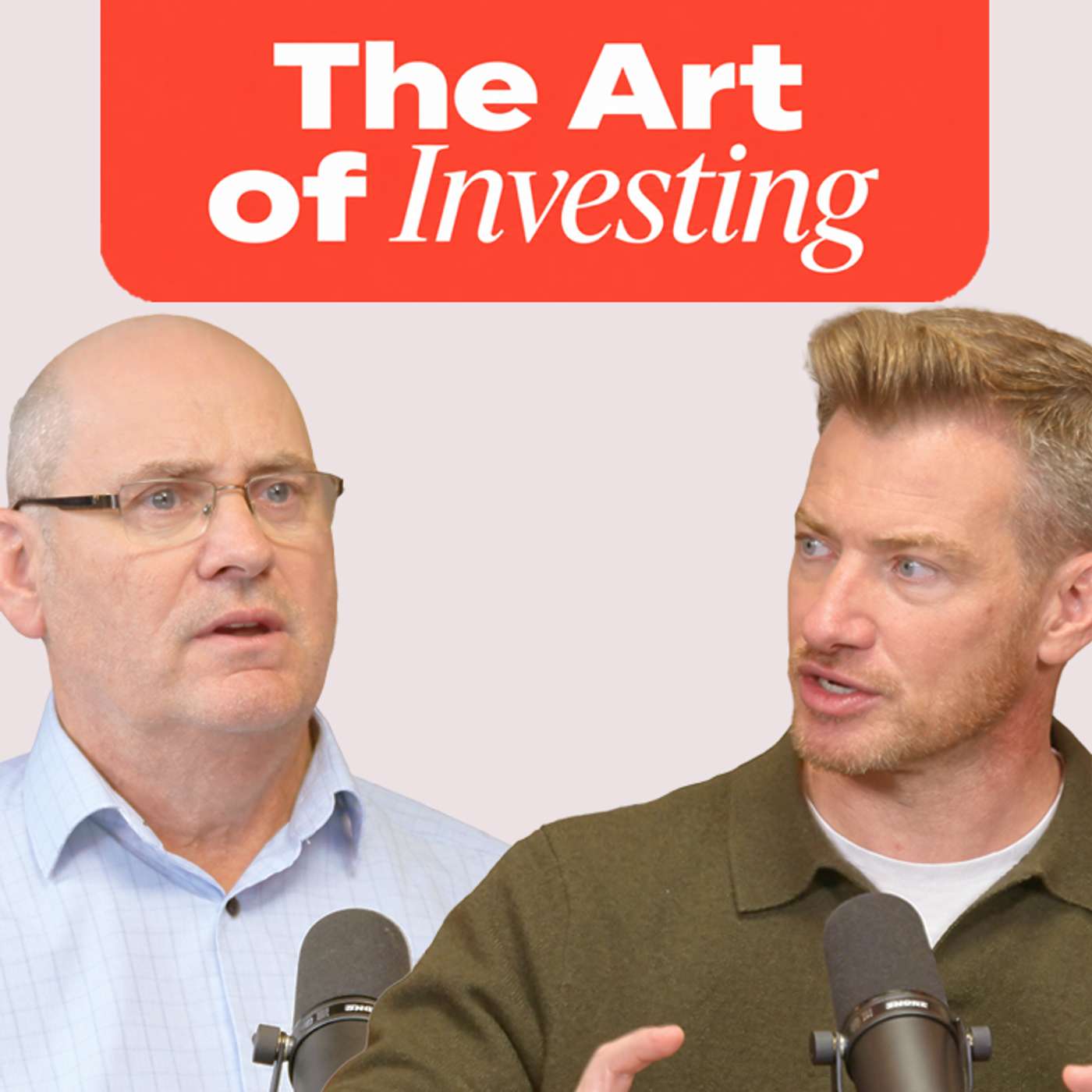
Fresh from their first live show at Lord’s, Rich McDonald, Mark ‘Spice’ Holden and Chris ‘CJ’ Fellingham return to a bruising week for markets. Chip stocks have sold off sharply, Korea has slipped into a bear market, and the portfolio has had a tough week.
First up, Spice runs through the market update. It covers a higher oil price after Houthi attacks on Saudi refineries, a sharp sell-off in semiconductors and the start of earnings season. PepsiCo and Delta were both caught out by rising costs, while the big US banks impressed.
Then the team turn to CoreWeave, where soaring credit default swaps sparked a wobble across the AI trade. CJ explains what a credit default swap actually is, and why markets are now asking serious questions about the debt behind the AI build-out.
The team also tackle hot US inflation data and gloomy consumer sentiment, which have sent the odds of a Fed rate rise soaring. Is stagflation back on the table?
And finally, CJ makes the case that this bull market may have overstayed its welcome, while Spice argues why smaller and mid-sized companies could be the real winners from AI. Plus, the team reveal what the audience survey at Lord’s told them about how listeners are invested, and why so few are holding bonds.
This Week’s Highlights:
🤖 CoreWeave: Is the AI Debt Party Over?
CJ explains credit default swaps and why surging borrowing costs at CoreWeave rattled the whole AI trade.
💻 Chips, Korea and a Brutal Week for Tech
Spice unpacks the semiconductor sell-off, a Chinese memory chip breakthrough and Korea’s slide into a bear market.
🇺🇸 Stagflation: The Worst of Both Worlds?
Hot inflation and weak consumer confidence push up the odds of a Fed rate rise. CJ explains why stagflation is so hard to escape.
🐻 Has the Bull Market Overstayed Its Welcome?
From magazine covers to market breadth and concentration, CJ lays out the warning signs, and Spice makes the case for the optimists.
🇬🇧 The UK: A Beacon of Stability
The FTSE 100 and FTSE 250 lead the portfolio as money rotates out of AI and into more defensive names.
💰 Lessons from Lord’s
What the live audience survey revealed about investors’ portfolios, and why bonds may deserve a second look.
Portfolio Snapshot – Week 61:
📊 Weekly portfolio performance: -1.1%
📈 Total return since inception: +24.5%
📅 2026 year-to-date return: +11.9%
Top Performers:
📈 iShares Core FTSE 100 ETF: +2.2%
📈 Vanguard FTSE 250: +1.0%
📈 WisdomTree Copper ETF: +0.8%
Underperformers:
📉 iShares Core MSCI EM IMI ETC: -5.0%
📉 iShares Russell 2000 ETF: -3.9%
📉 iShares Nikkei 225 ETF: -3.7%
📉 BlackRock World Mining Trust PLC: -3.6%
Disclaimer:
This podcast is provided for educational and informational purposes only. The content presented is not intended as personal investment advice or a recommendation to buy, sell, or hold any particular securities or investments. All discussions regarding the model portfolio are illustrative and for educational purposes.
Your capital is at risk. The value of shares, ETFs and ETCs can fall as well as rise, which could mean getting back less than you originally put in.