 Ask ChatGPT


Macro update (bonds, oil, Fed/Jackson Hole, trade tariffs) and a stock/asset debate centered on Nvidia results, plus three viewer questions: whether to buy single stocks vs ETFs, whether gold still makes sense, and whether markets are shifting from “de-equitization” (buybacks/private takeovers) to “re-equitization” (more issuance/IPO supply) and what that implies for valuations.
Rich McDonald, Chris Fellingham, Mark Spice Holden (hosts). No external guests mentioned.
Written by AI. May contain mistakes.
Hosts joke about the absence of the producer and share light banter.
“and this will make you laugh or cringe, but I'm going to see a show tonight that my son has recommended to me.”
Discussion on the current state of the bond market and recent events.
“because of the issues going on in the bond market.”
Hosts outline the episode's structure and topics, including gold.
“That falling oil price is really good for bonds because inflation is lower.”
Hosts discuss portfolio performance and current market conditions.
“We're going to focus on whether it's still appropriate to buy single stocks or you should just focus on ETFs.”
Examination of market impacts from oil prices and cryptocurrency performance.
“Everybody waiting for NVIDIA last night.”
In-depth analysis of NVIDIA's latest performance and market reactions.
“We've had, as Chris alluded to there, talking about bonds, the oil price is down about 7 % this week.”
Discussion on NVIDIA's growth prospects and market skepticism.
“So there's a 50 % tariff being slapped on Canadian goods by Trump and Canada, led by Mark Carney, our ex-chairman of the Bank of England, has basically done exactly the same thing, tit for tat, 50 % back the other way.”
Discusses the complexities of debt ratings for hyperscalers and potential risks in the market.
“Now, the interesting thing is they came out with a neutral stance.”
Explores how rising real yields impact price earnings ratios and market expectations.
“In a faint way, you could draw some sort of parallels between the complexities there and NVIDIA funding their own chip purchases to other private debt holders.”
Analyzes NVIDIA's current valuation and future price potential based on market speculation.
“or recklessly, to use the words of the SEC, they cannot knowingly make these numbers up.”
Reminds listeners of the risks associated with stock investments and market fluctuations.
“I've got to admit that as a natural optimist, you know where I'm going with this.”
Shares updates on the model portfolio performance and reflections on market trends.
“Right, then let's take a quick look at the model portfolio.”
Discusses upcoming market events and the potential impacts of Federal Reserve guidance.
“But we'll see if that continues after NVIDIA's results today.”
Engages in a discussion on the merits of investing in single stocks versus ETFs.
“We've had some great questions in, and it's time for me to grill the guys and find out the answers to those questions.”
Discussion on the challenges of stock picking in modern markets and the rise of ETF investing.
“Now, if markets are becoming less efficient, right, with all this passive investing, everybody's going down the index route now.”
An in-depth analysis of gold as an investment, examining macroeconomic factors influencing its price.
“On to our second question, and that is a deep dive on gold.”
Exploration of how geopolitical tensions and monetary policies may affect gold prices.
“But what he is saying, and I agree with, is some of the things that Trump has done may undermine the dollar.”
Explore the factors influencing gold prices amidst geopolitical tensions.
“I think given what's going on in the geopolitical side of things, gold may well push higher still.”
Understand the concepts of de-equitization and re-equitization in the market.
“by buybacks from companies because they made so much money or by companies going private and private equity taking out those listed equities.”
Learn about the relationship between capital expenditures and stock performance.
“Yeah, I think you have to look at it two ways.”
Discuss the increasing demand for cloud services and data centers.
“You can't be bullish on NVIDIA, which is receiving all the revenue for the CapEx, and be bullish on those that are spending all the money on the CapEx.”
Analyze current market dynamics and potential future shifts in valuations.
“CJ, the last 10 years, you know, a lot of people that watch this podcast won't have been investing for more than 10 years.”
Discussion on the valuation of AI companies amidst price cuts and market expectations.
“As I said last week, you're in the back of the car.”
Exploration of how retail investors are engaging with equity markets across different regions.
“The answer is, I don't think so yet, but we need to be careful.”
Analysis of the differing investment behaviors in Europe, the UK, and the US.
“Everything else goes into the stock market and they've got very big pension funds through their 401ks.”
Speculations on potential portfolio changes based on upcoming market events.
“Okay, well, I think that is time up, gentlemen.”

Get the gist, explore an idea or ask about something said.
 Claude
On The Art of Investing, what are the key points of this episode?
Searching your listeningAutomatic transcript. May contain errors.
0:07Chris Fellingham: Welcome, everybody, to The Art of Investing brought to you by IG with myself, Rich McDonald, Chris Fellingham and Mark Spice Holden. I'll let you into a secret. Our producer, the wonderful Sophie, is away on holiday this week. So, gents, the lunatics have taken over the asylum. That's right. Chris, there's nobody here to force you to laugh at my terrible jokes.
0:28Rich McDonald: Ah, Rich, it never has been a problem laughing at your jokes. They're plenty funny enough, even if I don't get to look at you.
0:35Chris Fellingham: Now, Spice, come on, you are up there in my beautiful homeland. What are you up to?
0:41Mark Holden: Well, I'm here for, obviously, to do the podcast, but I'm going to spend the next couple of days at the Fringe, and this will make you laugh or cringe, but I'm going to see a show tonight that my son has recommended to me. He's in a play called Nesting, so if you're in and around Summerfield, go and have a look at that it's a great play great reviews but i'm seeing a comedian tonight an australian comedian called gary star and he does the whole show apparently naked apart from a pair of flippers so i'm gonna make sure i'm definitely going nowhere near the front row
1:15Chris Fellingham: right well talking about flippers uh cj last week you told us drop the bombshell even that you thought it was time to start looking for timing your exit from owning risk. And that was all because of the issues going on in the bond market. So why not give us an update? It's not often bonds get the priority here, but let's dive right into it.
1:42Rich McDonald: Okay, Rich. So for once in a while, I actually get right. And so let's update where we are with the bond market after the events of last week. And remember the events last week, the Treasury Secretary, Scott Besant, tried to manipulate bond prices because he didn't like those naughty boys in the bond market doubting his fiscal credibility. So a new player has entered the field this week, and that's a chap called Stanley Druckenmiller. Now, Stanley is one of the most famous hedge fund managers in the world, and he ran a firm called Duquesne Capital. Very, very successful hedge fund. Used to charge three and 30, locks in for five years and he never had a problem raising money.
2:28Chris Fellingham: What does that three and 30 mean, Chris?
2:30Rich McDonald: Okay, so three and 30 means you get 3 % per year as a fee and 30 % of any money you make. So as you can imagine, he's not a poor chap, but he made his followers a lot of money.
2:45Chris Fellingham: Whereas the industry standard nowadays is 1 in 10.
2:49Rich McDonald: The industry standard now is 1 % of fee with 10 % share of profits. And that's worked its way down from these large amounts which were there sort of 10, 15, 20 years ago. But before he ran Duquesne, he also ran the Caunson Fund with George Soros. Now, if this sounds circular to last week, stay with me. because it is circular. It's like NVIDIA funding. As you know, I used to work at Soros, and rumors had it that Stanley, Stanley Druckenmiller, was the real brain behind the investment themes. He was the guy who did all the research and came up with the ideas. George, as in George Soros, he had the sixth sense to know which were good ideas and which weren't.
3:34Rich McDonald: He would move in and out of them very quickly, but his real skill was to push the accelerator, really increased the risk when he felt he had the right positions and he would take enormous positions. So Stan and George were the key guys and Besant was the administrator. He made sure the office ran smoothly. So Druckenmiller is not just another market commentator. He was Besant's former mentor and colleague at Soros Fund Management. Besant himself told the FT last year that in macro, there's Stan and there's everybody else. So he's got a wonderful opinion of Stanley Druckenmidders. And it would seem now they're not on each other's Christmas card lists because Stanley has sharply criticized Scott Besson's Treasury bond buying plan this week.
4:25Chris Fellingham: As you did yourself. As I did.
4:28Rich McDonald: All Soros guys lining up together. You can see that. He says the Treasury's decision to double their long-end bond buybacks was not liquidity management, as Besant was saying, but price management, i.e. trying to manipulate prices. He called it a mistake. And he said if the bond market wants to move higher in yield, telling you that fiscal policy is out of control, then that's something it should be allowed to do. But what's happened to bonds? Has that had any effect? And the answer to that is very little this week. We've had a falling oil price, which I'm sure Spice will talk about in a moment.
5:06Rich McDonald: That falling oil price is really good for bonds because inflation is lower. So bond yields come down a little bit. Against that, though, we have this uncertainty about what the Federal Reserve Chairman, Kevin Walsh, is going to say at the Jackson Hole speech on Friday. So the market is very nervous. Bonds haven't decided which way they want to break yet. But I don't think this is over, not in the slightest. So watch this space.
5:35Chris Fellingham: Now that lines us up very well for the episode. We've got three questions and answers coming to you. One on gold. We're going to focus on gold this week. We're going to focus on whether it's still appropriate to buy single stocks or you should just focus on ETFs. And then finally, we're going to look at de-equitization or are we going into a period of re-equitization? So that's all to come. But a quick look at our portfolio performance for the week. Better week. It has been quiet all the same. Everybody waiting for NVIDIA last night. And of course, as CJ alluded to there, Jackson Hole coming up this weekend.
6:15Chris Fellingham: So the portfolio up just half a percent week on week. That takes us to 25.4 % since inception and 12.9 % year to date. So more of that to come later, including the winners and the losers for the week. But first, with that famous NVIDIA update, it is Spice Market Update.
6:35Mark Holden: Well, I'm going to keep you waiting for the NVIDIA detail. But basically, the big picture stuff that is very important for the background sort of moving markets, We've had, as Chris alluded to there, talking about bonds, the oil price is down about 7 % this week. And that's partly because Amman and Iran have basically come to an agreement about revenue share. So it sounds like ships will be charged to go through the Straits of Hormuz. We don't know what that will be yet. But the oil price has fallen in anticipation of some sort of deal there and at least shipping to be able to carry on. It's been a pretty poor week for ships again and chip makers, semiconductors, etc.
7:13Mark Holden: etc. Until last night's results from NVIDIA, which I'll touch on in a moment. But another very good week for our friend Bitcoin. We talked a couple of weeks ago saying the crypto winter may be over. It's up another 12 % this week and back above$80 ,000. Gold and silver also up 2 % or 3%, which is handy. And we're seeing the biggest inflows into exchange traded funds that specialize in cryptocurrency, Bitcoin, Ethereum and gold and silver. The biggest inflows for 10 months. So that's pretty impressive. There is a bit of momentum beginning to gather behind that. Inequities, there's only been one all-time high this week that I've noted of the major sort of areas we look at.
7:55Mark Holden: And guess what that is? The FTSE 250. Come on, CJ. Come on. Yeah.
8:01Rich McDonald: Good call, CJ. Well, the interesting thing you saw yesterday, the Burnham was saying that, you know, he's not going to upset the Apple cart But when it comes to growth or companies, he recognizes it's a tough time. And therefore, he doesn't want to create instability, uncertainty. Now, of course, what he says and what he does may be two entirely different things. But if you wanted a bullish story, you're getting the right sort of mood and language, which is suggesting that things might be a little bit better for the UK.
8:35Mark Holden: The only thing I wanted to mention are the very big picture stuff is obviously we've seen a re-eruption of a trade tariff war between Canada and the United States. So there's a 50 % tariff being slapped on Canadian goods by Trump and Canada, led by Mark Carney, our ex-chairman of the Bank of England, has basically done exactly the same thing, tit for tat, 50 % back the other way. So we've got all-out war in North America. And that's, as you'll see when we come and look at the portfolio, I think has been one of the main reasons why we've seen a drag in US equity markets this week compared to other equity markets around the world.
9:16Mark Holden: We'll talk more about that later, undoubtedly. But let's go on to the results. As Richard has alluded to, NVIDIA was the big one last night at about 20 past nine UK time. We had an absolutely amazing sort of set of numbers hit the screens, beat all expectations. But then very quickly, market makers, the people who make the prices in these shares, put the shares down in price initially. And that was until they knocked it down about two or three percent. And that was until the finance director stood up at the conference call and basically said, it's great. Everything's going well. And by the way, we want to give you some guidance about next year.
10:01Mark Holden: They have a fiscal year ending, which is the end of January, 2028. So the 12 months up until the end of January, 2028. So most of the 2027, they upped the forecast revenue forecast to 70 % growth, 70 % growth.
10:19Chris Fellingham: So NVIDIA has gone sideways for a whole year, around$220 a share. Are we just missing the best stock in the market and people are refusing to invest in it because they think it's got too big? Or does everybody remember that the chip makers, the semiconductors are cyclical and this will come back to bite them at some point? But Spice with 70 % earnings growth next year on 24 four times earnings. Is that just too cheap? Well, I mean, Rich, I hate to correct you,
10:52Mark Holden: but it was 70 % revenue growth next year. And that is a very important distinction because equity investors like revenue growth more than they do earnings growth, because earnings growth can be manipulated at the side by them buying back shares or doing other sort of tricks. But it was 70 % growth they're guiding to in their fiscal year that ends in January, 2028. So for 2027 and a bit, if you like. The old consensus was they were expected to grow at 44 % revenue growth. It's now expected to be 70%. And that means that from this year, from last year, the revenue that will be generated by this company will have trebled to nearly$670 billion dollars in one year.
11:43Mark Holden: That is just mind-boggling. And they said very openly, growth is being constrained by supply, not by demand. Now, we're going to have a debate later on, but that's one of the reasons they're trying to spend money and sort of lend money to infrastructure suppliers, because the infrastructure isn't there yet to meet all of this demand. And it's a wonderful problem to have, but it's just growth that I can't ever remember seeing. And certainly, this is very high quality growth, what I call high quality growth. So I do believe it's repeatable. You know, when you're dealing with what we used to call the law of large numbers, even a small percentage increase on a very large number is very large, but a big percentage increase on a large number is just absolutely enormous.
12:34Mark Holden: So I think the markets, you know, are interpreting it well. The shares went from being down about 3 % to being up 3%, 4%. In fact, I think they're about up 6 % as I talk at the moment, as indicated before the US Open today. And that's helping lift most of those markets that are exposed to AI, which is principally, obviously, NASDAQ in America and the S &P 500.
12:59Rich McDonald: I think there is a very good point here being made by both of you. It's not often I say that, but that is that the numbers keep coming through and the stock price isn't actually going up. And so what's actually happening is for those people who are listening and wondering how the whole process works is the multiple is getting cheaper, as you say, Rich. And therefore, the market is showing that it is suspicious as to whether that growth is going to come through. So for those people who have been worried about a bubble blowing, and everything's getting massively too expensive, the market's actually being quite cautious in what it's taking on board.
13:46Rich McDonald: So that gives a little bit of protection to people. The first concern that I have with NVIDIA and the market has with NVIDIA is that you would expect it to say what it said last night. The finance director came out and basically said, all these people who are worried about us with this balance sheet business model, balance sheet as a service as it's being described, because they're helping to fund everything that's going on, shouldn't be worried because the demand is there. I'm not an expert, but I saw that Morgan Stanley brought out a document yesterday on the debt ratings of the hyperscalers and whether you should buy or not buy the debts that has been issued to fund this data center development.
14:33Rich McDonald: Now, the interesting thing is they came out with a neutral stance. Now, to those of us who've been in the market for a long time, a neutral stance is about as bearish as you get from an investment bank that wants all their business. Correct. No investment bank is going to say sell when they want the business. So the worst they can say is neutral. And the reason they are neutral on it is because they basically say these tail risks are too great. And I love this expression, the opaque financing pulse through creative structures in the ecosystem. So they've actually looked at this circular funding and put it out in a couple of flow charts and says, well, you know, in theory, this all makes sense, but it's really quite technical.
15:22Rich McDonald: It's really quite complex. And it's very similar to situations in the past where complexity hasn't always been the friend of market performance. And the one that obviously comes to mind to me, I'm not suggesting we're here in any way, shape or form, but it's the CDO market, which was developed in 2006, 2007. Now, the CDO stands for collateralized debt obligations and was invented by investment bankers in 2006, 2007. It's really clever. You take all this debt, you pile it into a vehicle, and then you tranche up that debt by the better quality and lesser quality and crappy quality. It's like a night out with you two.
16:11Rich McDonald: Exactly. And you can basically buy whichever bit you like. Of course, now, these investment bankers developed this product, and it went really, really well. It went really, really well, and they made a lot of money. and they skated off into the sunset as they left the financial system to destroy itself in 2008. As people realized the mortgage-backed securities that were behind these CDOs, the underlying credit was a lot worse than anybody thought. In a faint way, you could draw some sort of parallels between the complexities there and NVIDIA funding their own chip purchases to other private debt holders.
16:52Rich McDonald: Now, the other thing, the second point, is the real yield argument we talked about last week, which is if real yields are going higher, the importance that has always had in markets in the past has been the rating, the price earnings multiple that Rich has talked about just now, gets pushed down. As bond yields go up, as interest rates go up, those PEs go down. So although they may be growing rapidly, maybe we're just rating things at 24 times as too expensive in the real yield environment that we're looking at. So those are my two concerns. But I have to say the numbers were great and the market's right to react to them positively in the short term.
17:37Chris Fellingham: And I guess a lot of people running money now haven't seen that situation before where real yields have been going up. And you're meant to contract PEs. The whole idea of contracting valuations and multiples just doesn't happen anymore since the financial crisis. And it seems to have been forgotten about Spice.
17:56Mark Holden: Yeah, I mean, I want to give you a little bit of maths on this because the current PE ratio, price earnings ratio for NVIDIA until January 2027. So, you know, about six or seven months forward, not even six months from here, is 24 times, as Rich says. one year after that it drops to 14 times now the market will be skeptical at the moment and that 14 but if as you go through the year and into next year and get closer to january 2028 if they've delivered if everything else is all right the ai boom is still continuing it won't be trading on 14.1 times it's probably going to be trading on probably 20 times which is lower than the 24 times we're talking about today, but that's still a 50%, 5-0 % increase in the share price from today.
18:46Mark Holden: So if you're an optimist like me, you say, this is a great opportunity. The market has been hugely skeptical. Why don't I go and buy those shares now with a sort of 18-month view? And if I'm right, and if the finance director, their guidance is correct, and by the way, they cannot knowingly or recklessly, to use the words of the SEC, they cannot knowingly make these numbers up. they have to have numbers in the background and orders they can't make these public statements because that would be misleading markets they're not allowed to do it so they don't say these things publicly lightly and therefore i'm willing to trust them because the finance director doesn't want to lose their job and you know if you're patient and you believe they're going to be delivered you've got a bigger amount of upside to come because the u.s market even if it gets derated, they're still going to trade on 18, 19 times.
19:38Rich McDonald: But all you're really saying there at Spice is they say it, so I believe it. I mean, it wouldn't be the first time that's not worked, and it won't be the last time that's not worked. You expect them to say it, and they can always say, oh, that's what we thought was going to happen. It didn't. If I have just one more attempt, and Rich, you'll need to be the judge here as to how complicated we get here. when nvidia was being when when they were speculating as to how much money nvidia was going to make two years ago it would trade on a multiple of 70 80 90 times and the market was right to say it can trade that high because the numbers are coming through the market is now saying it should trade at 14 times two years out multiple maybe it's right again and let's remember you know
20:29Chris Fellingham: we're talking about one stock in the index here and okay it's eight percent of the S &P 500 but just because Nvidia goes up doesn't mean that the index will go up because their revenues are the costs of Amazon and Meta and Alphabet and the real other big juggernauts in this index. So it might be bullish for Nvidia but not necessarily bullish for the index and that will take us on later on to talk about whether you should be investing in single stocks going forward or you should be investing in an index.
21:05Mark Holden: Yeah, all very good points there, guys. I've got to admit that as a natural optimist, you know where I'm going with this. I'm happy to sort of sit with NVIDIA and see it as the biggest company in the world. And I suspect there will continue to be that for a while yet.
21:19Chris Fellingham: Your capital is at risk. The value of your shares, ETFs and ETCs can fall as well as rise, which could mean getting back less than you originally put in. This content is for information purposes only and is not investment advice. Past performance is not an indication of future results. Right, then let's take a quick look at the model portfolio. Reminder that we run a model portfolio for you to see where the three of us with our hundred years of investing experience in these markets, what we would do with our money and how we would allocate assets into a diverse portfolio. So the performance year today up 12.9 % and since inception up 25.4%.
21:59Chris Fellingham: The best performer, it's not just been gold, the only commodity going higher. All the mining stocks have performed well. The BlackRock World Mining Trust up 4.7%. Copper also strong on the week up 1.9 % and we've got emerging markets up 1.8%. So Spice, it hasn't just been gold rallying. This is the idea of the inflation trades is back with that yield curve control from the Treasury.
22:29Mark Holden: Absolutely. And as you say, the biggest beneficiary is actually our commodities. And that's shown through very well for our portfolio and for other people who own metals out there. That's great news. I think it's one of the interesting things that actually struck me this week is when we talk about the losers, let's do that now. But our biggest losing positions were basically all the top three were all American indices. So the US industrials sector position we've got, XLI, that fell 1.2%. The Russell 2000 fell 1.2%, my old favorite. And NASDAQ 100, although it's going to make that up today, was down 1.1%.
23:07Mark Holden: Part of that is due to the fact that Donald Trump has reignited this trade war with Canada. And I think certain international investors would have pulled money out of the US and taken it home. And that certainly would have helped the MSCI emerging markets. It also helped the FTSE 100, which is actually our fourth best performer there. So well done, CJ. We've had what's called a value bounce. But we'll see if that continues after NVIDIA's results today.
23:36Rich McDonald: As we've said on many occasions, every dog has its day. It's been a pretty lagging market for the past few weeks. But as you say, the tech stuff has just had a bit of profit-taking ahead of maybe Jackson Hole, and then it's, you know, with the bond yields doing what they're doing. And some of the more established stuff has done a bit better. So, you know, that's good news. But all bets are off until we see what the Fed chairman says on Friday. Hopefully, as we've said, he will row behind the Treasury Secretary, keep clear of many comments. Remember, he doesn't put even forward guidance, so he's not going to be telling us whether he thinks rates are going up, down, or anything like that.
24:18Rich McDonald: Hopefully, he'll stick with his balance of payments stuff that you were talking about, and it will all be a bit of a yawn, and then markets will be set steady for a not-too-bad September, remembering also that September is not a great time for risk markets. So, you know, we're running into that tricky period, but yeah, it looks to me like things are okay at the moment.
24:39Chris Fellingham: Now, moving on to your viewer questions. We've had some great questions in, and it's time for me to grill the guys and find out the answers to those questions. So the first one that we had in, basically the theme of it was, why bother investing in single stocks? Now, we can see that we chose to only invest in ETFs in the portfolio. CJ, if most investors, including the professionals, underperform, then why bother investing in single stocks at all? Why not just go down the route of ETFs for your investments?
25:14Rich McDonald: Well, that's a great question. And there's a very simple answer to it. And that is, don't bother investing in the single stocks. But I don't want people to think that when I say that, that's not because I don't want it to be true that people can pick good stocks. It's just a 40 years of experience in the markets where I've looked at many managers. I've interviewed many, whether it's part of my hedge fund brief or whether it was part of my job as a CIO, chief investment officer. I'm trying to find people who can create alpha. And when I say alpha, I mean, people who can outperform an index, people who can actually outperform that ETF passive structure.
25:59Rich McDonald: And I'm afraid that, you know, over all those 40 years, I found it very, very, very difficult to find people who can do that. There was an article last week in the Wall Street Journal entitled, stock picking funds are performing as poorly as ever. What this document showed was that over 10 years through to June 2026, only 13 % of actively managed U.S. large cap equity funds outperformed the benchmarks. So let's say, for example, they're trying to perform the S &P 500. There's these people sitting there getting paid 80 basis points, 1%, picking stock A over stock B, maybe buying NVIDIA and selling IBM.
26:50And when you look at their performance over 10 years, only 13 % of them have outperformed that index.
26:59Rich McDonald: And if we just take the year, so just the year from June 25 to June 26, this paper showed it was 27%. So one in four were able to outperform on a one-year view, and about one in 10 on a 10-year view. Try to stop bigger in front of us now. I mean, we've got Mark here, but he gave out that job some time ago. they would say this was a great time for people to produce alpha, to outperform the index, because the dispersion between various individual stocks has risen to its highest level in a decade. Now, what do I mean by dispersion? I mean, the difference between the best performing stocks and the worst performing stocks is enormous.
27:45Rich McDonald: Some might be down 60%, some might be up 200%. So this should be a great time to be a stock picker. but actually less and less people are outperforming.
27:56Chris Fellingham: Right. Now, Spice, we've asked the bond guy. I mean, what does he know about picking stocks, right? You are my equity expert here. Now, if markets are becoming less efficient, right, with all this passive investing, everybody's going down the index route now. Isn't this the exact time you should be generating alpha from picking single stocks?
28:17Mark Holden: Yeah, I mean, I think it's a very complex argument as to whether markets are efficient. and you know by efficient we mean that if any news that's out in the public domain will be absorbed by the share price and the share price will go up and down to reflect whatever that latest news flow is in conjunction with everything else that's happened in the past i think what has definitely happened which is why it becomes more difficult to be a stock picker is that the speed of the moves is just unbelievable it's fractions of seconds and a share, a pillar news comes out like in video news last night. The statement was digested.
28:58Mark Holden: There was nothing about that forward guidance in their first statement. The shares went down 3%. Then the finance director stood up and list spoke and the shares went suddenly from being down 3 % to up 6%. So 10 % swing. But you would have had no chance to actually react to that. I'll show you my history.
29:16Chris Fellingham: You'll actually find that I bought shares at 2.05 last night.
29:19Mark Holden: Well done, Rich. Well done. but you know it is it's a rare thing you have to be watching these things full on it is a full-time job and the thing is most people uh who will listen to this podcast i include myself even i don't have that time to look at these individual stocks in such detail anymore and so yes it might be a bit lazy way to do it is to invest through ets but it's also a naturally a safer place to do it as well because you don't get the hit by those big down days okay you won't get as many big up days, but you certainly don't get the pain when things go bad.
29:53Rich McDonald: I also just want to add on there, I want to believe that stock selection works. I have seen over time numbers that would suggest it works. But the problem is that when you look at those periods and you look at what factors worked over that period, remember we talked about factors before, there's the momentum factor, there's the value factor, there's the quality factor, all these different factors. When you look at them, you find actually most fund managers align with a factor. So you might find somebody who's done really well over the last five years, but actually they're a momentum investor and momentum has been the best factor.
30:39Rich McDonald: In which case, why don't I buy just the momentum ETF, which I can buy and charge, they cost me 10 basis points in fees than buying a manager who gives me exactly the same performance as that momentum etf but charges me ac basis points in fees so what what you find nowadays to me is that most managers have factor favoritism there's some managers out there who always loved quality and for a number of years i think terry smith is a perfect example of someone who's liked quality for a long time. And now his numbers for the last three years haven't been very good because quality hasn't done particularly well.
31:18Rich McDonald: So to me, I'd like to believe people can do it. I'm sure there are some who can, but I don't have the time to find those people. And therefore, to me, I would rather buy an ETF.
31:33Chris Fellingham: So Spice, I guess that there's so many ETFs available now. And like CJ says, you can get the factor ETF, so a momentum one, or you can get an industry-specific ETF. So is ETF investing a lot more like single stock investing than it used to be? So you may as well go down the ETF route rather than single stock.
31:55Mark Holden: Certainly, certainly, Rich. I think that's a very good point. I think I looked the other day, there are something like 4 ,400 ETFs in the United States alone that are quoted in the the US against about 4 ,200 companies that are quoted on the stock market. So there are now more ETFs than there are stocks or shares. The difference with an ETF to a manager or a stock is an ETF does exactly what you want it to do in the sense if you want it to perform in line with the S &P 500, it will do it. If you want it to perform in line with the US industrials, we remember the US industrials, XLI, we pay a relatively small fee, sort of 20, 30 basis points or 0.2, 0.3%, remember that is.
32:39Mark Holden: That gives us exact replication of what thing we're trying to achieve. As Chris goes, if you have a money manager or a guy who's making that decision, one year he may do it, the next year he may miss the target by a mile and you're paying him probably over 1 % for the privilege. So I'm a convert because I started my career as a stock picker and doing exactly what Chris said. And I've definitely evolved into someone now who says the best way forward for me personally, unless you're doing this full time, is undoubtedly to use ETFs. In my humble opinion, they're cheap and they do what they say they're going to do.
33:17Chris Fellingham: Great. Right. On to our second question, and that is a deep dive on gold. We haven't had it in the portfolio for a long time now. Spice actually bought some for himself when gold dropped under 4 ,000. But we ignored that idea, Chairman, and we haven't really loved it. In fact, you haven't really looked at gold in the same way ever since it had that ridiculous parabolic run at the start of the year. So has the shine come off it for you completely?
33:47Rich McDonald: I sort of love gold and I hate gold. It occupies that sort of territory for me. There's never a time when I'm sort of lukewarm to it or luke cold to it. At the end of the day, I look at the macro conditions. That's what I try to look at for gold. Now, we bought it in our original portfolio, and we made a lot of money in it in our original portfolio. And then we sold it out of our original portfolio at around the$4 ,000 range, a little bit higher than four, a bit of it. But we kept our exposure with our World Mining Trust. So we knew we had exposure to it, but we felt it had done pretty well and now may be time to take some profit.
34:24Rich McDonald: Now, of course, we were wrong and it went up or rather I was wrong and it went up to over 5 ,000. But then I stayed out of it and it's come back down to 4 ,000 again. So really, to me, it's done nothing in the last, I don't know, nine months, let's say.
34:40Chris Fellingham: Spice, the Treasury intervention into the long end of the yield curve last week, that together with your belief that they're already running the economy hot. That's the perfect scenario for gold, isn't it?
34:52Mark Holden: It certainly is because, you know, for hundreds of years, people have considered gold an inflation hedge because it's a real hard asset and there's very limited supply. And it has tended to, in general, do very well when there's times of inflation around the place. And we are, you know, in a period that, you know, Chris has brought to that. The bond market is desperate for central bankers to put up interest rates to sort of slow this or sort of counter this inflation that we've seen rising over the last few years. And yet the central bankers, particularly in America, are reluctant to do that. So for me, that's actually quite a good backdrop for investing in gold.
35:34Chris Fellingham: Then you've got the real yields move as well. So are these two things that are fighting against each other, the inflation backdrop and the increasing real yields?
35:44Rich McDonald: I think there's three elements. One is, is inflation here? And is inflation going to get worse? The second one is the real yield argument. And that is an important argument as well. And the third one, of course, is the dollar index and the dollar itself. So those are normally the sort of three reasons why people might give for why gold should do well. Now, I've looked back at this thing over a long, long, long, long time. And we can challenge each other's views on various things. I mean, Spice just now said, well, it's to worry about inflation, but Spice doesn't believe there is any inflation.
36:17Rich McDonald: So why is he buying gold? It doesn't make sense. To me, that isn't right. What to me is, if you look at it, I think there are two things that dominate its performance. One is the dollar. And I think Spice and I would agree with, you know, when people got strong views about the dollar, that can dominate. But the other thing, and this is, you know, you've got to be as old as me to remember this sort of thing. But the other one is real yields. If you draw a chart of the real yields that you get on index-linked bonds, and we've talked about this last week, but in the UK, we've had index-linked bonds, a long-day index-linked bonds since 1985.
36:55Rich McDonald: So you can look back at what those yields have done. Back in the old days, real yields were about 4%. So that means you've got a return above inflation of 4 % by holding index link bonds. They moved down to 2%, so real yields moved down to 2%, and then their yields moved down to minus 2%, and now they're back up at plus 2 % again. Now, if you look at when gold has done poorly in the past, it's when those real yields were high. Now, I think we're going back into that same area now. And therefore, I see why people want to buy gold. Gold has done poorly from the highs. And so therefore, you know, people think it must be cheap compared to where it was.
37:44Rich McDonald: But actually, the underlying fundamental macro view to me, that of real yields moving higher, doesn't help it. And so I wouldn't still be as keen on it as both of you. but I'm always willing to be persuaded if someone's got a particularly strong view as to why that might change this time around.
38:08Chris Fellingham: Okay, and of course the argument there is that I can have a bullion of gold in my safe at home. I don't, by the way, just in case anybody thinks about coming to grab it. But I get no return on that. Nobody pays me any interest, no coupon, no borrow, nothing. I've just got a lump of gold sitting in my house whereas I can have my money in the bank or in bonds and as CJ says as the real yield goes higher then I'm receiving a much better reward for holding that asset relative to holding a lump of shiny metal. So Spice what changes that scenario okay gold's already had a 15 % run off the lows what makes it go materially higher from here and do you think that we should have
38:59Mark Holden: some in the portfolio well i think there are two things that uh you guys are missing the one is that um if you think that governments or central bankers are not to be trusted anymore or are not going to do their job properly people tend to try and hide in some of these other assets that are, you know, sort of outside of the normal realms of that. And gold is one of those. I think that's one of the reasons Bitcoin has started to perform well again, because people have seen that, you know, there's growing trade spat between Canada and the US. So maybe they're going, we don't really like Trump again.
39:35Mark Holden: Is he going to do it elsewhere, et cetera, et cetera. And, you know, if Besson is trying to do what he's doing and Kevin Walsh is not going to put interest rates up, That means, you know, the dollar should weaken in time compared to other currencies. Again, it goes back to the dollar thing. One of the big differences and what hurt gold earlier in the year, and remember, the Gulf War started six months ago, almost to the day now. We've been going for six months. And at that point, governments who were very heavily investing in things like gold and silver and copper and other commodities with their spare cash that generated from their economies, particularly emerging markets and China, that cash has had to be diverted into paying a much higher oil price.
40:22Mark Holden: And I therefore think it's quite interesting that as the oil price seems to have peaked and come back a bit, and arguably could come back some way further if they do this deal between Oman and Iran, then there will be a return to some cash surplus for some of these central banks and governments around the world, which before the conflict, they were happily diverting into gold because central banks were building gold positions. That was a well-known fact. I think they were the biggest buyer of gold for a long period of time. And that added to it. And they've been out of the market because of this high oil price.
40:59Mark Holden: I'm encouraged. We're at About 4 ,600 today, the all-time high was 5 ,600, give or take 5 ,595, I think it was. So my short-term view is I think we will go back to the 5 ,000 level because that's a big psychological level for markets. And if we get through that, then we'll go back up to that all-time high. So I'm bond positive, you know, but there are plenty of sweeties in the shop I like at the moment when the economy is running hot. And I could pick many, many things I like.
41:30Rich McDonald: CJ wants to buy everything. What do you think? I wouldn't find myself disagreeing, Mark. He's abandoned that inflation view that he started off with. That's great. So I'm taking that as a win. But what he is saying, and I agree with, is some of the things that Trump has done may undermine the dollar. Undermining the dollar will build interest in gold. So I'm with Spice on that. It's just how does this real yield argument offset the dollar argument? And so I think it's absolutely right that if, let's say at Jackson Hole, the Fed chairman calms everything down on the bond market, keeps everybody relaxed.
42:11Rich McDonald: I think given what's going on in the geopolitical side of things, gold may well push higher still. And maybe we'll find ourselves next week saying, let's buy some gold because we feel we've got that sort of green light. The issue to me is if they lose control of the bond market, I think that will hurt the gold price as well. So you may have a situation where one offsets the other. But I'm not sitting here bearish of gold. And if we were, we wouldn't have the World Mining Trust. We've got a nice decent position there, which is gold in itself. It's got gold, silver, copper and other things there.
42:50Rich McDonald: So I'm not negative. I just can't get myself excited in my share spices view that there are other things to buy if you get bullish. For example, your Nvidia or something like that, where you've got some fundamental earnings behind there, you know, if you buy into that story.
43:05Chris Fellingham: It comes down to the US government. And the idea is, are we back in this debasement trade that you guys have spoken about? Or is the US government actually going to start putting policies there to get their spending down? and get their budget deficit under control. If you believe that, then you'll believe anything because there is not a chance. Spice keeps on referring to his big, beautiful bill, and there is no way that they're going to stop spending. And I don't know how they managed to do it. But if the Chinese are buying gold, and as Spice says, as the oil price comes down, the other countries around the world also start investing in gold because they know that dollar is not as safe as it used to be.
43:51Chris Fellingham: I think there is a hunt for somewhere to store your wealth. And I think that gold ticks that box. Spice, you mentioned a cash surplus there. That seems to be something that could be disappearing fast. And it takes us on to our third question around de-equitization or re-equitization. And CJ, do you want to just give a quick introduction as to what those terms actually mean?
44:15Rich McDonald: It's a well-known story within the investment markets that over the past 15, 20 years, equity has been taken out of the public equity markets, either by buybacks from companies because they made so much money or by companies going private and private equity taking out those listed equities. and therefore the supply of equities has been low there haven't been that many ipos or initial public offering and therefore you know it's there's been a sort of scarcity value in equities and that's helped them do so very well now of course the leader in that has been the us where the us has been the leader in doing buybacks and they there's the stock the stock market's performed absolutely fantastically.
45:08Rich McDonald: And there's a paper from an asset manager, which basically reckoned that between 2015 and 2025, the shrinking supply of shares added roughly 0.7 % a year to US returns. So it's been helpful, it's been positive, and that's great. Re-equitization is essentially that process turning around more ipos more issuance of equity less buybacks less um takeovers of equity and therefore so the supply is increasing and this same document uh reckoned that if you went back to the ipo crazy year of 2000 when you know you had the the uh the internet bubble, the amount of stock that came there dragged down returns by as much as 10%.
46:05Rich McDonald: And their view is that we are going to see a similar situation now because the issuance in the US is picking up so sharply with not just SpaceX and Anthropik and some of these other things, but also that when these companies first come to the market, they only float a very small amount of their shares. But a lot of insiders who own those shares can't sell them for nine months, a year, a year and a half, whatever it is. But when they can, they all start selling as well. And what happens then is you get a lot more stock coming on than expected. And these guys who wrote this article reckon that the new share supply they see coming will drag down the index performance by a weight for it four and a half percent a year wow over the next decade because there's so much supply coming in relation to historic supply and historic demand so that's
47:09Chris Fellingham: what people mean by this spice this goes back to what you were talking about earlier and what's the right multiple going forwards in the index and in single stocks if we are really entering a period of re-equitization, and it feels like we are, doesn't that mean that we should go ahead with lower valuations?
47:27Mark Holden: Yeah, I think you have to look at it two ways. I think I've always said, and this plays to your argument rather than a more bullish one that I would normally hold, companies look at their various means of raising money. Historically, they might go to a bank manager and say, oh, can I borrow some money through a loan? Or they go to the corporate bond market or the private bond market and say, oh, look, we'll issue some bonds. We'll pay you back in 10 years. We'll pay you 2 % above what the US government pays. That's a nice return for you. And if you think we're a good company and we're strong enough and we've got a good business, we'll still be here in 10 years.
48:07Mark Holden: You'll get all your money back and you'll get a nice interest straight in between. And the third way, and the way that is normally used least by companies, unless they think their shares are quite expensive, is they issue equity. Now, I'm shooting myself in the foot here, as I say, because ordinarily, I say, if you start to see a lot of companies issuing equity, they are sort of telling you that their shares are quite expensive and highly valued. And therefore, that's quite a rich form of currency for them to go and raise extra money. But they're also, you know, if they're starting to take over other companies, that's that they see other companies' shares are too cheap.
48:43Mark Holden: That's one of the reasons you wouldn't go and buy a company you think shares are expensive. You might use your shares to do that if you think your shares are expensive as well, and you sort of offset one with the other. And that's why, so I've sort of shot myself a little bit in the foot here. But going back and trying to bring a ballpoint back here is that I think what everyone's underestimating is this is happening at a time of truly exceptional earnings growth. You know, this quarter's just about come to an end. You know, the peak was last night with probably Nvidia. We're going to get 30 % earnings growth in the second quarter of the US.
49:22Mark Holden: This is almost unprecedented at a time where you're not coming out of a recession where you would expect earnings to recover quickly. And to me, I think that if you were looking at 6 % earnings growth or 10 % earnings growth, then that 4.5 % sort of dilution that you're talking about by all this extra equity would be pretty painful for equity markets. I don't think we're there. I think that the earnings growth is so powerful, it's an offset and a positive one.
49:49Rich McDonald: The other thing I think to say is we can both be right. We can say that the equity... It doesn't happen often, but... It doesn't often happen. That's absolutely right. Neither of you might be right. I'm normally right, but that's life. but we could find relative performance we could find the performance is four and a half percent less than it would have otherwise been but the return still might be quite good because the fundamentals are improving and therefore you know you it could have been a really good year and it's just not quite such a really good year it's it's a good year but the uncertainty is there we're changing those ground rules and i think the jury is going to be out until we see um how some of this supply gets placed.
50:35Mark Holden: The only final thing I'd say there is, you know, I think to say that you're going to get this dilution for 10 years, I think is probably wrong because the amount of investment that's going in now, as we've heard from a couple of companies recently, they're looking for a three to four year payback of that capital expenditure. Now, if we don't get that, stock market is going to be a lot lower anyway, right? Because everyone would go, well, you've wasted all that money, you haven't got a return, you're wasting time, we'll sell your shares and the markets will be a lot lower. However, if they do start to generate returns on this huge capital expenditure, then they'll be making shed loads of cash.
51:16Mark Holden: And they will start buying back shares again, I'm sure. So I don't agree with the 10-year thesis. I can see it maybe for another couple of years. As the returns come through from the oldest capex, it'll be a great offset.
51:28Chris Fellingham: Spice, you can't have both. You can't be bullish on NVIDIA, which is receiving all the revenue for the CapEx, and be bullish on those that are spending all the money on the CapEx. Because if they continue paying all the CapEx, that's NVIDIA's revenues going forward. If they stop paying the CapEx, then NVIDIA halves in value.
51:50Mark Holden: Yeah, and this is the big dilemma that's out there at the moment. You have to sort of trust that the people who are investing or Invidia are backing to invest. They can see a way to making a handsome return and everyone should make money. I think that's why you've got this massive race for AI and all the things that go with it, the infrastructure, the copper that goes into the data centers, et cetera. I mean, look, we've been using the cloud services for how many years now? A decade, probably. I can't remember. I've been subscribing to my iCloud on Apple and Microsoft for probably a decade. And the price of that keeps going up.
52:29Mark Holden: Remember, the cloud is just a bloody big data center. That's what it is, right? It's exactly the same. And, you know, I think all we're doing is that they've realized there's this huge demand for extra storage, extra space. And that's why they've got to build these data centers and run like hell to try and keep up with the demand. As NVIDIA said last night, is a demand issue. The demand is there, its supply is tight and they can't get there quick enough.
52:54Chris Fellingham: CJ, the last 10 years, you know, a lot of people that watch this podcast won't have been investing for more than 10 years. So they haven't really known about this invisible hand that's been increasing and buying back stock every single year. Now, with all this AI spend across the board, They're filling the debt markets, right? All the cash that's there in the debt markets, yours, yours, yours. Then they come with these$2 trillion IPOs and 1.4 trillion in SpaceX because we're going to build data centers on the moon. Yours, yours, yours. They fill up all the cash going into IPOs. Now they're going to start issuing stock again and they're going to take away that cash support.
53:41Chris Fellingham: Doesn't it take away all the pillars that have been supporting stock market growth for the last 10 years?
53:47Rich McDonald: It takes away a number of supports. I mean, it doesn't take them all away because you've got the retailisation of markets over the past few years as more and more people have got involved. And clearly there are a number of areas of the world where people haven't discovered the attraction of stocks. You could argue the UK is one of those because we hold a lot of cash here, which if they put it into stocks would help and provide more capital. But it does undermine the case little bit by little bit. And what we don't know is where that tipping point actually is. And I'd add to your list, you've got this real yield argument.
54:24Rich McDonald: Most people in the markets are used to very low interest rates and very easy to borrow money. That's not how it is, guys. That's not how it has always been. And if we get Walsh, Kevin Walsh, the chairman of the Fed, who said, I don't want those way the way it was done in the old days. I want to have a proper functioning bank balance sheets again. I don't want to do all this, you know, acting as a buyer of the equity markets, keep equities doing well. If he stops and he says we're going to have a proper functioning bond market again, much to the Treasury Secretary Scott Besson's dismissal, he doesn't want it.
55:07Rich McDonald: But if the chairman of the Fed does want it and he succeeds, people are going to have to factor in a higher cost of capital. When you factor in all these things like the high cost of capital and all these other things, then the picture comes unstuck. But let's not be silly here. I've said to on many occasions sitting here, I'm a bond man and for my sins, I've been that for the whole of my life. And I only learned over the last 20 years the joy of being an equity investor, which is you can believe in two different things at the same time. It doesn't matter. Just as long as everybody believes in them, it's not a problem.
55:43Rich McDonald: But in the end, things will become unstuck. There was an excellent article, I don't know if you saw it in Lex, talking about the price war in footwear and saying how that's driving things lower and lower. And its last paragraph, you'd never believe it, is about AI. And it pulls out the fact that Anthropic investors told the FT that the company's IPO could be worth$2 trillion, even though they slashed the cost of its lightweight GPT 5.6 lunar model by 80 % last month and then anthropic cut theirs as well by the same amount so this we're charging a lot of money it's going to justify all the expenditure everything's fine oh no it's not we're having to cut our prices by instant but still we give it a market value of two trillion when people want to believe they believe but at the end of the day we just need to be sensible we're seeing a number of these things that are working against us the time to hit the exit is coming but i don't still believe we're there yet.
56:50Rich McDonald: As I said last week, you're in the back of the car. Your kids are saying, are we there yet? Are we there yet? The answer is, I don't think so yet, but we need to be careful.
57:01Chris Fellingham: So I'm just the kid in the back of the car, am I?
57:04Rich McDonald: So Rich, you've been in the back of the car for the last year and a half.
57:10Chris Fellingham: Spice, are we there yet? Are we there yet? Come on, Spice, tell us, finish off because Because I don't know, producer Sophie might not be here with us today, but she's probably watching this at Ibiza and she's thinking, guys, you're way over time. Come on. Spice, who's the marginal buyer in those circumstances?
57:26Mark Holden: Well, I think, as Chris says, there's been a retailization of equity ownership. And I think that's a very healthy thing. Now, it's most prevalent in the US, but I think in other countries and particularly in Asia, there is this growing culture of perhaps investing in your equity markets more so the places where are lagging long way behind apart from the uk is europe and i was looking at the saving rates of percentages the uk save about four percent outside of pensions and that's that's been rising that was up from three years ago and so about three percent so we're saving more money in the uk but we're not putting into stocks and shares in america only They have a saving rate of about 3%.
58:08Mark Holden: Everything else goes into the stock market and they've got very big pension funds through their 401ks. In Europe, the savings rate is still 14%. The Europeans do not want to invest in equities. They are traditionally bond investors. Good luck to them because I'd much rather put it in equities. And one day, when their savings rate falls to 4%, then maybe that's the time to sell.
58:33Rich McDonald: And I see CJ smirking there. What are you thinking of that, CJ? I've been in many meetings with Spice, where Spice has said, when the retail investor takes over and starts buying, that's the time to worry.
58:44Mark Holden: Yeah, we're waiting for the Germans. How balls change their stripes, spots or whatever. Now I said, you've got to wait for the Germans to start buying it. When they do, then it's definitely over.
58:54Chris Fellingham: They're too busy putting all their money into the new defence spending though, aren't they?
58:59Mark Holden: Exactly. Defence bonds.
59:01Chris Fellingham: Okay, well, I think that is time up, gentlemen. So no changes to the portfolio, I'm feeling, Chairman. That might change next week when we're back in the studio.
59:10Rich McDonald: Yeah, I'd like to see what happens at Jackson Hole, how the markets take to that. And I think then we can decide whether we want to go down that route of maybe buying a little bit more of the precious metal complex or whether we feel it's safer to perhaps even increase our equity risk or maybe it's time to run for the hills. But I think we'll get some more clarity by the end of this week. Good stuff.
59:33Chris Fellingham: thank you everybody it's been a wonderful summer break Spice safe trip to Edinburgh tonight enjoy that fringe enjoy that show
59:41Mark Holden: certainly will do looking forward to it
59:43Chris Fellingham: good stuff guys we'll see you back in the studio next week and we'll see you in the comments section drop us a comment if you've got any further questions after today's pod or if you've got some comments or if you just want to find out on a show review from Spice on how it goes tonight thank you very much for joining us have a great weekend
📈 Download the full Portfolio Performance Slides
View the portfolio breakdown: here
📧 Get in touch: [email protected]
📱 Behind the scenes: @_theartofinvesting on TikTok
🎧 Listen on: Apple, Spotify, YouTube
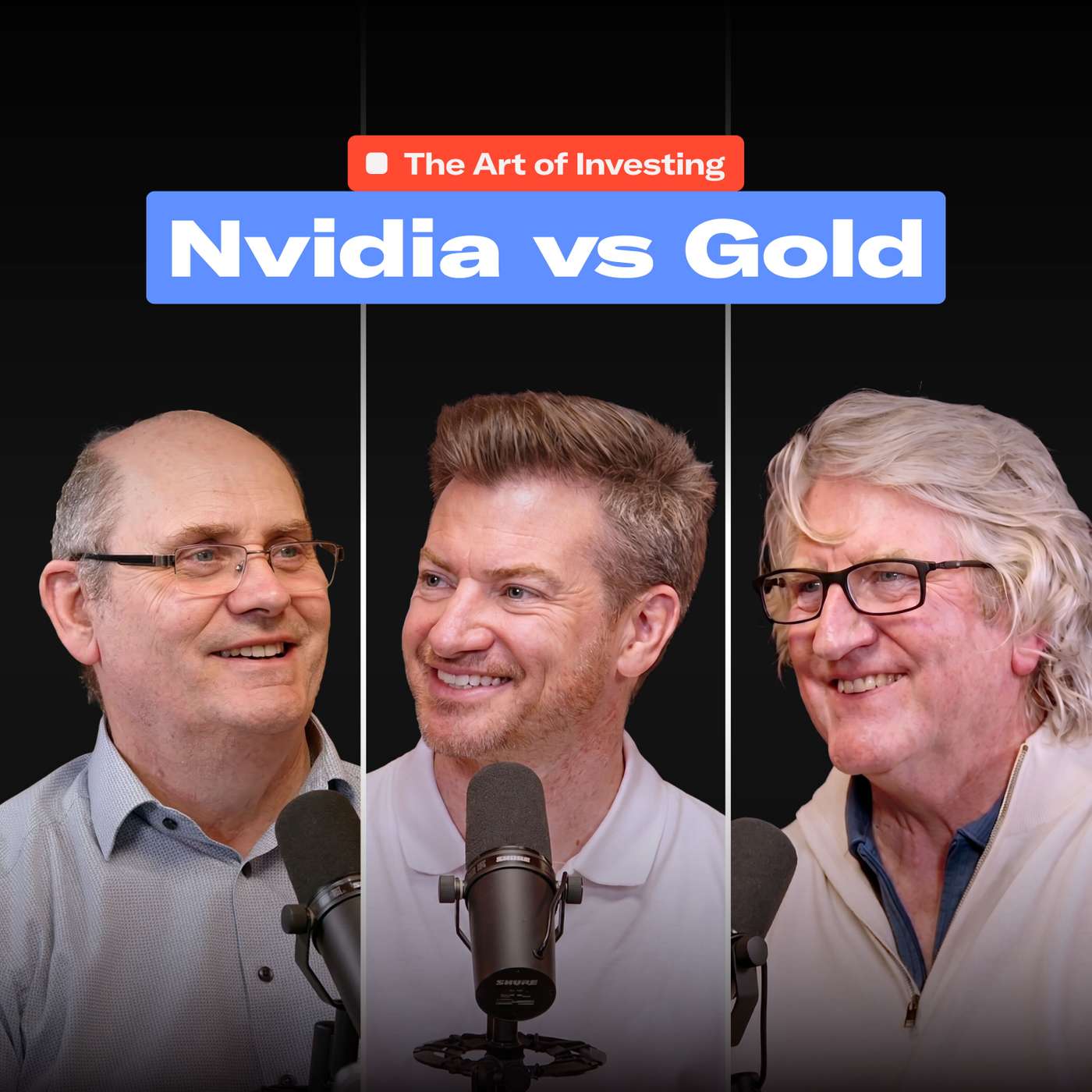
This week on The Art of Investing, Rich McDonald, Mark “Spice” Holden and Chris “CJ” Fellingham are back with a big listener Q&A episode, taking on three of the biggest questions facing investors right now: should you bother picking single stocks, is gold worth buying again, and are equities entering a more difficult phase?
With Nvidia delivering another extraordinary update, Bitcoin back above $80,000, oil falling sharply, and bond markets still waiting on Jackson Hole, the team unpack a market where confidence is returning in some places, but the warning signs have not disappeared.
From the challenge of beating ETFs to the case for gold, AI infrastructure spending, and the hidden effect of new share issuance, this episode asks whether investors should be adding risk, sitting tight, or preparing for a harder turn in markets.
Portfolio Snapshot - Week 54:
No changes were made to the portfolio this week.
📊 Weekly portfolio performance: +0.5%
📈 Total return since inception: +25.4%
📅 2026 year-to-date return: +12.9%
Top Performers:
📈 BlackRock World Mining Trust PLC: +4.7% WoW
📈 WisdomTree Copper ETF: +1.9% WoW
📈 iShares Core MSCI EM IMI ETC: +1.8% WoW
Underperformers:
📉 XLI SPDR US Industrials ETF: -1.2% WoW
📉 iShares Russell 2000 ETF: -1.2% WoW
📉 Invesco EQQQ Nasdaq 100 UCITS ETF: -1.1% WoW
This Week’s Highlights:
📊 Portfolio Edges Higher
The model portfolio rises around +0.5% on the week, taking performance to +25.4% since inception and +12.9% year-to-date.
🤖 Nvidia Reignites the AI Debate
Nvidia guides to 70% revenue growth for the year ending January 2028, but the team debate whether the market is still right to stay cautious.
📉 Bonds Stay in Focus
Stanley Druckenmiller criticises Scott Bessent’s Treasury bond-buying plan, keeping fiscal credibility and bond-market pressure firmly on the agenda.
🛢️ Oil Falls Sharply
Oil drops around 7% as progress around the Strait of Hormuz eases supply fears, helping bonds but raising new questions about inflation and commodities.
🥇 Gold Gets Another Look
After a strong rebound, the team debate whether gold deserves a place in the portfolio again, or whether real yields still make the case difficult.
📦 ETFs vs Stock Picking
CJ and Spice explain why even professional investors struggle to beat indices, and why ETFs remain the preferred route for most long-term investors.
🏗️ Re-Equitisation Risk
The team examine whether a wave of IPOs, AI funding and insider selling could reverse years of shrinking share supply and weigh on future returns.
Big Questions This Week:
• Is Nvidia still cheap, or is the market right to be suspicious of future AI growth?
• Should everyday investors bother picking single stocks, or stick with ETFs?
• Is gold attractive again after its pullback and rebound?
• Will weaker oil and a softer dollar bring central banks back into gold?
• Could a new wave of IPOs and equity issuance drag on market returns?
• Are investors close to the point where they should start reducing risk?
What You’ll Learn:
✔️ Why Nvidia’s numbers can be outstanding while the wider market still stays cautious
✔️ Why most active managers struggle to beat their benchmark over time
✔️ How factor ETFs can replace some traditional fund-manager exposure
✔️ Why real yields, the dollar and central-bank buying matter for gold
✔️ What “de-equitisation” and “re-equitisation” mean for stock market returns
✔️ Why Jackson Hole could shape the next portfolio move
Disclaimer:
This podcast is provided for educational and informational purposes only. The content presented is not intended as personal investment advice or a recommendation to buy, sell, or hold any particular securities or investments. All discussions regarding the model portfolio are illustrative and for educational purposes.
Your capital is at risk. The value of shares, ETFs and ETCs can fall as well as rise, which could mean getting back less than you originally put in.