Ask ChatGPT

 The Art of Investing
11 Sep 2026 · 52m · 24 chapters
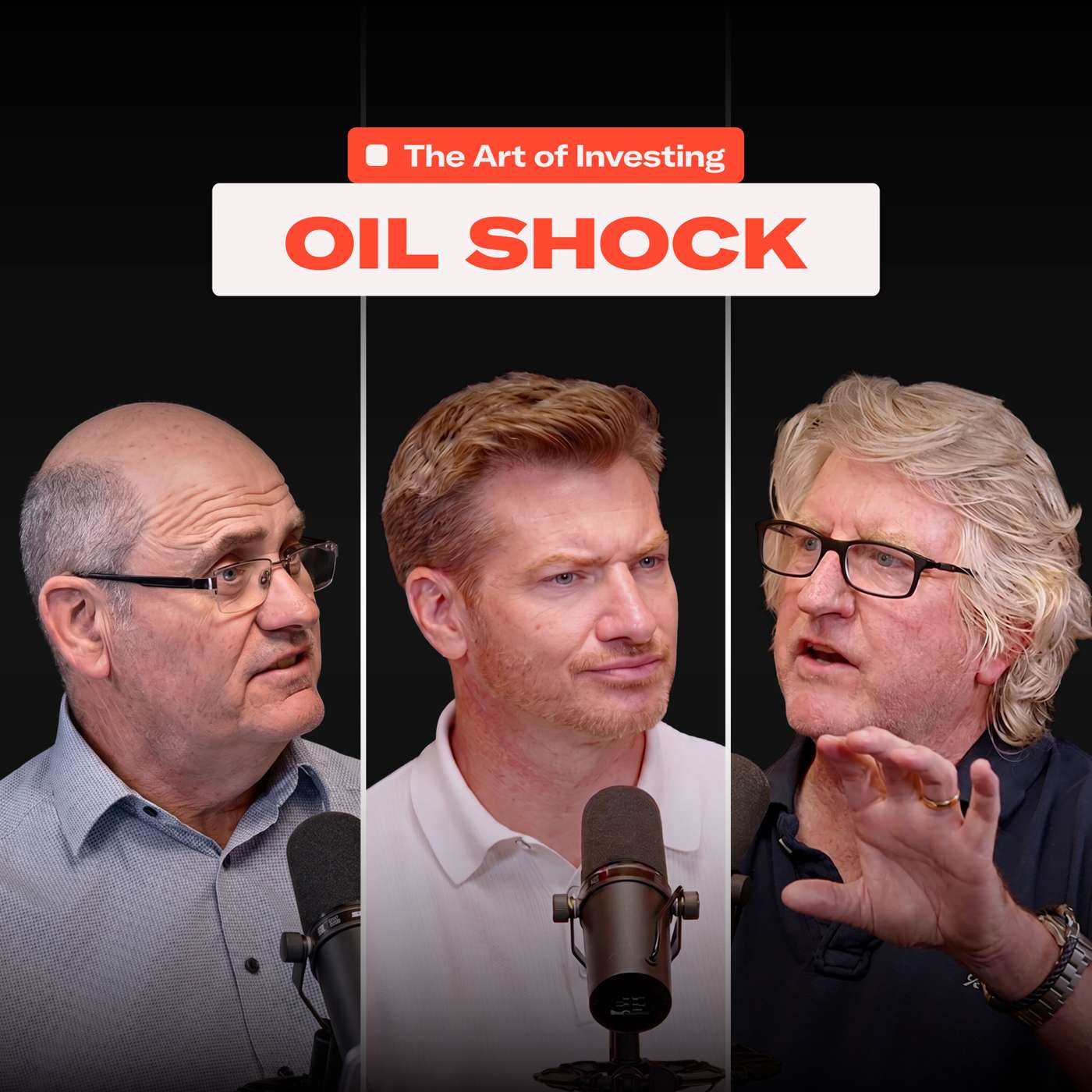
The episode focuses on what’s driving interest rates higher and when stocks might react. The hosts track a week dominated by oil and central-bank expectations: oil tops about $102/bbl amid tanker attacks near the Strait of Hormuz, with Goldman speculating oil could reach $120 (December futures around $97). They link higher oil to pressure on inflation and corporate costs, citing airline fare warnings and weakness in oil-importing markets (FTSE 250 -1.1%, FTSE 100 -0.9%, EuroStox 600 -0.8%). They also discuss copper hitting new highs, driven by supply tightness and AI/data-center demand, and China exports surging (exports +28%, car exports +50%), alongside European auto job cuts.
rates rise globally regardless of data; markets are “in limbo” until central banks; higher yields reflect a capital shortage, not just inflation.
Written by AI. May contain mistakes.
Details about the upcoming free live event at Lord's Cricket Ground.
“Now, some good news on the live event we mentioned a few weeks ago.”
Discussing the recent surge in oil prices and its implications.
“but let's see what else is going on with that Spice Market update.”
Analyzing the copper market's performance and its future outlook.
“But actually in London and Europe and other parts of the world, there is this shortage, growing shortage now of copper.”
Exploring the impact of Novartis' drug trial results on their stock.
“a little bit about, there's a company called Novartis who are a drug company, which we know about.”
Preview of upcoming central bank meetings and economic indicators.
“and the shareholders have been pretty brutal and sold it down 10%.”
Examining the rise in Chinese exports and its effects on global markets.
“Of course, the question might be, would their currency then go up relative to everybody else in Europe to actually make the currency stronger?”
Discussing the bond market's recent activity and treasury strategies.
“So, you know, the car industry is very competitive at the moment.”
Insights into the tax implications of wealthy individuals leaving the UK.
“I did want to just mention one other thing, which was the US non-farm payroll numbers.”
Discussion on the implications of wealthy individuals leaving the UK and their tax contributions.
“And for those people who say, you know, once again, you know, I don't care, even though you can see it's a huge loss.”
Overview of the week's market performance, highlighting winners and losers.
“The value of your shares, ETFs and ETCs can fall as well as rise, which could mean getting back less than you originally put in.”
How rising oil prices are affecting various markets and economies.
“Could I just say something there before Spice comments on those?”
Hosts share their personal experiences and memories from the day of the 9/11 attacks.
“and that was led by the semiconductors sort of which were up globally about 7%.”
Exploration of how financial markets reacted post-9/11 and the subsequent recovery.
“Spicewood, I guess, as I say, the day that changed the world, and it changed financial markets and everything going forward, didn't it?”
Learn about the market's recovery after initial drops due to terrorist attacks.
“Then on the 4th of October, another quarter of a percent.”
Discover how oil price changes influenced market stability and fears of recession.
“it was just a real defiance and the power of that American spirit come through.”
Explore predictions for interest rate changes based on economic indicators like CPI.
“Yeah, well, 25 years on, you know, the three of us certainly, you know, respects and for everything that happened.”
Understand the role of central banks in managing inflation and economic credibility.
“because the issue for me is they'll come up with loads of stories as to why we shouldn't put rates up and how there's weakness in this or there's weakness in that, there's this, there's that.”
Discuss the competition for capital and its effects on bond yields amidst inflation fears.
“So yeah, I think once these rate rises are out of the way, then I think markets will probably have a bit of clear water, as it were, to move forward and hopefully then go and take out the highs.”
Debate the implications of political spending and fiscal responsibility on the economy.
“So whilst I'm with Mark, that I think in the short term, you'll see some relief if you see these moves.”
Examine perspectives on achieving strong growth to mitigate economic challenges.
“Come on, Spice, these short-term thinking politicians are going to rain on your bull parade.”
Discussion on the potential for US economic growth and its implications for investments.
“I mean, I was listening to, you know, Cathy Wood who runs one of the best tech funds in the world.”
Exploration of how rising yields may affect the equity market and corporate profits.
“If you believe that the US can grow at 10%, then yes, yields are going to be higher.”
Considerations on cash management and portfolio adjustments amid market uncertainties.
“today, that's Thursday's FT, by a guy called Robert Armstrong.”
Anticipation of a future guest expert to discuss gilt market insights and strategies.
“Sometimes you do the wrong trade, but you know you've got to do something.”

Get the gist, explore an idea or ask about something said.
 Claude
On The Art of Investing, what are the key points of this episode?
Searching your listeningAutomatic transcript. May contain errors.
0:00This week coming up, got my experts with some great advice because Mark Spice Holden is going to tell you where he gets 15 % economic growth from next year. That's right, Rich. And Chris CJ Fellingham is going to tell us why interest rates are going up all over the world no matter what the data comes out as. Absolutely right, Rich.
0:26Welcome to The Art of Investing brought to you by IG. in the week that Scott the House Besant told us, bet against me if you dare. I bring you my experts, Chris the Manor-Fellingham. Hello, Richard. And Mark the Wine Cellar-Holden. Thanks, Rich. And I am Rich the Studio Apartment McDonald's. Now, some good news on the live event we mentioned a few weeks ago. We have booked the long room at Lord's Cricket Ground. And so the three of us are going to be there. There is even talk about some free drinks and nibbles and some signed prizes. No expense beds. This is the event of the year. And the best news of all, CJ, is completely free.
1:10Free! We love free. Sign up at the link in the description down below. We are going to go straight into that portfolio, see how we've done. We're up 0.2 % on the week, which leaves us up a mighty 12.2 % year to date. So a relatively quiet week. Remember, we've had Labor Day, but let's see what else is going on with that Spice Market update. Thanks, Rich. Well, it's 25 years on from that very sad event, 9-11. And we'll talk more about that later. But the oil price this week has been the center of attention. And oil prices topped$102 this morning as I speak. This is Thursday, remember? Several tankers have been attacked in the Gulf and the Straits of Hormuz and Goldman Sachs are just adding a little bit of fuel to that fire by saying that they see oil possibly going up as high as$120 a barrel.
2:03The December price, interestingly, is down to$97. So there's about a$4,$5 difference between what the oil price is today and what it's likely to be in December. And part of the reason we've seen this push up, there's some speculation that China, having been using their own reserves and stockpiles, will have started buying again in the market. And that's pushed the price up. Why is there different prices for different months in commodities? Because people can trade on futures. So oil companies sell forward. They average out their selling. But obviously, the reason it's lower in December is people are anticipating that some sort of deal to ease the shipping through the Straits Home Wars should be in place by December.
2:42If not, then Goldman Sachs are probably going to be right and will be nearer$120. So yes, one to watch very carefully. Markets particularly are fixated on that at the moment. In fact, Ryanair this morning have come out and said, beware, beware, airfares are going to have to go up substantially in their words. So I don't know whether they're just trying to get people to book flights early or not, but clearly it will start to get passed through to customers. And, you know, the airlines will be the first to do it. This week, I haven't really got any equity all-time highs to talk about, but the copper price on the London Metal Exchange has hit a new all-time high, which is great.
3:19Part of that probably in the background is obviously we've seen a ratcheting up again of the trade war between Canada and the United States. If you remember, the copper price hit an all-time high when Trump first introduced his tariffs. And there was a huge amount of stockpiling, particularly in America. And the American price, which is traded on COMEX, which is the commodity exchange in New York, basically that price went to quite a big premium to the London LME, London Metal Exchange price, because the Americans were pulling in, trying to get as much stock as they could. That's sort of reversed a bit now because the Americans still got some of that stock.
3:52But actually in London and Europe and other parts of the world, there is this shortage, growing shortage now of copper. One of the reasons we like it, of course, is it going into AI. And as those data centers get built, that's the point where they start to use the copper. So we obviously got a nice position in copper we can talk about, but very helpful for us this week on that front. And elsewhere, there's not really a great deal to report. You know, Bitcoin was down a little bit at$78 ,000, having been above$80 ,000 not that long ago. Gold and silver up between 1 % and 4%. But actually, a nice bounce this week in the semiconductor chips.
4:29And you've seen things like Intel are up 17 % this week. And interestingly, the price of open AI that's being speculated upon, they've just launched ChatGPT 6 called Astra. And the expectation is now that the IPO price has jumped between 20 and 25%. And that's a big move on a$2 trillion potential flotation. That's why you saw a big positive move in the likes of Oracle this week, and then SoftBank as well. Yes, SoftBank up 35%. Remember, this is Japan's, I think, third biggest company, up 35 % this week. They own about 13 % of OpenAI, and they've been helping fund each time they've come to the market, they've been getting money and putting that into it.
5:14So SoftBank's well placed for that. They own a big chunk in Arm, remember Arm Holdings, which used to be our tech stock. It's now obviously listed in NASDAQ, but it's based in Cambridge, started in Cambridge all those years ago. Away from AI, I wanted to just talk a little bit about, there's a company called Novartis who are a drug company, which we know about. Two weeks ago, they had really good results of an MS trial that they were doing and the shares rose 4%. This week, they've had two drug failures that meant the shares have fallen 10%. Why is that important? Well, it's important because it's the second biggest stock in Switzerland.
5:47And it's the third or fourth biggest stock in the European industries, in the main industries. So it's had quite a marked impact. Shareholders are worried about what you call a patent cliff. So when you develop a new drug, you put it on a patent, which might last 20 or 25 years, which means you get price protection from other people copying that drug and charging lower prices. But as that patent comes to an end, generic drugs can come in and really slash the price, so literally 90 % lower. And the trouble with Novartis, their drug portfolio is coming to the end of these patents, and they need to desperately replace these patents, these drugs that are coming off a patent.
6:27So they're desperately going around trying to buy new drugs or develop their own ones. and that's what the shareholders are getting worried about now because these patents, the replacement drugs for the patent cliff or the patents that are ending are failing and they had, I'd say, two this week that failed and the shareholders have been pretty brutal and sold it down 10%. Elsewhere, really, there's not been a great deal of corporate news. As you know, we're through the main part of the reporting season, so we're in a bit of a lull there, but we're being focused very much this week again on basically the economic data because next week we have a whole host of central bank meetings, which we're going to discuss a bit later.
7:03And today, this is Thursday, we have the European Central Bank reporting at 1 o 'clock. They are 97 % sure to increase interest rates by a quarter percent. They've been very open about saying they're likely to do it. So that will be no surprise to the market. A surprise will be if they don't do 25 basis points or 0.25%, or if they do a bigger amount. But that is on today. And of course, in the background, we've had obviously Germany's AFD party win a majority down in Saxony. And ordinarily, we would have expected the euro to suffer a bit from that, because when these far-right parties get in, they're normally anti the European Union.
7:43With the AFD in Germany, remember, this was just a local election, rather than where they are in terms of their overall vote share. I think if their overall vote share was higher, then they would worry because they have made it an aim to consider leaving the euro. Of course, the question might be, would their currency then go up relative to everybody else in Europe to actually make the currency stronger? So, I'm not actually sure that would be good news. But I think France is trying to be a bit more grown up in terms of their reaction. We'll see what happens with the German side, as you say. But otherwise, we then had some very strong data actually out of Chinese exports, which I wanted to highlight this week, 28 % up.
8:29So basically, China itself is struggling. Their domestic economy, they've got real problems with their property market. Consumers are struggling. So they're exporting all these goods and mainly cars. So car exports were up 50%, 5-0%. And you'll see more on those Geely and BYD and all these other cars noting around. And interestingly, this week, Volkswagen announced they're going to cut 8 % of the workforce or 50 ,000 jobs across the world because they are struggling to compete with the Chinese. And likewise, Jaguar Land Rover, you will have heard on the news this week, are also pleading poverty and asking the government for handouts, which hopefully they won't do because it's a commercial world.
9:09But they're kind of looking to cut 4 ,000 management jobs as well. So, you know, the car industry is very competitive at the moment. And the main reason is China are exporting like mad and trying to undercut everyone else's market and winning market share, doing a good job, I see. Well, CJ, nothing much going on in the equity world then. What about the bond market quite as well? Pretty quiet, really. We've got some big announcements next week. Bond yields in general were pretty much unchanged, but maybe five basis points higher this week. But within the bigger scheme of things, not much going on.
9:42Except Japan, you'll remember that the US Treasury Secretary, Scott Besant, has been talking about manipulating prices. Oh, sorry. Interfering with the market process, should we put it that way? Making the market more efficient. Making the market more efficient. Sorry, that was such a much better way of saying it, Rich. I give way to you on this. Essentially, we said last week, if you remember, that in the intervention in the Japanese yen, we should go with him because the fundamentals were his way. And the yen has moved and strengthened quite a long way. And also, Besant has said, you know, don't bet against me because I've got all the information I need.
10:25And that refers to your quip to start this show with Scott, I'm the house Besant. He actually said, I'm the house, do you dare bet against me? So that side of things still working well for him. The bit that isn't working well is what he said about bonds. Remember, he said, I'm buying bonds. Bond yields are too high. Don't bet against me. And all these people who he used to work with, he now pooh-poohs them and says they're no good when actually they're much better than he is. And in fact, what's therefore happened is that bond prices have moved higher. He announced this week that he was going to do more buybacks.
11:01And they were going to do$2 billion buybacks. And he said, remember, two weeks ago, I'm going to more than double. So people were expecting at that stage$4 billion. And he announced$6 billion yesterday. But by then, the rumors in the market got to$10 billion. So in fact, bond yields rose a bit more. So in that sense, he's doing a good job in the yen, not a great job in the bond market. And as we've said before, just give up, Scott. Let the market find the level. And that's all you can do, really. I did want to just mention one other thing, which was the US non-farm payroll numbers. They were very strong.
11:40If you remember the week before, sorry, the month before, the numbers have been very weak and people said, oh, that's because AI is getting rid of all the jobs. It's not inflationary. It's going to be fantastic. You know, it's going to be great growth, no inflation, whatever. The numbers came out and showed that to be complete rubbish. The numbers were much stronger than expected and they had revisions. So, you know, it looks like the bond market's sniffing out the real story. Growth is strong. We have to tighten rates and probably isn't falling too much for the AI is going to be massively deflationary at the moment.
12:14But it's early days and we haven't seen a lot of the interest. The best result, though, the best thing I could quote from that was that our friend Voldemort, he came out after the numbers and he said the jobs numbers were brilliant and that a stronger US economy should mean lower borrowing costs. He said we should have the lowest rate of any country in the world. And he said to the Fed chairman, lower the rate or I'll stop trading with countries with which we have a deficit. Good often, Bennett. The children are back in charge of the US government. Talking about big deficits, is there any news in the UK?
12:56Have they come up with a way of getting any more tax from you wealthy lot? There's no news in the UK except for, and I think this is quite an important thing that happened, a chap called Chris Rockos. Ah, my ex-college. I can say when I left BlackRock, I went and had an interview with Chris Rockos. And I went around to Brevin Howard. That's where he worked, at the hedge fund, where you were. And I walked into this room. There was Chris Rockos. And he spoke to me for an hour. and I don't think I understood more than one or two words out of the 500 he'd said to me. It was so complicated. The guy's such an intelligent guy.
13:33But anyway, he left Brevin Howard to form his own firm and he has decided to leave the UK amid fear of wealth taxes. So that was announced this week. And lots of people say, good riddance, who cares, you know, bloody rich bastards, you know, that sort of thing, which is what we hear the whole time. and they are what you hear the whole time yeah yeah yeah and they're saying he's fed up being overtaxed and discriminated against because he's wealthy and successful now you know people can say well you know good riddance but he is rumoured to be the third largest taxpayer in the UK wow and last year he's rumoured to have paid 330 million pounds in tax now Now, if I was to say to you that the cider tax in the UK raises$300 million only, he, on his own, pays more tax than is being raised with that cider tax.
14:35That's one person. And that's one person. And for those people who say, you know, once again, you know, I don't care, even though you can see it's a huge loss. If you take the median salary in the UK, which is around about$40 ,000, and you say the tax paid on that would be around about$7 ,000, What you can work out is when Rokos decides to go to Greece, we need to find 40 ,000 new taxpayers earning the average wage to make that money back. 40 ,000 people. So you may not like these guys, but they pay a lot of tax. And that's the important thing. And it'll be a big miss for this country. It certainly will.
15:21Well, he's got a big name, but that's been going on for a while now, hasn't there? There's been lots of people leaving the country, which is very sad, very sad. It's not something that we want to see. There is arguments about some of these people not paying enough tax. I can see those arguments. But the fact is that they do pay a lot of tax. And if they go, we've got to find other people who can fill that hole. And it's not easy to do that. However, I have one solution. There's a group called Patriotic Millionaires, organized by the friend of the show, Gary Stevenson. And they made a big splash a month ago saying how happy they would be to pay more taxes.
16:04And I just wanted to say to them, if you want to pay more tax, you can. Just go on to government.uk website and you can pay money directly to the treasury or you can pay off some of the government debt. So if you feel you're not being taxed enough, then go and pay some more and stop telling everybody else what they should be doing. That's hitting the nerve, isn't it? Rant over, I guess. Your capital is at risk. The value of your shares, ETFs and ETCs can fall as well as rise, which could mean getting back less than you originally put in. This content is for information purposes only and is not investment advice.
16:39Past performance is not an indication of future results. Okay, so let's have a look at the portfolio in the week. as we said, just up 0.2%. But the winner is quite interesting. Japan, Nikkei 225 up 2.8 % on the week. We've got copper up the same 2.8%, really getting up, breaking out to new highs there. And then EM emerging markets up 1 % on the week. Could I just say something there before Spice comments on those? And that is, we did say last week that when we were looking at the Japanese holdings that we were quite comfortable with them because of the yen exposure. And so that 2.8%, a lot of that will be the movement in the yen.
17:22So well done. That's good. The yen moved 4 % this week. So actually, the underlying stock market went down 1.2%. So yes, that currency exposure absolutely helped us there. And highlights the importance of the decision between hedged ETFs and unhedged. Without doubt, as we've said on the podcast a number of times, whenever you buy something overseas with overseas currency exposure, you should think about it in terms of two decisions. Do I want to buy the asset class overseas? Do I want to buy the currency exposure? Lots of people regard that as one decision. I'm going to buy some US equities, right?
18:02And they just say, well, I've got dollar exposure. Well, that's not great. If Voldemort is basically saying, after the last figures, I want a weaker currency, which is essentially what he was saying, then you may want the US equity exposure, but you may not want the dollar exposure. And that's why we have our holding, as people will know, in the S &P 500, hedged back into sterling because we're a little bit nervous about where that dollar could go if things went a little bit awry. What about the underperformer spice? Nothing really there to speak of, is there? No, we'd had a good week in India the week before, and that was our worst performer this week.
18:45I think we'd seen quite a big rotation within the emerging markets, which India is a part of. and the rotation we'd seen was going back into Korea and Taiwan, both of which had good weeks this week. So our emerging markets position in total up 1 % and that was led by the semiconductors sort of which were up globally about 7%. And that certainly helped because the biggest stocks in Taiwan and Korea are basically exposed to the AI trade and to semiconductors in particular. So that definitely helped there, as did the NASDAQ 100, which is also another sort of in our top four positions, up 0.4%. But yeah, the other losers this week were affected really by this high oil price.
19:27So, the countries that are hardest hit by high oil price are those that have to import a lot of oil. Not so much America because America, you know, they produce about 13.5 million barrels of oil a day and they export actually about 5 or 6 million barrels. But countries like Europe and the UK, we have to import a lot of oil. And with the oil price back at$102 now, that is starting to get painful again. And for companies who use it to power their diesel engines or to fuel their trucks to take their goods to market, that's becoming expensive and it's hurting. So the FTSE 250, badly hit by that this week, down 1.1%.
20:04FTSE 100, now 0.9%. And the Eurostox 600, which is down 0.8%. So yeah, all those three markets, I would say, definitely hit by that high oil price. Now, you mentioned in your Spice Market update there 25 years since the terrible atrocities that happened in New York. I think there's very few times in history that everybody remembers what they were doing on that day. And I remember I was a naive little boy who'd just come out of school and it was my second day working in London. I don't think I'd ever been to London before and had been up getting lunch and came back down in the elevator and somebody said, oh, some idiots flown a Cessna into World Trade.
20:55And I was actually meant to be on the fourth floor. I'd been given this work experience by my athletics team manager, Tony Charette, but they didn't have any TVs there. So I snuck onto the trading floor. Of course, security wasn't quite the same then. And went on, was watching the TV, see what this guy was talking about and was there when the second plane went in and I never forget the silence for about five eight seconds on the training floor and then complete chaos breaking out and I don't recall ever such a sort of burst of emotion and obviously went back up to the fourth floor they had found one TV up there and everybody was watching.
21:41But because it was a financial district in New York, of course, we had offices at Five, World Trade. The PAs were trying to get in contact with the people there. It was just, you know, one of those episodes where, okay, we're just indirectly affected, but taking the chance to pay our respects to those that were affected, you know, including our own producer, that is from Brooklyn, Leila. Just an amazing effect it had. What about you guys? You had actually visited the towers, hadn't you, CJ? Yeah, I mean, clearly very sad and emotional time. I don't think, I think like you, I can't remember, and I have been around a long time, I can't remember sitting there and being quite as shocked at that time as one was.
22:33I've got three memories of, shall we say, the World Trade Center in that sense, which I wanted to share with people. The first one is exactly what you just said. I'm sitting there at Maryland Chasset Management, TV screens on in the background, everybody's coming around to see what's going on and the smoke coming out of one of the towers. And everyone says a small aircraft has flown in there and you think it's just one of these, there's lots of planes, helicopters buzzing around New York all the time. Someone's just, you know, had a problem. It's gone in there. You know, gosh, it's terrible, but that's it.
23:05But suddenly the picture pans away to an aircraft coming in and crashing straight in to the South Tower. And you suddenly at that moment realize, no, no, no, you're completely wrong in what you think is going on here. This is the US under attack. And that was a frightening, as you say, 8, 10, 15 seconds where people said, this can't be happening, can it? Yeah. And I think nowadays you have to expect things to happen around the world. That was the first occurrence that anybody could have imagined that sort of thing being a target. I just don't think people's imaginations had ever really thought, oh, why don't we do this?
23:48And you think, oh, my goodness. And so my second one, which is in the early 90s. What people won't know, I mean, some people will know, but a lot of people won't know, there was a restaurant on the 106th floor of the North Tower called the Windows of the World Restaurant. And I was invited, I was over in the States and went to see some guys from Goldman Sachs and you. And they said, come on and let's go up there and let's go and have dinner. Now you're a quarter of a mile, a quarter of a mile above the streets of Manhattan on the 106th floor and the clouds are below you. Oh, really? And you think that tower wasn't there after this incident.
24:26I mean, that is just frightening as a second thing. And the final thing I'm going to talk about is the National September 11th Memorial Museum. I went there in 2015. And that was really emotional. Going to that museum and listening to the recordings they've got. It just brought it all back. The pictures, the stories of what some firemen might have said, or maybe the janitor. The stories that people address. It was such a sad thing. And I recommend anybody, anybody who's listened to this, who goes to New York, if you haven't been to that museum, it's a must place to visit to see what happened on that day.
25:11Spicewood, I guess, as I say, the day that changed the world, and it changed financial markets and everything going forward, didn't it? Yeah, I mean, I've got goosebumps just thinking about it. I was sitting on a trading floor waiting for the US markets to open. I think the first plane hit the North Tower just before quarter to two in the afternoon. So, that's about 8.45 in US time. The second plane at just after two o 'clock. And I mean, by then, suddenly, markets were plummeting. The US market never opened. People forget that the US market didn't open. So, global investors, they changed their focus because they couldn't trade in the US.
25:51They started trading very heavily in the European markets, particularly because we were open. You know, we're midway through the day in London and Europe. So the European markets and the UK got hit very heavily in that first day. And it was, you know, just nonstop sort of traffic selling coming in, coming in from all over the world. The markets were marked down very heavily. And then people were just fixated watching the terrible sights. Yeah, it went very quiet in the late afternoon, didn't it? Just out of the sheer horror. because, of course, until the towers actually came down, then you couldn't sort of really get your head around what was going on.
26:29One of the things that stuck with me was, and remember stock markets, trade-off of information, and there were huge rumours going around, some of which were right and some of which were not. So the rumours that were going around, I remember vividly three of them. One was that the White House was going, there was a plane flying towards the White House. There was a plane flying towards the Pentagon in Washington. And both those seem to be true. Because if you remember the plane that was flying towards the White House, supposedly the passengers took the hijackers on and the plane unfortunately crashed in the forest outside Washington.
27:04But the one in the Pentagon obviously made it. But there was a big rumour that the Houses of Parliament in London were going to be attacked as well. And all over Europe there was talk of planes flying into Frankfurt and all this sort of thing. So there was huge amounts of confusion. some of which was, you know, true information, some of which was just people panicking and making things up. And it was a terrible event, terrible event. I mean, this is where it shows the power of the authorities because the US market shut and never opened on that day and it stayed shut until the 17th of September.
27:36Which is the only time it's been closed for that long. Absolutely, absolutely. And on that day it reopened, the Federal Reserve in America cut interest rates by half percent and 50 basis points, as we say here. and they cut their rates, like I say, aggressively. And they did it again a week later or two weeks later on the 2nd of October. They cut another half percent off. In London, we did the same thing. On the 18th of September, the Bank of England cut by a quarter of a percent. Then on the 4th of October, another quarter of a percent. So that helped stabilize the markets. But by then, you know, markets were falling, had been falling very heavily.
28:11So, you know, you basically saw equities falling, you know, 8%, I think it was, and dying 10 % by the time the markets reopened. But once those interest rates started to come through, markets started to regain their poise. And actually by the mid-October, the S &P 500 was higher than it was before the attacks. And that's almost like the financial community saying, you aren't going to beat us. You're not going to knock us down. We're coming back. And that was a great spirit of, you know, sort of you're not going to beat us. The hijackers and terrorism is not going to work in financial markets. I got to witness that firsthand because I actually was going to university in Los Angeles in late October.
28:53So I flew across the late October and speaking to people on the ground and getting that, it was just a real defiance and the power of that American spirit come through. It was incredible. Yeah, exactly. I mean, like I say, markets were down 11.6 % at the worst, I think, on the 21st of September. But I say by the 10th of October, we're high again. Amazing. I mean, there were some interesting moves in the oil market, because everyone sort of thought that this was a Middle Eastern sort of backed terrorist group, which Al-Qaeda proved to be. So the oil price initially basically went up about sort of 10%.
29:27I remember the oil price back then was$27 a barrel. We're at$102 a barrel now. But it went flying up to sort of, you know, 27, 28, 29, hit 30, and then started to come down again because the shift in people's fear was, okay, the Middle East aren't really backing this. So there's no state sponsors like Saudi Arabia backing these terrorist attacks, which would have been important, clearly. And the oil price then started falling because people worried about the impact on the global economy. So they were worried that there was going to be a recession come through, which is why the central banks started cutting interest rates.
30:03But the oil price then plummeted. And within about six weeks, it had fallen 40 % the oil price because people had shifted from, this is a problem in the Middle East, it's going to be like we have at the moment, you know, with some sort of war that might be taken there. To, oh my God, the world's, you know, economy is going to be absolutely stifled for a while. And that's like 40 % following the oil price over that period. Yeah, well, 25 years on, you know, the three of us certainly, you know, respects and for everything that happened. And yeah, quite a world changing time. As I said, it was a shock at the time, shocked to watch it.
30:41And, you know, we could say we lived through it as such, but it was a really difficult time. Well, it's hard to move on after that, but as we must. So I guess, you know, we're going into a week now that has the big CPI number coming out on Friday Spice. We've got central banks taking action next week. CPI being for lots of people who maybe don't realize what CPI is? The old consumer price inflation. In the US? In the US. Of course, it's not the number that the Fed watch most closely. That's the PCE, which comes later in the month. But CPI is a good indicator early on in the month, isn't it, Spice?
31:28It is. And, you know, Kevin Walsh says that he's going to be watching the data very closely. Remember, one of their remits is to look after the employment market. But after the very strong payrolls we had that CJ talked about earlier on, that very strong sort of growth in jobs is taking away an excuse not to raise interest rates, if you like. Because that's saying actually job growth is better than expected. So, therefore, maybe you have to put up interest rates. So, the market moved a little bit in favor of there's going to be an interest rate rise next week on Wednesday, which is on the – I think it's the 16th of September.
32:01and they're expected to raise now a quarter of a percent then and there's a 60 to 65 % chance of that rate rise. The next day we have the Bank of England. So when we record this next week, actually we're recording on a Tuesday next week, that's different, but ordinarily we'd be waiting for the Bank of England. Now, interestingly, the Bank of England is not expected to put interest rates up. So there's only a sort of 15 % chance of an interest rate rise in the UK, which is going against trends because we're expecting the European Central Bank to put interest rates up by a quarter percent today.
32:32The Federal Reserve expected to put up interest rates by a quarter percent on Wednesday next week. Then the Bank of Japan on Friday morning, our time, basically, is also expected to put interest rates up. And there's been a big, one of the reasons the yen has been very strong in the last week, partly because of the intervention. So the central banks have been working to sort of support the Japanese yen. That's moved at 4 % this week, as I said. This big move helped our position because we had that unhedged position in Japanese yen. but there's now a 75 % to 90 % chance of a 0.25 % interest rate rise in Japan.
33:08Some people are speculating it might actually be higher than that. Well, certainly there's another two increases expected by the end of the year. Exactly, yeah. And Besson's trying to sell you he knows something. Because don't bet against me, I am the house. So, you know, maybe he knows from his friends in Tokyo that they're going to do a little bit more. So I suspect there's a bit of that priced in the market, in fairness. CJ, what you said last week about the index linked situation and UK having this inflation credibility problem, would you have expected the Bank of England to increase next week?
33:44To me, I think everybody should put rates up next week, right? I don't think there's any doubt. There's no excuse for that. I don't care what the CPI number is essentially on Friday in the US. I think everybody should put rates up because the market's telling you that there are issues here and we need to sort some of these things out. In the UK, I'm not overly surprised in the sense that I don't have a tremendously strong respect for them in doing the right thing. I mean, they have missed the inflation target for the last eight years. Five years. So why start doing the right thing now? But they should raise rates.
34:18The bank has normally or as often saved its movements or its big movements or changes in its views to their quarterly meetings. And that's May, August, November, February. So I think people are saying in November they're going to raise rates. I can't see the point of waiting. Just do it. Show you mean business and that you're going to get inflation down. because the issue for me is they'll come up with loads of stories as to why we shouldn't put rates up and how there's weakness in this or there's weakness in that, there's this, there's that. What you're seeing is that there's too much spending going on by the government, which is, in essence, and almost always is, inflationary.
35:01And so we need to tighten interest rates. Now, do I think it's the right thing for the domestic UK economy? Probably not. But we have to take some demand out to get that inflation credibility. And so, I think everybody should tie in next week. And I think if people don't, there might be a short-lived few. We've got away with that. But very quickly, the markets will say, well, sorry, but you've got to do this because there's a credibility problem. Do you think they'll be applauded for increases? Particularly in the US, I think everyone is expecting it. And I think there'll be a sigh of relief that he's actually done something.
35:41My personal view is I think that markets are in limbo a little bit until next week is over, until we see what's going on with the central banks. But after that, once you've got that one interest rate in the bank, as it were, and happened, people will then look forward and say, well, we don't have to worry about that now for another three to six months, probably three months. But the reality is then after that, they can't really, the Federal Reserve can't really raise interest rates in their October meeting, because it's in the midst of the midterm elections in the US and it's seen as electioneering and you could be accused of adding political bias to the Federal Reserve's mandate, which they won't do, which is why they really have to raise next week.
36:19Otherwise, they lose the opportunity probably until December. The UK, we don't really have that excuse. Of course, there's a budget coming up in about a month's time and maybe the Bank of England are thinking that. They don't want to be political and put rates up ahead of a budget. But that's not really a good excuse in my opinion. I agree with CJ, they should just grab the nettle and get on with it. And markets on the day might go, oh my gosh, they've raised rates. That wasn't expected. The market might go down sort of half percent or something. But then we'll go probably back up again because they're getting ahead or catching up with that inflation problem that's out there.
36:53So yeah, I think once these rate rises are out of the way, then I think markets will probably have a bit of clear water, as it were, to move forward and hopefully then go and take out the highs. That's my own personal view. This is where we're going to have to really box cleverly and understand where markets are going to move to next. Because there's still, to me, a battle between those who believe that rates are going to continue to have to move upwards because of the demands for capital from the hyperscalers. And those who believe that we don't have to because it's a deflationary world brought about by AI.
37:30And therefore, we don't have to react to this stuff. I've heard a lot of, well, I mean, I call it nonsense, but other people might say I'm nonsense. But I've seen a lot of commentary which says this is all about inflation, which is driving these bond yields. But as we talked about last week with these index-linked bonds and the usefulness of being able to look at these index-linked bonds, what we're seeing is in the States, they're not pricing an inflation problem and still aren't pricing an inflation problem. They're pricing a shortage of capital. And that shortage of capital isn't going away.
38:07The opposite. And if they tighten, it's going to make more things competitive as to what yield you need to have on these things to attract money. I think we're still in that thematic move towards higher yields where the cost of capital is moving up. And we're going to start a competition for capital going on. So whilst I'm with Mark, that I think in the short term, you'll see some relief if you see these moves. I think this is a longer term theme. And we will probably want to take advantage of those rallies to maybe get our portfolio a little bit more defensive than we've had it up to this point.
38:50Mentioned before that this time of year is never good for markets. And clearly, the markets are showing us that. If we look at where our portfolio here has gone in the last four weeks, it's really gone nowhere. It's actually gone small down. So, you know, having had a really cracking time, we're now sort of treading water, wondering what that next theme is. And when we want to look at the things that can scare us out there, there's this, you know, there's the oil price. What's happening there? What's happening in Iran? Now, what are we going to do with all these budget deficits? Don't forget Japan.
39:22Well, I was actually going to refer to my old friend, Voldemort, who you just got to look at the FT this morning, where Voldemort is giving a presentation. He's at a big jamboree for the Republican Party yesterday. And he says that if they win the two houses, the House of Reps and the Senate, if the Republicans win, he's going to give every adult in the country$5 ,000. Biddy. Now, you know, talk about tone death. The market is worrying about how much money you've got to find for all these things. that act on its own adds over$1 trillion to the debt of the US. Which is already$40 trillion. Which is already$40 trillion, right?
40:15So, I mean, for God's sake. But he came out and he said, vote for me. And this is what I will do for you. I suppose the point I'm trying to make, apart from the fact that I don't agree with what he's been saying, is the pressure is going to continue to find more money to fund, whether it's data centers, governments, or whatever it is. And at some stage, people are going to have to say enough is enough. We can't keep this fiscal spending where it is. We're going to have to get a bit more careful, like in the UK, cut public spending. I mean, gosh, if somebody came out in America and said they were going to cut public spending, given how huge that is, you wouldn't want to be holding too many US equities.
41:03Well, Elon did it, didn't he? Well, of course, he solved the problem. He solved the problem, didn't he? And he got sacked. Yeah, he solved it. He got his chainsaw out and stomped around the stage, you know, and then suddenly he wasn't there anymore because he found it be a bit harder than he actually thought it was going to be. So to me, I think the themes are changing, as I've said in the last couple of weeks, towards how are people going to fund all these things? And in the end, they're going to have to come out of the equity markets. Do I think it's a problem for the very short term? No. But as I said last week, I've often been warned for being a dick for a tick.
41:36And where I'm sitting at the moment, it feels like I might have made that mistake. But we'll see what happens. Come on, Spice, these short-term thinking politicians are going to rain on your bull parade. No, no, look, I mean, you're missing the bull story in the background. I will now gladly give you the other side of that. Right, so there is another way around this, and that is to get stronger and stronger growth. If you get strong growth, then the tax take by government will increase and they will be able to avoid some of these cost cuts that other people are talking about that is necessary and be able to fund this$1 trillion sort of tax giveaway for the youngsters.
42:18So, you know, I was listening to... It wasn't just the youngsters. It's anybody who's an adult. I mean, I was listening to, you know, Cathy Wood who runs one of the best tech funds in the world. you know, ARK, and that's got a fantastic reputation. Can we have that back again? She's down 20 % in five years. The fund is well down from its high watermark. Well, I'll take the management fee on that because they certainly did. It might be good for her, but I'm not sure it's been very good for the people who bought it. Like everything, it depends on your entry point, doesn't it, CJ? As always, as always.
42:51And she said Bitcoin would be$300 ,000 by now, and she said Tesla would be$2 ,000 by now. But everyone gets things wrong. She's really good. She still has a huge amount of assets under management and people do have faith there. But my point is this. If you listen to people like her, she's thinking that the US economy will grow between 10 % and 15 % next year or the year after. And Elon Musk is saying the same thing. So there are people out there who are getting quite bullish on the growth prospects of the US. And those are the people who are most involved in AI and they can see that there is a return coming from that.
43:24And that's what she would argue. They're already starting to see a return on some of the capex that has happened. If you believe that the US can grow at 10%, then yes, yields are going to be higher. But because you've got higher growth and that competition for capital will keep growing until you've passed the peak of capex in AI and some way from that. So I think the competition, I agree where I do agree with you is that there is a big competition for capital and it's going on globally. I saw Google are raising money in Finland this week. We didn't talk about it in the market report, but they're raising like another$10 billion in Finland.
43:56So people are tapping other parts of the world. They're not just doing it in the US. Every last bit they can. Well, you know... If you're going to New Zealand and Finland to raise your money... Well, those countries are entitled to their AI and their data centers. Are they not? Yeah, but where is he going to go next? Well, you know, Herm Bay is pretty rich this time.
44:18Let's get real, though. Let's say the growth is 5%. next year? 5 % real. 5 % real? Yeah, I think it's possible. Where does that leave us? Where does that leave us on equities specifically? Commodities, you would hope you had a real chance, especially our corporate position. But 5 % real growth, I mean, that's going to take us higher, isn't it? Corporate profits. This is the continual discussion that does it give you a lower multiple? the price earnings ratio that you've heard us talk about on this show many times, which is the sort of way one looks at whether an equity market is expensive or not, that price earnings multiple has tended to have some movement with where real yields are, where interest rates are, those sorts of things.
45:05So you might have a good growth rate. But if your bond yields are at 10, you may find that the price earnings ratio is a lot lower than it is now, which is why this is a very difficult time for everybody, which is going to win. Is it going to be this big growth rate? Or is it going to be the fact that bond yields are moving up at this level? What is that time when one competes and trades against the other? There's a very good article in the FT today, that's Thursday's FT, by a guy called Robert Armstrong. And it's just a good read, because he basically is discussing exactly what we're talking about here, which is basically, are high yields going to derail the equity market?
45:45And he sees it as high yields affect four ways. One is they slow the economy down by raising cost of financing. One is it's a higher discount rate on any projects you're looking to finance. It costs you more. One is it pulls capital flows away from stocks. And one is it forces governments to cut their deficits because it's going to cost them too much to borrow. Now, these are all things we've just been talking about. It's an excellent article. It discusses them all, but there's no conclusion because no one knows what that trigger point will be. But when we get to it, I think we will see a very sharp turnaround.
46:24And it's just what signs, how do we work out where that is? And are we on borrowed time now? Or is there still another big rally to go in these risk markets before we get to that stage? And that's what we've got to really be thinking about over the next few weeks and months as these things change. Personally, I feel we probably should be looking to raise a bit of cash. And I have had a look at our portfolio to see, you know, is there anything that we should be doing within it at the moment? And the only thing that I was going to think about was we have a holding in the XLI. the industrials thematic ETF, which just gives us more exposure to cyclicality, essentially.
47:16And the cyclicality it gives us exposure to is the cyclicality in the US, which have all got a much higher rating than if you looked around the world. So in my opinion, I'm happy with most of the portfolio. XLI has not done what we were hoping it was going to do. And I just feel maybe time to have just a little bit of cash extra around the side. So I'm interested in what you guys think. But I just feel we've run the portfolio to this stage. Over the last few weeks, we haven't done anything. We've talked about being a little bit worried. Maybe it's time for us just to say, let's pay the trading gods.
47:54We've heard us say that before. Sometimes you do the wrong trade, but you know you've got to do something. and I just wonder whether we should just sell out our XLI just into cash and just wait for a couple of weeks and see what you think. I was at the movies last night watching The Odyssey. So paying the trading gods, Zeus Law, I think it is time to raise a bit of cash. And that's the obvious one, isn't it? It's the sort of low conviction position in the portfolio. So XLI industrials? Yeah, I mean, look, it's down 6 % since we bought it, which is not a disaster. It's not a 30 % or something like that.
48:26But yeah, I'd rather cut my weeds and water my flowers, as it were. And this is not a flower. It's definitely turned into a weed, in my view. The only other market that's down with us is India. We've had, you know, it's down about 7.5 % since we started it. So yeah, I'm not averse to doing that. I really am not. I'm quite happy to sell out that one. Question is, what do you move into? Or does it go into cash? I buy cash at the moment. Cash ahead of the second bank. I think bonds are not attractive yet. I think they're getting there. As I said before, in the UK, I think we're not far away from wanting to buy.
49:01Maybe we'll use this money to buy some if there's a sell-off before the budget in some way, shape or form. But I just think it's just be good to have a little bit of cash. If the market rallies very strongly next week, you can all look at me and go, you idiot. But the rest of our portfolio will have done very well. Yes, exactly. Whereas if it doesn't, and we have a bad week because all these central bank rate rises don't work well, we've at least got a bit of cash, which we can sit and work with. So the decision is we are going to sell our 5 % holding of XLI and move that into cash. And that gives us 15 % in cash in total.
49:34Now, if only we had a guilt expert to come in and discuss next week. Anybody on your mind that we could get into? Yeah, it would be fantastic if we had someone who actually knew about guilt rather than me. And as luck would have it, we are going to have somebody in next week, someone who is a 45-year veteran of the gilt market, started his trading two days before we went to the IMF in 76. So he has seen even more than I have seen. I started in 1985. So he's 10 years my senior. And I have traded with him all the time when I was a fund manager, a very good friend of mine. And he will be coming on the show next week.
50:20I won't spoil anybody's enjoyment by saying who it is at the moment, but he'll be on next week and he will be able to talk us through some of the things he's seen in the guilt market and the bond market. But more importantly, how do we solve the problem we've got here? And what would he do? And how would he try it forward? Fantastic. Well, if you have enjoyed this episode on YouTube, then give us a subscribe. It means that you won't miss any future episodes and the enjoyment there. Also, drop us a comment. We read every single one. We reply to quite a few of them. And if you drop us a question in there, we can use it in a future show.
50:59But that's on YouTube. Of course, those of you who listen on Spotify and Apple, there's also a way that you can really help us. And that is to leave us a review. It just takes about 30 seconds and it would be very much appreciated from all of us if you can drop us a review on those platforms. Guys, thank you very much. as always. And yeah, just a little note, we are recording early next week. CJ's off to get his hairline done in Turkey on the Thursday. We think that we'll be able to get the episode out on Thursday morning next week rather than Friday afternoon. So keep an eye out for that. And also, if you've got a question that you'd like to email into us, then the address is
51:45theartofinvestingatig.com. Have a wonderful week. Hopefully that CPI has gone all right for everybody. And we'll see you next week.
🎟️ Join The Art of Investing LIVE at Lord’s Cricket Ground!
Join Rich, Mark and Chris in the Long Room at Lord’s Cricket Ground on 13th October from 6:30pm for a special live edition of The Art of Investing.
The event is completely free – sign up here:
https://www.ig.com/uk/the-art-of-investing-live
📈 Download the full Portfolio Performance Slides
View the portfolio breakdown: here
📧 Get in touch: [email protected]
📱 Behind the scenes: @_theartofinvesting on TikTok
🎧 Listen on: Apple, Spotify, YouTube
This week on The Art of Investing, the team look ahead to a crucial week for global interest rates, with major central banks preparing to make their next moves as investors grapple with rising oil prices and an intensifying competition for capital.
Chris explains why he believes interest rates need to rise regardless of the latest inflation data, while Mark explores the bullish alternative: could AI-driven productivity and investment deliver economic growth strong enough to offset higher borrowing costs?
The team also examine Scott Bessent’s attempts to influence US bond markets, the strengthening Japanese yen and what record copper prices are telling us about demand, AI infrastructure and the global economy.
Plus, 25 years on from 9/11, Rich, Mark and Chris reflect on their experiences working in financial markets that day and the extraordinary market recovery that followed.
This Week’s Highlights:
🛢️ Oil Breaks Through $100
Oil moves above $102 a barrel as disruption around the Strait of Hormuz puts energy markets and inflation back in focus.
🥉 Copper Hits Another Record High
Copper reaches a new all-time high as supply tightens and demand from AI data centres continues to grow.
💴 The Yen Trade Pays Off
The Japanese yen strengthens around 4%, helping the portfolio’s unhedged Nikkei 225 position and highlighting the impact currencies can have on overseas investments.
🏦 Should Central Banks Raise Rates?
With major central bank decisions approaching, Chris argues policymakers should act now to demonstrate their commitment to controlling inflation.
🤖 Could AI Deliver Extraordinary Growth?
The team debate whether AI-driven productivity could generate enough economic growth to offset higher borrowing costs.
📈 When Do Higher Yields Become a Problem?
Chris asks where the tipping point lies at which attractive bond yields begin pulling capital away from equities.
Portfolio Snapshot - Week 56:
📊 Weekly portfolio performance: +0.2%
📈 Total return since inception: +24.8%
📅 2026 year-to-date return: +12.2%
Top Performers:
📈 iShares Nikkei 225 ETF: +2.8%
📈 WisdomTree Copper ETF: +2.8%
📈 iShares Core MSCI EM IMI ETC: +1.0%
Underperformers:
📉 iShares MSCI India ETF: -2.9%
📉 Vanguard FTSE 250: -1.1%
📉 iShares Core FTSE 100 ETF: -0.9%
📉 Invesco STOXX Europe 600 UCITS ETF GBP: -0.8%
Portfolio Changes:
The team are selling their 5% holding in XLI SPDR US Industrials ETF and moving the proceeds into cash, taking the portfolio’s cash allocation from 10% to 15%.
After several weeks of discussing becoming more defensive, the additional cash gives the team greater flexibility should opportunities emerge.
Big Questions This Week:
What You’ll Learn:
✔️ Why oil above $100 could create renewed inflationary pressure
✔️ How currencies can transform returns from overseas investments
✔️ Why central banks face difficult decisions on interest rates
✔️ How AI investment is creating competition for capital
✔️ Why stronger growth doesn’t automatically mean higher equity valuations
✔️ Why the team are increasing their cash position
Disclaimer:
This podcast is provided for educational and informational purposes only. The content presented is not intended as personal investment advice or a recommendation to buy, sell, or hold any particular securities or investments. All discussions regarding the model portfolio are illustrative and for educational purposes.
Your capital is at risk. The value of shares, ETFs and ETCs can fall as well as rise, which could mean getting back less than you originally put in.