 Ask ChatGPT


Macro and portfolio update focused on bond “real yields” rising, and whether US Treasury intervention (Scott Bessent’s temporary Operation Twist-style buyback) can prevent a bond-driven end to the equity bull market; also covers crypto/AI market moves and Q&A.
Rich (host). CJ Fellingham (discusses bond mechanics, real vs nominal yields, and Operation Twist comparisons). Mark Spiceholden (market review; crypto and technical indicators like moving averages). They reference their prior roles in asset management/trading and ongoing portfolio management.
Real yields are rising (US 10-year: ~2.1% TIPS real yield), pressuring asset prices via higher cost of capital. Scott Bessent/US Treasury will temporarily increase bond buybacks (start September, end after midterms) to push long yields lower, unlike QE (no Fed balance-sheet expansion). Crypto is rebounding as the US dollar weakens; bull market defined as >20% rise. Equities may still be supported by earnings growth, but insurance/volatility is low and September/October are seasonally weak for risk.
Moderna/Merck personalized melanoma mRNA vaccine phase 3 results (Moderna shares +125% day). SK hynix $28bn share buyback targeting ~50% of free cash flow to shareholders. Japan yield control unwind; Japan 10-year near ~3% and potential capital draw from US Treasuries. Moderna short interest cited as ~25% before the surge.
Written by AI. May contain mistakes.
Discussion on the latest movements in bonds, Bitcoin, and market trends.
“Besant, which has got bond markets and Bitcoin moving.”
Analysis of Moderna's recent vaccine trial success and its market ramifications.
“They got one of the early COVID vaccines along with Merck.”
Exploration of SK Hynix's unexpected share buyback and its implications.
“there with the whole vaccine world and everything like that with COVID.”
In-depth explanation of bond types, yields, and their significance in investing.
“index, which had done very well until this week.”
Explore how real yields reflect market inflation expectations and investment dynamics.
“Given an index link bond is a real yield and a nominal bond is these three components, the difference between the two is the market's estimate of the inflation rate that is being discounted in the market.”
Analyze recent portfolio performance and the impact of market conditions on assets.
“which could mean getting back less than you originally put in.”
Discuss recent developments in the bond market and government efforts to manage yields.
“because a big development yesterday, just as things were starting to spook the market at the start of this week.”
Learn about the current state of corporate borrowing and market reactions.
“Your Microsofts of this world, your Amazons, your Apples, they're all borrowing hundreds of billions out of the long end of the bond market.”
Explore historical market events and the consequences of resisting market forces.
“there's any inconsistency between what Kevin Walsh is saying.”
Discuss Japan's approach to bond yields and the implications for global markets.
“Oh, and by the way, I'm supporting dollar yen as well, because I want the yen to strengthen and the dollar to come off.”
Understand how rising interest rates in Japan affect global investment strategies.
“And that's one of the problems that Chris has alluded to.”
Learn about investment strategies amid market volatility and seasonal trends.
“because we've had an email in from Fraser.”
Discover how moving averages are utilized in trading and market analysis.
“We've got some in terms of some of our risks, but we've got a broadly diversified portfolio.”
Learn how moving averages can help assess market trends and investor behavior.
“And a 200 moving day average might be how a pension fund is thinking and the impact that they're having on the share price taking a big position.”
Explore the implications of currency risk when investing in foreign markets.
“I'm wondering why one would choose a fund that trades in US dollars, not British pounds.”
Discuss how real yields impact investment decisions and market outlooks.
“I'm obviously then making a view on the asset class.”
Analyze the state of equity markets and the influence of interest rates on valuations.
“start thinking about time to take some risk off.”
Prepare for upcoming economic events and their potential impact on investments.
“I wanted to come in when Mark said, you know, the average P.E.”

Get the gist, explore an idea or ask about something said.
 Claude
On The Art of Investing, what are the key points of this episode?
Searching your listeningAutomatic transcript. May contain errors.
0:28Right, let's get started then. bonds in this country to explain to us what's going on. Chris C.J. Fellingham. Thanks, Rich. And last, my contribution has been recognised. I'm hoping the OBE follows in the post. And Mark Spiceholden, how are you? I'm very well. Thanks, Rich. Coming up in today's episode, yes, we're going to be talking about the latest move from Scott Besant, which has got bond markets and Bitcoin moving. We're also going to be answering some of your questions. So before we get into that Spice Market review, let's take a quick look at the portfolio then. Tougher week, down 1.1 % week on week.
1:05That leaves us up 12.4 % for the year and 24.9 % since inception. But more detail about that coming up. First of all, the Spice Market Review. Thanks very much, Rich. Well, it's all about bonds, as we'll hear more of later. And I won't steal the king's thunder. But also in the background, we came to the end of the official ceasefire in the Middle East. And unfortunately, the oil price has crept up another 5 % this week. That's partly led by the end of the ceasefire, but also the fact that the US is sending another aircraft carrier to the Gulf. So people slightly worried in the background about boots on the ground, perhaps at some point.
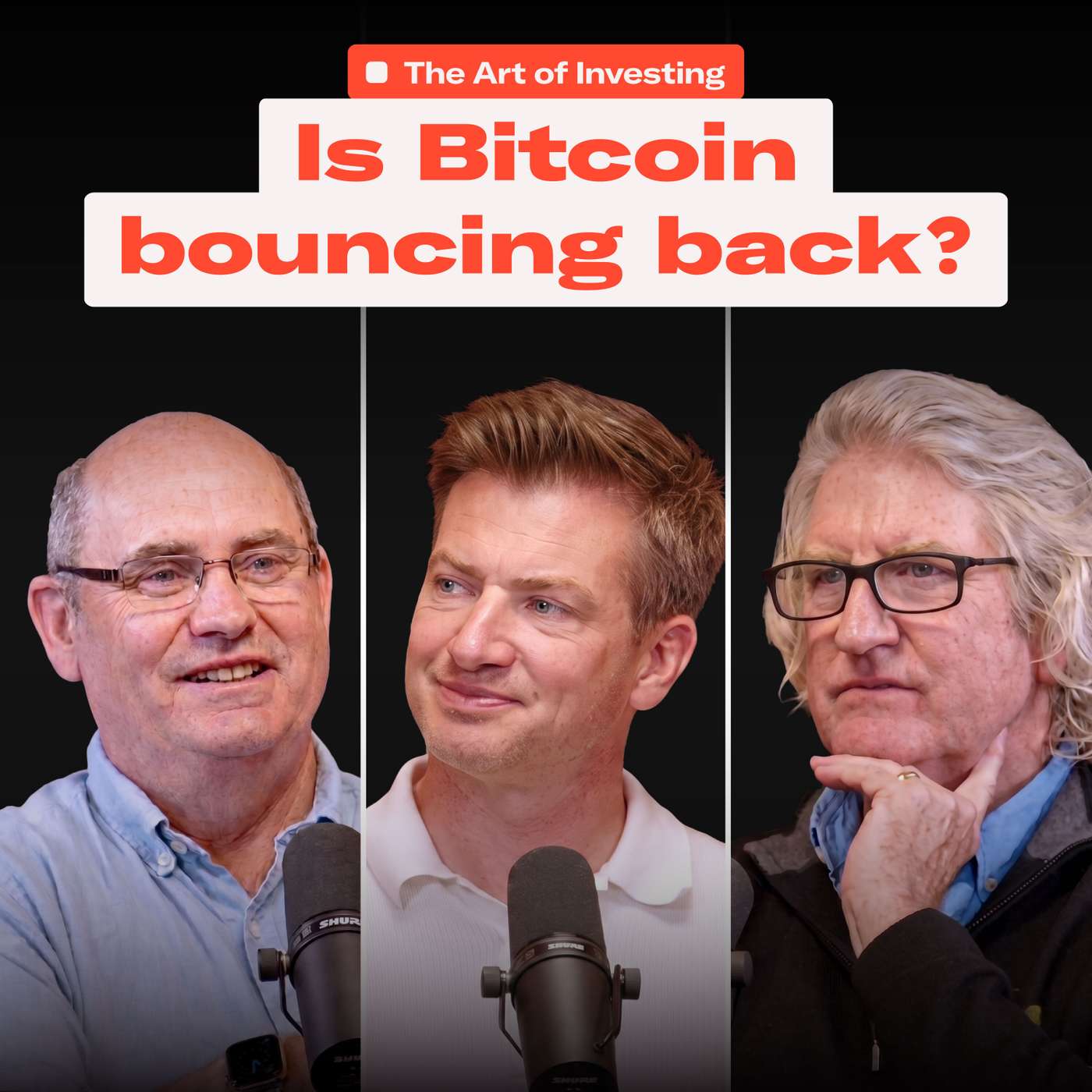
1:43Otherwise, apart from the bond market, which again, we'll touch on later, things like Bitcoin have had a fantastic week, up 13 % this week, I think, and Ethereum, another cryptocurrency, up over 20%. Now, you know, Bitcoin is now up 25 % or so from its recent low. And, you know, that's what you call a bull market. Remember, anything over a 20 % rise is a bull market. So Bitcoin back at a bull market. How long it lasts, we'll weigh in and see. And apparently, Spice, this is when we are coming out of this crypto winter. If you look back at previous cycles, then CJ, I don't know if you subscribe to this idea, But this is when Bitcoin traditionally starts to move higher.
2:27Yeah, there's lots of chatter about analyzing previous trends in crypto. As we know, that hasn't been around that long. So there is only a very short amount of data out there. But enough people are starting now to think that maybe the worst is past. The price action has been very positive. We talked about it, I think, probably three, four weeks ago when we identified that the price action looked pretty good. I think we talked about buying some NASDAQ or buying some BANEC. And I think in the end, we decided to buy the NASDAQ rather than the BANEC. And I think both have been good investments since then.
3:05As Mark says, the big move has been Ethereum this week. But all that's pretty good for crypto. might not look quite so good when we discuss the bond market outlook, but at the moment, looks pretty good. One of the reasons, of course, that crypto, particularly Bitcoin and Ethereum have done well, is they're priced against US dollars, remember? And the US dollars had a real hit this week, down about 1.2%, which in currency terms, we've talked about anything more than 1 % is a really big move. So what's called the DXY, the dollar index, global index, it mainly against things like the yen and the euro and the pound, it's been a big hit.
3:42And that is partly because we've had some slightly weak data coming out of America, particularly on retail sales. And that has led people to maybe think that there's not a nailed on interest rate rise in September. You know, if we go back two weeks, there was a 65 % probability of an interest rate rise in America in September. I think the meeting's on the 16th. And that has been pretty much removed. We're down to about just 33 % chance now of an interest rate rise in September. So a big change there. And yet that's despite some of the moves we've seen at the bond market, which we've alluded to and we will talk about more later.
4:19We're coming to the end of the reporting season in America and the world. This time next week, we'll have heard from NVIDIA. And NVIDIA have their results after the US close, which is about 9.20 in the UK next Wednesday night. their shares are up about 15 % so far in August. So people have got themselves a little bit excited about these forthcoming results. Let's hope they're right. But the shares are down about 2 % this week. So we'll see how that goes. A fantastic bit of news from Moderna. Remember Moderna from the COVID days? They got one of the early COVID vaccines along with Merck. They joined together with Merck, the US pharmaceutical company, and they've developed or been developing a personalized vaccine for melanoma skin cancer.
5:03And they got through their phase three trials. These are trials done on human beings. The results were fantastic. The shares were up 125 % yesterday. Yeah, I was actually recording with peers on this podcast. We do a more trading kind of podcast we do for IG. And the news hit the tapes and both of us just stopped in our tracks because we knew that there was 25 % short interest in this company. And within 30 seconds, it was up 60%. And of course, the question is then, do you buy something up 60 % with that kind of news and that kind of short interest? But I mean, what if it goes down to only up 20?
5:44So of course, we didn't press the trigger and then next thing it's up 90 and then 120. I don't recall ever seeing anything like it. that size of company going up over 100 % in a day, Spice. What about you? Well, exactly. I mean, it's got a market capitalization now of 70 billion. That's 44 billion more than they had yesterday. And at one stage, as you say, it was up about 150%. But look, let's be fair, if they can find some sort of cure using the mRNA sort of process, which obviously developed a lot of the COVID vaccines, then it'll be amazing because if it works for melanoma skin cancer it could well work for other sorts of cancer and if you do find some sort of breakthrough here through a vaccine it would be amazing a game changer which is why um you know they did very well i mean merck's shares were up 11 i mean they're a much bigger company but still 11 move in a company like merck is big and you know remember astrazeneca had one of the early vaccines uh and the in footsie 100 and astrazeneca shares were up two and a half percent yesterday.
6:50So there's all this halo effect. If this process mRNA works in cancer treatment, then hopefully it's a game changer because I think we'd all like to see the end of cancer or some sort of product that makes it harder for cancer to develop. That's right. Yeah. So it's very much the treatment rather than a cure as such. So results showed that a much less chance of the cancer returning and then also a much reduced spread throughout the body. But the interesting thing is the way that it actually develops is that they remove the tumor and then it's very much a personalized vaccine that's developed for you that wouldn't necessarily work on other people because it specifically battles the cancer that you have by taking the samples from the tumor itself and then developing the attack modules to go in and attack the cancer cells in your body.
7:52Just, I mean, phenomenal breakthrough and, you know, huge credit to the guys at Moderna. I know there's a lot of people on the fence out there with the whole vaccine world and everything like that with COVID. But as you say, if they develop this then off to the races and another bit of good news actually quite interesting because we've heard all about sort of memory companies and ai companies taking money from investors through the bond markets through equities etc well sk hynex in korea this week basically announced a 28 billion dollar share buyback so they're buying back some of their shares uh which was very unexpected people thought they'd be using that in their capital expenditure they basically said that They're going to target.
8:37So net profit effectively, free cash flow after all their investments and all the paying their tax, et cetera, is expected to be about 50 % of their revenues going forward. And they're going to return half of that 50%. So 50 % of all free cash flow is going to be given back to shareholders going forward. So that was a really good bit of positive news for the AI world, except the semiconductor index, which had done very well until this week. It was down again 5 % this week. Maybe it's some of that unwind from our friend Leopold and Citadel having got to grips with his portfolio. CJ, do you want to jump in and tell us what you've seen this week?
9:15Okay. So to me, as I said, it's been a quiet week. The summer is almost over now. People are starting to return to the office because we've got the big events of the Jackson Hole statement um on the i think it's the 28th so that's next week um and so people are gradually getting themselves um back there but it's been noticeable i think how the sort of macro events are starting to dominate again the first few weeks of august was all about summer holidays what stops going to ramp up and down now it's oh let's let's see a dose of reality coming back in And what we've seen is the bond yields moving around quite a lot.
10:01Now, I'm going to say a really simple statement, but it is anything but simple. And we're going to try and explain it, as we have done before, as to what it means. And that is that real yields are moving higher, not inflation expectations. That's a lot to unpack straight away there. Don't turn us off immediately, please, those who are listening. Let's understand this because I think this is going to be critical for understanding the next period within the markets. Let's go back to thinking about a government bond market and the fact that there are two types of bonds, essentially. There are nominal bonds and they get repaid at 100 or par, as it's called.
10:47So you basically led your money to the government. you get your interest every year and the money you get back at the end is the nominal value of the bonds and that's the end of the loan. There's a second type of bond called the index link bond and their redemption amount is not a nominal amount. It is linked to how inflation has moved since the issuance of those bonds. So these bonds were first brought out in the late 80s, 90s, essentially when governments wanted more variety in what they were issuing. They were struggling to sell all their nominal bonds. So, oh, look, let's try a different sort of bond.
11:32And they all decided, let's do a bond linked to inflation. So if you're an investor who says I'm worried about inflation. I can buy a bond whose return is linked to inflation. Now, a nominal bond, so the first type of bond, if you remember, has three components to its return. One is an inflation estimate. What do you think inflation is going to be over the period? Secondly, what's the risk that I'm writing my inflation forecast or I'm not? And third, and more importantly, what real yield do I need? Now, the concept of real yield is one of the eight wonders of the world when it comes to investing, because no one actually knows what it is, how it works, or whatever.
12:19But it's sort of thought about as the rate at which an investment needs to return above the risk-free rate to warrant you getting out of bed. So if you don't get that return there's just no point moving you in your investments from cash and and and bothering with anything so there's these three components to a bond return inflation a risk premium and then this real yield okay so hopefully everybody's still with me almost almost okay so now we're going to introduce a little bit of a so something that's interesting and easy in concept but we'll go through a worked example in a minute to show how it works.
13:01An index link bond compensates you for inflation already. So the yield on an inflation link bond is essentially the real yield only. So we now have a visible estimate of what that real yield is, what that extra return is that people need above the normal growth rate of the economy to make you want to get out of bed. Okay, so you've solved for number one and number two. Those are taken out automatically because you've got zero risk on your inflation estimate and you get the return of inflation embedded into your final repayment. So there's not that. So there's only the number three left. Absolutely right, Rich.
13:49That's the key point. They make it simple for you to visibly see what's happening to this concept called the real yield. One last thing. Given an index link bond is a real yield and a nominal bond is these three components, the difference between the two is the market's estimate of the inflation rate that is being discounted in the market. That's known in bond parliaments, we don't need to mention it much more, but as the break-even inflation rate, i.e. what is the level of inflation that means you wouldn't care whether you held an indexing bond or a nominal bond. I'm going to give an example now because it's just too much, it's getting too complicated.
14:35A US 10-year bond currently yields 4.7%. A US 10-year tip yields 2.1. So the real yield in the market is 2.1. If I take the nominal return of 4.7 and I take away the tip yield of 2.1, I get 2.6%, which is therefore the market's estimate of inflation and the risk premium going forward. So this is really wonderful. I can see at a glance what the market thinks inflation is going to be, but also what's happening to that real yield, that rate on an investment, which people need to mean that they want to buy bonds. Now, during the time of QE, when people were printing money, real yields were down at 0%.
15:36The rate was so low, everybody was investing in everything. It was great, super fantastic. And of course, that was the point of keeping real yields low to get the confidence back into markets. But over the past few years, real yields have started to move up as central banks have adopted a more realistic monetary policy. and so now the real yield starting to reflect a real amount of yield that people need to make investments and it's gone from zero and this is now up at 2.1 and future rates are priced to go up as high as 3 to 3.1 so 30-year treasury real yields were over 3 % this week. They got to 3.1%.
16:29Now that is reflecting all the borrowing that governments have got, all the borrowing that these hyperscalers are making, all the demand for capital, and we're getting a competition for capital, which our friend Stewie Thompson has talked about on many occasions when he's been on this podcast. And that's really important for markets. If the cost of capital is going up, that is not good for any asset class. What you're saying is that it's a warning signal that the cost of capital is going up, not for a good reason. You can't really say it's not for a good reason. It's actually going up for the right reason, which is supply and demand of capital.
17:12But what it's telling you is the demand for capital is exceeding the supply of capital, and therefore it's going higher and will continue to go higher until those things start to match out at a better rate. So I hope I haven't confused people too much, but at the end of the day, this is a very important rate for the financial markets. What is the real yield? And we can map it by looking at these securities and it shows us it's moving up and it's moving higher and it's pressurizing things. And it's made a response this week from the US Treasury Secretary, which we'll talk about when we get round to the market outlook.
17:57Your capital is at risk. The value of your shares, ETFs and ETCs can fall as well as rise, which could mean getting back less than you originally put in. This content is for information purposes only and is not investment advice. Past performance is not an indication of future results. Let's jump into the portfolio then before we get onto that. So this week's portfolio down 1.1 % in the first week of the second year. Of course, we're going to be negative. That leaves us up 12.4 % on the year. Now, Spice, do you want to run through our top three performers there? Yeah, there's not been great performance this week from any particular asset, but our best one was BlackRock World Mining again, which has been pretty consistent over the last month or so.
18:38Up 1 % this week. Helped by this fall in the dollar. Remember, we said that commodity prices tend to do better when the dollar goes down because they're all priced in dollars. Ironically, that means the dollar price goes up. And I'd say the dollar index fell 1.2%. And also, gold and silver had another okay week. They're up about 2 % each. And remember, 30 % or so of blackrock oil mining is in gold equities and physical gold. The next best performer was the Russell 2000. And talking of bonds, the September expectations for interest rate rise or to keep interest rates unchanged in America has basically fallen.
19:17So the chance of one rate rises falls to 33 % from about 65 % a couple of weeks ago. And that, as we said before, helps small and mid-sized companies. They're very sensitive to what happens to interest rates. The Russell 2000 is our big play on that, along with the mid-250 in the UK, the FTSE mid-250. Otherwise, it was cash and very short-dated gilts. Remember the short-dated gilts we own are 0-5 year, which basically act effectively like cash, really. A little bit of volatility underneath. But those were our four best performers. I must say, when I look at the four worst performers, I would have guessed that we were down more on the week than 1.1%.
19:56So again, the real benefit of portfolio diversification, because when I think people hear the kind of numbers on the week's bears, then it's uh it's pretty staggering that we've got away with down 1.1 absolutely i mean you know so japan was our worst performer down 3.7 and japan chris is talking about this this move in real yields going up well that's a lot of that is being driven out being what's happening in japanese government bonds jgbs as they're called um and that's if you like being the epicenter of the storm that has been brewing a little bit in the background for bonds but that hurt the nikai 225 which we own down 3.7 percent copper also got hit hard this week down 2.9 percent part of that is we've had some disappointing economic data out of china remember we've talked about china talking about trying to stimulate the economy and not really doing anything about it and the economic data has been deteriorating again and coming in less than expectations so wheat china data's there and then xli our u.s industrials position down 1.8 percent seen a bit of profit taking because I think it's been the second or third best performing sector in the US year to date.
21:09So, you know, it's coming off a high base, but down 1.8 % this week. And then our old friend India, because the oil price, remember, they're very sensitive to what's going on with the oil price, also down 1.8%. And as I say, oil up 5%. And that weak China data doesn't help them either. So that leaves us since inception, just over a year ago, as you know, up 24.9%. And year to date, we're up 12.4 now. I think we've been set up really well there for this discussion on bonds because a big development yesterday, just as things were starting to spook the market at the start of this week. Scott Bessent came in and I'll let CJ explain exactly what happened, but don't get mixed up with quantitative easing that we've spoken about before, right?
21:55This is not the Federal Reserve buying bonds. That is the most important thing because some people started to talk like that yesterday. This is the Treasury increasing the size of their buybacks for a short amount of time. It's going to start the beginning of September and it's going to end one day after the midterms. I imagine this couldn't be politicized at all, Chris, surely. It's amazing. Absolutely amazing how we have transitioned from, in my book, what we're free markets back in the 80s and 90s to then highly manipulated markets in the 2000s and 10s 20s with all this qe to then move back towards free markets to now being manipulated all over again and it's it's amazing to see it but let's go back a little bit further a couple of days further to what i think was the trigger there was a long-dated auction in uh the u.s for 30-year treasurers and it went at the highest level for 25 years at 5.2 percent mark has talked on many occasions about how important that long bond yield is to many aspects of the u.s economy but one in particular is their mortgages a lot of their mortgages are tied to the 30-year rate and so a big increase or continued increase in 30-year treasuries means it's getting more and more expensive for the homeowner to buy or refinance their mortgages.
23:28And as you say, just coming back to what you just said, we have a number of elections coming through in November. We have the midterms where the oil price is higher than expected because we seem to have a war in the Mideast still, although everybody tells me it was over, including myself on many occasions. It's not over at all. Oil is expensive, and that's pushing up inflation. And now bond yields are moving up with it as well. So out came the US Treasury, and Scott Bestent in particular, and said, for this short-dated period, they are going to do what I would call, and for those of us who've been around a few years, Operation Twist.
24:13So CJ, isn't this like what the Bank of England did when the Liz Trust budget blew up the UK bond market? Didn't the Bank of England effectively threaten to do the same thing? In other words, buy longer-dated government bonds in the UK to protect pensions, because pensions are very sensitive to that move higher in yields in the UK. Am I right in thinking it's broadly the same sort of thing that happened back with Liz Truss? I think there are similarities, as always, in these things. So in the UK, after Liz Truss had made her utterances, or rather quasi-quotan had made his utterances, the market went into freefall.
25:00There wasn't a market anymore in Longgills. So the Bank of England walked in to basically say, we will provide a bid for a month. and if you're desperate to sell, you can sell some. And of course, that was brilliant because it provided the confidence for everybody to say, well, okay, if we want to sell some, we can sell some. Fine enough, we don't want to sell them anymore because they've stabilized it. And that's what they did, a very good piece of stability to the market. But of course, the difference is here, there's no expansion of any balance sheet, which is what the central banks, Bank of England and Federal Reserve do.
25:37This is simply the treasury buying bonds back at the long end and selling more short-dated bonds to fund that. So lending money for two years to buy back 30-year bonds to manipulate the bond market. What I was saying was there was some similarities. That was one similarity. But to take that further, there's no freefall in US treasury bonds. It's a perfectly stable market. is just moving to high yields. So this isn't, let's help the market out from an issue. This is, we don't like bonds trading at this yield level because it might upset the economy. And we've got elections to win. So let's try and manipulate these things lower.
26:25And as I said, this last happened in this format in 2011, 2012, a thing called Operation Twist, where the US Treasury said, what we want to do is to stimulate the economy. Interest rates were virtually zero. We need to stimulate the economy. How can we do that? We need to get long bond yields lower to help with mortgages and these other aspects that we just talked about. So what they did was they sold short data securities and bought longer data securities, which is essentially exactly what the Treasury are talking about doing for this period up until the middle of November. But it's not obvious to me as to why at the moment we need to be stimulating the US economy.
27:11I mean, it doesn't seem to be obvious that we've run out of monetary policy. There's plenty of opportunity that we could cut interest rates if that was the right thing to do. So this is completely inconsistent with what Operation Twist was all about. And as I said, pretty inconsistent with what happened after Liz Truss. There was no reason for these guys to come into the market. The only reason was because they don't like the way the 30-year is essentially saying, you've lost control, US Treasury. You're borrowing too much money. There's not enough demand for US long bond yields. There's plenty of supply coming from government and from these hyperscalers.
27:54All these people who are trying to say, oh, we're not going to borrow it out of equities anymore. We're going to borrow it out of bonds. Your Microsofts of this world, your Amazons, your Apples, they're all borrowing hundreds of billions out of the long end of the bond market. 1.7 trillion, Chris. 1.7 trillion issued by corporates this year. 1.7 trillion. There's so much supply. People are saying, well, hold on. These yields have got to go higher. Scott Besson doesn't like it. So Scott Besson says, I tell you what I'm going to do. I'm going to throw a hissy fit and I'm going to now do Operation Twist and I'm going to show you, you can't muck around with me.
28:31Now, the interesting thing about this is it's entirely inconsistent with the new Fed chair. The new Fed chair has come in and he's basically said, I'm not giving you any forward guidance. I'm letting the market tell you where it should be and I'm going to take my lessons from that. I'm going to watch the market and the market's going to tell me what I need to do. Well, he's watching the market and Scott Besson's telling him what to do, clearly. This is a complete stupidity as far as I'm concerned. And so at the end of the day, we're going to have to look now at the Jackson Hole speech on the 28th of August to see whether there's any inconsistency between what Kevin Walsh is saying.
29:14I want to shrink the bank's balance sheet. I want the market to operate in the way markets are meant to operate. I can then read and see what I should be doing with the Scott Besson, I don't like it, so I'm taking the ball away approach. Now, isn't it so interesting, an irony upon irony, that if we go back to 1991, and for most of you, that's too early. But for me, that was the middle of my career. 1991, we fell out of the exchange rate mechanism. The UK fell out of the exchange rate mechanism. And why? Because George Soros and his band of friends decided that you cannot force a market to do something which fundamentally is the wrong thing.
30:04So in that situation, the Bank of England was saying, we are going to keep sterling trading at this rate against Deutsche Mark. Let's just remember you're in his band of friends. No, I wasn't at the time. That's later. That's later. I became a friend later. I wasn't a friend then. So George Soros said, no way should Stony be trading at this level. The economy is too weak. We need a lower exchange rate. The Bank of England said, no, no, we don't. Oh, no, we don't. We'll support it. George said, here, if you think that, here's another billion. What are you saying now? Oh, we'll support it. Here's another billion.
30:37What do you want to do now? And in the end, he broke the Bank of England. Who was in charge of the London operation of Soros in 1991? one. Scott Besson. So here's a guy who said, you cannot resist the force of the market. The market knows best. You cannot resist it. And here he is saying, I'm resisting it. And I'm going to keep long bond yields lower than they should be. Oh, and by the way, I'm supporting dollar yen as well, because I want the yen to strengthen and the dollar to come off. So he's completely turned around to now being massively interventionist. Or maybe it's because his new boss says that's what he wants, Donald Trump.
31:26Yeah, that's two big interventions in the space of two weeks. That's why this is a really important time. What's happening is now the macro environment is moving. And what's happening now is volatility is priced very, very low. So I'm very concerned the volatility is priced very low and all these macro events are starting to appear. Spice, what do you think? Because we've always spoken about there being a Fed put option on the market, i.e. the Fed underwrites any big move lower in equities. Has it just become a treasury put on the bond market now? Well, maybe. Maybe that's a very good way of describing it, Rich, because I do think that the equity put is still effectively there.
32:10But you need probably a 20 % drawdown in US equities to trigger that from the Federal Reserve and the Treasury to intervene. Whilst it's very difficult to buck the underlying trend or the direction of travel in things like bond markets, there is only one place in the world that we've seen that actually work. And that was in Japan. Remember, Japan basically fixed the yield on their 10-year Japanese government bonds. and they did so for, I think, pretty much a decade. And they did it with such vigor that markets tried a couple of times to take them on and failed massively. So they kept their yield.
32:49I think it was about 1%, if I'm right, CJ. I think around that sort of level. It was lower. The first thing they did was they kept them at zero, remember, because they wanted them to go negative and then they went up to a quarter and then a half. So, yes, they were very successful. Absolutely. But I mean, they committed so much money to that process. I think at one point, they owned 80 % of all Japanese government bonds. The Bank of Japan actually owned that much. Now, what we've been seeing in the last couple of years is that Japanese government bond put on the 10-year yield has been taken off.
33:23It's now allowed to act freely. And that's one of the problems that Chris has alluded to. There's this competition for capital. And all of a sudden, Japanese bonds, the 10-year bond yield now is nearly 3%. I think, in fact, I think it hit 3 % this week. And that's one of the things that's worrying people because inflation in Japan is running still about 2%. And the Bank of Japan is widely expected to put up interest rates next month. And that will sort of continue to maybe draw capital out of some of the assets around the world back into Japan, back into those Japanese government bonds. and that sort of doubles down and hurts treasuries even more because if the Japanese investors are selling US treasuries to buy their own bonds so the yields because remember the US government bond prices will go down the yields will go up and that just adds to the pressure we're seeing at the moment so I think it's very real pressure and something to watch very closely.
34:18So guys let's just take this back to the portfolio and people sitting at home that are long the global index and the S &P 500 and maybe thinking about starting to invest because we've had an email in from Fraser. Now, Fraser actually was part of the Tartan Army that was out in Miami at the same time as I was. And he actually, he spotted me in the Marlins stadium, probably while I was standing on top of a table singing Scotland songs. He says, we've been following the podcast for six months now, but always felt a little too late to add to some of the positions that you guys have in the portfolio.
35:00It feels like I'd be behind the curve. So the decisions and changes each week that you guys make might not line up if I only start today. I just have a fear that if I start investing now, I may be missing something fundamental. Now, this discussion that we're having, to me, sounds like the start of something that is going to be very apparent in the market over the next six to 12 months. So should this in particular start to worry people or should they just have it on their radars? CJ, what do you think first? There's two questions here, isn't there? There's the question of the listener who's spotted you in the US when you were probably too drunk to spot him back.
35:48and he's been listening and he wants to know whether he should adopt the portfolio now, having not been in from the start. Now, my personal view to that is always the same. There's always a reason not to do it. There's always a reason not to do it now. Oh, I could do it later. Maybe I'll wait a week, whatever. In my opinion, we are running a live portfolio here. So it reflects our best estimates of where returns will be good over the next three to six months. so to me anybody who's wondering have i missed it no because this is what we still think is the right way of doing things this is the right portfolio uh that we've got um and therefore i would you know screw your courage to sticking point cross your fingers whatever you want to do and follow what we're doing so that's the answer the first bit i think what i'm trying to talk about is heralding in a nervous time, which we know to expect because we know seasonally, we talked about this last year, we weren't right last year, but it doesn't mean we can't talk about it seasonally.
36:55Seasonally, September and October are the two worst months for risk each year. So what I'm really saying is I think you need to just make sure you're not over the top of your skis at the moment. If you've got a lot of leverage, maybe bring a bit of it back. We don't have leverage. We're not running that sort of a portfolio. We're running a longer term portfolio. And when I look at where we are currently positioned, we're not over our skis towards the AI type trades. We've got some in terms of some of our risks, but we've got a broadly diversified portfolio. Mark talked about earlier, made a very good point, which I meant to get to, sorry, I didn't, which was the currency.
37:39What these guys are doing in the US is effectively going to debase their currency. The positions we've got in the world, mining, trust, and all those sorts of things are going to be helpful. And we've got positions in other currencies than just the dollar. So I think we've got a good broad portfolio. I'm watching this very carefully, but at the moment, I am happy to stick with what we've got, but there is significant nervousness creeping into my thoughts. Spice, there's a great question also from Paul, who's traveling around the Alps for six weeks and has listened to all our back catalogue on his travels.
38:16To be honest, I think that would probably take me over the edge of the Alps if I was listening to all of us. Paul admits to being a spreadsheet nerd and uses that to give himself indicators around buying and selling. The question is, what metrics do you think are the most reliable indicators for buying and selling? And maybe Spice, you want to add in, you know, your view of the market here within that. Yeah, I'm going to give you the market view first of all. I think that, you know, bull markets, there's an old saying, bull markets climb a wall of worry. Yes, the bond yields rising is a potential worry in the background.
38:52add that to a higher oil price, a continued war in the Middle East. Will Trump do something really mad ahead of the midterm elections in November? We'll have to see. Fundamentally, the US economy is being allowed to run hot because they are delaying, if not postponing permanently, interest rate rises in the US. So interest rates at the front end or the shorter dated ones are basically artificially lower than they probably should be given the inflation rate in the background. That allows the economy to gather more steam, earnings will go up. That should ultimately be good for equities until the point comes where people want to sell equities to buy that risk-free rate of return that CJ talked about, where it's basically a no-brainer.
39:41You have to put a big chunk of money into bonds because there's no risk attached to it, seemingly. Now, what do you use to buy and sell? what sort of levels do you pick? Now, I know a lot of people, particularly sort of hedge funds and things, use moving averages a lot. So, traders will tend to use 10-day moving averages. If a market drops down below a 10-day moving average, they're quite happy to buy it. If it moves above it substantially, they want to sell it. Just before we go any further, Spice, just definition of moving average for people, because for us, it's obvious, not for everybody. Yeah, it's basically a way of smoothing a chart.
40:18It takes the last 30 days, typically, of a share price move, and it adds incrementally each day, the last 30 days average. So it sort of moves very slowly. And you can do it over 10 days, you can do it over 20 days, you can do it over 40 days, you can do it 50, 100 and 200. The big ones that people use, big institutions. And we, Chris, remember we used to work for a very large US institution, one of the biggest asset managers in the world, we would typically sit in asset allocation meetings and they would go, oh, the S &P 500 has fallen below its 40-day moving average. Now is the time to add to our positions.
40:55And sure enough, week in, week out or month in, month out, every time it did that, they would add to their positions. Rarely would they sell their positions, funny enough, when it got too stretched above it. But I know that's something Chris watches very carefully. So if the actual real price of the asset you're looking at moves substantially above the moving average you think is the right one to watch, like the 40-day, if it's at a 10 % premium to that, maybe that's a point to maybe sell it because you would expect it over a long period of time to trend back towards that 40-day moving average.
41:28That's a very common way of people buying and selling equities. I was never really a fan of technical analysis when I first joined the trading floor and people were talking about it. But when somebody explained to me, okay, forget it, but it's not just lines on a page and pictures. It's your in-depth look at the psychology of market participants. And so the moving average is, you know, a 30-day moving average or 50 might be how a hedge fund is thinking and operating. And a 200 moving day average might be how a pension fund is thinking and the impact that they're having on the share price taking a big position.
42:11I like the moving averages now because like you say, if it gets so far above where the support line is, then Chris, I know you think that that's usually a dangerous time and could be in for a pullback. Yeah, the way I think about it is the chart is an unemotional view of what's going on. If you've listened to any of these podcasts, our dear listener, you'll hear there are emotions involved when we mention various companies or various themes or various things like that. A chart doesn't show any emotion. It just shows you what the market traded out during that day and the highs and lows. So you can see very easily graphically without having to listen to people trying to put spin story or whatever on anything, what's going on.
42:58And I've always thought about this in terms of looking at where those moving averages are. I personally use the 10 and the 40 period moving average. That's either days, weeks, whatever you want, but 10 and 40s. And I look for when something is excessively above the 10 and the 40, and the 10 is above the 40 as well. So you've got a real sign that momentum is peaking out. And same on the way down. you know, if something's looking very cheap, it will look cheap on those bases. But that's the way that I look at it. But, you know, go back to what we learned with our friend Lee Freeman-Shaw. There are lots of different types of investors.
43:38Lots of people do things in different ways. There is no right or wrong way of doing anything. You need to work out what works best for you and then just apply that. Now, talking about working out what is best for you, CJ, we've got a question around currencies. I'm wondering why one would choose a fund that trades in US dollars, not British pounds. Why would an investor choose this? So far, I've only ever invested in British pounds or pence. I'd love your insight on this. Okay, so this goes back to something we have discussed in previous pods, which is clearly, if you invest in the UK, in the UK equity market, for example, you're exposed to sterling moves in sterling companies, and therefore, essentially, you don't have any currency risk in what you are doing.
44:34The minute you go and buy something in, let's say you buy exposed to the US equity market, you buy a fund exposed to the US equity market, it's obviously priced in dollars. So you immediately then have an impact of the sterling dollar exchange rate. Now, these days, of course, things get more complicated. It's never easy. You can buy funds that are US equity funds, which are hedged back to sterling. So that takes out that currency risk. But the point I'm trying to make is when you invest anywhere away from the UK, you need to think about, are you taking a currency risk? And are you happy with that currency risk?
45:17Now, I always think there's no right or wrong answer to that question, obviously. You'll hear me say it from before, but they are positive decisions you need to think about. Do I want the overseas exchange rate risk as well as the overseas equity risk? Now, there are plenty of theories about the UK is always devaluing its currency, so it's great to hold everything priced in dollars. There are lots of theories about lots of things. The fact is you need to think about that exposure. So me personally, I will normally buy those products which are hedged back into sterling because as a sterling investor, I'm looking at my returns in sterling.
46:01And it's no point in me saying S &P 500 has gone up 20 % if sterling has gone up 20%. So actually, I've actually got no return from that position. 20 % going up in the S &P and 20 % moved down in the currency means I don't get any return. So you need to think about those things. I personally invest in things that are priced and hedged back into sterling to avoid that situation. I'm obviously then making a view on the asset class. I'm not making a view on the return of the currency. So three great questions there. And, you know, really interesting to see people asking, okay, I've got a fear that I might be starting to follow you guys too late in the portfolio.
46:45Or I don't know when to buy and sell. I don't know which currency to do it in. I wish that we could just have the expertise, the bravery of spice to buy things at the top of the market, the expertise of Chris in bonds and crypto and the spectacular timing of buying and selling of myself. Well, we have been listening to those calls and was working away behind the scenes to come up with something that makes it far easier for you guys just to invest in the model portfolio. So watch this space. We'll be back with more news in the coming weeks. Gents, the big question of course with all this chat around the bond market and a little bit more caution as to the macro in the future have we got any changes to make in the portfolio this week i'm not suggesting we make any changes at the moment i am nervous i will say straight off but when i think about this real yield that we talked about earlier and real yields being three percent so that's real yield over and above inflation so if inflation's two that's a well two and a half let's say That's 5.5%.
47:58Am I going to be worried about 5.5 %? If I can get a risk-free asset 5.5%, do I really care? No, not really. I don't see why that's particularly attractive when I can buy equities where they're yielding at the moment and returning at the moment. But I feel that if we got those real yields up to 4%, so if you were getting 4 % over and above inflation, if inflation was 3%, let's say, that's 7 % total, seven in a risk-free asset i think is a absolute no-brainer i'm ringing the bell watch this carefully but at the moment i don't think you need to jump at it at the moment and and especially with besan trying to manipulate market yields lower i think the only thing that's going to happen there is they're going to try and take him on and see what happens so we're going to get a chance to buy high yields but if they get if they start heading up towards that three and a half, let's say, from where they are three at the moment, I'm going to start getting worried and start thinking about time to take some risk off.
49:00But at the moment, I prefer to wait and see. Maybe there's one last hurrah in the AI trade, which we can all time the top off. But it's getting dangerous is all I'm trying to say. Well, you talk about the AI trade there, Chris, but as we said, all these companies are coming to the debt market to borrow money. Now, 18 months ago, that was getting done at 7%. Now it's more like 9 % to 10%. So if you're talking about waiting another 2.5 % yields going higher from where they are at the moment, what on earth would these companies be financing at? Yeah, I suppose what I'm talking about is these hyperscalers who have been borrowing at sort of 2%, well, actually they've been doing a lot lower than that, but They've got to 2 % now, 2 % over Treasuries.
49:49So a lot of the hyperscalers, their bonds are yielding around seven and a bit. I think you get those up to, I suppose what I'm saying is the eight nines are not really going to play. And that's where you're going to get those risk-free rates, the government rates, maybe up to six, let's say, on the nominal bonds and a real yields of three and a half. I'm seeing danger, but not enough danger at the moment. There's still life yet, in my opinion, but this is risky territory now. The easy money has been made. We're now trying to time the exit. And a lot of people will say that's a silly thing to try and do, but that's where I am at the moment.
50:33Spice, we've got US economy strong as you like. We've got the positives of the big, beautiful bill coming through you keep reminding us of what 10-year rate do you think the economy can handle before it starts to impact the economy do you think we get anywhere near to chris's seven percent i've struggled to see it getting over six um i really don't see that happening the thing i would say is that short-term rates are being sort of seem to be being anchored quite low at this low level, which is to say, is allowing the economy to gather this sort of steam. And at the moment, that is almost a perfect environment backdrop for equities.
51:17It really is. If authorities aren't trying to put the brakes on, things can accelerate. Now, at some point, that has to end. The question is when and how long for. And as I say, lots of people, this generation of investors out there, professional investors have been taught to buy every dip. Buy the dip is a very well trodden path now. And if the market's fall between 3 % and 5%, outcome the buyers. If they correct, which is a 10 % fall, they buy even more. And I think that that is probably the ongoing sort of state of affairs. Yes, we hit all new time highs sort of the week before last and last week.
51:55And we've had, you know, we're 1%, 2 % off those all-time highs at the moment. So equity markets had a sort of a sort of mediocre pretty poor week but not not a disaster by any stretch of the imagination i don't think the valuation's a stretch at all because we've had this huge earnings growth coming through the u.s the second quarter now looks like the earnings growth has been 30 percent three zero percent which means that the s &p 500 valued next year is only valued at about 20 times PE, which compared to history, long-term averages being around 19, 20, that's not ridiculous. So the valuation of equities don't look stupid.
52:33Valuation of bonds are perhaps becoming more attractive. Has this made you more bullish than Spice? As Besant's got your back, isn't that a bigger reason to buy? I certainly do, yeah. I mean, I know Chris wouldn't sort of describe the moves that they're talking about, their buybacks, but effectively to me, that's QE. It's not, though because they're removing liquidity at the two-year end yeah but the bit that people are worried about is they say for the valuations of long duration stocks are those 10 to 30 year yields and mortgage rates and this is a dynamic you've got this k-shaped economy in the u.s where the rich are doing very well and the poor are doing very badly and the economic data we've seen in the past week or two has shown that the you know the lower end of the spectrum that the sort of low earning people in the u.s are struggling and that's one of the reasons i think that that Kevin Walsh is reluctant to put interest rates up.
53:23Because frankly, if they put up interest rates by a quarter or a half percent, that's not going to affect spending on AI. That's not going to have an impact at all. Where it will affect is people's short-term outgoings, the cost of buying goods and the credit card debts and all the rest of it that they have in America. So at best, the market's looking for two interest rate rises over the next 12 months in the US. equity markets can live with two interest rate rises of quarter percent each in the U.S. It's going to make no difference, in my opinion, to the U.S. equity market. Chairman, it's time to buy more.
53:56I wanted to come in when Mark said, you know, the average P.E. is, sorry, the P.E. is now 20 times and that's looking, you know, relatively cheap. I'm afraid that's rubbish. That looks pretty cheap for when interest rates were down to zero. And, you know, there's a good, always been a good long-term correlation between P.E. levels and yields. and if yields are going higher, you ain't going to get 20 times PEs. There's no point in arguing about that. I've said my piece, which is that I'm not selling anything at the moment. I think it can go more. The issue that I've got is that everything is well up with events.
54:31And so the level of insurance in the market is very low for any mishaps. And so we just need to be very careful and very mindful next week with jackson hole will be very useful to watch i'm hoping and expecting wash to come out and support besant and say oh he's a great idea doing the right thing blah blah blah blah blah in which case everyone will go we'll breathe sigh of relief but it won't take me much to want to start reducing risk but at the moment we'll later on good stuff right that is us for the week then next week we will be talking more about jackson because of course it is coming up next weekend.
55:12But thank you very much for your questions to Fraser and to Paul. And if you've got any more to send in, please write in to theartofinvesting at ig.com. Thank you very much, gentlemen. Have a wonderful week and we shall see you in the YouTube comments.
📊 The Art of Investing Survey – Fill in the form here, we’d love your feedback:
https://forms.office.com/e/tCyxzN48Ks
📈 Download the full Portfolio Performance Slides
View the portfolio breakdown: here
📧 Get in touch: [email protected]
📱 Behind the scenes: @_theartofinvesting on TikTok
🎧 Listen on: Apple, Spotify, YouTube
This week on The Art of Investing, attention turns to the bond market as rising real yields begin to create a new challenge for investors.
Chris breaks down what real yields actually are, why they are moving higher and how increasingly attractive returns from government bonds could eventually start competing with equities for investors’ capital.
The team also unpack the US Treasury’s latest intervention in the bond market, likening the move to a modern-day “Operation Twist”, and debate whether policymakers can successfully push down longer-term yields when borrowing demand remains so high.
Alongside the bond discussion, Mark reviews a busy week across markets, from a weaker US dollar and a rebound in Bitcoin and Ethereum to Moderna’s extraordinary rally. The team also answer listener questions on whether it’s too late to start following the portfolio, how they use moving averages to inform investment decisions, and the role currency hedging can play when investing overseas.
This Week’s Highlights:
💰 Why Real Yields Matter
Chris explains the difference between nominal and inflation-linked bonds, and why rising real yields could become increasingly important for equities and other risk assets.
🔄 Operation Twist Returns
The team unpack the US Treasury’s plan to increase long-term bond buybacks while issuing more short-dated debt, and why they believe the intervention matters for markets.
🏦 The Competition for Capital
With governments and major technology companies borrowing heavily, the team discuss why growing demand for capital is pushing yields higher and creating a more challenging backdrop for investors.
📉 When Do Bonds Become Too Attractive to Ignore?
Chris considers the level at which higher risk-free returns could encourage investors to reduce equity exposure and start allocating more heavily towards bonds.
📊 How the Team Decide When to Buy and Sell
Responding to a listener question, Mark and Chris explain how moving averages can help identify when markets are becoming stretched and provide a less emotional view of price action.
💷 Should Investors Hedge Currency Risk?
The team explore the impact exchange rates can have on overseas investments and why sterling investors may choose between hedged and unhedged funds.
Portfolio Snapshot - Week 53:
📊 Weekly portfolio performance: -1.1%
📈 Total return since inception: +24.9%
📅 2026 year-to-date return: +12.4%
Top Performers:
📈 BlackRock World Mining Trust PLC: +1.0%
📈 iShares Russell 2000 ETF: +0.1%
📈 Cash: +0.1%
Underperformers:
📉 iShares Nikkei 225 ETF: -3.7%
📉 WisdomTree Copper ETF: -2.9%
📉 XLI SPDR US Industrials ETF: -1.8%
Portfolio Changes:
No portfolio changes this week.
Despite weakness across several holdings, diversification helped limit the overall portfolio decline to 1.1%, with the team maintaining their existing positioning as they begin the second year of the portfolio.
Big Questions This Week:
What You’ll Learn:
✔️ What real yields are and why they matter for investment markets
✔️ How rising government bond yields can affect equity valuations
✔️ Why the latest US Treasury bond buybacks are different from quantitative easing
✔️ How moving averages can be used as part of an investment decision-making process
✔️ What to consider when choosing between hedged and unhedged overseas funds
✔️ Why the team are becoming more cautious as markets head towards September and October
Disclaimer:
This podcast is provided for educational and informational purposes only. The content presented is not intended as personal investment advice or a recommendation to buy, sell, or hold any particular securities or investments. All discussions regarding the model portfolio are illustrative and for educational purposes.
Your capital is at risk. The value of shares, ETFs and ETCs can fall as well as rise, which could mean getting back less than you originally put in.