
 Ask ChatGPT

- Podcasts
- The Athletic Football Show: A show about the NFL
- SPECIAL No Free Lunch feed drop: The Hidden Costs of NFL Rookie Contracts w/ Vita Vea
The Athletic Football Show: A show about the NFL19 Jul 2025 · 46m · 19 chapters
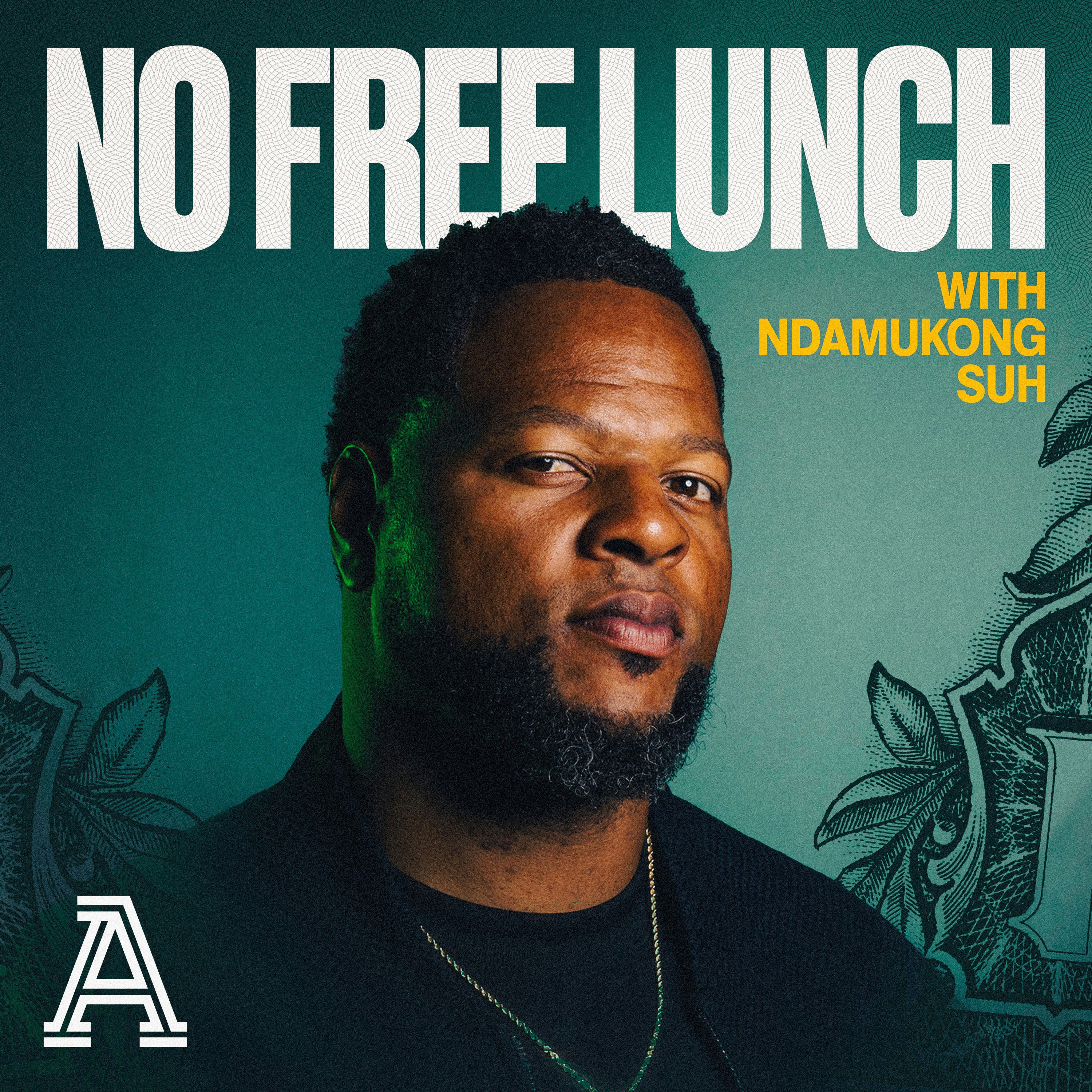
SPECIAL No Free Lunch feed drop: The Hidden Costs of NFL Rookie Contracts w/ Vita Vea
In short
Ndamukong Suh and Vita Vea discuss the “hidden costs” of NFL rookie contracts and the gap between headline money and what players actually keep, plus practical financial habits for rookies.
Guest backgrounds
Vita Vea is a seven-year NFL veteran, a two-time Pro Bowler, and a former first-round pick (2018). Suh is the host of No Free Lunch and a former NFL star (drafted in 2010, before the modern rookie salary scale).
Key claims
“$100 million” rookie headlines don’t equal take-home wealth after taxes, agent fees, training, and ongoing expenses. Rookie pay is relatively small compared to veterans and practice-squad earnings, creating “crumbs” and lifestyle pressure. Hidden costs include training location expenses, nutritionists/trainers, medical care, travel/food, team fines, and family emergencies.
Notable examples
Vea bought his parents a house with his rookie signing bonus; he describes rookie-room fines (e.g., $50 for leaving the room; joking about fines for farting). He also explains budgeting/accountability and says he took about four years to find the right financial setup.
Written by AI. May contain mistakes.
Chapters
0:03
Discussion with Ndamukong Suh
The hosts discuss Suh's past memories and experiences in college football.
“Joining us now, it is the host of the No Free Lunch podcast here on the Athletic Podcast Network.”
4:40
Suh's Transition to No Free Lunch
Suh talks about his journey post-football and the philosophy behind No Free Lunch.
“kind of secondary interests away from football have fueled your post-playing career and have fueled kind of the sensibility that you want to inject back into this show.”
6:43
Understanding Rookie Contracts
Suh discusses the realities of NFL rookie contracts and financial misconceptions.
“I'm curious, who do you see this show as being for?”
11:39
Preview of No Free Lunch
An overview of what listeners can expect from the No Free Lunch podcast.
“So it's having people understand, yes, it's a great opportunity and a way to be able to play a sport, but it's not always all that cracked up to be.”
13:24
Introducing Vita Vea
Suh introduces his teammate Vita Vea and their relationship.
“Always consult with a qualified financial and or legal professionals before making any legal or financial decisions or investments.”
14:22
Vita Vea's Rookie Experience
Vita shares his rookie experiences, including his first major purchase.
“I feel like we got a strong brotherhood now.”
17:30
Family Support and College Decisions
Discussion on family support and the decision to leave college early for the draft.
“And just visiting my parents and just seeing how they were living.”
20:30
Understanding Rookie Contracts
Exploration of expectations versus reality in rookie contracts.
“but it was at trials and tribulations where I had to figure out, all right, do I put my family first or do I continue to finish school out and then go back and then go from there?”
22:34
The Hidden Costs of NFL Contracts
Discussion on the hidden costs and financial burdens associated with NFL contracts.
“what do you remember about your rookie contract?”
28:00
Understanding Hidden Costs in the NFL
Learn about the hidden financial burdens NFL players face beyond their salaries.
“Honestly, at the end of the day, it's when it comes down to financial education and understanding what your budget is allowed.”
Show all 19 chapters
29:04
Training Costs and Lifestyle Choices
Explore the expenses associated with training and lifestyle decisions for NFL players.
“I think like how we were talking about, like how you said, a journeyman.”
31:04
Family Responsibilities and Unexpected Expenses
Discuss the financial impact of family obligations and unforeseen costs on players.
“Like how you said, we still have to pay fines.”
32:24
Building Wealth Beyond the NFL
Discover strategies for financial growth and wealth management for athletes.
“So you add all that together, that's crazy.”
34:28
Financial Literacy for Rookies
Learn essential financial literacy tips for rookie players entering the NFL.
“and you look down 10, 15 years from now, how is that going to look when the money's not coming in?”
38:08
The Importance of Financial Advisors
Understand when and why professional financial help is crucial for athletes.
“whether that's financial advisors, financial institution that they're working with, accountants, executive assistants, when do you think is the right time to be able to do that stuff as well?”
39:55
Finding the Right Financial Team
Discuss the journey to finding a suitable financial team and advisor.
“Accountants, financial advisors, and stuff of that nature, I think, should be set in stone right away.”
42:01
Navigating Financial Decisions in the NFL
Learn about the importance of early financial planning for NFL rookies.
“and then I switched everything when I signed my$100 million.”
43:42
Advice for Young Rookies
Vita Vea emphasizes the importance of enjoying life and football.
“I think you look at life, life is too short, you know, especially with this football thing.”
45:14
Closing Thoughts on Mentorship
The host reflects on the importance of mentorship and invites audience feedback.
“What an amazing conversation with my guy, Vita.”

Ask about this episode
Get the gist, explore an idea or ask about something said.
 Claude
On The Athletic Football Show: A show about the NFL, what are the key points of this episode?
Searching your listeningTranscript
Automatic transcript. May contain errors.
0:03Vita Vea: Joining us now, it is the host of the No Free Lunch podcast here on the Athletic Podcast Network. It's Ndamukong Suh. Ndamukong, how are you doing, man? I'm doing good, boss. How are you? I'm doing very well. I appreciate you taking the time to do this. I've really enjoyed the show up to this point. Excited for more people to learn about it. Before we dig into the podcast specifically, I want to ask you a specific memory of mine and whether or not you have any recollection of it. In the fall of 2009, the Nebraska football team came to the University of Missouri for a night game on a Thursday or so.
0:37Vita Vea: The weather was disgusting. Mizzou was ranked at the time. And I think that there was a decent amount of enthusiasm about that team with Blaine Gabbert as a starter. And you and that Nebraska team came in and absolutely stomped on that Blaine Gabbert led offense. You had a big game. I think you caused a fumble. I think you had a sack. but the part of the game, I'm curious if you remember this, the power went out in the stadium and there was no sound or jumbotron for like a huge chunk of the game. Do you remember this at all? I do. Um, the power piece, I don't fully remember, but what I do recall, it was a amazing night game.
1:17Vita Vea: I remember I had an interview that morning with Aaron Andrews. Uh, I was excited for the game. I think it was my first time. of getting hype about the Heisman. So I was a little nervous, just to be honest. But I was like, man, we got to go set the table and take over the North to hopefully get to, at the end of the day, to the big 12 championship. And so I was like, man, we got to go win this game. And it's a big rivalry of Mizzou on the North side, as I mentioned. And so in the midst of that game, like D-line and Coach Carl at the time loved to challenge us. And this was before NIL and all those different particular pieces.
2:00Vita Vea: Like, you guys might get a pizza dinner if you guys take care of business and somebody gets a turnover. So no big money, none of those big things, but that's kind of how they motivated us, for lack of better words. And Blaine Gabbert, who ended up being a teammate later on in our careers, he was a young pup, and we wanted to get after him. And he, quote unquote, let me catch an interception from him. And I got a couple sacks on him as well. I covered that game. I covered that Mizzou team during my one year covering the Mizzou football team. And it was kind of eerie when that was a huge storm. And so the AV in the stadium wasn't really working.
2:42Vita Vea: And so it was just crowd noise. And there was something like strangely primitive about it, but also strangely romantic. and watching you just like Godzilla like destroy a college football offense with no sound. There was just like something weirdly primal and brutal about it. And among all of the obviously very real memories I have of you that season, that one is going to stick with me just for a very long time because I had an up close and personal look in the rain at what you were going on to do that year. So I assume you remembered some of it. I wasn't sure if you remembered all the details.
3:16Vita Vea: Yeah, no, there was there was actually one other play during that game that I really, really enjoyed. And I love seeing it played back even to this day. But I was getting to the quarterback and about to hit Blaine and he throws a bubble screen, if I'm not mistaken. And I plant my right leg in the ground and start to the left and the receiver catches the ball. and as soon as he and he catches it up in the air because he's like threw it a little high to him he catches in the air and as soon as he catches it i'm immediately hitting him uh and for lack of better words decapitating this from that standpoint but there's some fun plays there we had a lot of fun during that game and obviously got that went it's it's you know your on-field persona and who you were known as in your career it's there was a brutality to the way that you played the game in a good way.
4:08Vita Vea: You know, and I think that some people, because you were so much stronger and more powerful than some of those guys, especially in college and even early on in the league, you know, I think that you had a certain play style that people noticed and that on-field persona and the way that you played the game to me has always been removed in a way from just how thoughtful and intellectual and just so many other things that you seem to be off of the field. And that part of just who you are and what your interests are seem to be driving what no free lunch is supposed to be. And so I just want to talk to you about how you're off the field and kind of secondary interests away from football have fueled your post-playing career and have fueled kind of the sensibility that you want to inject back into this show.
4:53Vita Vea: Yeah, for sure. And I appreciate those comments. And I've always wanted to pay homage to the people that have come before me, the blue collar football guys, the Russell Maryland's, the world, the Reggie White's, all those amazing greats that I was fortunate enough to be able to watch their film. And then in Russell, Maryland, he was a guy that trained me and took a huge liking to me. I actually just talked to him the other day. And so being able to pay homage to them, but also on the flip side, just always having the goal and want to, especially because both of my parents, my mom being a teacher, my dad being an engineer of being multidimensional and being off the football field and being more successful on the field than I was on the field.
5:35Vita Vea: And I think I've been super fortunate to have amazing mentors, whether it's Joe Moglia, Warren Buffett, Jay Brown, all these different amazing mentors. Even Dan Gilbert won't have my time in Detroit. And even till this day, still talking to him about different opportunities and things of that nature. But I've gained so much knowledge. And so No Free Lunch is all about being able to be curious, understand how these amazing people from the lens of sports and even business, how they found successes and how they're going to continue to build and grow and being able to pass that knowledge along and be that curious person, as I've always been to go do internships.
6:16Vita Vea: At the time under Elliott Hill was just running Nike North America. Now he's running the entire company. So now I get the full breadth of everything that's going on and like being able to be in tune with all these amazing people in companies like Andreessen Horowitz or General Atlantic and these great opportunities just to learn. I want to be able to pass that knowledge on. And I think that I have an amazing platform with No Free Lunch to continue to do that at a very high level. And now I want to spend all my time doing that. I'm curious, who do you see this show as being for? Do you see it being for people who are creatures of the financial world?
6:53Vita Vea: Do you see it being for people who need advice and kind of setting up the way that they want to find their own successes? When you think of the no free lunch listener, who do you have in mind? Yeah, the No Free Lunch listener, I think it's going to be a gamut of different types of people. I think primarily young personalities, people, entrepreneurs, athletes, whatever it may be, that are looking for a way to start to mold their life and build not only success, but also generational wealth in these different particular aspects. One of the things that I've enjoyed the most since I've started No Free Lunch was friends, family and old teammates.
7:33Vita Vea: I just had a conversation with my old teammate, Dominic Raiola, about his son and being able to help tax strategy and different things around that because of the episode that he watched with me and Carlton Dennis the other day. So those things to me are exciting to be able to, one, provide information to them for them to say, hey, let me think about things differently. But then two, I'm an open book. Let's follow up. Let's have deep conversations about this, especially if there's connectivity and there's relationships there. So I think it's a gamut of young athletes, professionals that are already in the business but still need guidance.
8:11Vita Vea: But then also I'm thinking that young person that just came out of college or is in college and thinking about how they want to continue to grow and build themselves as an individual for their own successes. When you think about your interest in this, obviously, you know, creating generational wealth and building wealth and kind of the end game of it all clearly has some part in all of this. But it seems to me like you appreciate the intricacies of this and you appreciate how it can be a puzzle to be figured out. Like when you kind of take into account what's driven you to get deeper and deeper into this world, are the mechanics of it just as much of a part of it as the building wealth aspect of it is?
8:51Vita Vea: Man, you hit a spot on. And I love this question just because I think Joel M. B. said it the best. It's the process. Go through the process to reach that success. And as you mentioned, the mechanics of being able to figure out, hey, let's stop. What am I? What is my ultimate vision of life looks like? And then let's start to put the pieces of the puzzle together. Find out who we need to have us. We need to support us for these things because nobody can ever do anything by themselves to create success, especially if you want to go big and deep. And so having that process and those mechanics to be able to build on, like I have so much fun and I have so much enjoyment of building those things, not only for myself, but also for other people and helping them and reaching that success because that's what I was afforded for my mentors and what I want to be able to pass on to others.
9:46Vita Vea: You had, did a show that we're going to play here in a second that with Vitavia about just the current environment around rookie contracts in the NFL. Obviously, there's a huge gap between what the market should be paying players and what the rookie salary scale is paying players. And you come to it from a particularly interesting vantage point because you were drafted in 2010 right before the rookie salary scale was put into place. And if you look at your financial trajectory in the league, what you were paid as the number two overall pick, and then what you were able to do in subsequent contracts because of that, it's from a previous version of the league that no longer exists.
10:20Vita Vea: And so that discussion with you and him was interesting because you come at it from two different vantage points. Why did you want that to be one of the first episodes that you guys put out? Why did you think that was an interesting topic to explore? Well, for a multitude of reasons, one to your point, I was very strategic, uh, in coming out before the new CBA, uh, and pay scale all changed. And so understanding that was, was something key for my own journey and whatnot. But then also, I think a lot of people have the misconception of saying, because I made it to professional sports, I am now rich and I am successful.
10:58Vita Vea: That is not the case. You guys just see to the outside world and media is amazing at doing this, which is a good and bad thing. They're just showing the amazing highlights of this$100 million. And wow, that guy is rich. So they think everybody in the league is that way, not realizing saying they're CEOs that are making 50 times what the practice squad guy is making or a undrafted or a late round first or late round pick and all these different things. And then also you understand there's, there's taxes that go into this agent fees. There's so many different things that go into this, where that a hundred million dollars is really only if you're lucky,$50 million after, after all the things that you have to pay for, let alone training and all these different particular pieces that go into that.
11:43Vita Vea: So it's having people understand, yes, it's a great opportunity and a way to be able to play a sport, but it's not always all that cracked up to be. Before we get into the episode, I just want to hear from you. And if you want to tell our listeners, like, what should they be excited about? What should they be looking forward to as you guys build the feed, build the show into what you guys want it to be and take it from here? I mean, I think they should be excited for real conversations, real strategy and opportunities and real education at the end of the day is what you're going to get from No Free Lunch.
12:20Vita Vea: And we're going to continue to find interesting people to talk to, people you may know of, you may not know of and everything in between. All right. Well, please enjoy this episode of No Free Lunch from Indomitian Sioux with Vitavia.
12:36Ndamukong Suh: Yes, thank you. Each room had their own fines. Like, if you leave and go to the bathroom, it's a$50 fine. If you fart in the room, it's going to be expensive. So, like, if you want to go to the—that was a joke. Like, you want to go take a—it's going to be expensive. Yeah. So it's like all of those stack up at the end of the year. And then not including— Until you get a real vet in your room and you learn how to use a team company card. Yeah.
13:12Vita Vea: No Free Lunch is presented by T. Rowe Price. The information provided on this podcast is for informational purposes only and should not be considered financial or legal advice. Always consult with a qualified financial and or legal professionals before making any legal or financial decisions or investments. Every year, almost 260 college athletes are drafted to the National Football League. These players can receive signing bonuses ranging from millions to roughly$100 ,000. Rookie contracts often appear straightforward, but they have hidden layers that can seriously impact a player's financial future.
13:52Vita Vea: So I thought it would be great to reflect on my early career in the league. Joining me today is one of my favorite teammates. He's a seven-year NFL vet. In 2020, we won a Super Bowl together right here in Tampa. He is a two-time pro bowler and a former first-round draft pick in the 2018 draft. My guy, Vita Vea. Big girl is in the building. Welcome to the show, boss. Appreciate you having me. No problem.
14:20Ndamukong Suh: Excited to have you. So let's start with this, our relationship. I feel like we got a strong brotherhood now. Yeah. I think I remember the first time you met. I think you just signed with the Bucs. He flew in to do the kiss babies and shake hands deal. And I think before or after he did that, he did a workout. But I was coming into the locker room to grab something. Obviously, I knew who you were. So then I introduced myself, and then we started from there. It was just funny. We just started slowly cracking jokes. I think that one day, that's where Big Girl started. It was during camp. I was walking out from the locker room.
15:00Ndamukong Suh: You were walking out from the weight room. Yeah. And I was like, I looked at you, I was like, damn, why you look so mad right now? He always looks so mad. And I was like, I'm going to just try to mess with him right now. And that's why I looked at him and I said, big girl. And then he couldn't, I could tell he wanted to laugh so bad. He wanted to laugh so bad, but he held it in. And then that's why I knew I kind of cracked him a little bit. I was like, hey, I'm going to give him the laugh. Between you and my wife, you guys love cracking jokes on, calling me a teddy bear and whatnot.
15:31Vita Vea: So I'll give you that. He's a big teddy bear. How do you think me coming in as a vet, you as a young guy, being quote-unquote the leaders as we're the starters from that standpoint, how do you think that affected the rest of our group?
15:45Ndamukong Suh: I think it was good and bad. I think more good than bad. I think I felt like the only bad was at the beginning because everybody, you know, like the typical normal NFL roster when you sign somebody else in, I thought I was going to start this year. that. But then that wasn't the case as we started to get rolling. I think you felt it. I think everybody else that was in that room that year or the years you were there could attest to it too. But saying that that was the closest our D-line room was up until that point.
16:18Vita Vea: What was your biggest purchase you made as a rookie? Especially with you being a 12th overall pick. You signed a four-year contract on your rookie deal for$14 million, if I may share. And what was a big purchase that you wanted to make and one that you actually did make?
16:34Ndamukong Suh: The biggest purchase I made that year was I bought my parents a house. OK, I think that was the biggest thing for me. It was funny. I think I was I went after I got drafted or after we had break. I flew out there to see it in person for the first time. And it was just it was dope. It was just like it was because some of my brother, me and my brother were sitting in there and we were just looking at each other. and he was telling me, he was like, he was like, yeah, sometimes I sit in the living room and I just be, he was like, I think I'm at one of my friends' houses. And it was just a wholesome moment to be able to do for my parents was to buy them a home.
17:16Ndamukong Suh: And I think, I had one more year left in college. I played two years in college and I was going to leave early because a lot of the guys that I came in with were leaving. So I was following suit and I was like, yeah, I'm going to leave too. And the reason being was when I went home after the season, it was just. And this was from college. You left college and went home. I went home just to visit. It was like a short break. And just visiting my parents and just seeing how they were living. I was like, damn, I got to leave. I got to be able to support for them. But then. Did you have a conversation with them?
17:52Vita Vea: The reason why I'm asking is because I'm going to explain to you why I'm asking. but did you have a conversation with leaving school early to go to get into the draft?
18:01Ndamukong Suh: I didn't. Not really. I think it was more so, I think it was like, I think as men, you know, we, it's like we had that natural instinct of take care of the family. Like the part for everybody. And I think that's what kicked in for me was, I think my upbringing was always, like my dad always told me, it was like, yes, you know, look how hard your mom's working and this and that. one day you'll be able to take care of her. You know what I'm saying? Football was that avenue for me. By the time when I finally went back home and seen them, I was like, damn, I had this opportunity to be able to help them out.
18:38Ndamukong Suh: And financially, I was going to leave, but I ended up getting talked into it. To stay for one more year, head coach at Washington was like, we'll get you an insurance plan. Do you think that was the right decision for you? I think if I left that year, I would have left. You never know what could have happened. I think I was still young at the time and still really, really immature. I think when I first came in the league, I was immature. But the year before, I think I was even worse. I was even worse.
19:10Vita Vea: So the reason why I asked you that question, and it's funny because I went through a similar process myself. You may not know this, but I think we might have shared a little bit about this. But mine was in 2008. and I was in Nebraska. I think you probably were in elementary. What year? 2008.
19:32Ndamukong Suh: Yeah. Middle school. He was in what? He was in sixth grade? In school my freshman year. No, I was in eighth grade. Yeah, okay. My freshman year of high school was 2010. Okay, okay.
19:44Vita Vea: I got you. He was in middle school. But 2008, there was the financial crisis that happened. So obviously my mom being a teacher, my dad being self-employed, I looked at my parents as well, like going back home, like, hey, I got a chance to go to the league where I could take care of my family and I have to have as many worries. My dad's business would obviously be down in the dumps, all these different particular things. And I had that conversation with both of them. And my mom's one thing is that you got to come back and finish school. And I told her, it's like, if I leave, I'm done. I'm not coming back.
20:14Vita Vea: So she was like, all right, well, you've made your answer then. You're staying in school from that standpoint. and I think it was the best decision because I was actually projected to be late first round versus where I ended up being second overall or having an opportunity to be in the top three. So it was one of the best decisions of my life that I made, but it was at trials and tribulations where I had to figure out, all right, do I put my family first or do I continue to finish school out and then go back and then go from there? But I've always believed, and I'm curious if you have that same ethos of everything happens for a reason, of why something told you in your gut not to leave school, stick for another year, and then you ended up being in a great situation and coming into a league and close to a lottery pick at the end of the day.
20:58Ndamukong Suh: I do believe in that, too. Everything does happen for a reason. I think part of me didn't want to go. I think truthfully, I didn't think I was ready for it. So I think knowing that helped me out going into my— because I still had—even when I left Washington, I still had one more year. Yeah. of eligibility left back to the state. But I knew in my heart I made that decision right then and there. I was like, if I stay, this is my last year. And the coaches knew that. Everybody knew going into it, even though I was a junior. And then my family knew it. I think that's what helped me too because my sister told me.
21:34Ndamukong Suh: She found out. She pulled me to the side. She was telling me, like, we'll be able to manage for one more year. Yeah. So then I think that's what helped me going in to be able to attack that that last year.
21:52Vita Vea: So, Vita, let's get into the money side of this world of the NFL, NFL salaries, especially rookie contracts. I remember for me coming out, my rookie contract was enormous and I was super blessed to be able to be in that position. And one of the reasons why I strategically, like I left this out earlier on, it's like, but in 08, 09, I almost came out because there was going to bring the rookie cap. So I wanted to come in in the uncapped years, which they ended up pushing it one more year, which was my draft class was the last draft class to have an uncapped, quote unquote, rookie contract. So lucky enough, I got 64 mil and you came in in a capped year.
22:32Vita Vea: So yours was different. You're in 2012. So that was two years later. what do you remember about your rookie contract? And what was the process of you learning about that? I think it was like more so the expectation versus reality ideal for me. Okay, so break that down because I'm curious to what your expectation was when you saw that number first that, oh, I got four for 12.
22:58Ndamukong Suh: But what does that really mean? I just seen a meme on Instagram. It said like it was showing all these mansions. And they labeled it saying, growing up, that's what I thought a million-dollar house was. And they show you these big old mansions. And then the next clip, they cut over and show you what actually a million-dollar house buys you in today's day and age. And I think that hit home for me with this rookie contract-type deal. And I think growing up, it was like, damn. When we were growing up, you had$20. he had a lot of money. So then it was just like, you couldn't even fathom what these NFL players thinking when you was in high school, elementary, middle school.
23:43Ndamukong Suh: So the whole time it's built up in your head like, damn, they got so much money they can buy whatever they want. But until you get into that, into that mode and when you first get your rookie contract, for me it was, the Bucks paid you, they gave you the signing bonus in three different assignments. Yeah. I remember the first big installment I was looking at, I was like, damn, this is dope. Yeah. But then half of that went to buying my parents a house. Okay. And now I think that's what slowed me down because I was like, I was like, damn. I was like, how'd the money go? Yeah. And I was just thinking about it and it was just.
24:19Ndamukong Suh: What did that tax bill look like on that W-2 though? Do you remember that? I don't remember. I just, I can tell you it wasn't pleasant. I do remember looking at it and it just. you didn't really care because you saw
24:33Vita Vea: what you actually got to keep and then you saw the tax.
24:36Ndamukong Suh: Yeah, that's why I didn't care because of what I had. Yeah. But then I think I did look at the W-2 and I was like, damn, why I gotta pay this much taxes? It was just like having that young mindset and not really being smart with the money. Yeah. I think one of my boys asked me, he was like, we were kind of drunk at the time, so he was just like asking me because he couldn't, it was everybody's dreams. You know, all your friends, you all dream of NBA, NFL, this and that. So he asked me, and he was like, he was like, how many Mustangs do you think you can buy? And it was just funny what the answer I gave him.
25:15Ndamukong Suh: I was like, how much is one Mustang? He told me the price, and I did the math in my head. And I was like, I can buy this small. And he was like, damn, that's crazy. Yeah.
25:24Vita Vea: So I'm curious to understand in your opinion on this, where do you think rookie contracts as a whole set up a rookie? Do you think they're from a positive standpoint of they're educating you on how to deal with the money? or do you think that these contracts exploit you guys and basically the teams get the benefit of getting you in your youngest form and your best ability to play the sport at a much cheaper cost at this day and age?
26:02Ndamukong Suh: I think I understand it from both sides. I think I understand it from me being an older player now and being able on my second contract and seeing that and what I made so far and how I came to where I'm at now and then being able to see a younger guy come in the league and seeing what they make opposed to what I'm making. I think there's definitely a lot more meat on the bone for a lot of the rookies, you could say, after the fifth or whatever.
26:32Vita Vea: Yeah, I'd probably say after the third round. After the third round. It's pretty much, I'm not saying you're playing for free because, I mean, rookie contracts at the end of the day are$750 plus from that standpoint. But in the grand scheme of things of what other guys are getting paid, you're getting a lot less of a percentage of the overall. You're getting the crumbs. Yeah, exactly.
26:51Ndamukong Suh: You're getting the crumbs. If you look at a practice quad player and how he makes, how much he makes, you break that down. $90 ,000 to$110 ,000 depending on the practice. Yeah, some people make that less than that in a year. So you can obviously make that work. But then I think what gets hard is what you see other people doing. trying to live with the Joneses you're coming in with a hellcat somebody else coming with a charger yeah you're coming in with a it's just like when you go to game day you see you wearing big girl chains big girl chains it's easy to get sucked in but it's not it's easier for the first rounder to make that Louis V they wear a Gucci outfit it's easy for them to purchase it, opposed to a guy on practice squad that's just making a little bit of money.
27:45Ndamukong Suh: Or he's still making a good amount of money, but him purchasing that same outfit, it hurts him more than it hurts the first rounder. But I think that's like, when you talk about it, there's levels and lanes in it, not being able to understand that I can't do what...
28:01Vita Vea: Honestly, at the end of the day, it's when it comes down to financial education and understanding what your budget is allowed. your budget is much bigger as a first rounder and a guy that's established in the league versus somebody who's young up and coming and even a journeyman as you as we call usually a special team guy that's been around the league for so many years but he's only been making league minimum at every at every step of the way so i'm curious to understand from your from your standpoint when did you start to really understand the hidden costs of the nfl your agent fees per game uh participation clauses and things of that nature.
28:37Vita Vea: And then, of course, you know, I was fined. You've been fined in your career. And then obviously we have expenses, like even in-house expenses in the rooms that we got to pay. We got fines in the rooms just because of how we conduct our pots from that standpoint. Taking care of your body. All the time, energy, and money that you got to spend. And I have an inside look into yours. But like explain to people what that's all about.
29:02Ndamukong Suh: There's a lot that goes into it. It's not just showing up on Sunday and making plays. I think like how we were talking about, like how you said, a journeyman. Let's use a practice squad player, for example. A practice squad player has to do dirty work, but then has to train at the same place I'm training at. They pay the same rates I'm paying, but I can afford it.
29:27Vita Vea: And really even before that, like y 'all train at the same place, and I'm not going to say any names, but because you have a name, you may not get charged. But because they don't have a name, they're actually getting charged. So those are some of the differences. People don't even understand that. Yeah.
29:43Ndamukong Suh: There's a lot that goes into it. So you think about a player that's not making too much or the hidden costs of everything. We still have to be able to perform at a high level at the end of the day. So for a lot of the guys where they choose to train, if it's in the city they play or in a separate city you gotta account for food obviously, your travel your room and board if you're renting a car if you're bringing a car all those add up on top of the training some guys have their own nutritionists that they work with so that's a budget some guys have their own trainers that is also a budget you get to talking about your physical therapist chiropractor, massage all those seem so little in the moment when you look at it, it's like, oh how much does this cost?
30:37Ndamukong Suh: It's like, oh it's only 80 bucks but then stack that up once a week for a whole year and you look at the cost and it's different you tie in a lot of guys want to go travel the world and they have the means to do it now and you can't look at them wrong because we're about to, you know, you have time off So go do as you please as long as you're doing your work. But all those pieces, I think, add on. Like how you said, we still have to pay fines. If a rookie's in the room, he has to get the food for the room, on the plane, the snacks for the room. There's like, we used to get fines. Each room had their own fines.
31:21Ndamukong Suh: If you leave and go to the bathroom, it was a$50 fine. If you fart in the room, it's going to be expensive. So it's like, if you want to go to the, that was a joke. Like, you want to go take a, it's going to be expensive. Yeah. So it was like, all of those stack up at the end of the year. And then not, not including. Until you get a real vet in your room and you learn how to use a team company card. Yeah, until you learn the way. But then that's not even a factor in the family part of it. I think you always, everybody always has the experience of the uncle that, you know, they never knew or they never seen in 10 years or whatever.
32:02Ndamukong Suh: And then your immediate family, the people you're close to that you always want to take care of. That's another expense as well. And like, there's always something that's going to happen. There's always going to be, you know, a funeral or emergency that you're going to come out of, have to come out of pocket for. And that's like a lot of things that, that come into play that, you know, a lot of people don't really understand. So you add all that together, that's crazy.
32:32Vita Vea: Where you're at right now in your life, I know you're going into some special opportunities. You've already gotten your second deal, maybe getting a third one. How are you building yourself to become not only just rich and successful at this standpoint from sports, but becoming wealthy? And what are some of your practices of you doing that? Who have you put yourself around? What are some of the resources and things of that nature that have allowed you to say, hey, at the end of the day, when I'm done, I'll be perfectly fine. And I can continue to help other people because I'm set.
33:04Ndamukong Suh: What really helped me was being around you. I think seeing the way you live and how frugal you've been, being who you are, and just being like in the room and meeting people that you, you know, put me in touch with and the financial people you put me in touch with. I think that was a big key for me, especially now. I think you go back, take a step back to my rookie year. The higher I am now, I think I wasn't really honed in on, you know, looking at what my balance was. It was always like, it was a struggle of having a credit card. I'm going to just swipe, I'm going to just swipe. And then before you know it, I just had a budget meeting with our financial guy.
33:49Ndamukong Suh: And I told him it was just like just being able to stay under the budget. And he was like talking to me to, you know, this is your budget. Make sure you stay on it. And we figured out a game plan. And I told him it was more so like I knew I was spending too much. But like another part of me was telling me, nah, it's fine. It's fine. I got it. Yeah. He was telling me what's true was it's hard to budget, especially when you're playing, because when you look at your bank account, you're spending all this money, but you still see the money going up. But then when you break everything down in the grand scheme of things and you look down 10, 15 years from now, how is that going to look when the money's not coming in?
34:37Ndamukong Suh: Because you still want to spend that same amount of money that you've been spending.
34:40Vita Vea: if not more when you retire because you got more time. You got more energy to do different things. You ain't got to worry about football. You don't have to worry about those nuances. So let's talk a little bit more about this budget. I'm curious. How do you feel is the best way for a young rookie or a young Vita Veya, Domkinsu, whoever it may be, to hone into that budget and keeping accountability because that's really what it comes down to. and like what are some of the practices that they should be doing as a rookie?
35:12Ndamukong Suh: First, as a rookie, just being able to understand just like financial literacy as a whole. I think there's a lot that goes into it. You know, you could just have a budget and say, you know, I'm not going to invest. I'm just going to be my budget for the rest of my life. You know, I'm a cheap person. I don't need much. or you could be a person where you could try to be really savvy with it. And, you know, I look at you as like, I'm going to pursue these different endeavors that, you know, could be beneficial for myself. And, you know, there's different ways to look at it. So I think figuring out as a rookie, for me, it's just figuring out what I wanted to do.
35:53Ndamukong Suh: I think there's always been guys that told me, I think, I remember, it was Mitch Enron, I don't know if you remember him. It was a D-Tackle, my rookie year. Okay, yeah. I came in, I bought a Range Rover. That was like my dream car, and I was like, yeah, I'm about to buy it. Right before the season started, I was always driving this rental car from Enterprise. I was like, you know, one day, it was just like random. I was driving down the street, seeing the Range Rover dealership. Yeah. Pulled in, walking around. I didn't talk to anybody, nobody. It was just a spontaneous thing that I did for myself.
36:29Ndamukong Suh: I think I was just wearing a t-shirt I had some Jordan slides on Some shorts I didn't look like I could afford A Range Rover at the time So just It was funny But what helped was Somebody knew who I was So when I walked in They was like Oh yeah that's so and so Told one of the sales guys And then that's when He started helping me I think if it wasn't for that I wouldn't have bought it Because nobody would have helped me So then he was showing me around He was like You want to test drive a car? and I was like, hey, let's do it. Yeah. Test drove the car, and next thing you know, he told me the price, and it was wild to me because I was like, this is too expensive, but I really like this car.
37:08Ndamukong Suh: And, like, he swindled me. He didn't swindle me, but he was a good salesman. Yeah. So then next thing you know, I'm at the Chase Bank getting a cashier's check for the car. And I do that, and it's just, I think what Mitch Unri was telling me was when he seen me with the Range Rover, He's like, you bought that or it was at least? I said, I bought it. He like pulled me to the side. He's like, he said, you should start investing now. And then five years from now, whatever you profit, you could have bought that. I didn't really understand that at the moment. And I think I stole that from him. And that's what I told rookies now or younger guys now.
37:46Ndamukong Suh: I try to talk to them.
37:47Vita Vea: As we're talking about these financial decisions that rookies got to make, where do you sit when it comes for a rookie that's brand new into a team, let's just say their first round, second round pick, should they buy a house or should they rent a house in your opinion? And then also following up from that perspective, as they start to build out a team, quote unquote, from essential staff, whether that's financial advisors, financial institution that they're working with, accountants, executive assistants,
38:18Ndamukong Suh: when do you think is the right time to be able to do that stuff as well? On buying a house, I think it depends on really if they want to live there or if they want to live somewhere else. I think it would be, in my opinion, I would say it's smart because you could always sell the house and get your money back as opposed to when you're renting, you're not going to see that money again. Okay. So that's my viewpoint on it. I think that's what pushed me to buy a house after my rookie year because I think I rented a big apartment because I knew a lot of families were going to be visiting. Yeah. So I try to get an apartment with multiple rooms that could be able to house.
38:55Vita Vea: So you felt like you threw away that rent money versus being able to build equity in a house. And really, I'm not opposed to that, especially for somebody in your position that signs a four or five year deal and you've got seven, eight figures of a contract. And you guys are lucky enough. That's a fully guaranteed contract. So you shouldn't particularly hurt yourself. But I think a key point within that of what you said is, do you anticipate to live in that city or are you trying to go live back home or something of that nature? And you made Tampa home. So I get it worked out. And that was marvelous from your perspective of making that decision.
39:30Vita Vea: So wrapping that one up, where do you see guys or gals being professional athletes needing to have accountants and financial institution advisors and lawyers being brought on a staffing perspective, being people that are essential for them to have success? When should they start keying in on those different people?
39:56Ndamukong Suh: Accountants, financial advisors, and stuff of that nature, I think, should be set in stone right away. I think in my experience, I think me personally, I know what it brought for me. And I knew it was going to bring a budget, my younger days. And I knew that's not what I wanted. So I think I wanted to have that freedom of being able to do as I please without anybody telling me, like, hey, you're spending a little bit too much. it's like when I look at you for example and like how organized your life is and just seeing how everything is like set up the way it is I think you just it's like it's like you can be comfortable like you can go to sleep good at night I think how I am is not I think not healthy because I think I'm more so nonchalant and like I was just shoot first, ask questions later.
40:54Vita Vea: You need a little extra time to build into it. And obviously, yes, I'm a little wired of being anal, for lack of better words. But it was still a learning process for me. And I went through, let's say, two or three different financial advisors and got to my final institution where I sit now, where I'm comfortable. And I know, and it also took me time to, even before I started investing, I wanted to understand what I was getting into. So there's nothing wrong with that. But let's dibble and dabble early on so we can find a group. That's what I was going to say. How long did it take you? To get to where I'm at right now and find the team that I'm with, I mean, it took me a solid, I'd say, four years.
41:40Vita Vea: And I was with some really, like, top groups. Like, one of my first financial advisors was the same financial advisor that did fill night's money back home in Portland. I had another guy in Florida I had money with, but I was just learning from, and it came from a friend of mine or a mentor of mine, but they weren't kind of the right fit, at least that group, and it wasn't until about my third, fourth year, and then I switched everything when I signed my$100 million. I sat in a ton of cash, so I missed out on that huge rally from 2010 to 2012, like how the market went up crazy, and I missed all that because I sat in cash, but I didn't want to dive into something until I got comfortable to say, this is what I'm getting into and I understand it enough to where I'm, okay, I can dibble dabble.
42:29Vita Vea: Now I'm, hey man, this is the plan for over here and then this is my private equity, my VC, other stuff. And then I've got my blow money in the middle and then my wife's purse money that she always has on me about.
42:41Ndamukong Suh: That's why I was saying that it would be best for them to start. start as early as they can. I think I'm fortunate to have someone like you or a relationship that we have, and I'm able to, you know, run stuff by you and, like, figure things out or ask questions or get help from you. I think not a lot of guys are that fortunate to have relationships like that, I think.
43:08Vita Vea: But I think that's something that we as young guys need to, in older guys, vets or whatever, is be more open. It took you a while to ask me that. It took almost five, six years. We've known each other longer than that. So it's a matter of like, I also got to be more open too.
43:25Ndamukong Suh: No, but that's the thing though. I use myself, for example, like I say they should be able to figure that out or not figure, but learn about it as early as they can.
43:36Vita Vea: I've appreciated the conversation to say the least in you coming on No Free Lunch. If you were to leave the viewers and a young Vita Vea rookie coming in the league with any piece of advice, what would that piece of advice be?
43:50Ndamukong Suh: One thing I would say is just have fun. Enjoy the process. I think you look at life, life is too short, you know, especially with this football thing. I would say, I would tell the younger guys, the rookies to have fun because there's only, you only get this football life for so long. and you look about the rest of your life compared to your football life or your life in the NFL or college, whatever you are, it's so short compared to what the rest of your life looks like.
44:26Ndamukong Suh: Having a marriage or having kids look like you have so much more to look forward to. But then I think being present in the moment and just having fun with whatever you're doing and just enjoying it. Because one day you'll look back and be like, they say it's like, you never know that you're in the good old days until, you know, you look back into it. Like, those were some good times. Well, that's awesome, man. I appreciate that.
44:52Vita Vea: And thank you again for coming on the show. Thank you for having me. T. Rowe Price proudly sponsors No Free Lunch. The views expressed in this podcast are those of the hosts and guests and do not necessarily reflect those of T. Rowe Price. Our sponsorship supports the platform and does not imply endorsements of specific content or perspectives. What an amazing conversation with my guy, Vita. I think the biggest takeaway I want you guys to take from this is whether you're a first round draft pick or a free agent or somebody just transitioning from college to the professional world, it's important to have mentorship and people surrounded to support you in your new and next endeavors.
45:34Vita Vea: would love to hear your feedback and share what topics you want to hear us talk about next please like comment subscribe to no free lunch
From the publisher
No Free Lunch is a new podcast in The Athletic podcast network. Hosted by former NFL star Ndamukong Suh, No Free Lunch talks to athletes and experts about how the most successful people in sports manage their money and grow their wealth.
On this episode, Ndamukong talks with his former teammate and current Tampa Bay Buccaneer Vita Vea. They discuss what goes into rookie contracts - specifically the cost of being a young player in the NFL. From fines and rookie dinners to helping family and offseason training— players can have a lot of expenses. Ndamukong and Vita also discuss the importance of building the right financial team to help with budgeting and investing.
Host: Ndamukong Suh
Executive Producer: Grace Piro Delia
Producer: Danny Sellers
Editor: David Caputo
Instagram: @nofreelunchshow
Tik Tok:@nofreelunchshow
https://www.youtube.com/@NoFreeLunchWithSuh
-------
T. Rowe Price proudly sponsors No Free Lunch. The views expressed in this podcast are those of the podcast participants and do not necessarily reflect those of T. Rowe Price. Their sponsorship supports the platform and does not imply endorsement of specific content or perspectives.
The information provided on this podcast is for informational purposes only and should not be considered financial or legal advice. Always consult with a qualified financial and/or legal professional before making any legal or financial decisions or investments.
Mercury is a financial technology company, not a bank. Banking services provided through Choice Financial Group, Column N.A., and Evolve Bank & Trust; Members FDIC.
#nfl #money #finance #jordan
Hosted on Acast. See acast.com/privacy for more information.
More from The Athletic Football Show: A show about the NFL
All episodesWe use cookies.They keep VO running smoothly and help us improve it. Privacy policy