
 Ask ChatGPT


- Podcasts
- The Best One Yet
- 💄 “Makeup King” — Elf Beauty CEO Tarang Amin’s Interview with TBOY
The Best One Yet19 Jan 2026 · 58m · 26 chapters
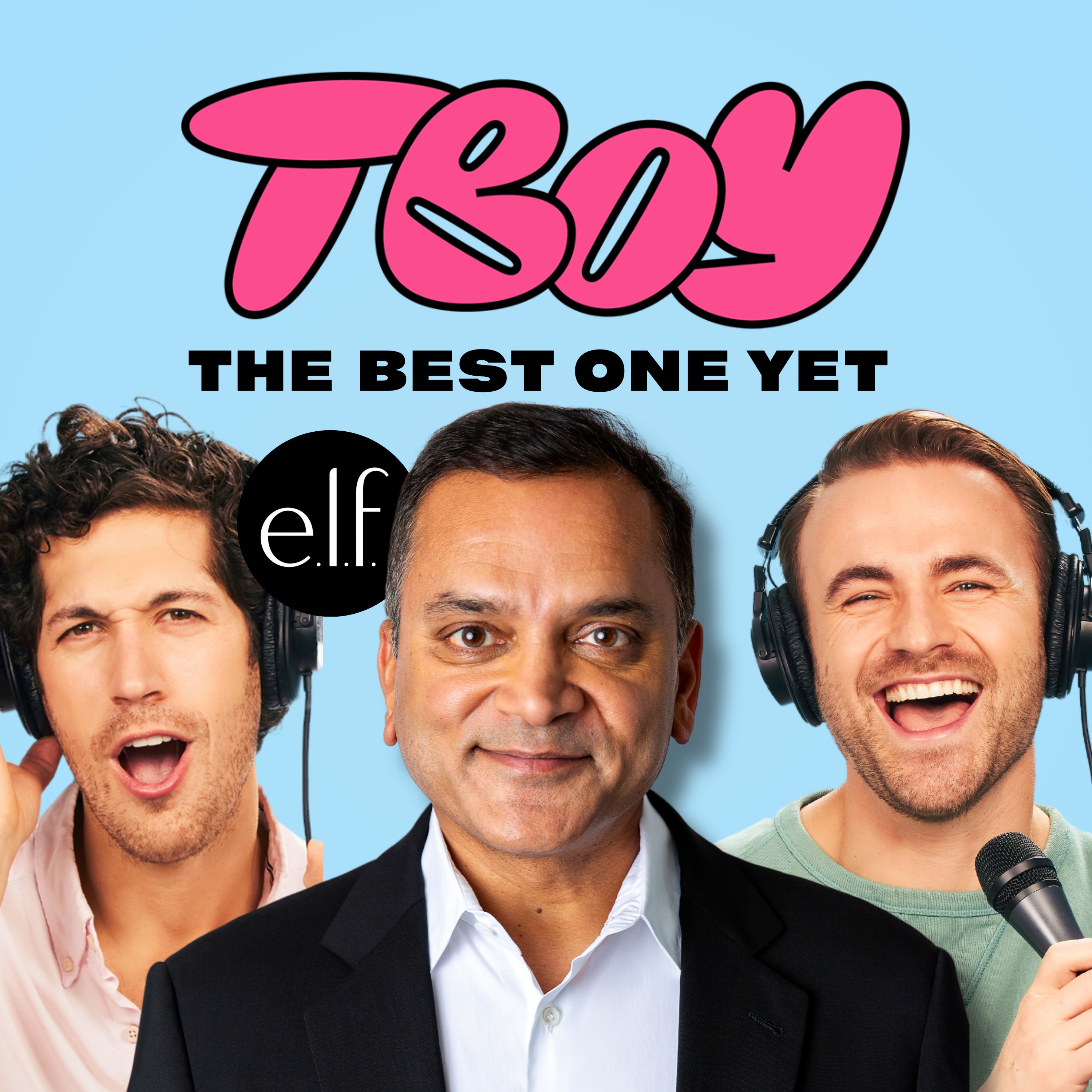
💄 “Makeup King” — Elf Beauty CEO Tarang Amin’s Interview with TBOY
In short
e.l.f. Beauty CEO Tarang Amin explains how e.l.f. keeps “best of beauty” affordable, grows through inflation/tariffs, and scales via community-driven innovation and selective acquisitions (especially Rhode).
Guest backgrounds
Tarang Amin is a 12-year CEO of e.l.f. Beauty; born in Kenya to Indian parents and immigrated as a child. He previously worked across consumer packaged goods (including roles tied to P&G brands like Pantene Pro-V).
Key claims
e.l.f. is “in the entertainment industry” (i.e., culture/community-driven), not beauty; duping is framed as “moral” because high prices are unnecessary; e.l.f. uses a hybrid, controlled supply chain (including duplicating supplier facilities outside China) to protect quality and cost; pricing rose only $1 across the board due to high China tariffs (effective ~60%), with transparent “everyday low price” strategy.
Notable examples
the $8 e.l.f. lip oil inspired by Dior lip oils ($38+), Power Grip Primer (sparked by Ulta “jelly pop” watermelon collection comments), and Rhode’s rapid growth to $212M net sales (DTC, 10 products) plus Sephora expansion. He also cites e.l.f. market share gains (e.g., ~13% national unit share; >20% at Target).
Written by AI. May contain mistakes.
Chapters
0:46
Elf Beauty's Market Position
Discussion on Elf Beauty's unique market position and approach to affordability.
“No company has democratized an industry like Elf has for your face.”
1:01
Tarang's Journey to Elf Beauty
Tarang Amin shares his background and journey to becoming CEO of Elf Beauty.
“For two and a half years, Elf grew at least 30 % every quarter for 10 straight quarters.”
2:11
The Rinse and Repeat Question
Tarang discusses the marketing strategy behind Pantene's 'rinse and repeat' instruction.
“Or was that a brilliant scheme to double sales overnight?”
4:49
Tarang's Approach to Makeup
Tarang explains his philosophy on using makeup in his role as CEO.
“we know you were born in Kenya to Indian parents.”
5:51
Elf's Business Model and Pricing Strategy
Discussion on Elf Beauty's commitment to affordable pricing and its innovative business model.
“They absolutely represent the community we serve.”
8:21
Navigating Tariffs and Price Increases
Tarang discusses the impact of tariffs on pricing and how Elf managed the situation.
“When we're in a world where there are tariffs, where there is inflation, are you switching what factories you're working with?”
9:51
Transparency and Consumer Trust
Tarang shares how Elf Beauty maintains transparency with customers during price changes.
“I mean, getting someone to basically duplicate the factory, but in a place where it makes sense for you economically.”
12:21
Market Share and Growth Strategy
Discussion on Elf Beauty's market share, growth strategy, and competitive landscape.
“We've got some questions about the comments section.”
14:01
Market Share and Brand Positioning
Learn about Elf Beauty's market share and positioning within Target and the beauty industry.
“So we feel good about what progress we're making and what we're delivering.”
17:05
Acquisition of Rode Beauty
Explore the strategic reasons behind Elf's acquisition of Rode Beauty and its implications.
“So it tells you the specialness of the brand and how much it's resonating.”
Show all 26 chapters
19:35
Engagement and Innovation Strategies
Discover how Elf Beauty integrates acquisition strategies to support brand engagement and innovation.
“Jack and I called this the Elvis Presley strategy, because just like Elvis was the first to have a greatest hits album of just his top 10 hits, Rode just led with their top 10 products.”
22:36
Challenges of Celebrity-Driven Brands
Understand the challenges faced by celebrity-driven beauty brands and how Elf navigates them.
“So having them fully involved and, more importantly, being able to pursue their passion is something that we're all about.”
28:37
Shutting Down Physical Stores
Explore the strategic decision behind Elf Beauty's closure of physical stores.
“One of the big moves you made relatively early in your tenure as CEO of Elf was closing the physical stores.”
31:18
Digital Strategy and Retail Partnerships
Understand Elf Beauty's approach to partnering with major retailers.
“and make sure we treat people with dignity and respect, but keep moving the business and keep pivoting to what consumers want.”
32:48
The Dupes Strategy
Learn how Elf Beauty creates affordable alternatives to prestige cosmetics.
“Because core to the Elf strategy is to find a prestige product that's wonderful but simply overpriced.”
34:55
Moral Responsibility in Pricing
Examine the ethical considerations behind Elf Beauty's pricing model.
“She comes and drags me on to TikTok Live.”
37:09
The Business Model of Elf Beauty
Discover how Elf Beauty maintains competitive pricing without compromising quality.
“We think it's immoral to charge a lot of money to those people who are barely making it.”
40:08
Community-Driven Product Innovation
Learn how community feedback shapes Elf Beauty's product development.
“And so, again, there are plenty of business models in our space.”
42:00
The Success of Power Grip Primer
Learn about the incredible success of Elf's Power Grip Primer and the insights behind its creation.
“To clarify, Power Grip Primer is the most sold cosmetic product in the United States?”
43:31
Decision-Making as a CEO
Discover the balance between metrics and intuition in product decision-making at Elf Beauty.
“You mentioned the innovation teams a few times.”
46:07
Innovation and Employee Involvement
Explore how Elf fosters a culture of innovation by involving all employees in the product review process.
“And if you exclude the named executive officers like me, since our IPO in 2016, we've granted over$220 million of equity in a stock that's gone up eightfold.”
48:36
Beauty as Entertainment
Understand how Elf positions itself within the entertainment industry rather than just beauty.
“You said we're actually in the entertainment industry.”
51:18
Campaigns for Diversity and Inclusion
Learn about Elf's initiatives for increasing diversity on corporate boards and its community impact.
“How do you make fun of yourself and have some fun with them?”
56:00
Building a Community-Centric Brand
Learn how Elf Beauty aligns its brand ethos with community values.
“considers like, hey, this is why I buy Elf.”
57:26
Rapid Fire with Tarang Amin
Discover Tarang Amin's favorite brands, books, and beauty hacks.
“And we do that by basically reflecting the communities we serve and listening to the communities we serve.”
58:51
Skincare Tips and Future Collaborations
Explore Tarang's skincare routine and upcoming product collaborations.
“And then more important than vision, being able to lead and get it done.”

Ask about this episode
Get the gist, explore an idea or ask about something said.
 Claude
On The Best One Yet, what are the key points of this episode?
Searching your listeningTranscript
Automatic transcript. May contain errors.
0:00Yetis, get ready to get doing. Because today's interview is a glow-up masterclass for your life, your career, maybe even your lashes. Because we're hanging out with Tarang Amin, the iconic 12-year CEO of Elf Beauty. Elf Beauty. Elf stands for eyes, lips, and face. And it's sold enough blush to make you blush. Elf, it's Gen Z's favorite beauty brand. It's Gen Alpha's top-selling beauty brand. Gen Beta isn't even born yet, but they're probably prepping their Elf mascara. Because Elf Beauty basically invented the dupe. 80 % of the value for 20 % of the price. Because as Terang will tell you, duping is actually the moral thing to do.
0:39Oh, by the way, Elf also bought Haley Bieber's Road Beauty for one billion bucks last year. Because Terang can spot what's hot faster than a Kardashian can. No company has democratized an industry like Elf has for your face. Because Terang here has figured out how to sell a$3 lipstick profitably even during peak inflation. Jack, I'm going to sprinkle on some context. For two and a half years, Elf grew at least 30 % every quarter for 10 straight quarters. Even Costco got jealous. True. But according to Terang, Elf Beauty isn't in the beauty industry. No, no, no, no, no. Elf is actually in the entertainment industry.
1:15Besties, please welcome the maestro of makeup, the Baron of Bronzer. The lord of the lip liner. Terang Amin is the CEO of Elf Beauty. And today's interview with Terang is the best one yet. Hey, Sephora, you're going to want to put down the mirror for this one. Tarang, welcome to the show, man. Thank you so much for coming on T-Boy.
1:36Tarang Amin: Well, thank you for the most gracious introduction I think I've ever had, or at least the most hyped up one. I'm digging it. You're glowing. Jack's glowing. We're feeling it. We are so excited to be here with you. So, Tarang, we did a bunch of research on you, and we saw that you have a career that really has spanned the consumer packaged goods world. At one point, you sold kitty litter, laundry detergent, Pantene Pro-V. I have a quick question about Pantene Pro-V. Oh, this has been pent up. Jack has been waiting to ask you as an executive this for, I'm going to say, years. After you're done cleansing your hair and rinsing it off, do you really need to rinse and repeat with the shampoo?
2:12Or was that a brilliant scheme to double sales overnight?
2:16Tarang Amin: Well, you know, I work for someone at P &G who claimed his claim to fame was, He says, you know how the shampoo bottle says, lather and rinse? I'm like, yeah. He says, I'm the one who came up with repeat. Indeed? And he says it doubled the volume. I think it got him promoted. He had a very successful career. And if I only knew business was that simple, I just have to come up with repeat. McDonald's should say, enjoy your Big Mac. Repeat. Elf Lip Liner, apply three times for maximum doing this. Oh, that's perfect. Now, a quick word from our sponsor. This episode is brought to you by Bill, the intelligent finance platform that helps businesses scale with proven results.
2:58Look, Yeti's paying and getting paid. That is a pain for small and medium businesses out there. Did you send the invoice? Did they see it? Did you remember to remind them to remember to pay it? Oh, I totally forgot, Jack. Besties, if you drop the ball on any of those, you don't get paid and you're missing out on cash flow. And unless your customers are mind readers, which they aren't, they're probably just busy and forgot. You shouldn't have to chase them down. Powered by AI, Bill does all that simply and automated so that you don't have to. ACA, it's check, credit card, international wire transfers.
3:26They probably do carrier pigeon. Bill lets you pay and get paid how you want. Bill is the intelligent finance platform trusted by nearly half a million businesses and over 90 of the top 100 US accounting firms to manage, move, and maximize their money. They've securely processed over a trillion dollars in real transactions. That is proven infrastructure you can actually trust. Talk with an expert at bill.com slash proven and get a$250 gift card as a thank you. That's bill.com slash proven. Terms and conditions apply. See offer page for details. Security and compliance done wrong is a giant headache.
4:01Security and compliance done right, that's Vanta. Vanta helps you earn trust and speed up growth. No spreadsheets required. For startups low on time and resources, Vanta becomes your first security hire, using AI and automation to get you compliant fast and unblock big deals. For enterprises, Vanta is your AI-powered hub for compliance and risk, bringing together data from across your businesses and automating workflows so you can prove trust at any moment. Vanta scales with you at every stage. That's why top companies from startups like Cursor to enterprises like Snowflake choose Vanta. Do security and compliance right.
4:38Get started today at vanta.com slash TED Audio.
4:47Well, Tarang, as Jack and I were researching, we know you were born in Kenya to Indian parents. You came to this child as an immigrant, and you actually joined Elf Beauty at a really interesting point. Twelve years ago, shortly after it was founded, you had the role of taking over from the founders, and yet you don't really wear makeup. I think you're a beautiful man, but you don't wear makeup as far as we're aware. Do you need to use the product?
5:10Tarang Amin: No, I do. Actually, on this interview right now, I've got our poreless putty primer, our matte. I do a little tea here. I've got our camo concealer for these black eyes and our Well People Press powder. That's why I look so fabulous. Can you tell us how important is it to use the product if you're going to be a CEO of a company? I think it's essential. And, you know, particularly with our skincare range, absolute favorites for me. As I said, I just use our primers, our concealers, our powders for interviews like this when I want to look my best. But I think more important, even than using the products yourself, is having a team that reflects the community you serve.
5:48Tarang Amin: So I'm really proud that our workforce is 74 % women, 66 % Gen Z and millennial, 44 % diverse. They absolutely represent the community we serve. And frankly, they're one of the best sources of insights I have. I do a product review every couple weeks. All I'm doing on that product review is looking at the chat field. I'll throw out open-ended questions like, hey, tell me, why is this thing so great? And our team, they're so passionate, so into these categories and our consumers and making sure that we're delighting them. And that really makes my job a lot easier. The Elfs have Riznik. I think there's six, seven all over Terang over here.
6:24I believe that's the business school term, Jack. Well, Yetis, whether you wear makeup or don't wear makeup, this is why we were so excited to bring Terang and Elf onto the show. We've been studying this business for years. Just over one year ago, after President Trump got elected, we said Elf Beauty explained the economy. This was the days after the November 2024 election. In the election year of 2024, Elf Beauty sales rose by 46 % because you offered what every voter apparently badly wanted, affordability. And Tereng, Jack and I have been keeping track on a whiteboard over here. There's the$1.50 Costco hot dog soda combo, the 99-cent Arizona iced tea, and as we've always said, the$3 Elf Beauty lip liner.
7:10As prices as everything rose over the last few years, Elf Beauty has had a lipstick that remained three bucks. Inflation peaked from 2022 to 2024, and yet during that two-year period, everybody flocked to Elf, and the stock price grew by 8x. Which leads to our question, How do you keep a top-selling product just three bucks in the face of inflation? How, frankly, is that physically possible?
7:36Tarang Amin: Well, you know, it goes all the way back to our roots. The founders of this company introduced the brand in 2004, selling cosmetics over the internet for$1. Everyone thought they were crazy. This is pre-iPhone. You couldn't sell cosmetics over the internet. And you certainly couldn't make money at$1, but they figured it out. And we've kept that spirit of disruption ever since. We take nothing more than joy of making the best of beauty accessible for every eye, lip, and face. We have a unique supply chain innovation model that allows us to really look at inspiration from the best products and prestige, as well as our community, put our elf twist on it, and introduce that incredible value.
8:15Tarang Amin: And that's what we're really all about and have been for 21 years. Terence, can we talk about that creative supply chain, though? Because that's what we're really curious about is, like, how do you physically do it? When we're in a world where there are tariffs, where there is inflation, are you switching what factories you're working with? Are you moving from Chinese production to Malaysian production? What is it that allows you to keep a product price super low? But on the other hand, are you just losing money on the product? Like Jack and I have said, sometimes you need a sacred cow product to protect your profit puppy.
8:49Do you lose money on something like a$3 lip liner to make money elsewhere?
8:53Tarang Amin: No, you know, we make money on every one of our items. And the key is we have a unique supply chain. It's a hybrid model. We use like-minded suppliers who believe in Elf, believe in our standards on quality, on lean manufacturing, and then a high degree of control. It's our quality people in those facilities. It's our lean manufacturing techniques. And we work very closely to really make sure we have that best combination of cost, quality, and speed. And again, it's an advantage we've honed, particularly over the last 12 years, and has allowed us to weather the storm, whether it be the pandemic, the post-pandemic inflation, right now even tariffs.
9:28Tarang Amin: And we're committed to our suppliers. We believe in long-term partnership. And so we have done some diversification. But our favorite form of diversification is take one of our strategic suppliers and have them set up the exact same facility outside of China as well. So it gives us a great model. And I'd say it has less to do with tariffs. And more to do, we have a rapidly growing global business and making sure we have a robust global supply chain to meet the challenge. That's a really cool concept. I mean, getting someone to basically duplicate the factory, but in a place where it makes sense for you economically.
10:01Nonetheless, in May, you had to make what appeared to be an emotional Instagram post announcing to your community that you had to raise the price of all the products across the board by$1 starting in August, because three-quarter of your products at the time were made in China. Basically, Elf has gotten stuck in the trade war like others have, and your stock has fallen 35 % in the last year, mainly because of that. Can you explain to our audience exactly why tariffs forced you to raise prices? Like, was there a new bill that your procurement team was looking at? And it's like, wow, we're paying for these tariffs.
10:34What happens at the border? Can you just walk us through? Like, how does this go down?
10:38Tarang Amin: Yeah, sure. So if you take a look at tariffs on China goods, or the fiscal year, at one point, they were as high as 170%. For the year, we're going to average about 60 % tariffs on our goods. So, I mean, that's a real cost. And it actually really means. Now, our approach is we're always transparent with our community. So well before, three months before we took pricing, we announced to the community, like, hey, look, we're facing these pressures. We're going to raise our prices a dollar. We don't like doing it, but this is what's going on. And the overwhelming response was really positive. People are like, you know, we love that you're always up front with us.
11:13Tarang Amin: are always clear and letting us know what's going on. And our consumers have stuck with this. We continue. This last quarter marked our 27th consecutive quarter of net sales market share gains. We've averaged over 20 % sales growth every quarter for the last 27 quarters. And it's because consumers really trust us for the quality of the products we have and the value that we deliver. And we take that responsibility seriously. After all, two-thirds of Americans live paycheck to paycheck, and we see it as our responsibility to make sure they have the best of beauty, but at great prices. So you're kind of saying on the communication side, when you got bad news like this, you got a few different routes.
11:54You could just go on this plan and see how people react, or you could do like an honesty is the best policy. We're just going to come out and tell you what's happening ahead of time. Which seems to be what they did. And that's how I, for you and me, to operate, Nick. When we're not sure what to say to our audience, I think let honesty be your God.
12:09Tarang Amin: Yeah. That's our approach. We've built trust with our community because we're always up front with them. We have a two-way dialogue and they know that we're there to let them know what's going on, but also to listen and continue to drive superior value. We've got some questions about the comments section. We'll get to that in a bit because that's an exciting area. But first, Jack, I think there was some tariff math we were curious about, right? You mentioned 60 % was the effective tariff rate you dealt with in 2025. Does that mean that $10 items have to become$16 items? We're trying to understand the tariff math like the audience is.
12:42Tarang Amin: No, we took everything up a dollar. So a$10 item went to$11. A$3 item went to$4. And we're known for the transparency of our pricing. We have an everyday low price. We don't play games with the consumer. We don't have a high price and then put it on sale. Even when people display our products, we tell them, do it at full retail because it's such a great value. And so taking a dollar as far as we went on any item, regardless of what the tariff was. So Wall Street seems to think that the trade war ultimately cut the value of L in half based on the stock price. So how can you overcome the cost of tariffs and prove Wall Street wrong?
13:20Tarang Amin: Well, I think our pricing actions covered a good portion of the tariffs. We continue to have a great program in cost savings. We continue to deliver great value. You know, what I tell you on Wall Street is we're in it for the long run. So we don't let any short-term volatility bother us. We're going to continue to deliver. We've delivered superior financial returns, the best in beauty over these last 27 quarters. And we're going to keep doing that. And over time, people will see and they'll continue to see what we're able to deliver. We've more than tripled our market share just in the last few years.
13:53Tarang Amin: We're now the number one unit share brand in the U.S., the number two dollar share brand with clear line of sight of overall market leadership. So we feel good about what progress we're making and what we're delivering. What is that market share? So our market share nationally is about a 13 % share. Beauty is very fragmented. So there are a lot of brands. So that actually is a leading share. But at Target, which is our first national retail customer, our market share, we're their number one brand. Our market share is over 20 % of their entire category. And the reason why that's meaningful is Target was our first national retailer and has a five or six year head start on everyone else.
14:29Tarang Amin: The great news is we're seeing share gains every single customer, every single segment we have and we're going to continue to pick up share. I think Elf Beauty's arrival at Target is one of the reasons we started saying Target. I remember, you talked about how fragmented the beauty industry. I think you shared this wild stat with us in our prep call with you, Tarang, about how there are only 26 beauty brands with over$100 million in business despite all the broody brands you see at Sephora. That's it. Yeah, no, that's right. I mean, there's 1 ,900 brands in cosmetics and skincare tracked by Nielsen.
15:02Tarang Amin: That's just what's scanning every week. Out of that, only 26 have 100 million in retail sales, not even net sales, just retail sales. So I'm really proud that we have four brands that have over 100 million in retail sales, Elf Color Cosmetics, Elf Skin, Notorium, and Rode. We're doing pretty well when it comes to our portfolio. You're going to have to watch out trying, or we could partner on this, but Jack and I are coming out with an ear cream because these microphones and these headsets really chafe our ears, I should point out. Tarang, by the way, you just mentioned the topic where you were so excited to also talk to you about, Rode.
15:38The same month that you announced you were raising prices by a dollar across the board at Elf, you then made the coolest acquisition of the year, one billion bucks for Rode Beauty, Haley Bieber's skincare company. What was it about Rode and Haley Bieber? What are they doing that no one else was doing that you wanted a piece of?
15:54Tarang Amin: Well, you know, there are a lot of parallels between what Rode was doing and what Elf was doing. There's a lot of mutual admiration in terms of how we disrupt, how we engage our community. But the way we look at acquisitions is we use our vision as a lens. Our vision is to build a different kind of beauty company, and we're going to do that by building brands that disrupt norms, shape culture, and connect communities through positivity, inclusivity, and accessibility. And Rode did all of those things. I mean, Haley and her team have built a brand like I've never seen. In less than three years, they went from zero to$212 million in net sales, DTC only, with just 10 products.
16:30How uncommon is that?
16:31Tarang Amin: I've never seen it. And beyond never seeing it, the thing I particularly loved about what Rode has done is the love of consumer fervor the brand has. I've never seen a brand where people will be willing to wait out overnight for 14 hours for an event Haley's not even at. They're buying into the entire product, the entire lifestyle, and it's just a phenomenal brand. Since we bought the brand, we closed in August. We've launched Rode into all North American Sephora doors, Sephora in the UK. And in both cases, it was the biggest launch Sephora ever saw in their history, something like three or four times bigger than their next biggest launch ever.
17:13Tarang Amin: So it tells you the specialness of the brand and how much it's resonating. Well, that's an interesting tension point too, right, Trent? Because Elf Beauty is not carried at Sephora, largest beauty retailer in the world, or premium beauty retailer in the world. But Rode is. And is that a conflict? Does that create confusion, frustration? Or is that a test by you guys? What's the thought process on two different strategies? Well, I'd say it's a consistent strategy. So Elf is carried. We just entered last year, Sephora Mexico. It was one of the best launches Sephora Mexico had ever seen. We just entered last month the Sephora and the GCC, the six countries in the GCC.
17:51Tarang Amin: So Elf is in Sephora. What Rode does is it gives us a whole other platform to really go much broader with Sephora. And so I'd say Sephora is a key customer, but all of our customers are important to us and they all have different roles. Rode's only been there for five months, but I was going to ask, what is there you've learned from the Rode business that you can apply to the rest of Elf? So what we love about Rode is how well they engage consumers. and how well curated their product line is. And so we're learning things both ways all the time. I mean, I think one of the things we're able to do, and our acquisition approach is different.
18:24Tarang Amin: We don't do any synergy math. We don't think about over-integration. When we buy a brand, we want the entire team. So Haley Bieber, her co-founders, Nick Flahos, the CEO, the entire team came on board. And our approach is, you guys are killing it. Keep doing what you're doing and let us know how we can help. And right away, you know, they were about to enter Sephora. They didn't have a field sales support. We could hire an entire field sales team for them. We obviously have strengthened marketing that we can share learnings back and forth, our innovation. We have a real powerhouse innovation engine.
18:58Tarang Amin: So all those areas we can help with without changing who they are, really supporting the founder's vision and making sure they're realizing it. We do the same thing with Notorium, a brand, clinically effective, biocompatible skincare brand we bought two years ago. You know, we bought, the entire team came on board, Susan Yara, the founder. And our approach is always, how can we help you? What can we do to accelerate your vision of what you want to do? And that approach works great. We're able to benefit from the best of what that team does, let them continue to thrive, enhance the team, and put our capabilities in.
19:33Tarang Amin: It's been a winning formula for us. There's a challenge there that's going to be interesting, which is, and this is what Jack and I find fascinating about Rode. You mentioned 10 products. They started with just 10 products. Jack and I called this the Elvis Presley strategy, because just like Elvis was the first to have a greatest hits album of just his top 10 hits, Rode just led with their top 10 products. Every product is a greatest hit. So how do you find that balance if you're road? How do you expand and continue to grow and add products, but not dilute the very clear limitations that have made you successful?
20:05Tarang Amin: Well, it comes back to Haley. I give her a lot of credit. Her vision from the very beginning is, I want one of everything really good. And that's the approach she's taking, a very curated approach. She's absolutely involved in every aspect of developing product, making sure it fits her high standards. And the brand continues to innovate. They continue to deliver new products, but they're very careful and very curated how they do that. And of course, that's really resulted in phenomenal sales for every one of their products. Does Haley still seem motivated and does she have skin in the game? She has never been more motivated.
20:40Tarang Amin: She is loving. She's not only the chief creative officer and the chief product officer of Rode, but she's a strategic advisor to health beauty as well. And I think that's one of the things that's really made this work is she's part of the health beauty family, very engaged. I don't know how she does it. The week we launched in Sephora for North America, did a massive event at Times Square. I think she probably had hair and makeup at 3 a.m. or 4 a.m., was there for the opening. The next day, we rang the bell on the New York Stock Exchange. Oh, that's a great vibe. And it wasn't just Haley. All of our founders came out.
21:15Tarang Amin: Susan Yarrow was there. Alicia Keys, who we developed Key Soul Care with, was there. The founders of Well People. It was a great celebration of our powerhouse female founders and team. It was just a terrific time. You always wonder, are they just showing up for the bell ringing at the New York Stock Exchange? Versus how much time are they spending doing the whiteboarding with the R.O.D. team, the R &D, the meeting with the laboratory? What do you see with R.O.D. when it comes to how involved she is on a week-to-week basis? You know what I tell people is Haley is a celebrity for sure, but she's way more than a celebrity.
21:52Tarang Amin: She's one of the most thoughtful founders I've ever met. And by that, I mean she is absolutely involved in every aspect of the business, from product to the marketing to how much she posts, the level of passion she has. This is her baby, and she's all in. The same is true with Susan Yara on Notorium. Susan Yara is a skincare influencer, has real vision for the quality of those products. She continues to educate people on why they need the skin regimens they do. And so that's one of the things we love. Even the founders of Well People, plant-powered, pioneering clean beauty brand, Shirley Pinkson, actually runs education for all of Elf Beauty.
22:29Tarang Amin: Dr. Renee Snyder, a board-certified dermatologist, actually helps us on Elf Skin and the rest of our skincare portfolio. So having them fully involved and, more importantly, being able to pursue their passion is something that we're all about. Where your next stage, Trang, is facing the Cody curse. Your rival, Cody, acquired 51 % of Kylie Cosmetics, 20 % of Kim Kardashian's beauty brand, but those deals with celebrity beauty brands have not been successful. Both Kim and Kylie are trying to make moves to buy back their beauty brands now. According to reports. And in general, Jack and I have noticed, we've sold a company before and we've studied acquisitions.
23:07Two out of three acquisitions tend to fail. So how do you ensure to Haley and the shareholders that Elf won't mess up road? How do you keep the brand cool, even though it's kind of gone corporate through an M &A deal?
23:18Tarang Amin: Well, I think it's our approach. Our vision is to support a founder's vision and to really support a founder and help them realize what they want. Haley would be the first one. Susan Yarra would be the first one to tell you, Elf has done everything we said we'd do, which is continue to support their vision, continue to support with whatever they need to be able to realize their vision. And that was the whole beauty of it. Haley actually had a lot of admiration for Elf, how we engage consumers, how we develop community, what we stand for. And those things really mattered. I mean, I think on the first dinner we had during the courtship, I remember she left saying, you know, I kind of want to hang out with these guys.
23:56Tarang Amin: I really like them. And I think that's important. I think that chemistry and making sure that you're truly supporting them is, I think, the key. Versus buying something that's a celebrity and having a celebrity lend their name who may or may not be there. Our approach is very different. And we're also really choiceful. In our 21-year history, we've only made three acquisitions in that entire life. And part of it is we've got the great luxury of very strong organic growth with our existing portfolio brands. So we never have to do another deal if we don't want. So they have to be quite special. We look at hundreds of brands and only, I'd say in the last two years, only Notorium and Road passed that bar.
24:34Tarang Amin: So it's a pretty high bar that we have. And we really make sure. And I'd say the biggest thing that a lot of people miss, it's all about the culture and it's about the team. And making sure that there's a shared ethos, a shared belief system, how you engage consumers, how do you really nurture a brand. Those things we spend a lot of time. I'd say we spend most amount of time on, hey, do we see the team as part of Elf Beauty? Do we see them live in the same values that we believe in? And I think that's actually been the real secret to why our acquisitions, every one of them's worked. The hangout test is underappreciated.
25:07Like the classic one your dad tells you, would you grab a beer with them? When we met with the Robinhood co-founders before we sold our previous media company to them, we hung out and it made a difference. We were like, yeah, we see ourselves hanging out with these guys. Sorry to go all page six on you, but what restaurant was that initial meetup?
25:23Tarang Amin: I was Funky in Beverly Hills. It was a fabulous dinner, by the way. We jumped in T-boy style to your latest earnings, Tarek. We love reading a good earnings transcript. We noticed you mentioned Rhodes 62 times that earnings, but you mentioned Haley Bieber zero times in the earnings report. That's a miss on my part. We have earnings coming up in February. I'll make sure I mention her 62 times and Rhodes zero times. It's interesting. You don't want a brand to be too dependent on the celebrity founder. Well put, yeah. And so at a certain point, you want there to be, unless Haley's going to be involved for the rest of her life, you want to eventually separate the brand from the founder at some point.
26:04What do you see as the future of celebrity-driven beauty brands?
26:08Tarang Amin: Well, I think it's a combination. Haley's all in, as I mentioned. This is her baby. So we want Haley absolutely fully engaged. But there are three things we agreed with Haley when we did the acquisition. We said, hey, we think we can help you build up a field sales support for Sephora. She loved that. We said, we love the fact that this is your baby and the brand is so well associated with you, but we want to build a brand for the long term. And we're known for our marketing engine. So we actually want to invest more in marketing and really make sure our road stands by itself as well. And she loved that too.
26:39Tarang Amin: And the third thing we said is, we have incredible innovation capability, particularly on our R &D side. And I think she was the first one to say, oh my God, I'd love that. She goes, I'm not a scientist. Sometimes I think I am, but I'm not. And if you guys give me that help. So we went in before we even did the acquisition fully aligned on where are areas that we could help, we could leverage the incredible capabilities we have, and where could we let them continue to run and continue to nurture their vision. And that's the approach is you want to do both. We're building this brand for the long term.
27:11Tarang Amin: It's already an incredible brand. I haven't seen another brand like this, and we couldn't be more excited to help or continue to realize that vision. Now a quick word from our sponsor. Top hats, baseball hats, Von Dutch hats. We wear so many hats on this podcast. Honestly, we're not great at all of them. No, we've been avoiding hiring someone to wear those hats instead of us, especially the Von Dutch one, because hiring and training can take forever. Well, I'm proud to say that we are hiring right now at T-Boy, and this is a job for Indeed Sponsored Jobs. Because sponsored jobs posted directly on Indeed are 95 % more likely to report a hire than non-sponsored jobs.
27:47So besties spend less time searching and more time actually interviewing candidates who check all your boxes, less stress, less time, more results. When you need the right person to cut through the chaos, this is a job for Indeed sponsored jobs. And listeners of the show will get a$75 sponsored job credit to help get your job the premium status it deserves at indeed.com slash podcast. So just go to indeed.com slash podcast right now and support our show by saying you heard about Indeed on this podcast. That's indeed.com slash podcast. Terms and conditions apply. Need a hiring hero? This is a job for Indeed sponsored jobs.
28:23Over 90 of the top 100 U.S. accounting firms trust Bill to simplify and secure BillPay. That's proven financial infrastructure built on over a trillion dollars of secure payments. Visit Bill.com slash proven for a special offer.
28:44One of the big moves you made relatively early in your tenure as CEO of Elf was closing the physical stores. This was one of the biggest things we've ever seen a CEO do. This is incredible. I didn't know until I was researching this story that Elf used to have physical stores, but you shut them down. First of all, when I think of cosmetics, I picture going into Macy's and being mobbed by those people who are trying to paint your face. Jack's hanging out at the Mac counter. He's got a 42-step skincare routine, I should point out. How certain were you that you could sell cosmetics and skincare online?
29:18Tarang Amin: Well, I mean, that was the roots of the company. The first few years of the company, we were DTC only. And so we absolutely, a digitally native brand, we absolutely knew. And even today, digital is such an important part of our entire model. It's how we engage consumers, our strength with our own site, Our Beauty Squad loyalty program has over 6 million members. The momentum we have at Amazon, on TikTok shop, it's always going to be a key part. But the thing we realized back in 2018, the founders had a real passion for their own boutiques. And we had 27 boutiques. And as we looked at our strategy, we were like, wait a minute.
29:54Tarang Amin: We're all about digital and powering digital. We now are with big national retailers, 1 ,800 Target doors, 5 ,000 Walmart doors, 1 ,400 Altidors. We're at drug, et cetera. So we really made us look and say, all right, what's the role for 27 boutiques? Because we're never going to hit as many consumers as we can versus our national retailers or digitally. And so it was both one of the most difficult and easiest decisions we made. The difficult part of that decision is we had about 250 associates associated with the stores. And so when we made the decision, the day we had earnings, February of 2019, I remember it like it's yesterday, we sent out 27 of our leaders to every one of our stores because we wanted to do in person tell them why these stores weren't working most of them were in malls that were never going to see a better day we paid three times severance uh to each of the associates but that was a painful part the easy part was it was the right strategic decision to kind of say all right what are we really going to focus on and we're really going to focus on our national retailers and our digital business and we took the 16 million dollars we're spending on our stores and we doubled down on marketing and digital, and we saw an immediate improvement of the entire business everywhere we're going.
31:08Tarang Amin: So it was one of those, I mean, I think every once in a while, you got to take a look and say, all right, what are you doing? What's working? What's not? And then have the conviction to say, hey, we got to make the tough right choice here and make sure we treat people with dignity and respect, but keep moving the business and keep pivoting to what consumers want. Well, Tereng, Jack and I have been curious, would you ever reverse that decision? Because when we look at the digital world today, it's gone so far digital in one direction, it's almost like the pendulum swinging the other direction now.
31:36All the direct-to-consumer mattress and eyeglasses companies that we grew up with, they now have physical stores. Netflix, totally digital company, now has Netflix mini theme parks that they launched at the end of last year. So would Elf Beauty ever get back into the physical game? It was almost even a marketing move.
31:54Tarang Amin: I'd say we are in the physical game. It's a question of do you want to do it yourself or do you want leading partners? Our strategy, as I mentioned, is the best of beauty made accessible. As we look at that, we want to be wherever consumers want to buy beauty. And I feel great about our retailer portfolio. I mentioned Target, Walmart, Ulta Beauty, CVS, Walgreens, Amazon, TikTok Shop. We are where consumers want to buy it, elfcosmetics.com. And so that's the strategic choice we made, is we would rather partner with people who have amazing presence and reach. There's over 100 million Walmart shoppers every week.
32:30Tarang Amin: And so if we want to give them the best of beauty, let's make sure it's accessible to where they want to shop. And for us, that means it's not necessary to have our own stores. We'd rather partner with leading retailers and be strong digitally to be able to meet their needs. Outsource the bricks and the mortars. You want to talk about the D word, Jack? I want to talk about the dupes. Drop the Ds. Because core to the Elf strategy is to find a prestige product that's wonderful but simply overpriced. And then you make your own Elf version of the product, often at one-third of the price. Can you give us the best example of when this strategy has worked?
33:04Because in our opinion, you're the pioneer of the dupe.
33:07Tarang Amin: Yeah, so it's consistently worked. We don't actually use the word dupe because we don't do the dupe thing. What we do is we take inspiration from prestige, as well as our community, and we put an Elf twist on it and introduce it. I'll give you a great example. Christian Dior has these lip oils. They've been in the market more than a decade. They've been around for a long time. But for some reason, the last couple of years, they took off virally. Our community will come to us and say, hey, Elf, there are these lip oils out there. We love them, but we can't afford$38 or whatever they cost. Help us out.
33:40Tarang Amin: And we'll do it. We'll take a look at it and we'll say, okay, what do they like about this product? In this particular case, they love the glossy finish. They love the pigmentation. But then we'll also look and say, what don't they like? And what we found is for some consumers, those lip oils were drying out their lips. Others didn't like the fact the applicator was really small, and lip oil is something you've got to reapply throughout the day. So when we introduced ours, it was a completely different hydrating formula, same glossy finish, same pigmentation, a much bigger applicator, I would call it doe foot.
34:12Tarang Amin: But the key difference was not only was the product we thought even better, But instead of the$38, we introduced ours at$8. Eight? Right. And then the next day,$8. And we never make direct comparisons. We don't have to. Because I got to tell you, the next day, there are 1 ,000 TikTok videos that said, like, I actually like the Elf lip oils even better. It's probably the biggest launch we ever had. Terang, those people who narked on Christian Dior by commenting and asking you to make the product, when they saw that you came out with a comparable product for$8, that's less than one-fourth the price.
34:48I mean, you could have come in at$28, and they still probably would have been happy.
34:52Tarang Amin: Well, that's our entire model. We have a concept where we call it zero distance, zero distance between the C-suite and our community. I'll tell you a story. My CMO terrorizes me every few months. She comes and drags me on to TikTok Live. And she doesn't get up there. She's not even very nice about it. She doesn't say, all right, you got the big boss. Tell them what you want. And the chat field will just light up. It'll just go crazy. There was one last year where I got on and a bunch of people said, hey, there's this prestige product. They make these bronzing drops. We love them. But I think they're$39.
35:24Tarang Amin: We can't afford$39. Help us out. And I'm reading the chat field. I'm like, yeah, OK, you want some bronzing drops. And then there's like another 20 chats right after that. And they're like, no, no, boss man, we want them now. I will literally leave that call a bit terrorized or traumatized. And the first thing I'll do is I'll call up my head innovation. We have a three-year product pipeline. I'll say, oh, my God, please, for the love of God, tell me we have some bronzing drops. And she's like, yeah, we do. I'm like, great, great. When are they coming out? And she's like, oh, we got them slated for 18 months from now.
35:58Tarang Amin: And I'm like, oh, no, no, no, no. I cannot have our community yell at me, move it up. And we launch them within six months. And that's our entire model. It's like we look at our community. What do they want? Where can we bring the best of beauty, put our elf twist on, and bring it at an incredible value? And that's fueled the entire model, particularly this day and age. Our strength with our community, particularly on social, really makes that model work, where we're not dependent on some celebrity or advertising or something else to be able to get the word out. our community is our absolute best advocates.
36:32They must have freaked out when you launched that product for eight bucks.
36:35Tarang Amin: Oh my God, they did. Well, Turing, two questions about that Christian Dior dupe product that Jack and I have been dying to ask on dupes in general with you. The first is any moral hesitation on copying someone's idea? I see how you're saying you're influencing, but was there any moral hesitation there? I'd say it was a moral responsibility. I actually think it's immoral to charge a consumer 40, 50 bucks or something that we can clearly show you can make for less and actually have just as good or better quality. And I mentioned earlier, two-thirds of Americans live paycheck to paycheck. We think it's immoral to charge a lot of money to those people who are barely making it.
37:14Tarang Amin: So we take great pride in being able to put our elf twist on and be able to have the best of prestige at a fraction of the price. Lululemon, if you're listening, Tarang Amin just made the moral case for the dupe as the right thing to do. The second question, by the way, Jack, is just why, by the way, is Christian Dior so expensive in the first place? Jack's got that 42-step skincare routine I just mentioned. We launched a second podcast just to pay for his skincare routine. Why is cosmetics so expensive in the first place? Or beauty in general? Well, you know, I think that was the insight the founders had.
37:49Tarang Amin: They couldn't figure it out. They couldn't figure out, you know, why are these products so expensive? And they looked at it and they're like, you know, a lot of these brands have very high gross margins that they spend back in associates, in marketing, in a bunch of other things. Tereng, very high gross margins, meaning huge markups. So, yeah, they have bigger markups and they use that money on other areas. And so the insight the founders had were their original model is, if I'm going to sell something for a dollar, somebody's going to buy it from me for 50 cents. I've got to figure out how to make it for 35 cents.
38:22Tarang Amin: And they figured that out. And then we've basically been able to hone that model that says, hey, why just do a dollar, two dollars, three dollars? Why don't we actually go after the best products in the marketplace? You'll have a little bit higher price umbrella, and you can engineer an even greater quality. And that was really the insight 12 years ago when I took over was really, no, let's make the best of beauty accessible. Let's not just have low prices. Let's really make the best of beauty accessible. And so, look, I have a lot of respect for our competitors, including our prestige competitors.
38:52Tarang Amin: There are consumers who love – there's a real blurring of the lines. Like you could find an elf consumer in their makeup bag. They might have a Chanel product. Consumers in this space, particularly the consumers we appeal to, number one amongst Gen Z, Gen Alpha, millennials, deals they're incredibly savvy digitally so they know and including through word of mouth what might work for them and so there's a broad range of brands that are acceptable and so I'd say there's enough room for people the part I love is much market share as we've built the real secret for e.l.f. is we can give millions more consumers access something they couldn't have before you know I'll give you another example a few years ago there was a prestige brand had a silk canvas It was a primer.
39:37Tarang Amin: I think they charged$56 for it. We introduced our putty primer for$9. And I'd say the quality was just as good, if not better. And what we did is we tracked that prestige item. And we said over the next few years, that prestige item continued to grow. Because there are some people that equated$56 with quality, the image, everything else that came with it. And there was a market for it. And they did great. The only difference is we sold nine times the number of primers they did. Because the fact is, most people can't afford$56 for a putty primer, but a lot of people can afford nine. And so, again, there are plenty of business models in our space.
40:18Tarang Amin: There's some incredible, incredible brands. They have a different model, and I respect them for their model, but I prefer ours. This reminds me of a takeaway I did, one of my favorites. The beauty industry really captures it, But where there's mystery, there's margin. And there's a lot of mystery in the cosmetics industry. But Trank, you're also literally in the comment section. Like Jack's saying, there's R &D, research and development. And then we say there's S &D, scrolling and development. Can you give us an example of when you guys may have noticed comments and then innovated a product from there?
40:50And how does that compare the hit rate of that kind of a product to one you developed on your own in-house?
40:56Tarang Amin: Yeah, I'd say the hit rates are both good. but the ones that we're actually getting inspiration from the community is even better because you already know there's pent-up demand. I mean, our innovation teams do a phenomenal job, and it's both the art and the science. I mean, they're analyzing data to see, like, hey, what's really selling, what's really working, what are people socially really engaging on that they really want, and then the art of how do you bring that elf twist to it, how do you actually bring it out at even a better value. And so that's our entire approach, and overall our hit rates are way higher than the industry average.
41:27Tarang Amin: I think new item hit rates in consumer are less than 50%. Ours are closer to 100 because the insights are coming from what people want. So are there any particular examples of like a product that comes to mind for you where you're like, wow, we wouldn't have thought of that unless people started mentioning it on Instagram? Well, you know, I'd say the Power Grip Primer, one of our main products. In fact, Power Grip Primer is the number one cosmetics SKU across all of mass and prestige. by far the biggest item, which is really surprising because primers aren't a huge category overall, but Power Grip's number one.
42:02To clarify, Power Grip Primer is the most sold cosmetic product in the United States? You buy a wide margin. Wow. No way.
42:10Tarang Amin: What we find is that came from an insight. We'd done a collaboration with Ulta where we did this jelly pop collection, this watermelon flavored collection. We saw a lot of the comments coming off of that. We had a primary association. People couldn't get enough of it. And we were at first like, wow, it's so sticky. And they're like, we love the stickiness. So we said, all right, let's go have some fun with this. Let's go introduce PowerGrip. When we introduced PowerGrip, I mean, it's just a phenomenal blockbuster success. And again, it comes directly from listening to your community and giving them what they want.
42:41Well, when it comes to making decisions as a CEO, Terang, Jack and I are always curious how a top executive does this. So the balance, Metrics versus magic. Information versus intuition. Graphs versus guts. How you make decisions. Let's use one of Haley's products as an example. When she says, I want to launch a glazing milk face serum, which by the way, I need to have a whole vacation where I try that product out. Do you look at a spreadsheet and do the diligence there or do you trust her gut?
43:10Tarang Amin: No, we trust her instincts and we trust her passion. And that's what we rely on across the board. I mean, I'll ask questions in my product review every couple of weeks of like, why is this thing so great? And the level of insights the team has in terms of this is what the inspiration was, this is why it's going to work, this is why we got conviction, is really all I need to kind of say, all right, let's go. You mentioned the innovation teams a few times. Is that the name of the department? I've never heard of an innovation team. Yeah, we have. I mean, the innovation, they have multiple departments within it.
43:41Tarang Amin: You have product development, you have R &D, you have product marketing, but it's a collective. But I tell people, everyone at Elf owns innovation. I mentioned my product review. That's why I approve products every two weeks. I actually make it an open ticket. My CMO who came from Prestige at first was horrified. She was like, oh, my God, these are the nuclear codes. You're letting anyone in? I'm like, yeah, anyone in the company can join. Anyone in the company can join. I'm looking at the chat field, and we get the best insights from anyone in the company, not just the people whose job is innovation, but somebody who does inventory planning had such incredible insights on a recent product.
44:18Tarang Amin: I can't talk about it because we haven't launched yet, but where she had a contrarian point of view, it was really great. I'm looking at the point, and I'll say, all right, tell me a little bit more. And so I think this approach of zero distance goes well beyond zero distance between the C-suite and our community. It's zero distance to our employees. It's zero distance to equity. We're one of the few companies that grants equity to every single employee every year. Not just Haley. Not just everyone. Every single person. Fine, Trang, we'll take some Elfstock if you insist after the interview. But I got to tell you, it means something.
44:54Tarang Amin: I've been in environments in the past where it's like, we want you to be an owner. But I'm like, but we're not owners. And they're like, oh, we want you to act like an owner. What am I, play and pretend? This is a lot more effective of give them a piece of it. And they're passionate owners in a high-performance team culture. And I'd say by far that's our biggest advantage. Are they granted as like a bonus at the end of the year? And the way it works is our comp model is different. We call it one team, one dream. And so the way it works is every single person in the company is bonus eligible. You have a target percent of bonus, but we all get the same payout.
45:30Tarang Amin: It's zero to 200%, and it's based on the adjusted EBITDA, the board sets. We had some compensation consultants that came in and said, wait, wait, wait, don't you want to compensate your product supply or ops people differently than your sales people differently? I'm like, no. I want our operations people to know if we have one quality issue, it could piss away more EBITDA than if they saved half an RMB on something. And so we're all in it together. We say we rise or fall together. And by the way, I think last year was our sixth consecutive year of paying out 200 % of target bonus, which makes people feel like winners, like we're in it together.
46:06Tarang Amin: And then on top of that, we give equity to every single employee. And if you exclude the named executive officers like me, since our IPO in 2016, we've granted over$220 million of equity in a stock that's gone up eightfold. And I'm explicit. I want meaningful wealth creation for every single person because they're the people who are driving our results. Again, if you insist, Tarang, we will take the old stock. By the way, if you're listening on Jack's question, by the way, that actually is a really important point. We talk about so many companies that innovate in a lab or keep research and development secluded.
46:42They want it to be a secret. Elf is saying, hey, we're opening up to everybody. Even if you know the nuclear codes, the secrets of the company, we just want to hit. We just want to get products out there. Tarang, we've been talking to you for 40 minutes, and you've obviously done really good by your customers. $8 instead of$38. That blew my mind. Have you ever failed by your customers and recognized that was a mistake? Can you share a story about it?
47:06Tarang Amin: We're a digitally native brand, so we're inherently test and learn. We fail all the time. The key to me is making sure people don't get scared or get afraid of taking risks. We want people to be able to continue to push and continue to learn. We had one a few months ago. We probably do 100 marketing campaigns a year. we had a one-time post we feature had the comedian Matt Reif in there and we got a lot of blowback on that we got people like hey he made some comments on domestic violence and we clearly missed the mark we apologized for it and we said all right well let's let's keep let's keep delighting our community but that's not going to stop us from trying and being disruptive and doing different things I mean we're known for our brand-on-brand collaborations you know our collaboration with Liquid Death, I think, had something like 9 billion views with Chipotle, had one with Duncan, you name it, American Eagle.
48:04Tarang Amin: So we're going to continue to partner with like-minded disruptors, and we're going to continue to find ways of delighting and entertaining our community. But that doesn't mean we don't fail. We fail, and that's okay. We got to learn from it. We got to own it, and you got to keep moving. Well, Yeti, a little backstage, behind-the-scenes info we should share with you. Before this interview, we spoke with Terang because we wanted to get to know him a bit more. And in our chat, Terang, you mentioned that you're not in the makeup industry. You're not in the beauty industry. You're not in the cosmetics industry.
48:36You said we're actually in the entertainment industry. And Jack and I didn't ask any more questions because we wanted to ask you more during the interview. So how is this beauty company actually in the entertainment industry?
48:45Tarang Amin: Well, it's completely community driven. And the way you connect to the community is there's so many companies that do a one-way street. We're going to project things, what we want you to buy. We're going to tell you what you need to know, what you need to go do. Ours is a two-way street, back to that zero-distance concept. And so for us, the way we engage with people is not to try to sell them more makeup or skincare products. We sell plenty of those. It's really to actually make sure that we're getting to know what motivates them. What do they love? Where do they go? That dictates where we go.
49:18Tarang Amin: Why do we have a channel on Twitch? Why do we have an entire experience on Roblox? It's because that's what our community wants. So that ability to engage. And the great thing, we have this concept a lot of times. We call it like minimal viable control to enable maximum achievable freedom. And what we mean by that is we really look at what little can we control as a senior team and really put that empowerment in our team's hands. Most of the time, I'm finding out about our marketing the same time everyone else is. I'll be texting my CMO and going like, it was a few months ago. I was like, did we just drop some guy in the middle of the Pacific Ocean a care package?
50:00Tarang Amin: And she's like, yeah. Someone on our team in LA saw this guy blow up on the internet. He hated his job. He quit it. And now he's sailing around the world with his cat. And they thought it'd be a great idea to send him a care package. Well, you know, I'm classically trained. I started at Procter & Gamble and brand marketing, and I was like, but we didn't even brand it. It doesn't say Elf. It doesn't say anything. And they're like, yeah, no, it's okay. These guys know. The word will get out. I forget how many tens of millions of views we had on that, but that's really the concept, is let the people closest to our community that represent our community really drive the direction we take the brand in, and how does it delight them.
50:41Tarang Amin: And, you know, people would say, like, what the heck is a beauty company sending? And, you know, the care package had, like, food, had, you know, cat toys, snacks. What are you, my nana and I'm going to college? Yeah, and I had some sunscreen. He definitely needed some sunscreen. So we did put some of our suntouchables in there. But the whole genesis isn't the traditional, I'm trying to get you to buy something, so here's how I'm going to engage with you. I'm going to, it's less transactional and more of let's build a real relationship. And if you're doing that, it's really about how do you delight?
51:14Tarang Amin: How do you delight our community? And that a lot of times is how you entertain them. How do you make fun of yourself and have some fun with them? And that's how people engage with us. Well, speaking of having fun, before we get to our final question, Terence, can you just repeat that line again? That ethos, maximum, minimum, it sounded like a rocket ship term, SpaceX style. I call it minimum viable control to enable maximum achievable freedom, right? And so a lot of times management looks at their job as we got to control it. And don't get me wrong, we're a public company, we got plenty of controls.
51:46Tarang Amin: But really taking a look at it and saying, how do you put power in the people that are closest to your community? And give them the authority to run with it. Like I would never come up with, I wasn't even watching the guy blow up on the internet. But letting them have that freedom and that ability to do that, dictating, you know, we're the number one brand by far amongst Gen Z. I remember asking our team, hey, who else is killing it with Gen Z? That's where the Chipotle collaboration came from. Our team went down and said, hey, Chipotle, Gen Z loves Chipotle too. Let's do something together. And when they went to see them, they said, you know, they call their food area, they call it their palate.
52:26We said, what?
52:27Tarang Amin: The black beans and the rice and all that's a palette? We're like, hey, let's make an eyeshadow palette out of that. You know, we had guacamole and black bean and chicken. And, you know, the thing sold out, I think, in less than three minutes because it hit a nerve with people of where they look. And so I think that's a key for us is give the power to the people that are closest to our community. Give the power to the community. And it's their brand that works for us. Nick and I were entertained by your So Many Dicks campaign. To be clear, this was research by Elf Beauty on how many corporate board members were named Richard, Rick, or Rich.
53:05Yeah, Jack, I believe it was specifically men named Dick on corporate boards outnumber all Hispanic women and outnumber all Black women and all Hispanic women. Yeah. It was about not enough diversity on corporate boards. And in the last year, as the conversation of DEI has shifted, it seems like Elf Beauty has doubled down. And we wanted to ask you, how is it all working out?
53:25Tarang Amin: I mean, for us, it works because it's all about our community. I mentioned the inclusiveness we have as a team of making sure the team reflects the community. That goes all the way to the board. We're one of only five public companies in the U.S. out of 4 ,000 that have a board that's over two-thirds women, 44 % diverse. But the fact is, we don't want to be one of only five public companies in the U.S. with that level of diversity. So we believe business has a role for societal good. So we started this initiative of increasing diversity on America's corporate boards by partner with Billie Jean King, serving out basic facts of just how homogenous America's boards were.
54:05Tarang Amin: We took it a step further. That campaign, that provocative campaign, we ran on Wall Street at the Oculus, featured a bunch of pictures, a bunch of white dudes. And the line was, and the insight is, there are more men named Richard, Rick, or Dick on America's corporate boards than entire groups of underrepresented populations. And by the way, there's nothing wrong with being Richard, Rick, or Dick. I want to make sure people know that for the record. We just want to make room for others. And then we take it a step further. We partner with the National Association of Corporate Directors. We've sponsored 40 women and diverse members through their Accelerate program to qualify for board service.
54:42Tarang Amin: We partner with NCA &T University. on research to show the direct correlation of diversity and better corporate board performance, including, I think, the latest research they published showed that boards with above-average gender diversity outperformed boards with below-average gender diversity by a whopping 270 % return on equity. And they did this over a six - or seven-year period. And so I think it's an important time where there's so much rhetoric out there to let the facts be out there, and we feel we have a role. It's something we deeply believe in. After all, we're for every eye, lip, and face.
55:17Tarang Amin: And we do have an advantage. We're not a federal contractor. We're not a bigger company that might be subject to different rules. And the reality is, we've actually never had a DEI program. We've never had quotas. We've never had anything like that because it's more fundamental to us. We're big believers. If you represent the community you serve, you get better results. And I think we're living proof of that. Was there any discussion? Oh, there was discussion. I remember we share everything like any responsible public company with their board. And I remember one of the board members said, hey, we get this.
55:51Tarang Amin: We're really supportive of what you're trying to do. But how does your community react? I'm like, you know, that's a great question. Let's run it. The next day we ran it on every one of our social channels from Instagram on down. We ran so many dicks and everything. We got 98 percent positive sentiment. considers like, hey, this is why I buy Elf. You actually care. You care about a broader net of giving people a chance and empowering others. And this is why, yeah, we did get 2 % that said, hey, there's nothing wrong with being Richard, Rick, or Dick. But the vast majority of our community, and that's actually the lens we use.
56:23Tarang Amin: I mean, we're known for doing a lot of provocative things. We always use, the lens we use is, number one, is this tied to our ethos? And for us, best of beauty made accessible, it absolutely, diversity absolutely ties to ethos. Number two, do we have any authority on the topic? Being one of only five public companies with the board stats we do, we absolutely have authority. And number three, how would our community respond? And so that's a great example of kind of how we view the world. It has to tie to our ethos. We have to have authority on this topic. And it's all got to be about the community and how we're serving our community.
56:57Yeah, if you want to know how Elf became the biggest mainstream beauty brand in America, it's because they checked the comments section. Nick and I usually wrap up episodes of our show by whipping up the takeaway. But as our esteemed guest, we're going to let you. So, Tarang Amin, what is the takeaway on Elf Beauty?
57:19Tarang Amin: Well, the takeaway on Elf Beauty is making the best accessible to every eye, lip, and face has been the cornerstone of our success for 21 years. And we do that by basically reflecting the communities we serve and listening to the communities we serve. And it's really that simple. And if you do that and have a passionate team of owners in a high-performance team setting, anything's possible. Well, like we say, we like to say anything's elfing possible. Well, Tereng, before you wipe off the hair and makeup, as we all must do in the dressing room after this, we have a few rapid-fire questions for you before you go.
57:54First, the best brand that is not Elf or Rode, what is it? And it can't be any of your other subsidiaries.
58:00Tarang Amin: Okay. I won't name any of my subsidiaries. One of the brands I really like is Arteryx. I love their gear for outdoor. We love hiking and doing a lot of things outdoors. And so I love that brand. What's the best business book you've ever read? The best one is Joris Kearns Goodwin's Team of Rivals, The Political Genius of Abraham Lincoln. Interesting you call that a business book. It is. Absolutely. It's one of the best leadership books I've read and the mastery of his leadership. I think it's particularly important in these polarized times. And so I think I'm going to have to go back and reread it.
58:31Speaking of which, best business leader whom you admire?
58:34Tarang Amin: Oh my God, there's so many. I would say Jensen Wong. If I think about it, he's all the celebrity now with the success of NVIDIA. But people forget, he's been slogging it out for 20 years when a lot of his competitors are trying to put him out of business with real vision. And then more important than vision, being able to lead and get it done. What's the best beauty hack for men and or women? You absolutely have to try our poreless putty primer. I mean, look at this. I'm 60 years old, and I don't know. Could you tell with my skin? Well, no. Actually, can I ask you a serious question? I do have a pretty big forehead.
59:10I'm saying it, not you guys. I also have these big lights on me and they're pretty shiny. Do you recommend a product? I want to reduce the shine a little bit.
59:18Tarang Amin: Try our well, people. Plant-powered product. Press powder. It'll do wonders for the shine. It'll make you feel great, too. Thank you. Press powder. I don't even notice a check. I just want to throw that out there. Alright, Terang, best dream collab that you have not done yet. Oh, my God. Uh, we actually have this one. You're going to have to stay tuned for. So we have two coming up in the next two weeks that I'm absolutely excited about. So, so your listeners are going to have to just stay, uh, stay true to the collabs. We just actually previewed one of them in our town hall. Every two weeks we get the entire company together and we just said, Hey, don't spill the tea just yet.
59:53Tarang Amin: But, uh, by the reaction it's people are, it's going to kill it. Uh, and it's literally coming out in two weeks. Okay. And what is the best restaurant in the Bay area? I love Kakari, elevated Greek. Can't go wrong with Kakari. Down the street from our studio. We'll see you there soon, Tarang. And if you, Tarang Amin, were a stock, what would be your own three or four letter stock ticker symbol? Can't be elf. It'd be one of two things. It'd either be HPT, which stands for high performance teamwork. We didn't talk about it too much today, but I live by it. Or it'd be OTOD, one team, one dream. Do you have both of those tattooed on your biceps right now?
1:00:33Because you were very prepared for that answer. Tarang, you also look, you mentioned your age, 60 years. You look phenomenal. What is your morning skincare routine?
1:00:41Tarang Amin: Well, I think, you know, the importance of cleansing and hydration. Our holy hydration is my go-to every morning. Well-hydrated skin does wonders. And then our Sun Touchables SPF product. Everybody needs SPF and it's our invisible sunscreen. You got to try that as well. Well, Tarang, we cannot wait to collab with you and Haley on an ear-chafing skin cream for these headphones that Jack and I deal with every day. So we'll keep that in the books for Q2. Tarang, you're a consummate professional, and we admire your leadership. Thank you for coming on the show. Well, thanks for having me. Great to have you.
1:01:29all the things. So why waste time sending important documents the old-fashioned way? Mail and ship when you want, how you want with Stamps.com. Print postage on demand 24-7 and schedule pickups from your office or home. Save up to 90 % with automated rate shopping. That's why over 1 million small businesses trust Stamps.com. Go to Stamps.com and use code podcast to try Stamps.com risk-free for 60 days.
From the publisher
The CEO of e.l.f. Beauty says charging $38 for lip oil is "immoral."
In this fun exclusive interview, e.l.f.’s CEO Tarang Amin explains why he thinks big profit margins are unethical and how his biz creates "dupes" better than the lux originals… for a fraction of the price.
So we glammed up with Tarang to break down the economics of the $3 lipstick, how e.l.f. legally copies rivals like Dior, and why he shares the company's "nuclear codes" with every employee.
Of course we got all the details on his acquisition of Hailey Bieber’s Rhode Skin for $1B, the fastest-growing beauty brand in America (spoiler: It all went down over a dinner in LA).
And there’s even an investment angle: Wall Street fell in love with $ELF stock as it rose 800% in just a few years. While tariff fears recently cooled the price, Tarang explains what investors are missing in the mirror… And why that epic Hailey Bieber’s Rhode deal was a true makeover.
(Plus, Tarang helped Jack add another cream to his 42-step skincare routine)
Some of the Takeaways & Insights:
- "It's Immoral": Tarang’s controversial take on why charging $40 for lip oil is a scam.
- The $38 vs. $8 Math: How e.l.f. beats luxury brands at their own game
- The Crash vs. The Opp: Why the stock is down 60% and why Tar
- The $1B Rhode Deal: The inside story of buying Hailey Bieber’s company.
- S&: Why "Scrolling & Development" (reading TikTok comments) beats traditional innovation.
- Where there’s Mystery, there’s Margin: Why cosmetics are so expensive in the first place.
Timestamps:
0:00 - Intro: E.L.F. Beauty Explained
4:38 - Why E.L.F. Stock Is Up 800%
5:31 - How to Keep Prices at $3 (Inflation Hack)
13:38 - The $1 Billion Bet on Hailey Bieber & Rhode
29:24 - The "Dupe" Strategy Explained
29:55 - The Dior Lip Oil Story ($38 vs $8)
33:28 - CEO: "It's Immoral To Charge You $38"
37:16 - "Scrolling & Development": Using TikTok to Invent Products
40:30 - The "Nuclear Codes": Sharing Secrets with Employees
53:43 - The Takeaway on E.L.F.
Buy tickets to The IPO Tour (our In-Person Offering) TODAY
Austin, TX (2/25): https://tickets.austintheatre.org/13274/13275 (SOLD OUT!)
Arlington, VA (3/11): https://www.arlingtondrafthouse.com/shows/341317
New York, NY (4/8): https://www.ticketmaster.com/event/0000637AE43ED0C2
Los Angeles, CA (6/3): https://www.squadup.com/events/the-best-one-yet-live (SOLD OUT!)
Get your TBOY Yeti Doll gift here: https://tboypod.com/shop/product/economic-support-yeti-doll
NEWSLETTER: https://tboypod.com/newsletter
OUR 2ND SHOW: Want more business storytelling from us? Check our weekly deepdive show, The Best Idea Yet: The untold origin story of the products you're obsessed with. Listen for free: https://wondery.com/links/the-best-idea-yet/
NEW LISTENERS: Fill out our 2 minute survey: https://qualtricsxm88y5r986q.qualtrics.com/jfe/form/SV_dp1FDYiJgt6lHy6
GET ON THE POD: Submit a shoutout or fact: https://tboypod.com/shoutouts
SOCIALS:
Instagram: https://www.instagram.com/tboypod
TikTok: https://www.tiktok.com/@tboypod
YouTube: https://www.youtube.com/@tboypod
Linkedin (Nick): https://www.linkedin.com/in/nicolas-martell/
Linkedin (Jack): https://www.linkedin.com/in/jack-crivici-kramer/
Anything else: https://tboypod.com/
About Us: The daily pop-biz news show making today’s top stories your business. Formerly known as Robinhood Snacks, The Best One Yet is hosted by Jack Crivici-Kramer & Nick Martell.
Hosted on Acast. See acast.com/privacy for more information.
More from The Best One Yet
All episodesWe use cookies.They keep VO running smoothly and help us improve it. Privacy policy