
 Ask ChatGPT


- Podcasts
- The Best One Yet
- 💰 “The (Ex)Finance Bro’s Guide To $$$” — Nick & Jack interviewed on Wild 'Til 9
The Best One Yet4 Sep 2025 · 1h 13m · 30 chapters
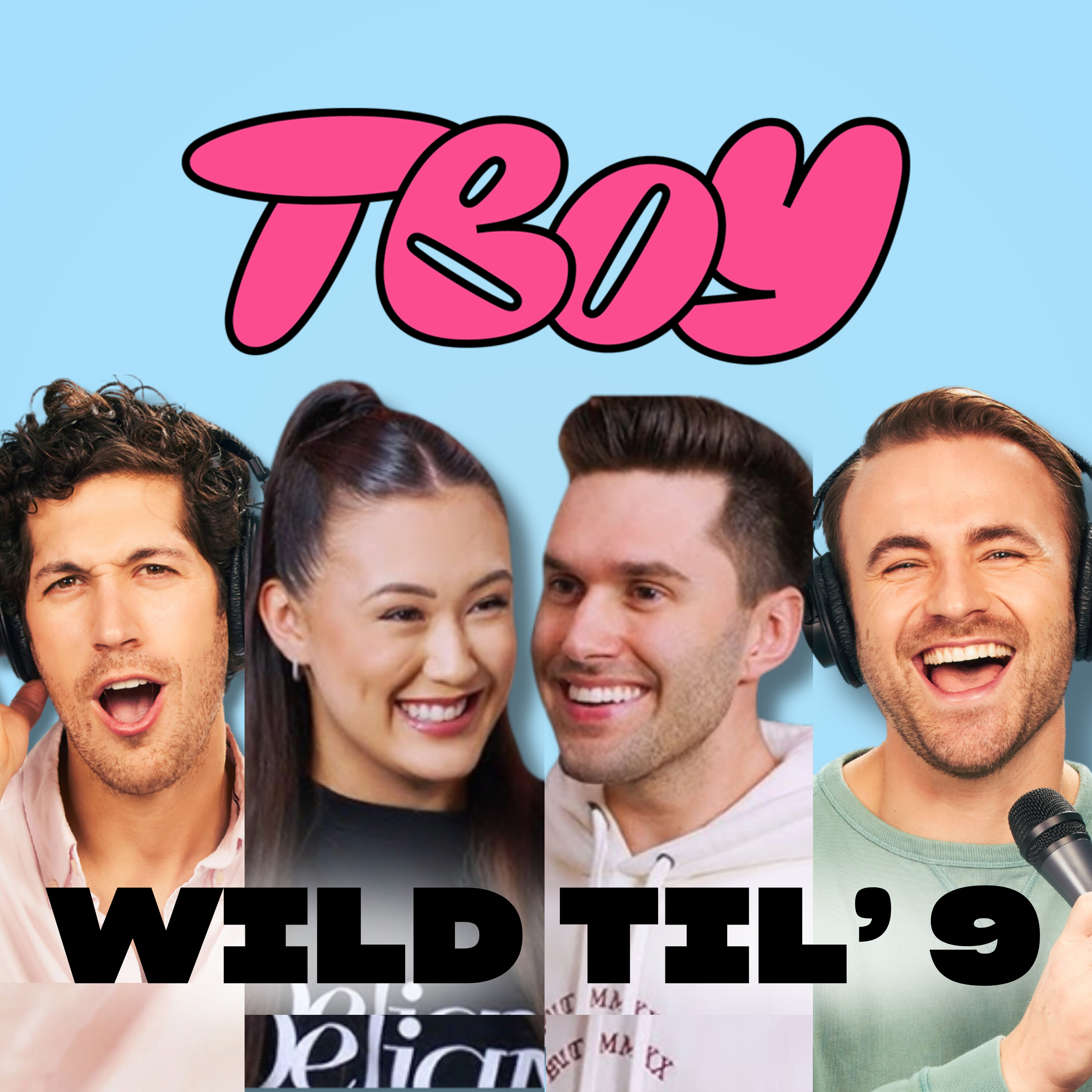
💰 “The (Ex)Finance Bro’s Guide To $$$” — Nick & Jack interviewed on Wild 'Til 9
In short
Nick and Jack (reformed “finance bros”) interview Lauren and Jeremy from Wild ’Til 9 about personal finance basics—how to start investing, what to avoid (FOMO), and practical credit-card guidance—while framing it as “edutainment” rather than a traditional finance show.
Guests (backgrounds)
Lauren and Jeremy are podcasters/influencers behind Wild ’Til 9. They emphasize daily, curated business/news content, fact-checking, and packaging finance/economics for a broad audience (including a large female listenership). They also discuss their show’s origins and growth, including legal/brand transitions after Robinhood.
Key claims
- Start investing by buying stock (or better: an ETF) in companies you understand/like; “rich people own things.”
- Prefer broad diversification via an S&P 500 ETF (“smoothie of stocks”) over picking individual winners.
- Invest only money you can afford to lose; avoid FOMO (“FOMO becomes no-mo”).
- For credit, cosigning isn’t necessary for credit cards; build credit with beginner cards and routine statement checks.
Notable examples
Krispy Kreme as a “dating a stock” example; S&P 500 drops in 2008 (-37%) and during COVID (-33%); Gen Z credit-card adoption (81% ages 22–24 vs ~61% millennials a decade earlier).
Written by AI. May contain mistakes.
Chapters
0:34
Wedding Financial Vows
The hosts talk about unique financial vows for a newly married couple.
“And we'll be back with you for our usual T-Boy pod on Monday.”
1:06
Introducing the Wild 'Til 9 Podcast
The hosts welcome Nick and Jack from The Best One Yet podcast.
“We're talking about the slip and fall, right?”
1:40
Height, College Sports, and Personal Stories
A humorous exchange about height and personal college stories.
“Previously the host of the iconic Snacks Daily Podcast acquired by Robin Hood.”
2:54
Identifying as Finance Bros
Nick and Jack discuss their relationship with the finance bro stereotype.
“Like before like Amazon, you just order things.”
3:50
Educational Background and Side Hustles
The hosts share their educational journeys and early side hustles in finance.
“No, but that is a really interesting question because I actually think that's something people assume when you're a guy and you work in finance that you're a finance bro.”
5:06
Navigating Finance Careers and Compliance
Nick and Jack reveal the challenges of maintaining anonymity in their finance careers.
“So what were you going to do with that German major, by the way?”
7:02
Philosophy on Business and Storytelling
The importance of storytelling in business is discussed by the hosts.
“And then we were like, oh my God, we're going to make money off this.”
8:22
Podcasting Journey and Audience Engagement
Nick and Jack discuss their journey in podcasting and audience connection.
“But otherwise, it's just, the perspective is so, the importance of the technical information outweighs entertainment.”
10:46
Pop Biz and Show Philosophy
The hosts explain their podcast's focus on pop culture and business intersections.
“But like without the package, nobody cares.”
14:00
A Warm Dr. Pepper Discussion
The hosts chat humorously about Dr. Pepper experiences and preferences.
“He looks at me and goes, can I get a glass of ice, good guy?”
Show all 30 chapters
16:44
Personal Insights Through Enneagrams
The hosts discuss their Enneagram types and how it influences their contributions to the show.
“Well, when you first started, were you a finance show?”
17:46
The Importance of Accuracy in Podcasting
Jack and Nick emphasize the necessity of fact-checking and delivering accurate information to their audience.
“Can I get the pronunciation of your dinosaur choice again?”
18:52
Evolution of Their Podcast Journey
The hosts reflect on their podcast's evolution from a finance show to a broader lifestyle approach.
“Curation is a huge value that we provide.”
21:06
Audience Demographics and Engagement
Discussion on their audience demographics, including a notable growth in female listeners.
“who typically consume such different media, but fall in the same like Venn diagram of - You're the crack.”
23:18
Addressing Financial Intimidation
The hosts discuss how many feel intimidated by finance and the importance of accessible resources.
“It doesn't matter who they are or where they are.”
25:45
Investing Basics and Stock Ownership
Nick and Jack explain the fundamentals of investing and the significance of owning stocks.
“My mom has an MBA and like - I wouldn't call that medium educated.”
28:00
Investing Like Dating: Choosing Stocks You Love
Learn how to approach investing in stocks like you would in a serious relationship, choosing companies you genuinely connect with.
“And the stock market is the easiest, most accessible way at a low cost to begin owning things.”
30:51
Understanding Stock Investments and ETFs
Discover how to invest in stocks, hold them wisely, and the benefits of ETFs versus individual stocks.
“The first answer to your second question is you only want to invest money that you're open to losing.”
37:33
Generational Differences in Credit Card Use
Explore the shift in credit card ownership from Millennials to Gen Z and the implications for financial behavior.
“So Vanguard creates ETFs, which are like stocks that you can buy through a brokerage account.”
42:00
The Impact of Financial Crisis on Millennials
Explore how the financial crisis influenced millennials' views on debt and financial behavior.
“We actually think the reason for that is that millennials got scarred by the financial crisis.”
43:20
Credit Card Experiences and Lessons
Discuss personal experiences with credit cards and the lessons learned from them.
“I got actually, my mom signed on when I was 15.”
46:00
Communication and Finances in Relationships
Learn the importance of discussing finances openly in relationships to prevent resentment.
“Because that is a form of communication that's really important.”
49:20
Understanding Money Printing and Inflation
Dive into the implications of printing money and its effects on inflation.
“Oh, pizza Let's talk pizza Can we talk pizza, Jack?”
53:40
Emergency Savings and Housing Costs
Explore how much you should save for emergencies and discuss housing costs in relation to income.
“I love when there's a straight, like the pizza tree, that one still makes my brain hurt a little bit, but this answer is so nice and just like a nice little bow on it.”
56:01
The Impact of Housing on Society
Discussing the societal implications of NIMBYism and housing construction.
“We are, I think we're so protective of what's ours and we don't want anything to mess it up, which I think is natural.”
57:41
Combining Finances After Marriage
Exploring advice on merging finances in relationships and its importance.
“What's your advice on combining finances after marriage?”
1:00:44
Finance Bros and Their Fashion Choices
A light-hearted look at the reasons finance bros wear vests and dress up.
“When I tell you this was 50 % of the questions that we got about why do finance bros love vests so much?”
1:02:41
Stories of Meeting Their Partners
Jack and Nick share how they met their wives, emphasizing memorable moments.
“guys dress up for guys and we should just say that that's so fair we never talk about that in fact we might have to edit that out you're looking at those pleated pants You're like, hmm.”
1:06:35
Final Thoughts and Financial Vows
Closing remarks and a fun exchange of financial vows between partners.
“And Jack and I both met Molly and her friends, but I remember turning to Jack and we were both just like, wow, great girl.”
1:10:00
Financial Vows Exchange
Learn about a unique exchange of financial vows between newlyweds.
“You've now entertained me from the same room.”

Ask about this episode
Get the gist, explore an idea or ask about something said.
 Claude
On The Best One Yet, what are the key points of this episode?
Searching your listeningTranscript
Automatic transcript. May contain errors.
0:00Yeah, it is. Jack and I are nearly wrapped with our two weeks out of the recording studio. For our final vacation drop, we've got an awesome conversation originally published on the Wild Till 9 podcast. Lauren and Jeremy are two of our favorite podcasters and influencers. And we sat down in Los Angeles to chat with them about personal finance, money, investing, making money, not losing money, all that good stuff. We cosplayed as Warren Buffett as best as we could. We also shared our meet cute stories, didn't we, Jack? How I met Alex and how you met Molly. And dude, it was tough following how I met Alex.
0:33Yes, it was. So, Messies, enjoy the episode. And we'll be back with you for our usual T-Boy pod on Monday. We have something. We know you just got married on April 7th. Oh, boy. But given that we've been talking about weddings and finances for two days in a row now, we actually have some financial vows we've written for the two of you that we'd like you to exchange with each other. Everyone sit back down. Yeah, everyone sit back down. We think this is the real wedding, to be honest. Go ahead.
1:05Wild 2 Nine! Are you ready? Yep, let's go home. Good. I can't control this. We're talking about the slip and fall, right? And with that, welcome back to Wild 2 Nine. Joining us today is the dynamic duo Nick and Jack from the Hit Pop Biz News podcast, The Best One Yeti Boy. Do we want to identify our T-Boys? We've got - This is Nick. This is Jack. Whoa, that was so crazy. It sounded exactly like - It's like you've done it 1500 times. No kidding. Probably more. Okay, wait, I have more hype up. Go ahead, go ahead. Previously the host of the iconic Snacks Daily Podcast acquired by Robin Hood. They've spread their wings and left the nest and are bringing you three daily news stories that will leave you a little more in the know every single weekday.
1:52We've secured our own in-house finance bros for the episode. not sure about the trust funds i think one's got blue eyes yeah one's got blue eyes um not quite six five combined and regardless way clearing six five together for sure and we are big fans nonetheless thank you so much guys that was the best intro yet we're both 510 no way our college coaches listed us at 511 wait they lied to 511 no i think it was like this jack we're actually 510 we tell people 5 '11", the college coaches heard 6 '1", and then they wrote 6 '1". I actually showed up to... You know, I walked on. I told you. Well, you told everybody.
2:30Well, I went to my college recruiting trip, which I invited myself to, to be honest. And this is D3. D3, got it. Yeah, I was known as D3bo back then. By the way, the bestie. The bestie. So I actually put playing cards in both of my shoes to increase my height. Wow. Come on, Jack DIY. I was telling you, I was on the pod. But you had to run in those two? No, I didn't have to run. It was just like winter time. I was visiting. I was checking out the campus. Yeah. And trying to be tall. It was more of a personality. Like old school lifts. Yeah, yeah, yeah, yeah. Yeah. That's old school lifts. Like before like Amazon, you just order things.
3:01Yeah, because quarterbacks are supposed to not be 5 '10". How tall are they supposed to be? Brady's 6 '4". Okay. Is he really? Yeah. He doesn't give off 6 '4 energy. He gives off 5 '10 energy. Okay, guys. We're starting way too bro-y to have a 98 % female audience. Okay, so let's reel it in bros. I'm sorry. Okay, so I feel like we can't not talk about the viral TikTok finance bro anthem that's been going around. And you'd heard this before, I assume, right? Oh yeah, of course. Yeah, trust fund. Trust fund. Flias. Nailed it. You guys are just finishing sentences. Do you guys still identify as finance bros?
3:36Kind of? Nick? Do not identify as finance bros. No, I would say certainly not. We retired. X. We say reformed f*** boy for Jeremy. We don't. We don't. We don't. We haven't in 10 years. We haven't in 10 years. But sure. For sure. No, but that is a really interesting question because I actually think that's something people assume when you're a guy and you work in finance that you're a finance bro. You love spreadsheets. You love hanging out with other bros and you love just grabbing beer. And vests. Frankly, Jack and I always felt different in finance. And like, frankly felt like an outlier even if you look like a classic, typical, stereotypical finance guy.
4:17And you do. Yeah. If you read these books by their covers, we're finance books. But what Jack may add was really creative interests that couldn't be satisfied in finance, like writing and the arts and being creative. And humor. And awareness. And humor. That you can't do in a finance room. And a realization that making profits is not the only thing in the world. What? Did you major in finance in college? Economics. We went to liberal arts school. I didn't. History, sorry. History and frankly, took a lot of creative courses in college, like creative writing and acting. Hang on, this is my bullying.
4:50Hang on, wait, hang on, back up. Economics and not money? No. Economics is pretty money. No, no, no. Money. Economics and history. History. Yeah. And Jack took a lot of courses outside of economics too. Wow. And frankly - I actually double majored. I have German and economics. Ah. Vader. Vader. Yeah. Star Wars references. There we go. So what were you going to do with that German major, by the way? Well, I ended up working a German investment. Great answer. Great answer. So you actually applied literally both of your majors. I did. Believe it or not. And I actually had some great clients. So Nick and I side hustled our newsletter for five years.
5:27Wow. Before we turn it into our full hustle. And you guys were secretive about it in the beginning. Yeah. We were anonymous. Yeah. Financial institutions have compliance departments. Right. And they do not like you saying that you're doing anything except working for the company. No, no, no. To maximize the profit. Just to set the scene here, Jack and I would finish a day of working at an investment bank, and then we would get on the subway and text each other, what stories are we covering today? Lulu Lemon's earnings? Wait, afterwards. We got a cool angle. Afterward. Do it all day and then go right?
5:55Sometimes we would even send emails to each other from our company emails, but we would turn the text white. Genius. I thought that would hide it. Genius. Not, but genius. And literally, we would do this, and then we would write a newsletter every day on the subway coming home, and get this out. Is it FOIA? Is that the agency that goes in? FINRA. That looks through all the emails. Oh my god. Why is this dude sending all these blank emails? I tried the exact same thing with Turnitin.com. Doesn't work. So when Nick left, finally, they had a stack of papers this big. He had a meeting with HR. Among my last weeks.
6:36They said, Nick, what is MarketSnacks? And that was our startup, secretly. Yeah. But anyway, it all worked out. We didn't get in trouble. We actually, we grew the audience anonymously. There was no name attached to the market snacks newsletter. But of course, we told everyone to sign up and like push that hardcore. So like people around you knew, right? Yeah. People around, close friends. Close friends. But our boss didn't until an advertiser said, hey, can we be your first advertiser? And then we were like, oh my God, we're going to make money off this. So that's when we came clean with our bosses and filed it as an outside business activity.
7:08Oh, so you actually officially went through the channels? We went through the official channels after about a year. Well, you both had a Series 7, right? Yeah. And you can lose that if you don't. Okay, for everyone else, what's a Series 7? Don't ask me. What? A Series 7 is a license that is required to basically work in the finance industry. Yep. Okay. And, you know, it's not like the bar for becoming a lawyer, but you can get kicked out kind of of the finance industry if you do unethical things or if you're caught engaged in fraud or stuff like that. So we determined that what we were doing was not in conflict at all.
7:43Yeah, it wasn't fraud. We determined that we were not. Our compliance department approved it. Jack and I also just had this deep belief early on that we still believe today that everything around us is actually related to business and we just don't even realize it. We just had a whole conversation about Jeremy's passion for khakis from Abercrombie. Everything we kind of said about that is reflected in Abercrombie's earnings report that just came out and affected the stock. And so Jack and I have always felt, these are stories that need to be told and how fun it is to tell these stories. But they need to be told by somebody who understands what it takes to pass the Series 7 and doesn't want to use it.
8:22That was us. Believe it or not, that was us. But otherwise, it's just, the perspective is so, the importance of the technical information outweighs entertainment. And like, I'm ADHD as hell. If something's not like actually engaging, I'm out. even if it's on, it's just filler. I think on the opposite side of that too, like I'm not ADHD, like I'm locked in when I'm listening to a podcast, but if something is going to be like too wordy or feel like a little too educational and it's leaning on that side versus like entertaining, like I'm also out cause I'm here for a good time. It's gotta be edutainment.
8:55Yeah, it's gotta be edutainment. And so I feel like the way that you guys have packaged it and made it digestible for someone like me who doesn't have any business background. You sneak it in there, you hide it. We do sneak it in there. And you throw an amazing theme song on it. The jingle. Two times in a row. So the first time we ever encountered Jeremy and Lauren was on Instagram when they posted their dog Moose and the two of them dancing to the theme song of the podcast. It's so good. And the new theme song, the T-Boy Pod theme song is inspired by Prince of Bel-Air, right? Yeah, first Prince of Bel-Air.
9:29It tells the story of Nick and me meeting 16 years ago and a great rap duo down in Texas called Black Alack wrote the song. I was going to ask you how you found them. Yeah. Can we play it? Yeah. 15 years before this song, two boys from the Northeast met in the dorm. They had an idea to cause a cultural storm. It's the best one yet, but the best is the norm. Jack Nick. That's it. I don't even think you gotta practice. 50 % that's a fat tip. T-Boy City on your at list. If you know, you know, Cause we ready to go We can't wait no more So just start the show
10:09Start the show I love it So good The video's cute too I've never seen the video The video's fun I only listen Yeah Such a bop Yeah and it's like We did a live show in New York the other day And we played that And people were like dancing in their seats Isn't it kind of crazy? Like to hear her like know the words to a song When I tell you I also don't know the words to anything Like I don't have that little I don't have that thing Thank you so much Lauren But also, I think that's why there's an unreasonable amount of finance podcasts out in the world with like two guys talking to each other who think that they know what they're talking about.
10:42You guys just found a way to like actually package it and have good information. But like without the package, nobody cares. Yeah. So, Lauren, I love that you listen every day. Thank you so much for listening every day. Most of our audience listens every day. Yeah. We've done 1 ,500 episodes of this show. Wow. And we actually don't have the word finance in the title or description of our podcast, even though that's the subject. Because that would be misleading. Yep. If you're looking for a finance podcast, we might not be the one for you. That's true. You know? Yeah. We are for people who are interested in finance, economics, and business, but don't want a podcast that is just that.
11:16Right. If I saw the tag finance, I wouldn't even, I'd glaze over. Yeah. You see our logo. It looks like a fashion logo almost. Yeah. It's not about, and just the idea of a show being called The Best One Yet, like the reason why Jack and I said that and why the title of our whole product of our whole podcast is the best one yet is when we started podcasting Jack and I would say like hey that episode we just did that was like the best one we've done and then we just kind of kept saying it on the show and then our audience embraced and was like hey I just had like the best smoothie yet I just had the best outfit yet and we realized this was like a mindset people were living we emailed each other in white text that it was the best one yet again the decisions that go into these things not all that deep so we actually did go deep after we left Robinhood after working there for three years so we sold the company to Robinhood in 2018 three years later we spun out the podcast and became independent again but we had months of legal back and forth we had time to prepare so we did a brand strategy activity where we asked ourselves what is the show and it is not a finance show we came up with the term Pop Biz which we're dedicated to.
12:29We'd actually been doing for years. Pop culture business. We just had articulated it. The intersection of business and pop culture. And we came up with a mission which is to make people's day feel brighter. And brighter is the perfect word because it's both becoming smarter because Nick and I pour all of the best insights and takeaways we've ever had in our 20 years of academic and professional life into the show. But also brighter because Nick and I are having a blast every morning. We are best friends who have incredible comfort with each other and chemistry with each other and inside jokes and references to bring into the show.
13:02So, it actually is kind of deep. That was so goddamn wholesome. Because if you didn't love what you were doing, this would not be... The audience knows. They can feel that. They can totally feel that. Nick is outrageously funny. I like to say that humor was invented in New York City, which is where Nick is born and raised. You can tell. He's got the energy. He does. Yeah, I slipped on the stairs earlier. I think I was just too rambunctious. And the amount of calories I've burned in my life because of laughter during the recording with him. The podcast, yeah. Yeah, I'd be 50 pounds. And so what do you bring to the show?
13:37Yeah, that's a good question. Well, actually, Jack brought something so funny today to the show. Okay, we did a story this week on how Dr. Pepper just passed Pepsi to become the number two soda brand. By the way, as it should have. As it should have. Jeremy's been fighting this fight. Lee's been, yeah, he's been out here fighting the good fight for Dr. Pepe. I'm doing this for you, Jeremy. Jack revealed on the show he'd never had a Dr. Pepper before. And now he's about to drink a warm one. I know. Oh, no, no. The one yesterday was also warm. Warm is the only way I've had it. Lauren gave him his first ever Dr.
14:08Pepper. Can I get a glass of ice, actually? Is there any way we can do that? Do you think I'm just like a... He looks at me and goes, can I get a glass of ice, good guy? Can you just head out for a psychosis? You know what, though? Because of how much I love Dr. Pepper? Yeah. Talk among ourselves. One big ice cube, not the small ones, if possible. Yeah, he's like, Can I get the whiskey on the rock? Fuck a bunch of shit. The whiskey on the rock, Dr. Pepe? We're in a big cube, please. Jack wants to enjoy all 23 flavors. You know what, though? You should experience this on ice because it is a different experience because the warm, shaken purse, Dr.
14:35Pepe, that you had from me, and then you had a warm butt Dr. Pepe from another guy, right, who approached you that it was in his pants. Yeah, now that Jack's told the world he had never had a Dr. Pepper until this week, he's getting inundated with Dr. Peppers. The following day, two fans, including Lauren, gave me a Dr. Pepper. But I actually do know what I bring to the show. Yes. I'm going to wait for Jeremy to get back. But Lauren, are you familiar with Enneagrams? Yeah. We did a whole episode. You did? Yes, we are. Yeah. What are your Enneagrams? So I'm a hard Enneagram one with a four wing.
15:07Nick's an Enneagram three. So Nick's best thing that he brings to the table besides his humor is ambition and a demand for excellence. Okay. What I bring to the show is probably like in one word, integrity. Okay. And I am obsessed with the fact checking and make sure that everything that's in our show is correct. Right. Factual. Yeah. On point. Not missing a major element or storyline that evaluates our takeaway. No one's going to notice this except for Jack that like we had a line today in the podcast about Lululemon and it was about like quarter over quarter sales. And Jack's like, no, that's annual sales.
15:44And he caught that fact check. Well, look, I am big on information and accuracy and like there's so much falseness out there. Totally. and misleading headlines. And so that is a very important thing that our audience knows that what they're hearing from us is correct. And they can tell their friends with confidence knowing that they got it from us. Do you have like a certain, and you don't have to name it, but like, is there a certain source or like, do you fact check it a certain amount of times to be like, okay, this is validated in my mind? No, like if Nick drafted a fact, you know, I'll highlight the text, right click it, Google it.
16:17But I want to go as primary as possible. So the best place to fact check is the company itself, which issues quarterly earnings reports. Just direct. Yeah. And then we are aware of like the hierarchy of news agencies. Yeah. And we look for the best news agencies like the Wall Street Journal, the New York Times, Reuters, AP. They're all very good. And if they cite it, we can rest assured that it's already been fact checked by them. Okay. How powerful. And Jeremy, we're on as Jeremy walks back in with the ice. Oh, he's got the fancy cups too. Oh, we're going to have a gentleman. Wow. Look at this.
16:52The doctor has never looked better. Don't you worry. My God. Oh, my God. Well, when you first started, were you a finance show? Yes. When we first started our newsletter, we were a finance show. Okay. And what we were trying to achieve, this was 2011. Right. We wanted to create a daily email newsletter so that people could go to one place and get everything they needed. Right. Instead of having to juggle a bunch of different news sources. One place, I want three stories. And I don't want to decide what three stories to read. I just want to know this is it. By the way, that's what kept me listening to the show.
17:28It allowed me to have something new to talk about every day, no matter what. Right, when you're in a new room. Oh, totally. Every episode we think like, will this story and this insight help you become a more interesting person in the world? Will this intro we just did about dinosaur bones as investments, that's something you're going to want to share on a Saturday. Can I get the pronunciation of your dinosaur choice again? Velociraptor? Velociraptor. Ah, exactly what I said. Velociraptor. Not Velociraptor. You dropped on the end and I was like, I'm sorry. Don't ask him the name of Luigi's brother.
18:03Go ahead. Velociraptor. Mario? Don't say Mario. You're so New York. Yeah, I'm New York. That's why. No, that's a New Yorker. That's why. Mario. which is like with a population as Italian as they are yeah you know it's crazy it's just that we did okay yeah so so Jeremy speaking of like wanting to tell people things that you read in your newsletter yes that is why we created it at the very beginning because we were applying for jobs while seniors in college and we were not caught up on the news because like I said our mailboxes were stuffed with Wall Street journals and it was overwhelming so we wanted like a one stop place every day you could go to be informed and to impress people in job One thing Jack and I say is - That's how we started.
18:45In a world where there is so much news everywhere and we're all getting push notifications, yeah, content is king. But we like to say curation is queen. Curation is a huge value that we provide. You guys actually taught me a very, very valuable lesson, which is that being in the routine business is a much better and more like longevity perspective to these things. Because you don't need any one piece of content to outperform. You just need someone to go, I'm going to have a drive every day. Yeah. I need something to do. Isn't that the joy of podcasting that you guys find with your listeners too?
19:17Is that podcasting is a, Jack always says, it's a multitasking media. It is. Yeah, it totally is. Our listeners right now, your listeners are right now, they are right now cooking a meal. They are on the way to work and they're on a treadmill. Totally. I find it weird if someone was sitting there going. That's like David Putty. Remember in the Seinfeld episode? He's on an airplane. That was a you guys thing. Well, Elaine is dating this doofus and he's sitting next to him. he's sitting next to Elaine on the airplane and it's a long flight and Elaine is about to like go to sleep and she's like you gonna take a nap and he goes no you gonna read a book he goes no he's just sitting there looking at the back of the chair and that's what Elaine realizes she has to break up with him is that the original ick I mean maybe but also like if you can just be in your mind for that long like I would challenge that person come over here get in here yeah get in here Let's see if you like it.
20:10Stare into the distance. Yeah, yeah, yeah. No, I totally agree. You don't want a fucking distraction too. I totally agree. No, I feel like between you guys, my two daily shows are you guys and the Philip DeFranco show. I don't know if you guys have been watching this stuff, but he does a great job of like bringing together my two worlds of like pop culture, news-ish, but also like influencer creator space too. Well, you guys actually allowed me, like when I tell you that when I first, well, first I gave her the theme song first and just listen to this. Start with the theme song. Go for there. But when she was listening to Snacks without me, I felt a moment of like a little bit of jealousy, but also on top of that was like a, wow, someone found a way to talk secretly about some business things and Lauren's interested.
20:47This is fascinating. He makes me sound like all I want to like look at are pink sparkly things. I don't know how you find the time by consuming all of TikTok every day. Yeah, I do consume all of TikTok. Still finding 20 minutes for you guys. I do consume all of TikTok. No, that means a lot. Sorry, that was my point. I cut somebody off at that point. So who's your demographic? because obviously like we are able to be so two different people who typically consume such different media, but fall in the same like Venn diagram of - You're the crack. You guys are the crack and we're so happy to be here.
21:17I'll hit you with the numbers and Nick will hit you with the anecdotes. Yes. I love it. I love you guys. So about 40 % of our audience is between the age of 27 and 35. Yeah. Okay. That makes sense. 45 % female, 55 % male. Really? Yeah. Yeah. That's shocking. Love that. Well, it's actually, the female proportion has grown over time. Because like I said, we started explicitly finance 10 years ago. And over time, we realized that's not what we are. And so our audience, most of our new listeners are women, which is fantastic. That's, if you can find a stat for that, that's fucking cool. Like, that's amazing.
21:54How many guys can say that? Like, you guys, the type of content you make, and I know it's not finance, but how many people can say we're actually growing our female audience as much as you are? We're really proud of it and we also just are having fun with it because it's who we are. We're doing stories that resonate for us and they resonate for our audience and the audience comes with us for this entire journey which has been fun. That's cool. We call our audience the yetis and the besties. But Nick, just share some anecdotes about the types of listeners who have reached out to us. Oh, like who specifically pings us and is like, hey.
22:25Well, a lot of parents drive with their kids on the way to school. That's what they show up. And we love that. So we avoid swearing. There's a lot of kids. That was the first question I asked. I was like, do you have children listeners? Where do we sit on cursing? So at the end of our show, this fun detail is Jack and I do shout outs for our listeners. I love that. Yeah. And when Jack and I are doing the shout outs, it's like, yeah, Jack and I are a couple guys in our 30s. And we're speaking to this ambitious millennial audience. But the shout outs are for like Greg turning seven. Yeah. Cindy's got a bar mitzvah.
22:57Hat mitzvah. And like that's who Johnny has a tech today. He's going to crush it. Yeah. And you know what? That's wholesome as hell. Yeah, but like there's something about like, it feels like a family then. Yeah. But you guys must have a wide range of listeners too. And this gets to a core point about both our shows is laughter and humor just transcends all. You can reach anyone if someone is laughing. It doesn't matter who they are or where they are. Totally agree. And that's an exciting thing. Totally agree. I think for us, the biggest mind folk that we always encounter is that because we like, I don't know.
23:28I feel like the things that we talk about are, you know, we're a lifestyle podcast. We're an education podcast. And so when we have someone who's like in med school, we're like, oh my God, you're using your gray matter right now. Listening to an hour of us. Yap. What a compliment. It concerns me about the future. Exactly. I'm like, oh, we're shaping a part of your day. That's a little terrifying for your future patients. And once I was in the message, it's like when I need to like turn my brain off and turn you guys on, I go, thank you. Yeah, but you know what? you guys, I don't think you're doing yourself enough justice on this because you're dealing with universal challenges sometimes.
24:00For example, the wedding shows where you're actually answering these challenges and then also with the wedding stuff. I mean, I wish this was around when Jack and I had gotten married. Because when Jeremy, when you guys were talking about wedding bingo and how you after the show had prepared bingo for what happened during the wedding, what a fun way to look back on your wedding. And also something that should be almost part of everyone's wedding process. Well, if nothing else in exercise and things are going to go wrong. Yeah. And it's okay. Humility. It gives you humility. Agreed. Agreed. So, you know, most people who know about finance learn it from their parents or their like uncle who works in finance.
24:42That's how most finance people learned their finance. But most people don't have parents or an uncle who work in finance. Right. Okay. This is, you're literally tearing us up for like - Are you segueing us? And so, for example, us being an education podcast is that I read segue as segu at some point. And it's been a fun inside joke for the whole audience. I called it vagina. When I was in sixth grade, I was like, what's a vagina? I was looking for vagina. Fugina? Yeah, I'm talking about sex education in sixth grade. Oh, got it, got it, got it, got it. It's one of those words that I'd only read.
25:15Yeah. I never said it out loud. Excuse me. It was a segue from your segue. Yeah. So we segu. So this is a great to go into our next segment because we pulled the Tillys and asked them essentially for like some, just some basic, like if you had the opportunity to chat with like a finance bro, like what would you ask them? And you guys are gonna be their uncles today. And you're gonna be the nice friendly finance uncle. Because it's just like so wild how little everyone knows. And like myself included, like my parents are both like, would say medium educated. My mom has an MBA and like - I wouldn't call that medium educated.
25:48No, no, but my dad just graduated high school and then started working - You know, mean average? What? Just the average too. Yeah, the mean average, yeah, exactly, exactly. Cool. So it's like my mom had an MBA. Former. Great show, great show. Got it, got it, got it, got it. We've been, I mean - We're covering. We're obsessed with the finance bro lately, and so we had to bring him in. Yeah, Jeremy has played every remix ever of the finance bro song. But anyway, all to say is that I feel like everyone, especially like the female demographic is so intimidated. They feel like they know nothing. They feel like they don't have a resource that they can trust.
26:21And they're paralyzed in not knowing what to do. So they do nothing. Yeah. Well, I'll weave so much to share. And with that, let's go into our first question. And let's be clear. The very first thing to know is that obviously you should go watch the show or listen to the show. However, this is a good start and a good idea. If you can get through this segment, I think you're gonna enjoy the show. Great. And also I want to be like to tee this up. The one of the number one questions that I feel like encapsulates all of this. That's a fun way to say that. Encapsulate, encapsulates. It's like Pulitzer Prize.
26:55The old Pulitzer. Is that one of the questions that someone submitted was so great and it was just, what do? Yeah, right. What do? What do? Investing. Is that a question? What do? That's the question. So anyway, investing, what's the best way to start? What do? First, maybe stocks are ownership in a company. And if you buy a stock, you own part of a company. So Nick and I are the 50-50 owners of Nick and Jack Studios. Yes, we are. That's the company that we operate our show under. It's been the same company since day one, or is that like Robin Hood now? Since post-Robin Hood. Yeah. Prior to that, it was something else.
27:26We've reincorporated. So we have two shares in the company, and we each own one. Oh, that's cool. Nike has 10 million shares. You can own one of them and own one 10 millionth of the company. So when Nick and I make profits at the end of the year, we each take home 50 % of the profits. That's cool. When Nike makes profits, they split it up into one 10 millionth each. And each share is entitled to one 10 millionth of the Nike profits. So that's the really cool thing about stocks is you literally become an owner. It's great to make money through working and through a W-2 and through a salary. But what do rich people have?
28:04They own things. Rich people own things. And the stock market is the easiest, most accessible way at a low cost to begin owning things. Buying a house is great, but those cost hundreds of thousands of dollars. Buying a stock can be$1. And when it comes to buying a stock, Jack and I kind of approach it, and we think people should approach it, just like you do when you're dating someone serious, when you get serious about dating. You don't just pick a random company out of nowhere, and you don't just pick a random company because then someone told you about it. Dating a stock. Yeah, you date the stock.
28:34The first stock you ever invest in should be a company you frigging love. You know. You feel it. You wear it, maybe. You've gotten used to it. You can walk into a store and say, I think things are going in the right direction or the wrong direction. Because I know how populated it is in aisle six. Krispy Kreme was mine. Krispy Kreme. There you go. You know why? Mom, I like donuts. Yeah. And that's universal. Crushed. By the way, this is Jack. I own stock of Krispy Kreme too. There you go. Wow. Really? This is Nick. I consume Krispy Kreme. This is Lauren. I also post made an abnormal amount of Krispy Kreme.
29:06We're so far away from finance. We don't actually have to make disclosures. Why? He didn't say he owned it. He just said he ate it. Here's the best way to start is to buy stock in a company you love. I don't know how much it is. Maybe you're about to buy a$200 pair of Nikes. Maybe the next time you're about to buy Nikes, instead of buying Nikes, you buy Nike stock. That can be the first way. You are now an owner, a part owner of Nike. Arguably, you're going to get more value than you would have out of the shoes. And you're buying an amount that you know you can afford. Now, chances are over time, your stock is going to grow in value by 10 % per year.
29:39Oh, is that the, okay. That's the stock market historical average of the last hundred years. Not guaranteed, but more likely than not. So I'm hearing guaranteed money. This is how to get rich quick. And this is Jack's advice. Guaranteed 10 % compound interest on this. It's going to be amazing. That's the thing. There's none of that get rich quick. And if someone's offering you that, turn away. Because there's no such thing. Because it's not real. There's no such thing. As you're dating that stock, just like you would anyone who you're dating, you check in on it. you are going to every quarter get their earnings report.
30:11You can check it out and see how the company's financially doing. Get to know them. Share the idea with friends. Soft launch it and hard launch it. In five years, it's going to double in value. You're going to sell it at a 100 % gain and use the proceeds to not just buy yourself those Nikes that you passed on five years ago, but to buy the person you're actually dating Nikes to. Wow. And then you'll realize the glory of stock ownership which is that you get richer. It's incredible. Or less poor. That's how I feel. Sure. Now a quick word from our sponsor.
30:45I've got two questions on behalf of all of the uneducated finance noobs. One, how? How by? How do? And then two, how long? How long by? Okay. How long hold by? How long hold? When sell? How by? How hold? The first answer to your second question is you only want to invest money that you're open to losing. If you can't afford to lose that money, it should not be getting invested. And therefore, that means you hold the money until you need that money. So the answer to how long depends on your money needs. But if you didn't need it to begin with, otherwise you wouldn't have invested it. How do you know?
31:26Because things change. Maybe five years later, you need to buy a house and then you may need that money. Well, that's an opportunity to then pull. The best early investment I ever had, I sold it right after my wedding because we came up$10 ,000 short. And I needed to pay for the open bar. And you pay for the open bar. I pay for the open bar with my Roku proceeds. Roku? Roku. Oh, very nice. How buy? You open up a brokerage account. Okay. You're going to have to give your social security number. We worked at Robinhood for three years. Yeah. I do most of my investing through Robinhood. Oh, okay. That's cool.
32:01You're going to have to give your social security number. That's totally normal. open the account, link your bank account, fund it with some money, and then push buy on the Nike stock. And then buy. Yeah. Okay, great. And then just wait. But Jack and I also think, like right now we've talked about individual stocks, but the real opportunity that we think makes the most sense for people, especially beginner stage, is not an individual stock, but the smoothie of stocks. And what is that, Jack? The smoothie is an ETF. So an ETF is a smoothie of stocks. So instead of it being just one company that you're becoming a part owner in, if you buy an ETF, you are buying into a bunch of companies.
32:41What does ETF stand for? Exchange Traded Fund. Oh yeah, ETF's better. It's the financial equivalent of the Haley Bieber Erewhon smoothie. That's what we're saying. Okay, this is how you get to my demographic right here. This is our language. Keep going. Keep going. The ingredients are okay, but what it makes together is fantastic. How many ingredients are in a Haley Bieber smoothie? Like 50. Like 50. Our favorite ETF has 500 ingredients and it's the 500 biggest publicly traded companies in the US. What's that called? There's two different ones. There's one from Vanguard, the S &P 500 ETF. And there's another one from Spider, the S &P 500 ETF.
33:20Got it. Okay. Anyway, Nick and I invest basically the money we have left over at the end of the year from our income and our costs. We invest it in the S &P 500. It's a smoothie of the top 500 stocks in America. Just at a high level. What's the S &P 500? It is a stock market index. Okay. What does that mean? You gotta break it down for me like I'm five. By the way, none of this is ever taught. This looks so crazy. If you're listening to this and you don't know what's being said. Yeah. Great. No one else does that. Trivia. Trivia, Jeremy. Oh, God. What is the most valuable company in the United States right now?
33:58What? No, wait. That had the most. That had the highest revenue, but it's not the most valuable. All right, fastest growing would be NVIDIA. NVIDIA is the second most valuable company in the United States because they make the chips for AI. Apple is number three. No longer. Microsoft is number one. No, because AI is crushing right now. So the S &P 500 is if we went beyond one, two, and three like we just did, all the way down to 500. Okay, great. That's a great visualization I feel like too. And that's based on what figure? That's based on their value by market capitalization, which is valuing the company by taking the stock price multiplied by the number of shares available to the public.
34:40And that's what gives the company its value. So we said earlier that Nike has 10 million shares. If the price of those shares are$1, then market cap for Nike is 10 million shares times$1. Nike's market cap is$10 million. Amazing. I'm with you. And I assume that because it's a constant, like a dynamic, someone's worth more, someone's worth more. Do people go on and off the S &P 500 every day? Yeah. Not every day. There's a company that's in charge of inductees and they kick some companies out. What company is that? Actually, I don't know that. It's called Standard & Poor's, which is S &P. But this smoothie, and the reason why, actually a funny thing Jack and I should share is we've bought a lot of stocks.
35:21We've done complicated transactions. We've done options. However, the best performing asset we've ever had was the one we thought about the least, which was simply buying an ETF, an exchange-traded fund of the S &P 500. Are you Vanguard guys or Spider guys? I'm a Vanguard guy. Okay, yeah, yeah. Last year, the S &P 500 gained 23 % in value. This year, it's already up 15%. And combine the two, that's like 40 % higher than the beginning of 2020. In fact, with inflation, you're only down 60%. Now, of course, there's no guarantee that buying basically one purchase of the whole stock market will always go up.
35:59But what Jack and I think is so interesting about this example is that everyone talks about individual stocks. You know, you got to buy shares of Apple at this price. You got to buy shares of NVIDIA at this price. This is a semiconductor stock. The S &P 500 is considered the most boring out of all those investments. And yet it's been the most stable and reliable in our entire portfolio. So here's the secret. Finance bros who boast about the stocks they invest in, crypto bros who invest about the crypto they invest in, they do worse than those who simply put their money in an S &P 500 ETF. They actually learned that in finance classes in college.
36:34The data shows it. But men do not believe it. I heard a stat that women actually outperform men in finance across the board. That is correct. Let's go. Because men think that they can outperform the rest of the market. Right. Nick and I have tried. We felt that urge too. Full disclosure, we're former finance bros. We tried to outperform the S &P market. It doesn't work. We failed. Well, 23 % is pretty damn good. I know. Yeah. But every year, this is going to be my year. You know what the mistake a lot of people make is, is they think that investing is like video games. They think it's like Nintendo, where your goal is to get a level higher, a level higher, a level higher, more and more complex.
37:14The reality is you don't have to win the game of investing by getting to level 10. You can win on level one by doing the simplest investing of all. So get the Haley Bieber smoothie. Yeah. And anyone can open a Vanguard account, correct? Vanguard is not an account that you open. So Vanguard is not a brokerage. Because you interact with Vanguard through a brokerage? Yes. Got it. So Vanguard creates ETFs, which are like stocks that you can buy through a brokerage account. And you can buy that on Robinhood, correct? Yes. And you know, there's E-Trade, there's Schwab. There's a bunch of different brokerages.
37:47I think we're Schwab people. I think those three I just mentioned are great places for people to start. They're free. Anyone can do it. There's no commissions on any of them. So it's all good. Cool. Wow, that's great advice. I feel like I learned more right now than I did every time I've sat down with my own money person and been like, can you break this down for me? Because I just feel like it's so hard to have a professional and an expert break it down because they don't know what I don't know. Well, out of curiosity, has there ever been a extended period, call it five, 10 years, since the beginning of the S &P where people lost money by investing into it?
38:19Yeah, people have lost money during recessions and depressions. Okay. In 2008, when Lehman Brothers went bankrupt and we had the financial crisis, the S &P 500 fell by 37%. Okay. So if all your money was in the S &P 500 and you didn't have cash on the side as an emergency fund. By the way, for audio listeners, Jack's pointing to himself when he says, He said cash on the side and held himself really, really tightly. Sorry, go ahead. I don't know why I did that. I know why. But that's a conversation for another time. That's actually for your therapist, but keep going. And then when the pandemic hit, it fell by 33%.
38:56Wow. So like Nick said, only invest money that you are prepared and you won't be destroyed if you lose. And that's why Jack and I like to say, when it comes to investing, FOMO can become no-mo. like when you buy stock because and you think in your head I am doing this partially because other people are doing it GameStop, GameStop, GameStop that's typically because the price of it has gotten really high that means you're investing with FOMO you're afraid of missing out and what we found generally in the stock market if everyone is investing at the same time and everyone is FOMO that tends to drop because that's not a real value driving the stock price and your FOMO investment becomes no mo so if you're only investing because of FOMO you are probably too late.
39:39Yeah. And you're one of the final people getting in and then the bubble's going to pop and you will lose money. And you'll have to happen so many times. You have to say no mo. You need balance in the universe. Yeah. Go ahead. Go ahead. FOMO becomes no mo. There we go. Thank you. Thank you. Okay. So next question, please. Ooh. So a lot of questions about credit cards and building credit. So this is kind of like a multi-parter here. I'm loving it. Thoughts on co-signing on credit with friends or family? Like a credit card? Yeah. Don't think it's necessary. Save that ask for when you're buying a car or buying a house.
40:13Why? I didn't have a credit card until I was 22 after college. I was able to apply with no credit and get a basic beginner credit card. And over time, I built up credit. I got a platinum credit card at some point. And eventually I bought a house. That was perfectly a fine way to do it. Yeah. I think you can save that guarantor or cosigner ask. that favor for something that's harder to get like a house credit cards if you don't have a credit rating you can get a beginner credit card so i got here to america and was like hello i would like i would like your your most beginner america credit card please yeah as a canadian here's my visa yeah exactly and they were like give us money and that becomes your credit limit so i could i there was no, there was no limit on how much money I would give them, but they would literally hold that and be like, if I give them a thousand dollars, they're like, here's a car with a thousand dollar limit.
41:10And so I had to play that game, um, after building all this credit in Canada for so many years and start all over again. Wow. Well, actually this reminds me of a story we just did. Jack and I just did a story on how the biggest generational divide between millennials and Gen Z credit cards. Wait, how so? Yes. When we were in our twenties, so like a deck over a decade ago. Us millennials. Only 60 % or so of our generation at the time had credit cards. But for Gen Zers right now at that same age, and they're at 20, 80 some percent have credit cards. I'm the Enneagram one. Let me just precise that.
41:48Get me the exact numbers. 81 % of Gen Zers between 22 and 24 right now have a credit card. So people between 22 and 24. 10 years ago, the millennials at the same age was 61%. That's a massive shift. We actually think the reason for that is that millennials got scarred by the financial crisis. We were just talking about. We heard debt, debt, debt, debt, debt, bad, bad, bad, bad, bad. Debt almost destroyed the country. We had Occupy Wall Street. We had home foreclosures. It was awful. Unemployment was like 11%, three times higher than we have today. So debt was a bad thing in our minds when we graduated from college.
42:25So we've got trauma. Gen Z doesn't have that baggage. They see afterpay and they're like, let me split this into four different payments on my credit card. I'll take two if Kowalna says no no no don't worry about today don't even worry this TikTok shop don't worry about it today Kowalna is my boyfriend but so like if you had it over again you would still not get a credit card earlier no in fact if I had a credit card in college I would have spent money I didn't have and came with my tail between my legs to my parents and asked for a bailout got it and if they had given me that bailout it would have taught me a bad lesson right I actually think that my like fiscal responsibility is because I did not have a credit card in college and I only spent what I had.
43:02See, I don't have enough money to buy stuff, so I had to get a credit card in college. And then I, well, I didn't even bother. Did you pay it back? Well, I did, yeah. If I had asked my mom for a bailout, she would have said, you're funny. You're funny. By the way, could I get that degree now? Oh, no degree? Oh, no bailout. So Jeremy, I think it's great that that worked for you. I guess you got yours like three years younger than - I got actually, my mom signed on when I was 15. Mine too. I was 16, I think, when my mom was like, head on over to President's Choice, which is like a, so what President's Choice be comparable to in America?
43:31You don't even have a president. Yeah, I know, but that's a brand name. I know, I know. It's like RC Cola. What? Wait, you're talking about - So I had a President's Choice credit card. Oh. Huh? Which was, basically President's Choice was like the top level no-name brand maker in Canada. And so they also had this like financial sector. It sounds like Sam's Choice. Sam's Choice and Walmart. Similar, similar. Because like Walmart does, Costco maybe. like they have financial products. Similar. Yeah, similar. Well, I think it's funny like all these companies that are essentially just turning their business model into we have a credit card and we also kind of have a product but mostly just like - Oh my God.
44:12Everybody buys something at HomeGoods. They're like a HomeGoods credit card. And I'm like, wait. Jack, when I say airlines are basically credit card companies that have a little side hustle of transporting people in the air. Right. It is a grocery company. Yeah, it's a grocery company. Yeah, exactly. Sam's Choice kind of thing. It was funny. Mine was a BP credit card for gas. Oh. Yeah. different need. And if I used it for not gas? Bad. Bad. It was bad. Well, a big question when you have a credit card. From whom? Mom. Yeah. Mom, I needed whatever the f*** that was. Right before the show, Jack and I were actually chatting about best practices for credit cards and we were saying - We wonder why you're so late.
44:47Keep going. Let me see your statement. When you first got your credit card, did you check your statement every month? I don't think I've ever checked a statement ever. Really? Yeah, not because - By the way, not because - Yeah, what a flex. Damn. Must be nice. No, no, no. Only because I have bad habits. and that's, I'm being facetious. I didn't do a good job early and I think I've now fallen back into that. So you just pay it without checking? Every month. It's in fact, auto pay. Wow. I hope for the best. Well, one of Jack's and my best practices we always share with people with relationships too is around this transparency and the routine of creating habits around checking your credit card statement and turning it into kind of a fun moment, like making it a kind of budget brunch conversation once a month.
45:31What's your day of the month, Jack, where you always check your credit card? The 15th. Mine's the third. On the third of the month, I sit down, go through the credit card. But if you're in a relationship, it's actually a great opportunity to get on the same page together. Wow. A lot of couples who merge their finances, like I have with my wife, kind of one person's in charge of the finances. Sure. But we highly recommend that the other person be aware and kind of participate in that 15th of the month for me, a third of the month for Nick. Because that is a form of communication that's really important.
46:03The statistics show that finances are a major driver of the divorces that happen in this country. Is it the top reason? Over infidelity, correct? That sounds right, Jeremy. I'll say it really confidently. I believe in America. We've got three white guys in this room. If we just say it really boldly... You can get away. Usually you're not in this room. We usually make decisions and then you have to deal with the consequences. and that in such is life. Next question, please. treating that credit card statement moment like a date, you know, treating it with the same kind of fun that you would have at a date.
46:37All the interest in finance bros just fell off. Yeah. Seriously, having that fun, you know, of being like, and having, instead of having, building, you talked on your show actually the other day about how resentment gets built in relationships. Yep. One way to avoid resentment getting built is not just, like you said, communicating, but having the conversation together and going through the statement and not having resentment. Hey, why did you buy that thing? never discuss it until you have an argument. Discuss it there. Like, oh my God, we spent 58 bucks on that thing. I don't know if we can do that anymore.
47:04But you almost don't feel the pain until you see it on the statement. Because in person, it's like, it's attached to like the little dope. Like, oh, that's fake money. Yeah, yeah, yeah. Apple Pay, fake money. Wild statistic we learned when we were working at Robinhood. This is crazy. There's a correlation between opening your mail and having good financial outcomes. Oh boy. If you don't check your mail, that is associated with having debt problems and bad financial outcomes. There are exceptions to every rule. Of course. We understand the anxiety one could have when you get a bunch of mail and you don't think anything's good.
47:41Is it going to be in there? It's not. It's never good. It's never good. And honestly, reading your credit card statement can feel never good too. But the solution is not burying your head in the sand. Ignorance is not bliss when it comes to finance. I think I had audio issues in this last segment. Any piece of mail that shows up at our house, I immediately am like, scary mail, scary mail, it's scary mail, into the shredder it goes. Here's the nice thing though. On the 15th of the month, I actually look forward to it because I have a spreadsheet that has 120 columns because I've been doing this for 10 years.
48:11Oh my God. So every month for the last 10 years, I have paid my bills on the 15th and checked to see how the family's entire finances are. Wow. With the very bottom number being the net worth. And that has grown over time. And it is very satisfying. Some months it's down. And sometimes it's down several months in a row. And I'll be like, Alex, we really got to stop. And honestly, it's like a financial diary. Like there's a notes tab in ours. And I'll put notes. And when I go back and to see compared to last year, I'll be like, oh yeah, this was because of that amazing trip that we took to Santa Barbara.
48:44That was an expensive month, but it was worth it. Other months, we didn't take any trips and we didn't make any large purchases. and we had higher net worth than the months prior because we paid off a little bit of debt and our investments did well in the stock market and it feels really good. But the common denominator here is like allowing that conversation to exist in your own mind and then sharing it. With your partner. Yeah, that's cool. Absolutely. It's communication, which is a cornerstone of every good relationship. Yeah. Amazing. Now a quick word from our sponsor.
49:19I stand by this one thoroughly Why can't we just print more money? Oh, pizza Let's talk pizza Can we talk pizza, Jack? I'd love to talk a pizza pie Let's talk pizza I love it So, a pizza is cut into 8 slices Yes Okay We could cut it into 16 slices Okay The equivalent of printing more money Okay Why? Because there is only a finite amount of value in this world Okay. If we took every dollar in the United States right now and printed another dollar for it. We've done that a couple of times. All that would happen is that the value of each dollar gets cut in half. It would be the equivalent of taking a pie pizza and cutting it up into more slices so that there'd be more slices available to everyone.
50:02But why? Why in simple terms? Because I understand what you're saying. I do. But why for the average person to understand, like if I get$2, I now have two. If I get$4, I have four. Why does it matter if everybody doesn't get more? That's a really good question. I think it's best explained this way. If everyone becomes twice as rich, like because we printed a dollar for every dollar, then everyone's going to feel rich and try to go out and buy. And the people who are selling are going to suddenly see more buyers and they're going to raise the price. And they're going to keep doing that until the prices double because then things will be back to an equilibrium from before.
50:38So it's a lot about the relation of your money to somebody else's money. So like if we take that pizza pie, cut it up from eight slices into 16, yes, you'll have more slices, but those will be smaller slices, less valuable slices. Because nothing fundamental has changed if we just push the printer on. Right. The economy is the pizza and turning on the printer does not change the economy. So why do we keep printing money? To loosen financial conditions during crises. Yeah. And that's the quick answer. Right. No, of course. And when the pandemic hit, that was a financial crisis. Right. And like we needed banks to chill out.
51:13Okay. Sometimes printing money calms the banks down, which can prevent something much worse. So when we hear money's being printed, we should think what? Dilution. Let's try another word. We should think. Losing value. We should think we're simply taking a pizza and cutting it into smaller slices. So whatever amount of pizza people have, they have technically the same amount at what it looks like, but it's worth less, correct? You'll have more slices, but they're smaller. Got it. And if you do cut the pizza from eight to 12 slices, everything's just going to be twice as expensive. It's like, oh, everything's back to the same.
51:50Here's the sad and scary thing about inflation is that when those prices go up, like let's say you are going to use your money and now you have more money to buy something at the grocery store. And now everyone can buy bananas at the grocery store and now they notice everyone can buy more bananas. So they raise the price of bananas. as yes, the banana seller at the grocery store is making more money, but then he has less buying power because when he goes to buy something somewhere else, the same thing will happen to him. His dollar will go less far. The key is that the pizza has not changed. All that's happened is the slices have changed.
52:23That's why the best economic policies are ones that grow the size of the pizza. And the way that we do that, oh, we got to grow pizza. We got to, we're making the wrong question. Got it, just grow the pizza. The answer is pizza tree. Pizza tree. So we need like confidence for people to go out and spend money. Because when people spend money, someone is selling them a product and then they make another product. We need more products to be made and sold and bought and produced. And that's just like, honestly, at the end of the day, it's confidence, believe it or not. Confidence is the most important thing for a growing economy.
52:57Well, I asked you why do we print money to make the banks chill out? It's really just like, hey, chill. It's going to be fine. But just chill, please. Fear is the worst thing for an economy. confidence is the best thing for an account. Wow. Interesting. Great takeaway. Okay. Pizza tree, here we come. Next question. Good question. How much should you have in your savings? Or in your emergency savings? Your emergency funds. Because I feel like savings can fluctuate so much for different people, but like for an emergency savings. How should people think about that? There's a standard answer on this.
53:25And when it comes to your emergency savings, it's three months worth of cash to get you through your daily three month needs. Got it. Got it. So if you can make money starting today, and 90 days, you're not starving. Standard three months. Three months of your living costs. Three months of your living costs. Wow, that's so straightforward. I love when there's a straight, like the pizza tree, that one still makes my brain hurt a little bit, but this answer is so nice and just like a nice little bow on it. And if you've gone through your finances the 15th of every month, you know how much a month of your life costs multiplied by three.
53:57That's the cash that you need on the side. Don't put that in the stock market. Do not put that in crypto because those are volatile. What is a doge for? This doge. There's actually a question that isn't in the slideshow that someone asked that I was curious about because I feel like - You can just go and ask your question. What do you mean? Yeah, somebody asked me this question. I'm going to ask it. No, no, no, no, because I will. So anyways, because Jack, I feel like you've just got numbers running through your head. Is there an average percentage that people should be spending on their rent that pertains to their income?
54:25Good question. Yes, but unfortunately - Let me explain. So 30 % is like the maximum that you should spend on your rent. Why is that? It's the amount that economists say. Basically, economists have figured out how much food costs, how much heating costs, how much medicine costs, how much schooling costs. Where your core needs are. And those are at least 70 % to do the bare minimum. So you need to survive on that money. Unfortunately, rents have risen so crazy high. You can't... If you have to pay more than 30%, you have to pay more than 30%. Right, for somewhere to live. It's also city dependent.
55:06Actually, recently, the United States, on average, renters are paying 30 % of their income. So we're supposed to be max. We're at the max. So what we really freaking need in this country is more apartments, more buildings, and more houses. That would be the pie getting bigger. And for some reason, people keep on stopping housing developments from getting built. It's a major problem. Got it. I mean, a great answer. So when you hear housing development in your city, say yes. Yeah, you should really say yes. Absolutely. And don't you dare be pro housing, but not in my backyard. Yeah, that's called the NIMBY.
55:44That's called the what? NIMBY. NIMBY. It's like a type of hypocrisy where you want something to happen because it'll be good for the world. Yeah. As long as it's not going to affect me personally. Very anti-finance bro of you. Very anti-finance bro of you. What he just said put him in a category that some people are going to love or hate. and I love it. But it's true. We are, I think we're so protective of what's ours and we don't want anything to mess it up, which I think is natural. However, I think we also need to realize that like if there's not enough space for people and people are pushed to the limit, you're not going to care whether or not - This could be doing your part in making the pizza bigger.
56:18Also, the economy is wildly interconnected and Jack and I have just noticed that if you have to pick one issue that may have the biggest impact on so many other elements of our lives, it could simply be the construction of more houses. It could simply be that simple. I read this basic book of philosophy recently. And there's one way to think about right and wrong. Excuse me on my Enneagram one horse for a second. There's one way to think of right and wrong, which is if everyone did it the way that I do it, would society be okay? Yeah. So when it comes to NIMBY, if everyone said, yes, let's do it, but not in my backyard.
56:59We'd be f***ed. We'd be f***ed. Yeah. Then we would get no new construction. You're still right. NIMBY is my friend's cat's nickname. So I'm having trouble getting on board with NIMBY. But outside of that, I'm so on board. My mom's analogy for this one is that if you make a decision, if it was put on the front page of the newspaper, would you feel good about it? Love that. And wow, have I done plenty of things that I would rather not be on. A lot of these housing decisions are made in a private vote where that's not public. Yes, and it's anonymous. So it's a good thing to think about when you're - But there are very few things that like are almost like universal.
57:32Like it is true. Apply it to it and it will be true. And like that, I don't know if that one breaks anywhere. Maybe it does, but I can't think about where it would. So don't be a NIMBY unless you're my friend's cat named Nimbus. Next question. Go ahead. What's your advice on combining finances after marriage? We have a lot of, I feel like newlyweds or engaged couples, pod listeners. Jack did this and I did this. We both did this in our marriages right after getting married, is combining finances. And when is it not a good idea though? It's not necessarily something you have to do, but Jack and I have found that in our relationships with the couples that we've also spoken with, that level of transparency just leads to an understanding of the other person that frankly makes you maybe understand them in a new and different way, like how they spend.
58:17That's another side of their personality. But also it sets you up to make bigger financial decisions down the road. You don't want to be surprised when you're bidding on your first house a few years later and then realize maybe the credit ratings are a little different than you expected. Well, if someone wanted to get started but didn't want to go all the way in, where's a good place? For combining finances. Yeah, let's say you're in a relationship. Well, we did. Start a business together? No, have a joint account. Sure. What's that look like? A joint checking account. Okay. How about your little mini test, which is a trip?
58:48Oh, yeah. The trip test. So a great way to actually figure out what you're like combining finances as a couple without the long-term commitment of it, you can do this before you even get married, is a trip. A fling. A fling when you go on vacation with someone because that's kind of a microcosm of a whole relationship. Create a budget for that trip. Together. Create a little account where you put the money in with that budget. Okay, so you'd go through the exercise actually going to grab an account together at a bank. Yeah, you could set up an account just for a trip. It's really easy to set up sub-accounts too.
59:17Yeah, even a Venmo account. So, great. I love that you said that because if for some reason someone didn't, Because I don't know, what's social security get linked together if you were to start a bank account with somebody else, correct? You both share your social security numbers typically. Okay. You don't have to trust each other with that. But let's say you go on - But not with them, all right. You don't even have to leave the country. Let's say you go on a trip from Los Angeles to Charleston, South Carolina. You have a great time in Charleston. It's a four-day trip, long weekend adventure.
59:44Right. You're going to say, we're going to budget this much on food and beverage,$1 ,000. We're going to budget$1 ,500 on the hotel for the four nights. And we're going to budget this much in airfare. We're going to pull from our accounts, put it in this. And then when you go on the trip, that's when you get tested in real time. That's where you're going to see, oh, how much did we spend on food? How do we deal with, wait, this may be over budget. Should we do this extra meal or should we not get those oysters? And that's a great way to really kind of check in and test for a future long-term cadence.
1:00:14And to your point, if you cannot get through a fun weekend with somebody doing something a little bit different, probably an indicator. Yeah. Not necessarily, but like I can totally see where a younger version of me like having to plan something with a girl that I was dating at the time going very poorly. It would have illuminated some like, you know what? Maybe this isn't forever. Yeah. Yeah. Yeah. A single trip test. I like it. I love it. I mean, you guys really do have like a story to apply to everything. It's wild. Yeah. It's like you guys are like 600 years old. Yeah. Seriously. I know. Past lives.
1:00:43Next question. More questions. Oh my God. When I tell you this was 50 % of the questions that we got about why do finance bros love vests so much? I think because it gets really windy sometimes. right straight at you. You want to be really prepared. Yeah, Nick, thanks about these vertical columns of wind that just hit your torso. Yeah, you got to be prepared for this. And not your arms. For all those times, this is hot and this is like, you got to like, this is hot and this is cold. Was the best theory true in the finance institutions that you worked at first off? So it is. I wore them too. You did?
1:01:18You're a former vest wearer. Well, finance bros live in cities and they have to get in the subway. and the subway is hot, but then above ground is cold. Oh, the amount of hot flashes that I've had. Every finance building turns on the AC way too cold. Yep. Right. And so the vest is perfect. But nobody falls asleep, but it's cold. So it's for survival. They want to like freeze. Like you got to keep people up. Keep people awake. There's actually, we should disclose this because not everyone listening is in finance, but there are some insider things that we are aware of, Jack. Yes. For example, when you're working on spreadsheets, there tends to be a movement of the arms that results in perspiration and unhealthy smell.
1:01:59So one thing finance bros are too afraid to share, but Jack and I will do so on this podcast, is that when doing spreadsheets, the vest is a way - Crunching spreadsheets. Thank you, Jack, for checking me. Thank you, thank you. When doing spreadsheets, crunching them, the vest allows for a perspiration - Airflow. It's an athletic choice. No, no, this sounds like survival to me. this is survival I don't think I ever realized the trials and tribulations no I didn't and another question that we had someone submit she was like I work on Wall Street but not in finance she was like why does everyone get so dressed up to go sit in a cubicle great question you know how there's like sometimes people say girls dress up for girls guys dress up for guys and we should just say that that's so fair we never talk about that in fact we might have to edit that out you're looking at those pleated pants You're like, hmm.
1:02:51Man, this guy's butt looks great in these Lululemon cargoes. What comes out of your mouth? What's up? Right, right. That's the exchange. Yeah. Okay. I think that's a totally fair question. Cause yeah, girls, I dressed for, I dressed for the girl to be like, love you so much, babe. But I dressed for the girl who was like, wow, I love that outfit. That is so cute. I actually see girls say that like the more that their significant other doesn't like their outfit, the more fashionable it is. Wow. That's. Again, love ya, babe. Last question. Where can I meet and marry a finance bro? And so essentially this is, I guess, how did you meet your wives?
1:03:29Yeah, why don't you share? How did you guys meet? I met my wife. I was at a bachelor party with my buddy, Mike, in Vermont at a beer festival. Okay. Oh my God. Alex was there too. Struck up a conversation. Who approached? Yeah, who approached? So dude, she was actually supposed to meet up with somebody on Tinder. at the Brewfest. Really? But she saw him across the way and he looked like a creep. And so her friend kind of pulled her over to my buddy and me. Huge move by the friend. I know. Wow. Game changer. Lexi and my buddy Mike who invited me to this bachelor party. Amazing. They're the reasons Alex and I are together.
1:04:07No way. Hit it up. You know, she was from Long Island but skied in New York. My dad's from Long Island and I'm from Vermont. excuse me sorry we both had Vermont and New York connections long story short got her number I was living in New York City at the time so I went back to New York after the bachelor party and she came down to New York to go to a Mets game with her cousin because she's from Long Island and I had her number I was texting her and she was at the Mets game and I'm like I'm gonna go see her so I took the subway to Citi Field in Queens didn't have a ticket not on the way way out of the way it was an hour long subway ride ladies if he wanted to he motherfucking what seventh inning of the game I figured I could scalp tickets something I'd never actually done outside of a stadium but the scalpers had gone home because it was the seventh inning so I went into the ticket office and said I pulled a Goodwill Hunter I'm here about a girl he says is it just you I said it's just me he turns his head and slides a ticket across the counter Jack, you're kidding.
1:05:16That guy should have been at the wedding. That ticket happened to be in the section next to her. No. I show up and she screams. Couldn't believe I had laughed. Oh my God. Think about what that means to somebody. It's like they didn't know where your intentions were. It's like, no, no, no. This guy just showed up in a way that's like. Did you give her context? Were you like, I'm going to try and get there? I texted her that I was coming. She must have not believed it because she'd only seen me at the brew fest. Sure, right. For like an hour. So by the perfect example of like the things you're willing to go through in the beginning of a relationship, if you like somebody, they should be very clear.
1:05:47This is out of a book. Yeah, that's beautiful. You can tell the story for sure. It was beautiful. We spent the entire summer together. I took the summer off from work because I was about to go to grad school. And I was in love. She took the summer off because she was a teacher. We spent the entire summer together. Oh my God. And then we started our relationship long distance because I went to Michigan for grad school. And after a couple of years, she was going to move to Michigan with me. but then we sold our company to Robin Hood and we moved to California. I proposed to her right before she had to tell her work that she was going to California.
1:06:19So that she could tell her work. To be like my fiance. My fiance. And now fast forward, house? Yeah. Kid? Child? Two kids, two boys. Two kids. Child, children? And River. And River. The pup. The puppy. The most wonderful dog. I think you should have gone first. I'm so sorry. It was a Yankees game and I was pitching
1:06:43okay uh-huh keep going so i'm involved in the orchid i met jack my first year in college as my freshman year roommate and jack and i walked in together like we said seinfeld dvds and a few minutes later is when i met my now wife molly no way because we hosted the first party of the year yes we did in our incredibly tiny dorm room same size as this room what 25 people in that room Molly was one of them. We have pictures of it. And Jack and I both met Molly and her friends, but I remember turning to Jack and we were both just like, wow, great girl. And we both just said, she's a great girl. That's the nicest.
1:07:18She was dating somebody. Sure. But she happened to be nice. For the next couple of years, actually. Oh, you put in work. He put in work. That's a long game, long game. Long game and long distance because I ended up transferring schools and Molly wrote my recommendation letter to transfer colleges. How's that work? Because she was someone who I thought could write an interesting angle on me. And so Molly actually was part of my leaving story. Right after you left. Yeah. And then we ended up getting together and having a long distance relationship after I changed schools. We went from being 30 feet apart.
1:07:52No way. Not dating. Not dating. To 300 miles apart and dating. Wow. And how long did you guys do long distance for? We did long distance for a year and a half. And it's, you know, a wonderful test of long distance and Jackson long distance too before. and it's, it's challenge. Jack and I are in a kind of long distance relationship sometimes too. Yeah, but I feel like in all of these it's like, it's the foundation that you build beforehand. It's like, you guys had the foundation of friendship. You had the foundation of that summer and you, you guys have both together as, you know, work husbands.
1:08:21Well, Lauren and I were doing distance when I lived in Beverly Hills. Yeah. It was really hard. Beverly Hills to where we are now was basically long distance in LA. I mean, that could get up to 45. If he lived on the west side, I probably wouldn't have gone on a first date. Oh yeah. No. You got to have a boundary. You got to have boundaries. Everyone should know where the line is and that's where it is. Wow. Okay. So where does one go to find a finance? Where did we find them? Where do they go? She's listening right now and she goes, I think I'd like to at least try. Where does she go? Well, first, she may not need that finance, bro.
1:08:50He probably needs her more than she needs him. You're so right. And that's all the time we have this week on the episode. That's how you end on that. There's nothing you can say that's better than that. Where do you guys check you out? Where do they see you? How do they listen to you? What's the best and easiest way to see if this is something they're interested in doing every day? The best one yet is the name of the podcast. You can find us anywhere you listen to a pod. Apple, Spotify, Amazon Music, YouTube. The best one yet, we publish Monday through Friday every morning the top three pop business news stories you need to know today.
1:09:18The intersection of business news and pop culture. This is the only news that you need. We look at the world through a business lens instead of a political lens. And it will make you feel brighter every day. Jack and I call it T-Boy for short. The best one yet. every episode really is the best one we've ever done. And we're really proud of it. And there's nothing more fun than me getting to do this with Jack every day. Nicholas. Nothing more fun than that. Stop. I love him. I think we have chemistry. I think you guys actually love each other more than we do. No, absolutely. We do love each other.
1:09:48If I could just get what you guys have, I mean, that'd be beautiful. Well, it's Dr. Pepper. It's Dr. Peppy. You're so right. Thank you so much for coming all the way up here. We appreciate you guys. Yeah, over and down. Thank you. Over and down of Vermont. and down here. Yeah, exactly. And this was so great. You guys have entertained me from afar. You've now entertained me from the same room. I appreciate you both. Thank you very much, both of you. Everybody else, see you next week. We actually have one more thing. A little surprise for you guys. We have something. We know you just got married on April 7th.
1:10:20Oh boy. But given that we've been talking about weddings and finances for two days in a row now, we actually have some financial vows we've written for the two of you that we'd like you to exchange. Everyone sit back down. Yeah, everyone sit back down. We think this is the real wedding, to be honest. Go ahead. Should we hold hands? Come here. Yes. You must hold hands. We will give you a script. Oh, wait. We have to. Yes, yes, yes, yes. Lauren, you're first. Okay, I'm first. Oh, thank God. Oh, no. I don't know some of these words. Yeah, you do. No, no. 401k? What is that? Oh. I think we have one together.
1:10:51I'm kidding. Okay, ready? Babe, are you ready? Your financial rouse. Give me your hand. Lauren and Jeremy. Give me your hand. Yes. The floor, the podium is yours. Let's get the diamond. We have Gavin here today. Thank you so much. I, Lauren, take you, Jeremy, for my lawfully wedded financial beneficiary. Hell yeah. For richer or poorer, I vow to never pay the restaurant tab without double checking, which I so do. It actually makes him uncomfortable that I check the tab. It's so weird. It makes him so uncomfortable when I look. Good, good, good, good. Always comparison shop to make sure we're getting a good deal.
1:11:25I'm half Asian. I love a deal. and maximize contributions to my 401k. Somebody else takes care of that for you, but yeah, I think you're doing that. And love you, Rachel, until death do us part. Or if you cut off a finger, because we've talked about that. Yeah, yeah. I'm Jeremy. Hi. I, Jeremy, take you, Lauren, for my lawfully wedded sugar mama. For richer, poorer. I vow to never miss an Amex payment. Never miss an Amex payment. You wouldn't. That's stupid. No. always optimize deductions on our gross income, not to mention my health savings account. And before renting any movie, we'll first check to see if it's available on one of the streamers who we already pay for.
1:12:06You guys nailed these. This is great. This is great. Until death. Do us part. And even after then. And Jeremy, in the name of Fed Chairman Jerome Powell, we take and wear this ring as a sign of your love, faithfulness, and eternally balanced budgets by the power vested in us by the New York Stock Exchange, we now pronounce you husband and wife. You may now co-sign this 1040 tax form. Wow! I don't think I know what a 1040 is. You are now financially wed. That's even more serious than the real day. This is way more serious. I didn't know we had wordsmiths in front of us. This is beautiful. Wow. And with that, Latvia, we will see you guys next week.
1:12:52Goodbye. Bye, guys.
1:13:09Yetis, you look fantastic over there. Jack, I can't wait to see you on Monday, man. We're back to the usual show. This is going to be huge. This is going to be huge. What a vacation. Hope you enjoyed all these bonus episodes, besties. And Jack and I can't wait to see you on Monday.
1:13:49Thank you. annual work of invoices and expenses for nearly half a million businesses. Eliminate the friction and start scaling with a platform built to evolve with you. Visit bill.com slash proven to talk with an expert about automating your business finances.
From the publisher
What do I do with my money? And why? And how? And ????????
We hung out with influencer couple Lauren Riihimaki (aka LaurDIY) & Jeremy Lewis to answer those questions. As a couple ex-finance guys turned pop-biz podcasters, we shared everything we know. So while we’re on vacation, we’re playing this interview from the Wild ‘Til 9 podcast.
- What is a stock? It’s how you can be like a rich person.
- How to buy your first stock. “How buy, when sell?”
- What is the S&P 500?
- Why can’t we just print more money?
- How much do I need in my emergency fund?
- Why NIMBY is evil
- How Nick and Jack met their wives
Get more from Lauren & Jeremy and Wild Til 9 here: https://www.youtube.com/channel/UCNI7Mllr9sWcRWXMrMQZw6g
Lauren on insta: https://www.instagram.com/laurdiy/?hl=en
Jeremy on insta: https://www.instagram.com/jeremymichael22/?hl=en
Or watch on YouTube: https://www.youtube.com/@tboypod
NEWSLETTER:
https://tboypod.com/newsletter
OUR 2ND SHOW:
Want more business storytelling from us? Check our weekly deepdive show, The Best Idea Yet: The untold origin story of the products you're obsessed with. Listen for free to The Best Idea Yet: https://wondery.com/links/the-best-idea-yet/
NEW LISTENERS
Fill out our 2 minute survey: https://qualtricsxm88y5r986q.qualtrics.com/jfe/form/SV_dp1FDYiJgt6lHy6
GET ON THE POD:
Submit a shoutout or fact: https://tboypod.com/shoutouts
SOCIALS:
Instagram: https://www.instagram.com/tboypod
TikTok: https://www.tiktok.com/@tboypod
YouTube: https://www.youtube.com/@tboypod
Linkedin (Nick): https://www.linkedin.com/in/nicolas-martell/
Linkedin (Jack): https://www.linkedin.com/in/jack-crivici-kramer/
Anything else: https://tboypod.com/
About Us: The daily pop-biz news show making today’s top stories your business. Formerly known as Robinhood Snacks, The Best One Yet is hosted by Jack Crivici-Kramer & Nick Martell.
Hosted on Acast. See acast.com/privacy for more information.
More from The Best One Yet
All episodesWe use cookies.They keep VO running smoothly and help us improve it. Privacy policy