
 Ask ChatGPT



The New York Times Book Review “Critics’ Roundtable” discusses the 2026 “vibe” in reading and reviewing, then trades specific book recommendations and “evangelist” picks. Guests debate themes like searching, defiance, and how AI is reshaping subtext and information-gathering. They also share what they look for in books: vitality/close observation, webs of social connection, and surprise.
Jennifer Salai (nonfiction), Dwight Garner (fiction; sometimes nonfiction), Alexandra Jacobs (fiction and nonfiction).
2026 feels like “searching” (nonfiction), “impudent”/angry-witty defiance (fiction), and “oppositional” (split between big social novels and spare internal ones). AI is a “shadow” affecting how books are written and how critics may need to evaluate it. Critics prioritize voice/vitality, close observation, honesty, and being surprised.
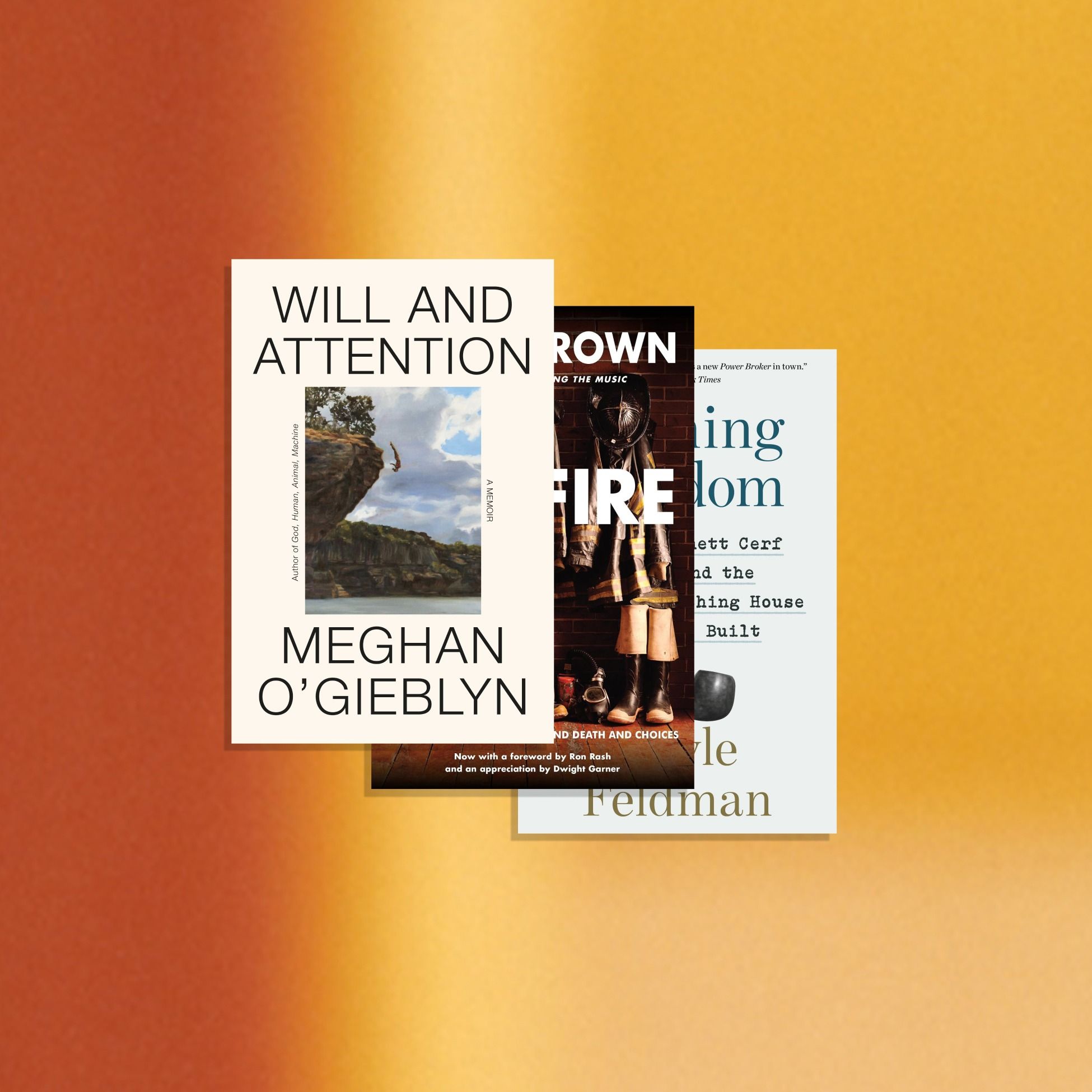
Nothing Random (Gail Feldman, Bennett Cerf biography); Will and Attention (Megan O’Gieblyn); The Disappears (Marlon James); American Hagwon (Min Jin Lee); Into the Wood Chipper (Nicholas Enrich); Biological War (Annie Jacobson); Lives Other Than My Own (Emmanuel Carrère); To the Lighthouse (Virginia Woolf); On Fire (Larry Brown); Betsy-Tacy series; Rabbit Run (John Updike).
Written by AI. May contain mistakes.
The critics share their thoughts on the overall vibe of reading in 2026.
“I try not to think about this too much because that's too much pressure and I can't take it.”
Jen describes 2026 as a searching year for nonfiction literature.
“Can you give me one word or phrase that summarizes books and reading this year?”
Dwight discusses his feelings about the fiction published this year.
“Does the searching feel forced, belabored, or just like a naturalistic evolution of our thinking, of our confusion this year?”
Alexandra shares her views on the split in fiction and nonfiction themes.
“I mean, just a little bit angry, witty, taking nothing seriously, refusing received notions of anything, respecting nothing, you know, in a good way.”
Discussion on how artificial intelligence is affecting literature and writing.
“that feels specific or unique or different to 2026?”
The critics share what they look for in books they review.
“Even if you're avoiding it, even if writers are avoiding it and escaping into other worlds, I don't know how that can't inform what they're doing and how we're processing it.”
Critics share their favorite new books, starting with Nothing Random.
“To start, though, I have an easy question.”
Exploration of the challenges and rewards of reading complex books.
“Should it be through the force of will or our powers of attention?”
Discussion on personal connections to impactful books and authors.
“And so there's even a passage in the book, maybe 25 pages on credit law in France.”
Panelists share books that influenced their reading habits and writing.
“What's a book that you are an evangelist for?”
Discussion on how certain books reflect or illuminate real-life themes.
“But Larry Brown has this kind of deadpan voice and deadpan wit.”
Discussion on how certain books reflect or illuminate real-life themes.
“It doesn't matter what you write, just that you do.”
Panelists discuss books that reflect societal themes relevant to 2026.
“My next question, my next book that I asked you to bring, what's a book that you think readers should pick up if they want to understand 2026?”
The discussion covers the appeal of dual biographies and highlights key book recommendations.
“Like, I diss group biographies, but I actually love a good dual biography.”
A rapid-fire segment where participants shout out books they want to highlight.
“Give me some other books you just want to mention.”

Get the gist, explore an idea or ask about something said.
 Claude
On The Book Review, what are the key points of this episode?
Searching your listeningAutomatic transcript. May contain errors.
0:00Alexandra Jacobs: Sometimes that one thing you've been putting off becomes the thing that can change your life. Whether it's earning a master's degree, building leadership skills, or preparing to take your career in a new direction, Southern New Hampshire University can help. With flexible online graduate programs designed for working professionals, SNHU makes it possible to earn your degree while balancing your busy life. So stop putting off your education. Start today at snhu.edu slash NYT.
0:32Dwight Garner: I'm MJ Franklin, and this is the book review from The New York Times. Today, we have a special treat because we are talking with our New York Times staff book critics. I am here with... Jennifer Salai, and I review nonfiction. And Dwight Garner, I review fiction and sometimes nonfiction.
0:50Jennifer Szalai: And... Alexandra Jacobs, I'm the same as Dwight, but not as good.
0:54Dwight Garner: Oh, stars. And that is why I am excited to talk to you today. Hey, you are our three staff critics, which is notable because in general, in the book world, I think you can probably count on one hand the number of full-time traditional staff book critics. Three of them are in this room.
1:14Jennifer Szalai: I try not to think about this too much because that's too much pressure and I can't take it.
1:18Dwight Garner: Well, the pressure is off, but the praise is there. The praise is heaped on. So I'm excited to talk to you for that reason. But also I'm excited to talk to you because I feel like you're kind of mystery readers. We know the final product. We know the reviews that you put out. But we don't get to peel back the curtain, talk shop, gab as you're thinking, all of that stuff. I think for most readers, not just critics, but most readers, reading can be very solitary. So to get some of the smartest readers, the smartest writers, the smartest thinkers all together in a room and just talk about books. That's what we're here to do.
1:49Dwight Garner: I want to start simple and broad with the year 2026 overall. Can you give me one word or phrase that summarizes books and reading this year? Think of this as the vibe check, just the opening salvo. What has books reading been like for you this year? Jen, you seem lost in thought, so I'm going to start with you.
2:08Alexandra Jacobs: Okay. You know, to distill it to a word or a phrase, for me at least, it feels like sort of a searching year.
2:17Dwight Garner: A searching year.
2:18Alexandra Jacobs: A searching year. You know, I write specifically about nonfiction, and nonfiction does connect to the world that we're living in. And just trying to figure out what that world is, what's going on, where it's going, that's what I've noticed in some of the books that I've been writing about. So for me, that's the word. I'm not sure if it's the right word, but that's the one that came to mind.
2:44Dwight Garner: Does the searching feel exciting? Does the searching feel tedious? Does the searching feel forced, belabored, or just like a naturalistic evolution of our thinking, of our confusion this year?
2:55Alexandra Jacobs: Yeah, I mean, I think it has to do partly with the fact that so much has transformed all over the world, just in terms of the role that this country plays in shaping other countries' experiences. So that's the word that comes up, and I think I use it maybe because it's vague, to be honest. That's why I'm using it, because I'm not sure I'm ready to pinpoint.
3:18Dwight Garner: But Jen, you mentioned that you're thinking about this because of nonfiction. Dwight, Alexandra, you both review a mix of fiction and nonfiction, but how does that sound to you? Is it a searching year? The word I would pick for this year is probably impudent. Impudent. In terms of the fiction I loved, you know, I think the four or five novels and books of stories I loved the most this year were just kind of angry and smart and witty and took on the world in original ways. I can't really, you know, they're sort of omnidirectional books that came from all over the place, and it's very hard to put them under one umbrella.
3:52Dwight Garner: I felt this was a particularly good year for fiction, and I felt lucky to be alive in reading and have health insurance throughout the entire period. I really had a great year, and there were some books I didn't like so much this year, but I'm very impressed with the fiction that came out. What does impudent mean? Oh, impudent. I mean, just a little bit angry, witty, taking nothing seriously, refusing received notions of anything, respecting nothing, you know, in a good way. And we could talk about the exact books, but I even felt that way about the best nonfiction this year. I mean, it was great to read Gary Trudeau's biography, for example, you know, the creator of Doonesbury and books like that.
4:29Dwight Garner: You feel these great, interesting, funny minds in what's better than that. I loved what you just said in the middle of that. You said, just happy to be alive and reading. Oh, agreed. I feel the same. Yeah, I'm constantly amazed. And I have to remind myself because, you know, book critics, we get down sometimes, too. And then I try to remind myself, well, Dwight, you're doing the one thing that you wanted to do with your life, which was read books. You're getting paid to read books for a living. And I have to remember that. I mean, I feel very lucky to have the job that I have. Here, here. Cheers to that.
4:59Dwight Garner: What about you, Alexandra?
5:00Jennifer Szalai: What's the word I would choose?
5:02Dwight Garner: What's the word? I feel like in Bye Bye Birdie, what's the word, hummingbird?
5:05Jennifer Szalai: Right. Well, thank you for the Bye Bye Birdie citation. I would choose oppositional.
5:11Dwight Garner: Oppositional.
5:12Jennifer Szalai: Yes. What I perceive going on in fiction, I'm definitely seeing a sort of split between like the big sort of rich social novel that goes across class lines as opposed to sort of the kind of attenuated spare book of the self that is more internal and whatever. that that's what I saw in in fiction and the medium novels for me kind of fell away and it just the things that really stuck in my craw or whatever whatever non-cliche thing that is not a craw were the big ones and the little ones you know and then when I say oppositional and non-fiction yes I agree with Dwight Angry there's a defiance there are sort of like defiant large non-fiction books or even just the Ari Emanuel's popping into my head.
6:00Jennifer Szalai: You know, it was really like, as I called it, a manifesto. It was like, you know what? Anger's good. Time to be angry.
6:06Dwight Garner: Is there anything, though, out of all of what we've just said, out of this vibe, that feels specific or unique or different to 2026?
6:14Jennifer Szalai: Artificial intelligence. This gigantic shadow of artificial intelligence. It's kind of like Chuck Klosterman wrote about the 90s and he talked about how the internet was coming and almost there. And that's what's going on with artificial intelligence. And what is more affected by artificial intelligence than the natural intelligence of books?
6:32Dwight Garner: Yeah. But are you saying that this feels like it's specific, unique in terms of how we ourselves are approaching and thinking about literature or about the books themselves?
6:41Jennifer Szalai: I think it's subtextually affecting every book that's written right now. Well, if you have a pulse or, you know, if you're at all engaged or aware in the world, you know that books are sort of dissolving into cyberspace, or I don't even know what space it is. They're being scanned. Language itself is being radically revised. And we're now in dialogue, not just with each other, but with machines. Even if you're avoiding it, even if writers are avoiding it and escaping into other worlds, I don't know how that can't inform what they're doing and how we're processing it.
7:22Dwight Garner: I actually felt, you know, I felt several times reading even serious books this year that I was in the presence of AI. I felt that writers are using it. And I felt that, you know, there's at least one writer this year, I think two that I've read in the past. And I feel like their new book just had a bit more plump and had more information. They teased out things that maybe they wouldn't have teased out as much in the past. We're not the police. I mean, we're not here to fact check their AI. But I wonder when it will become part of a critic's job to ask these kind of questions.
7:49Alexandra Jacobs: Yeah, that makes sense.
7:50Dwight Garner: Are you seeing that too in nonfiction?
7:52Alexandra Jacobs: I probably am. I think it's interesting with, you know, there's all kinds of nonfiction, but the books that really want to convey a lot of information, I do wonder sometimes how much of the information gathering process has been done with the assistance of AI. in terms of the writing? I don't know. I mean, AI takes all the writing that's out there and then sort of delivers something that's, I guess, the mean or the median prose.
8:23Jennifer Szalai: Well, yeah, we've identified a chat GPT voice. I mean, I think we even ran stories about, you know, the M-dash, the contested M-dash. Yeah.
8:31Dwight Garner: It's this interesting loop because AI is repeating that because humans use it. And then all of a sudden this human thing becomes a symbol of this artificial thing and like the Ouroboros just continues on and on and on.
8:43Jennifer Szalai: Well, there's also an economy of it, like an economy of language as supply and demand. The fact is there's now more text being generated than ever before. It's kind of makes text cheaper. So it makes the duty of the writer kind of different.
9:00Dwight Garner: Well, how do you parse text? Like when you are reading, I want to peek into your brains a little bit more. When you're reading as critics, are there things that you're always looking for, things that you gravitate toward as critics, as readers? You pick up a book, you always notice this element, or you're seeing this thing.
9:18Jennifer Szalai: I think I notice webs. So like what, you know, what Carol Gilligan would call like webs of social connection or whatever. I'm very impressed when worlds are built and connections are made. I mean, it's a kind of yucky word, but sorry, New York Times games. But anyway.
9:36Dwight Garner: What about you, Dwight? I'm just looking for vitality. You know, a book's got to be alive before I can do anything else, you know, before I can have ideas, before I can tell you about something or build a world. Like all of us here, I pick up a lot of books each week and try to find the good ones. And you normally know within 20 or 30 pages whether this person has a voice where it's alive and can write. What makes something feel alive? What makes it something feel like it has a voice? I think basically what it is is close observation. And people who describe things give your world back to you in a polished way more clean than you've seen it for a while.
10:09Dwight Garner: Martin Amos once called John Updike a, quote, NORAD of close observation, meaning just seeing everything like a fly would see it, you know, and just brilliant images. And that's part of it for me. Part of it is just telling me who I am and who we all are in a newish, smart, interesting way. And honest. Honesty. I mean, Philip Roth said, style doesn't matter. Style doesn't matter to me. Voice matters. There's a big difference between style and voice. And someone with a great voice, I'm just there.
10:40Alexandra Jacobs: I really like what you said, Dwight, about vitality. When I'm reading something, I'm looking to be surprised. Those are the things that get my marginalia going, I guess, which is a moment where an author either puts things in such a way, so at the level of language, or at the level of thinking, I guess, connects different things. what you said. Can you read your marginalia?
11:08Jennifer Szalai: Because that's another hallmark of my reading is that I take fantastic notes and then I cannot decipher my marginalia. I have to rely on my memory. We all know how that goes.
11:20Alexandra Jacobs: I have had instances where I have no idea what I was saying at a certain point when I read something. But for the most part, I can decipher my little scratchings. But yeah, I like with a lot of nonfiction where the author thinks that their main purpose is to deliver information. And that's definitely like a certain genre of book, and it's an important genre of book. But I like the author who also says, no, you know, I also want to convey this story. I want to convey this idea in a way that is not just about doing the work, that they're doing something else with it, that they turn it another notch.
12:01Alexandra Jacobs: And that's always what I'm looking for.
12:04Dwight Garner: We just talked about what we look for big picture in books, what excites us. I want to pivot to individual book recommendations, but first I think we should take a quick break.
12:25Thank you.
12:55Alexandra Jacobs: makes it possible to earn your degree while balancing your busy life. So stop putting off your education. Start today at snhu.edu slash NYT. Mont Blanc invites you to pause, to reflect, to write. What does it mean to write? A note, a scribble, a novel. It doesn't matter what you write, just that you do. Because when pen meets paper, we connect with ourselves and the world around us. Montblanc writing instruments like the Meisterstück are crafted for the words that matter. Montblanc. Let's write. Find your perfect writing companion at montblanc.com. This episode is supported by Anthropic, the team behind Claude.
13:42Alexandra Jacobs: Somewhere between the third meeting of your day and the 14th browser tab, There's not a lot of room for the work that really matters. Claude makes room. It takes on the forms, the follow-ups, and the deck that needs reformatting. You get back to the parts you think matter most. Bring Claude into your work at claude.ai.
14:11And we're back.
14:13Dwight Garner: I'm MJ Franklin. I'm chatting with our staff, book critics Dwight Garner, Alexander Jacobs, and Jen Salai about their year in reading. Before the break, we were chatting about the vibe of the year overall, and now I want to get to some specific book recommendations. To start, though, I have an easy question. What's a new 2026 book that you love and that you want to put on readers' radars?
14:38Jennifer Szalai: I'll start. Yes. I want to put on readers' radar Nothing Random by Gail Feldman. This is one of the first books I reviewed this year, I think. It is a 1 ,072-page biography of Bennett Cerf that Feldman worked on for over two decades. And I believe it is the new power broker. It is the power broker of the publishing world.
15:02Dwight Garner: Nothing Random being specifically about Bennett Cerf. It is a biography of Bennett Cerf who co-founded Random House,
15:07Jennifer Szalai: which means he's indirectly responsible for a huge portion of the books you read today, because through a series of mergers and acquisitions, Random House became Penguin Random House, which is the largest publisher in the world.
15:19Dwight Garner: You just heaped huge praise on it. It's the new Power Brokers. I did. The book everyone should read. Why did you love it? Why did I love it?
15:25Jennifer Szalai: We're sort of in an era of group biographies. I think it's sometimes you feel like, oh, the individual life maybe doesn't quite carry a whole 300 pages or whatever it's going to be. I absolutely adored that Gail Feldman devoted 20 years, over 20 years of her life to this figure who is fascinating. Because sometimes with these group biographies, I feel a little like the individual life is being cheated. And in the case of Bennett Cerf, he not only was this incredibly important seminal, dare I say, publishing figure, but he was very much connected. He was sort of one of the first media synergists in that he dated movie stars and he appeared on television and he wrote columns and he published these ridiculous middlebrow humor books like Bennett Cerf's Book of Atrocious Puns, which now adorns my coffee table.
16:17Jennifer Szalai: And he's just a portal into many, many worlds of the 20th century and a fascinating personality. And, you know, this book, she just gave it her all. And she went into all the archives and all his writings and all the writings of the other people and all the correspondence. And in a way, when you asked us before for a word to describe our year, like I would say this is a breakout book, should be a breakout book of the year because of its valedictory, am I pronouncing that right, nature. This is old fashioned biography. I think The Power Broker has been the sort of default big biography. Why not, Bennett Cerf?
16:54Jennifer Szalai: You know, like books are as important to our, books are our mental infrastructure. So, you know, Robert Moses doesn't even extend outside of New York. So why is that book the default? Whereas Bennett Cerf, his tentacles encircle the globe. So read this damn book.
17:10Dwight Garner: Alexandra, I'm sold. What about you, Jen? What's a 2026 book you love?
17:15Alexandra Jacobs: So this is a book that I actually just recently reviewed, and it's called Will and Attention, and it's by Megan O 'Geeblin. And actually, it maybe fits in with our searching theme. So O 'Geeblin is somebody who grew up in the Midwest in a Christian fundamentalist family. She basically lost her religion in her 20s. I mean, she was very serious about it. She studied to go into the ministry and then eventually lost her faith. And then she fell into alcoholism. And so this is actually a book of what happened after that, which is about a decade later, she decided she would try to convert to Catholicism, of all things.
17:56Alexandra Jacobs: She started attending mass secretly. This was all secret. She kept this from her husband. Wow. She started talking to a priest about converting. And then she failed to do it, basically, because the priest at a certain point asked her why she wasn't having babies. And she realized maybe this wasn't for her. But shortly after that, she ended up falling into drinking again. And so this is a story. It's one of those things that it sounds like on the surface a religious memoir as well as a recovery memoir. But in fact, it's something that's a little weirder than that, and I really appreciated it. She's very interested in large questions of meaning, not only connected to religion, but also philosophy.
18:46Alexandra Jacobs: And the title comes from a quote by the French mystic Simone Weil. And that sounds, I know, very cerebral. And it is, but it basically has to do with this idea of how we interact with the world. Should it be through the force of will or our powers of attention? And they saw those things as actually quite distinct. And that attention has to do with something that's not willful. It's not about focusing on something really hard. You know, she's a searcher or a seeker. And that fascinates me.
19:24Dwight Garner: Alexandra, when Jen brought this up, you started making excited hands.
19:28Jennifer Szalai: Now, I can't remember if it was for the alcoholism or...
19:34Dwight Garner: Do I save us? What is your 2026 book that you love? Well, I think that my best book of this year, famously, perhaps infamously, is Marlon James' novel, The Disappears. It's one of the best novels I've ever read. And, you know, you do this for a while, as I've done, and you're not used... I haven't had a reading experience like this for a long time, like a long time. a book that just took me over. And I felt that I was in the hands of a major writer. And there are a lot of brilliant writers out there that I love. I think of them as great kibitz-y fiction writers. They're in touch with the world, and I love them, and I'll read them forever.
20:10Dwight Garner: But reading Marlon James Disappears, I felt like this was something like Dreiser. This was like a car with big chassis. You know, it's in for the long haul. And it just runs you over again and again and again. And adding to that, it does have the wit and the observation. It has like, it's this enormous tree that flowers the weeds grow under. And you're aware of both at the same time. And I think it's extraordinary. I love that metaphor. An enormous tree that flowers with weeds under and you notice both. But yeah, you're always aware of the goddamn tree. And it made me feel, the last thing I'll say about it is that it made me feel, in a way I haven't felt for a long time.
20:47Dwight Garner: When you're young as a reader and you think like these dinosaurs walk, these great writers are walking the earth, whether it's Iris Murdoch or name your person. And I felt like Marlon James is now one of these writers. I feel like, you know, I'm living like four miles away from Marlon fucking James. I just think this novel is built to last. Can you convince someone who sees this book and thinks, this is too long, this is too violent, and just like write it off, just based off of that? How would you convince someone to pick it up? You know, I'm not sure this book is for everyone. I would encourage you to try.
21:21Dwight Garner: It's difficult in three or four different ways. The first way is it doesn't really get going for a pretty long time. I mean, it's interesting from the start, but you can have this sense that, well, maybe this isn't going to come together. That's easy to have if you don't push on. B, it is a over-the-top, intense, almost brutal gay sex novel. I mean, the sex in this novel is more out there, rauncher than any book that I've read for a very long time. And part of the reason the sex might be so forceful in this book, I think, is that male writers in general sort of backed away a little bit from this kind of intense feelings about sex, putting that into their fiction, worrying they'll be seen as, you know, name your whatever, just be seen as misogynistic, sex-obsessed, lausher.
22:03Dwight Garner: So our male writers don't go there anymore in this kind of way, at least not very often. So watching Marlon go there, not just go there, but go there and go there and go there. And then it's also quite violent, as you mentioned. So this is not for everyone. But I would say that it's worth persevering. It's like one of those books, you're in college, there's some reading that's almost like penitential reading. You have to read it to understand the world, even if it's not always easy. And I think this is one of those novels. I love this book. And then I also love just difficult books in general.
22:32Dwight Garner: There's something that is so rewarding about encountering a book that challenges you.
22:37Jennifer Szalai: And you mean it's difficult, this one, because it's painful to read or because the prose is actually impenetrable and highfalutin or anything? No, no, no. It's not highfalutin at all. So what's difficult about it? What do you mean exactly?
22:48Dwight Garner: I think it's the pain of it. It's the heaviness of it. And then also quite literally like the novel itself. And so for me, it's a challenging novel, but I finished this book and I thought Marlon James did that. And I love that feeling when you finish a difficult book and you're like, I'm glad I stuck with it because I've gotten so much out of it. And or I'm glad I read this book because I'm just thinking I'm percolating and in this very active, active kind of place.
23:16Jennifer Szalai: It's also very challenging to find right now because of Dwight's. But it's not challenging the way, like, it's not like the Ring trilogy.
23:22Dwight Garner: You know, you go to the opera and suffer for 15, because it's great, but, you know, you're glad you survived it. This is not that kind of thing. This is like, it's an intense experience all the way through. And it's difficult in part, I think, because there's so many voices talking. And I lost track almost, you know, I lost track a lot. And I found it back again. But in the end, it doesn't matter. Because they're almost, it's almost like a chorus. They're all singing together. And it doesn't matter. They're telling similar stories and they branch off and it doesn't matter in the end.
23:51Jennifer Szalai: I felt the same way about American Hagwon by Min Tim Lee. Yes. So this is freshly reviewed. I adored this book. I also feel it is a flowering tree and all of that. There is sex. There's even a little violence. I think it's incredible.
24:06Dwight Garner: And there are parallels in terms of the profile of this book and this author. Marlon James's previous book, A Brief History of Stop and Killings, came out 10, 11 years ago, similar for Pachinko and American Hogwan. So this is a big, major writer, heavily anticipated book that's been percolating for like a decade.
24:26Jennifer Szalai: Thank goodness I liked it. No, I mean, I was anxious because, you know, Pachinko was such an enormous phenomenon. I think this book is better than Pachinko.
24:37Dwight Garner: Tell me more.
24:38Jennifer Szalai: Well, first of all, because it's about you would never to describe it. It's not going to sound so, you know, it's not going to sound like exciting subject material. A hagwon is a type of cram school or private academy in Korea that supplements regular schooling. And I think something like 75 percent of Korean youth attend these schools to prepare for the intensely competitive college process, be that in Korea or coming to America or other countries. And so the title describes a hagwon that expats sort of build in Orange County. You know, it's not even it's like in some no offense to Orange County, but, you know, it's not it's not on the main highway of American literature.
25:25Jennifer Szalai: But the point is, you wouldn't think that this would necessarily be a fascinating book because what is what none of us want to revisit that period of our lives when we were studying to this all this stuff to get into college in the future.
25:38Dwight Garner: Menjin Lee takes us there. And what makes it stand out? What makes it so special?
25:42Jennifer Szalai: What makes it stand out is that it's a huge constellation of characters pursuing what we all are pursuing, which is happiness and fulfillment and success in life. And the center of the novel is a family. Basically, they're knocked down a couple rungs in the economic tableau. And so it's kind of about perseverance in a certain sense. I mean, the themes emerge really gradually. I would say that the major idea is like, what is this all for? Like, what is really important? What are we doing when we push our children and ourselves to achieve and to strive? And what is really important about education?
26:23Dwight Garner: We were talking about the power of books to search, to form connections, to crack open questions. It sounds like this book is doing exactly that.
26:31Jennifer Szalai: Absolutely. And I just want to press this book into people's hands.
26:34Dwight Garner: So that actually leads me to my second question. I want to know, what's a book, new or old, that you're just an utter evangelist for? A title that you think, this is my book, this is the book that made me, this book is just the best, everyone should read this book. I'm going to start with you, Jen.
26:53Alexandra Jacobs: This is a book, Lives Other Than My Own, by Emmanuel Carrere. Ooh, I don't know this book. Carrère is a French writer. He's written a number of fantastic books. This one is a very unusual one in the sense that it starts out with him and his partner in Sri Lanka in 2004 when the tsunami hits. And so they're there when this horrible tragedy hits. They befriend this couple who's lost their daughter, who was drawn out to sea. And then the book switches because then they go back to France. And so we already have this very intense opening few chapters about what happened in Sri Lanka. And the book switches to the life story of the sister of his partner, this 30-something judge who's dying of cancer.
27:45Alexandra Jacobs: And so this is a book where Carrere, who is famously very self-absorbed and very self-referential, I mean, that's part of what makes his books great. But this is a book where he's talking about lives other than his own. And so he's telling the life story of this judge. She's a small claims court magistrate, so working in the provinces, very humble life, but at the same time, you know, she's doing very important work protecting, I guess, people who come to her for help dealing with, say, creditors. And so there's even a passage in the book, maybe 25 pages on credit law in France. But Carrere is just one of these writers.
28:28Alexandra Jacobs: One of the things that I really appreciate about this book is that only he could have written it. And I think when I was introduced to it, there's something very deceptively simple, I think, about his sentences. But I sort of realized, oh, wow, you can do something like that. There was nothing like it that I had read before.
28:51Dwight Garner: I love books like that where you read it and you're like, I didn't know you could do that. My book that I'm evangelist for is To the Lighthouse by Virginia Woolf. I read it when I was a freshman in college. So it's tied up in my mind with this idea of reading academically, reading at an elevated level. And I remember thinking, I didn't know that time could move this way. I didn't know that consciousness could move this way. So encountering a book that you think, new level unlocked.
29:16Alexandra Jacobs: Yeah. And I have to say, I mean, this particular book by Carrere, I mean, it does share with all his other books. I mean, he's a very clean writer. There's not necessarily a lot of fireworks, but there's always, you know, these sort of larger moral questions, I guess, running under the book. But also, some of the sentences are just so startling, even though they're just very simple. Love that. Yeah.
29:43Dwight Garner: Of that. Dwight, you're up. What's a book that you are an evangelist for? I mean, I'm tempted to say make way for ducklings, but I won't. There's a series of books that I read when I was young and sort of just made me want to be a serious reader as well as a writer, if I could become that. Jessica Midford's American Way of Death was one, just because the way she rips the lid off this great topic, and she's so entertaining about it. Paul Fussell's class and his book, The Great War in Modern Memory. Again, just for like, that guy throws thunder. He just throws thunderbolts, Paul Fussell. and also Calvin Trillin's books about food.
30:12Dwight Garner: They're called collectively the Tommy Trilogy, but I hate that name because it makes them seem cute and stupid. The Tommy Trilogy? Yeah, but their initial titles are American Fried, Alice Let's Eat, and Third Helpings, which A, introduced me to sort of vernacular food all around us and why it matters. This was way before we were a foodie nation. And also, I didn't know what the New Yorker was growing up, you know? And like, this is how the New Yorker writer sounds. I want to read this. At least I wanted to read him. But the book I'm going to shill for is a bit more lowbrow in the best way possible.
30:40Dwight Garner: A memoir by Larry Brown, the late Mississippi writer, called On Fire. And Larry Brown was not only a terrific fiction writer who read his short stories, but he wrote this memoir about being a fireman in Oxford, Mississippi. And it is just profound, low to the ground. I know a lot of men who just don't read, my family and elsewhere. And this is a book that, you know, if you think you don't like books, try this book. Because he's just smart. And it's a moving book, too. But a lot of things happen to firemen. And it's a great story of the South and On Fire by Larry Brown as a book that I can read every five years and be happy.
31:12Dwight Garner: What was it about this book that just connected with you at the time that you read it? Well, you know, I've always been a big fan of Southern lit writ large. But Larry Brown has this kind of deadpan voice and deadpan wit. And the world kind of bounces off him in a funny way. And even though we all like all sorts of books, give me some pretentious books, I'll read those. But there's something about this utter lack of pretension that somehow makes this book rise above books that are vastly more pretentious in terms of its seriousness. And it's also just a good story. Like, it's interesting. It begins with him in a firetruck on literal fire.
31:45Dwight Garner: And he has interesting things to say about every aspect of what it means to get ready for this and to prepare for this kind of career and to want to become a writer. And it's all there. I love that. Alexandra?
31:57Jennifer Szalai: The book or books that made me, certainly the first one that comes to mind is actually a series. And that was the Betsy Tacey series by Maude Hurt Lovelace. The Betsy Tacey series, one of the things that's so beautiful about it is it starts out as children's books, Betsy Tacey, and then it's Betsy Tacey and Tibbs. So it's about female friendship, really. And they live in Minnesota. And so it was this foreign world to me. It was like, oh, this is America. Like, here I am growing up in New York, but there's beautiful hills, deep valleys. and the fresh air and flowers. And it was a sort of pastoral.
32:31Jennifer Szalai: But for anyone who doesn't know about the series, it was never made into a movie. There's a kind of cult around it. I think there was a Betsy Tacey convention in Minnesota for many years. Wow, I love this. Yeah, so that was the book that made Little Me. And then the book that made Big Me, you know, I'm going to have my pay docked if I mention John Updike again. I feel like at this point, I'll defend you.
32:50Dwight Garner: I want to know more. Pump it into my veins.
32:52Jennifer Szalai: I think Updike, the thing is, I believe he's fallen a bit, slightly out of fashion. And but the fact is that I went to college for literature and I studied literature the whole way through. And then the book that most affected me, I was about to graduate and some visiting German man said, oh, I hear Updike is, you know, whatever. So I read Rabbit Run and I was off. And I think John Updike is the reason I didn't go to graduate school, which brings us back to American Hagwon connections. Everything is connected, the web of everything.
33:23Dwight Garner: Incredible. Yeah. Coming up, biological war, civil servants, and hagwons.
33:43Alexandra Jacobs: Sometimes that one thing you've been putting off becomes the thing that can change your life. Whether it's earning a master's degree, building leadership skills, or preparing to take your career in a new direction, Southern New Hampshire University can help. With flexible online graduate programs designed for working professionals, SNHU makes it possible to earn your degree while balancing your busy life. So stop putting off your education. Start today at snhu.edu slash NYT. Montblanc invites you to pause, to reflect, to write. What does it mean to write? A note, a scribble, a novel. It doesn't matter what you write, just that you do.
34:27Alexandra Jacobs: Because when pen meets paper, we connect with ourselves and the world around us. Montblanc writing instruments like the Meisterstück are crafted for the words that matter. Montblanc. Let's write. Find your perfect writing companion at montblanc.com. This message is brought to you by Apple Card. The fall season always brings its fair share of surprises, like the first snow or a late night trip to the store for your kid's school project. No matter what the season brings, Apple Card's got you covered. You can earn 2 % daily cash back when you use Apple Card with Apple Pay. Apply for Apple Card now and use in minutes with Apple Pay.
35:06Alexandra Jacobs: Subject to credit approval, Apple Card is issued by Goldman Sachs Bank USA Salt Lake City Branch. Terms and more at AppleCard.com.
35:18Dwight Garner: My next question, my next book that I asked you to bring, what's a book that you think readers should pick up if they want to understand 2026? This can be a new book that's just come out in 2026, or it could be something more amorphous. It could be like, oh, everyone feels alienated this year, and here's a novel that really taps into that theme. Up to you. Jen?
35:38Alexandra Jacobs: This is a book that I didn't review. It's from this year. But I thought that as a document about everything that's happening, it was fascinating. And it's called Into the Wood Chipper by Nicholas Enrich. Enrich was an officer at USAID when it was basically dismantled. He worked there for probably about 15 years, I think. He prepared his whole life for this career in foreign aid and development. And what makes this book, I think, so fascinating to me is that Enrich, unlike, say, a politician who writes an insider memoir, this is a guy who is a career civil servant. So he approached work in terms of, okay, this is the mission of the agency and this is what we're supposed to be doing.
36:31Alexandra Jacobs: And then he heard word that the new administration wanted to cut costs. And so he thought, okay, there's going to be some big changes in store. But as the days pass and all of the events that he recounts basically take place over a few weeks, essentially, right at the beginning of the second Trump term, it becomes increasingly clear that the goal is not to streamline, not to cut costs. It really is to decimate the agency that he works for.
37:03Dwight Garner: So this sounds like it is a honed, specific, deep look at this person's experience. But in terms of just 2026 overall, what did it illuminate?
37:14Alexandra Jacobs: Well, I think what it illuminated is what was happening at the level of these agencies, inside of these agencies that, yes, now people are maybe reflecting on what Doge did, but people don't necessarily think in terms of, okay, what was the administrative state? What did it do? What was the purpose? Why did it exist?
37:38Dwight Garner: We hear a term like the administrative state, and it's kind of a black box. Yeah, and people's eyes glaze over.
37:44Alexandra Jacobs: I mean, understandably, you know, I mean, it sounds so abstract. And I think what he does very well is just by documenting day by day exactly what happens, he shows that it was utterly bewildering. This is all also taking place when they discover that there was an Ebola outbreak in Uganda at the beginning of 2025, and their responses to it were totally stymied. And nobody in power actually, nobody in power who was left anyways, actually seemed to understand what was going on or even really cared. And I think that that is illuminating in a way that's maybe not pleasant to read about, but I will also say it's very readable.
38:31All right.
38:32Dwight Garner: Dwight, what's a book that you think readers should pick up if they want to understand the year 2026? Well, you know, MJ, my favorite works of fiction this year, after The Disappears, one was Colson Whitehead's Cool Machine, the last of his Harlem Crime series. Maybe the most entertaining book I read this year. Colson Whitehead is, the only comparison I can make is our current Saul Bellow. I mean, he could just do it all. And he's always right on top of everything. He can and he has. He's written so many books across such a range of styles. I prefer his Harlem Crime series to his more canonical titles.
39:04Dwight Garner: I think he's looser. Nancy Lemons, The Oyster Diaries, this witty New Orleans-centric novel, was a great discovery this year. Her backlist, all of her stuff, is fantastic. And Sigrid Nunez, who's sort of my darling, she has a new book of short stories, but I've never read anything of hers that I've disliked. But for the book that—I hope this doesn't describe the year, but there are inklings out there right now—Biological War by Annie Jacobson. The first thing you should know is it reads like a rocket. I mean, it is like the most gripping novel. Tom Clancy Wishes. He had 1 % of the talent she has for telling just a really, I hate the word compelling.
39:42Dwight Garner: I've never used the word compelling in print, I don't think. Here we are. What she does is she knows a lot about biological war and how this could lead to the end of our species. But she tells it all using real information, the way things would actually happen. And the agencies will be involved, the people, tells a story, essentially. And the story begins with a lab leak in Russia. And this story, I think I wrote that I put it down once to whip off the sweat. And it sent me back to read her previous book called Nuclear War, which is just as good. And if you want to read something, it will keep you up at night, both because it will terrify you, but also just because you can't put it down.
40:18Dwight Garner: I would say read Annie Jacobson's Biological War. Go check it out, everyone. Alexandra, you're up.
40:24Jennifer Szalai: These are not the books that I want to recommend exactly, because they don't necessarily need surfacing. But if you're asking what I think I read this year that really would offer an alien from the future, what 2026 is, I would have to cite both Jill Biden's memoir, also Giselle Pellicot's, unfortunately, more relevant than ever. And then there's a smaller book that I found interesting that said something explicit about 2026, and that would be The Story of Your Life by Catherine Jizer Morton, who's a columnist for New York Magazine. I hadn't really followed at her comms much because she writes about parenting a lot, and I'm sort of past the stage where I've sort of given up on my children and their internet use.
41:07Jennifer Szalai: But the book, The Story of Your Life, it looks into all the questions I'm interested in that Ben Lerner's transcription also addressed, and to the lesser extent, maybe Rachel Kuss' Life of M, which is how are phones and how is our digital environment changing our lived environment? Not just that, what What Jaser Morton really focuses on is how is it changing the way we actually tell stories about ourselves and each other. And she really let me into the mind of someone who's growing up with this stuff as opposed to, you know, coming. Yeah. Encountering it later. Yeah, exactly. So I think it's very worthwhile.
41:43Dwight Garner: Okay.
41:43Jennifer Szalai: But it's not that those aren't the sleeper books that, you know, those aren't the ones that I want to push because I don't think they need my pushing.
41:50Dwight Garner: What's one more that you would want to push?
41:51Jennifer Szalai: Well, the two I want to push. Sorry, MJ. One is The Wonderful World That Almost Was by Andrew Durbin, which continues in my oppositional theme. Like, I diss group biographies, but I actually love a good dual biography. I also love an autobiography or memoir that has, like, a really jousting co-writer or ghostwriter, because I think that tension is always obvious. Anyway, The Wonderful World That Almost Was by Andrew Durbin is about the photographer Peter Hoosier, who took the famous photograph on the cover of Hanya Yanagihar's A Little Life and others and the candy darling on her deathbed and the painter sculptor Paul Tech.
42:27Jennifer Szalai: And, you know, these men were friends. They were lovers. They were colleagues. It's about the art world of the 80s and AIDS ravaging it. And it's just a beautiful international. It's one of those beautiful nonfiction books that reads like a novel. So I highly recommend that one. And the other ones, perhaps surprisingly, certainly surprisingly to me, was Dave Eggers' novel Contra Posto. Let's hear it for the late midlife resurgence of a writer that I'd kind of given up on or reduced to, you know, 90s. I don't know what I'd done, but I'd sort of not attended to Dave Eggers for several years or maybe even a decade or two.
43:05Jennifer Szalai: And I love this book to my great surprise, also about the art world in a way, but also about the kind of class crossing. The same things I admired in American Hagwon, where it has a bit of an epic sweep and, you know, really just a beautiful love story.
43:21Dwight Garner: For me, this gets out, I didn't answer the question of what I think my word would be for the year. My word or phrase would be so back. Big books are back, but then also so many iconic authors are returning. Yes. Dave Eggers, Mingen Lee, Marlon James. We are so back. We are so back. So I'm glad you mentioned that one too. Let's do lightning round. Give me some other books you just want to mention. Just mention the title, author, and just the things you haven't gotten to, but you want a shout out. I'm going to start with you, Dwight. Barbara Trapido, a novel called Brother of the More Famous Jack.
43:55Dwight Garner: Terrible title. British writer, came out 40 years ago, newly discovered. Fantastic. Alexandra, any that you haven't gotten to that you want to mention?
44:01Jennifer Szalai: Okay, I'm out, baby.
44:04Alexandra Jacobs: I'm out.
44:04Dwight Garner: Jen?
44:05Alexandra Jacobs: Love and Hydrogen, a short story collection by Jim Shepard. It came out about 20 years ago. The title story is about two mechanics on the Hindenburg in 1937 and their illicit love affair.
44:20Dwight Garner: Love that. I would add Trash, the novel by the garbage man in Canada. Simone Perret-Boupart. Memoir, right? Yeah. Short, thin, funny, great trash. Thank you so much. This was great. Thank you for having us. The Book Review is produced by Sarah Diamond, Amy Pearl, and Patricia Subodan, and mixed by Pedro Rosado. Original music by Dan Powell and Alicia Baitou. Special thanks to Dahlia Haddad. We want to hear what you think about the show, so send us an email at thebookreview at nytimes.com. I'm MJ Franklin, and for Gilbert Cruz, thanks for listening.
45:07Alexandra Jacobs: Mont Blanc invites you to pause, to reflect, to write. What does it mean to write? A note, a scribble, a novel. It doesn't matter what you write, just that you do. Because when pen meets paper, we connect with ourselves and the world around us. Mont Blanc writing instruments like the Meisterstück are crafted for the words that matter. Mont Blanc. Let's write. Find your perfect writing companion at montblanc.com.
As much as we love hearing from authors on “The Book Review” podcast, there are precious few who have read more than our staff book critics — Jennifer Szalai, Alexandra Jacobs and Dwight Garner. The three came on the show to talk about some of their favorite books of the year so far, as well as a few of the titles that helped shape their reading lives.
Books discussed on this episode:
Subscribe today at nytimes.com/podcasts or on Apple Podcasts, Spotify and Amazon Music. You can also subscribe via your favorite podcast app here https://www.nytimes.com/activate-access/audio?source=podcatcher. For more podcasts and narrated articles, download The New York Times app at nytimes.com/app.
Hosted by Simplecast, an AdsWizz company. See pcm.adswizz.com for information about our collection and use of personal data for advertising.