
 Ask ChatGPT


 The Book Review
23 Oct 2026 · 52m · 30 chapters
Halloween-themed horror reading recommendations from two bestselling writers, plus discussion of what scares them, what makes “horror” horror, and how horror relates to loneliness, shame, and the real/imagined boundary.
Written by AI. May contain mistakes.
Discussion about the excitement of Halloween and scary stories.
“The story that really hit me in that book was The Boogeyman, and I remember reading it, and I was terrified.”
Gilbert introduces Leigh Bardugo and Paul Tremblay, highlighting their notable works.
“Halloween is nearly here, and everyone that knows me knows I talk way too much about how this is one of my favorite times of year.”
Leigh discusses her experiences with Halloween and costumes over the years.
“Leigh Bardugo, welcome back to The Book Review.”
Leigh shares her childhood Halloween memories and experiences with costumes.
“I mean, it was, you know, what it always is, the predatory attempt to gain as much candy as possible.”
Leigh recalls books from her youth that were both delightful and creepy.
“I'd love to hear about some early creepy fiction.”
Leigh reflects on her reading habits as a child and her journey to more adult literature.
“Is that where he's, it's a vampire bunny, but he sucks the orange out of carrots?”
Discussion about different types of horror and what scares Leigh now compared to childhood.
“And was there a moment when you realized you're making the leap to more adult things?”
Leigh suggests books for those new to horror, emphasizing accessibility.
“Lee, what is a great book that I can start with?”
Leigh discusses what defines horror and the emotions it can evoke.
“which I think would appeal to a lot of people who maybe don't think they like horror.”
Explore the definitions and elements that categorize horror literature.
“and then moves into a kind of survival horror space.”
Discuss notable works in gothic horror and their thematic elements.
“But it's a story that's been told many times.”
Analyze Edith Wharton's short story 'Afterword' and its themes.
“And I thought this was such a jewel of a short story.”
Reflect on the themes of loneliness and connection in vampire stories.
“You are going to be in New Orleans for the 50th anniversary celebration of Anne Rice's Interview with the Vampire, a book that has been adapted into film and recently a TV series.”
Get book recommendations for Halloween suitable for all ages.
“And when I read this book, you know, Gamian and I didn't know.”
Discussing the personal significance of Halloween and horror stories.
“We got to jump in and talk about the reason for the season.”
Paul shares his childhood experiences with horror films that shaped his love for the genre.
“I've always had like this love, terrified relationship with horror.”
Exploring childhood Halloween costumes and experiences in Salem.
“I still vividly remember a nightmare I had of the movie Attack of the Killer Shrews, which has since made an appearance on Mystery Science Theater 3000.”
Paul recounts his academic experiences and literary awakening through a significant story.
“So like, I don't really necessarily do anything super special.”
Discussion on the story 'Where Have You Been?' and its influence on Paul as a writer.
“So like when I was in college, Providence College, and I fumbled my way into being a math humanities major.”
Reflecting on teaching experiences and recommending horror literature to students.
“I think, you know, the 21, 22 year old who would have heard it being described, I'd be like, oh, that's not what I'm looking for.”
Discussing appropriate horror books for young readers and their appeal.
“This is one that I recommend to younger people all the time.”
Suggestions for introducing horror literature to those hesitant to try it.
“So John Klassen's The Skull, it is primarily illustrated, and it's about a little boy who lives in a big stone house in the woods, discovers a skull.”
Discussing how to introduce kids to horror themes and literature responsibly.
“Like, I think people really miss talking about that.”
Discussion on children's resilience towards horror media and personal anecdotes.
“actually a seventh through 12th grade school, so I had a wider range of kids, my first response is like, well, you know your child better than I do.”
Discussion on children's resilience towards horror media and personal anecdotes.
“It doesn't matter what you write, just that you do.”
Exploration of childhood reading experiences that shaped horror interests.
“I have to admit to having written a bunch of paper, you know, high school papers, probably on the same Edgar Allan Poe story or poem.”
Discussion of scary book recommendations for those wanting chills.
“And so there was a sense that Edgar Allen Poe, you'd never think of it now because he's associated with Baltimore and Maryland, but that he was an author of the region in his own way.”
Highlighting lesser-known authors in the horror genre deserving attention.
“I don't know if it's a novel or a novella, but another editor at the Book Review had been talking about this book for years.”
Discussion on favorite horror books to share on Halloween.
“And it sort of takes the conceit of the movie The Ring, but treats it as a, she calls it a power contagion.”
Examining how modern horror intertwines with political themes.
“Again, I'm going to split it for two if I could.”

Get the gist, explore an idea or ask about something said.
 Claude
On The Book Review, what are the key points of this episode?
Searching your listeningAutomatic transcript. May contain errors.
0:00Paul Tremblay: Sometimes that one thing you've been putting off becomes the thing that can change your life. Whether it's earning a master's degree, building leadership skills, or preparing to take your career in a new direction, Southern New Hampshire University can help. With flexible online graduate programs designed for working professionals, SNHU makes it possible to earn your degree while balancing your busy life. So stop putting off your education. Start today at snhu.edu slash NYT. The story that really hit me in that book was The Boogeyman, and I remember reading it, and I was terrified. And when that fear started to wear off, I read it again.
0:41Paul Tremblay: It was like, you know, don't touch the hot stove, but you want to touch the hot stove.
0:46Leigh Bardugo: I'm Gilbert Cruz, and this is the book review from The New York Times. Everyone, I am so very excited. Halloween is nearly here, and everyone that knows me knows I talk way too much about how this is one of my favorite times of year. Scary books, scary movies, horror in general. I love it all. And this week, I've invited two writers on the show to help us all get into the Halloween spirit. First is Leigh Bardugo, the best-selling author behind the Grishaverse series, as well as the Ninth House trilogy, which just concluded with the release of her latest novel, Deadbeat. Lee and I talk about the books that terrified us both as kids, our shared love of the author Anne Rice, and what makes a really good horror story.
1:33Leigh Bardugo: Then I'm joined by Paul Tremblay, the author of The Cabin at the End of the World, A Headful of Ghosts, and this year's Dead But Dreaming of Electric Sheep. Paul talks about the short story that changed his life, why he was such a scaredy cat growing up, and some of the horror books that he thinks everyone should check out. New to horror, a lifelong horror head, doesn't matter who you are. This is a recommendation-filled episode, and we have something for everyone. Leigh Bardugo, welcome back to The Book Review.
2:05Paul Tremblay: Thank you for having me. I'm really excited to be here, especially for Halloween.
2:09Leigh Bardugo: Good, good. We last spoke in 2024 upon the release of your book, The Familiar. You're back. You're here with Deadbeat, the final book in your Ninth House trilogy. Has anyone ever dressed as one of your characters from this trilogy or otherwise for Halloween?
2:27Paul Tremblay: Yes. Many people have.
2:28Leigh Bardugo: Do they send you pictures? Tell me. I want to hear about this.
2:31Paul Tremblay: Yes. Usually they post them online. The only place you can find me on social media is Instagram. So they will usually post and tag me. and this year because Deadbeat just came out we've actually seen some cosplay from that series as well. There's a character named Daz in that series where she's always in a sweatshirt with her headphones around her neck so it's a really, really easy costume.
2:56Leigh Bardugo: I'm going to have to break that one out because I haven't put too much work into my costume this year.
3:00Paul Tremblay: Well, you have a kid and I feel like that means that that's where the focus goes.
3:06Leigh Bardugo: A lot of energy goes into that.
3:08Paul Tremblay: Yes.
3:09Leigh Bardugo: Let's talk about Halloween. This is the month where I thrive. It might be important for you. I want to hear about Young Lee. What was Halloween like for Young Lee?
3:21Paul Tremblay: I mean, it was, you know, what it always is, the predatory attempt to gain as much candy as possible. You know, my mom was working more than full time. So that was actually kind of a sacred holiday. I think the way other families treated like Christmas, you know, and said, this is the day I have to have off. That was the one day my mom said, I have to take my daughter trick-or-treating. So it was a very special night. Was it?
3:48Leigh Bardugo: I'm a witch. I'm a skeleton. What was your style?
3:51Paul Tremblay: Well, I will tell you, I experienced a great deal of disappointment. This is the first moment of me feeling disappointment as a consumer, because I remember very specifically buying a Batgirl costume. And it was one of those boxed costumes where it's a mask and it's a kind of plastic smock. And I thought I was going to look like Batgirl. And instead, I looked like I was wearing a plastic smock. And it was just a huge let down for me. And then I started, as I got older, I started making my own costumes and making group costumes with my friends. And I never was like, I didn't know how to sew, but I knew how to use a glue gun.
4:30Paul Tremblay: And I forever loved Halloween and I was always going all out for it. And what I would usually do is pick something I had already in my wardrobe to work with. And I would build around that. I had board shorts. So one year I was a drowned surfer with a shark bite on her leg. Or if I had a beautiful black gown, then I would go full vampire. So I didn't ever really have a lot of money to spend on this stuff, but I had a lot of commitment, a lot of enthusiasm.
4:56Leigh Bardugo: I love Crafty Lee. This is great to hear. I'd love to hear about some early creepy fiction. Lee, what is, as you recall, to the best of your recollection, what are a couple of the books that you read when you were young that creeped you and delighted you at the same time one was the boogeyman by stephen king uh the short story we had um a copy of a short story
5:21Paul Tremblay: collection but at the time it was like the movie tie-in edition with children of the corn on the cover and it was passed around my fifth grade class like contraband and i remember this kid noah being like when you give me give me my book back and i was like you can take it from my cold dead hands and the story that really hit me in that book was the boogeyman and i remember reading it and then really struggling to sleep for the better part of a month. Like the closet door figures prominently in this short story. And I was terrified. And when that fear started to wear off, I read it again. It was like, you know, don't touch the hot stove, but you want to touch the hot stove.
6:03Paul Tremblay: And I also remember that, you know, when you're young, your brain is so spectacularly pliable and I retained the entirety of that story. And I told it around a campfire to a group of friends later and they were terrified and were like, do it again, do it again tomorrow. And that was sort of the first experience I had of the power of both storytelling and horror and I guess Stephen King too. So that's number one. Down a Dark Hall by Lois Duncan. It's a very gothic read. It's a girl arrives at a boarding school and soon discovers that the headmistress has nefarious intent and I think slots very neatly into the kind of tradition of teenage girls as both predator and prey in horror.
6:47Paul Tremblay: That was a big one for me. Absolutely loved it. Definitely wanted to have psychic abilities. And I also feel like it maybe is in the psyches of a lot of people who are writing dark academia now because it is very much a dark academia story. And I don't want to give away the twist, but it could not be more like so satisfying, but also absurd in its pretensions. And the last one is Benicula by James Howe. Do you know Benicula?
7:14Leigh Bardugo: Yes, I know Benicula. Is that where he's, it's a vampire bunny, but he sucks the orange out of carrots?
7:21Paul Tremblay: He drains vegetables of all varieties. And there's a very smart and suspicious cat who who is on to Benicula's game, and a not-so-smart dog named Harold, who is his sort of right-hand man. I was obsessed with this book growing up, and I wrote to James Howe, and he wrote me back.
7:39Leigh Bardugo: What did you write him, and what did he say in return?
7:41Paul Tremblay: It was a class assignment to write to your favorite author, and everybody wrote, I think, to, like, Judy Blume or Beverly Cleary, and I wrote to James Howe. And I think I was one of the only kids who got a letter back, and it was written on this thin onion-skin paper, was typed. and I don't remember, I still have the letter, but it was really just about, you know, I asked him silly questions. Why does Harold love chocolate cupcakes and that kind of thing? And he so kindly replied and it meant the world to me. It's just like, you feel like you've been touched by the divine when you're that age and a writer writes back to you.
8:16Leigh Bardugo: So you get to your, let's say, teenage, early adult years. And was there a moment when you realized you're making the leap to more adult things?
8:27Paul Tremblay: No. No? No. Because I think like a lot of kids of that generation, I was just reading whatever was on my parents' shelves.
8:35Leigh Bardugo: Yes, yes, exactly.
8:36Paul Tremblay: I would just pull things off of their shelf, off of my sister's shelf. I'm not particularly interested in what was being handed to me as a kid. I did an event recently where I was talking about the fact that I could see myself in, like the stories of Stephen King made more sense to me than say Sweet Valley High. The fantasy of that world did not seem like a fantasy to me. That seemed like nightmare territory because that's what I was surrounded by. I was surrounded by cute blonde people who played volleyball and who drove cabriolets. Like it was a, that was not another world that I wanted to go into because it was too much like our world.
9:17Paul Tremblay: But the actual stakes of these other stories, I think resonated really deeply with me as a kid and felt like a place I wanted to go. So whether it was Frank Herbert or Isaac Asimov or Stephen King or Diana Wynne-Jones, those were journeys that were really satisfying to me. And I don't think I ever thought, oh, these are books for grownups.
9:40Leigh Bardugo: Sticking with our October theme here, you know, there are lots of different types of horror. There are lots of different types of speculative fiction. The Haunted House, The Demon Possession, the serial killer book. What scared you then and what scares you now? Has that changed?
9:58Paul Tremblay: Yes and no. Like I reread Salem's Lot recently and it is terrifying. Like it's genuinely frightening. I think when I was a kid, I was probably more easily scared in part because I wasn't a writer. Like I think there's a part of me now that is breaking apart the story even as I'm reading. And I think it's very thrilling to suddenly find yourself wrapped up in the story and that part of your brain switches off. And so the books I've really been drawn into probably are the ones that have actually frightened me. And I'm thinking of Night Jars. It was pitched as Memento meets Dracula, and that's not a bad description.
10:38Paul Tremblay: It has a great setup where basically this guy is handed a horrifying picture of a childhood he doesn't remember. So you have like therapy sessions. You also have a switch in POV midway through the book that I think works really, really well. And I also found it super scary and just really loved the characters too. I thought it was a really interesting take on the like, ooh, is he just, you know, is it real horror? Or is this mind of that? Like that's such a constant theme in horror. Like, is it all in her head? Is it all in his head? And I thought this was a really interesting take on that.
11:09Leigh Bardugo: If somehow you ran into someone and they were like, I've never really read horror. I don't know what's wrong with me, but I'm ready to fix that now. Lee, what is a great book that I can start with? What's a great introduction to the genre? What would you recommend?
11:25Paul Tremblay: Well, first I would kind of want to know what they were into. I would actually point them to Affinity by Sarah Waters. It is genuinely frightening in the way of a Victorian ghost story. It's about a woman who is deeply troubled and kind of to do good works and give her life purpose. She ends up visiting this women's prison where this woman who claims to be a medium is incarcerated. And their relationship develops in this, you know, very classically Sarah Waters way. It's scary. It's fascinating. It has a great twist. This is actually a great example of a story with a deep sense of place, which is London in the late 1800s.
12:06Paul Tremblay: It feels incredibly claustrophobic. and you are very much trapped in the way that these women are in the pages of this book. So I think that's a very good one because it sort of lives on the line between horror, gothic, and literary fiction and historical fiction. I guess that's a lot of lines, but it lives in that blurry space, which I think would appeal to a lot of people who maybe don't think they like horror.
12:30Leigh Bardugo: That's great, especially because Sarah Waters, she does. She exists a little bit, some of her books at least, on the line of gothic, horror, mystery, thriller. You know, she's sort of like filling a bunch of spaces there.
12:43Paul Tremblay: I also just started a book of short fiction by Megan Giddings called The Black Arts. And I've only read the first short story in it. And I do not want to give anything away about it. But one, the writing is spectacular. And two, I don't know if you can call it horror. I think you can. But I think it would hook just about anybody. It's really fantastic. is called The Sixth Door. It's the first story in the book.
13:06Leigh Bardugo: I'd love to ask you about this because you write speculative fiction, but you move between sort of genres and sub-genres. And I'm curious, if we're talking just about horror, what to you makes a book a horror book?
13:18Paul Tremblay: I just did an event with Tanana Reeve-Doo and we were talking about this. She's great. She's fantastic. And actually, she's another good one for people who don't know if they are ready for horror because I would say that the reformatory is closer to historical fiction, but is deeply horrifying and harrowing and also has a tremendous sense of place. Like you were again, sort of locked into where the characters are. And Maisie Wood, which she just released, is another one that sort of starts in a historical fiction parameter. And then like there's a almost magical realism quality to the first part.
13:55Paul Tremblay: you're in the head of a young woman who becomes a child actress in 1920s Hollywood and then moves into a kind of survival horror space. So I think you have the opportunity, if you're not sure if you're into horror, to kind of like ease in and then Trojan horse it with the real horror elements. But we were talking about like what makes horror horror and do you have to be scared by it for it to be horror? I guess for me, I think it doesn't necessarily have to rise to full scale terror or I'm going to turn all the lights on for it to be horror.
14:32Gilbert Cruz: I think if you are thoroughly unnerved, I think that that is can be horror.
14:38Paul Tremblay: I think being disturbed, disgusted. But then I find myself saying, well, what's the difference between that and like a really scary thriller or serial killer story? And I think there has to be a sense of porousness between what's real and imagined for it to be considered horror. But don't hold me to it.
14:57Leigh Bardugo: I like that definition. Is there a book that just perfectly fits that definition? Like you're reading it and either you or even the characters within the book aren't really sure what's real and what's not.
15:09Paul Tremblay: I mean, so much, so much of horror, I think, occupies. I mean, the kind of classics of horror already occupy that space, like The Haunting of Hill House. Sure. I was thinking about this in terms of The Haunting of Hill House, and then We Have Always Lived in the Castle. And The Haunting of Hill House is considered, I think, more specifically horror, gothic horror. And this is, again, like the crumbling manse seems to play a big role. And I am a big fan of sentient houses in general. This is a wildly destructive house. But the thing it is offering our character, Eleanor, who is such a modern character, I think, you know, I read, I didn't read that until I was older.
15:46Paul Tremblay: And I was so shocked by how modern Eleanor's voice was, how quickly I locked into her sense of humor and her sort of overwhelming social anxiety and her desire to live and then to find a place in this very disturbing house. There's also this kind of puritanical streak, right? Like there's a lot of controlling mothers in horror. And there's also this kind of push against the puritanical. But if you look at both that and We've Always Lived in the Castle, you have these heroines who something big happened to them when they were 12. And this, again, always takes me back to this kind of like puberty is terrifying and young women going through puberty is particularly terrifying.
16:25Paul Tremblay: And I think in some ways, Carrie is like the direct descendant of these books.
16:31Leigh Bardugo: Yeah.
16:31Paul Tremblay: Yeah.
16:32Leigh Bardugo: It's so appropriate now, of course, to talk about this. There's a new adaptation of Carrie that just came out from Mike Flanagan, who's adapted a bunch of Stephen King. But it's a story that's been told many times. It's already been on TV. It's been several film versions. And there is a way. I think it's been tweaked for this series, which I haven't had the chance to watch yet. But if you go back to the original story and the original film adaptation, that Piper Laurie, religious mother character, not just an overbearing mother, but an overbearing religious mother, is in some ways like the original horrifying character in Stephen King's work.
17:05Leigh Bardugo: It's not Carrie who's horrifying. It is Carrie's mother.
17:08Paul Tremblay: Yeah.
17:08Leigh Bardugo: As much so. Gothic horror in particular, you talked about the crumbling manse, you know, the haunted house, the scary house. Doesn't necessarily need to be haunted in all these cases, but you talked about the haunting of Hill House. What are some other just gothic greats?
17:27Paul Tremblay: I mean, obviously, Turn of the Screw.
17:30Leigh Bardugo: It's so good. It's a beautiful, a beautiful novella, Turn of the Screw by Henry James.
17:35Paul Tremblay: There's a short story by Edith Wharton, of all people, called Afterword.
17:41Leigh Bardugo: There's a collection, an Edith Wharton collection that I believe New York Review of Books Press put out called Ghosts. And it collects all of her. She wrote many ghost stories. Many more than people think. She's very good at it. Afterword is terrifying. The moods, the gothic moods in so many of these stories. The houses, the solitude, the loneliness. they are if you haven't lee if you haven't read these this is my recommendation to you pick up this edition but tell me about afterward that's such a good story i think afterward is
18:12Paul Tremblay: interesting because i think it actually does a kind of play on the crumbling vans right because here are these americans who have decided to leave their industrial lives of labor behind and now they're going to go and they finally have the means to acquire this highly aesthetic life right And there's a lot of talking about that, about the gray walls and the garden and the firelight and how different this is from the harsh lives they lived in the United States. And I think that that's fascinating because so much of Dark Academia in particular is about the kind of deliciousness and wish fulfillment of these places with these glorious libraries and with these hallowed halls and the architecture of the place and the comfort of the place and the plenty, the sense of plenty.
18:59Paul Tremblay: And this woman has been brought into this world of plenty, but at what cost? And that is what gets peeled back in the story. And I think it's really wonderfully done. And I didn't think Edith Wharton could get me back after the horror of reading Ethan Frome, which I just absolutely loathe. I find it unrelentingly bleak and depressing. And I thought this was such a jewel of a short story.
19:23Leigh Bardugo: When you are trying to establish a mood when you're writing about the supernatural, when you do, what is in your mind in terms of the things that you've read before? Because to me, particularly when it comes to ghost stories, stories of the supernatural stuff of that sort, it's not necessarily about what you're seeing or what is being described. It is about the feeling that you're getting from the thing. How do you try to do that?
19:45Paul Tremblay: I think there's maybe two buttons that I lean on. And one is this thing may not be inherently frightening, but it is not supposed to be there. It's just not supposed to be there. That door shouldn't be open. Who left it open? It's actually something that Agatha Christie did really well. Philomel Cottage, almost nothing happens in, but it is so spooky. And I think it's kind of a great example of building dread through the ordinary. I also think, you know, I learned, as many writers did, at the knee of Stephen King and also Clyde Barker to some extent. who I think I discovered through Stephen King.
20:21Paul Tremblay: And that's that most horror comes from shame. The monster is always a metaphor. And in some cases, like in a lot of cosmic horror, it represents something very different, social or political. But I think in ghost stories in particular, and in gothic horror, there's usually a shame button that's getting pushed that I, there's a thing from my past I don't want to look at, or a thing that I went through I don't want to look at. And this monster is going to make me look it in the face.
20:49Leigh Bardugo: I like that. You are going to be in New Orleans for the 50th anniversary celebration of Anne Rice's Interview with the Vampire, a book that has been adapted into film and recently a TV series. You recently wrote a forward to a new edition of the book. Why has this book lingered with you so much?
21:11Paul Tremblay: You know, I discovered this book when I was probably around 12. My friend Gamien said, you know, for my birthday, I want these two books. I don't think Queen of the Damned was out yet, or maybe I didn't know it was out, but I got her interview and The Vampire Lestat. I read the back and I thought, oh, I'm going to read this before I give it to her. And then I ended up having to buy her separate copies because I fell into them. I read the first two and then I reread them immediately. I think part of it is a sense, like Anne Rice did atmosphere like no one else. And talk about houses, homes, places that take on tremendous resonance.
21:52Paul Tremblay: Her New Orleans made me want to visit New Orleans. When I went to New Orleans for the first time, I went and sought out the Mayfair Witch's House. The way she writes about Paris. And Christopher Rice, her son, told me she had never been to Paris when she wrote about Paris with so much love and adoration. Wow. It blew my mind because that city is evoked in such spectacular detail and it becomes haunting. These are vampire stories, but in some ways they are about very haunted, very lonely people. And I think that sense of loneliness is something that resonates with a lot of people regardless of where they are in their lives.
22:28Paul Tremblay: In one of the events we did to talk about this book, one of our co-panelists talked about how he was in his 30s. He was in a job he hated. He felt really depressed. He was living in Orlando, which can be very depressing. And how this book had found him exactly when he needed it. Well, I was, you know, 12 years old, living in Los Angeles, you know, kind of a loser. Like, not even like a fun nerd, like a loser nerd. And it found me when I needed it. And I think the thing these books do is that I think they find us at a time in our lives when we need to know that there is something else, that there's something more available to us.
23:09Paul Tremblay: And that's the promise Lestat makes to Louis. And that's the promise of these novels.
23:15Leigh Bardugo: It's interesting to hear you talk about the loneliness of those stories, because I, too, read them when I was around that age, 12, 13, 14. and I'd read some vampire stories before then, but it really, if I'm recalling correctly, it made me realize for the first time just how lonely it would be to be an immortal being who had to, you know, had to see all these people come in and come out of your lives. And maybe that's why you make a little vampire girl companion. You know, it's just very lonely. Yes, but didn't you want to be one?
23:48Paul Tremblay: Yeah. I'm like, yeah, of course. I don't mind. I'll eat some tourists. No problem. Will it make me immortal and gorgeous and cool? Yeah, I will do that. Like, the moral quandary of that book that Louis agonizes about, agonizes, agonizes. And when I read this book, you know, Gamian and I didn't know. So we called him Louis. We didn't know he was Louis. Like, of course he's Louis. But we, so, and we had a joke growing up where one of us was whining. We'd be like, shut up, Louis, because he whines so much and his angst is so profound. and we know that he belongs with Lestat and that Lestat is amazing despite his evils, even if he doesn't realize it.
24:25Paul Tremblay: Like it takes him so very long to come around to this.
24:28Leigh Bardugo: Lee, imagine a scenario in which people are coming to your house, but instead of handing out candy, you're giving them all the same book. You have a pile. It's a very odd scenario, I know, but it's one that I've made up here. What is the book that you are giving out to people on Halloween night?
24:45Paul Tremblay: Oh my gosh. This is, okay. Well, we already handled like the kids stuff. Although I will say, too, if you have a kid who's afraid of horror and you want a Halloween read, I remember loving The Witch of Blackbird Pond. This was a classic when I was a kid. And it's about witch trials and persecution and being a young woman, again, sort of trapped in this environment. Again, I don't know how it holds up because I haven't read it since I was a kid. But I feel like that at least has witch in the title. So it could be a good child read for kids who don't want to be scared. This is the wrong. You can't give the same book to everyone.
25:19Paul Tremblay: This is what's driving me crazy about this question.
25:21Leigh Bardugo: You know, these interactions, kids come up to your door. There's 30 seconds. You're not going to ask them about their lives. What books do you like? What did you last read? You just got to be confident in your recommendation. You're saying this is the one book.
25:35Paul Tremblay: If it's a kid, I'm giving them Bonicula and possibly The Invisible Parade by Leigh Bardugo and John Picasso. Lovely picture book. Yes. There you go. Always be closing. If it's an adult, I'm going to give them The Haunting of Hill House. But I might, if they look like an NPR listener, then I might direct them to Our Share of Night by, I think it's Mariana Arinques. And if they're not ready to commit to a sprawling novel that is a parable for Argentine politics, then I would direct them to her short stories.
26:09Leigh Bardugo: Maybe start with the short stories and just get a taste for the type of horror that she writes.
26:15Paul Tremblay: If I remember right, there's one in her collection called Adela's House that is directly connected to our share of night. So that's a good like dip your toe in, see if you can handle it because the horror in those books is real horror. Like it's it's real horror and it's cosmic horror. And it's a lot of bad bargains in cosmic horror. I realized, you know, whether you're reading Laird Baron or, you know, the predecessor H.B. Lovecraft or you're reading Victor LaValle, like a lot of bad bargains. being made by people and other people then being forced to pay for those bad bargains.
26:49Leigh Bardugo: Yeah, don't ever make a deal.
26:51Paul Tremblay: No, do not make a deal with the uncanny. Although I understand it. Did I not just say that if Lestat came knocking, I would be like, yup.
26:59Leigh Bardugo: You're on the record.
27:00Paul Tremblay: No problem. Sign me up, yeah.
27:03Leigh Bardugo: Lee Bardugo, wonderful recommendations. Thank you for coming back to the book review. Deadbeat, the final book in your ninth house trilogy is out now. Have fun in New Orleans.
27:12Paul Tremblay: I will do my very best to court a vampire while I'm in New Orleans.
27:17Leigh Bardugo: Can't wait to hear about it.
27:21Leigh Bardugo: After the break, we're continuing our Halloween celebration with another horror writer, Paul Tremblay. He tells me about the story that made him fall in love with horror and shares some of his favorite scary books.
27:39Paul Tremblay: Sometimes that one thing you've been putting off becomes the thing that can change your life. Whether it's earning a master's degree, building leadership skills, or preparing to take your career in a new direction, Southern New Hampshire University can help. With flexible online graduate programs designed for working professionals, SNHU makes it possible to earn your degree while balancing your busy life. So stop putting off your education. Start today at snhu.edu slash NYT.
28:08Leigh Bardugo: Montblanc invites you to pause, to reflect, to write. What does it mean to write? A note, a scribble, a novel. It doesn't matter what you write, just that you do. Because when pen meets paper, we connect with ourselves and the world around us. Montblanc writing instruments like the Meisterstück are crafted for the words that matter. Montblanc. Let's write. Find your perfect writing companion at montblanc.com.
28:41Paul Tremblay: This message is brought to you by Apple Card. The fall season always brings its fair share of surprises, like the first snow or a late night trip to the store for your kid's school project. No matter what the season brings, Apple Card's got you covered. You can earn 2 % daily cash back when you use Apple Card with Apple Pay. Apply for AppleCard now and use in minutes with ApplePay. Subject to credit approval. AppleCard is issued by Goldman Sachs Bank USA Salt Lake City Branch. Terms and more at AppleCard.com.
29:12Leigh Bardugo: We've been talking about some of our favorite scary stories this week. Now I'm joined by Paul Tremblay, the author of A Head Full of Ghosts and Dead But Dreaming of Electric Sheep. Paul, welcome to the book review. Thank you, Gilbert. I'm excited to be here. I even put on a college shirt and everything. I see that. You really, you're dressed up. We got to jump in and talk about the reason for the season. It's October. It's Halloween time. Before we just have a ton of recommendations of great books to read, I want to ask about your relationship to Halloween, to this season, to this whole idea.
29:47Gilbert Cruz: I mean, for me, I mean, I'm lifelong as far back as my childhood memories go. I've always had like this love, terrified relationship with horror. But I have to admit it was initially as a child and even as a teenager, almost exclusively through film and television. I was a child of 1980s cable TV. And I didn't come to reading much later, maybe embarrassingly so, compared to almost all other writers. I will credit one old program. I'm aging myself pre-cable television when I was like seven, eight years old. And we only had like UHF channels and a few other ones. There was a program that ran every weekend in the New England area called Creature Double Feature.
30:23Gilbert Cruz: And that was every Saturday. And the first movie would be like a Godzilla movie. And that's what drew me in as someone, as a stereotypical kid who likes dinosaurs. But then the second movie was more of a horror movie, usually like bad exploitation ones, like Attack of the Killer Leeches, Attack of the Killer Shrews, usually something with attack in them. I mean, terrible movies, but they just gave me nightmares. I still vividly remember a nightmare I had of the movie Attack of the Killer Shrews, which has since made an appearance on Mystery Science Theater 3000. I was going to say, a shrew, is that like a vole?
30:57Gilbert Cruz: What is that? Yeah. But they, I mean, if you see the movie now, they essentially took dogs, probably like 30, 40 pound dogs and put shaggy, scary costumes on them and had them chase people. Did you dress up as a kid for Halloween? Yeah, I mean, but nothing like out of the ordinary, you know, every Halloween. It usually would be like a cheap... You didn't dress as a killer shrew. No, I did not. That would have been too scary for me. You know, my sort of like quick answer is like, eh, it's always Halloween for me. So like, I don't really necessarily do anything super special.
31:30Leigh Bardugo: Yeah.
31:30Gilbert Cruz: You know, I will say in having sort of the added observation, I grew up in Beverly, which is right next to Salem. And what Halloween for Salem has become just in the last two decades is really incredible. And Salem's, I mean, it's a cool, interesting place. I mean, there's a lot of historical stuff like the House of Seven Gables and great museums. But there's also like them leading into, you know, Halloween and like oddly celebrating the state-sanctioned death of 19 people. Yeah. I mean, and so to the point where in October, hundreds of thousands of people will go. That's exactly what I was going to say.
32:07Leigh Bardugo: Just like, is it like, do not drive into Salem starting? September 15th or whatever. Yeah.
32:14Gilbert Cruz: On the weekends for sure. I think, you know, weekdays, you have a better chance of sneaking in, but I mean, there is a very convenient, uh, train commuter rail stop right in, uh, downtown Salem. So like it, that, that would be the way to go in. If you're going
32:26Leigh Bardugo: to go in on the weekend, you didn't really start reading of any sort until you were a little bit older. You have talked about a story that I read last night. So I'd love to talk about this, that really set you on a path. Tell me about that story.
32:41Gilbert Cruz: Yeah. So like when I was in college, Providence College, and I fumbled my way into being a math humanities major. My senior year, the second semester senior year, I had to take one more humanities class. So I basically took like a lit 101. So I was in there with a bunch of freshmen. But I don't know, I had like the stereotypical like Dead Poets Society experience in that class. Like the professor was really cool, was into punk music, and that really helped me connect. He let me write my papers comparing things like Jane's Addiction, et cetera. But anyway, in that class, we read Joyce Carol Oates' Where Have You Been?
33:13Gilbert Cruz: And I'll never forget reading that and thinking, oh, I didn't know people wrote things like this. And shortly after that, after I graduated and went to math grad school, and my girlfriend at the time, now my wife, were doing the long-distance relationship thing, and she had bought me some Stephen King books. And I went away to get my math degree by the skin of my teeth, but I also just fell in love with reading and read like All the King and Straub, Barker Jackson while I was away at grad school.
33:37Leigh Bardugo: Let's talk about, if you can, the Joyce Carol Oates story. I read it last night for the first time. I think everyone should go out and read it. You can easily find it. We're not going to sort of give away what happens, but, you know, the basic sketch of the story is there's a young woman, she's a teenager, and she really has problems with her mother she goes out one night has a good time sees someone in a car at a drive-in restaurant and he and he gives her look he's in a gold car and she doesn't think too much of it and then a day or so later she encounters this person again and has one of the most unsettling encounters with someone where nothing actually happens but it's just the conversation that happens between the two of them and the way that he is talking and the way that Joyce Carol Oates describes what he looks like.
34:32Leigh Bardugo: That is so unnerving. What struck you the first time?
34:36Gilbert Cruz: Exactly that, the conversation that when I finished reading it, I was so stressed out. I was like, wait, but nothing happens other than this conversation that's just so loaded with possibility. And maybe somewhere subconsciously in my math brain, I felt like there were all these zeros and ones, all these places where, based on what Arnold Friend is saying to, you know, the teenager, all these different pathways potentially open up and you know, she's in danger and she knows yet somehow still, you know, she makes a terrible decision without spoiling, I guess, the story, but hey, it's 50 years old at this point.
35:11Gilbert Cruz: It just all feels very smart, you know, just so full of, of threatened menace. No, no, I just never experienced anything like that either as a story or as a film.
35:20Leigh Bardugo: Is there anything that you feel, even though this was one of the first stories that made this kind of impact with you, as you later on became a short story writer and a novelist, what do you think you picked up from this? There is a great ambiguity in this story that might be unsatisfying to many people, but I feel like perhaps resonates in a lot of the work that you have done.
35:42Gilbert Cruz: I think at the time, if someone had described the story to me and tells me that, hey, you know, in terms of like action, nothing happens, nothing is resolved. I think, you know, the 21, 22 year old who would have heard it being described, I'd be like, oh, that's not what I'm looking for. But I don't know. In that moment, I mean, to me, that's sort of like the magic is that weird, you know, that communication that we crave as readers. But I think I was just excited by how it was presented and how it made me feel. It's like, oh, this person sees, this person gets it, like this author. And it sort of hit me in the time in my life where for the very first time, I was more confident in who I was and I was becoming passionate about things.
36:21Gilbert Cruz: And, you know, this might sound trite, but, you know, it took me a long time to learn that it's okay to like things. it's okay to be passionate about things. And shortly after that, like, I mean, I was messing around with trying to play guitar because I was obsessed with punk music. And after falling in love with reading, like, I was like, oh, I'm going to try writing stories too. Like, why not? Like, I like how these things make me feel. Maybe I can somehow replicate it. So I think all that was tied in to the age of just basically discovery of myself, but also the wider art world.
36:50Leigh Bardugo: You were able to discover this story at a certain age and it wonderfully unlock something for you. You also later on in life taught high school. Yes. And I'm curious if there is, whether you're looking back and thinking about your younger self or you're thinking about some of the students that you've had, are there books in this genre, horror books, dark speculative novels that you just think this is one that I would have given my younger self. This is one that I recommend to younger people all the time.
37:20Gilbert Cruz: Yeah. So, I mean, so the funny part of my high school experiences. For the most part, you know, I wasn't in a place where I could necessarily recommend books. I was teaching high school math and I taught it for 30 years. Although at the very end, I did run like a very loose, like creative writing club. So I would share like different stories with folks. But, you know, specific to younger readers, for younger young kids, like I would recommend John Clawson's The Skull, which almost has like zero text. Yes. I've read this one to my son. It's so much fun. Yeah, it's so much fun. I mean, it's, for young, young kids, I mean, it's creepy in the way that, like, gets at that unnameable awe of horror, right?
37:58Gilbert Cruz: To me, like, there's the awe of horror. Like, if Godzilla were to exist, which would be terrible, but there would be a moment where I'd be like, oh my God, can you believe it? This is real. Like, I mean, there's that weird awe part of it, you know, that still, I think, appeals to the kid inside of me. Yeah. And then there's what we'll call the adult or higher-minded stuff.
38:15Leigh Bardugo: So John Klassen's The Skull, it is primarily illustrated, and it's about a little boy who lives in a big stone house in the woods, discovers a skull. That's a great recommendation. I'm so happy you have that one. Is there another one that you would throw out there?
38:29Gilbert Cruz: Yeah, so for teen readers, there's a wonderful novel called The Nest by Kenneth Oppel. You know, the conceit is that it's from the point of view of essentially like a 12-year-old boy, and they have a newborn who's struggling, and the parents are sort of struggling with it too. And then this young child is sort of, during dreams, is approached by this weird, almost like wasp god saying, hey, we can make things better. And it's just really disturbing, and it's almost hard to believe that he wrote it before COVID, because it definitely feels COVID-y, because it feels so claustrophobic to what's happening in the house.
39:04Leigh Bardugo: Oh man, I have not heard of that one And I may have to pick it up and read it with my son That sounds awesome I think we are both familiar with the phenomenon You've probably seen in your own life Of there being kids who just are into this from the time they're quite young And they don't necessarily need to be convinced And they grow up into someone who loves this genre Whether it's in books or movies or what have you There are lots of people out there, however who just, even though they haven't experienced a ton of horror novels or horror short stories or horror movies, they have an idea of what it is.
39:39Leigh Bardugo: Often a false idea in my experience, but an idea of what it is and they don't want it. They just do not want to try it. However, I think there are books out there that you can give to someone that's sort of like, uh, just try this. What, what is a book that you'd sort of slip to someone and say, here's an introduction. It's not, it's not gonna mess you up it's not too scary it's not too gory but it's gonna do the job
40:02Gilbert Cruz: yeah so it's funny like i do want to just mention a word about like yeah the people who don't like horror and i get it in some ways because i do think horror maybe more than any other sort of mode of of writing or as a genre is sort of associated in the general public with maybe its worst representatives i don't know maybe that's not fair to say that or say things that maybe, you know, it doesn't fail. It fails as art. So I think most people think, oh, horror. Yeah. I don't like Freddy Krueger. I don't like this or that, but I get it. I mean, because horror relies on a transgression and if that goes poorly or isn't treated well, I mean, it gets really memorable and like people, you know, sort of react or recoil against it.
40:43Gilbert Cruz: So anyway, um, I'm going to recommend, uh, the haunting of Hill house by Shirley Jackson. One, because it, I mean, it is sort of the urtext of the 20th century sort of haunted house story. So I think at the start of the book, most people won't be frightened. They'll be sort of drawn in by Shirley Jackson's voice, her intelligence, and her wit. It's a really funny book, too. Like, I think people really miss talking about that.
41:07Leigh Bardugo: I've read The Haunting of Hill House by Shirley Jackson so many times. Victor Laval came on like four years ago to talk in depth about it. It is sort of like a classic text. It's a great recommendation.
41:19Gilbert Cruz: Thank you. Yeah, I probably shouldn't admit this on the podcast, but it's the only book. I suppose I could still bring it back to the library, but a library book that I've kept.
41:27Leigh Bardugo: I have my share of those. For those parents who think, I don't know that I want to introduce my kid even to something like that, or it's a little too creepy, or how do you sort of navigate telling people you know, or if you're at events, you know, kids, there's a way to sort of read these stories to kids or introduce them to these types of topics. or moods or feels, and it's not a bad thing?
41:56Gilbert Cruz: Yeah, I mean, that's a great question. In some ways, maybe a hard one to answer. And as someone who spent 30 years in high school, actually a seventh through 12th grade school, so I had a wider range of kids, my first response is like, well, you know your child better than I do. Sure. I try to lean towards a self-discovery, if possible. Now, that's a little bit more fraught these days, given what self-discovery can sort of dig up on the internet, which is, you know, way too many sort of real life, you know, horrors. But I don't know, like, I mean, you may not be surprised, but I lean toward, you know, kids are way more resilient than we think they are, especially when it comes to their media, books, movies, et cetera.
42:32Gilbert Cruz: I have to admit that I definitely scarred my own son by showing him Watership Down, the 1970s animated movie. Yeah.
42:39Leigh Bardugo: And it really bothered him. He didn't like the rabbits in peril, if I recall. Yeah.
42:44Gilbert Cruz: No, I mean, it's funny. I was, and still am, a card-carrying scaredy-cat, and every movie gave me nightmares. But except for Watership Down. When I saw it, I felt like for the first time, and I was probably eight or nine, that someone had let me in on the truth of the adult world, and I was just fascinated by it. Whereas everything else I saw gave me nightmares. I'm not exaggerating, and they still do.
43:04Leigh Bardugo: You know what? I think that's an okay thing. It seems like you turned out all right. Coming up, Paul Tremblay and I talk about why some of us love being scared and why others want absolutely nothing to do with horror. Plus, more recommendations for your Halloween reading list.
43:28Paul Tremblay: Sometimes that one thing you've been putting off becomes the thing that can change your life. Whether it's earning a master's degree, building leadership skills, or preparing to take your career in a new direction, Southern New Hampshire University can help. With flexible online graduate programs designed for working professionals, SNHU makes it possible to earn your degree while balancing your busy life. So stop putting off your education. Start today at snhu.edu slash NYT.
43:57Leigh Bardugo: Mont Blanc invites you to pause, to reflect, to write. What does it mean to write? A note, a scribble, a novel. It doesn't matter what you write, just that you do. Because when pen meets paper, we connect with ourselves and the world around us. Montblanc writing instruments like the Meisterstück are crafted for the words that matter. Montblanc. Let's write. Find your perfect writing companion at montblanc.com.
44:30Paul Tremblay: This message is brought to you by Apple Card. The fall season always brings its fair share of surprises. like the first snow or a late night trip to the store for your kid's school project. No matter what the season brings, Apple Card's got you covered. You can earn 2 % daily cash back when you use Apple Card with Apple Pay. Apply for Apple Card now and use in minutes with Apple Pay. Subject to credit approval. Apple Card is issued by Goldman Sachs Bank USA Salt Lake City Branch. Terms and more at AppleCard.com.
45:01Leigh Bardugo: even if you didn't really get into reading or horror until Joyce Carol Oates and Stephen King was there a book or two that you read yourself when you were a kid that an early taste of what
45:15Gilbert Cruz: this could be like yeah for sure I mean when I say I didn't read like I was uh I was a very quiet good student who read everything that was assigned so I was reading what was assigned to me in school So, I mean, but I guess the first, I was definitely drawn towards Edgar Allan Poe's work. I have to admit to having written a bunch of paper, you know, high school papers, probably on the same Edgar Allan Poe story or poem. But also like, you know, The Hobbit, my father was a huge J.R.R. token fan. Like he even had like, I think he was in a fan club at one point. I remember he had a Frodo Lives pin on his robe.
45:48Gilbert Cruz: Yeah, those were popular. Yeah.
45:50Leigh Bardugo: Yeah.
45:50Gilbert Cruz: You know, when he smoked a pipe, you know, I would only later find out what was actually in the pipe. Again, the 80s, like there are a lot of things happening. So Poe clearly was there in terms of reading first. Yeah. Pit and Pendulum, The Telltale Heart. Oh, The Telltale Heart. Yeah, for sure. And his poems, even like Annabelle Lee and Lenore and stuff like that. Yeah.
46:13Leigh Bardugo: Yeah. No, I think it was the same for me. I still remember. I don't have the edition anymore, but it was a giant, I would carry it around with me edition of all of Poe, all the stories, all the poems. Yeah. And I grew up in the Bronx in New York, and there's a park near where I grew up called Poe Park. And he lived in a cottage in the Bronx for several years when the Bronx was not the Bronx that it is today. It was mostly, you know, farmland and stuff like that. I believe that's where he wrote The Bells and Annabelle Lee. And so there was a sense that Edgar Allen Poe, you'd never think of it now because he's associated with Baltimore and Maryland, but that he was an author of the region in his own way.
46:51Leigh Bardugo: So I went through my own brief obsession phase with him. All right. We talked about kids. We talked about people that are new to horror. What's a book you recommend that's just like, this book is scary. If you ever read it and you want to be scared, this is the one.
47:06Gilbert Cruz: So I'll recommend a short one. So I think this is one of the scariest books that I've ever read is a Sarah Grand's come closer, which was recently reissued and it is a possession story, but so unique in how it's presented. You know, it doesn't lean on the crutch of, you know, patriarchy and religion, etc., which is some of my favorite kinds of possession stories. And there's one that just came out yesterday by Stephen Graham Jones off the reservation that similarly he wanted to write a possession story that didn't involve priests, etc. So Sarah's story is, it's very, I mean, the plot is very simple.
47:36Gilbert Cruz: It's a young woman who thinks she's hearing, you know, voices of a demon, essentially. but she does some really smart, playful things, including, including she included like a quiz from magazines that you used to see in the eighties and nineties, like, you know, the Cosmo quiz, but you know, 10 questions, take this quiz and it will let you know if you're possessed or not. So I can guarantee you by the end of the book, you do not want to take that quiz. I read this book last night.
48:02Leigh Bardugo: It's actually, it's very, it's tight. It's compact. It's short. I don't know if it's a novel or a novella, but another editor at the Book Review had been talking about this book for years. Yeah. I was finally like, I'm going to get to this. And holy cow, it's great. Yeah. It is real creepy. And I've seen my share of possession movies and stuff like that, but you're absolutely right. That is a great one. Everyone should read that. Who is someone writing horror fiction right now that you feel more people should know about?
48:34Gilbert Cruz: The first I'm going to give you is Nadia Balkin. She has so far been primarily a short story writer. She has two collections, one called She Said Destroy, and she writes just amazingly beautiful, challenging, and disturbing, I would call it like socio-political horror. She's someone who studied politics, et cetera. So even though Nadia is at least, if not more than, probably like almost 15 years younger than me, I view her as like my, oh, I'm going to go to her for political opinions and movie opinions, et cetera. More recently, she had a collection of three short novels or novellas called Issues with Authority.
49:09Gilbert Cruz: Again, just amazing for horror fans. I think the last story in that collection will just blow your minds. It's called Red Skies in the Morning. And it sort of takes the conceit of the movie The Ring, but treats it as a, she calls it a power contagion. And the government is sort of involved in almost like either helping it spread or not helping it spread. It's just like, it's such a really smart idea for now. Like it should be a movie or a Netflix thing. Not that that's the end all be all of literature. But like, yeah, I just want more and more people to read and experience her work. The other author is Nathan Ballengrude.
49:43Gilbert Cruz: He has a short story collection called North America Lake Monsters, which is just amazing. It was a briefly run, it became a briefly run show on Hulu, but the collection is much better. Also his novella, The Visible Filth, which is now in the collection wounds is one of the scarier things that I've read. That's awesome. Yeah. And so, you know, Nathan is just a wonderful writer again, who I think people in the horror circles, Nadia and Nathan are giants. Like they're really well respected. So, but I just wish the wider culture would, or more people within the wider culture would discover their work.
50:17Leigh Bardugo: Okay. Last question. Just imagine this world. It's Halloween. People are coming to your door, but instead of giving them candy, You just have a pile of 50 copies of the same book. You're just like, I'm giving everyone this one book. What is the book you're giving people?
50:32Gilbert Cruz: Oh, man. Again, I'm going to split it for two if I could. I would give them one of Clive Barker's Books of Blood. It would be the one with the short story, but it's whichever one has a story in the hills, the cities, which when I read as a young man, made me sort of like laugh with the glee of what was happening because I don't want to spoil the big reveal, but it's essentially these two rural European towns have this ritual of battle, but in just this crazy imaginary way that only Clive Barker could come up with. And also, I already mentioned this book, but I want to mention it again because I do have a tattoo of the cover on my arm.
51:12Gilbert Cruz: Mariana Enriquez's Our Share of Night. Again, it's another book that employs the best of what literature can to offer, but at the same time, it's so disturbing. And it's so of the now because it's a book that takes place mainly during the Geordi war in Argentina. And unfortunately I feel like it's sort of informing our present political moment in the U S but it's also just undeniably terrifying. Can I see the tattoo? I don't know if I can pull it up far enough. Let's see. Oh yeah. Oh, that is good. Yeah. It's a bloody hand there. It's a great cover. It is a great cover. It's the only color tattoo I have.
51:48Leigh Bardugo: She is great. Is there, is there something, you know, speaking about Mariana. Yeah. And Nadia, do you think that other horror writers in other nations just do better linking horror to politics? I feel like there's, I could just not be reading the right books, but it feels like there's a lack of that maybe. Or not as much as I would expect to see here in American horror, sort of the explicit linkages between the two.
52:17Gilbert Cruz: Yeah, that's a great question. I mean, I think we're seeing a lot of horrors dealing with the politics of now, but I think, you know, with Mariana and Nadia, and I would also open it up to there's so many Argentinian writers now that grew up at the same time Mariana did, like Agostina Besterica, Samantha Schweblin. There's a book coming out, if it's not out now, it's coming out in a few weeks from Luciano Lamberti called To Bewitch a Hunter. That's all of these people live through these despotic, autocratic, murderous regimes.
52:47Leigh Bardugo: Yeah.
52:47Gilbert Cruz: Um, and it's, especially it's interesting in Argentina because they don't really, they didn't really have a horror tradition until now. Like they're, they're building it now. So there's so many more people of color and queer writers that are getting to write and tell their horror stories now, which is one of the most exciting parts of what's happening in horror now. But also equally exciting is that we're finally getting so much translated stuff as well. So I don't know if I answered your question.
53:10Leigh Bardugo: No, I mean, I think that's one of the fun things, certainly about being a reader of horror fiction right now over the past decade plus. which is you're getting all these traditions, you know, translated into English.
53:24Gilbert Cruz: Well, I feel like I would be remiss in mentioning, because it's just out now, it's one of my favorite books of this year, but in terms of engaging in the political now. And it's also like a fun example of just the zeitgeists happening. I think there were like four or five Trad Wife novels that were published this year, including Yesteryear. It doesn't have the title, and I haven't read all of them, but I've read Sarah Langan's Trad Wife, and I think it's just a work of genius. She's sort of out Ira Levin's Ira Levin. Author of Rosemary's Baby. And The Stepford Wives, right? I mean, there's definitely that feel to it, but Sarah doesn't pull punches.
53:59She doesn't take cheap punches either,
54:02Gilbert Cruz: which I think a trad wife book could easily fall into. Like, oh, we're going to laugh at the person who's being the trad wife. It's just very smart, very engaging, and very scary and very, you know, political book.
54:15Leigh Bardugo: Both of those sound very cool. I feel like even I have walked away from this conversation with a ton of stuff that I'm going to add to my file. So, Paul, happy Halloween. Thank you for joining The Book Review. Happy Halloween, Gilbert. My pleasure.
54:27Gilbert Cruz: Thank you.
54:29Leigh Bardugo: The Book Review is produced by Sarah Diamond, Amy Pearl, and Patricia Sulbaran. It's mixed by Pedro Rosado, original music by Dan Powell and Elisaba Itou. Special thanks to Dahlia Haddad. If you want to hear what you think about the show, send us an email at thebookreview at nytimes.com. I'm Gilbert Cruz. Thanks for listening.
54:58Leigh Bardugo: Mont Blanc invites you to pause, to reflect, to write. What does it mean to write? A note, a scribble, a novel. It doesn't matter what you write, just that you do. Because when pen meets paper, we connect with ourselves and the world around us. Mont Blanc writing instruments like the Meisterstück are crafted for the words that matter. Mont Blanc. Let's write. Find your perfect writing companion at montblanc.com.
Halloween is the season for scary stories, but what actually makes a book frightening? And where should you start if you’re not already a horror reader?
This week on “The Book Review” podcast, Gilbert Cruz talks with two writers who know their way around the genre. Leigh Bardugo is the best-selling author behind the Grishaverse series and the Ninth House trilogy, which just concluded with the release of “Dead Beat.” Paul Tremblay is the author of “A Head Full of Ghosts” and this year’s “Dead but Dreaming of Electric Sheep.”
Bardugo looks back at the books and stories that scared her as a child and talks about why she kept returning to them even after they left her “struggling to sleep for the better part of a month.” She also talks about her love of Anne Rice and recommends horror for readers who might not think the genre is for them.
Tremblay, who describes himself as a lifelong “scaredy-cat,” came to horror fiction later. He talks about the Joyce Carol Oates story that changed the way he thought about reading and writing, and shares some of the books he finds genuinely frightening.
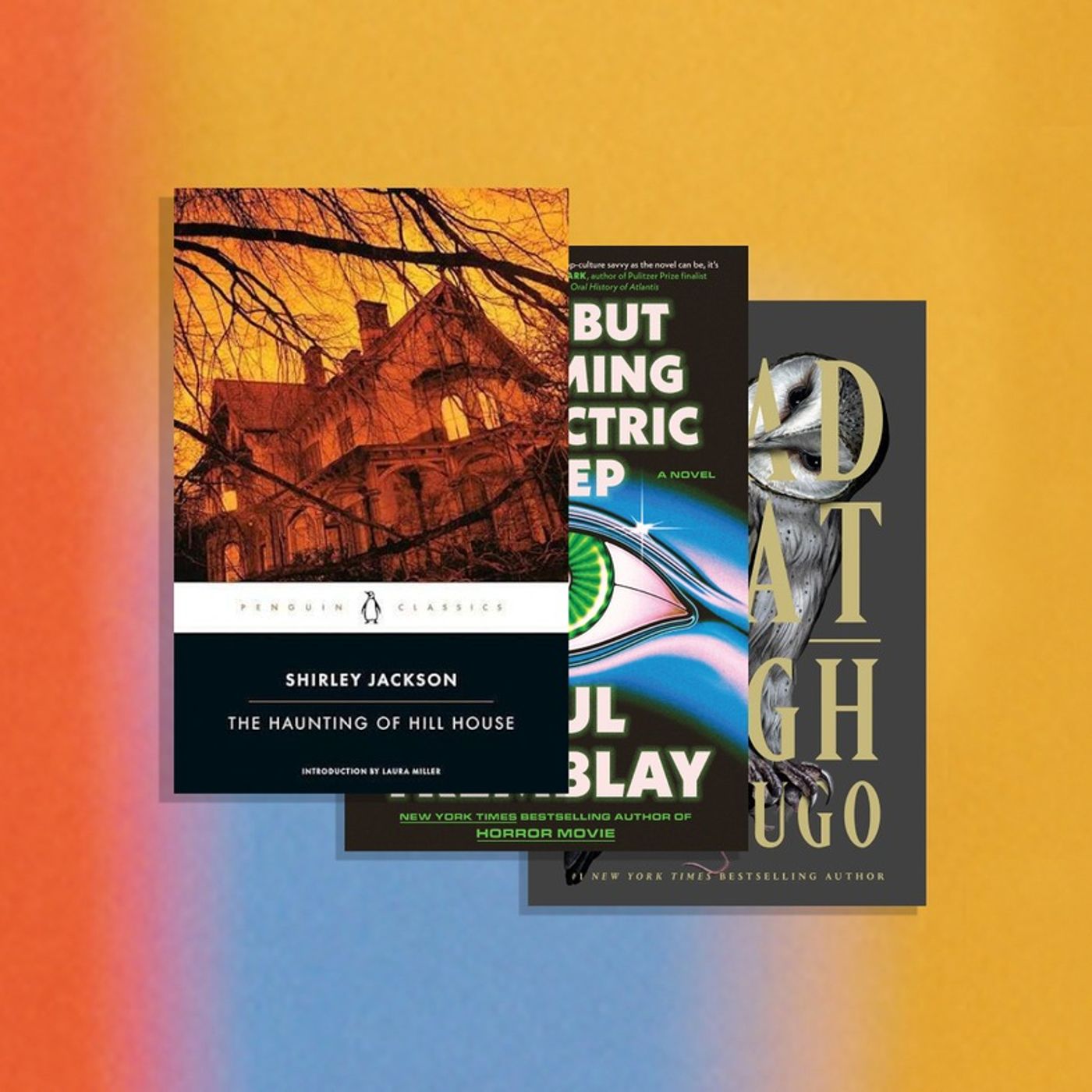
Together, these two authors offer a Halloween reading list that ranges from Shirley Jackson and Stephen King to contemporary writers like Mariana Enriquez, Tananarive Due and Sara Gran.
Books discussed on this episode:
Listen to and Follow ‘The Book Review’
Apple Podcasts | Spotify | Amazon Music | YouTube | iHeartRadio
Unlock full access to New York Times podcasts and explore everything from politics to pop culture. Subscribe today at nytimes.com/podcasts or on Apple Podcasts and Spotify.
We Want to Hear From You
We would love to hear your thoughts about this episode, and about the Book Review’s podcast in general. You can send them to [email protected].
Credits
“The Book Review” podcast is hosted by Gilbert Cruz and produced by Amy Pearl, Sarah Diamond and Patricia Sulbarán. The show is mixed by Pedro Rosado.
Special thanks to Dahlia Haddad.
Subscribe today at nytimes.com/podcasts or on Apple Podcasts, Spotify and Amazon Music. You can also subscribe via your favorite podcast app here https://www.nytimes.com/activate-access/audio?source=podcatcher. For more podcasts and narrated articles, download The New York Times app at nytimes.com/app.
Hosted by Simplecast, an AdsWizz company. See pcm.adswizz.com for information about our collection and use of personal data for advertising.