
 Ask ChatGPT


 The Business Of Modelling
11 May 2026 · 35m · 14 chapters
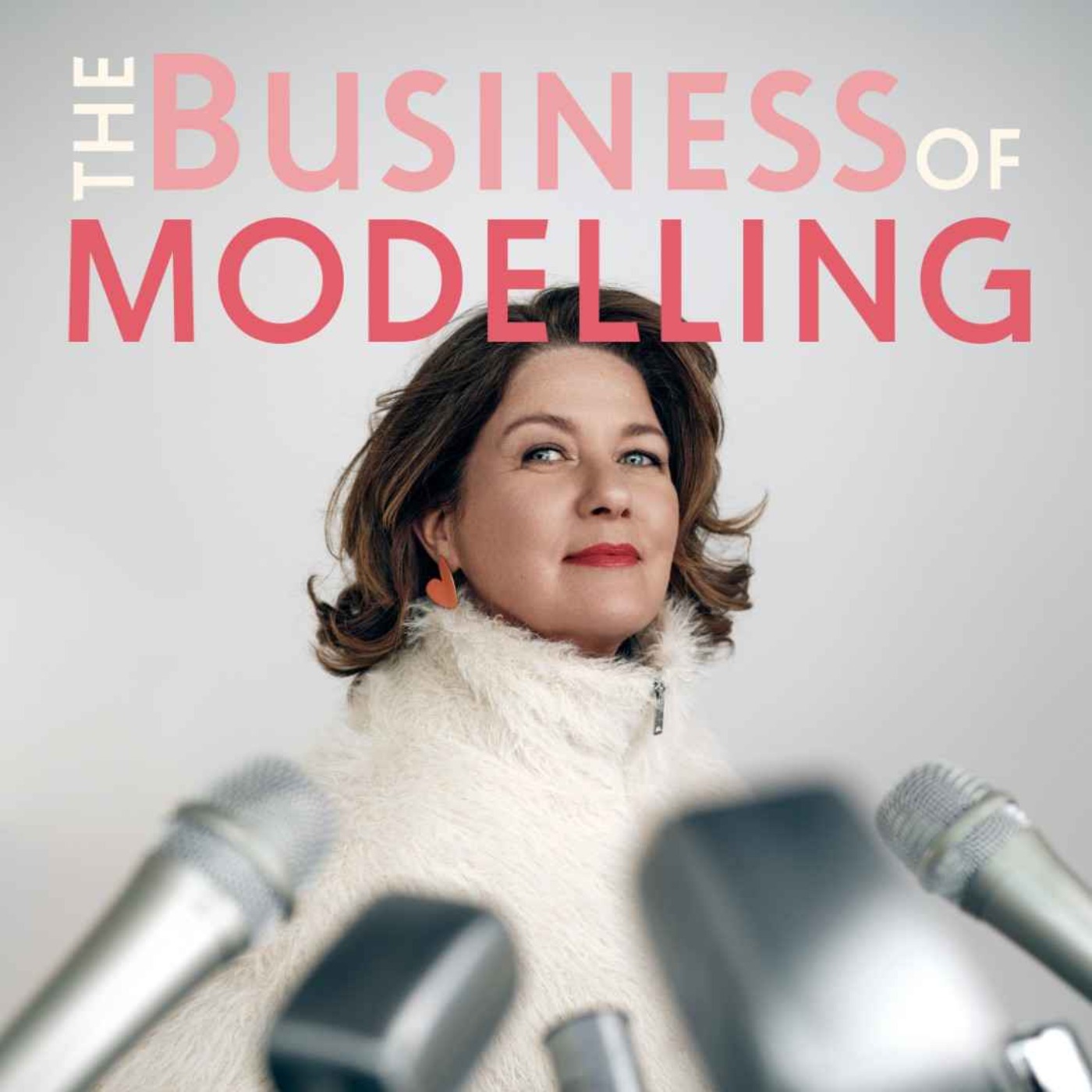
Ines Celine Le Gousse, a former fashion model turned journalist, discusses the realities of modelling—body standards, limited control, and the gap between glamour and day-to-day work—plus how she moved into fashion communications and journalism.
Grew up in Paris suburbs; studied liberal arts at Warwick University; worked in PR in London while being scouted and signed by established Right London; later studied fashion communications and journalism at Central St. Martins. Wrote for The Guardian and runs long-form essays/substack.
Modelling has “little agency” and strong pressure around weight/skin; “skinny but not too skinny” messaging is inconsistent; inclusivity claims don’t match fashion-week street/red-carpet thinness; casting directors and clients drive standards; models need support systems and education.
Elite Model Look France; first major job as Victoria Beckham runway fit model; Burberry work after a fringe “new face” moment; Mykonos luxury hotel shoot; Milan “brutal” measured apartments and fit pressure; COVID-era eating disorder and Accutane; being dropped after gaining weight and struggling to recover while still modelling.
Written by AI. May contain mistakes.
Ines shares her journey into the modelling industry and her early experiences.
“and how those expectations are still playing out today.”
Ines discusses her participation in the Elite Model Look contest and its impact.
“So I'd done the elite model look contest in France.”
Ines recounts her transition from university to being scouted and starting her modelling career.
“And so were you still working at this point or was there a point where you decided to go full-time as a model?”
Ines shares some of her most memorable modelling jobs and the realities of the industry.
“I worked for Burberry for like six months.”
Ines discusses the challenges and pressures faced as a model, including body image.
“I mean, I struggled with the, you know, the, you become a bit obsessed with your appearance in a very unhealthy way.”
Ines opens up about her battle with an eating disorder and its connection to her modelling career.
“Like, obviously, this is being validated now.”
Explore the personal challenges of dealing with acne and body image in modeling.
“The problem with acne is it's on your face.”
Discuss the pressures and expectations placed on models regarding body size and health.
“I'm going to teach you a different side to the industry.”
Learn about the journey from modeling to journalism and the motivations behind it.
“I mean, I think as a model, you can work now.”
Gain insights into how viewing the industry from a journalist's perspective changes understanding.
“I did the office job and it's nice to go to and sit your desk from nine to five.”
Explore the complexities of the modeling industry from both a model and journalist perspective.
“I mean, when I'm going to Milan and I was still so slim and I was the biggest girl in my model apartment.”
Learn essential advice for young models entering the industry about agency dynamics and maintaining a healthy perspective.
“But I always thought that I'm just going to sit here and then going to tell me what to do.”
Hear about personal experiences and the challenges models face during castings and on set.
“And then I'd be like, yeah, that is crazy.”
Understand why treating models well is crucial for the success of a brand and its image.
“I mean, all the models I've met have been absolutely lovely.”

Get the gist, explore an idea or ask about something said.
 Claude
On The Business Of Modelling, what are the key points of this episode?
Searching your listeningAutomatic transcript. May contain errors.
0:02Welcome to the Business of Modelling, the podcast where we explore the fascinating world of the modelling industry. I'm Tessa Dewing, the Managing Director of Sandra Reynolds, a commercial model agency celebrating its 50th year in business. Today's guest is Ines Celine, a model and journalist focusing on the realities of the model and fashion industry. Innis studied fashion communications and journalism at Central St. Martins and has written about the industry from both a professional and personal perspective. In a recent piece for The Guardian, she shared her own experience working as a model, offering a direct and honest account of the pressures around body standards and how those expectations are still playing out today.
0:59Hi Innes and welcome to the Business of Modelling. Hi, thank you so much for having me. To start, can you talk us through your background and how you first came into the modelling industry? So I grew up in Paris, in the suburbs of Paris, and my mum's English, which is why I sound pretty English. But I only came to the UK when I did my undergrad at Warwick University. and uh yeah i'd i kind of it had always been a dream of mine to be a model but i think it came from a place of insecurity because i was very tall taller than all the boys um so when people would say like oh you could be a model it was a very validating feeling but i had bad skin and so i'd never really like gotten signed or anything but i'd been it'd been a conversation and had Have you been to see agencies?
1:48So I'd done the elite model look contest in France. It's very popular. And I was retained, but because I had bad skin, it was more of a like, they're following you, but nothing other materialized. So that's interesting. So talk us through the elite model look and how you found that. So is it something that's quite heavily advertised in France? In France, yeah. And I remember a girl from my school did it. And that's when I was like, wow, that's the dream. like I need to do it. And so I was very committed to making it happen. Whereas when I fell into it. Do you just apply? You show up. There's three dates around France and the one in Paris and you show up and there's a huge queue.
2:32And I went with my best friend and my mum and I made it through to the last day and it was amazing. So they just see you and they get you up and they see you all. Yeah, and there's just like thousands and thousands of people. it's a lot of waiting around it was a good you know uh intro to what was to what was to come absolutely yeah and and so you then go through different rounds i assume and then at the end they have three types of uh winners okay they have the girls that they're gonna stay in touch with which is the one that i was picked for and then they have the girls that they're signing and then they have the winners that go on to compete for the big um worldwide right title okay yeah it's funny i never think about that experience but um it was so exciting at the time that is before i came to the uk and then the second that i arrived at uni i just like stopped thinking about modeling i had the best time at warwick i loved it what did you study i studied liberal arts which is quite american it's you basically get to pick subjects from anything so it was a lot of history business and sociology and yeah i really didn't think about modeling at all because i was in warwick like you know it's not it's not like being in london or paris
3:49so I had just graduated from uni and I'd just gotten a job in PR and the first day that I arrived in London I was scouted and I remember being so shocked I'd never been scouted before and it's funny because since then it's happened so many times but before then it had never ever happened and um and my agent she was drunk when she scouted me so I couldn't tell if she was just being overly nice and you know like like a drunk girl in a bathroom who's you know will like shower you with compliments and so I wasn't sure and I took a while to reach out because there's a lot of stigma around the profession and so what was your perception of it at that point it's all all the stereotypes like um it's really harsh um it's really cut through um but I didn't know much about it so yeah I was also I just started a new job so I didn't really know what to do but then I thought I would hate to have regrets and so I reached out and then I got signed okay and who was that by that is was established right London and they're amazing I can't speak like any more highly of and they're absolutely amazing.
4:59And I was always with them. I model for like four or five years. And so were you still working at this point or was there a point where you decided to go full-time as a model? I worked full-time in PR and then I was just doing bits of modelling on the side or taking annual leave. And then I did a year where I was just freelancing for the same company, but I was living in Paris and Milan for modelling. And then after a year, it was kind of like, it's a lot to juggle. So I focused on the modelling for a bit. yeah I haven't haven't had a desk job since yeah so tell me about some of the because there must have been some really exciting times and some really great jobs you did so tell us about some of those I mean my first job was like the biggest baptism of fire I did I was working with Victoria Beckham and it was for her runway it was it was a kind of like a runway campaign instead of a runway and I'd never done a casting before and they were just like you have to go here and I had no idea what to wear I had no idea what to do and in a sense I had nothing to lose so I just walked in this room and I was like this is crazy and I walked and they were like oh she's very confident let's pick her and I just thought how insane like I'm honestly not confident in this but I think it's because I had no expectations I thought it was all just a silly silly thing I was being made to do and so I was the fit model for two three days in the lead up to the show which was very hardcore when you've never done anything before you're essentially just trying on every single iteration of outfits from from the looks they've got and it was a big big team and big personalities um but in the end I booked the the show that they campaigned so it was worth it and that was that was amazing that was really amazing I was like oh it made all those uh the past couple days worth it because there was a moment where I was doing the fittings I was like I'm not sure I'm cut out for this because it was very very long hours you you know you're you're in this little room just trying on outfits you don't talk um so it was it was quite intense yeah and what about some others well I got to travel loads I I lived in Milan Paris um Spain for a little bit and I lived in Athens which was actually so fun um it's not you know it's quite a commercial market so you go there just for your portfolio and to get nice pics but um I had a very positive model apartment experience which hasn't been the case elsewhere like Milan I found quite tough but but this was lovely and and I had loads of amazing I made loads of amazing friends and it's sunny and you're shooting on the islands and so yeah it was honestly amazing I love that and then more recently my past my last year was probably my most successful year because I cut a fringe and so it just sparked it was like I was a new face again, basically.
7:47And I worked for my dream brand. I worked for Burberry for like six months. It's nice when you're a regular model with a brand because you do build that network. I think I really missed having that stability. And I'd go and it was always the same group of models and always the same designers and photographers. So that was really nice. And I really missed it. That's sort of quite rare, isn't it? And I think modeling can be really lonely because you are just working with different people every single day yeah and you're traveling a lot and it's always on your own so I met this couple when I was doing probably one of my favorite shoots ever which was for this luxury hotel in Mykonos whilst I was working in Athens so that was lovely because all I had to do all day was lounge on deck chairs pretending to be asleep and then and we got to stay at the hotel and then we got to stay at the restaurant you know it was just amazing those were the moments where I was like this is why I do this job and there was this couple of this older guy and his his wife who were both models and they were playing my parents and i had these two little kids who were greek and we can communicate but they was very sweet and so this this couple um we were chatting to them and and they were they basically um they travel around the world together and they have their agencies and depending on what time of the year it is you know they will contact the agency they'll say I'm coming over with my wife and they do lots of commercial jobs and a lot of it is couple stuff because brands like couples and so they get to go on all these insane holidays you know like he was saying like oh yeah I did one of these the other week but in Turkey and with my wife and and it's a really it can be something that you use to your advantage it can it can be a really lovely career and really positive experience.
9:36But I also think that comes in time. I mean, I struggled with the, you know, the, you become a bit obsessed with your appearance in a very unhealthy way. And so now, you know, it's kind of gone the other way. But I think that, yeah, with time, there's definitely a middle ground. Yeah.
9:58You obviously experienced a not so nice side of the market as well. Talk us through some of those experiences. Yeah, I think the industry is still very glamorized. And so when I tell people like, oh, I, you know, I'm a model, they think it's the coolest thing. And I always say like, the best thing about being a model is the perception that people have of you as like the label that you get to carry around, because the job itself is pretty, it's the least glamorous thing I've ever done in my life. Like it's, it's very, there's several components to it the one that a lot of models struggle with is um you have so little agency and so little control over being picked or what the outcome of your effort will be that you try to control other things and so for a lot of girls that's food and weight and size because unfortunately i know that there was a lot of discourse around body positivity but that was never really the case in the industry from what i saw i think because i was in those fittings i I would do the harder jobs when I was starting out.
11:00I was picked because I was extremely skinny at the time. And then they're fitting all the clothes to me. And I remember thinking, and then I'd go to castings and I wasn't the smallest one there. Whereas in the rest of life, I was pretty small. I mean, I was much smaller than I am now. So it was weird. I immediately noticed. I was like, okay. That's really interesting. Yeah. Isn't it that you're saying that? So you're within the industry. You were not small. No. I always had hips that were too big, even when I was like tiny weenie, but it's just the structure of my body. Like there's some things that you can't help.
11:34Or is it real life in a normal kind of crowd of people? Oh, yeah. I mean, I was by far the slimest. And that's why I liked going to the beach in summer because you'd be around normal people. And I spent my time looking at girls in bikinis or really tight clothes and they were all just skinnier than the other. But also, did you feel like your friends that weren't as skinny as you were almost putting you on a pedestal for being that? My friends. You look great because you're so slim. Oh, my model friends? No, your normal friends. So, no, they're very healthy people. And basically when I was at university over COVID, I developed an eating disorder.
12:15That's when I lost a lot of weight. And so my friends were never okay with that. Like they saw me lose a lot of weight. Right, because they saw you before. Exactly. And they were concerned because obviously it's an illness. It's not healthy. And when I was scouted, some of them were like, well, we don't want to encourage this. Like, obviously, this is being validated now. Right. So you were scouted when you were that small. Exactly. Right. And so then... Do you think you would have been scouted had you not have lost all that weight? I'm not sure. I think I could have been, but I would have entered being much bigger than a lot of the other girls and I probably would have fallen into it.
12:52I've stepped away from modelling now. And part of the reason was I couldn't fit into clothes. And it's a really awful feeling. It's quite shameful because you feel like you're not doing your job properly. It got to a point where at the start I was quite young. I was 20, 21. I could be that small, I think. I think now that I'm 25, I couldn't physically be that small. My body would kind of rebel. so I'd overeat and and it's it really was something that I used to be able to be very disciplined about and now I can't exist in a body that small without there being serious repercussions. So when you uh when you were eating disorder first started that wasn't anything to do with the pressures of modeling because you weren't modeling at that point.
13:33It was COVID and I had so basically I had awful skin and so a lot of it is due to that I was kind of trying to control my appearance whilst I was on acutane and my skin um being quite problematic. So looking back I I mean, your skin is beautiful now. Was it just your age? Was it just all... I don't know what it was. I don't know what it was. It just cleared up itself. I mean, I would love to show you pictures afterwards, but it was really awful. And so I went on Accutane, which does have side effects. And now I'm like, okay, this would probably like not great. The problem with acne is it's on your face.
14:05It's really, it was such an insecurity of mine. And it still is. I'll get one pimple. It's not something you can hide. No, I'll get one pimple and I'll freak out. And everyone's like, why are you freaking out? It's a pimple. And I'm like, no, no, no. there I'm just you know your biggest fear is that it's all going to come back so so yeah I would absolutely say like it's an amazing it's an amazing drug it's amazing but what are the side effects that you experienced so I I well now looking back it's like okay so I also lost a lot of weight whilst I was on it it could also be it was COVID it could also be just I was insecure about my skin where were you living during COVID I was back home in Paris right with your parents Which was lovely.
14:42I had a great time. But I remember coming back from uni and they were like, oh my goodness. So then and then you got scouted at that size. And of course, you were expected to stay that size. Exactly. Sorry, my agency were like, oh, we had to take bikini digitals. And so I get into my bikini and I'm bone thin. I'm like so, so thin. And they see me and they're shocked. And they basically are like, you have to gain weight. Like you can't be that skinny because there's a lot of stigma in the industry around hiring really skinny models. Like, you have to be skinny, but you can't look too skinny. And I couldn't be.
15:15Like, I'm not naturally that skinny. Like, a lot of the girls who are younger or just from different cultures and ethnicities, they are just so slim. They're, like, very thin girls. And I've seen them. They eat loads. They'll eat ice creams. But for me to be that size... I think it's about health at the end of the day, isn't it? It's about if you're healthy, not about yourself. Yeah, and everybody sits at a different healthy weight. Yeah, I agree. So did your agency... Did they do the right thing at that point? Or what could they have done differently? They did the right thing. They've been amazing the whole way through because since then, they always kept an eye on me and they would reach out.
15:50So I was always like protected. And they were amazing. And they were your mother agents. They were my mother agents. They were a good mother agent. They were amazing. They were like a mother. They really were. They really fulfilled the job description. So basically, I was working for Victoria Beckham and they were very aware that I was too skinny, but they loved me and I remember the designer saying um oh she's great but she's too skinny we can't put her in the show and I remember thinking how crazy that I'm that you're using me as this muse for this this campaign in this collection to fit the clothes to fit all the clothes uh you love the what like you love the way that I like represent the brand but you don't want people to know that this is like you don't want people to see this so it was it was very very odd Very mixed messaging.
16:39Yeah. And then I did gain a healthy amount of weight. I was still very, very slim. And the following year, I did the same job. And I couldn't fit into some of the clothes. And so they let me go. And so that was a really awful thing to go through. Because obviously, when you're recovering from an eating disorder, you have all these internal voices saying, oh, you look worse. And then the problem with modelling is that it validates all those awful internal voices. And so you start to believe what you're thinking. So that's quite tough. And how did you recover? I saw therapists. It's been a long process and I think it evolves over time.
17:22And then basically the reason why I stepped away earlier this year is because I don't think that I could fully recover whilst I was still in this profession. It's okay. I'm going to teach you a different side to the industry. Because there is a different side to modelling. Yeah, there is. And yeah, it's really sad that the experience that you have had has put you off completely. Like I've had so many amazing experiences and I love the fact that I've met so many people. Like I entered the industry so shy and I couldn't talk to anyone. And now I love to meet people and I love to talk to people. And I can talk to anyone because I've talked to, I have to, like I have to, I had to talk to everyone.
18:03And so that was great. I will say if you're insecure and you go into this industry, it attracts a lot of insecure girls who need the validation of being told you can model. You're going to have to put up with a lot of hard things, but you get to be a model. And so I found that quite attractive. and I will say that now I hate having my picture taken. It's kind of like I became so obsessed with my appearance for so long that I don't even know what I look like or I'll see a picture or I don't know. It's so weird. It's kind of, it was tough to remain neutral about your appearance in an industry that monetizes it and it's your entire job.
18:45So it's hard to come into that industry not from a very secure place.
18:54And at what point did you decide to move into journalism? But I was living in Paris at home. All my friends are in London. After being at uni and living in your own flat in London, it was really tough. And I kind of felt like I was going backwards, not forwards. So I decided to... And did you want to be back in London? Yeah, absolutely. Had you decided that was going to be where you wanted to? And I was doing modelling in Paris, But it was tough and quite lonely, as we said. So, yeah, I kind of wanted to go back to my friends. So I decided to do this master's in fashion communications and journalism at Central St.
19:31Martins. And that's kind of how I made my way in. And then I understood that I had an interesting side of the industry to talk about. What made you want to write about your own experience rather than keep that separate? It was kind of an outlet for me to write. Like I would write about it just in my own journals and things. And I love telling people, like, you know, obviously people have a lot of questions when they find out you're a model. And I would love to tell them, oh, no, that's actually not true. This is what it is. And so it was quite frustrating, the disparity between the glamour and the absolute opposite of glamour.
20:08And so I wanted to write about it. It really came from a place of like, oh, also, we have so little agency. And like, I had no voice at all as a model. so it felt nice to be able to regain a bit of a voice yeah yeah give an opinion yeah yeah have you heard from others in the industry that maybe had similar experiences oh absolutely yeah and and what kind of things have you heard well I know I know that what I talked about is true because I lived it and you know it's not a taboo subject in the industry like you talk about what you're doing to remain thin before fashion week and and you know it's just so normalized and you know that you have measurements you know to make um in order to even be submitted for castings and so it's just normal it's just and then people don't understand that i and i actually have a sub stack i've continued to write a like long-form essays about the modeling industry and i've actually made friends through my sub stack that i i see i saw one in paris over the weekend because you you'll meet these models who who also uh are passionate and they they they've done studies and you know some of us are like so educated and so bright and it's frustrating you feel like yes when you're a model that doesn't you don't get to have that platform yeah to be able to educate yeah well when people kind of dismiss you as just a model and like they don't think that you have anything substantial to say but i'm like 25 and i have two degrees and it's just kind of frustrating I think the trick is to use modelling to your advantage rather than the other way around.
21:39I mean, I think as a model, you can work now. You know, we have models working in their sort of 70s and 80s. I know. And they've worked all the way through. And it's a career that actually you can pick up and put down throughout your life. I think the trick is to really understand the industry and make it work to your advantage. I think that the high fashion echelons of modelling are very intense. And a lot of it is playing a game. It's like exclusivity. They literally won't make you work for like two years straight because they want you to be exclusive. And it's like, well, that's not paying the bills.
22:14But at least you look like exclusive. So it's quite a weird game. It's not a career. It's like, oh, maybe in five years from now, like you'll be the next big thing. But actually all you want to be doing is just working consistently. Exactly. And then the trends have changed. And actually what I struggled with this year is because I became so successful so quickly, I'd had three years of pretty much no work. And then I was working every single day and I just did not know what to do myself. It was a lot. And modelling is quite tiring. It's not an office job like I did. I did the office job and it's nice to go to and sit your desk from nine to five.
22:53Exactly. It's consistent and you know what you're doing. whereas modelling don't know your long hours, you're travelling. Over time, you're not fed. It can be quite intense. So that was a hot adjustment to make. There's a lot of conversation, or there has been in recent years, about the industry becoming more inclusive and healthier. From your experience, did that not happen? Did you see that happening? No, to be honest. I think within the high fat, and I think commercials are a different conversation, but um but no i think um it's it's not i think it's even the fashion industry more widely i mean you've seen like the front rows that everyone is stick thin it's kind of crazy um it is it is yeah and it's not outside of it um i think people are saying like oh skinny's back but when you look around the street like skinny is a mac like we all just look normal um but in fashion and you know on red carpets like people are extremely skinny i think that in modeling it's what i spoke about is they want you to be very thin but obviously you can't be you know anorexic because we don't want that but if you look healthy and you are then that's not our problem like at least you look whether you are or not exactly yeah and do you also think there was a gap between what was being said publicly absolutely and what you were experiencing yeah but then some agencies like my agency are amazing and they have a variety of models and and there's jobs for different models at the end for New Look, I was like gradually gaining a bit of weight.
24:22And I was still working a lot because I had some regular clients such as Burberry and New Look is more commercial. So they're open to that and that's fine. And that's amazing money. But yeah, to be honest, if you're a little bit too big, you won't fit into the clothes, they won't hire you. So there's still that pressure. Yeah, totally. Yeah, yeah. Looking back, how much of that pressure came from individuals? Well, ultimately, it's the clients, right? I think the agencies are in a tricky position because they care for their girls. A lot of them are lovely, but they also have targets to fulfil.
24:59They need to get certain girls signed. It's tricky for them because they know what the demand is, to be honest. They would never want to encourage anyone to lose weight. But the reality is if they did, they would book more jobs. So it's a very weird position for them to be in. when I was in Milan that was the most you know brutal market I mean you're you're measured every single time you go into your agency and like in front of everyone and you don't really understand what they're saying but also like I can understand what you're saying like I can read between the lines um that was pretty tough and in Milan there's a lot of competition so the girls are just smaller and and did you feel um able to speak up at the time or did it feel like something you just had to accept in order to keep working yeah yeah i think that's the problem with with modeling is that because there's so much competition you have to be on best form for every job you have to be on best form for every casting and you just have to be easy to work with good to work with and you don't want to burn any bridges at all and and if you're a complicated model they won't hire you it's quite it's quite hard to speak up
26:12Yeah, modelling can be, you know, a really unpredictable career, whatever level you're at and whatever kind of work you're doing. You know, it's not consistent. It's not, you don't know how much you're going to earn from month to month. Do you think it's important for models to build something alongside it? I mean, I would always say, please finish high school at least. I met some girls who had dropped out of high school and like left their home towns in like Sudan and and it's that's crazy that's literally insane and so I was very grateful that I didn't start modeling when I was in high school and I because I I would have been way too uh way too young I needed the uni degrees I needed the friends who aren't models I needed that support system i needed the experiences i needed to live a little because when you're modeling you're quite restricted in every sense of the way like that was good for me to be grounded with modeling because you're told what to do all the time it's good to have something that is your own and that you can work on and that you can be creative say or you know you can learn and that's your decision because you don't make and also it gives you another sense of worth that is exactly exactly and i think you need to be creative you need to do something you need to use your hands or you know so yeah and yeah it's it's very true um worth that's not attached to your looks when did journalism come was it something you were always interested in i've always liked to write when i was at uni during my undergrad i i quickly realized i hate exams i'm only going to pick modules that assess me through essays and i loved essays i i actually quite quite enjoyed writing them so i've always like to write I always love to read and it just I because I'm quite a shy well I used to be very shy but even now I'm much better at getting my thoughts across through writing and I'm much more eloquent through writing and I it's a way for me to organize my thoughts so I knew that I was developing such a an interesting understanding of the industry that I was like no one knows this stuff but us and we're not allowed to talk so if I talk about it people will be finding out about these things for the first time it was prompted by what I was experiencing in modeling for sure and now you're looking at the industry from the point of view of a journalist as well as obviously yeah experience as a model how do you see it differently I guess it's it's easier for me to look at other things that don't necessarily apply to me like I'll notice wider phenomenons like you know Asian casting I wasn't preoccupied with age unless it concerned me or I wasn't concerned with size or concerned with race or those kind of things but now that I've got a step back it's easier to look at men in modelling and like you know other than word to word mouth and chatting to friends which obviously has given me a lot of insight um it's interesting to take a step back and observe more widely what's going on what do you think still needs to change I mean I don't know at what level the change has to be made whether it's the clients need to stop requesting certain type of girls I think casting directors it's a weird thing going on there where they're you know telling the clients what they want and they they're doing all the castings for on behalf of the clients um and they're always casting the same models and they're all so skinny and so it's very uh I think something has to be it's done back to front isn't it I think it's the models have to fit into the sample size clothes whereas with technology now it should be easy for them to To make the clothes to fit.
29:46Exactly. The models. I mean, when I'm going to Milan and I was still so slim and I was the biggest girl in my model apartment. And you go to castings and you're like, I'm the biggest one here. And, you know, but I'm not big. So it's very, it was so confusing. That's what they're looking for. And these are all castings that it was casting directors. And actually, I think that when the brand hires themselves, it tends to be much less strict.
30:18what would you say to someone entering the model industry now as a young model i think you need to realize that agents are working for you you're not working for your agents um that took me a long time to realize because for the longest time i thought that i had to do exactly to just do what i was told and that i didn't have any agency but actually if you want to go down a certain route in terms of your look, in terms of what brands you want to work for, in terms of where you want to travel. You can do that. I think it's a partnership. It's a partnership for sure. But I always thought that I'm just going to sit here and then going to tell me what to do.
30:54And then it's like, no, that's not the right dynamic. Yeah, I think it's important to try and understand the industry and try and learn as much as you can. But also like enjoy it. And I think it's very important to not only be educated but have friends who aren't models. I think it's insane if all your friends are models because you're in this bubble where all the standards are kind of distorted. And your idea of normal is so different to what's actually normal. And so if I didn't have my friends who I could go home to in the evening and say, oh, that stylist said this to me. And they would laugh and be like, that is crazy.
31:29And then I'd be like, yeah, that is crazy. And that was good for me. That was so, so good for me because they could be like, well, it's ridiculous. So whereas, you know, my model friend would be like, oh, yeah, you know, and it's like, yeah, she knows. Tell me some of those stories. I mean, it is just brutal, you know, comments about your appearance, your face. Or I've, you know, there was this one casting director in Paris who didn't like me. Like every time she'd see me and I'm French, so I understand French and I didn't say that I was French. So she was speaking about me in French in a very negative way.
32:00But then I kept being requested to go to all her castings. I remember being infuriated because I was like, and I would just glare at this woman and be like, why am I here? Did she ever book you for anything? No, she never books me. She was awful and she had an awful reputation. I don't know if you know her, but she was a piece of work. Just comments, yeah, or like, you know, not being told to go home because, you know, fit into some of the clothes and they'd be like... Do you think that they realise how they're coming across or do you think they just don't care? I think it depends on the season.
32:34Like if you're in fashion month season and it's like so stressful, they don't care because they're extremely stressed and you're just another model and they're just they're just doing their job in a way so you do take it less personally because they're seeing so many models i remember um sending a model to a scout japanese scout for tokyo years years ago this was and she came back and she said i can't send her because her chin is too fat she needs to lose weight on her chin yeah that's kind of like okay thank you for any brands um agencies or clients listening, what responsibility do you think they have in continuing to shape good standards?
33:16I think a big thing is models are kind of at the bottom of the totem pole. You're on set and everyone is making decisions and everyone has a loud voice and everything. And the model is right at the bottom and like, she's not allowed to talk. She's not allowed to say anything out of place. She has to do what she's told. She can't eat when she wants to eat. You know, she can't sit down in the clothes. I think the best people are the people who acknowledge models as equals. I mean, all the models I've met have been absolutely lovely. And I've only had positive experiences with models. I think that's a huge stereotype is that models are awful and bratty and catty.
33:50And they couldn't be further from the truth. I've made so many lovely friends and boys alike. They're actually really sweet. And a lot of them are just really young and don't know what they're doing and shy and maybe a little bit insecure, which is why they're here and yeah I think when you treat the model really well and actually Victoria Beckham on this first job that I did with her she said something that I never really forgot which is that she always makes an effort to treat models kindly because when she started her brand she was the one who was the fit model and she remembers how awful it was and how grueling and she's like these models are the face of the brand and you're not going to treat like treat them nice and you know the models are the ones who are selling the products so if you everyone is playing their part but at the end of the day if the model doesn't feel comfortable or doesn't hasn't been taken care of it's going to show and and that's the final picture so you really have to be kind and respectful to the model which weirdly um brands don't do it's uh it's i think that would be lovely inis thank you for speaking so openly about your experience thanks for for asking questions.
34:57It's nice to talk about it.
Ines Celine Le Gousse is a model and journalist who writes about her realities of the modelling and fashion industry. In this episode, she reflects on her own experience as a model, from being scouted in London to working across Paris, Milan, Athens and London, and speaks honestly about what the job can involve beyond the image people often see from the outside.
She talks through the pressures that can come with high fashion modelling, particularly around body standards, sample sizes and the lack of control models can feel when so much depends on being chosen. Ines also discusses the contrast between the public perception of modelling and the reality of the work, including the long hours, constant judgement and the impact this can have on confidence, health and self-image.
Alongside this, Ines speaks about her move into journalism and why writing has become an important way for her to examine the industry with more distance and honesty. She reflects on the importance of education, support systems and having something outside modelling that gives models a sense of identity and worth beyond appearance. The conversation also looks at what still needs to change, the role agencies can play in supporting talent, and why models should be treated as people first, not just as part of the final image.
Hosted on Acast. See acast.com/privacy for more information.


