
 Ask ChatGPT



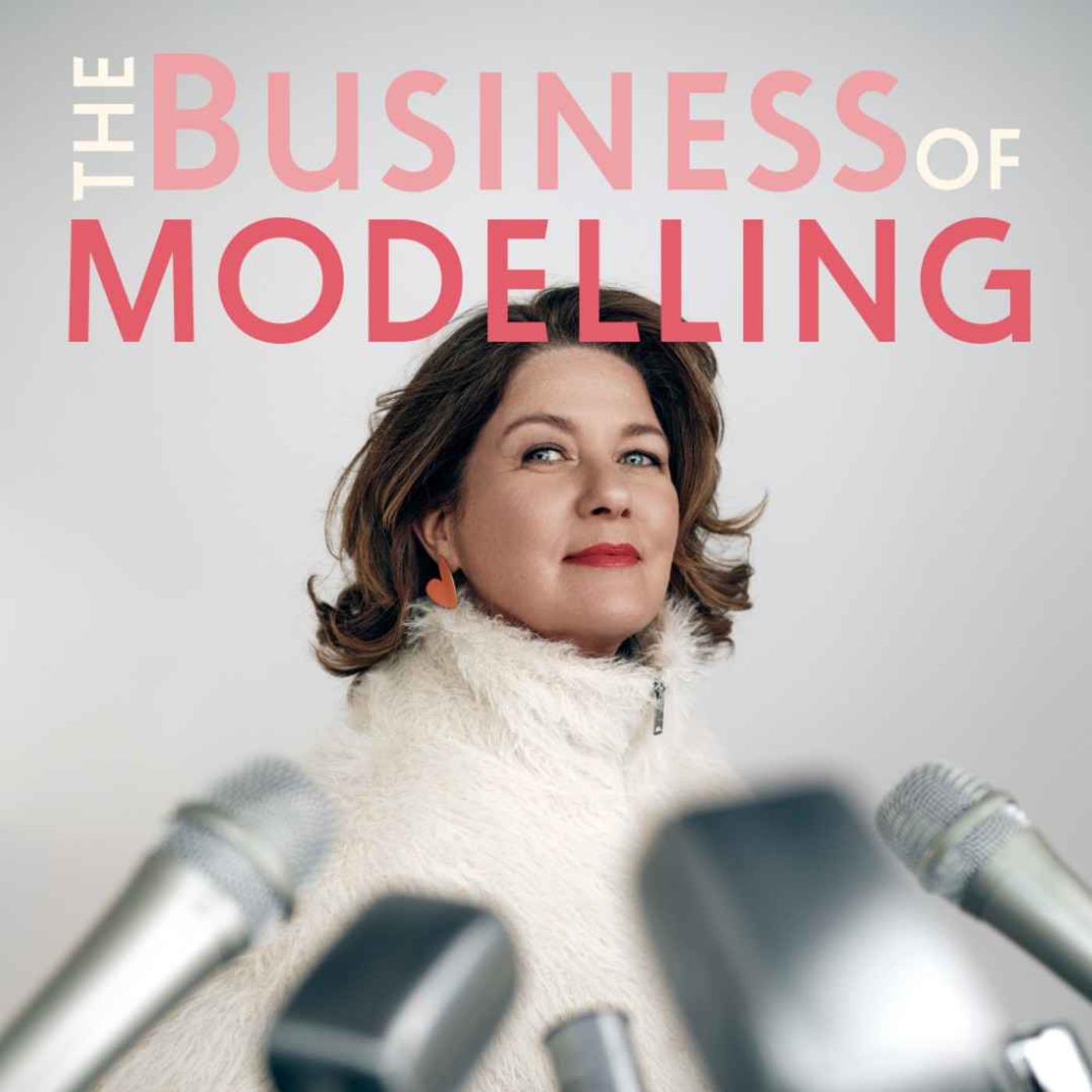
In this episode of "The Business of Modelling," host Tessa Dewing speaks with Kiki Minwegen, an international model and life coach. Kiki shares her journey through the modeling industry, discusses her transition towards holistic living, and reflects on the challenges of identity, body image, and mental health in and beyond the fashion world.
Written by AI. May contain mistakes.
Kiki discusses her upbringing in Cologne and the challenges of her family dynamics.
“Today, Kiki is also a nutritionist, life coach, mindfulness teacher and creative producer.”
Kiki reflects on her educational journey and its influence on her life.
“So it's, yeah, it's just such two different kinds of schools that I went to and Montessori school is very, you know, very...”
Kiki shares how she entered the modelling industry and her mother's concerns.
“I hated languages, which is really interesting.”
Kiki talks about her international modelling experiences and the challenges she faced.
“people approached me and like, hey, do you want to do you want to do this?”
Kiki expresses her love for fashion shows and the adrenaline of modelling.
“And I was still very lucky because I had an agent and she, I never asked her because at some point, you know, I really just left Paris.”
Kiki recalls her memorable moments in modelling, including walking with Naomi Campbell.
“Can you remember the moment where you thought, okay, this could be my career?”
Kiki reflects on the beautiful locations she's visited during her modelling career.
“And I remember back in the days, people always told me you have to go to Japan.”
Explore the most memorable places and people from the modeling industry.
“Are there any locations that really stood out to you?”
Discover the importance of beautifully designed workspaces in modeling.
“I think Cape Town itself is just such a beautiful place on earth.”
Examine the dual nature of relationships in the modeling world.
“So one of my closest friends now, I met through modeling very, very early on.”
Understand the pressures of perfection faced by models and society at large.
“Looking back now, what are you most grateful for?”
Analyze how self-perception affects mental health in the modeling industry.
Discuss the challenges within the fashion industry and the need for change.
“You know, I really felt like people were putting me into a box and like, oh, she's pretty, but she's probably not so smart.”
Follow the transition from modeling to nutrition and life coaching.
“If the world tomorrow would decide, we don't need the fashion industry anymore.”
Learn about the integration of nutrition and mindfulness in coaching.
“I moved back to my home city, Cologne, and Bonn is just, you know, 20 minutes away by train.”
Discover the mission behind the Plant Kitchen series and its impact.
“And I really felt like, you know, combining all these worlds and really having a bigger skill set to help people holistically.”
Explore the concept behind the Plant Kitchen series and its unique approach to vegan culinary storytelling.
“And we filmed two episodes so far and we're trying to sell it to one of the big streamers.”
Learn about the value of sharing experiences and the beauty of discovering others' journeys.
“because, you know, all these beautiful stories, they just have to be told.”
Discover the diverse roles Kiki plays in her life, including coaching and modeling.
“That's exactly what I felt when I had my podcast back in the days.”
Kiki shares her routines and practices that help her maintain balance in a busy life.
“So I usually start my morning meditating for 20 minutes.”
Explore the prevalent issues women face regarding body acceptance and societal pressures.
“thing community I love my friends I have such incredible friends and I have such a beautiful community, especially here in Berlin now.”
Kiki discusses her transition to working with sustainable brands and finding deeper purpose.
“They, you know, they need to be done with university when they're 22.”
A deep dive into the true meaning of success and its implications in modern society.
“And it's not so devastating if you don't get that job that you really wanted to get because you're not, it's not your all.”

Get the gist, explore an idea or ask about something said.
 Claude
On The Business Of Modelling, what are the key points of this episode?
Searching your listeningAutomatic transcript. May contain errors.
0:02Welcome to the Business of Modeling, the podcast where we explore the fascinating world of the modelling industry. I'm Tessa Dewing, Managing Director of Sandra Reynolds, a commercial model agency celebrating its 50th year of business. I'm in Berlin, a city that's constantly reinventing itself. A little wild, endlessly creative and full of people building new chapters. My guest today is someone who's done exactly that. Katharina Minwegen, or Kiki as many know her, began her career as a model at Just 16, working internationally in Paris, Milan and Cape Town before returning to Germany and is represented here by Seeds Management.
0:46Today, Kiki is also a nutritionist, life coach, mindfulness teacher and creative producer. She co-runs a conscious production company called Changing Film, co-hosts the Soul Food podcast and is developing Plant Kitchen, a show exploring the intersection of food, culture and creativity. We're going to talk about her journey from the fashion world to conscious living, the pressures of perfection and how she's redefining what success and creativity look like. So Kiki, welcome to the Business of Modelling. Thank you.
1:21Where did you grow up and what was your world like before fashion came into it? I grew up in Cologne. It almost feels like now living in Berlin, like such a small little town. When I'm going home, I always feel like it really feels like countryside almost. And that's where I grew up. I grew up in a very, I wouldn't want to call it toxic, but in a very wild home. My dad was mentally ill, so it was in a very unstable family. So I think that's probably partly the reason why I tried to escape right away when I was old enough. Okay, did you have other siblings? Yeah, I have a younger sister. She's one and a half years younger than I am.
2:07There was a lot of responsibility, not just for my sister, but also for both my parents. I think both of them weren't really ready for having kids. And of course, especially my father, you know, being mentally ill, needed a lot of support. And me as the bigger sister, I, yeah, I think it just happened naturally that I felt very responsible. I started school for the first four years. I went to a Montessori school. and it was such a clash. So it's, yeah, it's just such two different kinds of schools that I went to and Montessori school is very, you know, very... Learning full through play and all of that kind of thing, isn't it?
2:54Exactly. And it's also a lot about, you know, the kids can choose what they want to do, which I think is amazing for all the kids that maybe learn perseverance and grit at home. For me, it was really not the right thing. So after the first four years, I actually went to a private Catholic girls-only school, which I don't know if I want to call it better or worse. You know, I think it's just so individual. And what just happened for me, the school was great, the gymnasium that I went to. And yeah, it gave me a lot of structure. And I think what I also realized now looking back is that because it was a private school, we or rather the teachers, they held space for us in such a different way.
3:46And there was so much more capacity from their end to really be there for us. And it really made me realize that, you know, I really think, and this is a huge topic, but I really think that our school systems, they really, they're so outdated. And I really, really believe that there's, you know, a lot of work ahead of us. And I feel very, very lucky and grateful that I got to go to a school like that. Again, gave me a lot of structure, gave me a lot of stability because the teachers were so interested in, you know, what was going on at home. Well, when I'm looking at my sister, she went to a regular school and the teachers just thought that she was, you know, like that girl that didn't pay attention, but no one ever questioned her behaviors.
4:43And I, yeah, I really think, of course, they don't have the capacity. Were you academic? I was always, when a topic or a subject really interested me, I was really good at it. I always loved biology, for example. I hated languages, which is really interesting. My teachers in school always told me, oh, you suck, you know, you're not good at this. And I think it was also because the school system didn't really, didn't really manage to kind of show to me the, you know, the benefits of really learning a language because... Yeah, you don't understand when you're young. Exactly. You live in Germany.
5:28You're here. I never really got to travel. So why would I learn something that I can never use? And then I actually got to learn languages later in life. Now I'm fluent in French and English and German and I'm learning Swedish and Spanish as we're speaking. So I'm like, I think my language skills are quite okay. So yeah, I never really had to work hard for decent grades in school. But I was just quite lazy.
6:01So how did modeling come to you? My mom was modeling as well when she was younger. And it started quite early. I think probably when I was 13, 14, you know, walking on the streets in Cologne, people approached me and like, hey, do you want to do you want to do this? And do you want to try it? And my mom was very, very careful and really tried to protect me. The experiences that she had made weren't always the best. I think she was also quite stressed about me not finishing school because, you know, it's tempting, especially when things go well. Then, you know, some time was passing by until I actually finally decided to just go for it and give it a try.
6:45Yeah. And can you remember some of the stories your mum told you about her when she was modelling? Yeah, she was just feeling that, you know, it wasn't really a safe space always and not always a space where she really felt like she could always make her own decisions. I really feel like she was kind of forced into situations that she didn't want to be in. You know, they made her cut her hair very short. And I think she really felt like she wasn't, yeah, she wasn't. It wasn't her choice. Yeah, and she wasn't protected enough. And this would have been, I guess, in the 80s, 90s. Yes. Yeah, exactly.
7:24Were you scouted by an agency in Cologne or was that where you started? Yes. So I started working a lot for CNA, which is the German H &M. And it's so funny. So we did two, I think it was two huge fashion shows a year with so many supermodels actually being invited back in the day. There was still the money for those things. And it was Bruce Darnell, who actually, he's quite famous in Germany. He did Germany's Next Top Model with Heidi Klum. And he was the one actually doing the catwalk training.
8:00Then from Cologne, how did your career go? So you then worked internationally and sort of went abroad. What were those experiences like? When I finished school, I decided to move to Paris. I worked with IMG Paris. And this is when you were 16? No, that was when I was 18. Right. Exactly. 18 turning 19. So you did a couple of years in the German market to start with. Exactly. Exactly. And I actually didn't work that much, you know, between 16 and 19. I did a lot of CNA. I did a big CNA campaign. And that was basically it because I was so busy finishing school. Then when I was 19, I signed with IMG Paris.
8:43I mean, as I said before, I was really keen to leave home and to just do my own thing because I really didn't feel, you know, I didn't feel fully safe at home. I really felt like, you know, there's probably something else out there. And now looking back, it was definitely way too early in life for me to just be on my own in a foreign city, in a foreign country. You know, I didn't speak the language at the time. No, I learned French later in life. I was very lonely. I was very depressed, I would say. And I was still very lucky because I had an agent and she, I never asked her because at some point, you know, I really just left Paris.
9:35but I had this super sweet agent and I really feel like now looking back she maybe almost felt like protecting me actually so she always made me stay with her friends so I didn't have to stay in these weird apartments so I always had my own room in a big apartment or I remember this super sweet guy Jerome who always, so he had this big love in the center of Paris and he always, you know, freed his bedroom for me. And he was like, oh, you have it. You know, I had my own bathroom. So I always felt very safe in the spaces I, you know, I lived in. Jumping from city to city, you know, if you're traveling as a model, kind of going into model apartments, everything's very transient.
10:27You don't know who's in the next room from day to day, really, do you? Yeah. And I think it can, you know, it can work out really nicely. Stayed in a model apartment for a month in Milan. Yeah. And I had super sweet roommates. But yeah, I think in the end, it's probably also a bit a question of what's your personality like? And I've always been someone I always needed a lot of time and space for myself. So having my own room that I didn't have to share with others was, yeah, such an important part of that journey for sure. Can you remember the moment where you thought, okay, this could be my career?
11:08Like, I think I can make a career out of this. I actually never had that moment. Okay. For me, it was always just, you know, a certain period of time. And I always knew that. I always knew I would want to study at some point. In all honesty, it was more an escape than anything else. And of course, you know, it's a nice way to travel and to see new places. And yet I never had the feeling that I would, you know, just do this for the rest of my life, because I think I was also always realistic enough to understand that. I mean, there's a few exceptions, right? But to make it to that point, it's just so unlikely that I think already back then when I was very young, I always knew that it wouldn't be something I would do forever.
12:03Sure. And did you make money in those cities? Yeah, I worked really well, both in Paris and in Milan and in Cape Town. And then also afterwards here in Germany that I think Germany was probably actually the best market for me. I did a lot of commercial work here in Germany after, you know. I guess the experience you got while you were away, then you could then apply that when you got back here and felt way more confident. Yeah, I think it was probably the experience. But I think it was also, you know, there's, I would say there's definitely a market for everyone. And I remember back in the days, people always told me you have to go to Japan.
12:45I never tried that. Now looking back, I'm very happy I haven't because I think that would have been even more lonely being so far away from my family. But yeah, I think there's also a market for every face. You know, not every market is working in the same way for everyone. So but yeah, I worked in all the cities and could live of it. Yeah. And what were the parts of modeling you loved? So I think what I actually really loved the most was doing fashion shows. I think the adrenaline right before a catwalk was just such a fun thing. And I really, really enjoyed it. And I always got such good feedback.
13:26And I, yeah, I think that was really what I enjoyed the most. Yeah. And can you remember a show where you maybe were about to go out and you thought, wow, I can't believe this is my job. Like, this is what I'm doing. those first fashion shows for CNA you know being out there with a lot of big names I think that was really I mean I was also very very young so of course you know it felt probably even more amazing than it would feel right now because I think now I would say well they are also just people you know but I think back in the days that felt very very special for sure and what were some of those names so i um remember that naomi campbell um walked with us i have to think about it was they so they invited literally a big name for every for every show naomi campbell walked with us i would have to think about who else it was but it's so long ago but yeah but there were people that you admired that had yeah were super successful models exactly yeah brilliant you must to see some incredible places as well.
14:34Are there any locations that really stood out to you? I mean, in Cape Town, I got to see so many amazing, amazing places. I think Cape Town itself is just such a beautiful place on earth. But I also have to say what I, I mean, you know, I'm, I love nature. I'm traveling. I've always been traveling a lot. But I actually sometimes was even more impressed by was being at a really beautiful studio. You know, sometimes when you walk into these places and you really think, wow, someone really put so much love and effort to, you know, decorate a place really nicely. And, you know, all these small little details where you can really see, oh, someone thought about, you know, really making this place beautiful.
15:21so that sometimes I actually found more impressive than you know being at a on a mountain or you know but on a on a cliff by the ocean yeah you appreciate the work that's gone in and the love that's gone in to sort of make that space what about the friendships because I think modeling can as you as you touched on earlier can be quite lonely but it's also quite a small community did Do you meet people that you're then that you're still friends with now? Yes, actually. So one of my closest friends now, I met through modeling very, very early on. And she was sitting not right next to me, but at the same table now at my wedding.
16:04So, yeah, I definitely have a few connections that I made that I still, you know, I still have those people in my life. And then on the other hand, there is a lot of elbows, you know, and that was kind of always going against my own values. And I think now looking back, I was probably never really made for this business because I just, I love people. I love being kind. I love seeing us as one, you know, because we are all connected and, you know. And by a lot of elbows, you mean people thinking about themselves and not necessarily thinking about other people's feelings. Yeah. And you kind of have to, you know, I mean, if you want the job, then you've got to go for it.
16:54And then you've got to make sure that no one else is getting that job. And I think I was never capable to really do that. Not that I'm shy or anything. I just, yeah, again, I just didn't sit right with you. to push someone out of the way or feel like you were doing that. Looking back now, what are you most grateful for? What did that chapter of your life teach you? I think it literally brought me to the point I'm at today because I think without making all these experiences and, you know, traveling, feeling lonely, it really made me realize who I am and what I stand for today and also all the things that I don't stand for.
17:41You've been really open on your website about the pressures of that world, the constant pursuit of perfection. What was that like to live inside of day after day? It follows me still. I think it is also not just a problem that, you know, lives inside the modeling industry. I think it's a huge problem we have in general in our society with social media. I think there is a lot of pressure. And especially now in my work as a life coach and a mindfulness teacher, I'm mostly working with women. And, you know, seeing them suffer because of them striving for an ideal that's just impossible to reach. yeah it makes me I can really feel it makes me angry it makes me sad it makes me feel that you know so many of us they're just losing connection with their own body because of it yeah it's it was tough it was really tough probably one of the hardest things I've ever been through for sure I mean tell us about what your view of yourself at that time yeah you know I really because outwardly people would look at you and think you were strong you were beautiful young girls would look at you and think I want to be like like her how are you feeling inside the hardest part was that I I always found something that wasn't good enough about me you know and I think today because back back then I was really just you know looking at my body as you know the physical shell of who I really am right so and I was just judging my body while today I really feel like I really look at who I am and what makes me um who I am and you know with all the character traits with all the good things with all the flaws that I can still work on you know it's it's and I think that makes it so much easier today but back in the days I was just so stuck in you know just looking at myself comparing myself which obviously naturally happens because you go to castings every day where you see a hundred of other women they're all gorgeous they're you know maybe taller than you they're skinnier than you they're they're yeah they're they're more they're more beautiful than you and you just you just you just get so lost in that and what you really forget is to to see who you are who you actually are and what's special about you and I think that's that's yeah that's the thing that I really dislike about the fashion industry that we you know we look at shells in my opinion we constantly look at shells and we forget to really see that human being behind or in that inside that beautiful body because I also really feel like I my whole life I felt very judged.
20:53You know, I really felt like people were putting me into a box and like, oh, she's pretty, but she's probably not so smart. And, you know, I really feel like I had to prove myself so much in my life. And I actually think now that I'm getting older, it's getting a little easier, which I'm really happy about. Do you think that's you? Do you think the industry's changed? Or do you think it's just that you, when you get, you do get older, you do get more experienced, you do then start to feel more comfortable in your own skin yeah I really don't think that the industry has changed I mean of course you know there are some changes in the industry that are that are important but I think we're totally not there and I think it's still it's still very far from what I wish I would see and I think it's still a very toxic environment especially for young girls And yeah, I think it's mostly because I really feel like I also through my work, you know, I had to look at a lot of topics myself and I had to do a lot of inner work myself to get to the point I'm at today.
22:04And of course, you know, when you help others, I really feel like that's the foundation, right? You need to look at your own stuff. Otherwise, you're not going to be good at helping others. And if you could, if there's one thing you could change in all agencies to help models, to help young models, what would it be if there's one thing you could implement that all agencies had to do? it's it's tough to it's tough to give because i really think it's it's so much more than just changing one thing the the funny thing is when you think about it we don't need fashion it's completely unnecessary we don't need it to survive it's just a human invention right and i think the biggest problem is that the fashion industry is so ego-driven because all these people they know that we don't need them.
22:54We literally don't need them. If the world tomorrow would decide, we don't need the fashion industry anymore. They would be dead within a second. And I think that's the problem. And of course, you know, where there's ego, there's pain, there's suffering, and all these people also have a background. I just really wish there was a little more humanity in the fashion industry overall.
23:22At what point did you start to feel that pull towards something else? Yeah, I think I always felt it. I mean, again, you know, growing up with a father who was mentally ill, I always had this curiosity to understand the human mind better. And I think the turning point was when I moved to the south of France where I lived with my ex-partner. and I kind of during those three years really stopped modeling completely. I was just you know with myself spending a lot of time in nature and that's when I realized I really want to do something else and then I decided to study nutrition when I was I started when I was 25 and I think that was really the turning point.
24:12I mean I picked up started modeling again during my studies because it was just, you know, the perfect way to finance that. And at the same time, I was, I really felt like I was on the right path. So I studied in Bonn. I moved back to my home city, Cologne, and Bonn is just, you know, 20 minutes away by train. So I was going back and forth every day. And yeah, I studied for three and a half years. Just nutrition and yes. Yes. Yes, exactly. And then where did that take you? So then I actually worked for Sunday Natural. They are based here in Berlin. They do supplements. I did a lot of research for them.
24:52But I quite quickly realized that, you know, sitting in front of a computer is just not what I want to do. I just really wanted to work with people and, as I already mentioned, really help people. And then I actually worked as a nutritionist, actually worked for a company here in Berlin. And they supported both people, athletes, people who, you know, were prepping for a marathon, for example, and just wanted advice, you know, on what's best to eat during their training program. And then it was also just, you know, regular people who wanted to maybe lose some weight. and the interesting part was that I was sitting there and so often I felt like especially those people who came to me because they thought they weren't eating healthy were healthy enough I was just sitting there thinking they know what healthy food is and the underlying problem that is kind of like pushing them into these unhealthy eating patterns is there's just there's just so much more to it and that's when I started diving more into coaching and you know mindfulness mindfulness has always been a big part of my life I started meditating on a daily basis in my early 20s And I really felt like, you know, combining all these worlds and really having a bigger skill set to help people holistically.
26:23Yeah, really felt like exactly what I wanted to do.
26:33You tell me about your production company, Changing Film. Did that come after? Yes. Okay. That came after. So that's actually my husband's production company. Yeah. So we're both really passionate about changing the world. We're both vegan, my partner and I. I've been vegan for, I think now 11 years and he's been vegan for 13. So we really wanted to find a way to inspire others to eat more mindfully and make more conscious food choices. And that's when we came up with with Plan Kitchen. We really try to without, you know, without talking about the politics behind it, because, of course, you know, you can there's a ton of incredible documentaries out there that, you know, show that, you know, it's very harmful to the environment, also to ourselves to, you know, eat a big amount of animal products.
27:36And we didn't want to do that. So we really, really, really thought, let's just show incredible plant-based food and have people try it. And, you know, maybe people watch the series and they go home and they really feel like, oh, maybe I want to try something new. And we're showing amazing vegan chefs all over the world and their story and their food. And we filmed two episodes so far and we're trying to sell it to one of the big streamers. So we'll see. It has been a long progress. Yeah, Plant Kitchen sounds amazing. You know, you're kind of merging, you know, food, travel, conscious culture.
28:16So where do you hope to go with that? It's just so interesting. you the project was born already quite a while ago and his idea was it so we came up with it together and together we watched chef's table i don't know if you're familiar with that series and we thought there's i think there's overall there's one vegan episode in all of those chef's table seasons they're like that's crazy there's not no vegan series that's solely inspiring and not, you know, pointing the finger at others. The idea was exactly to go around the world, meet all these incredible chefs who have such cool stories. I mean, the episode that we filmed in Zurich, her name is Zizi.
29:02She's owning a Michelin star restaurant in Zurich. And her story is just incredible. She was an engineer, but, you know, like her background, she was born in Morocco. So she really worked herself up to become an engineer to then actually decide it's not what I want to do. I'm just going to open a restaurant now. Which you wouldn't put is such a different path to being an engineer. And then decides that the restaurant has to be fully vegan because nothing else, you know, would make sense. And then she gets the Michelin star. And it's just such a beautiful story. and she's really one of the most humble people I've ever met in my entire life.
29:46I think it also makes me a bit sad that we still haven't found a home for the series because, you know, all these beautiful stories, they just have to be told. This is what I'm finding with this podcast, you know, sitting down and you work with so many people every day in this industry and you never hear their full story because you don't have time to sit down with them. And it's just incredible and it's incredibly interesting. and you learn so much, don't you, from just listening to other people. A hundred percent. That's exactly what I felt when I had my podcast back in the days. I really feel like, and I honestly always do, but I always see myself as the sponge, you know, like just sucking up all the information, everything that's out there.
30:30And I think if we would all see life a bit more like that, we would also see more opportunities everywhere.
30:42so what does your work look like day to day now you've got so many hats on you're obviously still modeling you're a coach you're a nutritionist producer what what's your day today it must be very interesting yeah it's very colorful and I think that's what I really love about my life that no day actually looks like the other I do work for a company they are not based in Berlin they're based in Regensburg and they mostly do leadership training and I am responsible for the life coach class. So I do the whole organization behind the course, but I'm also teaching. And that's really where my heart is.
31:21I love teaching. I love, you know, supporting others. And then I also do have my own company. So I do one-on-one coachings as well. I do a lot of workshops. That's also something that I find so interesting and beautiful because group dynamics can be very, very powerful. As you can see, my life is very colorful. How do you stay grounded with all of that going on? I do have my routines and they're very, very important for me. So I usually wake up at six in the morning and I always like to have a very slow and quiet start. So I usually start my morning meditating for 20 minutes. I journal a lot in the morning, you know, just already kind of bringing, moving all of that, all of those thoughts that are in my head onto a piece of paper.
32:12And it helps you process your thoughts. Yeah, then just having breakfast. Sometimes I work out before I start working. I mean, my work hours differ so, so much. So sometimes it's a work out in the morning but yeah working out is a very essential part of my well-being I really feel like when I can't work out I don't feel like myself fully so I would say yeah those are those are the most important things that really help me stay grounded and I think oh maybe one one more thing community I love my friends I have such incredible friends and I have such a beautiful community, especially here in Berlin now.
32:54And I think that's also something that makes me stay humble. And I think, you know, having friends that call out things, you know, because we're all not perfect. We're all human beings. And I think having people who really help you grow, including my partner, is also very essential to stay grounded. Yeah, yeah, absolutely. It's really interesting because people always come to me and they they always tell me like wow you're you have such an easy time you know talking about everything and sharing everything that happened in your life and I I so truly believe that by sharing experiences you know I I'm careful to say like I'm saying the good and the bad ones but I do believe that in the end there is no good or bad There's just experiences.
33:46And everything, you learn something from everything to get you to where you are. Exactly. And I think you can always, even in the hardest moments, you can find something good. But when you're doing your women's sort of workshops, what are some of the most common struggles that you hear? The most common struggle is really this feeling of, you know, I cannot fully accept my body the way it is. I think that's really... From women of all ages. Women of all ages. And all shapes and all sizes. Yes. And another very common struggle is, you know, we're living in a very, very fast turning world. And I think stress is also something that I see in almost all of my clients.
34:31There's a lot of pressure, especially, you know, for the younger generations. They, you know, they need to be done with university when they're 22. to. They need to speak several languages. They need to be successful at the age of 26. And I'm just like, is this really what life is about? I don't know. Like, you know, I think so many people just strive for making X amount a month. Yeah. Is this really what's important? Your only goal. Yeah. And what does your modeling world look like now? I mostly actually now work for vegan and sustainable brands, which is so beautiful because I think that was, again, now looking back, really one of the biggest struggles that I had in the end there that I really felt like I was also supporting an industry that I think doesn't really have the same values as I do.
35:29and now you know working with these very small brands and um really connecting with those people there because you know when I when I go to jobs it's usually everything is so much more slow and we really take the time to sit down for lunch all together with the team and I know these people because I I you know continuously work with them and I think that's really that's really something that yeah I think commercial work as well tends to be a bit more like that doesn't it than the fashion industry which tends to be very hard and fast and you know you don't have control I think I think as a young model it's very difficult because you're you're starting off on your career you want to say yes to everything you want to do everything you want to please everyone and and you know it's only really when you've had those few years of experience not good and bad but you know as we just talked about that you actually start to understand and start to hopefully prioritize what you want to do and I'm really glad that you're you're sort of at that stage I think everyone also needs a purpose in life right and I I mean I don't wanna I don't wanna say that you know for some people it might not be their purpose to be in the fashion industry and that's okay um I just think that most people that I met who worked in the fashion industry only, they were just missing a deeper purpose.
36:55And I think having that besides modeling is just perfect, you know, and then you have your purpose and you can still, you can, it's still fun to be in front of the camera. And it's not so devastating if you don't get that job that you really wanted to get because you're not, it's not your all. Exactly. So, yeah. And if you could go back and speak to 16, 17, 18 year old Kiki just heading off to Paris, what would you tell her? I think I would tell her, you're perfect the way you are. And, you know, just, just, just stay true to yourself. Don't, don't try to be someone you're not. Yeah. And I assume that would be the same advice that you would give to another model or creative that might be feeling burnt out or stuck in their career?
37:49Yeah, I would always say, you know, as soon as you feel like you're not connected with yourself anymore and I think that, you know, even those very early signs when we feel stressed out, when we feel tired, when we feel, you know, our body is not really working the way it used to anymore, I think, you know, really not ignoring those signs, really doing something about it and also not always thinking that you have to go through everything alone. I think, as I just said, community is so important. But also, you know, even if it means that you need professional help, you know, you don't have to do everything alone.
38:38And I think that's maybe still especially, you know, for me, who's a bit older. And, you know, I think now the younger, the generation after me is probably already way more open because their parents are way more open, you know, in terms of coaching therapy and all those kind of things. But I think, you know, my parents' generation, they were not really open for those things. Luckily, my parents always were, but I have friends and their parents said, you don't need therapy. You're fine. Like, you know, and I think really making your own choices, really standing up for yourself, standing up for your own physical and mental health.
39:23for me success is not you know having a big car or having a beautiful apartment or making you know I don't know 10 20k every month success for me is do I go to bed in the evening and am I happy about what I accomplished today? And am I in tune with myself? Am I helping others? Am I making a difference in the world? That's what success is for me, inspiring others. Like, there's so much that success means to me that I think is completely lost in our society, because we're so we're so forced into wanting certain things, you know, also partly because when you open a magazine, You know, it's like all these nice things that we're supposed to want.
40:18And if we just let go of that, you know, sometimes step back and ask ourselves, what is actually really important to me? And it's not a simple question. And I think a lot of people, they can't even really fully answer it right away. Like, what's important to you? and I think if you really narrow that down and you really start realizing that you know when you buy that new car you're not going to be happier you're maybe going to be a bit happier for I don't know the next two three weeks and then that's going to fade as well really thinking about what what's what's what's important to you what's what's making you happy So true.
41:01So true, so profound. Kiki, thank you so much. That was such a lovely chat. Thank you. Thanks for having me.
41:14What I love about your story is how it shows that creativity doesn't have to fit into one box. It can evolve, soften and deepen as we do. You can book Kiki through Seeds Management in Berlin or find out more about her coaching and workshops at katerinamenwegen.com. Thank you for listening to The Business of Modelling from Berlin. I'm Tessa Dewing and I'll see you next time.
Kiki Minwegen is an international model represented by Seeds Management in Berlin, whose career spans working in Paris, Milan, Cape Town and Germany. Alongside modelling, she is trained in nutrition and has gone on to become a life coach and mindfulness teacher, building a more holistic, purpose-led way of working alongside her creative career.
In this episode, Kiki reflects on entering the fashion industry at a young age, the pressures of perfection and constant comparison, and why modelling was never meant to be her final destination. She talks openly about identity, body image and mental health. Her transition into nutrition and coaching, and the importance of community, routine and self-connection. Kiki also shares how she defines success beyond image, money or status, and why finding purpose alongside modelling, rather than making it your whole identity, has been key to her wellbeing.
Hosted on Acast. See acast.com/privacy for more information.


