
 Ask ChatGPT



Pirjo Hickman’s long modelling career and what it teaches about building a lasting personal brand, resilience, professionalism, and adapting to changing fashion/media (including social media, TV presenting, and older-model visibility). She also argues models need a “plan B” without reducing effort on modelling.
Pirjo Hickman grew up in Finland, moved to Sweden at 11 after her father died, learned Swedish herself, and started modelling at 17 after being encouraged by her sister. She trained via a local Swedish modelling organization, then worked internationally (Sweden, Germany, New York, Tokyo, Dubai, Abu Dhabi). She later studied business at Roehampton starting at 54. She married David in 1985, had son Frederick (born 1990), and remarried in England recently.
professionalism and self-prep matter (bring makeup bag, flesh underwear, wash hair); older models are more relatable and buy more; rejection is normal; social media increases pressure and competition; live TV requires constant alertness; “plan B” boosts confidence.
H&M scouting/5-week course; Paris/Playboy-linked Saint-Tropez situation where she felt unsafe and learned to be alert; strict Germany live-show rehearsals with 60–90 seconds to change; meeting Princess Diana backstage at the Palladium; QVC and ITV’s Lorraine presenting; Instagram job with 20,000 views and many comments from younger women wanting to grow older like the models; working with Jasmine Lebon (photographers “went mad” after her first Jager show).
Written by AI. May contain mistakes.
Pirjo shares her childhood in Finland and her transition to Sweden at age 11.
“Hello Tessa and thank you very much for inviting me to your podcast.”
Pirjo recounts how she entered the modeling industry at the encouragement of her sister.
“And I bought the most beautiful little A-line blue coat and blue beret and long hair and took the train up to Stockholm.”
Pirjo discusses her first experiences in modeling and the challenges she faced.
“so you don't end up in the situations like that and try to handle it well.”
Pirjo reflects on important lessons learned from early modeling experiences.
“kind of for the playboy and his wife yeah but even that taught me something you know to be alert all the time so you're not enough in those situations That must have been an eye-opener.”
Pirjo explains how her pan-European background shaped her identity and modeling approach.
“And also, moving from Finland to Sweden, you just have to go with the flow.”
Pirjo shares her decision to pursue a business degree at an older age and her experiences in education.
“So I was the only one who would left a hand and say, no, I want to study this year, you know, starting in September.”
Pirjo discusses her romantic history, including her marriage and divorce, and reconnection.
“I have to ask, what happened to the fiancé?”
Discover the challenges and experiences of early modeling life, including travel and agency expectations.
“When I came to England, here's David saying, you got a car, you got your first job.”
Learn about the journey of balancing family life with a modeling career, including a move to Sweden.
“So we moved back to Sweden and, well actually he's never lived in Sweden.”
Explore how the modeling industry has changed over the years, including work ethic and competition.
“Not the things that I have gone through.”
Understand the differences between live presenting and traditional modeling, including the skills required.
“Because we just looked in a kind of a different way.”
Examine how social media has changed the modeling landscape and the pressures that come with it.
“Because you never know when they can catch you looking miserable.”
Explore how social media has transformed the modeling industry and the pressures it creates.
“And that was the only way to promote yourself.”
Discuss the increasing visibility and importance of older models in fashion.
“they think, oh, wow, they are traveling so much.”
Hear insights on personal growth and handling rejection in the modeling industry.
“just the demand of older models, I would say.”

Get the gist, explore an idea or ask about something said.
 Claude
On The Business Of Modelling, what are the key points of this episode?
Searching your listeningAutomatic transcript. May contain errors.
0:00Tessa: Welcome to The Business of Modelling, the podcast that pulls back the curtain on the modelling and fashion world. I'm Tessa Dewing, the Managing Director of Sandra Reynolds, a commercial model agency celebrating its 50th year in business.
0:21Tessa: This week on The Business of Modelling, we're joined by Pirjo Hickman, whose modelling career spans decades. From catwalk to editorial and live TV segments, we talk about building a personal brand that lasts, why every model should have a plan B, and whether being older makes you a better model.
0:43Tessa: Hi Pirion, welcome to the podcast. Hello Tessa and thank you very much for inviting me to your podcast.
0:54I grew up in Finland. It was very much kind of outdoor living. And I used to ski to school through the wintertime. Even though if it was 10 minus, you just had to put your skis on with a rucksack on the back. And eyebrows were completely white from the cold frost. But I think that made me very strong for the future.
1:20Tessa: That sounds fantastic. And I've been living like that and living on the farm. And cross-country skiing, I'm assuming. Oh, definitely. Not down here. I loved cross-country skiing. I know when my children were little, we used to ride the ponies to school, which was lovely. No, never. We had a little village school and we used to, yeah, take them to school on the ponies. So that's lovely. Yes, I can imagine doing that. So you were in the countryside, were you? Yes. And then when I was about 11 years of age, we moved to Sweden. after my father passed away. So my mother took all her children and the youngest of eight.
1:55The reason that was that my older sisters, they actually went to Sweden and they were looking for work. They did find some work and so did my brother. So they came back and we sold the company and moved to Sweden. And I did not speak any Swedish at all. So it was a bit tough, but I had very nice classmates and somehow I just have to learn the Swedish language by myself.
2:27Tessa: I think that's tough, especially at that age because you're very... 11 years old. It's when you start to become very conscious about what people think and, you know, and I guess to try and communicate and things. That must have been tough. It was tough, but at the same time, I think it was good and also a little bit pretty. so I was never bullied or anything like that. And tell us how you got into modeling. Yes, actually it was my dear sister who kept saying that I should get into modeling because I always said, I feel so bad because I'm so tall because for many, many years ago, being 175, it felt like you were towering over everybody else.
3:09She arranged for me to go to the local photographer and have some pictures taken. And after that, I sent some pictures to, which is called Männeken ja Svenska Hyvridorganisation. It's a very long word. Sent some pictures and they were taking in some new people twice a year. So I vividly remember, my God, am I really going to do this? I'm only 17 years of age. And I remember I went out to H &M and they had the tiniest little shop on the second floor. And I bought the most beautiful little A-line blue coat and blue beret and long hair and took the train up to Stockholm. And there I sat with, you know, everybody else, you know, the girls with long boots and looking very like they knew what they were doing.
4:10But anyway, they liked me and they took me in for a course, which took about five weeks. So we had to learn how to make nice turnings, how to tie the tie on the coat and take care of yourself and do your nails, etc. And it was very educating.
4:30Tessa: I think that's really good. They don't do that. Sandra started our company as a modeling school. And of course, in those days as well, you had to do everything yourself, didn't you? You didn't have makeup and hair and styling. You know, you were expected to kind of go and do that yourself. Definitely. So the first half a year, you only got 50 % whatever the other girls were earning because you have to make sure that you got enough shoes, boots, varets, skirts. You know, my big luggage, it was huge, which I used to carry around me. You did your own makeup, hair. No one really helped you. No. But it was very educating.
5:15Tessa: Yeah. To be able to do that. Yeah. I learned a lot. And so were you in education? Did you then give up your education to go modeling full time straight away? Or how did that work? Yes. Okay. And I was scouted by Krista Models from Paris. So I went to Paris when I was about 18 years of age. which was also an enormous experience. That must have been an eye-opener, yes. Being young, 18 years of age in Paris, I remember my agency said, oh, there's a flight ticket to Saint-Tropez. And being young, you just go over to Blowers and didn't think very much about it. So I flew to Saint-Tropez somewhere and somebody picked me up.
6:04I went to this Playboy's huge house. The following evening, they took me to Saint-Tropez. And after the disco, used to go to the disco.
6:18Tessa: Disco. Disco, disco. The disco boy. They took me to an apartment.
6:26And they actually wanted to do something with me. Both him and her. And I remember I started to cry and they let me go and like nothing had happened. And there was the next day again in a big house in Saint-Tropez. But they did invite me again. Actually, two more times after that and nothing happened. So they obviously knew that I wasn't up to it. So one has to be very careful when you have young models so you don't end up in the situations like that and try to handle it well.
7:02Tessa: Yeah, I think if you're a model and you are uncomfortable about anything, please phone your agency. Don't feel like you can't say. But you feel almost like a shame. How can I tell anybody that they were chasing me and they just wanted to help me just because of that? Especially being very young. I mean, I was only 18 years of age. Yeah. And we just took it. like that's just you sort of expected it and you dealt with it which is just really wrong and you couldn't actually really say anything but also sending you that wasn't a professional job was it? that sounded like it was an escort job kind of for the playboy and his wife yeah but even that taught me something you know to be alert all the time so you're not enough in those situations That must have been an eye-opener.
8:02Enormous experience, yes. And then I came back to Sweden because I had my fiancé already at the age of 70. Okay. So he wanted me to come back. But anyway, ever since then, I worked quite a lot in Sweden and also, of course, in Germany, New York, Tokyo, Dubai, Abu Dhabi, different countries. And it has been extremely educational.
8:38Tessa: How would you say that your background has sort of influenced your identity and your approach to modeling? I think that I'm very pan-European by my traveling abroad and etc. It has taught me a lot of different cultures and how you have to behave yourself in different countries and where you have to be extremely polite. It has taught me a lot. And also, moving from Finland to Sweden, you just have to go with the flow. It made you quite resilient, I guess. Absolutely.
9:22Tessa: And then you studied business at Roehampton. What age were you when you did that? I was 54 years of age when I started. Oh my goodness, so this is later. Okay. Very late. So what happened? Am I allowed to ask how old you are now? Whoops. 70. Wow. Okay. You're incredible. 70 years of age. Yeah. Thank you very much. Thank you. Because I started my modeling at a very young age, and I always thought, oh, if I just would have had some kind of good education, I would be so happy. And I used to try to pass Roehampton school ever so often when I picked up my son from some other school. And then one day, I vividly remember Wednesday, that was a Wednesday, Wednesday evening, I saw this big banner outside Roehampton and it said, Open Day Tomorrow.
10:14I thought, this is my chance. The following day, I went to see Roehampton and they had this huge meeting there with all the youngsters who were going to study actually the following year. So I was the only one who would left a hand and say, no, I want to study this year, you know, starting in September. And that's how it all started. And it was an amazing journey, I have to say, for three years. and the funny thing was that the youngsters thought that I was a lecturer. I actually, I've never been able to pronounce the word lecturer. Lecturer, yeah. But they thought it was so funny. It was actually such a lovely time.
10:57For three years, I was able to study with all these youngsters. Also, it educated me to stand in front of their whole class to do presentations. I used to be the driving force to make sure that we would finish a project, whatever. Do not go home, go back to the library and we do this and that.
11:20Tessa: Yeah, I was going to say, you must have taught them a lot because your life experience to then go into something like that. Yes, absolutely. Must have just been brilliant, you know, and to bring that to the course, it must have been actually really valuable. Definitely. And also at the same time I was working as a model and also flying back and forth to Sweden through the fashion weeks and studying full time at Royal Hampton. I just don't know how on earth did I do this? You know, studying until one, two o 'clock at night and then up early again the next morning. Well, you must have loved it. Otherwise you wouldn't have done it.
11:57Tessa: I think that's what drives us, isn't it? Yeah, it's funny when you get into it. If you love something. I don't want to stop it. Yeah, absolutely. And that kind of drives you to want to learn more. Yes, definitely. And do more. I have to ask, what happened to the fiancé? Did he become your husband? No. No. Not him. No. That was when I was 17 years of age. And my mother wasn't really happy when she knew that I had got engaged in a local park. Very glamorous. and yeah I had a few so he didn't last long okay excellent I can't wait to hear weave the men our stories we're going through but anyway the latest one I mean not the latest I mean I met David in 1983 in Sweden through work actually at that time I was working a lot in Germany and he wanted me to come to England but I said no no no no no I can't do that because I got my work in Sweden and my family and he used to turn up everywhere in Germany wherever I went.
13:03Finally I gave up and came to England the same year and got married in 1985 and Jennifer my little Malk did her wedding duties already then so we drove off in my old or David's old mini Malk from the church to the reception. Fast forwarding, 40 years after that, oh, between that, I actually divorced him and moved back to Sweden. Right. And spent 16 years in Sweden and continued my modeling in Sweden. Then after 16 years, I came back to England again. And we got remarried for three weeks ago. Oh my goodness, what a story. That's fantastic. And Jennifer was doing her wedding to this again.
13:56Tessa: So I think that you need to now tell us the story of Jennifer, your mini-moke. Yeah, my mini-moke or our mini-moke. When I came to England, here's David saying, you got a car, you got your first job. I vividly remember when I was doing something for Marks and Spencers out in Barbican. And he said, here's your car. I said, what is this? It was an old, little, tiny, little mini-moke. So that became my main car for three years. So you were driving around London in a little car? Driving in London with all my luggage, with the shoes and makeup and et cetera. And the headset on my lap. No mobile phones.
14:42Not even answer machines, actually. No computers.
14:45Tessa: But we managed. You used to arrange to meet someone and you'd be there, wouldn't you? Absolutely. You'd get the details from your agency. Yes. And you would go and, yeah. Yes, there were no problems. Over the floor. You just have to do it. Yeah. You can't say, no, I'm sorry, I can't do it. And also, I used to be with Gavin. I don't know if you remember. Yeah. Gavin himself. They were a big agency. A big agency. Back in the day, yeah. And he was absolutely such a wonderful man. Absolutely wonderful. and I used to travel with him and a lot of other models to do the shows in Dubai Abu Dhabi, Oman etc.
15:25But anyway he was also at the same time he was extremely tough. You have to call in every night. Yeah 5 o 'clock. No 4 45. Oh yeah. And it didn't matter where you were but you have to find a phone box and check in just in case there was anything for the following day and we were also like oh my god gavin gavin you'd be scared we were scared
15:50Tessa: yeah but it taught me a lot too and so you still have jennifer the mini moke yeah yeah on the motorway with three hats on otherwise it's you know everything's going to blow away with a pilot hat strapped under your chin um no side screen no hurt because we love it you know it was such a gorgeous day yesterday but rather windy so the wind sometimes just took me and threw me backwards but we love our janitor but anyway we finally in 1990 we had our wonderful son frederick which was our dream and but then you know life takes different roads and one day one day i I decided to take Fred with me back to Sweden when he was only two and a half years of age.
16:42So we moved back to Sweden and, well actually he's never lived in Sweden. When Fred gained a scholarship in Cranley School for his music, he's an excellent piano player and saxophonist. and then when I happened to lose most of my siblings I decided to come back to England and it's just life blossomed it was like nothing had happened before between those 16 years when David said I was in the wilderness for 16 years
17:23I think it's a different kind of love nowadays. It's a nice relationship and I wouldn't say that we are more friends but it's a different kind of more relaxed relationship. Sort of comfortable around each other. Yes, absolutely.
17:43Tessa: Which moments and jobs stand out to you? I would say when I was in Germany because I love the live, big live shows you know we used to rehearse for for a whole week just for one show and it taught me so much and I actually got better in you know on the catwalk and be able to do the choreography and we had sort of like 90 seconds to get changed and be on the right spot again and it was so good to go through all that. Yeah, I loved it and actually my memorable moments at the very moment was when I met the late Princess Diana at the Palladium. I did a big show there for her and she came to say hello to us backstage so that was nice.
18:39I got so many nice memories so I don't actually know which one shall I pick but certainly Germany was very educational and I loved when they were so strict and you have to say even to the stylist Freulein Smith or whatever so you have to show a lot of respect, be on time never miss anything you just have to be able to change your clothes in 90 seconds, sometimes 60 seconds and come out the right spot you know when you do a chorecraft show hopefully with all your clothes in the right place absolutely and it was a lot because i did a lot of um fashion shows with you know do you remember the big fur shows the old days during the 80s
19:27Tessa: they were everywhere and did you shoot catalog in germany as well no i was mainly doing fashion shows okay but i did a few catalogs here in sweden i'm not here in england and of course in sweden plenty of them i was fortunate also to work for freemans yes and travel to paris with them and different places do you think younger models now that you see that you work with still have that same work ethic and that same respect that you were taught to have to be honest i don't think they have because they have not been taught from the very beginning. Not the things that I have gone through. Everything seems to be more sort of, everything comes quite easy to them and example, like you have to be on time, you have to bring your makeup and also even though if they would say they would be a makeup artist you always as I keep telling the youngsters sometimes when I meet them at work from different jobs please to bring always your makeup bag bring flesh color underwear that's so important and always wash hair because I always make myself ready early in the morning and make sure that you know my hair looks okay, my nails looks okay and also I do sort of my makeup at home and then I just reapply when I'm And I bet most of the time they don't because they probably think it looks lovely and then yeah they use it as you are.
21:10Yeah so I think the youngsters have got quite a lot to learn but it's a different landscape nowadays because it seems that everybody can become a model or everybody can become a stylist or a makeup artist. Sometimes they get a little bit annoyed, you know, the makeup artists because, you know, I've been in this business for quite some time and I know my face. If they do slightly, obviously they do differently, but, you know, the personal little touches like lips and whatever is so personal to yourself. so you might want to do them yourself or just tell them that can you make it a little bit this side the same or whatever so yes I think they got a lot to learn and they have to be aware when they get out of the big world it's not easy there and you have to take the disappointments and you have to also take the success the right way and remember always be nice be polite that's a win-win situation i think modeling used to be very elite very much so and
22:20Tessa: i remember of course when board eileen and jerry ford started ford in in new york which is really the end the first one of the biggest first agencies but they're the one that's still around as well models used to have their little ford suit you know little cases hat boxes that they'd carry around with all their kits in and they'd have to do everything themselves and then you know they used to be a lot of the models were when the great depression in America the families the sort of upper and upper and middle class families used to send their daughters into New York to model to sort of try and make the money yes yeah and but it was a very very elite and I think now it's open to a lot more you know i think which is a great you know really good thing that we are seeing all shapes and sizes but it's much more difficult i think now to be a full-time model than it used to be there's a lot more models out there competing for the work yeah the competition is enormous but once you once you got your niche um i think and i've been very lucky because um I thought I was going to just last about 3-5 years but the trick for me was to be able to be a good catwalk model that's what has kept me for so many years of course there aren't so many live shows now which is such a shame and I remember you know when I was working for Gavin's and of course he sent us for some castings and they would all, Groove used to say, we know when Gavin's girls are walking in.
24:05Because we just looked in a kind of a different way. We always looked smart, the makeup done, all that. It was a little click of Gavin's girls who used to do, like myself, the Louis Farouk, Escada, Gucci, Salvatore Ferragamo, Harold, Harvey Nicks, Selfridges. I used to run from one show to the other and it was so much fun. I used to absolutely love it.
24:33Tessa: You're working with the same people, you get to know the same teams. Yeah, but of course there's a downside also that you don't always meet the same people. So therefore it's very important to be able to adapt to different cultures and not offend anybody and be polite because you are alone so many times too and it's quite lonely out there you've been a regular on QVC and yes and ITV's Lorraine what is the difference presenting live versus sort of shooting stills or or being on catwalk um i would say being live on tv you have to be alert all the time this is live show uh there's no second takes and also follow the you know uh the directives you know wherever you're going to go you know So if somebody's saying, you know, behind the cameras, the floor managers, what you have to do.
25:42And also make sure that you follow the cameras. Because you never know all of a sudden if you are alive, you know, they're swimming into you. So you need to always be aware of how you're looking.
25:56Tessa: Yes, absolutely. Never look miserable. Because you never know when they can catch you looking miserable. and also be also prepared that you know the presenters can all of a sudden ask you something so you would have an answer there and then so interact with the presenters and especially when you do beauty shows because they can really ask you a few things, be alert and watch what they are doing you can't just relax because there's only one take
26:37Tessa: how important do you think it is for models to build other skills and have a plan b now i think it's very good to have a plan b absolutely but don't but don't at the same time put less effort on your modeling because that comes first but it's always good to have something to fall back on and I think you would feel much more confident also if you have you got something to fall back on. You've obviously modeled all the way through from when you were 17 years old how does it feel now compared to when you were younger? I still love it very much because this is my job the difference with myself is that I've become so much more confident.
27:25Tessa: You're the clients that you work with now must be different oh yes yes absolutely yeah because now is uh you know you've got the yeah the qbc example lorraine show before it was more photographic work and appropriate catwalk shows it's different in the in the way also that in the old days you used to go for you had courses you see the clients yeah you got castings and you always have to carry your modeling work with you. You got it by A4 size pictures and you had to bring it everywhere. And that was the only way to promote yourself. And now we've got Instagram and you just take off the phone and everything is so easy nowadays.
28:11But maybe that's also why it's much more competition around modeling because it's so easy to do
28:19Tessa: things before it was much harder. probably much more of a dark art wasn't it in the art days whereas now anyone can promote themselves on any platform what do you think about social media and how that's changed first of all I would have to say that of course you just have to go with the flow I mean the youngsters are so fast with everything as we spoke about earlier but I think Instagram is good to have the social media if you are working as a model to promote yourself but also at the same time I think it puts quite a lot of pressure on everybody because you have to put some pictures you have to update this, update that and someone says oh no, no, no I can't do it and I'm asking my son can I really post this and he says mommy, mommy I don't know but okay, do it anyway no but I want to be sure if I can post this that gives me a lot of pressure a bit of anxiety absolutely and I'd say especially the very young girls, it must be quite tough for them to all the time look on their best and put some pictures out there They're looking at the best of other people and thinking they're always looking like that they're always doing those sorts of things when of course they're not but I think it does put a lot of pressure doesn't it?
29:49It's not a reality that they can look like that all the time. And maybe for the youngsters, they think if they are seeing pictures from abroad or whatever, they think, oh, wow, they are traveling so much. But perhaps it's not like that behind the scenes.
30:15Tessa: thankfully there's a growing movement around the visibility and representation of older women older models now do you feel that happening yes definitely definitely that's happening and i think it's important for to see older models because they are the ones who can buy some stuff more expensive stuff and also they don't want to see young faces very young girls promoting examples on beauty brands because they want to see how do I look like in that brand and also concerning about clothes you know you want to look glamorous at your age yeah we're quite savvy now if we see you know an 18 year old size 6 model in an outfit we know that's not going to look like that on us and you're going to the next page, you don't want to have that you want to see somebody you can be inspired of, yeah, still beautiful I want to look like that, absolutely but still relatable I have to say, I won't name the brand, but I did a job for somebody and there were 3 girls and they put it on Instagram and in such a short time they had like 20 000 views and the comments i had never seen so many comments and they kept kept saying oh we want to be like those three girls or can we be with those three girls and i would love to be with them and i want to look like them and it was so nice you know my heart was going like that because i thought this is just fabulous absolutely amazing and funny enough one of the girls that um you see who i work ever so often with she showed me a picture that her friend had sent a taking a screenshot of three of us three girls who did that job and said we want to be like those three girls when we grow older that was the sweetest thing yeah so definitely just the demand of older models, I would say.
32:30And actually, whilst I was in Germany, I had the pleasure to working with, or working with her on the catwalk, Iman, David Bowie's wife. And she was an absolute pleasure, very sort of nice and quiet, and what's her name, Lebon's wife? Jasmine Lebon. Jasmine Lebon. I shall never forget when we did a Jager show, that was her first show. I think it was in one of these big hotels in London. And after that very show, the photographers went absolutely mad about her. And that's when it clicked for her and she became very famous. And I shall never forget about that moment and good for her.
33:28Tessa: What is something that you've learned about yourself after all your years in this industry? I think I have become much calmer. My self-confidence has really grown during the years. And I think I can take on almost everything in life nowadays because I have gone through so much and seen so much. I love being with different cultures, being in different parts of the world. And yes, it has taught me a lot. And how do you, I think as certainly as a young model, rejection is very, very difficult. You can't take it personally, but obviously if you're on option for a really big job and then suddenly you don't get that job, then that could be your rent for that month.
34:19Tessa: I think as an agency, we're very aware of that, not just to phone someone up and go, oh, you haven't got it, sorry, to put yourself in their shoes and things. It's hard for you to tell them too. Yeah, really hard, yeah. But what advice would you give to young models about how to handle that? Life is like that. It's ups and downs, so don't get disappointed. And I suppose I had many, many, many, many disappointments during my 50 years of modeling. But I think I would say I've had better experiences than disappointments in my life, which I'm very grateful for. Don't be so hung up with, you know, that I'm going to get this and this job.
35:06Just see what happens and don't get stressed about it. Because I know myself, you know, how often you wait for that email, you know, is it going to come or isn't it going to come and all of a sudden there's an email you know you're working such and such day and you think oh thank god for that but at the same time don't stress out please don't do that because otherwise you can't concentrate on what you're doing at the moment so okay if that didn't happen there's so many other opportunities ahead so maybe something bigger is coming along you have to handle the disappointment and and also as i said the success at the same time you know if you are successful or if you are disappointed yeah just don't let
35:51Tessa: it take a breath and actually acknowledge that you've you've got something good or i think it's very it's very easy as well if you're quite driven to skip over those success you know not to celebrate those successes absolutely and don't consider that you're going to get every job because there are thousands of girls. And nowadays, you know, we are competing with the girls from abroad and for the same job. So... It doesn't mean that they're a better model or, you know, a better person or a prettier, you know. It's just the client's got something in their mind. They think, okay, sometimes... Exactly.
36:29As you know, they can, you know, see your pictures, you know, go through them in five seconds. I say, no, no, she's not for me. and go on to the next one because they know in their heads what they are looking for so do not be disappointed thank you perio for joining us that was a really lovely insightful conversation thank you it has been absolute pleasure and i'm so grateful that you invited me to your nice podcast
37:07Tessa: Pirio reminds us that modeling is about staying flexible and staying curious from Sweden to Soho fashion shows to marketing strategy she's built a career that evolves with her and I think that's really important for any model to have follow her on Instagram at pirio.hickman and if this episode has inspired you to think more please share it and follow us you
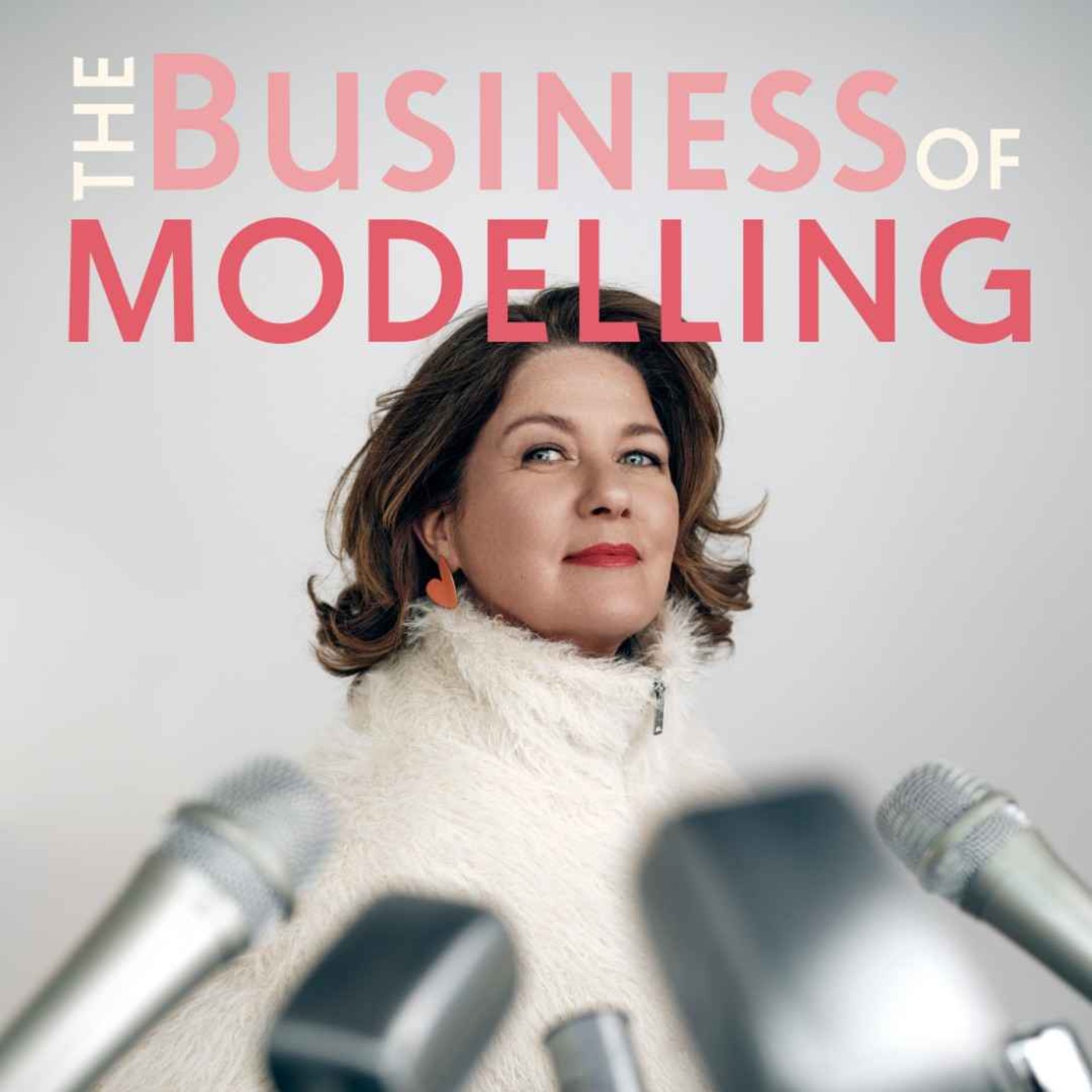
Pirjo’s modelling career started in the 1970’s in Sweden, when her sister encouraged her to embrace her height and to apply to a modelling school in Stockholm. She then went on to model in Paris, New York, Tokyo, and finally settled in London.
In this week’s episode, Pirjo joins Tessa to speak about the multiple lessons she has learned from working in the industry for decades. Back when you had to call in at payphone and when she worked with Princess Diana, and how discipline, politeness and showing up prepared, still matters.
She reflects on resilience, reinvention and the growing demand for older models in an industry now embracing representation at every age.
Hosted on Acast. See acast.com/privacy for more information.


