
 Ask ChatGPT


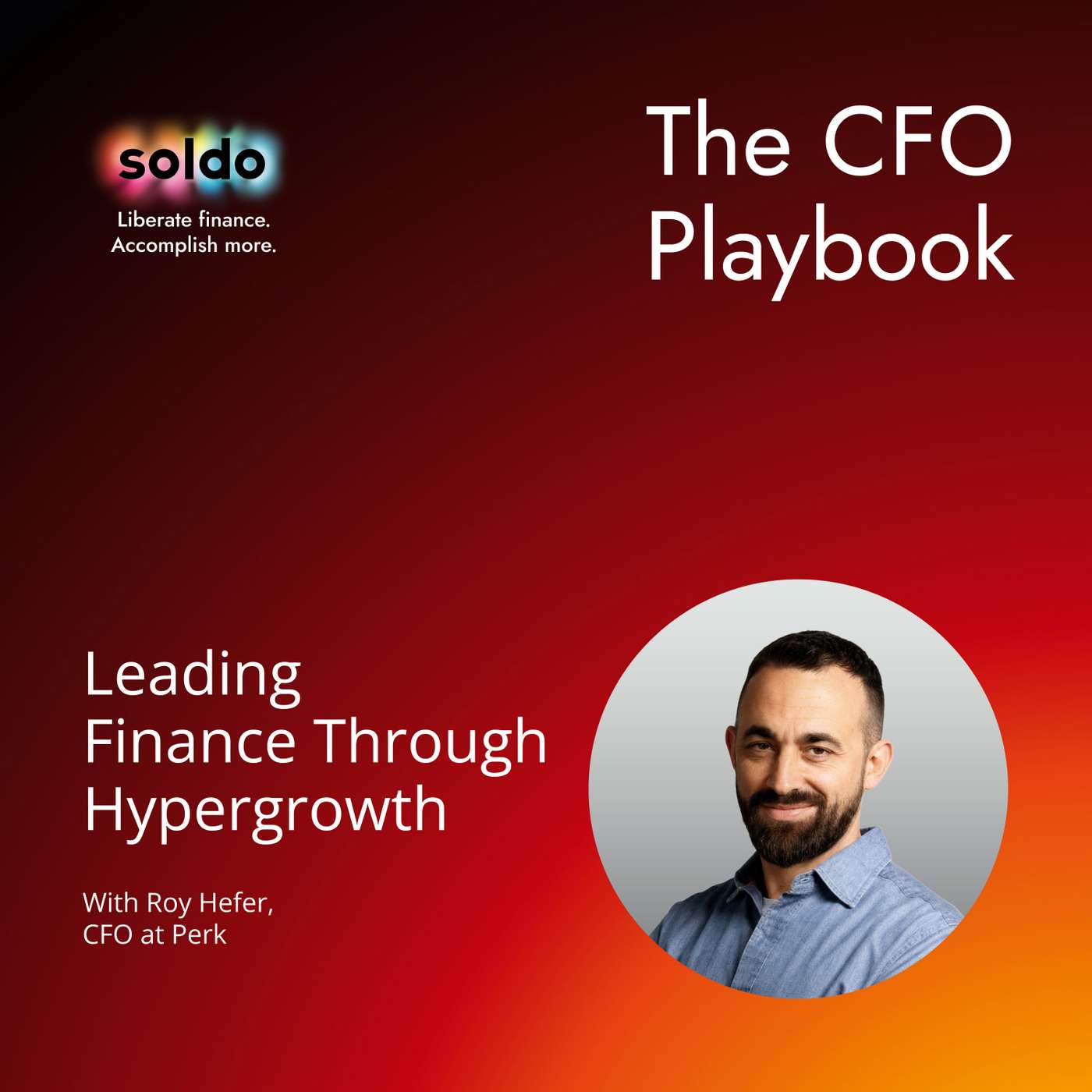
Roy Hefer, CFO at Perk (formerly TravelPerk), discusses leading finance through hypergrowth and transformation—nearly doubling margins while integrating acquisitions, repositioning the business, and scaling AI-driven operations.
Roy Hefer has a law degree (Tel Aviv University, with distinction), advised leadership teams at McKinsey for five years, then moved in-house to help transform and take Luminous public on Nasdaq (2014), later selling it to private equity (2015). He spent seven years in the Bay Area, then moved to Barcelona in 2022. He is now CFO at Perk.
M&A success depends most on culture/people alignment (not just spreadsheets). “Gut feel” is pattern recognition from experience. A world-class finance team enables delegation and leverage. Trust is built via credibility, reliability, confidentiality/judgment, and ownership/accountability.
Perk’s acquisitions of Yokoi, Amtrav, and Click; Yokoi’s AI spend platform in Europe. AI helped automate customer care and improve gross margin from sub-40% to mid-70s; roadmap shift after ChatGPT launch (late 2022) drove near-doubling gross margin in three years.
Written by AI. May contain mistakes.
David introduces Roy Hefer, CFO of Perk, and sets the stage for the discussion.
“I will be the first one to raise my hand and say, I screwed up, I own it, I will fix it, and we'll learn from it.”
Roy explains Perk's AI-native travel and spend platform for SMBs.
“For anyone who isn't familiar with Perk, formerly Travel Perk, which is how I knew of it, first of all, in a sentence or two or three, tell us what it does.”
Roy discusses key factors for successful acquisitions and integration.
“Building this platform for the future that enables the opportunity to scale beyond just travel expense management into these other areas as well.”
Roy emphasizes the role of culture and interpersonal relationships in successful M&A.
“To a certain extent, yes, but not really.”
Discussion on balancing multiple priorities and building a world-class finance team.
“As you've described to us, you've been scaling revenue, integrating acquisitions like we've just discussed, and then repositioning what it is that the company does all at the same time.”
Roy shares insights on trust, accountability, and leadership values in finance.
“Everybody who knows me, both, by the way, also for family, we have our family values, our kids know our values.”
Roy discusses the impact of AI on Perk's operations and growth.
“And the other thing, the last thing I think on trust is like, I trust you that you have like no hidden motives.”
Learn how AI is transforming finance and business processes.
“But look, it's been an amazing ride and we're just scratching the surface.”
Discover the limitations and potential of AI in performance management.
“throughout the entire business throughout sales and marketing throughout finance and legal hr and every single function now knows how to leverage AI.”
Explore how automation improves efficiency in accounts receivable.
“In terms of, I mean, there's the obvious things, again, what we've done on the account receivable side.”
Understand Roy's unique career path and the insights gained along the way.
“Let's flick back through your best hits in terms of your career journey.”
Learn about Roy's decision to move back to Europe after years in the Bay Area.
“And I would say most importantly, you work with, yeah, like the talent density of those firms is just insane.”
Gain insights into effective fundraising strategies from Roy's experience.
“We were actively looking for opportunities in Europe.”
Understand the importance of mental health and team building for CFOs.
“The worst thing is when you, and it becomes very transactional when we just, oh, you know, raising, you know, X, Y, Z, and you start like this outbound approach.”
Learn the importance of building a strong team for CFO success.
“So what top piece of advice, one top piece of advice for a fellow CFO would you like me to enter into our CFO playbook for you?”

Get the gist, explore an idea or ask about something said.
 Claude
On The CFO Playbook, what are the key points of this episode?
Searching your listeningAutomatic transcript. May contain errors.
0:00Hello and welcome back to the CFO Playbook podcast with me, David McClelland. And here on the CFO Playbook, we get under the skin of how finance leaders from around the world leverage technology, set goals, make plans, manage teams, and much, much more. In today's show, I'm speaking with the CFO charged with steering a high-growth tech company through a remarkable period of transformation, remaking its identity, repositioning its business and nearly doubling its margins all at the same time. It starts with the people. It's the same, like, good to great principle, you know, get the right people on the bus and the wrong people off the bus.
0:37Because once you have the team, once you have a world-class finance team, you can start to delegate and get leverage. That's how you do more. I will be the first one to raise my hand and say, I screwed up, I own it, I will fix it, and we'll learn from it. Be obsessed about building a world-class team. that will define your impact as a CFO. The CFO Playbook is here every month with exclusive finance leadership insights. So make sure you subscribe, browse through our back catalog and get in touch as many of you do. Your suggestions genuinely help to shape our show. Right, let's meet today's guest.
1:15This episode of the CFO Playbook is brought to you by Soldo. Trusted by over 25 ,000 organizations across 31 countries, Soldo combines pre-programmed cards, an intuitive app, and a powerful management platform to replace manual processes with efficiency and control. To find out more or to book a demo, visit soldo.com.
1:43Roy Heffer, CFO at Perk. Welcome to CFO Playbook. Thanks, David. Thanks for having me. Great to be here. For anyone who isn't familiar with Perk, formerly Travel Perk, which is how I knew of it, first of all, in a sentence or two or three, tell us what it does. Yeah, so Perk is the world's fastest growing AI native travel and spend platform for small and medium businesses. So what it means is we help companies control the employees' travel, which is often one of the largest line items in their P &L. while at the same time we provide a superb world-class end-to-end experience for the travelers for the employees who travel from booking the trip through changes and modifications which in business is a very very uh occurring theme and then through automatic reimbursements of their expenses for for the trip that's what we do we uh are about to cross 400 million in annualized revenue growing very fast last year we grew almost 50 percent and uh yeah we feel like we're we're just getting started.
2:45Building this platform for the future that enables the opportunity to scale beyond just travel expense management into these other areas as well. You can build that capability yourself or you can buy some of it in as well. And I know that acquisitions has been part of your story over the last couple of years, including a fairly large one, I think, only a few months or or so ago. With your CFO hat on then, what are the key signifiers of a successful acquisition, in particular, successful integration into the company as well? Again, a CFO, you always analyze these deals, you build these and design and the whole architecture of synergies and how both companies are going to operate together.
3:30It's all done on spreadsheets. but the real execution the day after happens by real people with real personalities and culture and values and that is in my experience now last 20 years of experience now seeing M &A the biggest success factor is the people and the culture the more you have aligned culture and values between the two teams and people across the companies the more successful you will be does it matter what you put on the spreadsheet? To a certain extent, yes, but not really. What really makes this and what made this acquisition, and by the way, both acquisition of Yokoi and Amtrav and Click, which we had done in prior years, they all were very successful because we had this alignment in culture and values across the leadership of the teams and across the people.
4:28And Yokoi, to give you kind of an example, they had been a long partner of us. For four years, we had partnered with Yokoi. That obviously de-risks a lot. And that was also one of the main reasons why we were so excited. And we knew that it's going to be successful. The other thing that excited us is their technology. Because they had by far the best spend platform in Europe, fully, fully kind of leveraging AI and automation. and so it was honestly it was it was meant to be and we've done the integration now the teams are together uh that we don't talk about yokai anymore it's only one team and it's been extremely successful since culture feels very qualitative but actually is there a way in which you can make it more quantitative?
5:17Is there a way in which you can understand, create some kind of overlay to understand whether the cultures are going to be compatible or not? Or is it just a feeling? How do you reconcile the kind of numbers and the logic versus the feels of the culture? I'll be honest with you, David. It's very similar to dating. How do you know that you found the right partner? It's the same thing. You spend time together and you go through things together.
5:49And it's exactly the same thing for me. And I've seen this now multiple times. You need to spend a lot of time together. It's not just one meeting. It's spending time as a leadership team and going through difficult conversations also together. That's often, I think, a complete misconception. People are afraid to create friction in the early phases of the dialogue. Oh, what about this? What would they think? And all of that. You need to be who you are. You need to be genuine. and authentic. And whatever happens, happens. If it works, it works. If it doesn't work, you better cut it out. You know, you better stop now before you actually, the stakes are going to be much higher.
6:25You're going to be committed to your investors. You're going to have the story out and it's going to be fail. It might fail. I rely a lot on gut feeling. And I say this word a lot. I use this term of gut feel almost as much, if not more than on purely numbers. And again, this is me as CFO. Yes. Feeling is not just a feeling. It's not just a mood. It's based on pattern recognition and again, 20 years of experience seeing businesses and cases and M &A and deals and seeing what works and doesn't work. And yeah, go through difficult conversations together between both teams because those are often early signs, positive or negative, for what's to come and when the stakes will be much higher.
7:09Just like dating. Yeah, I like it. I like that a lot. As you've described to us, you've been scaling revenue, integrating acquisitions like we've just discussed, and then repositioning what it is that the company does all at the same time. so when it comes to spinning that many plates at once roy doesn't does something have to give what what's your secret then as a cfo to keeping your eye on all of these moving parts and not letting any of them slow down or smash without slowing down or smashing your uh private life your life at home as well yeah no it's it's a great question and it's it's frankly much more an art than a science and something you develop over the years but it starts and i hate to sound like a broken record, but it starts with the people.
7:57It's the same like good to great principle, you know, get the right people on the bus and the wrong people off the bus. Because once you have the team, once you have a world-class finance team, you can start to delegate and get leverage. That's how you do more. It's very simple. You cannot do more if you need to do everything by yourself. But, and the opposite is true. When you get leverage, it's not two times or three times. You can get 10 times or 20 times leverage with a really, really world-class, high-performing team. Everything we've done here is all credit to the team. It's never just myself or one individual.
8:32But that's the answer, David. It's you need to build that team. And sometimes building the team requires very difficult decisions. I mean, hiring and firing, right? Like sometimes you have somebody that you just hired and they might be actually very good, but they're not top. Those are the people that are the most difficult to replace. But you have to make those tough decisions. And that's the only way you build a world-class team. It's tough and it sucks to admit that you made a mistake, but it's better to kind of hire slow, fire fast, just move on, find the right person and move on. We've done that multiple times.
9:08The other thing is culture and values. And I'm just obsessed about this. Everybody who knows me, both, by the way, also for family, we have our family values, our kids know our values. I just love, love, love talking about values, but more than values, I love demonstrating what it means. So when I say trust, for example, which for me is by far the most important value, what does building trust mean? When you think about it, there are some very tactical, clear steps. So first pillar, for example, is credibility, which means if I ask you a question, I trust that you know what you're talking about.
9:44You're credible. Then there's reliability. If you tell me that you're going to send me or someone else a deliverable by Friday, 11 a.m., I trust you will make that happen. So you're reliable. You're credible. You're reliable. Third thing is kind of the confidentiality and intimacy part, which means you know you have the judgment about like what to talk about, what not to talk about in what forms. I trust you that you know not to share sensitive salary information, for example, or captable information. I trust you not to bring up topics that are unbaked in certain forms. So that's kind of the judgment, confidentiality part.
10:28Ownership and accountability for me is part of trust. If you screw up, which I do every single day, just raise your hand and say, I own it. My bad. You know, I'll fix it. You know, kind of own it, fix it. And learn from it. That's it. Move on. We're all human beings. I can't let go when I don't feel that the person has actually taken ownership of their actions. And to be super, super clear, David, everything I say, I hold myself to the same or higher standards. So I will be the first one to raise my hand and say, I screwed up. I own it. I will fix it. And we'll learn from it. And the other thing, the last thing I think on trust is like, I trust you that you have like no hidden motives.
11:05So it's not about your ego. It's always company first. when you bring up a proposal. And I've had these cases in the past where employees and people on my team would bring up a certain proposal and you kind of have to peel the layers a little bit and you realize actually what they're trying to do is promote themselves. And again, these things are built brick by brick. I talk with my kids about the wall of trust, right? Like you do one thing. If you tell me if you want to build trust, just make up something. Tell me you're going to do tomorrow something at 11 a.m. Do it. Great. You just put one brick of trust in the wall.
11:38but it's not symmetrical because if you betray trust, the whole wall could break down. Again, not with the kids. With the kids, I have much more patience to build it over time but in a professional context, I think things can break faster than they build. You have to have to prioritize ruthlessly which means sometimes what you thought was important last week might not be important right now and you need to change and constantly, whether you delegate or you just say no to things, or you reprioritize, you know, think 80-20 principles, like sometimes, you know, done is better than perfect. You need to be very, very deliberate about what you're focusing on and what you're not.
12:18From your CFO perspective, what has this AI wave meant for you at PERC? And what's been the big AI dividend? And what is AI still not quite able to do for you yet, have you found? Through AI and automation, primarily in our customer care operation, we managed to get the gross margin from sub 40 % to the mid 70s and best in class today in our industry. And everybody talks today about AI, every single company. There's not a single company out there, no matter, could be even if they're not a tech company, but they are an AI native company, right? Everybody's AI native, everybody's AI powered. But then you have the companies that have actually delivered and executed them AI.
13:03And I think also this recent financing round that we raised, the 300 million credit facilities, is a clear proof that we belong in the latter. We have delivered immensely with AI. And in fact, you mentioned it in the late 2022 chat GPT just launched, whole AI revolution. We had started automating and building efficiencies in our customer care operation even before that. But you're right in saying that we were also lucky in riding that huge wave. We were one of the first companies, definitely in our industry, to implement and execute on AI. As soon as the ChatGPT launched, I think it was November 22 or Q4 22, we had an offsite in early 2023.
13:51And when we realized what this technology is doing, we changed our roadmap. we focused almost the entire product and engineering team on implementing that and basically doubled the gross margin, almost doubled the gross margin within three years thanks to that. So, yes, thank you, OpenAI, shout out. But look, it's been an amazing ride and we're just scratching the surface. The pace of acceleration in this space is immense. we could be sitting here looking back you know in in 12 months 18 months and and be in you know 80 percent and and beyond gross margin because there's so much going on right now and it's not just in the margin so to be clear gross margin was the focus but now we are implementing ai throughout the entire business throughout sales and marketing throughout finance and legal hr and every single function now knows how to leverage AI.
14:49Because here's the thing, if you know how to leverage AI, it's almost like building your own surfboard. So you can ride the wave. You ride the wave, you're on top of it. But if you don't, you're going to get crushed. And both as a company, but also professionally. I mean, I can tell you firsthand, if I'm a CFO who doesn't know how to work with AI, I'm going to be replaced very soon. by somebody who does. So in terms then, obviously, there's multiple dimensions to how an organization embraces AI. You can look at it in terms of the products and services that you offer to your customer and the way in which AI can make those better, more efficient from the actual product to customer service operations and so on.
15:34But then there's also the business processes, the internal stuff, as well as the personal productivity. So is there an example you can share with us, Roy, of from your business processes or from your productivity as CFO, where AI tooling has enabled you to do something that wouldn't have been possible before or just would have been slow and arduous? There's a lot you can do in areas like performance management, for example, which is something I wish AI could take away the whole. It's not that I hate it, but also I don't love it. okay i mean who who who does frankly um it's it's a huge time suck and sometimes you just have to go through very difficult conversations um yeah it's not fun you have to do it i would love for ai to be able to do it the reality is i don't think ai will be ai can help you document and like um yeah take a lot of the prep work out of the performance management but um which which in and of itself could be big, but it will never be able to actually replace the, again, back to the people thing.
16:40There's a real human being in front of you at this side of the table, and that conversation needs to happen between people, you know, between real people. In terms of, I mean, there's the obvious things, again, what we've done on the account receivable side. So, for example, we have implemented automation. Again, with AI and automation, we are now collecting faster and at higher rates. So that's, again, lots of shadow work that we're saving. Frankly, you don't need, yeah, you should not do manually. There's a lot of that. Honestly, there's a ton of areas where we've seen already huge improvements.
17:24QA, here is a big one for builders. You don't need human beings to QA, can automate all of that or the vast majority of that. Let's flick back through your best hits in terms of your career journey. And you graduated in law with distinction from Tel Aviv University. You then didn't go on to practice law, but maybe you'll tell me why not. then five years advising leadership teams at McKinsey before you moved to the other side of the table over at Luminous and then into a dedicated finance role. So just talk me briefly through that journey from law, then McKinsey, and then moving to internally and then into finance leadership.
18:11What was the thread that carried you through that journey? Why I went to study law, I have no idea, to be honest. I think it's because my mom wanted me to be a lawyer. I realized, I think, one or two semesters in that I probably will not be a good lawyer because, as I said, I like the 80-20. I like focusing on getting things done and focusing on the 80-20. Law is a discipline where you, by definition, focus on the opposite. You're trying to protect the 5 % of downside as opposed to focusing on the 80 % upside. And so I enjoyed it. It was intellectually very stimulating, but I didn't want to be a lawyer.
18:53I didn't practice and I tried to find the fastest route out of it. Luckily, a friend of mine told me about consulting, which I had no idea about either. McKinsey had just opened an office back in Tel Aviv a few years earlier. And he told me it's very interesting and I should come join. more than a year in I still wasn't clear exactly what I was doing I was sure that I'm going to get fired every single day an incredible imposter syndrome and and but I did learn a lot it was it was definitely fun I've managed to yeah I would say if you have no idea what you want to do and you have an opportunity to work for our consultancy like do it because you get to see a ton of very very interesting business models, very, very different industries.
19:41And I would say most importantly, you work with, yeah, like the talent density of those firms is just insane. I got a call from a CEO of Luminous. She was just appointed. She got in touch with me through a mutual friend who worked with me at McKinsey and invited me for a coffee. She was looking for some kind of like her right hand to help her, what she described as transforming the company and taking it public. And so we scheduled a 30-minute coffee, which became almost three hours. I still remember exactly the spot and what we spoke about. And especially when I asked her, so what do you want me to do?
20:19And she said, whatever it takes. And that was my job working with her. I was basically her right hand. I helped her and together, obviously, with the leadership team. We transformed the company. We took it public on Nasdaq in 2014. We later on sold it to private equity in 2015. So it was a huge roller coaster going. To be honest, it was an incredible, incredible learning opportunity and I would absolutely do it all over again. In 2015, after the take private, I was asked to move to the US to help grow their US business. And then I spent seven years in the Bay Area, moved a couple of companies and then second IPO was at Hapo Insurance.
20:57You moved back to Europe in 2022, back to beautiful Barcelona in Spain. Tell me about that decision, because surely the Bay Area is a cool and happening place for what you do, these high growth tech firms. That's the environment to be in. I mean, maybe there's some similarities between, you know, climate wise, between the West Coast and Barcelona. But what was behind that move to Spain? After seven years, seven incredible years in the Bay Area, we felt like we wanted to get closer to our families. You know, parents are not getting older nor healthier, unfortunately. Our siblings were there also with their kids.
21:36We wanted our kids to hang out with their cousins. And it's so hard to do when you're, you know, 15-hour flight away. And by the way, the time zone is even worse. Like the 10-hour time zone, like you can't actually communicate. You have very narrow windows. Just really hard. And so we wanted to get closer. We were actively looking for opportunities in Europe. Why Barcelona? It was very simple. We were kind of creating the Venn diagram of where do we want to live? And then where can we actually find a job in tech? Like the right job. And we started from kind of south. We said, you know, let's start like Portugal and Spain were our top priority.
22:15And then we say, if we can't find anything there, we'll start to gradually move upwards. You know, London was our kind of fallback scenario. primarily due to weather. I mean, we liked the Mediterranean and the culture and et cetera. And again, super lucky because Perk at the time was looking for a CFO and I love the team. I came over, spent a lot of time with the leadership team here. And I flew back to Mountain View, California and I told Malvina, my wife, God bless her, that's it. I don't think I'll ever find a better opportunity than this. This is back to the dating thing again. You got the feels from being in Barcelona.
22:49Totally. And by the way, it wasn't the first time that I had met and engaged with the team. We had multiple Zoom calls, obviously, before that, but it was a lot, a lot of interaction before, plus reference and diligence. And yeah, these are big decisions, especially when you're moving four kids. A few months ago, you announced that$300 million credit line with some really high profile backers, I noticed as well, which I think leads me to two final questions for now, Roy. First of all, what have you found most helpful when it comes to raising funds in the current market? What have been the helpful tips that might be useful for our audience?
23:25And then with that in mind, what does the road ahead there look like for you? I would say a couple of things. First of all, a successful fundraising doesn't start when you start the fundraising process. It's a long, long, long journey of consistent interaction and communication with your investors, whether it's existing investors or potential new investors. It's kind of this like, it took me 20 years to build an overnight success. It's the same thing. These things don't just happen. They happen when you have built trust and credibility and reliability with investors. Investors who had looked at us two years ago, we told them a certain thing that we're going to do X, Y, Z and then they meet us two years after and we show them exactly what we did, which is what we told them.
24:08Plus, now they have an opportunity to lean in and it's like, yeah, game on. That's how you do it. You constantly interact with investors. And so my advice would be reach out again to your existing and it's the same, by the way, equity and debt, it's the same story. It's a long-term relationship where you need to invest. And then at some point, depending on people's specific fund situations and just like a specific context and time situation, things could materialize. But you need to build that option. The worst thing is when you, and it becomes very transactional when we just, oh, you know, raising, you know, X, Y, Z, and you start like this outbound approach.
24:52And it's like a cold conversation. It's very transactional. People don't like, and people will often not move if it's the first time they've heard about the company. They need multiple points of interaction and proof points. So just start early. the things that you do today will impact your ability to raise next year and the year after that. So just invest in that motion. It's not a, I would say as a CFO, it's a big part of your job to invest in those relationships because, again, you own the fundraising process. And to make it successful, especially during turbulent times, we know what the credit markets look like for tech companies now.
25:31We would not have been able to successfully fundraise if we hadn't done that over the past four years with our investors and new potential investors. In terms of like specific for fundraising tips, I would say you have to build momentum. So there's a famous kind of saying, I forget who it was, but to move a person to do something, you need three things. They need to be able to do it. They need to want to do it, but they need a trigger. And you as a CFO is the person who creates the trigger. It's like, why now? Like, yes, we get that and create that momentum. Every investor on the deal needs to understand that they are replaceable.
26:14By the way, until the end, because it's not done. Nothing is done until the cash is in the bank. Okay, let's wrap up our conversation today, Roy. And to do that, there are some questions that we put to all of our guests, some quick fire questions. So, are you ready? Absolutely, shoot. Excellent. So if you could automate one part of your role tomorrow, Roy, what part would it be? Can I say performance management? Absolutely. What emerging tool or habit or idea do you think every CFO should be paying attention to right now? Take care of your physical and mental health. It's like in the airplanes.
26:55Like you need to put your oxygen mask first. you cannot be the best version of yourself which means you won't add all of that value that you could to the company to your team if you're not in a good shape physically and mentally so that's my biggest advice put your own mask on before helping others that's the that's the saying that we hear time and time again good i like that one uh which finance leader past or present would you most like to see sitting in the CFO Playbook podcast hot seats? Honestly, there's a ton of people that I admire. Two folks on this side of the pond are, one is Adam Miller at Trustly and Michael Bannon at Sitecore.
27:40Both are, in my mind, in the group of elite CFOs and I have great respect for them and I'd love to see them on this podcast. Finally, Roy, here on CFO Playbook Podcast, we're building an actual playbook, a collection of top advice from finance leaders that we plan on turning into a resource for the community. So what top piece of advice, one top piece of advice for a fellow CFO would you like me to enter into our CFO playbook for you? Be obsessed about building a world-class team. And that is ultimately what will make or break your success. And that will be your legacy. That will define your impact as a CFO.
28:24It's been great to speak with you today, Roy. Thank you very much for joining us on the CFO Playbook. Thank you very much, David. Thanks for having me. And thank you all for joining us too. Don't forget to join us every month here on the CFO Playbook for more insights from finance leaders. But for now, from me, David McClelland, and all the team here, bye-bye.
28:44you
What does it take to become the kind of CFO who can lead through hypergrowth, change and uncertainty?
Want more insights from finance leaders? Subscribe to Progressive Finance, Soldo’s new newsletter featuring practical leadership insights, finance trends, and conversations with CFOs and industry experts: https://substack.com/@progressivefinance
Is there someone you’d like to see on The CFO Playbook? Email us at: [email protected]
In this episode of The CFO Playbook, David McClelland is joined by Roy Hefer, CFO at Perk and a finance leader with experience taking two companies public.
Roy shares a practical leadership playbook for CFOs: build a world-class team, create leverage through delegation, and make culture and trust as rigorous a priority as the numbers. He explains why the finance team that gets a business through its early growth is not always the one that will take it to the next stage—and how leaders can make the difficult people decisions that scaling demands.
In his conversation with David, Roy explores the judgement behind successful M&A, arguing that culture and values matter as much as synergy models. He shares how to assess fit through time, candour and difficult conversations, why gut instinct is informed by experience, and how to build teams where credibility, reliability, confidentiality and accountability create lasting trust.
Roy also discusses how CFOs can turn AI into real operating impact, build investor relationships long before a fundraise, and stay effective under pressure. From prioritising ruthlessly to protecting physical and mental health, his advice is a reminder that the modern CFO’s impact is ultimately defined by the people they build and the decisions they enable.
In this episode, you’ll learn: