In short
Podcast Notes: The Culture Journalist - Episode: Escaping Algorithmic Culture with Kyle Chayka
Episode Overview
- Hosts: Emilie Friedlander and Andrea Domanick
- Guest: Kyle Chayka, staff writer at *The New Yorker* and author of *Filterworld: How Algorithms Flattened Culture*
- Main Topic: Exploration of how algorithmic systems influence culture, leading to cultural homogeneity and how we can escape these confines.
Key Concepts
- Filterworld: A term coined by Kyle Chayka describing a network of algorithms that dictate the content we consume—shaping our cultural experiences in a homogenized manner.
- Algorithmic Recommendation Systems: Equations that govern what content is shown to users on platforms like social media, streaming services, and e-commerce.
Discussion Points
- Cultural Homogeneity
- Algorithms lead to a flattening of culture, where similar aesthetics (e.g., "hipster coffee shop" decor, TikTok voice, etc.) dominate across platforms.
- Examples of cultural sameness include:
- Music: Lo-Fi Chill Hip Hop beats that are easy to ignore but not challenging.
- Visual Aesthetics: Minimalist designs that are pleasing yet bland.
- Influence of Algorithms on Consumer Behavior
- Algorithms reward content that generates engagement, often leading creators to produce safer, more commercially viable work.
- Dominant trends can overshadow niche, innovative content, making it harder for diverse expressions to reach audiences.
- Human Gatekeeping vs. Algorithmic Curation
- Pre-algorithmic systems relied on human editors to curate content, allowing for diversity in storytelling and creativity.
- The algorithmic model prioritizes engagement metrics, often at the cost of quality and meaningful diversity.
- Discussion of potential third solutions that combine human curatorial efforts with algorithmic efficiencies.
- The Role of Advertising
- Many platforms' primary aim is to maximize advertising revenue by keeping users engaged with content.
- This profit-driven model creates a cycle where content must always cater to what is most popular, limiting creative expression.
- Possibilities for Escape
- Regulation: Advocates for anti-monopoly measures to promote competition and improve user experience by breaking up conglomerates like Meta.
- Collective Action: Encouragement for users to seek alternative platforms (e.g., Bandcamp, Substack) that prioritize direct support for creators.
- Cultural Shifts: Signs of a return to in-person experiences and appreciation for obscure, curated content, moving away from algorithm-driven visibility.
Conclusion
- The conversation emphasizes the importance of recognizing how algorithms shape cultural experiences and the urgent need to rethink the role of these systems in creative fields.
- Both hosts and Kyle Chayka stress that while algorithms can streamline access, they can also flatten culture, making it essential to reclaim agency in how we consume and produce culture.
Key Takeaways
- Awareness: Understanding the influence of algorithms is crucial for both consumers and creators.
- Agency: Reclaiming agency involves exploring diverse content sources and supporting platforms that align with ethical consumption practices.
- Future of Culture: The evolving landscape of culture requires a balance between algorithmic efficiency and human creativity.
Additional Resources
- Kyle Chayka's book: *Filterworld: How Algorithms Flattened Culture*
- [The Culture Journalist Substack](https://theculturejournalist.substack.com)
- Follow The Culture Journalist on [Twitter](https://twitter.com/culturejourno?lang=en) and [Instagram](https://www.instagram.com/theculturejournalist/?hl=en) for updates and insights.
---
This concludes the notes on the podcast episode with Kyle Chayka. The insights provided highlight the intricate relationship between technology and culture, underscoring the need for thoughtful engagement with the content we consume.
Written by AI. May contain mistakes. Listen to the episode to check what was said.
Transcript
Automatic transcript. May contain errors.0:01Oh, hello. It used to be you never knew exactly who was watching your commercial, but modern data mining has changed all that. The commercials you are about to see have been selected for you based on your viewing habits, social media likes, and blood type. And because these ads are targeted at you and only you, I think you'll find it impossible not to purchase the following products. Hey, Yang. It's Emily here with Andrea, and you're listening to The Culture Journalist. So we all talk about the quote unquote algorithm and how it seems like it's always, you know, kind of insidiously influencing our behavior.
0:40For example, you'll have like a certain tweet format or meme that randomly gets really popular for a time and everyone starts using it and kind of talking in the same language. Do you ever feel like you're noticing that logic just like everywhere and, you know, not even just on the Internet, but also in real life? It's definitely been a slow creep. One thing that comes to mind for me is like this kind of coffee shop, like this almost like not a platonic ideal, but maybe an algorithmic ideal of the coffee shop where like no matter what city you're in or even like country, there's this coffee shop aesthetic now of like Edison light bulbs and, you know, unfinished wood and chalkboards and kind of Canva fonts.
1:24And similarly, like Airbnbs, too, is another one where there's the aesthetic with like a Monstera plant and like a minimalist couch and those signs that you get from like TJ Maxx home goods that have some kind of platitude in like a millennial font in a white frame. They're everywhere. How did this happen? Totally. But yeah, I experience it online too. Just this feeling that like platforms are suddenly pushing their cultural recommendations more towards this like, oh, you like this thing once you're going to like it again dynamic. like I started watching that was some like kind of silly spy show on Netflix recently and then it like only shows me international spy thrillers like over and over and over again I also had this like really weird thing recently where I was like shown a video like this is kind of dark I was like shown a video of like a horse giving birth or something on Facebook and I like watched it so I was like, oh, I wonder what that's like, I guess.
2:31And like then every time I opened Facebook, it kept on showing me different animals giving birth. Oh, my God. It was just really, really weird. Right. It's like this sense of like some like cloying, disembodied person who's like always like spiritually there being like, you like this. Maybe you'll like this. you know whether that's like some kind of like public consensus of like an aesthetic or just like something that you passively like had your eyes on or like clicked through to and then it's just this sense of like more more more how about this and liking like the phrase like it's not always that you like it sometimes it's like this disturbs me or this makes me angry so i'm gonna get more of it 100 but either way the results that you're being pushed towards are the same It almost feels like the this might be like maybe like the ultimate IRL culmination that it feels like the whole Taylor Swift, Travis Kelsey thing, like the Super Bowl happening the week after the Grammys.
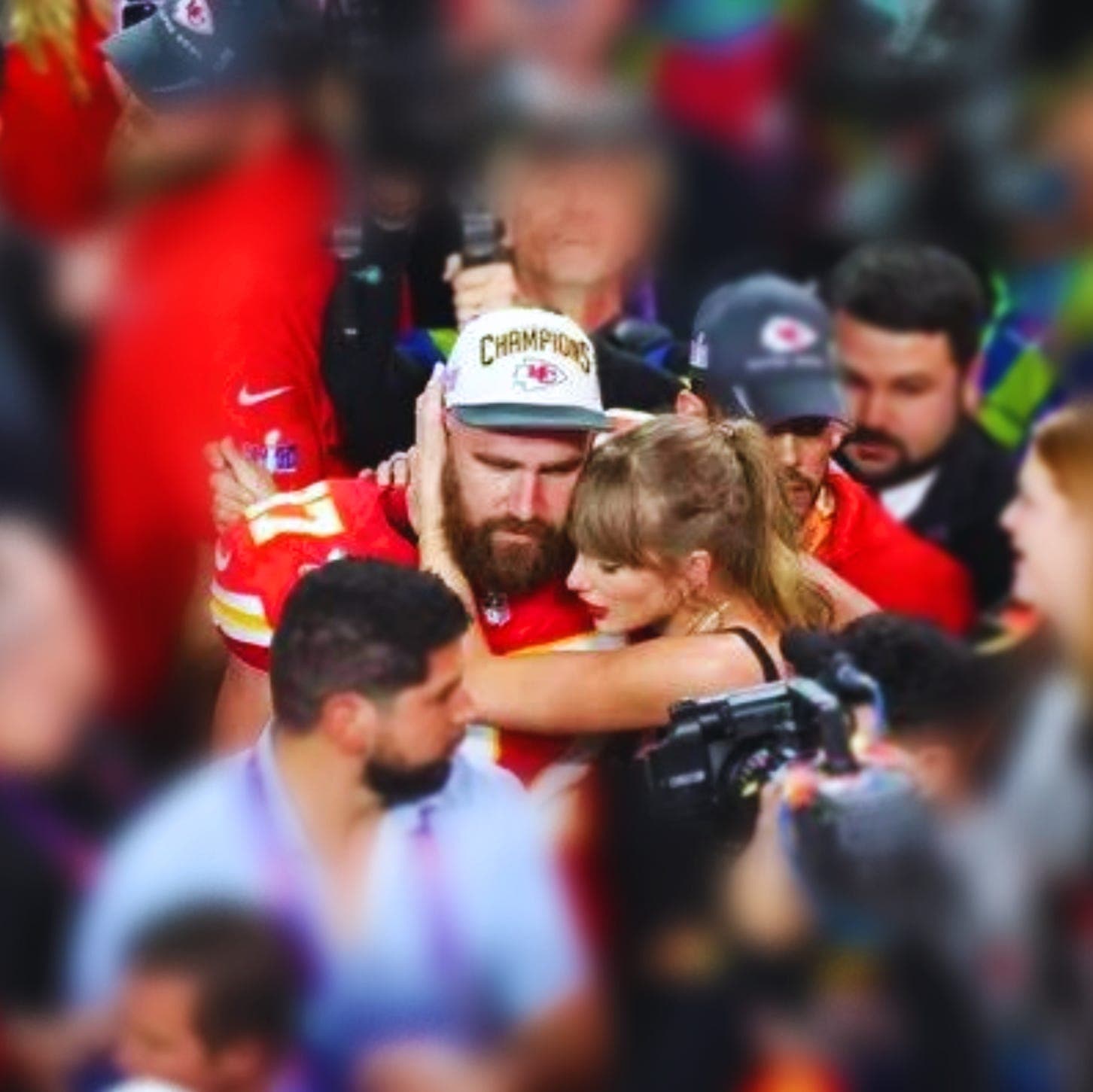
3:28She like won the Grammys and he won the Super Bowl. And they're like the ultimate sort of like spawning of every aspect of like likes or dislikes of American culture in one item. Does that make sense? Yeah, and like every news story for two weeks was dominated by talking about them and how it was like all leading up to this moment. Exactly. And they're like the two most liked things in America right now, basically. Although in the same way, I guess there's also conservatives who had all these crazy conspiracy theories about like this would all culminate in Travis proposing to Taylor and they both like endorsed Biden or something and that it was a sign up.
4:08I think it just drives people crazy or something. Right. Like when you see the same thing over and over again. And once again, the results of all the attention and direction being given towards this, whether you love it or hate it, the platforms are still getting the same thing. They're still reaping the rewards. Yeah, exactly. So according to Kyle Chayka, a staff writer at The New Yorker, all of these experiences are part of something called filter world. His word for a, quote, vast, interlocking, and yet diffuse network of algorithms that influence our lives today. Kyle has got a new book out called Filter World, How Algorithms Flattened Culture, which zeroes in on the rise of algorithmic recommendation systems and how they've completely upended the process by which we decide which culture to consume.
4:57By algorithmic recommendation systems, he means essentially the equations that govern the specific pieces of content that social media, streaming, and e-commerce platforms decide to show us, and in what order. So whether we're queuing up a new show on Netflix or deciding which coffee shop to stop by on the way to work, Kyle argues that algorithmic recommendation systems tend to have the effect of pushing us toward a kind of cultural homogeneity or sameness. And while that sameness can look very different across different platforms, like think about the rise of TikTok voice on TikTok and wallpapery YouTube music channels of the chill beats variety, it isn't something that happens at random.
5:38As Kyle reminds us, the type of content that gains the most traction in these algorithmically driven spaces are dictated in large part by the specific formats and filtering mechanisms a tech company decides to prioritize at a given moment in time, usually with the goal of maximizing profit. Simultaneously, it's also being dictated by the ways that cultural producers are constantly adapting and responding to these changes for fear of being left behind. Something, you know, we never talk about on this show. Kyle joins us to talk about how exactly algorithms produce this sameness, what kind of culture rises to the top in algorithmic systems, and how that impacts the decisions we make about the culture we both consume and produce.
6:24We also get into the pros and cons of human gatekeeping versus algorithmic curation, which is kind of the central dilemma of Filter World, or whether the answer may lie in a yet-to-be-realized third solution. Finally, we talk about the challenges and possibilities of escaping Filter World and how we can reclaim some of our personal and collective agency again. We'll venture into Filter World with Kyle Chaka right after the break.
6:53and over and over and over and over. Like a monkey with a miniature symbol. The joy of repetition really is in you.
7:11The Culture Journalist is an independent project that relies on word of mouth and is funded entirely by listeners. If this pod adds something meaningful to your life, please consider supporting our work by becoming a paid subscriber over at our sub stack. Paid subscribers receive full access to bonus episodes along with culture recommendations, the occasional essay, and more goodies. Look, we don't have like a big staff or cushy sponsors to fall back on like most corporate podcasts do. So every listener who subscribes actually makes a big difference. Hey guys, we're back with Kyle Chaga. Kyle, thanks so much for joining us.
7:48Thanks for having me. So in the second chapter of your book, you take us to Amazon Books, which is an actual brick and mortar Amazon bookstore that you visited in Alexandria, Virginia. Why was it such a disorienting experience for you as someone who normally patronizes independent bookstores to visit this one? It was strange. Yeah. I mean, even just to see Amazon on the front of a store at that point was a bit weird. But when you walked into the bookstore, I mean, the first thing that I noticed was that all of the books were cover outward. So there were no books that were turned sideways on a shelf the way that you would normally see a bookshelf.
8:30So that was visually overwhelming. Like it took me a second to realize what was going on. And then I started noticing the labels on the shelves and they were sorted by categories like four stars and above or books that readers finished or you know 10 000 ratings or above so it was all these like sorting systems that depended on amazon's own metrics like truly the app come to life yes it was like looking at the amazon website and then finally there were these tiny like e-ink labels that literally showed like the star rating and the changing price of the book I mean, the total opposite of the indie bookstore, like go in and see what they like on a given day and talk to a human being.
9:21Yeah. What are those differences between that algorithmic recommendation system and, you know, the old school book clerk human recommendation system? What did that bring to light for you? I mean, it really brought home the way that data was behind all of these sorting mechanisms. like rather than categorize these books in terms of what they were about or who wrote them or even where they came from it was all about what kind of metrics they solicited on amazon's own platform so it was a kind of like form of data that had been invented by the company that was then used to judge the content that was on its platform and by content i mean the books the books that they were selling in the bookstore.
10:08So maybe that was it. It was like the way that it truly demonstrated how real life objects were being treated in the same way as digital content. Like your physical experience was modeled on and replicated the digital experience. Yeah, it's kind of like an ultimate tail wagging the dog, right? It was a full iteration of the online experience offline. And what happened online drove what was displayed offline. Yeah. There is actually supposed to be another Amazon store opening up near me, I think in like Cherry Hill, New Jersey. I live in Philly. That was like one of those four star Amazon stores.
10:46It was everything's four stars. Oh yeah. Like the same, the same concept, but just like miscellaneous items that like you presumably want to purchase because you are in the store and you see that they've received that many stars. I'm going a little bit off of our question list here, but I just, I can't help but wonder who is going to these and why if it's just truly mimicking your app experience. I mean, it seems like it's just kind of gutted everything that defines why one would go to a physical bookstore and interact with physical humans, you know? I think so. I mean, also the, this Amazon bookstore did close eventually.
11:26So I think, I think they've given up on this physical instantiation. But it just, it did make me wonder, essentially it would be the same as going online, right? Like you could have that experience by clicking into the website and browsing your purchases there. And it just seemed like it brought home the absurdity of judging things in the outside world by like their engagement or their star ratings, which is the thing we do with restaurants all the time, I suppose. like we look up you know this restaurant has five stars or it has 400 reviews on google maps so it must be good but there was something about the books that just it completely repelled me right and of course restaurant star ratings generally being based off of critics and really seasoned reviewers who like devote their whole life to assessing these things yes yeah i mean the it was like an average like you are judging things based on the average of clicks they receive on the website and that's just like not how you want to see things.
12:27It's as if you could only browse articles on the website by what was getting the most traffic at a given moment. Yeah exactly. So taking a step back can you explain in broad strokes what an quote-unquote algorithm actually is? Like when you say that algorithms flatten culture what kinds of algorithms or algorithmic behaviors are you referring to? It is confusing because I think we use the word algorithm them to refer to a lot of stuff right now. We kind of like blame it for some things, praise it for others, describe it as controlling the internet. So for my book, what I'm discussing is algorithmic recommendations or recommender systems, which are the digital technologies that dictate what kinds of content you see on a website.
13:15So a recommender system is how Facebook decides what posts to put at the top of your feed. It's how TikTok decides what's in your for you feed. It's how Netflix decides to arrange your homepage on that app. And essentially what they are is equations. And the word algorithm just means equation, like any kind of equation is an algorithm. And they're equations that ingest all the data on a platform, like every user on Facebook. And then they filter all of that data through an equation that takes into account various variables like traffic or plays or likes or content matter. And it uses that equation to determine whether you, a specific user, might be likely to click on that content or not.
14:02And then it serves you the content that you are most likely to click on. And then you have something called filter world, which is sort of the cultural universe that these algorithms foster online. Can you explain what Filter World is in a nutshell? Yeah, I struggled for a long time to come up with the title of the book, and I knew I wanted a single word that kind of described this whole situation that we're in. And so Filter World to me is this kind of bubble that we're surrounded by, or a scrim that we're surrounded by where algorithmic recommendations filter you know they like decide what reaches us whether it's music or articles or images on instagram or tv shows on netflix so it's just like immersive and almost inescapable environment in which all of the things we experience are filtered and influenced by algorithmic recommendations and not just like music or movies or tweets, but also you talk about places or aesthetics that, you know, you talk about like the coffee shop aesthetic that is the same in many different countries.
15:16But yeah, like what sort of culture generally speaking, though, tends to rise to the top in algorithmic systems? And how does that impact the decisions we make as consumers? Because it's kind of hard to generalize. right I mean I think on one level algorithmic platforms really do influence a lot of our decision making whether it's like what route we take on the highway according to google maps or what restaurant we go to if you're looking it up on yelp or something so I think it influences how we move through the physical world as well and I think what works for these systems are forms of culture that are like immediately accessible.
15:59You know, they hit you right away. They're not too complex. They're not contradictory or paradoxical, but they tend to be very immediately appealing. It's the kinds of things that reward passive engagement. So on a music level, I often bring up the YouTube channel, Lo-Fi Chill Hip Hop Beats to Relax slash Study To, which is like a infinite 24-7 feed of chill synthy beats with some like acoustic instruments over them and this is music that's like completely ignorable you can put it in the background and do whatever you want it's not unpleasant but it's also not challenging or that interesting it's like the the mush of music and visual aesthetics wise I think it's what we think about when we you know bring up the Instagram aesthetic, like minimalist environments or spaces, pastel colors, blobby shapes, like things that are very readable on a screen against a white background tend to work really well.
17:06It's interesting because in the book, you kind of talk about the comparison between, you know, cultural objects and then news. And I would normally say that, especially as a journalist, you learn that the stuff that attracts the most attention is the stuff that you know is the most salacious or polarizing or shocking but then when it comes to things like music and like visual aesthetics it's often the the blander the better or something it is interesting like i think there's a flattening effect in all cases but it has different end results for like each form that it takes. So in culture, it's like, essentially what the platforms are incentivized by is to get the most people consuming the same thing at the fastest rate.
17:58Like the thing that appeals to the broadest possible audience is the thing that will go viral across the platform. So that tends to lead to like an averageness and homogeneity and a blandness, as you said. And then I think in news or politics, that rule of like sparking engagement, it's more like the immediate reaction is really strong. So like you said, the provocative story, the crazy headline will get the most clicks and that will drive popularity. And I think in politics, it's also this kind of homogenization to the extremes. Between Republicans and Democrats, for example, there's a huge gulf.
18:37They're like, we're sorting people into the most extreme, possibly different groups. They're not mistakable for each other. and within those buckets there's also only one kind of republican one kind of democrat like if you're not towing the party line which happens to be trump for the republicans there's no other way to be a republican so i see that kind of flattening happening in in various areas and then with music like you said in the book that there is like a band that achieved a successful release or album that was just like i don't know was it sleep or was it blank noise was it silence yeah i think it was silence like they put out an entirely silent album kind of like john cage's 433 and they just told their fans to play it over and over again at night yeah and it's like that's the most universal thing sleeping and so is like uh chill beats where everyone needs to work and relax i guess i don't But yeah, it's interesting how it produces a slightly different but similar result.
19:42Yeah, it's interesting to keep track. I kind of think there's an aesthetic associated with each platform. Like there's a TikTok kind of choreography. There's a Spotify kind of music. There's an Instagram visual aesthetic. So each one, I think, kind of leads to its own flattened style. There's a Facebook kind of rage. Definitely. and it's funny too because it's when you think about the duality of that sameness like the bleeds it leads flattening of politics and news and the total like bland soothingness of aesthetics and music it really feels like an ecosystem like it's almost like you need one to come down or come up right yes yeah one one raises your blood pressure and then the other sees it And it all feeds the algo.
20:33I like to watch my recommended Netflix spy thriller show and then wind down with Millionaire Matchmaker. And those are two different zones. Oh, man. I did hear someone say that Spotify is now also doing brainwave measuring or kind of brain scanning. Wait, what? Possibly we'll get music served to us to induce particular brain states based on sheer physical out, but it's a crazy world. Wild. This does make me wonder, like, you know, when we talk about the algorithm, like, obviously, these days, it has kind of a negative connotation for sure. But an algorithm itself is not something inherently negative, it can kind of be to achieve whatever results the person wielding it, or group wielding it is seeking.
21:21And so I wonder if we could just talk briefly about like, what's motivating these algorithms? And is there a world in which the algorithm in a neutral sense can just be programmed, you know, for, I don't know a better way to say this, but like better results, like that only really just come from like organic human interaction and interfacing and discovery. Do you know what I'm saying? Yeah, yeah. I think we see like, quote unquote, the algorithm as inevitable, where it's actually not at all. Like all of these companies are full of engineers who decide what variables the algorithmic feed takes into account and those could be completely different so it's not the technology itself that's a problem like I think variables could be changed you know Spotify music could try to surprise you more with its recommendations and there has been some move in that direction I think as users have gotten board.
22:16I think TikTok was planning to introduce a way to reset your algorithm and just like start over in case it was not what you wanted. Elon had that whole thing about like, at one point, Elon said something about how he was like making their algorithms public or something. I don't, he kind of dumped some information, but I don't really, maybe you had to be a data scientist to parse what that information was or it was. Yeah, theoretically, they made it transparent. But I think a lot of people were rightfully skeptical of that that was actually accurate. Or like, just because it works one way one month doesn't mean it works the same way the next month.
22:51I mean. So really what we're saying here, and I think some ways that people might like lose the plot is understanding that like, ultimately, these algorithms are being programmed based on, I guess, I mean, really profit motivations of the companies behind them, right? Right. Well, what struck me so often writing this book was just how much everything is driven by advertising. Like, Facebook makes its money from selling ads, Google makes its money from selling ads, TikTok sells ads. And so the entire function of the platform is oriented toward advertising, fundamentally, like the utility of TikTok to make money is not that it serves you the most amazing videos, it's that it serves you videos, figures out your tastes, and then targets you with ads that are relevant to you.
23:40Like, that's how it makes money. And so I think you can imagine a world in which the algorithmic systems were programmed instead to like bring you the most obscure interesting stuff like to to deliver you the most inspiring thing and instead it's just to maintain your engagement like to keep your attention flowing for enough time to serve you more advertising because i think i mean conceptually if i imagine a feed of just the most inspiring moving pieces of art you wouldn't stay on that platform for that long you would like see something so amazing that it changes your life and then you would log off you're like I'm gonna go outside now exactly I mean I find this all the time like Spotify will not recommend me it will not put in a playlist any song that's longer than like three minutes because it knows if it puts in a song that's like 12 minutes long I'm very likely to skip it and to lose my attention and log out and like stop flowing along that algorithmic feed.
24:41And so it doesn't. It gives me the least disruptive step. And kind of by extension, you know, one aspect of algorithms that is notable is, you know, when we joined platforms like, you know, Twitter or Instagram, Facebook, where it's presumed that we're going to follow the people we want to follow, but then we go on these platforms. And at this point, you're seeing maybe a couple people you follow, but it's like not even determined by that anymore. It's probably important to note just how much this disrupts the lives of those on the other side of this, not the consumers, but the producers of art, and how we don't know what these algorithms exactly are doing.
25:24We can only guess. We know they're constantly changing. How does this all impact the creative decisions that artists make, including journalists like ourselves? You write in the book that the first rule of filter world is to go viral or die. I mean, I think as journalists, we can feel that that's true. Either you're getting attention or you're dying. And I suppose that was more true in the kind of BuzzFeed era where traffic was the be all end all or the gawker leaderboard era, where what was getting the most traffic was always seen as the best thing. I mean, it pressures creators to make pieces of culture that work for the platform that they exist on, that attract the most attention in the space that they're meant to exist in.
26:12And the platforms themselves, like by their structure and by the way that they measure things, produce limits for the content that exists on them. Like recently Spotify introduced this rule that nothing, no song under a thousand streams will get revenue from them. And that's like, that's literally go viral or die. Like either you get more streams than a thousand or you are worthless. And that just seems like the most like damaging possible attitude toward culture that we can possibly have. Like there's a value to things that is not just measured by how many listens they get or how many you know likes they get and i think that's what filter world essentially does is forces you to measure the success of culture solely based on how much attention it gets whereas when i was growing up and kind of looking up to maybe gen x artists and musicians it was like i don't know i'm part of this group of like a couple thousand people who's really into this world and and that artist has like dignity in that you have these really really cool fans right who know their shit.
27:21And then now it's like, if you're that kind of artist, you not only almost like don't have that sort of status anymore. It's almost like you don't exist. Nobody sees you. Yeah. Yeah. It's so terrible. It's like, that's, that's kind of what go viral or die means to me also. It's like, you cannot stay small. Like it's unsustainable to only reach a few thousand people or to only cultivate fans who like really know what you're doing. So you're kind of forced to appeal to a broader and broader audience. And on some level, I think it's like almost a social pressure. Like, you know, we could all be satisfied with only reaching 100 people, but we want more because the internet allows you to have more.
28:04Like we want the numbers to always go up. But also monetarily, I mean, your income depends on the number of followers you have and the number of listeners you have in a very straightforward way. So there's this financial incentive, too, to just grow and grow and grow no matter what. Totally. I assume you saw that pretty nice piece in Vox, Everyone's a Sellout Now by Rebecca Jennings. Yeah, and I was so struck by this anecdote about the artist Best Coast. I remember Best Coast in the early 2010s. There's this figure kind of playing the circuit of the DIY scene around in different cities. And she's describing her life now.
28:45And she's like, I'm sitting in my computer in front of a spreadsheet filled with all of the tweets I have to write today and all the videos instead of like focusing on, you know, writing songs or whatever. Yeah, it's so true. I mean, I think I cover this in the book in a way with this idea of content capital, which is this great idea from this book that's just titled content. The content capital is like, how much content are you able to generate from like your essential being or your creativity? Like, how much more content can your content create? How much can it proliferate and generate more attention?
29:24And I think now there's this huge pressure to make use of every little platform, every piece of attention you have and leverage it to promote your own work. And I mean, we certainly feel that pressure as journalists. That's why, you know, in the heyday of Twitter, it really mattered how many tweets your story got. Like that was a measure of how far it had penetrated into the media mindset or whatever. And it was so easy to conflate your success or your value with that metric. And I think that's now happened to everyone from indie musicians to visual artists to writers.
30:06Hey, pals. If you're enjoying today's episode, we want to remind you that the only reason why we're able to keep this podcast going is because of the generous support from listeners like you. If you can't chill out for a subscription, we understand. We know things are rough out there right now. But there's another way you can help us out, which is heading over to Apple Podcasts and leaving a rating and review. It literally takes only 30 seconds, and it actually goes a long way to helping people find us.
30:37I want to talk a little bit about just like how we got here. A lot of what the book explores is how gradual and seamless algorithmic creep has been. But is there any moment or instance or occurrence that you think of as a kind of tipping point for it? Like broadly speaking, when did this takeover of the algorithm and its influence on culture and consumption really emerge and start to take hold? and what differentiates it from past analogs of mass cultural and behavioral influence, like, you know, physical advertising or television? Well, algorithmic technology has been in the internet or in computers for quite a while, like since the mid to late 90s.
Read the full transcript
31:21There were ways of filtering information on your computer and things for sorting your email or recommending songs to you. So this is not like a super new mechanic. But I think it's just gotten more and more pervasive over time. So in the early, early days of social media, like the 2000s through, you know, 2006, eight, when Twitter and Facebook were really becoming more mainstream. At that point, those feeds were not very algorithmic. They were more linear and chronological. So you just saw stuff in the order that it was posted. But then over the next decade, all of these platforms changed how their feeds worked to become more driven by recommendations and less driven by what you choose to follow.
32:06The switch happened with Twitter and Facebook and YouTube and Netflix, predominantly in 2015, 2016. That's when the balance started shifting. But I think it's just gotten worse and worse and worse. I mean, up through now, essentially, you can see how Twitter or X has now really prioritized the for you feed and threads the, you know, meta Twitter clone also really prioritizes recommendations. the TikTok for you feed, which is kind of the peak of social media right now, is not about who you choose to follow. It's just about what you're reacting to in terms of what's recommended to you. So it is like that, like the slowly heating water, the boiling frog metaphor.
32:49Like at first, we didn't notice how much they were surrounding us. And now I think it's kind of too late for a lot of the platforms that we inhabit. It seems like it's significant that TikTok all but completely did away with this basic premise of you follow the person whose content you want to see. And then now because of their success in doing that, they reached a moment in the last handful of years when all the other platforms started sort of mimicking that as well. That felt like a pretty big turning point. Totally. I think TikTok proved that maybe a lot of users, given the chance, didn't need to choose who to follow.
33:30That's a right or a kind of agency that they actually didn't necessarily want. So TikTok made us into passive consumers or more passive consumers online, where instead of choosing to follow an account or really digging through someone's profile, we just hit the like button or even just watch the video, knowing that if we engage with it, we'll get more of the same thing. I wonder if we could talk in slightly more granular terms about how algorithms produce cultural sameness. Like, I know we discussed that, especially with music and non-news kinds of culture, they trend towards kind of the most generic or middling or boring in a way.
34:13But how Are they like literally making us, you know, fall into, for example, these Netflix filter modes where you only see like the same kind of TV show? It is really interesting. I think you feel it. You feel it almost faster than you understand it, that sense of homogeneity. And I think it's crept in more over time as we've kind of hit this vicious cycle of like what succeeds algorithmically is what succeeds more and more into the future. I think like the fundamental mechanism is that algorithmic recommendations recommend content that gets engagement. So if some piece of content works for some group of people, then it will get promoted to more and more and more for as long as it works.
35:01And so I think what has happened is that creators have stumbled upon or we've gradually developed particular tricks or quirks that work for the greatest number of people at once in a given space. And that might be like the TikTok influencer voice where the TikTok people talk in this very clipped monotone, like to get as many words out as possible and to keep you listening. Or it could be like Instagram face, which is, you know, as Gio Tolentino described it, this kind of post-geographic, post-ethnic melange of various facial characteristics that seems to be replicated by every, you know, aspiring model or influencer on the platform.
35:45So it's almost like popular patterns perpetuate themselves the most. And that's the homogenization that happens. And I think there's this like tyrannical effect almost of if a trend is popular enough or a pattern is popular enough, then either you participate in it or you get ignored by the algorithmic feed. And I feel like, I mean, some people observed to me that they saw that happening with the recent Taylor Swift, like Travis Kelsey news moment where they would open their feeds and it was nothing but Travis and Taylor and like no one's other posts were getting any engagement. If you were in that conversation, you were going to get ignored.
36:27So you kind of have to fall in line. Otherwise, you're not going to reach your audience. And then stuff that falls outside of that. But it's not true that there is not interesting, groundbreaking, boundary-pushing culture being made at any given time. It's just that you're not going to see it. Right. It's not going to be the easiest thing to access. You have to work a lot harder to find it. I do think that's a kind of fallacy. You can't say that something doesn't exist on the internet. Probably everything we can think of is on the internet somewhere. but if it's too hard to find if there's too much friction if it's not getting any promotion and so much of our attention is is driven through these platforms then you're very very very unlikely to see it and that amounts to a kind of like not quite silencing but you know it slows that stuff down a lot it goes back to the amazon books thing too where you know you saw this physical rendition of a world in which the only thing that gets shown to you is the stuff that's already popping off and then you compare that in the book to McNally Jackson where it's like totally different logic because it's done by people and it's like you know maybe a couple of popular things but then this like really obscure art zine or whatever right there's a kind of pride in highlighting stuff that's not what's popular in a way like the kind of perverse choice to highlight the most obscure possible book to be like here's the new academic tome on medieval fashion aesthetics we're just going to put it out here because it's a cool book like that would never make it through the amazon store because it's not going to get good ratings it's not going have lots of people turning the kindle pages but it has a value like the yeah some people are going to stumble across it and find it to be the most inspiring cool thing they've seen you know in months and that will be a beautiful exchange of culture right and let's also not forget like the people that tend to be into the weird or more obscure shit like that are also not the type of people who are inclined towards like leaving reviews on amazon on these apps too so that's an important thing to keep in mind.
38:48I want to talk a little bit more about this tension, actually. The tension between gatekeepers, elite gatekeepers, or otherwise should be the ones telling us what to like, the bookstore shopkeepers, for example, or should it be the algorithms? You write in your book that this is kind of one of the central dilemmas in filter world. So what are the strengths and shortcomings of these two systems? Do you think one is ultimately superior to the other? Or is the answer maybe some sort of third way? Yeah, I think you could separate it into two eras, like the pre and post algorithmic era. So pre-internet, like just to take a newspaper, for example, pre-internet, a human person, a human editor has decided what stories should go on the front page of the paper.
39:37Human beings have presumably read and vetted and thought about every single story in that newspaper and decided where to put it with their human brains. So that's like the human gatekeeper or tastemaker or whatever system. And then in the post-algorithmic era, you have the Facebook feed, which no human could possibly read or look at every story that goes through Facebook. And the way that it's sorted is not by a human being, but instead mathematically according to what people are clicking on. So it's still like human in a way because it's based on human data, but it's in this extremely scaled up automated way that's not watched over by any human being.
40:19I think in the latter system, misinformation thrives. Like no one's keeping track of that whole information ecosystem as much as they might a newspaper or front page. And it's just, it really privileges a particular kind of content, which is that kind of salacious or simplistic or provocative stories. I mean, in news, like the flaw of that automated system is very clear, but you could think about it in music of like a record label executive picking out the next top band and making a choice of highlighting this indie artist from wherever versus the new ecosystem is more like if you are an indie band, And maybe you are already putting your stuff on TikTok and you're already getting followers and you're already getting likes, you're already going viral.
41:08And then the record label will come in and kind of pick you up after your algorithmic success. Like you've already been vetted by the algorithm in a way. Right. And at that point, you don't even necessarily need the record label. Right, right. So it acts as this very aggressive filter of what gets through. I mean, it's good because anyone can put their stuff out there. Anyone can publish their music. but I my gut instinct is that we do not only want to consume culture that is deemed popular by an algorithmic feed like I think there are other metrics that that create value and as much as a human gatekeeper might ignore certain groups like they might have biases of age or race or geography or whatever the algorithmic feed also really ignores a lot of voices and and genres as well.
41:58Yeah, it's so tough, because I think that part of why it can be so hard for people, even in culture industries, to sort of take a good hard look at the stuff that we're talking about is that there's this assumption that, you know, okay, well, the system isn't perfect. But I know that I couldn't have broken into, you know, X industry if it weren't for social media, because I don't know, maybe someone didn't live in New York, or they're from a marginalized background. And they're not like in these circles where the decisions were formally made at like the upper echelons of, you know, the culture industry.
42:33So it's really confusing and complicated, but maybe it's not a question of, okay, we need to just go back to this old system of power, or we need to understand that maybe ultimately it is a better system to have humans doing the curation or go bring them back in, but maybe dismantle some of the hierarchies or I don't know. Yeah, you can't say one or the other is good or bad. I think they both have strengths and weaknesses and we need both of them. Like it's no one wants the internet to start gatekeeping who can upload something. But it's like, how do we get the best result out of this? What does strike me is that regardless of curation, like regardless of tastemaking, a lot of digital platforms have been extremely bad for the creators of culture.
43:24Like Spotify does not treat musicians very well. You know, just because you go viral on TikTok doesn't mean you're making TikTok money. So I think these feeds and platforms have like been detrimental to creativity in other ways than just what gets promoted and what doesn't. It's also that they like are not financially sustainable for the most part. which yeah that is one of the biggest problems for sure and that you know like literally the struggle to gain visibility on some of these platforms such as on spotify ends up even looking like a form of payola where you're already making less money and then you have to literally pay spotify or take a you know smaller cut so you could even show up on the feeds and like who wants that it's just like your market like boiling everything down just entirely to market force Right.
44:15And talk about gatekeeping. Spotify is now the gatekeeper. Daniel Eck, the CEO, is now the guy who's ultimately in charge of who makes it on what playlist. And he's given all his money to Joe Rogan. you know right so i i don't think you know we can't go back to the old system but i certainly think we can have alternatives to what's happening now and you can think of like band camp as an alternative to spotify where still anyone can upload their music and anyone can sell it to their fans but on band camp the musicians get a much higher percentage of the revenue that comes into the platform and it's a much more direct transaction between the listener and the bands um i'm curious if you've had to sort of have you found yourself having to like almost defend against deciding to focus on these things or like people saying that, you know, writing a book about the algorithm is like a kind of almost a technological determinism that is overstating the role of technology when there's many other forces that are at play, like globalization, financialization, systemic racism, sexism, etc.
45:45Like, why does it still feel important to write about these problems in a way that centers the role of these platforms and the tech companies I do think I mean when you write a book you do have to choose what it's about and what it's not about like I think that's been a frustrating part for me uh in the context of like your book cannot be about everything everything that's wrong yeah like this culture is a big thing right like I I, granted, I take on a specific subset of culture and I chose to focus on culture specifically, which in my context is like entertainment and art that you consume through the internet, which is a lot of stuff, but it's not everything.
46:33So I think these forces are applicable to a lot of other subjects like healthcare and policing and class issues, like clearly, but that's not what the book is about. Like the book is about how we as users and consumers have had our habits changed by these digital systems that we now really deeply inhabit. And how the way we consume a TV show has changed and the way we find an article has changed and the way we follow an artist we like has changed. and it's also changed how the creators of these things have put out their work have found fans have like connected to the people who buy their work um it's so funny because from the outside some people can say oh why does this matter why is it so important to to focus on this topic but when I talk to an illustrator working on Instagram they're like no this is life or death like like my relationship with my followers determines how much money I make and if I can afford my health care like the algorithmic feed is live or die for them yeah I think that maybe it's a little bit of like context collapse when or like there's sometimes a context collapse that happens when you put a book out like this into the world because uh for people like myself and Andrea obviously we have a podcast about this, but this is fundamentally a question of life or death for like many creative people.
48:04It's also even, you know, I like do some commercial work sometimes for, you know, brands or companies and it's, these are life or death issues for many businesses that are outside of the arts as well. And it's like, we're all sort of swimming inside of these forces. You know what I mean? Yeah. So I like, I wanted to describe those forces. Like I wanted to speak to them directly and almost like at points I thought of this book as like a kind of guide to the physics of the internet in terms of how culture moves and how certain things pressure or accelerate slow down or speed up how it how it moves and I think that's a huge huge force in our era that like my book is far from the last word on this stuff there should be you know 20 more books that are, you know, one breaking down how TikTok has changed music, one breaking down how Instagram has reshaped art.
49:01Like, all of these topics are infinitely deep. Right. And it's like, of course, there are these other forces like globalization, systemic racism, and sexism. And if anything, those have always been around. And unfortunately, you know, and like, been factors that have been at these points of discussion for cultural change and turning points shaping the decisions behind the algorithms themselves yeah exactly like that the river done been flowing that way and like this is just a new you know giant rock that's been thrown into it that i think is worth examining like yeah very much like in that context i think context collapse is a great point that you made emily you you have to think like what's the new thing like what has changed and i i hope the book is about what has changed why is this happening faster.
49:50Yeah. And I do think I mean, there's a problem in journalism and nonfiction generally, and in how it's read now, where it's like, the law is that if you don't say something is bad, then you think it's good. So it's like, Oh, but you didn't say capitalism is bad enough. Oh, my God. Like, Oh, well, sorry, I thought that might be presumed from my writing and viewpoint that I think overall capitalism is a problem that should be deconstructed in our civilization. And you have a whole chapter on regulation and the sort of very concrete policy objectives that this awareness could result in. Yeah. I mean, I wanted to not be so pessimistic.
50:36I think there are many ways out of this ecosystem and laws are a very good top-down mechanism to make technology companies behave differently. But we're just we're so slow on it in the US. I mean, politicians have been debating social media rules for a decade at this point, and it's nowhere. Yeah. So what are some of the like, solutions or escape valves that you thought about after doing all this research, like both on the collective level and on the individual level? Yeah, collectively, I think regulation is a good strategy. One conclusion that I came out with by the end of the book was that I think anti-monopoly measures are probably one of the most effective mechanisms that we could use.
51:25Like, I don't think Meta should own Facebook, Instagram, and WhatsApp. I think those should be separate companies that are competing with each other to give users a better experience. Because right now, we really don't have that many options. There's nowhere else to go besides Meta and Google. And I think if those companies were broken up and their products turned and spun out into separate companies that then had to make their own new products and had to compete with each other rather than pooling all the same data, then users would end up with a better experience. And that's the capitalist theory, right?
52:00We should actually have competition, but we totally don't right now. Yeah, introduce more competition into the market for sure. Yeah, I think that would be very effective. And just on the individual level, you know, we give our attention to these platforms voluntarily. Like we can absolutely log off forever at any point and give our attention to digital spaces that work better, like a band camp or a, you know, criterion channel streaming service. And don't you kind of see some signs in culture that people, young people, millennials, Gen Z might be sort of hungry for something more like in person scenes, cool bookstores, things that are like, I don't know, like advertising events in a mysterious way.
52:55And you can only find out once you get there. Using flip phones. Yeah, we've seen all those trend pieces that are like the Luddite teens piece in the Times. That was fantastic. Like, the pendulum is swinging the other way, I think. And like the sense we've had that everything needs to be visible, everything needs to be public, everything needs to get lots of likes. I think that is going away in favor of this embrace of like, difficulty and ephemerality and in person experience. I think that's why restaurants have been so popular in a way are such a like pull of culture lately is that they are these places where we still have IRL experiences with our friends I think it's also why the live music industry has become so successful too and for a while why you had this giant boom in like music festival culture as well I mean Spotify is literally as you said like I make this point on almost every episode but Spotify is literally kicking off the smaller artists or artists that don't have a lot of plays and so like it kind of makes sense that eventually artists are just gonna like leave that system and you know independent music underground music uh long sort of thrived on this dynamic where the you know collector seeks out the cool thing that nobody else heard of um and you know they have this sort of i guess like quote unquote elite knowledge or whatever of something.
54:27And it leads to sort of direct purchasing of something instead of just streaming. And I kind of am thinking it's going to move that way eventually. Yeah, I think so. And those kinds of transactions will be healthier for everyone. Like we might not know about everything. Things might be more hidden from us. We have to work harder to find the next interesting thing. But I do think ultimately, Like if we put more work into finding things, we'll also be more satisfied with them. And artists will also be able to be more creative if more of their fans are supporting them directly. Totally. And like just because you bring back maybe a human gatekeeper element doesn't mean that it has to be also like in the image of old systems.
55:12Right. You can bring back certain elements of, you know, maybe quote unquote hipster culture or whatever from a couple of generations ago, but make it more progressive and socially aware, I think. Yeah. And inclusive. Yeah. It's hopeful to me to see, you know, newsletters bringing back the really human curatorial voice. That's kind of like on gatekeeping the curators. Like anyone can start a sub stack and start soliciting people to pay them for whatever they're finding. And I subscribe to some great sub stacks that are about finding obscure obscure furniture sales or like ambient music to listen to while you work.
55:52And those are like great curatorial, you know, taste making services that are done by individual people who I can now give money to. And that's amazing. Yeah, I think we need to drop the word gatekeeper because it's definitely become a dirty word and start championing the curator. Yes. Well, Kyle Chacos, thanks so much for talking with us. This has been an awesome conversation. We appreciate your time. And we'll be including on our substack, of course, where to find the book and links to some of your excellent work. Awesome. Thank you for having me.
56:40This episode of The Culture Journalist was produced by Emily Friedlander and me, Andrea Dominick. with editing support from Ben Newman. Our theme music is by Mark Donica. To check out Filter World and more of Kyle's work, head to our Substack. That's theculturejournalist.substack.com. If you like what you're hearing, share us with friends or leave a rating or review on Apple Podcasts to help support independent journalism.
57:17Thank you.
From the publisher
What do TikTok voice, generic “hipster coffee shop” decor, and Taylor Swift and Travis Kelce Super Bowl kissing photos have in common? According to Kyle Chayka, a staff writer at The New Yorker, they’re all products of something called “filterworld,” his word for a “vast, interlocking, and yet diffuse network of algorithms that influence our lives today.” His new book, Filterworld: How Algorithms Flattened Culture, zeroes in on the rise of algorithmic recommendation systems—essentially, the equations that govern the specific pieces of content that social media, streaming, and e-commerce platforms decide to show us, and in what order—and how they’re pushing us toward a kind of cultural homogeneity or sameness.
Kyle joins us to talk about how exactly algorithm recommendation systems produce this sameness, the kinds of culture that rises to the top on the contemporary internet, and the pros and cons of human gatekeeping versus algorithmic curation. Finally, we discuss tactics for escaping algorithmic culture and reclaiming some of our agency as cultural producers and consumers, both individually and collectively.
Support our independent journalism by becoming a paid subscriber at theculturejournalist.substack.com. Paid subscribers receive free bonus episodes every month, along with full essays and culture recommendations.
You can also follow The Culture Journalist on Twitter and IG.
This is a public episode. If you'd like to discuss this with other subscribers or get access to bonus episodes, visit theculturejournalist.substack.com/subscribe