In short
Podcast Episode Notes: The Culture Journalist - "How Big Streaming Decimated the Screenwriting Profession"
Episode Overview
- Title: How Big Streaming Decimated the Screenwriting Profession
- Hosts: Emilie Friedlander and Andrea Domanick
- Guests: Mason Flink (TV Writer, WGA Guild Captain) and Sara David (VP of Online Media for the WGA East)
- Date: Released after the Writers Guild of America strike began on May 2, 2023.
Key Themes and Discussions
Background of the Strike
- The Writers Guild of America (WGA) went on strike due to:
- Shrinking Residuals: Decrease in payments for re-aired work.
- Job Insecurity: Increased concerns about consistent work and income.
- Impact of Automation & AI: Fear of job replacement due to advancing technology.
Comparison to Previous Strikes
- The last significant strike occurred in 2007-2008, primarily focused on the emergence of streaming as a game-changer in the industry.
- Key Differences:
- 2023 concerns are rooted in sustaining a career as a writer amidst deteriorating pay and conditions.
Economic Pressures on Writers
- Data Points:
- While show budgets increased by 50%, writer pay fell by 4% (23% when adjusted for inflation).
- Writers are struggling with high living costs in cities like Los Angeles.
- Demands from the Guild:
- Increasing minimum pay.
- Improved streaming residuals.
- Workplace protections against burnout and unpaid work.
- Training opportunities for career growth.
Diversity within the Guild
- Significant increase in diversity among WGA members since 2007, reflecting broader cultural and political changes.
- The current membership includes more people of color, LGBTQ+ individuals, and younger members, leading to a heightened sense of solidarity and activism.
The Role of Big Tech
- The rise of streaming platforms (e.g., Netflix, Amazon) has shifted dynamics, leading to fewer jobs and lower pay for writers.
- Discussion of “platform exceptionalism” – the idea that tech companies are allowed to bypass traditional labor protections by claiming their operations are different.
Economic Models and the Future
- Discussion about the changing economic models affecting screenwriters, including:
- The rise of mini-rooms (smaller writing teams with reduced pay and fewer benefits).
- The classification of certain content as "unscripted" to avoid paying writers fairly.
- The essential nature of residuals in supporting creative work and the challenges posed by streaming models.
AI and the Screenwriting Profession
- Concerns about AI being used to replace entry-level writing jobs.
- Discussion of the ethical implications of using AI for creative work and how it could further commodify the creative process.
Solidarity and Collective Action
- The importance of union solidarity across different sectors (e.g., writers, actors, technicians) was emphasized, especially during strikes.
- Writers and other media workers are encouraged to organize, participate in unions, and engage in collective action to advocate for their rights.
Key Takeaways
- The current strike is a pivotal moment for the screenwriting profession, reflecting broader trends in labor rights across creative industries.
- Economic pressures, exacerbated by streaming, have significantly affected job security and compensation for writers.
- Increased diversity within the WGA is contributing to a stronger, more unified front in negotiations.
- The conversation about AI underscores the need for ethical considerations in creative industries.
- Collective action and solidarity remain crucial for achieving lasting change and improving working conditions for all creative workers.
Conclusion The episode highlighted the intersection of technology, labor rights, and the evolving landscape of the screenwriting profession amidst the ongoing WGA strike. The insights provided by Mason Flink and Sara David emphasize the importance of solidarity and the necessity of re-evaluating the economic models that govern creative work today.
Written by AI. May contain mistakes. Listen to the episode to check what was said.
Transcript
Automatic transcript. May contain errors.0:03And I said, hey, lay your bed and die Seems the last day of the minus one Was the magnet captain in this part of town
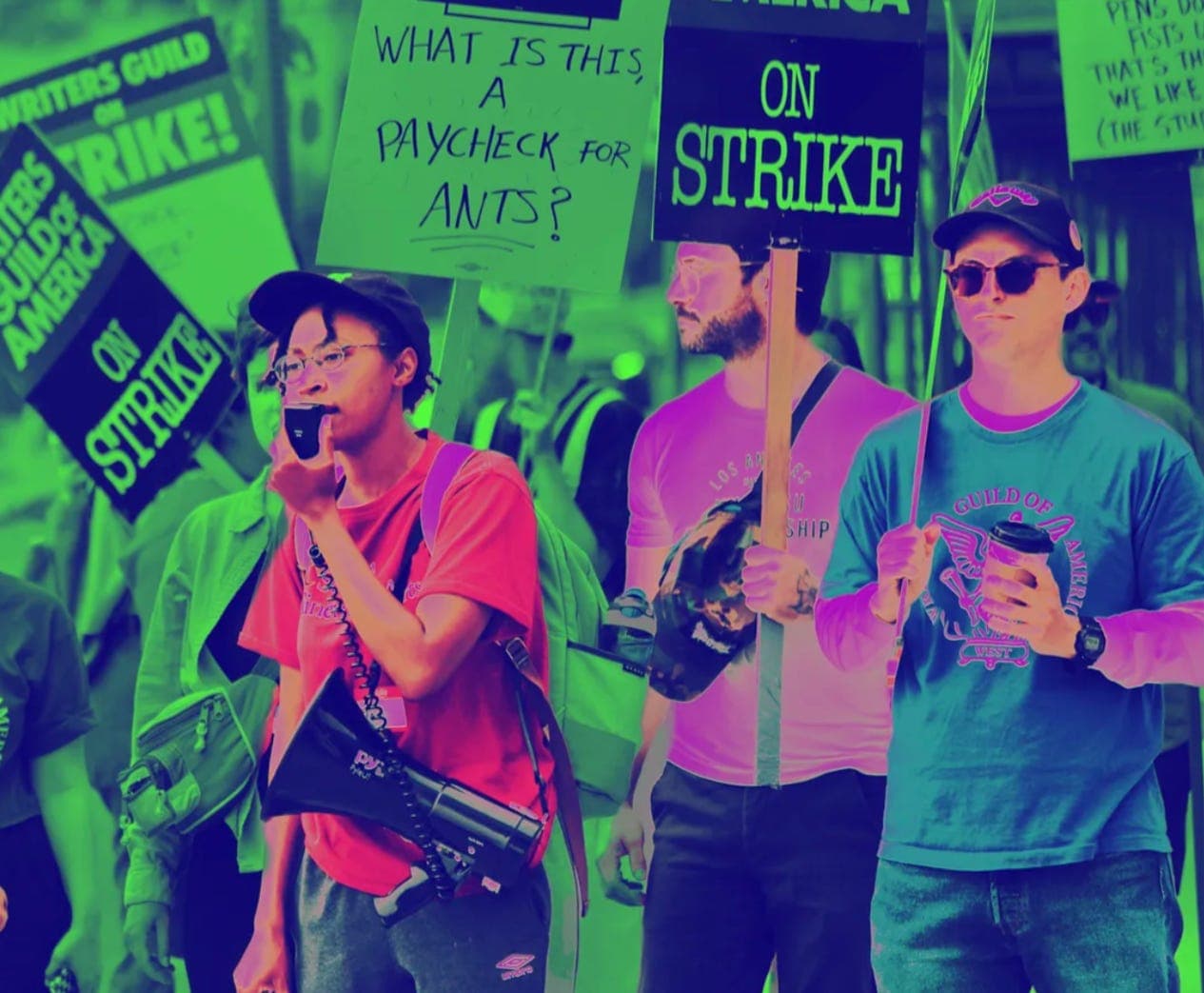
0:24All my bodies sank below the ground It became as black as night Overhead the sound of voices who People fighting for their lives Hey, pals. Welcome to The Culture Journalist, a podcast about culture in the age of platforms. I'm Andrea Dominick. And I'm Emily Friedlander. And we are back from a midseason break to serve you up a fresh batch of thought-provoking and hopefully not too dystopian episodes. So a little after we went on break, pretty much the most culture journalist story of the year happened. As you probably know, since May 2nd, the Writers Guild of America has been on strike, shutting down film sets across the country and demanding a fair shake in the face of a changing Hollywood landscape that, if we're being honest, looks a lot like the one that we're dealing with over here in the media industry.
1:26Hint, it has a lot to do with the ways that some of the world's biggest tech companies, including Netflix, Apple TV, and Amazon, have transformed the playing field around what it looks like to make a living as a film or TV writer. With issues like shrinking residuals, a kind of payment writers receive when their work is re-aired, increased job insecurity, and the looming threat of automation and AI, it's a story that marks a watershed for almost all the issues that we talk about on this show. You know, we talk a lot about the effects of big tech on media and music, but this especially was a reminder of how cute the struggle has become for our fellow writers over in Hollywood.
2:08So we brought on two key players from the front lines to give us a candid peek into what life as a screenwriter in 2023 actually looks like. One of them is Mason Flink, a TV writer and WGA Guild captain based in LA, who has worked on shows like Minx, Special, Love, and more. And we've also got Sarah David, a former colleague of ours from Vice, yes, another one, who has worked at Netflix and Paramount, and who's now the VP of Online Media for the WGA East. Mason and Sarah tell us about what's changed since the Guild's last strike in 2007 and 8, cultivating solidarity in a fractured cultural and economic climate, and why what's at stake bears consequences for creative workers well beyond the writer's room.
2:57We'll be right back with Mason and Sarah just after the break.
3:15The Culture Journalist is an independent project that relies on word of mouth and is funded entirely by listeners like you. If this podcast adds something meaningful to your life, please consider supporting our work by becoming a paid subscriber over at our sub stack, which, by the way, has a bunch of other cool stuff beyond podcast episodes. Paid subscribers receive full access to bonus episodes, along with essays, culture recommendations, playlists, and more. You can join us in the fight against internet monoculture for the price of a cup of coffee in today's economy.
3:52Hey guys, welcome back. We are here with Sarah David. She is WGA East Vice President of Online Media and Mason Flink. He is a writer, gardener, community organizer, and captain in the Writers Guild. Mason and Sarah, thanks so much for coming on. Thank you for having me. Same. Thank you. So the last time the WGA went on strike was from 2007 to 2008. Tell us a little bit about why this strike is happening now. Like, what's the essence of the dispute between the Writers Guild of America and the Alliance of Motion Picture and Television Producers? and maybe how does it differ from the last time a strike happened?
4:36Yeah, so 2007, as you mentioned, was when the last writer's strike started. I was not in the guild at the time. I was a college student eagerly following along in the hallowed pages of Entertainment Weekly, RIP. And that strike was actually mostly about what they called at the time new media, also known as streaming, which as most of you probably understand is the dominant force right now in the entertainment industry and actually the jurisdiction that the writers guild was able to gain in that strike covered every single writing job that i have ever had so that strike was essential to me being able to even start my career in the first place now here in 2023 this strike is about whether or not it's still possible to have a career as a writer for film and television.
5:29We've seen salaries and working conditions deteriorate over the last 10 years, where even though show budgets are up 50%, writer pay is down 4%, and that's actually 23 % when you factor in inflation. In Los Angeles here in particular, we're having an affordability crisis. Rents have skyrocketed in that same period, obviously with inflation, food, gas, also very expensive. And these are core issues for how we pay for the ability to live in the city where we work. So central to these negotiations are a couple of key issues, increasing minimum pay across the board for writers in both film, television, and comedy variety, achieving better streaming residuals, which we'll also, I'm sure, talk about some more establishing workplace protections that can protect from free work and burnout, as well as ensuring that you receive hands-on training as you progress in your career.
6:27And then, of course, the added existential dilemma around applications of AI, or as I saw it referred to in a meme the other day, plagiarism software, which feels honestly more appropriate in the applications that they're discussing, at least in our industry. But ultimately, there's some fundamentals about the business that are different from 2007 to 2023 that I think are really impacting what we're seeing right now. Primarily, that's the solidarity of labor in Hollywood, and that is because of the solidarity with the Teamsters, with IOTC, and the other sort of working-class unions that make up the backbone of Hollywood that are all sort of supporting us in this effort.
7:08We also have the increasing cultural sentiment post-Occupy Wall Street and the Bernie Sanders and Elizabeth Warren campaigns about income inequality and corporate consolidation and the way that greed at that level has sort of toxified our political process and our media environment. And honestly, being on the picket lines every day and talking to writers from 2007, they say that the thing they noticed the most that has changed is the diversity of the Writers Guild membership. And the 2007 strike, this is anecdotal. The people who I've talked to said that around 90 % of the people on those picket lines were white men.
7:44It's not that right now. It is people of color. It is out and proud queer and trans people. There's a lot of young people who have been radicalized, frankly, over the last 10 years. We want a fair deal. And I think that that is ultimately what this is about. That was very well said. Totally agree with everything Mason said. And then to kind of just like break down the very bare bones. So the MBA, the minimum Basic Agreement is a contract that almost all screenwriters for film and TV work under, and they have this agreement contract with major studios. So this contract expires every three years, and they always send a negotiating committee to go in and negotiate and win new terms.
8:292007 was a long time ago, and that was before Occupy Wall Street, before Black Lives Matter, before COVID. The last negotiation for the NBA was 2020, essentially like right after COVID lockdown. And so I think that a lot of folks, digital media shops included, just lots of labor unions kind of went into, you know, COVID mode where we didn't really know what the future looked like of work and remote work. And so folks were kind of like, we'll keep the status quo in order to keep as many jobs as possible. But I think the combination of both sort of this new sociopolitical climate of folks understanding the importance of labor unions and COVID kind of just gutting a lot of people's understanding of work and labor, it's kind of just come together in this very big moment in that now all eyes are sort of on this fight in particular because streaming changed everything.
9:26I think the way that digital media tried to say pivot to video would. So now studios and basically all media companies, which are often one in the same, which is why it's important for everyone across this industry thinking about like one of the MBA signatories is Paramount, where I work. That's, yes, it's a movie studios, but it's also part of CBS Viacom, which it's like the world's leading source for local news. We've seen places like Vice and Vox, which are not just websites and social platforms, but also became TV channels and, you know, movie studios. So now studios and all media companies are essentially in a race to the bottom because of how streaming is not really profitable except for those folks highest up.
10:11So what's happening is they're basically racing and only around four or five mega corporations will survive. Kind of like that BoJack joke that's like, oh, it's AOL, Pepsi, Cola, Time Warner, Halliburton, Skynet. I had a conversation with my bosses at AOL, Time Warner, PepsiCo, Viacom, Halliburton, Skynet, Toyota Trader Joe's. And we agreed these kind of stories, they don't sell magazines. It's going to be like that. And each corporation essentially just hopes that they'll be one of them. But I think that now with the timing, not just in our sociopolitical atmosphere, but also with social media, with folks being better at organizing, being publicly kind of like truthful about their experiences, that folks are really just finally kind of wising up to the realities of who's making what and where the money is going.
11:01I think I heard somewhere I was like Adam Conover talked about how David Zaslav, who is the CEO of Warner Brothers, made$250 million in one year, which is about how much they're asking for 10 ,000 writers. And so it's like this is a really, really big fight in particular because Writers Guild was very ahead thinking about these issues. The fact that they were willing to strike in 2007 over streaming rights. It's just like we owe them everything. Like Mason said, like he owes his career. I owe my career. We all owe what part of our industry has survived to that strike and also that foresight. And now it's like we all have to show up and have solidarity and support for the workers who know best of how we can keep the industry alive in the future.
11:47I wanted to also follow up on what you guys were talking about, just how much of a noticeable increased diversity there was in folks who are striking. What do you think accounts for that? Is that a question of actually increased representation in writers' rooms, or does that have more to do with an overall sense of participation and activism and an appetite for that increased representation? There's been a huge increase in the diversity amongst the membership of the Writers Guild since 2007, as well as just an increase in the actual size of the membership, especially in the WGA West. And that is because of streaming.
12:26I mean, the strike in 2007 that gained jurisdiction over these new platforms that then became, I don't know if you'll remember back in the like 2011 to 2014, 15 era, it was like artistic explosion in Hollywood. I mean, they adopted a Chris Krause novel into a six episode show at Amazon called I Love Dick. It was made for like 10 people, including me. I mean, we had everything Atlanta, Fleabag, which is UK, but girl looking, I mean, across the board, we had this really dynamic, super compelling, specific art about what it was like to be an American at that time. A lot of that culturally, I attribute to the Obama administration.
13:10We were having a conversation about who had power in America and what that power looked like. But that coincided with the entry of these tech companies and these new platforms into Hollywood. But that was an expansion that has now been followed by this sort of death spiral vortex contraction that Sarah was alluding to and this consolidation. And that's had a huge impact now in the other direction where there are fewer jobs available. which is why constantly Writers Guild members have the feeling of being underemployed. I've been a Guild member for seven years. Last year was the first year in my seven years in the Guild where I worked more than six months.
13:48That is a reality for a lot of people at the beginning, middle of their career, but also increasingly for people who are more advanced in their careers, who have higher overheads. I mean, by the grace of rent-controlled housing in Los Angeles, have I been able to hold on as a working artist for over a decade. and the increase in the diversity that came with all that specific storytelling that needed specific writers to help make up that stuff even though it's a fraction of what it used to be like it's amazing to be a television writer it is one of the greatest jobs in the world because you get to be in a room all day with other writers who in the best case scenario are open-hearted and generous and desiring of creating a story that's going to you know take pain away for people or help make them feel seen or heard, the desire to degrade the experience of being a writer, of forcing fewer writers per show, so more work is done by fewer people, it's about taking away our power.
14:46It's about making it so it's harder to get into the Writers Guild, because they know that the Writers Guild is the heart of political power in Hollywood. And if they make it harder to be a writer or to get into the Guild, make our health insurance and pension plans less financially solid, that's success to them. Look what's happening with these book bans in Florida. Look at what's happening to drag shows getting banned, to women's rights being revoked. And they recognize the cultural power that comes out of this guild, that comes out of this city. We are exporting what it is to be an American to a detriment often with the narratives of American exceptionalism, but that pluralistic democracy, multicultural, cross-class, cross-race alliances, that is what it's about.
15:30That's where the innovation is coming from. And they are starting us out to there in our country's detriment for what global growth, CEO pay skyrocketing. I mean, the fact that deadline Hollywood are talking about CEO pay being too high in Hollywood, that is a shift. I mean, just being at the Paramount lot, I'm a gate captain there. Our pictures were everywhere at the beginning of the strike because workers across this country and across the world are like, yes, this is it. Like we have to fight back against this consolidation because our salaries going down is their salaries going up. And it's it's hard not to see it.
16:10One hundred percent. Oh, my God. Mason, you're my hero. You're just so succinct. I'm like every line you say, I'm like, absolutely. We need to get this like bullhorn to everyone. I'm feeling so moved by what you are talking about. But I think that like to kind of piggyback off what he was saying is that it's a little bit of a chicken and egg question. But diversity is also the byproduct and result of strong workers unions. Workers unions fight to protect our most marginalized workers. And we have palpable, amazing contract wins, a WGA contract, including like trans-inclusive health care, gender pronoun protection language, disability access, getting Juneteenth off.
16:50And even beyond that, things like policies on how to cover protests for news media outlets, how to keep editorial integrity for news media outlets and local news. Those are all things that workers have had to fight tooth and nail for in every contract. And a lot of like the greatest content, I think, that tells new stories in terms of maybe Black or Indigenous stories, queer or trans stories, like when those things come out and sort of change the art world, it was born from basically protecting the creative spirit that it was made from. But it gets turned into this thing like we've talked about with the contractions of companies.
17:31Eventually, it's going to be bastardized by CEOs to be like, OK, now we need, you know, something that does what Black Panther did, but for Asians, but for Latinx, but for, you know what I mean? And they would kind of just undo a lot of the work that we've won for marginalized folks, whether that means pulling back or making sure that only the stories that they want are told or just like denying folks the accessibility and like potential to even get a job, let alone keep and get paid from the job. So if we could just take a quick step back, how do the economics break down of earning a living as a screenwriter?
18:10You know, what are the different types of income sources and employment that writers rely on to pay their bills? Because obviously it's not like a traditional nine to five job. Gosh, isn't that true? It's pretty different for film and television. And I've primarily worked in television, but I can also give you a little bit of an idea about how film works, too. So on a television show, you are contracted for a certain number of weeks and you get paid mostly now as I'm in what we call the mid-level. My last job, I was a co-producer, which is sort of in the hierarchy of titles of a writer's room.
18:48you're sort of working your way up as you gain experience is, you know, the ideal version. Many people in this version of the economy are having to repeat lower level jobs, especially writers of color, queer people, women, indigenous, any marginalized groups that they feel like they have a little bit of power on that they're like, you know, aren't you grateful to be here? Won't you just take this again because we can go give this to someone else? So that weekly pay is the backbone. And those minimums are secured by the Writers Guild and what has Sarah referred to the minimum basic agreement. So for TV, it's mostly that.
19:25Then when you write a script, almost all cases, you get what's called a script fee. So if like my name is on the episode written by Mason Flink, you get a fee that is also negotiated by the Writers Guild as part of the MBA. And then you get residual income, which means that when they re-air your episode at a future point in time, after the original run is done, you are supposed to get payment for their continual reuse of this program that you had a hand in creating. For features, we have what are called step deals, which is usually, someone was telling me yesterday, you used to get a four-step deal where you turn in the first draft and then you get two rewrites and then a polish and at every step you get paid often it takes many months which is part of the problem where we have you know studios withholding money for accounting reasons and people need to pay their rent and buy food and but now it's often just uh one-step deals where you get like you go off and do the work one time and you get paid once and then they do this fuzzy thing where it's like well you know it's like can you collaborate with us and like do some more free rewrites that aren't a part of your deal that we're not going to pay you for because as they said it's collaboration that's what we want from you but back in time during the heyday of network television shows were like you know 18 20 22 24 episodes for a season that's a lot of weeks that's like 40 weeks of work 42 45 weeks of work so you're you have a job for most of the year and then you would take it was mostly the summer off as many people did and that's not what happens now the shows are eight episodes 10 episodes that's like 20 weeks of work if you're lucky and then you wait and that show could take a year to come out so i've had to like completely reorient the way that i even think about my life i call it garden time when i'm not on a paid job for commercial media.
21:29And because of my rent control, because of like a low overhead life that I've tried, you know, reducing the need to earn, I stretch that money out as long as I can so that I can contribute not only just to like developing my own projects as an artist, but because that increasingly was being asked for free and I felt exploited over and over again, And I'm like, well, the only thing you can do as a worker being exploited is withholding your labor. So like if I have to choose working for free for these companies or choosing to work for free to make my community a better place, it's not a hard choice to make.
22:07So for me, that's really looked like how can I reinvest the surplus I have in my time management so that I am spending more of my hours thinking about gardening as a community oriented solution to the climate crisis? or how do we bring more urban farms to Los Angeles or how do we get more green space and tree canopy and neighborhoods that have been disinvested and environmental racism that's so present in Los Angeles. That stuff's really important to me. And frankly, the entertainment companies are not responding to the climate crisis in our storytelling. I was already fighting a hard fight to get queer people on television.
22:45I'm like, oh no, you want queer people to talk about extractive capitalism and decarbonization. Good luck. So look, if I want the world to be greener, I can't just do that by being a screenwriter. I have to find other ways to do that, whether it's planting a garden in my backyard or working with my city council person to bring more gardens to our shared public space. That's how I've had to respond because at a certain point in time, how do you keep ending up at this dead end if we never change direction? Such a thoughtful way to structure your time and where you put your energy given such a difficult situation.
23:25Agreed. I also wanted to add that I would love to see your garden. That's pretty cool. But I would say that the pay and economics for writers and screenwriters specifically boils down to like three big problems. The first is there are fewer and shorter jobs. The second is they're getting paid less for those jobs and it doesn't continue to earn in terms of residuals. Then the last is that there's been a cut for kind of entry level jobs. So it's harder for folks to one, get their foot in the door and also harder for folks to develop their careers. Because studios, like Mason said, will do anything in their power to find and create tiny loopholes to be able to exploit their workers more and pay them less.
24:09For example, mini rooms, you know, it's not a writer's room. They call it a mini room because they have fewer people and they give them less time and less money. And often they might not get writer's credit. How is this legal? We don't know. They just call it mini rooms. Or, for example, you know, like a lot of folks or studios continue to call a lot of programming unscripted things like reality TV. I work in Paramount. I cover reality and unscripted things. But these are very much scripted things. And they just continue calling them unscripted and treating them that way to not just sort of keep writers like siloed and maybe help erode solidarity, keeping folks and workers from collaborating.
24:52but also so that they don't have to pay them or credit them as writers. Another thing, too, at like Paramount, for example, my team folks write scripts for after shows. So things like the pit stop for Drag Race is a 30 minute after show. The Ready Room for Star Trek is a 30 minute after show. These are 30 minute scripts my coworkers are writing. However, since they're Paramount's content about Paramount's content, it's technically called marketing. Therefore, they get zero writing credit and no Writers Guild pay or insurance, not even an IMDb paid. I do think that we are at a point, industry and solidarity wise, that it simply won't stand and that we're at a breaking point.
25:34But yeah, the economics are, it's very dark. And I think that writers are getting squeezed from all ways.
25:52I'm curious if you think that all of these changes with writers getting squeezed in every direction, can they all be traced to the rise of streaming itself? Or why is it worse now than it was before? I think that writers have always been squeezed. It seems to just be a thread in Hollywood going Going back to the beginning, I mean, even the formation of the Screenwriters Guild is such a fascinating sequence of events because it was done in reaction to many things, one of which being the studios intervening in the 1934 governor's race where Upton Sinclair, a socialist, was trying to become the governor.
26:36And they force writers, actors, directors who had deals with the studios to make propaganda that was basically anti-socialist. and the writers keyed into this because they would play as like commercials before movies. And they'd be like, wait, that's my friend. He's not a farmer. What the fuck's going on? And then they, you know, they lost that race. And in the reaction to that, they were like, if the studios are going to collude, then we're going to collaborate too. And that was sort of part of what propelled the Screenwriters Guild, which was the original iteration of the Writers Guild. But at this moment, I really see it as the intervention of tech and the financialization of all aspects of our economy in the wake of the Bush presidency and the Clinton presidency.
27:23So much deregulation happened, and it wasn't all at once. There was a big wave of deregulation in the 90s where all of a sudden networks and studios could be part of the same company. But within a couple of years, dozens of independent studios closed. And that was a wave of market transformation. And then another thing happened with the intervention of the streaming and tech companies where they saw a really profitable, thriving industry and thought that they could capitalize on that. And you see it reflected in the decision making at the executive level. I mean, my first job out of grad school, I went to USC, it was at Hulu.
28:03And I worked there for three years at the beginning of the original content effort. So I had a front row seat to a lot of how these decisions were made. And the prevalence of MBAs at the decision making level, a lot of them from Harvard, they're taught to be generalists. They disdain specialization because it costs money. and every stage they were looking for ways to have people who didn't have as much experience making or doing something that in a previous iteration someone with great depth and levels of experience would do because it was cheaper and there was this great article that just came out by Gavin Muller he wrote at the Atlantic it's called the Luddites of Hollywood and he wrote about this a term called platform exceptionalism, which was this idea that a form of degrading the worker protections that have been in place, it's to deem your platform exceptional.
29:01We are a new venture. The rules don't apply to us. Move fast, break things. I mean, that's Uber, that's Spotify, that's Amazon, that's Netflix, right? That's how they get around the protection of workers that have been going on for decades. And at a certain point, we have to say, stop enough. I mean, our democracies are being destabilized. Teenage girls are harming themselves at extremely high levels because of social media. I mean, the idea that regulations are not part of this conversation, that the government is not a part of this conversation, that these companies have gotten too big, that we need to restructure our economy.
Read the full transcript
29:39I'm so happy that we are having that conversation now. I've been like banging my head against the wall talking about vertical integration in Hollywood for the last four years because I heard people in the Writers Guild, Angelina Burnett in particular, speak so eloquently about it during the agency campaign. And it is front and center. And people are starting to grasp that, oh, a streaming platform is just vertical integration. It's just owning every single part of the process. It's a new studio system where they own, just like they owned the movie theaters and they owned the studios. And the government was like, hmm, that seems kind of crazy that you could own a studio and a theater.
30:17That's anti-competitive, right? We should break them up. And that's how they got the Paramount degree. And that has been completely undone to where we are now that the studios and the streamers are all one company. It means that there's less competition. It means that we're relying more heavily on pre-existing intellectual property. So we're getting reboots and remakes and our culture is dead because of that. I mean, we need new ideas. We need new stories. How are we going to move forward in this reimagining our society if we are stuck gorging ourselves, binging, a term they invented, we are binging, we are users.
30:59This is all part of the language that is like, don't pay attention, just turn off, disengage, watch forever. But we need the federal government. We need our senators and our Congress people specifically to get with the picture and see. I mean, it's hard. The Obamas have a deal at Netflix. Wow, yeah. And by the way, Netflix is like the worst offender on unpaid residuals and late payments. And that's where the Obamas have a deal. So like democratic power is totally enmeshed with Hollywood, but we have to pry it apart. Yeah, we kind of talked about this on a previous episode with Cory Doctorow about a book that he co-wrote called Chokepoint Capitalism.
31:46And he was talking about how there's sort of this, you know, ambient feeling in the air of like, oh, everything is dominated by monopolies, all of these different cultural industries. But why aren't they getting dismantled? Why isn't the government doing anything about this? And part of it had to do with specific interpretations of antitrust law that was like assuming that a company is a monopoly only if it charges the consumer more money as a result of its size. Whereas all of these companies, we've talked about this in the context of journalism, sort of rely on this model where it's more of a monopsony.
32:23I had to learn what that meant. but where they have a monopoly over the purchasing of labor, where if you're working in these industries, your employer is a Netflix or one of these companies. And when there's fewer and fewer people to work for, there's a lot of room for the company to start kind of abusing that power because there's less and less wiggle room. It's essentially anti-competitive. Totally. I read this amazing book called Evil Geniuses by Eric Anderson that talks a lot about the process to get to that via, again, good organizing. The grandchildren of the industrialists got together in the 60s and were like, hey, grandpa used to talk about how they had so much money and so many servants.
33:07Wouldn't it be great to go back to that instead of what we have now with this really high tax rate for the highest level of earners in our country? And they organized. It took them decades, but they built these law and economics programs at law schools that sort of fostered this new antitrust framework. And that idea of the primary purpose of this regulation is to protect the consumer is so pernicious because what it's not is primary purpose is to protect the worker. And that is part of the trend of disempowering unions that happened by the right over those decades in the 70s, 80s, 90s. But now isn't it like 60 % now people favor unions?
33:54It's like at a 50-year high. The government didn't do anything because that was part of the agenda. And now we're saying that maybe the consumer isn't the primary person the government should be protecting. Maybe it's the people who are working for those companies instead. Yeah, and if companies are trying to save money, it has to come from somewhere. And maybe this is like too facile, but if you are getting all of the movies and TV shows in the world for a couple of like$10 a month subscriptions, if you're getting all of the music in the world for a$10 subscription, like your savings are being made by taking that money away from somebody.
34:39and usually that comes from in this current model in these platforms it comes from taking it away from the producers i'm uh wondering if we could just briefly talk about residuals because this is something kind of unique to this industry and we don't really have something similar in journalism what role did they play kind of in the heyday of broadcast television and how did that change with streaming and online media. I've heard a lot of stories from people that I've worked with, as well as people I've met on the ticket line, about how the golden days have passed us. And you used to be able to buy a house off of a residual from an episode of a television show that was popular on a broadcast network.
35:28I mean, that was how much money it was. From one episode, the residuals that were generated from one writing credit, you could buy a house. Over time, those residuals, which were much higher for broadcast television, they are pennies on the dollar for streaming platforms. Because of this on-demand economy, it's hard for us to get data that show how popular your show is. They have the data. And the WGA actually fought in the last negotiation, I believe, to get access to that data so that they could check and make sure that these companies weren't lying as part of payments they were making. but it's still not publicly available.
36:08So part of it, sort of, how do we create a new model? Could you create residuals so that the more people watch your show, the more payments you get? Sure, we could try that. That's what the composers do for ASCAP. Like, they have a viewer-based residual model. So it's not like what we're asking for is out of the ordinary. And honestly, something I've been really thinking about a lot is that residuals are actually the lifeblood of original ideas. because as I mentioned, I'm in my seventh year in the guild. Everything I've written has been for a streaming platform. The residuals are, I can tell you like for my number for the first like five or six years, it amounted to like a couple thousand dollars a year, which is not enough when you're not working for five, six, seven months to get you through.
36:57After working on my last job, I'm starting to get more residuals and they come in green envelopes. Okay. It's really fun because you get a green envelope, you know that there's money in it. I'm having the experience for the first time of having residuals come at regular intervals because I have five writing episode credits now. And what it does is it shifts your mindset between work to be like, if you don't have money coming in, you're trying to change that. I have to write something that's going to sell right now, which means almost certainly it is derivative it is not forward thinking it is like trying to just cash in on what's happening at this moment which doesn't often produce good art if you have that money coming in enough to just like cover parts of your living expenses your creativity can venture further out into the unknown and you can start putting together ideas like miranda july talks about having your antenna up.
37:57Like you can just be receptive to the universe and to stories and to your life experiences and to the books that you're reading. And then you come up with a big idea that didn't exist before. And that is so much easier when you have residual income coming in based off of the work that you did that these companies are still profiting off of. I mean, I've been in situations of economic precarity and I'm not right now because of the last job that I had. Like I know what it's like to not be able to make art because you don't know where the money is coming from. It's why universal basic income is so needed.
38:33I had the experience of enhanced unemployment benefits during 2020 in COVID. And I, you know, our industry was turning it on itself. I sold a show to Quibi, Quibi imploded, you know, like I was part of the wave that was getting swept over. But because of that money, like the combination of all that stuff, I was able to think about like, how can I make my community better? How can I organize? And that's only made possible when we have like a value system that believes in the value of creative labor and the value of paying artists as part of the success. I mean, when you don't do that, we can see what happens.
39:12We're awash in a sea of programming that we feel like we've all seen before. Yep. I 100 % agree. I would just drop Ben to say something about residuals, but also like applaud again, everything Mason's saying. So I have a coworker who worked on Smallville in its heyday. And he told me that when it was getting rerun a lot, he was getting hundreds of dollars every week from residuals. And that was enough to help him through a long period of unemployment through, I think it's my first pregnancy. And now with streaming, it's nothing. And you've seen folks post residual checks when they were like, here is my residual from one episode I wrote for streaming three sets.
39:52Wow. And it sounds like musicians on Spotify. I was about to say, it sounds exactly like the whole streaming Spotify debacle. Exactly. And as Mason said, companies can easily get and give us the numbers in terms of streaming. They just don't want to. It's funny because it's like if you go to any major studio or like I've been to a Netflix all hands, I've been to a Paramount all hands and they always have the numbers for how long people watch things. Which this goes to show, of course we have the number of people who are watching things. They just don't want to track it. They don't want to give writers access.
40:27They don't want to give the public access. it's one of those things where I bet if we got a CEO or management at the table or like on this podcast right now you'd say why can't you just make up the system and pay them now they'd say something like well if we had to pay everyone based on views like that like the whole system would just break down you know what I mean and it's funny because it's like that actually is just revealing one that they have power and two also like well then maybe that system shouldn't exist in that form. That's what the defenders of Spotify say exactly that. Yeah, exactly the same with streaming.
41:01No one's making money, not the writers. Even the actors have come out on like TikTok showing how much less money they're making for streaming. And even our huge streaming giant companies are doing layoffs, are having to pivot, are bleeding out. And it's such a short-sighted view, too, because just back to this whole thing where we just see like the same old IP getting regurgitated. I mean, just if you're looking at it just from like sort of like the CEO perspective, like investing in this stuff now is going to ultimately generate more content that they can milk in the long run. Like it helps them to everything's just so short sighted like that.
41:37Unless they've just deluded themselves into believing like, oh, people don't want interesting stuff. Like, yeah, you will just want the lowest common denominator. Like somebody has the next Little Mermaid in their brain. You know what I mean? Well, I think part of the problem is that the people who run these companies increasingly are very far away from having experience in creative, collaborative filmmaking, television production. They're seeing it from that sort of wealth generation. I mean, they're cultural colonialists. Their goal is global audience size. I mean, they are pursuing global growth at the expense of our domestic industry.
42:20And it's so frustrating because it's short-sighted, because we're disinvesting in the things that really matter. Yeah. I mean, just in terms of like, you know, how the shifting economics of the film industry are impacting what it means to be a screenwriter from an artistic or creative perspective. I'm wondering, is there a comparison that could be made kind of with journalism or music or sort of other creative industries that we've touched on, you know, where it's getting harder and harder, for example, in journalism to play stories that aren't like quote unquote, a sure clickable thing. And where newsrooms, you know, rely more and more on lower paid or contract workers turning up clickbait.
43:00Emily has a really great term for this called jobflation, where you're just kind of getting more and more piled on you to do the thing that's a sure bet and more and more of the actual truly quote-unquote valuable work is kind of just you know getting squeezed away into oblivion yeah 100 uh i think that that is all true the shifting economics is comparable not just with journalism but to be frank like almost any industry which we've talked a lot about you know high paid folks in power they're beholden to tech giants and this wall street attitude of we always have to do more, more, more, more profit.
43:38And it's not enough to just be a movie studio anymore. You also have to live up to valuation and do that with sort of huge sponsorship deals and essentially just like acquiring more companies and just growing. And like Mason said, this is all about government and regulation and just allowing these companies to be too big, too big to fail, you know? And so, yeah, that's always the prioritization of profit, even when it's like antithetical to what inherently makes the products, which would be true for like clothing brands, even though the best clothes are high quality made to last. And it's true for like adjunct professorships and grad students where it's like, you know, folks who work in the field should be passionate and not folks who are like run through a gauntlet and squeezed out.
44:22We need to regulate these companies. So it's like not only can we get the best, most beautiful art from studios but also like we can regulate these tv channels that you know are also pumping out fascist propaganda and things like that which again unfortunately is also intertwined you know like vice news it was able to be funded by you know terrible clickbait things same thing with like buzzfeed and we need to kind of break down these barriers i think as workers into like what we think is like legit work and legit art versus not when it comes to like solidarity. So in digital media, we kind of had like, folks would be like, I don't know, they're a branded writer.
45:03It's not like a journalism when it's like, sure, maybe to a boss, but like branded links or affiliate content like that funds all the work that we do here, you know? And so they're part of our team. This worker is just as much of a comrade as, you know, like a social editor or someone who makes the art. And I think that like folks really have that across film and screen industry with solidarity with other unions as well. And just acknowledging that it takes an entire ecosystem to create something so powerful that it's literally it's world building for audiences. I mean, I think that's part of why, I mean, hello, like, why do we all love succession?
45:43I mean, there's many reasons, but I feel like among us on this podcast right now, I mean, it really hits home. It does that world building, but it also truly, like, viscerally reflects, I mean, exactly the issues we're talking about right now. And look how successful it is. I think it's like schadenfreude also, where it's like the people who are upstairs making these decisions are all just idiots who are flying by the seat of their pants, too. I keep thinking about how like two episodes ago, you know, when Tom's like running the newsroom during the election and just the absurdity of just like, how did Tom end up running a newsroom?
46:17He has like nothing to do with journalism. I had been a thought. And when have we been in a newsroom where that is exactly what's happening? Exactly. And it's exactly what Mason was saying when it's like, if you talk to any of the CEOs and say, OK, name two steps between green lighting a movie and getting it on screens. They literally couldn't. And same with like the CEOs that we've had at media companies where it's like, these are just folks who have a track record of making profit. But we're not making profit. Yes, exactly. Seeming to be able to make profit or something. or I don't know. Sometimes it also just seems like these companies are just based on like weird venture capital scams.
46:57But Sarah, I'm curious because, you know, we met you while working at Vice and then you made this transition to film and television industry. What similarities did you discover when it comes to the challenges that writers in both industries are dealing with? You think Netflix was your first job after Vice? Yes, it was. So I think that like a lot of folks and online media, I sort of always admired screenwriting and saw it as like potentially a sustainable way to get out of digital media, which is now very laughable. But yeah, I think that a lot of folks are just like, we have writing aspirations to be able to make bigger projects or to be able to write from the heart and be able to work on things that will continue paying us, even if we're like not making it right then.
47:45So like with residuals. But yeah, I made the jump from Vice to Netflix, which is funny because similar to my Paramount job right now, it's like, yes, we wrote lots of a little bit of everything, including scripts, but it was called marketing. So I learned a little bit about the 2007 writer's strike. I was also in college at that time. So I was not in the guild. I didn't join the guild till 2016, 17. But in the 2007 writer's strike, we've learned that Netflix was essentially trying to get out of calling a spade a spade and acknowledging the power of their streaming and original programming and also kind of tried to argue that all of the original programming that comes from Netflix was ultimately marketing because they said their bread and butter was renting out the movies that they, you know, paid copyright for and that any original programming from Netflix just is like incidental and happens to like bring more folks into the platform to do that, which is funny because now, you know, 15 years later, we all see that's a total lie.
48:45Netflix has incredible original programming that they like love to laud as award winning and things like that. But yeah, I think that the big similarities I discovered when kind of going from online media to like sometimes screenwriting and screenwriting adjacent is that it's just equally and terribly exploitative. There's just sort of this added layer of pain when it comes to companies that sometimes make what you'd perceive as progressive things or work that really means something to you. So I just feel like kind of similarly writers have no job security and we're all kept really sort of siloed departmentally, not just to separate our work and separate us from connecting with each other, but also like in a way where it sometimes kind of pits us against each other.
49:31I think because it's like really tough and competitive and, you know, with consolidation and acquisition, there's only like six places you could possibly work, which is also why I think it's more important than ever to unionize and don't have working power. But yeah, I think the challenges are very similar in terms of job security and precarity and not really knowing where the future is headed and whether or not we have a career at all.
50:00do you ever wonder why you never hear any ads on this podcast it's because we do everything all by ourselves and support it entirely through generous contributions from listeners just like you if you can't shell out we know things are rough out there right now we understand but there's another way that you can help us out which is heading over to apple podcasts and leaving a reading and a review. It literally only takes 30 seconds and it actually goes a long way towards helping people find us.
50:35So I want to shift now to the robotic elephant or digital elephant in the room, which is AI. This has obviously been a huge part of the discourse around this strike. I mean, it's a huge issue for every industry, but it's really kind of hitting a critical mass. particularly with this moment, the WGA is seeking guardrails around basically being replaced by AI, having their work used as training data, you know, or getting their rates slashed as a result of AI getting incorporated into the writing process. Is there a reason to believe that this tech is actually capable of automating writers out of a job?
51:14Or is that fear more about what producers and streamers will try to get away with now that this tool is here? Yeah, so AI has been something we've been talking about a lot on the picket line. Partially, this is a product of timing because chat GPT came out last fall. And if it had come out this fall, the union wouldn't be able to exert this kind of power over the discourse that we're having. for me I've been thinking about artificial intelligence or plagiarism software as a conversation about values I hold the value that creative labor is not an inefficiency that needs to be solved and that part of making a life as a working artist is finding joy in the iterative process I'm also not interested in being told a story from a piece of software that doesn't have to summon this courage to get out of bed and face the day ahead every morning, which I do.
52:14And that might be a generalization, but I do believe almost every writer I've ever met probably faces a bit of dread when they have to decide to keep going and face the world as a creative person. I saw a great sign on the picket line that said, AI doesn't have childhood trauma. Yes, exactly. Which I think really nailed it, you know? It is. It is. I mean, that's a huge part of it. But honestly, you know, we've been talking about this, but our industry has been taken over at this executive decision making level by tech and finance. And they've already been using algorithms for years to make decisions about whether or not a project will be financially successful.
52:55There's all this stuff about what actresses or actors have value and they can be ranked by a number and you need a certain combination of numbers in order to get the financing to make your movie or television show. I mean, it's already happening and that kind of like seeding this creative decision making process to a software program. But I think the fear is that the plagiarism software will become just another tool that degrades our experience as workers in Hollywood, particularly by replacing work that is done by beginning level writers that helps molds and shape them into better storytellers at this really high level.
53:31And of course, there's also a real issue of copyright, which is going to limit the applications to protect these media companies from legal liability. But again, it's the decisions that's being made by the people who already have so much. And I don't want to give up my ability to pay my rent or buy food because it's cheaper to have a computer program write the first draft of, let's say, a book adaptation. adaptation based on every book adaptation that's ever been made for the period from 1840 to 1880. You know, just like, who wants that? Who wants to experience that? I don't want to be entertained by a program.
54:13I mean, to me, art is about the connection between the artist and the audience. The way I think about it is when I write something, especially if it's coming from a particularly painful or traumatic place, I have taught myself to not identify with my art. I put myself into it. I may be sort of instrumental in creating a container, but because it's a collaborative process, a part of me is there, but so is a part of the other 200 people that are touching this piece of art, especially for something at the scale of television. And then that resonates with the person who's watching it. Like, are we really going to cede that to a software program?
54:51Does that sound like a life you want to be a part of and a culture you want to participate in? I mean, none of this is inevitable, right? None of it's inevitable. I feel that way, too. Like, people think it should exist for its own sake, but I don't really understand, like, who is even supposed to benefit from it outside of some sense of, like, you know, technological determinism that, like, progress must happen. Therefore, we must all do this. The thing is, it's, like, not progress. I totally agree with you. It's funny because it's like that tweet I saw that just went viral when it was like, we can't have robots pick up plastic in the oceans.
55:26We got to start with screenwriting. That's not smart. But yes, it's not progress. AI currently in its capability, it can learn and it can generate, but it can only learn from things that already exist. It can only learn from things that writers have already written. So it is by definition, it's inherently regressive. Everything that it writes will be something or a version of something you've already seen, you can already name. which is funny because in the values conversation that mason brings up that's the opposite of what all these studios support to value um at my all hands paramounts are literally they're literally always saying we want to go where no streamer has gone before i guarantee you go to any all hands netflix hulu apple tv they're just going to be like we need to make things that has never been written before it's never been conceptualized before and that is never going to happen with AI.
56:20The problem is that that's the reality, but we're dealing with CEO brains, which don't always function in terms of reality or practicality or even logic. And so all of these CEOs are essentially working toward and moving toward trying to eliminate the writer's room. They're trying to shrink it. They're trying to limit not just how long they go, but how much money they make. Eventually, this is going to turn into squeezing writers out so much that they want to be able to slap one marquee name onto a project and outsource all the other work, whether that means like, oh, we're going to have the AI do the book to first draft.
56:58And then the marquee name writer, like the big famous person that whichever get we get that will make us the most money can finesse it into something that looks like that. Unfortunately, these conversations are already happening at a management level. For example, like I was in a meeting, we had kind of this all day summit at Paramount and we had one particular session in terms of AI and leadership literally said to us, you're not going to be replaced by AI. You're going to be replaced by someone who works with AI. And it's so funny to me that everyone, like all of the Slack channels, all of the responses blew up because folks were like, that's not comforting.
57:34Like, why do you want to tell us that? Like, how is that any good? It's being sold to workers as an efficiency tool and that tools, yes, can be used for good and bad but we have to be like hyper vigilant about the way those tools are used and like mason said the way that they're going to be used in order to eliminate entry level or beginner jobs and also like eventually eliminate almost all jobs except for the top name or the top earner and that's why these terms are so important also because the wga is basically one of the first unions that's like very publicly fighting this battle against tech giants so there's a lot at stake here yeah and i also just like call bullshit on the assumption that you can actually pull that off like that equation of oh one big name person editing the thing that was generated by ai like i'm an editor i know how the sausage is made like i've actually once edited a writer who did turn in an article that was assisted by chat GPT, for example.
58:41And like it was it actually took more editing hours than a regular article would because you don't know what to try. Like you don't know if you can trust what it's saying. I mean, it's a little bit different, maybe if it's like a fiction film or something, but I had to fact check it more thoroughly and get more colleagues to look at it because it was not more efficient, actually. Like when you actually know how to make piece of art or culture and make it good, it's not necessarily that. And of course, the people making these decisions, they're not close enough to it to even know. So the images of protesters picketing outside TV and film sets and studios and shutting up productions have been incredibly powerful.
59:22These writers are literally putting their own livelihoods on the line here. Obviously, there's a ripple effect and it's impacting other folks' livelihoods and not just the producers, but, you know, caterers, prop folks. It's a big sacrifice. What makes a sacrifice worth it for you and other writers you know? Yeah, I mean, look, it's a work stoppage and it's a union of people who span different classes. I mean, that's part of what's great about the Writers Guild is that it's a cross-class union because it has people who just got in to the business and are still struggling. And it's got people who have deep, deep, deep, deep pockets because of the profit that the entertainment industry can generate.
1:00:07But that means that the effects of a strike and a work stoppage are going to be applied differently depending on your own individual circumstance. You know, I can only speak to my experience. I had my best year last year that I've ever had as a writer. Partially, that's why I'm a gate captain. That's why I go every day for more than four hours and why I organize the people, writers on my team, because I can give more. I can afford to give more to this effort versus people I've talked to on the line who are having to work part-time jobs or honestly, who already had other jobs because there hasn't been very much work over the last couple of years.
1:00:46I have so many friends who have not worked in 12 months, 14 months, 16 months, 18 months. And these are people in the middle of their careers who, you know, they used to say, like, well, once you get that second job, it's not that it used to be once you get your first job, you're fine. Then it was like, once you get your second job, you're fine. And now it's like, every time a job ends, I have to go through the existential dilemma of like, will I ever be a television writer again? I don't know. I mean, maybe, maybe that will happen. And also the fact is Hollywood thrives on exploitation at every stage, whether that's the unpaid internships to get into this business, whether the really horrible working hours being on set.
1:01:30I don't know if you all have ever had to do a 14-hour day on your feet for like 10 weeks in a row. It's terrible. It's terrible. And like most people don't get to sit down. I got to have a chair being on set. And this was like the most vaunted thing that you're supposed to want. It's like you're on set, you're seeing it be made. And I'm like, why are people working 14 hours a day? This is ridiculous. This is not important enough to be doing anything from hours 11 to 14. That I can tell you an executive does not know what it's like to be on your feet from hours 11 to 14. And that is every day for months at a time because that's just how business is done.
1:02:09so like this sentiment that's why the teamsters are with us that's why iotsi is with us and i i feel physical pain because of the strike because we all have little pedometers in our pockets now i know that i have walked 125 miles in tiny circles back and forth in front of the paramount lot over the last month and this is probably according to the 2007 strike we're at the 25 % mark. And like, so I'm gonna have to walk 500 miles in tiny circles for these millionaires and billionaires to get me money so that I can continue generating value for them. I mean, how can you not be radicalized by that?
1:02:52Like every step I take, I'm like, I feel this pain. I have a deeper empathy for the working struggle for anyone who's ever been on a picket line. Like they're creating the conditions for us to build more solidarity and like to their own danger. I mean, as Lindsay Doherty, the head of the Teamsters said, if the studios want to fuck around, they're going to find out. I mean, like, that's what's happening. Like, we're together. And every day people ask me on the line, like, when do you think it's going to end? I stopped making predictions after the 2016 election, but it could end tomorrow. It could end tomorrow because all we're asking for is for these studios and companies to acknowledge the proposals that we made with any kind of a counter.
1:03:35Don't dismiss us. We have power. We deserve to be here. You can end this. Like this disruption, this financial loss, this chaos for assistance for all of the below the line workers. Like the fact that Mayor Bass has not come in and picked a side yet is horrible to me because this is about the people of Los Angeles who are suffering because they can't get work, starting with the writers and the trickle all down effect that that happens to every level because if writers can't make their year that who else can we're the ones with the power and this tone as organizers if we can't do it who else can that's why they're there with us and like the sooner the studios realize that like more money in our pockets is better for them in the long run this could be over tomorrow yeah i would just add that this could be over any time that the studios allow it to uh totally agree with mason and also that there have already been reports from like pretty legit sources, even though they're anonymous, that many of the CEOs in anticipation of the writer's strike rented summer boats.
1:04:41So no matter what the hardships are for the workers that are outside every single day, sweating and fighting for their rights and also their future and the future of our industry, the CEOs already were preparing by going on vacation, which just goes to show that they don't take us seriously, but they don't understand that it's like they may have the wealth, but like Mason said, we have the power, we have the numbers. And that really comes together in terms of when you think about like, so for example, there's the Guild Strike Fund and folks can apply for that. But if you look at fundraising on social media from Writers Guild Negotiating Committee folks, they often send folks to the Entertainment Community Fund, which is actually raising funds for everyone else on set who's impacted by the writer's strike and they're kind of like language around it is just that you know the writers guild we're taking care of each other and now we're also like doing our part to take care of everyone because it's an ecosystem it's a community and we're all in this together um so i think that yeah the strike is uh it comes at great costs and it's often very individual what that scale can kind of look like but i think it's beautiful how everyone's just so in agreement that it's bigger than us or one person and it's always for like the next person and what this industry can be and how we want it to be.
1:05:59I love that and you know I'm a I guess freelance media worker journalist editor because of my employment status I am not currently in a union and so it's like very moving to hear all this. And I'm kind of wondering, as a final question, like, what can people, other freelance writers, other creative workers dealing with the effects of big tech learn from this? Or how can they get involved? Yeah, I mean, look, we're not only going up against legacy media companies like Disney and Viacom. We're going up against Amazon and Apple, who are companies that have been faced with all kinds of accusations of worker abuses over the decades that they have existed.
1:06:49And I really hope that people see that collective action is a legitimate method for restructuring the economy back towards fairness for workers, back towards the dignity of having a one-job career, and away from this grotesque hoarding of wealth that's happening. I mean, this fight is really hard, but every time I read about someone saying that they're with the writers or that they every hunk from every single person as they drive by the lot that means I know that like we are on the side of the people and organizing works it's hard it takes a long time I mean the fact that animation writers are not in the writers guild is absolutely ridiculous to me and I hope that that changes I believe that that will change over the years but it will only change if we organize and like that's how we get these gains we go on strike and we get gains it's hard because taking collection of action as sarah just said you know takes differently requires a different level of sacrifice for each person involved but like that's the power of the collective and like we have to stop this you know the tech anti-worker sentiment goes all the way back to the railroads i mean like that's what we're fighting is like the exploitation of workers that built the connectivity from the east coast to the west coast like that exploitation is at the root of all of this still and we we know that collectivism works in the face of these companies it's not the only thing we really need the government we really need them to help us in this fight and that means getting involved in local elections that means getting involved in state elections like in your federal elections like that's how we change we organize and we vote and we just got to keep doing it over and over and over again, share our successes, share our failures, like build the movement because it makes a difference.
1:08:41Yeah, I just I'm going to echo everything Mason said, organized, collective action. It gets the goods, especially in digital media. It can be scary because we put out a lot of fires and it feels like there are more losses than wins. But that's simply not true. When you look at even just like minimum pay and diversity and editorial standards and And the kind of art all media and new media companies are making, we've just are a world ahead of where I think I could have even imagined a decade ago. And so I agree that I'm like, it's collective action. I know that it can be hard to feel like part of one palpable community as a freelancer.
1:09:20And I can relate to that as a freelancer also. But it is possible. And I want to say that a lot of it, too, is learning from other models. So the Writers Guild, like a lot of screenwriting kind of functions similarly to digital media freelancing in that, you know, you're floating from project to project. And the history of organizing and screenwriting is just there's so much for us to learn there as digital media. The way that screenwriters can get all these studios in one room. Imagine if we were able to say, OK, Vice, Box, BuzzFeed, everyone in the same room, we're going to have one contract and you're all going to agree to it.
1:09:55It would be amazing. So besides like learning from these other organizing models, I think that we as individuals need to do a lot in terms of just sort of thinking in more collective ways and really just communicating with folks about jobs and struggles. So especially with freelance work, it can feel like we're having to reinvent the wheel on a lot of things, whether that's like looking at a contract for a project or, you know, like building an outline for a particular script. But it's like we're never really alone and we don't have to reinvent the wheel because our community and our networks are vast.
1:10:32And so it's like finding folks who help you do that and doing that to help folks when you can is like super, super important. I just want to kind of throw back to one moment at our vice contract. I think it was 2017. And we won the contract language to protect gender pronouns. And that came about just because a member emailed it to the committee. Just a thought. They were like, hey, I just realized there's never anything about gender pronouns. you know we published this guide about like gender pronouns on vice like can we get this in our contract and we were all like sure just put it in a google doc and we'll do our favorite thing as writers and edit it and then add it to the contract and we'll see what happens so they did that and we did that and it got approved and literally by the next year it was in every single writers guild of america east digital media contract i love to revisit that story just as like a lesson in the fact that contracts are just language that is approved by lawyers and CEOs.
1:11:32And contracts start at Google Docs. And who do I trust more with a Google Doc than writers and editors? And we know best what our industry needs and what we need in order to build a better future. And I feel like just being in that room so that you can throw what you have at the wall just really helps. Like never discount your contribution because if it's a problem you're facing, I guarantee you're not the only one who has it typically. And just like thinking in those collective actions, even in terms of like when you work at a place, think outside of your department of who might relate to this.
1:12:06Like, okay, like who else kind of has this sort of like similar labor struggle and finding solidarity there. Well, Sarah, David, and Mason Flink, thank you so much for sharing your candor and your insights and just your fight. This has been an incredibly inspiring conversation. We really appreciate your time. Thank you so much for having us to talk about. I mean, the more we talk about it, the closer we'll get to a win. Agreed. Thank you.
1:12:47This episode of The Culture Journalist was produced and edited by Emily Friedlander and me, Andrea Dominick. Our theme music is by Mark Donica. To learn more about The Strike, head over to our Substack. That's theculturejournalist.substack.com. If you like what you're hearing, leave us a rating or review on Apple Podcasts to help support independent journalism.
1:13:39The End I'm bringing they're not sad at all they're actually singing
From the publisher
Since May 2, the Writers Guild of America has been on strike, shutting down film sets across the country and demanding a fair shake in the face of a changing Hollywood landscape that, if we’re being honest, looks a lot like the one that we’re dealing with over here in the media industry. Hint: It has a lot to do with the ways that some of the world’s biggest tech companies — including Netflix, Apple TV, and Amazon — have transformed what it looks like to make a living as a film or tv writer.
With issues like shrinking residuals — or payments writers receive when their work is re-aired — increased job insecurity, and the looming threat of automation and AI, it’s a story that brings together many of the issues we touch on this show. So we brought on two key players from the front lines to give us a candid peek into what life as a screenwriter in 2023 actually looks like: Mason Flink, a TV writer and WGA Guild Captain based in LA who has worked on shows like Minx, Special, and Love, and Sara David, a former colleague of ours from VICE who has worked at Netflix and Paramount+, and who is now the VP of online Media for the WGA East.
Mason and Sara tell us about how Hollywood labor conditions directly impact the quality of the film and television we consume (and who gets to produce it), the long history of deregulation and financialization that set the stage for this moment, and why this fight has big consequences for creative workers of all stripes — not just in the writers’ room.
Support our independent journalism by becoming a paid subscriber at theculturejournalist.substack.com. Paid subscribers receive free bonus episodes every month, along with full essays and culture recommendations.
Keep it weird with The Culture Journalist on Instagram.
This is a public episode. If you'd like to discuss this with other subscribers or get access to bonus episodes, visit theculturejournalist.substack.com/subscribe