In short
Podcast Episode Notes: The Culture Journalist - "How groceries got gentrified, with Snaxshot's Andrea Hernández"
Episode Overview In this episode, hosts Emilie Friedlander and Andrea Domanick explore the concept of "gentrification food" with Andrea Hernández, the creator of Snaxshot. They discuss how food brands encapsulate cultural trends and societal values, examining the implications of culinary choices as forms of status signaling among Millennials and Gen-Z.
Key Topics Discussed
- Gentrification Food: Definition and cultural implications.
- Culinary Aesthetics: Trends in food marketing and branding that signal social status.
- Millennial vs. Gen-Z Food Culture: Differences in consumption habits and marketing strategies.
- Emergence of Chain Restaurants: The revival of chain eateries as a response to cultural comfort and nostalgia.
Key Concepts and Insights
- Gentrification Food
- Definition: Refers to food items that have been rebranded and marketed in a way that often erases their cultural origins, making them palatable for mainstream consumption.
- Examples include:
- Graza Olive Oil: Elevated price and packaging that signals luxury.
- Boba Tea: Mainstream acceptance and commercialization leading to cultural dilution.
- Culinary Aesthetics and Status Signaling
- Food as Status Symbol: Consumption choices reflect personal identity and social status, with products often heavily marketed.
- Common Trends:
- Use of vibrant packaging and unique branding to create a perception of quality.
- Products like adaptogenic cookie dough or $8 gelatin powder that tap into the wellness trend, often raising questions about their actual value.
- Millennial vs. Gen-Z Consumption
- Millennial Trends:
- Focused on health, wellness, and aesthetics (e.g., pastel branding and functionality).
- More likely to engage in conspicuous consumption to signal lifestyle choices.
- Gen-Z Trends:
- Preference for authenticity, chaos, and the rejection of overly polished branding.
- Emphasis on products that appear more "real" and less curated.
- The Resurgence of Chain Restaurants
- Cultural Shift: Acknowledgment of comfort foods amidst cultural chaos and economic instability, leading to the revival of chains like Olive Garden and Cheesecake Factory.
- Third Spaces: Restaurants and grocery stores are becoming new social hubs for community interaction, reminiscent of past cultural "third spaces."
Discussion Highlights
- Globalization and Food Trends: The episode discusses how globalization has influenced food trends and how ingredients like matcha and ginger have been rebranded for a Western audience.
- Cultural Disconnect: There is a significant disconnect between food producers and consumers, with many people unaware of the origins and benefits of traditional ingredients due to the dominance of marketing narratives.
- Nostalgia and Comfort: The need for comfort in food choices relates to the chaotic landscape of modern life, where nostalgia for familiar brands and tastes becomes a source of solace.
Conclusion The conversation wraps up with a call to critically engage with food culture, recognizing how marketing shapes our understanding and consumption of food. The episode emphasizes the importance of transparency in food production and the need to challenge the commodification of wellness.
Follow Andrea Hernández and Snaxshot
- Website: [Snaxshot](https://www.snaxshot.com/)
- Instagram: [@snaxshot](https://www.instagram.com/snaxshot/?hl=en)
For more insights and discussions on cultural trends, visit [The Culture Journalist Substack](https://theculturejournalist.substack.com).
Written by AI. May contain mistakes. Listen to the episode to check what was said.
Transcript
Automatic transcript. May contain errors.0:19Hey, pals. It's Andrea and Emily with The Culture Journalist. And quick heads up, you may want to have something to munch on while listening to this episode because today we are talking snacks. So like most people on the internet, we at The Culture Journalist love a good food-centric social media account. But our favorite lately might be The Snack Shot, a social account, sub-stack, and online community run by journalist and snack oracle Andrea Hernandez. Through analyzing products like Graza olive oil and adaptogenic cookie dough, and the bold colors and chunky fonts that make every new food brand look vaguely the same, Andrea probes the vast culinary zeitgeist in search of what it tells us about both our generation and this moment in culture.
1:08All right, Emily, what's your favorite meme that you've seen on Snackshot? Well, speaking of Graza olive oil, I really like this meme she shared that is like, Sorry, I couldn't make it. I was too busy pouring this into this. And it's like a big bottle of Kirkland extra virgin olive oil and a Graza olive oil. What do you say? A can? Graza olive oil bottle. It looks like a green glass bottle, but with like a sriracha bottle top on it, kind of. Yeah. I have to say I do appreciate the bottle because it's like, it's similar to what people would use in a kitchen, I think. You can just get like more precise with how much you pour, but it's obviously kind of become something of a status symbol, which is like part of what we're going to talk about today.
1:52What about you, Andrea? I think one of my favorite memes on there is literally it says choose your meaningless status symbol. And it says$20 olive oil with, you know, a picture of Graza olive oil,$18 smoothie. That's one of those trendy Erewhon smoothies, $17 tinned fish,$15 hot sauce. And it's like, you know, the truffle hot sauce,$10 cereal, $7 ramen, you know, and all these like really trendy brands that you're probably seeing on your social feeds. That's crazy. I mean, everything is getting so expensive. Like even here in Philly, I saw like a large bag of this is like not even like the higher brow stuff, but like whole wheat Tostitos tortilla chips and they cost$11.99.
2:37Wow. Damn. Yeah. So it's getting weird out there. Yeah, it's definitely getting weird. And I think part of that is because, you know, conspicuous consumption is always like applied to everything and foods included. But I mean, particularly like this late into capitalism and social media, I feel like the hyper-datusification of food is driving prices up even down to stuff that isn't like a status symbol food, you know, because you have like grats of olive oil like leading the way and other brands, of course, are seeing how much they can get away with charging. You know, it's a bad rising tide. So speaking of all that, today, Andrea joins us to crack open the fascinating and often disorienting cultural politics of what she calls gentrification food or gentrification groceries.
3:22We get into what she finds so intriguing about this new era of food and beverage, what we broadcast about ourselves through the food we consume, and how our literal consumption choices became a form of status signaling in the first place. We also talk about the differences between how millennials and Gen Z relate to food and how it's marketed to them accordingly, how artisanality became a mass market concept, how the gourmet store of the boomer era evolved into the contemporary shoppy shop, and why chain restaurants like the Olive Garden and Cheesecake Factory are having a moment among young people.
3:59In a conversation I really loved, I gotta say, that might be my even most favorite part of it. So definitely stay tuned. We'll be right back with Andrea after the break.
4:21The Culture Journalist is an independent project that relies on word of mouth and is funded entirely by listeners. If this pod adds something meaningful to your life, please consider supporting our work by becoming a paid subscriber over at our Substack. Paid subscribers receive full access to bonus episodes, along with access to our Discord community, the Cujoblex, and more goodies. You can get it all for just five bucks a month at theculturejournalist.substack.com. Hey, Andrea, thanks for joining us. I'm excited to be here. All right, let's get into it. Okay, so what is Snackshot and what is Snackshot origin story?
5:02Oh, God. The origin story is me turning 30 during the pandemic. So I went to school for marketing. I minored in communications. And basically my entire 20s, I worked wearing all these different hats from merchandising to copywriter, account management, everything to do around marketing. And then I ascended to being like a marketing director, brand director and helping brands craft their like narrative from the start, crafting brand universes. So I kind of had like a behind the scenes of what goes into building brands themselves. Actually, not at all in the food and beverage industry. It was mostly working with like luxury Latin American brands because I'm originally from Latin America, from Honduras.
5:49And so, you know, obviously living in a really highly corrupt country during a pandemic, things started to get really real. And I find myself like without a job. And I had all kind of like this curiosity that I had around what I had seen. And like I went to college in Boston. So I kind of like, OK, I know all these things that are happening in the U.S. and kind of comparing them to how that looked like where I was from. And so I had this curiosity of like what I like to call the commodification of wellness or like why are all these products selling you at a premium what I think of as inherent human knowledge?
6:29Like, oh, that ginger is a digestive that is good for you or like that like helps like with your stomach. like all these ingredients like the groupification of stuff I always found that really fascinating because I do think that it has to do with marketing and so Snackshot comes out of like me wanting to say things that I didn't really see written or voice a voice that I really haven't hadn't really seen which is like wanting to get down to is this something that this movement whether it's like the sober curious movement, the what I like to call the millennial metamucil, the rise of the prebiotic sodas.
7:07Like, where is this coming from? Does it really have legs to stand on? Is that like another fad, a lot activated charcoal that's going to like, you know, fade away in a few years that has like no, no real significance. And so it was kind of like just like a way of me using like my POV of someone who has been behind the scenes of seeing how to build a brand and then comparing that to like my research that I would do of like okay is like their legit investment happening or what are the legacy brands doing what is like the competitive landscape look like not just focusing on the U.S. market but also kind of like looking at from like a global POV that helped inform me like, OK, this is like like a generational phenomenon.
7:52It's not just something that's happening in the US. It's trickling down to Europe, Latin America, Asia or vice versa. And that's the origin. Like I was just like basically like creating a platform that I don't think existed that was kind of pushing and parsing through the BS of, you know, what is just marketing and what is something that is is valid. you know the fact that millennials what I like to call the better for you chasm like that we were looking for products that were not as toxic or unhealthy as what the majority of 90s kids grew up with etc so I don't know I like to say it was like an exploration of things that I was curious to learn more about particularly in the food and beverage industry I wanted to be able to like provide you curation as in like here are all the brands that I do believe are very interesting in the space by being the antithesis of what I had like grown up to learn in my career you'll never see me do a pitch around like oh it's fall season here are 10 pumpkin flavor stuff that you should check out like very much like anti-pr and very much just exploring things that I pick up on doing my own research on socials and just going to different conferences.
9:11And what I like to say too is like kind of going backward, right? Like when I predicted like hibiscus was going to be this whole new trend, that was like back in 2020. And I remember like two years later, the New York Times was calling it the flavor of the year. And people would come to me and be like, how did you know that that was happening? And I would tell them like, oh, it's working backwards. Like when I did my whole deep dive, I learned that the mainstreamification of hibiscus, even though So obviously it's like a very cultural, like Latin America, Middle Eastern, Pacific American, Hawaii culture, like they all use hibiscus.
9:42But the mainstreamification of it came from Starbucks introducing the very, very hibiscus drink back in 2012. In the same way that they helped mainstream matcha flavors by introducing their green tea latte in 2006. So a lot of things come from kind of doing the research of pulling the thread, where is coming from and trying to kind of analyze like what are the things that are leading to this moment and so yeah I feel like you know Snackshot came out of a need that like feeling a gap of when is there a publication that is more consumer friendly that is not dependent on advertising on affiliate like really focus on being something that is authentic and what I like to call like community funded that is like by the community and for the community and yeah like that's like the origins shot i know it was kind of like a long rant but you know i was gonna say i think what makes this you know particularly i mean interesting to me and i think for emily i think just probably for your whole audience too is like this new era of food and beverage being kind of cast against this backdrop of globalization like hyper globalization obviously that's been a factor in the food economy for a long time now, but particularly at this moment with social media and everything and the globalized market.
11:05And like you were talking about with this trend of seeing, you know, Starbucks introduced something with matcha or hibiscus and suddenly a global flavor, right? Yeah. No, I mean, come on. If you think about the first instances of globalization happened in the 90s, right? And like, I'm from Honduras. I grew up with Lunchables. Lunchables was available in my country. I've talked to people in Germany that would tell me like, yeah, I grew up with Lunchables too. Like there's people around the world that literally experience the same childhood of like trading up snacks. Like I remember talking to these German people that are part of our community that told me the funniest thing.
11:43I hope that this doesn't come off bad, but like I love how they pronounce like the Lunchables. They pronounce it Langeables. And they would tell me like they would literally divide like the crackers and the deli and Every like the cheese, they all had an assigned value and that's how they would trade it. I think that that's so fascinating to me that, you know, globalization was very much like peak 90s kid kind of thing. The fact that people from all around the world can relate to Dunkaroos, Rice Krispie Streets, etc. etc. And that this same generation, aka millennials, 30 years later, as a generation collectively across cultures, want to do this like better for you.
12:25We realized that we were being fed all this junk, blah, blah, blah. But that, you know, that globalization aspect hasn't changed whatsoever. But I also think it has to do with, if you think about the 90s, it wasn't just globalization, It was like also the era of the Internet. You know, mid 80s saw the deregulation of children's advertising, which I always like to remind people like millennials were the first generation ever where like people were just allowed to market us every single thing under the sun without any like consequences. is so whenever we're talking about consumerism and these like guilt trips I always try to remind people like think about how we were literally raised and the things that we were exposed to and the fact that you know like a lot of people don't know this but there's a reason why 90s commercials if you look at it was all these like different takes it was like all this like zooming into like all these different takes like so fast like if you ever like were looking at a show and then like commercials were like exploding like so loud the colors that were used even like some people don't know that some cartoons existed solely to be marketing toys to us.
13:30So I always like to say like people love to shed on millennials as a generation. I'll talk about consumerism and capitalism. But I always like to say, you guys got to take a step back and realize that we were the first generation ever to not have any safeguards or safe rails when it came to indoctrinating us as over consumers. So I love to throw that out there as someone who studied communication. gentrification and something that i really love about um your content is that you kind of have developed a language for talking about all this stuff or there's like terms that keep on coming up and one of them is you know you refer to this category of food and beverage as like gentrification food or gentrification groceries i'm curious like what to you is the quintessential example of a gentrification food item and why i'm picturing this is like the kind of foods that millennials are eating in a gentrifying neighborhood okay so i think gentrification of groceries is much more than just a gentrified neighborhood i think that it has to do with like the positioning and the branding earlier like i mentioned on like how ginger has been like positioned as this like oh this like gut friendly to me that's dentrification of something that you know has been used thousands of years by traditional ancient Chinese medicine Latin American cultures are you Vedric practices that have said like this ingredient is good for these qualities but that we have groupified it I love using that term the groupification of things because it makes it unfortunately whitewashed so that it becomes accepted because even hibiscus in a sense I feel like it had to go through this like whole gentrification process before it became an ingredient that was allowed to be an ingredient as a standalone.
15:25Think about matcha as well like now you have RTD matcha you have oh cha-cha matcha now sells their canned matcha stuff. That could have never happened if you didn't have that whitewashing, gentrified version of it. I do think that it doesn't necessarily have to do with just like wherever you're buying it. I think it just has to do with like the acceptance of it, which is, in my opinion, like pretty fucked up that it has to go through that process. But, you know, thinking about how does this translate into a aisle at Walmart in middle America that has to happen for it to transcend from what used to be called thank god they finally are going away with remember what it used to be called an ethnic aisle yeah I remember when that was a thing and I would come to the U.S.
16:17It was like everywhere oh you still see them it always like gives me pause like the place I go like where my pharmacy is to pick up my prescription still has an ethnic aisle I'm like oh no oh, like the Oriental foods and Hispanic foods. I'm like, oh. No, yeah, the Hispanic food I have still seen, which is crazy. But yeah, I do love to see that, you know, there's brands like, you know, Fly by Jing. I love what, you know, Jing has done to say this isn't confined to a certain aisle. It's quintessential American product because of how mixed American, like, population is. You know, like it's all based on immigrants.
17:00And so I've loved what new brands, emerging brands have done. Things like that, I would never say like it's gentrified grocers. I think gentrified grocers means like having to whitewash or like water down something so that it becomes acceptable for the mainstream. Right. But like I mentioned, matcha, hibiscus, you know, it has already happened. And it's happening with bubble, like Baba Tea, how Starbucks, you know, recently introduced their Pearl Tea or whatever Pearl. I don't know what they specifically said, but there was a lot of debate about the erasure of the Taiwanese heritage of like Baba Tea because of what Starbucks is doing.
17:42And again, Starbucks has done this is the third time they're coming into sort of like whitewash mainstream something so that it becomes ubiquitous. and I think you know I don't know if it's good or bad some people say it's good because then it drives awareness and it makes it more of like an ingredient that's understand by many and some say that it's not because it erases the heritage and the culture around the ingredient but I do think that when I joke about like gentrified broachers because like if you've seen some of the products the packaging itself too like does rice really need to be branded with neon colors and like pre-aesthetic like I don't really think so or like you know the fact that you have like matzah like that did you see like Manischewitz for a hundred plus years they have this like branding and they succumb to millennial aesthetics and people are like not happy about it people like why would you do that this is such an iconic brand and now it just feels like it got yassified and so I do think like there's a lot of things at play right when it comes to gentrified groceries it's also like about you know this like whole shoppy shop concept it's about like how we see as a generation how groceries have become a way of signaling something which is i i joke that i say like oh we're living in andy warhol's like dream right now because like you know he did all this artwork to kind of like take something that was mundane and make it into something bigger which was like the famous Campbell soup cans.
19:15But we've literally as a generation taken that. And like, I always say like, compare your parents' generation. Your parents' generation was always like off-brand or brand. And that was it. That's all the two things that worked. Groceries were about going there and figuring out like a list. And it was not really about discovery. It was about what do I need? Because I'm going to go cook and the functionality around it. For millennials, again, because of that whole better for you chasm, Us, the internet generation, being able to Google stuff and be like, oh, yeah, that's actually really toxic. Like ketchup isn't really like tomato.
19:49It's really just like this like sugar concentrate and like learning all these things and realizing like, oh, my God, maybe I should be putting better things into my body. and like the realization that when we're going to grocery stores for the most part most people are like in this perpetual discovery phase of like well i'm willing to go over the value brand if my budget permits if it means like a better quality ingredient etc and then you have like this whole other sort of tier of i'm going because like i want to get the grasa bottle because it signals something like people literally like would dm me i've made this whole meme that was like sorry i'm late and it's like the 365 olive oil gigantic gallon from whole food i was too busy feeling this into like the grassa bottle and that was just like me joking about how people are just buying it for the bottle and some people like literally responded saying like yeah that's literally me i feel seen but the fact that they acknowledge that they're buying something because of the status signaling that it implies.
20:55It implies in the know, it implies like, oh, I buy like expensive olive oil. I don't buy that cheap shit, even though you're pouring cheap shit into it. It's funny because they just came out with like canned refills because they realized like a lot of people are just refilling it with whatever. And I'm guessing that's their way of trying to capture back that market. But yeah, I think there's so much to talk about gentrified grocers that I could go on and on. But I would say that I do think that it has become this weird, I want my beverage to say something about me. So there's this whole thing, like the whole fun beverage phenomenon that's not even millennial, it's Gen Z led, where it's like, this beverage has no function at all, except to signal the fun beverage phenomenon.
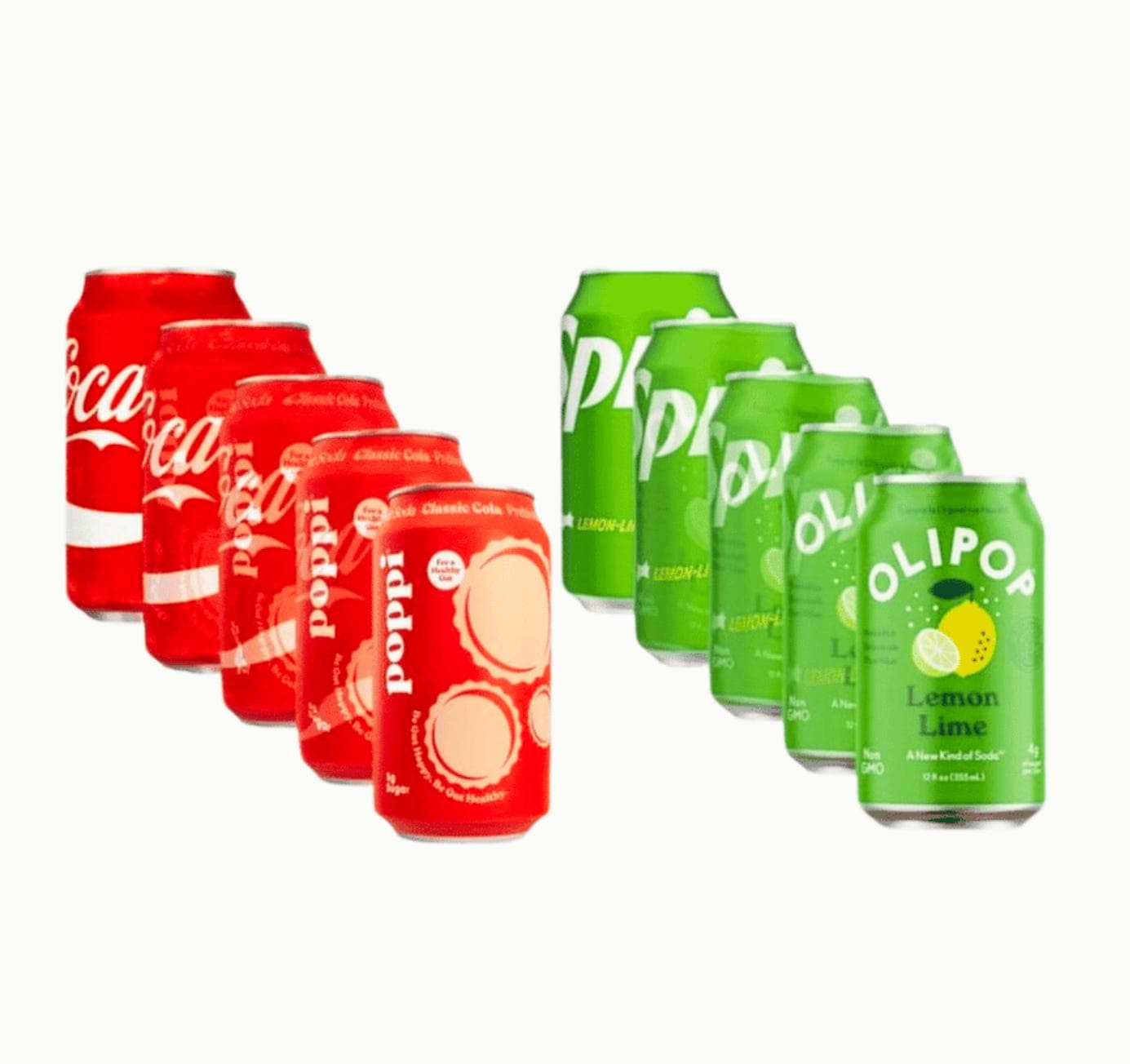
21:40Like it's on TikTok. It's like, oh, I'm the three beverage goblins. Like I need a caffeinated one. I need a hydrating beverage. and I need a fun beverage. The fun beverage can be like an Olipop or a poppy or a guia or something that just like status signals. And it's funny because it's being reflected not just in like the way that we buy like our groceries, but also like, you know, the rice of the shoppy shops, which is like a yassified version of gourmet specialty stores. That's not novel, right? Like we used to have these gourmet stores that were labeled gourmet, like telling you like this was going to be higher price than your average grocery store that has been blurred with this whole shoppy shop phenomenon.
22:21That was like the boomer-aged way of expressing status. Like if you think of Frasier, the show Frasier, there's lots of episodes that take place in a gourmet specialty shop. Yeah, and I have talked to someone who has a shoppy shop now, but he started like in the late 90s. And he told me like, oh yeah, I was one of the first people to import Italian olive oil and like have it in like a gourmet store. he's based in Portland and he used to like have a whole blog about it so it's like a seasoned person who has seen like the change of rebranding from gourmet and stuff but yeah it's so funny because like again it's all this like convergence of all these things happening and I do think Gen Z for much that it likes to taunt and mess with millennials they have inherited this need of I want the beverage that signals.
23:10So like they want the fun beverage. I'm a beverage girly. That's something that millennials didn't used to say. You know, millennials were like the avocado toast, the millennial pastel products, the Our Place oven pan, whatever as a signaler. And meanwhile, you have Gen Z like wanting to have the Haley Bieber smoothie or the Emma Chamberlain an RTD, like stuff that's expensive, you know? Yeah. I want to get to the status stuff and the signaling stuff in a little bit. Before I do, what is the quintessential example to you of a gentrification food item? Is it more like the gratza olive oil bottle that you're refilling with cheaper olive oil?
23:50Or is it more like the Starbucks Boma? Yeah. I mean, the, I mean, come on. Like the boba thing, like it's 100 % quintessential mainstreamfication, gentrification of baba tea. But for example, this new product that launched today called Gele Gele, an$8 gelatin powder brand that has pretty packaging. Oh, I saw that. I'm like, it's$8 a packet? That's four times the price of a powder gel. That is the quintessential gentrified item in my opinion. Because I'm like, and I still have to prepare this for it? Where is the packet? I don't know. Like, do you know what I'm saying? Like, I feel like that to me, I just feel like I'm just like, you know, like in the quintessential gentrification or like, are you serious?
24:37Like that used to be like a super, you know, shitty warehouse. And now you like rebranded it as like, oh, this like pottery studio where people charge 150 a month. So like those kinds of things. So today I was like, just like, I literally posted and I was like, who's buying this? Are you buying this? And most people are like, no, because it just feels like what am I really buying into? Although some people that admit they're like, well, you know, I'm buying it for the packaging. I'm like, yeah, I love getting Trojan horse biostetics. Classic of our generation. And it seems like Gen Z is obviously also falling into that trap as well.
25:21But yeah, I feel like that new brand, I was just like so shocked because it's like like on their website. By the way, you can't even like get it immediately. It's like pre-order right now. like to me for 24 dollars i'm like it's like reinventing like 1960s suburbia like you know what i mean like the jello yeah and it's like supposed to be like beef gelatin but what's it called i did a whole deep dive of this i haven't even published it because it's so long but like this was in like in the 1500s where it's like you know like that beef has its own like jello thing that it produces aspic sorry it was because yeah because in the 60s jello used to have aspic like if you look at the 60s flavors and stuff it used to be salad like aspic based gelatin but yeah like i feel like dentrified grocers there's like something in very very much in particular where it's gonna be like complete high price point and then it's gonna be something that's just so So not that it's non-functional, but it's like, well, I can just get some fruit juice like agar and like what, one dollar to make this.
26:31So I think like that's what I categorize like these kind of products to be. Sometimes I feel like I am taking crazy pills and I'm like, who's buying this? Right. Like like Magic Spoon is another thing where like so many people try to brainwash me or like convince me like people are actually buying this functional, quote unquote, cereal. for$12 to$10, because some of them, I've seen them, some of them retail for$12 and$10 at Target. Who's buying that? You cannot convince me that someone in middle America is looking at Magic Spoon and then comparing it to the family size value, General Mills or Kellogg's or whatever that's worth at least maybe like$5 and thinking that's a good deal.
27:19That to me is dead required this well i think it's also like with gelatin too i mean because the jello talk is like a whole thing yeah too and it's kind of like an aesthetic asmr adjacent phenomenon onto itself so that's kind of a galaxy brainwave thinking about it too yeah i feel like stuff like that because that's the thing that's when i like to call bullshit right like when people tell me like oh the cereals or this ingredient i'm like or that brand that was like we're here to this rup pillsbury with adaptogenic cookie dough who's buying cookie dough for the adaptogens who gives a shit people want good flavor maybe better ingredients for sure but nobody's asking their cookie dough to be functional right and i feel like that's where the gentrification thing happens so like i don't know like rebranding a sauna like it's a red room it's a red room with heat and then they charge you like three times what it would take to go me to like a Russian bath anyway so that's my comparison hey pals if you're enjoying today's episode we want to remind you that the only reason why we're able to keep this podcast going is because of the generous support from listeners like you if you can't shell out for a subscription we understand we know things are rough out there right now but there's another way you can help us out which is heading over to Apple Podcasts and leaving a rating and review.
28:46It literally takes only 30 seconds, and it actually goes a long way to helping people find us.
28:55That kind of brings me to the next question, which is like, speaking broadly, what characteristics do these kinds of food items you explore and positioned in this way have in common in terms of the food or the story about the food and then what characteristics do they tend to have in common in terms of the way they visually present themselves because it's kind of all the package yeah i think oh god for the most part it tries to be very much more artisanal functional or that it's like oh it's vegan like i'm not even jokey like i've seen water label itself as vegan vegan like what the like okay thank you for letting me know i've been not sucking on bone broth this entire time like what is really gluten free i've seen like gluten free label all of everything where you're like obviously that doesn't have gluten like what the fuck no so yeah like for example oreo they're like oh we're vegan like or this i'm always some vegan because they don't use any natural ingredient and then they just started calling themselves vegan i love to say like terms like organic have become devoid of meaning um because everybody then labeled themselves i know it's like okay what does that mean and then everybody was like using it oh we're like somewhat organic so we're just gonna label ourselves organic but no i'm not even kidding you like i was at like i was giving this like lecture at cornell last year and i they were like showing me their cafeterians and i took a picture of this and i was like why there's like two water like kind of like a brita i don't know like where they put the ice water and just like serve yourself but i was labeled vegan i'm not even kidding and in a college cafeteria and i asked the person that was like behind the counter i was like why is is this labeled as vegan and they're like we have no idea they just like told us so this is what i mean like the characteristic that you're like kind of overplaying something that's just inheriting you like when i mentioned earlier like the common education of wellness is selling you things at a premium that like are inherent human knowledge as in like ginger helps with your digestion you know and then aesthetic wise you really just the yassification yassification came up what used to be a meme where people like using filters and i was like oh yassified like this was like the whole term yassified but you had this like glow up via a filter and that's how i see these items it's like you have to have this like glow up in aesthetics or glow up in packaging or glow up in messaging like the fact when i discovered that there was this brand trying to rebrand sun-dried tomato as a vegan jerky i almost lost my mind i'm like are you fucking no i'm not even joking it's like this is so bad like who would even buy this narrative but think about like i always like try to tell people like look at how important branding and positioning is.
31:58Look at the example of chia seeds. Chia seeds used to be this cheap 99 cent package that you could just get off of Amazon if you wanted to for your chia pet. Remember the chia pet stuff? Chia was like so cheap and now since it was rebranded as a superfood you can't get chia bags for less than like ten dollars because it's like oh it's a superfood It's healthy, it's wellness. And I joke, I made this meme where it's like the biggest glow up of this century. And then I put like the chia pet and then I put the$20 chia superfood brand that I saw at GoFood. I was like, that's the biggest rebrand glow up of this century, which is really funny, but true and sad.
32:39So it's sort of taking something like a certain food and then telling a story that either states something that has always been true about the ingredients in it or sort of emphasizing some kind of like purity or health benefit. or just the positioning because there was a spanish brand called anetto and i was interviewed by a spanish newspaper about it because they're like we we saw you posting about this product that's like from this like they were born in the 70s and you'll see it like if you like just google anetto it's like this like checkered like broth brand it's pretty old and the people from spain they're like what's going on that all this americans are obsessed like i saw that you posted that this was in every shoppy shop store or whatever i'm like yeah it's really funny because like people think it's just like another new brand and they don't realize it's like it's an old like it's half a century old brand and they found this like new resurgence in the same way that conservatives have think about it tin fish like it's not a novel content but again the rebranding of the gourmet store where would you find usually conservatives like tin fish in gourmet stores specialty stores and so i was talking to them about like the whole like millennial rebrand of the gourmet store and so i think it's even old stuff that's being rebranded to fit this aesthetic narrative if they have it because you know there's a lot of older conservas that people are like oh my god the branding is so cute like they're carrying it and stuff and you're like just like okay like this is like a older brand but it fits the vibe or it fits the aesthetic so i think it could be that as well because that was really shocking and people from spain were like we don't understand this is a cheap product in spain they're like you can find this in a grocery store for like really big prices but somehow in america this has become sort of like a shop to shop favorite and so i think that's also the third definition of like sort of like what gent like what the aspect has of like that fits that narrative that fits that aesthetic and then taking something that is very much accessible and making it inaccessible because like people in spain apparently they're like that's like super cheap that's like a private label almost brand like that's not even like that's just like so staple to us so like the fact that like it's being sold in the u.s as like a gourmet item just for them it breaks like you know that meme was like the european mind cannot comprehend And that's another one to add to that little scenario.
35:20Let's get back to the status stuff a little more. I'm so into that. These, you know, snacks, beverages, like, you know, even now pantry staples are kind of these status signifiers. Like, what are they meant to tell us about their consumers? You know, what are these narratives like about our life experiences as millennials that make us gravitate towards, you know, something that has the right kind of branding or fresh look versus something else? so i wrote about like how i tie the rise of flea porn into product porn um i think that 2010s were very much about what do you like but remember how everything was like oh everybody was like going out to these places and it was all like oh the unicorn bear do you guys remember that era where it's like all these crazy items and like yeah it was like so wasteful and disgusting non-functional like the cronut the cronut the cronut the rainbow bagel the unicorn this or like all these crazy stuff so i wrote that that kind of led into this whole product porn like product as singular kind of era especially like during pandemic where it's like what you had to signal was whatever you had in how i remember reading this report 2021 that pinterest put together and I was talking about like how the kitchen was the number one thing people were modeling and not specifically noting that people were forgoing cabinet through a bare shell and I was like why is that happening if you think about like the latest products that have been launched in like the past two or three years since like the pandemic it was all like the house aperitif like beautiful maté bottle bright lamb the magic spoon the blackened sauce like all these things that were just like pantry items that became like and i joke like oh pantry items want to be seen i made this me where it's like it's someone's very neatly organized like all like fresh produce it's like all these like guia and all it's like super healthy nut butters and all these things i'm like if a fridge looks like this shut the fuck up but like how like the rise of the shelf see you know uh chloe kardashians pantry photos goes viral oh my god we spot tiktok holy shit Like the business that is to be done from people taking the Tropicana orange juice and making it aesthetic by buying like a whole like a see-through card, like shaped as a cardboard, like a box.
37:47Have you guys seen that? Okay. So like there's this whole rethought. Yeah. I think it's a disease. I feel like that's definitely a disease because like people are literally buying stuff at the grocery store and then to make it aesthetic, they'll take it out of their like packaging and put it in all these like see-through stuff. So it looks nicer in your fridge. So it looks nicer in your fridge. So I do think definitely the pandemic. I think you're going to do that. Jesus Christ, chill out. No, you need to see refug. it's again i think it has is an eye on diagnosis i don't know what they're gonna call it but i do know that it's definitely something that it at this point has become like a disease for millennials with like everything has to look aesthetic so the fact that people have made mini stanleys for their kids i saw this video where it's like oh restocking my kids fresh and they had like mini stanleys and they were like filling the mini standards with their mini straps i'm like no way that people have gone this far but that how much people have taken this whole aesthetic of my pantry of my fridge but also like again that's something that celebrities were doing this obviously the biggest one gwyneth paltrow and then that that trickles down to mainstream again these like viral news of like oh chloe's pantry look at how organized it is and i'm putting all my oreos like into these coolier containers and like how it's like asmr for people to like go and we saw tiktok how like millennial parents are buying their kids my mom would have probably like been like are you insane if i ever asked her to have like a fridge in my own room stocked with snacks and stuff like she would have been like is that fridge paying rent or who's paying that bill for that and in Europe but that's something that you see more and more like millennial parents like your kid has a fridge for their own stuff and like I do think the pandemic spiked it because people had nothing else to signal with it used to be that you signaled with you were going out to so-and-so restaurant and you were posing with your purse and I'd curb bone or whatever I don't even know what's cool anymore at this point because everything fluctuates everything's cringe now so like oh and you can say something's cool and then someone's gonna be like oh that's cringe but it used to be like people would be going out more and stuff and so like they used like oh i'm having this like insane dinner experience about the salt beer like it was like oh babe i'm gonna go have this experience and i feel like that it became like the affordable person's way to signal the new lipstick effect became groceries and there was like this whole i don't know if it was bloomberg or business insider but there was this whole article maybe like a few months ago that wrote about how gen z spending so much more in groceries yeah because that's all he can do to signal like they're either buying shane stuff or buying from facebook marketplace like going to ero one literally once ero one just like doing my own market research and i literally saw like kids like shoplifting from it like taking those videos and then just like putting on their jacket and like getting the fuck out do i think that they can afford it no do i think that they do definitely go to the place and take videos and stuff because they want to signal that they were at their one that they bought the smoothie or that they were like checking out the fridge a hundred percent i know that they're doing a signal and that it has become clickbait it's like um a voyeurism kind of of like oh like chef bae love her but like her content is like i'm like a celebrity chef and then you're just like salivating over her five thousand dollar every time like she goes shopping for dinner for these people like her insane receipts like that's like rich voyeurism right which is sad because we're living in a time where inflation is super high even the rich are shopping at walmart so i don't know like there there's something that i hate about the fact that again something that is so core to our humanity has become a way of signaling status and somebody i don't know someone had mentioned that based on the kardashians like oh the kardashians like doing all these lavish parties and with all these like produce like inspired which is true i i used to call it like the renaissance core but because if you think about like look at how like the cool parties are now everybody has like all these produce as decoration and not eating it right and someone was mentioning like oh the kardashians they're decorating all these parties with all these food and whatever that they're not going to eat that's all going to go away to go to waste and that was like a new signal of wealth and i'm like oh shit but that's actually been that's something that you see being done by all these brands by all these fashion brands everybody's using food as action or food as decoration i mean i think it photographs well right yeah but i i compared it like how are we going through like the whole still life like dutch art movement that we saw like in the 1700s that was very much renaissance right and so again post pandemic post pandemic in the 1500s that to the renaissance movement so i like sometimes like i like joke but at the same time i'm like no we're living in a late stage capitalism oh the reality that's what we're doing you have this meme that you posted i was like looking through all the names you posted the other day and there was one that was like my parents in their 30s and it's like a picture of this couple being like let's buy a house and then it's like me in my 30s and it's like how to pay after paying grocery which is a real thing yeah people are doing clarna grosses which is the sad as again late stage capitalism moment we're living and somehow somehow we're also simultaneously living in a space where you have 20 waters we have all these expensive groceries that people will still buy to either clickbait on tiktok to post or to signal because let's be real again back to that jello example who is in their right mind spending eight dollars a gelatin pack i'm sorry you have to be either like you know again like trad wise well or did you find that man in finance six five i don't know but not everybody can maybe they're like in some case i mean they're not attainable but maybe it's something that you splurge on because you can't buy a house and that lets you have that status of having a house but people buy it in things where it's like okay i have my fun beverage subscription like people will fight you if you tell you like when i posted about the poppy gate like the poppy lawsuit people like better than a soda like people will go to a fucking war for poppy i'm like holy shit like they literally cemented themselves not as a beverage brand but it's a lifestyle brand because it's signal something puppy girl like they are a certain kind of person and people will go to war for them liquid death is another example right because okay they might not be like on the expensive side but liquid death is a brand people are tattooing themselves liquid that is the highest ascendance any brand can aspire to people getting literally like branded yeah and wasn't it like a thing recently like it came out that it's like actually just like tap water from germany or something they did get that call out and that's why they've been building a facility and it's so funny because i joke like so it used to be like remember how fancy water used to be like oh it's from the olive oh it's from fiji oh it's from vichy and now if you want to signal with water has to be hyper niche so liquid death didn't even know that and that's why like they immediately like worked on like oh we're getting our like water processing based in the u.s and we're no longer going to export from the europe whatever but gen d in particular has been the one who has shifted that narrative of like we don't give a fuck about we don't want to drink water from europe we want to drink water that's like natural and like close to the source if i told you that in extremism in the same way that the whole like people were going back to dairy there's the extremism of people going to raw milk in water what i've been seeing is like okay people want to use from a local person and then there's people who are like so obsessed that they're going raw water movement raw water movement means you go and you literally get it from like a river or like a spring and then there's people literally using like depurifiers their own depurifiers so like they'll set up like this like it looks like an iv bag with a tablet and they'll be like just waiting for their water from the river that they collected themselves like we're going full primal yeah i was gonna say is that prepper is that yuppies or is that preppers like i can't no no it's not preppers at all that's the thing it's become this like again tread housewife nara smith like let me make my water from scratch which i think it's really funny but at the same time it signals distrust and i think this is the biggest thing that we i haven't even brought up but like the fact that all these cultural things are happening all stems from the same thing of distrust of the food systems think about why we're allowing for the common identification of wellness to happen because we don't feel connected to our food systems and i think again someone coming from a country where at least i felt a lot more connected with the producers because i could just go to a flannery market and i'm like okay i do know of this person literally because of where i'm from like i know that they had cultivated this and like we don't have that much of a consolidation of the food system i've talked to people that tell me like i don't know how a ripe avocado like feels like my queer grandmother didn't teach you how to pinch the butt they'll be like no what is that like they don't know what like a ripe watermelon especially in america i feel like there's a gap between what older cultures knew like older generations knew about food and beverage and this this disconnect that has allowed for that middleman to grow and grow and grow and what does that middleman look like pre-immunization gentrification of groceries nobody wants to talk about that and yet here we are and about it because that's when you support independent publications that that's what we bring about we're like it doesn't matter how much you try to blame things if you don't look at the source and the source is the disconnect the source is the fact that nestle owns almost like five corporations, Nestle, Mondelez, five corporations own everything you see in a normal grocery store.
48:45Is that normal to you? No. You don't even know it because that's not common knowledge. But the fact that the Bigfoot has lobbying, Americans made bribe legal through lobbying, and a lot of these Bigfoot corporations have lobbying that push the sugar narrative that like other countries like Mexico, Chile, places in Europe, even Canada, they have stricter regulations and they will put warnings. Like, for example, did you know in Mexico you cannot use cartoon mascot and any product that has been targeted to children? So Cheetos cannot use the Cheetos guy. They have to use this C wrapped in like the print, but they cannot use mascot.
Read the full transcript
49:28And so I think it all stems back to what some people don't realize. It's like our own disconnect with what's so inherent in our lives. It's not something that you had to buy into, right? Like food and beverage have existed together with humans forever, right? Like we coexist. And the fact that we're living in a place where unfortunately because of our situation, we have made it a form of signaling in the same way that a fashion bag you know you have eroin right again like the fact that a smoothie of eroin is 20 dollars it's not even like real milk you'll have like maybe an alternative milk and you have some nut thing or whatever like why am i paying like 20 to 25 dollars for his smoothie that's not even like gonna fill me up right
50:32the thing that i that i keep coming back to as someone who is like kind of paying attention to this stuff ambiently but way less deep in it than you are is that a lot of this kind of millennial Gen Z targeted food is playing with this idea of artisanality on some level, this idea of even just in the branding, like going back to some more handmade kind of food system as opposed to mass-produced food. And, you know, the more high-end products that you might post on your IG, obviously they play with that. You think of like, you know, the tin fish kind of thing. um but also if you walk into like walmart or trader joe's these days and you look at there are seemingly also mass-produced products that are playing on the same imagery and i think this kind of plays into the same distrust where like we distrust our food systems and then we use this imagery to make the food more inviting but it seems like this is creating a false sense of what the food actually is in some cases because it's not true that food is actually becoming more like artisanal or like healthy on the whole it seems like we're just putting artisanal branding on it right yeah i would say 100 it's the branding and that's why i tell you like it's my disgust at times for a lot of these brands because you're like remember when i told you like i like to try to find things that have legs planned on and a lot of it does not have legs planned on it's just marketing it's just branding and it does feel sometimes like it's upsetting like that i'm getting bambozled but yeah i was just like i feel like a hundred percent that's what i'm saying like when oreos brands themselves as vegan i'm like you've always been vegan honey like you've never even had a natural product in your fucking like ingredient list and so like that's what i like Like I'm so passionate about like that use of branding as trying to Trojan horse you into something that's not necessarily true.
52:40Like look at Poppy's latest lawsuit where it's like a class action suit saying. So this brand was saying like it's got healthy, got healthy this. But in actuality has five grams or I don't even know how many grams of sugar or whatever. And people are saying like, OK, in order for this to actually have some effect, you have to drink four of these per day. for at least three weeks it's like 20 grams of sugar a day for what to get like some benefits that's why like i joke like this is millennial men and musel you could have just like drank musel powder and not have to deal with all this but even though men and musel i think some of it has sugar too but then i made this meme where it's like our ancestors used to get fiber from fruits and stuff and now it's like oh like you're not getting enough fiber like yeah because we're not the way that a lot of these like vegetables come to be like they're so loss of nutrient like the soil nutrient has been decreasing that's a big thing i know that and then we're sold into what i like i did this whole deep dive on like the rise of supplements everything is a supplement now what i like to call as like the 40 billion deficiency market because like everybody's like you're deficient in this you're deficient in that i'm like there's now a company i won't say the name but like there's this company that launched this year that said oh we're a company that helps you absorb supplements better so it's like if you think about an mln market it's like the supplement people are saying like you're not getting enough supplement and then this person's like not getting enough supplement you're not absorbing them better and so just like again i just feel sometimes like you know how ad1 has been called as a scam i understand why people start to call it out and say that it's a scam where it's like oh it's just spirulina and it was so funny because like i saw them being used there was an ad1 packet that's being used in one of the scenes for challengers the cendaya movie i like took a screenshot and i tweeted like oh look at this ad1 ad and the ad1 like president was like that wasn't an ad it was just like like that happened natural and i'm like okay cool but still like that says something about like how AG1 has permeated into culture that we're seeing it being put in a smoothie for this tennis person and challengers, right?
54:58Even though people are calling it a scam. So yeah, I feel like there's a lot of things that I do feel like it's just marketing and marketing buzzwords and narratives that don't really make sense and that are trying to capture people in something that, again trojan horsing them and that's again someone who has this background that's what i try to do with snack food i don't try to hate people some like oh you're the one who does takedowns i'm like i don't do takedowns i just like to have an honest conversation it's like guys come on like you can't really believe this is a meditation and i can't like it's not like you're in that pays seven dollars for this like canned seltzer and you get like tongue down by the dalai lama and some sense steak like at one point where is reason right don't even get me started like cbd thing too oh my god oh the cbd thing unfortunately again snake oil there's some that are valid in their science but that's nobody cares about the science the most that get so okay speaking of that that's a good perspective so there are some things like this brand called good idea and they actually have this ingredient they created that contrasts your sugar spike so you eat it in a meal and it won't spike your sugar and the way that they can prove it is with the blood sugar meters that you know you put in the wearables there's wearables now that make it easy for you to track your blood sugar spikes particularly that a lot of diabetic people use and what's crazy is that you can see like once you have the drink with the meal versus when you don't have the drink with the meal and there is some science back function ingredients they're like whoa that is so cool but people don't care because it's not sexy and when I went to this expo I thought this is like the first time I'm seeing a functional brand be able to say like look we know what we're doing and it was like the anti-est booth meanwhile the poppy booth was like and they were giving off k for free like it was like what the fuck why it's been so popping and it was because i had this amazingly branded booths you know they have so much releasing money and then you realize people don't really care again about these things that could have that impact that these brands want to say like oh we're healthy over you and this was before or something by the way now everyone's trying to like rebrand as like oh the nature of something but you know what i'm saying i feel like branding and marketing and positioning has so much to do with the gentrification, the commodification, all these little things that you see that things that I think that do have innovation, unfortunately, because they're not sexy, people are not just buying into them.
57:47I want to talk a little bit more about the difference between how millennials and Gen Z are relating to food and particularly like how does millennial targeted branding compare to Gen Z target branding. Yeah, I feel like millennial branding in particular was more about like, oh, better for you, functionality, pastel colors. You see in this in brands like Recess. Unicorn, I feel like is very, very millennial, right? Yeah, the unicorn bagels. Yeah, everything that was like pastel. So I have this theory that if you think about the 80s yuppie persona, it was all like similar like pristine pastel very well put together and then you have this sort of counterculture happening in the 90s which is what i do think like gen z is coming out with um so you if you see like a brand like rotten so if you've got to eat rotten it is like a better for you like gummy worm but the aesthetics are very gross and there's another brand that's also like a Gen Z led brand called Immorel.
58:54So I-M-M-O-R-E-L. And there is like mushroom tea brand. It feels very Metallica 80s kind of branding. So I do think like the differentiation is that Gen Z is a lot more louder, not afraid to be disheveled, chaotic. I think millennials, there had to be, do you remember like grids were a thing, like Instagram grids? And I was like, oh like your grid didn't look nice with your brand and like i think like gen z people like just don't care i think tiktok is like a good example of why it's such a gen z led platform it was more of like in real time or like i'm filming myself even if i don't have like makeup or like crying and he's like there's text over me that says something that relates to people or whatever so i do think that gen z came in as a correction of the oral correction we did with the groupification of food and beverage the fact that you can get like palo santo brood water i'm not even joking the brand is called lunay sparkling it's like it looks like activated charcoal but it's like uh we brooded around this like quartz in this hertz level to like up the vibes i'm not even joking like it's an actual product i do think that's like peak millennial and then you have like gen z coming in like we do deserve better products it doesn't have to come at like some insane version of wellness that feels so unattainable so perfect so pristine and that you're seeing them like play into that like chaotic branding as a way of rebellion is from like the too pristine vibes of um like millennial core so i always like to give those examples of like even fops it's like f-e-u-p-s it's like this like healthier puff but they even like brandon tells us like we're not healthy because it's like a puff it's like a chip you know so i do think that they are like kind of rebelling even if they do still use this stuff there's something aspirational about consuming in the same way i mean look they're all about wanting to signal that they bought it either way yeah or like i love that i've seen tweets like oh we're the little treats generation or like the fun beverage generation and so i do think like again um gen z has inherited some of the stuff from millennials but they also do reject like the overly mad lib use because like Gen Z loves a good$20, let me go buy that Haley Bieber, like the vacation sunscreen branded thing.
1:01:41I feel like they still want to do that because like we're at millennials. So internet as, in my opinion, like as a discovery, you have Gen Z wield that as utility. And so like, that's what they know how to use, where it's like, oh, I know how to signal like through all these things. And like, so that food becomes a signal in itself. But what's interesting is that I've seen gen alpha also even reject what gen z or millennials have done um and you have this sort of like extremism of like the crunchy teen versus the kid who's like i'm not even kidding i found these videos like these like 11 year old gen alpha kids they'll be like unwrapping their lunchable solana the ray and i'm like whoa it's very 2007 2008 millennial emo style vibe so again I think every generation has their like counterpoint with whatever the other generation does, like this new generation just rejects.
1:02:35So I think that that's the main differentiator, which is what we did as millennials with the older generation was like, oh, we want to be healthier than the older generation. But I think we just took it to like too much of an extremism that now it just feels natural to kind of rebel. And so like, if you look at, for example, like it used to be 2010. So I was like, oh, the oat milk and almond milk now people are all like give me my whole milk give me my raw milk give me my grass-fed butter I don't care about alternatives I don't care about alternative cheese I want real cheese I'm sure you see that on your timelines too but that's happening like in real time well this kind of ties into our last question and kind of thinking about things coming full circle or rebelling against the thing that came before you've also written about how chains are actually having a moment again like brands like Olive Garden, Cheesecake Factory, Chili's, McDonald's, you name it, having a revival among both millennials and Gen Z.
1:03:34Why do you think this is happening? Is there some kind of wider cultural reason why young people are suddenly drawn to these places? Or isn't that these brands, like all brands, have just, you know, gotten better at speaking to young consumers no a hundred percent i think it has to do with chains being the last homogenous period in american culture and i think it's people resorting to comfort so i remember i tweeted like oh may your day be as warming as the wendy sunroom they don't exist anymore but like i remember a wendy sunroom because we had them in our country and i remember when viral because there was so many people were sharing like oh all these stories of their family and the wendy strong room whatever and again it's comfort it's familiarity and i always think about how our generation has continuously lived through chaos world wars happened in a sand like oh twin towers middle east war u.s war like the next 10 years uh recession global recession blah blah blah and then you know 2020s inflation yeah we're like just like so rooted in trauma that there's a reason like when 2020s happened i wrote about this i was like cereal had been on a steady decline for 10 years and then 2020s they had such a spike that they couldn't keep up with demand why because people are resorting to comfort foods because they needed comfort and so it's no surprised to me that chain are now making this like new resurgence there's so many popular gen z tiktok brand that will literally just go like to different chains and be like chili's order and they'll just talk about like what they're eating at chili the same way that walmart has had a resurgence amongst gen alpha like i'm not even kidding like all the things that millennials grow up thinking like that was a signal of poverty or signal of cringe i have now being researched by the new generation that see it as a way of like either comfort or accessibility like cheesecake factory has become so popular they literally hired a creative director in february of course and it's a creative director that comes from like i think there were like warner brothers before i'm like when did cheesecake factory meet a creative director of brand but now that they're realizing that they're like an actual brand.
1:06:01It's interesting to me to see them like wanting to grow beyond just like, oh, we're just a restaurant chain. And then there's this brand chain that was started by BJ Novak that has served as a platform to kind of elevate like chains of past and serve to kind of bridge the cultural chasm that have happened with these younger generations, meeting these legacy chains and being able to serve a mix of both. So like Chain has actually partnered with things like Pizza Hut, Taco Bell, Arby's, Jack in the Box, Dunkin' Donuts. They even started this whole thing called like Chain Fest, which is like Comic-Con for chain restaurants.
1:06:42I think it's hilarious. That's how much chains are that much of a cultural influence. Chains are back with a vengeance. Remember when I talked about foodie culture, I think chains lost relevance to foodie culture because nobody was going to Chili's to signal about like oh my god guys I just discovered this insane dish the blooming onion but now like that foodie culture has kind of died down like what is foodie culture when some tiktoker will be like wow guys let me tell you about a hidden gem in a Williamsburg and it's like this like basement you know what I'm saying and so I feel like people are realizing how much of a sham that is and how dumb that is and the fact that you know some chain restaurants do provide affordability and like still good cocktails good appetizers amazing servings people are realizing that middle america was right all the time no it's true it's true and i always say like if you want to make something successful in america you have to think middle america out even with cpg brands even with when we're talking about like that adoptogenic cookie dough or that eight dollar jello powder tell me how that's gonna look like in the aisles of walmart for someone in idaho or someone in chicago or whatever if you cannot tell me how that translates then i don't think your brand's gonna be successful and i don't think it has like the stand on and then another thing that has distorted that is venture money so it really just depends but that's why i love that chain like chain brands are real because chain brands most of them are franchised and so like a lot of it is like this is what real people want just accessibility family fine we have eye serving i hate to say it's almost like wondering a little bit like how much of this has to do with like maybe especially for younger generations kind of like and tell me if this is like a stretch but like kind of like a fetishization or like romanticization of the decline of like the third space everywhere like particularly 100 100 100 i mean i have this whole huge piece that i haven't even been able to publish because i've been every time i add more to it but i've been like talking to historians about it because i have this big thesis that groceries have grown as a third space in the absence of starbucks and cafe culture used to be in the night i can't wait to read that oh no this has been like literally probably gonna be like my legacy but i right because like it's just been so fast and i've been testing this out i've been traveling to all these different cities in the u.s and like holy shit if i told you that in chicago there's a chain called mariano's that if you go to their bar it looks like nice fraser bain you know like fraser we're talking about fraser earlier fraser bain is what it's called the aesthetic of like guys remember like late nights very much how cheesecake still looks like was like late 90s was like not aesthetic of like it's warm colors it's not like yassified it's not like squiggly things like and just google mariano's piano bar they will literally have dueling jazz pianos like no i'm not even joking like heb hosts like a speed dating event i'm telling you like a hundred percent believe that the chain as a third space is coming back to that a la office date because you remember near my the gelson's near my apartment has a wine bar now with live me is oh there we go i think maybe that's like a california thing but yeah no but no no no somebody had actually told me in the galsons yeah i have heard about galsons and the wine bars and if you go on reddit reddit is such a great place to like take like acro cultural pulse of what's going on and like you like just be like oh grocery bars and people will be like yes cheaper than going out to a bar at this point i've literally seen date happen at the whole food wine bar i've had people tell me they have had one night sat they have found their first husband had people tell me that they had found their second husband at whole food i literally spoke to whole foods theme about this but your point about the whole third place think about office office is the office is such a good moment in time capturization of what are you to do like maybe when you run i mean i was still a teenager but like if you were like an adult jenna do you guys remember they have a whole chiles episode and chain restaurants with like a pervasive thing in like whole office world or whatever i think about that like it was a third space the happy hour was a third space and you don't really hear people talk about happy hour as much right like i feel like the maybe office space really captures like peak that like the jennifer aniston yeah the jennifer aniston character you know she like works at like the whatever their tgi fridays parody was and it's like next to the office park and that's what the couple meet yeah amazing yeah so you're right because like so that's what i tell people like think about gen z as a generation who grew up online and they're trying to go as irl as possible not yeah in real life irl they're going from url to irl and there's a reason why because try to go to a lower like a lower east side cafe in new york they'll be like no laptop even in awesome like i'm in awesome now and there are spaces that'll be like no laptops after 1 p.m i'm like oh fuck so she'll have to socialize what does that feel like and they're like our our um like our culture is around like socializing after a drink or whatever i'm like shit like that this is what gen z needs to literally be told to like a little signage that says no laptop to accept it like that is crazy right like you would have felt like 10 years ago that would have been insane to say to someone like oh we don't accept laptops the fact that you're like having cafes tell people like we don't want you to be connected yeah and it reminds me of this like go more girls episode with like look look the look cafe and the guy was always anti-tax like no cell phone and it'll be like no wi-fi whatever but i think about that a lot and i think that you're so valid with that point of like maybe change resurgence also has to do with equal wanting to have that third space phenomenon as a generation that rule mostly online so that was that was beautiful that's funny we actually have like our podcast has a discord group that is like modeled after the mall where it has like the record store and that sports bar and food court and all that and um and thinking about like that nostalgia i think it's like we're nostalgic for the third spaces but culturally i mean there are other like kind like there's like more city five third spaces like i grew up in new york city and i went to cafes to do my homework everything But I think for a lot of America, like the last memory of something that was third space were still these mass produced commercial spaces.
1:13:56But there's something still there's something about that that we actually maybe like. Which unto themselves were like arguably maybe like part of the beginning of the decline of more pure third space. I feel like if we like did a whole like series on Frasier reign, I love that you guys brought Frasier. Oh, my God. But I mean, I mean, this has been such an amazing time. But that's what I'm saying. We'll do it another time. Well, Andrea, thank you so much. I feel like we could go for like several more hours. So let's put a pin in it for some future follow ups. And until then, how can people continue to follow you and Snackshot?
1:14:32Yeah, you can just go to like at Snackshot on Instagram if you're just there for the means and the pretty packaging. But if you want some deeper insights, you can go to www.snackshot.com.
1:14:48This episode of The Culture Journalist was produced and edited by Emily Friedlander and me, Andrea Dominic. Our theme music is by Mark Donica. To check out more stuff from Snackshot and Andrea's other work, head to our Substack. That's theculturejournalist.substack.com And if you like what you're hearing, leave us a rating or review on Apple Pods or share us with friends to help support independent journalism.
From the publisher
Like most people on the internet, we here at the CuJo love a good food-centric social media account. But our arguable favorite at the moment is Snaxshot, a Substack, Instagram, and online community run by journalist and snack oracle Andrea Hernández.
Through analyzing products like Graza olive oil and adaptogenic cookie dough and the bold colors and chunky fonts that make every new food brand look vaguely the same, Andrea probes the vast culinary zeitgeist in search of what it tells us about both our generation and this moment in culture.
This week, she joins us to crack open the fascinating and often disorienting cultural politics of what she calls “gentrification food.” We get into the culinary and aesthetic hallmarks of this genre of food and beverage, what we millennials are broadcasting about ourselves when we consume it, and how our consumption choices became a form of status signaling in the first place.
We also talk about the differences between how Millennials and Gen-Z relate to food (and how it’s marketed to them accordingly); how artisanality became a mass-market concept; and why chain restaurants like Olive Garden and Cheesecake Factory are having a moment among young people.
Join us as we uncover the economic and technological forces percolating beneath the surface of contemporary culture.
Subscribe to Snaxshot on Substack
Follow Snaxshot on IG
Recommended reads by Andrea
This is a public episode. If you'd like to discuss this with other subscribers or get access to bonus episodes, visit theculturejournalist.substack.com/subscribe