In short
Podcast Summary: The Culture Journalist - Episode: Inside NYC's Thriving Cinephile Underground
Overview In this episode of *The Culture Journalist*, hosts Emilie Friedlander and Andrea Domanick engage with Annabel Brady-Brown and Nick Pinkerton, key figures behind *The Metrograph*, a biannual print magazine dedicated to cinema. The discussion revolves around the evolving landscape of film criticism, the resurgence of interest in cinema among younger audiences in NYC, and the unique offerings of *The Metrograph*.
Key Themes and Discussions
The State of Film Criticism
- Media Industry Changes: Traditional media outlets, including major newspapers, are reducing their cultural criticism sections, leading to debates about the relevance of written criticism.
- Alternative Models: *The Metrograph* magazine represents a counter-narrative to mainstream media logic by focusing on niche, timeless content rather than current news cycles. It aims to create a collection of articles that readers will cherish over time.
The Metrograph Magazine
- Print-Only Philosophy: The magazine is intentionally created as a physical, print-only product designed for deep engagement. Its aesthetic qualities – including its luxurious paper and binding – emphasize a tangible reading experience absent in digital formats.
- Content and Contributors: The magazine features long-form articles, interviews, and a diverse range of contributors from various artistic backgrounds. This approach invites both cinephiles and casual readers to engage with cinema meaningfully.
- Success of Issue 2: The second issue includes a major feature on Paul Morrissey, providing a deep dive into his work and showcasing never-before-seen archival materials.
The Resurgence of Cinema Culture in NYC
- Younger Audiences: There is a noticeable shift as younger people gravitate back to theaters, drawn by the communal experience of cinema. This trend counters the narrative that digital streaming is replacing traditional movie-going.
- Community Building: The Metrograph and similar venues serve as community hubs where cinephiles can gather, fostering connections among attendees who share a passion for film.
- Cultural Significance: The hosts and guests discuss how physical spaces are crucial for preserving the cinephile community and how they can thrive amidst digital distractions.
Future of Film and Criticism
- Exciting Developments: Despite challenges, there is a sense of optimism regarding independent filmmaking. The podcast highlights several films and filmmakers who are pushing boundaries and creating compelling content outside of mainstream recognition.
- Community Engagement: The importance of physical venues and events in maintaining vibrant film culture is underscored, with various independent theaters and video stores becoming crucial to this resurgence.
Key Takeaways
- *The Metrograph* represents a revitalization of print film criticism, providing a much-needed alternative to the digital content landscape.
- Younger audiences are rediscovering the joy of cinema, seeking out communal experiences that digital viewing cannot replicate.
- The conversation around independent filmmaking is vibrant, with many exciting projects emerging outside traditional festival circuits.
Conclusion The episode celebrates the revival of cinema culture in New York City and explores how print magazines like *The Metrograph* can thrive in an age dominated by digital media. The conversation emphasizes the significance of community, nostalgia, and a slower, more thoughtful engagement with film that resonates with both seasoned cinephiles and new audiences alike.
---
For more insights and to follow the ongoing discussions in film culture, check out [The Culture Journalist here](https://theculturejournalist.substack.com).
Written by AI. May contain mistakes. Listen to the episode to check what was said.
Transcript
Automatic transcript. May contain errors.0:00I love this movie. I give it three bags of popcorn. Three bags is not very many for this movie. Yeah, but it's not an Oscar contender, so I deduct two bags. Well, that's Oscar's fault because this movie's as good as any. Listen, I love this movie. Don't get me wrong. I recommend everybody go see it, but I'm only going to give it three bags of popcorn and two sodas. Well, then I'm going to give it five bags of popcorn and two more bags of popcorn, which we can slide over to your three bags of popcorn so that we each gave it five bags of popcorn. No, this is right here is a border. You can't slide.
0:32Hey all, it's Andrea and Emily here with Cujo. So it's easy to get the impression these days that the media industry is turning its back on cultural criticism. You might have noticed that there has been a slate of headlines recently about major newspapers, including the New York Times, the Washington Post, and the Chicago Tribune, reassigning or offering buyouts to some of America's most celebrated veteran film, music, and theater critics. The news, while not particularly surprising given, you know, the squeeze the industry is facing, has led to vibrant debates in journalism circles and in our Cujo discord about what impact, if any, written criticism even has on the culture at large at this point.
1:14As is often the case, though, looking closer to the ground, or perhaps under it, tells a different story. One of those stories is The Metrograph, a new biannual print magazine from the eponymous brick-and-mortar repertory cinema in New York's Chinatown, reflecting on film and film culture agnostic of news and release cycles. It's a beautiful product, and it feels like a bet on everything that runs counter to current media logic. It's long, it's esoteric and proudly niche, and it's only available in print. The creators say the idea is to make something that people will want to keep on their bookshelves rather than, you know, toss out with the recycling like the rest of your magazines.
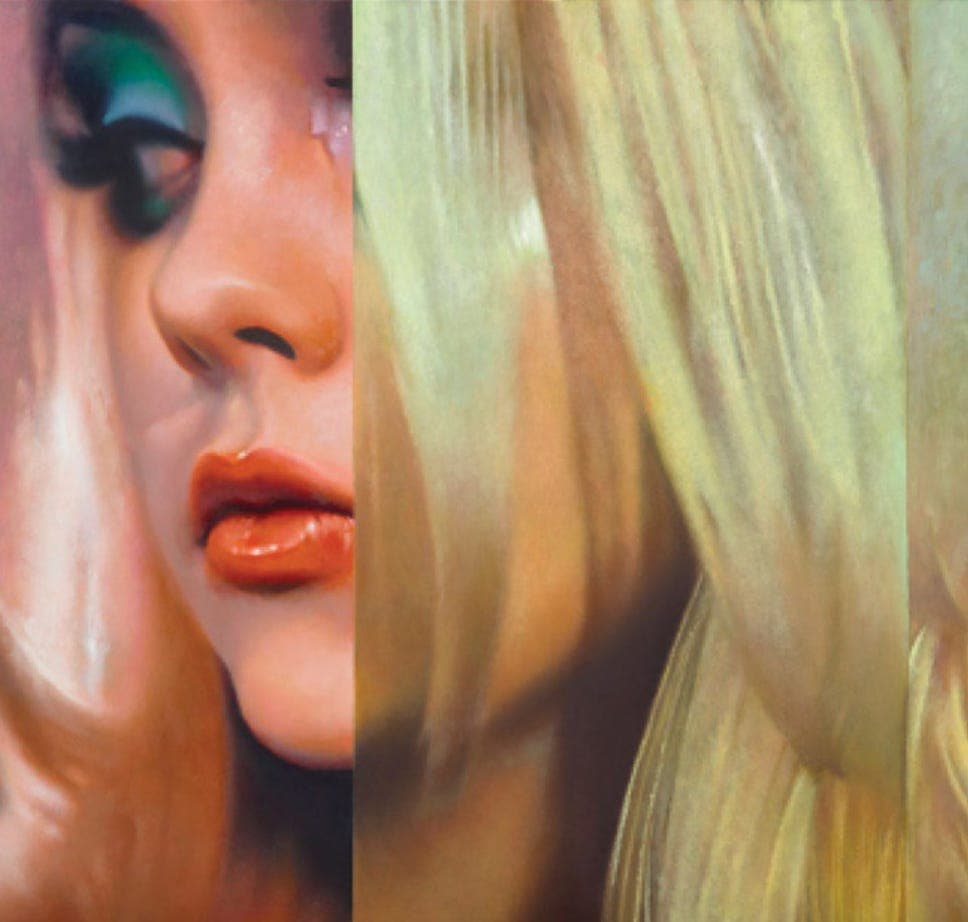
1:55It's something to read slowly and return to over time, and that delivers the exact opposite experience of the always-on cadence of the internet. The second issue of The Metrograph is out now, and it features everything from a 42-page spread on Paul Morrissey's personal archives, you know, the guy who made a lot of Andy Warhol's movies, to a roundup of writer Gary Indiana's favorite films, to histories of the Japanese Pink film and the figure of the cinema ticket Booth Girl. The cover image is a painting by artist Louise Giovanelli, inspired by Christina Ricci's character in Buffalo 66. And there's also a cinema map of Belgrade, a Metrograph-themed crossword puzzle, and a comic about the cringy and disastrous story behind the lost Jerry Lewis film The Day the Clown Cried.
2:44So for today's episode, we brought on two of the Metrograph magazine's top dogs. One of them is senior editor Annabelle Brady-Brown, who previously worked as a co-founder of Australia's Fireflies Press, which is an independent publisher of books on contemporary cinema. And the other is editor-at-large Nick Pinkerton, who is also a former co-worker of Emily's from Kim's Video, a longtime contributor to publications like Film Comment, Sight & Sound, and Reverse Shot, and the creator of a substack called Employee Picks. Recently, Nick also made his screenwriting debut with the movie The Sweet East, which is a delightfully brain-bending send-up of culture war era America packaged in the form of a road movie, directed by cinematographer Sean Price Williams, who was also a clerk at Kim's.
3:31Nick and Annabelle join us for a wide-ranging conversation about the past, present, and future of independent film culture and criticism, and what it means to make a print magazine for cinema fans in 2025. We also discuss why younger people, at least in NYC, seem to be gravitating back to the movies these days and how the hyper IRL, video store-centric independent film culture of 20 years ago provides a good template for what that might look like in the 2020s. We also talk with them about some of the directors, movies, and micro-publications that, you know, you might not hear about in the news, but that are making right now such an exciting time for cinema in NYC.
4:11And we all share the repertory theaters and video stores that we love in our own cities and around the world that are keeping the old Kim's video spirit alive. We'll be right back with Annabelle and Nick after the break.
4:37Don't make a move till I say action. The Culture Journalist is an independent project that relies on word of mouth and is funded entirely by listeners. If this pod had something meaningful to your life and you want to access everything we put out, please consider supporting our work by becoming a paid subscriber over at our sub stack. Paid subscribers receive access to our Discord community, the Cujoplex, full access to bonus episodes, and more goodies. You can get it all for just five bucks a month over at theculturejournalist.substack.com. Nick and Annabelle from Metrograph, welcome to Cujo.
5:17Thank you for having us. Thanks for having us. So when we were putting this episode together, I was talking with your publicist and we kind of had to like pull it together quickly. So I was like, you know, you can send a PDF of the new Metrograph issue if that's okay. And she replied that the editorial team is deeply against PDFs, emphasis on deeply. It was like italicized. Can you guys, can you tell us about that? We kind of sound like monsters, don't we? I mean, very simply, I know that you both now have the magazine in your hand. So I hope that that reluctance of ours to like share it digitally makes a bit more sense.
5:56Yes. but for us like it is really important that it is a print magazine and a lot of you know there are people's like first responses or even just in that really simple like instinctive level of people say you know they love the smell we print on this very fancy luxe Italian paper and it just smells really good when you when you open it up for the first time it's like you know opening the door to a beautiful bakery or something and this this scent wafting to you and there's a really beautiful softly textured feel of the paper we have this cloth bound spine which alternates color yeah the the binding is like really beautiful i was appreciating that it's like this rich greenish blue and for the first issue that was pink and that changes every issue and it's very simply like a very beautiful object and that was important to us and i should also say important to our really incredible design team who is led by matt willie from the firm pentagram they do all the work that makes us look so good.
6:56But beyond just like the aesthetic pleasures of that, like we really are truly print devotees. We believe that print offers simply a better and like more pleasurable reading experience. It opens up a space for the reader to really like engage privately in their own time. And as you'll know, the magazine is quite thick. So we've got over, I think it's 70 ,000 words in 160 pages. There's some very long articles in there, two of them by Nick. And we do think of each issue as something that you read like slowly and over an extended period of time in a way that doesn't really translate to a PDF, let's say.
7:37Yeah, I think a big part of what we had hoped to do with the magazine is to make something that doesn't have a sort of flimsiness and disposability about it, that it's going to be something people will want to live with. And because it is a biannual, more or less, we have time to do something that is very bespoke to really fine tune every aspect of it. And, you know, hopefully, you know, go back to the spine, it's being done with an idea that that's going to like occupy a space on somebody's bookshelf and there will be this sort of wonderful rainbow of metrograph spines there. And I think there's something to be said, too, for like this implicit ability for especially something that's like biannual and physical that it allows for sort of reflection or like taking inventory on a certain period of time, which I think the media environment like doesn't really foster so much anymore, like allow us to do rather than just like looking ahead of like, what's the next thing, the next thing, the next thing.
8:43There's like a sense of, of like pause, zoom out kind of aspect to this too. There are pros and cons, obviously. One of the downsides being that you can't really be particularly timely, but at the same time, that then frees us from the constraints of having to be kind of locked into a film release cycle, having to be issuing piping hot takes. And again, this kind of dovetails with what I was saying about the magazine is something to live with, to be dealing with things that aren't specifically of the moment but belong to a sort of broader continuum of cinema, of film history, whatever. Yeah. I think we really hope that everything we're producing is in dialogue with cinema culture right now.
9:33You know, we have a lot of contemporary filmmakers involved and participating and contributing, things like that. But at the same time, like I think what Nick said, it's not timely, it's rather timeless, you know. And in much the same way that the theater itself, a lot of the movies that are showing, they're classic movies or, you know, sort of eclectic movies from across the history of cinema. And the magazine itself is, it's a reflection of that. One of my least favorite critical canards that is often deployed when somebody is talking about like a re-released film or whatever it may be is like as relevant now as ever.
10:10Anytime I read them, what the fuck does that mean? Like, it's like most art have a expiration date. Is it in any way an outlier that something remains relevant? Like if something had the capacity to make someone reflect on their life, to move somebody, that something is beautiful in, you know, 1626, why would it cease to be beautiful in 2025? So, yeah, it's a way of thinking about things that I just roundly reject. And also the magazine format and the way it's put together and the curatorial choices sort of button themselves to, I think, for me, it was like a different experience of reading a magazine than I'm used to.
10:55Like, I feel like everything, obviously, you know, with digital media is so just right now, right now, right now. And like many magazines even sort of have adapted to this. Like if you pick up, you know, New York mag or whatever, it gives you such a different feeling than reading this. It was a feeling I hadn't had in a long time of kind of like going on a journey. I don't know. It just like took me on these like strange peregrinations into places that I hadn't known existed. And it was just like emotionally a different tone than I'm used to these days. Thank you. That's like the perfect feedback.
11:29And a lot of the pieces, you know, and we can go into them in more detail later, but there is a sort of curatorial hand there that is about layering and offering multiple perspectives and trying to tell a story that's more than just, yeah, a quick sort of shot jab at something. And I think, yeah, that's part of like the slowness of what's almost like a story unfolding before you through various voices. And I think one of the pleasures of having so much time to marinate with the issue is even though, and this is mentioned in the introduction, you know, we're never thinking in terms of a thematically organized issue, but little threads kind of pop up in the course of it.
12:10You know, for example, Radu Judah writing about Elaine May. It's the Heartbreak Kid, is that right, Annabelle? Yeah. Yeah, and bringing up Gustave Flaubert, who I also used to introduce a piece about the unproduced scripts and treatments of Paul Morrissey, and just these funny little things. It's like, I mean, certainly didn't set out to do that, but somehow Gustave Flaubert has a sort of supporting role in the magazine. They're not Easter eggs, but yeah, I think Nosferatu pops up about five times. Wow. And we're just like, what's going on? But it's fun. Isn't it an interesting feeling when like you discover that there's something in the air, but it's like in the air in an offline.
12:53It's not like in the air in an online sense. Yeah. And I mean, we also talked a lot about this idea of wanting to sort of resist categorization too much or labels or putting things and people in boxes. It's really important to us that the magazine has this organic mix of, you know, what you would sort of term high or low films or film culture. And that all of those people and films are just sort of jostling for space together, but also having like very sincere dialogues. so you know we have experimental filmmakers obscure filmmakers sitting right up there with you know someone like Elaine May gets a dossier treatment who is you know having her moment right now but has been such a force through American Hollywood for many many years and just all of that just being sort of at peace with one another not really worrying about you know picking labels or sides or things like that that was very much part of the curatorial drive.
13:50So I'm I'm based in LA. So for those of us who might live outside of New York City, can you tell us a little bit about the Metrograph in general and also about the role that it plays in the New York City film community? I mean, ultimately, it's a cinema among many cinemas, and hopefully it holds its head up high alongside more well-established repertory houses. It's a two-screen theater. Neither of us were, of course, involved directly in planning the theater. So I can't really speak to inspiration, but I think what's fairly clear is there's this idea of bringing a bit of old Hollywood elegance and sex appeal to this kind of grotty corner of Chinatown, which has become much more attractive real estate now than it was 10 years ago.
14:42It's a date spot theater, which you can't say about, you know, MoMA, no disrespect to MoMA. And I think it's played no small role in getting a younger audience out to repertory screenings, which was when I was a young cinephile, really not happening at all. And I think throughout the city, actually, you see the median age of audiences dropping significantly over the last decade. And it is a vital part of the greatest repertory film going community that exists in these United States. Yeah, it's really heartening. If you're someone who cares about film culture, you know, there's a lot of negative stories that people like to spin and how, you know, everyone's just hauling away to streaming and things like that.
15:36But if you were to be at Metrograph on the weekend, it's completely packed to the rafters. And there is so many, yeah, particularly young people, as Nick said, who are, you can just see they're like discovering and falling in love with cinema. And as, you know, someone who wants to help foster that, it's a very cool feeling. And it's interesting because the narrative that I see in the news is, oh, like no one's going to see movies anymore and i'm not surprised given that i've heard about like cool stuff going on in new york but it is striking to me to hear that like you say that like young people are interested well we got to do something about philly philly needs philly needs more action philly is ripe for it i know i know and you know i used to go down to the to the eye house philly was really the first northeastern seaboard city that i spent significant time in and yeah I think it is only a matter of time but right now there's a abhorrent vacuum down there the other thing about Philly is that like I feel like New York I always say this is like a city that you know like performs itself and if something is happening in New York there's vehicles for kind of like publicizing that and making that known outside of New York in a way but like there is stuff going on Philly I'll like run into someone they'll be like oh yeah I just came back from this like communist film club that I'm a member of and I'm like whoa really that exists here and then like you don't really hear about it again but like well I think for some time now like particularly for working musicians it's been recognized that Philadelphia is like a much more efficacious place to be in a band and not have to absolutely murder yourself to make rent It can only be a matter of time until there's a critical mass of cinephile enthusiasm without an outlet that puts some kind of space equivalent to the I-House together.
17:32And if anybody does, you have my sword. It's also a very mediogenic city. Maybe there'll be more people making films here at some point, too. So anyway, you guys had this dream assignment of imagining what a magazine for cinema fans might look like in 2025. We touched on this a little bit already, but what was on your mind going into this in terms of what you did and did not want to do? Or like the sort of person you were making this for? Well, I mean, obviously, we had some responsibility to make something that wasn't completely out of tune with the kind of governing aesthetic at Metrograph the theater, which was not a particularly unpleasant assignment, because I think a lot of the decisions about how the theater looks are good ones.
18:26But we also within that had a lot of leeway to do our own thing, in part because there wasn't really a model to point to of a successful kind of rigorously written and serious minded film magazine like CinemaScope in Canada, Giving Up the Ghost, Film Common, Exist as a podcast, etc., etc. So we got kind of a carte blanche to reimagine what that would be. And I mean, one of the things I know that we talked about not wanting to do is, even though, of course, we do have an institutional affiliation to kind of get away from the kind of antiseptic stiffness of a lot of even the best film magazines of the late 20th and early 21st century.
19:23So we were looking at a lot of things out of the 60s and 70s. We looked at film magazines, the UK magazine Cinema, particularly in the late 60s, early 70s, Take One out of Canada in the same period. this fantastic looking Japanese magazine film that had a very kind of psychedelic aesthetic, Midi Minuit Fantastique, which is a French magazine devoted to genre cinema. And we're also looking at all kinds of things that weren't necessarily film magazines. It's a magazine Plexus, French magazine, kind of surrealist adjacent that ran for 30 some issues, 1966 to 70. Weirdly enough, the CIA-sponsored Encounter magazine, I think, is part of our reason for putting that table of contents in the upper right corner.
20:16And also, Playboy came up a lot in the 60s and 70s. 50s, 60s and 70s, I should say. Not in terms of like, we're going to get a bunch of naked girls in the magazine. Of course, we're not averse to that. But in terms of how kind of bold a lot of the editorial content was and the fact that basically if you make a sexy package, you can kind of do whatever the fuck you want with the actual content. So, you know, you can run 15 ,000 words by Norman Mailer. Somebody's still going to buy it because it's got pretty ladies in it. And we wanted something that we would be able to get into some pretty like funky, esoteric, cinephile stuff.
21:04But we're going to put it in a package that's just like a sexy package. And even if somebody is not necessarily champing at the bit to read about Giao Cesar Montero, Like, this is a cool looking magazine. I want to figure out what goes on with this. And, you know, when I talk about, you know, a lot of stuff out of the 60s and 70s, I think the idea was really not to make something that looked anything like these magazines, because, you know, if we were to do that, it would look like some throwback retread. but that felt like new and had that brio and that could feel new to 2024, 25, the way that these things might have presumably felt new in 1970.
21:49I think Nick put it really beautifully, but the only things I'll add, I think those music magazines in the 70s too were important to us for the energy that they convey in that sense that they have a central place, you know, in the cultural conversation. a large goal for us with the magazine is to even if it is a little idealistic or utopian is to bring cinema back to that sort of central space creating a space that it didn't feel like you had to already be part of some club to come and join that someone leafing through the magazine store doesn't really think of themselves as a cinephile in any way could pick this up and be like I actually really want to read this and that also sort of extends to this idea of the contributors and the people we feature, not just being film writers, film critics, but obviously novelists, poets, visual artists.
22:38You know, on the cover of issue two, we have a beautiful painting by the British painter Louise Giovinelli, who loves cinema. She's inspired by cinema and the painting she's done is inspired by a response to the Vincent Gallo film Buffalo 66. And it's a painting of Christina Ritchie's character, just capturing her in this really beautiful moment. And that's sort of suggestive to us of everything that we want this magazine to be. It's for a lot of people to engage with in a whole bunch of different ways. But just again, that sort of communal sense is really important. I was like taken in by the cover and read her text about Buffalo 66 and about like the light in Buffalo 66, which she was like obviously playing with in her painting.
23:21And that caused me to, I rewatched the film. I hadn't seen it in so long. And I realized I remembered almost all the dialogue somehow, like I'd seen it that many times. But that's for your girlfriend. Don't go munching on that yourself. It's like, I wonder what that film did to my brain. Like, it's like so internalized. I had it's like the first time as like an adult adult that I watched it. But it definitely like helped me appreciate specifically the light of the film in a new way. There you go. That sort of ties in well to my next question, which is how is the type of stuff you feature here in the magazine and the choices you make different, you know, from what you might encounter elsewhere in the current film criticism landscape?
24:06Besides the fact that it's a beautiful biannual magazine. seem like we're like we don't like we're more music people for example for us like we used to do like live reviews but it doesn't happen as much anymore like are these formats ones that you still see a lot in film criticism or some of them different does that make sense i mean i think there is probably as much if not more good criticism being written today than there ever was. And I don't want to suggest that we're like some lone beacon of light in darkest night. I started out at a reverse shot now more than 20 years ago, and I think they continue a very high standard there.
24:52But particularly with online criticism, there is just a ravenous content mill that has to be fed. You're just stoking the engine constantly. And in a lot of cases, if you're so overextended trying to constantly harvest eyeballs, obviously there's going to be some dip in quality. And thankfully, we have a outlet where we can really sit with things and really get under the hood with pieces and hopefully concomitant to that we keep up a pretty high standard there are plenty of other outlets maybe not plenty of other outlets but there are other outlets that i think have managed in the face of the transformation of the cultural criticism industry kept pretty high standards of their own and i hope it's considered that we're in their company.
25:58Yeah, we talk often about four columns as one of the sites of criticism, not just for film, but, you know, music, visual arts as well, as one that's maintained an incredibly high standard and is sort of like a beautiful website to engage with as well, the newsletter, the way it is all put together. Sadly, that will be coming to an end, I think, in a year or so, but that's one that we've always really enjoyed and looked to as a touchstone. And as Nick said earlier, so much of that writing online through, you know, sort of no fault of its own, it is tied to these PR cycles. Anyone who's ever sat in a junket at a film festival, you know, seven other people at a table and you have 15 minutes and you get to ask one question will know what a horrifying experience that is on every level.
26:43That's not the sort of way we're creating work here. In the first issue of the magazine, we have a long form interview that Nick did with Clint Eastwood, which was just them chatting away for over an hour. It starts as a beautiful quote with Clint being, I'm just sitting here with two dogs. And it's rolled through his career in a really leisurely and engaging fashion. And it's just it's such a world apart from this other content that's coming out. Well, there was, I don't know if you caught this, there is a mild controversy, I guess it was around the time of Juror No. 2. where there was a new Clint Eastwood interview that was published that was revealed to just be scraped together from various previous Clint Eastwood interviews.
27:28Oh. Which is, you know, that's the brave new world of cultural journalism that we're hurtling toward is, of course, like just data scraping and algorithmically generated horseshit. Was it AI really? Like, was it just somebody cobbling together old quotes or was it literally like AI? I can't say for certain, but probably. It wasn't fun artfully enough that they got away with it. Correct. Okay. And people were justifiably outraged, which was nice to see. And you guys didn't do that. We didn't do that. We got the real McCoy. I got the audio. We can back that one up. And aside from Clint and moving forward to this issue, can you walk us through some of your favorite pieces that you worked on or that are included, maybe something that feels particularly unique or just interesting?
28:22Because the issues are so thick and we do spend so much time with them. I think I know I'm deeply attached to every piece in a different way, but there's for sure. The centerpiece of issue two, I would say, is our Paul Morrissey dossier, which ended up taking up 42 pages of the magazine. So it's pretty hefty. And that started because we were connected with a man named Michael Chaykin, who is an incredible archivist. He's worked with a whole bunch of people, Bob Dylan, Isabella Rossellini, Randy Newman. And he's currently been working with the Paul Morrissey estate. After Paul Morrissey, the filmmaker who's best known for working with Andy Warhol and starting the factory and managing the Velvet Underground, all of being hugely vital in that entire scene.
29:09He passed away late last year. And since then, they've been organizing the archive and helping get the films out and appreciated. And so we had the opportunity to go to Paul's house in the Upper East Side. We were able to look through this entire archive, which was meticulously kept. He was a complete hoarder. And every box is just completely full of riches. So, you know, we have things like Joe D 'Alessandro's ponytail that was cut off at one point during the making of a film. There is the notebooks that Nico wrote the lyrics to the Marble Index on one of her most famous albums, just sitting there in front of you.
29:52And all of these, you know, photos that have never, never been seen of the Velvet Underground, you know, when they're first coming together. and through this sort of process of meeting and working through all these materials it was like a journey for us as much as the archivist and the estate owner marissa and so we have a big long interview with them and the filmmaker mike volandik who's a paul morrissey head scholar let's say talking about paul morrissey's whole life and the ways that it's sort of been understood and misunderstood through time and really just like a deep appreciation of the movies walking through them all.
30:26And then we managed to do this incredible photo shoot with a bunch of the archival material. So they take up about 16 pages of the magazine, which are on a special gloss paper. So it's, you know, it feels like its own contained section. And then Nick wrote an incredible piece where he sat down in Morrissey's apartment for many, many afternoons, reading through boxes and boxes of his unmade scripts. Because again, this man was so prolific and energetic and full of wild ideas. And then Nick wrote this long piece about all of these. And basically no one has read these scripts before, like to this degree.
31:00So it's both a mixture of celebrating a figure who's already sort of recognized as like legendary in the New York underground, and then doing some actual deep investigative scholarship, which is new and exciting for anyone who's been following his career already. And it just came together beautifully and it's you know because of all these people being so supportive and wanting to celebrate the work and trusting us but it for me it's like an ideal end result because it now is an entry point for someone who's never heard of paul morrissey at all and also a really rich product for someone who's been following him for a very long time i concur with annabelle and because we, along with our colleagues, Kelly Weston and Gabriel Jandeli Appel, every member of our small team spends time with every piece in it.
Read the full transcript
31:52And you do come to feeling a certain deep affiliation with everything. But for me, some of the very fun stuff to dig into are the pieces that are covering areas I don't really know a hell of a lot. I would say Miss Weston's piece on the black kind of haute couture designer Zelda Wynne Valdez is really special, particularly as somebody who just doesn't know a single fucking thing about high fashion. And I would also say the conversation between Dean Hurley, who was a close collaborator with David Lynch in the last 15 years of his life as a sound designer, and Dean talks at length with Ben Burtt, who is the LucasArts sound guru.
32:48And it's this very curious, you know, somebody coming from a sort of experimental background sound working with Lynch. And then Bert, who has created the soundscapes of some of the most popular films that have ever existed, these absolutely sort of titanic popular culture monuments. And they just get on like a house on fire. And it's just great to kind of be able to sit back and kind of listen to these guys talk shop together. And, you know, it's a very, unfortunately so often an overlooked aspect of filmmaking i mean read reams upon reams of film criticism how fucking often does sound design come up almost never so to be able to give space to people who are so articulate about their craft and to hopefully allow people who maybe haven't given a great deal of thought to what perhaps subconsciously the sonic, the oral aspect of a movie, what it does and how it affects the product in ways that maybe you don't actively register.
34:01I'm very happy to have been able to do that. If you like what you're hearing on this episode, there's a place where you can join the conversation. It's called Cujoplex, and it's a private online hangout zone on Discord where smart, cool weirdos just like you. You know, people who like talking about the evolving state of independent culture can congregate, share links, and talk about the news of the day. We've had some great conversations lately about creative economies, media theory, AI, politics, the future of journalism, and even the records and TV shows we've been obsessing over this year. Some of our chats have even inspired episode ideas.
34:43You can get access to Cujoplex along along with our monthly bonus episodes, by signing up for a paid subscription over at our Substack. That's theculturejournalist.substack.com. On this pod, we talk a lot about the evolving state of music criticism, because as Emily mentioned, we both got our start as music critics, and specifically we get into a lot about how the economic models that undergird both music and writing about music impact the form that music journalism takes. I'm curious to hear more from you about what that trajectory has looked like on the film side of things. We're both pretty struck by the fact that you both have been talking about this actually kind of maybe being a flourishing time for that.
35:26And hearing you talk about how a lot of younger people seem to be really excited about film and the type of stuff that you're doing. You know, wondering, like, why do you think that is? I wouldn't say flourishing, certainly in terms of as a possible vocation. It's probably never been a worse time for film criticism in that regard. Just like any kind of journals. Yeah. But in terms of what that means for quality, it becomes a practice of enthusiasms, you know? Right. There's very little that's completely like serviceable, functional about it. It's more like you really got to do this. You really want to do this if you're going to do it because it's not like a vocational.
36:10Yeah. Yeah, I mean, I'll give one example. There's a new collectively run in so far as I can tell magazine. It's I mean, it's more of a newspaper after the fashion of the old La Gazette du Cinema called Narrow Margins, who put on a small series at Anthology Film Archives when Luc Mollet, the great French filmmaker Luc Mollet, was in town. Boulay came out and introduced a film in connection with it, and they were hawking it out in the lobby. And their first issue is devoted to Boulay and Vittorio Carrafabi, the Italian filmmaker. And nobody, I can assure you, is going to make a fucking cent from making this thing.
36:55But it's awesome that it exists. And honestly, I value the existence of a narrow margins infinitely more than I value the output of the staff film critic of, let's say, the Sacramento Bee from the 1990s. you know, a lot of the like legacy media positions that have ceased to exist. I mean, I'm sorry for the people who lost their livelihood. But in terms of what I value in criticism, I don't feel like it's been a unendurable loss. So, you know, I think what is almost certainly the case is that today criticism means less in terms of affecting the overall financial success or failure of a film, not across the board.
37:46I think with independent films, with import films at the festival level, certainly a critic can still move the needle, but you know, a thumbs up or a thumbs down is not a death sentence any longer. Most trailers, posters for multiplex movies. As often as not, it'll be a tomatometer, the Rotten Tomatoes tomatometer, as I like to call it. It'll be a Rotten Tomatoes certified fresh, or it will be some like pull quotes taken from social media. And it is what it is from my own part. The influencer thing has never been what attracted me to the vocation. It was an opportunity to look closer at a art form that interested me greatly and to get under the hood of works that I responded to strongly, either positively or negatively, or perhaps not entirely understanding how I was responding to them.
38:55So I don't really like mourn the loss of the critic wielding some enormous amount of influence because I've never particularly mattered as a critic. I don't think that's true. I mean, you know, to a very small cadre of readers, maybe that's nice. That's wonderful. Of course, you know, I don't want to be like shouting into the void, but it's not a tragedy to me. It's like, oh, you know, the incredible power that I once wielded is slipping away. It's like, never had it never will whatever i think nick and i have slightly different perspectives on this because he's more lived the experience as a working day critic and it's true that most of the people that we see these days we highly respect but that managed to maintain that position it's still very much a sort of hamster wheel freelance occupation where they're often traveling all the time for festivals because that's you know most of the place where you can actually get good paid work.
39:52But even then you're forced to review and file copies so fast because of the demands of the news cycle. And it's not a particularly appealing lifestyle model for a lot of people anymore. I think the sort of version of the critic is, you know, someone who could live in their hometown and engage with movies as they came out and play a role in cultural criticism, but, you know, still like have a life has kind of disappeared. But from an editor perspective, because that's more what I've worked on. I find it harder and harder to discover new writers because the spaces in which they were coming up are sort of disappearing.
40:28And I also just have a sort of personal sadness of a lot of my favorite writers are just writing less. A lot of them have dropped their output because they're simply turning to other work. And there's a few people, you know, Nick has been maintaining a substack for some time, but... Hitfully at best. Well, you know, still, there's many others who just sort of say, you know what, this is too hard now. And I think that's actually a great loss. yeah I really feel you on that too and I think there's there's so many analogs to everything you guys have both just said to I think the music space as well especially when it comes to you know not I don't think a lot of people mourn the loss of the aspect of criticism that kind of served as a function of whether should you go buy this album or not that's never been interesting to me hating on a record has never been interesting to me unless it serves the some broader like contextualization of like why it's you know talking about why something is bad you know although kella fasana just wrote that thing about how critics aren't mean anymore lamenting that critics aren't mean anymore right yeah and it's you know it's it's true because i think a lot of people still i'd say even more so like love to hate critics for that reason like as if any kind of arts critic still has the power to really make or break someone's career like the way they'll pile on to people for not liking an album like as if that's gonna like stop that album from being successful you know but I think the problem is a lot of people have then just thrown the baby out with the bath water and not seen the other functions that criticism can hold which is you know contextualizing engaging making you think about something differently maybe getting you interested in something you wouldn't have otherwise been interested in yeah I mean apropos the like music journalism has gone nice piece and it's addressed in the piece I believe but when opportunities particularly for paid work are fewer and fewer and i can certainly say this is the case for me like why the fuck am i going to spend time with something i have total disdain for like why why am i going to spend my free time telling you that fantastic four first steps or whatever it's called why am i going to spend time telling you that's not good if if the platforms are going to continue to become fewer and fewer.
42:42It's kind of only natural that you're going to see more a criticism of enthusiasms more than just like tear down jobs. And, you know, if somebody wanted to throw me a thousand bucks to say, you know, Fantastic Four first step sucks dick, I'd be happy to do that. But in my own time, with the limited hours I have left to me on this planet, that's not how I would opt to spend them. Exactly. but that that motivating factor of like where can you even find the opportunities what are the motivations for how those opportunities arise or don't arise you know I think resonates with me in terms of what you were saying Annabelle about just being ashamed that you're just not hearing quite as much in sort of a raw way from the people that you want to be hearing about and as frequently I mean I know that that's even true for just like myself like I just don't write or do that much criticism anymore not because I don't want to or don't have opinions but it's just like I gotta grind on other things so I can have health insurance, you know?
43:39Well, I mean, I think for myself, it's also just a matter of age. And I was, as Annabelle noted, a workaday critic for probably the better part of 15 years where I was writing both about things that I cared for or was moved by in some way and things that left me indifferent or disgusted. And I'm glad that I did that, I certainly think I'm a better critic for having done so. And it helped me to articulate things that I value and things that I don't value in films. But at a certain point, as one slides into middle age, it's like, yeah, I kind of know what I hate. I kind of know what I'm attracted to.
44:23And the surprises are going to be less and less with the passage of time. So I'm going to try to focus on the things that stir me in some way other than making me physically ill. And then the magazine is actually a beautiful like therapy outlet for us in that way. You know, it's like you get to create the little utopian space where we're not talking about some trash franchise that no one actually is interested in at all other than a committee. But actually, you know, some beautiful films that maybe were made 40 years ago in Hungary that are worth spending your afternoon watching. But in terms of like the community that still exists around film, I was interested in hearing that you said that like the younger and younger people are going to the cinema.
45:11It sort of like bucks what I've heard elsewhere. Well, first of all, I'm wondering, like, can you explain like why you think this is like a post-pandemic thing? Why are people actually, despite all of these factors we're discussing, kind of gravitating back to the cinema? Part of my suspicion is that every rising generation, consciously or unconsciously, gravitates toward things that the generation ahead of them have just roundly rejected. And I despise generational generalities, but I'm going to engage in one anyways. Please do. After, you know, after the fuck ass trash millennials, which purportedly I'm one of them.
45:54I'm not certain of that. The absolute most fuck ass trash garbage fucking trash bag fucking horrible generation ever. We fucking bitches who suck so fucking hard and who just like fucking mainline this garbage serial television and is completely fucking sold out the physical world, the brick and mortar world. rotted their fucking brains on their phones just completely spazzed out we're just such shit i think the like rising generation takes a look at this complete pile of fucking trash and it's like you know what these people had such disdain for like the world they were born into they had such disdain for among many other things the cinema like you know what maybe movies are fucking cool actually because if these fucking absolute losers turn their back on this art form like maybe there's something there god knows i do not want to be one of these brain rot fucking trash bags like watching succession which is a good show but like watching succession while cooking dinner from blue apron yeah yeah also like like scrolling twitter generation yeah just fucking kickball and mccarran park in 2004 most playpen ass fucking small bean fucking bitches and i yeah i include myself in this designation i i've fucked up somehow i fucked up just tell us how you really feel nick clap your hands say yeah man no stomp clap hey for you i mean yeah it's like honestly like this 20 revival looks cool retrospectively third wave ska looks cool we are getting i don't know if they're getting into ska but i think they are getting into like woodstock woodstock 99 style fair well i am a little younger than nick and so i think i'm not so personally invested in his particular diagnosis maybe um well you're actually you're the worst i'm ex-millennial cusp which has produced some people of value you are you're absolutely the worst well as the culprit of everything that has come where where where are you on the millennial spectrum annabelle uh am i a millennial i'm i'm born in 1988 so does that make me millennial oh yeah well you're prime girl you're prime time you're prime time like Again, the Lugani.
48:26Crime cut. That's for Les Mignons. Yeah, we're the perpetrators. Yeah, I'm more kind of, I'm on some diplo. As the voice of my generation, I would say that there is also, I would like to think, a feeling of sort of scarcity, a sense of everything that is really at risk and under threat because we have seen so much fall apart for our eyes. I think like we have a conscious memory of things that were there that were no longer there. And that's quite both like upsetting, but also motivating so that when there is actually something cool going on, you get excited and you get energized. And so, for example, when if you're grown up and you've just been streaming crap or you try to go the multiplex and you respond to absolutely nothing you see on screen.
49:16and then you go to say Metrograph or some other beautiful rep theater in New York and we see a beautiful old classic film and and you feel all the feelings that people feel and have for centuries and why cinema is just so great then it actually feels really special and I think also a lot of theaters at least in New York are putting energy into even like ramping up that experience you know not like sort of for RX things but they have a lot of guests doing introductions doing Q &As you know at Metrograph there's a bar so you can come and have a drink afterwards with your friends and the whole thing is just actually a very pleasurable experience which is the complete opposite of sitting alone in your bed streaming something at 1.4 times speed for eight hours you know like it's actually just nice just that I have a little bit of faith in humanity that they're responding to that and being like this is a cool thing that we should do and protect so.
50:07I think back to you know nick and i first met an insanely long time ago at kim's video but how you know when i was young and growing up in new york if you were a teen who liked weird shit you went tost mark's place and that was where kim's video was well initially i think the internet sort of felt like a place where you could easily connect with as much esoteric stuff as existed in the entire world it's just become so diffuse and difficult to sort of situate yourself. And I wonder if that's sort of part of it, too. Like, you want to be able to have these like physical places where you go straight to the source.
50:44And like cinema is kind of a nice rallying point for that. But I'm kind of curious, like, what does building community around film look like now? Is it places like Metrograph? Do you feel like you have that community in the same way that you might have in the past? Yeah, I mean, to me, you know, the world of 20 years ago that you're talking about, the world of the video store, the brick and mortar world, that remains to me a really usable past. And obviously, you know, the way we exist in the world has changed vastly over the last two decades. But I still think that any community building that's going to have lasting value is going to have to, in no small way, take part in the physical world.
51:37I mean, and I think you can see this more and more with the ongoing, as they call it in shittification of every aspect of online. We can certainly make use of the internet and it has manifold uses. God knows I'm on it very often. But if one doesn't have that person to person kind of relationship, that to me is not a community. And I think even though so many of these spaces have disappeared, you're starting to see a active pushback, either places that have weathered the storm and kind of have found a second life or new places that are cropping up like mushrooms. When the movie that I wrote, The Sweet East, came out stateside, the director, Sean Price Williams, and myself toured with it very extensively because we had a dinky little distributor.
52:39God bless them. Utopia did a great job. But the only way we felt that we could optimize our possibilities was to really like tour it like Black Flag. And in the course of that, you know, got to connect with people and with institutions all around the US. And the future is in some ways, to my mind, not wholly dissimilar from the world of yesterday. I mean, this is my shout out monologue. I would just like the Videodrome Video Store in Atlanta and Matt Booth, Beyond Video in Baltimore, Eric Allen Hatch, their theaters in, you know, not necessarily, let's say, first tier cities in terms of population, some with institutional backing, Speed Museum in Louisville, shout out to the Cleveland Cinematheque, some that are kind of more on a micro cinema model, many of which have just cropped up in the last decade or so, Sun Cinema in D.C., Beacon in Seattle, Nightlight in Akron, Ohio, the Peripatetic Chicago Film Society.
53:45And they're thinking, you know, this is not a phenomenon limited to the United States by any stretch of the imagination. Shout out to Static Vision in Australia. Yeah, Static Vision. Shout out to my boys at Movie Juice in Adelaide, where we had a great screening. Cinéma Le Clef in Paris, Potemkin in Revoir, Videodrome 2 in Marseille, Badlands Collective in London. And, you know, there's large swaths of the world that I just haven't really had an opportunity to go to. But there's a thing happening and it's a heartening thing for all of the absolutely dismal news that comes to us. And certainly it's not limited to the cultural sphere every day.
54:27This is a thing that I feel is very, like, cool and exciting. And I think it's going to continue to flourish. So again, the Internet, it's great as a tool for organizing and for people in like widely disparate places to keep in contact and to, you know, collaborate and work together. But it's not a replacement, finally, for, you know, actual human interaction. And also, if you have the opportunity to actually be in a room with people, they act less fucking weird. that they do. Yeah, I totally agree. I'm really seeing it here in LA. Shout out vidiots. Yeah, hell yeah. Yeah, when you talk about Second Life, I mean, that's just been totally beautiful story to see them come back as a, they were a video rental store that came back a few years ago as a nonprofit foundation and it's a cinema, but it's also still a video rental store and there's events and there's a micro cinema and they're always playing Stop Making Sense, which I feel like kind of captures the whole spirit of the movement, which is because that's a movie you want to see in person.
55:35You dance. It's a great movie to see at any time because you see it with people and you're up and you're moving and you're participating in it. And I think that's like, that's everything that we're talking about. And they got a bar and I like always run into people there. I've had friends host birthday parties there. And now it's like on the weekend, like the top thing I check to do, I'm like, what's going on at Viddyots? You know, who do I want to go with? Like it's exciting. It's greater than the sum of its parts. It's not like just going to a movie theater to see a movie anymore. Yeah, I think if you've lived through the last 20 years, I don't want to be a total Luddite about this, but you really think the internet is going to preserve the aspects of culture that we hold dear?
56:16If you think that at this point, you've had a fucking lobotomy. I mean, it's been so completely infested by corporate MBA fucking just like disgusting, like hyper drive capitalist mentality at this point. And it's not to say that any of the things we're talking about are completely outside that, but it's an underground economy. And like a robust underground economy to me is the only way in which we have any kind of useful future. It's in the streets, man. To paraphrase the opening of Mean Streets, you don't make up for your sins online. You do it in the streets, you do it at home. Rest is bullshit and you know it.
56:57And the other cool thing about it is, speaking generalizations, but cinema culture is not wildly elitist or selective in any way. If you just show up to a number of screenings enough times, in the same way I'm sure as if you went in to rent videos enough times at Kim's, people will just start to recognize you. They'll give you a little nod. And after a period of time, you're probably old buddies, like because you're all, you know, just hanging out at the same movies all the time. It is a very sort of natural community that pops up and fosters itself. And it's really heartening. This is one of the bigger questions I was thinking about since I got the copy of the magazine, which is that, you know, launching a print only magazine under the umbrella of a larger institution like Metrograph is, I feel like, perhaps part of a new model that we're seeing emerge around arts journalism.
57:47and criticism in general. Another example that comes to mind for me is Maggot Brain magazine, which is published by Jack White's Third Man Records. And that's also like print only and, you know, very well curated, a really nice mix of like high and low, really interesting. It's kind of incredible to me that in this day and age, to be able to hear about an organization that, you know, invests in an independent film magazine or invests in an independent music magazine. I'm wondering, has Metrograph cracked a formula maybe for supporting independent film and independent film criticism in an age where, you know, both of those things feel actively endangered?
58:25And we're also wondering, are there other institutions that you've been involved with that have maybe played a similar role? Or like, is there a formula for like, what could work? Yeah, like, is this the new model? Like, instead of like a publishing company or a parent company, is it maybe now the like cultural institution that handles this arm of it? I mean, we're two issues in, so I'm very far from feeling confident that we've cracked any formula. But what I will say is that we're incredibly fortunate that we have the backing that we do and that Metrograph has put the resources that they've put in to this, which have allowed us to put out what we hope is a first rate product and to like pay people a more than competitive rate.
59:13And, you know, we hope this doesn't grind to a halt anytime in the near future. But, you know, the fact of the matter is the track record isn't awesome. We're trying to buck trends a little bit. And, you know, I think that is kind of in the spirit that the theater was opened in, which was 2016 now, which was a period when there was so much doom and gloom prognostication about the future of the cinema as a physical space. and like honest to god you won't believe this but it really was happening there's uh you know the same fucking jerk offs who were uh proselytizing for ai like 10 years ago everything's gonna be a vr arcade in like five years everything will be vr everybody will be wearing heads all the movie theaters will be vr fucking surprise surprise that didn't happen augmented reality the kind of collective wisdom at the time is that you know the movie theater and it still is to some degree with that you know that was going to be something that was going to go the way of the dodo and the theater opened and it's still there and certainly nobody when we announced the first issue of the magazine the sort of broad consensus wasn't like you know how to make a ton of money put out a biannual film magazine that's kind of has a really esoteric slant oftentimes.
1:00:54So I don't know. Here's hoping. Yeah, I would add as a model, it's also been really interesting to sort of watch it evolve over these two issues. Partly Nick and I myself have both previously started our own little some degree scrappy, you know, DIY publications in the past. And we both know from, you know, starting something from absolute scratch that you reach out to people and, you know, maybe you have a certain reputation or things that you can show. But it's really it's a lot harder to bring people in and get them even to sort of understand what you're trying to do. One of the things about this publication being under the helm of Metrograph is that filmmakers, artists, people, many of them who already have pre-existing relationships with the theater.
1:01:38The moment we write to them, they're like, oh, I absolutely understand this. I want to be involved. I'm, you know, I'm so glad this exists, which is great for us because a lot of that sort of work of establishing ourselves, our identity has kind of been done for us while we're obviously, you know, very much trying to hone a curatorial voice. But yeah, it's been really curious to see that work. And yeah, quite heartening. I think like other sort of institutions, you know, the closest things you really have are more historic of, like with film, at least you have, you know, film comment, which no longer is a print publication.
1:02:13Now it's just a digital newsletter. That's under the auspices of the film at Lincoln Center. And in the UK, Sight and Sound magazine is under the BFI. But both of those, you know, that comes with a sort of, yeah, institutional bent that I think brackets a bit what they can and can't do, where we've been given a bit more freedom.
1:02:49in about you previously worked as a co-founder of fireflies press just i believe on more contemporary cinema. And it coincidentally put out a series of books on the cinema of the 2000s, which Nick contributed to with his long essay on Goodbye Dragon Inn. After putting together that series and sort of in the spirit of everything we've been talking about, which is like the world as it was 20 years ago, what made the art such an interesting decade in cinema? Well, one of the interesting things about that series, it's sort of the way it's played out actually touches into so much stuff we've already discussed today but basically it was commissioned we came up with the idea my co-editor giovanni makini camia and i came up with this concept for a series of 10 books each would be approximately 20 25 000 words yeah a long essay bordering on a certain novella size each would be by a different writer about one film and together there would be a film released in the year 2000, the year 2001, the year 2002, 2003, so that when you had all 10 books together, it covered the decade.
1:04:02And it was therefore called the decadent editions. And we commissioned this series pre-COVID. And we had a little bit of money from some grants in Australia, where I'm from, to get it off the ground. And Nick was actually the first book that we published in this on the 2003 film Goodbye Dragon Inn. But as many things that people plan to do before COVID, life kind of got in the way for a lot of writers. And so despite that period of time, like being many, many years now, we were actually only five of the 10 books have so far been published. And that is partly because, you know, while the series, we basically went out to just our favorite critics, people we really admire, we really wanted to work with.
1:04:52We offered them a tiny, tiny advance, as Nick can attest. And, I mean, lucky for us, but sort of sad reality for film criticism is that a lot of them said yes, because at least as it's been communicated to me, they were also grateful to sort of have the chance to go long, to explore criticism in a sort of more creative, conceptual way. And just at a particular time when really spaces, publications online, and imprint were sort of disappearing for any little extra room for creativity, let's say. So to actually have this opportunity, and we just said, you know, do whatever you want. Obviously, we're going to edit thoroughly and things like this, but we're giving you the freedom here to explore this one film in however you choose.
1:05:32And so, yeah, a lot of our favorite, favorite writers all said yes. Melissa Anderson, who's head critic of Four Columns, Dennis Lim, who's the director of film at the Lincoln Center. The last title published was by Christine Smallwood. who many will know is now works at Harper's as the reviews editor, is a great novelist. And so we're incredibly grateful to like work with these writers in that way. But I think the series itself is sort of a product of everything that has been happening in criticism. And then, yeah, to go back to your question about the 2000s itself, I think it is that that very basic thing of it's still at that time, the 2000s felt like fresh and contemporary and, you know, know, a little bit like fun and flashy, but was just far back enough that writers could consider the film that they were discussing, like with a level of critical distance.
1:06:21They could re-evaluate it or platform films that, you know, this number of years having passed, they felt maybe hadn't got the attention they deserved, which is just sort of a nice space to be working in. And then to be honest, we didn't really plan it out that much. It was just quite fortuitous, but the 2000s as a decade as it happens is a pretty fascinating time for cinema you have a lot happening and nick particularly explores this in his book but you you cover the arc of digital cinema transforming from being a sort of fun thing that some filmmakers were like experimenting with at the start of the decade to basically like by decades end and you have in success i don't know like a film like avatar it's 2009 where digital is basically supreme and analog cinema starts being really seen as it's almost like a luxurious or indulgent thing and then the films themselves that are made in this time are often sort of responding to that transition moment whether it's filmmakers feeling like liberated to explore new technologies or as in the film that nick writes about by dragon in you have them the actual film is like nostalgic for a world that it feels is like disappearing before their eyes so it's yeah just super fun but i think also taps back into the stuff we were speaking about before of you know being of a certain age having experienced the world having experienced art in a certain form just that gap in time is yeah really interesting to jump into but yes hopefully the forthcoming five books still to come in the series will further this conversation yeah there is there is a like old world is dying new world struggles to be born aspect of that decade in cinema that in retrospect becomes clearer and clearer and and nick your book was especially kind of focused on that sentiment, right?
1:08:05Yeah, yeah, very much so. Yeah, and that is in fact how I first met Annabelle. And when I took a slightly enlarged role on at Metrograph dealing with editorial, she had done such a fine job, unexceeded in her field. I think anybody who's worked with her would agree. I was very, very happy to have the opportunity to import her from the Antipodes. That's how I got to be in America. Oh, I love that. It's great. Where the party never stops. But I think it also then kind of connects a bit about what Nick was saying earlier about the sense of film criticism becoming a practice of enthusiasms. While both the work that Nick did on that book and that I did on editing it was largely unrenumerated, a completely pleasurable experience and one that has now brought me here and created all these other opportunities, allowed me to connect with all of these communities and work with incredible writers.
1:09:07So, you know, the dividends are just, they play out differently. So Nick, it was super fun for me as a former coworker of both yours and Sean Price-Williams to sit down and watch The Sweet East. Can you tell us a little bit about how that project came together and what it was like to make the jump from critic to screenwriter? I didn't know if you had always wanted to be a screenwriter or you just sort of fell into it. I mean, that's, I went to a production program, an undergraduate at Wright State University in Fairbourn, Ohio. and I think I had wanted to make movies before writing about them.
1:09:50And the way to get from point A to point B, coming from southwestern Ohio, without anything in the way of industry connections, I just didn't know how to do it. And I think Sean's story is not totally dissimilar. He didn't start out wanting to be a cinematographer. He wanted to be a director, of course. sexier in some regards, but also didn't have the most prestigious of academic pedigrees. So we both wound up doing other things for 20 years, which in both cases, I think we're really happy that we did. It's not like this was some sour grapes, like, you know, shitty life that either of us led. And incidentally, I'd forgotten you made the move to Mondo and that you would have worked with Sean as well.
1:10:39I worked with, yeah, I probably worked at Mondo more than anywhere else. Yeah, yeah, yeah, of course. Incidentally, did you see the stupid caught stealing movie? I did not, but I saw it in the trailer that there's the Avenue A Kim's video. Now, I watched it, let's see, Night Before Last, and I want you to watch it only for that shot, because I think they moved it to the next building, because the Juicy Lucy's awning is on the left side which was not the case and i need you to confirm this for me okay on the left when you're facing when you're seeing image exactly anyways as as to making the transition you know it's as simple as sean had gotten to a point where he really wanted to try to direct again he co-directed a short feature some 10 years previously but he really wanted to try to do that and on the basis of our having known each other for a goodly long time.
1:11:41And knowing that we had a kind of shared sensibility regarding certain things, he kind of came to the conclusion that maybe I would be able to write something that he would be enthusiastic about directing. And he asked me to. And after a little trial and error, I finally came up with something that hit the spot. And I think also just knowing that Sean had a certain track record gave me the confidence that maybe now 20 years on, it would be possible to do this. And I just it felt so, so far away. You know, when I was when we first met when I was in my early 20s, like the thing I certainly wanted to do.
1:12:23But criticism seemed accessible in a way that filmmaking wasn't. wasn't but you know well into uh the cusp of 40 suddenly seemed like okay i kind of feel like i have sufficient proximity where you know this isn't something that'll just sit in a drawer forever so yeah it's simple as that did you feel like your critic brain was dictating what the film should look like or enacting ideas of what you value as a critic or did you guys just have like something to say about it's a very like topical film was it more about like were you both interested in exploring certain ideas about the present i mean i think before my being a critic or before sean being a cinematographer we were both people you know young people who just had a very deep attachment to films to this art form and we wanted to make a movie that both of us wanted to see of course, and something that featured certain things that we hadn't been seeing in a lot of recent films, or in some cases that we just hadn't seen in films.
1:13:31And some of that was thematic, or structural, or aesthetic, or tonal. And some of it was just a matter of kind of characters, people, and especially like places. Like, you know, it was important to us to shoot on the mall in Washington, D.C. where both people had spent a fair amount of time in D.C. when we were younger. And the mall, the Hirshhorn Museum, these were really important places to us. And just like, why don't you ever see the mall in a movie? Or shooting at Tarantula Hill, Twig Harper's place in Baltimore, where I imagine you may have had some occasion to go in your storied career as a music journalist.
1:14:13Yeah. And part of it was just the excitement of being able to put these things into a film and i think especially you know as cinema becomes more and more a digital medium and concomitantly more and more untethered from the old-fashioned bazanian indexical recording of the physical world thing i i find myself just drawn more and more to getting certain aspects of the world that that we live in i'm not that interested i find in like world building out of the like pixel ether um you know the world that we live in is pretty interesting it's kind of enough for me and uh so i mean i think that that was a big part of the impetus and were there any films that you guys were taking inspiration from that go back to like what would have been on the employee picks shelf at the store or something.
1:15:13I mean, it's like a lot of the writing that exists about the movie because we're American dudes and because it's shot on film tends to gravitate toward this like, oh, yeah, it's a throwback to the 70s American Road movie and that just couldn't have less been of interest to either of us. But I don't think there was any specific model or if there were models, they tended to be literary rather than cinematic for me. And the rest is like, obviously, we're both compulsive film viewers and have, in the course of our lives, picked up a lot of unusual vocabulary from this. And certainly that stuff works its way in.
1:16:03And I was really gratified when we played the movie in Cincinnati, where I'm from, at the Woodworth Theater, where my oldest friends, my buddy Adam Williams, who's also one of the great cinephiles, came out to watch it. And after the screening was like, it felt like a Czechoslovakian movie or something. And I'm like, yes, fucking thank you. Exactly. This has nothing to do with Easy Rider. like we're on we're on some Jan Nimitz shit so yeah I it's it's a real mulligan stew of a movie it's great no I really really enjoyed it thank you so we've talked about how you know now is kind of actually a pretty exciting time for independent filmmaking and film culture in New York who are some players that we who do not live in new york should be paying attention to or are there some films that we should see now's your time to plug your friends or yeah yeah i mean michael michael michael imbalandic has already been mentioned uh jason j gianpietro i know annabelle was very enthusiastic about joanna arno's last movie right yeah the feeling that the time for doing something has passed i believe yeah yeah and i i haven't seen louise weird's castration movie part one but i'm going to recommend it sight unseen hearing great things about that because of a our friend elizabeth perchall's involvement with it and b because making a four and a half hour movie and calling it part one is just very funny um yeah and i mean i think i think the interesting thing is a lot of, particularly stateside, the coolest work really exists off the radar of your Sundances and your South by Southwest.
1:18:02You know, this is not to be like Mr. Too Cool for School or anything like that, but it is just a plain fact that a lot of the more compelling work being done tends not to be really recognized by the mandarins of American independent cinema. And it's, you know, it's hardly a phenomenon limited to New York. I think, you know, Eugene Kotlerenko hasn't lived in New York for years, but he's from here. So I mean, he's still a New York filmmaker. It's like Abel Ferrara has been in Rome for a decade. He's still a New York filmmaker. and I'm sure there are dozens upon dozens of people that I'm forgetting but you know this kind of goes back to the sort of micro cinema mini boom as much as I find cause for feeling suicidal about the state of things there is like I'm like I'm more like excited about the potential that exists now than I would have been 10 years ago.
1:19:15And that's in filmmaking, that's in exhibition, really in every aspect. So, you know, it'll probably all go to shit, but I do feel like we'll have like a nice final spree, perhaps. So it's better than 2015. I can see that. Yeah, fuck, 2015. That was a terrible year. I would throw in one of the James N. Kynitz-Wilkins. Oh, of course, yeah. films I've managed to see at the New York theaters light industry and also at Metrograph. But yeah, I think to Nick's point, it's almost like in a way now, it's maybe easier to be a filmmaker than a film critic. I think there is maybe, maybe. But you need more money to be a filmmaker, right?
1:19:57Or not always. I mean, I think you can do very cool stuff for very little. I think also the possibility of that reaching a substantive audience is pretty small, but, you know, still things manage to creep through. I mean, the KGB Crane Theater screening of The Pee-Pee Poo-Poo Man by Braden Sitter Sr. was just packed to the rafters. I should give a shout out to Bleeding Edge in Toronto, by the way. And there's still an enormous amount of work to be done. You know, as I was saying regarding the viability of a biannual print film digest, it's unproven. But, you know, we're not going to go gently into the good night.
1:20:52No. And I mean, I think like, as pertains to the corporate dismantling of cinephile culture, you have to remember, like, cinephiles are really sick, fucked up people. and I think there's an assumption that we can be exterminated with like just a flood of AI content and just you know we'll finally just bow down to the almighty algorithm but what they don't understand like we buried movie paths and they can come at us and come at us we are so depraved We are such cockroach-like beings that they can never, ever exterminate us. Like the cockroaches on the floor of Kim's video. Do you guys have anything to add before we wrap?
1:21:48That was amazing. Free Palestine. Agreed. Free Palestine. I would maybe just add a wrap my regional region of the world. I recently saw at the Lincoln Center a not a New York filmmaker at all a Brisbane filmmakers Sam Dixon and Adam Briggs their film A Grand Mockery which is similarly in the same spirit of no one asked for this movie at all and I'm so so glad that it exists yeah I mean you know the thing is if you make a movie that's cool and interesting in the English language you're a New York filmmaker if you make some fucking garbage you're a Hollywood phony. So even if you're in Brisbane, you're a New York phony.
1:22:33All right. Well, thank you both Annabelle and Nick for coming on. Can you tell us how people can follow your work and also how they can get their hands on a copy of this issue of Metrograph? The magazine should now be in every cool bookstore that exists across the entire world. our launch date has happened if you go into your favorite bookstore and it's not there please ask for it and us you know only being at issue two maybe that can be the start of a beautiful relationship but failing that you can go to the metrograph website www.metrograph.com and order it if you feel like even becoming a metrograph member you will get free shipping just to sweeten the deal or you can come by the theater itself and it's on shelf in the wonderful bookstore there And then beyond that, you know, we are a biannual publication, but we have an online journal where we publish articles, interviews, essays frequently.
1:23:34And if you sign up to follow that, you can get our mailing newsletter invitations, which will keep you abreast of any forthcoming publications. Yeah, it's http colon forward slash forward slash www.metrograph.com. And for my various other endeavors, follow me on X, the everything platform. At Nick Pinkerton. Yeah, at Nick Pinkerton. I got to that bone address. Or you can just find us probably at a cinema most nights. That is correct. We have nothing else going on.
1:24:18This episode of The Culture Journalist was produced and edited by Emily Friedlander and me, Andrea Dominic. Our theme music is by Mark Donica. To check out more, head to our Substack. That's theculturejournalist.substack.com. And if you like what you're hearing, leave a rating or review on Apple Podcasts or share us with friends to help support independent journalism.
From the publisher
CUJO is a podcast about culture in the age of platforms. Episodes drop every other week, but if you want the full experience — including access to our CUJOPLEX Discord and our eternal parasocial friendship — we recommend signing up for a paid subscription.
Paid subscribers also get access to The Weather Report, a new monthly episode series where we take stock of where the cultural winds are blowing and tell you what’s rained into our brains. In the latest installment, cyberethnographer Ruby Justice Thelot joins us to wax philosophical about the Labubu craze, matcha and “performative male” discourse, and why politicians are lifting weights in public.
It’s easy to get the impression these days that the traditional media industry is abandoning cultural criticism. Over the past few months, outlets like The New York Times, The Washington Post, and The Chicago Tribune have been reassigning or letting go of veteran film, music, and theater critics, leaving some to debate what impact, if any, written criticism still has on the culture at large.
Bucking this trend (and pretty much all mainstream media logic) is The Metrograph, a new biannual print magazine about cinema from the eponymous repertory theater in New York City’s Chinatown. It’s long, proudly niche, intentionally disconnected from the news cycle, and available only in print—with the goal of offering deep film fans an experience they won’t be able to find online, while inviting a new generation of people into the culture. The recently released second issue includes a 42-page dive into Paul Morrissey’s archives, author Gary Indiana’s favorite films (RIP), a history of the Japanese pink film, a “cinemap” of Belgrade, and a comic about Jerry Lewis’s infamous lost film The Day the Clown Cried. The cover, which we’ve cropped for this episode’s artwork, features a painting by artist Louise Giovanelli inspired by Christina Ricci’s character in Buffalo ’66.
Senior editor Annabel Brady-Brown (formerly of Australia’s Fireflies Press) and editor-at-large Nick Pinkerton (film critic, screenwriter of The Sweet East, creator of the Substack Employee Picks, and a former coworker of Emilie’s at Kim’s Video) join us to discuss the past, present, and future of independent film criticism—and what it means to make a magazine for cinephiles in 2025.
We also discuss why younger people in NYC seem to be gravitating back to the movies these days, and how the hyper-IRL, videostore-centric independent film culture of 20 years ago is a good template for what that might look like in the 2020s. Finally, we shout out some of the directors, movies, and micro publications that are making right now such an exciting time for cinema in NYC — and the repertory theaters and video stores we love around the world that are keeping the old Kim’s Video spirit alive.
Issue 2 of The Metrograph is out now. Buy it here, or at an independent book or magazine store near you.Read more by our guests:”Less rock, more talk: On Paul Morrissey, Pier Paolo Pasolini, Ezra Pound, ‘political’ art, and 1988’s ‘Spike of Bensonhurst’” by Nick Pinkerton (Employee Picks)
“Sunshine, lollipops and rainbows: On the subversive pleasures of Agnès Varda‘s Le Bonheur” by Annabel Brady-Brown (The Metrograph)
This is a public episode. If you'd like to discuss this with other subscribers or get access to bonus episodes, visit theculturejournalist.substack.com/subscribe