In short
Podcast Episode Summary: MrBeast Lays Bare How the Internet Really Works
Podcast Details
- Title: The Culture Journalist
- Hosts: Emilie Friedlander and Andrea Domanick
- Episode Title: MrBeast lays bare how the internet really works
- Description: This episode explores the marketing strategies of content creators, focusing on MrBeast (Jimmy Donaldson) and his approach to successful content creation and audience engagement.
Key Themes and Discussions
The Marketing Approach of Content Creators
- Traditional vs. Modern Marketing:
- Most creators see marketing as a necessary evil, developing content first and handling marketing later.
- Emilie and Andrea discuss what would happen if creators fully embraced marketing as the core of their creative process.
Spotlight on MrBeast
- Introduction to MrBeast:
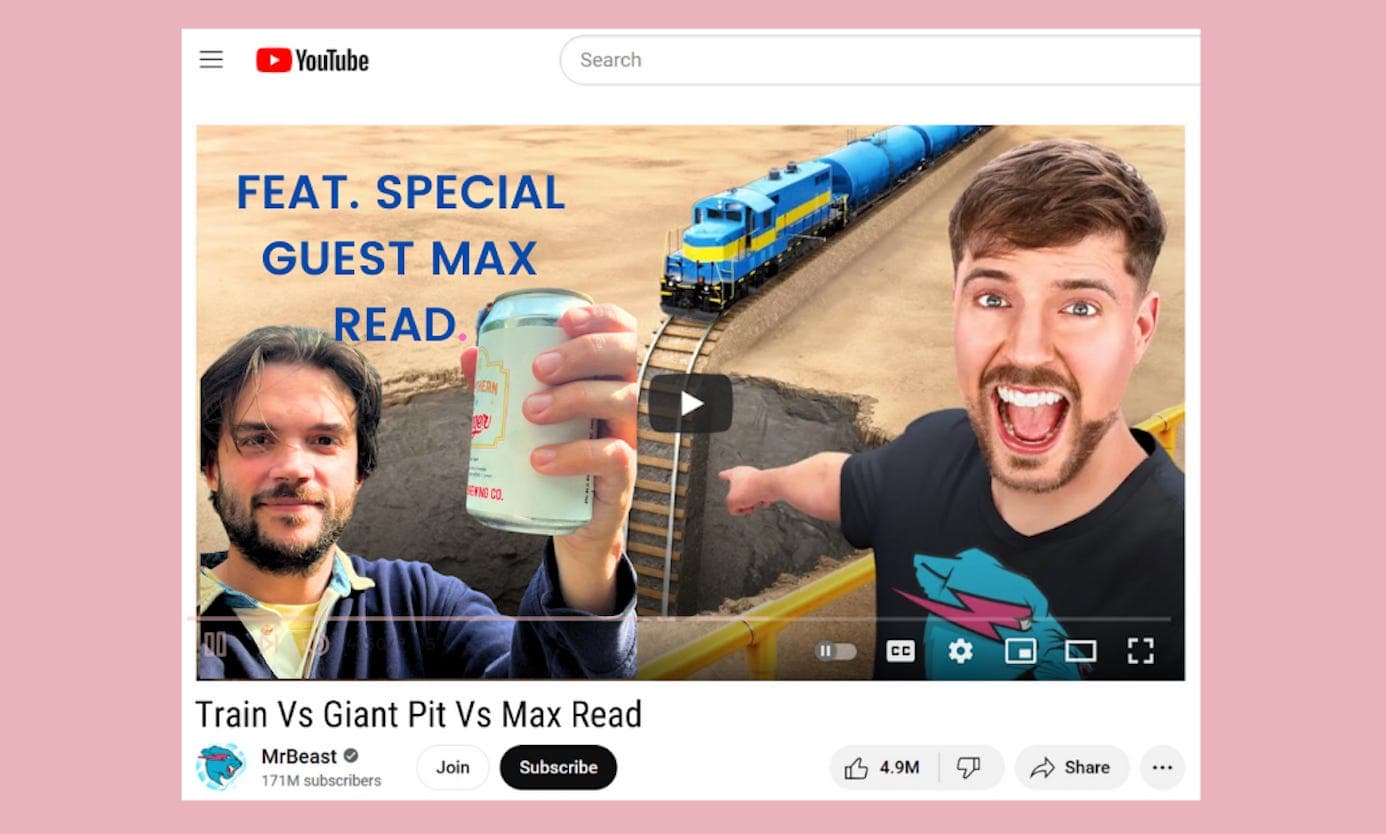
- Jimmy Donaldson, known as MrBeast, is the largest YouTuber with 171 million subscribers, famous for extravagant videos and philanthropy.
- Owns a chocolate brand (Feastables) and a neighborhood where he produces large-scale content.
- Content Formula:
- MrBeast’s videos often involve elaborate stunts and charitable acts, like giving away large sums of money or funding surgeries for those in need.
- His strategy includes attention-grabbing headlines and thumbnails, which he claims are crucial for success.
Insights from Max Read
- Guest Introduction:
- Max Read, a journalist and screenwriter, discusses his article in *The New York Times Magazine* titled “How MrBeast Became the Willy Wonka of YouTube.”
- Analysis of MrBeast's Success:
- Max describes MrBeast's rise as an “unstoppable flywheel of charity, spectacle, and growth,” highlighting the interplay between content creation, audience engagement, and revenue generation.
The Creator Economy and Audience Dynamics
- Generational Divide:
- The hosts discuss how younger audiences perceive MrBeast’s content differently than older generations, often viewing it as aspirational rather than exploitative.
- Max highlights that the concept of “authenticity” varies greatly among different demographics; younger audiences might prioritize actions over motives.
- The Audience Commodity Concept:
- Introduced by Vincent Miller, the idea posits that audience engagement generates value, with MrBeast uniquely acknowledging this relationship by framing viewers as active participants in charity.
Ethical Considerations
- Criticism of Philanthropy:
- Discussion surrounding the ethical implications of MrBeast's charitable acts, particularly regarding systemic issues in healthcare and the commodification of altruism.
- Critiques arise about whether his content overshadows the real issues behind the need for such philanthropy.
- Authenticity vs. Performance:
- The episode debates the perception of MrBeast’s intentions — is he genuinely altruistic, or is it a façade for views and profit?
- The hosts suggest that the aesthetics of MrBeast’s content can be polarizing, especially for those unfamiliar with YouTube culture.
Conclusion
- Cultural Reflection:
- The conversation wraps up with reflections on how MrBeast’s success reflects broader societal trends, including a yearning for positivity and the desire for tangible actions in contrast to the negativity often found in online discourse.
- Final Thoughts on Media Dynamics:
- The hosts and Max acknowledge the complex relationship between content creators, their audiences, and the platforms they use, emphasizing that as new creators emerge, strategies like those of MrBeast may redefine success in the digital age.
Key Takeaways
- Marketing is Central: Embracing marketing as a core component of content creation can lead to more successful engagement.
- Audience Relationships Matter: Understanding the audience's role as commodities can inform how creators interact with their viewers.
- Generational Perspectives Vary: Different demographics perceive authenticity and engagement in varied ways, shaping how they respond to creators like MrBeast.
- Ethical Philanthropy: The motivations behind charitable acts in the creator economy invite scrutiny and discussion about broader societal issues.
- Cultural Shifts: MrBeast represents a shift in content creation towards more positive and aspirational narratives in response to a tumultuous social climate.
Additional Resources
- Read Max's article “How MrBeast Became the Willy Wonka of YouTube” on *The New York Times Magazine*.
- For more discussions, consider subscribing to *The Culture Journalist* Substack for insights on culture and media trends.
Written by AI. May contain mistakes. Listen to the episode to check what was said.
Transcript
Automatic transcript. May contain errors.0:00Dude, if I don't have a million subscribers when you see this video, my entire life has been a failure. I hope I have a million subs. I better have a million subscribers when you guys see this. Hey guys, you're tuning in to The Culture Journalist, a podcast of a culture in the age of platforms. I'm Andrea Dominick, here with my inimitable pal and co-host, Emily Friedlander. Hey, pals. So, for most of the creative people we know, ourselves included, marketing is a necessary evil. We make the work we want to make, then wait until the last possible moment to figure out how we're going to get people to check it out.
0:37It's a process that has become increasingly complicated and confusing as the attention economy fragments across a host of walled gardens, many of them driven by incentives that we've never really felt comfortable with and black box algorithms that seem to keep changing by the day. But we do it because we have to. If we want to earn a living doing what we love, we have to learn to think a little bit less like artists and a little bit more, well, like marketers. So if our audience is on Twitter, which I guess is called X now, we find ourselves instinctively shaping our own story ideas in accordance with its culture war physics.
1:17If our audience is on Instagram, we may find ourselves pivoting our medium from photos to videos to threads to whatever other format the platform seems to be pushing at any given moment. All to avoid getting dinged into obscurity. But what would it look like if we just gave in to the marketing side of the equation? You know, kind of just let it become the driving force of our entire creative process. What would happen if you zeroed in on a single distribution platform, spent years studying how it worked, then built a whole creative practice based entirely around the tips and tricks you knew would attract a snowballing number of eyeballs to your work, while, of course, racking up so many ad revenue dollars that you could keep making content forever?
2:04If you're wondering what the resulting content would look like, well, it might look something like the videos of Jimmy Donaldson, a 25-year-old YouTuber from Greenville, North Carolina, who recently surpassed the Swedish edgelord PewDiePie to become the biggest YouTuber of all time. Even if you haven't seen his videos or stumbled upon his recently discontinued Ghost Kitchen burger chain on delivery sites, you've probably heard his YouTube moniker.
2:35Mr. Beast. Mr. Beast. Oh my God, it's Mr. Beast. Mr. Beast, aka Jimmy Donaldson. Mr. Beast. He's the guy that has the biggest YouTube channel. Oh my gosh, Mr. Beast! Mr. Beast! Mr. Beast! Mr. Beast! Mr. Beast! Donaldson owns a chocolate company called Feastables, as well as an entire neighborhood in Greenville, where he has dozens of employees working around the clock to produce big budget spectacles with names like I spent 50 hours buried alive. I'm going to spend the next 50 hours buried alive in this coffin. Probably the dumbest thing I've ever done. Boy, seal me up. and$456 ,000 Squid Game in real life.
3:20I recreated every single set from Squid Game in real life, and whichever one of these 456 people survives the longest wins$456 ,000. His videos often revolve around random acts of charity. One of his early breakouts involved him walking up to a homeless person and giving him$10 ,000. And he says his creative process almost always begins with a headline and an eye-catching thumbnail. If you know someone who works in actual marketing, they'll probably tell you that Mr. Beast is the future of media. Between the budgets, the audience numbers, and the sheer physical scale of many of these spectacles, not to mention spinoff channels and a whole sub-economy of reaction videos and YouTube tutorials, the world of Mr.
4:05Beast is so big and bewildering that it takes a special kind of dedication just to explain it all. Lucky for you, one of our favorite writers on technology and culture just published a delightfully brain-bending story called How Mr. Beast Became the Willy Wonka of YouTube for the New York Times Magazine. That writer's name is Max Reed, and he's a screenwriter and journalist who has a newsletter on Substack called Reed Max. Max. Max joins us to discuss what he calls the, quote, unstoppable flywheel of charity, spectacle, and growth that powered Donaldson's rise, and the dystopian realities of the creator economy and online fandom that his tactics lay bare.
4:48We also talk about how even though a lot of millennials can't stand him, there's something kind of exploitative about making viral content out of people suffering, after all. There's a little bit of Mr. Beast in all of us.
5:06There is no life I know to compare with pure imagination. Living there, you'll be free if you truly.
5:32Wish to be
5:48The Culture Journalist is an independent project that relies on word of mouth and is funded entirely by listeners like you. If this podcast adds something meaningful to your life, please consider supporting our work by becoming a paid subscriber over at our sub stack, which, by the way, has a bunch of other cool stuff beyond podcast episodes. Paid subscribers receive full access to bonus episodes, along with essays, culture recommendations, playlists and more. You can join us in the fight against Internet monoculture for the price of a cup of coffee in today's economy.
6:26Hey, pals, we are back with Max Reed. Max, thanks so much for coming on and talking to us. Thank you guys for having me. So who is Mr. Beast, for those who don't know? And what did you find interesting about him going into writing your piece? Mr. Beast is a 25-year-old kid from North Carolina whose real name is Jimmy Donaldson. And he is, by basically any measure, the biggest YouTuber on the planet. he has the most subscribers more subscribers than any other channel on youtube besides t series which is a bollywood record label and movie studio he passed the swedish gamer felix shelberg who goes by uh pewdiepie last year so if you're sort of tangentially familiar with the world of youtube you'll know that that's a really big deal so he's at 169 million subscribers as of recording and you know if you know if you like know an adolescent if you know a 12 year old you have definitely heard about Mr.
7:25Beast from this person because he's not just the biggest YouTuber he's probably one of the most famous celebrities to young people I would say so like that in and of itself is kind of interesting just the fact of this guy being as sort of big and famous as he is without him necessarily having a particular presence in media beyond YouTube it's not like He has a TV show. He's not starring in movies or recording albums or whatever. But also, you know, I'm 37. I'm absolutely not in the Mr. Beast demographic. And without making this about me or a piece about me, it's interesting to feel yourself aging out of something.
8:04And when I watch Mr. Beast videos, I'm interested in the question of, you know, what is appealing about this to people? To me, like, it's not obviously appealing. And so part of this piece is about trying to untangle sort of who he is and also kind of what makes him special versus any other YouTuber who could also become famous. It's also important to note that he's also a restaurateur or virtual restaurateur. I actually first heard about him when writing about ghost kitchens, and he was like a really early example of someone doing that well. Yeah. Yeah. He has a burger. Well, actually, he just I think just a couple of weeks ago, he just he said he announced that he's no way he's going to stop doing it.
8:46But he was doing for a while a ghost kitchen called Mr. Beast Burger, a ghost kitchen operation. I think it had there's like one physical location, but it did apparently incredibly well. I'm not exactly sure why he decided to stop. There's one of these things where he'd license out his name and you go on Seamless and your local deli or whatever would make a Mr. Beast Burger and you could order it, you know, and and people. did. But but beyond it's not just the restaurateur. He's also a chocolatier. He has a line of feastables chocolate bars that he is continuing to do and that are apparently doing very, very well.
9:21So what is it? What makes a Mr. Beast video Mr. Beast video? Can you give some examples of videos that he's made that kind of illustrate that formula? Yeah, I think it's important to understand that he's been through. He's been doing this for 10 years now. He's been making YouTube videos, in fact, longer than 10 years since he was 12. and he's gone through several different phases. And to me, one of the interesting things about looking back at his career since his earliest videos is you can kind of see how YouTube itself has evolved as a platform and how trends, genre trends and stylistic tics have evolved.
9:56He started as a Call of Duty streamer. He would be playing Call of Duty and he would stream himself doing that and record clips of videos and maybe talk a little about YouTube drama. sort of was at the time very standard for what YouTube was and is. And he gained a small following doing that. And then his first sort of real viral video, he filmed himself counting to 10 ,000 over the course of 24 hours. 99 ,997, 99 ,998. Make sure you like the video. Drop a comment. 99 ,999. 99 ,999. 100 ,000.
10:38What am I doing with my life? And he talks about this video a lot, I think, both because it was like an important video for his, for breaking through to get a bigger audience to go viral, but also because he uses it in an example of what he says is the kind of the big lesson that he learned about YouTube. And what I would say is the commonality across all of his very different sort of personas or all the different styles that he's taken on is he says that they taught him how much viewers like to see effort. If you really put yourself through something, like if you actually sit in a room and count to 10 ,000, viewers respond to that.
11:16It connects with them in some particular way. So he took that insight and he translated it into a bunch of other sort of stunty, watch the Jake Paul music video, it's every day, bro, a thousand times in a row or something like that. it's almost like like a crits burden but you know there's like something very like 70s performance art like total self like abnegation like but all in the context of youtube just filming himself doing these these stunts and uh as he started to make more money a lot of the stunts started to involve money that he was making so he was selling sponsorships at this point a software company would give him 10 grand for advertising for him to mention them in a video and the sort of next inflection point for Mr.
12:01Beast was a video where he took$10 ,000 in cash or he got$10 ,000 from a software company and he took it out in cash and he gave it away to a homeless guy in North Carolina on the median of a street that he was driving through. And they interviewed the guy a little bit and they give him a ride somewhere. And that video also went extremely viral. And I think that there's a similarly a sort of lesson that, you know, effort doesn't necessarily need to be the demanding physical effort of sitting in a chair and counting to 10 ,000. It can also be the kind of expenditure of resources that you get. And so a lot of the videos since then have also been about giving away money, whether that's just sort of randomly, you know, there's a video, he walks into a deli and he offers the cashier 10 grand if she quits her job on the spot.
12:48Or a video where he orders a pizza and he hands the Domino's delivery guy the deed to the house that they ordered the pizza to. But sometimes it's contests. He does these very sort of reality TV style, you know, almost the title of the article is how Mr. Beast became the Willy Wonka of YouTube. And the sort of Wonka-esque thing he does is he holds these huge contests. He purchased a private island and brought a bunch of his subscribers there and had them face off in these sort of survivor reality TV style challenges. And so he's where he is now. The current incarnation of Mr. Beast is a mixture of a bunch of these different things.
13:24He still does a fair amount of stunts himself, especially ones that involve like, he'll compare a$1 hotel room to a million dollar hotel room, or a$1 plane ticket versus a$500 ,000 plane ticket. So a lot of the kind of lifestyles of the rich and famous, his videos all have these numbers in the title, the bigger the number, the better, you know, the better the video does. And that stuff is all kind of bolstered by, He has a specific philanthropy channel, but all of his videos, even on his main channel, there's lots of charity in the videos. And the video that I write most about in this article is one that came out earlier this year where he pays for cataract surgery for a thousand people who were legally blind.
14:06To me, this is like a totally typical Mr. Beast video where there's the expenditure and effort. It's a huge number of people. It's a lot of money. There's also the kind of charity of it. And it's like when you watch the video, it's very sort of fun. And like I say, he's sort of adolescent that you can see why it might appeal to 12 or 13 year olds. I was just going to say, he really seems to have done this trick of like harnessing just existing in like the eye of the virality storm at any given time and like kind of moving with it or even directing it. Yeah. And he talks quite openly about this.
14:41I mean, one of the things that I find fascinating about YouTube as a platform is that there's a huge amount of content on YouTube devoted to teaching people how to YouTube. It's not an MLM or a pyramid scheme, but there is that the vibe is there where there's just like a lot of stuff that's like, here's how to have a YouTube video. And Mr. Beast appears so frequently in these videos, just like quotes from him, because he talks a lot about what he's learned. He talks a lot about studying the algorithm. You know, he says when he was in high school, he had like a couple close friends and the only thing they did was watch YouTube videos and do like really, by his description, really rigorous examinations of how the site works.
15:21He claims they would like compare the brightness level of thumbnails on really successful YouTube videos. They would talk about titles. They would talk about how and why stuff worked. And I think he has a really natural kind of talent for figuring out platform marketplaces and how to do well on them. The joke I've said about Mr. Beast Burger, which we were saying before is, you know, it was when he got bored of YouTube and he decided he wanted to like conquer DoorDash instead. And so he came up with a like a way to get DoorDash to direct a lot of people to his stuff on DoorDash. And, you know, I mean, it's hard not to be impressed by that, I suppose.
15:57It's like a it's a little bit bleak because it's not it feels a little robotic sometimes. But he is obviously quite good at it. I mean, the proof is in the pudding. He's obviously quite good at it. yeah it has this sort of mercenary quality yeah yeah i mean well this is i think this is the core of what makes mr beast difficult for me at least to sort of figure out and what i think makes him seem alienating to a lot of people who are not his target audience is sussing out like where's the authenticity versus the mercenary you know motivation how much of this does he really mean and how much of it is he doing just for views?
16:35And not that there would ever be an easy answer to that, but I would sort of hope to reach some kind of conclusion on that question when I started writing this article and I found myself basically unable to assess. Yeah. Could you talk a little bit about that in terms of the Blind People See for the First Time video? This was one of the videos of his that escapes the YouTube universe and ends up on Twitter and then ends up provoking a lot of controversy. Can you explain like the crux of the disagreement between the Mr. Beast haters and the people who were defending him when that video went viral?
17:13Yeah, I mean, I think it occurred on several levels. I think sort of the most generous description is like cataract surgery is, by the standards of surgery, relatively cheap. It's about five grand to do it. It's an outpatient procedure. It's very easy. and it is, you know, like we can say openly, like criminal, that it's not possible for people who need this surgery to just get it for free when they need it. I think it is unquestionably good that Mr. Beast is making this happen, but as with any kind of large philanthropic or charitable gesture, lurking behind that is the question of why do we need a rich person or a well-resourced person to make this happen?
17:52And I think going even further than that, why is Mr. Beast who has the platform to make that point, not making the point in his video. So I think the sort of the criticism that resonates the most with me is that, you know, here's an opportunity for Mr. Beast to talk about the shitty state of health care in the United States and to think through, you know, why it is that there are a thousand people out there with curable blindness that only Mr. Beast with his YouTube channel can do. and so I think there's this sort of a desire for him to make some kind of systemic critique or political critique of what's happening in the video and the response from Mr.
18:33Beast fans is kind of like that's not really what he does that's not really what he's for he gave him the surgeries what else do you want from him which I don't, you know it's not up to me to referee this debate I don't find that convincing but I also understand where they're coming from But I would say bracketing that kind of like generous interpretation of the argument, I think underlying it is a kind of real discomfort with, I guess you'd say the aesthetics of the Mr. Beast experience that a lot of people, you know, who are not YouTube watchers, who are not necessarily familiar with the kind of folkways of YouTube.
19:10the the carnival barker aspect of it the sort of uh raucous glee of the whole mr beast vibe that's just kind of uncomfortably with the idea that he's doing some serious charity or philanthropy and partly just because it it really is so obviously stylized to bring in an audience that it's very easy to kind of say look he's not doing this out of the goodness of his heart even if the effects are good, he's doing it to bring in views. And depending on where you're coming from, and like what, how you think people should comport themselves, that's totally alienating. I wonder a little bit, if there would have been anywhere near this level of outcry or controversy, or whatever you want to call it over this video, if he'd had a different thumbnail, because the thumbnail, hard to describe on, you know, without really getting it on a podcast, but it's like a photoshopped image of this kind of shocked looking child with a bandage being pulled above his eyes.
20:05He's crying. It's not clear whether he's happy or he's just seen something awful. And then Mr. Beast is sort of photoshopped right next to him, grinning widely with his arm around the kid's shoulder. And it looks I mean, it looks like a horror movie, like a like a straight to video horror movie poster or something like there's something so weird about it. So, you know, I think there is there's like a complicated kind of moral, political, ethical sort of controversy. And then there's also like this, I waver back and forth how much of it is just sort of like purely surface level or aesthetic. But I do think something about the aesthetics of Mr.
20:39Beast are particularly alienating to, I mean, to me, I'll admit it, like to me and to people like me.
20:53Do you ever wonder why you never hear any ads on this podcast? It's because we do everything all by ourselves and support it entirely through generous contributions from listeners just like you. If you can't shell out, we know things are rough out there right now. We understand. But there's another way that you can help us out, which is heading over to Apple Podcasts and leaving a reading and a review. It literally only takes 30 seconds, and it actually goes a long way towards helping people find us. how much um you know of this difference or this divide that you're pointing to do you think might be generational i mean i think a lot of it i think i think generational to the extent that like youtube use is a very generational thing like i would say part like the divide is between people for whom youtube is like is is a or the main source of entertainment or content in their lives and people for whom it's pretty minor, which happens to map quite well onto, let's say, like a Gen Z versus everyone else kind of divide or a Gen Z younger millennial.
22:01I didn't quote everybody I spoke to in the piece, but people I talked to, even college-age kids, I found in general that the kind of shock or complaint about the goofiness of the thumbnail, the kind of overall cynicism of the packaging around what should be a kind of straightforwardly generous gesture, it just didn't resonate with them at all. Like they just didn't give a shit as far as they were concerned. And I think, again, this is because they are so familiar with how YouTube works and have grown up on it and sort of it has a kind of culture of its own. This was, this is table stakes, you know, this is what you have to do.
22:39It's like, this is the way the world works. And if you're sitting around complaining about it, you're missing the point, which I thought was kind of interesting i mean no that's not the only sort of defense and that's not the only sort of thing going on and i'm not even sure that i i don't want this to be a kind of like necessarily to say oh the kids are all right and they just have a different attitude about it but it was it was clear that this was not a like it didn't even feel like a debate or something it was sort of like if you ask them you know it doesn't isn't he just doing this for views i guess the feeling was well everybody's always doing it for views everybody's always doing everything for views so it's as long as he can do something good that's for views and that's good the concept that somebody might do something for a reason other than views and again i'm generalizing i know not all zoomers are like it but they're sort of like who is doing stuff not for views that's the only thing that exists and that like you don't have to necessarily get hung up on this seeming irreconcilable contradiction between doing something for views and doing something that is like morally good or charitable it doesn't have to be authentic yeah authenticity was totally like the purity of motivation was not a concept that resonated with the people i talked to at all yeah i feel like there's almost like a little bit of like generational like dog whistling or semiotics just embedded in the aesthetics of the whole thing like if you're hung up on what it looks like or what it might be signaling like you're not getting it you can cruise past it and see past it like you get that this is for you like yeah like there is a certain embedded cynicism in the world we live in by default you know for that that younger generation that it's kind of I think signaling to yeah I think so and I think I think too there's there's almost like a polarization thing about YouTube itself and how it works like for for the reason you're saying and then the reverse side is you know the more that YouTube thumbnails and YouTube aesthetics and YouTube, the YouTube vibe in general, I find it alienating, the less the people who are making videos for YouTube are inclined to or have any reason to create stuff that's appealing to me.
24:42So it keeps pushing further into a place that I find totally unappealing. And I'm using myself as a stand in for like, you know, whatever else millions of other 30 something guides who just didn't really grow up in this world and don't know about it. They're like, we're just not in the YouTube marketplace. So we're not people for whom anything is ever going to be created. So the thumbnails are just going to keep going in, in, in directions that are not appealing to us most likely. Yeah. I think you wrote like a blog post, um, on read max where you're talking about how like you underestimated the extent to which all content that is successful has to be written with people of this age demographic in mind.
25:21Yeah. Yeah. I think something about Mr. Beast that, is really obvious. It feels sort of too obvious to mention is that, you know, and I've already mentioned it a couple times on this podcast that, you know, his audience is adolescent. They're like middle schoolers, young high schoolers, not that people in high school and college don't also watch him. And I'm sure he has adult fans to really the bulk of his audience, the people I talk to, you know, I have a friend who has a six year old who learned about Mr. Beast from like, another friend's older brother, and has just become so obsessed with him that my friend read my article to her son as a bedtime story because he just wanted to consume Mr.
25:59Beast stuff. And I think like recognizing and realizing like when I say the internet for 12 year olds, it's not just for 12 year olds, it's also for six year olds, like cultural trickle down effect moves all the way down to pretty young kids. And I don't even mean this in some kind of moral panic, it's terrible way, though it probably is. I just mean more like the way these things work on a cultural level, the way they work on a on a kind of narrative level or whatever, is not it's not really for me. And, you know, I used to work in a video store. And like, something that I always think is interesting about a video store versus YouTube, this is such a stupid and obvious example.
26:30It's like, we had genre sections, and there was a young adults, there was a kids section, you know, and there was a romance section, and there was a horror section. And if you are a 12 year old, or a 10 year old, or whatever, you're going to be in the kids section, and you have a clear sense that stuff that's in the kids section is like labeled as being for you. And like, it's pretty rare that an adult's going to wander into there and rent a video by mistake. But on YouTube, it all runs together. And stuff that's for 12-year-olds, even if it's sort of implicitly for 12-year-olds in the way that a lot of this stuff is, is really rarely sort of explicitly like, this is for kids.
Read the full transcript
27:03When you watch this, be aware that the vast majority of other people watching this are at most 15 years old. And the vocabulary and tone and content here is designed to be maximally appealing to that demographic. And because you don't have that kind of warning, you don't have all the sort of the signs and structures around the filter. It's like coming across, you know, a Teenage Mutant Ninja Turtles cartoon in like the adult section of the video store or something. Like you can know that it's for kids, but it's much harder to kind of engage with it because you're like, well, maybe it's for adults.
27:38Like, I don't know. I don't quite know how I'm supposed to understand who this is for and what it's about. You know, it's a context collapse thing, but on the demand side instead of the supply side or something like that. And it raises this question for me of like, okay, so does content destined for adults on the internet have to then kind of, does it lead to like a natural sort of simplification or I don't know, is it like subtly influencing us? I think so. I mean, I do think so. I think the other like thing that I think this is relevant to is like the Andrew Tate manosphere world where it's really hard to know how to take some of that stuff.
28:12And I think it's more understandable if you recognize how young the audience is. Certainly, it probably makes it seem much scarier in some ways. But that stuff that I don't, I think is made with adults in mind. I mean, I don't know. I have no idea how sophisticated Andrew Tate is about his own audience. But that's like a, that's probably even a better example of something where you have these kinds of adult ideas manufactured for like 12 year old boys who feel really bad about themselves and are looking for a place to sort of like articulate that anger or rage or whatever. I mean, not to not that that's the only people watching it, not to defend Andrew Tate, which I'm absolutely not doing.
28:51I don't know. There's something strange about it on a much on a much more sort of lighthearted level. The thing I think I always think about is like it reminds me of like chip flavors, like the like like Dorito, you know, Cooler Ranch. It's like adults have to eat Cooler Ranch because if you want a Dorito, like that's what it's called. But Cooler Ranch is so like designed to appeal to 12 year olds. So I have to be out here eating my Cooler Ranch Doritos and I have no choice. and they taste good but you know i i wish that i had a more sophisticated dorito flavor profile for myself or like the talk of the summer or one of them is the barbie movie where it's like this movie that is you i guess it's for adult is it i think it's like somewhere between for kids and adults or it could be for both and both get something different out of it totally i mean i just sort of make the argument that this this process of like age collapse has been happening since like PG-13 was invented for Indiana Jones movies, basically.
29:46And, you know, you see the other side of this. I think I wrote in that post about YA fiction, which now appears to only be for adults. Like I do, I don't even know if young adults read young adult fiction. Certainly online, the discourse is all like grownups talking about young adult fiction. Yeah, and why do you think that he is so enormously successful? all like is it that he's just really good at doing what everyone who is successful on youtube does but on a bigger scale or like more precisely or is it that he's doing something that is different from what other people are doing which makes him sort of stand out like you know in the piece that he sort of bucks the trend of, you know, the most demonic or salacious or dark, disturbing content traveling the farthest on the Internet?
30:41Yeah, I mean, I think it's a little bit both. Certainly, I think he is a better craftsperson, so to speak, than a lot of other YouTubers that he is more thoughtful about his videos. He spends more time making them good. He has very good instincts for what makes a good video. So, you know, I think in another timeline, if Mr. Beast had been born 30 years old or whatever, he would have made a great, I don't know what, Ryan Seacrest or Mark Burnett or something. He has television instincts and he could have been a producer of reality shows. So in part, it's just purely he's doing it better. He's doing it bigger.
31:18He's just better at it than other people. But he also is doing something a little different. And I think it's easy to overstate it. But there's a way that I think he interacts with and treats his audience that other YouTubers haven't yet cottoned on to that I think makes him particularly appealing, especially to the kind of adolescent audiences that we're talking about. On the sort of surface and most obvious level, a lot of it is just simply that he tends to reward his subscribers. You know, with the video I was talking about where he invited a bunch of people to the island, he just invited subscribers to the island.
31:52So there's this there's a little bit of this premise that if you subscribe to Mr. Beast, you have a decent chance of being the recipient of his generosity, which is like not a bad way to get subscribers. It's a pretty standard marketing tactic. You know, it's a sort of like if you subscribe to me, you're entering a raffle that maybe someday I will pick you out of the list and send you to an island to compete against other subscribers. So I think there's that's lurking in the back of a bunch of people's minds. But then I think also, and this is something that an idea I'm sort of borrowing from an academic in the UK named Vincent Miller, he has this particular directness with which he treats the audience in terms of acknowledging to them that each one of the views that they have is worth a certain amount of money.
32:37so when he is doing philanthropic work he's telling viewers quite explicitly every time you press play on this video uh a dime is going into somebody else like you're giving a dime away to somebody else because that's how much each one of these views is worth it's like a very cynical way to describe it because he's you know it's it's a it's a way that i think uh a lot of youtubers would have trouble doing because it sounds it sounds almost too cynical to sort of be like you your eyeballs are just worth money, like money going into my pocket. So I think the fact that it's charity helps, but it's also, you know, he's able to do it in this very empowering way where the suggestion is that, um, by watching the video, you're not just sort of like learning or being informative.
33:18You're like actively raising money for something important. You are actively joining the, the, the sort of Mr. Beast movement, so to speak. And I think that's, I think that's a real, that's a pitch. It's a sort of a subtle one, but I think it resonates with people who watch, especially, you know, as we talk about his audience being young, people who don't otherwise have a huge amount of control over their day-to-day activities, who aren't able to politically organize, who aren't able to donate money in one way or the other. The idea that simply by watching YouTube videos, which is something they were going to be doing anyway, they are now sort of like active participants in charity, in some very vague sense of politics.
33:59is I think really appealing. Just to go back to the sort of generational divide we were talking about before, this is appealing to them also partly just because they, as longtime YouTube watchers, you know, as people who grew up on YouTube, he's telling them something they already know. You know, what I was saying before about how much content on YouTube is geared towards teaching people how to be YouTubers, so many viewers on YouTube are like quite familiar with YouTube as a business. So Jimmy leveling with them in his videos and saying, hey, you know, like, look, you guys are worth 10 cents of you or whatever it is.
34:32It's that kind of cynicism that is sort of empowering instead of pessimistic or nihilistic. It's like, oh, yeah, but we're going to we're going to turn this on its head and we're going to donate all that money somewhere. So, you know, it's like these sort of confluence of factors, I think, really help push him over the top. He's better at creating stuff than other people. he is making a really good value proposition to viewers who follow him and he is engaging them in a way that other youtubers aren't um and then just to finish this really long thought the other part of this and this is the part that i think is really important to underline because we don't know the answer to this question um the other part of it is that youtube is obviously pulling levers behind the scenes on the other side of the screen to adjust the way videos get sorted and recommended you know, what we call the algorithm.
35:23And there is a high likelihood that not maybe not in a specific, there was no memo that was like, let's make Mr. Beast the biggest guy on YouTube. But YouTube is obviously incentivized, much rather have somebody like Mr. Beast be the biggest YouTuber. And so if it's incentivizing videos that are slightly more positive, where generosity and charity are the focus, if it's incentivizing videos of a certain length, where there's more activity instead of just a guy talking to a camera, then you could see how Mr. Beast would be sort of rising to the top. And other more recently popular YouTubers like PewDiePie would be falling down a little bit.
36:01But the thing is, because it's a black box, we don't know. Like, we can sit out here and say, well, here are the things Mr. Beast is doing. That might be the reason. But we don't know whose thumb is on which scales and where and how much that's pushing him to. Right. Can you talk a little bit more about like the process by which all this makes money, You know, in your piece, you describe it nicely as this kind of a, quote, unstoppable flywheel of charity, spectacle and growth. Can you talk a little more about how that flywheel works and the role that fans play within it and how that leads to money?
36:33Yeah, well, so YouTube is relatively unique among platforms in how straightforward it is to earn money as a creator, which is to say once you reach a certain level of subscribers and a certain number of hours of videos produced, You can just flip a switch. And from then on, around 50 % of all advertising revenue from your videos goes directly to you. So the obvious answer is just sort of the more people watch his videos, the more money he makes. And that's great. But what Mr. Beast has to do is put the money back into his next video so that every video, and he's very explicit about this, so that, you know, you subscribe and you know that you are contributing more money to the Mr.
37:15Beast pot, which you will then put toward an even bigger, crazier, more generous, more charitable video the next time, which will then bring in more subscribers whose money will then go to the next even bigger one. You know, and again, like maybe you're joining because you think you might be the beneficiary of some of that. You might be joining because you feel like you're you are participating in a charity or a philanthropy, like a movement that feels good to you. But either way, like the stopping point just becomes the number of people, you know, who watch YouTube, basically.
38:08Um, going back to that academic, you mentioned Vincent Miller, you said that he wrote a paper that examines Mr. Beast through the lens of this concept called the audience commodity, um, which you sort of touched on before, but I was wondering like, what is the audience commodity and like, what is different about Mr. Beast's relationship to his audience? Yeah. So I'm not, um, I'm going to almost certainly flub this cause like I'm not a Marxist media studies academic. But the basic idea is that we tend to imagine, and I think a traditional sort of traditional Marxist analysis of media regarded consuming media as like a basically passive activity that mostly had to do with sort of like false consciousness and like ideology.
38:55It wasn't necessarily like a productive activity. But in the 70s, and I don't remember the name of the guy who first argued this, the idea that actually sort of say watching TV is in fact a kind of labor because you're sitting there and you're spending time creating a commodity that can be sold. And the commodity is an audience, basically, is an audience in the viewing time that the audience is happening. And this is not like a universally accepted concept among Marxists or among media studies scholars, you know, people argue, say, for example, that you're not really doing labor because it's not like a job where you sort of entered into a marketplace where you're selling your time for wages.
39:38It's not like agreement with the TV channel that you're going to sit there and help create an audience for them and they're going to deliver something for you. And, you know, also just the fact that most of us don't think of what we're doing when watch TV as work. We think of it as watching TV. We certainly don't think of it as though we're producing a commodity. Yeah, though your eyeballs are effectively being sold to advertisers. Yeah, exactly. And what Professor Miller thought was interesting about Mr. Beast and what I think is like a really interesting way to sort of think about what he's doing with his audience is that he's actually he's out there saying to them, hey, you guys are a commodity.
40:16It's something that a television network, I think, would never do because it's very important to them that viewers of TV only think of themselves as having a great time watching sitcoms. You don't want to tell the viewer necessarily that they're a valuable component of this whole experience. Mr. Beast is sitting there being like, you guys are a commodity. You guys are not just a commodity, but you are actively a force for good. You're a commodity that I'm selling and I'm using all the money that you're making me to give away to charity. I believe there's a video where he says that philanthropy is literally funded by your eyeballs.
40:49So whether or not you want to think about that as the audience commodity, it certainly is a different kind of relationship than traditional television. And, you know, I think that's a real component of its success for the reasons I was talking about before, that the sort of directness of that pitch is appealing to people who are otherwise kind of jerked around by YouTubers or by TV channels or by whomever, that sort of transparency. The flip side of it, though, is that I think it only really works in the context of charity and philanthropy. Once you make very clear to your viewers that they are making money, that they have that level of power in their relationship with you, the YouTuber, like, I think the only option you have is to sort of give that money away in a generically good way or to say, I'm putting it all into the next video.
41:34Because if you're like, you guys are commodity, I'm making a dime off of every single one of you who watches this, and I'm going to buy a couple mansions and a lambo or whatever that's not a good growth strategy i suppose i would say so in some sense like i wouldn't necessarily say he's backed himself into a corner but like this is the strategy that works and i don't know that there's a way to adjust it that wouldn't sort of break one component of the flywheel yeah like within the context of the specific operation he's built um the thing that i that i wonder about is whether like this is possible potentially because audiences are already sort of primed to conceive of themselves in this way like maybe not entirely consciously obviously he has his own really specific thing that he does but i often think about sort of other examples of this in culture maybe where the fans they're not necessarily helping for charity but they can sort of like think of themselves as performing labor to get something themselves like it's a little bit different um yeah like i edited this piece last year that was about these like manifestation videos on youtube where it's like it's not exactly the same thing but the whole premise of the video will be like a self-proclaimed which is like hey if you comment on my video your wish for your manifestation of beauty and happiness will come true or whatever or if you share it it will come you know yeah um and then i also think of things like crypto where it can sometimes even take on like a pseudo charitable element um and you see this probably less but during the like height of the bull run you saw more where it's like, OK, if we all share this project on social media and hype it up, it is going to come true.
43:26And the NFT or the coin is going to go to the moon and we'll all get rich. Or even if we do this, we'll get this pot of money that can be put towards some good use. Yeah. Like the people reclaiming the Constitution, the copy of the Constitution of America, you know? Yeah. Right. I mean, in crypto, it's also just like crypto's self-conception and Bitcoin from the original days of Bitcoin, self-conception as a world-changing force is so important to the long-term story and the long-term hold. Anyway, to answer your question, I think, yes, absolutely, that a huge part of this is made more easy by how primed we are for this.
44:06And I think to some extent, YouTube is a particularly good place for this because the kind of economics of it are so open and well known that many people who watch YouTube are also themselves YouTubers. One of the kids who was in the video, the blindness video that I interviewed, this guy, Jeremiah Howard, had a nice long conversation with him. He was a smart kid. And I was asking, you know, sort of how I should refer to him in the video, in the article rather. And he was very anxious that I mentioned that he himself had a YouTube and he wanted to make sure to get it up there. And I think that the way these platforms tend to democratize, you know, creative activity in that way, also means that they democratize knowledge about the sort of back end knowledge about how money is made off of creative stuff.
44:52And because of that, you know, people are less necessarily interested in clinging to their illusions about the purity of creative endeavor. And this is, you know, it doesn't have to be YouTube, even you talk about basically any, any platform, people have a pretty good sense of what's going on there. And so when you get a guy like Mr. Beast sort of acknowledging like, yeah, you guys are a commodity, come join with me and we're going to make the world a different place. Yeah, I mean, the crypto is not the worst comparison. I think a lot of the emotions and the ideas are not that far. Or something else I thought about a lot while I was reporting this was Stop Kony, which I don't know if you guys remember in 2012, this mega viral video movement about stopping the warlord Joseph Kony.
45:37That was just kind of, again, a thing that a lot of kids shared. It was very appealing that you could be part of this big positive movement online. There's something that's just very appealing about the idea that simply by kind of reproducing a claim and putting it out there in the world, you are doing work and activating some kind of movement. that I think that that's a core part of Mr. Bustadil. It can really like gas people up to be a part of something like that, too. Like it provides belonging and this sense of, you know, we're unstoppable and we can change the world. And I can see kind of why it's appealing.
46:12Yeah, especially again to like young kids who don't get that feeling in a lot of other ways. I was also thinking about this sort of in context earlier when we were talking about sort of like the durational performance appeal, part of like what makes him successful. I feel like it hits like maybe the same kind of like dopamine or satisfaction centers in the brain as like factors like social media activism and just that kind of superficial sense of agency or maybe not so superficial that social media has really like come to provide. Yeah. I mean, I actually think you saying that has just made me think, you know, we were talking about authenticity before.
46:48And I think maybe one way of articulating it would be that, you know, for at least the kids I was talking to, like authenticity or purity of motivation was just not really very important. But I think like authenticity of deed, like actually doing the thing that you say you're going to do, like, you know, counting to 10 ,000 and showing that you did it or actually giving away a thousand cataract surgeries or whatever. I think that is really important. And that, like we're saying, it activates that, that kind of response. It feels, makes people feel feel good i suppose right because in a sense especially in our like digital panopticon even not not publicizing your good deed is like can be viewed as its own kind of performative or like or like in conversation with that whether you want it to be or not right totally yeah so just to kind of bring this conversation full circle you know at the beginning we mentioned PewDiePie and how Mr.
47:46Beast has surpassed him as like the most successful streamer on YouTube. If PewDiePie's popularity felt very emblematic of the Trump era, what is it that makes Mr. Beast kind of a folk hero of our time? Like, is his success mostly the result of, you know, changing YouTube algorithms, like polarizing political content being sort of de-emphasized? or would you say it's something deeper than that? Like, you know, what we were just talking about a little bit, like a misplaced yearning for an actual social safety net. I do think, I think that part of it is, and I will, I have to admit, I kept trying to goad the kids I was talking to into saying this and I couldn't quite get the quote I wanted, but I do think there's something where it's like the world of drama YouTube.
48:34I think people are just kind of sick of it, like up to, you know, three or four years ago, So the sort of the Paul brothers and even PewDiePie, the kind of endless YouTube as a closed loop. Everybody is just a character in each other's channels. And you get really mad at anybody who peers in from the outside. And you're just sort of endlessly consuming updates from one or another hypebeast living in a hype mansion. I think that kind of ran its course. Like there's only so much of that that an audience can really engage with. And writing this, I found myself, I don't really like Mr. Beast, but like compared with what was really popular on YouTube five years ago or 10 years ago, he's he is, I mean, as far as I'm concerned, just much better, like both aesthetically, but also like, you know, as if somebody I would want to have a beer with or whatever.
49:20and so I think part of that is there's like a kind of just a changing of the guard like a stylistic shift that um that people are ready for something new and I also think it's reflective of like setting aside the algorithm it's reflective of YouTube's audience getting bigger and broader and so you get you're going to see stuff like Mr. Beast which is really straightforwardly and extremely broadly popular is just going to come out you know one thing I write in the piece is that I sort of joked in the beginning it's like I don't understand what is appealing about Mr. Beast. But the trick is, it's also kind of obvious.
49:51Like he's doing really classic television. He's doing Double Dare plus American Gladiator plus, you know, Million Dollar Makeover plus Candid Camera. You know, this is sort of like very old, very obvious, very broad reality, feel good reality TV shows. And, you know, if YouTube is in fact sort of our TV or that is TV now, which is not the wrong way to think about it, I suppose. It kind of makes sense to me that it would stop being this weird, formless internet thing and turn into something that resembles TV in a much more decisive way. But I think the last thing I'll say is I think in addition to people being sick of YouTube drama and wanting something more popular, I also think there's a way in which culture in general, audiences, people of all ages and all persuasions are like sick and hung over of the Trump administration, basically.
50:49I'm not saying anything groundbreaking here, just sick of the endless extreme politics and like sort of queasy debates and this, that and the other. And Mr. Beast just completely sidesteps any of that. I mean, he's just not engaged with it at all. And it's comforting in that way, right? Both for an audience who doesn't have to like think about the politics of what they're watching but also like for parents for example like you know i don't meet a lot of parents who are like i love mr beast i think they all feel weird about him but i think he feels safe in a way that youtube didn't used to if you've got a 10 year old or even a six year old you can sort of be like well god i need to distract him for a little while just let him watch mr beast because he's not going to end up you know a misogynist watching mr beast or whatever so i think that's that's part of what's what's behind the mr beast popularity is wanting him to talk about like the fact that people can't get that eye surgery for free or that people don't have universal health care too much to ask do you think in this context i don't i don't think it is personally i also i'm not sure i personally given my apologies to be thrilled that mr beast became a more political figure i don't think that he's like a he's not a reactionary he's not extreme or anything but his the only political statement i saw him make on Twitter after the blindness video was something like, it's amazing to me that the government doesn't pay for more of these surgeries.
52:13Great. Agree with that. And then he said something like the ROI on getting more workers out there would be, would be worth it alone. I was like, oh, that's not really how I would think about it. I'm sorry. Um, so, you know, it's also a funny sort of revealing way. Like, of course the guy who had mastered the YouTube algorithm is thinking about like the video itself ends with a winking joke where he's like, we just gave the gift of site to a thousand people maybe they'll all become mr beast subscribers so for now i'm happy to just let him pay for the surgeries and maybe other people can write the articles about about what should be done differently yeah it kind of like makes me just all think about like sort of just the basic like rhetorical rule like we're all writers here right like it's always more effective to say what something is rather than what something isn't yeah or like express like what you want rather than what you don't want and i think so much of you know inflammatory youtube success and like also politics of recent years has been about voicing what you don't want yeah and his tactic feels like it has a lot of longevity because it's very aspirational it's very much about like what you do want totally what people do want yeah yeah people and people love you know they're one of the most beloved and oldest criticisms i mean on the internet but anywhere is to sort of like you're just you know you're just complaining what are you doing mr beast is out there doing something and he is like that's this is the core of what his his shtick is oh at the end of the day It's almost like an American Hollywood story where, you know, for the duration of the video, people live happily ever after.
53:40Yeah, 100 percent. Yeah. I mean, just to put a button in it. So the kid I was talking about before, this kid, Jeremiah, who has a who has his YouTube video, which is FL Boy Rhino for anybody listening. You could focus on him and you could do a whole story about what's wrong with American health care. So he's a kid. His mother had drug problems and mental health problems and left when he was young. He lives with his sister and their dad. in a double-wide trailer in Panhandle, Florida. Really smart, interesting, articulate kid who has been blind in one eye since he was about five and who spent years trying to figure out sort of whatever the government bureaucracy, the assistance.
54:19He tried to raise money on GoFundMe and couldn't get enough. His dad installs alarm systems for a living. His dad has his own health problems, doesn't get great insurance, wasn't getting hours. I mean, this is sort of like the complications of this just in like that you can see just in this one example. And you don't get any of that from the video. Like you don't get, you just get the sort of, well, he wanted to see and then they did a surgery and now he can't see. And he get the check for$50 ,000. And I mean, I don't know how else to put this, but it's sort of on the one hand, you're like, well, you should write more about Jeremiah.
54:52On the other hand, look, I had a lot of this stuff in my article originally. And me and my editor decided not to include like all of the complicated things about why Jeremiah couldn't get the surgery because it just doesn't make for smooth, audience-accessible content. It's not even if so. Mr. Beast is making hugely different decisions from the New York Times, so to speak. I don't want to pretend that I was not party to all these cuts either. It was sort of like, I understood. This is part of the, this isn't what the article is about. It's not what it's for. It's not what it's supposed to be doing.
55:23So this is not just on Mr. Beast. It's a media environment question, I suppose, that nobody has ever had a good answer to. forces that we're all dealing with whenever we put something out into the world. Exactly. Well, Max Reed, thanks so much for coming on. This has been an awesome conversation and we appreciate you and your work. Yeah. Thank you guys for having me on.
56:03This episode of The Culture Journalist was written and produced by Emily Friedlander and me, Andrea Dominik, with editing by Ben Newman. Our theme music is by Mark Donica. To read Max's piece and check out more of his work, head to our sub stack. That's theculturejournalist.substack.com. And if you like what you're hearing, leave us a rating or review on Apple Podcasts or share us with friends to help support independent journalism.
56:32... You
From the publisher
For most of the so-called “content creators” we know, marketing is a necessary evil. You make the work you want to make, then wait until the last possible moment to figure out how you’re going to get people to click on it. But what would it look like if you became super obsessed with the marketing side of the equation and let it become the driving force of the entire creative process? What if you zeroed in on a single distribution platform, spent years studying how it worked, then built an entire creative practice based entirely around the tips and tricks you knew would attract a snowballing number of eyeballs to your work?
If you’re wondering what the resulting content would look like, well… it might look something like the videos of a 25-year-old YouTuber named Jimmy Donaldson, who recently surpassed the Swedish edgelord PewDiePie to become the biggest YouTuber of all time. Even if you haven’t seen his videos, or stumbled across his chocolate brand, you’ve probably heard his YouTube moniker: MrBeast. As of this writing, he has 171 million subscribers and counting.
Donaldson owns an entire neighborhood in his hometown of Greenville, North Carolina, where he has dozens of employees working around the clock to produce big-budget spectacles with names like “$456,000 Squid Game in Real Life” and “I Spent 50 Hours Buried Alive.” His videos often revolve around random acts of charity — one of his early breakouts involved him walking up to a homeless person and giving him $10,000 — and he has spoken at length about how attention-grabbing headlines and thumbnails are the engine of his success. If you know somebody who works in actual marketing, they’d probably tell you that MrBeast is the future of media.
Between the budgets, the audience numbers, and the sheer physical scale of many of these spectacles — not to mention his spin-off channels and a whole sub-economy of reaction videos and YouTube tutorials — the world of MrBeast is so big and bewildering that it takes a special kind of dedication to explain it all. Lucky for you, The New York Times Magazine recently published a delightfully brain-bending story called “How MrBeast Became the Willy Wonka of YouTube” by one of our favorite writers on technology and culture. His name is Max Read, and he’s a screenwriter and journalist who has a terrific newsletter on Substack called Read Max.
Max began work on the article after a MrBeast video called “1000 Blind People See for the First Time” went “bad viral” on Twitter, sparking questions about the “authenticity” of Donaldson’s super-sized brand of altruism (he paid for their glaucoma surgery) and differing generational attitudes towards the mercenary tactics he uses to pull these stunts off. He joins us to discuss what he calls the “unstoppable flywheel of charity, spectacle, and growth” that powered Donaldson’s rise, and the dystopian realities of the creator economy that his tactics lay bare. We also dig into what makes MrBeast’s relationship with his audience unique (hint: according an academic Max spoke to, it has something to do with a media studies concept called the “audience commodity”), and how even though a lot of millennials can’t stand him, there’s a little bit of MrBeast in all of us.
Support our independent journalism by becoming a paid subscriber at theculturejournalist.substack.com. Paid subscribers receive free bonus episodes every month, along with full essays and culture recommendations.
Keep it weird with The Culture Journalist on Instagram.
This is a public episode. If you'd like to discuss this with other subscribers or get access to bonus episodes, visit theculturejournalist.substack.com/subscribe