In short
Tranche crossover episode “Free Clout for Sale” argues that music taste is repeatedly manipulated through “payola”-like tactics, evolving from Tin Pan Alley and radio to streaming-era chart/algorithm engineering. It uses the recent Geese “psyop”/Fake Fans controversy as a modern case study, claiming it’s less an anomaly than a microcosm of long-running industry incentives.
Guests (Tranche project creator and contributors): Harry Krinsky (podcast producer; Defector Media’s Nothing But Respect; worked on Chopo Trap House and Gilga Radio). Other commissioned contributors mentioned: Sam Venus, Ben Dietz, Naomi Zeichner (The Fader editor background), Eamon Whalen, Min Tran, Brian Park, plus Eddie Avril and Nate Fisher (co-writer of the film “Ephus”).
Key claims
manipulation exploits mimetic desire (we want what others want) and the mere exposure effect (repeated exposure increases liking); major shifts in distribution/measurement (radio, Napster, streaming) trigger new grifts; regulation changes tactics rather than ending them; modern systems shift from human gatekeepers to algorithmic environments.
Notable examples
Tin Pan Alley “song pluggers” simulating demand; radio payola and 1960 congressional hearings (Alan Freed); third-party promoters; Geese/Chaotic Good burner/fake fan marketing; references to Spotify payola allegations and streaming farms; “clipping armies” and chart manipulation.
Written by AI. May contain mistakes. Listen to the episode to check what was said.
Chapters
Tap a time to open that second in VOExploring the Geese Psy-Up Scandal
2:18 to 3:06
Discover the historical context of music manipulation through a recent scandal.
“It's called Free Clout for Sale, where we use the recent Geese Psy-Up scandal as a jumping off point for a history of how your music taste is being manipulated.”
Harry Krinsky on Podcasting's Evolution
3:06 to 7:56
Hear Harry discuss the evolution of podcasting, its challenges, and future.
“we are going to chat a bit with Harry about what the whole deal is with Tranche and how it came together.”
The Need for a Creative Middle Ground
7:56 to 10:06
Understand the struggle for fair compensation in podcasting and media.
“You see lots of podcasts find success being independent, where they're like, you know, Chopo Trapos or Truant on or what you guys do or throwing fits, you know, and those are great.”
Literary Magazines and Podcasting
10:06 to 12:20
Explore the connection between literary magazines and the podcast medium.
“the podcast guests are getting some money in this.”
Highlights from Tranche Contributors
12:20 to 14:00
Get insights into the diverse episodes created by contributors to Tranche.
“editor on this where I think you actually assigned us this topic and then we kind of like brought it to life.”
Exploring Life Changes in Media
14:00 to 15:20
Discussion about podcasts focusing on life-changing moments and film genres.
“And then Ben Dietz and Kyle Fitzpatrick, they have a podcast called Hip Replacement that's all about intergenerational conversations.”
Introducing Tranche and Its Concept
15:20 to 18:20
Hosts discuss the concept of their project 'Tranche' and its unique approach.
“Yeah, I was trying to balance a level of sincerity that I'm going to with this with also just sort of like this is fun and goofing around and memetic.”
Plans for Future and Audience Engagement
18:20 to 20:00
Exploring possibilities for future episodes and audience interaction.
“But I'm more interested in, is this a model that can unlock a new way of putting your thoughts into a fully formed thing?”
Understanding Taste Manipulation in Music
20:00 to 23:20
Hosts introduce the topic of taste manipulation in music through marketing.
“Maybe there are people out there who are more important than us, more powerful and wealthier than us that are communicating things and seeing things in the world that are meant for only them and not for us.”
Historical Context of Music Industry Practices
23:20 to 28:05
A deep dive into the historical context of manipulation and marketing in music.
“people were just very upset by the idea that their taste might be being manipulated.”
Show all 14 chapters
The Evolution of Music Industry Manipulation
28:05 to 29:26
Learn how the music industry has adapted its manipulation tactics over time.
“In other words, the media ecosystem keeps changing and then people keep adapting to figure out what works and what works in one era is going to look different in another era.”
Tin Pan Alley: The Birthplace of Popular Music
29:26 to 31:38
Discover the origins of music manipulation through the story of Tin Pan Alley.
“But the history of manipulation goes back a lot farther than that, actually.”
Radio and the Rise of Payola
31:38 to 32:54
Understand how radio changed the music landscape and introduced payola practices.
“kind of proto-algorithmic, if you think about it.”
The Persistence of Payola and Its Variants
32:54 to 35:09
Explore how payola evolved and persisted even after becoming illegal.
“law requiring the disclosure of sponsored airplay and effectively making payola illegal.”
Transcript
Automatic transcript. May contain errors.0:08Andrea Domanick:Hey gang, it's Andrea Domanick and Emilie Friedlander here with Cujo, a podcast about culture in the age of platforms. Today, we've got a special crossover episode with a really cool new project that we are a part of. It's called Tranche, as in the French word for slice. And according to the project's creator and friend of the pod, Harry Krinsky, Tranche is a collection of five one-off podcast episodes from five different sets of what Harry describes as, quote, galaxy brain Socratic thinkers, journalists, filmmakers, and run-of-the-mill neo-oral geniuses. All right. Thank you. We'll take it. Hey, Harry.
0:49Emilie Friedlander:Hello. It's wonderful to be Cujo's dumbest guest. It's an honor.
0:56Andrea Domanick:always a pleasure to have you grace us with that you're not dumb you're very very smart oh that's
1:01Emilie Friedlander:well even if i'm regular smart the people you guys have on are like okay i've written 13 ebooks and they're all you know whatever uh no i genuinely that you guys are always having on like luminaries so even just to just to be able to talk about this project it's exciting you may
1:17Andrea Domanick:know harry from our recent weather report episode about the psychology of the modern day nick fan He's also the co-host of one of the best basketball podcasts on the internet, Defector Media's Nothing But Respect, and an accomplished producer who has worked on projects like Chopo Trap House and Donald Glover's Gilga Radio, as well as with individuals like Stavros Halkius, Zach Fox, and NBA basketball player Duncan Robinson. And with Tranche, he's put together an exciting group of people. The first edition includes fellow FUJO guests Sam Venus and Ben Dietz, Naomi Zeichner, Emily's former boss at The Fader, Eamon Whalen, Min Tran, and Brian Park.
2:02Andrea Domanick:And it's all a collaboration in part of what Harry hopes will be an exciting new financial and creative container for podcasting. You can purchase The Tranche right now via Metalabel for just five bucks. We'll have the link to all that, of course, in the episode description. So we are going to ask Harry a bit about the project and play you an excerpt from the episode we put together. It's called Free Clout for Sale, where we use the recent Geese Psy-Up scandal as a jumping off point for a history of how your music taste is being manipulated. spanning things like Tin Pan Alley, sheet music scams, chart manipulation, streaming farms, Spotify payola allegations, the modern clipping economy, and more.
2:46Andrea Domanick:You probably wonder why we never did an episode about this whole thing, and it's because we were saving it for this. So in a little bit, we're going to be running a chunk of that episode. And if you dig it, you can check out the whole thing, like I said, via meta label in the episode description for just five bucks plus four other really awesome episodes created for the project. But first, we are going to chat a bit with Harry about what the whole deal is with Tranche and how it came together. So Harry, what is the Tranche and what inspired you to put it together?
3:16Emilie Friedlander:I'm going to I'll answer the second question first, what inspired which is like, I've been working in the podcast trenches since like 2018. And what a podcast is has like drastically changed over that time, how people make money doing podcasts, which ones are successful, what it takes. All of this stuff is constantly evolving. And there was this big boom of money that flowed into it in the mid 2010s and then it dried up and then there was a pivot to video and it's whatever. So like I'm in this whole thing. And as I got a little bit more, like got my scars, worked in the industry, worked on shows that went under, ran out of money, like I started feeling like there's these certain assumptions that people are making about the kind of underlying model of podcasting that I'm just not entirely sure are the right assumptions.
4:09Emilie Friedlander:And like the biggest one is basically this idea of the podcast network, which was basically my feeling on it is like all this money went into podcasting and they were like, okay, who should be the business managers of these? How do we make money on podcasting now that serial is a big thing? And they probably They were like, let's get TV people. And TV networks work and are kind of like function because of all kinds of old different technological reasons. But the podcast network was based on this idea that you would listen to another podcast just because it was on your network or like a Thursday night kind of like relying on this like linear idea of podcasting.
4:50Emilie Friedlander:And it just didn't. Most of the time, it doesn't work. And when I say podcast networks fundamentally don't work, I don't mean like, not all podcast networks. I just mean there is this kind of large ad supported mass interest podcast network as a business model. you can imagine which ones I'm talking about that involve like, we're going to take on, you know, outside investment, like venture money, and we are going to grow linearly by like sinking more money into it and all that stuff. And like podcasts, for whatever weird reason, usually tend to grow pretty slowly. They usually takes a while to figure out what you are.
5:32Emilie Friedlander:And so you get this intense like, hey, we need to show ROI in six months versus like, this is two strangers in a room who maybe are like feeling out how to figure out what their show is or figure out what their chemistry is or whatever. And those two things end up rowing against each other to say nothing of the fact of like, okay, if we're going to scale on like a large podcast network, we got to pay our producer. We got to pay our associate producer. We got to pay our video editor. Oh, wait, we need to go on YouTube now to grow. We got to pay our YouTube algorithm whisperer. We got to pay all these people like good money because they're unionizing, which is good.
6:07Emilie Friedlander:You know, like they They want raises and all these things. And like, it's this kind of manifest destiny style number must go up growth thing. That's like the case with many venture back things that especially crumbles with podcasting this medium that is like intimate and slow and personal. And then like, I think maybe the last thing I'll say is like podcast blew up right as like linear television was kind of like crumbling. And so there was a lot like, let's keep the party going. Let's give Gimlet a hundred million dollars. Let's get, you know, like it's, oh, we're fine. Podcasting are going to say linear TV.
6:42Emilie Friedlander:And that's just a huge weight. I mean, there are a few exceptions, kind of like you could point to the Barstool or the Ringer, but even both of those are like buoyed by, you know, Barstool is buoyed by like a set of gambling companies and like strange venture capital. And the Ringer is buoyed by Spotify. It's like the model just doesn't really add up. I think of TalkHouse, for example, like that is a network that grows methodically and slow and just sort of like one step at a time. And that's a network that I think will survive. I think they've got smart people, whatever, like they're not going to go belly up in this way.
7:21Emilie Friedlander:But these larger kind of trying to grow faster. Those are the ones that get into trouble.
7:26Andrea Domanick:So it's a very similar issue to like even in Andrea and my world would become more from print journalism, like the venture backed vice media style operation that wants to take over the entire world kind of thing.
7:40Emilie Friedlander:It's not just similar. It's the same.
7:44Andrea Domanick:And maybe they've moved over to I've moved over into like video podcasting, which Shane Smith has.
7:51Emilie Friedlander:There you go. And then on the other hand, what works, I should say, is going independent. You see lots of podcasts find success being independent, where they're like, you know, Chopo Trapos or Truant on or what you guys do or throwing fits, you know, and those are great. But that involves a ton of working alone. Like you just are, you are financially incentivized to be a siloed creator, like a small business LLC of one person. And like everybody you're working with is potential, not, I don't think these people think like this, but like is a competitor in the attention economy. And like, that's not how I want to make stuff.
8:32Emilie Friedlander:Like I got into media to work with cool people and like learn and, you know, whatever. And the model is as such that it makes more sense to not do that instead of bringing on an associate producer to just like hire out a clipping guy or something. And that doesn't need to be the case. So I started thinking like, well, it would be a middle ground. And what I came to was as a baby step, you know, I'm not trying to say that the tranche one is going to solve media, but like this project came out of trying to find the middle ground between the network and the independent podcast. So I grouped five groups of people together, five different one-off single podcast episodes.
9:09Andrea Domanick:We should say we're created specifically for this project. You're not going to be able to find them anywhere else.
9:14Emilie Friedlander:Right. I should even say I commissioned these five episodes to be like, hey, will you make this one-off episode? And if you'll allow me one more diatribe, the other place that I think the model is broken is the life of a writer or a thinker is that they spend all this time researching some incredible feature and then they get paid a very small amount of money to write the thing. And then they are a subject matter expert on the topic and they go on a bunch of podcasts for fucking for free. And it's like all those people listen to the podcast and they don't read the damn article they wrote. And it's this tricky thing because we were grandfathered into an age where you would who you could be so lucky to guest on a radio show.
9:58Emilie Friedlander:That's just how it worked. But the truth is that a lot of these people are subject matter experts. They're not guests. So I wanted the model to be more like the podcast guests are getting some money in this. So everybody who is on the podcast is getting a percentage of the thing because it's journalism, but these aren't sources. You guys and the other people, the contributors, are experts in the field and should get paid like that.
10:25Andrea Domanick:Yeah, man. Thanks. Also without having to, you know, that is kind of how, I don't know, someone like Taylor Renz operates where her journalism is contained on her platform, for example. But it's like you created a way of doing that where you don't have to create a whole thing just to participate.
10:43Emilie Friedlander:Yeah, I was really inspired by, actively inspired by literary magazines, these like cropping of literary magazines, because it's a great, you know, the sort of magazine writer's brain is one that I relate to with the exception of I can't focus on writing enough to write anything. But I relate to the idea of being interested by what interests you. And that's the guiding thing. And that there's a type of person who can float between magazines and go deep on gooning and then go deep on some other thing and then go deep, you know, and not need to have the Taylor Lorenz like I am the voice of the future of tech and media, you know, whatever to describe her beat.
11:22Emilie Friedlander:that's not the you know whatever no shots at that as a direction it just it couldn't be me and the literary magazine model provides the opportunity to get the benefit of a larger thing whatever this literary magazine is the other people that are involved in the literary magazine and not need to like like you said stand up a whole ass company you can just write for a literary
11:45Andrea Domanick:magazine it's a great great way to put it actually like because we were talking earlier before we started recording like how how do you describe what this is it's not a podcast like network in the you know formal sense but it really does feel like it's like a lit magazine for podcasts
11:57Emilie Friedlander:yeah and i totally agree that's sort of in my mind that's how i think about it that has been done before but a lot of what the failures of the past had done was they were doing a kind of npr style episode so the each episode would be like a short fucking film whereas these are like commissioned conversations, which is much easier to do. Yeah.
12:19Andrea Domanick:And you kind of did work like an editor on this where I think you actually assigned us this topic and then we kind of like brought it to life. But that's more like working for a publication than, you know, anything I've been asked to do for audio before.
12:33Emilie Friedlander:Yeah. And that part, I just think the conversation, like the curated conversation as a container is a underutilized thing in media. There's just so much, I think, canvas there. And like, that's my favorite audio media to consume or just like two or three smart people having a conversation. So I was trying to recreate some of that.
12:53Andrea Domanick:So we're going to play everyone an excerpt from our episode that Andrew and I put together. But could you tell us a little bit about some of the other highlights from the other contributors?
13:03Emilie Friedlander:Yes, I'll run through all of them because they're all really fun. We've got you guys talking about the long history of Paola. And I think there's been a lot of good writing and discourse around this is Gisa Psyop situation. But what I felt was lacking and I think you guys provided was this like historical context in it around like how new is this? Doesn't matter. All that stuff. So you guys did that. Eamon Whelan and Naomi Zeichner have a great episode about the history of the word based, which started with Lil B, the base god. And now Elon Musk is saying his AI, wishing his AI was based. Min Tran spearheaded a piece that was originally the inciting thing was like him and I were talking about the craze over the Palantir chore coat.
13:48Emilie Friedlander:And he also was like threw in this thing where he was like, why is Anthropic using an MF Doom song in a commercial? And so his piece is sort of about tech using streetwear aesthetics towards trying to figure out like why and is it working and and what's behind that. And then Ben Dietz and Kyle Fitzpatrick, they have a podcast called Hip Replacement that's all about intergenerational conversations. And they did this kind of like almost like the old famous NPR episode notes on camp, but about key life decisions. So they talked to a bunch of people about these moments where their life changes, not in a tragic way necessarily, but just these life change moments.
14:29Emilie Friedlander:And it's this fun survey of that. And then my buddy, Eddie Avril and the co-writer of Ephus, Nate Fisher. Ephus is a great independent film about baseball that came out last year. They did one about the death of the Western as a genre in film, which was, it was funny. I originally pitched this talking about Eddington as the new Western or the revitalization of the Western. And Eddie being a film critic was like, and being very smart about this stuff was like, Eddington's not a Western. And then like explained to me why and sort of gave me this context. And like, that was the birth of that episode.
15:06Emilie Friedlander:So yeah, those are the five kind of a, like I said, like you could peruse that like you're perusing a literary magazine.
15:12Andrea Domanick:I love the film Eddington. So I'm excited to hear that one. All very like Cujo adjacent topics. So if you like this podcast, you're probably gonna like Tranche. Why Tranche? Why did you call it tranche?
15:25Emilie Friedlander:Yeah, I was trying to balance a level of sincerity that I'm going to with this with also just sort of like this is fun and goofing around and memetic. I have a weird, like I love talking in perverted corporate speak for whatever reason. Like a birthday that my friend Rhonda and Eli's 30th birthday, we called a global wellness symposium. and there just was something about like calling stuff weird things like that really tickles me and so tranche i was originally inspired by true anon uh liz franzek is always that's what i was gonna that i was gonna say it reminded me of liz yeah she's always calling like releases of files in like the epstein files tranches like tranches of stuff that gets released and i was just trying to come up with like what's a funny word for like a grouping of things that you would use and and tranches like normally i believe used in like basically financial modeling and so i was so that basically was like okay i love the perverted corporate speak let me call it tranche like a cache of materials that become available yeah and then i wanted it to feel like so much content especially podcasts are extremely easy to find and i find like uh i think montez press radio is a great example where like Montez Press, I haven't figured out how to access that through my podcast app.
16:51Emilie Friedlander:So I need to like go to montezpress.com and listen. And even that little friction like puts me in a different listening mode. So I was like, what if I, you know, blow that up to like five and you have to download an MP3 and, you know, play it on whatever you can figure out how to play it on. So I also wanted there to be like a secret agent, you know, component here.
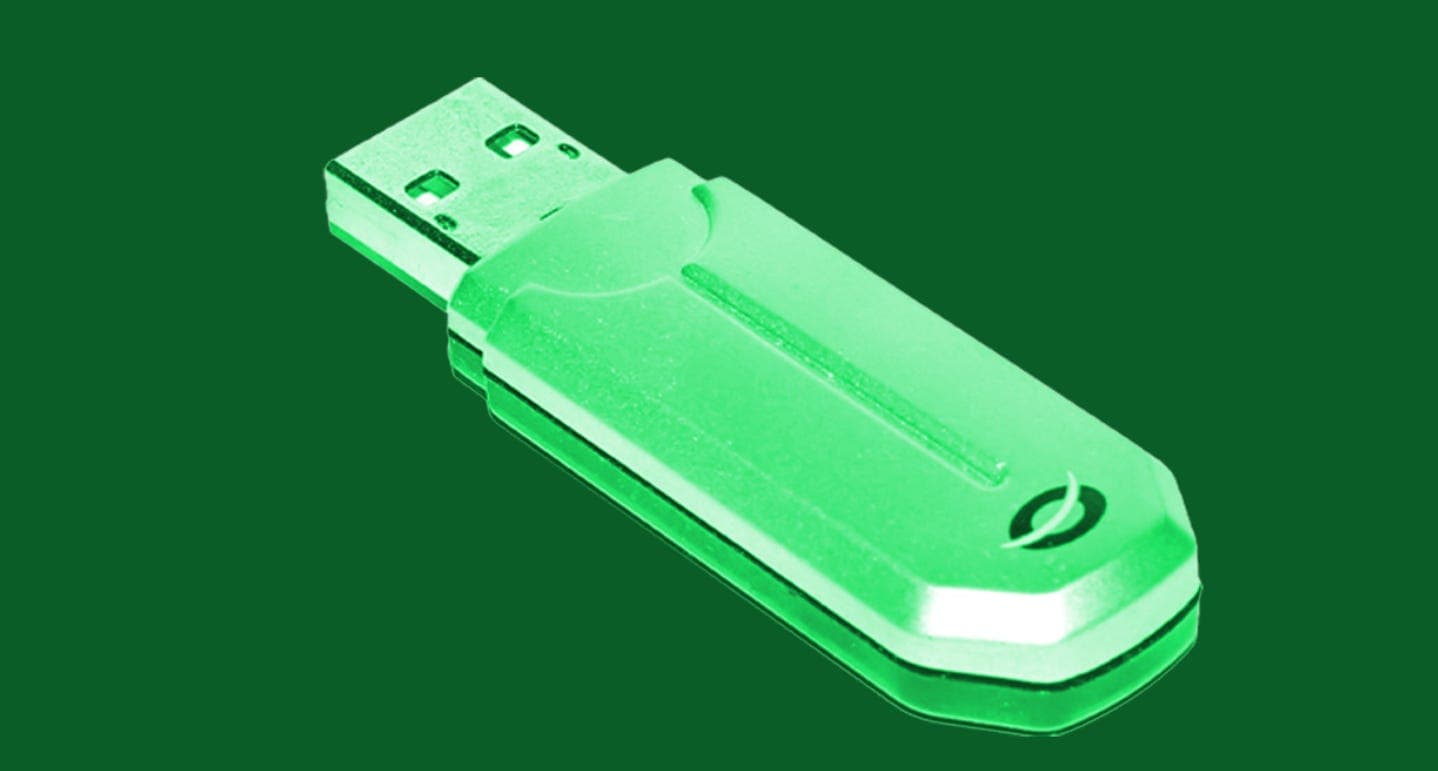
17:13Andrea Domanick:Yeah. It's worth noting that the imagery that you've been using for the assets that you created as a flash drive.
17:18Emilie Friedlander:I'd actually purchased 10. There are 10 physical flash drives that I will be loading the five episodes on. So I haven't quite figured out how to like, if I'm going to like sell those or I don't know what I'm going to do with those. But if you want to really fortune max, hit me up and you can like, you know, whatever, pay me in bonds for the tranche.
17:37Andrea Domanick:What's next for tranche, both in the near term and the longer term? I heard you might have a party.
Read the full transcript
17:44Emilie Friedlander:Yes, the idea of a tranche party is a really compelling concept to me. So I'm genuinely like, I want to keep doing it. And I am very curious about how this will be received. Like it's a guess that people will like this kind of thing, right? So in a perfect world, I want people to listen to it. I'm also really curious if people want to make one. Like that, I think if I had somebody hit me up and be like, yo, I have an idea for a one-off episode that I haven't been able to figure out where to put. But that would be, I think, the more success to me because I think if you make good stuff, people will find it.
18:22Emilie Friedlander:But I'm more interested in, is this a model that can unlock a new way of putting your thoughts into a fully formed thing?
18:29Andrea Domanick:Yeah, I love that.
18:31Emilie Friedlander:Yeah. Hopefully, Tranche 2 comes. Tranche Party will come. And then, yeah, who knows after that.
18:37Andrea Domanick:Yeah. Maybe we do one in LA. I actually noticed a lot of the contributors are here. So happy to assist.
18:43Emilie Friedlander:We could do a bi-coastal tronch party. Tronchchella. I mean, there's a, you know. Tronchmarland, maybe.
18:49Andrea Domanick:Tronchfall.
18:50Emilie Friedlander:Yeah, Tronchfall.
18:52Andrea Domanick:How can people support the project? Get their hands on it?
18:55Emilie Friedlander:We're releasing it through Metalabel, which is a platform that is, I would say, broadly aligned with this kind of, how do we come up with new models for creating and distributing stuff? You can go to my Instagram, which is LexaproTools. The link will be there. I'm going to be like going crazy sharing it. And I think the number one way, I was obviously paying for it and whatever. Five bucks for these great episodes, I think is an amazing deal. But also if you know of people who might be interested in this kind of thing, I send it their way, you know, email it to them, print it out and, you know, send a postcard to them.
19:26Andrea Domanick:Antimimetic. You're interested in like antimimetic distribution.
19:29Emilie Friedlander:Yeah. And, you know, there's going to be, it's also going on the internet as well, like internet 2.0, whatever it's going to be out. You can reshare, do all that, of course. But I find the most meaningful stuff that I encounter on the internet in general is being sent to me directly, like person to person, even if it's a DM or whatever. So it imbues it with a special thing when that happens. So, yeah.
19:51Andrea Domanick:And of course, you'll find it on our sub stack, the link and all that in the episode description. We'll make sure you can find it easily. And without further ado, here is an excerpt from our episode for The Tranche. It's called Free Clout for Sale.
20:06Emilie Friedlander:I've just been thinking, why do we just assume that all of this infrastructure and entertainment and open information that is beaming all over the place, all the time, into every single home on the planet is exactly what we're told it is. Maybe there are people out there who are more important than us, more powerful and wealthier than us that are communicating things and seeing things in the world that are meant for only them and not for us. I think it's fucking ridiculous to assume that media has just one purpose, right? Yeah. Oh, you think that's weird? A little. You don't ever think that maybe rich people know something that you and I don't?
20:57Andrea Domanick:Like good restaurants, maybe.
21:07Andrea Domanick:Hello, this is Andrea Dominic here with my illustrious co-host, Emily Friedlander. What's up, Emily? Chilling. And we are the co-hosts of The Culture Journalist, also known as Cujo, a podcast about culture in the age of platforms. But actually, today we are part of the tranche. The tranche. Yes, we're here. We're participating in the tranche. Good to be here. Thanks for grabbing a slice. So you've probably heard the term psyop thrown around a lot lately. That probably began in late March when writer and musician Eliza McLam published a story on Substack called Fake Fans. Her piece detailed the practices of a digital marketing agency called Chaotic Good that promised its clients virality through, among other tactics, creating networks of burner accounts and fake fan accounts to drum up perceived hype and perceived virality across the internet for the artists at hand.
22:01Andrea Domanick:Emily, who are some of those artists? So Geese was the artist that people seem to single out the most, though it was not the only band that she mentioned. She also mentioned Somber, Teddy Swims, Dijon, McGee, Wet Leg as all artists that when at the time of writing appeared on the website of Chaotic Good, it is unclear to what extent all of these people used their services. I saw one artist actually say that their name got cut off in the whole thing, but they actually never did. So take it with a grain of salt. But most people only heard geese and kind of discounted everybody else, which is something we're going to talk about.
22:43Andrea Domanick:So many people got really upset by this. The Wired article had some kind of hyperbolic headline calling geese a psyop, while others refuted that this is just digital marketing. Wasn't there a paste article about this, Andrea? Yeah, there was a Pace article that had a very sharp headline in relation to this cultural conversation. The headline was, Congratulations, you discovered digital marketing. So this is think pieces responding to think pieces responding to think pieces drum up a ton of conversation about how taste is generated, perceived, disseminated, and people had opinions on it. And so wherever you stand on the matter, one thing that was very clear is that a lot of people were just very upset by the idea that their taste might be being manipulated.
23:31Andrea Domanick:Then again, if you think that the supposed geese psyop is the first time that your taste has potentially been manipulated, we have bad news for you. The practice of taste manipulation is as old as the music industry itself. So on today's episode, we are using the past to understand what is actually going on with the geese situation, how we got here, what the ethical lines are, and whether this is a novel kind of grift or just a continuation of what has always been business as usual in the music industry. Our hunch is that it's a bit of both and that the geese situation is less a weird aberration than a microcosm of where culture and the internet are headed in general.
24:11Andrea Domanick:So here, listeners, is a little potted history of music industry grifting or the art of manipulating our music taste. While doing our research, we noticed a few recurring themes popping up. Some of them were psychological and some of them were systemic. You know, like having to do with sort of the infrastructure of the music industry. So Emily, one that you highlighted is the mimetic theory of desire. Yeah, I just I noticed kind of two psychological principles that come up repeatedly when researching the history of payola in music or payola like practices. One is the mimetic theory of desire, which comes from French philosopher René Girard.
24:54Andrea Domanick:It basically is the idea that we want what we want because somebody else wants it. And I think a lot of paola and even just marketing schemes kind of operate on that principle. A quote from his essay, Generative Scapegoating, man is the creature who does not know what to desire and he turns to others in order to make up his mind. We desire what others desire because we imitate their desires. So, you know, seeing something like a YouTube video, like a music video that has a million views on it is going to draw you in psychologically more than a video that has six views on it because you're going to be like, oh, if so many people are into this, then it must be something worth paying attention to.
25:36Andrea Domanick:The other one is just the mere exposure effect, which is the more times that you are exposed to something, the more likely you are going to like it. So, you know, people often talk about this in terms of personal interactions. Like if you see someone over and over again every day, you are more likely to like them than if you have met them only once. Kind of the same logic behind like all press is good press, right? Yeah. Like in the media sense, it's like if you see many, many different people posting about something and you keep getting exposed to it, you're going to become more familiar with it.
26:12Andrea Domanick:And there's this theory in marketing that the user needs this many touch points with your brand before they will convert to becoming a paying customer. And so part of the art and science of marketing is making sure that they collide with your product X number of times because it's proven that that needs to happen before they purchase whatever you're selling. So these principles, think about them as we go through this history. There were also some other themes that stood out to us a lot to listen for. Andrea, what was top of mind for you? I know you did most of the deep dive on like the long history of even going back to before the internet.
26:52Andrea Domanick:Yes. One recurring theme I picked up on is the fact that this isn't just like a best of list of simple instances of corruption or fraud over and over again in the music industry, but altogether it kind of points to systems that are covertly shaping taste while presenting as neutral discovery, you know, or promotion that's kind of disguised as organic popularity. And one thing I noticed is that these systems tend to crystallize at moments when new technology disrupts how music is distributed, measured, or monetized. And so the result is kind of a genealogy or timeline of these mechanisms as they reflect a series of recurring patterns that evolve alongside media infrastructure.
27:32Andrea Domanick:Can you just give a quick example? Yeah. So basically, one thing I noticed is anytime there were kind of big paradigm shifts in media and or technology, whether that is the advent of Napster and file sharing, the rise of new broadcast systems, whether that is radio, whether that is increased access to cable television, is generally when you'll see these kinds of shifts. So these aren't just instances of fraud or deception that kind of exists in a vacuum, but it's kind of a pattern that we're seeing over and over again in conjunction with other changes. In other words, the media ecosystem keeps changing and then people keep adapting to figure out what works and what works in one era is going to look different in another era.
28:16Andrea Domanick:Exactly. Another way of looking at it that Andrea and I discussed a lot while preparing for this episode was that basically everything in the music industry is on some level pay to play. The question of whether something is payola-like or just marketing tends to hinge on whether a given practice is actively crossing a line into deception or fakery. And also probably whether the law determines it to be fair game or not at a given period. Regulation is also part of this history as well. And we definitely see that like once a given practice gets regulated, the marketers, industry people are adapting their strategies alongside that.
28:59Andrea Domanick:And finally, another theme that really stood out to us from this research is a general shift from the music industry paying human gatekeepers to then instead influencing algorithmic environments. Or to put it another way, a shift from top down to bottom up forms of manipulation. All right. Let's talk about music industry grifts in the pre-internet era. A lot of people, when they think about this in terms of the music industry, they think about radio payola. But the history of manipulation goes back a lot farther than that, actually. Andrea, you took a deep dive. Where did all this start? Yeah, that's right.
29:35Andrea Domanick:It actually dates back to even before recorded music, all the way back to the industry's OG economic center of sheet music that was clustered around the historic Manhattan block known in the late 19th, early 20th centuries as Tin Pan Alley. You may have heard of it. That was the hub of publishers and composers of vaudeville, ragtime, early Broadway. It's widely considered the birthplace of pop music as a concept, the commercialization of music, and what would go on to become the recording industry, and some of the earliest attempts at mass marketing. Something to keep in mind for back then is that when publishers were hiring songwriters to crank out hits, these hits were basically being measured by how many copies of a piece of sheet music were sold.
30:19Andrea Domanick:So the more that you heard a piece of sheet music out in a public place, this goes back to what Emily was talking earlier about exposure, the better it would sell. So essential to Tin Pan Alley and also one of the earliest tastemaking systems in music was a guy called the Song Plugger. Now the Song Plugger were musicians that were hired by publishers to perform their songs or their roster of songs in public places, stores, saloons, theaters, like sports stadiums, to effectively simulate popularity. And then this kind of created a feedback loop on the vaudeville circuit where songs that seemed popular got more stage time and then in turn actually became popular.
30:59Andrea Domanick:And the most successful or coveted song pluggers were the ones that actually had connections or a performance history with some of the day's biggest stars, you know, the likes of Al Jolson. And so if they could get those big stars to sing it, then it was pretty much guaranteed to be a hit.
31:19Andrea Domanick:Who was hiring the pluggers? Was it like the sheet music publishers? Yes, it was the publishers, the publishing houses that basically populated Tin Pan Alley. And kind of a fun fact, the pluggers were so core to Tin Pan Alley that the sound of the pluggers clattering pianos is actually what gave Tin Pan Alley its name. So, you know, this is all kind of proto-algorithmic, if you think about it. Visibility creates demand, therefore justifies more visibility. And this, of course, all comes along thanks to an increase in urbanization and mass print culture. So what happens when we shift from sheet music to recorded music?
31:55Andrea Domanick:How did the grift evolve? So then radio came along, and with the advent of radio came the centralization of taste. And so you had this whole new batch of gatekeepers who are, of course, DJs and radio programmers. And with that came the rise of our word of the day, which is payola. If you're unfamiliar, payola is the practice of paying the aforementioned gatekeepers to play specific songs without disclosing that they had been paid, therefore making it seem like that the airplay that a song got was an independent editorial choice rather than, you know, what basically amounts to advertising. So in the early days of radio, this just sort of started as sort of a, you know, under the radar, informal process where labels and promoters were giving DJs, you know, gifts or payments to favor certain records.
32:42Andrea Domanick:It became deeply, deeply entrenched and so widespread that by radio's 1950s heyday, it was enough of a thing to trigger investigations that led to the congressional hearings of 1960. It was a big, big scandal. It exposed figures like Alan Freed, the DJ who was dubbed the godfather of rock and roll, obviously had a fall from grace after that, and cast light on how deeply the practice of payola really shaped the rise of early rock hits. So all this then led to a U.S. law requiring the disclosure of sponsored airplay and effectively making payola illegal. How did that pan out? Did the practice of payola actually end after it became illegal?
33:24Andrea Domanick:Spoiler alert, it did not. It may not have ever ended actually, right? Right. I mean, there's life signs away and so does Paola in many different forms, you know, and so Paola being an early instance of how hits were actually engineered, it didn't just become something that became distasteful in the eyes of the law, but also, you know, in the eyes of the public, of music fans. So sneakier ways to work around that were generated And this led to basically the rise of the third party promoter who effectively was someone acting as a middleman between labels and gatekeepers like radio programmers and DJs who was someone sort of working behind the scenes, you know, getting paid by labels to promote their music without money actually being exchanged between the label and the radio DJ.
34:10Andrea Domanick:So how did I get? But how does the I have never understood this? How what's the difference between a promoter and just like a publicist? Like, is any money being exchanged at all? Are there favors being exchanged? Like, what is being exchanged? It's not clear because it's not necessarily all in the books. But, you know, these are folks that are, these are third-party folks being paid by the label to basically work the system and help give their artists a leg up to the folks making the choices of what goes on the airwaves. How the promoters did that is, you know, there's a wide range. And this is where we get a little bit of a gray area.
34:43Andrea Domanick:I think it depends on, you know, what time period it was. I think it depends on how deeply entrenched the promoters relationships were. Maybe they were taking folks out to big dinners. Maybe they were sliding them gifts. Maybe they were sliding them more than gifts. But the important takeaway here is that this is how labels like legally protected themselves from something being labeled as payola, even though they were seeking to influence what was getting paid on the radio. I've also heard of schemes were like even moving further towards the 21st century where there isn't actually payola anymore, but you might have a situation where an artist plays a radio station's event, perhaps at like a lower fee in exchange for getting on the radio more or being boosted on the radio, things like that.
35:32Andrea Domanick:Like there's ways that money finds its way, but it's never direct. Yeah. Or there's ways that sort of an exchange happens, which is sort of one of the larger points, you know, of everything that we're talking about today is like, it's less about whether something occurs via blatant bribery, but more that Paola, the original radio instance of Paola was the first big moment when airplay or mass exposure became synonymous with legitimacy, right? So it's not just like functioning as a reflection of popularity, but became a means for creating it. And as a result, that was kind of an early instance of audiences mistaking exposure for consensus of whether something's popular or whether it's something that people like.
36:10Andrea Domanick:So how did this evolve into the chart era? That's all you get. But there's so much more. We get into Napster, fake MySpace fans, Spotify paola scandals, the rise of social video clipping armies, and maybe most crucially, whether or not Emily and I think Geese is a psyop. Go get the full episode plus the four other killer contributions to the Tranche over at tranche.metalabel.com. That's T-R-A-N-C-H-E dot metalabel.com. Five books. Guaranteed not a PSYOP.
From the publisher
CUJO is a podcast about culture in the age of platforms, from Emilie Friedlander and Andrea Domanick. You can learn more about it here.
For fans of independent music, the Geese psyop allegations earlier this year raised an anxiety-provoking question: How much of our taste is our own, and how much of it is just a function of the music industry using a range of tactics (from the mundane, to the shadowy, to the straight-up fraudulent) to manufacture consent?
We held back from commenting on the story at the time because we were cooking up a longer response that we finally unveiled this week: a deeply researched, centuries-spanning history of the art and science of musical taste manipulation, spanning Tin Pan Alley sheet music scams, chart manipulation, streaming farms, the modern clipping economy, viral “trend simulation,” and more. Our hope was that shedding light on these historical persuasion tactics — and the psychological mechanisms that underpin them, from the mere-exposure effect to René Girard’s mimetic theory of desire — would help our listeners make sense of a present where it can feel like everything on the internet is fake.
The episode, titled “Free Clout for Sale,” is part of an exciting collaborative podcast project called Tranche that came out this week on Metalabel. Tranche is the brainchild of friend of the pod and Nothing But Respect cohost Harry Krinsky, who you may remember from our episode on the psychology of the modern Knick fan a few weeks back. As Harry describes it, it’s basically a literary magazine, but instead of articles, you get podcast episodes.
Listen to today’s episode for an interview with Harry about the project and an excerpt from our contribution to it — and please consider supporting our work by purchasing Tranche 001, which gets you five episodes for just $5. Other entries include a history of the word “based” (from Naomi Zeichner and Eamon Whalen), a meditation on Eddington and the fate of the Western in the 2020s (with Nate Fisher and Eddie Averill), an aesthetic analysis of Praxis and the Palantir chore coat (featuring past CUJO guest Sam Venis), and a cross-generational analysis of major life milestones with CUJO regular Ben Dietz and friends. All proceeds will be split among contributors.
Something we loved this week: This fascinating episode by the excellent podcast No Such Thing on the history of different corporate management styles and the problem of micromanaging at work, featuring The Drift editor and Harvard historian Erik Baker, author of the book Make Your Own Job: How the Entrepreneurial Work Ethic Exhausted America.
This is a public episode. If you'd like to discuss this with other subscribers or get access to bonus episodes, visit theculturejournalist.substack.com/subscribe