
- Podcasts
- The Daily Motivation
- The Key To Building Atomic Habits
 The Daily Motivation
28 Sep 2024 · 7m
The Key To Building Atomic Habits | James Clear EP 752

 Add vo to ChatGPT or Claude to ask about everything you hear
vo listened to this episode to put together the overview and transcript, so there may be the odd mistake.
In short
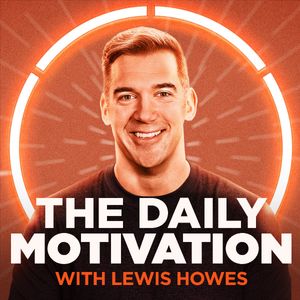
The Daily Motivation Show, hosted by Lewis Howes, focuses on the narratives we tell ourselves and how they shape our identities. This episode features James Clear, a best-selling author known for his insights on developing lasting habits.
In this episode, Lewis Howes discusses the importance of habits in shaping our identities and achieving long-term goals with James Clear. The conversation emphasizes that the behaviors we engage in today have significant implications for our future selves.
Transcript
0:00Hi, my name is Lewis Howes and welcome to the Daily Motivation Show.
0:12Pretty much any behavior produces multiple outcomes across time, right? Like if you eat a donut right now, it's tasty and sugary. So good. But in the long run, you gain weight. And so the immediate outcome is favorable. The long-term outcome is unfavorable. With good habits, it's often the reverse, right? Like you go to the gym right now and it takes effort. You sweat. You have to work hard. The immediate outcome is unfavorable. But the ultimate outcome, you're in shape in a year, a month, or whatever, is favorable. And so the challenge for building good habits and breaking bad ones is often finding a way to pull the long-term consequences of your bad habits into the immediate moment.
0:47So you feel a little bit of pain right now and want to avoid it. And the long-term rewards of your good habits into the immediate moment. So you have a reason to repeat it again in the future. The ultimate form of immediate gratification is the reinforcement of your desired identity. So you go to the gym and you're reinforcing the identity of I'm the type of person who does in this workouts, or you show up to write and you're reinforcing the identity of I'm someone who writes every day. And so you get a little bit of immediate satisfaction from being that person and being aligned with your identity, your values, your principles.
1:17But you also get the long-term rewards from showing up every day. And so what you don't want is some kind of immediate reinforcement, like eating a donut at the gym, where you're casting votes for two different identities, right? It's like, I showed up at the gym, I'm casting a vote for being the type of person who doesn't miss workouts, the type of person who's healthy, but then I eat a donut. So now I'm casting a vote for being an unhealthy person. So it kind of washes out, right? So you want reinforcements that align with your principles and values. I think that your habits are the way that you embody an identity, right?
1:49So like each time you make your bed, you embody the identity of someone who is clean and organized. Each time you go to the gym, you embody the identity of someone who's fit. each time you sit down to write you embody the identity of a writer. So you can sort of think of it as like each behavior casts a vote for the type of person that you want to become. If you cast enough votes for that type of identity you start to believe that about yourself, right? Like if you go to church for 20 years you believe that you're religious. You study Spanish every Tuesday for 30 minutes you believe that you are studious.
2:18So in that way your habits provide evidence of your desired identity and I think that that is probably the ultimate reason that habits are so important. It's true like habits can help you earn more money or be more productive or lose weight and all that stuff is great But in addition to the external results that habits provide they also shape your sense of self They like are the at the engine or the avenue through which you learn to believe things about yourself like sometimes people will say stuff like fake it till you make it But fake it till you make it is asking yourself to believe something without evidence for it And you can do that for a little while you can do it for a day or a week But eventually, I mean, there's a word for beliefs that don't have evidence behind you, delusion.
2:59Right. And if you're deluding yourself, then eventually you give up on that. But the power of doing a better habit each day or casting a little vote for that type of person is that now you have evidence to root your belief in. And so now I've done it for six months. Yeah. Right. Like, I mean, now you have a lot of evidence that you're a podcaster or a good interviewer. You know, like you do this over and over again each time you cast a vote for believing that about yourself. and you don't just you aren't delusionally believing that you're a good interviewer it's because you've shown up and done it hundreds of times right and so I think that that's true for any habit large or small that they provide evidence of the desired identity or the type of person you are sometimes people ask like oh how can I double my productivity or something like that and you'll see articles like that all the time like follow this one five minute trip to W productivity but the real answer to most of that stuff is like get eight hours of sleep a night, exercise, don't eat like crap.
3:50And then instantly you have this boost of energy. The fundamentals are covered 90%. Yeah, exactly. Often when we set about to change something or to achieve something, the first step is almost always setting a goal. And this is coming from someone like I was very goal oriented for a long time, right? Like I said, yeah, I was like goals for the things I wanted to do in sports, the goals, the grades I wanted in class, the goals for how much money I wanted to make in my business. And sometimes I would achieve those, but then sometimes I wouldn't. And so I had this question like, well, clearly I'm setting goals for both.
4:24So like that can't be the thing that determines it. And you see this a lot that the winners and losers in a particular domain often have the same goals. Like every Olympian wants to win a gold medal. Sure. Every job candidate wants to get the job. So if the winners and the losers have the same goal, then the goal cannot be the thing that distinguishes the two. And the thing that distinguishes them is the process, the system behind the goal. And this is also important because achieving a goal often only changes your life for the moment. Well, say you have a messy room, you know, and you get motivated and you set the goal to clean your room.
4:57Well, you can do that in an hour and then you have a clean room. But if you don't change the sloppy habits that led to a messy room in the first place, then you just end up with a dirty room again. Yeah. So it's like treating a symptom without treating the cause. habits are a better solution in that case because if you fix the inputs the outputs fix themselves automatically right you don't have to fight to have a clean room if you have clean habits and i think that's true in a larger sense as well right people want outcomes they want to earn more money or lose weight or be more productive or reduce stress but the outcome is not the thing that needs to change it's the system that precedes it there's nothing about the amount of time elapsed that leads to habits being built you could practice something once in 30 days or you could practice it a thousand times.
5:40What actually leads to a habit becoming automatic and becoming learned and ingrained is repetition. So the phrase that I like to use is not 21 days to 30 days, but put in your reps. And that's the real thing is you need to, you need to practice. And if you put in your reps, then your brain starts to automate how that process works.
6:04I am so excited for you to finish the rest of your day strong. If you enjoyed this episode, make sure to click the link in the description and it'll take you to the full episode of my other show, The School of Greatness. Make sure to come back tomorrow for another episode of The Daily Motivation Show.
6:26Thank you.
From the publisher
Today's episode is all about the truth behind building habits that will last with Best-selling Author, James Clear.
Check out the full episode: https://link.chtbl.com/701-pod
Hosted by Simplecast, an AdsWizz company. See pcm.adswizz.com for information about our collection and use of personal data for advertising.
More from The Daily Motivation
All episodesWe use cookies.They keep vo running smoothly and help us improve it. Privacy policy
Scan the code with your iPhone camera
Listen in the app.
- Play everything vo finds for you
- vo remembers everything you hear
Go to the App StoreFree on iPhone