
 Ask ChatGPT


- Podcasts
- The Daily Stoic
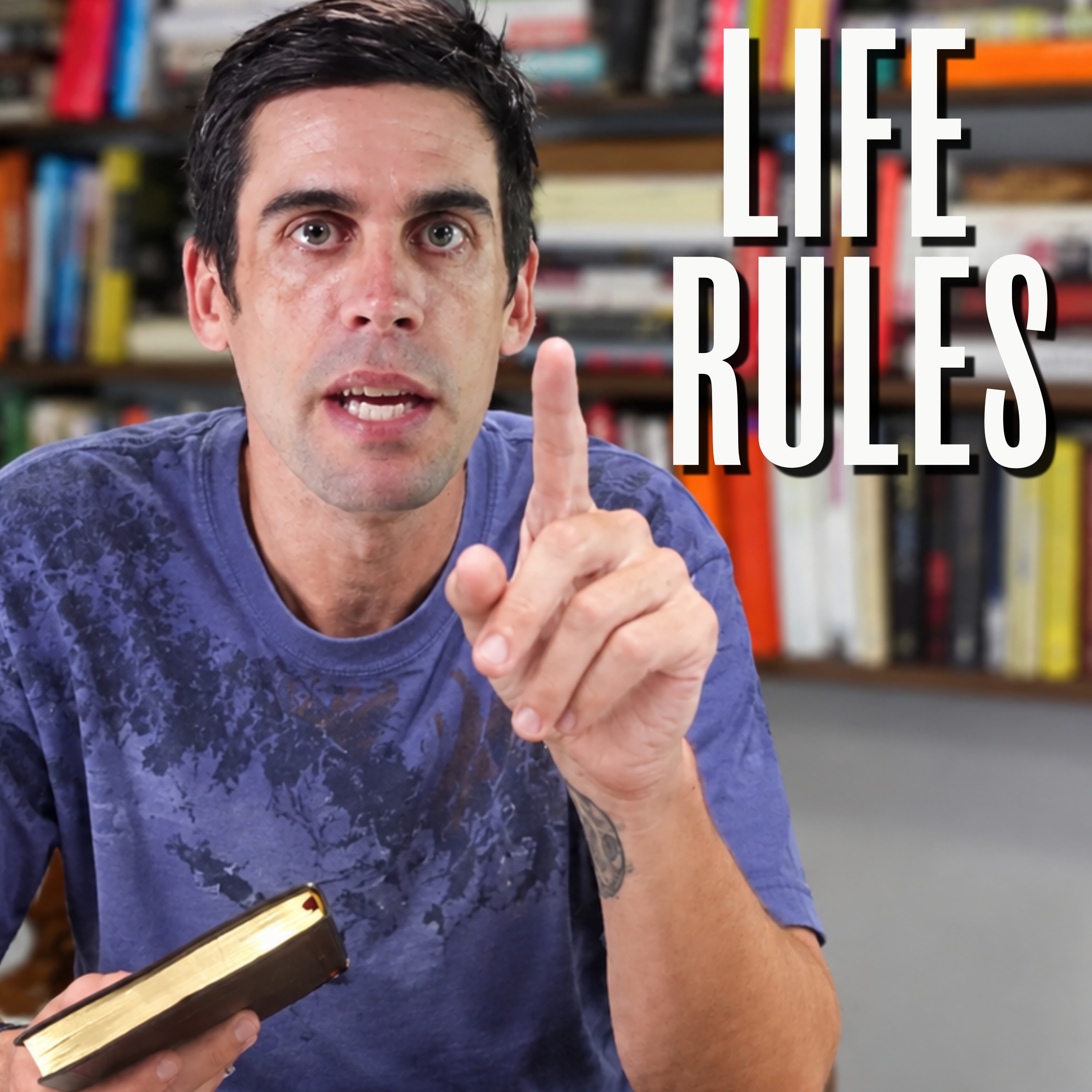
- 43 Stoic Rules That Will Change How You Live
In short
A solo episode by the host (Daily Stoic) summarizing “43 Stoic rules” for living—control vs. not control, saying no, clear intentions, daily self-review, limiting opinions, delaying reactions, ego/humility, choosing mentors, habits/routine, flexibility, concentration, kindness, and memento mori (life’s shortness).
Guest backgrounds
No podcast guests are interviewed; the episode cites Stoic figures and modern authors.
Key claims
Most suffering is imagined or premature; focus energy on what’s up to you; review each day to improve; don’t chase every news/opinion; practice virtue through small daily choices; protect time; ask for help; obstacles are opportunities; concentrate deeply; change your mind when corrected.
Notable examples
Epictetus on control; Seneca on saying no and anger delay; Marcus Aurelius’ daily review and “awakening to do the work of a human being”; Hercules choosing virtue; “obstacle is the way”; the host’s Airbnb travel anecdote leading to a local bookstore encounter.
Written by AI. May contain mistakes.
Chapters
1:07
Philosophy as a Framework for Living
Discover how philosophy, especially Stoicism, serves as a guide to a good life.
“It's a bunch of names they can't pronounce.”
3:14
Understanding Control and Indifference
Learn the importance of distinguishing between what is in our control and what is not.
“no to, we have to learn how to say no to the things that don't matter.”
5:23
Reviewing Your Day for Improvement
Explore the Stoic practice of daily self-review to enhance personal growth.
“how could you possibly hope to do better tomorrow?”
7:20
The Power of Opinions and Choosing Battles
Understand the importance of selective engagement with opinions and battles.
“Seneca talking about how we catastrophize, how we imagine the worst case scenario, how we live in this nightmarish fantasy world.”
8:10
Avoiding Self-Inflicted Suffering
Learn why it's crucial to refrain from imagining troubles before they occur.
“If it turns out to be the not preferred situation, having a miserable flight between now and then doesn't do anything for anyone.”
10:05
Ego and the Pursuit of Knowledge
Discover how ego hinders learning and the importance of humility.
“You have to associate with people who make you better.”
12:06
Choosing Your Influences Wisely
Learn about the impact of associations and relationships on personal growth.
“kind to a rude person instead of rude in return, to hold yourself to a high standard versus a low standard, this is what life is about.”
13:45
Making Thoughtful Choices
Explore how making intentional choices shapes your character and life.
14:00
Accepting Life's Taxes
Learn about the various 'taxes' we pay in life and the importance of acceptance.
“standing for false evidence appearing real.”
14:53
The Power of Concentration
Explore the significance of deep work and concentration in achieving success.
“My friend Cal Newport wrote this great book a few years ago called Deep Work.”
Show all 27 chapters
15:40
Embracing Change and Growth
Understand the importance of being open to changing your mind and growing.
“to lock in, to focus is the key skill in this noisy, busy world.”
16:38
Seeing the World Like a Poet
Learn how to find beauty in ordinary life and cultivate a positive perspective.
“Look, if you're changing your mind every three seconds and you have no core, no center, that's a problem.”
17:37
The Impact of Kindness
Discover how acts of kindness can brighten the world around you.
“If you want it to be brighter, if you want to see good, there's a magical thing you can do.”
18:23
Building Virtue Through Action
Learn how actions define our character and the importance of consistent effort.
“At the end of his life, Marcus Aurelius wasn't proud of the wars he had won, the buildings he had built, the laws he had passed, the fortune he had amassed.”
19:33
Reassessing Influences
Examine the importance of not seeking validation from unworthy sources.
“It was a thing you did or you didn't do.”
21:02
The Consequence of Little Things
Understand how small choices accumulate to shape our lives.
“How you do anything is how you do everything.”
21:44
Persistence and Flexibility
Explore the balance between persistence in goals and flexibility in approach.
“The reason you have to do this thing in front of you as if it matters, the reason that you have to take this task in front of you seriously, that although individually it might not be a big deal, cumulatively it adds up.”
23:01
Embracing Change
Learn how to embrace change and the inevitability of transformation.
“The Stoics talk over and over and over again about the ability to be flexible, the ability to be adaptable.”
24:13
The Value of Mentorship
Understand the importance of seeking mentors and lifelong learning.
“They don't try to hold everything a certain way.”
25:09
The Strength in Asking for Help
Discover why asking for help is essential and a sign of strength.
“As I said earlier, stoicism is not not having the emotion.”
26:34
The Benefits of Walking
Learn how walks can enhance mental clarity and well-being.
“Again, the perception, the stereotype of the Stoic as invulnerable, unfeeling, of unbending, of superhuman is just wrong.”
27:59
Turning Obstacles into Opportunities
Explore how challenges can be transformed into pathways for progress.
“They're going to help you think more clearly.”
29:18
The Philosophy of Discipline
Understand the importance of self-discipline and compassion towards others.
“It's pretty powerful to think that the most powerful man in the world also struggled with getting out of bed in the morning.”
30:27
Finding Joy in Virtue
Explore how true happiness comes from doing the right thing.
“This was the greatness of Marcus Aurelius, that he was willing to work with flawed people, that he tried to get the best out of them, but he wasn't constantly disappointed and frustrated with them.”
31:41
Protecting Your Most Precious Resource
Discover the significance of valuing and protecting your time.
“You're never going to get the third thing.”
32:58
Embracing Mortality
Learn how acknowledging our mortality can motivate us to live fully.
“Don't be afraid to ruffle some feathers or hurt the occasional feeling.”
34:28
The Importance of Self-Knowledge
Understand why self-knowledge is crucial for personal growth.
“Self-knowledge is the most important knowledge.”

Ask about this episode
Get the gist, explore an idea or ask about something said.
 Claude
On The Daily Stoic, what are the key points of this episode?
Searching your listeningTranscript
Automatic transcript. May contain errors.
0:00Ryan Holiday: So I have a bunch of traveling I'm doing through the end of the year on Daily Stoic Live Tour. I just got back from San Diego. I like to stay in the places that I'm staying. I like to book places on Airbnb so I can be like a local. I not only do some of my best writing, but I learn about things that I wouldn't have known otherwise. When I was just in San Diego, I took a walk along the water. I bumped into someone who recognized me and they told me about their favorite local bookstore, which was like two blocks from where I was staying. And I never would have known about it if it wasn't for that encounter.
0:30Ryan Holiday: It was cool to me to think that I have helped facilitate that experience for many, many people coming to Austin over the years. The first house that I bought in Austin when my wife and I first moved here, we would list it on Airbnb and it helped me make the transition from my corporate life to being a full-time writer. So if you're going to be away, you should maybe think about listing your place on Airbnb. It can be a great way to earn extra cash while you travel. It can offset the cost of your trip or maybe even go towards whatever you're doing next. If you've got travel coming up, check out Airbnb.
1:01Ryan Holiday: Your home might be worth more than you think. And you can find out how much at Airbnb.com slash host. Most people philosophy is impractical. It's theoretical. It's inaccessible. It's a bunch of names they can't pronounce. A better way to think of philosophy is a framework for living. The ancients would say that philosophy was the guide to the good life. And I think of all the philosophical schools, stoicism is not just the best. It is the clearest. And so in today's episode, I want to give you rules for life from the ancient Stoics. Straightforward, actionable, clear tenets and principles for dealing with the ups and downs of life and becoming the person that you are capable of being.
1:47Ryan Holiday: These are all ideas that I talk about in The Daily Stoic, which is really 365 lessons from the Stoics that can apply to your life. But we're not going to get into all of those today. We're just going to get into some of the best.
2:05Ryan Holiday: The first and most important task in life, the January 1st entry in the Daily Stoic, is the basic premise of Stoic philosophy. There's some stuff that's in our control and some stuff that's not in our control. And the chief task in life, Epictetus says, is to know the difference between these two things. Is it up to me? Is it not up to me? If it is up to you, it's got to get 100 % of your energy and focus, it's not up to you. You have to learn how to become indifferent to it. We are wasting our energy on things that are not up to us, and we should be directing that energy on the stuff that is up to us.
2:43Ryan Holiday: You have to learn how to be ruthless to the things that don't matter. Seneca talks about how things are laying waste to our life, right? We get caught up in things, we chase things, We follow things that don't matter, that aren't important. And what we do in the process is waste our most precious resource, which is our time. Seneca says famously, it's not that life is short. It's that we waste a lot of it because we are afraid to say no, because we don't have the confidence to say no, because we don't have the discipline to say no. Whether it's a doom spiral that we're saying no to or some silly invitation we're saying no to, we have to learn how to say no to the things that don't matter.
3:26Ryan Holiday: You have to set and clarify your intentions. What are you trying to do? Where are you trying to go? Why are you trying to go there? Seneca talks about how no wind is favorable if you don't know what port you are sailing towards. He talked about how most people are just sort of winging it. They're just going through life. They don't know what's important. They don't know why they're trying to get to this place or that place. They just chase what's in front of them. They just do what everyone else is doing. What are you trying to accomplish? Who are you trying to be? Are your efforts actually directed at that thing?
3:59Ryan Holiday: This is what you have to be clear on.
4:05Ryan Holiday: You must understand, the Stoics say, that fortune behaves as she pleases. Life is not taking our wishes into accordance, that our preferences have no say in the matter, that fate, fortune, circumstances spinning around constantly, and that Stoicism is about how you react to these things, how you respond to these things. But understanding that you are not in control, that you are not the center of the universe is a key Stoic teaching.
4:39Ryan Holiday: You must put every day up for review. How are you going to get better tomorrow if you're not reviewing how you did today. Seneca talked about how he would wait for his wife to go to sleep, and then he would sit there and he would interrogate himself. What did he do well? What could he have done better? What does he aspire to be tomorrow, right? Talked about setting your intention. The evening review, did you live up to your intention? Were you the person you were trying to be? And if you were, awesome. What do you learn from that? And if you weren't, also fine. how are you going to get better tomorrow?
5:13Ryan Holiday: Seneca talked about how he keeps constant watch over himself. Our plans from the future descend from the past. So if you're not learning, if you're not evaluating, if you're not reviewing how you did today, how could you possibly hope to do better tomorrow?
5:30Ryan Holiday: You don't have to have so many opinions. There's a lot of stupid things happening in the world, a lot of outrageous things happening in the world, a lot of confusing and disorienting things happening. There's just a lot of stuff happening in the world. Here's the thing. You don't have to follow all of it and you certainly don't have to have an opinion about all of it, right? If I was to curse someone, I would say, you have to know everything that's happening everywhere in the world and you have to have strong opinions about all of it, right? This is a recipe for misery. This is Elon Musk's life.
5:58Ryan Holiday: You do not want that. You do not want to be a slave to the algorithms and social media having to have a hot take on every single thing that's happening, having to follow every single thing that happens. That doesn't mean that you're indifferent to suffering or pain or tragedy or injustices. Of course not, right? But if you have an opinion about everything, your opinions are fundamentally worthless. You have to pick and choose your battles. Mark Struhers says, remember, you always have the power to have no opinion. You can shrug your shoulders at some things. You cannot follow certain things. You can pick your battles.
6:31Ryan Holiday: You have that freedom. In fact, you must take that autonomy or you are going to go insane.
6:40Ryan Holiday: Don't suffer imagined troubles. You have to understand your anxiety, your dread, your catastrophizing, that part of your mind that worries, this is a bad use of your creativity. You are torturing yourself with scenarios that you have invented. You are living in a nightmarish fantasy world. This is what Seneca is talking about when he says we suffer more in imagination than in reality. He says, like, look at your batting average here. How much of the stuff that you dreaded, that you worried about, that you spent a lot of time going over and over and over again in your head, how much of it actually happened?
7:14Ryan Holiday: You're not as good at this as you think. It's not just a bad use of your creativity. You're also bad at it.
7:25Ryan Holiday: Which leads up to the next rule. Don't suffer before you have to. Seneca talking about how we catastrophize, how we imagine the worst case scenario, how we live in this nightmarish fantasy world. He says, like you are adding suffering on top. He says, he who suffers before it is necessary suffers more than is necessary. Yeah, it's true. You might get laid off. Yeah, it's true. Someone might break into your car. Yeah, you might get cheated on. Things might happen, but they're either going to happen or they're not going to happen. That doesn't say you never prepare for anything. You don't take basic precautions.
7:59Ryan Holiday: It's just the flight might be on time or it might not be on time. Torturing yourself about it is not changing it one way or the other, right? It's either gonna be late and you're gonna miss your meeting or it's gonna be on time and you're gonna make your meeting. If it turns out to be the not preferred situation, having a miserable flight between now and then doesn't do anything for anyone. Deal with that bad news when it comes. Don't spend weeks and weeks torturing yourself in anticipation about it, right? So don't just suffer imagined troubles. don't suffer the trouble before you have to more than you have to.
8:36Ryan Holiday: Ego is the enemy. It's not just that everyone hates a braggart and that arrogance is obnoxious and unpleasant. It's that ego not only doesn't make things better, it makes you worse. You cannot learn that which you think you already know, Epictetus famously said. Zeno, the founder of Stoicism, talked about how conceit was the impediment to knowledge. Be humble, be open-minded, be willing to learn. Don't let anything be above or beneath you. Be who you are, do what you need to do. Always be open and always be learning. Ego gets in the way. If you are a know-it-all, you are right. You can't know anything else.
9:17Ryan Holiday: You must think for yourself. If a person gave away your body to some passerby, Epictetus says, you'd be furious. Yet you hand over your mind to anyone who comes along so that they can abuse you, leaving it disturbed or troubled. Have you no shame? The whole point of philosophy, the Stoics would say, is to think for yourself, to be your own person. Why be on the side of the mob? Why be on the side of the idiots? Think for yourself. Do your own thinking. A Stoic is a person who focuses their mind on what is good and true. They set their own standards. What other people are doing is of no concern to them.
9:55Ryan Holiday: Chrysippus said, if I was going to be part of a mob, I would not have become a philosopher. Think for yourself. Be yourself. That is the key.
10:07Ryan Holiday: You have to associate with people who make you better. We become like our friends. My father told me that as a young man. I think of the Scipionic Circle, this group of Stoics around the turn of the millennium that got together, that challenged each other, that talked about big ideas, that encouraged each other. You have to find your people. Think about Seneca's relationship with Lucilius. They're writing these letters back and forth, sharing with each other little ideas, things that they've learned. Seneca talked about how we learn as we teach. You become like the people you spend time with. So spend time with people who make you better.
10:42Ryan Holiday: Musonius Rufus said, if you spend time with good people, you'll learn good. But if you mingle with bad people, you'll destroy your soul.
10:54Ryan Holiday: You must study the lives of the greats. Seneca talked about how we have to choose ourselves a cato, someone whose example we admire, who calls to us and try to live up to that example. We know Marcus Aurelius kept a little book in addition to meditations called like the Lives of Greeks and Romans, where he was writing notes to himself, little biographical sketches of people whose example he wanted to be like. This is why I wrote my book, Lives of the Stoics, which is all about the lessons we can learn from the Stoics in practice, not just what they wrote about, but who they were as people. Again, people read too much news and not enough biography, not enough history.
11:34Ryan Holiday: What's happening right now is so much less important than the great and tragic lives of the people who came before us. We don't need to learn by trial and error when we can learn from other people's trial and error.
11:50Ryan Holiday: you are the choices you make. Epictetus says, you are not your body, you are not your hairstyle, but your capacity for choosing well. If your choices are beautiful, he said, so too will you be. The choice to eat healthy instead of unhealthy, to take the stairs instead of the elevator, to be kind to a rude person instead of rude in return, to hold yourself to a high standard versus a low standard, this is what life is about. Stoicism starts with this choice. It starts with the story of the choice of Hercules. Hercules choosing at a crossroads between the easy way and the hard way, virtue and vice.
12:28Ryan Holiday: If you want to be great, make great choices. These little choices add up.
12:36Ryan Holiday: Life without design is erratic. Too many people are just winging it. Seneca said, if you ask the average person on the street in Rome, probably not unlike if you ask the average person today where they were going, what they were doing, why they were doing it. Oh, well, because of this and that. They just, people are winging it. They're going from one thing to the next. That is a bad way to do it. It's too many choices. It's too much uncertainty. It leaves too much to the moment. This is why the Stoics are big on habits and routine. In a world where so much is out of your control. Committing to a routine when we do have some control is a way of establishing and reminding ourselves of our own power.
13:16Ryan Holiday: Keep a schedule, pick some practices, limit the amount of choices you have to make in the course of a day. What time do you wake up? What do you do first? What do you not do? These are good choices that lead to a good life.
13:35Ryan Holiday: put every feeling to the test before acting on it it's not that the stoic never gets angry never feels fear never feels anxiety of course they do it's just they try not to make decisions based on that feeling delay is the best remedy to anger epictetus talked about how a money changer checks to see if the coin is counterfeit in in alcoholics anonymous they talk about fear standing for false evidence appearing real. Put every impression, every emotion, every opinion to the test before you act on it.
14:13Ryan Holiday: You must pay your taxes. Seneca talked about how there's not just the tax you pay on your income, but there's the tax you pay on travel, the tax you pay on having a public career. There's the tax that you pay on being in a relationship, right? Which is to say there are travel delays, which is to say there is criticism, which is to say there is frustration. These are all facets of relationships and travel and being public, right? He says, pay the taxes of life gladly. There's no escaping the taxes of life. Just understand this is part of that bargain. See it for what it is. Don't resent it. Pay the taxes.
14:52Ryan Holiday: Move on. Go on to the next thing.
14:59Ryan Holiday: Concentrate like a Roman. My friend Cal Newport wrote this great book a few years ago called Deep Work. He says deep work is the key to success, the key to contentment, the key to meaning and happiness. It's the key to differentiation, especially in this busy, noisy world where a lot of people don't have the skill. They don't have the muscle that allows them to do deep work. Mark Surrealis in meditations reminds himself, says concentrate every minute like a Roman. He says, undoing what's in front of you with precise and genuine seriousness. He's saying, do it like it's the last thing you're doing in your life.
15:33Ryan Holiday: Do it like it matters. Do it like there's nothing else outside you, and then move on to the next thing. The ability to concentrate, to lock in, to focus is the key skill in this noisy, busy world.
15:54Ryan Holiday: be willing to change your mind. You're not right about everything. You're just not. And so if you think somebody pointing out a mistake, if you think somebody criticizing you, if you think somebody pointing out something you didn't consider is challenging you or hurting you or insulting you, you're crazy. Imagine you're Marcus Aurelius, how few people would ever tell him the truth because they were afraid of him because they wanted something with him. So he talks about in meditations what a service these people are doing him. Don't be ashamed of changing your mind. Don't be ashamed of growing.
16:27Ryan Holiday: Don't be ashamed of learning new information. That's how it's supposed to work. You're not perfect. You don't always get it right. There's things you didn't know. It's good to be able to change your mind. Look, if you're changing your mind every three seconds and you have no core, no center, that's a problem. But when someone is pointing out a flaw and you're thinking they are not harming you, they are doing you a favor.
16:52Ryan Holiday: You must see the world like a poet. Rome was a dark place. It was a dirty place. It was a depressing place. And you can see some of that in Marcus Aurelius' meditations. But you also see these beautiful sentences about stalks of grain bending low under their own weight, a ripe olive falling from the tree, the way that bread cracks open. Marcus Aurelius saw the world like a poet. You know, he wasn't describing the Alps. He wasn't describing the ocean. He wasn't describing gleaming temples and how pretty they were. A good poet is able to find wonder and beauty even in the ordinary. And you have to cultivate the poet's eye or life is going to be very dark and very depressing.
17:37Ryan Holiday: Do good things. Like I said, the world is dark. The world is depressing. If you want it to be brighter, if you want to see good, there's a magical thing you can do. You can do good. There's a passage in Meditations where Marcus Reus talks about all the misfortune that he's suffered. And then he goes, you know what? No. Good fortune is something you make for yourself. He says, good intentions, good values, good deeds. Think about all the things that happened in Marcus's life. Famine, floods, wars, dishonesty, sycophancy, struggle, heartbreak, pain. But amidst this darkness, he is a bright light because he did good things, because he held himself to a high standard.
18:11Ryan Holiday: If you want to see a bright spot, be a bright light.
18:19Ryan Holiday: He must be kind to unkind people. At the end of his life, Marcus Aurelius wasn't proud of the wars he had won, the buildings he had built, the laws he had passed, the fortune he had amassed. No, he takes a moment to note how often he managed to be kind to unkind people, that he had returned kindness and respect where it had not been offered to him. And you think about the rudeness and the meanness and the cruelty that's out there. You can decide to return tit for tat or you can decide to do the opposite. In the Bible, they talk about how returning kindness to cruelty is like, in a way, the ultimate punishment.
19:01Ryan Holiday: It's like pouring hot coals on their head. But it's not about getting revenge. It's about not letting other people's awfulness make you awful. Not letting them make you like them. Everyone you meet, Seneca said, is an opportunity for kindness. And the bigger the jerk, the more unpleasant they are, the more unpleasant the interaction, the bigger the opportunity for kindness is.
19:29Ryan Holiday: We are what our habits make us. Aristotle said virtue wasn't a thing you had or didn't have. It was a thing you did or you didn't do. It was a verb, not a noun. So if you want to be more courageous, you have to act with courage. If you want to be generous, you have to take generous actions. This is what Epictetus was saying when he said that if you want to be beautiful, make beautiful choices. Stoicism is about making the things we want to be habitual, making them part of our muscle memory, making it something we do, not something we talk about.
20:11Ryan Holiday: Stop trying to impress people who aren't impressive. Mark Cirillo says, Think on the character of the people one wishes to please, the possessions one means to gain, the tactics one employs to such ends, how quickly time erases such things, and how many it has wiped away already. He wants us to take a minute and think about these people whose opinions mean so much to us, whose approval we want to win. He says, think about what they just did in private. Think about their accomplishments. Suddenly, why does this person matter to you so much? One of my favorite passages in Meditations, Mark Surilis talks about how we all know ourselves and love ourselves more than other people, but for some reason, we value other people's opinions more than our own.
20:53Ryan Holiday: If you want to be happy, if you want to have a good life, you must stop doing this.
21:02Ryan Holiday: How you do anything is how you do everything. Pay attention to what's in front of you, Mark Sarely says, the principle, the task, or what's being prepared. It's so easy to say, oh, this thing doesn't matter. Oh, this is just a means to an end. Oh, no one's watching. No, who you are is how you are doing the thing in front of you. That's, to me, the striking thing about meditations, how exquisite the writing is, even though Mark Sarely never wanted to publish it because those were the standards he set for himself. Do the thing in front of you as if it matters. Don't take the easy way out. Don't make excuses.
21:35Ryan Holiday: If it's worth doing, it is worth doing well.
21:42Ryan Holiday: Which leads me to the next one. Little things add up. The reason you have to do this thing in front of you as if it matters, the reason that you have to take this task in front of you seriously, that although individually it might not be a big deal, cumulatively it adds up. Zeno would talk about how well-being is realized by small steps, but it's no small thing. We are the product of our choices. So the decision to make a good choice today leads to a good choice tomorrow, which leads to a good choice the next day. You string enough days together and suddenly you have become this person that you want to be.
22:18Ryan Holiday: The little things add up.
22:25Ryan Holiday: Persist and resist. Somebody asked Epictetus to summarize all of the Stoic teachings in as few words as possible. He said, persist and resist. Do the things you should do. Resist doing the things that you know you shouldn't do. Simple, but not easy.
22:48Ryan Holiday: Flexibility is everything. I think some people think of Stoicism as inflexible, uncompromising, strong, and rigid. The problem is that rigid is not strong. Rigid is brittle. Rigid can break. The Stoics talk over and over and over again about the ability to be flexible, the ability to be adaptable. Marcus Rios and Epictis both talk about how you want to be able to look at this thing and go, this is what I trained for. This is just what I was looking for. I am going to make this into what I need it to be. Routine is important, but I prefer to think of routines, plural. What do I do when this happens?
23:22Ryan Holiday: What do I do when that happens? What are the core practices that matter to me? but the order is much less important. Again, we don't control so much of what's happening. The world is filled with chaos and uncertainty and change. So the ability to adapt, the ability to adjust is essential.
23:40Ryan Holiday: You cannot fear change. One of the themes that appears in Mark Surillos' writings the most is change. He says, you know, time is a ceaseless current of events. It says nature loves to take one thing and turn it into something else. And I think this is his most powerful meditation on change. He says, you're frightened of change, but what could exist without it? You couldn't exist without it. The status quo that you are trying to protect was at one point a radical, groundbreaking change. Again, the Stoics try to adapt. The Stoics try to improvise. The Stoics try to make the best of what is happening around them.
24:13Ryan Holiday: They don't try to hold everything a certain way.
24:20Ryan Holiday: You are nothing without mentors. Who would Marcus Aurelius be without Antoninus? Who would Epictetus be without Hussonius Rufus? Who would Zeno have been without Crates, his teacher? Who would Nero have been without Seneca? We know when Nero listened to Seneca, he was pretty good. When Nero stopped listening to Seneca, he fell apart. We must seek out mentors. We must seek out teachers. We must seek out advisors. This is something Mark Surreale said he learned from Antoninus, how he was willing to cede the field to experts, how he asked searching questions at meetings. Mark Surreale said Antoninus worked together for like 20 years.
24:57Ryan Holiday: Mark Surreale never saw himself as having graduated and as having learned everything he needed to learn. He was a lifelong apprentice. I'm an apprentice myself of the great Robert Greene. Find your mentor, find your teacher, find your door opener, and listen to them for as long as possible.
25:18Ryan Holiday: You must pause and reflect. As I said earlier, stoicism is not not having the emotion. It's not doing the destructive thing the emotion wants you to do. Stoicism is pausa et reflecta. That's Latin for pause and reflect. Seneca said, delay is the best remedy for anger. Sit on it. Sleep on it. Take a walk. Take a minute. Don't do the thing in the moment before you have had time to think it over. Like when we talk about someone who's being philosophical, we don't just mean they know a lot of philosophical jargon. We also mean the sort of lowercase sense of sees the big picture, has perspective. They are not reactive.
25:58Ryan Holiday: They are not impulsive. They are contemplative and reflective. As a result, they make better decisions.
26:08Ryan Holiday: you must listen more than you talk zeno's rule was two ears and one mouth for a reason that we should listen more than we talk seneca in letter 29 he says one shouldn't talk to a person unless they are willing to listen when you open your mouth you are closing your ears there's a famous statue of seneca trying to teach nero and you can see nero has stopped being willing to listen And this is ultimately the source of his downfall.
26:40Ryan Holiday: You can't be afraid to ask for help. Again, the perception, the stereotype of the Stoic as invulnerable, unfeeling, of unbending, of superhuman is just wrong. One of my favorite passages from Marcus Aurelius has Marcus Aurelius saying, don't be ashamed of needing help. You have a duty fulfilled, just like a soldier on the wall of battle. So what if you are injured and can't climb up without another soldier's help? I love that, right? So what? Seneca says the same thing. He says, there are obstacles on our path. Let's put up a fight and call some helpers to our aid. Ask questions. Call your mentor.
27:17Ryan Holiday: Don't be afraid to ask for help. There's that book I read to my kids many times, The Boy, the Fox, the Horse, and the Mole. He says, asking for help isn't giving up. It's refusing to give up.
27:32Ryan Holiday: Walks are magic. In a busy, noisy city like Rome, peace and quiet was at a premium. There were the noises of wagons, there was the shouting of vendors, the hammering of a blacksmith. Rome was so loud, one of the Stoics said, it makes me hate my power of hearing. I think this is why Seneca talked about the need for taking wandering outdoor walks. He said, so the mind might be nourished by the open air and relaxing. Walks are magic. I'm not saying walks are going to solve all your problems. They're going to make things better. They're going to help you think better. They're going to help you think more clearly.
28:03Ryan Holiday: They're going to help you get away from some of the noise. Try to take a walk every morning with my dog, every evening with my dog. When I'm traveling, I take walks. Get out there, get moving. You're going to have ideas. You're going to calm down. You're going to think of someone in your life that you need to reach out to, that you want to say hello to. Maybe you'll bump into a friend on the walk. Go outside, take a walk. It is magic.
28:29Ryan Holiday: The obstacle is the way. This is one of the best and the most powerful passages ever written by anyone ever. While it's true that someone can impede our actions, Marx really says, they cannot impede our intentions or our attitudes, which have the power of being conditional and adaptable. For the mind adapts and converts any obstacle to its actions into a means of achieving it. That which is an impediment to action is turned to advance action. The obstacle on the path becomes the way. The Stoics said that this person in front of you, this problem in front of you, this bit of bad news that just came your way, this is not a problem.
29:03Ryan Holiday: This is an opportunity. This is a chance for you to practice virtue. This is a chance for you to grow. This is a chance for you to learn. This is a chance for you to do things a way you ordinarily wouldn't do them. A door has closed. A window has opened. That's the fundamental idea in Stoic philosophy. We don't control what happened, but we do control how we respond to what has happened. we control what we make this into.
29:27Ryan Holiday: It's pretty powerful to think that the most powerful man in the world also struggled with getting out of bed in the morning. On those mornings when you struggle with getting up, Marcus really says in meditations, keep this thought in mind. I am awakening to do the work of a human being. He says, or is this what I was made for, to huddle under the blankets and keep warm? But it's so pleasurable. So you were made for pleasure, to be coddled, or were you made to exert yourself? Get up there. Get after it. Life is short. Under the blankets is no way to fame, as the famous quote goes. Get up. Get after it.
29:59Ryan Holiday: You don't know how many mornings you have. I don't love the process of getting up early, but I'm always glad after that I did.
30:10Ryan Holiday: Strict with yourself, tolerant with others. Yes, stoicism is a philosophy about discipline. It's a philosophy about high standards. But it's important that we remember it's self-discipline. We control ourselves. We don't control other people. We can't hold them to standards they didn't agree to that they don't even know about. Our job is to be strict with ourself and understanding and forgiving of others. This was the greatness of Marcus Aurelius, that he was willing to work with flawed people, that he tried to get the best out of them, but he wasn't constantly disappointed and frustrated with them.
30:38Ryan Holiday: He wasn't constantly judging them. Stoicism is a philosophy, Seneca says, that it's It's about scraping off your own flaws and blemishes, not bothering other people about theirs.
30:54Ryan Holiday: This is the key to joy. I know some people think stoicism is a little joyless. It's a little unfun. It seems kind of sober and rational. Where's happiness? Where's joy? Well, Mark Struis tells us in meditations, he says, joy for human beings lies in proper human work. proper human work consists of acts of kindness to other human being. Disdain for temptation and distraction says identifying trustworthy impressions, right? Seeing things as they are and contemplating the natural order and all that happens in keeping with it. I think what he's saying is that stoicism finds happiness in being great, in understanding yourself, in challenging yourself, in being good in a bad world.
31:36Ryan Holiday: It's not about pleasure. It's not about achievement. It's not about recognition. It's about doing the right thing.
31:46Ryan Holiday: You're never going to get the third thing. Mark Srela says, you did something good. Somebody benefited from it. That's enough. Don't worry about the third thing. Recognition, appreciation, gratitude, a favor in return. We do the right thing because it's the right thing, not because we expect to get something from it, not because we want a good reputation. We do the right thing because it's the right thing. It is that simple.
32:11Ryan Holiday: Best revenge is to not be like that. Look, people are going to hurt you. People are going to lie to you. People are going to take things from you. That's just a fact of life. The question then is how are you going to respond? They can take stuff from you, but no one can affect your character, the Stokes would say. And in fact, the only way you've actually been harmed is if you allow them to affect your character. So the best revenge, Mark Schmieler says, is to not be like them, not to let them change you, not to let them make you worse.
32:43Ryan Holiday: Protect your time. It's your most precious resource. Seneca says it's totally baffling. You know, people hoard their money. They protect their property, yet they're frivolous with their time. The most precious resource there is, the one thing they're not making more of, the one thing you can't get back. Protect your time. Say no. Be disciplined. Don't be afraid to ruffle some feathers or hurt the occasional feeling. Be okay missing out on some stuff. Your time is your most precious resource.
33:16Ryan Holiday: The final and the most powerful lesson from the Stoics is that life is short, that you are mortal, that you could go at any moment. You could leave life right now, Mark Sreel says in meditations. Let that determine what you do and say and think. Memento mori. You are mortal. Act and live accordingly.
33:38Ryan Holiday: and then actually this is the real final lesson because it's not just that you will die as seneca says it's that you are dying this ties into his thoughts on why we can't waste our time he says death isn't this thing in the future that you're moving towards says death is right here it's right now it's the time that passes belongs to death this time you spent watching this video you'll never get back. I tried to make it really powerful and important. But the time you spent getting in an argument in the comments with some complete stranger, there was no return to that. The time you spent being jealous, the time you spent dreading something, the time you spent procrastinating, the time you spent doing stuff you shouldn't have agreed to do in the first place, that's time.
34:18Ryan Holiday: You will never get back. That's time you paid for with your life. Not that you will die, it's that you are dying. Don't put things off. Live while you can. Leave nothing unfinished. That is the key to life.
34:35Ryan Holiday: Self-knowledge is the most important knowledge. How many people are smart? How many people know all sorts of complex topics? They know every fact and figure, but are strangers to themselves. The point of philosophy, the point of stoicism was to come to know yourself, your patterns, your flaws, your weaknesses, your strengths. Study yourself. You don't wanna wake up someday and realize you don't know how you got here, why you do this, where that came from. You must put yourself up for review, as Seneca is saying. You must study yourself. You must come to know yourself better. He said that was one of the signs he was making progress as a philosopher, that he was a better friend to himself, which means he understood himself better.
35:14Ryan Holiday: Self-knowledge is the most important knowledge.
From the publisher
Philosophy isn't supposed to be an intellectual exercise reserved for scholars. It's supposed to help you make better decisions, face difficulties, and figure out how to live.
Watch this episode on YouTube: https://www.youtube.com/watch?v=vultJhU9XLU
🎟️ DAILY STOIC LIVE | Ryan Holiday is coming to a city near you! Grab tickets here | https://www.dailystoiclive.com/
Boston, Massachusetts - November 16
Nashville, Tennessee - November 20
Philadelphia, Pennsylvania - December 8
🎙️ AD-FREE | Support the podcast and go deeper into Stoicism by subscribing to The Daily Stoic Premium - unlock ad-free listening, early access, and bonus content: https://dailystoic.supercast.com/
✉️ FREE STOIC WISDOM | Want Stoic wisdom delivered to your inbox daily? Sign up for the FREE Daily Stoic email at https://dailystoic.com/dailyemail
Hosted on Acast. See acast.com/privacy for more information.
More from The Daily Stoic
All episodes
We use cookies.They keep VO running smoothly and help us improve it. Privacy policy