
 Ask ChatGPT



The episode argues that America should commemorate “American heroes” rather than Confederate figures, explaining how and why U.S. military base names were changed. It also discusses the Athens-vs-Sparta debate about what West Point should teach warriors: broad intellectual education (Athens) versus purely combat training (Sparta), using examples from major generals.
General Ty Seidule is a retired brigadier general, military historian, former head of the history department at West Point, and a member of the renaming commission that replaced Confederate base names. He wrote Robert E. Lee and Me and A Promise Delivered.
Public commemoration shapes national identity; replacing unjust names with service-focused heroes is necessary. Military leadership requires “wisdom through history,” not just fitness or rote training.
Van Barfoot (Choctaw Medal of Honor, WWII Italy tank-killing; later Virginia National Guard flag dispute); Mike Novosel (helicopter rescue pilot, Medal of Honor; Fort Novosel); Arthur Gregg (first Black military policeman; logistics leader in Vietnam era; Fort Gregg-Adams); Charity Adams Early (commanded all-Black Women’s postal unit in WWII; civil rights leader; Fort Gregg-Adams); Dick Cavazos (Korean War and Vietnam leader; Medal of Honor; Fort Cavazos). Also discussed: Hal and Julie Moore (Fort Benning renamed for Vietnam-era leadership and casualty-notification reform) and Mary Walker (Civil War surgeon, Medal of Honor).
Written by AI. May contain mistakes.
Discover the difficulties of maintaining constant availability in business.
“Running a business means you're always reachable, but of course it's not really possible as a person to always be reachable.”
Explore the core principles of Stoicism and how they apply today.
“I did my normal run this morning, but I've been trying to do some strength training just to balance it out.”
Discuss the societal importance of recognizing true heroes instead of controversial figures.
“Welcome to the Daily Stoic Podcast, designed to help bring those four key stoic virtues, courage, discipline, justice, and wisdom into the real world.”
Meet General Ty Seidule and learn about his contributions to history and military service.
“And in today's episode, we're going to talk about five American heroes that everybody should know about.”
Learn about Van Barfoot's extraordinary service and the significance of his legacy.
“He is the author of a book I have raved about, Robert E.”
Discover the remarkable story of Michael Novosel and his contributions in Vietnam.
“Fort Barfoot is named for Pickett, George Pickett, famous for Pickett's Charge.”
Explore Arthur Gregg's journey as a trailblazer in the military amid segregation.
“And we did have a Fort Forrest, by the way, a camp forest during World War II.”
Learn about Charity Adams Early's significant role in World War II and civil rights.
“So you may have heard about the Netflix movie Six Triple Eight.”
Learn about the remarkable life and contributions of Dick Cavazos, a hero honored with a military base renaming.
“So after the war, she becomes an educator.”
Explore the discussion on replacing Confederate names with heroes that truly represent American ideals.
“I think it's important to know in Texas, Cavazos, we went and talked to the community in Texas every time we went.”
Discover the story of Mary Walker, a pioneering woman who broke barriers in the U.S. Army and received the Medal of Honor.
“and it was taken away from her right at the end of her life and then given back to it posthumously.”
The hosts discuss their recent trip to Europe and the benefits of the 8sleep mattress.
“We just got back from this trip to Europe and it was so ungodly hot there.”
A discussion on the debate between academic versus practical training in military education.
“Okay, so there is this debate going on right now about the sort of naval academies and also how you instruct what we would call warriors and this sort of split.”
Exploring the importance of diverse education for military leaders and examples from history.
“Like, I think maybe the Athens and Sparta debate is, and this is true, I think, not just in the military, but you're not just training to be soldiers.”
Explore how General Patton's unique approach and personality shaped his leadership and legacy.
“So you go up there and his copy of Clausewitz is underlined in three different colors of pencils.”
Explore how General Patton's unique approach and personality shaped his leadership and legacy.
“That's why customers have enjoyed Progressive's Name Your price tool for years now.”

Get the gist, explore an idea or ask about something said.
 Claude
On The Daily Stoic, what are the key points of this episode?
Searching your listeningAutomatic transcript. May contain errors.
0:00Ryan Holiday: Running a business means you're always reachable, but of course it's not really possible as a person to always be reachable. And so the moment you miss that call, that text, that follow-up, a competitor is the one that picks it up. And that's why today's episode is brought to you by Quo, Q-U-O, the business phone system built so you never miss an opportunity, so you can actually be always reachable, even if it's not possible for you to literally be always reachable. It is the number one rated business phone system on G2, trusted by over 90 ,000 businesses who rely on it to stay reachable and look professional every day.
0:37Ryan Holiday: All your calls, texts, and voicemails live in one place. So anyone on your team can pick up the conversation, see the full history, and respond fast. And Quote integrates with the tools your team already uses. HubSpot, Zapier, Claude, whatever. And it helps you save time, stay organized, and spend less effort chasing down information between systems. Money is on the line. Always say hello with Quo. Try Quo for free. Plus get 20 % off your first six months when you go to Quo.com slash Daily Stoic. Quo.com slash Daily Stoic. I did my normal run this morning, but I've been trying to do some strength training just to balance it out.
1:14Ryan Holiday: As you get older, you know, first off, your kids get heavier. They're harder to carry around. And also, like, it gets harder by the day to put on muscle and to maintain muscle. And so the work you do now has a big impact on your quality of life later. But one of the things that keeps people from doing that is they don't know where to start. They don't know if it's going to be effective. You know, it's like, oh, I got to drive across town. I got to sign up for this gym. I got to do this. I got to do that. Well, Tonal is the ultimate strength training system that tracks your progress and takes the guesswork out of working out.
1:49Ryan Holiday: So you can have the confidence to keep pushing forward. Tonal is the convenience of a full gym and the guidance of a personal trainer anytime at home in one sleek system. Reduces the mental load, helps you increase the load of what you are lifting. And there's no second guessing your form. It's got real-time coaching. As I said, it literally adds little one-pound increments as you get stronger, so you're always feeling challenged. And right now, Tonal is offering our listeners$200 off your first Tonal purchase with promo code TDS. That's tonal.com. Use promo code TDS for$200 off your purchase.
2:26Ryan Holiday: That's tonal.com. Promo code TDS for$200 off. Welcome to the Daily Stoic Podcast, designed to help bring those four key stoic virtues, courage, discipline, justice, and wisdom into the real world.
2:44Ryan Holiday: Hey, it's Ryan. Welcome to another episode of the Daily Stoic Podcast. It's dark out there. And I don't just mean it's dark because of what's happening. I mean, it's dark out there because there's not a lot of light, not a lot of people who we can all agree inspire us, whose example we can all agree on. And that's a shame because there are lots of those people out there. And we're struggling with this as a society. I think most of us are coming around to the idea that, hey, we probably shouldn't celebrate murderers and rapists and slave owners if we can help it. but I get why some people are threatened by the idea.
3:22Ryan Holiday: And look, I get it. I think this is part of the resistance to like taking down statues. People remember stories that they heard as a kid. They remember passing by it in the little town that they grew up in. And instead of feeling like, oh, I was lied to, that person wasn't heroic. That person was actually evil. My parents and grandparents were perpetuating something not just untrue, but monstrous. They feel like the idea of greatness or heroism itself is under attack. And I've said this because I've talked about Confederate statues before. I've talked about monuments. I've talked about how I do think some of the particularly racist and unjustifiable Confederate monuments should come down.
4:01Ryan Holiday: Like I was in New Orleans the day that the Robert E. Lee statue came down. I also have a big problem with the fact that they haven't put up anything to replace it. Like who should we celebrate? Who are our heroes? Who does embody the greatness? We need this now more than ever. And when historians do nothing but tear down instead of replacing, they're doing this all a disservice. So my guest today, General Ty Sedgley, is someone whose work I really admire. He's a retired brigadier general, a military historian, the former head of the history department at West Point, who's devoted his whole life to studying service and sacrifice and leadership.
4:40Ryan Holiday: And in today's episode, we're going to talk about five American heroes that everybody should know about. People whose lives tell us about courage and character, service, selflessness, greatness, and why we should talk about them and maybe not some other people. They're the people we choose to commemorate why this matters. And there's probably no one better to talk to about this than General Sedgley, because he was on the renaming commission that renamed some of the bases named after Confederate soldiers with the heroes that we're going to talk about in today's episode. He is the author of a book I have raved about, Robert E.
5:21Ryan Holiday: Lee and Me, A Southerner's Reckoning with the Myth of the Lost Cause, which you can grab at the Painted Porch. And then, of course, his new book, A Promise Delivered, The American Heroes and the Battle to Rename Our Nation's Military Bases, where he talks in depth about some of these heroes. But I think you're going to really like this episode. It's going to be great. Let's do five American heroes that everyone needs to know. Let's start with Barfoot. Barfoot. So Van Barfoot, Choctaw Indian from Mississippi. His family stayed in Mississippi rather than go on the Trail of Tears. So they're there and stay in Mississippi.
6:01And he joins early, about 1940, before the war really starts. So he's a little bit senior, a sergeant. Eventually goes to Italy and takes out two tanks, kills, I don't know, double-digit Germans, saves his platoon, and then receives the Medal of Honor for this. I mean, Medal of Honor is... One little thing about the Medal of Honor many people don't realize is that it's created during the Civil War. And what is in the interior of that Medal of Honor when it's created, it's still the one in the Navy and the Marine Corps. It's Lady Liberty smiting the foul spirit of secession. So it's an anti-Confederate monument is what the Medal of Honor is.
6:39So love that. So Van Barfoot is this Choctaw Indian after the war. He then goes and fights in Vietnam for a while before they realize, oh, my gosh, this hero. We bring him back. The end of his life, what I love about him is he's in Virginia. He's Virginia National Guard. And the reason why we named that is the Virginians who were there, National Guard wanted this guy because he reflected the citizen soldier, someone who fought, then came back, got out. And then when the nation needed him again at another war, came back again. Again, in his 90s, he's living in a retirement community and puts up a flag, the flagpole.
7:13And the HOA, the Homeowners Association, comes up and says, Mr. Barfoot, you are not allowed to put that flag up. And he goes, you know, in his late 80s, 90s, listen, you go to hell, man. I am going to keep this thing up. And so it becomes like a national story. And eventually, you know, guess who wins that one? But it's this guy who loves his country, despite what happened to him earlier, and then serves it in multiple wars, receiving the Medal of Honor, and stays there in Virginia the whole time. And what gets named after him? So Fort Barfoot, I've got my list here. Fort Barfoot is named for Pickett, George Pickett, famous for Pickett's Charge.
7:47And Pickett, that was the most disastrous charge. We make it sound like romantic. It's not romantic. It was stupid. Stupid and disaster. Same with the Charge of the Light Brigade. Absolutely. It's like it shouldn't have happened. And don't romanticize it, you know? And Pickett, a year later, summarily executes 22 two U.S. Army soldiers. And it starts what could be a tit-for-tat thing that the U.S. stops and doesn't do it. And Pickett then skedaddles to Canada when the war ends because he thinks he's going to be hanged as a war criminal. Which it sounds like he was. Which he totally was. Yeah. And comes back.
8:20And so it is named around in the World War II era, it's named for Pickett after George Pickett. And let's do Michael Novosel. Yeah, Novosel. So that's what was for Rucker. And Rucker named for Edmund Rucker, a no-name guy who's from lower Alabama, the southern part of Alabama. The only picture we have of Rucker, he's wearing a medal that says, I rode with Forrest, Nathan Bedford Forrest. Yikes, the founder of the Klan. Founder of the Klan, the last person to bring enslaved Africans to the U.S., and also massacred black soldiers at Fort Pillow.
8:54Ryan Holiday: Yeah, I think Forrest is a racist. He's also a psychopath. Like, he's like just an unhinged psychopath, just like the kind of person that today, There's all sorts of psychological screenings to keep them away from guns and leadership because he'd kill one of his own men in a knife duel. He's just a psychopath. Psychopath. And we did have a Fort Forrest, by the way, a camp forest during World War II. Sure. Shut down in the late 40s. So Novosel is in Alabama. It's where they train helicopter pilots. So we go down to each one of these places and we talk to the community and they want somebody who's a helicopter pilot.
9:27Right. Right. So Mike Novosel flew B-29s in World War II as an officer. He was then to be a lieutenant colonel by the end of the war. And then when the war ends, he sort of gets out, becomes a reservist, stays in the Air Force. Vietnam comes around. He's still a reservist in the Air Force. It says, man, I want to come fight. I want to fight in Vietnam. I want to be there for my country. And we have no post name for anybody from Vietnam at this time. So the Air Force says, no, we don't want you. So guess what? The army says, we'll take you to fly helicopters. So he takes a demotion to warrant officer, which is a lower rank, and goes and flies to - To learn how to do something he didn't know how to do.
10:06Didn't know how to do. And by the way, flying a helicopter is really, it's really hard. You know, you got both hands, both feet working at the same time. Especially back then. Especially back then. And by the way, you're at treetop level. You're not fast moving way up here. So he flies, I don't know, close to 3 ,000 hours of combat missions there as a rescue and medic-backed pilot. He receives the Medal of Honor for rescuing South Vietnamese. Goes back in eight different times, landing in this tiny little patch. He eventually saves his son, who's also a helicopter pilot there. And then later on in that tour, his son saves him.
10:38He retires outside Fort Rucker, teaches helicopter training until he dies in 2008. And they loved him. And so Fort Novosel is named after Mike Novosel, Medal of Honor recipient, helicopter pilot. Okay. Arthur Gregg. So Arthur Gregg is the first person in memory that we've named a post after who was living at the time. Arthur Gregg joined the army 1946 as a black man, as a private in a segregated army. And he joined to be a medical technician, a phlebotomist to take blood out. So they train him up to do that, send him to Germany. They won't let him do it because blood is segregated in this era.
11:17So there's white... The absurdity of it. The absurdity, the white blood and black blood all through World War II, this is the case. Segregated blood. And in some southern states, this continues into the early 70s. So he's not allowed to do that. So what does he do? Send me anywhere. So he goes to a segregated quartermaster unit where he's so smart, they make him the supply sergeant. He becomes the first black military policeman when they need military police because those were segregated as well during this time. Everything is completely segregated. He says, I want to make this a career. He goes to officer candidate school, one of two black soldiers in officer candidate school, then goes to Fort Lee as a logistician where he's not allowed to go to the officer's club.
11:58Everything's still segregated. Sure. Eventually, he commands the largest battalion in Vietnam. He's a logistician, somebody who is responsible for beans, bullets and that, which is what this fort Fort Lee is named for. And he's named for that. And he is the one that that we named this post after because it is something that is the mission that they do. And he is mentored. He's famous for mentoring other logistics officers at Fort Lee named after Robert E. Lee. Sure. Sure. And it's in an area that is primarily a majority African-American town. And he was there at the ceremony. So here's this 94-year-old.
12:36He's tall. It must be 6 '3". And he gets us with this baritone voice and he thanks Corporal Mayberry. Like, who is that? That was his sergeant, his drill sergeant in basic training in 1946 who taught him the way to be a soldier. Yeah. It was amazing. This started out as a church service and it ended as a block party. It's the first time we'd ever named something after a black soldier. Yeah. Just amazing. Okay. Charity Adams Early. So you may have heard about the Netflix movie Six Triple Eight. She was the highest ranking black woman in World War II, commanded a postal directory battalion of all black women that went to Europe and unscrewed the mail.
13:13If you're a soldier, mail is a huge, huge deal. My favorite one of those is the movie Battle of the Bulge. And Robert Shaw plays the Nazi commander, Piper, and they've just gone through and attacked an American unit and they pick up this package and it's got a fresh cake in it from Boston.
13:33Ryan Holiday: Yeah. The logistic miracle of that. And he looks at it and goes, how can we win this war if they can afford to send fresh birthday cakes from Boston. And this is what she did is she took millions of troops over there and got the mail right, the highest ranking black woman during that. She does civil rights activity after she gets out of the army. And at this ceremony, her two children were there, along with all the descendants of the 6th AAA Battalion were at the ceremony. And so we've now named that Fort Greg Adams. What did she do after the war? So after the war, she becomes an educator. She becomes a civil rights icon and a mentor to black women throughout there.
14:09So she gets out of the army, but she continues to serve and to lead for the rest of her life.
14:14Ryan Holiday: Okay. And then Cavazos, who you're talking about? Yeah. So Dick Cavazos, this is named after Fort Hood. And Hood was a guy who said he would rather have pestilence than have freedom for African-Americans. So he was a Civil War general from Kentucky who was sad that Kentucky didn't go secede early enough, went and fought in a Texas Brigade, so they named it after him. So Cabasos, born on the King Ranch. So the King Ranch here in Texas, you know, he was a seventh generation Texan, born in the 1920s. And in fact, his great grandmother was the Angel of Goliad. Now, do you know that? You know the Angel of Goliad story.
14:49So his great grandmother was the Angel of Goliad. So this huge family going back for generations of Mexican-American families. He then joins the army after World War II and goes and fights in Korea and is in charge of the Puerto Rican soldiers there because he speaks Spanish. They had been relieved because they had ran in the face of the enemy because for a bunch of different reasons, not their fault. And he retrains them, takes them back, and eventually has an engagement where he receives the Medal of Honor. Then he is in Vietnam as a battalion commander and there receives a distinguished service cross as the finest officer of his generation.
15:28I already told you, Powell, Mentor, Schwarzkopf, both of men mentioned him as their finest leader they'd ever met in their memoirs.
15:36Ryan Holiday: What's so interesting to me about these people who, for people to know, you've subsequently renamed bases in their honor. They strike me as just incredibly, incredible figures, inarguably great. And then what's so interesting, in many cases, the names of the people that they replaced were not that impressive. Like I gave a talk at JSOC maybe two years ago, and I was talking about because all this stuff was still then going on, the renaming, and they just renamed Fort Bragg. I was joking that it's not just named after a trader. It was named after a pretty mediocre trader, too. And actually, someone stormed out of the talk.
16:15Ryan Holiday: Oh, I love that. Yeah, me too. But like the heritage element, like this is our heritage. You're replacing our heritage. In many cases, it's not the Robert E. Lees that these places are named after. Not that he's a complicated figure, but indisputably good at what he did, right? A bad person, good professional. These people were good and great. Yeah, yeah. These people are good. And importantly, they fought for the United States of America and they did not kill U.S. Army soldiers. Yeah. And, you know, I think it's important to remember that Robert E. Lee killed more U.S. Army soldiers than any other enemy general in our history.
16:51Sure. And so the idea that we and when did we name these in World War I and World War II when we were a segregated army and the South was a Jim Crow society. You know, in the ones that were named in World War I, this is an era of lynching. So the black soldiers that were serving, you couldn't name it because they had no political voice because Jim Crow meant they had no vote. Even though when we went to World War I, South Carolina and Mississippi are majority black.
17:16Ryan Holiday: Yeah. I mean, we can get into that. I've always found it like it seems like an underexplored argument is when we talk about these statues or these things. It's like the basis of America is that taxation without representation is theft. Right. And so if you're putting up public works or naming, you know, public institutions after people and you're taking money from all of the people to do that, but you're only you're only considering the opinions of a small percentage of those people, that's criminal. There's something profoundly wrong about taking taxes from everyone to raise up a statue of a person who persecuted some of those people.
17:58Ryan Holiday: We're in violent agreement. Violent agreement on that one. And I think, but it is important to know that all the names that we put here, they've all been changed. Yeah. Back. Well, back, but not to the Confederate. Yes. I think it's important to know in Texas, Cavazos, we went and talked to the community in Texas every time we went. So I was vice chair of this naming commission that created by Congress. It wasn't Ty that did this. It was Congress that did it. And Congress did it because they thought it was wrong to do this. And by the way, Trump vetoed it because he loves Robert E. Lee. Yeah. And Congress overrode that veto with a supermajority when it's a Republican-led Senate.
18:32Never happened. Never happens. Never happens. It's the only thing that over—only veto that was overridden by him. So here in Texas, they name—they have a Texan now named for Fort Hood, someone who commanded that post as a three-star. There is no one as more better Texas bona fides than Dick Cavazos. Yes. And they replace him with a guy who had never been in Texas in his life.
18:56Ryan Holiday: What's interesting, both the before and the after, your stuff being in the middle, you know, there's this slur now that is sort of not popular, but used in our culture, we'll call someone like a DEI candidate, which is to say that they're unqualified, that they're only there for special circumstances. They're trying to be politically correct. The DEI candidates are the sort of mediocre Southern generals who were celebrating for the lost cause or the reactionary people that we're putting in after because we can't ever concede that, you know, Dick Cavazos represents the best of us or whatever, right?
19:30Ryan Holiday: There's this weird, like, I'd rather actually have a mediocre person that we're celebrating than have to concede that there was a super talented person of this minority, that minority, that in order to recognize their story, I have to acknowledge that some of the sins of the past in order to specify what made them great. I mean, this is so true. The idea that somebody who is who served the nation under the harshest circumstances who was black, you can't honor him now. I mean, we can't honor him now, even though Congress told this is a law. I mean, it's not as though we just made it up. This is the will of the American people through their elected representatives.
20:09And that just didn't mean anything. Right. So it's a, yeah, who's actually having the change rammed down? Right. Who's having the change rammed? Which is, again, and doing this in a way that doesn't involve the local communities either. So it is damnable in like in so many different ways. And what they want. And Trump said it. I want he thought he was going back to Lee. He really, he said that. He said that. That legally can't or what? Legally can't. There's a law that says you can't name anything after a Confederate new. And then they worried about that. Now, since that time, they have returned the statues and paintings of Robert E.
20:43Lee in Confederate uniform at West Point that our commission took away. They have returned that, including a large portrait of Lee in Confederate gray with an enslaved servant in the background. Servant. Servant. Yeah. enslaved, you know, he's an enslaved man. I mean, he's dressed in rags. Yeah.
20:59Ryan Holiday: When you studied these figures, there are these people that people don't know about, but that they in many ways represent the absolute best of America, the ideals of the military, the ideas of public service. It's sad that people don't know who these people are because they would give us something to celebrate and to come together in sort of common cause and say, like, this is what we want our kids to be. This is what we want our society to be. People like this. So true, because my last book was writing about traitors for slavery. And this book, I got to write about people that I just enjoyed being with.
21:35And let me give you one example of that. So Hal and Julie Moore. So Fort Benning was named after a Henry Benning who never served a day in the U.S. Army. Okay. So we've named, this is the most prestigious post for the training of infantry and armor and cavalry. And Benning was a leading secessionist, a fire eater, someone who tried to break apart the United States starting in the late 1840s and told the Virginia Secession Convention that he would rather have famine and pestilence than see the end of slavery. I mean, this is a terrible guy. So we named him in World War I. We chose Hal and Julie Moore.
22:10It's the first time that anything's ever been named after a family. So we named after Hal Moore, who's a West Point graduate, who serves brilliantly in Korea, is the person who commands a battalion in Vietnam, which is We Were Soldiers Once and Young. This is the Mel Gibson movie, 2000, 2001, We Were Soldiers movie. And he's incredibly heroic in that and takes on this huge number of North Vietnamese. So now, again, we're naming things after the Vietnam War, heroes of the Vietnam War. But if it was just him, we wouldn't have done it. His wife, Julie, saw her father go to war, Her husband go to war.
22:46Her sons go to war. And she was, while in Vietnam, she was a battalion commander wife. And the way they treated families then was that she was living in this 3 ,500-square-foot home on Fort Benning, beautiful white stucco, pecan trees all around. And she had 30 days when he left for Vietnam to move out of that house and go find other housing. You weren't allowed, if your husband was deployed, you weren't allowed to stay on post. Horrible. So she goes from 3 ,500 square feet to 1 ,000 square feet with five kids.
23:19Ryan Holiday: Sure. And they're being punished. Being punished. For serving her country. For serving her country. So she realized now the casualties are starting to come in. And she notices that how are those casualties done? Well, she finds out. A cab driver comes up, stops outside her house. She goes down to her knees because what does that mean? A yellow Western Union telegram, something has happened to your spouse. She gets up shaking. Goes up, opens the screen door, and the guy's just asking for directions. And she just breaks down and cries. And she says, oh, my God, these other women are going through this.
23:52So she starts following the cab drivers to each one of these houses to find out, to provide comfort for them. And she's so angered by this, she writes to Washington and gets the Army to do a casualty notification program, which sends a chaplain, another officer, and then a follow-on to help this family. So she changes the way they're doing it. they're both buried there on what was then Fort Benning. And we went to this ceremony as well. And all the troopers from the 1st, 4th and 7th Cavalry are there. All the family members are there. Amazing to recognize women and to recognize family members.
24:26And that's who we named it after. They changed it to Fred Benning, who served in World War I, who'd never been in the state of Georgia.
24:33Ryan Holiday: Oh, yeah. The little trick of like, how do we keep the name, but pick a different person? Pick a different person. But the Moors are the representative of everything that the Army family is. Don't you think that's something about history? Like, you know, history can be depressing. History can be uncomfortable. But one of the things I find, and this is why I hate this argument that like if we tell all this stuff, our kids are going to hate themselves. When I study history and these complicated periods, I go, oh, there were good guys, right? There were good guys. And the idea that, I mean, that's instinctively who I identify with, right?
25:08Ryan Holiday: I don't, I don't go, oh, that shitty person looks like me, so I suck. I don't think about what they look like or where they're from as far as my identification. I identify with the people that I aspire to be like, and there's an unlimited amount of those figures. Unlimited. Two examples. The first is that's why I don't say the Union Army in the Civil War. I say the U.S. Army. I noticed you did that earlier. Because they wear the same blue uniform that I do. I love that idea. The other one is one of the things that changed was the USS Chancellorsville. And that was a guided missile cruiser that was named after Chancellorsville.
25:44And it had pictures of Lee and Jackson, who were the heroes of that, the Confederate Army, in the wardroom. And they had gray in their thing. So we said you should change it. The Secretary of the Navy at the time, Carlos Totoro, changed it to Robert Smalls. I don't know if you know Robert Smalls is a guy, is an enslaved— See the guy that steals the boat? Yes. Okay, yes. Yes. I love this story. He steals his boat, this Confederate boat, gets all these enslaved people on it, takes it to friendly U.S. Navy lines, and then eventually commands the boat himself as a Navy captain. Yeah. Later serves five terms as a South Carolina congressman.
26:21And so now it is a USS Robert Smalls. Yes. There's your hero. Yes. See, we have heroes. That's America right there. That's America right there. And every time you think that that's why you don't don't look for Confederate heroes. You look for people like another one that we named after Mary Walker, who was the only surgeon employed by the U.S. Army during the Civil War. Yeah. Only she's a woman. The second woman to graduate from medical school at Syracuse. And she just keeps going down, says, you need to use me. You need to use me. eventually goes into the Tennessee campaign, is a contract surgeon, eventually is captured behind enemy lines where she was, not only was she doing surgery stuff, which she totally was doing, a little light spying on the side too, sent to a prison in Richmond.
27:08Eventually she's paroled from there and is famous the rest of her life for putting on pants. Like, I'm telling you, I'm going to wear pants. And she is arrested multiple times for wearing pants. But she then receives from Sherman and Grant and Thomas, the Medal of Honor. She's the only woman to have ever received the Medal of Honor, and it was taken away from her right at the end of her life and then given back to it posthumously. So we named a post after Mary Walker because here's someone, again, a hero. There's so many in American history. I love this country. I love my country. I was serving in uniform for 36 years, and we have plenty of people that we could and should honor.
27:49It doesn't mean we can't do both of these. I'm comfortable saying slavery bad, you know? And yes, we should know what that caused and the Jim Crow that came with it and the lynching and other things, redlining. But we also have these great heroes.
28:03Ryan Holiday: We just got back from this trip to Europe and it was so ungodly hot there. Like it was the hottest it's ever been, which exacerbated another experience if you've ever been to Europe, just how bad the mattresses are there. So I was excited to be home because we've been gone for a while, but I was really excited to be home and sleep on my eight sleep pod. I missed it every night I was gone. It cools the mattress, cools my wife's side differently than my side. It doesn't matter how hot the room is. The bed is just perfect. Monitors your sleep rate. I was putting my son to bed last night, reading to him, and then I get a little alert on my phone that it was almost time for me to go to bed.
28:47Ryan Holiday: that the 8sleep was doing its thing. Then I woke up this morning, it showed me my sleep score. It monitors your heart rate, your respiratory rate. You can see the difference that having a pod on your mattress makes and their autopilot feature even learns your sleep patterns. It adjusts the temperatures, the elevation, the wake up time. Pod users report up to 32 % improvement in sleep quality and up to 34 % more deep sleep. you can use my code dailystoic at eightsleep.com slash stoic for up to$350 off and you get 30 days to try it at home and return it if you don't love it they say that every day your business is late to ai you fall two days behind and at daily stoic actually in our staff meetings every week we sit down and talk about how we can use ai to maximize our efficiency how we can use it to check our work how we can get better it's not about replacing people it's about getting better at what we do, improving our workflows.
29:43Ryan Holiday: And if you're not having these conversations with your team, you are late and you're getting later by the day. If you're lost when it comes to how AI can help your business, well, there's NetSuite Next. You probably know NetSuite. It's the AI-powered business management suite that securely connects all your data. And it's a unified suite that brings your financials, inventory, commerce, HR, and CRM into a single source of truth, trusted by over 43 ,000 customers. And NetSuite Next is the next huge leap in how business gets done because AI is built into everything you do. It automatically surfaces custom insights throughout your day.
30:19Ryan Holiday: AI agents work alongside to help you solve problems and handle routine work. And anytime you have a question, you just ask, just like having a conversation with a colleague. NetSuite is customized for a wide variety of industries so it supports the way your business truly works. Whether that company earns millions or even hundreds of millions of dollars, it's time for NetSuite Next. For the first time ever, you can try NetSuite Next for free. If your revenues are at least in the seven figures, go to netsuite.ai slash stoic. It's built for every industry, ready for every boardroom, netsuite.ai slash stoic.
30:55Ryan Holiday: Okay, so there is this debate going on right now about the sort of naval academies and also how you instruct what we would call warriors and this sort of split. this is where maybe our work intersects with each other, this split between like, are we trying to create Athens or are we trying to create Sparta or the Athens-Spartamot? Tell me about those differences and then where you think about it as a sort of a professor and a military thinker. Yeah, this is, in fact, we call it the Athens versus Sparta debate. And it is as old as the academies. It's as old as Athens and Sparta, which is what should a warrior or a soldier or a sailor be.
31:34And there's this tension between Athens, which is the mind, Athena, the goddess of wisdom and war, and Sparta, this society created only for war. And the tension there is when you get to West Point is, well, you have the military and you have the academic, and which is going to be more powerful? And at West Point, for years and years, starting with Sylvanius Thayer, who was the father of the military academy. And he comes in and says, it's going to be about academics. And he creates this modern sense, which do away with the classics. Now it's math and science and natural philosophy, which is physics.
32:10Those are engineering schools. Well, initially, it's more about the sciences. And then the army comes and says, we want you to do engineering. And Thayer says, okay, now we'll do engineering as well. So then it becomes a great engineering school. In fact, before the Civil War, it's the only engineering school in the country. And so all those engineers, that's the top branch to do, go to do this. But then there's war that comes in and says, how much should we train them to be trained versus educate? And that every time there's a war, then that comes up. So World War I comes, guess what? They go down to one year.
32:43It almost becomes a finishing school for war. But then World War I ends quickly and they bring second lieutenants back to West Point. So then the same thing happens in the World War II goes down to three-year program. But, you know, we're, we don't, it doesn't have to be a four-year school. Sandhurst, the British equivalent, is a one-year finishing school. So what do you do with this? So this Athens versus Sparta debate, and of late, Sparta's been winning. And I, you know, I'm on the, I'm on the Athens side, I'm a history professor. So I think you can get that training elsewhere. In fact, training is better done elsewhere, but the focus tends to be more and more.
33:19And what happens is what, what loses in this is sleep. And if there's anything that this human being needs and every human being needs that you can't train your way out of is sleep.
33:29Ryan Holiday: Well, I just think it's interesting because Eisenhower gets basically the Sparta model at West Point. Actually, he's an interesting example because he goes to a school that thinks it's academically based. It's pretending to be Athens. Right. But it actually isn't. And it's just cramming him full of facts and figures and getting him to memorize mathematical formulas. And then it's not until much later that the deficiencies of that education become clear. And he's sort of tutored in the actual Athens model. And then I think it's so interesting because one of the greatest generals ever is actually not, is an Athenian in the sense that he understands history, psychology, human beings, relationships.
34:18Ryan Holiday: He is a light touch, not a heavy hand. He's not Patton, although Patton's also very extremely educated, but he is, he's not your stereotype of a warrior. And that's what allows him to operate as a grand strategist, which is how the war is won. Totally agree. I mean, the more time you spend with Ike, you like Ike. I like Ike. Yes, totally. And the more time you spend with him, and listen, he's got his issues. It's not as though he doesn't. But the more time you spend with him, the more you realize his capacity, his intellect, his ability. One of the things I love about him is his ability to create teams.
34:49Yes. And his ability to create this grand alliance, which is has never been done before. That has never been done. It wasn't done in World War One. And that's what's different about what he does in World War Two. And he does this understanding World War One because he's read about it deeply, the problems of World War One. And he understands he's great. The great generals as well. He understands Grant. He understands Washington. And he lives up to that. I mean, that's the other thing is that he does that and he knows what people can do. He understands what Patton's capacity is. He understands what Montgomery is.
35:19And, you know, a few of them he doesn't get. And he also has a great mentor as well in George Marshall, who is a VMI graduate. But I think you are so right that this education at West Point provided at that time was memorize, memorize, memorize. And we know that's just junk.
35:35Ryan Holiday: Well, in this Athens and Sparta debate, it's like, what's the goal, right? It seems like there is this obsession, I think, politically right now with raising. it's like it's training to be I don't want to say a middle manager, but it's not training to produce the Eisenhowers that you would need or the stock deal I'm writing about is so surprising to people when I tell them that that the Navy sends him to Stanford to get a degree in the humanities and he almost stays to get a PhD. That seems frivolous or pointless. But but actually, this is a really important part of the educational process because you don't want a warrior making decisions at the Pentagon or advising the president or serving as an ambassador to some country, you actually need this broad set of skills and understanding.
36:20Yeah. One of the ways that we describe that in the past is when you get to war, everything you do before you get to war, you're building your bank. You're depositing intellect and energy into that bank and you use it during war or in these really tough assignments. And that's what going to grad school is. So many of our finest leaders have all done that. They've all gone to grad school. I spent years in grad school because it then teaches you in this complex thing of war, allies, how to be a better leader on this grand scale. And remember, you know, where is America going to fight next? Well, for 50 years, we have gotten it.
37:00We have had the same thing. We've always gotten it wrong. We have never predicted where we're going to fight next. We have no idea. If you had told me Pristina, Mogadishu, Talafur, Damam, all these places where we went, I would never have been able to see them on a map. So you need somebody that can really think of these problems. And that's what the problem with our current administration is, is they're saying, listen, we want you to be fit. But the most important six inches on the battlefield isn't around the waist, it's between the ears. Yes. Yeah.
37:28Ryan Holiday: And this breadth of historical knowledge and insights and understanding into why humans do what they do is ultimately what leadership is about. It is because war or peace either is a human activity undertaken by humans under the most complex and dangerous circumstances. And you've got to understand that. And the thing is, whether it's reading and reading is the vicarious way of getting that to understand what others have done. It doesn't. The motto of the Department of History at West Point is wisdom through history. It doesn't teach you lessons, but it does give you wisdom over the longer stretch of doing it.
38:08Because the other thing about it is there's a million independent variables when you go to war. It's not going to be just like this. And that's the thing about it. You just can't read the last war and think it's going to be that way again. But history informs and provides wisdom for that, for the next one.
38:22Ryan Holiday: And I think General Mattis has talked about this, that it's sort of morally unconscionable to learn by experience what others have already learned by experience. That to go, hey, I'm going to, like, actually the best place to learn this is on the battlefield. That may be so, but it's very expensive. It is very expensive. And by the way, in that next way, next war you're going to fight is guaranteed not to be like the last one. And that's the other thing. So and the way you train is guaranteed not to be the next one. So you have to develop a flexibility of mind that comes with the broad reading of history and other disciplines as well.
38:57And that's the other thing about the military is we don't just send people to get degrees in history. It's in every single discipline. And this is what we decided to do after World War II when we knew we were going to be a world power now. And what are you going to do? You're going to send your officers to get regular education throughout their career. So I did a year's worth of more training after I came in the Army. Then I did another training, my fourth year of service, another year. Then I start education at my eighth to ninth year and then war college at your 20th year. And then in between there, many of us do grad school.
39:32So there is this punctuated education system throughout the military that military officers get. And we think and we know that it's better than than just being in the dust at Fort Irwin or 29 Palms.
39:48Ryan Holiday: Yeah, just being a badass, if you think they should all just be badasses, there's almost a lack of curiosity about all the important positions all over the world that military officers and former military officers go on to hold, whether they're an ambassador to a country or an advisor to a country or they run for office or they serve in the Pentagon or they handle something in logistics. Like, you're training future leaders. Like, I think maybe the Athens and Sparta debate is, and this is true, I think, not just in the military, but you're not just training to be soldiers. You're training leaders generally.
40:28Ryan Holiday: And you want that education to be as far-reaching as possible. Right. And remember that the Department of Defense isn't a trillion-dollar company. It spends a trillion dollars a year. Yeah. I mean, it spends a trillion dollars a year. And it is in almost every country in the world. And it is preparing for war everywhere because, again, we have no idea what's going to come next. So the level of complexity for that organization means you need people who are not only have experience, but who are bright and who have spent years dedicating their life to becoming better and having more knowledge about this really complex subject.
41:05Ryan Holiday: Does Patton sort of embody then the fusing of the Athens and the Sparta stuff? Because he is your sort of image of your soldier's soldier. But I don't think people understand how versed he was in the classics. You're exactly right. I mean, he goes to Fort Leavenworth is the command general staff college, which is this year long education for captains majors about your 10th year of service. He goes and he gets like number two or three in the class. By the way, he and Eisenhower were best buddies starting in like 1918. They were stationed together. They both wrote about tank warfare and then were told not to ever do it again because the conservatives in the organization said, don't do it.
41:46So they became great friends. And Patton gave his notes to Eisenhower. Eisenhower becomes number one in his class. And as you said, Patton reads everything. So I used to take my cadets at West Point to the West Point library. And Patton's library is there. Oh. Oh, my gosh. Ryan, it's so cool. So you go up there and his copy of Clausewitz is underlined in three different colors of pencils. And if you look at the outside spine, there's an R on the books, meaning red. Yes, yes. are on there. So I would take them in there, show them his copy of Clausewitz and say, here's what a professional is doing.
42:22He is really trying to figure this out. And you're right, he does the classics too. So all those books are on them.
42:28Ryan Holiday: Yeah. And, you know, the famous thing about Patton, how he thinks he's the reincarnated spirit of all these warriors and the famous scene, it's in the movie where they're in Italy and he tells the story of this Roman battle and he said, I was here as a boy. That actually did happened. Not he was there in Italy, but there's a scene where he's at one of the sites of the Battle of Wilderness and he's describing it to this tour guide and they get in a disagreement. And then some old man intervenes and is like, no, no, I was here. This is right. You can believe whatever you want. But I suspect that's just he'd read so deeply.
43:03Ryan Holiday: And what's interesting about Patton is he was dyslexic as a kid. And so most of these things were read to him first. So he kind of existed in this oral tradition, almost like the ancients did. And that I think it just became, history became real to him in a way that it was decidedly not even for Eisenhower, who would come to resent how rote and boring it was. Like to patent these myths and ideas were like part of his shared consciousness. Yeah. Amazing. These generals are time. I think the other thing that's interesting about the movie is who is the person that is in the 1970 movie is the expert is Bradley.
43:44And Bradley, his star has continued to decline over time. Patton keeps going up. But so Bradley, that movie makes Patton look a little crazier than he really is to make Bradley, I think, look a little bit better. And Patton fired very few people. He was really great at managing humans as well, fired very few people. He really had a great team and people love working for him. Bradley, make one mistake and he fires you over and over again. So it was like scary to work for Bradley because he was always looking for somebody to blame. And Patton always made all those people under him look better.
44:31Ryan Holiday: Insurance isn't one size fits all. That's why customers have enjoyed Progressive's Name Your price tool for years now. With the name your price tool, you tell them what you want to pay and they'll show you options that fit your budget. So whether you're picking out your first policy or just looking for something that works better for you and your family, they make it easy to see your options. Visit progressive.com. Find a rate that works for you with the name your price tool. Progressive Casualty Insurance Company and Affiliates. Price and coverage match limited by state law. As a small business owner, sometimes it feels like no matter how much planning you do, there's always surprises, like an urgent, expensive repair.
45:11But here's a surprise you will like. With Progressive, small business owners save 13 % on their commercial auto insurance when they pay in full. So enjoy a surprise for once. Get a quote in as little as eight minutes at progressivecommercial.com. Progressive Casualty Insurance Company and Affiliates. Discounts not available in all states or situations.
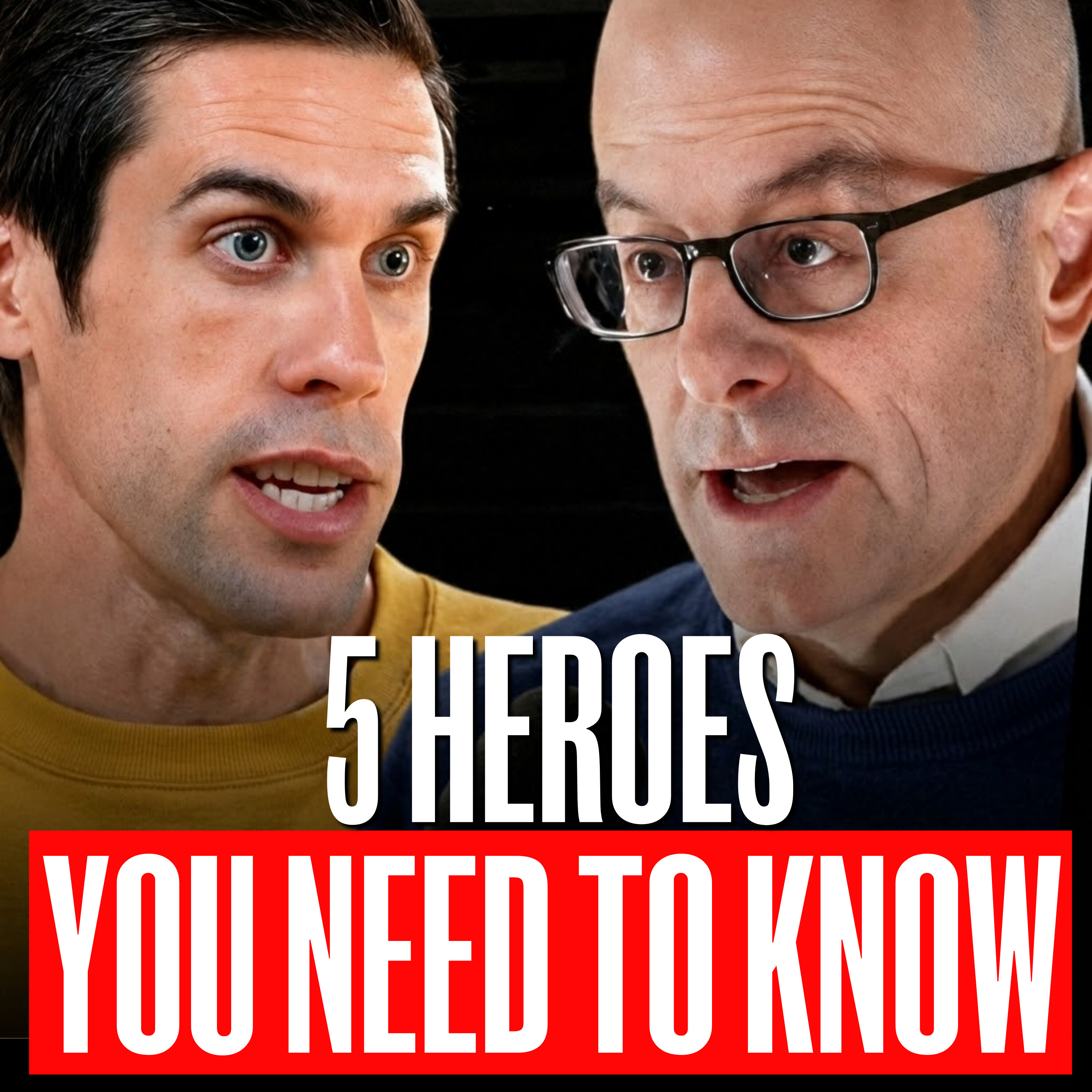
Some of the greatest American heroes are people most of us have never heard of. In today’s episode, Ryan talks with retired Brigadier General and military historian Ty Seidule about five remarkable Americans whose stories embody courage, sacrifice, service, and leadership. They also talk about why the people we choose to honor matter, what the renaming of military bases reveals about American history, and why telling the truth about the past does not mean giving up on greatness.
Ty Seidule served in the U.S. Army for more than three decades, retiring as a brigadier general in 2020. He is a professor emeritus of history at West Point and served as vice chair of the Congressional Naming Commission, which was tasked with renaming Department of Defense assets that honored Confederates.
Ty Seidule is the author of A Promise Delivered: Ten American Heroes and the Battle to Rename Our Nation’s Military Bases and Robert E. Lee and Me: A Southerner’s Reckoning with the Myth of the Lost Cause.
📚 Grab signed copies of both of Ty Seidule's books at The Painted Porch | https://www.thepaintedporch.com/
👉 Follow Ty Seidule on Instagram | @tyseidule
🎟️ DAILY STOIC LIVE | Ryan Holiday is coming to a city near you! Grab tickets here | https://www.dailystoiclive.com/
🎙️ AD-FREE | Support the podcast and go deeper into Stoicism by subscribing to The Daily Stoic Premium - unlock ad-free listening, early access, and bonus content: https://dailystoic.supercast.com/
✉️ FREE STOIC WISDOM | Want Stoic wisdom delivered to your inbox daily? Sign up for the FREE Daily Stoic email at https://dailystoic.com/dailyemail
--
Stop online threats before they become real-world attacks. Visit ironwall.com/DAILYSTOIC and request a free Risk Assessment to see exactly how exposed your executives are.
--
Wealthfront’s high-yield cash account: https://www.wealthfront.com/stoic
This experience may not be representative of other Wealthfront clients, and there is no guarantee of future performance or success. Experiences will vary. Ryan Holiday, who’s a client of Wealthfront, receives cash compensation from Wealthfront Brokerage for paid testimonials in his podcast, creating a conflict of interest. More details available via the referral link. The Direct Deposit Plus Investing Program from Wealthfront Advisers LLC and Wealthfront Brokerage LLC provides eligible clients a 0.25% APY increase above the base APY on eligible Cash Account balances (up to an overall boosted rate of 4.30% for a limited time when including the three month 0.75% APY boost for new clients) when you direct deposit $1,000 a month, plus open, fund, and maintain an investing account. Wealthfront may change or end the program at any time and determine eligibility at its discretion. Terms apply. Full details at wealthfront.com/promo-terms.
The Cash Account, which is not a deposit account, is offered by Wealthfront Brokerage LLC ("Wealthfront Brokerage"), Member FINRA/SIPC. Wealthfront Brokerage is not a bank. The Annual Percentage Yield ("APY") on cash deposits as of January 30, 2026, is representative, requires no minimum, and may change at any time. References to the APY for the Wealthfront Cash Account, including any APY increase, are to the APY paid by insured depository institutions that participate in our cash sweep program (the "Program Banks”). Wealthfront Brokerage does not pay interest. Wealthfront Brokerage sweeps cash balances to Program Banks, where they earn the variable APY.
Instant and same-day withdrawals use the Real-Time Payments (RTP) network or FedNow service. Transfers may be limited by your receiving institution, daily caps, or participating entities. New Cash Account deposits have a 2–4 day hold before transfer. Wealthfront does not charge fees for these services, but receiving institutions may impose an RTP or FedNow Fee. Processing times may vary.. Fees & Eligibility requirements may apply to certain checking features.
Investment advisory services are provided by Wealthfront Advisers LLC, an SEC-registered investment adviser. Investing involves risk, including the possible loss of principal. Securities investments are not bank deposits, bank-guaranteed or FDIC-insured, and may lose value.
See Privacy Policy at https://art19.com/privacy and California Privacy Notice at https://art19.com/privacy#do-not-sell-my-info.
