
 Ask ChatGPT


- Podcasts
- The Daily Stoic
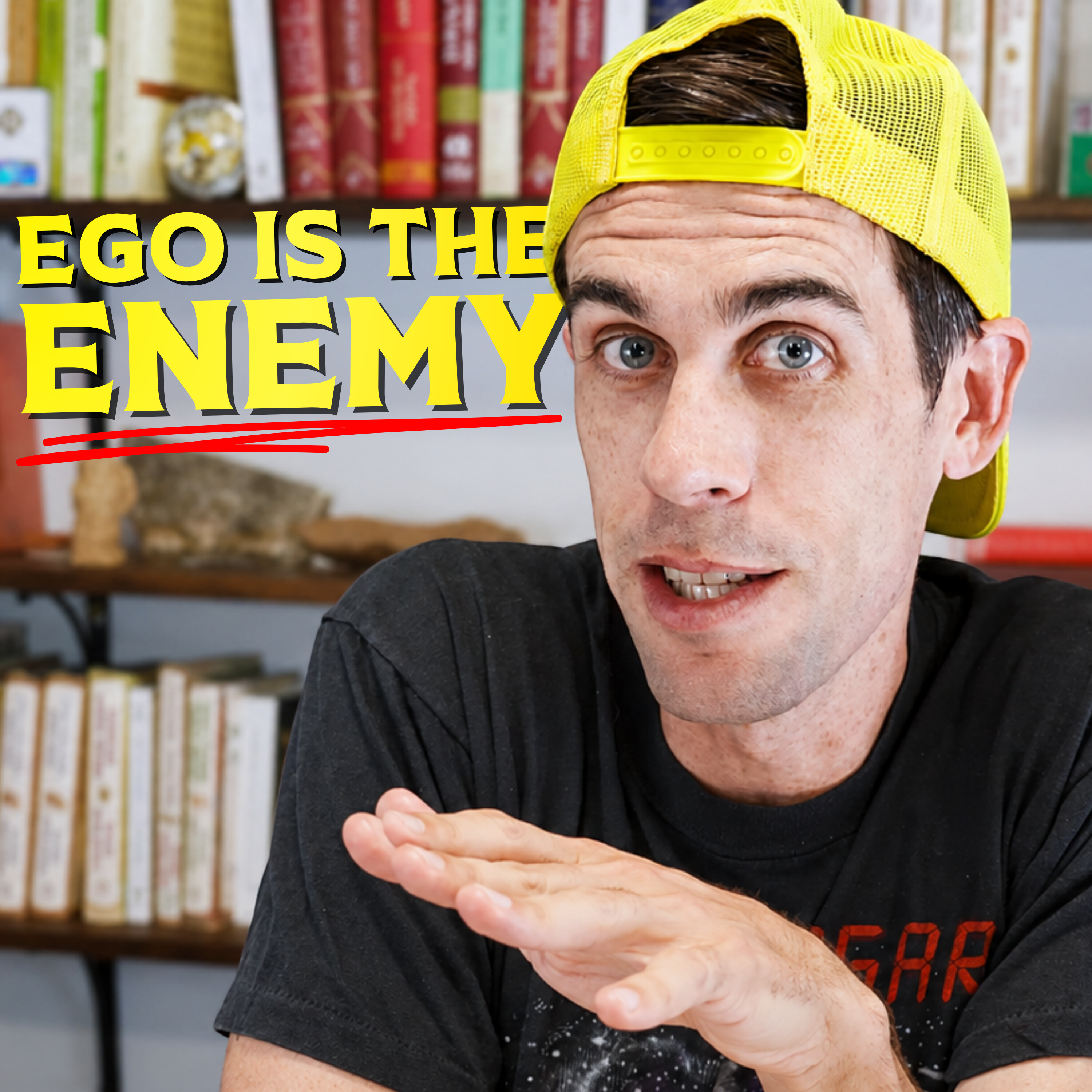
- 6 Stoic Rules To Beat Ego
In short
Ego as a hidden self-absorption that blocks humility, self-awareness, and wisdom; how “fearlessness” and pride can become dangerous habits once stakes rise; why success can intensify ego (“humiliation and vindication” traps) and destabilize people after winning.
Guests
No named guests in the transcript. Multiple speakers appear, but the episode is presented as Daily Stoic with interviews/conversation segments rather than identifiable guest profiles.
Key claims
Ego shows up as refusing to ask for help, avoiding admitting weakness, hypervigilance about how others see you, and clinging to “I’m right/I’m special” after being vindicated. Stoic humility and structured debriefs (criticism without ridicule) prevent pride from causing “the fall.” Craft and constant feedback reduce narcissism more than fame does.
Notable examples
Hadrian’s grand mausoleum vs Marcus Aurelius’ warning that you’ll be “nobody”; fighter-pilot squadron culture where asking questions felt like weakness; Christopher Booker (thalidomide investigator turned climate denialist); Galileo/ Semmelweis as “rebel” narratives; comedy “bringer shows” and the taste-talent gap (Ira Glass); NFL quarterback exit advice (Roger Staubach: “run away from the game”); Brady/Elway post-career identity struggles.
Written by AI. May contain mistakes.
Chapters
0:50
The Dangers of Ego in High-Stakes Environments
Discussion on how ego manifests in competitive environments and its negative impacts.
“Not just the dangers of ego, but timeless practices that help sweep it away, that help you get clean and stay good.”
3:37
Historical Reflections on Ego and Humility
Exploration of historical figures and the lessons on humility from their legacies.
“Both of them are somewhat adaptive at the beginning of things because ego makes you go out for things that you have no business going out for.”
10:18
The Ego Trap in Successful Movements
Discussion on the pitfalls of ego in social movements and individual successes.
“I used to be big into new atheism, right?”
14:00
The Trap of Genius and Doubt
Exploring the challenges faced by those who achieve unexpected success and the doubts they encounter.
“of footing not to convince yourself the same thing is happening.”
15:00
Ego and Perception of Success
Discussing the impact of ego on self-perception and the narrative of success.
“I had a hunch and they had a hunch and my hunch turned out to be not even right, right?”
16:00
Narcissism in Society
Examining the pervasive issue of narcissism and its implications in modern life.
“when you have the other idea or when those people go, okay, hey, you did succeed, but you should be careful of X, Y, and Z.”
17:40
The Role of Ego in Performance
Analyzing how ego influences performance in creative fields, particularly in music.
“Well, that's why it meant I think it might actually be worse for the ego to be in a failed or an up-and-coming band than a successful band.”
19:30
The Balance of Confidence and Humility
Highlighting the importance of balancing confidence and humility in creative endeavors.
“To me, where the ego is required in the sort of performative, of whether it's sitting down to write a book and write a song, whatever, is the part of you that goes, everyone wants to hear this.”
20:50
The Journey to Mastery
Discussing the long process of mastering a craft and the challenges of early confidence.
“I think if you're not looking very closely or you're not very informed, like you're not savvy, the ego and confidence look very similar.”
23:20
Celebrity, Narcissism, and Craft
Exploring the relationship between celebrity status and narcissism in different fields.
“I'm like, they were like, dude, we're not coming to any more shows.”
Show all 15 chapters
26:00
Navigating Ego and Opportunity
Reflecting on the challenges of managing ego while seizing opportunities in creative careers.
“I feel lucky because like my first book came out and did well, but the stoic stuff that was much more gradual.”
28:00
The Challenge of Opportunities
Explore the tension between seizing opportunities and prioritizing personal goals.
“The part of you that can't waste a single snap.”
28:56
The Exit Strategy of Athletes
Discuss how famous quarterbacks handle their identity after retirement.
“It's all of those things wrapped up in that.”
30:09
Coping with Transition
Learn how athletes adapt to life after sports and the challenges they face.
“It's like, why was Kobe Bryant like producing movies or like, why did Kobe Bryant need a venture capital fund?”
31:35
The Burden of Fame
Understand the psychological toll of fame and the struggle for normalcy.
“Elway went and became the GM of the Arena League Colorado Crush.”

Ask about this episode
Get the gist, explore an idea or ask about something said.
 Claude
On The Daily Stoic, what are the key points of this episode?
Searching your listeningTranscript
Automatic transcript. May contain errors.
0:00Ryan Holiday: Welcome to the Daily Stoic Podcast, designed to help bring those four key stoic virtues, courage, discipline, justice, and wisdom into the real world.
0:14Ryan Holiday: You don't need to be an egotistical asshole to be successful. Are there a lot of egotistical assholes who are successful? Sure. But there's also quite a few catastrophic failures who were Caligula, Nero, Xerxes, Mussolini, And then, of course, business and art, entertainment show us the truth of the old Greek saying that whom the gods wish to destroy, they first make proud. And so for the Stoics, the antidote to this was humility, was self-awareness, was introspection, was reflection. And that's what we're going to talk about in today's episode. Not just the dangers of ego, but timeless practices that help sweep it away, that help you get clean and stay good.
1:02My first squadron, there was a lot of jockeying for position with the young pilots, the lieutenants, the captains. You're friends with everyone. You trust that person with your life, super tight knit, but you're also very aware of how everyone's doing. You don't want to be made to look bad. And I think a lot of it is you feel like you're really establishing your reputation in this career field. You're going to be in for a decade and you don't want to look incompetent. And for me, for a long time, I thought I was like, I was like too humble. Like I wasn't boisterous. I wasn't loud. I wasn't type A.
1:34And I felt like I had a hard time fitting in in that culture.
1:37Ryan Holiday: Yeah. But in hindsight, I realized that my ego was actually getting in the way because I saw asking questions, asking for help, letting people know I was struggling with a concept in the airplane as weakness. Yeah. And I felt like I could not show weakness in that environment. Yeah. There's an ego. People don't think about it this way, but there's an ego even in that kind of imposter syndrome or that sort of wallflower-ness where you just think people are thinking about you way more than they are and that these things say more about you than they do. And so, yeah, because you don't want to look stupid, you'll stay stupid or because you don't want to ask for help, you don't get help, or you don't want to look like you want it too badly so you don't get it.
2:20Ryan Holiday: It's this weird thing where, yeah, the person who needs to be the center of attention, they make everything about them that's a very obvious and harmful form of ego but then we have this other form of ego that that maybe we convince ourself is humility or self-awareness or something but it's actually just a similar self-absorption yeah my whole world revolved around me and that i felt like everyone was watching every little thing that i did and so i was hyper vigilant about how i reacted to people's comment and part of this i don't think you can not talk about gender are being layered in there, right?
2:55I'm like one of two women in a squadron of 50 pilots. And there's a lot of like nuances of, oh, they said an inappropriate joke. Everyone looks at me and waits for my reaction. And I felt the responsibility of that. And also if I'm bad at something, now there's a stereotype that female fighter pilots are bad at this thing. I'm a data point of one.
3:14Ryan Holiday: You're just spending too much time thinking about what other people are thinking. And you don't realize that the cost of that is thinking about things that you actually have some semblance of control over or would make a difference. You're just like, what are the critics going to say? How's this going to go? Do they like me? Did that come off weird? And yeah, what you're not thinking about is like flight semantics, schematics or whatever. It's a massive distraction. Fearlessness. And then you would say ego. Both of them are somewhat adaptive at the beginning of things because ego makes you go out for things that you have no business going out for.
3:46Ryan Holiday: And so in the beginning, it's an advantage or at least it's not as costly as it becomes later. but it's a real bad habit to pick up in both cases i feel like not being afraid of things you should be afraid of yeah right like you will not be an old fighter pilot with that mentality especially when you're having to stand out in a field you know or you're having to get past a lot of reservations or resistance all that can kind of work to your advantage and then you get there and now you're an asshole or you know now you you think you're exempt or you've made a bunch of enemies or again yeah you've picked up really bad habits and you don't have the kind of sound fundamentals which should be like self-awareness empathy etc you know a sense of caution and prudence and and now even though it got you where you wanted whether it's a fighter pilot or a record deal or you have a successful business the irony is it gets you what you want and now the stakes are much higher so you're going to be learning these painful lessons like the cost of fearlessness or ego and now you're doing it in the air instead of in a simulator or you're doing it with something to lose like yeah all that you've built and and uh that's why they say pride goeth before the fall at what level do you want that fall to happen i think our safety net for that because the what got you there if you are very overly confident if you are hangman from top gun maverick yeah that can get you places initially yeah but that debrief at the end of the flight and the way that's structured and the humility required in there like every little thing you did wrong in the air is picked apart yeah and not in like this ridicule shame you way but in like okay you were late to that why were you late what were you thinking about did you have the wrong information or did you have the right information to make a wrong decision?
5:36Like we just peel back the things until we're like, oh, here's the root cause of why we failed at our mission. And no one is spared from being criticized. And we actually have language in our grade sheets. Like when you're an instructor and you're teaching someone new and they're just pushing back, you're like, hey, you didn't do this like you were supposed to. What happened? And they will come up with excuses, not reasons, but excuses, right? They won't take ownership of it. They won't walk away with, okay, next time I'm going to do this better. It's just failure to take instruction. Yeah. And people can get kicked out of programs or even out of the jet and move to a different career field if they just continue to because it's dangerous.
6:12Yeah.
6:17Ryan Holiday: Behind me is an enormous mausoleum built by and for one of the most powerful men in history. A man of enormous ego and enormous vanity. Hadrian, when he had this built in 139 AD, he said to his architect, make it bigger and more impressive than Augustus's. And indeed, it rivals not just Augustus, but it rivals some of the Egyptian pharaohs. And it held not just Hadrian's remains, but that of his successors too, Antoninus and Marcus Aurelius himself. But Marcus Aurelius would have found this to be the antithesis of Stoic philosophy. He actually addresses it in meditations. He says, consider that before long you'll be nobody, just like Hadrian, just like Augustus.
6:59Ryan Holiday: He said, so live and act with humility. Now you might think the fact that this is still here 2 ,000 years later, that it's a museum, that it has endured through all these centuries that it might disprove Marcus's point but actually it doesn't because you know what happened in 400 AD Rome was sacked by the Goths and they broke into the temple and they scattered the ashes everywhere we have no idea where they are they were lost to the ages which is also something Marcus Rios talks about in meditations he says Alexander the Great and his mule driver they both died and the same thing happened to both and indeed the same thing happened to Augustus.
7:36Ryan Holiday: We have no idea where his body is. The same thing happened to Hadrian. The same thing happened to Antoninus. The same thing happened to Marcus Aurelius. And the very same thing will happen to you. He's saying, you know, ego is the enemy. Live with humility. Remember, you are not immortal. You are not a god. You are not special. You cannot defy the laws ultimately of gravity or of time or of decomposition. This episode is sponsored by BetterHelp. I don't think stoicism is about being emotionless, but it is about thinking about those strong emotions. We have questioning them, getting to the bottom of them, asking if they're healthy or productive or not, asking if they're based on anything real or not.
8:18Ryan Holiday: And these are all questions I've been over with my therapists over the years. I said plural because I've switched at different times in my life based on where I lived, what I need. One thing that's been consistent, though, is I always do remote therapy. I want to find the best person, which means I don't really care where they live. Also, I don't want to drive across town. I don't want to wait in traffic. I don't want to do any of that. That's where today's sponsor comes in. If you've been considering therapy, check out today's sponsor, BetterHelp. BetterHelp makes finding a therapist super easy.
8:46Ryan Holiday: BetterHelp does the initial matching work for you. You can switch at any time. And with over 30 ,000 therapists, BetterHelp is the world's largest online therapy platform, and they serve more than 6 million people globally. Don't let stigma stand in the way of support. Start therapy with BetterHelp. Sign up and get 10 % off at betterhelp.com slash dailystoicpod. That's betterhelp.com slash dailystoicpod. This year is going to be the 10-year anniversary, not just of the Daily Stoic book, but dailystoic.com, the email, the podcast, all that stuff. And I don't think we would be standing here 10 years later if it weren't for Shopify.
9:21Ryan Holiday: Shopify has been the back end of so many things we've done from the New Year New You challenges to the medallions to posters. Even right now, if you're going to buy a signed book from me, you're going to be checking out through Shopify at dailystoic.com or if you're buying something from Daily Dad there or if you come to the Painted Porch, we even use Shopify at point of sale in the store. And if you've been sitting on a business idea, Shopify makes it easy to make that happen. You've got everything you need to start selling and Shopify handles the setup and the checkout and you can focus on growing the business and they've got all the tools to help you with what you need, which is why Shopify powers millions of businesses worldwide, from household names like Mattel and Gymshark to small businesses just getting started like Daily Stoic was not that long ago.
10:04Ryan Holiday: With Shopify, nothing stands between your idea and real business, so go make it one. Start your free trial at shopify.com slash stoic. That's shopify.com slash stoic to start your free trial. I used to be big into new atheism, right? And that was a movement that was afflicted hugely by a sense within it that people were just smarter than Christians. I see that tendency everywhere now, and I'm sure I'm prone to it as much as anybody. So many social movements now were defined by a feeling of sort of about the kind of the people, the outside people, that, you know, they're the kind of benighted heathens outside the golden circle.
10:41Ryan Holiday: Well, you said somewhere, and I think you're right, you said that the story of genius is really the story of ego or that every genius story is the story of ego. I think the tension of being smart or being right, it can be a real problem. Someone told me once that making a successful contrarian bet can be a sort of cognitively devastating experience. Because you did a thing and everyone told you you were wrong. Everyone told you you're an idiot. They were incredibly condescending along the way and smug about it. and then you prove them wrong, it is very hard for you to go back to zero on the next thing and the next thing, right?
11:25Ryan Holiday: You're starting now with a cynicism and a skepticism and a sense of superiority. That is an imbalance that affects your future endeavors and political and social opinions. Oh, I completely think that's true. I remember having this conversation with a journalist. There's a British journalist who died a couple of years ago called Christopher Booker. And he became in his later years a climate change denialist. And I asked someone who'd worked with him, you know, how did that happen? He was so smart. Like, how did he end up just spending the last 10 years of his life talking about the hockey stick graph and all this stuff we used to hear about before, you know, every summer scorched Texas and wildfires raged across the Midwest.
12:04And people kind of went, no, I do think this is a bit weird now. And this other journalist said, well, he was one of the, Christopher Booker was one of the original journalists involved in uncovering the thalidomide scandal, which was a huge medical scandal in the 1960s in Britain, where women were given a morning sickness drug and it led to limb deformities in their children. And for a long time, the medical establishment denied this, covered it up, and it took a really big investigation by the Sunday Times and others to bust this open and get people compensation. and he said essentially that generation of journalists was ruined by it because they had seen this massive conspiracy where the establishment were lying to them and they were right.
12:43And I think that's true. My friend Sarah Dytton once said this about the Iraq war ruining the left, right? Being everybody in the left who was like, the Iraq war is a very bad idea. I think it's a foreign policy disaster, you know. And then it was, got the idea that actually this is true of everything. And you just, you know, you end up applying the same paradigm because it was right last time. And as you say, the key thing is that humiliation, the humiliation and vindication. And I write about this in the book because there's an idea of the kind of scientist as rebel that comes through. You see it in the Galileo story.
13:11You see it in Ignaz Semmelweis and his work on antiseptics and maternal mortality. That's such a compelling story to us. The idea of the one, usually the one man standing up against the crowd and being laughed at and then being vindicated. it's so unbelievably emotionally satisfying that unfortunately we vastly over index on it and we see it you know we almost want it to happen every time um because it's just whereas obviously that would be absurd you'd never be able to get in an airplane if it turned out that every you know every every engineering thing was wrong you never go to a hospital of every bit of medicine was
13:42Ryan Holiday: actually wrong and when you watch people not engage in good faith with your ideas and be intellectually dishonest and you watch what you actually really were thoughtful about be sort of caricatured and treated as a straw man, it's hard for you later when you actually aren't on as sound of footing not to convince yourself the same thing is happening. And so I think you see that a lot. And this is actually, I think, the trap of scientific genius. It's the trap of entrepreneurial like everything that worked, it was doubted at the time. I mean, Nikki, our mutual editor, when I came to them and I said I wanted to write a book about an obscure school of ancient philosophy, she told me later that they were like basically just humoring me and that they hoped I would go back to writing marketing books after, right?
14:36Ryan Holiday: And so I feel like I've had to do a lot of work with the success of that, of reminding myself that it actually was a bad idea. Like the conventional wisdom, like she was not like being elitist. The amount of money that they offered me and the expectations they had for the book were within the bounds of reason and made sense given their past experience. They were not snubbing me. They were not insulting me. I did not know better. I had a hunch and they had a hunch and my hunch turned out to be not even right, right? Because it succeeded more than I thought it would succeed. I can't retroactively give myself more prescience than I had because I didn't have any.
15:23Ryan Holiday: I was just interested in something and I thought it could work. And the fact that it did work at a pretty extraordinary level, that is a surprise to both parties, right? And so what can happen? I saw this when I was at American Apparel. Well, you know, the idea was insane. What Dov Charney was trying to do and what he was trying to pull off in his life, everyone was right to say that it wasn't gonna work. It worked despite itself. But if you tell yourself a story afterwards that you're a genius and that you knew better and that all these people are idiots, then you're gonna get yourself in trouble later on when you have the other idea or when those people go, okay, hey, you did succeed, but you should be careful of X, Y, and Z.
16:11Yeah, they call it Nobel syndrome, I think, don't they, when people win a Nobel Prize, and then they start going, well, you know, never mind organic chemistry. Wouldn't you like to hear a few of my thoughts about astrobiology?
16:23Ryan Holiday: Yeah, didn't Newton get into alchemy? Yeah, Newton spent a lot of his life in alchemy, and also a lot of his life on something called biblical chronology, which is so wacky that we don't even remember it today, basically trying to work out when events in the Bible would have happened to work out how old the earth would be from that point. There's loads of examples like that. You know, Marie Curie, one of the greatest scientists, she would go to seances, you know, she would go and see mediums. It was a very popular thing to do at the end of the 19th century. And I think there's an interesting bit about that, right?
16:51Because she was working with radiation, which was an invisible force. Yes. You know, but that was real. So, you know, why not ectoplasm? And I think that's the thing. if you're working at the edge of the kind of the known, then maybe you're sensing you are going to end up with quite a fluid sense of reality. But I think isn't what you're talking about a bit narcissism. If you go along with the conventional wisdom and you're right, that doesn't distinguish you or say anything about you. But if you buck the conventional wisdom and you're right, that means you are better. And I just, I think so much of the troubles we see across our society are essentially narcissism.
17:23Conspiracy theorizing fundamentally to some extent is narcissism, right? It's like your sheeple, your NPCs, and I've seen the truth. I think it's very important to lots and lots of people now to feel special, to not feel ordinary. But I think it is a real challenge of modern life is working out which experts to trust and which authority to trust and to calibrate that, right? Not to just take everything that you're told by people with letters after their name as gospel, but also not to go so far out that you just, you know, you just don't believe anything at that point i always find it remarkable how easy it is to see ego and other
18:04Ryan Holiday: people oh god as if and then how insidious it is to see it in yourself oh yes you know horrifying exactly it's something uh constantly work on keeping in check constantly you know especially being in a band yeah i would say being a lead singer is probably the of a successful band maybe even maybe it's actually harder to be in a not successful band but there's something about it that is uniquely toxic to the ego yeah it's like gasoline it's it also is a requirement a little bit i think to be the front man of a band uh is to have a bit of ego or because you think i should be the one i should be the main one yes i don't know it's interesting i kind of became the singer my band by mistake yeah you know uh but like to be a good front man you have to have the willingness to get up and make an idiot out of yourself again and besides a smidgen of talent the only requirement to be a good front man is the willingness to get in front of other people and make an idiot of yourself again again and again until you get good at it right yeah and in order to do that i believe there has to be a healthy amount of the ego.
19:19Ryan Holiday: Well, that's why it meant I think it might actually be worse for the ego to be in a failed or an up-and-coming band than a successful band. Because a successful band, you can be like, you understand it's unhealthy and you can create some artificial distance. You can be like, it's not about me. I don't want to take it too seriously. You can serve self-efface. To me, where the ego is required in the sort of performative, of whether it's sitting down to write a book and write a song, whatever, is the part of you that goes, everyone wants to hear this. Yes. When no one has asked for it. Right. Literally no one has asked for it.
19:53Ryan Holiday: And in fact, they're actually telling you for a good chunk of the time you're doing it, that they are fundamentally not interested. Yeah. Like you are getting rejected over and over and over again. And you're like, no, but this is really good. Everyone needs to hear it. And that is the definition of ego, right? Like the rejection of the evidence over your belief or faith in yourself. And so I think in that way, ego can be adaptive early on. The problem is it's so fundamentally maladaptive later on. And this is, I think, the lead singers or artists or whatever that we know about that we would say is egotistical are the ones who are fundamentally stuck at how they were.
20:34Ryan Holiday: Yes. Whatever they had to be to be the up and coming lead singer of Guns N' Roses, you are still the lead singer. Yeah, for sure. And we call it LSD, lead singer's disease. He's got a bad case of the LSD. I managed to keep mine in check.
20:57Ryan Holiday: I think if you're not looking very closely or you're not very informed, like you're not savvy, the ego and confidence look very similar. Right. Just like mania can look like charisma. Yeah. But if you, so if you've never been around someone and be like, oh, this is what a crazy person does. Yeah. You're like, I'm pumped around this guy. You don't realize like it's going to crash at some point. Yeah. Especially if you're not confident, the confidence of egotistical or narcissistic people. I mean, like you look at the first couple of people that I worked for, I was clearly searching for something most people see that kind of boss and run the other way we're like i love it here yeah this is normal you know yeah on a long enough timeline it becomes a disadvantage that's why i think you can confidently go like ego's the enemy but it clearly i mean there's obviously an extraordinary amount of very successful very egotistical people yeah i just think it's it's two things one like you gotta like that's the myth of was it krosis uh where it's like you can't you gotta wait till the end till you judge a person happy um but i also think unless you're really really studying them closely you're not seeing all the ways that they actually could have been more successful right so it's like maybe yeah that person's ego makes them shameless enough to ask for stuff that they have no business doing but by the same token they tend not to do the work to then earn the thing because they think they're entitled like yeah you know what i mean like it seems like confidence to be like give me the shot games on the line yeah but like actually a great athlete it's like they know they have to do the work to earn that you know yeah and if you're just like no no give it to me but you don't have the goods yeah then you're gonna lose said game when it's on the line yes it's the the confidence to to to want to get the opportunity to to to put yourself in that position even when i was starting out it was like you know there's these things called bringer shows for stand-up have you heard of that like basically you get stage time if you bring five friends you if you bring the audience you get stage time and um so early on i like did like an open mic and i like and then there's a bringer show that yeah we can give you stage at the we can use stage time at the comedy store i'm like amazing yeah and yeah just bring five friends so immediately i was like i'm already on stage at the comedy store this is crazy and then i quickly you you know, I wore out all my friends.
23:21I'm like, they were like, dude, we're not coming to any more shows. It was this thing where I had like the naivete or to be like, no, I can be on stage at the comedy store, but then quickly learning of like, oh no, it takes, what it really takes is two to three open mics a night. Yeah. Every night for 10 years.
23:38Ryan Holiday: Yeah, you need a certain amount of shamelessness to get up and do the thing when you're bad, which you invariably are at the beginning. Yeah. But you also need like the humility and maybe even the self-loathing to like think that you're bad. Yes. So you do the work to get good. Yeah. And you see that a lot. Yeah. Like the people who will get off stage and be like, man, I crushed. Yeah. And you're like, no, you didn't. Yeah. If you walk off feeling like you crushed, it's like the best in the world don't feel that way. No. So that you feel that way. So that's where ego is the enemy because it's making you stay as you are.
24:12Ryan Holiday: It's probably more pleasant to not feel shitty. Yeah. But the shitty is like Ira Glass talks about this. He's like, there's a taste talent gap. Yeah. When you start and you have good taste, which is, you know, what is funny or, you know, what's beautiful or, you know, what's good writing. But like you can't do it. But the desire to bridge that gap is like the propulsive force that makes you good. But if you're just like, maybe you have good taste, but then you're also biased when it comes to yourself or you're delusional when it comes to yourself. that's a problem because now you're just not you're just like confidently being shitty if you don't believe you can do something you're not gonna be able to do it yeah just because you believe you can do something is not even close to sufficient to being able to do it yeah it's always having this kind of a this mindset of like no there's always room for improvement yeah like you're never perfect always a student that's one of my favorite things is just because like you know you'll see like bill burr go off stage at the comedy store and he to me i'm like he just crush yeah but to him he's like oh that one bit like i i'm not getting it right you know he's there's that there's that criticism there's like self-criticism of like no i need to improve this to really kind of it's always perfecting it and it's it's it's kind of never reaching that destination i think well dr drew did a study many years ago of he as guests would come in to love line he gave them like this narcissistic personality test because like it's interesting like you'd think you'd be able to study narcissism, but most really successful narcissists are obviously inaccessible to like clinical research, right?
25:46Ryan Holiday: Most studies are done on like college students for class credit, you know? So he was able to give this narcissistic personality test to like all the guests. So like a range of celebrities and musicians, and then also like reality TV stars and whatever. And what I remember from the study is that they found that, yeah, like most celebrities are have some level of narcissism but it's this interesting question of like are narcissists attracted to celebrity or does celebrity make you narcissistic it's probably a little of both but one of the things they found was that the more technical the thing you did was the less narcissistic you were so like drummers might be very famous because they're a huge band but what they do is really fucking hard.
26:32Ryan Holiday: Yeah. And it's like a craft that you love. So it's like inherently humbling and it's inherently about like solving this like puzzle, you know, versus like someone who was on the real world road rules challenge is like attractive, in good shape, made a good like pitch video. Yeah. And then is maybe like dramatic. So like they, they're both famous, but one is getting their ass kicked by the craft of the thing yeah and the other one is mostly just thinking about like how can i get more on tv yeah it's like the craft itself humbles you yeah and keeps you in check yeah that makes a lot of sense stand-up is like a thing you're going and doing every night and it's whether you're doing it for a thousand people or ten people it's fucking hard and you get humbled by the audience too if you're not improving if you're not constantly putting your A game forward, the audience will humble you.
27:28Ryan Holiday: I feel lucky because like my first book came out and did well, but the stoic stuff that was much more gradual. And then I know people who like their first book had just like crushed. Yeah. That's like now you're the person instead of like trying to be the person. I spend a lot more time writing than being the writer. If your first thing just, now you're the guy, the person who did the thing. And that I think can be destabilizing and disorienting.
28:01Ryan Holiday: The part of you that can't waste a single snap. I mean, I get it because I'm not like the idea of like, I don't actually need this. I can say no to this and be fine. Or like people will be like, hey, do you want to write this thing for this thing? And I'm like, why am I even considering this? Do you know, like I have three books I have to write And then an unsolicited request to do something now because it's there, I'm considering it. Right. And so you can see how the part of you that goes, no, I fucking seize every opportunity that's in front of me. That's what actually makes you a great quarterback.
28:35Ryan Holiday: But then it makes it hard for you to be a good quarterback and then regular person because you're just that all the time. You're applying the quarterback mentality to do you want to do this other thing or not? And this other thing is superfluous. Yeah, I mean, that entire, in my own way, I can relate to that, what you were saying. And like, it's that entire thing. It's that jockeying between insecurity and needing to be praised or the rush you get from a byline, the rush you get from standing in front of people and giving, you know, a speech and having people give you a standing ovation. It's all of those things wrapped up in that.
29:11And, you know, when you're out of the quarterback space, there are things in place maybe to check you here or there, even though it's ultimately up to you. And when you're in that tunnel of the quarterback space, there's very, very few. Yeah. And that's where I think it becomes difficult. And that's where I think that for all these guys, you know, Steve Young loved Roger Staubach. And he asked Roger Staubach when he retired, because Staubach obviously has probably become the most successful great quarterback ever in retirement. I mean, he's a real estate, has a real estate empire. And, you know, Steve asked him, like, you seem like you've done pretty good.
29:45Like, how do you walk away from football? And Staubach was like, run. You have to run away from the game. You can never look back. And Steve kind of ran. You know, he stayed, he kept one foot in the pool. But like, it's that exact thing because Joe Montana, you know, says, I wish that everyone could experience being an NFL quarterback for just one Sunday. Yeah. Because then they'd get it.
30:09Ryan Holiday: Yeah, yeah. Right. But it is, yeah, it's weird. It's like, why was Kobe Bryant like producing movies or like, why did Kobe Bryant need a venture capital fund? Some part of it's probably like, yeah, you got to put that energy somewhere. But also like, if you don't wrestle with why you have that energy, there's just never enoughness. And so you're just doing, doing, and, and, you know, at the end of the day, we all fucking die and nothing happens, you know, like. I think that he and Brady did this too, but I think that he knew that it was going to be devastating. Yeah. It was going to be a death of sorts when he walked away.
30:44And so he was looking for exit ramps to so that when he was exiting, he was exiting into things. Yeah. And, you know, when you had Brady here, Brady, you know, has this like career that spans two decades, accomplishes everything you could accomplish. Years before he retired, he had set up his Fox deal. He had these other businesses. You know, he had a production outfit. He had his TB12, quote unquote, lifestyle brand. You know, he had all these things he was planning to do. And yet still, he's talked about it where, you know, he said he felt like he was like, you know, in a washing machine where you're just bouncing everywhere.
31:17Yeah. And even it got Brady. Yeah. Even with all of that, it got Brady. And Elway was talking about how, you know, you exit Super Bowl champion, all these things, perfect ending. Then you go into these other spaces and you're behind everyone else. Yeah. And your name only gets you so far. Elway went and became the GM of the Arena League Colorado Crush. Like, what is the great John Elway doing becoming the GM of an Arena League team and doing these goofy commercials with Jon Bon Jovi? Yeah. It's because that was his graduate school. He knew that he wanted to get back into football, and he wanted to learn how to run a team, and he looked at that like his graduate school for it.
31:56Ryan Holiday: Yeah, it's funny. You'll be like, why is the ex-president on The View? or what you know like you're like but like because you need your not your fix but you're just you're used to being able to tell people what you're thinking and like you know and then all of a sudden you're just a guy you know like they asked truman what he did the first day he was out of the white house and he goes i had to take the suitcases up to the attic and you're just like what a come like that that's not there there's no transition there and you go from being a not regular to a regular person and you spent your whole life trying not to be regular right and and then it catches up with you and that that's a that's a brutal thing because if you if you were content to be a regular person you would have walked away the second you got like the Fuck you, buddy.
32:52Absolutely. You know, Springsteen talks about how he, you know, goes off a cliff into depression when he comes back from a tour and you go from being king to being a highly paid chauffeur, you know, basically. And, you know, even in his 60s and into his 70s when he spent his entire life doing this and he knows the ebbs and flows of it, it would still get him. Like, that's how powerful that is.
From the publisher
You don’t need to be an egotistical asshole to be successful. History is filled with powerful people whose pride ultimately destroyed them, from Caligula and Nero to Xerxes and Mussolini.
The Stoics believed the antidote to ego was humility, self-awareness, reflection, and honest introspection. In this episode, Ryan explores the dangers of ego and the timeless practices that can help you keep it in check, stay grounded, and remain a good person as you become more successful.
🎥 VIDEO EPISODE | Watch this episode here: https://www.youtube.com/watch?v=zhibdimmh7s
🎟️ DAILY STOIC LIVE | Ryan Holiday is coming to a city near you! Grab tickets here | https://www.dailystoiclive.com/
✉️ FREE STOIC WISDOM | Want Stoic wisdom delivered to your inbox daily? Sign up for the FREE Daily Stoic email at https://dailystoic.com/dailyemail
See Privacy Policy at https://art19.com/privacy and California Privacy Notice at https://art19.com/privacy#do-not-sell-my-info.
More from The Daily Stoic
All episodes
We use cookies.They keep VO running smoothly and help us improve it. Privacy policy