
 Ask ChatGPT


 The Daily Stoic
8 Jul 2026 · 34m · 20 chapters
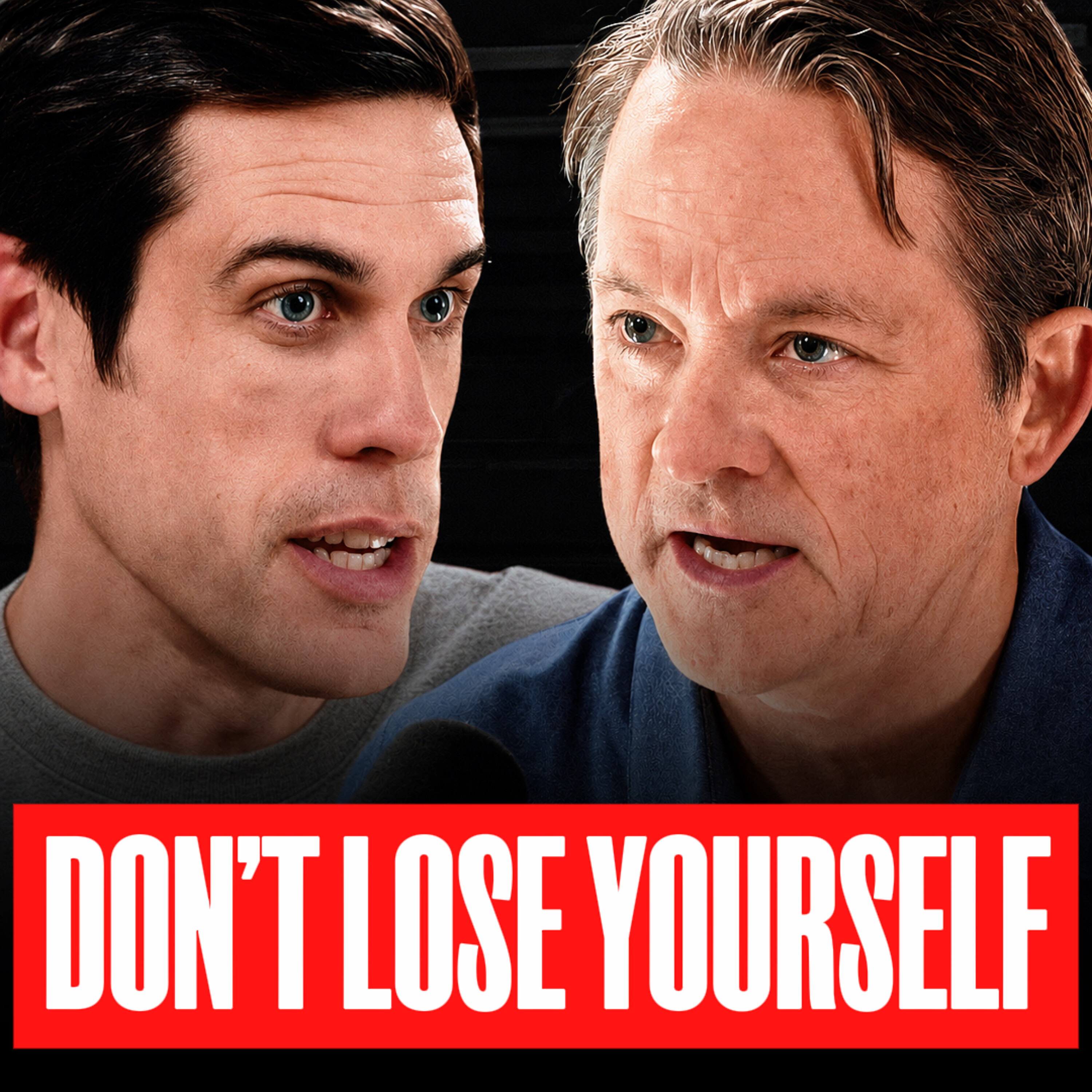
Winning without losing yourself—distinguishing measurable success from human flourishing (eudaimonia). Dan Coyle argues flourishing comes from aliveness, growth, meaning, community, and “animating” habits with purpose, not just automating performance.
Dan Coyle is a best-selling author (The Culture Code, The Talent Code, The Little Book of Talent) and wrote Flourish. He has embedded with elite sports teams, military units, and high-pressure companies to study how people perform and lead.
Success is machine-like and narrow; flourishing is what machines can’t do—generate new meaning, learn across domains, and grow. Joy and play matter; “grim” winning turns to ash. Small shifts (e.g., “I’m excited” vs “I’m nervous”) change performance by changing the story you tell yourself.
Lance Armstrong’s win-at-all-cost culture; Zingerman’s staff orientation focused on stories/relationships; Greg Popovich’s post-loss restaurant dinner; Jose Ramirez’s joy; disaster studies (Charles Fritz) showing meaning+agency after catastrophes; Kurt Vonnegut’s envelope-walk inefficiency as community.
Written by AI. May contain mistakes.
Learn how to make your personal space reflect your style and comfort.
“Look, you should be able to be comfortable anywhere, but you should also be comfortable inside your own house.”
Discuss the distinction between being successful and genuinely flourishing in life.
“Because I think a lot of people are very talented.”
Understand how flourishing involves relationships and meaning beyond mere success.
“Well, maybe there's a distinction between success and flourishing.”
Learn how Zingerman's deli emphasizes personal stories and relationships over just success.
“animating their thing with, with meaning.”
Reflect on the necessity of enjoyment and meaning in work and life experiences.
“It can't expand into other domains and take this analogous knowledge and apply it over here.”
Explore how joy can coexist with high performance in sports and broader life.
“And they're all sort of as they just miss the thing that got them into it for the first place, which is that they like doing it.”
Discuss the concept of joy as an ongoing love of reality and its expressions in daily life.
“He's fascinating to me because, you know, sitting in that chair you're in and you're like, this guy has four championships, you know, like Olympic gold medal.”
Exploring the ease of becoming a machine versus embracing human emotions.
“Because in a way, it's easier to make yourself into the machine, into the beast.”
Discussing the rediscovery of joy and its presence in sports and leadership.
“You know, because it turns to ash in your mouth.”
Analyzing the shifts in parenting styles and their implications for children.
“You know, there's a sense of deep connection because there's meaning and because there are these, you know, like you're flowing towards solving.”
Addressing how suffering contributes to personal flourishing and meaning.
“And you don't, it's, you're not going to, the insights or the change, it's not, I have to sell everything and, you know, go into nonprofit work.”
Exploring how crises can lead to community bonding and flourishing.
“Why are you laying out your clothes two days in advance before you have to wear them?”
Promotional content for Quince clothing and home goods.
“And everything at Quince is priced 50 % to 80 % less than similar brands.”
Introducing the idea of exploring opportunities that are not clearly defined.
“So tell me what a yellow door moment is.”
Discussing the shift from hunting for opportunities to creating them.
“I have a couple of quotes from the book I wanted to riff on with you.”
Learn about the difference between viewing life as a treasure hunt versus creating your own treasure.
“And we should probably get more acquainted with it, as you, I think, would recommend.”
Discover how the language we use influences our perceptions and performance outcomes.
“And treasure creation is like there's an unlimited amount and you make it.”
Explore how moments of imagination can foster growth and potential within communities.
“And if you open up that a little bit, I'm excited.”
Understand how mantras and affirmations can ground us amidst complexity and enhance performance.
“I can automatically imagine myself doing that.”
Examine the balance between simplicity and complexity in wisdom and insights.
“And it's a great, if you think it's embracing the cheesiness of that, I think ends up being a really liberating thing.”

Get the gist, explore an idea or ask about something said.
 Claude
On The Daily Stoic, what are the key points of this episode?
Searching your listeningAutomatic transcript. May contain errors.
0:00Ryan Holiday: Look, you should be able to be comfortable anywhere, but you should also be comfortable inside your own house. Like your space should feel like you should look the way you want it to look. You should have the stuff that you want to have. And that's where today's sponsor Wayfair comes in, because a budget doesn't need to get in the way of having all of those things. With plenty of options for every style you can imagine, you will definitely find something you like on Wayfair and at a price you can't beat. Got a new rug for the living room on Wayfair. Normally rugs are just like crazy expensive.
0:34Ryan Holiday: And then you're like, do I like this rug? Do I not like this rug? But look, we know we got kids, we got a dog. We don't want to spend a ton of money, but we want something that looks good. We want something that lasts. And on Wayfair, we got the best of both worlds. A rug that matches our style, doesn't cost too much. The dog tracks mud, clean it, you know, whatever. We want it to look nice. We want to be comfortable with it. We don't want to have to stress about it. Delivery was super easy. wayfair also has installation and assembly stuff so i could spend my time writing instead of getting angry at some frustrating instructions ordering online is easy it's all delivered right to your door wayfair products have over 20 million verified five-star reviews to help you make the right call and i recommend shopping with wayfair verified your shortcut to the good stuff their team of product specialists vet everything by hand using a 10-point quality inspection so you know you're getting a great piece no matter your budget.
1:28Ryan Holiday: Are you ready to upgrade your home for way less? Well, head over to Wayfair.com right now to shop all things home and get your space ready for less. That's W-A-Y-F-A-I-R.com. Your customers don't want to wait around for a call back. They don't want to call three times. They don't like getting a message. They don't like not being able to get through to someone or do what they are trying to do, right? They're trying to book an appointment. They're looking for a quote. They just need a little help. The point is, if nobody answers, they're calling somebody else or they're going to forget about it.
2:01Ryan Holiday: And that's why today's episode is brought to you by Quo, Q-U-O, the business phone system built so you never miss a call. It is the number one rated business phone system on G2, trusted by over 90 ,000 businesses who rely on it to stay reachable and look professional every day. All your calls, texts, and voicemails live in one place. So anyone on your team can pick up the conversation, see the full history, and respond fast. And Quo integrates with the tools your team already uses, HubSpot, Zapier, Claude, whatever. And it helps you save time, stay organized, and spend less effort chasing down information between systems.
2:35Ryan Holiday: Money is on the line. Always say hello with Quo. Try Quo for free, plus get 20 % off your first six months when you go to Quo.com slash Daily Stoic, Quo.com slash Daily Stoic. Welcome to the Daily Stoic podcast, designed to help bring those four key stoic virtues, courage, discipline, justice, and wisdom into the real world.
3:01Ryan Holiday: You know, sometimes the people who look the most successful on the outside are the furthest from actually flourishing. Like, you wouldn't trade places with them. You wouldn't want to live inside that head. You wouldn't want to be them. And maybe they are succeeding compared to other people, but that's not how we're graded, right? What actually matters is whether we fulfill our potential, whether we're living as well as we can be. So in today's episode, that's what I wanted to explore, like the difference between winning and living well. And I think Dan Coyle is the perfect person to help me dig into that.
3:35Ryan Holiday: He's a best-selling author, wrote The Culture Code, The Talent Code, The Little Book of Talent. He has this new book called Flourish. But it's day-to-day life. He's embedded inside some of the most elite sports teams, military units, companies, places where success is everything and there's a lot of pressure to win. But I think he's come to understand that a win-at-all-cost mentality doesn't actually get us to that idea of flourishing, what Aristotle would call eudaimonia. And that's what I want to dig into today. You should check out Dan's books. The new book, Flourish, is great. Culture code is great.
4:10Ryan Holiday: Talent code is great. I was down at spring training for the Cubs and the Diamondbacks this year. They were all raving about Dan and his work. He's a legit dude. You can go to danielcoyle.com. He signed some books here at the bookstore. But I think you're really going to like this episode. Talk soon.
4:28Ryan Holiday: Let's talk meaning. Because I think a lot of people are very talented. A lot of people are very successful. You probably worked and coached a number of them. and also probably wouldn't trade places with them for all the money in the world. You wouldn't trade places with them for all the money in the world. That's right. That's right. I guess the thing, we're talking about high performance. Is that what we're interested in? Like super top performance. I mean, one of the big, it's funny, I did a book. I've done two books on cycling in the past and one was on Lance, Austin's own. And then one was kind of called The Secret Race, which was about the world of doping that helps support him.
5:03And I've been around a lot of people that are kind of win at all costs, right? And he exemplifies that. When you say, when all cause, I think about him. And when you see the cost of that, the actual human cost of that, it is pretty staggering. And it's a sports thing, but it's not just a sports thing. There's a lot of sort of super successful, super sad people in the world that have achieved everything they want to achieve and have found themselves kind of in this barren landscape. top of the mountain. Yes. It's cold. It's windy. You're by yourself. Yeah. Oxygen gets low after a while. And as I've gotten older and as I've kind of been around that, that's what got me interested in, in like the valleys.
5:43Like places of this generativity, places where they're producing a lot of surprise. There's still performance. There's still like a level of competence and exploration and innovation. But there are places where there's this sense of aliveness, where it's not just, I'm a machine climbing a mountain. It's like we're going to grow something together.
6:02Ryan Holiday: Well, maybe there's a distinction between success and flourishing. You know, probably most people who are flourishing are successful in some form. They're succeeding at a number of things. And success is not at all the same thing as flourishing. Because you can be extremely successful at one thing or in one part of your life and then just be absolutely falling apart are just absolutely fucking up this thing we call existence. Yeah, exactly right. It's very, very easy to do that. They're operating completely different domains. Success, measurable. Success, ultimately machine-like. Ultimately, it's in the machine domain.
6:41Flourishing is what machines can't do. Machines can't generate new stuff. They can't grow. You can have the best machine in the world. Some of them are in our pockets. They don't grow. They're good in this very, very, narrow, measurable way. They, they change, they, they deliver measurable outcomes, but flourishing is like, there's, you know, when I visited these places for the book, there's a sense of like, like aliveness. And I kind of, the litmus test is like, who do you feel most alive with? And what are you growing? Like those two questions kind of unlock places in your life where, Oh, is that happening?
7:19Or, you know, are you kind of in machine mode automating. And a lot of our world and a lot of the self-help world in particular is built on, let's build good habits, build good systems, build good protocols. Let's do X, Y, and Z. And therefore the promises. And what I saw in the flourishing places was a lot of good habits, a lot of good habits. And they weren't just automating. They were like animating, animating their thing with, with meaning. There's a, uh, orientation at Zingerman's. This is, you familiar with Zingerman's? A little deli started in Ann Arbor. It's grown into a$90 million dollar community of businesses okay there's you know the bakery the coffee shop the restaurant the travel business all this stuff it's been this and they won't leave ann arbor they're like this is where we have our meeting ann arbor walt disney was like we'll give you 50 million bucks to come in the park and they're like no thanks because it's your classic main street kind of business thing yeah this is our this is who we are we exist to serve ann arbor and i went to an orientation for new people there and i kind of expected the orientation to be a transmit yeah Here's what you need to succeed.
8:18Here's the answer key, how to succeed. And it was a complete flip. It was like, so Ryan, what's your story, man? Like, why do you want to work in the bakery? Like, what made you like bread? Right. And over and over again, that same flip takes place. And so they're not immediately, and they want to do a good job. They need to be machine-like in certain ways.
8:38Ryan Holiday: If you can't bake the bread, you probably get let go. You got to show up, right? You got to show up at the right time. You got to have the right salt level. But at the end of the day, it's like, no, it's about relationships. And so these places are good at creating spaces where people can matter. Thinking about what you're saying, it's like a machine can be really good at doing something, right? And it can do it extremely well. It can do it extremely quickly. It can do it extremely efficiently. But what it can't do is enjoy what it's doing. And it can't have meaning in what it's doing. And then obviously it can't learn how to do something else.
9:10Ryan Holiday: It can't expand into other domains and take this analogous knowledge and apply it over here. And so that's not just a uniquely human thing, but I think that is the difference between success and flourishing. Exactly. And you're not just put here to swing a bat. I've thought about this in my own thing. It's like if I'm not enjoying my job while I'm doing it, which is to say writing. So many writers celebrate sort of how tortured the whole thing is. I go, then this isn't like a gift. This is a curse. So I just have to do this painful thing over and over and over again, even if I'm past any point of financial need, but I'm just compelled to do this thing and I can't stop.
9:56Ryan Holiday: Then this whole story is actually a tragedy, not a bounty of any kind. I love that. Yeah. That sense of bubbliness and surprise that is in good lives, it's in good workplaces, it's in good families. If you can predict exactly what's going to happen, you ain't doing it right. I mean, you're not even close to fruition, right? It is that sense of openness, that sense of leaving space for things to emerge, and also that sense of like, I'm going to experiment and some of them are going to fail, and that's great. If they don't fail, then that was probably, then I'm not doing it right. Right. Of all the athletes I've talked to, pretty much all of them as they come to some element of retirement age, which I think sports is helpful because it's like a sped up version of regular life.
10:41Ryan Holiday: Yeah, yeah, yeah. But they're all like, you know, I wish I enjoyed it more. Like, I wish I hadn't tortured myself so much. Yeah. You know, maybe they left certain wins on the table. They wish they could have this shot back or that shot. But mostly they're like, I wish one of the people you talk about in the book, Chris Bosh, is fascinating because like, you know, one day it just gets taken away. Yeah. And that happens. Right. It's an injury or it's retirement or whatever. And they're all sort of as they just miss the thing that got them into it for the first place, which is that they like doing it.
11:13Right. Right. Right. And there are a few that I've seen, especially on certain side, I think of makes me think of Greg Popovich, San Antonio. He spent I think his wine bill for each season was like 100 grand. Yeah. Like he was constantly celebrating. He enjoyed every bit of it.
11:31Ryan Holiday: Which is funny because he looks like such a grouchy, joyless dude when he's on the sidelines. He is an absolute delight. He's an Epicurean. He is. He's a big Epicurean and a Stoic. There was a moment right after, I think when they lost that super painful game to Miami in 2014. They were basically going to win the championship. Miami comes back, hits several crazy shots to win. They had the restaurant all prepared for the celebration. Yeah. So the temptation was, oh, let's just go back to the hotel. This was the most gut-wrenching loss, maybe in the history of the NBA. And there's an account I talked to the assistant coach said, Popovich said, no, we're going to the restaurant.
12:10We're going. And he gets there early and he sits in a chair in the restaurant and he looks as broken as a man has ever looked. Like his, he just destroyed. The bus pulls up, he straightens himself up, he takes a deep breath and he walks to the door and he smiles and he starts greeting all the players. And then they gather at that dinner with families and everything. He puts the players at the center table and he spends the night. The coach said it was like watching a father at a wedding, like helping everyone, lifting everybody up. But like, for me, like that is just the supreme self-control to serve the common good.
12:48Like it took an immense amount of command for him to be able to do. I don't think all of us want to go curl up in that moment, right? and feel sorry for ourselves, but to actually take that breath, make that smile, and make that evening happen. And at the end, they were like rejuvenated and the next year when they win, they popped the same bottles. They kept the champagne. So it's like, that's sports. That's like the best of sports. That's not the machine, like, torturous part. And those both do exist, but it feels like you see, you don't see that other one often enough because it's really, it's really a part of it.
13:23Ryan Holiday: Yeah. No, I know Manu Ginobili a little bit. He's been here. I've seen him a bunch. He's fascinating to me because, you know, sitting in that chair you're in and you're like, this guy has four championships, you know, like Olympic gold medal. He's done all the things, but, you know, doesn't seem tortured. You know, that sort of unquenching desire for more and more and more that sometimes motivates people to get in that position. Yes. And in a way, that's almost a more, I've said this before, But it's almost a more impressive accomplishment, right, to be able to succeed at what you do and have some semblance of flourishing, contentment, happiness.
14:04Ryan Holiday: Because in a way, it's easier to make yourself into the machine, into the beast. It takes away the pain of the losses and the collateral damages and all that. You don't have to be a human being. You're just a thing that does one thing. Right, right. What that makes me think of is that sense of play. I remember I was talking to somebody about Ginobili. And he said, and the way he described it was like, if he was across the bar and you had a glass and he had a bottle cap in his hand, he would try to throw the bottle cap into your glass. Like, which is just, you can feel that on the court. That guy has joy.
14:39Yes. Joy. And there was a definition of joy that I came across recently that really resonated. It said, joy is rediscovering your love of reality again and again. Like, it's falling in love with reality. Sure. That's what joy is. and like whether that's walking your dog or whatever that is but that's what you see in people like that i would say jose ramirez has that same sort of joy and a lot of the a lot of the good leaders that i've been around have that same sort of popovich had that yeah it's like that same sort of deep joy of like this is i'm gonna throw my bottle cap like this is really fun this isn't grim like this is this is delightful yeah and again if it's grim like you lose even if
15:18Ryan Holiday: you win. Yeah, it's true. You know, because it turns to ash in your mouth. Yep. You're telling yourself you're putting all this work, you're doing all this stuff so you can feel good when you get it, but you can't feel good when you get it because you're incapable of doing that. Yeah. Right. It's true. It's true. And I don't think we're, I think we're like realizing that. Do you feel like parenting has changed? Like, is there a sense that like the tiger parent thing is done? Well, I think it's sort of bifurcating, right? It's like some people are on that one and then some people are on this one and you're sort of choosing.
15:53Ryan Holiday: And it's hard in an ultra competitive world because it feels like career prospect suicide to kind of take your kids off that track if other people are on it and go, you know what? I'm going to send you to the public school down the street, not this academy to go to this academy to go to this academy. And then the funny thing is something like AI comes along and maybe makes it all irrelevant anyway, you know? And so, yeah, I don't know. It just doesn't seem fun to be some people. And what's the point of the success or the achievement if it's not fun? If it's not fun, if there's not some... And not to say there's not suffering too, right?
16:33Yeah, sure. That's the other thing about flourishing that I think people...
16:36Ryan Holiday: Well, the suffering is where meaning comes from often. I think it is. It absolutely is. It absolutely is. I didn't include this in the book, but one of the consistent, fascinating examples of flourishing is what happens after a natural disaster. When you talk to people, I don't know what your family's like, but my family, one of the best nights of the year is when there's a blackout. Like, shuts it all down, man. Like, we're get the candles, light a fire. We're suddenly in the moment. It's interesting. We're present. Like, this matters. We're connected. We're cooperating to figure out what to do with the freezer that's melting or to figure out how to cook dinner.
17:12And the same thing happens in a larger level. It's funny, but there's this there is this guy named Charles Fritz who did all these studies looking at what happens after big disasters, looked at hundreds of them, interviewed hundreds of people. And what he found was there was joy. You know, there's a sense of deep connection because there's meaning and because there are these, you know, like you're flowing towards solving. There's this collective agency. It's like meaning plus agency is flourishing.
17:38Ryan Holiday: The idea that you can bomb a country into submission is like been so repeatedly disproven that it's tragic. We still try to do it. But, yeah, you find it actually tends to bind populations together and that, you know, maybe the initial bombing is a shock and it's problematic. But as it goes on and on and on, people's resolve hardens and it becomes this existential struggle that they refuse to give up on. Yeah, right. We're built that way. Yeah. We're wired for community is a way to think about it. Right. And when we get the right conditions and that was one of the encouraging things about this, like it feels like that flourishing is a long way away from machine world, like from.
18:19Um, but in fact, because of the way we're built, because of the way we're kind of ready to wake up to it, I think a lot of times it's like one big action away or even one small action away.
18:30Ryan Holiday: Yeah. I think that's what's so funny. Obviously like psychedelics and stuff are popular these days. And you talk to the people about like the life shattering, you know, breakthrough they had doing this or that. And you're like, that's in like every book and every spiritual tradition ever. You just didn't want to hear it. You know, it's not like they do this and then suddenly they understand, like they're able to transcend space and time and it's like unlock the secrets of the universe. It's like, I just realized, like, I don't have to be mad at my dad anymore or whatever. It's like, you know, like it's not that crazy.
19:04Ryan Holiday: It's not that crazy. And you don't, it's, you're not going to, the insights or the change, it's not, I have to sell everything and, you know, go into nonprofit work. It's like it's often the difference between flourishing and non-flourishing or a meaningful life and a meaningless or, you know, exhausting, unpleasant life is not that enormous. No. And I think we're sold the fact in a little bit that is bigger. There's like change and shift and all this stuff. And it's usually like I sort of think re-channel is a slightly better world where you're still yourself. Yeah. A lot of people who do self-improvement, if they're all focused on it, at the end, they don't feel like themselves anymore.
19:44Ryan Holiday: Yeah. You know, they feel like they've just become a robot. And it's like, that's not what real self-improvement should actually be called like self-channeling, where you're still yourself and you're just putting some new constraints on it. Maybe you're, you know, trying to develop in these certain ways, but you're not like, I'm guessing like, yeah, I was a pretty anxious kid growing up. Right. And for a time like that's, that's just being anxious. Why are you laying out your clothes two days in advance before you have to wear them? Right. That's just being a being neurotic. But if you channel that same persnicketyness toward writing a book or reporting a story, suddenly I'm a good journalist.
20:21Same person, same person. But I just channeled into this domain where it was like, oh, now that's actually kind of useful.
20:27Ryan Holiday: I think about that with my kids. I try to give them grace in the sense I go, oh, you're me plus my wife. But you're me and you haven't figured out the things it took me 40-ish years to figure out. Yeah. Right. Like like you're what I would be like if I hadn't learned the lessons that I've learned and also found the projects and the outlets that I have found. Yep. So like the main thing is not for me just to tell you, don't do that. Don't do this. It's to tell you it's to help you find those places and outlets. Yes. Right. Like and I think the same is for the meaning business. It's like it's not like, oh, your life is meaningless.
21:02Ryan Holiday: You're screwing it up. It's like, hey, let me tell you about these things that will give you meaning. It's work, you know, it's relationships, it's, you know, being of service. It's a handful of really basic things. But like we've got, you know, 5 ,000 or so years of experience knowing that these tend to be the big levers. They're not going to radically transform you. They'll just tighten things up just enough that it'll be transformative. It'll still be you. I mean, it's like they're at this trail and there's all these maps that people have left at the trailhead. It's like, maybe check those out.
21:33Those have been useful. Yes.
21:36Ryan Holiday: We're traveling internationally this summer. And some of those places like in Europe, you know, you can't just go dress like you're slobby American. You got to dress up a little bit. Can't show their shoulders. Can't wear shorts. So I'm going to take some of the stuff I bought from Quince because it holds up well, looks good. It's fancy without being uncomfortable. I'm going to try to pack clothes that are light, airy and comfortable. I can use them in multiple settings. You've certainly seen me in some of these things. If you've ever watched a Daily Stoic video or seen me talk live, I want something that looks good on stage that I'm not going to sweat through.
22:12Ryan Holiday: It's not going to get super wrinkled. Quince has got great t-shirts. They've got great light sweaters. And everything at Quince is priced 50 % to 80 % less than similar brands. They work directly with ethical factories and cut out the middlemen. So you're paying for quality, not brand markup. And Quince goes way beyond clothing. They've got sofas and ceramic cookware, premium bedding. It's the kind of brand you end up recommending to everyone for everything. Elevate your summer wardrobe. Go to quince.com for free shipping on your order and 365-day returns. Now available in Canada, too. That's quince.com for free shipping and 365-day returns.
22:54Ryan Holiday: quince.com. Hey, it's Ryan. I'm on the road right now doing talks all over the country. I love traveling. I love going to new places. The thing I don't like about it, though, is I don't get to sleep in my bed at home, which I like not just because it's home, but because I have an eight sleep on my bed. I've had an eight sleep on my bed, I don't know, five years. I love it. My wife loves it. We love it because it cools the mattress. It heats the mattress. You can have different sides cool at different temperatures. It's even how I wake up in the morning. Instead of an annoying alarm clock or that horrible sound on your phone, it lightly buzzes you awake and then And then when you're up, you want to turn it off, you just tap the mattress.
23:33Ryan Holiday: There's all sorts of awesome features in my Eight Sleep. It was worth every penny. The point is, I love my Eight Sleep and the Eight Sleep keeps getting better. Eight Sleep users report up to 32 % better sleep and up to 34 % better deep sleep. This is all stuff you love. You can use the code DailyStoic at EightSleep.com slash DailyStoic right now for up to$500 off. and this 4th of July sale ends on July 12th. So don't wait. And if you have an HSA or an FSA, some 8Sleep stuff qualifies for that as well. Through TrueMed and qualified customers save about 30 % on average. Check your eligibility at trumed.com slash 8Sleep before you buy.
24:15Ryan Holiday: TrueMed is for qualified customers. HSA and FSA tax savings may vary. So tell me what a yellow door moment is. Oh yeah, this is an idea from Lisa Miller. you know part of doing this book was like everybody secretly writes books for themselves like as you know right this is not you know we're not actually doing it for the readers so as i was you know going through life i tend to be real to-do list oriented real focused and lisa miller has this idea you usually go and it's based it's connected to these attention systems that are in our brain task attention and relational attention and it's we used to go through life focused on green doors that are open red doors that are closed and we sort of see the world that way is a set of green doors and red doors.
24:56Go this way, don't go that way. Clear, boom. And we react instinctively to that. And Lisa's thought experiment is, why don't you pay attention to those ones out of the corner of your eye that don't look clearly green and don't look clearly red? You know, the invitation from your neighbor that seemed like a doofus the last time you talked. The, you know, the work thing that you don't feel like going to or the sport that you've never liked to try. And you start seeing your life not as a series of like straight lines, but much more of curvy sort of complexity. And those yellow doors end up, you know, kind of, I think of it as like a daily yellow door, like do one thing every day that's like, oh, that was something that I wouldn't normally do.
25:39And it ends up like all of this stuff. It's usually kind of a path toward community. Most of these things are ways to connect to other people in a world, our world, which is very algo oriented and mixing it up a little bit. One of the, one of the stories that, uh, Kurt Vonnegut used to tell was, uh, he would go downtown to buy an envelope and he'd buy one. And then the next day he'd go walk downtown, kind of like this downtown in Indiana and he'd buy another envelope. And finally, after like three days, the clerk was like, I've got a whole box. I could sell you the whole box. And he goes, No, I'm actually on my walk down here.
26:20I get to make faces at the babies in the stroller. Right. I get to pat all the dogs and I get to give a thumbs up to the fire engine. It goes by.
26:28Ryan Holiday: The inefficiency is the point. The friction, friction is the point. The inefficiency is where community happens. The inefficiency community. And the thing efficiency is for machines. Yeah. Like if you want to live like a machine, definitely ignore yellow doors. But if you want to live like an actual ecosystem, like a garden that you want to grow, gardens require nurture. They require attentive little moments. You don't grow a garden like a machine. You clear a space and then you plant stuff and then you wait around and you watch and you see and you help. Some of it grows, some of it doesn't. Some of it doesn't.
26:59That's right. And that's how gardens are. And so those moments of inefficiency and cultivating a life where it's got yellow doors and inefficiency in it ends up being one of the most enriching things that I've taken out of this process.
27:11Ryan Holiday: I love that. All right. I have a couple of quotes from the book I wanted to riff on with you. People mistakenly think life is a treasure hunt and it's not a treasure hunt. It's more like treasure creation. You have that above your desk. Yeah. Why? It hit me at a time in my life. I mean, I've been a pretty good hunter. It's kind of how I approached my career. Like, I'm going to hunt down a good project. I'm going to hunt down another good project. I hunt down good people to work with. Very focused, very effective. It works, right? But when I was in, you know, my mid-50s, both my parents passed away within the, you know, about three years of each other, kind of unexpectedly.
27:46And just, like, being there for that moment, seeing the last breaths, like, there's memento mori and then there's, like, the experience of it. And it just knocks you to your knees. It just makes you see the world in a different way. And we're all going to go through that. And we should probably get more acquainted with it, as you, I think, would recommend. It's like looking right at that because that's coming for us all. It's very, it's no illusion. So at that time, then I encountered that quote that you read from the psychologist Barry Schwartz. It's like, life's not a treasure hunt. People mistakenly think that.
28:19It's a treasure creation.
28:20Ryan Holiday: What's the difference between treasure hunting and treasure creation? Hunting assumes that it is out there and your goal, your role is to chase it. So that means you've got to detect it. You've got to focus. You've got to have that narrow tunnel vision to hunt it down. And then once you have it, you'll be good. Right? I will capture it. I'll control it. I'll be set. I'll reach a point. And what that spotlighted for me and really resonated deeply is like, think of all the people you know who have approached life that way. Did that work for them? Think of all the people you know who have approached life as if it was a garden that they nurtured and grew and created, created, co-created.
28:58Maybe it would even be a better way to say it. And that treasure always ends up being some version of community, I think. You know, all the Harvard studies, all the everything is like, you know, fulfilled life is relationships full stop. And so we, that's still as obvious a truth that is on paper. I think it's a truth that fails to like put us in our, get to our core sometimes that we don't believe that in our core or we don't behave that in our, in our behavior. So that quote, that's why I put it above my desk to keep reminding me, like turn off that narrow, turn on the broad, or at least let the narrow serve the broad.
29:34Ryan Holiday: It also reminds me or makes me think like treasure hunting is zero sum. Like I got to the chest before you. There's one chest. I have it. And treasure creation is like there's an unlimited amount and you make it. And by the way, in making it, you get it. But also now it exists in the world. Someone else can get like it's not this zero sum. Like we've got to fight because if you have it, I don't get it. Yeah, I love that. That's true. You're talking about doing karaoke, but as you're doing, let's say you're doing any scary task, you could say to yourself one of two phrases, I'm nervous or I'm excited.
30:11Yeah.
30:11Ryan Holiday: And then you say, would saying one or the other make a difference in your performance? I like that. Yeah, I feel that. There was a study by Alison Brooks, Harvard Business School, where I did that, right? And what that really revealed to people, spoiler alert, the people who said I'm excited did a lot better than the people who said I'm nervous. The power of language to create the internal experiences that we have. I mean, in the words, it really captures that. This idea of I'm nervous puts you in that I need to control things. I need to focus narrowly. I need to tighten up. I need to clench, right, so to speak.
30:47and that diminishes your performance versus I'm excited. I'm excited is interesting because it's mysterious. It's vague. They weren't told to be excited for. I'm excited because I might become a pop singer someday. I don't think so.
31:00Ryan Holiday: But it is interesting because it's like one is half full, one's half empty. It's like you're nervous because you think it could go bad. Yeah. And you're excited because it might go well. Yeah. Right? One is let's look at what the good could happen and the other is, well, think of all the bad things that could happen. That's right. So when you're thinking of all the bad things, that's kind of this narrow space, right? It's a small space of control and fear. And if you open up that a little bit, I'm excited. That's a much bigger space. It encourages you to kind of imagine things. And so much good stuff.
31:32I think we've kind of lost in some ways that knack for imagining things. Do you listen to John Verveke at all? No. Super interesting dude, but philosopher who does these massive courses about the meaning crisis. That's the name of his course. It's brilliant. But one of the things that he talks about is just the role, you know, we can learn information. You can teach someone how to do anything as a parent. But really what happens when talent is grown, when capacities are grown, are moments of imagination. Yeah. Are moments where the kid, it's not the kid reading about what Zorro did. It's when the kid puts on the mask and gets a stick and says, I'm Zora, right?
32:09And that imagining, I think of, why is Jose Ramirez such a good player? That dude imagined himself being that good player over and over again. And what happens in those moments where we do kind of suspend, and there are moments that are illogical?
32:23Ryan Holiday: Yeah. Bruce Springsteen looking at Elvis. I could do that. That's an imaginable, that's me. I feel that. And those creating ecosystems, and I think that's what communities are at their best. Is there ecosystems where those moments get kind of fertilized and sparked over and over again, where we can kind of nurture these moments where people can kind of live into these sort of questions in a positive way? Like Ryan owns a bookstore and he owns a podcast. It's not that hard. Like he's in my community. Sure. I can automatically imagine myself doing that. I'm excited as opposed to, boy, owning a bookstore and having a podcast seems impossible, right?
33:00That makes me nervous.
33:00Ryan Holiday: Is why representation is so important to be able to see people like you doing things. Yes. It makes things possible. I do think what I took from when I read the I'm excited or I'm nervous thing from you is like the event is objective, as the Stoics would say. Like singing karaoke is singing karaoke. Public speaking is public speaking. You know, you're getting called into a meeting. You're going into a job interview. It is what it is. The story you tell yourself about it is subjective. That you have control over it. Yes. And you can tell yourself a story that makes you better or a story that makes you worse.
33:32Ryan Holiday: And usually if you're going like, I'm nervous, you're already in this spiral where you're like, I'm going to fuck it up. It's going to go badly. They're going to laugh at me. And that's not just not fun, but we know it affects performance. You're unlikely to hit a home run that you don't think you can hit. That's right. It's true. It's true. And we often put this in the category of like belief and faith and things like that. And it is. It actually is. And it's kind of cool to, I think, to see that clearly and to see some of this. I think we're learning how to talk about these moments better than we used to, I think.
34:08I think we're learning what's actually happening as opposed to it sounding woo-woo or naive.
34:14Ryan Holiday: Yeah. You know, you've had the experience of meeting people who are really good at their jobs. And what you'll find, I think, is the same thing that I find, which is like really positive. Yeah. Like the positive energy thing is not like there's an earnestness. There's a realness. It's not baloney in sales. There's a presence, I would say, in that. And that's not, when you sort of put that on paper, it sounds woo-woo, but it's real. No, it's funny. Some person from NPR reached out. They want to do this story. And I thought that they even thought it was a story is illustrative of a certain worldview.
34:46Ryan Holiday: And I thought you would like it. They're like, we wanted to do a story of like, why do people like quotes on Instagram? Why do CEOs like motivational quotes and use them? Like, you know, and like the implication is that it's it's it's lame or it's obviously stupid or there's something weird about it. Right. And then you're like, OK, but look, like you go into a locker room. These are the highest paid people in the world at what they do. The most world class at what they do, the most motivated at what they do. And what are they doing? They're repeating these seemingly cliche sayings to themselves.
35:23Ryan Holiday: Because at that level, it matters and it works. And it's there's something about the sneering sort of judgmental mind that just can't wrap its head around the fact that, you know, Michael Jordan is repeating affirmations to himself. Bill Belichick says, do your job. Or, you know, the team has the little sayings, even at that level. And it's funny that people want to make it more complicated than that. No. And it's a great, if you think it's embracing the cheesiness of that, I think ends up being a really liberating thing. You know, everybody, I think everybody should have mantras. Like it's really, really helpful to reset your attention in moments where you're tempted to kind of want to grab for control or do the wrong thing.
36:11And then you can say, wait a minute, what's, what's really going on here? What is this? Yeah.
36:16Ryan Holiday: And it's like the fact that they are simple is the point because you're doing something as we're talking about that's complicated or complex. Yeah. You need something. You need some simple bedrock principles or ideas to come back to. So you don't lose your bearings amidst all that complexity. Yeah. Yeah. It's true. It's true. It's, I mean, clarity is curative and that's what they give. They like, they, and they're ultimately liberating. You're not falling for something. The seals who say shoot, move and communicate. That's what we do. It's like, no, that's actually really good to ground yourself in that.
36:49Smooth, smooth is fast. Why do they need it? Why do they say that over and over again? Well, because it's really a great attentional technology that grounds you. And I think grounding is a nice word for that. Like everybody should have these grounding techniques. Yeah.
37:03Ryan Holiday: And by the way, just because it's simple doesn't mean that it's easy. Actually, it might seem so obvious and so basic to you, the outsider, but not being in that position, you don't understand all the levels that they are understanding and interacting with that idea. And it's like, I forget who it was, maybe it's Oliver Wendell Holmes. He says, he's like, there's simplicity on this side of complexity and then there's simplicity on that side of complexity. And if you're like, I don't get why they're just saying, you know, you'll go out there and do your best. And then somehow it comes all the way, the world champion's like, we're just going to go out there and do our best.
37:42Ryan Holiday: But it's different than your dad saying it to you when you're 10. That's right. But it's also the same. That's right. It's also the same. And there's levels. I think I love what you're speaking to because it really is this deep understanding that, you know, if you're in a domain for a while, you can hopefully get to that point. It really, it really, it really is incredibly deep. All the good stuff is simple and deep. And you can go to it. I heard a good definition of something that's of sacred the other day. It's like something sacred if it, if you can go to it and it keeps giving you insights.
38:13It's like, okay, the forest maybe, or maybe it's, maybe it's a saying, maybe show up and do your job. It's actually pretty kind of sacred, like in a way.
38:23Ryan Holiday: Yes. And I think those, those little mantras that those Zen monks go over, you know, it's like, they're so simple, they're nonsensical. They're so nonsensical. Suddenly they make sense. And that's, that's kind of the whole point. And having some mystery in life. Like they, they leave room. They, if they're good, they leave some room. They don't give you instructions. They kind of guide you into the space where you can guide yourself. I don't know. That's right. All right. You want to go check out some books? I'd love to. Let's do it.
You can be successful and still not be flourishing. In this episode, Ryan talks with leadership expert Dan Coyle about the difference between living like a machine and living like a human being. They talk about why high performance can become hollow, where real meaning comes from, and why simple mantras matter more than we think. They also discuss the importance of community, the role of “yellow door” moments, and how the words you use shape the way you show up.
Daniel Coyle is the award-winning author of the New York Times bestsellers The Culture Code, The Talent Code, and his NEW book Flourish: The Art of Building Meaning, Joy, and Fulfillment. Check out more of Dan’s work on his website https://danielcoyle.com/
📚 Grab signed copies of Daniel’s books at The Painted Porch:
🎟️ DAILY STOIC LIVE | Ryan Holiday is coming to a city near you! Grab tickets here | https://www.dailystoiclive.com/
🎙️ AD-FREE | Support the podcast and go deeper into Stoicism by subscribing to The Daily Stoic Premium - unlock ad-free listening, early access, and bonus content: https://dailystoic.supercast.com/
✉️ FREE STOIC WISDOM | Want Stoic wisdom delivered to your inbox daily? Sign up for the FREE Daily Stoic email at https://dailystoic.com/dailyemail
See Privacy Policy at https://art19.com/privacy and California Privacy Notice at https://art19.com/privacy#do-not-sell-my-info.
