
 Ask ChatGPT


 The Daily Stoic
28 Jun 2025 · 45m
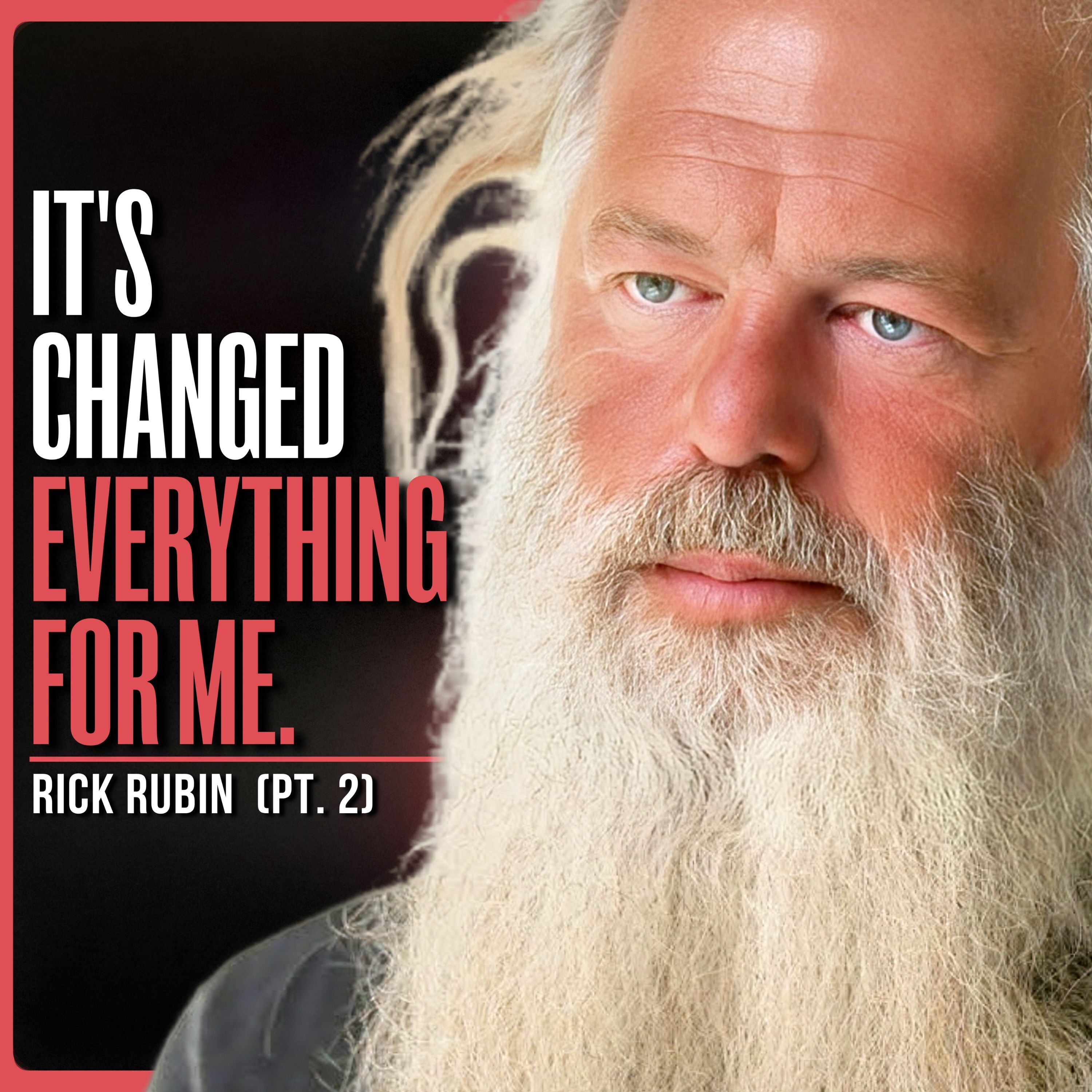
In this episode, Ryan Holiday continues his conversation with renowned music producer Rick Rubin about the impact of artificial intelligence (AI) on creativity. They explore the potential of AI to enhance artistic expression rather than diminish it, drawing parallels with ancient wisdom, particularly from the Tao Te Ching.
Written by AI. May contain mistakes.

Get the gist, explore an idea or ask about something said.
 Claude
On The Daily Stoic, what are the key points of this episode?
Searching your listeningAutomatic transcript. May contain errors.
0:00I'm recording this on a Monday, and Monday is our grocery store day in our family. I usually pick my kids up from school and we go over to Whole Foods, get all our groceries for the week. Although here very shortly, we're going to go over there to get our Thanksgiving turkey because they've got a bunch of great options. Turkeys start at$149 a pound if you have Prime with organic birds at$299 a pound. And they only carry no antibiotic ever turkeys that will bring quality to your table at a great price. Whole Foods has great everyday prices on all your Thanksgiving essentials, whether you celebrate with a massive family or just a few close friends.
0:37Everything they sell has high standards to help you shop with confidence. Enjoy so many ways to save on your Thanksgiving spread at Whole Foods Market. Why choose a Sleep Number smart bed? Can I make my sight softer? Can I make my sight firmer? Can we sleep cooler? Sleep Number does that. Cools up to eight times faster and lets you choose your ideal comfort on either side. Your Sleep Number setting. Enjoy personalized comfort for better sleep night after night. It's the final days of our Black Friday sale. Recharge this season with a bundle of cozy, soothing comfort. Now only$17.99 for our C2 mattress and bays, plus free premium delivery.
1:11Prices higher in Alaska and Hawaii. Check it out at a Sleep Number store or sleepnumber.com today. This message comes from Capital One. With the Spark Cash Plus card from Capital One, you earn unlimited 2 % cash back on every purchase and get big purchasing power so your business can spend more and earn more. Steven, Brandon, and Bruno, the business owners of SandCloud, reinvested their 2 % cash back to help build the company's retail presence. Capital One, what's in your wallet? Find out more at CapitalOne.com slash Spark Cash Plus Terms Apply.
1:49Welcome to the weekend edition of The Daily Stoic. Each weekday, we bring you a meditation inspired by the ancient Stoics, something to help you live up to those four Stoic virtues of courage, justice, temperance, and wisdom. And then here on the weekend, we take a deeper dive into those same topics. We interview Stoic philosophers. We explore at length how these Stoic ideas can be applied to our actual lives and the challenging issues of our time. Here on the weekend, when you have a little bit more space, when things have slowed down, be sure to take some time to think, to go for a walk, to sit with your journal, and most importantly, to prepare for what the week ahead may bring.
2:40Hey, it's Ryan. Welcome to another episode of the Daily Stoic Podcast. I'm going to give you one of my favorite quotes from the Tao Te Ching, sort of an ideal I aspire to. It goes like this, poised like one who must ford a stream in winter, cautious like one who fears his neighbors on every side, reserved like a visitor, opening up like ice about to break, honest like unhewn wood, broad like a valley, turbid like muddy water. There's something about the contradictions there, the spectrum being both reserved and opened, poised yet cautious, honest like unhewn wood, broad, but also sort of roiled.
3:32I don't know. There's something to me that struck me when I read that for the first time as sort of an embodiment of both what we're aspiring to as Stoics and what the Stoics are and practiced. I actually use this quote at the end of the part one story in Stillness is the Key. I'm talking about Kennedy during the Cuban Muscle Crisis. I say that Kennedy was for this brief period of time, a little less than two weeks, at a kind of clarity that the Tao Te Ching preaches about as he stared down nuclear annihilation. That's what he was, poised, incautious, reserved, open, honest, broad, turbid. I say that the Taoist would say that he had stilled the muddy water in his mind until he could see through it.
4:17I said, or to borrow an image from Marcus Aurelius, philosopher who himself stared down countless crises and challenges. Kennedy had been like the rock that the waves keep crashing over. It stands unmoved and the raging of the sea falls still around it. And I don't remember when I first read the Dowdaging, but I'm pretty sure it was at Rick Rubin's introduction. I was supposed to have lunch with Neil Strauss in Malibu seven or eight years ago. And as I'm sort of pulling up to his house, he texted me and said, hey, I think my friend Rick's going to come to lunch with us. I was like, okay, I'll meet your friend Rick.
4:56Did I expect it to be Rick Rubin, maybe the greatest record producer of all time? No. And did I expect that we'd still be in touch these many years later? No, I didn't. But at that lunch, as we were talking about stoicism, Rick started speaking with equal excitement about the Tao Te Ching. And I said, okay, what's your favorite translation? I want to read that. And I'm pretty sure that's the first time I read it. I don't remember exactly, but it was a cool little introduction. And then so all these years later, Billy Oppenheimer, who is my research assistant, he's worked for Daily Stoic for many years.
5:27He actually works with Rick on his podcast as well. He said, hey, you know, Rick's doing this cool project. It's called The Way of Code. It's like this AI inspired sort of reimagining of the Tao Te Ching. It all kind of came full circle. I said, do you want to talk to Rick? And I said, yeah, I'm going to take any excuse I ever can to talk to Rick because I always get a lot out of it. His first episode on the Daily Stoic Podcast is one of our all-time most popular episodes. Some of the clips alone have done millions of views on social media. And we did a remote episode of the podcast. I think he was in Europe.
6:01I was at the studio. I'm recording this now in Los Angeles. It's a really cool project. We talked much more about its sort of genesis in part one, this idea of vibe coding and some of his thoughts on AI. We dig into a chunk of this in part two, talking about AI and creativity and of course the data jing. Listen to part one. If you don't know who Rick Rubin is, you are certainly familiar with his work. He's the co-founder of Def Jam Records, founder of American Recordings. He was former president of Columbia. He's produced albums for the Beastie Boys and Run DMC and Johnny Cash and Audioslave and Metallica and Red Hot Chili Peppers.
6:39Everyone you can imagine. You know that Hurt song by Johnny Cash? Rick Rubin not just produced that, but it was his idea to have one of the greatest country musicians of all time cover a very dark song by sort of metal and electronic god Trent Reznor. There's a reason Rick has worked with all these bands. He's won a million Grammys. I actually talked about him in Perennial Cellar with his work with Adele. And I thought The Way of the Code was really cool. It's a creative, strange, weird project. I thought his book, The Creative Act, A Way of Being, is also really good. It's been one of the more popular books we sell on the Painted Porch.
7:16I've been recommending it to a lot of people. He's got a cool podcast called Tetragrammaton. And you can follow him on Instagram and Twitter at Rick Rubin. I think you're going to really like this episode. We split it up into two parts because there was just a lot to digest. If you haven't read the Tao Te Ching, do that. I just realized we weren't carrying the copy that he had recommended at the Painted Porch, so I started carrying that. Check out The Way of the Code, too, and hopefully that'll be a physical edition at some point, and when it does, we will almost certainly start carrying it. Check it out.
7:48Here's me talking to Rick Rubin. Enjoy.
7:54the thing about ai i was curious your thoughts because so i i do this thing when i when i read a book that i like i take all the quotes that i like and i type them up and i usually print them out so i have to type them up in something so sometimes i'll just i'll open up gmail and i'll be typing the quote and you know gmail has always had this sort of form of ai where it it kind of or has long had it where it predicts what it thinks you're gonna say at the end of the like It's trying to help you. You're writing thank. And it's like, oh, you probably want to end this with you. I've always had this interesting experience with AI because oftentimes I'll be writing something that, unlike a normal sentence, there is a right answer here.
8:34Like this is a famous quote from Hemingway that I'm typing. I don't want to say the best way to end this sentence is how he did it, but there is a direction that this could go. And I've always found it fascinating that Gmail or Google's AI or whatever it is, is never making the same choice that Hemingway made or that the biographer I'm writing. It's been this interesting insight into how the technology is working because unlike a normal sentence that I guess could go in any direction, I'm trying to see if it lines up. And I can't tell if it's an indictment of the AI that it doesn't, or in fact, it's sort of an artistic observation that you can still go an infinite number of directions with any...
9:19Well, I think it speaks to the genius of Hemingway. It's like the fact that the predictive text is not following Hemingway tells you that's why Hemingway is special. Now, it also could tell you why Hemingway is incoherent if it was. Do you know what I'm saying? It could go either way. It's either all we know is it's not normal. So it's not normal could be bad and it's not normal could be great. Yes, or that even the best stuff can still be improved or someone can take a different spin on it, right? And I'm sure that the first way that Hemingway wrote that sentence was probably not the way that it ended up.
10:01Tell me about how you read. Do you underline? Do you highlight? Underline, fold pages. I'm marking stuff. And then I go back to that after I let the book sit for a little bit. And then I go back and I transfer the important stuff out of it. It was interesting. You know, I actually Billy noticed this, our mutual researcher. One of my favorite biographies ever is this book called The Fish That Ate the Whale by Rich Cohen, which is about Samuel Zamuri, one of the founders of United Fruit. So I first read the book, I don't know, 15 years ago. I really liked it. I've written about it, talked about it.
10:37I needed to reread it for something and I didn't have my copy. So I just grabbed a new one off the shelf of my bookstore because it's one of the books we carry. Anyways, I read it again and I had it like out on my desk and Billy noticed that on one page, I had marked the same set of passages and underlined the same things, but on two separate copies. So it was interesting that 15 years apart, the same thing is speaking to me. And yet when I look at my copy of Meditations, I can see all these different pens and highlighters and stuff over the years. Obviously, the copy is starting to fall apart.
11:13But it's interesting to me to notice that totally different things spoke to me over different periods of time. But yeah, mostly I I read and take notes. And then to me, it's the process of removing it so I can use that as the building blocks for my other stuff that's important. And mostly why I don't do e-books or audiobooks is that that process is less laborious in some cases or impossible in other cases. And I don't get the feeling of engaging with it that I do when I'm typing out a passage or writing it by hand. Happened to me this morning, I was listening to an audio book on my walk, and a passage came, and I thought, boy, I would really love to highlight this.
11:57Now, that said, I don't highlight when I read, and I don't underline. I treat books as holy objects that I feel like I don't want to fold a page down. I'll use a bookmark to hold my page, but I don't damage the books. Oh, I beat the crap out of books. And sometimes I find a really old or a rare book. And sometimes I'll hear about a book and it won't be in print anymore. So I'll put it up on Amazon. It'll be$20. It'll be$200. And it'll come and it'll turn out it's an old book that it's like, okay, this book I'm holding in my hands, it's survived a hundred years. It's still flawless, but I need to use it.
12:37And I have to make this ethical decision of like, am I going to put it through the same ringer that I normally put a book through? But to me, I actually think the way you treat a book like a holy object is to use it as a book. Sometimes people will come up to me and go like, can you sign my book? It's my absolute favorite book. I love it so much. And when I'm looking at it, it doesn't feel like it's your favorite book because it looks like it's been on the shelf in a museum. I feel like the way you respect a book is by giving it attention and integrating it into your life. And my life is messy and my dog has got it in his mouth and my kids are spilling stuff on it and it bounced around in my bag and fell on the seat of my car.
13:20You know, I don't know though. That's interesting that you sort of keep them pristine. Do you read every book that way or only the books related to work? Or do you only read books related to work? I feel like every book is work in that it informs what I do. Like there's no casual reading for me in the sense that I'm not learning something. And I often find, you know, some novel that somebody recommended or that I heard about, I'm not looking for anything, but I'll find something in it. To me, though, a sign of a book not being good is that I didn't mark anything. And that might have just meant that I marked a beautiful sentence or a cool little, I don't know, illustration or graphic or how it was formatted.
14:09I just think there's always something that you can admire and like. If the book, when I hold it up, it doesn't have any pages folded on it or I haven't spilled any food on it, that's probably a sign that I didn't engage in it very deeply. I haven't really gone down this rabbit hole yet, but I do believe there's a way to engage in audio material in that same way where you can take notes and make clips and save sections. I I just don't know how to do it technically, but I think it's possible. I was just reading about someone that says, you know, they listen to an audio book or they read a book and then they have like chat GPT or whatever.
14:44They have a discussion with them about it. Like they have kind of a personalized book club about everything they read, which I thought was interesting because, you know, sometimes I would love to discuss things with people, but I'm afraid I might be the only person that's currently read that book. Or, you know, it's like you watch a movie. Jim Gaffigan has a joke about, you know, being like, hey, has anyone seen the movie Heat? You know, it's like you missed your window. Like you can't nobody wants to talk to you about it. And I think that AI might might allow us to kind of do deep dives into stuff that, you know, or one of the things about book clubs is like nobody wants to admit that they didn't know what the fuck was happening.
15:25and like I've used chat GPT all the time to be like now who is this person again or like what is happening like I use it to to break the thing open to understand what's happening if I don't have any shame about admitting that something went over my head yeah I don't understand most things honestly so I need all the help I can get I read slowly and I reread and I'm just looking for any little bit of help I can get. Totally. Totally. And then I go, give me articles about this. Tell me other things. What I love to do, a sign to me that I like something is that I want to go down a rabbit hole. I want to read the author's obituary and I want to read critics tearing them apart.
16:10And I want to hear about who influenced that. I love reading a book and then going like, I really hope the Paris Review did like a huge, you know, retrospective on this person. And I want to find all that stuff out about it. And I think musically, that's exciting too. When you go like, you find something and you're like, I want to find the influences that made this thing. Always going back, seeing, and it's true with everything. Nothing is made in a vacuum. You know, everything is made based on everything that came before it. Yes. And also, So, you know, if you're finding, depending on when you're finding something, what's the things that came after, right?
16:50The world was never the same after certain albums or certain songs. And so what's all the cool shit that's related to this that you didn't also know existed? Because, again, it's not on the radio right now.
17:08We just took our kids to an outdoor performance at The Nutcracker. They had a snow cone and then they went insane in the car ride home. And one of the things I try to remind myself when that's happening is that I don't control my kids' behavior, especially when they're too far gone like that. But I do control how I respond, right? That's stoicism, but it's also what Dr. Becky talks about. Dr. Becky is a clinical psychologist and a bestselling author, and she founded Good Inside, which is there to give parents practical, actionable tools for handling those everyday challenges with confidence. My wife introduced me to Dr.
17:44Becky's books. I love them. I've recommended them a million times. I've had her on the podcast. And as it happens, Dr. Becky is hosting two live Q &A events for good inside members. I am one of them. She signed me up for it about a year and a half ago. I've loved it ever since. On December 1st, you can join Dr. Becky for her How Not to Raise Assholes event, which is about avoiding entitlement and raising kind, Empathetic Kids. And on December 15th, she's hosting her How Not to Lose It over the Holidays event, which I'm sure we could all use. As I said, I'm a big fan of Dr. Becky. She's been a great influence for me as a parent and just as a human being.
18:26And Daily Stoic listeners can join for 15 % off with code STOIC15. You just got to head over to goodinside.com to catch the events. Thanks to Toyota Trucks for sponsoring this episode. When I bought my ranch in 2015 out here in Bastro County, I drove my car about halfway down the dirt road that we live on, thought this isn't going to work, stopped, parked it, walked the rest of the way home, borrowed my wife's car, drove into Austin and bought a truck. What I bought was a Toyota Tacoma. And this truck wasn't just transportation getting me to and from my house. It unlocked a whole different style of living for us, not just on the ranch, but in our little Texas towns.
19:08There were places I could go now that I couldn't go before, especially out here in the piney forests, through the fields and on the unpaved roads like the one that I lived in. We got to go deep into the hill country's wild beauty. We've driven all the way out to East Texas. We've driven across the country. and by we, I mean not just my wife, but both my kids who I drove home from the hospital in that truck. Toyota trucks are built for those who understand that the best adventures happen when you're willing to veer off course because you never know when you'll end up on a Toyota adventure detour.
19:46And of course, this is stoicism too because every detour, every obstacle is an opportunity. But it's helpful if you can handle the difficulty inherent in that. If you've got the resilience and the right companion to make it wherever the road takes you. Discover your uncharted territory. Learn more at toyota.com slash trucks slash adventure dash detours.
20:14Have you found when you've used like AI to do stuff, one of the things I think that humans are better at, like if I'm like, hey, as I use it, for instance, I do a lot of talks. So I'll be making a point. And I find that when you can illustrate that point, it really resonates with people. So they're hearing something and seeing it. So if I'm telling a story about Zeno's shipwreck, the founder of stoicism, I want to show a picture of a person suffering a shipwreck at that time. And then I'll go make it like a Delacroix painting or a Carvaccio. I'll pick an artist that didn't paint that and I'll do it in that style.
20:52So you're kind of anyways, I do that. But one of the things that I find is that although AI can do really good at like making something that didn't exist, exist for the first time. And then I'm like, hey, this is weird. But, you know, Socrates has glasses on in this picture. Please remove the glasses. Right. It'll either do the whole thing over and lose the magic of what it made or it'll give me a new version. And now fucking everyone has glasses on. Right. I find that it struggles to take direction and iterate. It's an interesting artistic medium in which it can only make a new thing each time.
21:31It can't tweak the thing that it made last time because it doesn't know what it did because it didn't consciously do it. I think there are versions coming now that will be able to do that. But who knows that that'll be better? You know, there's something about that where it makes an unexpected choice and you get to see something new and interesting that you would never ask for. But when it's presented to you, it may have some validity that works on some other level. You might not even know why it works. But when you see it, there's some feeling of resonance with it. It's like this makes no sense.
22:14And it's cool. It's much more interesting than what I was asking for. Or you hate it and it forces you to go, okay, now I have to take the same prompt as last time and specifically say, don't do, don't make this choice. So it's this process of, you know, you try something and then you see the deficiency in your vision and you have to articulate your vision more concretely. You have to go, hey, it needs to be wider. or it needs to be zoomed out, or I don't want to see this, or, you know, there has to be more than, you know, three of this in there. And so it's this process of refining what you're asking for in light of the trial and error of what you're seeing, which is, I think people who are sort of snobs aren't understanding that that is itself an artistic and creative experience.
23:13That's the whole creative experience. Yes. That's the real creative experience. It is never, I have an idea and I execute it to match exactly what my initial idea was. Almost never. 99 % of the time, that is not the case. Yeah. I mean, look, you write a book and then you spend more time cutting stuff out of the book than you put in it, right? And that was your vision. You made all of it. And then you're doing this process of, you're like, what is this garbage? Right? You're getting, like, that is the creative processes, trying and then refining and redoing and removing and adding back in. It's not this stream of consciousness publish thing.
23:55It never has been. There's also something interesting about, like, let's say there's a book of yours that I love and I've read it several times. if I could read the version, the long version, three times longer, maybe overall it's not as tight or not as good, but I'm sure in that two thirds that got cut out, there are some thoughts there that would be really helpful to me and I'd be interested in. Yes. Right. Because most of the time you're making something and you're like, I hope people will like this. I hope they'll be interested in it. But you don't know. When you get the truth that they did like it, well, then And, you know, it might be like they want more of it.
24:36Like Taylor Swift, when she redid all her albums, you know, there's like a five minute version of All Too Well, and it's a fan favorite. And then when she re-recorded, it's like a 10 minute version because she knows the audience will indulge some of the things that if you were being much more ruthless or you were coming from a place of insecurity, you're not going to include it. Like you're petrified you're going to lose the audience's attention. And that governs a lot of the creative choices we make. But once you know you have the attention, like Robert Caro famously cut 250 ,000 words out of The Power Broker, his book about Robert Moses, which is itself over a thousand pages.
25:17Yeah. But like, I would read those 250 ,000 words as its own book right now. Yeah. But the same, you know, like we get director's cuts of movies or we get expanded versions of albums, deluxe versions of albums where you'll hear all the songs that were recorded during that session that didn't make the album. Yeah. I love those experiences. I love anything that I'm interested in, I want more of. Yes. Well, we talked about Hemingway in A Farewell to Arms. He rewrote the ending like 35 times. And each one of the endings is pretty fucking good, you know? and the edition that I, when I read it for the first time, at the end, they had all the other endings and there was something magical about going, okay, this time he really lays it out.
26:08This time he holds more back. This time he really meditates and ruminates on what it means, but it's all, like, I can't now tell you exactly how that book ends because I've read all the different endings and they all blurred together in a way that probably listening to a recording session would inform an understanding of a song and you'd be unable to separate it from whatever the radio edit of the track ultimately ended up being. It's also if you see a photograph that's a really iconic photograph and all you know is that image, but then you get to see the session of all the images that were taken on that day around that image and you see the same iconic clothing and location, except now it's a different pose.
26:55or a different, it's wild. It's wild because these things are burned into our memory in one way. And to take them out of that, the amber version, and see them come to life is very exciting. That goes to the Ducamp thing we're talking about. And also to me, settles some of this discussion about AI and its role in creativity and art. You realize when you take an iconic photograph, you see the other versions. When you listen to the Nebraska version of Born in the USA, instead of the pop version of it, you go, oh, the art is the choice. It's the choice what to leave in what to leave out what version to go with what filter to put on it to say this is the art.
27:42And this is the refuse of the art. That's the whole fucking game. Art is the choice that you make when you ultimately decide to ship the thing. It's true. But it doesn't feel that way because it feels like cheating to type something into a computer and say, make me this, and then go, here it is. People go, oh, that's cheating. But actually, if you spent 50 iterations making the prompt, and then you changed the border and the whatever, and then you decided when it came out and then you wrote the capture. All of those are artistic choices that are accumulating into a choice. Same thing. It's the same as if you write the same paragraph over and over again, or if you ask the AI to write it over and over again, it's really no different.
28:32Yeah. At the same time, I don't let it do any writing for me. What AI do you use for your images? I use ChatGPT. And then we use it for like videos too. It has a thing where you can, like, I'll take a scene from one of my books and I'll say, I'll just put that in. I'll be like, give me a video. And it can give me a five second, a 10 second video. It can bring to life something that I imagined based on, you know, a bunch of historical sources. That's a magical experience, as I'm sure it is to watch Steven Spielberg do it to a book that you wrote. Yeah. No, it's amazing. One other weird one I think you would like.
29:11So I wrote this book with this guy named George Raveling, who's one of my heroes, and he was an orphan. And so in 1950, he's basically saved by this Catholic priest named Father Nadine, who is also black and a basketball player. He sees something in this lanky teenager and he gets him into a boarding school, which gets him into Villanova, which gets him into coaching. And he becomes one of the sort of all-time greats. He's in the Basketball Hall of Fame. I was writing about this guy, Father Nadine, and he didn't have any pictures of him. This guy who so changes the course of his life. He didn't have any pictures of him.
29:49I said, describe him to me. Tell me all about him. And so he tells me all about him. And I put all this into chat GPT. And then I go, okay, this is 1950s Brooklyn. That's where he was a priest. You know, here's some photos of other priests. Like, show me what this guy looks like. Show me a black Catholic priest in 1950. And it does, it kicks it back out. And I send it to George, who's in his late 80s. And he goes, where did you find this picture? I've never seen this one. And I had to decide to be like, this isn't real. This is chat GPT. This is artificial intelligence. And he was like, it's real, you know, and the magic of it being able to resuscitate or revivify something based only on someone's memory.
30:37I got goosebumps about it. It was it was unreal. It's amazing that the meme that led to the way of code was an image of me that I'd never seen before. So considering it was about AI, it was an image I never saw when I first saw it. It's like, oh, this is an AI image of me. It took a while, but eventually after seeing it over and over and over again, I started looking around what else was in the image. And I could see behind me, there was a person with a name tag. and I realized I'd never seen the picture, but that was a real place and I was really there. I just never seen it. It was years ago.
31:15Wow. Yeah, and that's a kind of magic too, right? And you imagine how magical that would have been to someone in the 1830s when photography as a medium is coming into being. And there were people who hated it and thought it was capturing their souls or that it would steal something from us, but it also gives us experiences like that. Yeah, and it also may capture our souls and it may steal something from us. Like we don't really know. We take it for granted. And perhaps that portrait that you got painted is doing the exact same thing. Yeah, we don't know. Right, how would we know? And yeah, there's a fine line in art where you go, if I explore this much further, I'm getting too far out there.
32:09I don't want to explore that. You know what I mean? Where you're just like, do I actually believe in muses that come down and visit me if I say the right incantation before I write? Or is it actually healthier for me to believe in discipline? I don't know. Maybe I'll just leave. Sometimes my wife will ask me questions. She was like, so when you're reading, are you saying the words out loud yourself in your head. And I'm like, let's not, let's not get in our head about what's in our head because it might fuck with things. I do. I tend to read out loud to myself silently. Yeah. I think a lot of people do, and I might do that, but it's, it's currently working and I don't want to, I don't want to think about it.
32:54But maybe, maybe if you analyze it, maybe there's an even better way that you haven't tapped into yet. That's true. I mean, when golfers decide to reinvent their swing, it's both beautiful and extremely ugly. And sometimes they make it out the other side and sometimes they don't. I had that experience with swimming. I swam my whole life. I grew up in a beach town, grew up in the ocean, swam my whole life. And then maybe 12 years ago, about 12 years ago I learned a different way of swimming and it was one of the hardest things I ever learned because it's just the muscle memory of the way you do something since childhood be like learning to walk differently than the way that you naturally learn to walk and if you had to think about it how difficult that would be and the fact that you're in the water you're weightless so you don't have as much like when you're walking and you think about changing your gait you have the support of gravity to bounce off of when you're floating in water.
34:02It's already an unusual relationship to your surroundings always when you're swimming. So to intentionally put your body in a different position than the natural way you've always done it is super difficult. And it took a long time. But coming out the other end after, you know, months of practice, I can swim much further with far fewer strokes in a much more effortless way and just sort of glide through the water in a way that before it was more of a fight. I've been thinking about that because I swim and swam as a kid. I swim all the time. I somehow, at some point, I lost the ability to easily breathe on my right side.
34:52I only do it on this side. And I know I need to take the time to figure it out because it would make me better. It'll give me more endurance. And then also it's just whenever you're struggling with something or it's hard, you should probably go towards that thing instead of just compensating for it. There's a passage in meditations where Mark Sreos talks about holding the reins in his non-dominant hand. Basically just like the way that it's easy for you to do, you should sometimes instinctively go like, I want to figure it out the hard way. That's a good skill to learn. And I know I need to do that as a swimmer, but I've been putting it off.
35:28So that's a nice reminder. I think that's also nice if you're learning any new skill to learn it in an ambidextrous way, which is really hard to do, but the benefits are tremendous. And if you could swing a golf, I don't play golf, but if you could swing a golf club in both directions, it would probably be much healthier on your body to not always be doing it in one direction. Yeah. Yeah. Anytime you're doing a repetitive action, there's a fundamental imbalance. Swimming is weird too, because like, there's not really a reason that we should swim or know how to swim. Like there's one theory called like the aquatic ape hypothesis or something, but like swimming is this thing we invented, you know, and it's weird, but then you're doing it and you're like, this is the most natural thing that a human could possibly be doing.
36:20To go to the point about sometimes you recognize something that you've never experienced or something feels fundamentally like home, even though it's far away or unnatural. When you're in water, you're like, I'm meant for this. And I think we are. The sensory deprivation element of swimming, the outsideness. I try to swim at Barton Springs in Austin like once a week. And you're just like, to know people have been doing it for 500 years in this place. There's one in San Antonio that people have been doing for thousands of years. It's the best. I love being in water. It feels like it has a great impact on my nervous system.
37:02My whole body relaxes when it gets into water, even cold water. I like the feeling of being in water. Yeah, Barton Springs is always 71 degrees. I swam in February. It was 26 degrees outside, 71 in the water. Let's say it was 100 a couple weeks ago, and it's 71 in the water. How is that? How does that work? So Barton Springs is this natural spring that they turn into a pool. It's kind of like those rock pools in Australia, you know, right on the coast. It looks like that, but it's not near the ocean. It's in landlocked Austin. And so something like 20 million gallons of water comes up a day from deep, deep into the earth.
37:41And it's so far down there, it's just always coming out at the same temperature. And it's so big. I mean, it's the pool is over an eighth of a mile long. So, and it's so deep. I mean, it's like 20 feet deep in some places that it doesn't matter the outside temperature. It doesn't, it doesn't change the water temperature. And so, yeah, you're, you're swimming in this, this natural thing. There's turtles and fish and seagrass in it. And you're just like, this is both a creation and somehow a raw bit of earth. And it's both an unnatural environment in that it's water and we're land animals. And you're like, this is where I was meant to be.
38:24I love it. Do you swim mostly in the ocean or do you swim in a pool? Both. There's something about being thrown around by the waves, I think, as you're swimming that is, there's something magical about that too. Yeah, I probably spend more time playing in the water in the ocean when there are waves. I don't focus on going long distance in the ocean. If I'm swimming long distance, it's typically laps in a pool. I like the feeling of playing in the waves. Yeah. And where else do adults do that? The ocean is one of the last areas that adults are allowed to be silly and play and be tossed around. It's very childlike and it kind of probably takes you back to a childlike state where your mom or dad or uncle is throwing you around.
39:11You know, like there's a powerlessness that we submit to having in the ocean that you don't get even on a beautiful walk through a forest. The trees aren't bending down and knocking you over.
39:35I've noticed this from living close to the beach that people scream on the beach, scream with joy on the beach. In most polite society, people do not scream. If people are screaming something's really wrong but to hear people scream squeal with joy on a regular basis you get that when you're at the beach a botanical garden is beautiful but it culturally demands a kind of silence and a somberness that the ocean we've decided all rules are off and you can be ridiculous and loud and silly and noisy that is probably deeply therapeutic. It's also probably why there's such a cool surf culture and there isn't such a cool botanical garden culture.
40:25Yeah, yeah. Or maybe there isn't where we're just ignoring how fun botanical gardening actually is for the people that are doing it. Well, this is amazing. I thought that the new book is really cool. And I do hope you make a physical version of it because it would be nice to sit there and be able to flip through it the same way that you can kind of infinite scroll through this thing. I'm going to press up a few hundred just for me and my friends, also to experience what it's like as a book, because I've only experienced it as a website and I like that experience and I like the experience of interacting with the art, but I'd be curious to see how it feels in the hand.
41:04Yeah, right. You might notice unintentionally emphasizing or deemphasizing certain words or themes just by it being on the page that, you know, reading it on your phone versus reading it on a laptop versus reading it on one of those giant curved monitors. Each one of these mediums is going to change what you get out of it and how lovely it is that that is at its core, you know, a 3000 year old bit of text that's still infinitely fresh and new. Yeah, it feels that way. And it felt like that was one of the most exciting parts of putting so much attention on a joke project was when the DAO got involved.
41:47The nature of the Tao is so, so serious and so profound that the hopes of coders connecting with the Tao, something that they might not be normally drawn to, seemed like a potentially powerful, helpful thing on the planet. There's something interesting about the DAO too, where, okay, so you read it and they're never saying what they're talking about. They're just like, it is, or this, right? They're not being clear. And yet you make some choices in your version where you make some specificity, right? I have another version that's actually on my bedside that I flip through, you know, if I forget to bring another book with me before I go to sleep called The Parent's Dao De Jing.
42:33And all it does is insert, you know, kid or parent occasionally into the text. And in seeing that, it suddenly takes this thousands of year old bit of general wisdom and it makes it very specific parenting wisdom. and I see how these ideas apply to the bedtime that just didn't go well, or the commute I have tomorrow, or this behavior issue that my wife and I are struggling to solve, suddenly the Tao Te Ching becomes a parenting book. Yes, it's also why most of the principles in the creative act came out of experimentation in the music studio, but the book purposely is not about music or relating it to music because the principles go beyond music.
43:22They're a way of looking at the world. And the Tao is like that. The Tao is a way of looking at the world. And you can apply it to parenting. You could apply it to vibe coding. You could apply it to a lot of things. The wisdom is open enough to apply really to anything. I forget, it might be in the Tao Te Ching, or at some Eastern thinker, but it's this idea that might be Musashi, actually. I think it is Musashi. He said, once you know the way you see it in everything from the specific, whether it's music or philosophy or parenting or whatever, once you kind of understand a truth or a framework, then you're able to apply it to all these different domains and it becomes infinitely elastic despite its originatingly specific domain.
44:11Yeah, it's true as well with spiritual traditions. If you examine different spiritual traditions, it seems like all of these different streams all go back to the same source. They're all, for the most part, telling the same story. It's the same wisdom, just in different forms. If it's a truth, then at some level, they all boil down to it, right? There's no, oh, this is a Chinese truth, or this is an American truth, or a Stoic truth, or a Buddhist truth. If it's a truth, all the schools should independently discover it in their own way. They're all pointing to the same thing. Yes. Same is true with meditation.
44:57You know, there's many different ways to go about meditating. Once you engage in them, you realize they're all taking you to the same place. It's doing the same thing just in different methods. And there might be different times in your life where one method is more helpful than another. Yeah, it's the same process of looking at your thoughts or turning off your thoughts or being still. Like, it's like all the different traditions have their own word for sort of stillness, because it is the sort of fundamental human battle to get to this place that we know we need, and we recognize it when we have it, but it is so ephemeral and fleeting, and we all want more of it.
45:41Yeah. And I would say in all cases, particularly in the Tao, but in all cases, it's about a humility and giving up control, really. Like letting go of the arrogance of control. Yeah, look, the first task of the philosopher Epictetus said is to understand there's some things that are in your control and some things that are not in your control. And that seems really simple, but you can spend a whole lifetime wrestling with the truth of that. And then you read Confucius or you read the Dadajing or you read stories about Buddha or you read Hindu stuff and you go, oh, man, they're going, hey, this is the part of life that you control and this is the part of life that you don't control.
46:28And focusing on the parts of life that you don't control, that's the source of all your suffering and unhappiness. And it's like they're all saying the same thing. It's true for the religious traditions and it's true. But I think that the craziest part is, you know, in the last 200 years, it's all confirmed by the psychology and psychiatry and the scientific stuff. It's not like a neuroscientist has discovered anything that fundamentally disproves what the Buddhists or the Stoics were talking about thousands of years ago. The only thing they've done is add another layer of why this is the case.
47:09If anything, just the opposite. It's like the science eventually comes around to the 3 ,000-year-old idea. It's like, of course. There's a reason. If it's 3 ,000 years old and we still know about it, there's a reason. There are probably other formations that are 3 ,000 years old that got lost over time for a reason. Yeah. And you find that, oh, actually, Socrates said this better than the scientist who has proof of it could have ever actually said it. Or that Lao Tzu or, you know, any of the—that they didn't just get to the truth of it, but they expressed the essence of that truth so perfectly.
47:51Perfectly for the time. Like in the 60s, Ram Dass wrote Be Here Now. Now, it's ancient teachings, but it applied to the 60s and through now till now. And then in the 70s, there was your arms are too short to box with God. And then in the 80s, it was Eckhart Tolle and the power of now. And they're all saying the same thing. Yes. Just for the culture or your book's talking about Stoicism. It's like it's ancient, but it's new and it's now and you're interpreting it for today. Yes. And you're just adding a new spin on, like with music, the same handful of tropes or chord combinations or styles. And some of those will get absorbed into the canon and some will be forgotten.
48:47But we're all participating in this grand tradition. That's why I like when they call philosophy the great conversation, that it's this thing that we've just all been doing for as long as we've been here. Your first book, of course, is a great contribution to that. And I think this new one's for something that started as a joke, a nice little thing. And I'm so glad we pushed through on this. I think it was worth hitting record. Cool. Thank you, sir.
49:19Thanks so much for listening. If you could rate this podcast and leave a review on iTunes, that would mean so much to us and it would really help the show. We appreciate it. And I'll see you next episode.
49:47Look, ads are annoying. They are to be avoided, if at all possible. I understand as a content creator why they need to exist. That's why I don't begrudge them when they appear on the shows that I listen to. But again, as a person who has to pay a podcast producer and has to pay for equipment and for the studio and the building that the studio is in, it's a lot to keep something like the Daily Stoic going. So if you want to support a show but not listen to ads, well, we have partnered with Supercast to bring you an ad-free version of Daily Stoic. We're calling it Daily Stoic Premium. And with Premium, you can listen to every episode of the Daily Stoic podcast completely ad-free.
50:35No interruptions, just the ideas, just the messages, just the conversations you came here for. And you can also get early access to episodes before they're available to the public. And we're going to have a bunch of exclusive bonus content and extended interviews in there just for Daily Stoic Premium members as well. If you want to remove distractions, go deeper into stoicism and support the work we do here. Well, it takes less than a minute to sign up for Daily Stoic Premium, and we are offering a limited time discount of 20 % off your first year. Just go to dailystoic.com slash premium to sign up right now or click the link in the show descriptions to make those ads go away.
Is AI the end of creativity, or the beginning of a new artistic era? Rick Rubin returns for PT. 2 of his conversation with Ryan about how AI is reshaping creativity and why the real art still lies in the choices we make. They discuss the beauty of unexpected results, the difference between AI generating and iterating, timeless wisdom of the Tao Te Ching, and much more.
Rick Rubin is a renowned American record producer and the co-founder of Def Jam Recordings, founder of American Recordings, and former co-president of Columbia Records. He has produced albums for a wide range of acclaimed artists, including the Beastie Boys, Run-DMC, Public Enemy, Red Hot Chili Peppers, Metallica, Audioslave, Rage Against the Machine, and Johnny Cash.
He has won nine Grammys and has been nominated for 12 more. He has been called “the most important producer of the last 20 years” by MTV and was named on Time‘s list of the “100 Most Influential People in the World”.
Check out Rick’s latest project The Way of the Code: https://www.thewayofcode.com/
Grab copies of Rick’s book The Creative Act: A Way of Being at The Painted Porch | https://www.thepaintedporch.com
Check out Rick’s podcast Tetragrammaton
Follow Rick on Instagram and X @RickRubin
📚 Check out the different translations of the Tao Te Ching at The Painted Porch: https://www.thepaintedporch.com
🎥 Watch Rick Rubin’s FIRST episode on The Daily Stoic Podcast: https://youtu.be/WI9cgq-hYeI
📖 Preorder the final book in Ryan Holiday's The Stoic Virtues Series: "Wisdom Takes Work": https://store.dailystoic.com/pages/wisdom-takes-work
🎙️ Follow The Daily Stoic Podcast on Instagram: https://www.instagram.com/dailystoicpodcast
🎥 Watch top moments from The Daily Stoic Podcast on YouTube: https://www.youtube.com/@dailystoicpodcast
✉️ Want Stoic wisdom delivered to your inbox daily? Sign up for the FREE Daily Stoic email at https://dailystoic.com/dailyemail
🏛 Get Stoic inspired books, medallions, and prints to remember these lessons at the Daily Stoic Store: https://store.dailystoic.com/
📱 Follow us: Instagram, Twitter, YouTube, TikTok, and Facebook
See Privacy Policy at https://art19.com/privacy and California Privacy Notice at https://art19.com/privacy#do-not-sell-my-info.
