
 Ask ChatGPT



In this episode of The Daily Stoic, host Ryan Holiday engages in a compelling conversation with Elliot Ackerman, a former Marine and bestselling author. They discuss the implications of performance in politics, the erosion of institutional trust, the emergence of shamelessness, and the impact of modern media.
Written by AI. May contain mistakes.

Get the gist, explore an idea or ask about something said.
 Claude
On The Daily Stoic, what are the key points of this episode?
Searching your listeningAutomatic transcript. May contain errors.
0:28Why choose a Sleep Number smart bed? today. This message comes from Capital One. The Capital One VentureX Business Card has no preset spending limit, so the card's purchasing power can adapt to meet business needs. Plus, the card earns unlimited double miles on every purchase, so the more a business spends, the more miles earned. And when traveling, the VentureX Business Card grants access to over 1 ,000 airport lounges. The VentureX Business Card, what's in your wallet? Terms and conditions apply. Find out more at CapitalOne.com slash VentureXBusiness. What can 160 years of experience teach you about the future?
1:05When it comes to protecting what matters, Pacific Life provides life insurance, retirement income, and employee benefits for people and businesses building a more confident tomorrow. Strategies rooted in strength and backed by experience. Ask a financial professional how Pacific Life can help you today. Pacific Life Insurance Company, Omaha, Nebraska, and in New York. Pacific Life and Annuity, Phoenix, Arizona.
1:33Welcome to the weekend edition of The Daily Stoic. Each weekday, we bring you a meditation inspired by the ancient Stoics, something to help you live up to those four Stoic virtues of courage, justice, temperance, and wisdom. And then here on the weekend, we take a deeper dive into those same topics. We interview Stoic philosophers. We explore at length how these Stoic ideas can be applied to our actual lives and the challenging issues of our time. Here on the weekend, when you have a little bit more space, when things have slowed down, be sure to take some time to think, to go for a walk, to sit with your journal, and most importantly, to prepare for what the week ahead may bring.
2:24Hey, it's Ryan Holiday. Welcome to another episode of the Daily Stoic Podcast. I hope all of you are doing well. Yesterday was rough for me. It was just a rough day with the kids. It felt like not a single thing was easy or went well. And I was thinking about stoicism as not necessarily a thing for making things go well. It just was what it was. But I was thinking about it as a philosophy that helps you bounce back from those things. How do you go into today, which is what I'm thinking about, and go, today is going to be better. Here are the changes I'm going to make. I'm not going to dwell. I'm not going to ruminate.
3:07I'm not going to write it off. I'm not going to give up. I'm going to focus on how we can do better today. To me, that's really what it is. I don't think the Stoics never lose their temper. I think they do. I don't think they never get depressed. They never get frustrated. They never get pissed off. They do all these things. To me, it's about how quickly you recover, how quickly you get back to it. How do you find some of this humor in it? How do you laugh at it? That's something I talk about with today's guest. I've raved about Elliot Ackerman before, just like an incredible guy with an incredible history.
3:40I mean, CIA, the Marine Corps, he did five tours of duty in Iraq and Afghanistan, one of the Silver Star and the Bronze Star and the Purple Heart. He's been nominated for a National Book Award and the Andrew Carnegie Medal in both fiction and nonfiction. I mean, he is a great writer. In addition to having this whole other career before that, he writes for The Atlantic. He's a fellow at Yale. And then his books have also sold super well. He's a New York Times bestselling author. He's written these two really great novels with Adamos de Apreas at 2054 and 2034, which are sort of like imagining the future that's kind of sci-fi, like predictive sort of, here's what war in 10 years, here's what war in 20 years will look like.
4:22Here's what the world might look like in those years. But anyways, in the episode, one of the things we talked about was sort of gallows humor. I thought that was really interesting. The Stoics have some interesting things to say about Gallo's humor. And then we talk about the quote that he uses as an epigraph for his new book, Sheepdogs, which Apple Studios just bought the rights to alongside Tom Hanks to produce. But this idea that war is a racket. What is a racket? And there's this great quote from this guy, Smedley Butler, who was a general in World War I, about how we can define a racket as something that isn't what it seems to the majority of the people, but a sort of select few know what's really going on.
5:00That's his definition of a racket. I think it's a pretty good one. And obviously, rackets are very common today. Corruption is very common today. And so we sort of talked about all that. It's a great episode. I think you're really going to like it. You can listen to part one. And then Elliot and I walked around the bookstore after and recommended a bunch of books. If you want to watch some of those bookstore tours, head over to my personal YouTube channel. I'll link to that in today's show notes. Sometimes we put them on Instagram, too. I really appreciate Elliot coming out. You can follow him on Instagram and Twitter at Elliot.Ackerman.
5:32You can grab signed copies of 2054 and 2034 at The Painted Port. Sheepdogs wasn't out yet when he came by. But I really recommend a bunch of his books, and I've read a bunch of them. He's awesome. And we've talked on the podcast a bunch of times, so check out both of those. I got to go pick up my kids, so I'm cutting this intro a little bit short. I'll talk to y 'all soon.
5:53it's funny uh the epigraph of this book i used it in um in my media book i'm interested in lying uh i think it's one of the great quotes of all time war is a racket and he defines racket as a a thing that only a small inside group knows what it's about and it's conducted at the benefit of the very few at the expense of the very many that definition of what a racket is i feel like is a thing they should teach in school. They should. Because you realize, oh, there's a lot of fucking rackets. A lot of rackets. Yeah. The open secrets where everyone in the space, they all know how this works and they have private misgivings about it or they all complain about it or they wish it was otherwise.
6:32But like to the public, it's something else. Yeah. And it's often like, you know, the racket is like the mystery that's right in front of your face. You know, everybody knows this is going on, but no one can exactly see the mechanisms by which it works. You know, it's almost like the, you know, it's the old kind of like David Foster Wallace saw, like there's, you know, from his graduation, it's like there are two fish swimming along. One fish says, you know, the water's great in here. You don't know the water, yeah. Yeah, you don't even know you're in the water that you're in until, you know, you take a step back.
6:59Yeah, or I remember I was working for this client this one time and some media outlet had said something very unfair and I wrote into them and my client was very upset and it was this whole thing. And then the writer responded and he goes like, I don't understand. And he's like, I thought we all knew this was professional wrestling. That's what he said. And I was like, wow, okay. Like, that's the racket, right? You're under the impression that we're all in this, playing this thing. And like, I didn't know we were playing this thing. But more importantly, like, they don't know this is happening.
7:29Yeah. And you just kind of realize a lot of things that are like that. And I do think it's hard. You know, we live in a world of like conspiracy theories and misinformation, a lot of distrust in institutions. It's hard once you see one racket to not start to think that everything's a fucking racket. And that's where the cynicism and the sort of negative spiral comes in. Yeah. And it's just sort of postmodern thinking. Yeah. That, you know, everything becomes sort of relativism. Yeah. And yeah, it's really, I mean, you know, I was even watching like all like the Trump Elon stuff like exploding everywhere.
8:03And I'm like, it's so, and then so my, you know, I'm looking through like my social media feeds and I'm getting, you know, just mainlined all of that stuff. And the other thing I'm getting mainlined is, you know, the, you know, stuff, the, you know, or content that's sort of very nostalgic content for the 81st anniversary of, you know, the D-Day landings. I'm like, these are so such, like there's so insanely opposite versions of America. It's like tough to, it's tough to hold those two realities in your head. Yeah. Although, you know, McCarthy's not far off from that version of America. Like there's nonsense then too.
8:38Right. I'm not, yeah, I'm not saying there's not nonsense then and not, you know, not kind of, not engaging in sort of golden age thinking. Yes. But more, all of that sort of World War II medium is sort of like the height of, you know, black and white. Yes. Good versus evil. Like not muddled. We all, you know, institutions save the world. And then, you know, and then you kind of look at so much of like our, you know, the political discourse today and the distrust of institutions and this feeling of like complete relativism and that everything is a racket. So get what you can while you can. Yes.
9:12Yeah. It's hard to read war as a racket and then like look at pictures of D-Day and you go, was that a racket? And you know, you know, on some level that's not, but I think that's the point when, when, when an institution reveals itself to be corrupt or self-serving or, you know, not what it seems. Right. It's hard. It's hard not to see that everywhere, even when it's not there. And then I think it's really hard if you grow up and all you have seen is the racket over and over and over again. Like if I'm 21 years old right now, like what's an institution that has not either failed or utterly fucked me over?
9:52Yeah. Or it's tough to say, what are the ones that in American life, I mean, are still revered? I think, you know, I think the military is still revered, but I would also argue it's revered because, you know, it's become sort of a subculture in American society instead of one that's like integrated throughout the fabric of our society. Yes. And it's one that I think is not well understood. Right. I'm surprised, you know, just there's such a huge chunk of America that does not understand the military. I mean, and there's obviously a slice of America that understands it all too well and that lives with it.
10:25But like in Sheepdogs, like one of the things I wanted to do is I wanted to show like it's funny. Like war is actually very funny. Yeah. Or absurd. Absurd. Yeah, absurd. But it's almost like the humor is this like through line. Like when I would, you know, I've written like several books that all deal with war. And what I would notice was like when I would get together from, you know, friends of mine from that time. And we would, you know, inevitably having drinks or, you know, talking about. Inevitably, we would always just be telling funny stories. Like just laugh. We wouldn't be telling serious stories.
10:54it always reverts back to the funny stories. And I was like, you know, none of these funny stories are ever in my, anything that I write. Like, it's always the serious stuff. I was like, and I want to write something that's like in the spirit of those funny stories because there's a lot of truth there because it's like, it's a coping mechanism. Like, you know, you have to have the humor. You have to have it. And it's, you know, and in the theme of, you know, your work, I mean, it's almost a sort of form of like Stosin, like the one thing you can control is how you're going to react to these events.
11:21And the ultimate way of showing that you're going to, you know, that you're going to react in a positive way or that you have control of your reactions, I'm just going to cut a joke. Like right now, I'm so in control, I can cut a joke. Yeah. One of my favorite writers is Ambrose Pierce. And he's hilarious, but it comes out of his profound sort of civil war trauma and his civil war stories. Some of them are beautiful and tragic, but most of them are like funny. Like there's a weird punchline to them. He's exposing the contradiction not to be like, look at these hypocrites. Exposing the contradiction to be like, life is ridiculous.
11:57Subtle. Yeah. Absurd. And he has one, I don't know if you're familiar, I love this. His passing is one of the sort of more glamorous literary passings. I love that. I guess what he was, he was in DC, correct me if I'm wrong here. He got an assignment to go cover the war in Mexico. I think he just went. Or I think he just went. I think he had a death wish. Yeah, he was done. And as I've read, I think it's been the last time he was seen was under a tree at Shiloh where he'd fought because he went by Shiloh. Do you know that? Okay, I'll tell you. Okay, tell me. Yeah. Okay. So Civil War veteran, sort of Civil War hero, writes a bunch of books about it, becomes an editor on the West Coast, sort of a contemporary Mark Twain.
12:36And then he goes to Washington and is sort of like the Gilded Age, muckraker, columnist guy, gets very disillusioned. It's funny. he's known as the cynic, right? But like most cynics are scorned idealists, right? So he's the scorned idealist. Actually, this crazy connection. His father is named Marcus Aurelius Bierce and his uncle, who was also a civil war general, is named Lucius Verus Bierce, which is Marcus Aurelius' brother. So anyways, I think at some point he's decided he's done with life because he does a tour of all the civil war battlefields that he fought in. And then he writes a letter to his daughter, nephew, niece.
13:19He writes a letter to someone and he goes, hey, I'm going to go to Mexico. I want to see what this Pancho Villa thing is like. He's like, I'll probably end up blindfolded in front of a wall somewhere, like a firing squad. But it's like, I want to see what happens. And he was executed by a firing squad in Mexico. And he's one of the first of those sort of modern celebrities that people don't believe the accounts of his death. So he's seen all over. Like, is Ambrose Pierce really dead? Yeah, I remember reading something. Like, it was like he was seen. Like, someone saw him at Shiloh. Because his fame is like the battle he fought.
13:56Yeah, what I saw at Shiloh. Shiloh, yeah. Yeah, what I saw at Shiloh. So it's like, oh, we see the old man Pierce like at Shiloh. And then, you know, I mean, he disappears. Yeah. I mean, he goes to Mexico and is killed. Yeah, and I think the reason we think that is that's how an Ambrose Bierce story would end. Of course. It's always the twist, right? Like the occurrence at All Creek Bridge is one of the great stories of all time. It's always the twist. Yeah. So the idea of him just predicting his own death and then going exactly that way is too on the nose. It has to be a twist. Yeah, yeah. No, he's great.
14:35we just took our kids to an outdoor performance the nutcracker they had a snow cone and then uh they went insane in the car ride home and one of the things i try to remind myself when that's happening is that i don't control my kids behavior especially when they're too far gone like that but i do control how i respond right that's stoicism but it's also what dr becky talks about Dr. Becky is a clinical psychologist and a best-selling author, and she founded Good Inside, which is there to give parents practical, actionable tools for handling those everyday challenges with confidence. My wife introduced me to Dr.
15:12Becky's books. I love them. I've recommended them a million times. I've had her on the podcast. And as it happens, Dr. Becky is hosting two live Q &A events for Good Inside members. I am one of them. She signed me up for it about a year and a half ago. I've loved it ever since. On December 1st, you can join Dr. Becky for her How Not to Raise Assholes event, which is about avoiding entitlement and raising kind, empathetic kids. And on December 15th, she's hosting her How Not to Lose It Over the Holidays event, which I'm sure we could all use. As I said, I'm a big fan of Dr. Becky. She's been a great influence for me as a parent and just as a human being.
15:53And Daily Stoic listeners can join for 15 % off with code STOIC15. You just got to head over to goodinside.com to catch the events. Thanks to Toyota Trucks for sponsoring this episode. When I bought my ranch in 2015 out here in Bastro County, I drove my car about halfway down the dirt road that we live on, thought this isn't going to work, stopped, parked it, walked the rest of the way home, borrowed my wife's car, drove into Austin and bought a truck. What I bought was a Toyota Tacoma. And this truck wasn't just transportation getting me to and from my house. It unlocked a whole different style of living for us, not just on the ranch, but in our little Texas towns.
16:36There were places I could go now that I couldn't go before, especially out here in the piney forests, through the fields, and on the unpaved roads like the one that I lived in. We got to go deep into the hill country's wild beauty. We've driven all the way out to East Texas. We've driven across the country. And by we, I mean not just my wife, but both my kids who I drove home from the hospital in that truck. Toyota trucks are built for those who understand that the best adventures happen when you're willing to veer off course. Because you never know when you'll end up on a Toyota adventure detour.
17:14And of course, this is stoicism too, because every detour, every obstacle is an opportunity. But it's helpful if you can handle the difficulty inherent in that. If you've got the resilience and the right companion to make it wherever the road takes you. Discover your uncharted territory. Learn more at toyota.com slash trucks slash adventure dash detours.
17:41Did you see, speaking of muckraking journalism, there was a great, if you ever read Balzac's Lost Illusions. No. It's really worth it. It's a great novel. It's one of his door stoppers and the condition humaine. But they remade it as a film in France. So I'm probably not doing a good job selling it right now. But if you want to write, we'll watch like a three-hour French movie. It's an adaptation of a Balzac novel. Go check out Lost Illusion. It's on Apple. But in all seriousness, it's actually great. It's so good. You know, it's all about kind of, you know, France, 1830s, you know, post-Napoleonic war.
18:18So everybody's just exhausted. Everyone's very cynical at this point. And it's about, you know, a very idealistic poet who comes from the countryside and he moves to France to kind of make his way. And he kind of quickly finds it becoming like the greatest muckraking journalist in all of Paris. And it's sort of his journey of lost delusions. But it's very like speaks to this time, kind of this media escape. And yeah, so I'd recommend it. Really well done. That Trump-Elon thing you mentioned, I think it's so interesting. I was thinking about that. I was looking at some of the tweets and I go, you're the two most powerful people in the world, essentially, or two of the most powerful people in the world, and not an ounce of discipline or restraint between them.
18:59It's pretty remarkable because usually you become that way by having a lot of restraint. Yeah. And I can't tell if are they anomalies or the exceptions that prove the rule or is this the new world that we live in, which is a terrifying world in that there is no one who needs more restraint. Power is is primarily about what you don't use. Right. Like I think when you think of great leaders, there's all the things they could have done and the things they prevented from happening. Like Eisenhower's greatest accomplishment is not using nuclear weapons in Korea. right? Washington's greatest accomplishment is resigning after two terms.
19:36The decision to not do things that Kennedy, the Cuban Missile Crisis, it's primarily about restraint, what you didn't do. And to watch two people who have so much power and so much discretion reveal themselves to be utterly incapable of not acting on an impulse is both terrifying. And then if that's the trend, well, then we're definitely fucked. But I think it's, I mean, I don't know. I sort of tend to believe that like, you know, you know, Trump is, and again, this has been said many times, like Trump is the symptom. Trump is the symptom. Like he is not. So, so he's symptomatic of the challenges that our society is facing in which there is, you know, massive distrust of systems, institutions.
20:20There are, you know, systemic reasons for that distrust, you know, a social contract that kind of like doesn't work as well as it used to. So if Trump had like, or had come on the scene, you know, I mean, he was on the scene for a very, very long time. Then like the moment he finally met his moment. So the question becomes, you know, what, you know, what events or series of events will sort of be corrective and whatever they are, I imagine they will probably be very painful. Yes. Right. What is the, because you need to add to have the restraint, you need to be shown the costs of excess or the lack of...
21:00You have regulations because laissez-faire failed, right? And so much of what we had in the 20th century was a reaction against the gilded excesses of the late 19th century, right? And so the reason you had those, you had Eisenhower and Truman and Kennedy is that they were profoundly shaped by the, how bad it could get. And yeah, if you have someone who has 200 million followers and says whatever pops in their head with very little concern to what people might do with this information or how it might seem, it's very hard then to expect, I don't know, a 22 year old kid to be like, I got to take my responsibilities soberly.
21:45Well, and I think some of that too is, is if you look at like, I mean, we'll just talk about wars, like kind of cataclysmic world-altering wars have seemed to occur in 80-year cycles, right? And I would go back as far to, you know, like Napoleonic Wars. You go, you know, 80, 90 years. You wind up sort of with the first and second world war, which I would chunk together as one sort of, you know, massive shakeup of the global order. And you don't have Peloponnesian War and Peloponnesian War II. Right, exactly. Well, and you also have like a global consciousness now in a way like that you didn't a thousand years ago.
22:21But, you know, and then we project that like we're sitting there right now, like, you know, we're kind of similarly like at that mark. And I would say, why is it, you know, why is it 80, 90 years? It's I think you are ripe for that type of a massive global social upheaval at exactly the moment when everyone who can remember the last one is dying off and there's no living memory of it anymore. And we're at that point. There's really no living memory of how horrible that was. And no one would want to live through that. I would argue, at least in America, there's some of that wisdom. Like I was reading this article and it was saying that there's like one combat veteran in China.
22:53Like one general has any combat experience. And it's like, it's like not particularly impressive combat experience. It's just like token experience. And you're just like, okay, so what does it look like when your main geopolitical opponent is not particularly personally aware of the costs? And then when you have, I think the trend in the U.S. is a lot of sort of belligerence and play acting about things without the historical understanding. It's weird because we actually do have the knowledge, but we've just decided to unlearn or to make light of that knowledge. Yeah. And our problem is actually our leadership is too old, right?
23:36So it's actually there is the learned wisdom is there. there's just some on some other level of flippancy about some of this stuff. Well, some of it is like, is decadent behavior. And I don't mean to use the word decadent, like great parties and all that, but like decadent, like when societies become completely risk averse, they just start to repeat themselves because they don't want to take on the types of inherent risks that you need to make something new. You know, it's why we're like, you know, afflicted by, you know, Mission Impossible 6, 7, or Ghostbusters 10, right? Because no one, no one's going to take the risk to do the whole new Ghostbusters.
24:10You know, and then that applies like culturally, it applies politically. So you wind up with this type of decadence. But what you don't realize is that actually it's much riskier to just keep repeating yourself because then you become a sclerotic society that is non-adaptive. I mean, like looking at this stuff, the attack in Russia, you know, the Ukrainians launched. It's like, you know, there are a lot of U.S. defense systems that we poured a lot of money into that are, you know, every day of the past is they're looking more and more obsolete. Because they're on floppy disks and shit? Yeah, because they're on floppy disks or because they're like big aircraft carriers or bombers or, you know, I don't know if you saw there was like a meme going around where it was like it had a picture of like the Truman carrier, U.S.
24:53carrier, you know, 15 billion British carrier, 4 billion French carrier, 7 billion Ukrainian aircraft carrier. It was like a box truck. It's like$70 ,000. Yeah. But, you know, there's a lot of truth into that. And the danger for society is to be so decadent that you, you know, refuse to or don't have the appetite for risk that you need to, you know, to innovate and to stay on the cutting edge. I mean, I'm not I'm still bullish on the U.S. and I think, you know, we kind of always muddle our way through. And I think we have a couple of years ago, people thought Microsoft was, you know, like old and past.
25:26And now it's easy to underestimate the value of resources and talent and, you know, you could always turn things around. But yeah, I was just struck by it's interesting that the right is talking a lot about virtue these days. Yeah. And then has actually embraced a kind of like a platform and a cast of characters that is about as close to anti-virtue as you can imagine. Not that I think the left is full of these wonderful people, but I'm just saying it is weird to think like, what do you have to do to get kicked out of this? It sort of depends who you are too, right? Because I think there's some people who, I mean, it's the classic Trump saw, like I could shoot somebody on Fifth Avenue and no one would do anything.
26:16I think like the cardinal sin of a politician is being disingenuous. ingenuous. So if your brand is completely outrageous, you'll kill someone on Fifth Avenue or do whatever, you know, or like when even Elon was saying like, I've got the goods on Trump, he's in the Epstein. Well, everybody knows Trump's in the Epstein file. I don't think like, I think if that came out tomorrow, it'd be a news story for like six minutes and nobody would care. Yes. Also, we know you don't care. You just spent$300 million to get him elected. You don't care. You don't care. And for, yeah, so Elon doesn't care about it and Trump doesn't care about it Because it doesn't hurt Trump politically because it's totally on brand for Trump.
26:48Now, if something like J.D. Vance was in the Epstein files, like that would be a problem. I mean, I don't even know if it would, though. Do you think so? No, because I think when your entire identity is sort of built around a grievance against someone else, you're disinclined to kick allies out of your – like I think it's interesting, right? When someone gets canceled, like let's say you or I were to do something bad right now, the safest strategy would be to be like, I'm actually super Republican now. Right. Like to have any cultural valency. There's, you know, like, okay, that's a direction.
27:28When Russell Brand knows he's going to go down for stuff, he's like, I'm going on Rumble. Right. Right. Because that's a tribe that's not discerning. Yes. as long as you agree to a handful of stipulations, right? It's like the gang will invite you as long as you're willing to abide by it. You can play, yeah, you can play in their sandbox. Yeah, and I think you want to have a society that goes like, no, no, these are the rules. These are the things that we have decided are beyond the pale. And we don't care if you agree with us or not. Like, I mean, look, the left is flirting with this right now with Andrew Cuomo.
28:06Like, how badly do you want to win? Do you decide to throw all that out because this person is, you know, X, Y, or Z to you? So it's a very human thing for sure. But it's like, how do you have a society that doesn't have the ability? Like people have made this whole thing about cancel culture, which, you know, I think did get excessive. But like, yeah, you want to have some device other than jail where you go, eh, you don't get to do this anymore. Yeah. You know? But I think the, I mean, do people still get canceled? Is that still like - No, that's what I'm saying. That guy doesn't really happen anymore.
28:46But it's amazing to go - What do you do as a society that can't go, hey, this person was reasonably accused of this, even if they don't get convicted of it. No, but think how quickly this has happened, right? Like, I mean, I remember being in my living room with a bunch of friends and, you know, we were like having some dinner. I know it was like Friday night. Like we had like six people over for dinner, seven people, all who kind of worked in newspaper or media, whatever. And it was when the shitty men in media list came out. Remember that? Yeah. I think that was like 2017 or something. Yes. And I remember everyone sort of looking at it and we're all like, everyone's good friends, but everyone just sort of, I'm like, let's hope you're not on it.
29:20Yeah, hopes you're not, hope whoever is. Like, oh, you know, and just this sense of like, oh my God, like these people. And knowing one or two folks who were on it. And it's as though they had died. Like they had truly just died. And then not knowing what to do with our newly dead. And I feel like that just couldn't happen today. Yeah, and that's probably good. Yeah, no, and that's probably good. And then now it's like you could do something. It's probably the opposite where it's now it's like, what would someone have to be accused of? But I think they're interrelated. I think the shitty media list gets you to this point where now you can do anything.
29:58What's the overprescription of antibiotics? Yes. And then you get superbugs. Exactly. I think you get a world where shamelessness is a superpower. And because it's the pushback to the over, you know, to the sort of the overcorrection. Yeah. But it's also for me too, it's like psychedelic to remember this world. Like I remember – there are a couple of presidential elections. I remember the 1996 presidential election really well because it was just like such a non-thing. It was Bob Dole versus Dole. Like who cares? You know what I mean? And I remember the 2001 because there were all of these questions.
30:31You'd been through the Lewinsky stuff and there were questions of Bill Clinton's marijuana use held in contrast with the idea, did George Bush ever try cocaine or something? You know what I mean? And like people were lit up about this stuff. Yes. Which just seems so. Well, it's weird. It's weird to be like how lit up they were. And then also there's this sort of collective memory that things were calmer then. No, but they were wild. I mean, you know. Yeah. It's not that like they were wild given, right? Don't you, I don't know what you think. I remember it as they were wild given what norms were at the time.
31:05But if you took that same set of events and transposed them on today, you'd be like, who cares? It's so snoozy. Yeah. Yeah. You know, you would kill for a scandal of that level of insignificance. Right. But those scandals of that level of insignificance evoked a response as strong, if not stronger, than some of the scandals we have today because I sort of think we're beyond, I don't know, it almost feels to me we're beyond scandal. Yeah. No, I think what do you do when you're in sort of a post-shame society?
31:41Human, your body has a performance superhighway, 60 ,000 miles of blood vessels that deliver oxygen and nutrients to every cell. This, of course, is your cardiovascular system. It's the foundational system that powers everything we do. Both elite athletes and longevity experts invest directly in the cardiovascular system because supporting healthy blood flow is critical for energy, recovery, mental clarity, and overall performance. That's where human comes in. That's human with two N's. They started out of research at the University of Texas, near where I live, and have 15 years of experience making award-winning supplements for nitric oxide production and healthy blood flow, now used by over 160 pro and college sports teams.
32:29Human Cardiovascular Health Daily is a plant-based and made from clinically studied ingredients like grapeseed and seed kelp extract. It supports nitric oxide production for healthy blood flow and energy while also supporting blood pressure and helping support the delicate interlining of your blood vessels. Just two capsules each morning will power energy and recovery while also playing the long game by supporting long-term vascular health and healthy aging. Human has an exclusive offer for our listeners. You can visit human.com slash stoic for an extra 15 % off your first purchase. That's enter code S-T-O-I-C.
33:02Stoic at checkout. That's human with two N's dot com slash stoic for an extra 15 % off with code Stoic at checkout. Shopify's point of sale system helps you sell at every stage of your business. Need a fast and secure way to take payments in person? We've got you covered. How about card readers you can rely on anywhere you sell? Thanks. Have a good one. Yep, that too. Want one place to manage all your online and in-person sales? That's kind of our thing. Wherever you sell, Businesses that grow, grow with Shopify. Sign up for your$1 a month trial at shopify.com slash listen. Shopify.com slash listen.
33:45I think what I have learned is that when you read about the founders, despite their raging hypocrisy and secret shames and whatever, there was a profound sense of propriety and honor. And there was this self you were aspiring to be, right? This sort of classical self. Yeah. And that's why, I don't know, Washington decides not to take a salary. Right. There's one scene in the Revolutionary War where his overseer, again, shitty person overseeing a slave plantation, but rushes out and tries to make a deal with the British to protect Washington's plantation. Washington's like, I would rather it be burned to the ground than get special treatment.
34:25It's not like he was somehow less self-interested than we are today. Right. It's just there was this sort of norm, this culture that said, like, you don't want to be a person. And he probably knew at a certain level, right? Like if that it would be worse for him. Like, you know, you don't like, trust me, you do not want to hold on to your plantation if you hold on to it that way. Yes, exactly. And he probably meant that as far as fitting in with his peers, but also his sense of self, like his sense of honor. And so I think we have seen ourselves as this constitutional republic and we saw the courts.
34:57We overestimated the value of the machinery and the laws and what they said. And actually, the system was operating much more on norms. Customs. Customs, but also individual restraint. Like I am not the kind of – I could do X, Y, and Z. I would just never do X, Y, and Z. And we just presumed that it was the system keeping those people in check. But actually, it was all this – it was this cultural edifice, like the books we read, the stories we told, the statues we looked at. And when all that goes away, you're like, oh, we're really just hanging on by like whether or not the person is willing to commit Harry Carey or not.
35:40You know, like that and I think you also combine it like politically at a moment when you just look at our politics where, you know, the machinery of just the very snoozy machinery that like no one wants to ever look at because it's really boring. But like the difference between like a 527, a 501C4, a 503C, you know, is – so like Post Citizens United, like a guy like Elon Musk and like he was tweeting about like, oh, we need another party. Like he can roll in. Sure. If he wakes up and decides next election, he wants to dump$5 billion into some initiative or – there used to be legal – like you couldn't do that.
36:18Yeah. There was a reason. They can now. Like he can. He could go get someone on the ballot on his new party, a candidate that's the must candidate. That guy could be on the ballot in all 50 states, totally funded, ready to go because the DNC and the RNC don't have the same power they once had because super PACs now can raise so much more than they are. So they have more power. So it's, you know, the ground is like shifted beneath our feet too, without us necessarily noticing. And, you know, and it's the same way in our media. We're like, I mean, you know, you once had these sort of story taste making institutions and they don't, you know, what's a New York Times link versus any other link.
36:57But it just comes down, but I think at the end of the day, it comes down to this sort of personal thing of like, we've always had influential media figures, but some believed that that bestowed a certain responsibility and restraint. And then now people are like, I don't know, people are interested in it. That's what I'm going to talk about. You know, so. But what do you think is like, like, we always had muckraking journalism, right? So, but why do we think that a hundred years ago that those degrees of. Well, I think there was a strong sense of identity of what the job of the journalist was and the responsibilities.
37:30And there was a culture around it. And there was, I mean, it's like DC is like the only city left in America with a press club, right? But like you wanted to be able to show your face at the press club. That's why you wanted to double and triple fact check your stories. You know, it wasn't the fact checker that's the lone line of defense. It was the sense of like, I want to get the story right. Right. You know, I think that's a big part of it. And then so as that goes away, you get a new culture and the new culture is like, I have a lot of Substack followers and they pay me a lot of money. So that's my main job is giving them what they want, not these are the things that I would rather die than do.
38:06You know what? Like there wasn't a legal framework that said, hey, if you get special treatment protecting your farm, George Washington, you're ineligible for office. It's like you're the mayor of New York and you are indicted on corruption charges and arrested by the FBI that you're like, no, I'm going to continue to do the day job. Again, whether you're convicted of the charges or not, the sense that like, hey, I temporarily possess this job and I'm in this job in the service of others. And I have lost fairly or not. I have lost the moral authority possible to effectively do that job. So I therefore have to resign.
38:48That's gone. And then the, oh, I'll just go make a deal with the president who I disagree with to get those charges tossed out. And then I'll just keep being mayor. Like we live in a world, we live in an upside down moral universe where that's a possible story. A possible story. I think maybe it's a possible storyline because like, what is the, what is the currency of the realm? Attention, money. Well, attention. Like I was at this, I mean, I was at a thing with some members and their staffs and they were talking about it. It was like a bipartisan thing, but they're talking about, you know, work they're trying to do across the aisle and, you know, and they're listening.
39:20And one of the staffers got up and was talking about like a tough vote that their member had had to make. And this was – they were really proud. Like this was a real act of courage. They were, you know, willing to reach across the aisle and do this. And, you know, so much so, such an act of courage. And this member did it and lost 10 ,000 followers on Instagram. I was like, whoa, whoa, whoa. Like this is the act of courage? But said totally straight face, like took that vote and lost 10 ,000 of their followers. Like what an act of courage. I was surprised, but shouldn't have been surprised. Like, yes, that's the currency of the realm.
39:51The mask is slipping a little bit. Right. But it's like, it's like that's, it's for what, like it's attention. It's followers. That is the racket, right? Yeah, that's the racket. It's something that makes sense to a small group of people, but is not what it seems to everybody else. Because everybody else is still like postured as though it's this sort of, you know, or Or many are posturing themselves as this sort of traditional version of American virtue and civic-minded. They are acting as though winning or losing elections, the main thing, although that wasn't the main thing. It was supposed to be the main thing either.
40:20But they're going, no, actually, every politician is just an influencer playing the game of politics. Right. Instead of selling you fitness tips or showing their Ferrari or whatever, that's what they are. They're all angling toward— Most of them are angling towards some sort of book deal or Fox News contract. That's right. Or they are effectively media personalities that occasionally gather in the Senate or House chambers to cast votes, but primarily are media personalities. And that's why it's so interesting when you talk to them personally, they're like, oh, what Trump's doing is awful, or I totally disagree with that.
40:59Like I had this thing with the Naval Academy. Yeah, yeah, of course. And I sent it to someone I know who's in office. And he's like, yeah, it's such a shame. And it's like, dude, you're one of the votes that put in the person who put in the policy. Like literally you voting differently at a confirmation hearing would have made this not happen. It's not a shame. It's a shame for me because I'm a citizen who has to lament this thing happening. You're one of the hundred people who's supposed to make it not a shame. And the only way you can behave that way is if you believe it's all theater. and that actually doesn't matter.
41:36Yes. The racket to you is none of the votes matter. Doesn't matter. I'm a media personality. Well, and none of it matters and the country is just always going to be here and the big bad thing can never happen. We fly above that. So what does it matter? I might as well get my Fox News deal because this is just a show that we're putting on. Totally. And so, no, and it's very cynical. It's a very cynical view and a very dangerous because history teaches it always, always ends the same way. Yes. It's in a titled view. Yeah, it's a very entitled view. You are taking for granted the stability of something that you are, you know, what's that?
42:09It's that famous picture where someone's like sitting on something and then they're like sawing out the support beams underneath. Yeah. It's like you can only like maybe you get away with it. Maybe the Jenga tower falls after you're gone. No, but you're pulling the pieces out of the tower every day and it teeters. And I mean, listen, it'll be, I mean, in our lifetimes, I'm certain the US will like, we will face some cataclysmic, I don't, you know, who knows what it will be, but there will be some type of challenge that demands a degree of national unity. Like a pandemic that kills a million and a half people?
42:43Yeah. I mean, this was what was interesting, right? Because like the pandemic obviously didn't in no way elicit that type of national unity. The closest thing that I felt that did was right after Russia invaded Ukraine. Like, you know, like six months maybe, gave them six months and you could feel it. Yeah. I mean, then it quickly obviously dissipated. But the fact that even we had that sort of convulsion, you know, showed like we're capable of it. It's also hard. I think one of the benefits of history is you realize like it wasn't as united as you thought it was. Even if we go like, how would we pull like, you know, today being the anniversary of D-Day, you're like, what was it?
43:24Sometimes you read, like I'll read memoirs or I'll read fiction from that period. And you're just like, wait, World War II was happening then. And it's not in here. Because some people lived in fucking Idaho and were just hanging out. And it like, it wasn't, it feels like it was central to everything and everyone. and there were the same entitled, checked out, disinterested, whatever people as there are now. You know, and we weren't all on the same page. In retrospect, we all act like we were, but we weren't. No, in the U.S., I mean, the World War II, that time, it's a three-year time horizon, which is like nothing.
44:05Yeah. And right up until Pearl Harbor, it was incredibly divisive, you know, how the U.S. should be dealing with the war that was going on in Europe. And so Pearl Harbor happens and we kind of have, you know, it's like three years of unity. We think it's because World War II is actually like, you know, the 30s to the mid 40s. But definitely in America, we were not. I mean, they were having Nazi rallies. No, I know. I mean, psychologically, you know, yeah, it's three years. It psychologically takes up three decades, I think, in how we think about the United States. Yeah, there was a brief period and you go, okay, would we be able to marshal this if there actually was a real existential threat?
44:42You would hope so. I would hope so if it was existential and clearly articulated. But I don't know. I mean, the things – the ones I worry about are threats like economic threats. Like you go through another 2008 or something like that. I mean, how does the country respond to that? I don't know. You know, I think, though, we are certainly in a time of massive, yeah, there's like massive, massive distrust of institutions and lots of weak leadership at the helm and tons of uncertainty in the air. And we're just kind of doddering our way through it. Well, that's a happy note. You want to go check out some books?
45:18Yeah, let's go check out some books. I'll pick out some stuff. Can we sign this one for me? Yeah, of course.
45:27Thanks so much for listening. If you could rate this podcast and leave a review on iTunes, that would mean so much to us and it would really help the show. We appreciate it. And I'll see you next episode.
45:55Look, ads are annoying. They are to be avoided, if at all possible. I understand as a content creator why they need to exist. That's why I don't begrudge them when they appear on the shows that I listen to. But again, as a person who has to pay a podcast producer and has to pay for equipment and for the studio and the building that the studio is in, it's a lot to keep something like the Daily Stoic going. So if you want to support a show but not listen to ads, well, we have partnered with Supercast to bring you an ad-free version of Daily Stoic. We're calling it Daily Stoic Premium. And with Premium, you can listen to every episode of the Daily Stoic podcast completely ad-free.
46:42No interruptions, just the ideas, just the messages, just the conversations you came here for. And you can also get early access to episodes before they're available to the public. And we're going to have a bunch of exclusive bonus content and extended interviews in there just for Daily Stoic Premium members as well. If you want to remove distractions, go deeper into Stoicism and support the work we do here. Well, it takes less than a minute to sign up for Daily Stoic Premium, and we are offering a limited time discount of 20 % off your first year. Just go to dailystoic.com slash premium to sign up right now or click the link in the show descriptions to make those ads go away.
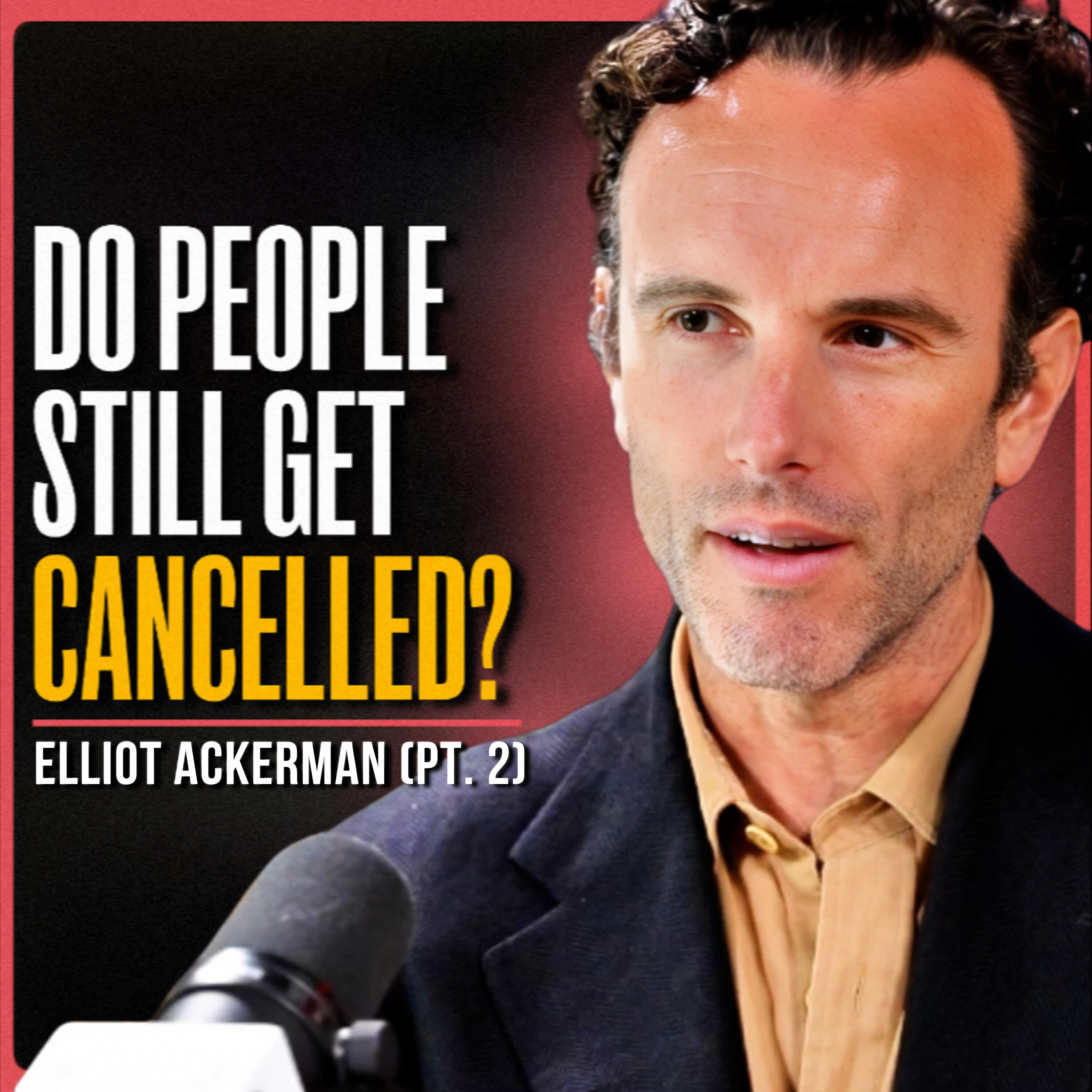
What happens when politics becomes performance and politicians become influencers? In today’s Part 2 episode, former Marine and NYT bestselling author Elliot Ackerman joins Ryan to talk about the idea that “everything’s a racket,” the collapse of institutional trust, and why restraint used to define real leadership. They talk about how cancel culture morphed into shamelessness as a superpower, why we might be living in a post-shame society, Ambrose Bierce’s wild literary exit, and why modern media feels more like professional wrestling than journalism.
Elliot Ackerman is the New York Times bestselling author of the novels 2054, 2034, Halcyon, Red Dress in Black and White, Waiting for Eden, Dark at the Crossing, and Green on Blue, as well as the memoirs The Fifth Act: America’s End in Afghanistan and Places and Names: On War, Revolution, and Returning.
Elliot’s books have been nominated for the National Book Award, the Andrew Carnegie Medal in both fiction and nonfiction, and the Dayton Literary Peace Prize, among others. He is a contributing writer at The Atlantic, a Senior Fellow at Yale’s Jackson School of Global Affairs, and a veteran of the Marine Corps and CIA special operations, having served five tours of duty in Iraq and Afghanistan, where he received the Silver Star, the Bronze Star for Valor, and the Purple Heart.
Be sure to check out Elliot’s latest book, SHEEPDOGS. Apple Studios has actually bought the rights to develop the book as a series with Tom Hanks production company.
Grab signed copies of Elliot’s books 2054 and 2034 at The Painted Porch | https://www.thepaintedporch.com/
Follow Elliot Ackerman on Instagram and X @elliot.ackerman
🎙️ Listen to Elliot Ackerman’s first time on The Daily Stoic Podcast: Elliot Ackerman on Storytelling and the Cyclical Nature of History
🎥 Head to Ryan Holiday’s YouTube channel to see what books he recommends to guests who come on The Daily Stoic Podcast | https://www.youtube.com/@RyanHolidayOfficial
📖 Preorder the final book in Ryan Holiday's The Stoic Virtues Series: "Wisdom Takes Work": https://store.dailystoic.com/pages/wisdom-takes-work
🎙️ Follow The Daily Stoic Podcast on Instagram: https://www.instagram.com/dailystoicpodcast
🎥 Watch top moments from The Daily Stoic Podcast on YouTube: https://www.youtube.com/@dailystoicpodcast
✉️ Want Stoic wisdom delivered to your inbox daily? Sign up for the FREE Daily Stoic email at https://dailystoic.com/dailyemail
🏛 Get Stoic inspired books, medallions, and prints to remember these lessons at the Daily Stoic Store: https://store.dailystoic.com/
📱 Follow us: Instagram, Twitter, YouTube, TikTok, and Facebook
See Privacy Policy at https://art19.com/privacy and California Privacy Notice at https://art19.com/privacy#do-not-sell-my-info.
