
 Ask ChatGPT


 The Daily Stoic
4 Sep 2025 · 35m
Written by AI. May contain mistakes.

Get the gist, explore an idea or ask about something said.
 Claude
On The Daily Stoic, what are the key points of this episode?
Searching your listeningAutomatic transcript. May contain errors.
0:05Welcome to the Daily Stoic Podcast, where each day we bring you a Stoic inspired meditation designed to help you find strength and insight and wisdom into everyday life. Each one of these episodes is based on the 2 ,000-year-old philosophy that has guided some of history's greatest men and women to help you learn from them, to follow in their example, and to start your day off with a little dose of courage and discipline and justice and wisdom. For more, visit dailystoic.com.
1:09Because I got home two nights ago and I got a text from Mark Raveling. This is George Raveling's son. And he said, comes with extreme sadness and heartbreak that earlier this afternoon at his home in Los Angeles, our beloved George H. Raveling has passed away at age 88. He said, please know in your heart that he was resting comfortably in bed and was surrounded by immediate family at the time of his passing. Stokes talk a lot about memento mori. I don't think it's a surprise when you get a text that your 88-year-old friend has passed. At the same time, George is such a force of life. He had defied so many limitations and expectations over the years.
1:58He had so much energy. and roughly a month ago, he texted me, I'm pleased to report that my health is very stable and he was doing better. That's neither here nor there. George isn't with us anymore. And that's a very sad thing. But what remains behind George is an incredible legacy. He was one of the wisest people I've ever met, one of the most hopeful and cheerful people I've ever met, one of the most inspiring people that I have ever met. I feel very lucky to have gotten 10 years with him. I met him at a UT practice in 2016. He became a dear friend, a mentor, a teacher, an example, and I was lucky to interview him several times for the Daily Stoic podcast.
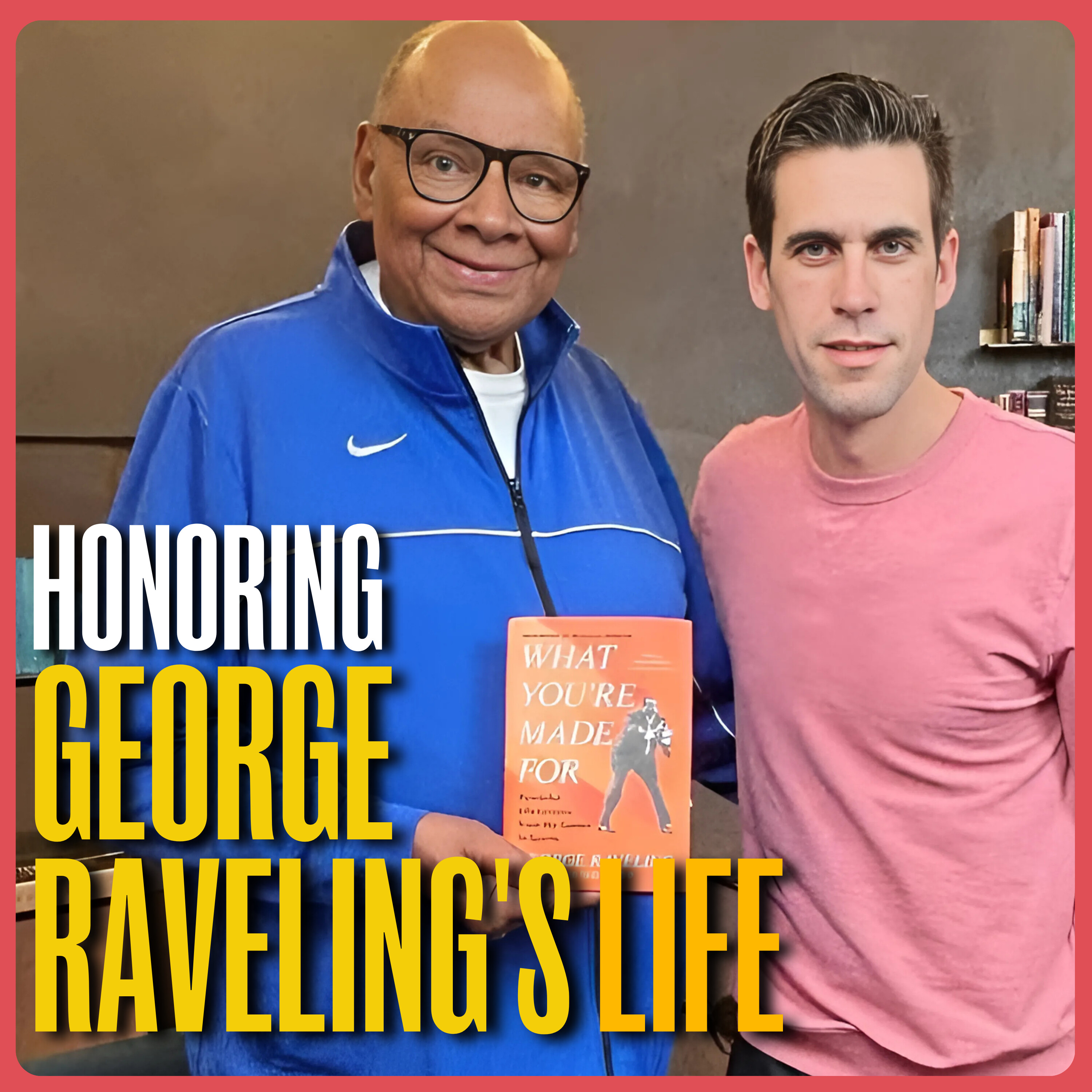
2:43I was lucky enough to do this wonderful book for him called What You're Made For, which is about lessons from his life in sports and in the world. and today I wanted to put together sort of in memoriam some of the best things that he taught me some of the best clips from those episodes I think you will want to listen to them if you don't know who George is you missed out I'm sorry but it's never too late to add a little George traveling in your life and so let's consider this episode a celebration of a wonderful man do read the book. I know it was something he was immensely proud of. Let me read something from it here because it's one of my favorite parts of the book.
3:33At the end, he takes a minute to think about, to meditate on his mortality. He says, in this process of reflection, I can't help but confront my own mortality. At age 87, the same age as Jerry West, who he had recently lost, he said, I found myself acutely aware of the precious nature of time. I began to think of life as a basketball game in its final quarter with just minutes left on the clock. Said Phil Jackson has talked about how that was a lesson he learned from the great Red Holtzman of the Knicks. Phil was on the bench and Red called him over and asked him how much time was on the game clock.
4:14Phil, who had been resting or engrossed in the play, didn't know. You've got to know, Red told him. You may be going into the game, and if you don't know the time, it could get us in trouble. Don't let me catch you doing that again. For me, I know what time it is, which is to say near the end. There's no way around it. In fact, as I said, at my age, I'm closer to something like double overtime or extra innings. The question then becomes, how will I use this remaining time? him. How can I ensure that these last minutes are played with purpose and impact? Even now at age 87, I wake up every day with a sense of purpose.
4:50I'm still learning, still growing, still striving to make an impact, whether it's through my writing, my speaking engagements, or simply the conversations I have with those around me. I'm constantly looking for ways to leave a positive mark on the world, which he absolutely did. He said, as I reflect on my life, I am filled with a profound sense of gratitude and purpose. I've been blessed with a life that has exceeded my wildest expectations, a life filled with more overtime periods than I could count. Every time I thought the game was over, I was given more time on the clock. I think he absolutely did what he set out to do.
5:30He lived an incredible life. As Seneca said, he has more than just a number to show for these 88 years on the planet. He made an incredible difference in so many people's lives, including my own, including the game, which he loved, including in his own family, who is obviously in mourning right now. Let's just get into it. Here's some lessons and insights into George. I hope you enjoy. And maybe take this as a reminder, if there's anyone that age in your life or of any age that you haven't connected with for a while, you haven't told them how they make you feel or checked in with them, send them a note.
6:10I'm glad my last couple texts with George were good, but you always wish for more. You always wish you'd said one more thing. So let that be the lesson and we'll get here in to George.
6:25You know, I think about it on a pretty regular basis, how glad I am that I took Shaka Smart up on his invitation to come to practice that one day. That was one of the best introduction gifts. I tell them all the time, the greatest gift you ever gave me was an introduction to Ryan Holiday. And it was the thrill of a lifetime. I'd read your books. and I remember when Shaka called me and he said, Coach, have you ever heard of the author Ryan Holiday? And I said, no. And he said, well, I'm reading one of his books now and I bought an extra one for you. I think it's right down your alley. And so we met and we talked about you and then he set up the arrangement for us.
7:10He asked me, he said, hey, would you be interested in meeting him because I was coming down to do a staff retreat for him. And he asked me, would I be interested in meeting you? I said, absolutely. And so then, of course, we set up the dinner and little did I know that it was going to end up being one of the best things that's ever happened to me in my lifetime. I've always been a person who believed that you have to have mentors and not all of your mentors have to be adults. And I also, I said to myself, I need to get four or five really young dudes to be my mentors. And you were one that came immediately to mind.
7:50I thought there was so much that I could learn from you. You lived a fascinating life yourself for a young man, I guess I would say, based on me being 87. But I've learned so much about writing a book, publishing a book. One of the conclusions I definitely came to, It's a lot harder to get the book published than it is to write it. And it's been an absolute lifetime reward to have a relationship with you, to learn from you. The meetings that we have by phone and on a weekly basis when we're putting together the structure for the book, every one of those were an instrument and the best utilization of time.
8:37I told my wife after the second time we had those Friday morning calls. I said, one thing about Ryan, if he says an hour, it's going to be an hour and we're going to impact as much as we could. And so it made me realize the value of your time and my time. Here's an opportunity to be with someone you really admire and respect. And you've got their attention for one hour. That's 60 minutes and get as much out of it as we can each time. And I wrote tons of notes to help me articulate the different points to you. And little did I know that we would end up doing a book together. I know. It's like you get invited to do stuff and you never know how your life is going to change from it.
9:22I thought I was just going to watch Texas do their basketball practice. And he said, there's going to be this guy there I want you to meet. He said he's the godfather of college basketball. That's what we call him. and I was like, okay. And I feel grateful every day that that happened because you've been such a big part of my life. You've taught me so much. And I feel like doing the book too. Like I was thinking throughout it, like whether the book happens or not, that I get an excuse to talk to George Raveling for an hour or so a week, that's a win unto itself. And it was an opportunity for me to revisit my life.
10:01I had never really sat down for any meaningful amount of time and thought about the journey from being born in a segregated hospital in Washington, D.C. in 1937 to 2025. It was a long journey, and I had never really stopped to think about much of the journey along the way. I didn't appreciate a lot of it. I was always in the go-go mood. And once I had an opportunity to share my journey with you, things took on a more valuable positioning in my life. I learned to look at some of the things that I took for granted and realize how lucky I was to survive some of these situations along the way. Yeah, I can't imagine when you were born, you could have even conceived of the year 2025 existing, let alone that you would be around.
10:56Like, that would have been so incomprehensibly far in the distance. Yeah. What's interesting is that in 1937, I was born at Garfield Hospital, which is a segregated hospital. The whites had the top four floors above the ground and you had to go around to the basement if you were black to get treatment. And at that time, the life expectancy of a black male in the United States was 44 years. And now if you go and you look at the life expectancy of an 87-year-old black man, it's 77%. So I beat the odds on both of them. Yeah.
11:40Does it sometimes sting a little, though? I think people go, yeah, I want to have an impact. I want to help others. But if I'm not like sort of actively fighting for myself, if I'm not making it all about me, I'll get pushed aside. Like, I mean, you've done all this stuff. You've had this enormous impact of the game. I will say there was something for me watching that movie about Jordan going to Nike, which he insisted on you being in. That's incredible. But even there, like that movie, they made it about some other dude. even though like essentially underplaying your role in that story is there is there something about like if you're preparing someone for the the trajectory we're talking about do do they have to cultivate a kind of a sense of self-worth as opposed to getting your worth from your achievements or your recognition because it's it's not always going to be there you're not always going to get the credit you deserve.
12:41Well, to me, I really never, I never was in it for the accolades. I was in it to try to have a, be a positive difference maker in as many lives as I possibly could. And in some situations I had better impact and others I had less impact, but I always tried to say, what is it that I have that I can use to help this person become a better human being? And the more I gave, the easier it was to get and to try to be a positive difference maker in as many lives as possible. there's probably 50 players that I've coached between Washington State, Iowa and USC to this day that we still we still text each other.
13:39We still talk to each other. We still share information together. And and to me, I felt coaching is is is a great responsibility because Because here's a parent that takes their most prized possession and they put them in your hands. And so my responsibility is that at the end of the day, the mother is saying, I sent you my most valuable possession. And at the end of the day, you want to be able to reward that trust that she had in you. and give them back better than you found. Yes, yes.
14:34Thanks to Toyota Trucks for sponsoring this episode. When I bought my ranch in 2015 out here in Bastro County, I drove my car about halfway down the dirt road that we live on, thought this isn't going to work, stopped, parked it, walked the rest of the way home, borrowed my wife's car, drove into Austin and bought a truck. What I bought was a Toyota Tacoma. And this truck wasn't just transportation getting me to and from my house. It unlocked a whole different style of living for us, not just on the ranch, but in our little Texas towns. There were places I could go now that I couldn't go before, especially out here in the piney forests, through the fields, and on the unpaved roads like the one that I lived in.
15:19We got to go deep into the hill country's wild beauty. We've driven all the way out to East Texas. We've driven across the country. And by we, I mean not just my wife, but both my kids who I drove home from the hospital in that truck. Toyota trucks are built for those who understand that the best adventures happen when you're willing to veer off course. Because you never know when you'll end up on a Toyota adventure detour. And of course, this is stoicism, too, because every detour, every obstacle is an opportunity. But it's helpful if you can handle the difficulty inherent in that. If you've got the resilience and the right companion to make it wherever the road takes you, discover your uncharted territory.
16:01Learn more at toyota.com slash trucks slash adventure dash detours. We just took our kids to an outdoor performance of the Nutcracker. They had a snow cone and then they went insane in the car ride home. And one of the things I try to remind myself when that's happening is that I don't control my kids' behavior, especially when they're too far gone like that. But I do control how I respond, right? That's stoicism, but it's also what Dr. Becky talks about. Dr. Becky is a clinical psychologist and a best-selling author, and she founded Good Inside, which is there to give parents practical, actionable tools for handling those everyday challenges with confidence.
16:42My wife introduced me to Dr. Becky's books. I love them. I've recommended them a million times. I've had her on the podcast. And as it happens, Dr. Becky is hosting two live Q &A events for Good Inside members. I am one of them. She signed me up for about a year and a half ago. I've loved it ever since. On December 1st, you can join Dr. Becky for her How Not to Raise Assholes event, which is about avoiding entitlement and raising kind, empathetic kids. And on December 15th, she's hosting her How Not to Lose It over the holidays event, which I'm sure we could all use. As I said, I'm a big fan of Dr.
17:19Becky. She's been a great influence for me as a parent and just as a human being. And Daily Stoic listeners can join for 15 % off with code STOIC15. You just got to head over to goodinside.com to catch the events.
17:39So one of my favorite things about our relationship is what actually just happened a few seconds ago, which is something popped into your mind that you'd forgotten about. Because I feel like when I ask you, I'll go, I'll think of someone or I'll think of some event and I'll go, did you ever meet this person? Does this ever happen? And you always have, you know, a crazy story. Like when Jimmy Carter died, I texted you and I said, Hey, did you ever meet Jimmy Carter? And he said, Oh, I sure did. We were in China together. So your life's absurd. That was a, in 1979, Nike gave myself, Bill Foster, who was the coach at Clemson at that time and Eddie Sutton, Nike sent us to China to do basketball clinics.
18:25And at that time, China was a communist country. Beijing didn't exist. It was Peking. And so we started out the clinics in Shanghai. It was a little bit challenging because you couldn't get a really good rhythm going in the teaching because you'd have to stop for the person to translate the information. But they put us up at a place in Shanghai called Jingjiang Hotel, which is still there now. Carter and Nixon both had meetings with the Chinese government at that hotel. And so one day we come back from doing a clinic. And when we walk into the lobby, three gentlemen approach a shirt and tie and so forth.
19:10And the one guy shows his badge. He's from the Secret Service. And he said that, hey, we're going to have to move you guys off that floor to another place in the hotel. We asked him, why did we have to move? And he said, well, President Carter's coming tomorrow and he's going to be on the floor above that. And we can't have anybody on the floor right directly under him and so forth. And so they moved us and Jimmy Carter came to town and the Secret Service guys introduced us to him. You couldn't meet a nicer person than him or his wife. And he thanked us for, you know, switching the floors and so forth.
19:52He was having a luncheon at the U.S. Embassy and he invited us to the luncheon and we showed up. And the first thing that amazed me was he remembered each one of our names and addressed us by our name and that and so forth. I have a picture at home of him standing next to his wife eating a piece of cake at that same luncheon. And then that little did I know that many years later, I would look back and realize I played an interesting piece of history. Interesting thing of history. Why? Well, because first of all, we get to Peking during the clinics and our interpreter took us down to Tenement Square.
20:35And we go down to Tenement Square and we're taking pictures and so forth. And the crowd starts to gather around. There's people just staring at us and so forth. And an elderly gentleman steps out of the crowd and he picks up my hand and he goes, like that. And I remember Bill Foster's wife, she was highly insulted. And I said, no, no, I get it. He's never seen a black person before in his life. And he thinks that this is pain. I'll never forget that in my life. He just he just stepped out of the crowd, picked up a hand. And and then I realized the next few weeks when I would think about it, I said, God, I never thought about the fact that there's a lot of people who have never seen a black person in their life.
21:24And that was also a big, that was part of the early days of Nike and the NBA really pushing the game of basketball internationally, which would, I mean, you later, you would become the director of international basketball at Nike. But that when people see the NBA as a global game today, it's probably one of the more next to soccer, the most global game. Yes. That was because of trips like that.
21:52Greatness is complex. It's uncommon. You know, one thing you'll hear about most uncommon people is they'll say, oh, they have such a big ego. But to me, I think that's a prerequisite of greatness. It is an ego to see things that other people don't see, to do things that other people don't do, to say things that other people don't do, to go down the roads that nobody else travels. To me, inherent in all of greatness is the uncommonness of it all. Sure. But don't you, but I don't know, I was just struck by the way that Krause sort of continually sought out conflict and sought to make it about him.
22:45And sought, like, you know, even just, you know, driving Phil Jackson out, you know, not treating Scottie Pippen well. You know, it struck me that, you know, that was really a factor that cost, you know, the Bulls probably maybe a few more, if not several more championships for really no upside. And maybe a perspective that we could examine, Ryan, is for some people, for them to reach their outer limits, they need conflict to drive them. And peace, they're not as good when peace and tranquility is the environment. But when there's all this conflict and disunity, it drives, it's the fuel that runs the vehicle.
23:39That human vehicle is fueled by that. The peace and tranquility gets them nervous, and they feel inadequate. And they feel adequate when there's a lot of excitement, drama going on, disunity, because then they kind of, in a way, feel like, okay, now I get on the white horse and I'll calm the waters. No, I think that's a profound observation. And I've met a number of those people in life. And I think in a weird way, that's an attitude that can often make someone extraordinarily successful. I just found in my study of history, that tends also to be an attitude that leads to very, you know, cataclysmic falls, because eventually the person tangles with the wrong enemy or, you know, blows up something that they worked very hard to build.
24:33I don't know about you, but I tend to have a lot of sympathy and pity for that person, even if they're really difficult to be around, even if they make my life miserable. Ultimately, I feel sadness for them because I know that the person who bears the true brunt of what that must be like is themselves. Yeah, Ryan, one of the things that I think about people who are extraordinary or uncommon, they have acquired the ability to stand in their own truth. And for most people, they can't stand in their own truth. I think standing in their own truth is applicable to Phil Jackson, to Michael, to Krause.
25:22God knows a guy who most people didn't even really know that he coached Jordan, Doug Collins. I mean, there's so many examples so far of people who have the courage to stand in their own truth. I think it's something that goes under discussion in our society today is this whole idea about having the courage to stand in your own truth. No, that's beautiful. That's beautiful. And the self-respect to do that.
26:01talk to me about your journaling habit because one of the the texts that you sent me that affected me very deeply you just sent me this sort of page in your journal where you'd ask this question you said what am i made for and then you'd you'd put down these bullets sort of ruminating on that most essential of questions which is like why are we here what is the meaning of life what are we supposed to make of this gift that we've been given? And that's what ultimately became the book. But that came out of your journaling. I started journaling in 1972 when I was at Washington State. I would underline things in books or write notes to myself.
26:42And then once a week, I'd give them to my secretary and I'd ask her to type these out. And then I put them in plastic sheets. So I have every journal I kept from 1972 to this day now, I have all those journals year by year. And the last, I'd say, eight or nine years, I've done most of the transcribing myself. I take two or three hours on a Sunday and I sit down and I write my notes out in my journal from things that I've learned or read in books. And so... And you collect this into like a single... Yeah. And then I collect that into a single journey for the year. I actually have one of them here if you want to.
27:29It's a tan book with the notes in it. Yeah. They call that a commonplace book, like a collection of thoughts and ideas and inspirations. That's what you're keeping? Yeah. As you can see, it says on there 2020, but this is one of the books that... This is when I stopped doing the typing and started to collect information and kept my notes. So I have one of these for every year, but here I kind of went, took my own way of keeping notes and that. And so, like I said, I have every year since 1972, I have these journals and they, they, they're a great reference for me when I'm speaking or writing an article or something like that.
28:10But this is the earlier ones in the 70s were three ring binders. There's a line in Jewish culture. They say we keep the Sabbath, but mostly the Sabbath keeps us. And I think there's something about keeping a journal where, yeah, you are keeping the journal, but the journal is helping you keep it together. Keeps your thoughts organized. It calms you down. It gives you perspective. It gives you a little space. Even if you never go back through it ever again, it was the act of doing it that gives you most of the value. Yeah, it's so true because I actually looked forward to it. I would come across bits of information that I thought were really relevant, and I'd write down notes to myself.
28:55And then once a week, I would go back to my journal and I'd make the entries in there. And so it became a great source of learning for me because I could go back and refer to things. And if I were going to do a talk on the relevance of truth, over the years, I probably have 100-page notes just on truth, where I wrote them into the journal and so forth.
29:27it struck me as interesting that even in your 80s you're still you were still thinking about like why you're here what is the purpose of this it strikes me that that realization you had that you basically doubled the life expectancy that was predicted for you at your birth that you're sort of like well i got two lives how am i going to spend it what am i going to have to show for this. Seneca has this line about how a lot of old people have nothing to show for their age, but a high number of years. And it seems like you're really fascinated and feel compelled to have answers to those kinds of questions about what you used it for.
30:09I really, when I asked myself, who am I? I think I'm one of God's disciples. And I felt that the The reason I'm on earth is to serve the needs of others, to help people live a better life. I've always believed if you help enough people get what they want, you'll always get what you want. And so over the years, I've always tried to find ways to serve the needs of others. And as a result, they came back to pay me later in life or reward me later.
30:50As someone who's now in your 80s, who's been around before, who's been through some bad times in America and experienced some of the hope and redemption that America brings, how are you feeling about the state of things right now? And I'm just wondering if you have any wisdom for us. I'm going to give you my grandma's wisdom. She used to say, it's always darkest before the sunshine. and that's where I think I think we'll come out on the other side of this and we'll all be better for it and one great lesson that we're going to learn from this is that the American people are resilient, they're loving forgiving, caring people I mean we're being deluged with random acts of kindness not every day, every second, somewhere in the globe, someone is exercising a random act of kindness.
31:58And so there's a hell of a lot that we're being challenged with, but there's a hell of a lot of love and kindness in our people. And not just American people. It's really showed us, I'll go back to what I said before. In a very simple way, there's a hell of a lot of people who are standing in their truth. No, that's beautiful. And I think that's a great sort of stoic lesson, which is like you decide what lens to look at this. Do you look at all the awful things that are happening in the institutions that have failed and the leaders that have dropped the ball? Or do you look at the leaders who have stepped up or the institutions that have endured the pressure?
32:40Do you think, you know, obviously for me, being in my 30s, you know, I'm not that worried about a virus. Like, you know, I know the odds are in my favor, right? It must be a different experience to be 80 and to have had some health problems. How are you managing what I must suspect might be some anxiety or worry or even fear? How are you managing? I just go to bed every night and I think to myself and pray for a better tomorrow. And just keep it simple. Just we'll wake up in the morning and it'll be a better tomorrow than it was. And for me personally, hell, I've already hit the lottery, man. I've had the blessing to be on this earth for 82 years.
33:29There's a large segment of American population will never make it to 40. I've been on the planet for 82 years. I've already hit the lottery. Anything I get from here on out is a bonus. You know, Seneca actually said the exact same thing. He said, the man who tells himself at the end of the day, I've lived my life. I'm done. Every morning you awake is a bonus. And so I just love that intuitively that's how you live. And honestly, I feel better just hearing those words out of your mouth. And I always feel better talking to you, Coach. Well, thank you. I want to say this to you. I publicly, you've really been a positive difference maker in my life.
34:19And you were a good example of elders need young mentors. And you've been a great young mentor for me. And I want to thank you for that.
34:34I would say my favorite part of the calls that we got to do was at the end, you always close with I love you. Yes. And I always say that back. And there's not a lot of people that I say that to on the phone these days. I know that's kind of part of your philosophy. When you love somebody, you tell them. Yes, I really, that's one of the most important things to me in my life is to express appreciation. But also, when you tell someone you love them, then it's got to be a reality. What do you mean? I mean, it's like you're dating this girl and you say, I love you, I love you, I love you. That's something you throw around.
35:22And at some point she says, well, Georgia, if you love me, show me that you love me. And so there comes a time when you have to, the words I love you have to take the next step. And the next step is an over expression of love. Yeah, someone once told me love is spelled T-I-M-E.
35:53So, Coach, Seneca's line, this opens part one of your book. Often, a very old man has no other proof of his long life than his age. What's that mean to you? What it means to me is what did I achieve during my lifetime that has unique value, not just for me, but for others. At the end of the day, I think if I have to go up and meet St. Peter at the gate, I think he'll say, you did a good job of serving the needs of others, and we have taken particular notice of that, and you're welcome to come and be amongst the heavenly angels. And that to me would be the ultimate reward of my life is to look back and to realize that I live the reason I was put on earth.
36:53And that's, I believe the reason I was put on earth is to serve the needs of others. And so I would like to be able to meet St. Peter at the gate and he looks at my achievements and he says, well done, welcome.
37:33Thank you.
38:03Made from the highest quality materials that are cut and sewn right here in the United States. So you're investing right back in your local community. Choosing American Giant means taking a stand for American manufacturing and hardworking Americans. Something other mega corporations don't care about. From fleece to knit, all in a range of colors for versatile daily wear, American Giant delivers everyday pieces designed for everyday life. Feel the difference of quality made to last clothes from American Giant. Get 20 % off your first order with code STAPLE20 at American-Giant.com. That's 20 % off your first order at American-Giant.com with code STAPLE20.
38:43Look, ads are annoying. They are to be avoided, if at all possible. I understand as a content creator why they need to exist. That's why I don't begrudge them when they appear on the shows that I listen to. But again, as a person who has to pay a podcast producer and has to pay for equipment and for the studio and the building that the studio is in, it's a lot to keep something like the Daily Stoic going. So if you want to support a show but not listen to ads, well, we have partnered with Supercast to bring you an ad-free version of Daily Stoic. We're calling it Daily Stoic Premium. And with Premium, you can listen to every episode of the Daily Stoic podcast completely ad-free.
39:31No interruptions, just the ideas, just the messages, just the conversations you came here for. And you can also get early access to episodes before they're available to the public. And we're going to have a bunch of exclusive bonus content and extended interviews in there just for Daily Stoic Premium members as well. If you want to remove distractions, go deeper into stoicism and support the work we do here. Well, it takes less than a minute to sign up for Daily Stoic Premium, and we are offering a limited time discount of 20 % off your first year. Just go to dailystoic.com slash premium to sign up right now or click the link in the show descriptions to make those ads go away.
This special tribute episode celebrates the life and wisdom of George Raveling, bringing together some of his most powerful lessons shared over the years in his conversations with Ryan on The Daily Stoic Podcast.
📕 You can grab copies of What You’re Made For by George Raveling at The Painted Porch: https://www.thepaintedporch.com/
🎥 Watch George Raveling’s FULL interview on The Daily Stoic Podcast: https://www.youtube.com/watch?v=SJ-ZQ2p0WhY
📖 Preorder the final book in Ryan Holiday's The Stoic Virtues Series: "Wisdom Takes Work": https://store.dailystoic.com/pages/wisdom-takes-work
🎙️ Follow The Daily Stoic Podcast on Instagram: https://www.instagram.com/dailystoicpodcast
🎥 Watch top moments from The Daily Stoic Podcast on YouTube: https://www.youtube.com/@dailystoicpodcast
✉️ Want Stoic wisdom delivered to your inbox daily? Sign up for the FREE Daily Stoic email at https://dailystoic.com/dailyemail
🏛 Get Stoic inspired books, medallions, and prints to remember these lessons at the Daily Stoic Store: https://store.dailystoic.com/
📱 Follow us: Instagram, Twitter, YouTube, TikTok, and Facebook
See Privacy Policy at https://art19.com/privacy and California Privacy Notice at https://art19.com/privacy#do-not-sell-my-info.
