
 Ask ChatGPT


- Podcasts
- The Daily Stoic
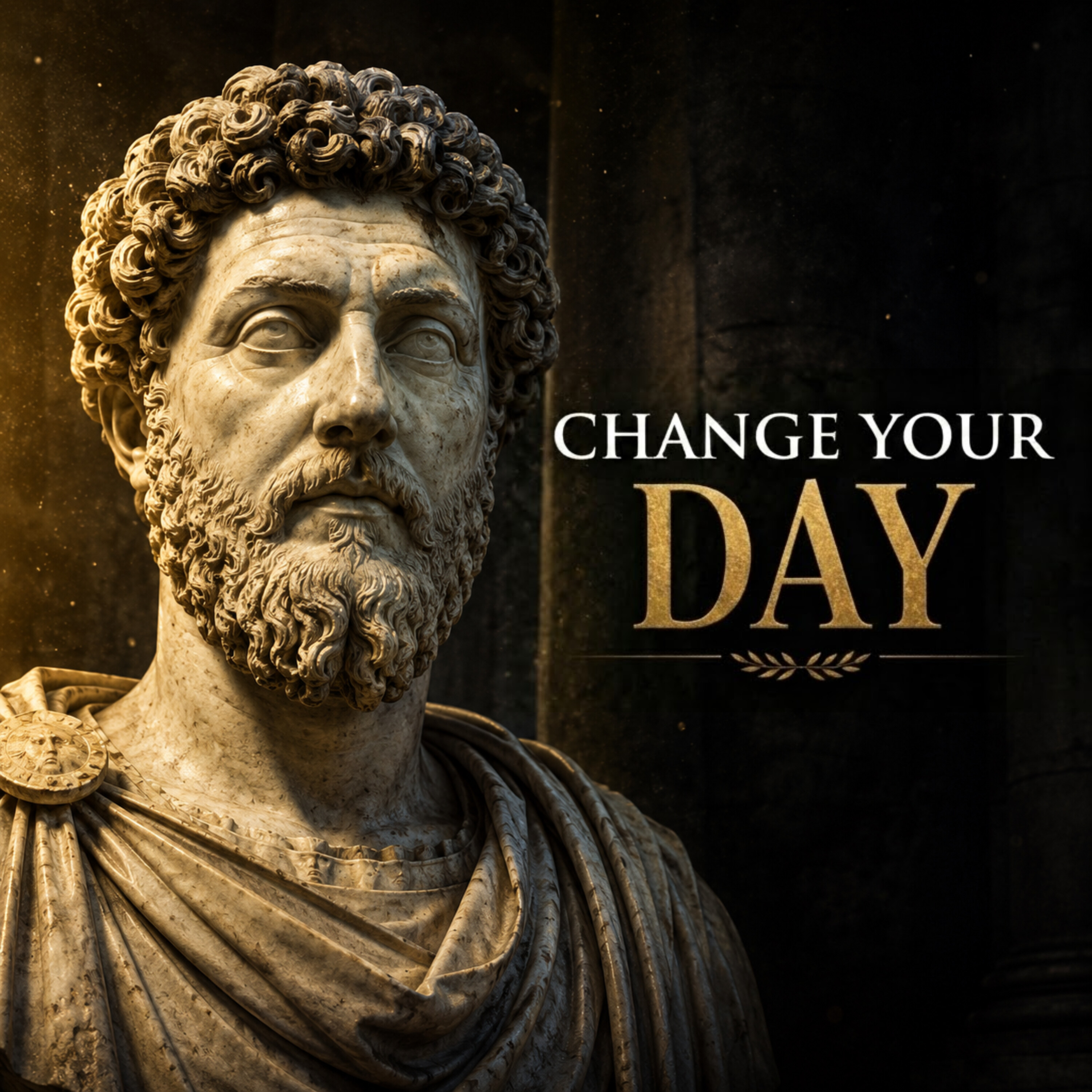
- BONUS | The Daily Routine That Built Marcus Aurelius
In short
How Marcus Aurelius’ Meditations imply a daily routine for staying calm and virtuous while ruling an empire—morning intention, deep work, managing difficult people, balancing duty with nature/fitness, and evening self-review with memento mori.
Guest backgrounds
No guests mentioned; it’s a solo episode.
Key claims
Marcus wakes early by habit, not nature; starts with philosophical preparation for meddling, ungrateful people; focuses on tasks “like a Roman,” winnowing distractions; treats corrections as favors; avoids complaining; retreats inward even amid public horrors; uses journaling/self-audit at night; practices memento mori and humility (“don’t be Caesarified”).
Notable examples
Antoninus’ planned day (even bathroom timing); Marcus reading Euripides/Aeschylus/Odyssey at the Colosseum; dealing with betrayal by Avidius Cassius without emotional reaction; using “obstacle is the way” to practice virtue.
Written by AI. May contain mistakes.
Chapters
0:45
The Life of Marcus Aurelius
Exploration of Marcus Aurelius’s character and responsibilities as a leader.
“to prove himself worthy of all the responsibility and power placed upon him.”
3:00
Morning Routine of a Stoic
Discussion of how Marcus Aurelius begins his day with intention and reflection.
“Again, he's talking about the morning here.”
5:30
Philosophical Reflection Through Anticipation
How Marcus anticipates challenges he will face during the day to prepare himself.
“One of the things he says he learns from Antoninus is when to yield the floor to experts, how to listen to other people's opinions, how to take in feedback and criticism.”
8:30
Work Ethic and Focus
Marcus Aurelius's approach to work, focus, and managing distractions.
“People are getting better with BetterHelp.”
10:50
Coping Mechanisms and Stress Management
Discussion on how Marcus deals with stress and overwhelming responsibilities.
“where Mark Serious probably wrote some of meditations, you can actually go in one of the hot springs that Marcus probably visited, right?”
13:20
Self-Accountability and Reflection
Marcus's practice of self-reflection and accountability in his daily routine.
“He's still writing these lovely letters well into his reign.”
14:00
Marcus Aurelius' Evening Routine
Explore how Marcus Aurelius used his evening routine for self-reflection and accountability.
“He's not just reading for fun or reading for status.”
15:24
The Philosophy of Memento Mori
Learn about Marcus's practice of memento mori and its importance in Stoic philosophy.
“He wasn't like trying to practice his monkish detachment from the people that he loved.”
18:16
Lessons on Sleep Discipline
Understand the significance of sleep discipline in improving daily routines.
“And the more things change, the more they stay the same.”

Ask about this episode
Get the gist, explore an idea or ask about something said.
 Claude
On The Daily Stoic, what are the key points of this episode?
Searching your listeningTranscript
Automatic transcript. May contain errors.
0:00Ryan Holiday: Welcome to the Daily Stoic Podcast, designed to help bring those four key Stoic virtues, courage, discipline, justice, and wisdom into the real world.
0:142 ,000 years ago, Marcus Aurelius is the most powerful man on earth. He controls an empire of tens of millions of square miles, controls the lives of tens of millions of people, He controls the most powerful army on earth. He has the power of life and death over other people. He could have done whatever he wanted. He could have retreated to pleasure and indolence. He could have easily descended into insanity from stress and overwork. Yet he manages, as one biographer would say, to prove himself worthy of all the responsibility and power placed upon him. He manages, I think just as impressively, to manage it.
0:54He isn't corrupted by it. He doesn't break under the stress by it. he acquits himself well. So what's his secret? What does the life of this guy look like? How does Marcus Aurelius manage his day? Well, because of Marcus Aurelius' meditations, the private thoughts of this totally unique singular man, we have some idea. And that's what I want to talk about today, the daily routine of Marcus Aurelius, the philosopher king. Like all people, it starts with the morning for Marcus Aurelius. We know that Marcus Aurelius wakes up early. We know this because he talks in meditations about struggling with this, right?
1:32He's a morning person, but not by nature. He's a morning person by habit. At dawn, when you have trouble getting out of bed, he says, tell yourself I have to go to work as a human being. Is this what I was created for? To huddle under the blankets and stay warm? It's nice here. And he says, but are you made to feel nice? No. Marcus Aurelius attacks the dawn. He gets up. He gets after it. as I think most productive, successful people do. You start the day with a conscious choice, a choice to do the thing that isn't easy, but starts the day off right. And we can imagine he is doing some of his meditative work, his study of philosophy, his writing, his journaling, there in the morning before he was besieged by inquiries, people who wanted favors, before the bad news had been delivered, before he had to get up and travel, before the battle begun.
2:23He was carving out a little time for stillness and reflection. What he's not doing is the equivalent of what so many of us do in the morning, which is we go straight to this thing. Before our feet hit the floor, we're sucked into the phone. We're sucked into the to-do list. We're not cultivating that stoic state of ataraxia, of freedom from disturbance. We're not being reflective. We're not being intentional. We're just putting out fires from the minute we wake up. And it's very clear that Marcus Aurelius is using this little bit of time in the morning to be in a meditative, philosophical, intentional state.
2:59This is how he opens book two of meditations. Again, he's talking about the morning here. He says, when you wake up in the morning, tell yourself the people I deal with today will be meddling, ungrateful, arrogant, dishonest, jealous, and surly. He's not saying, hey, the day sucks. He's trying to think, who are the kind of people that I'm going to meet today? What are they going to be like? And then he's saying, look, how can I be patient? How can I be understanding? How can I deal with this? How can I anticipate this? This is one of the stoic ideas. Seneca says that the unexpected blow lands heaviest.
3:28If you expect everyone to be wonderful and awesome, if you expect to get nothing but green lights all day, you're going to be sorely disappointed. Marcus is instead trying to anticipate due to this idea of pre-Meditashium lorum. And then you know what he says in this passage? He says, look, why are they like this? And what is my job in relation to them? He's saying, don't lose your temper with them. Don't write them off. Try to find the good in them, right? So Marcus is trying to anticipate how the day is going to go and set himself up for success. But because Marcus Aurelius does have a difficult job, because there is immense amount of responsibility on them, he has to get to work.
4:00That's what he's doing in that passage. He's saying, get up, get after it. What were you put here to do? He tells himself throughout meditations, concentrate on your tasks like a Roman. He points out the example of Antoninus, his predecessor and beloved stepfather, about how Antoninus planned out his day. how he even planned out his bathroom break so he wasn't wasting time. He tried to show up and when he was at work to be at work. He didn't complain about this. This is another thing Marcus Aurelius talks about. He says, never be overheard complaining at court, not even to yourself. What do I have to do today?
4:31What are my responsibilities? What are my jobs? Let's do them. And for Marcus, this would have been making decisions throughout the day. This would have been hearing cases. This would have been speaking to crowds. This would have been travel. This would have in some cases been leading troops into battle, right? But all the while, he's having to be focused. He says, get used to winnowing your thoughts. He says, if somebody asks you what you're thinking about, you should be able to answer. He's saying, don't let your mind wander. Don't get distracted. Focus on what you're doing. He's talking about what Cal Newport would call deep work, the ability to focus on the task in front of you, to actually do it.
5:10Again, not to be distracted by this thing or all the other things that you could be doing to lock onto the task in front of you. That is a key part of Marcus Aurelius's work style, his philosophical beliefs, and his daily routine. You can imagine that Marcus is sucked into meetings. He's meeting with advisors and ministers and ambassadors. He's getting briefed on strategy. One of the things he says he learns from Antoninus is when to yield the floor to experts, how to listen to other people's opinions, how to take in feedback and criticism. He says, you know, when somebody corrects me, when they tell me that I've been wrong, that I'm wrong, he's like, they're not harming me.
5:47They're doing me a favor. He says the harm is to remain in error, to not correct it. So there would have just been a lot coming at him. His job would have been stressful. It would have been exhausting. It would have weighed on him, but he tried to approach it with the right mindset and he tried to keep it contained. This is, I think, an important part because there has to be balanced, right? We work very hard. We throw ourselves at what we have to do. But if we're all about business, that's one of the things Marcus says in meditation is remind yourself not to be all about business. And we know that Marcus was not all about business.
6:19We know that he was active in physical exercise, right? We know that he enjoyed boxing and wrestling and hunting and horseback riding. We know that he would take walks, right? We see all these fascinating observations in meditations about nature, right? He's walking through the fields, like that scene in Gladiator, he's dragging the hand. There's a passage in meditations about grain bending low under its weight. He talks about, you know, the flecks of foam on a boar's mouth, the brow of the lion, right? He's getting outside, he's enjoying nature. The Stoics said that the whole world is a temple of the gods.
6:53Mark Subriles is going out there and having this spiritual experience. A hobby he was not into that many Romans shared was the carnage of the Colosseum. We know Marcus didn't like this. He liked getting away from his imperial duties, but he hated the violence of it. He hated the pointlessness of it. And so it's funny, he was often seen doing his philosophical work or reading papers or thinking. He was there. He had to be there. But mentally, he was somewhere else because he wanted peace and relaxation. He says, look, it doesn't matter where you are. He says, people long to get away from it all, right?
7:29They want to travel. They want to just leave all their work behind. He says, but you can retreat inwards to your own soul at any moment. And that's what Marcus was doing there at the Colosseum. It didn't matter how horrifying and violent and gory and loud what was going on in the floor was. He was reading Euripides. He was reading Aeschylus. He was reading the Odyssey. He was reading Cleanthes or Zeno or Epictetus. He was studying philosophy. He was getting out of the dustiness of Rome, getting somewhere clean and better.
8:00Ryan Holiday: This episode is sponsored by BetterHelp. You've probably heard of today's sponsor. You've almost certainly heard me talk about going to therapy. And you've probably heard about it on this podcast because I've been going to therapy longer than I've been doing Daily Stoic. And BetterHelp has been a sponsor of the Daily Stoic podcast basically since we started. More than 6 million people have used BetterHelp globally, and you can check out the reviews for yourself at betterhelp.com slash reviews to see how amazing their customer reviews are. People are getting better with BetterHelp. BetterHelp has an average live therapy session rating of 4.9 out of 5 on over 1.7 million client session reviews.
8:47Ryan Holiday: This is feedback from people who have actually used the service. And if you're ready to give therapy a try for yourself, BetterHelp makes it easy to get started. You ask a couple of questions, they match you with a therapist based on your needs, and you can switch at any time if it's not the right fit. Just visit betterhelp.com slash dailystoicpod, betterhelp.com slash dailystoicpod. Look, hiring is make or break for a business, especially if you're a small business. You can't just hope that you find the right people. Hope is never a strategy, but when it comes to recruitment, it's not going to work.
9:23Ryan Holiday: So when the pressure's on and you need the right hire, this is a job for sponsored jobs. Indeed, sponsored jobs gets you the quality candidates when you need them the most. It's how you get your job seen. And with Indeed Sponsored Jobs, you'll get matched with and hire quality candidates who can drive the results you'll need. And plus, with Indeed Sponsored Jobs, you only pay for results. People are finding quality hires on Indeed right now. In the minute or so we've been talking here, companies have made dozens of hires on Indeed, according to Indeed data worldwide. So join the 3.3 million employers worldwide that use Indeed to connect with quality talent that fits their needs.
10:00Ryan Holiday: And listeners of this show will get a$75 sponsored job credit to help your job get the premium status it deserves at Indeed.com slash podcast. Just go to Indeed.com slash podcast right now and support the show by saying you heard about Indeed on this podcast. Indeed.com slash podcast. Terms and conditions apply. If you're hiring now, then this is a job for Indeed sponsored jobs. And he probably visited the baths every day. He talks about washing off the dirt of earthly life. And I think he means this figuratively and literally. The Romans, one of the things, big part of Roman culture was the gymnasia and then the baths.
10:40So you'd work out and then the cold plunge or a hot bath. And if you visit Aquincum, which is a little Roman camp outside Budapest, where Mark Serious probably wrote some of meditations, you can actually go in one of the hot springs that Marcus probably visited, right? So Marcus isn't all about business. He does find relaxation and pleasure. He is washing off the dirt and dustiness of life so he can get back to what he needs to do. And look, Marcus's imperial duties would have been overwhelming to even the strongest of people. In Marcus Aurelius' reign, there's a series of historic floods. There's a devastating plague, the Antonine Plague.
11:20There's wars, there's an invasion, there's coups. He has health issues. He has family issues. One ancient historian said, Marcus doesn't have the good fortune that he deserves. His whole reign is involved in a series of trouble. The stress would have been unimaginable. The difficulty would have been overwhelming. There must have been moments where Marcus really fell to his knees and he said, look, I just can't do it. But first off, he believed he had to do it. It was his responsibility. People were counting on him. And also he realized he had to have helpful coping mechanisms to deal with this stress.
11:50That's part of what his journaling practices. That's what stoicism was helping him with. Amidst all of this difficulty and stress, what he's trying to do is stay calm, stay centered, to avoid anger and destructive emotions, to not be reactive, but to be intentional. And the idea of the obstacle is the way comes from this. Like he's dealing with difficult people. He's dealing with difficult situations. He's dealing with things that are bad news. But he's trying to see it all as an opportunity to practice virtue. famously when Marcus is betrayed by Avidius Cassius, his most trusted general, he doesn't immediately react.
12:23He steps back. He doesn't say anything. He's just trying to think about it. He doesn't want to be emotional. He doesn't want to let his personal feelings into the mix. And then he comes back and he says, look, look, this is a chance for us to show, he says, to show the Romans and to show the future how a country can deal with civil strife. He tried to do what he talks about in meditations where he says the best revenge is to not be like that. He wanted not to overreact. He wanted not to be broken by it. He wanted to use it as an opportunity. Always, everything was an opportunity to Marcus, big and little.
12:55The little experiences he had throughout the day, the big experiences throughout the day, was always an opportunity to respond with erite and virtue and decency. As we said, Marcus Reels isn't all about business. When he's not doing his hobbies, he's not getting out there, getting active, you know, strong mind and a strong body, he is focusing on reading and writing, which he saw as an essential part of his job in every facet. We have the letters that he writes to his mentor and teacher, Cornelius Fronto. He's still writing these lovely letters well into his reign. He's debating philosophical things with his teacher, Rusticus.
13:28And we know that Marcus read a lot, both as a kid and as an adult, because his writings are full of these references that he's making from memory to the plays of Euripides. He's directly quoting Epictetus and Chrysippus, Zeno, and all these other thinkers, because they're right there on top of mind. He's reading and rereading. He's lingering on the works of the master thinkers, as Seneca said. What he had learned from his teacher, Rusticus, he said, is to never be satisfied just giving the gist of things. So when Marcus Aurelius reads, he's diligent about it. He's focused about it. He's taking notes.
14:00He's processing. He's looking things up. He's not this casual reader. He's not just reading for fun or reading for status. He's reading to learn and to get better. And I would imagine that this reading routine was probably part of his evening routine, right? Seneca would talk about a ritual he had that at the end of the day, he would put himself up for review. I think in the midnight dimness, as one of Mark Surreale's biographers would say, he was putting himself up for review. That's what meditations is. Mark Surreale's interrogation of himself, his review of himself, what he could do better, how he could do better, holding him accountable, what went right, what went wrong, where can he improve?
14:34Because look, there's not a lot of people that can do that for Mark. He doesn't have a boss. The judgment of history is far off. He's trying to remind himself what's important. He has to be the final bit of accountability. Philosophy was the final bit of accountability. He says, fight to be the person philosophy tried to make you. That's what he was doing throughout the day, but it's in the evening with the journal and the reading and the thinking and the quiet time that the lessons are being learned there. And we can imagine that not a day goes by, certainly not an evening that goes by, that Marxist doesn't do the stoic practice of memento mori.
15:07You could leave life right now, Mark Sreelis says, let that determine what you do and say and think. Mark Sreelis tried to spend lots of time with his family. He writes in one of his letters to Fronto how he would trade all of it to just have more time with his wife. He says, as you tuck your children in at night, say to yourself, they will not make it to the morning. This wasn't morbid. He wasn't like trying to practice his monkish detachment from the people that he loved. He was trying to say, why are you rushing through this? Why are you not soaking this in? Why are you not being present for it?
15:35And this practice of memento mori is an essential part of the Stoic daily routine. And we can imagine not a single day in Marcus Aurelius' life going by without it. And we can imagine part of Marcus's daily routine, you know, he just spent the whole day being celebrated, being clapped for, being told how important and powerful he was. People were saluting. Thousands of soldiers appeared before him. Kings of other nations, you know, gave him gifts. He tried to actively remind himself that he wasn't that important, that posthumous fame was worthless. He tried to stay humble with it. He says, be careful not to be Caesarified, right?
16:09Not to be stained purple. He would look out at the fancy feasts or the honors or the jewelry they put on him. And he would say, look at this. This is a dead pig. This is a rock pulled out of a mine. This is a silly metal. He's trying to not be changed or transformed or made to feel better than as a result of this very unusual, strange, surreal existence that he had. And each of us should have some version of this practice in our own life, too, because success can go to your head, because busyness can make you feel important. Being at the center of things can make you feel like you're the center of the universe, but you're not, right?
16:46And part of the philosophical practice is to zoom out. Mark Sturlus talks about looking at things from above. Look at this army, not how powerful it is up close, but how it resembles ants from far away. He's trying to get perspective always. I think this is a key part of Mark Sturlus' routine. And I imagine that throughout the day, but especially at night, as he's just thinking about how he just spent these last few hours. Mark Sturlus is asking this question we see in meditations. He says, whenever you are afraid of death, whenever you want to live forever, he says, ask yourself, am I afraid of death because I won't be able to do this anymore?
17:17We so value our time, but he was talking about how frivolously we spend it, right? We waste it on things. We act as if we have forever, but we don't. The Stoics knew that death wasn't a thing that was happening in the future, but the death was happening now. Dying every minute. Dying every day. Mark Srelius would have seen the passage of each day per Stoic philosophy as a kind of death. So at the end of the day, he's asking himself, what do I have to show for the hours that I just spent? And if this was the last day of my life, he's trying to imagine going to bed and not waking up. If I wake up in the morning, I get a second chance tomorrow.
17:48How am I going to do better? How am I going to grow? What am I going to learn? How am I not going to take that time for granted? A day in the life of Mark Srelius, on the one hand, his life, his experience should be totally unrelatable to us, unimaginable, unfathomable to us. The most powerful man in the world 2 ,000 years ago, speaking languages we don't speak anymore, living in ways we would never live anymore. And yet, as we see in meditations, as we see in his routine, he was like us. The past is a foreign country, and yet human beings are human beings are human beings. And the more things change, the more they stay the same.
18:19And from Marcus to Realize, we can see so many great habits and practices that we should apply in our own life. And circling back here, after these meditations after all this thinking is he's got to get to bed right it's easy to talk about waking up early but if you're not protecting your sleep if you don't have discipline before bed again if you're scrolling this phone thing until three in the morning and then trying to get up with the dawn you're going to have trouble and we know mark swillis is a bit of an insomniac probably the stress and and the health issues kept him up but he tried to get to bed he tried to take care of himself and you have to do that also Gracias por ver el video.
From the publisher
Marcus Aurelius’ life looked nothing like ours, but the habits that kept him grounded still work today. In this episode, Ryan breaks down the daily practices Marcus used to stay focused, disciplined, humble, and present, and how you can apply them to your own life.
🎟️ DAILY STOIC LIVE | Ryan Holiday is coming to a city near you! Grab tickets here | https://www.dailystoiclive.com/
🎙️ AD-FREE | Support the podcast and go deeper into Stoicism by subscribing to The Daily Stoic Premium - unlock ad-free listening, early access, and bonus content: https://dailystoic.supercast.com/
✉️ FREE STOIC WISDOM | Want Stoic wisdom delivered to your inbox daily? Sign up for the FREE Daily Stoic email at https://dailystoic.com/dailyemail
See Privacy Policy at https://art19.com/privacy and California Privacy Notice at https://art19.com/privacy#do-not-sell-my-info.
More from The Daily Stoic
All episodes
We use cookies.They keep VO running smoothly and help us improve it. Privacy policy