
 Ask ChatGPT



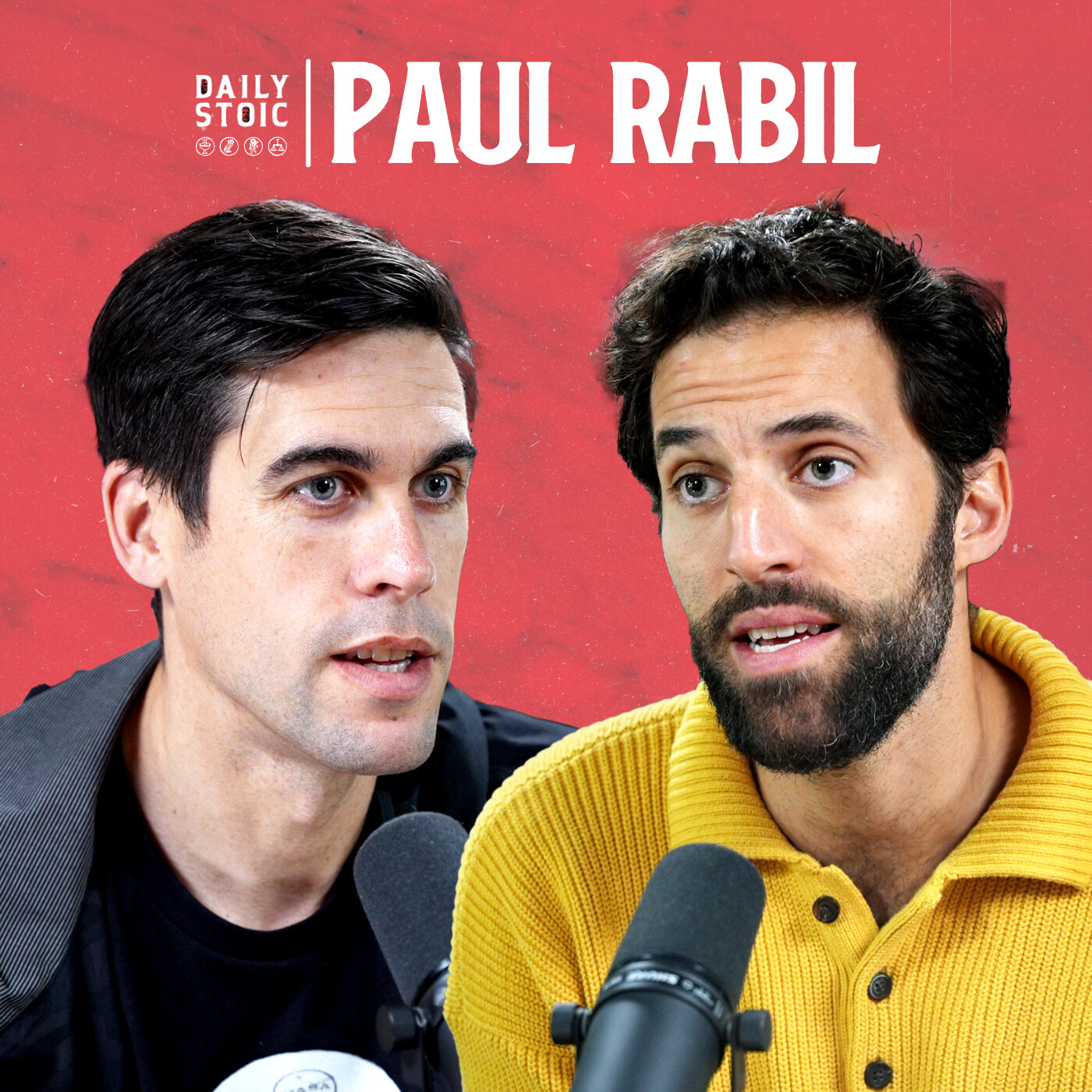
In this episode, Ryan Holiday interviews Paul Rabil, a highly accomplished lacrosse player and entrepreneur. They delve into themes of performance, self-actualization, and the intersection of sports and personal development, particularly through the lens of Stoicism. Rabil shares insights from his experiences in both lacrosse and business, emphasizing the importance of maintaining balance and perspective in the pursuit of excellence.
Written by AI. May contain mistakes.

Get the gist, explore an idea or ask about something said.
 Claude
On The Daily Stoic, what are the key points of this episode?
Searching your listeningAutomatic transcript. May contain errors.
0:00You probably heard the headlines about all the different cuts to foreign aid and food benefits. This is having a profound impact on the world's poorest people and the world's poorest communities. But, you know, just hearing about that, that's not what stoicism is about. Stoicism is, to me, what you're going to do about it. And that's where GiveWell comes in. GiveWell is trusted by tens of thousands of donors each year because they provide free and independent research that helps you understand how to have a big impact. GiveWell has spent the last 18 years researching global health and poverty alleviation, and they direct funding to the highest impact opportunities.
0:39Over 150 ,000 donors have already trusted GiveWell to give more than$2.5 billion over the last several years, and research suggests that these donations will save over 300 ,000 lives. I myself am one of those donors. I donate to GiveWell every year. It means a lot to me. And you can find all their research and recommendations on their site for free. and thanks to the donors that sponsor this research, GiveWell doesn't take a cut from your tax-deductible donation to their recommended funds. And if this is your first gift through GiveWell, you can have your donation matched up to$100 before the end of the year or as long as matching funds last.
1:13To claim your match, go to givewell.org and pick Daily Stoic from the drop-down menu under podcast. That's how they know that you heard about GiveWell from the Daily Stoic and you'll get your donation matched. That's givewell.org, code the Daily Stoic to donate or find out more. I'm picking my kids up from school today and then doing our weekly routine, which is I take them over to Whole Foods. We get all our groceries for the week. Then we have dinner. It's one of their favorite things to do. It's one of my favorite things to do. And then my wife loves it because she doesn't have to take care of it.
1:43This holiday season, whether you're a guest or hosting the big dinner Whole Foods Market, has what you need to delight everyone at your table. They even have heat and eat sides from the prepared foods department. You can make Whole Foods your one-stop shop. Everything follows Whole Foods Market's strict ingredients standards so you know it'll be delicious and good for you. You can also order online for pickup and even delivery in select zip codes to skip the crowds. Shop everything you need at Whole Foods Market, your holiday headquarters.
2:18Welcome to the Daily Stoic Podcast, where each weekday we bring you a meditation inspired by the ancient Stoics, a short passage of ancient wisdom designed to help you find strength and insight here in everyday life. And on Wednesdays, we talk to some of our fellow students of ancient philosophy, well-known and obscure, fascinating and powerful. With them, we discuss the strategies and habits that have helped them become who they are and also to find peace and wisdom in their actual lives. But first, we've got a quick message from one of our sponsors.
3:09Hey, it's Ryan. Welcome to another episode of the Daily Stoic Podcast. You know, the founding of Stoicism is this, the choice of Hercules. This is the story that Zeno hears when he washes up in Athens. The choice of Hercules is the choice between the easy road and the hard road, virtue and vice, a difficult way with the delayed gratification and then the short-term immediate gratification. And it's funny, today's guest, his book starts with something very similar. Paul Rabel is asked by Bill Belichick to put this lacrosse thing aside, which is in some ways Bill Belichick's first love. He just loves the game of lacrosse.
3:48But Bill Belichick offers Paul a chance to put lacrosse aside and try out for the New England Patriots, like in the middle of the dynasty. And later, a player would do this and make tens of millions of dollars and win multiple Super Bowls. So it wasn't like this far-fetched thing. He's asking Paul if he wants to play in the NFL. And Paul really thinks about it. And then Belichick, I wouldn't say he sort of takes the offer away, but he goes, but look, it is special. You have a chance to be the greatest of all time at what you do. And that's not something to take lightly. And it's true. I think about this.
4:23I know authors have decided to start companies that don't really matter, or they sort of go down. They're like, why write another book? It was hard. Well, of course it's hard. But when you're good at something, there's obligations that come with it. That's my view. There's obligations that come with greatness or talent or potential. That's actually something I talk about in the Justice book, which by the way, you can pre-order now at dailystoic.com slash gestures. I'm talking about how like you, the parable of the talents, right? You know, the parable of the talents, the idea that you've been given these gifts, are you going to make it grow?
4:56Are you going to turn it into something? Are you going to bury it underground? And that's sort of the moral of today's guest, keeping this intro short, because I already introduced the illustrious Paul Rabel, one of the greatest lacrosse players, most dominant athletes in the history of his sport, one at basically every level, sort of a peer. People who know lacrosse talk about him like he's Tom Brady or talk about him like he's Steph Curry or Sue Bird or anyone who has been just an incredible game-changing presence in their sport. And Paul has been that in another way in that he ends up buying the league that he played in and he's turning it into literally the premier lacrosse league.
5:45It's awesome. You may have seen it on TV. They got a television deal for it. And it's really been sort of taking what was a kind of a small insular sport by storm. So I'm really excited that he wrote this new book, The Way of the Champion, Pain, Persistence, and the Path Forward. It was published by my publisher, Portfolio. I was really excited. I introduced Paul and them and I did some work on this book because I wanted Paul to bring his unique way of thinking about sports to other domains. And I think he did a great little book here. It's sort of the war of art for sports. But like the war of art, it doesn't really matter what you do.
6:23Those lessons, I think, will work for you. You can follow Paul on Instagram, TikTok, YouTube, Twitter, at Paul Rabel. You can go to paulrabel.com. You can pick up The Way of the Champion, Pain, Persistence, and the Path Forward at The Painted Porch or anywhere books are sold. I think this one's great. I think you're really going to like it. And thanks to Paul for coming on. Paul had me on his podcast many years ago, which you can check out. I'll link to that in today's show notes. And here's a conversation I was very much looking forward to. And I think you're very much going to enjoy.
7:04What's the point of being great and successful and doing this thing that you used to love if you suck all the fun out of it and you make it this artificial life and death thing? So the ability to be like, I demand high performance for myself and also, isn't this so cool that I get to do this and I feel so lucky and I appreciate it? To be able to have expectations and appreciation at the same time, that's where the magic is. And it's maturity and is a delicate skill that comes with a lot of work, just like any skill. You and I can sit here and talk about it, but for it to actually work, you put it in practice.
7:37Because the first five years of therapy, I vehemently contested my sports doc, his name's John Elliott, the fact that I could have both. Yeah. I personally was pursuing self-actualization with him because it made me feel better. I felt like a better human being more well-rounded and I also feel like I felt like I was losing my edge I challenged him challenged him challenged him he was like nope we're gonna get to a place where it's gonna be a switch for you yeah um because you need all that edge when you play if you want to be the best um but you don't need all that edge all the time well is that sustainable to have that edge all the time because it makes you a monster or it makes you miserable 100 and And it burns you out.
8:27Yeah. And so one of the things I was challenged with as an athlete is when I'd lose games, it was hell. I would stay up all night and play every former play back in my head. When we'd win games, I would stay up all night playing back the plays in my head that I could have done better in. Yeah, yeah, yeah. And that's just not sustainable. Yeah. So, you know, I've learned this in business too. How do we approach it? You build processes. Well, that goes to what we're saying, right? Because also you're gonna lose. So if you can't figure out how to manage losing, if you have a long career, eventually that losing will kill you.
9:08Totally. Statistically certain losses will eventually be cumulative enough that it breaks you. Totally. Yeah, and so there's processes, there's tactics, and there's boundaries. Yeah. On the tactics side, for example, One thing I worked with, it might seem small, but I would get so edgy on game day and we'd play at night that I wouldn't know what to do with myself, so I'd take a nap, take a two and a half hour nap. Just turn yourself off. Turn myself off, which wasn't great from an athletic performance standpoint, but it's just what I wanted to do. And it worked for a long time, but we changed, we built a new tactic.
9:44You said, okay, you're gonna go to Whole Foods after your morning walkthrough. You're gonna get the nutrition in that we know is gonna work. and then you're gonna take a walk with a friend or you're gonna read a book or you're gonna go to a movie. Yeah. You're gonna book a matinee. Yeah. It's like, but I want you to stay as active and as intellectually engaged as you do during the week. Yeah. Versus like all of a sudden change your game day routine. Yeah. Where your sports scientists, your strength and conditioning coach and your nutritionist would be like, wait, why are we taking a two hour nap today?
10:16We haven't done that all week. Yeah, sure, sure. Don't treat the game as special because it's not. Yeah, so you have to be willing to challenge what you were doing, even if it was working, in an attempt to solve for this really difficult balance of having two things at the same time and both things being true, high expectations and appreciation. There are things that a lot of the greatest athletes in the world have worked on to create better appreciation. Mindfulness is one. and then boundaries that must be set written down practiced and practiced and practiced so that it becomes sturdy yeah um you know a boundary that i would set for myself for example is after a game no matter what winning or losing i wouldn't watch the game tape i wouldn't review the stat sheet and i would focus on how important reframe how important that night was from a recovery standpoint.
11:15Sure. Uh, for sleep capacity, nutrition, um, into allowing me to become an even better player the next week. Yeah. So there's a little bit of like games that you play with yourself. You're corralling the kind of primal energy, the ambition, the drive, maybe even some of the self-loathing that makes you great, get great at something. So you have a little bit of space to be a person after totally yeah yeah it's exactly it no i think about that because obviously when i'm not writing a book and i am writing a book those are different modes but i've been on for the last several years i'm writing all the time yeah and there's no off season and then you get married you have kids you have a life you know you have success you want to be able to appreciate it enjoy all that you want to be a functioning person and so basically, I was sort of faced with this choice.
12:09Am I someone who's writing all the time, and you give yourself over to the thing, and you understand it's going to destroy all these other things? Or are you going to figure out how to be, or I guess the choice is not right, right? Like, not do it. Like, this is what it turns me into, so I'm going to walk away. Or can you figure out how to do the thing more sustainably, more balanced, have some boundaries around it? and that that third choice is the is the harder one right and and the i remember when i sold one of my books i forget which one it was but my editor like called my wife and she was like hey i'm so sorry like she was like i she was saying like she understood that the cost of this thing were paid by people other than me right and the decision to go like i don't know if it needs to be that way there's obviously to to do anything at a high level there's costs associated with it but the costs don't have, you can mitigate or minimize some of those costs.
13:08You can find a way to do them more sustainably. So yeah, that's something I've had to think a lot about. Like, how do I, how can I do it, but it not define everything, overwhelm everything and maybe even destroy everything? Yeah. And you've probably taken a lot of the greatest attributes that have led you to the book's success that you've written and applied them to your personal life from a focus from an effort uh from an intention standpoint and that that act for me has helped balance me out more yeah and and my identity as i had mentioned was the lacrosse player is now paul rabel yeah who happens to play lacrosse or didn't play lacrosse and it might seem nuanced but it's not um you also sparked the thought that you know going back to both things being true and this is largely a part of the middle of the book and when you're a professional is working smarter, not harder.
14:09Yeah. I actually think that you can work smarter and harder, but it's the way that, you know, how I explored these lessons is challenging norms, going a step further with evidence from examples from other athletes, but there is a truth to it. An example is, you know, as an amateur, I worked out every single day hard as hell. My body as a younger kid would recover faster. Yeah. As a professional, you know, one of the other differences we talked about monetary is like, okay, college is four years, high school is four years. There's a limited time leading up to that. Yeah. When you become a pro, you want to play for 15, maybe 20 years if you're Tom Brady.
14:56Sure, sure. So everything's got to change. you know the reason why option quarterbacks work in college is most of the coaches don't really care about the longevity of the quarterback right they don't run an option in pros isn't because like you know they're not able they don't want to get fucking hurt yeah sure they want lamar jackson to play for 15 years and so if you're lamar too you're not going to train at some point pounding the pavement as hard as you did when you were an amateur yeah and being able to have the self-talk and regulation to be like okay i'm actually working out compared to my college career maybe a little bit less such that my return is going to be a longer playing career yeah and there's these little concessions that you have to make and um and that's all fascinating yeah like if you would if you could have given tiger woods a glimpse into his future he probably would have taken care of himself better.
15:57Do you know what I mean? He was working so hard at being very strong and like pushing himself very hard and pushing through injuries that of all the games, like he was lucky, like golf is a game you can be great at into your 50s or 60s, right? And he treated himself more like a football player that had two or three or four years. and and you know he he grinds down the gears yeah and that like literally like his joints are not like there's nothing there you know that famous victory is like playing on a on a on a leg with no cartilage in it and and like if you if you could have if he could have conceived that he'd still be paying that bill 10 20 years later and what it would deprive of the potential victories it would deprive him of in the future you know maybe you make a different bet and i that's what I think about writing is like a lot of the writers I really admire are still doing it when they're quite old.
16:58But, um, if you hollow yourself out in the middle, there's not going to be anything left when you get there. Totally. You know, I, I spent a lot of time studying Tiger and wrote a little bit about him as well. Um, and we, we mentioned Michael Phelps being dragged into a pool. Tiger was a prodigy. Yeah. Um, and his experience came from his father's, uh, introduction to Tiger to golf and then his father's hardcore coaching. It's like Serena and Venus's father doing the same thing. What it actually was was child abuse, to be clear. Straight up child abuse. No question. And it's important, I felt, to cover that experience that Tiger had paired with other experiences because I have no clue, if any, but who would read this book and what their experience is.
17:50So I felt like, you know, something that didn't exist was really a wide ranging guide to performance. And like, let's call it what it is. Tiger's one of the greatest, probably the second greatest if you look at championships won to Jack Nicklaus, but many would say that the greatest golfer of all time. It came with his challenges. He basically had 10 years at number one. It's unbelievable knowing what he's been able to accomplish with the trauma of his upbringing. Yeah, yeah, it's insane. Insane. That, unfortunately, is not uncommon, especially in today's day and age where helicopter parents have emerged more than ever and hoping that their kid becomes the next Tiger Woods.
18:28And there haven't been any. it's it's it's hard to watch at times but uh tiger also did something that uh i think a lot of athletes can think about and uh whether it's what they apply to their discipline or not where he was at his peak winning majors and tournaments left and right every single week and then he decided to change his swing yeah sure because he was looking downstream around some things that he was getting away with because of his athleticism that would require a little bit of a dip initially to swing back up better than he ever was. And that's what happened. He struggled for the first two years of remaking his swing and then he went on another huge run.
19:19And that was all as a professional. So tying back to the different experience, various experiences that athletes do that has led to their success and longevity? I remember a therapist said to me one time, she was like, okay, like, let's say your kids follow you in, like, follow in your footsteps. They achieve what you achieve or they achieve like a fraction of what you achieve. Would you want them to feel about themselves the way you feel about yourself? And it's like, no, of course not, right? Because so often what drives us to achieve is some sense of inadequacy or some sense of needing to prove.
19:58So even if it's adaptive, very rarely would you wish it on another person. And so to me, the thing that we're all trying to figure out, the really powerful, important thing is, can you figure out how to do what you do from a place of fullness rather than emptiness? Like, can you find out, can you find a better fuel? Yeah. Right? Like Jordan understands that anger fuels him to be great, but like, I'm sure if he ever saw one of his kids just manufacturing some like a feud with someone, he'd be like, dude, this like, you don't need to do that. Right. Cause they're like, even if it works for you, you understand on some level, there's probably another way.
20:37And that you also understand as time goes on, what it's taking out of you to operate that way. Yeah. Yeah. I think letting go is an ongoing practice that we often think we do when we have to but we're doing it regularly yeah so the big ones are you know for me were getting traded you were afraid of being traded no when i was traded was an incredibly difficult excruciatingly painful time because there's shame yeah there's embarrassment there's self-worth that are all being you know magnified yeah yeah right even if you can frame it as oh man which team got the better end of the trade you know if you know they they dealt three players and two picks for paul as but in the end that team has decided they don't want you anymore they don't want you anymore yeah um and so our ability as athletes or individuals to move on and potentially sort all new heights is that ability to let go yeah of all that shit yeah and uh so that was one example i went through a divorce um relationally when something's not working we grip to it yeah we have these attachments and stuff um but a lot of the a lot of the commonalities are there and then retiring yeah i talked with you quite a bit about yeah letting go of something that was for a large portion of my life my identity yeah something that i love to do something that fills me up every day um letting that go um so those are like the big ones but we let go of small things all the time too so if you are a high performing person that has the gift of edge um you know you should leverage that mentality around the things that are painful yeah and uh being really good at letting shit go yeah is another reframe that all athletes want to be really good at everything yeah yeah so the decision to be good at, yeah, at this thing that's hard is a way to put yourself into it rather than fight it.
23:01Yeah, I mean, the most difficult thing to unravel to what your point is like our self-worth and to that question of, do we want our kids to feel the same way as we do now? And what I hear is, I hope that, you know, me and you that feel the things that we feel don't think that we're at a dead end. Yeah. We can work on ourselves. And I know you know that. And then we hope to leave that stuff that we're working on as the foundational work that our kids. Yeah, hopefully they can pick up where you left off as opposed to just repeat the same cycle. Yeah, I mean, I think about you related to this book in your journey as a professional.
23:56You're largely considered, I mean, I've told you before, my favorite book is Discipline's Destiny.
24:06And the first book of yours that I read was Trust Me, I'm Lying. Yeah. And I really enjoyed it and still recommend it. And it was a part of your life that led you to becoming one of, known in the industries as one of the greatest performance marketers and creative marketers on the planet. And part of what you learn in this book is the art of storytelling, the art of hacking growth and things that I know almost run in conflict with stoicism and the stuff that you write on today. It's impossible for you to be writing intellectually the way that you do, having not done all of this incredible work as a performance marketer.
24:51And performance marketers aren't bad. It's just, you have to do, I think the more experiences we have, the better we become and the unknown future that sits for all of us, we're going to be more prepared for it when it comes.
25:14I got an amazing night's sleep last night. One, because my six-year-old fell asleep in the car at like six o 'clock and I transferred him from the car seat to the bed and it stuck, which is just magic. So he's in bed way earlier than normal. But I sleep really well every night because I have a 8 Sleep Pod 5 Ultra, which is 8 Sleep's best product. I've used 8 Sleep for many years now. And it's just totally transformed how I sleep, made me sleep better, made my wife sleep better. It's amazing. So basically, Eight Sleep is this topper that goes over your mattress. It can heat and cool both sides separately.
25:53It can raise and lower each side separately. So it helps you fall asleep faster, stay asleep, and then wake up better. Eight Sleep buzzes me to wake gently every morning as opposed to some loud blaring alarm. And then I can check the app and it tells me my sleep score. It even helps me optimize my day based on how I slept. If you want to survive the holidays like a pro and just generally sleep better, head over to 8sleep.com slash Daily Stoic and use code Daily Stoic to get$350 off your very own Pod 5 Ultra. The best part is you still get 30 days to try it at home and return it if you don't like it.
26:34But I know you will. Trust me, your body will thank you for this investment in better sleep, shipping to many countries worldwide. See details at 8sleep.com slash Daily Stoic. Look, if you're listening to this podcast, you've probably heard of HelloFresh, right? They're the number one meal kit in America. They make home cooking easier with chef crafted recipes and fresh ingredients delivered straight to your door. This fall, they're serving up even more to love. It's not the HelloFresh you remember. It's even better. HelloFresh is bigger. They've doubled their menu. You can choose up to 100 options each week.
27:07It's healthier. You can choose from 15 plus high protein recipes, and they now help you eat greener with veggie packed recipes that have two or more veggies per week. And it's tastier. You can get steak and seafood recipes delivered every week for no extra cost. They have three times the seafood options. They also have hearty fall recipes like classic beef chili or honey glazed pork tenderloin. We just got home from a week away. We're trying to think about what we're going to eat this week. It was such a relief to see that HelloFresh box sitting on our doorstep when we got home. They've got everything you need for the recipe that they pick out.
27:43There's no last minute trips to the store. Plus, the meals are delicious and easy to make. The best way to cook just got better. Go to HelloFresh.com slash stoic10fm to get 10 free meals plus free breakfast for life. One box with active subscription. Free meals applied as a discount on the first box. New subscribers only varies by plan. That's HelloFresh.com, Stoic10FM, to get 10 free meals plus free breakfast for life.
28:14That's really interesting. One of the things that Stokes talk about is that, okay, look, your whole life has been a series of changes, right? You were not born, and then you were born, and then you were a baby, and then you were an infant. You were transitioning all the time. You were becoming something different, right? And some of those changes were not fun. like you were married and then you were not married or you were popular and now you're unpopular or you had two legs and then you lost one of the legs, right? Like things happen, right? And in meditations, Mark Sreo says that all this change is a form of death, right?
28:48When something happens, the old you dies and sometimes a new you is born. But his point was that where we are now was a product of an unlimited and ceaseless amount of changes. And then where we are now, we're like, but I have to keep it this way. Do you know what I mean? Yeah. Like, and most of those changes you had no control over and you, in retrospect, realized you should have just accepted them and shouldn't have fought them all along. But then you get to where you are now and you're like, I have to keep this how I am. And obviously the ultimate version we do this is with life, we cling to life, we want to live forever.
29:26As though, you know, death isn't its own kind of transition and we don't know what happens after. The point is like you just have to get comfortable with this idea of change and you have to accept it and you have to embrace it because who you were isn't alive anymore. And what you're going to be in the future is only going to happen if you die multiple times. Right. Like the athlete who dies, the person who lives in this town dies. Like to get where you're going, what you could – meant to be some amazing future or just some future that is what it is, is only going to happen if you accept all these changes between now and then, most of which you have zero control over.
30:12Yeah. I mean it's well said. It's staging the art of letting go. Yeah. and you know i think i think athletes struggle with that probably more than most because our discipline is ageist based on our biology and you know we become less athletic and males lose one percent of total testosterone per year when they turn 30 and you just you know it's a young man's game yeah um and so it's gonna end a lot sooner unless you play golf this is an astute point. Then, you know, my parents, my dad sold paper, mom's an art teacher and they've been doing it for 40 years, you know, and there's not like, oh, they're 60 now.
31:01They're not going to be able to do it anymore. Actually, they get better at it, you know, and so you don't in sports. So you have to really build that skill. You have to later on reframing and the stages that we go through, you know, are those, I think those three fold and, and after you're a professional, what are you going to do? Yeah. Um, and there's a lot, the truth is a lot you can do. Well, when you're used to imposing your will on the game, but also reality itself, like you can imagine Tom Brady's not supposed to be able to play football, right? Like he's not supposed to be able, he's not supposed to be a starter.
31:39He's not supposed, uh, he's not supposed to be able to come back when you're down 28 to three in a Super Bowl. He's not supposed to be able to play into your 40s. So when you build up this track record, whether it's in sports or business or life of defying the odds of bending reality to your will, it becomes natural for you to assume you can always do that and things are always going to go your way. But like life is undefeated, You know, like the house always wins. At some point, you're gonna bump up against unavoidable reality and you get humbled. And then you have to become, that thing ends.
32:17You have to adjust. You realize, oh, it felt like I was imposing my will on reality, but I wasn't in as much control as I thought I was. I've been contemplating bending. the you mentioned bending reality i think about bending time yeah um you know when we're in our 20s and we're in relationships sometimes five to ten years long um you're so distracted and you haven't quite fully developed if you're lucky enough to have new relationships in your 30s and 40s you can learn about that person in that relationship in half a quarter sometimes a tenth of the time because you're more focused you're more present you're more attentive you're more inquisitive um and so here's how i've begun thinking about bending time the relationships and then the actual tactics we were we were hosting a company off-site uh this past winter and we bring in an amazing sort of relationship and uh psychotherapist religious studies expert savant, his name's Dave Acker.
33:37And we broke out into groups of four and there were four minutes on the clock for each shift. And each of our executives, the rules were, you had to tell people about yourself for four straight minutes and no one can ask a question, can add to it. They just sit there and listen. and four minutes feels like four hours under that yeah and and then you also learn so much about this executive you know you know about you know their father was an alcoholic and uh they were cut from the team their sophomore year in college and uh their first company they worked at went belly up and you're just like none of this stuff i would have even unlocked in a one-on-one yeah yeah you'd have to ask so many questions to get to this stuff and so there are there are tactics that we can use to get more out of life and i think it's like bending time yeah well that that's the it's not true exactly that athletes decline as they get older right you do but you also get better and smarter and you understand more and so that's what keeps you going is that you're going this way in one area and then you're going this way in the other.
34:58And so, yeah, when I talk about being more balanced as a writer that I want to keep doing this, but I want it to not, you know, blow up my life as much. Part of how I'm able to do that is just, I'm so much better at the thing, having now done it dozens of times that, you know, I realized that a lot of, first off, I was just inefficient period. You know, I wasn't disciplined enough about how I did stuff, but then also like so much of the torturing myself, so much of the doubt, so much of the stress was totally self-inflicted and not at all moving the needle. It had nothing to, it felt like you have this sense that like, you're like, this is my toolkit that allows me to do what I do.
35:44But it's not till you start messing with it that you, and isolating the different pieces that you start to realize, oh, this thing over here, you know, like how nervous I was beforehand or how mad at myself I was after or how much I, you know, stressed about hitting very specific. I thought that was contributing to the success or failure. But in fact, when I stopped doing it, not only did the outcomes not change, in some cases, the outcomes got better. Yeah. And so you realize, oh, a lot of what I was doing was just like ritual or habit or bad habit. And then so when you take that stuff away, you can still do it and you do it better and it's less harmful.
36:27Nailed it. It's experience. Yeah. You know, they say pro athletes can see the next play before it happens. Wayne Gretzky could see three plays in advance. Lionel Messi and his amazing career he's had, the contrarians come in and say, well, look how much he walks. he walks the whole game and then you know his his runs are acute and they lead in goals or assists but what they don't say is while he's walking he's doing something called scanning so he's and that's statistic that that is statted uh by head turns and they use uh augmented reality to sort of define it but he has some like four times the scan rate of every other player on the pitch every he's if you watch him walking he's constantly doing this so he's seeing the play unfold and he's able to use his energy more acutely right to your point even if that energy is slowly becoming less as he gets older and then there are other things that i look at lebron i don't know this to be true but i watch him in uh in his last three seasons as he's approaching 40 he started doing something that I've picked up on more, which he basically sprints, call it 80 % of max speed from the offensive end back on defense.
37:48And some would say it's unnecessary. You don't need to use that much energy. But I think for him as a 38 year old, might be 39 now, it is a pace that he knows is manageable we can all get to 80 percent uh but more so it is it's an energy that he's bringing to the floor it's full of guys in their early 20s it's saying like i'm gonna work harder than you this entire game and i'm gonna do the little things that people don't like to do he spends so much time doing ab work works on his core yeah people fucking hate abs it's the hardest exercise the most painful it's reserved for the end of your workout often and it's the easiest to skip um and so therein lies the gold i was talking to chris bosh about this he was he was saying that you know uh they were all on miami together and they're on the team plane and they they get uh they get on there and you know uh lebron starts doing yoga yeah yeah and And they're all like, what the fuck are you doing?
38:57Yeah. You know? And he's still playing. Every single one of them is not playing anymore. Yeah. And he figured out the things that move the needle. And Tom Brady figured this out too. He's like, wait, I'm spending all this time in the weight room. What's actually preventing me from getting hurt is not strength. It's pliability. And so, yeah, you figure out the things that actually move the needle. And you do that thing. And then you don't do the other things. and people are gonna laugh at you and they're gonna think it's weird. And yeah, they were making fun of him on the team plane, you know, because it was weird.
39:31What are you doing yoga for? Yeah. But you figure out what works for you. When Kobe Bryant had successive high ankle sprains, he started taking ballet lessons. Yeah. And tap dancing to work on his ankle strength. It all goes back to the art of curiosity. Peyton Manning says that his best attribute is his curiosity. and he talks about a time where he was sitting as a freshman quarterback for the Tennessee Volunteers in a quarterback's film room. And they kept running this playback. He goes, coach, pause it here. What happens if this guy over here blitzes? And the coach goes, well, he's not gonna blitz.
40:11Yeah. What happens if he does? You never blitz in this cover three from that space. He goes, but if, let's just say he did, what are we gonna do, right? And he said it was just something that felt, was maybe innate that he's nourished over time. But when he looks at, you know, the general was his nickname. And all the audibles he called from the line of scrimmage stemmed from his curiosity. That's really interesting. There's a Napoleon thing. He said, you know, three times a day, a general should ask himself, what would I do if the enemy appeared over here? What would I do if the enemy appeared over here?
40:48And so it's curiosity mixed with a sense of like preparation. Yeah. And it's wondering, what am I going to do if this happens? What am I going to do if this happens? It's not anxiety because it's more like awareness and it's not impotent. Anxiety has an impotence, right? You're like, I'm going to be screwed if that happens. Yeah. Right? Awareness is like, this could happen. And so here are my options. And instead of having to think about that in the moment, the first time it's happening, I'm going to think about it now. The stoic phrase for this is pre-meditatio ballorum, pre-meditation of evils.
41:25You're not supposed to just like feel shitty in advance of a thing happening. You're supposed to plan for it. First off, so when it's happening, you're not saying to yourself, what the fuck is happening, right? Which is what you do. Like if that guy blitzed on Peyton Manning, he'd be like, what the fuck? Where was that? But he's thought about this. So, and because he thought about it, he has option A, he has option B, He has option C. There's a handful of things because things that like the coach is saying, oh, he'll never do that. You never do this. At some point, the thing that people have never done, they do.
42:00And you got to be you got to be ready for that. And so it's this kind of awareness, this understanding, this just kind of constant riffing curiosity, exploring, well, let's just let's let's let's play it out. How would that go? OK, I see why it will actually almost certainly never happen. But maybe what you actually discover there is a reason the one out of a thousand plays that does happen. I mean, the Super Bowl we just had, the Chiefs had gamed through what they would do in overtime in a way that the 49ers had. And you saw Patrick Mahomes when they said, do you guys want to receive? And when the 49ers are asked and they choose, Patrick Mahomes knew that they had made the wrong choice.
42:47Because they had planned through that in a way that the other team, they were just focused on, let's just get through the game. They hadn't planned through what you would do in a – I mean, only two Super Bowls have ever gone into overtime. So the idea that leading up to the Super Bowl, when you'd have so much to do, that you would sit there and think about how you would play the coin toss in this hypothetical, extremely unlikely scenario. But that's where that curiosity and that planning, that pretty much Natasha Malone comes in. Exactly. And there's an attention to detail. Yes. So I liked your note on preparation that's paired with curiosity.
43:23Attention to detail allows you to be this problem solver. You're right around the Chiefs. And then I would say, you know, Belichick, he would do things like he'd understand the rules better than the rule makers. And he would do things like, okay, if the opposing team's offense is on the one-yard line, first and goal, i'm going to tell our linemen to try to jump the snap because what's the downside they can't get any closer half the distance to the goal right repeat first down yeah so we're gonna jump this fucking thing yeah you know and and like try to time it right and and there was if you don't get the call you it's somewhat so you offend you you could get a jump on on the play yeah and the the downside of of getting the penalty is nil yeah and and it's not cheating it's being thoughtful right it's just like okay these are the rules i mean we we build rules at the pll and i know that in the ncaa actually when they change rules for any discipline they have a mandate that they have to observe it for two years because they want to see who what loophole they didn't it's fucking tax code in america rulemaking in sports and if you have the best coaches and players in your league, which we do, they're going to find loopholes.
44:44They're going to find ways to play rules that the rule makers, and we have a pretty large internal external committee, hadn't thought through. And then we evolved. And the NFL's overtime rule was new because the prior year, the Chiefs played the Bills in this amazing game, and the coin toss went to the Chiefs and they won the game. The Bills never had a chance. They're like, okay, enough of this rule. Yeah.
45:10Well, it's almost here. Christmas is just a couple of days away and maybe you're scrambling. You're like, what should I get my dad? What should I get my mom? I got to get something to my sister. People love showing off pictures of their kids. And that's where today's sponsor comes in. I've gotten one as a gift. I've given it as a gift. The Aura Digital Picture Frame. It's easy to use. It never gets old. You're constantly updating it with new pictures. Aura Digital Picture Frames are so much better than any digital picture frame I've ever seen. It's got a high resolution. It's got a color calibrated display.
45:42You can add video. You can have two pictures come up at the same time, picture and a video. It'll pair photos together for you, like two pictures of the same person or from the same day. It's really easy to set up. You just download the app, connect the frame, and then you can pick photos and videos right from your phone from anywhere in the world. And there's a reason Oprah added it to her favorite things three different times. For a limited time save on the perfect gift by visiting aura frames.com to get$35 off or as best selling carver mat frames named number one by wire cutter by using promo code stoic at checkout.
46:15That's a u r a frames.com promo code stoic. This deal is exclusive to listeners and frame sell out fast or order yours now to get it in time for the holidays. Support the show by mentioning us at checkout terms and conditions apply. So we live on a Halloween street. We knew it was a Halloween Street when we moved there. And then it has quickly become a Thanksgiving and then a Christmas Street. Everyone's vying to outdo each other with their decorations. And I'll admit it sneaks up on us, especially as the competition gets more and more. The holidays are here. And if you're looking for holiday decor or last minute refreshes around the house, get what you need fast with Wayfair.
46:58That's where we got a bunch of our Christmas decorations and a bunch of essentials because we have some of my wife's family visiting us for the holidays. Blankets, linens, all that kind of stuff. You can get all of it at Wayfair. You can also get big stuff like sofas and dining tables, beds, desks, and more, all shipped for free. They don't have huge delivery fees for furniture. Find all your must-haves from furniture and decor to appliances and cookware all in one convenient place. Get last-minute hosting essentials, gifts for all your loved ones, and decor to celebrate the holidays for way less.
47:29Head to Wayfair.com right now to shop all things home. W-A-Y-F-A-I-R.com. Wayfair, every style, every home.
47:41When you had Marty Bennett on the podcast, did he talk to you about the halftime of that 28-3 Super Bowl? Oh, yeah. Like, he was like, we'd practiced. He told me when I interviewed him, he was like, we practiced having a longer halftime. Yeah. And I was like, oh, that's attention to detail, right? You would think like the players would be like, oh, extra time. No, Belichick's thinking, shit, if these guys have an extra 15 minutes, are they going to get cramps? Are they going to get, do they need extra warmups? Are people going to get into it with each other? Are they going to get distracted? You know, like, so they practiced leading up to the Super Bowl, just having 15 minutes to kill.
48:21And so everyone knew their places when they went into it. And you can imagine how – you could imagine you going to halftime. It wasn't 28-3 at halftime, was it? It was 28-3. I thought the third quarter also went bad. But I'm forgetting. But the point is any energy that you would need to marshal to come back in that game could have dissipated with that extra 15 minutes. Totally. People could have been planning how they're going to get out of the stadium with traffic. Yeah, and we've all heard this, it's like fighting for every inch and getting 1 % better. Well, that gets harder and harder as you level up.
49:02Yeah. And so you've got to find the little details inside of the cracks and crevices and take it as far as possible. It's almost like a comedian dragging a joke three, four, five times further, which makes comedians so funny as they go to the level of absurd. Yeah. Bill Belichick was absurd in their practice of going, halftime's normally 15 minutes. It's 30 minutes for the Super Bowl. We're not just going to put 30-minute blocks into our practice, no. We're going to march back into our locker room in Gillette. We're gonna sit around. We're gonna have our PB &Js set up and our Gatorades. And we're gonna do our stretching.
49:39And then we're gonna walk back out. I mean, who fucking simulates halftime? That is taking it to the nth degree. Yeah. And that's a difference. What are your stations? What should you be doing in this scenario? And so when Marty was like, look, we were down 28 to three, none of us expected that. Because we had practiced halftime, it didn't feel like we were down 28 to three. It felt like we were at halftime. Yeah. And that was a big difference for them. You know, and what we're talking about here is elite. Yeah. And, you know, as I was like preparing to sit down and talk with you, I was like, yeah, we're gonna take this conversation in so many different directions, I'm sure.
50:16and it's gonna be hardcore at times, depending on who's listening. And so elite isn't for everyone. And that's okay. Yeah, yeah. And elite, you know, I think about it's the highest level citing Nick Saban in that famous press conference when he was like, you have five choices to make. Oh, that's so good. Five choices. You're either gonna be bad, you're gonna be average, you're gonna be good, you're gonna be excellent, or you can be elite. Yeah. And I love that like there are four stages from average and only one below. And some of them are pretty good. And some of them are pretty good. Yeah, yeah.
50:54Excellent is excellent, you know? You can make a lot of money being excellent. You can have a lot of fun being excellent. But there's a level of up. Elite is going into halftime in the middle of practice, taking it off the field and having halftime set up in a practice. That's elite. Yeah. You know, elite is rare. Well, Saban's book has a good title. It's not the greatest book, but the title's good. It's called How Good Do You Want to Be? Yeah. And like sometimes those questions are just so powerful. How good do you want to be? So powerful. I tell this story in Discipline and I think a lot about it.
51:29The Jimmy Carter thing, he's being interviewed for this job. He wants to be on nuclear submarines. And the admiral says to him, you know, how'd you do at the Naval Academy? And he's telling him his rank and stuff. and he goes, but did you always do your best? And Carter says, no, probably not always. And then he goes, why not? You know, it's like, why not do your best? Why, like what, like, not like, did you always do your best? But why didn't you always do your best? And those kind of questions that kind of hang over you. Yeah. And then they kind of, they can guide you in these moments. I mean, that's to me the question that Bill Belichick asked you, which is like, okay, so you can be pretty good at football, but why not be the best at lacrosse?
52:14He's like, why would someone not try to be the greatest in the world if they had the chance to be the greatest in the world at something? And you felt like you couldn't answer that question. You know what I mean? Right. You had no, like to say, well, I could make a lot more money doing this other thing. Yeah. It's insufficient as an answer. It doesn't fully address the weight of the implication. It's hard to comprehend it. It's just something in the air. Yeah. And then you make a choice around whether to breathe in that oxygen or not. Yeah. Yeah, that is the problem with the lead. Like, it's a rarefied air, and so it's tough.
52:59And every athlete, like the tabloids, they say, like, celebrities are just like us. Yeah. You know? every athlete struggles and oftentimes authors entertainers entrepreneurs here's the thing when you have an elite mentality and you're going to the nth degree and you're accomplishing things that others haven't before on the other side of that is like deep sense of pain and loss when it doesn't work out sure you're sort of widening your aperture and you have to be okay with uh that pain yeah when you miss and and i i think it's i think a lot of athletes that have had extended careers not only know how to manage both but they appreciate both because you can't have the highs of accomplishment and success without the lows of challenges and failure.
53:57Just can't. You had a high school coach, I think, say to you, like, the key is you got to take 100 shots a day. Yeah. That's how if you want to make it into a good school, like start now, you got to take 100 shots a day. So you did that. You made it to college. You took 100 shots a day. You made it pro. You took 100 shots a day. I like that idea. It's like, what are the reps in your thing? What are the reps that you do that's totally in your control? And if you commit to it and you do it, chances are you're going to end up where you want to go. But how do you think about 100 shots a day when you're not playing anymore what's what well sometimes i take 100 shots because i found that it uh that it's it fills me up yeah with good energy and my girlfriend tells me now like when my eyes wander something happens behind her when i'm talking to her she realizes that it's because i'm an athlete yeah she said her words not mine but it resonated with me i i'm i'm very balletic it's what i've committed my whole life to and so when like someone's passing or like i'll notice it in my apartment there's a in new york there's a soccer pitch like right outside and i'm having a coffee i'm just like i'm like a fucking cat looking at a ball of yarn rolling and it's you know so that like getting out there and taking 100 shots um is nourishing for my soul outlet for that energy yeah man it's chicken noodle soup for my soul yeah um and and but you know i don't do it every day anymore because i i it's not part of my career but so then what are the 100 shots yeah that are the equivalent of that and what i do now yeah um and let's just face it it is very different it is reading and you can look at warren buffett he said the difference between what he thinks is his success and what society believes is that he reads 500 pages a day.
55:54What? 500, you know, I'm sure it's like device, device to books to, yeah. Articles. 500 pages. He blocks his calendar. Those are the scales. He's just practicing the scales like a musician. He's throwing his 100 shots in. Yeah, it's simple. He's like, I'm going to be a better investor the more I know. yeah um so i read about the business of sports i read about the business the movie business um i read about the publishing business now uh because our our league is about attention and revenue sure um and the revenue is oftentimes tied to advertising and then ticket sales uh and then merchandise and then youth sports so those are four entirely different businesses that i gotta to get smart on.
56:43So my 100 shots is consuming information every morning before I go into my emails, before I go into my deeper work tasks, because I know for me to be an effective leader at the PLL, I have got to be well-informed and predicative. And so those are my 100 shots. Yeah. It's interesting. I was, because I love that chapter so much. I was thinking like, what are my 100 shots? And you'd think as a writer, the 100 shots would be writing for me. Like, did I sit down and write today? And I realized it's actually not. Like, if I write, great. That moves the ball forward in some way. If I, I don't know, do stuff for Daily Stoic or make videos or repackets.
57:23This is all great. This is all important for my business. But like, it's actually, did I sit down and do my note cards? My note cards are the 100 shots. If, because everything descends from there. That's the raw material, the building blocks of what I write. And so if I'm not reading and then processing that information on a consistent basis, months later, when I sit down to do the book, I'm just starting the wisdom book in the Virtue Series, if I don't have what I need on Monday to write, it's because I didn't do 10 note cards in December of 2019. Do you know what I mean? And then they didn't sit there for five years until that moment.
58:07And so, yeah, figuring out what your 100 shots are. What's the building blocks? What's the repetitive practice? What's the scales you have to practice as a musician? You got to figure out what that thing is. And you got to say, like, come hell or high water. Don't care what the weather is. Don't care if I'm feeling it. I do that thing every day. And that was the caveat in what this prolific coach told me. He said, okay, 100 shots. Doable. 30 minutes yeah and i'm gonna get a division one scholarship to the college of my choice yeah uh okay done he was like hold on holidays bad weather the every day sickness you gotta do it yeah and uh i took that as literally as i possibly could and that and that was as i reflect on it uh part of it was because he hung the carrot yeah and he was a prolific coach so he had seen it so So I believed him and he was right.
59:08So I think, you know, someone like you as a prolific writer, understanding the carrot of note cards and how important it is to writing your next books is critical. And then what I learned is that when you develop a skill like that or a practice that is a habit, it quickly ties to your...
59:37the way that you, the way that you, the standard that you hold yourself to. Yeah. And the reason why I'm pausing to think about that is the standard has to be so important to you that it will cause you strain when you're not meeting it every day. If I had looked down at my watch and it was five o 'clock in the afternoon and I hadn't taken a hundred shots, i wasn't surprised i had thought about it at four o 'clock three o 'clock two o 'clock one it was so layered into what i demanded of myself that as the day went on i would feel more and more guilt yeah um and if i ever missed a day yeah i would shoot 500 shots the next you gotta pay interest on your day yeah so it has this physiological which just becomes it's it It goes from a practice to a routine to a ritual.
1:00:35There's something sacred about the ritual of it. So yeah, ultimately the note cards are a work product that I rely on. So it's money. But really it's the process of doing it that you come to find therapeutic and sacred and comfortable. Yeah. And that's why you do it every single day. Yeah. Dude, this was awesome. Do you want to go check out some books? I would love to. All right, let's do it.
1:01:08Thanks so much for listening. If you could rate this podcast and leave a review on iTunes, that would mean so much to us and it would really help the show. We appreciate it. And I'll see you next episode.
1:01:30You hear that? That's not just a Toyota truck. That's the sound of no crowds, no alerts, no distractions, and no telling what you'll find next. You know, like a detour. So why would you ever take a tour when you could take a detour? Toyota Trucks. my family owns a 2023 toyota 4runner and honestly it's my favorite vehicle that i've ever owned around town it's smooth and reliable but where it really shines is on our trips into the back country we've taken it on backpacking adventures to colorado and new mexico loaded up with gear and never had to think twice about whether it could handle the terrain that's what toyota trucks are built for off-road confidence rugged durability and the freedom to explore toyota has a long history with the outdoor community and they're committed to helping more people get out there and experience what nature has to offer.
1:02:28From remote trails to scenic byways, Toyota Trucks empowers you to take the detour, roam freely, and discover places that still feel wild and untouched. And they're not just making great trucks, they're working to expand access to adventure so more people can connect with the outdoors and pass that passion on to the next generation. Discover your uncharted territory. Learn more at toyota.com slash trucks slash adventure dash detours. That's toyota.com slash trucks slash adventure dash detours.
📕 Grab a copy of The Way of the Champion: Pain, Persistence, and the Path Forward today!
X, IG, Youtube, TikTok: @PaulRabil
🎧 Listen to Paul's interview with Ryan on his podcast Suiting Up: suitinguppodcast.com/episode/ryan-holiday-author-marketer-entrepreneur
📔 Pre-order a copy of Right Thing Right Now: Good Values. Good Character. Good Deeds. now at dailystoic.com/wealth
✉️ Sign up for the Daily Stoic email: https://dailystoic.com/dailyemail
🏛 Check out the Daily Stoic Store for Stoic inspired products, signed books, and more.
📱 Follow us: Instagram, Twitter, YouTube, TikTok, Facebook
See Privacy Policy at https://art19.com/privacy and California Privacy Notice at https://art19.com/privacy#do-not-sell-my-info.
