
 Ask ChatGPT


- Podcasts
- The Daily Stoic
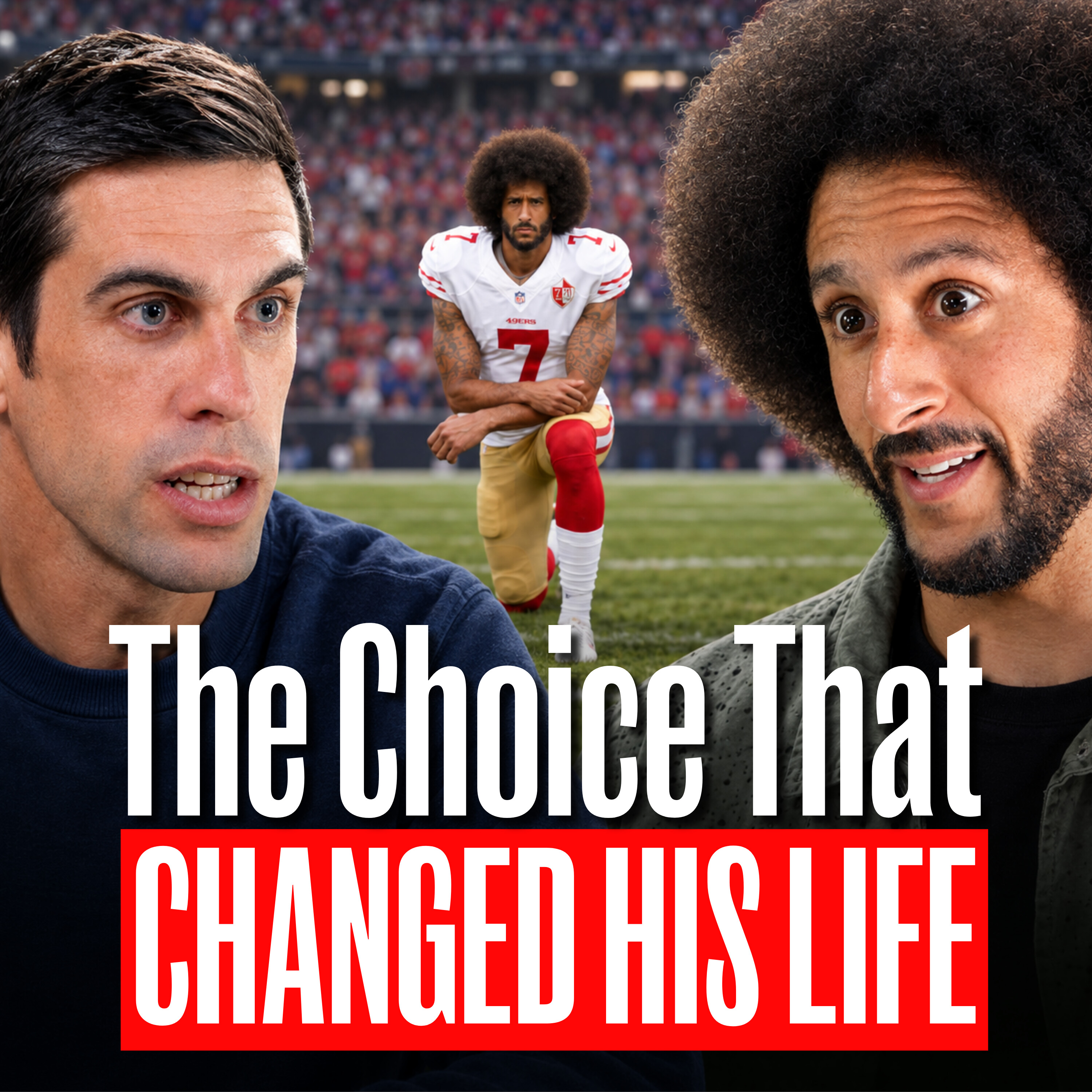
- Colin Kaepernick, 10 Years After Taking A Knee
In short
Colin Kaepernick’s 10-year reflection on kneeling during the national anthem, the backlash and end of his NFL career, and how success creates obligations to justice, empathy, and systemic change.
Guest backgrounds
Colin Kaepernick is a former San Francisco 49ers quarterback, Super Bowl quarterback, New York Times bestselling author, media company owner, and co-founder of Know Your Rights Camp. He now publishes and writes, including his new book The Perilous Fight. The host, Ryan (Daily Stoic), frames the discussion through stoic virtues and personal discipline.
Key claims
Kaepernick says justice must be rooted in personal right/wrong, not only personal experience. He argues success often increases fear of losing status, leading some people to “close their hearts.” He emphasizes luck plus hard work, and rejects the idea that others’ lack of success is their fault. He distinguishes movement work from personal career benefit, refusing to blur them.
Notable examples
the national anthem kneeling protest against racial injustice and police violence; the Philando Castile killing as a “prime example” of how systems operate; and the “veil of ignorance”/golden rule framework for designing fair policy.
Written by AI. May contain mistakes.
Chapters
0:00
Colin Kaepernick's Impact
Exploring Kaepernick's kneeling protest and its implications today.
“Look, hiring is make or break for a business, especially if you're a small business.”
2:40
Colin Kaepernick's Impact
Exploring Kaepernick's kneeling protest and its implications today.
“So 10 years ago this month, which feels like an eternity ago, what was I thinking about in September of 2016?”
6:18
The Evolution of Youth Sports
Discussion on changes in youth sports and the pressures athletes face.
“Here is my conversation with Colin Kaepernick.”
14:01
Understanding the Struggles of Minimum Wage Workers
Explore the harsh realities faced by minimum wage workers in urban areas.
“and where that's at, it's very difficult to be able to live and sustain on that.”
16:41
The Burden of Success and Social Obligation
Discuss the responsibilities of successful individuals toward society and the less fortunate.
“becomes a weird position when you hear a lot of conversations around like, oh, well, I don't want to be taxed more.”
20:02
Navigating Personal Success and Collective Struggle
Examine the balance between personal career goals and contributing to societal issues.
“There's very real life and death decisions that are being made.”
22:20
The Weight of Historical Context
Reflect on the historical factors influencing current societal conditions.
“It's like, if only there was some historical explanation why certain groups of people ended up in certain places under certain conditions.”
22:51
Colin Kaepernick's Unique Position and Career Challenges
Explore Kaepernick's experience with fame, protest, and the complexities of activism.
“And I just, for some reason, that thing stuck in my head always.”
28:00
Navigating Personal and Community Interests
Exploring the balance between personal gain and community empowerment.
“would I have a higher likelihood of playing in the NFL and being in the NFL again?”
32:54
Justice and Personal Responsibility
Discussing the personal standards of justice and responsibility in society.
“I did this book on the series on the cardinal virtues, and we tend to think of justice as like politics, the law, judges and juries.”
Show all 25 chapters
42:06
Empathy and Societal Responsibility
Explore the importance of empathy in understanding societal issues and the role of policy in addressing inequalities.
“The status quo should be, no, imagine I am one of these people.”
45:34
The Complexity of Police Interactions
Discuss the varying experiences with police and the need for systemic change to ensure rights are upheld for all.
“And the fact that it's not enforced equally, it's not my problem, but it's still my responsibility to insist that that not be the case.”
47:50
The Impact of Discrimination on Society
Analyze how discrimination affects not only marginalized groups but society as a whole, requiring collective awareness and action.
“within communities as far as who is getting policed and who has police protecting them.”
50:28
Curiosity and Understanding in Social Issues
Highlight the importance of curiosity and open dialogue in understanding social issues and fostering positive change.
“oh, I didn't, I didn't think they were going to take my employees.”
54:38
Reflections on Change and Growth
Reflect on personal growth and how individuals can change their perspectives on social issues over time.
“And in fact, you're doing a disservice when you shut people's curiosity down.”
56:00
Reflecting on Change and Perspective
Learn how personal experiences can shift perspectives over time.
“That has been so revealing to me because typically you don't get people to a space where they're like, oh, you know what?”
1:04:08
Navigating Media Pressure
Discover the challenges of handling media scrutiny and public perception.
“You had to learn like a totally different game, very, very quickly with very high stakes.”
1:06:33
Navigating Media Pressure
Discover the challenges of handling media scrutiny and public perception.
“You're just playing a little bit different realm.”
1:09:00
The Cost of Speaking Out
Understand the risks and responsibilities of standing up for one's beliefs.
“So looking back at it these years later, again, you would think that people who are set for life would be more likely to get involved, to speak out, to be courageous, right?”
1:10:01
The Moral Obligation to Speak Up
Explore the responsibility to advocate for societal well-being and the trade-offs involved.
“And like they got to some level of like tangible, cathartic resolution of the underlying issue that they felt called to speak about.”
1:13:22
Support from Allies and Unexpected Supporters
Discuss the importance of allies and unexpected support during challenging times.
“You know, you're going to wish you like the excuses and the rationalizations that we make tend not to age very well.”
1:16:00
The Revelation of Support in Times of Crisis
Understand the clarity of support and opposition that emerges in tumultuous moments.
“to people that I talk to to this day that like, you know what, I don't turn the NFL on.”
1:18:30
Human Connection and the Importance of Dialogue
Highlight the significance of human connection and open dialogue in promoting understanding.
“how people feel about them in such a definitive way.”
1:22:21
Finding Common Ground Through Conversation
Emphasize the power of conversations in bridging divides and fostering empathy.
“It's not easy because it's still an incredibly profound and meaningful gesture.”
1:24:00
Understanding Through Conversation
This segment explores the importance of empathy and human connection in discussions about difficult topics.
“And that doesn't necessarily mean that we'll agree on everything, but it first came from a space of like, we're in this together.”

Ask about this episode
Get the gist, explore an idea or ask about something said.
 Claude
On The Daily Stoic, what are the key points of this episode?
Searching your listeningTranscript
Automatic transcript. May contain errors.
0:00Ryan Holiday: Look, hiring is make or break for a business, especially if you're a small business. You can't just hope that you find the right people. Hope is never a strategy, but when it comes to recruitment, it's not going to work. So when the pressure's on and you need the right hire, this is a job for sponsored jobs. Indeed, sponsored jobs gets you the quality candidates when you need them the most. It's how you get your job seen. And with Indeed Sponsored Jobs, you'll get matched with and hire quality candidates who can drive the results you'll need. And plus, with Indeed Sponsored Jobs, you only pay for results.
0:35Ryan Holiday: People are finding quality hires on Indeed right now. In the minute or so we've been talking here, companies have made dozens of hires on Indeed, according to Indeed data worldwide. So join the 3.3 million employers worldwide that use Indeed to connect with quality talent that fits their needs. And listeners of this show will get a$75 sponsored job credit to help your job get the premium status it deserves at Indeed.com slash podcast. Just go to Indeed.com slash podcast right now and support the show by saying you heard about Indeed on this podcast. Indeed.com slash podcast. Terms and conditions apply.
1:09Ryan Holiday: If you're hiring now, then this is a job for Indeed sponsored jobs. We were in Rome this summer and my family and I stayed in this amazing palazzo that we booked on Airbnb. I had these frescoes that were twice as old as America, just one of the most beautiful places I've ever stayed in in my life. And in fact, I found out later that the people that owned it were listing their place on Airbnb. They were the third family to ever own it. I just thought it was so cool. Like by listing it on Airbnb, they were not only able to pay to restore and take care of this incredible piece of history, but they were also able to share it with the world.
1:49Ryan Holiday: So if you're planning on being away, if you have a property or an extra bedroom or maybe a vacation home, you should consider listing it on Airbnb. It can be a great way to earn some extra cash while you travel. And that can help offset the cost of your trip or it can go towards whatever comes next. Your home might be worth more than you think, and you can find out how much at Airbnb.com slash host. Welcome to the Daily Stoic Podcast, designed to help bring those four key stoic virtues, courage, discipline, justice, and wisdom into the real world.
2:34Ryan Holiday: Hey, it's Ryan. Welcome to another episode of the Daily Stoic Podcast. So 10 years ago this month, which feels like an eternity ago, what was I thinking about in September of 2016? I guess we were just launching the Daily Stoic. So I was consumed with that. And then this football player makes a decision. I think in retrospect, it probably felt more momentous at the time. It was more of a slow roiling news story. But on September 1st, 2016, Colin Kaepernick, the quarterback for the San Francisco 49ers, he was three years off of leading them to a Super Bowl. The holder of the all-time NFL record for the most rushing yards in a game, kneeled during the national anthem to protest racial injustice and police violence.
3:31Ryan Holiday: And it sparked a national conversation. It sparked a backlash. And it ultimately led to the end of his NFL career. He sued the NFL over it. Now, you can agree with his decision. You can disagree with their decision. You can have differing thoughts on Black Lives Matter or police violence. I think Colin Kaepernick is an interesting person. I admire people who put it all on the line, come from a place of principle, who've rooted themselves in the idea of caring about or fighting for the underprivileged. Now, when I say you can have different opinions about this, my father was a police officer for 20 plus years.
4:19Ryan Holiday: right? I think the issue is complicated. I don't agree with everything that Colin Kaepernick has said or done, but was really interested in talking about it. And he did. He came out to the painted porch and we had a lovely conversation. And I think you should listen to it. And if you're already angry, I would just say, this is what stoicism is about. By that, I don't mean justice, the virtue of justice. That is what stoicism is about. What I mean is it's also about not being a fragile little snowflake that gets so angry when somebody talks to someone that you disagree with or talks about issues that you have a different opinion on.
5:01Ryan Holiday: In this episode, Colin and I talk about what success obligates you to do. Talk about the complicated relationship between hard work and luck and opportunity and why justice has to be rooted in a personal sense of right and wrong. We also reflect on the 10 years since Colin first took the knee, talk about what he might do differently if he was doing it again, what he's learned as part of the process, and how he's dealt with the media firestorm and the end of the career that he cared so much about. He has a new book out called The Perilous Fight, which tells the story of his life, as well as the questions that it raises and the issues that he thinks are important.
5:46Ryan Holiday: Even though he is not playing professional football anymore, he is an author, he is a publisher, he's the co-founder of the Know Your Rights Camp, which is an organization that helps people in various communities know what their rights are and how to fight for them. And just a fascinating figure. In addition to being a Super Bowl quarterback, he is a New York Times bestselling author. He is the owner of multiple media companies. And you can follow him on Instagram at Kaepernick7. You can grab signed copies of his new book at The Painted Porch. Here is my conversation with Colin Kaepernick. What was Turlock like?
6:27Ryan Holiday: I grew up in Sacramento and then I went to Granite Bay High School. Oh, okay. Yeah. So I recognize some of the high schools from here. Yeah. Because it's weird how big an area of schools you play against in all the things. Because we would go from Fresno to the Bay Area. Yeah, right. I saw Lincoln in there and Placer. You'd play with Placer, Placer. It's a crazy big area. Yes. We played Granite Bay. Yeah, we were pretty good, I think. I mean, it was a little bit of a football school, if I remember right. Yeah. I think we lost to Granite Bay, but I think it was like a 38 to 42 kind of game. And then we actually played Granite Bay in travel baseball growing up.
7:10Ryan Holiday: Okay. I remember it distinctly because I don't remember the exact location of where we played, but that was the first time that we pulled up to a baseball diamond. And it was almost like in the middle of a neighborhood. Yeah. I also was like, oh, I haven't seen a neighborhood like this before. Yeah, yeah, yeah. I was like, the houses here, they were huge. It was a weird, there was some culture shock movement there for me. I was like, oh, this is, you know. Like, you know, because in high school, it's such a big thing, too, where you pull up and then the diversity of cars in the parking lot. Yeah.
7:51Ryan Holiday: Do you know what I mean? Yep. From the different kinds of students. That was the first time I was like, oh, some of these kids have Maseratis. This is weird, you know? Yeah. I mean, the kids in the cars, they pulled up with their parents. Yes. But you could also tell by the gear they had. Yes. So it was like everybody had the top of the line bat. Everybody had top of the line gloves. And it was like, oh, this, like, you operate like a professional organization. I'm sure it's different now, too, with youth sports, where it's like the level of private coaching you can get and all that kind of stuff.
8:24must be nuts i feel like that was becoming more of a thing yeah when i was coming up now it's just even with nil and like that merging it's just a whole different ball game that totally kids are navigating almost as not quite professionals but like it's weird to have fucking money at 18 i remember being in college and i had i thought i came up because i got a bag of mrs field's
8:52Ryan Holiday: cookies for free and i was like oh we get a little perk for being starting quarterback but i get any like sure uh donor money or anything like that but kids now they make it seven eight figures well yeah i gave it i gave a talk at kentucky maybe two years ago the football team year and a half ago and they were like they're like this is the the player dorm right which was a perk not that long ago like oh you get to have your own dorms yeah and now they're like i don't want to live in dorms. I can buy my own house and a nice one. To me, it's amazing. They're getting the dollars that they should be.
9:30Sure. The same time, the structure and infrastructure around it has not been built effectively yet.
9:37Ryan Holiday: Totally. It can be totally deserved and still fundamentally unhealthy for an 18-year-old to be in that position. I mean, prior to that, we saw a shock when you go to the professional level. I remember the moment that I got my first signing bonus. I was like, oh, you got, it was a little over$2 million. Yeah. You talked about that in the book. And it's like, oh, I made$2 million? Right. And then after taxes, you're like, oh, I have a million dollars right now. Right. Now I was terrified of losing it. Yeah. Sure. But I think for a lot of athletes, I also look at it as a generational opportunity.
10:22And now that's happening at the college level, which makes me, if the right support and infrastructure is put in place there, the impact that can have is massive. Right now, I think it's kind of positioned like, oh, you came up like amazing. Go do your college thing with the money. Yeah. I think reframing some of that thinking of like you have opportunity to set your family up forever.
10:48Ryan Holiday: And also, I think this is an interesting part of your story, but what is the responsibility that you have now that you have that money? Right. And not just for the people in your life, but like we would like to think like as soon as you get fuck you money, that people suddenly they say what they think, they do what they think is right. You know, you would think it would make you more active and courageous, but usually the opposite is the case because now you have so much to lose. Yes. And there's a dollar sign attached to the decision you're making and the words that you're saying. Yes. And it speaks to like an understanding of society that no one explicitly wants to call out.
11:33Yeah. Which is, hey, if you don't have money, like your access and opportunity is significantly not the same. Sure. And it's like, well, now that I have this, I don't ever want to go back to that position, which is also to me like, well, we should raise what that position is. Of course. Yes. Yes, yes. That that should be the hook. That's like, hey, if you if you want access to nice things or to be able to live a good life, like you have to hold on to this or like you're never going to get it. And I think that creates that dynamic where it's like, I don't ever want to lose this. So I'll do whatever I can to to maintain and hold on to it because I know it's on the other side.
12:20Ryan Holiday: Yeah, I think people miss, like, if you had a more equitable and a more just society, like, just take something basic, like, if healthcare wasn't tied to your employment, you know what people would do? They would follow their dreams more. Like, they would start companies, they would take risks, they would go for it. Like, it would be better for everyone if people weren't like, I have to show up every day and work this job that I hate because my daughter has a medical condition or because I have a medical condition or whatever it is. Right. Like and so I don't think we like you're right. Like when when the baseline is scary to people or like the poverty line or minimum wage is basically like impossible to actually live on.
13:04Ryan Holiday: And not only it sucks for those people, but it also is there's a tax on people who have succeeded because they they're like, I have to I have to be more conservative, like lowercase conservative, not politically necessarily, but I just can't risk losing what I have because the safety net is not here. the safety net is like here. Yes. To that point, being on the, like, I have companies, I have employees. The number one thing when you're hiring is like, okay, so like what healthcare do you have in place? It's crazy. It should not be the first question. It should be like, will I like working here?
13:41Ryan Holiday: Yes. And that, it speaks to that fact of like being able to provide necessities for people so they can actually go out and do their best work and do things that they're passionate about. and successful in, like, that becomes so important. And to your point, that safety net. And even when we talk about minimum wage and where that's at, it's very difficult to be able to live and sustain on that. It's totally impossible. It's insane. And, you know, I was talking to my wife about this because, you know, have lived in California, have lived in New York. Yeah. And the time that we spend in New York, like, if you're making minimum wage, it's hard for me to understand how you live in New York.
14:25Ryan Holiday: I think about those people on those delivery bikes. Where do they live? Where could you possibly live? What does your life look like? And, you know, like there's this famous scene in Theodore Roosevelt's life where he's just become a politician and they're voting on this law about cigar making, conditions in cigar factories, which were then in the Lower East Side of New York City. And, you know, he's like a Republican, typically sort of has this laws i fair view of politics and he's going to vote on this bill and this guy he he knows um it says like come down to me and like look at the factory he's lived in new york his whole life he's never been there he goes and he sees what it's like people are making them in their apartment it changes the course of his life it's there's this famous scene where uh it goes like you know how the other half lives you're you're sort of um faced with this question of like, what do you do about it?
15:18Ryan Holiday: And I think a big part of it is like, you really don't know how those people, like you really, like, unless you force yourself to think about it because it's out of sight and out of mind, you're, you're not thinking about where this person delivering your Starbucks order. So you didn't have to walk three blocks is coming from, but it must be from extremely far away. Like if you know what you're paying to live in New York city, how are you possibly supporting yourself on, you know, a 12 % tip on a$14 or like it, there's no way it works. Yeah. The math doesn't matter. No, totally. And to me, I think it speaks to just generally how I think about it.
15:58It's like when you have had success is part of your responsibility to try to raise the bar. It shouldn't be a perspective of, Hey, I understand what this is like. And I understand where the safety net is.
16:12Ryan Holiday: Yeah. Like, let me run further away from it. Sure. For my own safety and security versus, oh, I understand what this is. Like, this actually shouldn't be the case. Raise this bar. And I think that's, I mean, especially when you get into like extreme wealth and areas like that, like you're making money on your money. You're making more money on your money than people make in their lifetimes, which is becomes a weird position when you hear a lot of conversations around like, oh, well, I don't want to be taxed more. And I don't, it's like, there's also to me a social obligation within society that's, hey, we're actually supposed to look out for and take care of each other.
17:01And part of that may be, hey, I have a little bit more. We should do more to be able to support society more broadly. and like that to me that has always been my understanding of how we interact as society how we interact as people more broadly yeah and i think that gets lost in the conversations because it just becomes like dollars and cents it's like the first obligation of success is
17:26Ryan Holiday: don't lie to yourself about the success like like don't don't lie to yourself about how you did all of it yourself and you know you deserve every penny of it like the first you have to be honest about the way that luck played a role in your success. And then you also have to be honest about the other people who are not successful or not as successful as you. First off, what the reality of their life is like and that the idea that your success is because of you and their lack of success is because of them, this is a lie, right? So that's first. And then you're right. The second step is like, how do you contribute to a society that is more just or more fair, or at least takes those concerns seriously?
18:10Ryan Holiday: And I think the irony is a lot of people who come from, not a lot, but some people who come from adversity or difficulty, you'd think that would make you more empathetic. But because that's such a mental load to carry, it actually has the opposite effect. Like you just decide, hey, if I have to think about all the people like me who didn't make it, I can't do what I do. And so I think there's a part of success that makes people turn off their hearts to the people that didn't make it as far as them. I also think there's an interesting dynamic within it. This touches on your first point of like, understand that there's a level of luck and a level of there are people around you that contributed to setting you up for success.
18:58Totally. And they oftentimes it's like, well, you came from there and you made it. So like, why didn't everybody else? Right. Like there is luck as a factor. There is your own personal like contributions and work and mentality around it. Like, absolutely. But it's a both and. Yes. And there was actually Stokely Carmichael, also known as Kwame Ture, had a great quote when he was asked about this. And basically the question was like, you know, you went to a good school. You were able to have success. Like, you're in a good position. Like, what makes you qualified to talk on this? Like, why can't everybody else just do that?
19:45And it's like, well, if you become the anomaly or you become the exception to the rule, you can't use that to justify everything else. And I think having an understanding of where you come from and struggles that people go through and the realities that come with that. There's very real life and death decisions that are being made. There's also very real, are we going to eat or not? Are we going to pay our light bill or are we putting food on the table? Like those decisions are being made. And I think understanding that causes some people to go to the space of like, I'm never going back. Right.
20:33There's nothing you could do to convince me like I should be looking back this way. I'm going to keep going as far as I can. And I think oftentimes well-intentioned in relation to their own self-interest and their family. But I think broadening that aperture of I'm no longer in that place and position. Like I don't have to operate from a mentality of scarcity because that's not where you're at anymore. They're not coming for your stuff.
21:02Ryan Holiday: Like you're okay, I promise you. Yeah. Because at that point, like people have the financial advisors in place. They have wealth managers. Like if they don't know the details of it, they have a general sense of where their dollars and cents are. Yeah. Like and where the security is. So I think on that front is, well, let's set it up so they can thrive too. Yeah. So they don't have to go through the same thing you went through. And look, if you don't have it within you to help other people, how about we just don't make it harder on those people? You know what I mean? Yes. Like there's, you know, there's that metaphor of like crabs in a barrel.
21:40Ryan Holiday: Yes. Well, sure, maybe that's a problem. But there's also this problem where people are like, stay in the fucking barrel, man. You know, like, and there's that, I think you're right. It's like, it's sort of a fear. It's a resentment. And it's a, I just don't want to be, I don't want anything that could possibly take me back in that direction. So I'm going to sort of close my heart and mind to it. I love this crabs in the barrel conversation. Because to your point, there is some like, no, stay in the barrel. Yeah. But the question I always ask is, who put the crabs in the barrel? Right. That's not their natural environment and habitat.
22:18Ryan Holiday: Like, why are they there? Sure. It's like, let's actually put them in the environment that they're meant to go thrive in. It's like, if only there was some historical explanation why certain groups of people ended up in certain places under certain conditions. If only some crack historian could crack this code and tell us why things are like that. It would be mind blowing. I'm sure we'd. If only there was some data narrative around that. Yeah. That would be helpful for us to be able to solve this. okay so it's been 10 years and i was thinking about this i remember i was watching uh an episode of behind the music as a kid like in high school or something and i remember it was it was the behind the music about ice tea and um he was talking about you know his famous song that was this huge controversy and he was like there's nothing quite like hearing the president of the United States, say your name in anger.
23:17Ryan Holiday: And I just, for some reason, that thing stuck in my head always. And there's not that many people that know what that's like. And you're one of those people. It's a unique moment. I don't think there's anything that you could do to prepare for that. To have the most powerful person in the world personally mad at you? Well, I would say beyond personally mad, like actively work to try to make sure that you don't have a career. Yes. That was a new one for me. But to me, it begs the question as to why. Yeah. Why did this upset you so much? And for me, it's like the core of this is we're trying to address systemic oppression, trying to create better society.
24:05better conditions for people. And more specifically, we're trying to make sure that black people weren't being killed by police. Why is people not being killed so offensive? Like, I think getting to the crux of that is like, why are you against that?
24:20Ryan Holiday: Yeah. For me in that moment, it was, one, it was enlightening to be able to see how far the protests had reached. The fact that this was something he was going to be focused on. Yeah. And then on a personal level. And then it's like, well, how how do you navigate this effectively? Yeah. There's a how do you navigate this in a way that is most beneficial for the protests and the movement and saying people up for success? And your job also. And your job. And there's also the personal side. And I find those and sometimes the conflict between those is an interesting piece to navigate because there's times that's like, well, personally, I want to go out and respond this way.
25:09I want to go do these things. But is that the most beneficial thing? I found that oftentimes the things that, or at least I felt the things that I personally may have wanted to go out and do or say, I don't think would have been the most productive in those moments.
25:30Ryan Holiday: I read a thing with John Thompson once and he was saying, like, I just never had the luxury of just being a basketball coach. Like, for whatever was happening, I never got to just be that. And I imagine, yeah, you never got to be just Colin. You never got to be just a quarterback going for his job. You had to think about it on these multiple levels and decide which one you were going to prioritize and which one might have been more cathartic or maybe more in your self-interest. And then that tug, how did you navigate that? A lot of conversations and also a lot of self-reflection. I think I became decently good at trying to decipher, like, is this something that I feel just based upon like my own anger around this or my own feelings around it that I just want to go out and respond to?
26:30Yeah. Or is this something that I think is actually going to move us forward? and it was tough in those environments because part of it was great example people were were supporting the work on the movement side people were continuing to protest me regaining my career when being blackballed is a personal interest that also in many ways has ties to the movement and overall positioning of like, what is possible? Is it acceptable to be able to blackball someone for their positions? Right. So in many ways, they're intertwined, but also distinctly different. Yeah. And that blurring of the lines was one that I wouldn't ask people to go out and protest for my job.
27:28Yeah. Like that was something that I wasn't going to do. There were people that went out and did that and I'm extremely grateful for it. But it was like, I have to stay focused on the work and movement side. Now, personally, I'm continuing to pursue this, but like it didn't feel right to say all the movement work and the momentum there, actually bring this over here and just protest for my job and career as part of this. and there's times that I think if I did that, would I have a higher likelihood of playing in the NFL and being in the NFL again? I think so.
28:09Ryan Holiday: Yeah. If you cut yourself loose, it probably would have been better for your financial and career interests. Oh, 100%. Yeah. Just from the NFL side, that was a loss of 150 plus million dollars. Like it's not insignificant money. But at the same time in that process, like if I do that, that then takes away from the work that's being done directly in the communities. Yeah. And it also conflates them in a way that creates more self-interest within the work that's being done. Yeah. that thing then causes people to call into question like is this actually about the movement and communities and creating better lives and opportunities for people or is this a way to just better position yourself yeah and like those are things that to me i try to keep distinctly different which is it's hard to do sure you try each scenario you try to walk through that of like which is which.
29:11Ryan Holiday: Well, yeah, there's so many conflicting and contradictory things in there is like you got this, these political beliefs, this position, and then yeah, it leads to you being blackballed from your job. And so you would like to be able to have your job and you'd like to be able to speak to this movement. And then, yeah, it's probably weird to ask these people in this movement to fight for you to get your multimillion dollar job back, you know? And yeah, But things are confusing and we contain multitudes. Yeah. That's the part that was probably one of the more difficult pieces to navigate in trying to make that explicitly clear to people.
29:51Yeah. Like, hey, when we have work that we're doing in the communities, like that work, there can't be personal benefit to. Yeah. So like, even with a great example of this, with Know Your Rights Camp and the work that we do there, when we go city to city, I will not use the Know Your Rights Camp dollars to pay for my own flight or hotel. I keep it so distinctly different, even though we're doing it for other volunteers to be able to go out and do the work. Like, I want to make sure that it's beyond reproach because the to me, the integrity and trust within it becomes so critical for people to be able to be like, OK, I understand the intentions behind this.
30:36And I believe the intentions as opposed to like, oh, here's a backdoor way for you to do something else.
30:44Ryan Holiday: man it has been insanely hot here in texas i got in my truck yesterday said it was 115 degrees i've been having to wait till like 8 30 at night to even walk the dog it's been crazy and i notice when i'm not hydrated it affects like everything my energy focus my speeds when i'm running my riding ability well instant hydration is a premium electrolyte drink mix designed to support hydration, energy, recovery, focus, and overall performance without sugar or unnecessary additives. I've been on planes a lot for this Daily Stoic tour, and one of the things I do is I throw one of those into my water bottle or into the water they keep me on the plane even to not get dehydrated, which by the way helps with jet lag.
31:28Ryan Holiday: They also have this great new icy flavor that tastes like you're having a Slurpee or whatever. It's not overly sweet or salty. It's super easy to drink. instant hydration is made to be an electrolyte drink you can enjoy every day not just after intense exercise for a better way to stay hydrated go to instanthydration.com slash stoic and use promo code stoic for over 40 off your first subscription order it's instant hydration's best offer available that's instanthydration.com slash stoic promo code stoic it has been insanely hot here in texas and we live in an old house and the ac cannot handle it just it can't keep up But you know what can keep up?
32:08Ryan Holiday: What is always cool? My bed, thanks to my 8 Sleep Pod. The pod is this smart mattress cover. It cools both sides of the bed independently. My wife's at one temperature, I'm at another one. It even gently vibrates me awake in the morning instead of an alarm. It's got built-in sensors that monitor sleep stages, heart rate, respiratory rate. It tracks your sleep, gives you sleep suggestions, and that's why pod users report up to 32 % improvement in sleep quality and up to 30 % more deep sleep. Use my code dailystoic at eightsleep.com slash dailystoic for up to$350 off, and you can get 30 days to try it at home and return it if you don't love it.
32:53Ryan Holiday: I wrote about this in my justice book. I did this book on the series on the cardinal virtues, and we tend to think of justice as like politics, the law, judges and juries. But there's this other layer of justice that I think starts with the individual, which is just like, what are the standards you hold yourself to? Like you can have the charitable organization cover these expenses, but you decide not to. You don't have to speak out about something. Nobody's asked you, but you decide, right? Like the sense of like who I am, what I have to do to be able to look myself in the mirror or sleep well at night.
33:30Ryan Holiday: That's like this sort of bedrock level of justice that you would hope, sometimes we call this conscience, that you would hope everyone would be motivated by, or that would be the sort of base layer. But we get really good at either talking ourselves out of that or saying, well, everyone else is doing it this way or no one else is doing anything about this. Therefore, it's not on me. Yes. And I think that becomes to point like that, that personal sense of like justice or morality. Yeah. That foundation being laid early on is so critical. Yeah. Because one of the things I remember early from my parents was like, you treat everybody with respect.
34:17And they also made it very clear when I was having success in sports, I was like, yeah, you may be good at sports. There's other people that are great at science. There's other people that are great at music or they're going to be great at law. Or they may be a great janitor. Yeah. Like it doesn't matter who they are or what their role is. Like you treat everybody the same. You treat them with respect. And that just being a foundation. and then a sense of like, you take care of each other. Like you're supposed to look out for each other. And I think some of that, some of that comes from probably the Midwestern background.
35:00Like parents are from Wisconsin. And then we lived in a small town in California. So just the dynamics there were -
35:09Ryan Holiday: Joan Didion, this was her table. She's the author. She said Sacramento, but she was talking about Central California. She says it's the only place in the Midwest located in California. So there is a Midwestern vibe to that part of California. People think of California as super blue, super liberal, super coastal. And it's like, I don't think you've driven from L.A. to Sacramento anytime soon because you pass through a lot of sort of heartland United States. Absolutely. And Turlock and the reason we ended up in Turlock was my dad worked at the dairy industry. Yes. So, and there was a lot of, a lot of Wisconsin, a lot of Midwesterners that came out as part of that.
35:52But it also was, Turlock was a small enough town too, where you kind of know everybody. You don't necessarily know everybody, but if you're out somewhere, people can be like, I'll call your parents. Everybody knows your parents. So there's also having that small town sense, I think also creates a space where proximity to people feels different and the connection to people feels different than if you're in a major city where there's millions of people here and you can kind of fly under the radar with some of those interactions. I think that plays a part in it too. But overall, the point I'm getting at is like, there has to be a sense of looking out for each other.
36:36Yeah. And in having success, part of that success and responsibility comes with how do I give back? How do I support? How do I make sure that other people are doing well? And today, oftentimes, we leave that in the hands of personal decisions and philanthropic efforts versus looking at systems and how we actually make that sustainable and repeatable.
37:05Ryan Holiday: That was the weirdest part of the criticism of you that I perceived. And you got it from both sides. Like you talk about Richard Sherman in the book, but it was like white people would go, he's had a great life. What does he have to complain of? And then some black people were like, well, he didn't come from where we came from. What does he have to complain about? And it's like, that's not what our obligation to speak up about injustice is rooted in. it's not whether you personally experienced it or not. If anything, like just because you haven't experienced it should like, like the idea that you should only be outraged about things that you personally perceived strikes me as a weird constraint.
37:48Ryan Holiday: And then also you never know what people have gone through in your life. And you talk about some sort of weird encounters you've had in the book, but that just seems like a weird way of, of like canceling people out of participating in discussions. I think of it from a perspective, if we collectively took that approach, what you're saying is, well, wealthy people shouldn't care about poor people. Men shouldn't care about women's rights. I have healthcare, so I don't care about everybody else's healthcare. It becomes a very individualistic approach versus being able to step back and say, well, no, let's look at society in totality.
38:26I may not have had that experience. Like we've done work supporting immigrants. I'm not an immigrant. That doesn't mean that they shouldn't be able to live successful lives and be able to thrive. So it almost becomes like a weird benchmark to be able to say, well, if you haven't experienced it, you don't get to speak on it. Now, what I will say within that, I understand the sense of you may not be the person that should lead it if you haven't had those experiences. Like, I can understand that because there's time that that's been used to derail things and take things in a different direction. But that doesn't mean you can't be a significant contributor in these spaces.
39:09So I think there's an area there that I think it has misaligned the outcomes that we're trying to accomplish with personal interests.
39:19Ryan Holiday: Yeah, it's also it's like this classic thing where like political movements and society fights horizontally instead of vertically, you know, which I always think is interesting. But like. To me, it's also this fundamental misunderstanding, like there's this great innovation that happens 2000 years ago, this guy Jesus comes along and, you know, Rome is this hierarchical sort of society based on power and exploitation. and lineage and family, which basically, like all sort of ancient civilizations, is good for these elite people on top. They produce great stories and great art. And, you know, whether it's the Egyptians creating pyramids or Rome creating these buildings and this art and philosophy, but like it fundamentally grinds up and exploits the lowest people in society.
40:14Ryan Holiday: And this guy, Jesus comes along in that Roman empire and says like, Hey, by the way, what you do for the least of society, you are doing for me. Right? Like he, he, it's this moral inverse. He flips it. And he says, actually, it's the people at the bottom, how you treat them, what you think about them, what you try to do for them, that says everything about a society. It's not how it's working for the creme de la creme. It's the society is judged on how it is working for those people. And then later, this philosopher named John Rawls comes in and do you know about the idea of the veil of ignorance?
40:57Ryan Holiday: Oh, no. It's this interesting theory. He says like, you should try to design a society. Your political view should be based on not how this would work for you in your current position in society. Like, theoretically, like, what do I care about who's president? I'm pretty good, right? Like, it's going to be fine for me either way. Or this policy or that policy, mostly going to be fine for me. So he says, don't think about it as how it's going to affect you. But imagine you are behind a veil of ignorance. You are picking policies for a society, and then everything's going to be scrambled up, and you're not going to know where you fall on the spectrum, right?
41:35Ryan Holiday: So you might be the slave, you might be the factory worker, you might be this. You want to pick policies or ideas, you want to have moral beliefs that would be best for your role if roles were assigned at random. And suddenly you're like, oh, I get why I should care about this, right? And so to me, you take those two things, you take Jesus' teaching, you take the veil of ignorance from John Rawls and you go, oh, okay, this is why, even if I'm pretty good because I worked hard or I was born on third base, whatever it is, that's not like the status quo for me. The status quo should be, no, imagine I am one of these people.
42:17Ryan Holiday: What would I want? It's like an extension of the golden rule, right? And so this idea that like, oh, this person shouldn't care because things have been good for them or this person isn't authentic because like they're not actually suffering. It's like, no, no, no. Actually the work for all of us is like, what would we want society to be if we were in a position other than the one we're currently in? I love that framework and the references because it oftentimes, when I look at where we're at today is we often see some of the most wealthy having the conversations of like, well, what can you do for me?
42:56Ryan Holiday: Yeah. Like I'm in a position of power. What can you do for me? That's helpful. Like I understand the business aspect of it. Like I do. At the same time, the business has to work within society. And I think we should be prioritizing those societal aspects to your point of what does it mean if we have a significant portion of our population that's struggling to just fulfill basic needs? Like we've become okay with that because it's like, oh, it's not, it's not directly in my neighborhood. Like it doesn't touch me today. So like, I don't, you really don't have to think about it. and I think repositioning that, which I love that.
43:45The part that I also think about in relation to that is I think there'll be a lot of people that could take that in theory, but actually putting that into practice is like the, how do you get people to actually move that way? Yeah. And I think a lot of where we're at today is it has to be done through policy because left up to their own will and devices, like that's just not going to be the case, which is unfortunate. I think that's some of where we're at.
44:16Ryan Holiday: Yeah, I mean, like the police issue, which is obviously what plunges you into this sort of political fray is like, I just don't know why it's so hard for people to go, hey, the police work great in my neighborhood and I have a good relationship with them, but here is a community, here are people telling me that it's different where they are. And both these things can be true at the same time. And that like, instead of going, oh, no, it's not an issue because it's working for me. You go, hey, actually, yeah, everyone should have it. Like, like, I don't worry about getting pulled over by the police.
44:53Ryan Holiday: Right. That's because it's my bedrock constitutional right. Right. Like that. That's not like like one of the things I've hated is like that being phrased as privilege. Right. Like it's privilege relatively. But it's actually not a privilege. Thomas Jefferson, a flawed individual, said it's my inalienable right to not be harassed by the police while I'm going about my life. Do you know what I mean? Like people fought and died. So I can only be stopped by the police if they have reasonable cause to do so. Right. A probable cause to do so. And then I have certain protections that protect me from abuses from them.
45:31Ryan Holiday: And like that's not privilege. That's my right. And the fact that it's not enforced equally, it's not my problem, but it's still my responsibility to insist that that not be the case. Yes. To that point, if we're in a space where society and communities were treated on a level playing field, the conversations we would be having are drastically different. Yeah. We could be solving actual, like, bigger problems. Like, we could be working on other stuff. Exactly. And it's, I think the reality is, in that instance, and I'll use this one as a specific example, just to paint this picture, is thinking back to 2016, Philando Castile, and rest his soul, like, he's a probably prime example of this in practice.
46:27had done everything right. He'd walked through the process, interacted with the police, very calm manner, explained what was happening. And he was shot and killed in front of his partner and daughter. And there's no way on the flip side of that, there wouldn't be mass outrage across communities if that happened in a white community. It'd be like, this police officer has to go. We also need to look at the systems holistically. Like, why was this ever even a possibility? Why was, why were they ever pulled over? Like, what were, and I think going back to some of the foundation and calling it a question of like, why are the systems operating the way they are and why they show up in specific communities that way?
47:12If there was no difference, there wouldn't be a reason to call those into question. I think the broader piece there is like, people want to have safety. that's the fundamental piece is like people want to feel safe yeah there's significant portion of population that does not feel safe with police around because of how those interactions have been where on the flip side it's like well police make me feel safe typically because i have a level of power or wealth or positionality within society that feels makes me feel like i need to be protected from others. And oftentimes that also aligns around socioeconomic status within communities as far as who is getting policed and who has police protecting them.
48:03Ryan Holiday: Yeah. No, but people don't understand the way that all of our rights are bound up with each other, right? Like, I think you see the mental gymnastics people will do to not have to care about an injustice happening to someone else, it's like remarkable, right? Like, it's like, they're like, you go like, okay, look, ICE is grabbing people off the street at school bus stops, you know, and deporting them. And people go, well, you shouldn't have come here illegally if you didn't want that to happen. And it's like, okay, but they don't know that that person is here illegally until they have violated not just their rights, but rights generally, right?
48:45Ryan Holiday: Like, If you're racially profiling someone because they look like an immigrant, you are violating not the rights of that person who may or may not be here illegally. You're violating the rights of all people that look like that person. Right. And eventually it will cause problems for you or someone that you love who is just somewhere different on that spectrum, you know, and it's just it's not good to have systems that oppress people because eventually that oppression comes for you or someone you care about. And it's not that hard to understand that, but apparently it's really hard. There's a few things that makes me think of.
49:38One is, I think because of the environment that's been created, I think a lot of this actually centers around like haves and have nots. Yeah. And a lot of it comes across in relation to class, but it also falls along racial lines and demographics. but is if immigrants are coming here, well, they must be taking something from me. Yeah. And that's just not the case. Right. From the human side, like we should support people. If you even look at from a space of, well, I feel like they're taking something from me. They're massive contributors to society.
50:17Ryan Holiday: If anyone's taking anything from immigrants, it's that most of them pay taxes and then don't get any benefits from society. Exactly. So like you might be the taker. We saw this with a lot of farmers and we're like, oh, I didn't, I didn't think they were going to take my employees. I thought they were going to take other people. And it's like, when you create a system that's structured and allows for you to discriminate against people, inevitably that continues to expand, to discriminate against more and more people towards a consolidation of power, consolidation of resources. That's just historically how we've seen it play out.
50:57Ryan Holiday: Yeah. This is the idea from Martin Luther King that a threat to justice anywhere is a threat to justice everywhere. It doesn't happen in isolation. It metastasizes. Yes. For me, I think about this in the lens of it shouldn't have to knock on your door for you to be alarmed and say, oh, we shouldn't do this. This is bad. This is going going to have negative consequences on us holistically. Collectively, I think we need to be approaching things that way of like, let's not do bad things. Let's do things that actually serve people. And in the process, are there going to be inefficiencies? Are there going to be ways that things can be made better?
51:35Absolutely. But it feels like there's a decent amount of work that's being done right now that's not even coming from a foundation of how do we help make sure that people are in a good place to be able to succeed and thrive.
51:48Ryan Holiday: Well, it's a, it's, it's a cliche. Maybe you experienced a little bit, but you hear from lots of men who they're like, now that I have daughters, I care about this, you know? And it's like, it's great. I'll take it. Like whatever is serves as the wake up call for anyone, like we shouldn't judge. We should appreciate it. Well, come over the water's warm, but there is something somewhat like it's sort of like, well, it's egotistical and self-absorbed where you're like, I didn't care about this until it affected me personally or someone I care about in some way. It's a very interesting thing. I think some of it maybe it goes back to that proximity piece.
52:29Yeah. I think some of it goes into self-interest and just like ego around it. The part that I grapple with on that is like, if you realize and care about it in this instance, because you have a daughter now. That also means you realized some of what was at play prior to having a daughter. Yes. Like, unless, again, to your point, like, hey, we're going to take everybody. Like, let's keep going. We also need to be self-aware and introspective in relation to, well, why didn't I care before?
53:07Ryan Holiday: Yeah. Why wasn't I willing to take action before? It's a curiosity is important. What is it like to be another person? What is the world like for these other people? And yeah, some reflection as to why you were indifferent to it before is in order. Yeah. I love that curiosity piece because there is a sense of like, one, you have to be curious enough to be able to understand. I think the other part is in being curious, where do you see your position within it? And also a lack of understanding is not an indictment. Like, I think that's a part that people need to understand too, is not understanding and asking the question doesn't mean that you did anything wrong.
53:54Like what it does do though is open you up for the opportunity to get more insight and understanding. Now, what becomes critical is what you do with that insight and understanding once you have that. And to me, I think there's, I think we get caught up oftentimes around, hey, we need to, we need to have broader discussion around these specific areas that we, we already have pretty significant understanding. Yeah. as opposed to, okay, we have a good understanding of this. Let's go out, try to solve it. Yeah. And then we can iterate on how we're solving it because it's not going to be a perfect solution the first time, but like we should be working together towards solutions in that way.
54:39Ryan Holiday: Yeah, right. No, curiosity is not an indictment. And in fact, you're doing a disservice when you shut people's curiosity down. And it's like, there was that kind of woke thing for a while where it's like, it's not my job to educate you. And it's like, actually, yes, it's all of our jobs. It can be annoying. It can be a burden. But like if you want people to be on your side, you have to explain why they should be on your side and probably shouldn't shut the door on their face if they're expressing good faith interests or even like light skepticism. like this is a convertible person, you're actually doing the opposite of your job.
55:20Ryan Holiday: Like your job is not to make your side smaller and less accessible. To that point, that has actually been one of the areas, I would say, candidly has been most surprising over the last 10 years, is I've had more and more people from, I say primarily Southern and Midwest states come up and very explicitly be like, I did not like you. Like, I did not like you. I didn't agree with what you were saying or how you're approaching it. And now I've had time I've been able to reflect and also have a better understanding. And like, I was wrong. Wow. That has been so revealing to me because typically you don't get people to a space where they're like, oh, you know what?
56:14I actually thought about this the wrong way. Like I was off basis here. And to openly and publicly say that, which to me gives me a lot of hope around like how we collectively move forward. And the fact that in doing this work, people can be moved. And in these instances, they're sharing very definitively, like, I was against you. Like, I was very much on a different side.
56:43Ryan Holiday: I can see why from a personal level, that would be hard for you because you're like, hey, your indifference was part of the, like, it cost me$150 million. Or like, hey, where were you when everyone in the world was yelling at me? And so I can imagine you're probably relieved and excited. You know, you're like, welcome aboard. But also there's a personal part of you that's like, it was pretty lonely, man. And you haven't changed. Like, they just are, they've just gotten a little bit of perspective. So I could see, I would think that would be difficult. it's a both and yeah like it's uh i'll say on the personal side i think this is the area that is probably more ego at play of like yeah if you didn't hold that position my life career i mean threats i've received could have looked drastically different yeah at the same time i'm heartened by the fact that people who were so staunchly against me have realized like oh I actually just immediately reacted to something that I thought was very personal to me.
57:51And I actually need to look at this a different way. And to me, having people go through that process of reflection and reaching those conclusions independently, that's such a significant shift. And it also, it's not lost on me. One, the environments that they're having that shift in. And then two, the ripple effects of that as well. I think that is important that while there's personal frustrations, and oftentimes it is, you have similar conversations or the same conversations over and over again. And it's like, do we really have to have this conversation again? We've done this. There is the opportunity on the other side of that, of people reaching understanding and are able to help build a better society on coming out of that.
58:45We want it to happen faster. Yeah. But there is a very human element of someone having to process it, understand it, internalize it, and then be able to put that into action.
58:58Ryan Holiday: When you look back 10 years later, are there things that you wished or is there a way you wished you'd done it differently? Right. Because the name of the game is persuasion. Right. And so there's probably some element where you do it 20 different ways. It provokes the same reaction every time that it just took time and distance for people to come around. Maybe some people are just fundamentally not reachable. But I mean, even like dialing in from the sitting to the kneeling, like, do you feel like if you'd started with kneeling that it would have gone differently? because I'm just wondering from lessons learned, right?
59:34Ryan Holiday: Like the name of the game is persuasion. So how do you, it's not just about being morally correct, but it's about getting that message to be received. Do you think about how you might've done things differently? It's a great question. On the sitting and kneeling, I don't think there would have been a whole lot of differentiation there because the method of protest often comes under scrutiny, but it's actually the message. That's the thing people are trying to divert from. The part that I think about good amount, and this comes something to that point around like persuasion. Because I saw within media, there was an element of like, oh, we want to talk to be able to get the sound bites, to be able to drive clicks.
1:00:22And oftentimes those weren't good faith conversations. It was just like, hey, I need the bite. I'm going to go do it. I'm going to look good. great we'll keep going um that was a component that was like well i don't love playing into that um could i've used and leveraged that differently uh potentially but the the other part that i think about a good amount is i i very much tried to approach things from a lens of like ella baker where it's like yes we need strong leaders but we need strong people collectively and intentionally not centering myself in the conversation and be like, well, every interview, every opportunity, I'm going to go out and I'm going to be front and center.
1:01:11And that didn't feel right to me. And I tried to create space for other people to be able to step into that. Is that an area that things could have diverted and gone a little astray at times? Yes. But the implication that I was thinking through around that is like, I know they're trying to attack me individually and discredit me individually to try discredit the movement, the issues that are trying to be addressed. And like, is that the best approach? So that's one piece. And the second piece is in having detractors and people that weren't moving in good faith. I tried to be very intentional in not going tit for tat publicly around it because I didn't want that to become the conversation.
1:01:59Yeah. I also think back and like, did that create space where it blurred the lines and people weren't sure like what is true and what was reality or where we should be headed?
1:02:14Ryan Holiday: Your opponents were dominating the conversation and defining you in ways that you, by not responding, were not able to counteract as much as maybe you wish you had. Yeah, like that's a factor I think about. And I'll also say, not just opponents in the traditional sense of like, there are also people that I think were very opportunistic. Yeah. We're like, oh, I'm going to leverage this to be able to raise my own position and profile and create opportunities. Right. That actually, I don't think were intended to be able to drive the on the ground impact for people and actually solve and address the issues.
1:02:50but because there was so much trying to distract from the issues, part of the concern was like, if we go down that path, then the conversation becomes around like why there's an issue and why there's back and forth versus trying to continue to stay centered on the issues and communities and the movement. And that's an area that I think back to and I'm like, if I approach that differently, does that get us to a different place? I don't know, but it's an area I think about a decent amount.
1:03:21Ryan Holiday: Yeah. One of the things in the book that gave me more empathy for your position was you were talking about that first Superbowl and your media training then for the thing you're being paid millions of dollars to do is basically like, don't say anything stupid. Like they're like, don't, just don't screw it up. But like, even in that, where there's a lot of people's interest on, like, they're just sort of like throwing you guys to the wolves. So I can only imagine being thrown to a different set of wolves in a thing that you don't have a lot of experience in where there's a, you know, sports interviews are mostly softball compared to, you know, sort of like culture war issues.
1:04:00Ryan Holiday: Right. So like, suddenly you're like, you're having to answer questions from all different types of media, ungodly amounts of attention. You had to learn like a totally different game, very, very quickly with very high stakes. Yes. And I'll say the good part is, in part being a quarterback, you have to speak to the media three times a week. Yeah. So you get used to it, but the questions are drastically different. Yes. And the scope or aperture of those questions is so significant. You're used to being under pressure, but not that kind of pressure. Well, it's not, I would say, it's not even pressure in that way.
1:04:41it's like within football, there's a limited set of questions that you're going to get. And at that point for me, I've also been doing it for 20 plus years. So like the depth of knowledge within that topic, you could say or ask anything and you can pretty much go down any path. And it's like, I'll bring you back to where, where we need to go and like can connect all the things.
1:05:04Ryan Holiday: And there's the athlete cliches that you can say to get out of having to answer the questions. We're going to do our best. They have a great defense. We're going to prepare. We're going to execute the game plan. Sure. And we're ready. You'd probably go back and play pretty much any athlete's interview. It'll fall within that realm. But the aperture of questions and the range of questions becomes so drastically different that there is a lot more gotchas that people try to throw in there. And it also, for me, I was getting into a place where it's like, I may get a football question. Yeah. I may get a political question around the protest.
1:05:49I may get a question that is completely tangential to the protest that is like, I don't know how we got to this topic, but like that's there. And it could go any number of ways. So part of it was I now have to mentally prepare how I think about each of those positions.
1:06:11Ryan Holiday: Yeah. And that just becomes drastically more that you have to navigate. But the foundational piece for me was like, are we doing the things to help move us forward? Yeah. In navigating those questions. So new space and new factors at play. Yeah. But I think the training, to your point, like going to the Super Bowl and those pieces, like they help you prepare for some of that. You're just playing a little bit different realm. Violent threats against executives are growing at an alarming rate. And when a company experiences backlash, executives are the first people blamed. And when their address and other personal details are sitting online, this backlash can lead right to their front door.
1:06:58Ryan Holiday: The team at Ironwall knows this better than anyone. They've protected some of the most targeted executives and individuals on the planet for almost two decades. And as a white glove enterprise security service, they protect your people with continuous personal data removal, proactive prevention tools, and human-led emergency support. So when someone goes looking for your executive, Ironwall ensures they hit a dead end. So here's what you do. Go to ironwall.com slash Daily Stoic. Fill out the quick form. request your free risk assessment and their team will show you just how exposed your executives are and how to lock it down before a threat reaches their front door that's ironwall.com slash daily stoic learn how to stop online threats before they become real world attacks the link is in the show notes if you've ever talked to your bank or cell phone company or insurance or whatever you know customer service where you're talking to robots and you get in that endless loop it's not fun for you and I the customers it's also not great for the company right they know they're not serving their customers well when a person has to intervene that person is dealing with someone who's mad at them it's a whole system that I think is due for a rethink and that's where 11 agents come in 11 agents is a platform for AI voice and chat agents that can actually listen understand and resolve customer issues look up your account that can process requests and then and they hand it off to a person when needed.
1:08:24Ryan Holiday: It's made by 11 Labs, the AI research and product company known for their realistic voice and audio models in over 70 languages. If you've heard AI voices that actually sound natural, it was probably 11 Labs. I actually was shocked. I was listening to this audio book. I found out it was produced by 11 Labs. If you run a business or handle customer service operations, you can start with a demo at 11labs.io slash stoic and see how 11 agents can fit into your workflows and help build experiences that your customers and employees will actually love. 11labs.io slash stoic, 11labs.io slash stoic. So looking back at it these years later, again, you would think that people who are set for life would be more likely to get involved, to speak out, to be courageous, right?
1:09:20Ryan Holiday: But again, we tend to see the opposite, which is like getting yours makes you more closed off or indifferent or constrained about what you're willing to say. And I could see people looking at your story as confirmation for why that's the right way to do it. Like, look what happened to him. Right. Like it cost him all this. It probably wasn't fun. I can imagine it wasn't fun. And it's not like it's not like you solve the issue. Right. Like it would be one thing if we were like on the other side of this. Yeah. And like, you know, you can imagine Martin Luther King looking back and it's like, well, we did pass the Civil Rights Act.
1:09:59Ryan Holiday: You know, like like it was this movement. And like they got to some level of like tangible, cathartic resolution of the underlying issue that they felt called to speak about. So clearly we're not only not there on the police issue, now we have this larger issue of government overreach in all these other areas. And people are being fired and kicked out of government for speaking up or being on the wrong side of things. So make the case for me that to somebody who has something that they want to say or has some inkling to get involved, why they should do so. Yeah, I think about it through a few different avenues.
1:10:44One goes back to just some of the bedrock of like who you are and your moral foundation. To me, I believe we collectively have an obligation to each other to be able to do that. Now, if you step back from that and you're like, you know what? There is no moral obligation. Like, now let's make the case from there. I think if we are looking at society, if you do not serve people and give them a place to be able to be successful and thrive, that is fundamentally going to hurt you. Like, we see societies collapse because of that. Sure. So if you're in a position and you like the position that you're in, Like you have an incentive to make sure that people are taken care of.
1:11:29So society continues. If you're looking at it from a purely self-interested standpoint. Now, the third part that I would say in relation to this is not everybody has to take action in the same way that I did. And there's different ways to be able to take action that may not drive the same consequences or same outcomes in that way. So I think there's different approaches that people can take to be able to do that. the overarching piece i would say across all of those is if you want society to actually work if you have any any moral foundation as a person like this is something that we should be doing yeah and i'll also say like while there may be difficult times and oftentimes we look at we look at the negatives that come along with it.
1:12:21And those are very real. They're consequential. On the flip side, it has also allowed me to build lifelong relationships that I otherwise wouldn't have. It has allowed me to help and impact people's lives in ways I otherwise wouldn't have been able to. It has allowed me to grow and develop as a person in ways that I otherwise wouldn't have been able to. And I think when we look at trade-offs within the work that we're doing. I don't look at things as zero sum. I believe we can collectively all win. There may be ways that we have to contribute more or in different ways. But to me, that's how we should be operating as a society.
1:13:04I think we have that obligation to each other.
1:13:07Ryan Holiday: And look, there's definitely costs to speaking up and to sort of acting from principle. But I just found like in my own life and then also in the people I've studied and written about, like nobody looks back and they're like, I wish I did less. You know, like I just like I'm so glad I did nothing. You know, you're going to wish you like the excuses and the rationalizations that we make tend not to age very well. No. To that point, if we look at a longer time horizon and trajectory, looking back on history, the people who fought for people to have a better life are the people that we revere today.
1:13:48Those are the people that everybody looks up to and says, oh, you know what? That's what we should collectively aspire to be and how we should aspire to operate. It's normally not the people who are the ones that are the oppressors, the rulers and making it difficult for people. Or the quiet ones. Whatever your motivations are, there's any number of motivations that you could have that would lead you down the path of, I need to be helping people. I need to be supporting them, whether it is self-interest, whether it is a moral foundation of, I think people should be taken care of in this way and we should operate that way.
1:14:25If it's a sense of, well, I want that to be my legacy and how people think of me. And it's driven from that place. I know people's motivations will be different. And I know we can't have a goal of, I hope everybody's motivation is exactly the same. I don't think that part is realistic, but I do think we can get people taking the same actions towards a goal to drive that outcome. And I think their interests will benefit from that, whatever they may be.
1:14:57Ryan Holiday: Speaking of those different motivations, not everyone turned their back on you. Not everyone blackballed you. Yeah. How do you think about those people that stood with you or in some cases kneeled with you? Like the definition of being a leader is you're out in front, but there's also something to be said about the people who see someone doing something scary and they're like, I want to help and support that person or I'm not going to turn my back on that person. Yeah. I mean, first, so much love and admiration for all of those people. And that is, as everyone from my brother, Eric Reid, who was the first person to take a knee with me and whose idea it was to take a knee to Megan Rapinoe, who was the first woman and I believe the first player outside of football on a professional level to be able to take a knee and did it on an international stage.
1:15:50to, I remember reading about some of the, actually here in Texas, the Beaumont Bulls, their team protesting, taking a knee to people that I talk to to this day that like, you know what, I don't turn the NFL on. Like I haven't watched in 10 years. Wow. And they continue supporting in that way while they're doing other work. So I've been able to be able to spend time with and be able to meet and engage with a lot of people that have been supportive.
1:16:24Ryan Holiday: I'm sure there are people that messaged you prior. Like, you know, I'm sure there's tons of people who gave moral support and encouragement. Absolutely. Yeah. There's millions of others that I hope I get to engage with in my lifetime. But to me, what it speaks to is there's an overwhelming desire and want for us to collectively be better. And there's people that are willing to do that work. Yeah. And that gets me excited. Like that is part of what keeps me going. And it, it is also not lost on me that those people in some of the most difficult times were people that help keep me going. I think that, that is crucial for us as well, collectively, is like make sure we have the proper support systems in place because you're not going to accomplish it just by yourself.
1:17:13Yeah.
1:17:14Ryan Holiday: And in some of those cases, those people probably had more to lose or were coming from a less, a place of less security. Um, and that's always the beautiful thing when, when sort of, when you see people coalesce around something, when people come, come together, especially when they might disagree on other things or, you know, come from different backgrounds or different places or that's, yeah, that, that is the beautiful thing. When you see a sort of a true sort of diverse coalition of people who've come together as one about one thing. yeah to your point there there were a good amount of people that i did not expect to show up for me that did yeah and not because i i had any sense that they felt otherwise just i didn't know where they stood on any political issue sure like conversations had not come up i was like i I have no idea.
1:18:05Ryan Holiday: Yeah. And seeing people show up in significant ways and also seeing a lot of people growing and stepping into more leadership roles is part of that, too. It was beautiful in that sense and being able to get to see how people were moving. And I'll say that is one thing that I think was very unique about the protest for me was, I don't think it's very often that someone gets to see so clearly how people feel about them in such a definitive way. while there was chaos and all that, it was also very revealing to me of like the playing field became very clear. Yeah. Which made it easier to be able to navigate some of it and also allowed us to have an understanding of like where the work needed to be done.
1:18:59Ryan Holiday: Was it hard when, you know, some people who are total strangers just sort of came to your unconditional support and then people who were not strangers, you know, had trouble doing that? Like that, that can be one of the When you make those hard decisions, you're like, this person I've never met is not struggling with it. But meanwhile, my parents are having to come to terms with it. You're like, how does this work? You know? Like, it's an interesting piece. And I try to have a level of understanding in it in relation to like, why do you struggle to see this? And I think oftentimes it's preconceived notions.
1:19:34It's assumptions. It's some of their experiences, maybe where they grew up. All of those things come into play. But there is a sense of like, all right, come on, we have to get moving. So I think that's a factor. But to me, going back to that exposure piece, I think that becomes critical to be able to get people into conversations they otherwise wouldn't have. I know those conversations are going to be uncomfortable at times. That's part of it. But we have to be able to push people and pull people and bring them along in that process. But also having a sense of the people that I didn't know that came out in support.
1:20:16Those were moments that I was like, oh man, we can accomplish this. I remember the first time that we took a knee down in San Diego. It was a moment that there was already a lot of national coverage, conversation. San Diego being a big military town, which military and the protests got conflated into everything. But I remember there was a young black woman that had, I believe it was a cavernic for president's side. And I remember walking off the field after pregame warmups and seeing it. And I was like, you know what? amidst all the chaos, I have no idea where she's from, but she made sure she came out.
1:21:06Yeah. I think about the fact that she wanted to make sure I knew I had support. Yeah, that's beautiful. And like, to me, I look at those moments, one, I'm grateful for them. I also, I look at them less as like personal moments and more around like, she wants to make sure that the work and the cause continue. And this is a way to be able to do that and to be able to show support and to be able to help keep pushing that way. So like that, those moments become special. And then being able to build with those people, like that has shown up across the country, has shown up internationally. Like that gets me excited.
1:21:47And I think it's worth, it's like anybody can be that person.
1:21:50Ryan Holiday: Like not everyone can be you, an NFL player deciding to sort of take this very public enormous risk. You think about there's this idea of moral luck. Some people are in the right place at the right time. They have the resources, the position, whatever, and they can be the center of the storm. But that person who is just sort of giving them the nod and saying like, hey, I see you and I'm on your side. Anybody can be that person to somebody doing that. It's not easy because it's still an incredibly profound and meaningful gesture. But, you know, and anybody can be that human to human contact of like, hey, I am not forsaking you.
1:22:36Ryan Holiday: Like, hey, I'm wishing you success. Like, you're not alone in this. That's a beautiful gesture that like everyone should try to extend as often as they can. Yeah. I love that framing because I've gotten asked a good amount, like, well, what can I do? And there's, I mean, there's any number of ways that people can show up. It doesn't have to look the same. And it likely won't be the same. Like we're not, everybody's not in the same positions. We're not operating in the same spaces or industries. Like all of those things are factors, but we all can take action, whether it's supporting someone doing the work, whether it's going out and doing it directly.
1:23:18Like there's a lot of ways that that can show up. One of the things that you made me think of in relation to that was I also had this moment right after the protest, the headlines are coming, like the wave is coming through. And our center, Dan Kilgore, I love Dan. We came in the same year, San Francisco together, from Tennessee, big white guy. And he texts me on the side and was like, first, how are you doing? Are you okay? And then also, I don't understand everything that you're talking about, but I would love to sit down and have a conversation and be able to better understand like why this came about and to me there was there was such a beauty within that because it was like first let me check on you as a person right a very human element of like hey are we good yeah are we safe like yeah yeah and then now let's have a conversation of understanding like why and then what that means like what does that mean for him yeah
1:24:36Ryan Holiday: Yeah. Do you need anything from me? Like, how can we engage around this? And that doesn't necessarily mean that we'll agree on everything, but it first came from a space of like, we're in this together. Like, I want to make sure you have the understanding of that. I think oftentimes that's missed in a broader conversation of like, first, let's start from like, are people good? Yeah. And then like, let's start talking about the issues and solving them from there. But like, let's make sure people are good. That's beautiful. Well, you want to go next door? I got some books for you. Yeah, let's do it.
From the publisher
Ten years after taking a knee, Colin Kaepernick looks back on the decision that changed his life and cost him more than $150 million. In today’s episode, he sits down with Ryan to discuss navigating the backlash, keeping the focus on the message behind his protest, and what, if anything, he would do differently.
Colin Kaepernick is a Super Bowl quarterback, civil rights activist, and author of The Perilous Fight. He is the founder of the Know Your Rights Camp, Kaepernick Media, and Kaepernick Publishing, and Lumi Story AI. He has been awarded Amnesty International's Ambassador of Conscience Award, the Sports Illustrated Muhammad Ali Legacy Award, the ACLU Ralph Ellison Award for Defenders of Civil Rights and Civil Liberties in the Arts, Business, Science, and Sports, the ACLU Eason Monroe Courageous Advocate Award, and numerous others for his work in athletics and advocacy.
Buy a signed copy of Colin’s memoir, The Perilous Fight: https://www.thepaintedporch.com/products/the-perilous-fight?_pos=1&_sid=b8f67a3dc&_ss=r
Buy The Perilous Fight on Amazon: https://www.amazon.com/Perilous-Fight-Colin-Kaepernick/
Follow Colin | Instagram, X, TikTok
Know Your Rights Camp: https://www.knowyourrightscamp.org/
🎟️ DAILY STOIC LIVE | Ryan Holiday is coming to a city near you! Grab tickets here | https://www.dailystoiclive.com/
🎙️ AD-FREE | Support the podcast and go deeper into Stoicism by subscribing to The Daily Stoic Premium - unlock ad-free listening, early access, and bonus content: https://dailystoic.supercast.com/
✉️ FREE STOIC WISDOM | Want Stoic wisdom delivered to your inbox daily? Sign up for the FREE Daily Stoic email at https://dailystoic.com/dailyemail
--
Stop online threats before they become real-world attacks. Visit ironwall.com/DAILYSTOIC and request a free Risk Assessment to see exactly how exposed your executives are.
--
Wealthfront’s high-yield cash account: https://www.wealthfront.com/stoic
This experience may not be representative of other Wealthfront clients, and there is no guarantee of future performance or success. Experiences will vary. Ryan Holiday, who’s a client of Wealthfront, receives cash compensation from Wealthfront Brokerage for paid testimonials in his podcast, creating a conflict of interest. More details available via the referral link. The Direct Deposit Plus Investing Program from Wealthfront Advisers LLC and Wealthfront Brokerage LLC provides eligible clients a 0.25% APY increase above the base APY on eligible Cash Account balances (up to an overall boosted rate of 4.30% for a limited time when including the three month 0.75% APY boost for new clients) when you direct deposit $1,000 a month, plus open, fund, and maintain an investing account. Wealthfront may change or end the program at any time and determine eligibility at its discretion. Terms apply. Full details at wealthfront.com/promo-terms.
The Cash Account, which is not a deposit account, is offered by Wealthfront Brokerage LLC ("Wealthfront Brokerage"), Member FINRA/SIPC. Wealthfront Brokerage is not a bank. The Annual Percentage Yield ("APY") on cash deposits as of January 30, 2026, is representative, requires no minimum, and may change at any time. References to the APY for the Wealthfront Cash Account, including any APY increase, are to the APY paid by insured depository institutions that participate in our cash sweep program (the "Program Banks”). Wealthfront Brokerage does not pay interest. Wealthfront Brokerage sweeps cash balances to Program Banks, where they earn the variable APY.
Instant and same-day withdrawals use the Real-Time Payments (RTP) network or FedNow service. Transfers may be limited by your receiving institution, daily caps, or participating entities. New Cash Account deposits have a 2–4 day hold before transfer. Wealthfront does not charge fees for these services, but receiving institutions may impose an RTP or FedNow Fee. Processing times may vary.. Fees & Eligibility requirements may apply to certain checking features.
Investment advisory services are provided by Wealthfront Advisers LLC, an SEC-registered investment adviser. Investing involves risk, including the possible loss of principal. Securities investments are not bank deposits, bank-guaranteed or FDIC-insured, and may lose value.
See Privacy Policy at https://art19.com/privacy and California Privacy Notice at https://art19.com/privacy#do-not-sell-my-info.
More from The Daily Stoic
All episodes
We use cookies.They keep VO running smoothly and help us improve it. Privacy policy