
 Ask ChatGPT


 The Daily Stoic
30 Mar 2026 · 17m · 6 chapters
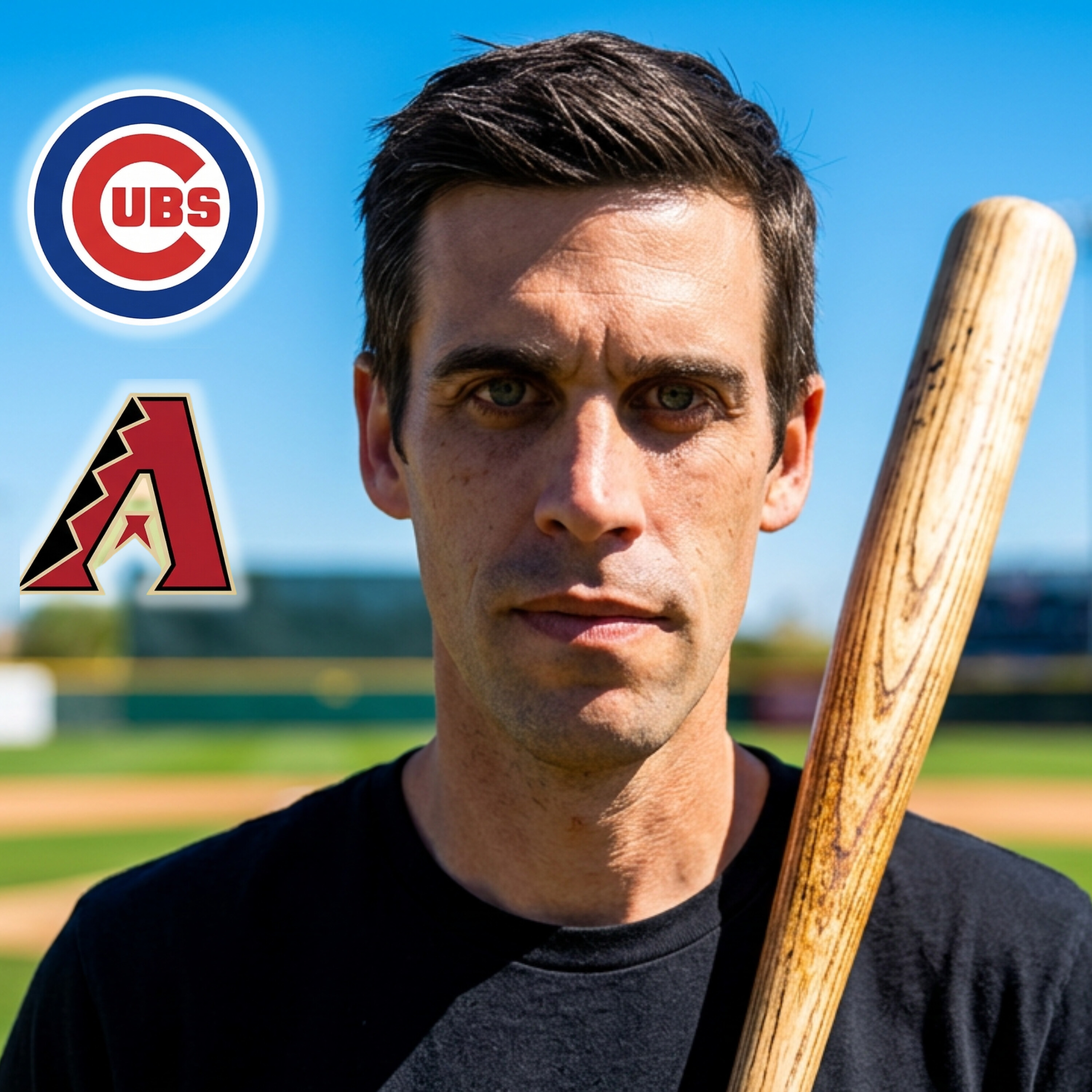
Stoic resilience and virtue in the face of unfairness, using baseball as the setting. Core claims: apply the dichotomy of control (focus on what you can do, not weather/media/others); use “the obstacle is the way” (treat adversity as reps for virtue); practice negative visualization/pre-mortems to avoid being surprised; self-accountability and integrity matter even when no one catches you; humility enables learning and strategic confidence (confidence as the “golden mean” between arrogance and self-doubt).
No named guests appear in the transcript. John Fonte is discussed (author) and his son James Fonte is quoted; they are not introduced as podcast guests.
John Fonte’s fight against bitterness; Seneca/Epictetus exile; James Stockdale after 1992; Frank Robinson fining himself for not running out a home run. David and Goliath used to illustrate humility + confidence. Marcus Aurelius learning from Sextus.
Written by AI. May contain mistakes.
Discussing how to endure injustices and maintain character amidst challenges.
“publishing saga of his novel Ask the Dust, I'll link to that in today's show notes, he had a number of bad breaks in his career.”
Exploring Stoic principles in baseball, emphasizing control and response.
“Hitting a baseball is not just one of the hardest things to do in professional sports.”
Understanding how challenges present opportunities for growth and virtue.
“And this is not just the source of a lot of misery and unhappiness.”
Highlighting the importance of personal accountability and virtue in Stoicism.
“Now, look, most of the time, these negative circumstances won't happen.”
Explore the balance between ego and humility through the lens of the David and Goliath story.
“because if they really knew me, they'd say something worse.”
Learn about the role of intellectual humility in personal growth and learning.
“about how we are often the root of our own failures, right?”

Get the gist, explore an idea or ask about something said.
 Claude
On The Daily Stoic, what are the key points of this episode?
Searching your listeningAutomatic transcript. May contain errors.
0:00Ryan Holiday: Welcome to the Daily Stoic Podcast, designed to help bring those four key Stoic virtues, courage, discipline, justice, and wisdom into the real world.
0:14Ryan Holiday: Don't let it do this to you. Maybe it could have been avoided. Maybe it wasn't fair. Maybe it happened to you. You got screwed over. You got humiliated. You were robbed of something you worked hard for. You screwed up big time. And now you're in the middle of a scandal. You're at rock bottom. Deserved or not, preventable or not, you're at the mercy of fate of the market of a mob. The author John Fonte, whose story I told in an article many years ago for Medium about the crazy publishing saga of his novel Ask the Dust, I'll link to that in today's show notes, he had a number of bad breaks in his career.
0:54Ryan Holiday: It just didn't go the way that he wanted. And that could have made him angry. It could have turned him into a drunk or a deadbeat, but it didn't. I think the one thing that a writer must avoid is bitterness, John Fonte told a journalist in 1979. I think it's the one fault that can destroy him, can shrivel him up. I've fought it all my life. It was that fight that his son admired most about his father that he soldiered on as a writer and was eventually rediscovered and rightly celebrated. I'm not naive enough to think that good work always wins out in the end, his son James Fonte explained. There are plenty of painters who died in Auschwitz.
1:36Ryan Holiday: I don't necessarily think there is justice in the world. It's just that my father had the strength of character not to let it break him. Injustices will befall us. Certainly they befell the Stoics. Seneca was exiled. So was Epictetus. Others had their property confiscated. Others still were executed. Think of James Stockdale and how the public treated him after that disastrous vice presidential debate in 1992. What matters is how we endure those moments, though, whether our strength of character allows them to break us or not. What matters is whether we stay good despite the bad things happening to us, whether we let them steal our decency, our joy, even our sense of humor.
2:20Ryan Holiday: We don't control those big external events. We do control how we remain inside.
2:34Ryan Holiday: Well, here we are well into a new year, and it's worth taking some stock. Who do you want to be this year? What changes do you want to make? How could you be better? That's where today's sponsor comes in and it's where something I have been doing myself now, I guess, since college, which is working on myself with a therapist. And although I used to, when I lived in LA, drive an hour in traffic to sit down in someone's office for an hour, now I do it on the phone. I do it while I'm walking. I do it in the car. I do my therapy online. And BetterHelp is the world's largest online therapy platform.
3:13Ryan Holiday: And I'm not the only one. More than 6 million people have gotten help through BetterHelp. It's just easier to keep the appointment. It's less of an imposition, cheaper, it's more efficient. And I honestly find it easier to just get into the stuff you're there to get into when I do it remotely. BetterHelp will match you with a therapist based on your preferences. You can easily switch at any time at no extra cost. You can click the link in the description below, or you can just go to betterhelp.com slash daily stoic to get 10 % off your first month of therapy. I don't know if you've seen a video or a talk from me lately, but you can tell I'm kind of on a sweater kick.
3:52Ryan Holiday: I don't know why exactly that started, but the problem with this sweater kick is like finding ones that actually look good that I like, and I'm not paying like an absurd, let's call it unstoic amount of money on them. And that's where today's sponsor comes in, Quince. They've got great design, great styles, great fabrics, everyday essential that are effortless to wear. They're not too hot. They're not too cold. They're not too thin. They're not too thick. They work with top factories, cut out the middleman, so you're not paying for brand markup or fancy retail stores. Just great sweaters and clothes that you'll like.
4:28Ryan Holiday: And you've probably seen me wear them in some of the Daily Stoic stuff. I got this Mongolian cashmere sweater. I got 100 % organic cotton sweater. They're comfortable. They're high quality. That's always the thing. Stop overcomplicating your wardrobe. You don't need a closet full of options. You just need some great staples that actually work. And right now, if you go to quince.com slash stoic for free shipping, you also get 365 day returns. That's a full year to build out your wardrobe and love it. And you will. Now available in Canada too. Don't keep settling for clothes that don't last. Go to Q-U-I-N-C-E dot com slash stoic for free shipping and 365 day returns.
5:09Ryan Holiday: Q-U-I-N-C-E dot com slash stoic.
5:17Ryan Holiday: Hitting a baseball is not just one of the hardest things to do in professional sports. It's one of the most incredible human feats, period. I'm fascinated with anyone who can do things that you shouldn't be able to do. And I'm here at spring training talking to a bunch of baseball teams. And so in today's episode, I wanted to talk about some stoic lessons specifically in and around the sport of baseball, which is an amazing game, a challenging game, one obviously the ancients didn't know about, but their ideas are timeless enough that they apply to this both very old and still very new game. Even if you don't play baseball, there's a lot you can learn from these people who are the best in the world at what they do, about how they manage their emotions, about how they get back to center, about how they marshal all their resources at this thing in front of them, and how they ride the ups and downs of a game that is fundamentally about failing and striking out over and over and over again.
6:13Ryan Holiday: The basis of Stoic Velocity, it's called the dichotomy of control. This might sound pretty simple and straightforward, you've probably heard it before, but the idea is there are some things that are up to us in life and some things that are not up to us. And the most basic task, the hardest task, unfortunately, is figuring out what those things are, right? Because all the time and energy we spend on stuff that's not up to us, there's time and energy we are not spending on the stuff that is up to us. And you think about what it boils down to, how little is actually in our control, right? You guys don't control the weather, but you control how you play in the weather.
6:44Ryan Holiday: You don't control what your coaches do or say, you control how you play. You don't control what the media says or does, you control how you play. You don't control how your teammates play, but you control how you play. You don't control where the ball bounces, but you control whether you get yourself to where you need to be to catch that ball, right? You control what you do. You don't control what other people do, what other people say, what other people think, what's happening in the world, right? We have this limited thing. There's all the things that are happening in the world. There's this tiny little bit of it in there that we control, but we spend so much of our time and energy and emotions on the stuff that's not up to us, right?
7:19Ryan Holiday: And this is not just the source of a lot of misery and unhappiness. It's a resource allocation issue. The more focused we are on what we're going to do, on what we're saying, on what we're thinking, on what's going on in here, right, the better. And the more time we're not spending on that is taking away from what we have. So that's the first is this dichotomy of control, which leads to the next lesson, which I actually have tattooed on my arm. It's the idea that the optical is the way, right? So the Stoics say we don't control what happens, but we do control how we respond to what happens. We control what we're going to do about what happens.
7:54Ryan Holiday: We control what we're going to think about what happens. So the Stoics believe that there was really no such thing as obstacles. There was only opportunities. This thing is presenting you an opportunity to do something. Difficult people are presenting us an opportunity. An injury is presenting us an opportunity, right? Being tired is presenting us an opportunity. These are reps dealing with that thing, right? This is a challenge that's getting us outside our comfort zone. You guys go in the weight room and you expose yourself to heavy loads so you can get stronger, right? This is what we're doing.
8:26Ryan Holiday: How do you get reps dealing with difficulty and adversity? Let me read you this passage. This is a famous passage in Meditations that I love, sort of encapsulates that idea. Mark Sreelis is the most powerful man in the world. He says, our inward power, when it obeys nature, reacts to events by accommodating itself to what it faces, to what is possible. It needs no specific material or circumstances. It pursues its own aims as those circumstances allow, and it turns obstacles into fuel. It says, as a fire overwhelms what would have quenched a lamp, what's thrown on top of the fire is absorbed and consumed by it and makes it burn still higher.
9:02Ryan Holiday: And so the idea is that actually nothing can get in your way, nothing can cause problems for you, because what it's actually doing is presenting you a chance to grow and change. Maybe not in the way that you like, maybe not in the way that you planned, maybe not in the most fun of ways, but it nevertheless is presenting you that opportunity. There's another really good one here. He says, what we have to cultivate is the judgment that can look an event in the eye. So we're talking about an injury, talking about an article, we're talking about feedback you just got, talking about someone who just did something frustrating.
9:32Ryan Holiday: He says, so the judgment can look at the event in the eye and say, this is what you really are, regardless of what you may look like, regardless of what our first impression about that thing is, which might say that it's negative or unfair or shitty or whatever. And then he says, and then adaptability adds, you are just what I was looking for. And it says, this is to me a present for the exercise of virtue, just to say erite or excellence. So we go, hey, this situation, this obstacle, it is frustrating. It is unfair. I don't like it. I wouldn't have chose it, but it is a chance for excellence, right?
10:07Ryan Holiday: Everything is a chance for excellence. That's what the Stoics mean when they say the obstacle is the way. Okay, who here knows what positive visualization is, right? Imagine things going well. The Stoics, that's all well and good. They also do negative visualization, right? So imagining it going quite poorly. The Stoics would say it's better to do a pre-mortem than a post-mortem, right? A post-mortem is great for the doctor. it's not so great for the patient who died you want to imagine what could go wrong and then you want to prepare for that in advance so the stoics are saying that what is unexpected what we don't want to think about right lands the heaviest on us so the stoics are always thinking about the worst case scenario not in a way that makes them anxious not because they want to suffer in advance but because they want to be prepared the word stoic in english it means you know not having a big reaction being calm and under control not being emotional part of the reason the stoics have this reputation is because they don't get rattled by things because things don't surprise them.
11:05Ryan Holiday: Their view was that nothing should ever happen to a wise person that is a surprise. Seneca said the only thing that a leader is not allowed to ever say is, wow, I didn't think that would happen. Like your job as the leader is to think that could happen. And what would I do if that happened? Where do I need to be if that happens? What would my plan be if that happens? Now, look, most of the time, these negative circumstances won't happen. That's great. It's better to be pleasantly surprised that they don't happen than unpleasantly surprised if they do happen. Do you guys know who Frank Robinson is?
11:36Ryan Holiday: One of the greatest baseball players of all time. The first one to win the MVP in the American and the National Leagues. And then he also has a World Series MVP, too. There's a story about just an ordinary game. The Orioles are playing the Red Sox. And he hits what he thinks is a clean home run. It's going out into left field and then at the last minute it it bangs off the the green monster like 40 feet up almost And as it bangs off the tin It's at that moment that he realizes well He didn't hit a home run and that he hadn't been running as fast as he should have been because he was so Convinced it was going out of the park and Robinson ends up having to settle for a double instead of what could have been a triple or Or maybe even a full trip around the bases if he'd really really run now the Orioles end up winning this game in a blowout.
12:22Ryan Holiday: You know, it's one of his at-bats in thousands of games. His commitment, his dedication, his discipline, his contributions, they're unquestioned. So that's why the manager of the Orioles was stunned when after the game, Robinson walks into his office and slams$200 down on his desk. And he says, coach, I'm fining myself. He says, I should have run it out. Basically, he knew that he'd cheated the game. He cheated himself. He cheated his teammates by just not doing his best. Now, it didn't matter in the big scheme of things, but it mattered to him. That's what we're talking about when we're talking about virtue and discipline.
12:59Ryan Holiday: Doesn't matter that you can get away with it. Doesn't matter that no one's putting a gun to your head. It doesn't matter that most of the other times you did do the right thing. It matters this time. And that's why you have to hold yourself accountable. That's what justice and accountability are. This is the standard. This is who I am. This is what I know I'm supposed to do. And I'm going to do it even if no one's looking. When I think about the things that I'm most embarrassed about, most ashamed about, they're not things that were public that I got in trouble for. Most of the time, they're things where I just knew I could have done better.
13:32Ryan Holiday: I knew I should have done more. And I didn't. And again, no one held me accountable. And I didn't hold myself accountable but i'm doing it after right i'm i'm looking back and going hey that that excuse didn't age well i should have been more involved i should have spoken up i should have said no to this or that and that weighs on you right that's what your conscience is there for i think this is what epictetus meant when he said when anyone criticizes you you should say to yourself i got off easy because if they really knew me, they'd say something worse. Accountability is primarily self-accountability.
14:11Ryan Holiday: Just as discipline as a virtue is self-discipline. It's not that they made you do it that you have to, that you did or didn't do it because you were afraid of getting caught or you knew you wouldn't get caught. You did or you didn't do it because of your values. They sometimes compare the stoic virtues like the cardinal virtues. right? People point out that's also what a compass is called, right? The cardinal points on a compass. I think justice, integrity, decency, honesty, fairness, this has to be the north star of that compass, right? You might be confused by everything that's happening. You might be confused by everything that's happening in the world, but you know what you're supposed to be doing, which is to say what is right.
14:53Ryan Holiday: And so we need these virtues, this value more than ever, because these are confusing and bewildering times. I actually think the story of David and Goliath is the story about ego and humility. And then right in the middle, we'd have confidence, right? You might go, okay, I get ego is bad, but isn't confidence important? And I'd say confidence is sitting right there in the middle, we call it the golden mean between self-doubt and arrogance. And the story of David and Goliath, right, is a guy who thinks he's invincible. and then a bunch of people who are afraid of him. And it's not till David, who's a shepherd, decides to challenge Goliath.
15:33Ryan Holiday: And they laugh at him. They think, how could you possibly beat this person? And at first he tries to put on, you know, your typical soldier's armor. It doesn't work. He realizes that he can't fight this way. And so David heads down to the river. He fetches a few stones and then he goes at Goliath with his sling. And what I think the point of the story is, is that David has the humility to know where he's weak, which is that he's not your typical soldier, but he has the confidence to know that he has an advantage here in this tool. And as he runs at Goliath, Goliath laughs. That's the last thing Goliath ever does is underestimate this young man.
16:13Ryan Holiday: And David matches strength against a weakness rather than a weakness against a strength, or what we so often do out of ego is strength against strength. We go at someone right where they are strongest. We try to dominate them. But the humility to look, to be strategic, to probe for weakness and to go there, that's what this story is about. And then as Goliath is felled, David in the story, we don't tell kids this part, David runs at him, grabs his sword and cuts Goliath's head off with his own sword. There's something poetic and ironic about how we are often the root of our own failures, right?
16:49Ryan Holiday: That's probably goeth before the fall. That's the funny thing about ego, right? We see where ego gets in other people's way. We see how it holds other organizations back. We can see it in music and politics and business, how somebody's ego gets them into trouble. The funny thing is it's much harder to see our own ego, which is of course exactly how ego works. You can see it in other people and you can't see it in yourself. So ego is this thing that gets between us and seeing reality, seeing what's going on, seeing how things actually are, it gets in the way of us getting the feedback we need, living in the reality that we need to live in.
17:27Ryan Holiday: And so what the Stoics say about ego is that you can't learn what you think you already know. And so ego being a know-it-all, thinking you're fantastic, thinking you're amazing, the reason this makes you worse is not just that it's insufferable and annoying, but ego prevents you from learning and growing because it thinks you don't need to do that right if you're a know-it-all in a sense you're right the stoics would say because you can't know anything else meanwhile humility we talked about socrates for a second the reason socrates is considered so wise is that he knows that he doesn't know the socratic method if you learned about this in school is is about asking questions it's rooted in curiosity and openness there's a idea in physics that as our island of knowledge grows so does the shoreline of ignorance.
18:13Ryan Holiday: So you're constantly being exposed to what you don't know if you have that curiosity. Jerry, I heard you're the best learner in the organization. There's the humility. But you're not the youngest guy here, right? That's true. So the idea is, how do you remain a student always? You become a student early on, but how do you stay a student? There's a story about Marcus Aurelius then, again, the emperor of Rome, the most powerful man in the world. He said the best teachers, considered a philosopher king. And he's seen leaving his palace. And a friend, he stops him and he says, sir, where are you going?
18:48Ryan Holiday: And he says, I'm off to see Sextus the philosopher to learn that which I do not yet know. And so the man's amazed. He goes, here we have the king of the Romans still taking up his tablets and going to school, right? I think we're all trying to get out of school as fast as possible. Nobody likes sitting in a classroom. Nobody likes getting lectured. I get it. That's why I'm going to talk fast. But how do you open yourself up to learn as much as possible? How do you remain a student of what you do always? In this way, humility makes us better, right? The scientific method is about a hypothesis that you're then trying to disprove.
19:21Ryan Holiday: So intellectual humility allows you to discover, allows you to experiment, allows you to learn. And then intellectual certainty, conceit, arrogance, right? This is what gets you in trouble.
19:38I never knew owning a gourmet Italian pasta business could be this profitable. Thanks to our old national commercial banker. That warehouse expansion loan? Oh, and the help with our equipment lending? But still, gotta say, it seems like he loves the Italian pasta business more than we do. La nuova attestatura ha reso il processo molto più efficiente. I mean, the new equipment, it makes it so much more efficient. Really dedicated commercial bankers. Sorry, got a little carried away there. Another reason to choose old National Bank. Get old. Member FDIC. If you've got a move coming up, you really need to look into United Van Lines, the do-it-all moving specialists.
20:15With United Van Lines, you don't worry about a thing. You have a dedicated moving coordinator, qualified drivers, and full value protection for your possessions. Compare that to a couple of dudes manhandling your family heirlooms or cramming your things in a container on your driveway. Rather than hope for the best, you deserve a hassle-free move. Visit unitedvanlines.com. Big moves, small moves, all moves. Easy choice.
Deserved or not, preventable or not, you’re at the mercy of fate, of the market, of a mob.
📚 Book Mentioned: Ask the Dust by John Fante
🎥 Watch this episode here: https://www.youtube.com/watch?v=DGGfz6BoPbI
🎙️ AD-FREE | Support the podcast and go deeper into Stoicism by subscribing to The Daily Stoic Premium - unlock ad-free listening, early access, and bonus content: https://dailystoic.supercast.com/
✉️ FREE STOIC WISDOM | Want Stoic wisdom delivered to your inbox daily? Sign up for the FREE Daily Stoic email at https://dailystoic.com/dailyemail
See Privacy Policy at https://art19.com/privacy and California Privacy Notice at https://art19.com/privacy#do-not-sell-my-info.
