
 Ask ChatGPT



```markdown
In this episode of The Daily Stoic, host Ryan Holiday interviews actor and comedian Ed Helms, known for his roles in The Office and The Hangover. Helms discusses his passion for history, particularly focusing on historical failures or SNAFUs (Situation Normal: All Fked Up). The conversation explores how these events can be both humorous and educational, offering insights into human behavior and society.
Written by AI. May contain mistakes.

Get the gist, explore an idea or ask about something said.
 Claude
On The Daily Stoic, what are the key points of this episode?
Searching your listeningAutomatic transcript. May contain errors.
0:00I'm recording this on a Monday, and Monday is our grocery store day in our family. I usually pick my kids up from school and we go over to Whole Foods, get all our groceries for the week. Although here very shortly, we're going to go over there to get our Thanksgiving turkey because they've got a bunch of great options. Turkeys start at$149 a pound if you have Prime with organic birds at$299 a pound. And they only carry no antibiotic ever turkeys that will bring quality to your table at a great price. Whole Foods has great everyday prices on all your Thanksgiving essentials, whether you celebrate with a massive family or just a few close friends.
0:37Everything they sell has high standards to help you shop with confidence. Enjoy so many ways to save on your Thanksgiving spread at Whole Foods Market. Why choose a Sleep Number smart bed? Can I make my sight softer? Can I make my sight firmer? Can we sleep cooler? Sleep Number does that. Cools up to eight times faster and lets you choose your ideal comfort on either side. Your Sleep Number setting. Enjoy personalized comfort for better sleep night after night. It's the final days of our Black Friday sale. Recharge this season with a bundle of cozy, soothing comfort. Now only$17.99 for our C2 mattress and bays, plus free premium delivery.
1:11Prices higher in Alaska and Hawaii. Check it out at a Sleep Number store or sleepnumber.com today. Look, ads are annoying. They are to be avoided, if at all possible. I understand as a content creator why they need to exist. That's why I don't begrudge them when they appear on the shows that I listen to. But again, as a person who has to pay a podcast producer and has to pay for equipment and for the studio and the building that the studio is in, it's a lot to keep something like The Daily Stoic going. So if you want to support a show but not listen to ads, well, we have partnered with Supercast to bring you a ad free version of Daily Stoic.
1:56We're calling it Daily Stoic Premium. And with Premium, you can listen to every episode of the Daily Stoic podcast completely ad free, no interruptions, just the ideas, just the messages, just the conversations you came here for. And you can also get early access to episodes before they're available to the public. And we're going to have a bunch of exclusive bonus content and extended interviews in there just for Daily Stoic Premium members as well. If you want to remove distractions, go deeper into stoicism and support the work we do here. Well, it takes less than a minute to sign up for Daily Stoic Premium, and we are offering a limited time discount of 20 % off your first year.
2:34Just go to dailystoic.com slash premium to sign up right now, or click the link in the show descriptions to make those ads go away.
2:47Welcome to the Daily Stoic Podcast, where each weekday we bring you a meditation inspired by the ancient Stoics, a short passage of ancient wisdom designed to help you find strength and insight here in everyday life. And on Wednesdays, we talk to some of our fellow students of ancient philosophy, well-known and obscure, fascinating and powerful. With them, we discuss the strategies and habits that have helped them become who they are and also to find peace and wisdom in their lives.
3:32Hey, it's Ryan. Welcome to another episode of the Daily Stoic podcast. I was driving my son to school today and he said, Dad, who do you think's dumber on The Office? Kevin or Michael Scott? We had actually an interesting philosophical discussion about this. So obviously, Kevin is dumber in some ways, but at some level, I think he is aware that he is dumb or not the brightest bulb. His ambition is relatively low and he's self-conscious. Michael Scott, I said, is quite dumb, but utterly unaware of it. And these are the most dangerous people in the world. These are people who get themselves into trouble because they have no self-awareness.
4:18They're so dumb that they're not capable of understanding the profoundness of their stupidity. And he said, yeah, I don't know. But Kevin didn't know that turtle was alive, which is a clip he likes to watch over and over again. And then we watched that one where everyone thought Kevin's dog was dead, but in fact, was just a good boy who was very lazy. Why did this come up? Because I made the mistake of telling my son every once in a while about things, how they connect to the office. He was doing an improv class. I told him about Michael Scott kicking the door open and going, freeze, open up FBI.
4:50I told him about the waking up to the smell of bacon. I told him about many office clips. And then he asked to watch some and we watched some. And we watched the fire drill episode and the CPR episode and all these things. And then I said, you know, I've had someone from the office on the podcast. And he goes, really? Who? And I go, Dwight. And he thought that was cool. And then I said, and you know who's coming on in a couple of weeks? He said, no, who? And I said, Andy Bernard, the nard dog. And he goes, what? And it's true. Andy Bernard is this week's guest on the podcast, the one and only Ed Helms.
5:25I did not know Ed. I do remember Samantha and I were on a date in Los Angeles once at Takami, that sushi restaurant in downtown LA. It's like on the 40th floor of one of the tall buildings downtown. And he was there. Wow, this is what it's like living in LA. Because I was a huge Office fan and remain a huge Office fan. Like the Stoics, you shouldn't read the Stoics. You should be reading the Stoics. The Office, like Seinfeld, is not a show you have watched, but a show you are watching and continue to watch. Because it's one of the greatest television shows of all time. And actually, when I was in Hawaii a couple of weeks ago, I was doing a talk.
5:58Time difference is crazy. But my wife just texted me. She goes, you've ruined these children. What have you done? And I go, what? What? What did I do? And she goes, your son is demanding that I show him a funny clip from the office before he'll go to sleep. So that was me. That is on me. I'd been showing him the clips and we'd been laughing and sort of it's a thing he knows you can ask for to extend bedtime a few seconds. And it was funny because then later I saw my parents. they'd come to the talk that I was doing and my dad was telling me about this thing he had from the doctors and he goes, it was like that episode of Seinfeld where they try to get the doctor to remove that stuff from the chart.
6:32And we both knew what we were talking about. And then it just hit me like, hey, my son and I are forging that right now, which is what great television can do with the Stoics of Watch the Office or television. I don't know. I don't really care. I like it. I think it's funny. And Ed Helms came out actually a huge history buff. He was in town for South by Southwest because he was launching a new season of his podcast, Snafu, and a book that he did, Snafu, The Definitive Guide to History's Greatest Screw-Ups. And not only did we nerd out about some crazy historical figures and historical stories, but he was very nice and clearly had done some research before because he brought up this idea of a more font.
7:14And we had a nice discussion about that. It was one of my favorite episodes that we have done in some time. I always love being able to point out to my kids when they like something or I do something that interacts with something they like, not just The Office. But I sad to say, you know, he's in the Captain Underpants movie, too. He's also in The Lorax and Monsters vs. Aliens. And, of course, famously in The Hangover movies. And he told a great story about The Hangover, which I was not expecting. It was a fantastic episode. I am, of course, a huge fan. If you haven't read The Oral History of The Office, I loved that book, too.
7:51And, you know, you've seen some office mentions here or there in the Daily Stoic over the years. When I had Rainn Wilson on, I referenced something from The Office and he actually didn't get it at first. And then he was, oh, of course, of course, you're a person who likes The Office. Like you could just see in how I look that I was an office person, which sounds about right. You should grab a copy of Snafu, the definitive guide to history's greatest screw-ups. You should listen to the Snafu podcast. Season three just launched. It's about these detectives trying to uncover a mass wave of poisonings that killed thousands of people during Prohibition.
8:27I love weird stories like that. And it's a great podcast. And you can follow Ed on Instagram and on Twitter at Ed Helms. All this is to say, I'll get into it with Ed Helms. Enjoy. This is so cool. Yeah. I've been seeing more like sculptural book decor. Huh. My buddy has a general store in Massachusetts that also has a book. Really? He's an author, actually. He wrote a beautiful book called The History of Sound. It's a book of short stories. Ben Shattuck is his name. Married to Jenny Slate, who also wrote some fabulous books. And Marcel the Shell. Of course. Which we're huge fans of in our house.
9:07So Ben built this little entry to the book nook of the store by making like a rebar arch. Yes. And then drilling holes in like a couple hundred books and threading them on the arch. And it's this, it's this like little storybook. I had that exact same idea that. It works. Did you, have you been next door? No. So we have a bookstore next door. Okay, great. The chimney is this. Yeah. And the ceiling's maybe like 23 feet tall. So it's like this giant thing. But I like that because have you been to the last bookstore in downtown LA? No. Great bookstore in one of these big old buildings. Okay. and you walk up the stairs and they they did that arch but it's over like the top of the stairs so it looks like you're coming through like a book tunnel this is from uh there's this company called books by the foot and they sell them for like things like this or movie sets or rich people's houses yeah of course pretend that yeah and you can also buy them by color yes for like interior designers are like i want a rainbow bookshelf just but doesn't that sort of break your heart a little bit because it's like it's very great gatsby it's like it has nothing to do with the book itself that's a very good reference yeah right like he never yeah what does he say the pages are all uncut in his library because no one's ever read a book in the great gatsby's library yes because he thought but smart people have books had books right yes and that's what he reduced them to decoration which is in a way what books by the foot does but you know what it's a good aesthetic well yes i think if you're buying it to impress people that's a problem if you're buying it because i'm not going to destroy my books this like none of these come out these are all glued and nailed in there so so like i'm not going to destroy books that i like people go how do you get them out and i was like i don't these are not my books but that's funny i remind one of my favorite lines of the office is there uh it's the date mike one and she goes have you read Lee Iacocca's biography?
11:05And he goes, read it. I own it. Like that's the more important statement. Not like I've read it. But yeah, that scene in the Gatsby library is hilarious. It's the guy with the glasses, right? I think. And he walks in there and he's just, oh man. You know, you ever see like a deckle edge book? Have you heard that? When it's rough. Yeah. Because the pages are cut. That's supposed to look like that's what that's mimicking. Right, right. I should have done Snafu and Decl Edge. I have asked about that before. You know, you can get anything you want in a book. They'll just be like, you know, it comes out of your royalties.
11:43Yeah, yeah, yeah, yeah. You're like, I want all color photos on every page like this. And they're like, we can get that for you. But you understand we don't do that for a reason. Do you want any remuneration for this product? You know, this book will be$90. Yes. you're so right i mean this is my first book but going through the kind of like reduction of options and it's like oh yeah we want like like three color illustrations and and like that changes the calculus that much then then forget it let's do it's just like you're just sort of reducing more and more but actually i'm super proud of where we wound up because the the, the visuals and you have a advance.
12:25So you don't, you don't have the final visuals in there, but, um, but it's just some really cool, uh, and kind of cheeky, like collage art in there. Well, the hard part about doing your first book is usually you're someone who loves books. So you have a lot of fit, like you, you are bringing to this book, everything you've ever liked about any book you've ever read. And then you're like, I'd like all this. And they're like, Like, pick a few of those. It's why oftentimes first-time directors' movies are overkill. Yeah. A little much. Yes. Like, yeah, there's too many camera moves. The lighting's too dramatic.
13:04It's like, it's just because it's everything you always wanted to do. Yes. Well, there's a book over there, but Seth Godin wrote this book called Meatball Sunday. And that's what he's describing. The idea of like, you have this ice cream sundae. Like, you add too many things onto something. and at some point it becomes disgusting. I don't know. Meatball Sunday. It does sound kind of like a Ben and Jerry's flavor. I could get behind that. Well, I thought the book was fascinating and it brings up something that I think about all the time, which is that like history is fucking terrifying. Yeah. I think the more you read history, like it doesn't calm you down.
13:42Often you go, how are any of us alive? Interesting. I tried to head that off in the introduction. Yeah. Because I think of history, in particular, the sort of like study of disasters or just like human folly. It's weirdly, there's this kind of uplifting aftertaste to it, which is the one thing they all have in common is that we got through them. Yes. Like we're still here. And to me, that's a nice meditation during difficult times. But that's like the parable of the turkey. Do you know that? No, I don't. It's like, it's good until one day is Thanksgiving. It's like, hey, if today was fine, today was fine.
14:24Like at some point. That's such a basic parable. It's good. The parable of the turkey. It's good until it's the day that everybody eats you. Yeah. And then it's not good. Yeah. It's just not good. I still think that, I mean, I bring it to this moment, I feel like in where we're in what feels like this moment of unprecedented division and rancor and, you know, outrage. And people are saying, look at how unprofessional the White House is being managed right now. You know, there's just so much outrage in both directions from all sides. And you don't have to look back very far in, especially in world history, but even in American history to be like, oh yeah, this is.
15:09It's very precedent. This is par for the course. This is how we do it. This is what we do. We move through these like really difficult moments and it always feels insurmountable. Sure. And that's where I think the reassurance kicks in where it's like everyone in some of these situations, I mean, this, the book has, has snafus of all different scales, but even the big ones, like the existential ones or, or in my, in the podcast snafu, the first, the first season, it's like, it's about nuclear Holocaust. Yeah. And I don't know, there's just something like we're, we get through it. You study history and it both, it calms you down because you're like, we've been through things like this before.
15:51And then it also makes me terrified because you're like, we've been through things like this before. We keep doing this. Well, no, I just mean like, you realize like how bad it can, like when people mess with certain things, how bad it can get very quickly. Do you know what I mean? Like when you play with certain human forces or you don't take care of certain things, you can descend into chaos very quickly. And there's like there's real consequences for incompetence and malice and yes, secrecy and corruption. Like it it it's not like it has real consequences for real people. So I think when you study history, you go, OK, history has basically always been awful snafus happening.
16:30That's what's so funny about that situation. Normal, you know, like the premise is that it's always fucked up. Yeah. Yeah. And so that's what gives you perspective. But then it also reminds you of the stakes, which is that when people do something they shouldn't do, or a president does this, or world leaders do that, or a company does this, people die. Or you're measuring the consequences of the mistakes usually in human life. And then the fact about history repeating becomes kind of sad and tragic in that sense. I'm trying to put some positive topspin on this. You're dragging me down. Come on.
17:06Right. No, I still cling to, and maybe it's a sort of desperation on my part, but I, I genuinely, I find it a sort of therapeutic to, to, uh, to visit these moments kind of revel in the, all of the, the just hubris and folly and idiocy that caused them Yeah. Comedically. I mean, a lot of these things, you know, the curation of this book, the choices that I made, like, about what goes in here, it's largely, it's things that with distance we can smile about and that I can give a sort of cheeky treatment to. But it is, it's just like we just persevere. There's something human about that. Well, history is not.
17:52There's something optimistic about that. Yeah. I think history is not fun to live through necessarily. No. Right? And so it's kind of always been thus. And those people's lives are okay. I don't think it's mutually exclusive. I think that's kind of the premise. I've said this before, but people forget Churchill was a historian. That's how he made his living, is he wrote books about history. And there's this letter he writes to his publisher right as World War II is breaking out. And he's like, I'm just going to put a thousand years between me and this moment. He's like, I'm going to go to my books and chill out for a minute.
18:24And that didn't make World War II less bad. Like, I think that's what I mean. I'm sure you had this sense of like, hey, I'm going to escape and look at the history for a second. And then this is also going to give me a sense of foreboding of how bad things can get. So I think that's, to me, what the study of history gives you is both comic relief and perspective, but then also like, let's try to get this right. Because if we get it wrong, it's real bad for people. Yeah. And you're right. I mean, the scale of human suffering throughout history is so overwhelming that it that can be a spiral of despair.
18:59But that's where Stoicism kicks in. And that's where there's so many of your of your lessons to be applied here. Well, one of my favorite ones is like the Soviets didn't believe in evolution. So like their crops couldn't get any better because they like refused to accept the premise that like you could genetically modify and selectively breed for things. Interesting. And so like, that's like insane and silly, but then also like millions of people died because of famines and stuff as a result of it. Good God. Those don't seem like mutually exclusive ideas necessarily. Oh, the evolution? Yeah. Well, that you can, that you can sort of like make immediate adaptations that is different from a scale of evolution.
19:44Yeah, but they're just rejecting the premise of like sort of even I think like to me, the metaphor is that when you have an ideology or a doctrine that blinds you to a set of obvious facts in front of you, which is like one of the themes of history is just the triumph of like preconceived notions over one overwhelming piece of evidence over overwhelming piece of evidence. History is full of that.
20:18Thanks to Toyota Trucks for sponsoring this episode. When I bought my ranch in 2015 out here in Basko County, I drove my car about halfway down the dirt road that we live on, thought this isn't going to work, stopped, parked it, walked the rest of the way home, borrowed my wife's car, drove into Austin and bought a truck. What I bought was a Toyota Tacoma. And this truck wasn't just transportation getting me to and from my house. It unlocked a whole different style of living for us, not just on the ranch, but in our little Texas towns. There were places I could go now that I couldn't go before, especially out here in the piney forests, through the fields, and on the unpaved roads like the one that I lived in.
21:03We got to go deep into the hill country's wild beauty. We've driven all the way out to East Texas. We've driven across the country. and by we I mean not just my wife but both my kids who I drove home from the hospital in that truck. Toyota trucks are built for those who understand that the best adventures happen when you're willing to veer off course because you never know when you'll end up on a Toyota adventure detour. And of course this is stoicism too because every detour, every obstacle is an opportunity. But it's helpful if you can handle the difficulty inherent in that. If you've got the resilience and the right companion to make it wherever the road takes you.
21:42Discover your uncharted territory. Learn more at toyota.com slash trucks slash adventure dash detours. Look, when you're hiring, you don't want just anyone. You need the right person with the right background who can move your business forward. And when I need candidates who match what we're looking for at Daily Stoic for any of my businesses, we trust Indeed Sponsored Jobs, because when you're hiring, Indeed is all you need. You can give your job the best chance to be seen with Indeed's Sponsored Jobs. They can help you stand out and hire quality candidates who can drive the results you need.
22:21And according to Indeed, data-sponsored jobs posted directly on Indeed are 90 % more likely to report a hire than non-sponsored jobs because you reach a bigger pool of quality candidates. And you should join the 1.6 million companies that sponsor their jobs with Indeed. People are finding quality hires on Indeed right now. In the minute we've been talking, companies like yours made 27 hires on Indeed. Spend more time interviewing candidates who check all your boxes, less stress, less time, more results now with Indeed Sponsored Jobs. And listeners of this show will get a$75 sponsored job credit to help you get your job the premium status it deserves at indeed.com slash daily stoic just go to indeed.com slash daily stoic right now to support the show by saying you heard about indeed on this podcast indeed.com slash daily stoic terms and conditions apply if you're hiring do it the right way with indeed are there any episodes that jumped out at you well the carter one i find fascinating because he's like one of my favorite presidents.
23:27And the idea, like he has this reputation of being this kind of like dolt or loser or weirdo. And it's like, he's a nuclear physicist who also like single-handedly, like in a moment of great heroism, like saved potentially a lot of people from a nuclear disaster. And then we're just like, oh, he looks so dumb in those sweaters or whatever. Like he said he had lust in his heart. Like the things that we, like, Like, that's the other thing about history is our almost impressive ability to learn the wrong thing or to focus on the wrong narrative from a thing. Or reduce it to something completely irrelevant and ridiculous.
24:06Yeah, just so listeners know, the episode you're talking about or the story from the chapter you're talking about is when Jimmy Carter was, I think, 28 years old, worked in the Navy nuclear sub. I forget his title, but he was high ranking in nuclear subs. And he was called upon to address a meltdown happening in Ottawa. That was the first nuclear power plant meltdown in history. They couldn't be at the core of this meltdown for more than 90 seconds at a time. It's a mission impossible. Yeah, totally. So they built this duplicate of the core, which they, they then trained all of the, the, you know, specific actions that they had to do.
24:50And so they could jump in and do this thing for 90 seconds and then jump out and then just keep going and keep going until this reactor was fixed. Yeah. And it is, uh, it's insanely heroic. Like the, the danger, the pressure of something like that is, is crazy. And you're right. It is so just completely diametrically opposed to all of our popular perceptions of Jimmy Carter as just this like goober. Yeah. Like he's literally like from the peanut state. Yeah. My home state. And I love Jimmy Carter because he's like a Georgia boy. It's also one of the greatest human beings that ever, you know, like just a decent human being.
25:28Yeah. You're right. But now, but you read this, you're like, oh, that man was, he had grit. Yes. That man was courageous and leadership. too, which I think a lot of people fall to his president. That's where people are like, he was just kind of a dinky president. He didn't have that strong hand, but he, man, you look back, it's in there. I would say among the stories of the books, that is one of the few that gives me what you were saying, which is the hope. We got through this. He was not responsible for the fuck up in any way. He was the one that helped save it. Yeah. Right. And usually we don't get such a nice, And that's one of the ones we don't know about it because it didn't end badly.
26:09Yeah. No, you're right. So we're not like that. That doesn't keep anyone up at night because it was a near miss. Yeah. That's actually a wild, that's an incredibly important point that you're making. There's so many things that when you just start to scratch the surface of history and dig deeper, we have forgotten about, you know, I mean, about so many things. I think a lot of things in this book will be new to people. The podcast, we go into one of the most insane events of the 80s, which was this NATO military exercise, Able Archer in 1983. And nobody, that was actually classified until just a few years ago.
26:51So that's why nobody knows about it. But it does, it's so full of like incredibly potent lessons for us right now, especially with all this, there's like suddenly nuclear saber rattling again. And yeah, just if people don't know that story, Abel Archer was a military exercise in 1983 where NATO was moving troops and doing this massive exercise as militaries do in order to sort of practice what actual warfare. This particular year, the Cold War tensions were so hot. This was right in the wake of the evil Empire speech, Reagan's, and that Korean airliner plane had been shot down by the Soviets and tensions were just so hot that the Soviets began perceiving this NATO military exercise as - Potentially real.
27:45Yeah. Oh, we think they're actually staging an invasion. Yeah. And the Soviets at the time had set up this system of collecting evidence that was so prone to bias of just like perceiving threat. And so of course they got insanely antsy and they're trying to deliver results to their higher ups. Like, look, look what we found. Look at all this scary stuff. And so Abel Archer becomes perceived as this grand, like massive scale staging for an invasion. Soviet union ramps up their nuclear posture. We, of course, clock all of that with our sort of intelligence and we ramp up our nuclear posture. They clock that.
28:29And it's just this standoff that becomes unfathomably close to like button pushing. Right. And nuclear holocaust. It's what's really wild about that story is to look back, knowing now that that narrative was playing out. But to overlay sort of the arc of Reagan's tone towards Khrushchev and towards the Soviet Union and George Shultz, the Secretary of State, like what they were sort of saying at different times. Now, knowing when you put this timeline underneath it, you're like, oh, there was a tone shift right here. Yeah. Because they were suddenly aware of how close. They realized they were playing with fire.
29:08Yeah. And that it was real. And then you go, that was a media environment and a global communications environment that is like, in retrospect, hilariously quaint and slow. Like Khrushchev during the missile crisis is like sending this like long teletype memo to Kennedy's like waiting for it to type out. And then he's like, we'll respond in the morning. Yeah. Now it's like the constraints on Twitter are determining it. Right, right. Who said this is a real person? Just it's terrifying to think. I mean, that's one of the lessons, I think, from your book, but also for studying history, which is like, no one should have nuclear weapons.
29:43It's just bad for every—like, we should not be entrusted. No one should be trusted with a thing that can destroy everyone because we're idiots. Somebody—I guess somebody has to be trusted with it because we invented it. Yes. But no one should. Yes, of course. It's like the idea that humanity holds in its hands. Like, I think that's what's fascinating about your thing is how far back it goes. Like, it's not like just recently we got stupid. Like, we've always been prone to disasters. And anytime you organize people into groups, there's miscommunications and there's screw-ups and there's all this stuff.
30:16That's all of human history up until 1945. And then suddenly humans possess the ability to destroy all other humans in an instant. Yeah. And that's, you're suddenly in new territory. Like, there's not a lot of moments in human history where everything does fundamentally become different. And that is the first time that's possible. Right. And it feels like we're on the cusp of that again with generative AI. But here's where I go dark. I just, I feel like if an infinite number of monkeys can, one of them will eventually write Hamlet, like somebody's going to set off nuclear holocaust. Yeah. Right?
30:55Yeah. Like we're, it's gonna happen. It's a matter of time. Every near miss in a way increases the chances that at some point in the future it will, It's not like the fact that it hasn't happened doesn't make it less likely to happen in the future. I think it makes it more likely to happen in the future. Yeah, but it does. I guess we're holding on to just the idea that it's so unfathomably catastrophic that even someone who wants to be that person who ends the world deeper down doesn't want to be that person. Maybe. I don't know. My friend gave this TED talk and it's about sort of the psychology of, say, like mass shooters, right?
31:33There are these dark, twisted individuals who basically want to not be alive and they want to hurt as many people on their way to unaliving themselves. Right. And so his point is like, OK, obviously, for most of human history, it was impossible to get a weapon that allowed you to do that at any kind of scale. Like even just the technology of a handgun is infinitely more dangerous and makes us more vulnerable than when you're like loading an old school musket. Right. Yeah. And so his point is like, okay, so what percentage of people want to do something like that? Very, very, very small percentage of people, but a lot of people, you know, you're going to get a certain number of people that do that.
32:09And so he's like, okay, well, what, how many like airline pilots are there? How many people work in infectious diseases? How many people work in nuclear weapons? Does at some point statistically do not get somebody who is of that mentality or gets to that breaking point, but instead of doing a school shooting or something, they have a thing that can unleash unfathomable harm on an enormous amount of people. And that you can think yourself into a point of almost existential doom very quickly. You're like, oh shit, that, right. How many airline pilots have there ever been? How many people have access to bioweapons, et cetera?
32:47And you're like, oh, it comes down to like one crazy person could change the balance of humanity. Yeah. I mean, thankfully, thankfully or not, I guess the, the barrier to entry for those other mechanisms being an airline pilot or a high level infectious disease person, there are so many hurdles. And of course there are virtually no hurdles to gun acquisition. I know it's strange, but I take your point. It's a, there, there's a, this one game, This one game theorist has this idea that to decrease the risk of nuclear holocaust, it's that, you know, there's the nuclear football that they carry around with the president.
33:27And his argument was that actually we should pick a person and then we should put those codes in their chest cavity. So we should send them a certain report. Have you heard this theory? Yeah, I read that. It makes so much sense. Obviously, it's a thought exercise. But the idea that it's abstracted is the problem. Like you're pressing a button and then over there, lots of harm is happening to faceless people. The idea that the president would have to kill someone with their bare hands. Like hack them open and fully like, like get the nuclear code out of their chest cavity. It's a very, I think, reasonable thought exercise to explore because you're right.
34:06It just makes the act of launching. but then sonifies it in one act of violence instead of yeah endless face you have to go call steve yeah the guy with the you know like this is ball yeah all of it's like three people turning keys or whatever yeah and then but boy is that that person the patriot whoever that is right right like agrees to that it's like the ancients how they're like this person's like a vestal virgin or like it's like some hereditary position or whatever and and so far it's none of them have it's none of them have ever had to do it so it seems like it's the parable of the turkey also it seems like a great job until some future it's so venerated and honorable and just like the turkey gets trotted out for the in the white house and well actually that guy gets pardoned so well a bunch of people in a row make it all the way to retirement it's great gig yeah one guy it's like three days under the job it's horrible oh my god so have you always been into history were you always a history nerd yeah i think uh it's where i sort of gravitate to with with reading and research and i'm i'm very much uh like i'm very adhd quite literally you know officially whatever that means diagnosed but but i i chase rabbits all the time and i uh and i'm just always like wikipedia like i don't let things go if something pops up and it's like what like on the way here we're in bastrup texas yeah and i'm like i gotta know about bastrup texas like what's this what is this place yeah and uh and i'm reading about some history and and i just love it it becomes their stories and what i do for a living is is storytelling as an actor as a comedian as as as a creator of media it's all it's all storytelling and it's like when you see this is a true story at the beginning of a movie or a TV show.
36:07Like it just has that added little like giddy factor. And I love that. You just get that little tinge every time I'm digging into something or reading about something new. Unfortunately, my ADHD brain is also very much a sieve. And so I take in tons of, like I have a very fine, like small fixed amount of data that my brain can hold and I'm constantly pouring in new stuff, which is super fun. But a lot of it, it just kind of falls out the back. Bastrop is a weird place. Yeah. Like it's named after this guy who pretended to be a baron, but wasn't like in the way that people would come here from Europe and be like, I'm count so-and-so.
36:47And they'd be like, sure. Yeah. So he called, he was Baron de Bastrop or something. And it's just total financial criminal basically. But, you know, Germany was a long way away or wherever he was claiming to be from. Like the, what are they, the characters in Huck Finn? I'm blanking on their names. But have you read James? Have you read the book James? No, I haven't. Okay, so Percival Everett wrote this book that's - Yeah, I'm well aware of it. Yeah, so it's the perspective of Jim, but he's James. He's actually really smart and super well read. But one of the fascinating parts of the book is from Huck Finn's perspective in the Twain version, they're kind of these like colorful, weird characters.
37:29But in James, they're, well, they're criminals and they would sell him down the river literally. So like they're going from town to town, you know, swindling people out of, you know, a few dollars to attend their made up play or whatever. but you imagine they chance upon a human being worth a thousand dollars in their time. So in James, what's fascinating is the menace that the characters take on. Right. And it kind of reminds you of like what great, like whenever someone re-imagines something or you see an actor make a really different choice, you're like, oh, I never even considered that they're that.
38:04And it totally changed. So much of the book changes your perspective. Yeah. Yeah, that's actually quite poignant too. It's really good. I, I, that's one that's on the list in, in general, I think history is just also a bit of an escape for me. Like I kind of, it's easier to read about other people's problems than to focus on or try to solve your own sometimes. So in some ways it can be a bit of a, maybe a not the most healthy bit of escapism, but, but I do, I also try to like take lessons from these things and take ideas into my life. And I was so excited when you invited me on your show. And it got me thinking, where are some of the stoic ideas that emerge from these stories?
38:53And I kept thinking about, well, Abel Archer in particular being a military exercise is sort of the ultimate premeditatio malora, right? Yes. And there's another one in the book. I know exactly what you're going to say. Yeah. The Millennium Challenger. That's the opposite of a premeditatio malora. Oh, okay. explain. Well, I'm just saying like, so premeditation malorum is this idea that you practice, you premeditate on the things that go wrong. And there's this famous war game and it starts going poorly. So they basically change the rules so they could win the war game instead of learning the lesson, which is like, oh shit, we're terribly unprepared for something like this.
39:32They go, no, no, no. How can we shuffle the paperwork around so we don't have to make any Yeah. Yeah. So Millennium Challenge was another war game in 2002 where the US military divided its two teams, red and blue. Of course, blue was the United States and red was sort of the amorphous Middle Eastern foe. And red, this Marine lieutenant was in charge of the red team and he just got really creative and he was going way kind of like out of bounds with, with his ideas and, Oh, I'm going to send messages via motorcycle messenger to, to the battlefield. I'm not going to turn on my radar so that I can't be found.
40:17Uh, I'm going to signal, I'm going to go back to like, like mid century tactics and I'm going to signal my ships with lights instead of like radio transmissions. And he even did this incredible thing where he was researching animal herd behavior in how to, how maybe he could maneuver smaller boats to overtake larger boats. Yeah. And it worked. And so the red team is just crushing the blue team and the blue team is like, well, this doesn't validate all of our preconceived ideas about how - You're cheating. You're cheating at war. They accused him of cheating. And yeah, like you said, they just wound up constraining the red team.
41:00Yeah. They actually lost on the first day. Yeah. And then they said, let's do it again because we still have 13 days designated for this exercise. So there's more lessons to be learned. Let's do it again. But now we're going to start sort of constraining you a little bit. And then they constrained him so much that that general retired or just he quit. Yeah. He was like, guys, I'm out. This is ridiculous. This is embarrassing. Right. And of course, no, no lessons learned. It wasn't long after that, that, that some of those tactics were seen on the, on the battlefield. Which was the whole point of the point of the exercise, not for one person to win or another person to lose.
41:36It's to learn something and to, to stress test these different things. Exactly. But if you're, if you're, your goal is to look good or make someone else look good or not look bad, that's the whole problem. I interviewed Arnold Schwarzenegger last year and I was talking to his chief of staff and he was telling me the story that when Schwarzenegger was governor, they were supposed to do some like disaster FEMA mock thing. Like, hey, this is a earthquake, you know, whatever. And so everyone's practicing. It was supposed to start at like 5 a.m. And they were like, we'll wake up, we'll start, you know.
42:06And Arnold woke up at like 3.30 and he called it and he just started it early. And everyone's like, what are you doing? We're not ready. Yeah, we're not ready. And it was like that. His point was like, the whole point is you're never going to be ready. what do you do when you're not ready how the point is how quickly can you get ready when you're not ready and i can imagine like certainly somebody looked at the math when putin was like what would happen if we invade ukraine someone was like it could not go well like it could go really bad and then they were like you can't tell him that right like you definitely don't tell him that there's actually a famous story about the emperor hadrian he has this um this favorite philosopher and they're like talking and they get in some argument.
42:50It was something small, not like a disaster or whatever. They get in an argument, it was something small. And the guy's right. And Hadrian is insisting that he's right. And finally the guy goes, you know what? Actually, you're right. And then he leaves and the philosopher's friends say, you're correct, why would you? And he's like, I think you've made a mistake. The person who commands 30 legions is always correct. And that's the reality of power. It has this distortive effect where people tell you what they think you want to hear. instead of what's true. And that's probably responsible for like 50 % of the snafus in the book or in history.
43:24It's just not truth, not getting to the person who desperately needs. Or that person being unable to process truth. For one way or another. Yes. Yeah. Truth not making it because they are not receptive to it, or it's been caught before they could be receptive. In the case of the Millennium Challenge, like they were, truth was so evident. Yes. It was just falling in their laps. And they were just like, no, no, no, no, no, no, no, no. We don't like it. Yeah. We don't like that. Right. We're going to change that. Yeah, that screws up the exercise as opposed to tells us exactly what the exercise was intended to surface.
44:04Like if it's just a thought exercise and not a thing where there's unpredictability, why are you even doing it? Yeah. You know, I saw this Instagram reel recently that kind of blew my mind. And that's a sort of in, it speaks to this, which is basically the power of our own confirmation bias. And what's interesting is to me is like, sometimes our confirmation bias is just sort of sorting information as it comes into us. But then you have a situation like that where the confirmation bias takes on proactive adjustment of reality. And it's like, no, no, no, no, no. This is not working for my confirmation bias.
44:42I need to actually change the rules of the game here. But this clip that I saw, it just said, as you listen to this sound, think the phrase aliens have landed or anything. Yeah. And you listen to this like very strange audio sort of gurgle, but you can hear aliens are landing in it. Yeah. Right? Then they say, now listen to the same sound, but this time you'll hear, it's a cold day today or something. And you listen to it again, it's the exact same sound. And suddenly you can hear, your brain is sort of piecing those sounds together. And it's just a demonstration of what the expectation that you bring to something, how it defines your perception of the thing.
45:35Totally. And that I'm still reeling from that, honestly, because it's like, how much do we just dictate what we're perceiving to ourselves? Yeah. And, and, and, and like, what is, how do you see things for what they are? Yeah. How can we like diminish our, our filters as much as possible or diminish our expectations for the way things should be or the way things should look or feel? And I mean, we all can, I think like that's a very sort of like enclosed encapsulated experiment with this sound gurgle. But we all know of moments when we have walked into a situation and manifested its outcome, oftentimes in a bad, like in a frustrating way.
46:22The frustrating ones are the ones we remember and we can point to where it's like, oh, I walked into that so insecure. I was already hot. Yeah, yeah, yeah. I was already mad. Yeah, exactly. and it went wrong or I embarrassed myself. That's a form of sort of manifesting something. And I'm just fascinated by that.
46:47We just took our kids to an outdoor performance at The Nutcracker. They had a snow cone and then they went insane in the car ride home. And one of the things I try to remind myself when that's happening is that I don't control my kids' behavior, especially when they're too far gone like that, but I do control how I respond, right? That's stoicism, but it's also what Dr. Becky talks about. Dr. Becky is a clinical psychologist and a best-selling author, and she founded Good Inside, which is there to give parents practical, actionable tools for handling those everyday challenges with confidence. My wife introduced me to Dr.
47:24Becky's books. I love them. I've recommended them a million times. I've had her on the podcast. And as it happens, Dr. Becky is hosting two live Q &A events for good inside members. I am one of them. She signed me up for it about a year and a half ago. I've loved it ever since. On December 1st, you can join Dr. Becky for her How Not to Raise Assholes event, which is about avoiding entitlement and raising kind, empathetic kids. And on December 15th, she's hosting her How Not to Lose It Over the Holidays event, which I'm sure we could all use. As I said, I'm a big fan of Dr. Becky. She's been a great influence for me as a parent and just as a human being.
48:05And Daily Stoic listeners can join for 15 % off with code STOIC15. You just got to head over to goodinside.com to catch the events.
48:19The idea that your perceptions are not, your mind is not your friend and your perceptions are constantly fucking with your perception is really kind of trippy. It is. Part of philosophy going back thousands of years is the ability to go like, why do I think this? Or is that true? Or where am I? You know, and to have this sort of self-discipline to go, here's a script I have. So is this following that script? Or here's a bias I have. And the ability to sort of have some skepticism about your own thoughts and impulses is like a real superpower. You're never going to be perfect at it, but just to be slightly more aware than the average person.
48:52Well, it's funny. I would call it a superpower for like being a whole person that experiences the world well. That kind of humility, that sort of like social emotional humility and intellectual humility is a liability in the sort of like what we're seeing in this sort of public leadership space. Yes, yes, yes, yes. Apparently. I mean, that's what we're learning right now is that apparently that kind of humility can backfire. But that's not what we're talking about. I agree, like the stoic notion, amor fati. Yeah. That is a superpower because if you can love your fate, if you can love whatever you're walking into, that positive energy that you bring into any situation or especially unknown situations with like very unknown outcomes that would normally sort of trigger a fear, If that can actually, if you can bring love to that or a sense of benevolent, like acceptance to it, then the outcome is so much more likely to reflect that.
49:57If you're like, I can work with that. Yeah. Yeah. And I don't know the first thing about Navy SEALs, and I don't think I would make a very good Navy SEAL. But what's his name? The Jocko. Jocko Willing. Good. Yeah. So have you interviewed him? I have. Yeah. Okay. Yeah. I love that. I saw that. That's one of Morphatis. It's good. I'll figure it out. that clip. And I just was like, that's awesome. And I've tried using it on my kids. They're not on board yet, but it is like, there's something good going to come out of this. Yes. And usually it's like in the examples he gave that I saw, it was like someone worried about an upcoming circumstance.
50:35And that's where if you can be like, okay, good. Well, good. The superpower of the artist is that everything can be good for the artist because you can use it for your thing. right that's i think that is the the ultimate redemptive for all the shit you have to put up with for the problems for how hard it is to make it and all the stuff that's tough about it the the ultimate compensation is that you can use anything that happens to you in your form of expression in fact you're that's what you're supposed to do you're supposed to take what life gives you and transform it into a painting or a poem or a performance like when you're like i'm tired, I'm frustrated, it's hot.
51:19You're like, how can this be part of the character? Or I'm thinking this was expensive and stupid and I'm so angry about it. But if I can work this into the next book in some way, I can tell myself that it was actually good that it happened because the book was better for it happening. And that to me is like, that's the superpower of an artist is you get to use all the stuff in a way that, I mean, I think it's also true as a parent, it's true as a school principal, whatever you do, you want to use your things. But in the way that a comedian can take this thing and be like, there's a funny bit here.
51:53Maybe that's harder to see as a nurse, but like, it is true. We can take our experiences and use them in some way. That's a beautiful reflection on, on artistic pursuit. I hadn't thought of it in that way. And I love that. It's a processing. What's interesting is I think a lot of artists don't even know that they're doing that. Right. So you take like a death metal person who's like a very tortured and maybe living a tortured life and, but expressing them like, like they're a conduit for these things that become this art form. That's like death metal, which is not for everybody, but it is, it's an artistic expression.
52:38And for a lot of people, that's something that they can take in. They can take that toxic experience of that person's life, that artist, and feel something good. Well, I saw a clip of you. You were talking about how the Andy Bernard sort of catch, it's not a phrase, it's like a sound, was something you heard from a bully growing up. And so you're telling it on a TV show and everyone's laughing and you're laughing. But I'm sure it wasn't fun hearing it from the bully during the bullying. but all these years later it finds an outlet or a thing and it's not just hey this is where i got that from but it's like a thing that brings people joy and happiness and it makes you better at your job there's no way you're going to sense that in the moment you're like i'm recording this but that's what an artist does is an artist sees a thing that i think an ordinary person would see is only bad or just immediately forget an artist locks onto it and goes there's something here subconsciously they think this, and then it comes back all these years later.
53:39Oh, this is the place for that. That's really a funny example. And it brings to mind another sort of surprising example from my career, which was when we were shooting Hangover 2 in Bangkok and I got the worst food poisoning of my life and possibly anyone's life. And my body just exploded out of every possible opening. And sorry for that. But - Yeah. Tell us more. Yeah. Let me break it down. There was one point where obviously if both ends are operating simultaneously, you have to kind of spin around in a bathroom. And the toilet was in a closet in my hotel room. And I spun around so fast that I bashed my head on the door jam.
54:30So now I'm like bleeding and extra and it's all happening i got so dark i remember that night like i'm gonna die i thought i was gonna die like thousands of miles from anyone i love just a horrible way to despair yes and i called our first ad who's the first ad on a film production is kind of the boss like the foreman if you will and i was like i don't know what's happening i'm just like i i can't i'm shitting myself to death i think i might this is like and he just goes your so your pickup is at 6 30 yeah we'll see you then yeah and i was like oh yeah right this is uh this is how this works yeah they're not gonna stop a thing of 300 people because yes so what happens is i go to set and it happens to be we're shooting these scenes where our characters, as is the sort of hangover motif, are tortured and beat to shit and like feeling horrible.
55:32And I'm able to actually kind of rally. I'm literally curled up in fetal position between takes, but I'm rallying in those moments and like feeling sick, but feeling the narrative kind of like fused or channeled through that. But also the other thing that's happening is this beautiful, I just, I'm receiving this beautiful kind of safety net from Zach and Bradley there when I'm curled up and we're shooting in soy cowboy, which is the red light district of Bangkok. And it's very like, it's just grimy. Like it's a, and, and that we're in the sidewalk and then sit, like I'm on a blanket on the sidewalk and Zach and Bradley are just sitting next to me with like a hand on my back or on my leg.
56:17And just like, I'm getting misty thinking about it, like giving me Sprite. And that connection is also what's coming through the movie is like, weirdly, these guys who are just constantly like at each other's throats are also, there's this like kind of subconscious, like deep bond of like, they're there for each other. And that was also happened. Both of those things were happening. And they're probably inseparable from each other. They're connected to each other because they see what you're putting in or what it's taking out of you. Yeah. And it's bringing everyone together. Yeah. I heard an interview with Kate Winslet once.
56:56I actually added it into the 10-year anniversary of The Obstacles Away. I didn't add that much stuff to it, but she was talking about how her acting philosophy is she gets there and she says to herself, what can I get for free? Like, not like what stuff can I steal from set, but like, what am I feeling? Like, I'm tired. so like how does my how does me being tired give something to my character i like that i now don't have to act so hard on and so if you're grimy and disgusting and hung over your your life is escape you know whatever the the because your character is particularly tortured throughout the whole things that's the comic relief of it and now you are comically relieved in that way in real life you're probably able to tap into a, to, to act that level would require a level of effort and skill that maybe is not attainable on a normal day, because how could you fake something so profoundly painful?
57:50You know, I love that idea. It's a spin on good. Yes. Right. Totally. It's like, uh, I feel sick or tired today. Good. Like use it. Yes. And that's, that's an old kind of like aphorism and in acting is like, use it, use whatever you have, But or like use your your tortured childhood. You use your your painful memories for this or that. It goes back to just your initial kind of expression of this. This idea of of artists being a I forget how you phrase it exactly, but the way I'm interpreting it is a kind of a channel. Yeah. Just a way to take experiences and weirdly make them digestible to others.
58:35Well, my mentor, Robert Green, he said, you know, you just got to remember it's all material, just like everything is material. And then you're like, oh, okay. So yeah, it's not saying the divorce is fun or the broken leg is fun or the food poisoning is fun or the global pandemic is fun or the political dysfunction is fun, but it is material in the sense that it either becomes material or it informs the material. And that's sort of the job is to take these things and to turn it into something. It doesn't redeem it in the sense that you would choose it, but you didn't get a choice. That's the whole point is that like, here it is.
59:17The only saving grace is that you made something of it. How much discipline does it take to say good every time? Well, it's easy when you live like a, as the office would say, a Nerf life, you know, like, I think I sometimes struggle with that with the books. Like I was just talking to someone and he's like, hey, I'm rereading your book because I just found out I have throat cancer. And I'm like, what holds up? Because I was writing it about how you say good to, you know, like traffic. Like I was writing about from my experiences, which are not nothing, but they're not that. Yeah. And so that is kind of one of the hard, that is one of the trippy parts about art is that, you know, you make it from your experience and it can often end up speaking to people in far more serious or you can't control who and how it speaks to other people.
1:00:05And so sometimes there's a heaviness where like, yeah, I'm like, what we're saying good to day to day is nothing compared to someone who's like, you know, I just buried a child. And, and, and, you know, like someone, someone just asked me to sign some books and they're like telling me this story about like what had happened to them and i was like well i'm definitely not writing a more fati to this person because that is would be so preposterously insensitive and i'm like i really have to think about how i can say something that isn't flippant yep because you know jaco can say good because he's the commanding officer of these people he's telling this thing to but you can't say good to someone who just you know yeah lost everything or a kid who got beat up on the playground.
1:00:47Totally. It's like choose your moments. Yes. Or maybe, I mean, but again, it's something that it's like, it can become a kind of muscle memory if you work on it and sort of meditate on it and imagine premeditatio malorum. You imagine being in those situations. But it's like, it is good. You could turn this into something, but you have to be sensitive to what you say to people. Of course. like telling other people that for sure. But I, but I just in terms of like how training yourself to respond to something, it's weird. I haven't thought about this in a long time, but I'm reminded of the comedian, Tom Green.
1:01:28So this is like in 2000 or 2001 or something. He was diagnosed with testicular cancer. And I saw an interview with him and I don't know Tom Green. I was a big fan of his when, when I was younger. And I remember this interview that was like kind of grave, like it was, it was like kind of serious. And he said that his friend, he and his friend had, had, and I'm probably butchering this somewhat, but what I took from it was this idea that when something goes terribly wrong, they flip it. It's another way of saying a lot of what we've been saying. You flip it, flip it over and like, you make it good.
1:02:07You make it something. there are situations where that feels impossible. And you would think a testicular cancer diagnosis is one of those situations. He flips it into a documentary about his case, about his experience, and he becomes a sort of vessel for a positive way to maneuver a situation like that. And probably normalize the thing that people have a lot of shame about and don't talk about. Like it probably helps the overall conversation about like, hey, this is a thing that can happen to healthy, younger people. Yeah. And that is about as great, you know, when mortality is at stake, like that's about as grave a circumstance as it gets.
1:02:46And fortunately, as I understand it, his operations all were successful and recovery was successful. You even have to wonder, there's so much in medical science now about sort of the ethos that you bring to a medical experience, whatever it is, and how that affects your outcome. And if you feel like this is the end and look, there's no, these are some of the most impossible feelings to control or adjust or, or try to steer in any way. So there's, I don't say this with any judgment for how anyone may be feeling, but trying to bring a mindset, a mindset of recovery and of like next steps, positive steps actually can affect, start to affect your physiology in ways.
1:03:33Certainly not going to hurt. Yeah. You know what I mean? Where I could see like giving up or not caring or not trying, that probably has its own impact on your physiological self also. Sure. Yeah. I just read a New York Times. There was a big New York Times profile about him. He like has a ranch in Canada or something. Oh, cool. Oh, I got to check that out. Yeah. Because he like basically invented podcasting also, but didn't, you know, Joe Rogan went on Tom Green's podcast and was like, I should do this. Really? Yeah, and you're just like, sometimes the person that invents the thing does not get the thing.
1:04:08And so, yeah, but a lot of the piece was sort of about him kind of coming to peace. Like, he was even talking about, like, he also invented, like, what Jackass became also. Sure. And so he was like, multiple times I've, like, predicted the next big thing, and then the next big thing went to someone else. Everyone's going to move to ranches in Ottawa. Yeah. Apparently. That's the next big thing. So it doesn't sound bad. I'll be honest. So what's the next? You're doing another season of the show, right? Yeah. So season three is actually, I don't know when this will air, but maybe it's coming out in a week, which it'll probably be out each season of the podcast.
1:04:46So the podcast and the book are a little bit different in that each season of the podcast is a deep dive into one thing. Yeah. And so it's eight 35, 40 minute episodes, highly produced, very heavily researched. It's kind of produced as a sound collage story. I'm the host narrator, but we work in lots of archival audio and interviews with experts. And in many cases, people involved with the incident itself. Some of it's not that long ago. Yeah. The season two was 71. Abel Archer was 83. So that's sort of how the podcast works. Season three of the podcast is coming out. It's 1920. So we don't have any we don't have any people from from then, sadly.
1:05:34But it's a really wild story of kind of deep within prohibition. I I'm well aware most people have prohibition kind of in their in their brain as just sort of the furniture back there that we kind of know that it's when, you know, the Volstead Act and the alcohol was made illegal. A bunch of gangsters shot everybody with Tommy guns and organized crime exploded. And then we just realized this is a terrible idea. We made it to alcohol legal again. Kind of amazing that you used to be able to have constitutional amendments. And then if it didn't go well, you could just pass a different constitutional amendment getting rid of it.
1:06:12Yeah. In one way, prohibition is government not working, but it's also not that long ago the system worked. Yes. Like they used to change things and try things and we don't do that. You're right. You're a hundred percent right. It's in that way. Prohibition is like functional government. Yes. It's the constitution working. Yeah. But there's a, there's a sort of underbelly of the, of the prohibition that I didn't know about until we started researching this. And it's that, so the industrial alcohol supply, uh, it was well known that a lot of this was getting sort of pirated into the bootlegged alcohol for human consumption.
1:06:51And so that's where the process of denaturing emerged. And denaturing alcohol is when you basically add chemicals to it to make it incredibly undesirable. And usually that's in the form of taste. So like it's just like so horrific to consume that you don't want it. And so it's safe in a warehouse because nobody wants it. And then you can use it for its industrial purposes. It started to become a thing where they also were adding poisons to denatured alcohol and the industrial alcohol supply. And they started adding more and more awful poisons, knowing that this was going to get channeled into the bootleg alcohol supply and that many people would be consuming this.
1:07:38And thousands of people died because of this. And this was the government. This wasn't like, this was a tactic. This is a depersonalization abstraction thing we were talking about. We know we're putting poison in the thing that people will drink, but let's not think about what's going to happen when people drink it. Let's just hope maybe people will catch on real quick and then stop drinking and Prohibition will work. So Prohibition enforcement is its own just massive snafu. And it's so endlessly fascinating. There's so many like weird, cool, interesting characters throughout. But this story of the poisoning of thousands of Americans by the American government is like largely unremembered, which is wild.
1:08:25And the heroes of that story are these the first medical examiners of New York City, Alexander Gettler. And oh, my God, I don't think you need to remember thousands of hours on. And then, um, anyway, Charles Norris, Charles Norris and Alexander Gettler, first medical examiners. And they're the ones actually, they are pioneering all these methods to discover what chemicals are in dead bodies. And they start to realize like there's patterns here and, uh, and it just, they blow the story and it's, it's so cool. And it's also a, it's such a cool time. I interviewed Terrence winter for the podcast boardwalk empire.
1:09:00Yeah. Yeah. So he created Boardwalk. And he's just, not only is he just an encyclopedia of Prohibition era knowledge, he's also just the most fascinating, hilarious guy. So he's in there, he's sort of woven throughout. How fucking good is Steve Buscemi in that show? Unreal. Insane. Unreal. And so unexpectedly good, right? Yeah, totally. Oh, and the guy with the face. Yeah. It's such a cool show. And Terrence Winter is such an awesome interview. It's so much so that he's sort of laced throughout the season, but he also gets his own bonus episode. It's just entirely me and Tara's winner. And it was so, so fun.
1:09:42But that's season three, that's coming out. And then of course the book is coming out. Awesome. The book is the opposite of deep dives. It's just sort of very consumable chapters. So your book's about history's biggest screw-ups or crazy stories. So I thought I'd pick some books that I thought went well with it. So I don't know if you've read, Have you read library book? No. Okay. This is about the library fire at the downtown Los Angeles public library. It burned to the ground in 1986, just almost every book. And they don't know if it was arson or not, but it's this Susan Orlean is amazing. If you've ever seen, do you see adaptation?
1:10:16That's based on her book, the orchid thief, but this book is crazy. Cool. Super good. And then just like how they were not prepared for the fire at all. And then how bad the science on tracking them, the arsonist. I thought this one was really good. night of the grizzlies okay so what glacier national park there'd never been a grizzly attack in like the hundred years the park had existed one night in 1967 two different grizzlies attack two different groups of people and kill them and they find out it's happening because at one of the cabins in the park you know like yellowstone has sure they would put on nightly shows where they would feed the bears garbage sure and then the bears became deeper and like i when i think of snafus i think of like human stupidity our relationship with animals is like at the top of the list just like there are a few in the book yes yeah yeah oh you mean you can't just kill every one of these species and it somehow replenishes but the idea that they're feeding grizzlies trash every night yeah next to a campsite that humans sleep in tents and then they're not like, how's this going to go?
1:11:22Yeah. It's amazing. And so, so the night that they just cancel the show or that they don't feed the bear, the bears are like, where's our fucking food guys? Yes. I think they started to, to clamp down on the thing. And now you have these and like, also grizzly bears are much smaller now than they were like in our parents' generation because they don't eat so much trash. Like the bears actually have shrunk in the parks because they're not eating hundreds of pounds of garbage every day. It's a crazy book. And then after Theodore Roosevelt is president, He goes on this hunting trip in Africa where he kills like thousands of animals, again, the animal thing.
1:11:55And then he goes and he explores this river in South America, like the longest river in South America, which had not ever been charted by like a white explorer. No, it's called the River of Doubt. Okay. He promptly nearly dies. And so does everyone in the thing. Like there's a reason it hadn't been charted. It was a very difficult river. And so you just have the ex-president. He's like dying of malaria in this swamp. At one point he's like, leave me. Like, go on. And they're like, we can't leave the president. It's an amazing book. Like, I think narrative nonfiction is like my favorite genre where it's like a true, they're telling an insane true story almost as if it's a novel.
1:12:33That's my favorite kind of book. Do you know what I'm talking about? Yeah, I'm very excited. Yeah. That one's amazing. Do you know about the Johnstown flood? Yes. Yes. Amazing. I didn't know about it from the Springsteen song. Okay. But these rich people just have a lake above the town of Johnstown. Mm-hmm. And there's no, like, I think about what's happening now, where it's like, yeah, it feels like the government doesn't do anything, but they decide, like, what you can put in a dam or not, or what the state, you know, they just had an earthen dam, like, several miles above an industrial city that thousands of people lived in.
1:13:06And, I mean, they were not engineers. They didn't. And then the dam bursts, and then it's the story of the dam bursting. McCull is, like, an amazing biography. I love that one. Titanic, obviously one of the great snafus of human history. This is like the book that invents the genre of narrative nonfiction. He writes this in 1955. So a bunch of people are still alive. Oh, wow. Cool. And we just didn't know, like, the Titanic has become more famous in retrospect. So that one's amazing. Another flood one, flood of 1927. So is this full of interviews? Yeah, it's like real quotes from people who are, that's the definitive story of what happened, that pretty much everything we know is based on his story.
1:13:47Well, Leonardo DiCaprio. It's true. That's a documentary, right? Yes. Like that's all, that's exactly how that all happened. So, all right, anyway. So good. Flood of 1927, similar one. Huge, crazy flood. And then the rich people blow some of the levees above New Orleans. So it doesn't flood their houses and properties, but does flood the people who don't have any political power. That's what I think is interesting about a lot of the snafus. Sure. It's about who has power and gets to make the decision and then who gets stuck with the consequences of those decisions. The Mars Bluff story. Do you remember that one?
1:14:24In the book, this bomber takes off from Alabama, I think, in the 50s. It's going on a training run. It's over Mars Bluff, South Carolina, and they accidentally drop a nuclear bomb on Mars Bluff. Now, thankfully, the physical core is actually out of the bomb, but there's still many tons of TNT in it. Yeah. And it lands on this guy's property and just leaves a 75-foot crater and damages his property. And there's a few injuries. Nobody's killed, thank God. And he just gets – he's like a World War II veteran. Yeah. And so he's like, you know what? I get it. This is cool. We'll figure this out. This is crazy.
1:15:09He actually has a good attitude. Until the government law bureaucracy kicks in and they're kind of like, yeah, here's a couple of dollars. Yeah. And then he gets pissed. But it's another example of like a powerless guy just getting boned by this epic. Well, that's like, you know, the woman who spills McDonald's coffee on herself and she's McDonald's. And we take that as like legalism run amok. And it's like, no, actually it was like incredibly egregious. And all she wanted was her, the coffee was like 300 degrees or something. Yeah. And then all she wanted was like her legal bills, which were like$17 ,000.
1:15:45But it's the jury was horrified and was like, no, you get a lot of this. The McDonald's treated her so shitty. Yeah. And yeah, sometimes it's the cover up afterwards that's the awful part. This is about the Lusitania. Ooh, another shipwreck. Another shipwreck. I have a lot of famous favorite shipwreck books, but this one's very good. They knew there were summaries. They knew they were shooting them. and it just like dallies like to meet like a shipping deadline they're like let's chill here in the water for a couple days and and part of it is like you know it wouldn't be the worst thing in the world if something could precipitate a war and then also like throughout the book Woodrow Wilson is like he's like single as president and he's just fallen in love with someone and so he's pretty preoccupied with like courting this woman who could not be less interested in it oh my god And you're just like, okay, even at that level, the president can be distracted by like random shit.
1:16:39Oh my God. And then this one, I don't know if you read Empire of the Summer Moon, which is an incredible book. S.C. Gwynn, he's one of Texas's great writers. But this is about Zeppelins. And when I read your book, it was immediately what I thought of because when I interviewed him, these are the triumph of hope over experience. It's the dumbest idea you could possibly imagine. Like, let's have a highly flammable element. We'll put it in an enormous ship. Reservoir. That we run with gas-powered engines. By the way. Combustion. Yeah, yeah, right. So we'll just have fire next to it. It has a fucking smoking room in the Zeppelin.
1:17:19All of them did because everyone smoked. So they're like, no, no, we'll put walls around this room and you can smoke in here as if it's not also filled with the gas. Amazing. So this is not the Hindenburg? No, not about the Hindenburg. It's a bigger, worse one. And all of them crash. It just doesn't have as cool a name. It is. All of them crash. One after. And it was just like, just a profoundly stupid idea. I mean, they didn't, I guess I didn't know what they were made of, but I wouldn't have guessed animal intestines. That's what the outside, it's not like they had really highly advanced. Materials.
1:17:52Materials. So like, yeah, they just used like what sausages are made of. That's what. It's a sausage. Because it has to be very light. Yeah. Because the engine is all the weight and it's just like dumb idea after. I mean, the idea was the Empire State Building had a landing strip. I was going to bring that up. Yeah. That was a dirigible dock, right? And it's like, but it's a needle. It's a giant balloon. And that's a balloon. It's like, that's not a good. It's just so, it's almost unbelievably dumb. Like, it's not like some of the snafus where it's like, oh, it'll work out. Like the guy who was in charge of the program was on the ship.
1:18:28Like it made so much sense that it didn't seem stupid, but it was just profoundly stupid. So good. It's amazing. I love it. Thank you so, so much. Yes, of course. I got some homework. Future, future snafus. Well, this was awesome, man. Thank you. So, so fun. Thank you. Thanks so much for listening. If you could rate this podcast and leave a review on iTunes, that would mean so much to us and it would really help the show. We appreciate it. And I'll see you next episode.
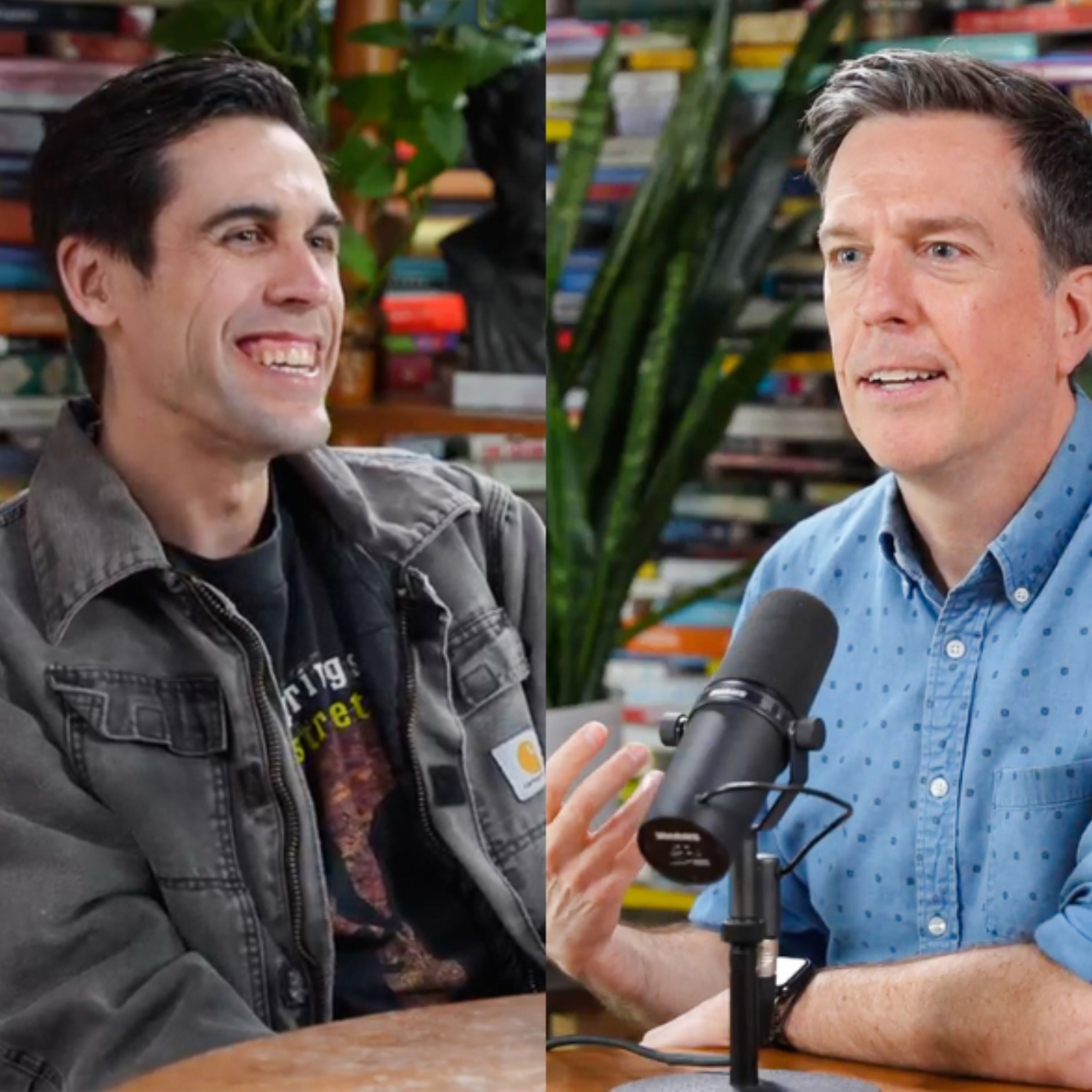
You might know Ed Helms as Andy Bernard from The Office or Stu Price from The Hangover movies—but did you know he’s also a serious history buff? He’s especially fascinated by history’s biggest screwups, better known as SNAFUs ("Situation Normal: All F**ked Up"). In today’s episode, Ed joins Ryan to unpack some of these epic blunders, explain how history became an escape for him, and share why learning about the past can be surprisingly therapeutic.
Ed Helms is an actor, comedian, podcast host, and author. Ed has starred as Andy Bernard in The Office, Stuart Price in The Hangover trilogy, We’re the Millers, The Lorax, and much more. He hosts the podcast SNAFU and just released his book SNAFU: The Definitive Guide to History’s Greatest Screwups.
You can follow Ed on Instagram and X @EdHelms
🎙️ Listen to Ed’s podcast SNAFU
📕 Pick up a copy of SNAFU: The Definitive Guide to History’s Greatest Screwups
📚 Books Ryan recommended to Ed:
The Library Book by Susan Orlean
Night of the Grizzlies by Jack Olsen
River of Doubt by Candice Millard
The Johnstown Flood by David McCullough
A Night To Remember by Walter Lord
His Majesty's Airship by S.C. Gwynne
🎙️ Follow The Daily Stoic Podcast on Instagram: https://www.instagram.com/dailystoicpodcast
🎥 Watch top moments from The Daily Stoic Podcast on YouTube: https://www.youtube.com/@dailystoicpodcast
✉️ Want Stoic wisdom delivered to your inbox daily? Sign up for the FREE Daily Stoic email at https://dailystoic.com/dailyemail
🏛 Get Stoic inspired books, medallions, and prints to remember these lessons at the Daily Stoic Store: https://store.dailystoic.com/
📱 Follow us: Instagram, Twitter, YouTube, TikTok, and Facebook
See Privacy Policy at https://art19.com/privacy and California Privacy Notice at https://art19.com/privacy#do-not-sell-my-info.
