
 Ask ChatGPT


- Podcasts
- The Daily Stoic
- Empathy Is Not Weakness
In short
Empathy as strength and a leadership skill, tied to hospitality, justice, and Stoic virtue; backlash against empathy is criticized (including Elon Musk’s claim that empathy will destroy Western civilization).
Guests
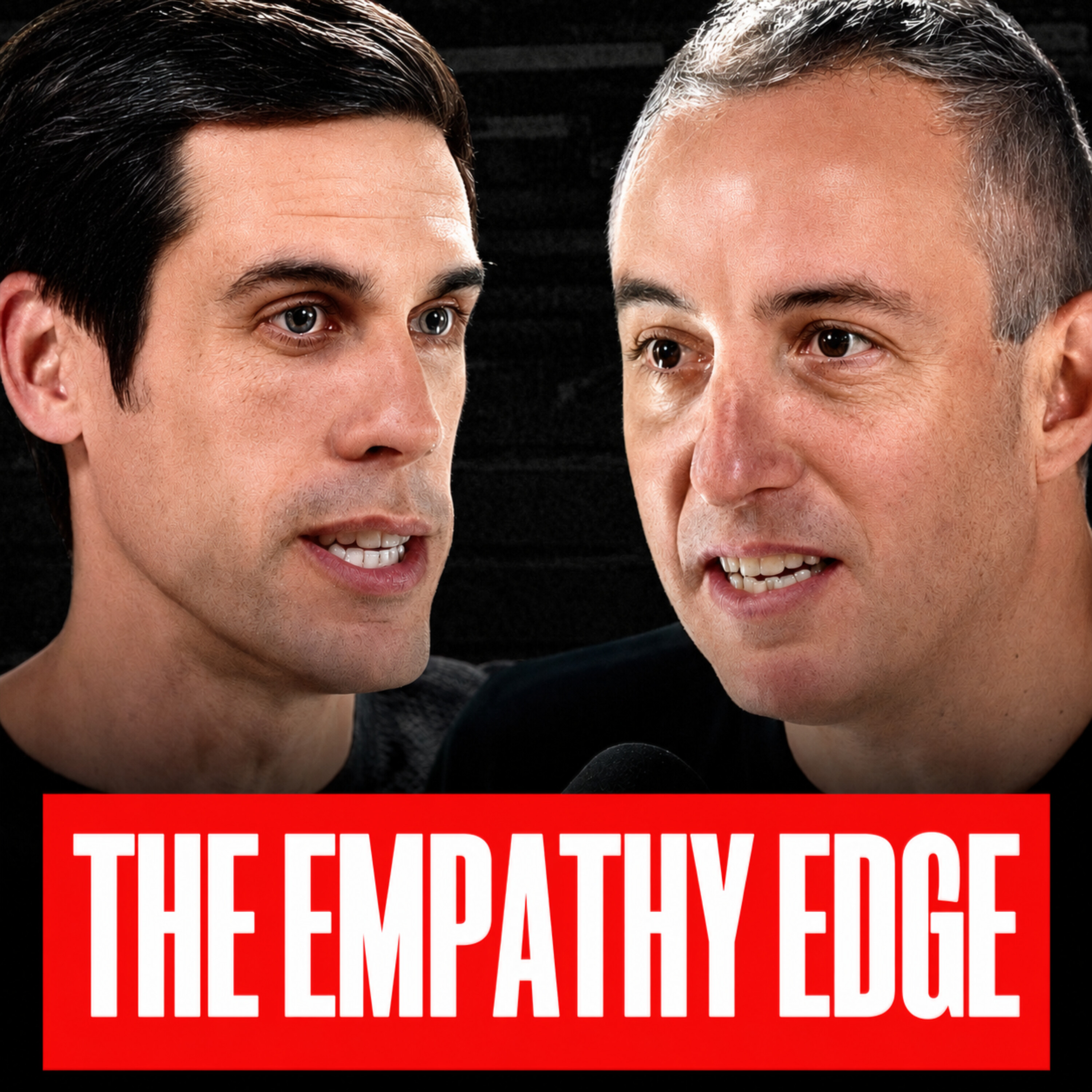
Will Guidara, co-owner of Eleven Madison Park (3 Michelin stars; often #1 restaurant), entrepreneur/author; wrote Unreasonable Hospitality and its Field Guide; known for treating service as noble/moral.
Key claims
Empathy prevents strategic blunders because selling/creating requires understanding others’ perspectives. Hospitality is a craft/muscle: train and inspire it via daily huddles, modeling, feedback (praise in public; criticism private, behavior-focused, non-emotional), and building a culture where people can “red-team” leaders. Turning off empathy to innovate is sometimes necessary in certain professions, but at a basic level empathy is essential. Leaders must allow transitional grief/disappointment before “cheerleader mode.” Not needing external validation is the Stoic vulnerability to avoid.
Notable examples
Oscar, an overnight hotel manager who expedited check-in after delays; Noma’s reported humiliating staff practices; Cybertruck as an empathy/market-mindset failure; Seneca/Hemingway/David Kessler grief-to-meaning transition; “festina lente”/“slow is smooth, smooth is fast” for presence and urgency.
Written by AI. May contain mistakes.
Chapters
0:45
The Resurgence of Empathy
Discussion on the increasing importance of empathy in modern society and its backlash.
“I think so many men in particular are drawn to Daily Stoic.”
4:24
Introducing Will Guidara
Introduction to Will Guidara, his background, and his views on service and empathy.
“The standards we hold ourselves, the things we do for other people.”
7:35
Empathy and Innovation
Exploring the relationship between empathy and innovation, examining different perspectives.
“I wanted to start with this idea of empathy because it seems like there's this kind of backlash against it.”
14:00
The Shift in Restaurant Culture
Explore how restaurant dynamics have evolved from chef-centric to customer-focused.
“Well, that's why I mean, and this is not just limited to restaurants.”
15:00
The Monologue vs. Dialogue in Hospitality
Discuss the importance of dialogue in hospitality over a monologue approach.
“They're like, I'm making this just for me.”
16:40
The Role of Feedback in Personal Growth
Understand how feedback and trust among teams prevent losing oneself in success.
“And yet all these different people at different levels were participating in a culture that said like, this is okay.”
18:40
Empathy as a Skill to Cultivate
Learn about empathy as a skill and its critical link to hospitality.
“So when he was like, I just don't like this idea for this.”
21:00
Inspiring Empathy Through Experience
Discover how personal experiences can inspire empathy and improve service.
“That the DMV would now be one of the happiest places in the world to go to.”
23:10
The Process of Feedback and Recognition
Examine how feedback, both praise and criticism, can shape a culture of empathy.
“In 2023, I spoke at the Sundance Film Festival.”
25:50
Understanding Generosity and Its Rewards
Delve into the relationship between generosity and personal satisfaction in giving.
“It's actually something I was thinking about leading up to this.”
Show all 25 chapters
28:00
The Value of Generosity
Explore the significance of generosity in personal success and happiness.
“It's like the baker makes the 12 donuts and then they're like, shit, what do I do with this one?”
29:24
Adversity as an Opportunity
Learn about the stoic perspective on adversity and how to lead through challenges.
“Does it make you want to throw in the towel?”
31:09
The Importance of Emotional Processing
Understand the necessity of processing emotions in leadership and personal growth.
“There's actually a story I added to the 10-year anniversary edition of The Ops Goes Away.”
33:04
Transitioning from Grief to Gratitude
Discover how to navigate the emotional journey from grief to appreciation.
“And I think it's not only healthy, but appropriate to just give yourself the grace to fully feel the weight of whatever disappointment you've just experienced.”
35:38
Slowing Down to Speed Up
Learn about the concept of slowing down to enhance connection and productivity.
“So the motto of Octavian, who becomes Augustus, is a festina lente, which means make haste slowly.”
38:14
Balancing Urgency with Mindfulness
Explore how to manage urgency without sacrificing quality and focus.
“And you might, I mean, maybe you're going to do a few less things in the day.”
42:00
Setting the Pace in Service
Learn the importance of maintaining a consistent pace in restaurant service to enhance customer experience.
“control how long it takes before you greet them the moment they sit down.”
46:11
Excellence in Details
Understand how attention to detail in small tasks reflects a commitment to excellence.
“I was surprised you didn't have a card on this one because it's one of my favorites and you do have it in the journal.”
51:26
The Nobility of Service
Learn the significance of finding purpose and nobility in all types of work, enhancing empathy and perspective.
“Even if it's shining people's shoes or opening car doors or, you know, washing the dishes.”
56:03
The Importance of Empathy in Service
Learn how empathy transforms mundane interactions into meaningful experiences.
“like oh i'm abdicating myself by thinking about them it actually what you're getting is some kind of reflected meaning back.”
56:51
Navigating Adversity with Stoicism
Discover how to handle adversity without losing your composure.
“terrible customer service experience with this doctor thing i was going through and like there was some miscommunication or whatever.”
57:53
Charitable Assumption in Customer Service
Understand the power of giving others the benefit of the doubt.
“And then, though, to go to the other thing, which I do think about as stoic, the idea of like adversity is a terrible thing to waste.”
59:21
Maintaining Personal Integrity in Difficult Situations
Explore how to remain true to yourself when faced with rudeness.
“Which effectively means give people the benefit of the doubt in that moment.”
1:00:59
Finding Value Beyond Traditional Marketing
Learn how investing in relationships trumps traditional advertising.
“you're at a 10 and i walked in in a five this is a totally normal situation by not getting to a 10 And that's a win.”
1:03:47
Creating Lasting Impact Through Meaningful Content
Understand how impactful content can resonate with audiences far beyond ads.
“In a way, it's like you think about what companies spend to buy the naming rights to a stadium or to run these stupid billboards or boring ads.”

Ask about this episode
Get the gist, explore an idea or ask about something said.
 Claude
On The Daily Stoic, what are the key points of this episode?
Searching your listeningTranscript
Automatic transcript. May contain errors.
0:00Ryan Holiday: Welcome to The Daily Stoic Podcast, designed to help bring those four key Stoic virtues, courage, discipline, justice, and wisdom into the real world.
0:14Ryan Holiday: Hey, it's Ryan. Welcome to another episode of The Daily Stoic Podcast. It's funny, like just a couple of years ago, there was this whole sort of resurgence and sort of discussion about empathy, the power of empathy and vulnerability and connection. I think Brene Brown is obviously a big proponent of this, popularized it. And then naturally, there's going to be a backlash. There's always, always the swinging of the pendulum. But I think we're definitely going too far in the other direction these days, this backlash. Actually, when I was on The Daily Show, I was asked about this very idea. This is what I said.
0:47I think so many men in particular are drawn to Daily Stoic. As a man myself who really enjoys your books and your YouTube and your Instagram, I see men in leadership positions now, and I don't connect. I see our current administration. I see a lot of the podcasters, and I think it's hard for me to connect with them. I don't feel like those are the men I want to be. It doesn't seem like a healthy balance. Elon Musk, this brilliant, brilliant man, and now it seems like he's a cautionary tale to men. How do you feel that so many men are, you know, you are their stoic? Or how would the stoics advise you to be in this position?
1:26Ryan Holiday: Yeah, I feel like I'm one of the few male influencer types that did not become radicalized or red-pilled. So, like, stoicism is not supposed to make you a better sociopath or a bigger asshole. That's not what this is. Right.
1:47Ryan Holiday: That's the ethical component, right? I think Elon Musk was on Joe Rogan and he said, you know, empathy is going to cause the destruction of Western civilization. That is a profoundly stupid thing to say and think. Well, you talk about him a lot. You talk about him a lot in the book and it seems like part of the point you're making is maybe here's a brilliant man who's done a lot of amazing things but wasn't on this path to wisdom. I mean, to say that Elon Musk is not smart is like saying he's not rich. He's clearly very smart. But that is what is so scary about it, that you could be so brilliant, so gifted, so informed.
2:27Ryan Holiday: You could have been so successful. And then social media can still break your brain. Right. And it did. It did. This is a guy who went from reading Soviet rocket manuals to figure out the aeronautics business to following, like, Cat Turd 7 on Twitter. and Russian bots from whom he now gets his information and his worldview. And that is, I think, a tale as old as time. You become successful. You think that you're smart. And that is when you start to get real dumb. Because as the Stoics say, it's impossible to learn that which you think you already know. I think you can make a very clear case for empathy in the sense that if you are making things for other people, which we all are, whether that thing is customer service or that thing is a book or that thing is music, that thing is food that people want to eat.
3:21Ryan Holiday: We're doing the thing for other people, which means we have to understand other people. We have to understand those people's perspective. We have to be able to communicate and connect with those other people. And that's what we're going to talk about in today's episode. Will Gadara is a friend of mine. We had a lovely talk at Barnes & Noble when the last book came out. That was fun. And his book, Unreasonable Hospitality, has been a monster hit in the years since. He was the co-owner of Eleven Madison Park, which earned three Michelin stars and regularly rated the number one restaurant in the world.
3:58Ryan Holiday: He's a very successful business person and entrepreneur and thinker. He was on The Bear. Maybe you saw that. And he has a new book called Unreasonable Hospitality, The Field Guide, which is really cool. He spent his whole career thinking about service not as something transactional, but as something noble, something even moral. And so I wanted to talk to him about that in today's episode, how empathy informs that. I'll talk about a bunch of things in this episode, honestly. The standards we hold ourselves, the things we do for other people. We talked about adversity and generosity, the nobility of service.
4:32Ryan Holiday: and then Will's idea of making a charitable assumption about other people. And look, whether you're running a restaurant or leading a team or building a business or just trying to be a decent person, hospitality is not like an afterthought. It is the main thing. I'll just get into it. I think this episode is great. And we end up nerding out about some stoic themes in here, too. So here's me talking to Will Kadera.
5:02Ryan Holiday: Being an effective leader is difficult, right? You got to keep your ego in check. You got to know how your business works, how the team operates for peak effectiveness. But most leaders are making decisions about their teams based on assumptions and not reality. And that's exactly the problem that today's sponsor, Scribe, was built to fix. Scribe Optimize passively captures how your team works across approved business apps, and it uses AI to automatically surface workflows, inefficiencies, and improvement opportunities. No interviews, no manual discovery, no extra work for your team. Scribe is trusted by 80 ,000-plus enterprises, including nearly half of the Fortune 500.
5:43Ryan Holiday: Scribe Optimize follows work across every tool involved. If someone starts something at Salesforce and finishes it in a completely different tool, it tracks it the whole way. And Optimize shows you where your biggest inefficiencies are with AI-powered recommendations on how to fix them. So you're not just identifying problems, you're getting clear directions on how to improve. The kind of visibility that used to take months now is always on. And Optimize only works on applications your admin improves so no personal activity is captured and no one's privacy is at risk. If you want to see what Optimize could look like for your organization, visit scribe.how.stoic.
6:16Ryan Holiday: S-C-R-I-B-E dot how slash stoic. Every business is asking the same question, right? How do we make AI work for us? It's a lot of possibilities, a lot of guessing, and it's too risky to get wrong. And sitting on the sidelines is not an option either, because one thing is almost certain. Your competitors are making their moves, taking their risks and trying new things. Well, no more waiting. With NetSuite by Oracle, you can put AI to work today. NetSuite is the number one AI cloud ERP trusted by over 43 ,000 businesses. It's a unified suite that brings your financials, inventory, commerce, HR, and CRM in a single source of truth.
6:58Ryan Holiday: From software and IT services to healthcare, equipment manufacturing, financial services, and many other great American industries, NetSuite delivers a customized solution for your business. It's not some bolted on tool. It's AI built into the system that runs your business. If your revenues are at least in the seven figures, get their free business guide, Demystifying AI at NetSuite.com slash stoic. The guide is free to you at NetSuite.com slash stoic. NetSuite.com slash stoic.
7:35Ryan Holiday: I wanted to start with this idea of empathy because it seems like there's this kind of backlash against it. I don't know if you saw this interview where Elon Musk is saying that the downfall of Western civilization will be empathy. That's not something I had on my bingo card for where I thought things were going. I mean, it's certainly obvious with what's happening in the world that we're not being empathetic enough, but the sort of overt criticism of the idea of considering what other people think and caring what other people think is just not what i would have predicted yeah particularly from a successful business person because it's poor like how can you sell things to people if you have no theory of mind of what's i mean it's interesting i i just saw a clip it just came up on my feed of you on the daily show oh yeah and what you said I 100 % agree with.
8:27It is objectively true that he is smart.
8:29Ryan Holiday: Yeah. And yet. It's a stupid thing to say. To hear someone say something that it feels so beyond anything I can even conceive as being a smart thing to say. Well, it's kind of stupid on two levels, right? It's objectively stupid. And then even if it is your opinion. To say like, this is something I'm going to say out loud. Exactly. Like that's kind of what one of the things empathy prevents you from doing is voicing all your true thoughts. Yes. Until you've either worked them out or like they're thinking about the context in which you're saying. Yeah. Although it's interesting to think of this idea that we probably need people who have no empathy in order to have some of the more remarkable innovations that happen in society.
9:15Like those that care so little about others that they're focused entirely on the thing they're building. I mean, probably some of the greatest innovations have come from people who lack empathy entirely. That said, as a culture, we need to celebrate the idea of empathy because absent it, I don't think we're ever going to be moving wholly in the right direction.
9:37Ryan Holiday: Yeah, although like. Do you know what I mean when I said that? I do. I mean, part of being a technologist, let's say, or an inventor is like, I'm fascinated with this. I'm going to make this. I'm not going to be thinking 15 steps ahead about what this means for three generations from now. Or like, how can you invent, say, military technology if all you're thinking about is like the potential victims of said military? How can you send people into space? Yes. If you're crippled by your sense of like, well, what about their families? Yeah, yeah. Like, there are certain professions that require you turning off or turning down a little bit of your empathy.
10:14Ryan Holiday: But I would argue like at a basic level, when you make things for like, sure, he is a technologist, but he also makes cars that people want. Yes. And he has to sell them to them for like it's one of the biggest purchases they'll make in their life. If you can't conceive of what people want, what people like, how they'll interpret certain things, you end up making massive strategic blunders. The Cybertruck being one. Yeah. But you also, it's as if he didn't conceive of like politicizing himself having a negative impact on the sort of like California. Well, that's an entirely different. Yes. Yes.
10:54No, no, no. Listen, my everything I believe in is centered around the idea that empathy is the greatest superpower one can have. Right. One of the things I think of because hospitality is not just about how you serve, it's how you lead. And the idea of surrounding yourselves with people who are not all the same, but their respective superpowers complement one another's, right? And on my team, I always want to have someone who is a driver, who is so focused on excellence, they don't care about what they break along the way. I don't want that person to be in charge, to be clear, but I want that person's influence in the room.
11:29And Elon's power has grown to the point where I actually would prefer he is empathetic. But my point is that it takes all types to move us in the right direction.
11:39Ryan Holiday: The idea of like, oh, to be great, you have to turn off empathy or you have to close that. And like, I mean, I think the restaurant industry is a fascinating example of like some people who either make that bargain or buy into that assumption. Who's the chef that just. Rene Redzepi. Yeah. At Noma. Right. It's Noma. Yeah. He probably thought that was necessary. And then you read about it and you're like, what are you talking about? This seems insane. What does this have to do with cooking food? Like taking someone out back and humiliating them. I think I was reading like physically abusing them on top of the humiliation.
12:13Ryan Holiday: So what is that? Why do people think that that is part of succeeding in any industry? But it seems like food particularly. There's a chef named Sean Brock. Do you know that? He's like the great one of the great chefs of the South. So like really celebrating Appalachia and like the food and the ingredients on this. He had a restaurant in Charleston and now in Nashville. And he just opened a pizza place. See, that's not what he has been cooking for a long time. But during COVID, I think, he started making pizza as a hobby and got obsessed with it and opened a pizza place in Nashville. And when he posted about it, the caption I loved, he said, obsession is a beautiful thing when you can grab it by the tail.
12:53Like when you can control it? When you can like rein it in. And I think there are those that become so obsessed that they just lose control along the way. And I don't think it is that they are bad people. I think that they just lost their way along the way.
13:14Ryan Holiday: Well, they stopped thinking of the people they're working with as people and they see them as tools or ingredients in the same way that they don't have a lot of thought about the knife they're using. I think they just became so maniacally focused on achieving this goal that they stopped thinking about anything. Yeah. Except for that. Not realizing that if you don't genuinely care and invest in the people that are helping you achieve it, you're never going to take it as far as you could. And it seems like it's pretty hard to partially turn off your empathy. So you're like, hey, I exploit these people in the back of the house.
13:50Ryan Holiday: Yes. But I actually genuinely deeply care about the people sitting in the front of house. Like, no, I think at some level you start to see everyone as a tool, everyone as a means to an end, everyone as expendable, everyone as a commodity. And then ultimately it blows up. Well, that's why I mean, and this is not just limited to restaurants. I think you see it in a lot of places. But the restaurant example is that this is kind of starting to go away a little bit. But there were restaurants where you'd go into and it was almost like you were there to like kneel down at the altar of the chef. Right.
14:24Like there was a restaurant once I went to and on the menu and said, we don't change our dishes. If you have an allergy, don't bother telling us. like it's one of the things like i think there are restaurants that believe the customer is always right i actually don't believe that to be true and there are restaurants that would say the chef is always right you are there to experience their genius each of those is a monologue and i actually think hospitality any meaningful relationship it's a dialogue it's somewhere in between those two
14:55Ryan Holiday: well it's fundamentally not just about you or you wouldn't have turned it into a restaurant You see this with authors, too. They're like, I'm making this just for me. I don't care what the audience thinks. It's like, so why'd you put it between two covers? You know, like you did a lot of other stuff that had nothing to do with the project that was hard and took longer and was a distraction. Like if you really were the pure artist that you're saying, you'd put it in a drawer. Yeah. Like you do care. Just go to your living room and read it once in a while. Or just think about it. Like why even put it into, why even write it?
15:26Ryan Holiday: Just let it exist perfectly up here. So it's like if you actually only cared about your your the genius of the food, like you just cook for yourself or your family. Like, why did you put it in this high traffic location in Manhattan? Yes. Like and why do you open the doors and you let people in? Hire all the people and do all the stuff. At some level, you do understand. It's almost like this kind of like defense mechanism of like, but but I'm not I'm not going to take you into account in any real way because then there's like a vulnerability. And then you have some say over whether I did a good job or not.
15:58But I think that mounts over time. Like you open whatever business, you write a book, you open a restaurant, you do it perhaps rooted in all of the right intentions. And then you start to succeed. And then people start telling you how amazing you are. Yeah. And then one day you start to believe them to the point that it actually changes the very foundation of what you're doing.
16:20Ryan Holiday: Well, you get away with it. Yeah. That's the crazy. The Noma thing was crazy because he was obviously so famous and so well-liked. and then like lots of people experience whatever that like sort of firing line scene that's in that new york times piece where you took the guy outside and then everyone took turns screaming at him or hitting i forget what it was exactly but you're just like first off like you thought this was okay and then everyone else at some level thought it was okay because it it didn't it's not like this new york times piece is coming out the day after it happened like yeah there's a world in which everyone's like i guess this is just how it is and like it's insane when you see written down.
16:56Ryan Holiday: And yet all these different people at different levels were participating in a culture that said like, this is okay. This is normal. Which exists in so many places. Of course. I mean, one of the things that I so firmly believe is that if you don't have at least one, hopefully many more people on your team who you have gotten to know so well that they trust you enough to tell you when you are losing yourself in pursuit of something. Yeah. You will lose yourself. Like you need the people on your team that are like, hey, bud, you're not, you're not being awesome right now. Yeah. They need to trust you enough to say it and you need to trust them enough to believe it when they say it.
17:37Or at least to hear them. Also like, hey, this sucks. Yeah.
17:39Ryan Holiday: Or this is a rip off or this is unethical. Yeah. Or any, any number of the. I mean, you can look across pretty much every part of our society right now. And the people that don't have anyone in their lives telling them that they are not being their best selves are the ones that are doing the most damage. Yes. Yeah. You think you don't want you don't want an adversarial, you know, investor or you want your hand. You think you want your handpicked board of directors or secretary of defense fires all the JAG officers and JAG offs. It's like, no, they're there. So you don't fuck up. Like they're annoying and obnoxious at some level, I'm sure, because you have a divergence of interests.
18:22Ryan Holiday: Just like I mean, anyone that talks to a lawyer understands how frustrating like their job is not to tell you. Yes. How to get away with what you want to get away with. Their job is to tell you what you might not get away with. Yes. That check against check is a really important way that you don't spin off the planet. It's like a red team in the news, right? You need a red team on your team. So when he was like, I just don't like this idea for this. And by the way, you may still decide you want to do it, but you need to at least be open to the conversation about why you could potentially be wrong.
18:52Ryan Holiday: So I think the problem with empathy is we think it's like you have it or you don't. It's necessary. It's not. I don't think we think about it as a skill. Talk to me about empathy as like a skill that you cultivate. I mean, empathy is in many ways synonymous with hospitality, right? Not entirely, but in many ways. And it's one of the things that I'm kind of screaming from the mountaintops right now is that hospitality empathy is a craft. It is a muscle you can strengthen, a practice you can pursue in the same way that writing or a sport or cooking is a craft. And it's one thing I think we have not understood for a long time.
19:28Even when I was coming up, some of the people that I respected the most would say, hire for hospitality, train for excellence. As if to say there are those that are hospitable and there are those that aren't. Hire the ones that aren't and teach them how to be great.
19:41Ryan Holiday: So how do you train for hospitality or train for empathy? Well, I think it's about training even more so. I think it's about inspiring. I look at a lot of companies who have such unbelievably great, robust training programs. And yet training in the absence of inspiration is insufficient because it doesn't matter how well you know how to do something if you're not inspired to want to do it. If you don't see it embodied in the people around, it's like it's more of a cultural value than an individual skill. And so I think you inspire it in a bunch of different ways. One, just through words. I talk so often about the power of a daily huddle with your team and how that is not a time to talk about operational logistics, but rather just like a locker room speech from a coach, just to get people fired up about an idea because passion is contagious.
20:34So words, I think, are so meaningful. Showing people what it feels like on the receiving end. I don't think it's possible to know how to be empathetic or to know how good it feels to express hospitality if you first don't understand how good it feels to be on the receiving side of it. I have this belief system that if there was a law passed tomorrow where every one of us was required by law to be remarkably kind to the people that worked at the DMV.
21:02Ryan Holiday: Yeah. That the DMV would now be one of the happiest places in the world to go to. But like, if you're never on the receiving end of something, how could you ever be expected to give it? Sure. I think feedback, like creating a culture of feedback is so important. And I'm talking about praise, obviously. celebrating the moments where people do what right looks like. Yeah. So that they now know what right looks like, doing that in public so that everyone knows, because also praise is pretty addictive. The more you get, the more you want to receive. But I'm also talking about criticism. So I think if praise is affirmation, criticism is an investment.
21:39And I don't think there are very many things someone can do that are more powerful than stepping outside of their comfort zone for long enough to actually invest in someone else's growth.
21:49Ryan Holiday: Right. Now, that needs to be thoughtfully. And it's actually one of the things I like talking about the most is like the rules of criticism, how to express it in a way that makes it constructive. Right. It's not screaming at someone how much they suck or how did you screw this up. No. Criticism should never be emotional. It should be done in private. You should be sure you are criticizing the behavior, not the individual. Yeah. You better be willing to receive it as well. Sure. But all of these things, like it's about inspiring people to believe in something. showing them what right looks like, being there to celebrate them when they do it well, to hold them accountable when they don't.
22:24Like, I don't think I could give you like a training manual on empathy. Right. And also just to lead by example, you know?
22:31Ryan Holiday: It feels like one of those virtues that's contagious. Like, it is easy to be empathetic. It's easy to be hospitable when you see it surrounding you. And then it almost becomes something that you're kind of, not just that you instinctively do, but almost something you're like competitive about. Right? Like in the sense of like, hey, if they did this and that was OK, they didn't get in trouble. In fact, they got praised for going above and beyond. Well, then people are going to take more risks and do more, make an extra effort because they understand that that's what we do here. I also think like when you've done it a couple of times and you are on the receiving end of what happens when you do.
23:09Yes. Like this is a story that I think validates this. In 2023, I spoke at the Sundance Film Festival. I don't know if you remember, like, the delays when you traveled that year. We were coming out of COVID. It was pretty bad. That flight was really bad. I think my flight was delayed, like, seven hours. I didn't get to the hotel until, like, four in the morning. And I'm pulling up to the hotel, like, desperate to go to sleep. But gearing up for the whole lengthy check-in process, it's become my biggest pet peeve when I travel now, is how long it takes to check into a hotel, which I think is well-intentioned.
23:44Oftentimes they're like, hey, we want to show you around the hotel. We want to give you a map. It's hospitality that's just happening to you, not for you.
23:50Ryan Holiday: Yes. But when I walk in, there's just one guy in the lobby. His name is Oscar. He's the overnight manager. And he's standing there, arm outstretched, told him my room key. And he goes, Mr. Gadara, you must be exhausted. Here's your key. Just go get some sleep. We'll check you in in the morning. Wow. Small gesture. Sure. Unbelievably. He actually thought about what it was like to be you? Well, hold on. Hold on. Hold on a second. So I go upstairs, fall right to sleep. The next morning, I've never been more excited to check into a hotel. I run downstairs checking. I find the general manager. I was like, dude, Oscar is unbelievable.
24:22You're never going to guess what he did. Oscar's great. That had nothing to do with Oscar. So what are you talking about? He goes, the delays here have been bad. A couple months ago, we got together as a team. We said, how can we systemize some graciousness into that moment for people? That's what they came up with. If he got there after two in the morning, they gave you the key. They'll check in the following day. He goes on to say, Oscar is actually not very hospitable. And I was like, wait, what are you talking about? He goes, sorry, Oscar was not very hospitable when we started it. Here's the thing.
24:51When Oscar did that for me, he wasn't going above and beyond for me.
24:55Ryan Holiday: That was this, he was falling to the basic level of the process. He's falling to the system that they designed. Right. But every time he did it, he bore witness to appreciation from people. He got addicted to how that made him feel and started finding more and more ways to feel it again. Right. The empathy is there in the process of thinking what it is like to be the traveler at that time. They do not want to hear about the resort features. No, they want to go to bed. Yes, exactly. But I think my point in sharing that is the GM thought he was not hospitable. They did this program. Oscar loved how it made him feel so much.
25:34He started finding more creative ways to feel it again. I think everybody has this in them. They just need someone who's willing to do something to inspire it out of them.
25:43Ryan Holiday: Well, it's also what is your process? What's your system optimizing for? And I think a system can inspire someone. You can optimize for thinking about what is actually happening with the person and then try to set basic procedures that meet that as opposed to retaining systems or processes that are effectively in opposition to that. Yeah. It's actually something I was thinking about leading up to this. I was listening to some of your stuff over the last week. And here's my question. One of the things I say often, and it has the added benefit of being true, is that there are a few things more energizing for me than when I see the look on someone else's face when they've received a gift I've just given them.
26:28I love giving gifts. And most of that is just because I love the act of giving. Yeah. But I'd be lying if the reaction like doesn't fill me up.
26:37Ryan Holiday: Yeah. How does that square with your work? How so? What do you think the conflict is? The reaction contributing to my contentment. Well, it's interesting. I'll have to, let's see if we have a copy, but Seneca wrote this whole essay on, on sometimes it's translated on giving. Sometimes it's translated on benefits. I think the Stokes would say it's actually not selfish to think about it your way. Like you're saying like, hey, I'm doing this because I want to do it for you. Yes. Whether you fall down in gratitude to me or acknowledge it or whatever is like, that's on you. But like, I like being this person and it's good for me to be this generous, kind, empathetic, service oriented person.
27:21Ryan Holiday: And the problem is the vulnerability is if you do it to be liked or to be celebrated or appreciated. The point is to do it because it's good for you and because you like doing it. But the question is this. You do it because it's good for you. You like doing it. It is your passion. Yeah. In allowing the reaction to energize you, in allowing the reaction to bring you joy. I don't think there's any problem with that. I say this all the time. This is one of my, I think, few additions to stoicism. In New Orleans, they have this word lanyard. You know that word? Yes. It basically means like the 13th donut.
28:00Ryan Holiday: It's like the baker makes the 12 donuts and then they're like, shit, what do I do with this one? And you throw it in the box. I think about it this way when it's like you order a smoothie and the person miscalculates. You either watch them throw the rest of it away or they give you a little extra cup or they give you a larger one. What do you do with the extra, that act of generosity or benefit? I think about what you get back from other people or the recognition of the celebration as the lanyard, as the extra. Do I love hearing that my books have changed people's lives? Do I love hearing the sales figures?
28:33Ryan Holiday: Do I cash the royalty checks? Of course, all of the above, right? But is that what my sense of success was dependent on? Is that what I was motivated by? If I didn't get it, would I be crushed or resentful? So I think if you're thinking about it as extra, that's great. If it's energizing, great. If it's your fuel, that's a problem. Yeah, if I did something for someone else and I didn't get the reaction I expected to or hoped to, I would still be happy that I'd done it. The vulnerability the Stoics are trying to avoid is needing the thing that's not in your control. So like does not getting it deplete you, right?
29:15Ryan Holiday: Does not getting the Michelin star or the celebration or being included in this list, does that aggrieve you? Does it make you want to throw in the towel? That is in a world where we don't control what happens and also where things are unfair and often rigged and there's a delay between recognizing greatness. All of those things, that's a tough way to go through life because you are setting yourself up to be disappointed and frustrated a lot. That's kind of how I think about it. One of my dad's quotes that has been a very big part of my life is adversity is a terrible thing to waste. That's like the definition of stoic philosophy.
29:54Ryan Holiday: That's what the obstacle is the way it means. Yeah. Right? It's like, you didn't control that it happened. It did happen. What are you going to do about it? How are you going to use it? The one thing, though, like as a leader, if you get to the point where you have really like mastered these ideas, the likelihood is that the people on your team all have not. When I talk about adversity as a terrible thing to waste, I realized like a year and a half after the book came out that I was perhaps leading people in the wrong direction because I wasn't including one important piece. I would always say like you cannot control what life throws at you.
30:33You can control how you react to those moments, what you learn from them, how you allow them to fuel your competitiveness, all this stuff. And then I heard a couple stories where a leader of a team, they had a big goal or something and they failed. And the leader went right into cheerleader mode, like, guys, let's not waste this. And I think they were missing a crucial step. And in doing so, losing the trust of their people, which I believe you need to give yourself a measure of time to sit in the disappointment with the people that are following you. Because they feel it and they want to know that you feel what they feel in those moments.
31:11Ryan Holiday: There's actually a story I added to the 10-year anniversary edition of The Ops Goes Away. Hemingway, his wife is traveling to meet him. Her job was to grab all of his writings and bring it, he was going to show it to this editor in France. She packs up all this stuff, you know, his whole career up until this point, puts it in this briefcase, gets on a train, gets off the train to grab something that station forgets. She loses everything he's ever written. And there's a famous letter. It just makes my heart hurt. There's a famous letter where he's writing to Ezra Pound and he's like, don't tell me this is all for the best.
31:45Ryan Holiday: And then I think the operative line is he says, I'm not there yet. But within a few months, he's writing again. Yeah. And he looks back. He ends up writing a story about a writer who loses all their writing. And the sort of Hemingway style comes, incidentally, from like burning the boats behind them. Not intentionally. But I do think it's important that we appreciate that transitional space. The idea of like your friend comes to you and you have cancer and then you go like, Amor Fati, love this. Like, I would just never fucking do that. And in fact, like one of the weird things about writing about Stoic philosophy is I end up hearing from people who've just been through unimaginable things or going through unimaginable things.
32:30Ryan Holiday: And they sort of come to me to ask for like thought. And I'm like, I'm just not who you should talk to. Like, I am not going to pretend that I know anything about this. Yes. Because it's easy to just go, yeah, what are you going to do about it? Or, you know, at some level, they're kind of like empty platitudes. and in fact really dismissive of the reality of what that person is going through. And that doesn't mean this stuff on the other side of it isn't true. No, it is. And they can't work themselves there. But hearing the bumper sticker from you is not going to get them there. It takes some time.
33:04And I think it's not only healthy, but appropriate to just give yourself the grace to fully feel the weight of whatever disappointment you've just experienced. and then say, okay.
33:18Ryan Holiday: Grief is a great example of this, right? Like if I died, I would feel weird if my family was not sad, right? Like I would hope that I had a big enough presence and I was loved enough that they were sad about this. If they were still devastated a year later or two years later, if the mere thought of my name brought them to tears, I'd be like, guys, you're thinking about this all wrong. This isn't what I want. This is actually saying the opposite of what I think you think it's saying. And so it's like when you lose someone, it should make you sad. It should be devastating. There should be a giant hole in your heart.
33:52Ryan Holiday: But at some point you transition from that to appreciation and gratitude. And I interviewed this guy. Do you know who David Kessler is? No. He worked with Kubler-Ross on like the five stages of. Oh, yeah, yeah, yeah. And he added a sixth stage. And the sixth stage is meaning. Like how do you have. And this came out of the loss of his son overdosed. and it's like he after acceptance yeah he he basically had this sort of like exercise mental exercise he's thinking about his son is like his son is saying to him this is what i remember like did me dying ruin your life you know like i wouldn't want that but he's like did me dying help you help other people like so what do you take yes but but like the idea of saying that to the person at the funeral is obscene.
34:41Ryan Holiday: So it's that transitionary space. So yeah, you can be the leader who encourages and inspires and channels people towards productive uses of this. But you also have to go like, dude, we just got our asses kicked in the Super Bowl. I'll talk to you guys in two weeks. You know, like I don't. By the way, all of that circles back to empathy. Sure. It's actually knowing what people are feeling more likely than not just giving yourself the grace to feel it yourself. Yeah. And just because you have decided not to feel it doesn't mean. Or just because you're ready to start responding to it. That doesn't mean everyone else is.
35:18And like reading the room, giving yourself time and then making that choice.
35:21Ryan Holiday: You had some other mottos. Of course, you sent like an amazing package with the new book. But I thought there's this one also very stoic. So if the one from your father's Doicism, did you know that this was basically the favorite motto of the first emperor of Rome? No way. Yeah, slow down to speed up. So the motto of Octavian, who becomes Augustus, is a festina lente, which means make haste slowly. Oh, I love that. Yes. When I talk about slow down to speed up, there's kind of a couple different ways it could be interpreted. One, just in the busyness of life. we always used to say whatever measure twice cut once in the kitchen right like that kind of just like slow down a little bit but more importantly one of the things at the core of unreasonable hospitality is just being present yeah actually like focusing so much on the one person in front of you right now for me it is you that for the next however many minutes we're together i'm not caring about anyone else in the world and i'm not thinking about anything else i need to do and And these days, I think that's becoming hard even for the best of us to do consistently well.
36:31Ryan Holiday: Do you know the military version of this one? No. Slow is smooth and smooth is fast. Hmm. So it's like if you've ever hunted, you've ever done anything where like speed is of the, you're like, it's when you're rushing, your movements aren't smooth. You catch on things, you screw up. And so it is this idea of like, slow it down and do it well. Yes. And doing it well is fast. Yes. And that I think is how it applies to excellence or like achieving the desired result. I think when I talk about just like presence about just like letting putting the world on pause for long enough, you can actually see the person across the table from you.
37:07Right. Like I could still have a good interview with you and be a little distracted, but like, I'm not going to feel as connected to you at the end of it, or I'm probably not going to hear everything you're saying. And I think in hospitality and relationships and with people, being present and slowing down is one of the best ways to accelerate connection.
37:29Ryan Holiday: There's a line in meditations and remarks where it's just saying, concentrate like a Roman and do this thing in front of you as if it is the last thing you are doing in your life. And like, so doing this thing as if it's the last email you send, the last morning meeting, the last time you cook this thing, the last time you carry the plates up, the last time you do the dishes, you know, whatever big or small. like doing it as if it matters the last conversation you're ever going to have yeah like savor it and then also don't half-ass it like you don't get to do another thing so like take your time yeah you know this is it yes uh is a good way to actually do things well and and ironically you end up doing them pretty quickly too like you you do them as well as they could be done which is not much longer than it needs to be.
38:16Ryan Holiday: Yeah. And you might, I mean, maybe you're going to do a few less things in the day. What do you think about the tension? Because I actually have the Thomas Keller line in the office I'll show to you upstairs, which I borrowed from him, a sense of urgency. So how do you balance a sense of urgency with slow down to speed up? Well, I think it doesn't mean that once you're done doing this thing that you just like go take a nap on the couch, right? Then you move on to the next task and you keep on going. I think the other way I think about this is I really care about being on time. It like drives me crazy and it used to even more to be late to a meeting.
38:52Ryan Holiday: Yeah. And someone I worked with like was always late to meetings and that like really drove me crazy because oftentimes we were together in the meeting. So yeah, him being late meant that I was going to be late. But I realized that there was something virtuous about his approach. The reason he was late was because he was so focused on the person he was meeting with just before. Yeah. Whereas me, I would be distracted for the last 10 minutes of one meeting because I was so fearful of being late to the next. And this idea that like, I'd rather be now, these days, I'd rather be five minutes late to my two o 'clock and be present with the one o 'clock until the last moment we are together.
39:33Right. And so that doesn't mean I don't have a sense of urgency. Now, the moment that meeting is over, I'm getting right into the next one. I'm going to be fully focused on you. But I would imagine most people would have the same answer, that they would rather me be five minutes late to the meeting with them if I'm going to be 100 % present with them the entire time we were together.
39:53Ryan Holiday: Yeah, in Discipline is Destiny, I had two chapters. I did a chapter on having a sense of urgency, like sort of hustle and work quickly and whatever. And then I had a chapter on Fistina Lente. Because I think it's not that they're in tension with each other, or maybe they are. They balance each other out. Like, you can't be the guy that jogs to first base because you don't care that much. And at the same time, if you're running around recklessly or irresponsibly doing some other activity, you're not going to do it well. and you're going to have to do it again. Or you need to run fast to first base and you also need to wait for your pitch.
40:28Ryan Holiday: Yes. Yeah, right, right, right. You have to have pitch discipline, but then once you make connection with the ball, you go as fast. You run like hell. Yeah, exactly. But the idea of like that perfectionism sometimes being a kind of paralysis and then also that also like being too fast as an excuse for sloppiness. Yes. the virtue somewhere between the two extremes. Yeah, I think, well, I think the success comes because of the tension. Yes. Not in spite of it. Yeah. I mean, it's like anything, if I'm at a restaurant and I'm going to wait 30 minutes for a perfectly cooked entree versus 22 minutes for one that tastes like crap, obviously I'd rather wait 30 minutes.
41:11Ryan Holiday: But if you are sitting in the waiting area and you can see that your table is ready and they haven't got you there. Or that someone's gotten up and no one has actually busted and reset. It's like, hey, guys, get out to the table and reset that table as soon as possible. That's one of the ways I like I have a sense of urgency. But the thing I say to people on my team is like, start the clock. Like the part of it that is in your control, it's going to take 12 minutes to cook this steak. Right. That is unchanging. But if you waste three minutes getting started cooking the steak, you've now made it take 15 minutes.
41:45Yes.
41:46Ryan Holiday: And you tell yourself, hey, it takes what it takes, but it didn't take that three minutes of that was in your control. Yes. And so it's like, yeah, look, you don't control how long the diners take once they sit down to when they leave. That's not up to you. But if you don't turn the table over the second they leave. control how long it takes before you greet them the moment they sit down. One of the things we'd always say is in a restaurant, this happens in a lot of restaurants. If you sit down at 530, like the first seating, and you watch how the staff moves through the room, and then compare that to how quickly they're moving through the room at 830.
42:19Ryan Holiday: Yeah. 530, they're moving far too slowly. And at 830, they're effectively running around the room. Right. And so our whole thing, I would say it many, many nights in pre-meal, is start moving the same speed you will be moving in three hours. And effectively, you end up splitting the difference. You're moving more quickly at the beginning. What's your pace? And how do you have the discipline to stay at the pace even when there's not pressure and then when there's too much pressure? Yes. And by the way, when you do that, it's less likely that there ever will be too much pressure. Right. Because you're staying on top of it from the beginning.
42:51The added benefit is also in a restaurant. I think this applies to other environments. When the people start to speed up, that's when, as a customer, you feel like things are going off the rails. If they're always moving at the same pace, you think that things are always in control, even in the moments where they might not be.
43:09Ryan Holiday: And that's what Fistina Alente is. It's the sense of setting the pace as opposed to being hurried or not hurried. You're like, I'm deciding the speed. As a runner, you learn this. It's like, You have to be running at the pace you set for yourself. And if there's people pressuring you, you can't let that rush you because they could be running at a different pace. They could not know what they're doing. And conversely, just because there's nobody behind you doesn't mean you take your foot off the gas. Can you be sort of self-regulating about the speed that you're operating on independent of the environment?
43:46Yeah, the situation does not drive your actions.
43:49Ryan Holiday: Yes.
43:56Ryan Holiday: In Texas, a lot of the bugs are just not cool. The ants bite, spiders are poisonous. There's all these kinds of wasps that I didn't even know existed before. Scorpions? Oh man, it's crazy. And pest control is just a part of living here. Owning a home or a store or anything. It's your problem, honestly. And the easiest way to keep bugs away is with Pesty. And when you sign up, Pesty will send you everything you need to do your own pest control. The Pesty kit comes with everything you need to do your own pest control. Pro-grade pesticide. That's the same stuff that the pros use. Sprayer, mixing bag, gloves, instructions.
44:35Ryan Holiday: You can even get a kit customized to the season, location, and weather. And with Pesty, it starts at just$35 a treatment. With their DIY kit, there's no strangers in your house or appointments to make. Pesty gets rid of over 100 types of bugs from spiders to ants to roaches and scorpions. It's also kid and pet friendly. Get bugs out of your house with Pesty. Just go to Pesty.com slash Doik for an extra 10 % off your order. That's Pesty.com slash Doik for an extra 10 % off. This episode is sponsored by BetterHelp. I don't know about you, but the idea of therapy can bring up some resistance, right?
45:10Ryan Holiday: Some hesitation. Not only does it take a lot of time, but it requires you to get vulnerable. It requires you to get outside your comfort zone. And that resistance can get in the way of doing something that's good for you. And so one way we can reduce that is by virtual therapy. And that's where today's sponsor, BetterHelp, comes in. Knowing that if I have to drive across town, if I have to wait in traffic, if I have to look for parking, these are all excuses I'm going to use to not take the time to do this thing that I know that I should do. BetterHelp makes starting and sticking with therapy easier.
45:46Ryan Holiday: You take their quiz. They match you with a licensed therapist. You can communicate with that therapist however you want. Phone, video, text. You can join over 6 million people to date who have gotten help with BetterHelp. May is Mental Health Awareness Month. Find support and have someone with you in therapy. Sign up and get 10 % off at betterhelp.com slash dailystoicpod. That's betterhelp.com slash dailystoicpod.
46:16Ryan Holiday: I was surprised you didn't have a card on this one because it's one of my favorites and you do have it in the journal. How you do anything is how you do everything. Oh. And you were talking another Thomas Keller one, which I loved, that when they use masking tape to label like dishes or supplies or whatever, they have to cut it with scissors. It shouldn't matter at all. Just masking tape is designed to be torn easily. But for some reason, he's insisting that you cut it. Why is that? I mean, in their kitchens and we copied it, you'd cut the masking tape in my dining room. we would put, do you know where the charger is?
46:48No. Charger is the plate that's on the table in a fine dining restaurant already when you sit down. Yeah. Which means that's a part of setting the table in the beginning of service before anyone arrives. And in a nice restaurant, you may or may not be someone that does this, people will pick up the plate to see who made it. They're like, oh my gosh, I like this plate. Who made it? And so we would set the chargers so that if I ever picked it up like this, I don't know how to describe that for people not watching, But the logo would be facing me perfectly. Which meant that you look at it and then you place it down.
47:23Now, let's just break this down for a moment. How many people are actually going to pick up the plate? Maybe 5%. How many people are going to pick up the plate exactly like that? And you're saving them. Yeah, maybe 5%. How many people who pick up the plate and pick it up in the way that we imagined they would pick it up are even going to notice that the logo is facing you perfectly? Sure. Maybe 5%. So an extraordinary amount of energy.
47:46Ryan Holiday: And then appreciate it. That's my point. Zero percent. Basically zero percent. Like a fraction of a fraction of a fraction. Yeah. It's not for them. Right. I think that it's not dissimilar to what we were just saying about you begin moving at the pace you want to move. It's about setting an excellence mindset in the room the moment people are set in the tables. And that pursuit of excellence carries through the entire night. Yeah. I think anytime as a leader, you can create mandated practices at the beginning of a day that just shift people into an excellence mindset that always pays dividends throughout the entirety of the day.
48:22And the same is true in cutting the masking tape. That is something you do at the beginning of your shift. And so, yeah, the way you do one thing will be the way you do everything. It is, there are exceptions to this. There are people who have extraordinarily messy offices and somehow have an organized mind. and yet they're few and far between.
48:40Ryan Holiday: Yeah, it's like, aren't the inside of Apple products beautiful? And Steve Jobs said he learned that from his father, who's a carpenter, who said like, no, the back of the cabinets matters too. Yes. And it is interesting, like you find like, because I'm not in that, like if I was working on a project, like woodworking, my workshop would be a mess. You know, it would be a disaster because that's not my crap. I don't care about that profession. Yes. But then you meet someone who does and they're like, no, no, we're going to have construction clean come in afterwards. And like they really like the best ones, the ones you can really count on, the ones that you that won't screw you over are the ones that care about those little details because it doesn't actually have anything to do with you.
49:21Ryan Holiday: It's their respect for the thing. It's like the baseball player that doesn't cheat the game. Yes. A hundred percent. You know who Tom Sachs is? Yeah, he's an artist, right? Yeah. Have you ever seen his like it's a video and there's also a little book. I think it's called Eleven Bullets. No, you got it. You have to get this little booklet you'll love it and it's effectively they're like employee manual yeah and it's like these rules of what you're required to do if you work in their studio and one of them is always be knolling and i don't know that i'm not sure where the word knolling came from but basically it means like tidy up everything always because and it's not about like is the art going to be better because your desk is well organized no what it is is respect the space that we create art with them.
50:08Ryan Holiday: I think it was Proust had this thing about how the more disciplined you are in the stuff that's not the work, the more extreme and experimental you can be in inside the work, which is ultimately where it matters. Right. Like having the messy studio doesn't help anyone. But the balance there, like for me, if I'm going to like start to write, if I'm writing my newsletter or if I'm writing whatever, or doing any sort of creative exercise, I kind of need everything to be perfect before I can focus. And that can be an excuse for procrastination. Sure. The resistance for you is manifesting in all these other things before the conditions are right.
50:48Exactly. But I need to be careful. It's like, bro, OK, let's calm down a little bit like you can just sit down and write now.
50:54Ryan Holiday: Yes. Yeah. I think that the founder of Rolls Royce had this like Latin motto on his mantle and it was like, you know, whatever done rightly, however humble is noble. And you think about, oh yeah, that's why, if you think about the details that would go into a role, like if you do the thing right, even if it's - Oh, however humble the part of the process is. I see. Yes, exactly. Which actually tied to one of the other ones you had, which is there's nobility in service. Like anything that you do well, anything that you take seriously, and especially if you do it over and over and over again, it takes on a kind of an element of majesty and grace, Even if it's shining people's shoes or opening car doors or, you know, washing the dishes.
51:38I mean, the nobility of service also takes that into a different place, which is, yes, everything you just said is true. And whatever it is that you do, I believe you need to name for yourself why there is importance in it. And then if you lead others, you better re-articulate that reason, that nobility over and over and over again. Because I don't care how much you like your job, let's name it, sometimes work sucks. Yeah. And if you don't know that there's inherent importance, and I believe you can ascribe nobility and importance to literally everything if you if you search hard enough for the words.
52:17Ryan Holiday: I'm really glad you said that because it's really easy to take whatever it is that you do and just start to see it as like a bunch of obligations or like I just did this TV thing this morning. And so that like a bunch of orders came into the bookstore. And like so like that's like hundreds of books that they have to package and send out. Right. And so it's like it can be very easy to be like, oh, you know, like this is books to go out the shelf, books to go in the envelope, papers to print out, envelopes to seal. thing to drive down the street to the post office. Right. And the other way to think about it's like, we love these books and now people are going to read them.
52:55Ryan Holiday: And like, also like, this was from a cable news thing I did. Why did these people order the books from us? Like, they, they did something awesome for like, they, instead of pulling up their phone and ordering it from Amazon, which is easier and faster and cheaper. Yes. They did us the service of typing in the name of our bookstore and ordering it from us, even though on every one of those things, we're doing all this stuff. Yeah, exactly. Like Amazon has their information saved. Amazon is cheaper. Amazon doesn't pay shipping. Amazon will be there in 30 minutes. They're going to be a background when they're there.
53:31Ryan Holiday: Exactly. Like I try to remind people, like every one of the people that ordered a book from our bookstore online did the least efficient, like least easy for them option. Like it's not an act of charity, but it was an act of kindness. Kindness isn't even right. It was an expression of support. Yes. Right. Like you have to take that seriously. So when I get upset with my it's like, hey, guys, I signed this book for this person on Friday afternoon at two. And by you not packaging it by 4.15 p.m., that meant that it didn't go in the mail for that person until Monday at 4 p.m. because that's the next shipping one.
54:12Ryan Holiday: And so you said to that person, even if they don't care and they're not going to complain, you said to that person, hey, I'm going to make you wait for four extra days for no fucking reason. And that I don't accept that. I mean, by the way, now we go back to sense of urgency. Yeah, totally. That's why it's up on the wall because I caught that too many times and I was like, hey, you guys are just thinking you have time, but it's not your time that you're wasting. Well, urgency, like with that sort of thing, whether it's even, I'm sure you've experienced this in the same way, the busiest people in my life are always the quickest to respond to a text.
54:46Ryan Holiday: If you want a response, send it to a busy person. Because they understand that like actually like being timely in a response or being timely and sending out a book, it just shows that you actually respect the person enough to. Or that you have your shit together. But back to the thing before, yes, boxing up a ton of books, that's not the fun part of the work. No one took a job at this bookstore because like, you know what I want to do with my life? I want to tape boxes, right? And yet, of course, to your point, you need to feel a sense of gratitude in those moments because yeah, someone is supporting you when they could have done something much easier.
55:16but also like when I talk about nobility you could say we sell books right but it's more than that you are either selling someone inspiration or education or simply giving them the gift of putting the world on pause and having an escape in a book that maybe gives them respite from a really difficult moment that they're going through like there's so much more nobility and everything you could be driving down the street picking up people's dirty garbage or you could actually be helping civilization like stay alive right and i just think the reframe is necessary in order for us to be able to bring our most fully realized selves the table well it kind of comes also back
55:58Ryan Holiday: to empathy like actually thinking about the person on the other end of this exchange it's not just like oh i'm abdicating myself by thinking about them it actually what you're getting is some kind of reflected meaning back. Do you serve a plate of calories to people or is this like a meal where like a family comes together, you know, where people got engaged, where they're on a graduation trip? Like, are you thinking about the person and what they're bringing to it and what this means to them? Or are you thinking about it as like a meaningless exchange of monetary value in the middle of a otherwise meaningless life yeah don't we all want to do something that is important sure and and i think just taking the time to identify for yourself why there's importance and yes you need empathy in order to get there yeah it helps you go oh okay this actually isn't an insignificant meaningless thing like i'm i'm helping you do a thing that like i just had this terrible customer service experience with this doctor thing i was going through and like there was some miscommunication or whatever.
57:04Ryan Holiday: And she was like, the person was upset with me. But I was like, did you forget that? Like, I'm a patient, like I'm here on a sensitive medical thing and you're a doctor. Yes. There's no version of this where I have an obligation to you. Like you have an obligation to me. You're a professional, this thing who deals with this all the time. This is my first time and only time dealing with this thing. And you're frustrated that this like miscommunication happened. And so it's like what you lost is thinking about who I am walking into your office. And also, why did you decide to do this with your life in the first place?
57:42Ryan Holiday: Totally. Reconnect with that version of you. Yeah. And it'll help you, I'd imagine, not only be better at this now, but derive a whole lot more pleasure from doing it. Yes. And then, though, to go to the other thing, which I do think about as stoic, the idea of like adversity is a terrible thing to waste. It's not always an economic downturn or like a cancer diagnosis or some huge thing. I was like, this woman is totally wrong and she's being a jerk. And I was like, can I not like what I said to myself as this is happening? I was like, do you think I could get out of this appointment without getting upset?
58:17Ryan Holiday: I was like, the thing for me is like, I'm not going to get upset. I'm like totally justified in throwing it back at this person and escalating it potentially but i'm just like i'm not gonna do that i was like i'm just gonna weather whatever this storm is i'm gonna get the information that i need and then afterwards i'm gonna be like hey that person was rude and i was not rude in return yes that's a big win yes that's what i got that was the actually the gift that they gave me was that like i got a rep in not being reactive and not being a person i don't want to be like at the end if i was like fucking excuse me like you know like what is this you know or what like i wouldn't leave that later and then like i'm so glad that that happened you lose and that like i would feel crappy also the the thing that's been i think is so helpful in those moments in leadership and service or in just moving through life as this story entails is something that came from my former boss forever mentor Danny Meyer charitable assumption.
59:21Ryan Holiday: Yes. Which effectively means give people the benefit of the doubt in that moment. Like what we would say in the restaurants is when someone comes in and they're acting like a jerk. Okay. Obviously we're not going to be a jerk back to them there in our restaurant, but it is totally reasonable to say this person no longer deserves our greatest hospitality. Yeah. The charitable assumption, however, would compel you to look at it in this way. Maybe they're acting like a jerk because on their way to the restaurant, they just heard that their wife was cheating on them or someone in their family died.
59:55And maybe the person acting like a jerk actually needs our love right now more than anyone else in the room. Now, sometimes they're just actually a jerk.
1:00:04Ryan Holiday: Yes, yes, yes, yes. But obviously always rather err on the side of assuming the best and being wrong than the alternative. And that's a helpful thing for me in those moments because maybe the doctor just something terrible happened in their lives and when you think about it like that it's less of a challenge to be like you know what i'm just gonna be nice right now or just i'm just not gonna be not nice right like like i think obviously when you're when it's in your sort of core element of competency like it's in your restaurant it's like hey can we give amazing service to a person who doesn't deserve amazing service yes i don't necessarily know if you need to go through that in all areas of your life it's just to me like what the stoics are saying is like just don't let an asshole make you an asshole like the win is just yeah not being dragged down to the level and so it's like i'm gonna stay you're here for some reason i'm not gonna get there also i'm somehow saying hi so it's a high position but it's like you're at a 10 and i walked in in a five this is a totally normal situation by not getting to a 10 And that's a win.
1:01:06Ryan Holiday: I'm just going to continue being wherever you are in that moment. Yeah. I'm going to kind of honestly, I'm just like, whoa, OK. Like I found myself just saying over and over like I was like, you know, like, OK, so which model is this? And she's like, and I go like, you know, like I was like, I just want to know this so I can, you know, and then I just kept asking the questions I needed to get the information that I needed to do what I was doing. But I didn't need to like I don't need to dunk on this person. I don't need to call this person. I don't need to win. And honestly, I don't really care what you're going through to go to the point that empathy doesn't have to cripple you.
1:01:40Ryan Holiday: It's like, clearly something is happening and I hope your family deals with it. But like, I'm just not going to, I'm not going to be a person I don't want to be because you're not being the person you want to be. No, I mean, on the receiving end in customer service, obviously this is my entire life. Yes. And so when I'm on the receiving end of just like, it drives me nuts how we as an entire culture have seemingly fallen out of love with the words, I'm sorry. Yes. You know, like when someone makes it like, just please say I'm sorry. And if I'm not careful, I will let it really grate me. Or I, in some cases, will almost be encouraged to be like, excuse me, you realize you're doing this all wrong.
1:02:25Like, I actually wrote a book about it. And what you're saying is right. Like whatever you're at, like it's just giving away your power to.
1:02:33Ryan Holiday: Totally. And if that's how you go through life, if you go through life as this kind of open wound, it's going to break you. Do you know what I mean? Like, like also the funny thing is like, I need you to make this right or what it's like. Do you know, like, are you going to have a positive experience all the time everywhere you go? Like, I feel like as I've gotten older, gotten more in control myself, I try to be better at just like this isn't sometimes shit just sucks. You know what I mean? Like I shouldn't, that's not the standard I hold myself to, but I think I've gotten better at not expecting perfection or even hospitality for most of the encounters that I have, because that's like, it's not probably going to happen.
1:03:11Ryan Holiday: And also the expectation of it sets you up for disappointment and frustration. I mean, I think one of the greatest things about what I talk about and write about is from a business perspective, it's the greatest competitive advantage you can have. It makes you stand out. Because it is not the norm. And not only does it make you stand out, but like when you invest in relationships, they take a long time to build. And when you build them the right way, they take a very long time to erode. And we've almost become like starved for those moments when someone is willing to go above and beyond for you.
1:03:45And so when someone does, gosh, it feels so good. In a way, it's like you think about what companies spend to buy the naming rights to a stadium or to run these stupid billboards or boring ads.
1:04:01Ryan Holiday: And you go like, what could you do with$200 million? Imagine. Like, imagine what you could do with that. And I don't just mean like how many, you know, starving children in Africa could you support? I just mean like what kind of how much better could your product be for how many people are just doing cool things for people? Like I would say every dollar I've ever spent on hospitality has been far more impactful than any dollar I ever spent on marketing. Because when you give people stories to share, they're going to share them over and over and over again. The other example of that, I think the big companies dramatically overspend on nonsense like what you just talked about and dramatically underspend on guest recovery, like actually recovering the customers with whom they've messed up.
1:04:47There's all this data. If you come into my business and you have a good time, you're going to talk about it so much. If you come in and you have a bad time, you're going to talk about it a lot more. But if you come in and you have a bad experience and then I do whatever it takes to turn it around, you're going to talk about it the absolute most, like an order of magnitude more than the other two.
1:05:09Ryan Holiday: It's also so much more effective to expand the business you have with a customer than it is to acquire a new customer. And the problem is one is much more measurable. Like, hey, this billboard costs$1 ,000. and it will get this many eyeballs over this amount of time exactly that is very standard conversion rate of people that look at a billboard exactly like but just doing what you do well and growing early all that stuff feels a little sort of woo woo and immeasurable and whatever so it gets neglected we get so focused on investing only in the things that we can measure that i think we're under investing on the things that actually have the greatest impact well and then And also the things that matter.
1:05:53Ryan Holiday: Like one of the decisions I made with my business is I was like, wait, this is what we're spending on like Facebook ads? I was like, the net impact of this on society is not positive in any way. Like, no, right. And then at the end of my life, I'm not going to go like, and I spend cumulatively this much on advertising and that will live on past me, right? Like it's, you're spending a dollar to make$1.25, right? And that math is great. And if all you care about is numbers, awesome. But I was like, okay, but if I spend a dollar, obviously you don't want to literally spending a dollar, but let's say it's a$65 ,000 advertising budget or a$65 ,000, like I'm going to hire another copywriter or a creator or whatever.
1:06:41Ryan Holiday: I'm going to make more stuff. Yeah. Like not only am I actually supporting a human being, which is great, but like the stuff that we make together exists after we make it. It exists forever. But if you don't get those Facebook ads, like what is Zuckerberg? Like how is he even afford it? But it's like, it was like, hey, do I want to spend my money on ads or do I want to spend my stuff on content that one is creatively fulfilling to make, but then actually delivers value for people? Yeah. How do you want to think about what you do? And now it's different for like for some people. I remember when I when I talked to people, we were writing their first book.
1:07:15I was like, hey, like writing the book is kind of the sprint before the marathon. Because if you wrote a book and you don't do whatever it takes to get it out into the world, then like, what was the point of writing it in the first place? And so like, I think in the beginning, some of that stuff is important, not just for money, but just to like get an idea.
1:07:33Ryan Holiday: Marketing matters, but I'm saying making content is marketing, right? It's better marketing than an ad. Oh, you're saying like a newsletter. Newsletters or videos or articles. I want to make stuff that's free, by the way, and that people enjoy, and then it brings them into the universe. Like, you know, the basic marketing funnel. Do you want the top of the funnel to be advertisements or do you want the top of the funnel to be stuff that you think is good that you put out into the world? No, I'm with you. So that's what I think about. Speaking of what, you want to go check out the bookstore? I would love to check out the bookstore.
1:08:03Ryan Holiday: All right, let's do it.
1:08:14Satsang with Mooji
From the publisher
Empathy is not the opposite of Stoic strength. It’s part of what keeps that strength from becoming coldness. In today’s episode, Ryan talks with Will Guidara, author of Unreasonable Hospitality, about why empathy is one of the most powerful skills a leader can build. They discuss why hospitality is really about making people feel seen, the Stoic idea of slowing down to speed up, the importance of not wasting adversity, and why we should never let someone else’s bad behavior pull us away from the person we want to be.
Will Guidara is a restaurateur, speaker, and the author of Unreasonable Hospitality: The Remarkable Power of Giving People More Than They Expect and the new Unreasonable Hospitality: The Field Guide. He is the former co-owner of Eleven Madison Park, which earned three Michelin stars and was named the number one restaurant in the world.
Will’s work on hospitality has been featured in his TED Talk, The Secret Ingredients of Great Hospitality, and his book Unreasonable Hospitality was featured in the hit series The Bear.
📚 Pick up signed copies of Unreasonable Hospitality and the NEW Unreasonable Hospitality: The Field Guide at The Painted Porch: https://www.thepaintedporch.com/
👉 You can follow Will on Instagram @wguidara
Ryan Holiday is coming to a city near you! Grab tickets here | https://www.dailystoiclive.com/
🇺🇸 USA dates:
San Francisco, California - June 11
Minneapolis, Minnesota - August 18
🎙️ AD-FREE | Support the podcast and go deeper into Stoicism by subscribing to The Daily Stoic Premium - unlock ad-free listening, early access, and bonus content: https://dailystoic.supercast.com/
🎥 VIDEO EPISODES| Watch the video episodes on The Daily Stoic YouTube channel: https://www.youtube.com/@DailyStoic/videos
✉️ FREE STOIC WISDOM | Want Stoic wisdom delivered to your inbox daily? Sign up for the FREE Daily Stoic email at https://dailystoic.com/dailyemail
See Privacy Policy at https://art19.com/privacy and California Privacy Notice at https://art19.com/privacy#do-not-sell-my-info.
More from The Daily Stoic
All episodes
We use cookies.They keep VO running smoothly and help us improve it. Privacy policy