
 Ask ChatGPT



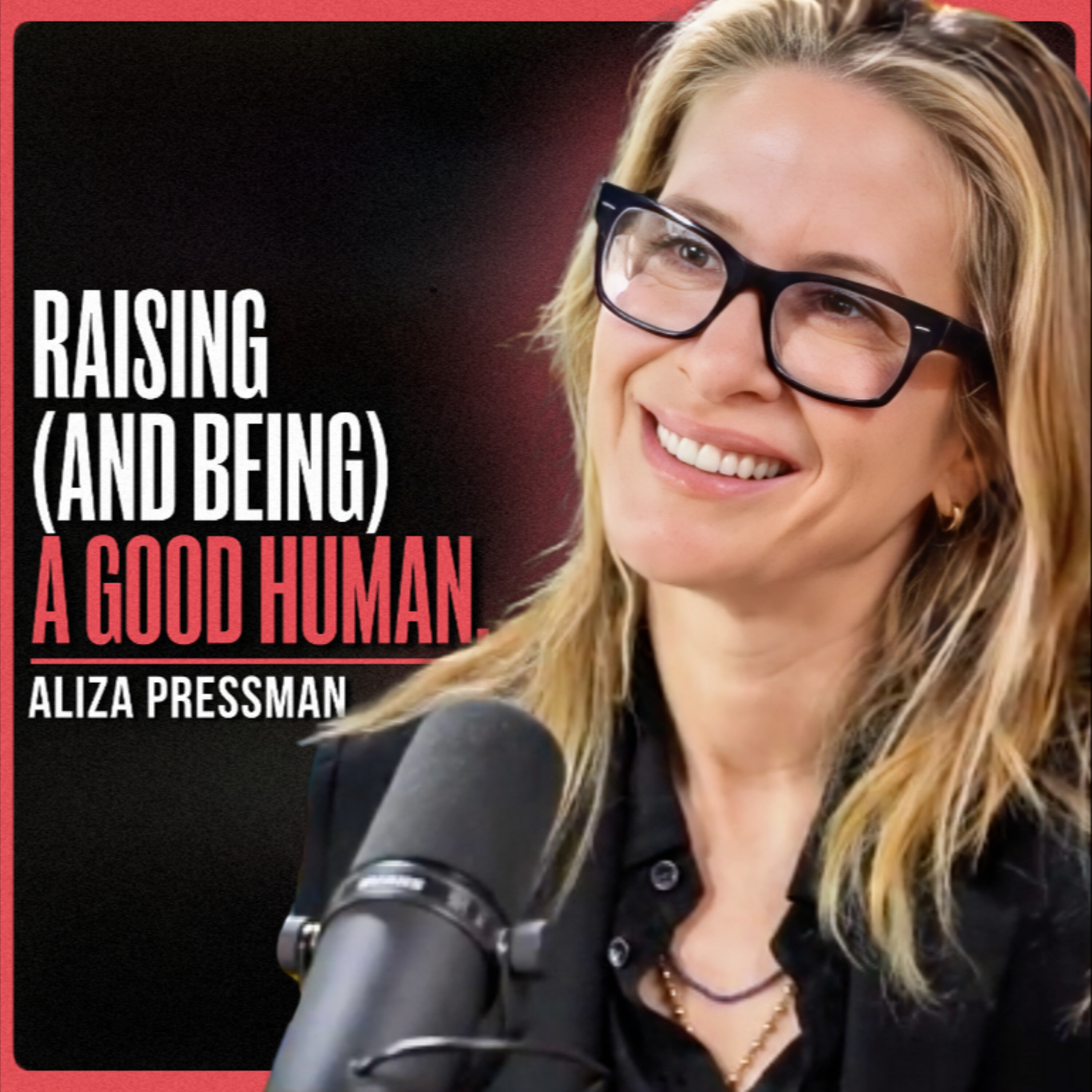
In this episode, Ryan Holiday speaks with developmental psychologist Dr. Aliza Pressman about self-regulation, the importance of reframing frustrations, and the distinction between feeling emotions and reacting to them.
Written by AI. May contain mistakes.

Get the gist, explore an idea or ask about something said.
 Claude
On The Daily Stoic, what are the key points of this episode?
Searching your listeningAutomatic transcript. May contain errors.
0:28Why choose a Sleep Number smart bed? today. This message comes from Capital One. The Capital One Venture X Business Card has no preset spending limit, so the card's purchasing power can adapt to meet business needs. Plus, the card earns unlimited double miles on every purchase, so the more a business spends, the more miles earned. And when traveling, the Venture X Business Card grants access to over 1 ,000 airport lounges. The Venture X Business Card, what's in your wallet? Terms and conditions apply. Find out more at CapitalOne.com slash VentureXBusiness. What can 160 years of experience teach you about the future?
1:05When it comes to protecting what matters, Pacific Life provides life insurance, retirement income, and employee benefits for people and businesses building a more confident tomorrow. Strategies rooted in strength and backed by experience. Ask a financial professional how Pacific Life can help you today. Pacific Life Insurance Company, Omaha, Nebraska, and in New York. Pacific Life and Annuity, Phoenix, Arizona.
1:36Welcome to the Daily Stoic Podcast, where each weekday we bring you a meditation inspired by the ancient Stoics, a short passage of ancient wisdom designed to help you find strength and insight here in everyday life. And on Wednesdays, we talk to some of our fellow students, of ancient philosophy, well-known and obscure, fascinating and powerful. With them, we discuss the strategies and habits that have helped them become who they are and also to find peace and wisdom in their lives.
2:21Hey, it's Ryan. Welcome to another episode of the Daily Stoic Podcast. We are here in Greece. We were in a swimming pool, the Airbnb we were renting, and my older son was just needling and messing and effectively torturing his younger brother. And finally, my youngest snaps and just really pops him and he gets in trouble. And my oldest goes, you know, you don't control what happens. You only control how you respond to what happens. And, you know, I had to give it to him because one, that was funny. He was trying to needle me too. I'll take the win and that he's at least heard it enough times that he can understand what it is that I do.
3:09He's got the words down. Now, is this supposed to apply to you twisting and twisting and twisting until somebody snaps? No, it is not. but sort of ties in to today's episode, which is how do we teach our kids and how do we teach people that having the feelings are valid, how we act on them, not so much. Actually, on this very same trip, there's nothing quite like traveling with family to stress you out, challenge you, put your stoicism to the test. My wife and I were, you know, a long drive and then driving through these windy streets. It was a whole thing. I won't get into it too much, but she was frustrated.
3:56I was frustrated. And, you know, then we were frustrated that the other person is frustrated. And my wife said something, which is always a good reminder. She says, you know, I can be frustrated. It's okay for me to be frustrated. And by the way, the converse is true. It's okay for me to be frustrated also. We have our feelings, but then the problem is the snippiness. The problem is the unkind word. The problem is the disconnecting. The problem is what you do about it, right? I'll give you a third story, which is we were driving up today Mount Olympus and my son, again, it's a little bit of a theme.
4:33He's testing things. He's sort of needling his brother to get his brother to react, to get my wife to react, to get me to react. And finally I did react. It was like, you could see it going. And I stopped the car and I was like, You know, I got upset and I was right in that what he was doing wasn't okay. And he knows better. And we gave him a lot of different off ramps. But ultimately, I don't control that. I control how I reacted. And then I control afterwards how I talk about it, which is not just to apologize, not just to acknowledge, you know, my role in it, but to talk about why that happened.
5:13which is to say, hey, look, I'm trying to drive up these windy roads to get somewhere that, by the way, you wanted to go more than anywhere in the world. You wanted to do this. We're doing it for you. And I just got overstimulated and stressed and I snapped. And that wasn't a good way for me to behave. And I'm sorry. Right. That's what it's about. It's not that this never happens to the stoic. It's that the stoic catches themselves before they do it too many times. We all experience stresses. We all experience difficulties. What we do about them, though, that's where we have a little bit of a choice.
5:48And that's what I wanted to talk to today's guest about. Dr. Aliza Pressman is a developmental psychologist. She's the host of the Raising Good Humans podcast. She's the author of one of our favorite parenting books. We sell it in The Painted Porch, The Five Principles of Parenting. And in today's episode, we're going to talk about how do we acknowledge our emotional mistakes with our kids, power of repair, positive stress, why Aliza is a little bit worried about parents in this generation. She has a great metaphor in here. She talks about the difference between an orchid and a dandelion. I think you'll really like this.
6:26She came out to the studio here out in Bastrop to tour The Painted Porch. not the painted porch that I was just at a couple of days ago, the Stoapoke Lane in Athens, but the painted porch on Main Street in Bastrop, Texas. And we had a lovely conversation. As I said, Dr. Pressman is a developmental psychologist with nearly two decades of experience working with families and people. And she's the author of a great book, The Five Principles of Parenting, which you should check out. And you can check out the Raising Good Humans podcast and follow her on Instagram and Twitter at Raising Good Humans Podcast.
7:04You talk about this in the book, but I think it's really important, which is I am more of the mind that being able to regulate yourself when you are dysregulated is like the whole game. Life, parenting, being a kid, like it's what you're trying to impart to your kids is like, how do you go from dysregulated to regulated? No one can do it for you. nothing can do it for you. You have to be able to do that. And if you can do that, you can basically handle anything in life. Yeah. I mean, I'm not going to argue with you. The research on self-regulation, which you call it so many different things because we have like so much history in this, but I used regulation because that's my field.
7:45It's everything. So yes, one of the five principles is regulation, but not just for our kids, it's for ourselves because we can't do it for them. Obviously, you want them to be able to handle being dysregulated or being frustrated and getting to a place where they're okay with that or not. They're able to handle it. But if you're not doing it, what model is that? Right. And we're not always doing it. So we're going to get it. We're going to lose it. But if more often than not, we're not. We're co-regulating, lending our nervous system as theirs is developing. And I think the co-regulation research is so cool.
8:21What is that? It's just essentially because a child's brain, when you think about infants, children, teenagers, like they're still developing brains. Yeah. And so their prefrontal cortex, which is not fully developed, is kind of needing our adult nervous system to lend itself in not necessarily like calm, cool, collected all the time, but just whatever your adult nervous system is doing, it's going to lend itself to that less mature developing nervous system. They can't kind of access the frontal lobe as easily. And so if over time, repeatedly, you get this opportunity to co-regulate with your adult caregiver, you then learn to self-regulate.
9:05So kids who have the opportunity to co-regulate, well, first of all, opportunity or not, you are co-regulating. But if you have a parent - Or co-disregulating. Right, exactly. Like that nervous system is whatever, whatever you're borrowing, you're borrowing. And so I actually think it's so fun, easier said than done, but because my kids are older, it's easier to think about like, okay, what nervous system am I lending out right now? Yes. Yeah. Am I, am I helping or harming? Am I helping them calm down or am I getting in the feedback loop with them? Yeah. And I think we kind of think of emotions as good or bad.
9:44And I mean, that is certainly not where you're coming from. But in general, we think we want to protect our kids from the negative emotions or negative in quotes and, you know, bolster the positive emotions. And so our nervous system can appear kind of scared when they're experiencing these hard feelings. So how can we regulate with them? We can't really co-regulate in this way where we're lending a nervous system that says, like, there's no emergency. It's just a feeling. Well, I think people think that stoicism is about having no emotions or suppressing the emotions. But that's why I like this word regulate.
10:23It's about regulating the emotions when you are dysregulated. So it is an indisputable, unavoidable fact that you will get dysregulated. You will experience pain or failure, a frustrating person, something that's scary. That's the given. But what happens after is where you have the ability to influence. And again, you can't just magically make it go away, but you can decide, hey, here's what this means. Here's what I think about it. Here's the behaviors I'm going to accept for myself. That's the thing that I think each parent, that's the journey each parent has to go on. And that's the main thing you're trying to impart to your kid is like, how do you deal with frustrations in a frustrating world?
11:05Exactly. And we are going to get practice constantly. This is just from infancy. They are the source of so much frustration as a parent. You don't even realize how much they can just do the one thing that's going to give you like and it's like heavy weightlifting, but we get better and better at it. And so it doesn't feel as heavy over time. But it's huge. And regulation is so highly linked with all the positive outcomes everybody is talking about in research. Whatever the outcome is, whether it's academic or emotional or relational or whatever it is, self-regulation is such a predictor. You just can't have it without co-regulation.
11:46So what does self-regulation look like? Walk someone through that process. Well, any self-regulation is just sort of a goal oriented capacity to manage your emotions. And so it's purposeful. And essentially, and you can, I really think you can just look at the body and figure out what's happening and get in touch with what happens in your body when you get dysregulated. because we all have a thing, like you could see it in my hands pretty quickly. So I might appear calm, but I'm clenching my hands because that's a, that's an indicator if you know me well, that like something's about to pop. And so if you think about self-regulation, self-regulation, it's just having that awareness that this is emerging and figuring out how to turn off your internal alarm system to just say, there's no need for the police to come.
12:40Like it's not a real emergency, it was a false alarm. Sure. So I always, this is going to sound ridiculous given where you live, but I moved to LA from New York city and I've been in New York city for so long since high school and it feels very safe because it's apartments and you're generally just surrounded by people. So I felt very safe. And then I moved into a house and like nature. And I was like, this is so scary and vulnerable. And so I got like a super crazy alarm system. I had no alarm system in Manhattan, New York, but an alarm system in this like beautiful Canyon. And I walked in to experience the first time the alarm was set and there's a slow beeping sound to give you like whatever your 20 seconds are to put the passcode in.
13:26And that to me is self-regulation right there is like, can I access that passcode? Press those buttons and the alarm goes off and we need to just practice every day setting that passcode so that we just can know the difference between real and imagined threat. I think about it all the time. There was this episode of Seinfeld where George is talking to the third person for some reason and he goes, George is getting upset. And it's like, he's like, he can just feel that the clock is ticking that it's about. And it's just, he doesn't have the self-awareness to do anything about it, but he has the self-awareness to know what process has begun.
14:06He's doing step one. Yes. Yeah. Yeah. So self-regulation starts with some semblance of self-awareness. Yes. Which is why I think reflection is such a big part of regulation. You just cannot keep paying attention to something and not get a little space to make a different choice. But that's really hard because people don't have the space for reflection. So because you're a parent, you're just running around all the time, you're sleep deprived, but also you don't have any rituals or parts of your life that would be conducive to that. You don't journal, you don't go for walks, you don't have alone time, you wake up too late.
14:47You've set up your life to not be conducive to the reflection that you would need to notice the patterns, to make the improvements that ironically would give you more time and space for reflection. That is the conundrum. That's why I kind of think of micro meditations and micro self-regulation moments, because I think it's a fantastic dream that you're going to have opportunities to practice your mindfulness exercises all day and become the parent that you want to be. But the truth is, like you said, the reflection part of parenting is very hard. So it's also, it takes such a quick second to shift.
15:30So this is why we do have time for that reflection. It's just not going to be as the traditional sense of like, I'm going to sit down, I'm going to pay. Why do I think that happened? What does my child need right now? Like all of those things are just going a little bit faster. Yeah. Like people tell, I went on this seven day meditation retreat. What are you talking about? Yeah. That's not happening for a long time. I actually, the first meditation retreat that I went on. I can't remember. It was Jack, was it Jack Kornfield? I think it was Jack Kornfield. And he said, oh, if you're parents of kids, you shouldn't be doing these seven threes.
16:10And I was like, what am I even doing here? Like, I had this fantasy that I had to do all of that in order to be this like regulation model for my kids so that they wouldn't have the same maybe tendency that I might naturally be inclined to have from my childhood of sort of kind of feeling the feels and not pausing. Yeah. What if you just went for a 20 minute walk? Exactly. Honestly, what if you went for 10 steps that were really intentional and then 10 steps back to where you started? And that was like, okay, before I do whatever it is that I was going to do in reaction to my child. I just took 10 steps.
16:50A 20 minute walk would be incredible. Yes. Yeah. I think about like, so every night I have to go out to the car because somebody left something, you know, I left my water bottle in the car. I left my backpack in the car and I have to go get it to, you know, set up for the next day. And, um, I go, you know, they're, they're already in bed or they're, you know, the bed, there is this moment of quiet and I'm walking out to the garage, through the garage to get something from the car. And I'm like, it's quiet. I live in the country. The stars are out. I'm not looking up. I'm, you know what? I was like, I'll just take 10 seconds as I do this thing.
17:26And I'll just look at the stars for 10 seconds. And I'll be like that. That's like, just like, so I think looking for these little moments of reflection, but also just kind of stillness, you have to cultivate. I just love that because you could go from just being so pissed that you have to go out to the car again to saying this is just my nightly ritual. And I'm so looking forward to looking at the stars for a moment and having just that time to breathe. Yeah. And that changes when you go back in the house and you have bedtime rituals and whatever you're doing, you are now going to lend a different nervous system to your kids.
18:00Yeah. Right. It's always like, oh, I forgot my backpack in the car. Also, I have homework. Right. And, you know, it's like, I think you forgot this until exactly this moment on purpose. Yeah. But if that means I get to go outside for five minutes, I'll take it. Totally. I just think catching any opportunity for a ritual like that is a great reframe. Yes. Well, parenting to me is constant reframing because it's like, okay, you do the whole bedtime routine and you sneak out of the room and they're asleep or so you think, and then you hear the burst out of the room or whatever. And like one version of it is like, God damn it.
18:38Now I have to do this again. And the other version is I get to do it again. And there's going to be some moment where you would love to do it again. And you're going to be jealous of this person that is currently resentful that you're the thing that in the future you will be jealous of. That's so true. I can be that for you right now because I'm just like counting the days for my oldest to graduate. And I'm like, oh, my God. Yeah. I can think of every time I was just, which I'm so aware of how exhausting the day-to-day is. Of course. But right now, every time she's like, you know, up for a little bit more before bed or chatting in a way where normally I would have been like, oh my God, I'm gonna fall asleep.
19:21Because I think there comes a point with our kids, they get older and all of a sudden, their best time to connect and chat. Actually, that happens throughout, is like that before bedtime. time. We have this like exhausting ritual that you do over and over again, and they're always fighting it. And there's always whatever. And then one day they're like, shut the door on your way out. And you're like, whoa, what? I know. So there's some moment where it's going to suddenly disappear and that will catch you off guard. And meanwhile, you are rushing through that because you assume it's going to, you've got more time.
19:54Like we always assume we have more time. We're going to do it 1000 more times. It's going to go on longer or it'll go on forever. And that's just objectively not true. Yeah. I mean, and also it's like, it does feel like it's really healthy for them to have like a bedtime and get their sleep, which it is so important. But it is, there is a shift where you're like, it's not the slog anymore. It's like, oh, I get to, you want to talk to me before bed? It's so exciting. Well, it's like the best case scenario is that it ends, right? Like the best case scenario is like they're healthy and grow up and grow out of it.
20:37There's also a bunch of worst case scenarios where it ends. And again, meanwhile, you're rushing through it. And I always try to, whenever I'm feeling that rush through feeling, which I feel all the time, I go, what am I rushing towards? Like I'm rushing towards checking my email or whatever. Like, it's never an important, like, obviously as a parent, you just deserve some alone time. You just want it to be over. You want to be off duty. But like, what I'm going to do while I'm off duty is the dumbest stuff. Yeah. That's not important at all. It's never anything that, you know, I'm not like maybe one in a thousand times you're like, if I can get them to bed, the babysitter can come right when they fall asleep.
21:13And then we're going to leave. Like, you actually are rushing to do something. But most of the time you're like rushing in to watch something on a big screen while you You hold a small screen and, you know, you're not rushing to anything important at all. And what you're rushing away from is this. And also, I like have so much compassion for that feeling of like, I just need this day to end because otherwise I will be just a terrible parent. Like there's a there's a point at which I'm going to be so dysregulated. I'm so tapped out. Yeah. And I just like want to hold on to those moments because they just go by so fast.
21:50It's just not when you're in it.
21:59We just took our kids to an outdoor performance at the Nutcracker. They had a snow cone. And then they went insane in the car ride home. And one of the things I try to remind myself when that's happening is that I don't control my kids' behavior, especially when they're too far gone like that. But I do control how I respond, right? that's stoicism, but it's also what Dr. Becky talks about. Dr. Becky is a clinical psychologist and a best-selling author, and she founded Good Inside, which is there to give parents practical, actionable tools for handling those everyday challenges with confidence.
22:35My wife introduced me to Dr. Becky's books. I love them. I've recommended them a million times. I've had her on the podcast. And as it happens, Dr. Becky is hosting two live Q &A events for Good Inside members. I am one of them. She signed me up for it about a year and a half ago. I've loved it ever since. On December 1st, you can join Dr. Becky for her How Not to Raise Assholes event, which is about avoiding entitlement and raising kind, empathetic kids. And on December 15th, she's hosting her How Not to Lose It over the holidays event, which I'm sure we could all use. As I said, I'm a big fan of Dr.
23:12Becky. She's been a great influence for me as a parent And just as a human being and daily Stoic listeners can join for 15 % off with code STOIC15, you just got to head over to goodinside.com to catch the events. Thanks to Toyota Trucks for sponsoring this episode. When I bought my ranch in 2015 out here in Bastro County, I drove my car about halfway down the dirt road that we live on, thought this isn't going to work, stopped, parked it, walked the rest of the way home, borrowed my wife's car, drove in Austin and bought a truck. What I bought was a Toyota Tacoma. And this truck wasn't just transportation getting me to and from my house.
23:53It unlocked a whole different style of living for us, not just on the ranch, but in our little Texas towns. There were places I could go now that I couldn't go before, especially out here in the piney forests, through the fields, and on the unpaved roads like the one that I lived in. We got to go deep into the hill country's wild beauty. We've driven all the way out to East Texas. We've driven across the country. And by we, I mean not just my wife, but both my kids who I drove home from the hospital in that truck. Toyota trucks are built for those who understand that the best adventures happen when you're willing to veer off course, because you never know when you'll end up on a Toyota adventure detour.
24:38And of course, this is stoicism, too, because every detour, every obstacle is an opportunity. But it's helpful if you can handle the difficulty inherent in that. If you've got the resilience and the right companion to make it wherever the road takes you. Discover your uncharted territory. Learn more at toyota.com slash trucks slash adventure dash detours.
25:04One of the things I think about this idea of when we think about emotional regulation, I think, again, people think it's not getting dysregulated, but it's what you do after you are dysregulated. That's the whole point. If you weren't dysregulated, the regulation would be meaningless. Yes. You'd just be a superhero or something and you're immune to the things that hold down regular people. I think this distinction between having the emotion and the behavior you take when you have, that's what it's about. It's like, you can be angry, but can you not express the anger in a harmful way? Yeah, that's the whole.
25:40That's the gig. And I love watching. I remember once my younger daughter was probably like four, she was so mad at her older sister. She went, like that, like she was going to bite her, but she would not bite her. And we must have been in a group because my best friend said to me, because I was like, look at you, you're so mad. And you just said, ah, that was cool. And my best friend was like, oh, I didn't know that was what you were supposed to do in that moment. I would have been so mad. And I said, no, I'm so, I think that was really cool. Like she was so mad. She's going to have to get better at that.
26:18Like at four, you can get away with like snarling like that. But at six, you might get kicked out of the classroom. But it was so cool to me to catch those moments of self-regulation of like, I'm just a person having this feeling. This is how I'm expressing it. And it's one notch more regulated than maybe I would have been last week. And so maybe if she got, you know, she worked her way down to certainly not doing that. Hey, I don't like it when you do that. Yeah. You could also get there. You can get there and you will get there. But we have to catch these smaller steps because the goal isn't to just like not have the feelings.
26:53What are you doing with those feelings? And also just as a side note, because I think this, I'm guessing this happens with you too, but people assume that then you must be just like really calm and, and absent of a lot of that, a lot of the challenges, the emotional challenges that come your way. But I actually think it's really important to acknowledge that we're all going to go through all the feels and hopefully get a little better at regulating them over time. But our kids need us to sometimes not be so chill and calm, or they would think that there was something really scary and wrong with them when they're having those bursts.
27:33So it's good not to say that we should be like losing our minds, but more like when we make mistakes, emotional mistakes in front of our kids and acknowledge them and kind of repair, we're giving them the opportunity to not have that expectation that they're just going to one day wake up and just be perfect at this. Yeah, because in the repair or the apology or the recovery, you're showing that you understood what you did, the emotions you had. You're putting a name and a face to it. And then you're showing, oh, yeah, okay, I also – how else are they supposed to learn what anxiety or depression or frustration is?
28:13I think about how often my kids are experiencing feelings, but they don't know that they're having those feelings. Like during the pandemic, how would they know? Like I'm experiencing a bunch of feelings for the first time in my life. Right. And I've studied history. I'm watching the news. I'm talking to other people who've been through things. I am vaguely aware of what I'm feeling. But for them, this is totally new. They don't know that they're experiencing existential terror. You know, like that's a new that's not a thing that's been explained. So if like everyone gets a weird feeling at the airport, it's a weird, disconcerting, unusual place.
28:53And a lot of things are happening. If you're if mom or dad isn't able to go, I'm anxious because I don't want to miss the flight or like this recycled air makes me feel X, Y, or Z. I feel claustrophobic. Like all the if you're not going, I am feeling this way because of this or I acted this way because of this, that's not acceptable, but it's why. It's an explanation, not an excuse. How are they supposed to understand what they're feeling and hopefully get better at it, have a head start at dealing with it earlier than you did? For sure. It's just like, that's your naming your affective state.
29:31Yes. Like how many people grew up with parents who kind of had a rough day at work, came in the house, and because they had a rough day at work, they were like a little snarky or a little snippy and didn't explain themselves. Life was weird and stressful. Exactly. And how much easier is it to say like, you know what? I had a really intense day at work. And so I'm going to be potentially a little snippy tonight. So here's what I do when that happens. I go take a hot shower. I go, you know, whatever the thing is, I'm going to go walk around the living room for 10 cycles, like whatever it is, you're now giving this nice gift, which is I'm not going to necessarily be less snippy.
30:10And I'm not necessarily going to be able to just name that affective state and move along, but at least you're not going to wonder what's going on. And that does give them a head start, like a fluency. Yes. You're showing, hey, everyone has feelings, emotions, triggers, whatever. And the whole game is figuring out what those are before you do something you regret or when in the sway of those feelings, you do something you regret, you express like it, that what you're doing is showing like self-awareness isn't this state you achieve like enlightenment. It is a day-to-day thing. I'm feel, I think this is what's happening.
30:51I think this is why. And it's this sort of constant act of self-inquiry and explanation. That's what it is. And you're showing them what that looks like. And then what if you now know, I need to put on this song. Yeah. And that's going to shift. One of my colleagues who's so wonderful does research on emotion regulation and talks about the music. Ethan Cross, he talks about like the power of just music and shifting your emotions. And it's just so true when you think about all those little times where you needed something quick to regulate. You have your kids around. you don't have the luxury of kind of sitting in it.
31:31And so, you know, like, oh, this is a song that kind of takes me out of it for right now. You might need to revisit it later because that's the other thing is our we're charged with regulating at times when we just need to regulate. And we probably are going to go back to being really, you know, potentially dysregulated or steaming about something. But we have to parent or we have to sit down to dinner. We have to function. And so we have to have ways that we can shift our emotions so that they don't, you know, take over. Yeah. If self-regulation is the game, understanding you're probably going to fail at it quite often, and then that's where the idea of repair comes in.
32:16And it's kind of crazy how new that feels as a parenting concept. Like, I don't know if my parents' generation got that that was a thing. The repair thing? Yeah. It's so funny because I do think it's very popular right now to talk about repair. But the research on repair has been decades. And for some reason, it's just like the memo didn't come out until later. But the research is electronic. He looked at babies and caregivers and saw that for about 33 % of the time, they were attuned and connected. And the rest of the time was rupture and repair. And then it went on to be research amongst parents and older kids and couples and and and.
33:03But the idea is repair is more like reconnect. It doesn't necessarily mean an apology. Sometimes it just means like you move closer on the couch and all of a sudden you're you're back holding hands and you kind of like silently repair. You reconnected. And sometimes it's like a sit down apology. Other times it's laughter. but the key feature is that you're not supposed to be like completely attuned and chill and awesome with each other. It's the - But also you're not infallible and it's not their fault. Certainly not. Maybe the memo did get out, but the reason it wasn't received is it means coming down from your perch.
33:45Yeah, to say like, I blew it. Yeah. Yeah. And it changes the dynamic of the relationship where it's like, I'm the parent, I do what I want, and you make of that what you will. That's obviously, it's not an easier place to parent from, but it's less, because it doesn't work, but it's a more comfortable place to parent from because you don't have to look in the mirror very often. Of course. And but but then once you sort of commit to repairing, you realize like, oh, this is being a person like we're just reconnecting again. And and I'm acknowledging like, oh, I I'm not pleased with what I just did there.
34:23Here's how I'm coming back from it. And the other downside to not getting the memo on that is then you have kids who grew up thinking as an adult, like, is it is there something wrong with me? Because this was not an issue for my parent. Like, this was not a thing. Yeah. And it's like, yeah, they didn't have any guilt because they guilt implies that you could do things incorrectly. Right. Like guilt implies that you could mess up. And if you don't believe that, it does insulate you from ever feeling insecure. Yes. You're not going to be reflective about it. But that moral rudder of like, I don't like how this felt.
35:01I need to reconnect and repair that relationship. When it happens so many times, and it will because we cannot get this right all the time, I just think it's such a gift to our kids. Yeah. My parents probably apologized to me like three times in their whole lives. Do you know what I mean? it's just not it was it's not part it wasn't part where did you grow up sacramento okay i'm sure there were conversations that we had that were they never had with their parents but they were not in a place where they would be like hey i screwed up or this probably made you feel like that's just not that wasn't the thing yes and now now it is i do think but and the reason i i think you know it's good is like if they did it now i would still be like it would mean so much right And so it's like 30 plus years later.
35:49It's that powerful. So like, you know, you can't apologize for something that happened three days ago to your kid. Like, you think it's too late? It won't make a difference? Like, think about things that you would love to hear your parents address and how basically there's no statute of limitations on that. No way. I mean, I think it's so cool that we have this beautiful, hopefully, opportunity to constantly be able to revisit and come back. Not to, like, obsessively say, like, remember that thing? And our kids are like, what? Yeah. Like, that's a you problem. Yeah, yeah. I moved on long ago. But just the idea that we have this unit of humans where we are so invested that we're like, you know what?
36:36I blew it. I'm really sorry about that. Or we're now laughing and reconnecting. And we get these opportunities over and over again so that it's just you get into adulthood without the emergency of disconnect. Like every time you're in a new relationship, you're not like, oh, God, I guess it's over now. You know, that's like really something you need to learn over and over in your young life. Otherwise, you have to refigure it out later. Yes. We're just trying to like help our kids along so that they're not getting into adulthood and they're relearning all of this. Yeah. I mean, I think the sort of cliche boomer one is like, hey, this happened as a kid.
37:17No, it didn't. You know, like the sort of immediate, like, even though, again, there might not be a statute of limitations, but accept it. Like, you don't have to, it's not like, you know, your lawyer's like, never apologize because it admits, you know, then there's liability. Yeah. It's like, you can, why would they make this up 30 years later? You know what I mean? They didn't hallucinate this thing probably. And so the, but if you, but if you have practiced the day to day of sort of, well, if that's your experience, it's your experience. I can't argue your way out. I can't argue you out of your point of view.
37:53It's funny because one of my daughters is, she's not a great narrator when she's like in the thick of it. And so I have had to work so hard not to say like, that's legitimately not at all what happened. Yeah, there's documentary evidence of this. Yeah, totally. I'm like, I really want to rewind the camera on that because it's still what her experience was. Whatever her description was, that's what her body felt. That's what she was picturing happened. That is what happened for her. And so helping her maybe figure out over time what it is that happens in her body during those moments that sort of over time helps her maybe practice like, okay, what's a different interpretation here?
38:47Might it be that I am mind reading for other people? And so if you said nothing and I've decided what you're thinking, my experience is going to be quite different than if I say, wait a second, did Ryan actually say anything in this moment? Or was I just deciding what he was thinking? I went into a whole loop. And so I do think there's a way to help our kids have respect for the experience that they had and also an openness to, I wonder what part of that experience you had or like what might I do as a pattern that takes me into like a whole different story that might not serve me as I'm trying to like move through the world and regulate.
39:34Well, my eight-year-old does this thing where if we're like, hey, we might go see these people today. Like we might meet up with your friends. And then it doesn't happen because they cancel. Yeah. He's like, well, you lied. You said we were going to. And it's like, okay. Or we go, hey, we're going to drive over to go to this thing. And then it's closed. And he's like, well, you lied. You know, it's like - That's actually a great example. I don't control the hours of this business. I don't control your friend's mom. but what you're feeling is frustration and anger and disappointment and it would be a more just sensible world if it was as simple as I said it and now it didn't happen so I'm the problem yeah and like that that's it so if we can like I think your initial act it's like are you calling me a liar what are you talking like it but it's like no no you are you are hurt you just don't you just don't yet understand what sort of is a reasonable emotion and unreasonable emotion.
40:35And if I can guide you towards the more reasonable one, which is this sucks. You're disappointed. Yeah. You're disappointed. Why would they not, if they're going to be closed, why wouldn't they, you know, why didn't they adjust? Or we were at Disneyland and like on the website, it said you could be at this height, but then we get there and it's higher. And it's like, I didn't play an elaborate prank on you to get you excited about something. Now it's inconvenient for me too, you know? And so it's like, hey, let me direct your anger slightly over here because you're pointing it at me as if I did it.
41:06And so we're just dialing it in slightly. Yeah. Just because it makes it easier to become an older kid who isn't like, here's how I've been wronged by this event. But it also respects like, it feels like that was quite purposeful. Like you took all my joy and hope. There's still a consequence for you, which is you don't get to do the thing that you wanted to do and that you had hopes for. And that is reasonable to feel. Yeah. Having a 40 minute meltdown about it where you're screaming at us as if we did it to you, even though we had the idea to do this thing for you in the first place, that's unreasonable.
41:46And the difference between those two is like, again, the essential distinction. And it's so predictive just because when you think about like, it's not the challenges necessarily that make or break us. It's like, how do we interpret them? And so our realistic appraisal of a scenario is incredibly predictive of resilience. So we're playing around with this. It's like, yes, I need to validate the feeling that you're having. And also, let me help guide without denying your experience. experience. Because when you talk about like, okay, 30 years later, if I said this is what happened and I'm just looking for you to acknowledge it, I think we could panic as if like we can't help with the evaluation of what's going on.
42:33And it's really hard, but there's such a balance because it's still like helping them have more realistic appraisals of like the world around them. And also trying to understand and get to the bottom of like, why are you a liar? exactly. What does lying mean in this case? It's like, I'm really disappointed that you weren't able to predict how the whole world was going to be in order to protect me from missing out on this experience. Well, and how bewildering it would be for a kid. So you were excited to go do a thing and then suddenly you can't do that thing. And then because you couldn't handle the disconnect between those two, now you're in trouble, right?
43:13Like now you're getting sent to your room or it just in the way that I think, or like when we talk about gentle parenting or whatever, how different it is from a, like, you know, you're not allowed to talk that way. Go to your room. So now they went from excited to disappointed, overwhelmed by the disappointment to now, now, like how unjust and screwed up does that world feel? And then how, and this is the part you have a choice as, as a parent, like I don't choose for him to blame, instinctively blame me for the thing. But if because he blamed me and there wasn't the safety to sort of work through that, now I'm this sort of tyrannical, forceful, angry.
43:51Now I did insert myself as a negative participant in this sort of larger situation. And then there, like, it allows for some truth that there is someone to blame here, that it's you that you could take, you know, because then you did end up being like, well, you're ungrateful, go to your room. Yeah, yeah. And so that loop continues. But then I just think repair is so beautiful because if you've really embodied that, then you're like, I don't like how that felt. No, this wasn't fun. And by the way, what I was trying to talk to you about while you're freaking out is when we're going to come back.
44:25You know what I mean? I'm not like indifferent to the disappointment here. Yeah. I drove all the way out here. You know, like I wish I could tantrum right now. Yeah, Yeah, exactly. My oldest daughter, who's 18, we had, we don't, we're not yelly. Like that's just not our jam. And we had like a brawl where we were yelling, not brawl, like physical. But we were yelling at each other, which it just hadn't happened in this way. It was like so bizarre. And she was kind of like making a little bit of a snide remark at like how I was so clearly not regulated, which like holding me against me, which bothered me even more.
45:11I storm out, I go to my room and then I'm like devastated because I think I just had like the fight with my kid that she's never going to forget and it's going to change our whole relationship. And I'm going down this path and my husband's like, what would you tell someone telling you this? And I was just like, I forget what I would tell anybody. Like, I'm full of it. It's all nonsense. And he was just like, no, but I think you talk so much about like how important the closeness of the relationship is and that you can make repairs and reconnect. And I was just like, it's gobbledygook. Like, it's ruined.
45:46Forget it. And then my daughter came in my room and she was like, I mean, again, 18, but she was just like, I'm thinking you're probably ripe for repair right now. And she, and I was just like, I am, I'm so sorry about that. And like, it took two seconds. And then she was back to talking about something that was in her life that she's focused on. And I was like, huh, it isn't fake news. Yeah. Like it's real. The relationship could withstand. I'm not like, yay, let's go have a, you know, a fighting match. But the relationship could withstand that moment that I thought like, oh, God, this is it.
46:25And we repaired and there was a shorthand. It was so quick. It wasn't what I thought, which was when I was unable to be reasonable in my own head. And when I was unable to regulate, I was like, I guess this is it. I guess I've just ruined my entire 18 years of this relationship with this human. And it's, you know, and so I just think those are the moments that we can really reflect and just think, oh, yeah, this is worth investing in in this way. But it's also beautiful that the shorthand evinces a certain familiarity with the stuff that you think about and talk about and tried to parent about.
47:02Like at some level, it's working there, right? You know, like you have this sense as a parent that it's all going in one ear and out the other. And then there are these moments where you're like, oh, wait, you got that from me.
47:21human your body has a performance superhighway 60 000 miles of blood vessels that deliver oxygen and nutrients to every cell this of course is your cardiovascular system it's the foundational system that powers everything we do both elite athletes and longevity experts invest directly in the cardiovascular system because supporting healthy blood flow is critical for energy, recovery, mental clarity, and overall performance. That's where human comes in. That's human with two Ns. They started out of research at the University of Texas, near where I live, and have 15 years of experience making award-winning supplements for nitric oxide production and healthy blood flow, now used by over 160 pro and college sports teams.
48:09human cardiovascular health daily is a plant-based and made from clinically studied ingredients like grapeseed and seed kelp extract it supports nitric oxide production for healthy blood flow and energy while also supporting blood pressure and helping support the delicate interlining of your blood vessels just two capsules each morning will power energy and recovery while also playing the long game by supporting long-term vascular health and healthy aging human has an exclusive offer for our listeners, you can visit human.com slash stoic for an extra 15 % off your first purchase. That's enter code S-T-O-I-C, stoic at checkout.
48:44That's human with two N's, dot com slash stoic for an extra 15 % off with code stoic at checkout. The wait is over. Dive into Audible's most anticipated collection, The Best of 2025, featuring top audiobooks, podcasts, and originals across all genres. Our editors have carefully curated this year's must-listens, from brilliant hidden gems to the buzziest new releases. Every title in this collection has earned its spot. This is your go-to for the absolute best in 2025 audio entertainment. Whether you love thrillers, romance, or nonfiction, your next favorite listen awaits. Discover why there's more to imagine when you listen at audible.com slash best of the year.
49:35And my in-laws are just watching the kids one night this weekend. And, you know, like, I'm always getting stuff for the kids. And then I was like, whatever. You know, like, they're sort of always very cynical or not ungrateful. But they're, you know. Just what they know. Yeah. They're just like, this is your job to get me stuff. You know, they're not like, thank you so much. They're just, you know, they have an insatiable desire for stuff. So anyway, my in-laws were like, as soon as you left, they walked through the house and showed us everything. thing they were just like go they were going on and on about this stuff that they'd like shrugged their shoulders when I gave it to them and you're like oh okay so like it's just you don't want to let me in you you think that uh and probably right that the more you play hard to get the more you get but as soon as I'm not here you're like look at this autographed baseball card you know that's so validating too because you're just like oh right this this stuff we don't get it's a long game.
50:31And those little moments are so cool. They're just so nourishing to think like, I'm not, this is worth investing in. This time and this thought is getting in there. It's just hard to, you just don't get the like, thank you. Yes. Yeah. No, you don't. I mean, the Stoics talk about this idea of, they call it the third thing. And so the third thing is you do something good, someone benefits from it that's one and two the third thing is the thanks or the acknowledgement or the the appreciation and I think it's not that parenting is thankless but like it's not their job to be grateful like it's your job to do the things and their job to get the things and that anything after that is extra totally and I imagine I mean I just said to my mom something like I don't know how you, I don't know how you were able to let me travel after high school by myself and like go off and how you must have been so nervous and just like chewing your nails.
51:38And it was like before phones and things where you could. They're not supposed to appreciate how hard it is for you. Exactly. That's not their responsibility. Like I'm 51 and I just called my mother and said like, thank you so much for letting me go do that insane thing that you let me do. It must have been very stressful for you. Exactly. But you were blissfully ignorant of that. I had no idea. Like I was fully focused on exploring and growing and being, you know, flying. And she probably was at home like teary eyed and worried sick, but she didn't impose that on me. Yes. So I thanked her now.
52:12Yeah. And I think imposing is a good word there though, because it's an imposition. Totally. It's an inappropriate boundary violating imposition. It is a boundary violating imposition. And I gave her that third thing. I was grateful, but at 51, not at 18. But it is that because we are not responsible. It's a funny thing because the idea of you can't control how other people feel and you're not responsible for other people's feelings I think is a little funky because if anybody's walked into a room where people are laughing or yelling or anything, you know that your whole nervous system shifts.
52:50So like there is an impact from others, but the idea that our children would ever feel like we don't know how to manage those feelings is scary. Well, I think, look, I think it goes without saying that the Kennedys are a fucked up family. But have you ever heard that story? John F. Kennedy says that he learned about the depression in college. No. Oh, because he was so blissfully. Yes. And so you first hear that and you go, okay, that's obviously terrible parenting. That's rich and privilege or whatever. And then you kind of do the math. And I mean, he was like in his very early teens when the depression starts.
53:29Why should the kid know about the depression? How's he going to learn about anything but worry? Yeah. Like the job of the parents is to shield the kids from the insanity and cynicism and awfulness of the world. And I was reading more about it. He says, one thing I did notice, though, is that we had a lot more people working for us. And so you go, OK, again, oh, so what your parents were doing during the Depression, because they were not struggling, was hiring more people that they didn't need. So, again, the Kennedys are screwed up and his father was basically an abusive monster. But in this one instance, it's actually he's doing it exactly right, which is like, hey, I don't need to dump the weight of this horror show.
54:12on my, you know, preteen. And I am going to model for them. And maybe they'll pick it up or they'll just pick up the vibe of it, which is that, you know, the duty of privilege and responsibility is to be of service. And later they are going to uncover what happened. And they did. And they did. And duty was a big part of the calling. That is the one good part of the earlier generation of Kennedys. Yes. Right. But yeah, the idea that there is this kind of like trauma bonding that I think some parents do with their kids. It's inappropriate. Like they are young and innocent and pure. They should be able to have that as long as possible.
54:51Your job is not to rob them of that cynicism. And I think this also goes to the other stuff where it's like, hey, they're gonna engender and evoke certain feelings in you because they are reckless and dumb and naive. But those are your feelings. They're not feelings you get to give back to them about how much they worry you or stress you out or make you tired. Like, that's your problem. That's for us. I think it gets mixed up because then parents think, I'm not allowed to have feelings around my kids. But it's more like, one, those feelings should be yours that you know how to manage. So I am sad because this thing happened.
55:29Not because of you. But something made me sad. I wasn't able to hold back my tears or whatever. But it was an appropriate reaction. Like, grandma died. Of course I'm sad. And also I know how to take care of myself. So like you're not charged with that. Because I think what we do is we pretend to protect, but then we're not good at pretending. So I would rather someone say either I'm really, I've got my self-regulation down. So I don't need to introduce all this stuff to my kids or be reflective enough to say I'm teary-eyed. It's a pandemic. I seem stressed. I've got to say something. But I have to promise and show that I know how to manage me and I can take care of you at the same time.
56:14And that seems to be the thing that trips people up, I think. Yeah. Or it's like, hey, look, if you're overwhelmed or you're not in a good place, give them a screen and go in the fucking other room. You know what I mean? You're so afraid of screens that you're like, I'm going to just sob next to my kid and they're not going to be able to just get this. Just let them be distracted. Who cares? Yes, exactly. Yeah. That's the other thing. It's like we've made stuff so precious. that we like tie ourselves up in knots to be so good at like the things that we're feeling we're supposed to do, which totally undermines our own regulation.
56:49Yeah. If the key to being a good parent is to be emotionally well-regulated, what are the things that help you regulate your emotions and then not feeling guilty for doing them and making sure you're prioritizing them? So like, for me, if exercise is a big part of that, I don't feel guilty when I am working because I mean, I feel guilty if I'm working to excess, but like someone has to pay for all this stuff. So like, that's my, that's what I have to do. And exercise is a part of that. And date nights can be part of whatever it is that you need to be a regulated, functioning, responsible adult.
57:23You have to do. And tell them you're doing. And why? Yeah. Like I, how great if you're like, I'm not going to be with you right now because I need to go for a run. And that's really important for my health and my mental health. And then you're out the door, even if your child doesn't like it or they're sad or they want you because, you know, that's just a better system. Yes. And then hopefully they will embody that later. Yeah. You're saying, hey, I'm taking care of myself so I can take care of you. Yeah. And that's not an insignificant lesson also to teach them. Oh, it's such a significant lesson because there is like the there is this old idea.
58:04And I don't know if it's old yet, but it should be, which is like the martyr of parenting, the martyrdom of it all is like, that's the good parent. And it's totally what a bonkers message that is. You can love and cherish and take care of and protect and all the things without saying, you know, like, I've sacrificed everything for you. Like, what a terrible message that is. Yeah, if your daughter, flashing forward to your daughter or your son saying that that's what they were doing for their kids or for their spouse, you'd be like, this is crazy. Yeah, where did you get that idea? Like, where do you think?
58:43I watched you do it. Yeah. So I love that we are now getting more comfortable putting the oxygen mask on first. In fact, when the pandemic started, I said to one of my friends who was really, really struggling, her younger kids were at home and she was like, I cannot, like, this is killing me and I don't know what to do. And I said, you have to, and I know she hates this cliche, but I was like, you do have to figure out like, what is your oxygen mask? Because it has to go on first. And she was like, if I hear that one more time, it's so annoying. Who has time to put their oxygen mask on? And then as time went by, she was like, I have to find the oxygen mask.
59:22Like, I get it now because I am absolutely useless if I don't figure that out. So I thought it was funny. I was reading your bio. You have a degree in risk and resilience. How is that? Like, what do you study to get a degree in that? That's fascinating. It's risk, resilience, and prevention. Okay. And really, in the end, you're studying what are called now toxic stressors and how to move the categorization of toxic stress to tolerable stress to bolster resilience, which is ideally what we're doing if you have exposure to the terrible stuff. And then you're helping figure out how humans can mitigate the risk of like what stressors do to us to not like to have fragility versus like growing that muscle.
1:00:16Yeah. And what I think is really cool about resilience research, first of all, is that we are so wired for resilience. Sure. More like cockroaches. We really are. And we get in the way of resilience building more often than we need to in the service of thinking that we are doing the opposite. So I think the research on resilience is super cool, but it's just essentially looking at all the different ways that risk can happen. And why do some kids come out better equipped than others? and looking into much of that. To me, I think it's the most heartening research, which is that whenever we hear the stories of like someone rising up despite adversity, like you peer under the hood and there's someone that they felt a deep connection with.
1:01:06It may not have been a parent. It may have been a coach. It may have been a teacher or whatever. There was someone who saw that they were capable of getting through it and rising above it. Yes. It's never just the onus was never on the one person to be resilient. And I think the biggest thing I got out of this risk resilience research degree was just, oh, we are not charged with being resilient. That is a false idea. It's like there are skills that are associated with resilience that we can build in our kids and in ourselves. But like the onus is not on the human to be resilient. That's like one, it's like this constellation of features that together make it easier to bounce back.
1:01:51Yeah. Yeah. I think about like, we just assume kids are super fragile. But then when you talk to like older people that lived through the depression or World War II or whatever, they're not like, it was the worst thing. They're like, it's just a part of their life. It gets integrated into your life. And then we act like comparatively a pandemic is nothing. but also just this much, I'm just saying, versus - No, relative to, yes. Oh, it was scary. Okay, but for 40 years, people lived under the threat of nuclear annihilation on a daily basis. So true. There's always an analog that makes you realize, okay, humans have thrived under similar circumstances.
1:02:30When the pandemic started, this is a controversial thing to say, but I had a moment of thinking, this is not true for everyone. There are vulnerable populations for whom this was too much. And setting that aside and setting aside that people's lives were lost, I was thinking for the people for whom there is that person in their life who's functioning and loving and able to be there for them. And, you know, there isn't food insecurity. Those kids just got themselves the biggest gift of resilience building that they were not getting. And it has not stopped. It's been fairly relentless. And everyone is so worried about this generation of kids.
1:03:13And I actually am worried about this generation of parents who are parenting the kids because I think the adults are having a lot of hard time. In the presence of having a loving adult who's kind of got their act together, I'm very much hoping that this is a generation of kids that are real, you know, robust because they know they can get through things. Yeah. And they know they can get through things because they have evidence of what they've gotten through. And that's, I think, what you're sensing when you talk to someone who lived through a historical event is they were like, yeah, it wasn't fun.
1:03:51They're not like, oh, it was amazing. Yeah, I'm not wishing it upon anyone. Yeah, but they're like, it was what it was, and this is how it changed and it shaped and it taught me. And I think we don't have we're not going to prescribe like hard experiences for our kids because it's counterintuitive and it's unpleasant and nobody wishes the big stuff on anyone. But the like forgetting your backpack or not getting invited to the party like we need to exercise those muscles like we should be so lucky if those are the hard things that our kids have to go through. and it's really important that they get that opportunity because there's, I said, I mentioned toxic stress and tolerable stress, but there's positive stress, which people sometimes think of as like positive.
1:04:37There's post-traumatic growth also. Yes, and there is. So we just need to think like, oh, in the absence of positive stressors, just like the normal wear and tear, the moving, having a new baby, not getting invited to the birthday party, whatever it is, in the absence of positive stressors, there is no resilience. Like there is fragility. So we, that is a non-negotiable and the toxic we could do without, but the idea that the relationship just with that one person can move the categorization from toxic to tolerable to me is like, oh my God, that's elite. Like, it's like so relieving. Well, I get that question.
1:05:15A lot of people go, if I want to raise resilient kids, should I expose them to adversity and difficulty? Should I come up with obstacles that they have to sort of wrestle with. And I've always found that to be a little silly because I feel like - The world will provide it. Life will take care of that. Yeah. But we don't get to choose the type or the degree to which we experience adversity. So someone's gonna be born into poverty. Someone's gonna be born missing a limb. I went to public school, but up through middle school to a very sort of normal, lower middle class high school. And then I moved to the fancy high school on the other side of town.
1:05:48And it was disorienting and weird and certainly a privileged form of stress, but it was unusual. And so like the kinds of adversity people are gonna deal with are gonna change. I don't think you need to seek out - No, it'll happen every day. Sending them to military bootcamp or whatever. But the idea is when you are experiencing the stress, naming and explaining and helping them through the stress, that's the job. Not making it go away, but going, hey, this is, and I do, as minor as that was, I wish my parents had been like, hey, you're here. Now you're here. This is going to feel weird. That's so hard.
1:06:23Yeah. And not like we're going to throw you a pity party, but like you're going to have feelings about this because it's different than before. That's how you help them. Just taking the adversity that you get and treating it seriously. Not fixing the feeling, not fixing the change. You had to make that change, but just knowing like this is disorienting. That is something that we know is hard and that you can get through, and we're right here for it, is a very resilience-building message. Like, hugely resilience-building. What's not resilience-building is you can't handle this, so we're going to go, you know, like we're going to make this changer.
1:07:03We're going to give you extra ice cream every day, or we're going to take away every hard experience. We're going to punish you for not dealing with it well, to being overwhelmed by it. Yes. Those are all like the ways that we can help bolster resilience. And then there are skills around it. Like gratitude is hugely associated with resilience and motivation. And you work on your perspective. Perspective taking huge. Think about it this way or that way. Or yes. Like those are, we can build those skills. And then there's DNA. And, you know, some people are more prone to having a harder response than other people.
1:07:39And it has nothing to do with parenting. Like in that case, I really love the orchid and dandelion metaphor that Dr. Thomas Boise came up with, which is just actually I think it's probably somebody else came up with that metaphor and he just used it in his research. But just the idea that some people are born more like a dandelion. And I think when I first started doing the research and graduate school, I was like trying to figure out like why my parents, my grandparents were Holocaust survivors. And I was like, why does some people like, how are they still getting up every day? Like, how did they have kids?
1:08:17How did, you know, how do these things happen? But so I think part of it is that if you have yourself a dandelion who's going to kind of grow through the cracks of the sidewalk with just like the fundamentals, like the equivalent of sunlight, water and soil of like just love, a little bit of boundaries and some food and shelter, they're probably going to be okay no matter what you do, whether you make repairs or not, whatever you do. But like for those orchids, they need a lot more support around resilience building. They just they have a sensitivity or a disposition. And I think going, hey, this is probably it's not just, hey, these are your disadvantages because you're this way.
1:08:57Right. But you're probably attuned to and capable of things that this sort of scrappy or dandelion over here is never going to touch. Like you're probably going to be so much more empathetic, which is going to make it really hard to be in a world that has a lot of stuff going on that's watching people suffer. And also how cool that you're going to be so highly attuned and so empathetic. But I think for those kinds of orchids who feel the environment a little bit more powerfully, if we can help them fine tune that and make it their superpower and also just recognize like it's just going to be harder for you.
1:09:32Yeah. Like this game is going to be harder for you. That is your, you know, that we know is true. And also like you're going to be this blossoming gorgeous flower. Yeah. Like I think that's kind of cool and heartening, but I just don't want, you know, I do think sometimes people, when they have a kid who's fairly, you know, good at bouncing back, they're just kind of like, well, that's because we did this. Yeah. They give themselves a lot of credit for it. Yes. And you just, you got lucky. You sometimes it's just you got really lucky. And sometimes, you know, however you frame it, I think for people who have multiple kids or siblings or whatever, you kind of are like, oh, yeah, I do see that for some people, like it's just easier to be.
1:10:16Yes. And for other people, even though it's more challenging, it might be more exciting. It might be more beautiful. It might be deeper. But you do need to recognize it and harness that in a way that is more regulated. They have to work harder at regulation. There is a problem, I think, resilient people or what they call sort of high agency people. Often I find there is a startling lack of empathy in those people because they're like, I got over it. I could do it. Yeah, of course. It's easy. Pull yourself up. And just realizing that actually we're all sort of dealt different hands. Yes. And that maybe that person is actually doing much better than you.
1:10:58They just started from a much harder place than you. For sure. And so I think, yeah, as a parent, sort of remembering first off that you were once small and shitty at all these things, but that, you know, your disposition might have made certain things easier for you that are actually quite hard for them. And then understanding also as a parent, you got dealt whatever kids you got dealt. Yeah, you're growing those kids. Yeah, it's not normal. Whatever you're dealing with, there is no normal. and yeah, to not, I think to not be judgmental of other families or other people dealing with things because you have no fucking clue.
1:11:38You just have no idea. And I, like what a skill to be able to say to your kids, even if you did go through that experience, to be able to say, I can't, I don't know what your lived experience is. I'm curious about it. Yeah. Versus like, well, I went through that too and here's how I managed it. And, you know, like I that does pull out a thread for me when people are like, well, problem with kids today is or like this is what we did and it worked. And I'm like, you're N of one. It's just not like we have to do better than that. We have to do better as a society than like just being like, well, this is my experience.
1:12:16And so everybody else is just wrong. Well, so as we wrap up, you talk about raising good humans, which I think is important because people talk about raising kids, but you're not raising kids. You're trying to raise an adult, right? Like you're trying to make it, but the job is not to have a 40 year old kid. Yeah. Like your job is to raise an adult. And so I think the distinction, it seems like a semantic one, but it is important. Like you're raising humans, not kids. I think so. And also it gives space for us to raise ourselves a little bit more if we need a little more. That we're on the same journey as that.
1:12:51Yes. Because we are kind of rebirthed as parents. You know, we start as parents the same day our kids are born. So it's like, you know, we're new at this and we're growing and we're evolving. And I don't even know what good human is. Like, there's not one official definition. I just think we all know what it is for ourselves. Like, we just know in our bones. And it's going to be something different for you than it is for me. But if we have that intention, we can sort of have, I don't know, like a North Star for what are we doing all this for? Yes. Yeah, you're trying to raise a functional adult.
1:13:26That's success. You're not trying to raise a professional athlete. You're not trying to raise a future billionaire. You're not trying to raise a famous person. You are trying to raise a functional adult who can regulate their emotions, deal with adversity, bounce back from failure, and then be decent and kind and positively contribute to the world in some way. I mean, I think we probably have a very similar definition then of it. But I just want everybody to kind of figure out what theirs is. And I think it's probably all along those lines. Yeah. You know, like the tiger mom thing, your job is not to raise a talented cellist.
1:14:06That's part of being a functional, decent human being, maybe. But you seem to think that your job is to create an impressive resume. I mean, part of that is also like there is I'm not sure what it is, but there's something to like you're not planting a seed and raising whatever flower you've decided it will be. It's going to be what. Sure. Like that flower is coming out how they're coming out. Right. Right. And like, are you going to provide the environment for that particular human to thrive? And if you're fixated on curating who this person is beyond the basics of like functioning, self-regulated, compassionate person, it's going to fail unless like those sometimes like it just works well.
1:14:58Yeah, sometimes your vision might have accidentally aligned with whatever they sort of biologically and physiologically are, but it is guaranteed that you will give them a complex about it. Yeah, I mean, I'm all for sort of having expectations and hopes and dreams for your kids. But if it is not matching who they are and or they confuse your love, like, they need to know they are loved, period. Yeah. And then if they have accomplishments, great. If they don't, like what's, you know, what does that mean? None of it should be in any way related to the love. Totally. And that, the tiger thing that I think you're talking about, like sometimes mixed in is like, I achieved this, you must love me more.
1:15:51Yes. Which would be so not resilience building. Totally. Right, because then if you fall, you assume that you are not loved. Yes. So actually, it really ties back into resilience research because that is like a pathway to fragility. You want to check out some books? Yes. Thanks so much for listening. If you could rate this podcast and leave a review on iTunes, that would mean so much to us and it would really help the show. We appreciate it. And I'll see you next episode.
1:16:50We'll see you next time.
1:16:55Yep, that too. Want one place to manage all your online and in-person sales? That's kind of our thing. Wherever you sell, businesses that grow, grow with Shopify. Sign up for your$1 a month trial at shopify.com slash listen. Shopify.com slash listen. Look, ads are annoying. They are to be avoided, if at all possible. I understand as a content creator why they need to exist. That's why I don't begrudge them when they appear on the shows that I listen to. But again, as a person who has to pay a podcast producer and has to pay for equipment and for the studio and the building that the studio is in, it's a lot to keep something like the Daily Stoic going.
1:17:40So if you want to support a show but not listen to ads, well, we have partnered with Supercast to bring you a ad free version of Daily Stoic. We're calling it Daily Stoic Premium. And with Premium, you can listen to every episode of the Daily Stoic podcast completely ad free, no interruptions, just the ideas, just the messages, just the conversations you came here for. And you can also get early access to episodes before they're available to the public. And we're going to have a bunch of exclusive bonus content and extended interviews in there just for Daily Stoic Premium members as well. If you want to remove distractions, go deeper into stoicism and support the work we do here.
1:18:22Well, it takes less than a minute to sign up for Daily Stoic Premium, and we are offering a limited time discount of 20 % off your first year. Just go to dailystoic.com slash premium to sign up right now or click the link in the show descriptions to make those ads go away.
Self-regulation is the single most important skill for life. In today’s episode, developmental psychologist and parenting expert Dr. Aliza Pressman joins Ryan to talk about how to start reframing everyday frustrations, why she is worried for this generation of parents, and the difference between expressing emotion and acting on it.
Dr. Aliza Pressman is a developmental psychologist, parenting expert, the author of the New York Times bestselling book THE 5 PRINCIPLES OF PARENTING: Your Essential Guide to Raising Good Humans which you can grab signed copies of at The Painted Porch | https://www.thepaintedporch.com
Check out her award-winning podcast Raising Good Humans and follow Dr. Aliza on Instagram and X @RaisingGoodHumansPodcast
📖 Preorder the final book in Ryan Holiday's The Stoic Virtues Series: "Wisdom Takes Work": https://store.dailystoic.com/pages/wisdom-takes-work
🎙️ Follow The Daily Stoic Podcast on Instagram: https://www.instagram.com/dailystoicpodcast
🎥 Watch top moments from The Daily Stoic Podcast on YouTube: https://www.youtube.com/@dailystoicpodcast
✉️ Want Stoic wisdom delivered to your inbox daily? Sign up for the FREE Daily Stoic email at https://dailystoic.com/dailyemail
🏛 Get Stoic inspired books, medallions, and prints to remember these lessons at the Daily Stoic Store: https://store.dailystoic.com/
📱 Follow us: Instagram, Twitter, YouTube, TikTok, and Facebook
See Privacy Policy at https://art19.com/privacy and California Privacy Notice at https://art19.com/privacy#do-not-sell-my-info.
