
 Ask ChatGPT


 The Daily Stoic
24 Sep 2025 · 39m
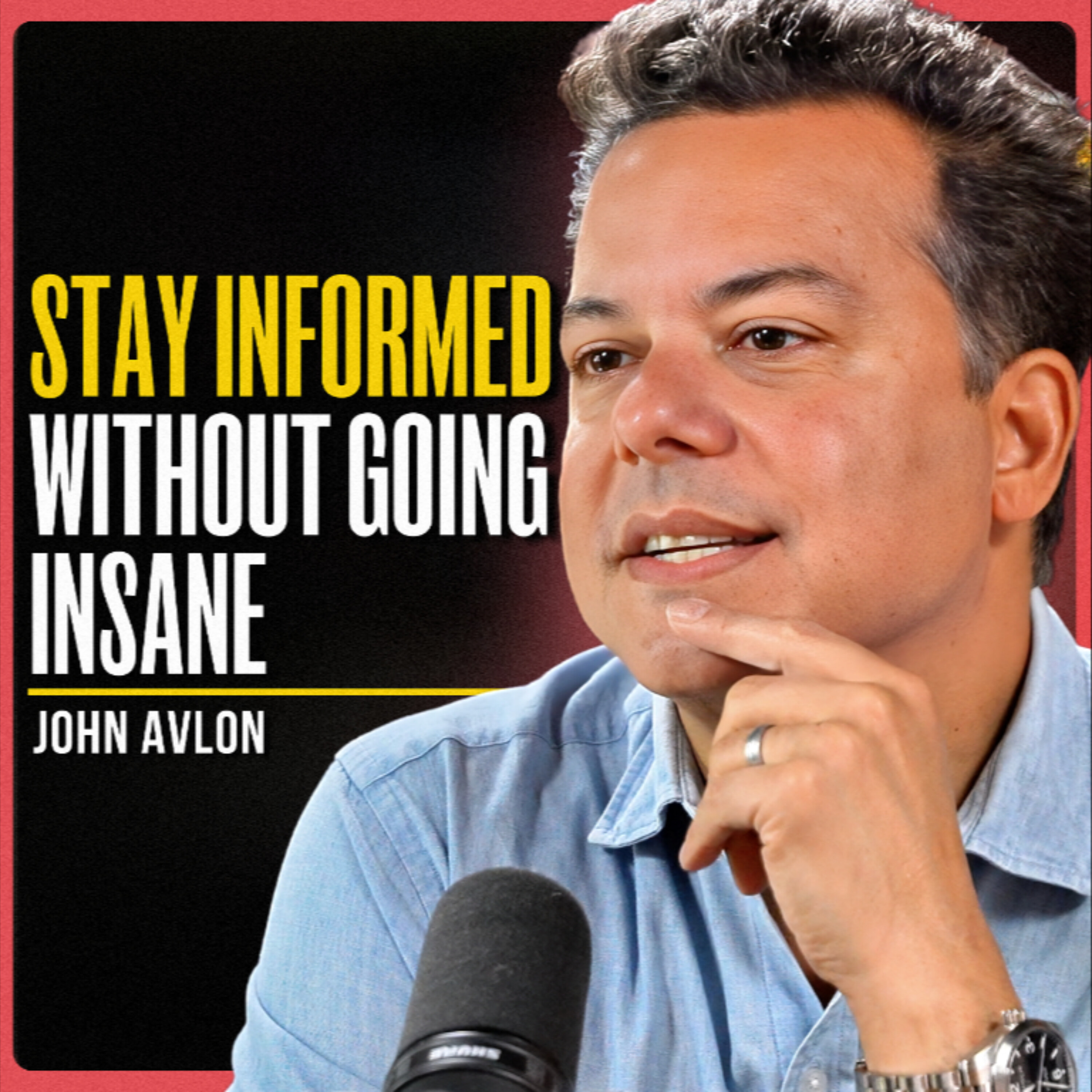
In this episode, Ryan Holiday interviews John Avlon about the challenges of navigating today's news environment, the importance of local journalism, and the lessons in leadership and empathy derived from historical figures like Abraham Lincoln. They discuss how humor and understanding human nature can foster better leadership in tumultuous times.
Written by AI. May contain mistakes.

Get the gist, explore an idea or ask about something said.
 Claude
On The Daily Stoic, what are the key points of this episode?
Searching your listeningAutomatic transcript. May contain errors.
0:28Why choose a Sleep Number smart bed? This message comes from Capital One. With the Spark Cash Plus card from Capital One, you earn unlimited 2 % cash back on every purchase and get big purchasing power so your business can spend more and earn more. Steven, Brandon, and Bruno, the business owners of SandCloud, reinvested their 2 % cash back to help build the company's retail presence. Capital One, what's in your wallet? Find out more at CapitalOne.com slash Spark Cash Plus Terms Apply. Look, ads are annoying. They are to be avoided, if at all possible. I understand as a content creator why they need to exist.
1:12That's why I don't begrudge them when they appear on the shows that I listen to. But again, as a person who has to pay a podcast producer and has to pay for equipment and for the studio and the building that the studio is in. It's a lot to keep something like the Daily Stoic going. So if you want to support a show but not listen to ads, well, we have partnered with Supercast to bring you a ad-free version of Daily Stoic. We're calling it Daily Stoic Premium. And with Premium, you can listen to every episode of the Daily Stoic podcast completely ad-free, no interruptions, just the ideas, just the messages, just the conversations you came here for.
1:55And you can also get early access to episodes before they're available to the public. And we're going to have a bunch of exclusive bonus content and extended interviews in there just for Daily Stoic Premium members as well. If you want to remove distractions, go deeper into Stoicism and support the work we do here. Well, it takes less than a minute to sign up for Daily Stoic Premium, and we are offering a limited time discount of 20 % off your first year. Just go to dailystoic.com slash premium to sign up right now, or click the link in the show descriptions to make those ads go away.
2:33Welcome to the Daily Stoic Podcast, where each weekday, we bring you a meditation inspired by the ancient Stoics, a short passage of ancient wisdom designed to help you find strength and insight here in everyday life. And on Wednesdays, we talk to some of our fellow students of ancient philosophy, well-known and obscure, fascinating and powerful. With them, we discuss the strategies and habits that have helped them become who they are and also to find peace and wisdom in their lives.
3:19Hey, it's Ryan. Welcome to another episode of the Daily Stoic Podcast. I am in desperate need of a haircut. I've just been busy. I haven't gotten one. I've got some talks coming up. I need to get a haircut. But when I used to live in New Orleans, I would go and get my haircut at this barbershop attached to the Montleone Hotel in the French Quarter. It was this lovely little place. Actually, I told a story about it when I gave my talk about Jimmy Carter at the Naval Academy. Let me play that for you real fast. I was getting my haircut in New Orleans several years ago. and as I was sitting in this old-timey barbershop I looked around and I noticed that the barber was the only one there there were a bunch of chairs but he was the only one there and so I asked him I said hey how come you're the only one in here and he said you know I used to have a number of barbers that worked for me but they kept speaking badly of our president and so I fired him and I maybe I forgot I was in the middle of the deep south but I said oh really what president and before I could regret my question he said the name I probably would have expected least out of any president he could have named he said they kept speaking badly of Jimmy Carter and I thought two things I thought two things one I thought has this guy been holding on to a grudge and working by himself for 40 years and then I thought he thinks Jimmy Carter is a great president.
4:50And I don't know why that struck me as odd. Maybe it's what I heard growing up. Maybe it's what I'd read. But it struck me as a solvable problem. I realized I didn't know very much about Jimmy Carter. And so I decided I would read about him. I've thought very fondly of this. As I said, sometimes when I go back to New Orleans, I sneak in there. But I'm not going to obviously fly to New Orleans to get a haircut. But it was really funny when I had today's guest on after we finished recording, he pulls up a picture of his phone and he shows me a picture of John, the barber from the Montleone Barbershop.
5:26It's where he gets his haircut too, or has for many years. He doesn't live in New Orleans, but when he's there, he gets his haircut. What a crazy fucking small world, right? It just blew my mind. It made me smile from ear to ear. That guest, John Avalon, is someone I've been wanting to have on the podcast for a very long time. I've known his wife, Margaret Hoover, for many years as well. I met her when I lived in New York. So this is a kind of geographically diverse episode, I guess. But that's the cool part about moving, traveling, living an interesting life, is you never know who you're going to bump into and kind of end up with friends in places all over the country.
6:09That's sort of what we talk about in today's episode. So John has written two great books on Washington and Lincoln. He came out to Bastrop. We had a great conversation. And we're talking about Lincoln and Washington because they remain great examples for all of us. His book, Washington's Farewell, is fantastic. And so is Lincoln and the Fight for Peace. He signed both of them at The Painted Porch. John was previously a senior political analyst and anchor at CNN. He was the editor-in-chief and managing director of The Daily Beast from 2013 to 2018, and was a former speechwriter for a number of politicians.
6:51I think you're going to like this episode, and let's just get into it.
7:00One of my open questions and curiosities with you is your love of Iron Maiden, which I find fascinating. Why is that fascinating? Because it's the opposite of my jam. And I don't, I would love to learn more about how that's a world that you're like super drawn into. I could talk about Iron Man all day. I don't, yeah, I don't know. I'm a huge music fan in general, so. I don't know why. Yeah, it's weird because I don't like a lot. I mean, I do like heavy metal, but it's not like I'm, I love all those other bands. I just love that one. Why? I don't know. Is it like the iconography of it? I think I like, it's a whole universe.
7:33All the songs are about history and. Are they actually about history? Most of them, yeah. That's interesting. Okay, so that's an entry point. Yeah. I mean, I think it's funny. I think people who don't listen to heavy metal think it's maybe stupid. And then you kind of get into it and you realize actually these were like Rush is very smart. Right. They're kind of like nerdy universe. It's like this kind of sci-fi universe world. I think I was always into that. That's interesting. Okay, so that begins to answer my question. Yeah. And then I'm super interested in like the whole, like as a career and as an arc and as a sort of world they've created, I think it's very interesting.
8:10Because they've never, they've basically never been cool. Like they were never a big band. They don't have like five or six huge hits like some of those. Right, I couldn't name, but I'm not a huge metal fan at all. But they've sold a hundred million albums. That's amazing. Yeah. That's really interesting. Actually, somebody just sent me, so on one of the tours, because the lead singer, Bruce Dickinson, is a pilot. it. And during breaks from the band, he got certified to fly like 747s. And so he was flying for British Airways. Really? Yeah, just for fun. He's like this Renaissance man. And so they had this idea that he would fly the band from show to show.
8:45So there's this plane, it's called Ed Force One, and it's their 747 that they would load all the gear in, all the crew, and it would fly from show to show. And so some guy, I guess afterwards, the plane, like this was 10, 15 years ago or whatever. And he's now too old to fly planes of that size. Like he aged out. I didn't realize you age out from flying planes. I think you do from commercial planes. Right. I think you can fly whatever you want yourself. But yeah. But I don't think you can fly a 747. What a trip, man. But anyways, they took the plane apart and they sold pieces of the plane. So they're fans?
9:19It's like a key chain, and it's just a chunk of the, like, a piece of the fuselage that they just sent me one. It's pretty funny, actually. That's cool. Yeah. So I'm a huge Iron Maiden nerd. Clearly. I've probably seen them, I don't know, six or seven times. Okay. Yeah, that's hardcore. Yeah. Well, you've helped explain part of it to me. So they did a very good job of, like, world building. Yes. I mean, and the joke about some of these heavy metal bands is that they sold more T-shirts than albums. But the economics of selling T-shirts is much better. you would much rather sell a t-shirt than an album because think about it like you you split the you get a royalty on an album you make the bulk of the profits on a shirt right well yeah from i know that from books yeah right exactly it's like would you rather give a talk or would you rather from an economic standpoint a talk yeah uh but because there's no one in between you and right but the book is more is is like the yeah it's the crafting you can't have one without the other yeah And so think about it.
10:15It's like every album that they put out is a whole new set of artwork. It's a new tour that you then sell the artwork at. So it's the whole economic. Yeah. One of the things I want to nerd out with you on is marketing and viral marketing, which you've been incredibly obviously successful at and began at. Yeah. It's interesting, like how you built the thing you wanted to read, but then used everything you'd taken up to that point, which is kind of interesting. Yeah, I think I think for and maybe that's even one of the things I took from some of these bands that I like. But it's like, how do you, you could spend your whole life marketing stuff for other people, or you could make stuff that you like and then be good at telling people.
10:48Yes, yes, yes, yes, yes, yes. Which is obviously, that's the unique, you know. Well, what I wanted to, it's the question I get the most these days, and you coming from the news business, maybe you can help me with it. People, they're like, watching the news makes me miserable. Right. It makes me stressed out. It makes me scared. I can't do anything about it. So that's one hand. And then on the other hand, they feel compelled as citizens to be informed and to pay attention and to not tune out. How do you recommend people navigate that tension? So this is the issue of the news diet, right? And your responsibilities as a citizen.
11:22I would say certainly there's no obligation to make yourself miserable and to marinate in said misery. You don't need to be sort of like a news junkie, you know, just being besieging your brain with with, you know, what I think is objectively bad news a lot of the time. That said, the the extreme alternative, which is like the ostrich approach. Yes. Baring your head in the sand, pretending, you know, you can just disengage. I think that is civically unsustainable in a democracy. Yeah. Which, you know, we're citizens, not subjects. And so citizens have to be engaged. So I think one way out of that is to curate your news diet more intelligently and beware of the Amen Corner confirmation bias diet.
12:02But make sure you're subscribing to your local paper, your local news source. Identify a couple of individuals who have a spectrum. Like when I ran the Daily Beast, the opinion page, I always said we're liberal to libertarian. I want a great conversation. It's got to be a fact-based debate. But I want different perspectives. objectives like one of my first hires was p.j o 'rourke as as we wrote his published his last column and that's because it was also like we're not going to be predictable that that itself is is i think its own kind of sin so you know but but subscribe to first of all like local press trump won 91 of news deserts and i think that has a lot of um it's really important stat from the last election one we're seeing the squeeze of of local journalism media which atrophies a sense of community and civic engagement.
12:48And in the absence of a local news source, people go deeper down the rabbit hole of their own phone and the fragmented news reality, which then can be more easily manipulated through algorithms, which now have been weaponized to pursue administration ends. Right. And we see this with different and TikTok's an extreme example of that. Right. But I would say also then, you know, figure out the places that you want to support. You know, you vote with your eyeballs, you know, every day. And so places like the Atlantic are doing it well. The Economist, I revere. I'd say The Bulwark, where I have a podcast.
13:19The Daily Beast, my former shop. You know, individual sub stacks. This is an incredibly exciting thing that's going on because you can support the people you like directly. I've got a huge like, you know. And by the way, talking about economics of creation, the economics, suddenly these people are actually getting paid. Yes. Commensurate with the value that they were formerly creating. Correct. They were previously salaried employees of institutions that made tens of millions of dollars. There was always a ceiling on what they can make. And now they own the audience and the audience is compensating them.
13:50And it's kind of mind blowing. It is mind blowing. And it's really revolutionary in a pretty liberating way. Because as you said, there was a huge disconnect between influence and compensation. You know, this is one of the key lessons. Like if you don't own your own IP, you know, you're a wage employee and there's a limit there. So this is exciting and you can support the people who you believe are doing it right. Heather Cox Richardson is, you know, I write applied history. That's the biggest substack there. It's kind of crazy. We can sometimes despair over like who has power or who has influence or what people.
14:22And then you're like, yeah, but the biggest subset is this history professor who for free gives really great analysis of today's news in context of its historical, you know, relevance. Which is what I always tried to do at CNN with my reality checks, right? It was like a fact check plus with perspective and history because I'm a history nerd, obviously. Yeah, me too. I've noticed that. It's one of the reasons why I feel kinship. But, you know, like Slow Boring, Matt Iglesias, a big fan of the popularism and the abundance agenda. I think that's really powerful, obviously. You know, so you could pick, you know, Damon Linker is someone I like a lot.
14:58And we can go through, but that's a part of your news diet. So I would just say make sure you're subscribing to supporting local journalists more than one. Right. Make sure you're supporting individual sub stacks of people that you feel are trying to do it right. Yeah. And then you're getting a couple of things like The Economist or The Atlantic, who I think are sort of best in class, the bulwark, whatever it is, because that's important. And, you know, watch CNN, the shows you really care about for he does great work. I mean, you know, Jake Tapper and Aaron are great. And, you know, I think Morning Joe does really good analysis and his value add.
15:32The news flume is the thing I think that's not valuable. It's the it's the commodity news approach. and I wrote an essay for a book, The Center Must Hold, about sort of centrist approach to journalism and how to do it right and how to do it wrong. And I think that remains sort of a very live wire debate. But one of the things I'm most concerned about right now is media capture. Yes. The Orban playbook, which the industry, because of the economics, is incredibly susceptible to right now. And they're owned by big parent companies for whom these news divisions are basically rounding errors. That's right.
16:00Yeah. That's right. And it used to be that it was a loss leader because having news was necessary for licensing public airwaves. Yeah. Right? This was sort of a mid-20th century enlightened self-interest move that we lost sight of. And now you're seeing deals are being held up. You know, the Trump administration is weaponizing that and the big corporations are folding. And you can do that directly or indirectly. You can do that by sending pressure. So the fact that the executive producer of 60 Minutes just resigned in a real statement because he was getting editorial pressure, that's a very different dangerous deal.
16:39Human, your body has a performance superhighway. 60 ,000 miles of blood vessels that deliver oxygen and nutrients to every cell. This, of course, is your cardiovascular system. It's the foundational system that powers everything we do. Both elite athletes and longevity experts invest directly in the cardiovascular system because supporting healthy blood flow is critical for energy, recovery, mental clarity, and overall performance. That's where human comes in. That's human with two N's. They started out of research at the University of Texas, near where I live, and have 15 years of experience making award-winning supplements for nitric oxide production and healthy blood flow, now used by over 160 pro and college sports teams.
17:26human cardiovascular health daily is a plant-based and made from clinically studied ingredients like grapeseed and seed kelp extract it supports nitric oxide production for healthy blood flow and energy while also supporting blood pressure and helping support the delicate interlining of your blood vessels just two capsules each morning will power energy and recovery while also playing the long game by supporting long-term vascular health and healthy aging human has an exclusive offer for our listeners. You can visit human.com slash stoic for an extra 15 % off your first purchase. That's enter code S-T-O-I-C stoic at checkout.
18:01That's human with two N's dot com slash stoic for an extra 15 % off with code stoic at checkout. We just took our kids to an outdoor performance at the Nutcracker. They had a snow cone and then they went insane in the car ride home. And one of the things I try to remind myself when that's happening is that I don't control my kids' behavior, especially when they're too far gone like that, but I do control how I respond, right? That's stoicism, but it's also what Dr. Becky talks about. Dr. Becky is a clinical psychologist and a best-selling author, and she founded Good Inside, which is there to give parents practical, actionable tools for handling those everyday challenges with confidence.
18:43My wife introduced me to Dr. Becky's books. I love them. I've recommended them a million times. I've had her on the podcast. And as it happens, Dr. Becky is hosting two live Q &A events for good inside members. I am one of them. She signed me up for it about a year and a half ago. I've loved it ever since. On December 1st, you can join Dr. Becky for her How Not to Raise Assholes event, which is about avoiding entitlement and raising kind, empathetic kids. And on December 15th, she's hosting her How Not to Lose It Over the Holidays event, which I'm sure we could all use. As I said, I'm a big fan of Dr.
19:20Becky. She's been a great influence for me as a parent and just as a human being. And Daily Stoic listeners can join for 15 % off with code STOIC15. You just got to head over to goodinside.com to catch the events.
19:40It struck me that the tension of staying informed and, you know, what's happening and the sort of fundamental historical context, the philosophical truth, wisdom, that this tension is very old and actually Lincoln embodies it. Because on the one hand, he's this savvy politician who even his own friends and staff would say, like, no one was a more astute reader of public opinion than him. He was great at kind of knowing which influential journalists to cultivate relationships with, who he couldn't afford to lose. And I mean, there's scenes of him And it's in the movie Lincoln, but it's true. He would like basically fall asleep at the telegraph office so he could get the news like right off the wire.
20:24And then the epigraph of your book, which I think captures the other side of Lincoln, is human nature will not change in any future great national trial compared with men of this. We shall have as weak and as strong, as silly and as wise, as good and bad. Let us therefore study the incidents of this as philosophy to learn wisdom from and none of them as wrongs to be revenged. He also had this sense that humans were humans. It had always been thus. And I think so much of his Civil War strategy, his political savvy is actually rooted in his reading of poetry and Shakespeare and history. Yeah. Less so than, you know, his, you know, what's happening in the papers.
21:04Like, so he has this kind of like rooting it in timelessness and a sense of the timely. Yes. And that's what great leaders do, right? In Lincoln's case, the ultimate dichotomy is, as Sherman said, he had more of a goodness combined with greatness than any man that I met. It's the combination of the two. It's his goodness that makes him truly great. And it's that ability to be a savvy politician, a political entrepreneur, remembering that the Republican Party is an upstart third party, a moderate progressive party that he is the first president to represent. That is unbelievable political entrepreneurship, right?
21:38Teddy Roosevelt takes great comfort and all that. Also, there's not a precedent. I mean, much like Washington, and I wrote a book on Washington's farewell address before this, and they're sort of complementary. Both are uniting leaders in divided times. But Washington's a president without precedent. But there'd never been a crisis like the one Lincoln faced. And his key insight is you don't win the war unless you win the peace. So he's thinking like several moves out. And I agree with you, though, the beautiful thing about Lincoln, the poet of democracy, the philosopher, is that he does have this—it's rooted in his understanding of Shakespeare, the Bible, Aesop.
22:12Yeah. You know, there's amazing scenes where he's like—he's reciting Beth from memory on the boat back from the front lines, right as Adam Appomattox is being signed. And that quote you read, the epigraph, to me is—it's everything. It's the Zen cone. It's the reason and rationale for applied history. Yeah. And he's a he's a president without precedent, not just because we're in the Civil War, but America is in the process of becoming a modern nation as is not just like they're they're building the Capitol and and Washington has a federal power. That's new. And the war makes it only more so. But also like railways and newspapers, we're starting to get a national culture in this moment.
22:53Right. And so he's having to balance this sort of this sense of historical significance and philosophical truth with the, hey, we just heard from hundreds, thousands of miles away this bit of breaking information. He's struggling with, for the first time, I think, a lot of the things that we're continuing to struggle with in the modern world. There's just more information than you know what to do with. And how do you how do you kind of stick with what matters when you're besieged by contradictory information and news and noise on all sides? Yeah. And the fog of war is an extreme version of news and no's on all sides.
23:27You know, it's fascinating because you key into one of the really underappreciated things about Lincoln. Right. The second inaugural is the first speech transmitted by telegraph. It gets to San Francisco in basically real time. Yeah. And that's a revolution in terms of combating the tyranny of dissonance. And we think of history and historical leaders like Lincoln of their time sort of in amber. But Lincoln is a guy who I like, I think all great leaders is fascinated by the future. Yes. Right. So it's that my kids sort of mock me about this because they say, oh, what did you give a talk about the past, the present, the future and how they all understand?
23:59Yes. You know, but Lincoln is very aware. You have to remain fascinated with the future. This is one of the things that I think, you know, great leaders do is they engage people in solutions and visions of the future. It's empowering. It's not just about his whole political career was like, what if we build canals and railroads? Correct. Like Lincoln didn't live in the black and white 1800s. Lincoln lived in the cutting edge future. I mean, he's testing repeating rifles in the like the lawn of the White House. He invents like a boat like he is the only president with a patent. And so there's something about Lincoln where it's easy to think of all these people as historical figures, as people who are living as opposed to people who are living in what they thought of as a brand new age, a new future.
24:43Everything's shiny and new. It occurred to me, for instance, I've said this before, but like Stoicism is ancient philosophy to Marcus Aurelius already. Like it's already five, six hundred years old by the time he gets to it. But he doesn't think he's studying this dead philosophy. To him, it's still this new, exciting, interesting thing. And he doesn't know he's living in the decline and fall of Rome. He still thinks he lives in Rome, right? Like the statues were still painted, you know, they weren't like old marble. And so, yeah, Lincoln didn't think that he lived in this antiquated time. They had on the latest fashions, not old clothes.
25:22Right, exactly. And that's why the more you can make their times come alive, the more relevant it is. You take the historical figures off the pedestal. You try to understand them as much as possible as they understood themselves. And that actually adds to the poignancy of Lincoln because he does think he might be living at the end of the American experiment. Sure, sure. Right. The nightmare the founders worried about most is happening on his watch. Yes. And and he seems spectacularly ill suited to lead at this moment. Right. He's never been an executive. He's never been a governor or mayor. He's been one term in Congress.
25:51It's an upstart third political party. He doesn't correspond to people's idea of a leader. He doesn't have military experience. And yet he has this great soul depth. Yes. And that's rooted in his sense of history and human nature. And the humans are humans. They don't change. Exactly. And so so he but the fact he's able to navigate. Yes. And he invents, I argue, sort of a new form of leadership focused on reconciliation, which is is is itself incredibly profound. Right. No, don't double down on the duality. So and he believes that moral courage can be combined, doesn't need to be combined with a sense of moral superiority.
26:28That's something we could stand to learn a lot in our politics. Sure, sure, sure, sure. Right. So he says, look, I'm not anti Southern. I'm anti slavery. They are just what we would be in their position. So his superpower is in some ways empathy. And the power to be empathetic in a civil war, it's almost incomprehensible. It is. And that's one of the things in terms of what we can draw on. If he was able to be empathetic in a civil war, it challenges us to, even though we need to be honest that our empathy has been strained, we can take some courage and comfort from his example. Well, and I think it's also interesting, right?
26:59These weren't like historical villains to him. These were people that he knew. Yes. Like when Alexander Stevens comes to negotiate this, the potential peace deal towards the end, they had inside jokes with each other. You know, he'd met these people that he was part because he was a figure of his time. They weren't. I think we sometimes even with a Martin Luther King, we think of them as these sort of historical titans and not. He's calling up Bobby or Jack. You know what I mean? He's friends with Richard Nixon also because they've been to parties together. They know each other. But this wasn't a few historical incidents.
27:33These were relationships that spanned the periods of years. And he understood them. He understood their motivations, their flaws. And he understood it in this sort of personal context. And that gave him, I think, some sympathy, even though he was horrified by the things they had done and found their cause to be unfathomably bad. But he understood the people in it were not what they were doing necessarily. That separation and also understanding that the frailty of all those historic figures increases our own empathy and makes their wisdom more accessible to us. And you're exactly right. So Lincoln sees Alexander Stevens, the vice president of the Confederacy, who gives the speech called the Cornerstone.
28:16The worst speech in American history. It makes it very clear that the whole like, oh, the Civil War wasn't primarily about slavery and racism. Yes, it was. Exhibit A, Alexander Stephen's speech about the entire purpose of the Confederacy. And it's a reminder that we've always had the struggle between the good America and the bad American. We need to write more love letters to the good America. We need to reclaim that. But the fact that Lincoln is also the way he uses humor. Yes. Is very disarming. And it's a very effective political tool we don't use as much today. To me, I think if you're not funny, you're probably not very smart.
28:47Like, I think there's something about, like, really smart people are under smart and wise people understand things at such a level that they can be humorous about it. Like, he understands the humor about it. He understands the absurdity of existence, the futility of so many things. Like, tells a lot of stories about that. Yes, yes. And also, like, he has like a dirty sense of humor. Like, like he was filthy. Yeah. The fascinating contradiction is that, yeah, he's got a very bawdy sense of humor. Right. And he's got a complicated marriage. There's a lot of things that are, you know, he's alternately, he's sunshine and shadow, right?
29:21He's alternately depressive and telling a lot of jokes, which people think are totally inappropriate at the time. Like irrelevant and beneath the chief executive at this great moment. But his point is for him, humor is also self-medication. Yeah, he says, if I don't laugh, I would die. Exactly. And that's a really powerful story where one of his friends visits him in the White House after a devastating defeat for the union and finds him sitting by the fireplace laughing. And a friend launches into him and says, how can you be laughing at a time like this? And he throws the book down and looks at him with tears in his eyes and says, don't you realize that if I could not laugh, my heart would break and I would be unable to do my job.
29:56It's those moments that are so human and those moments that we need to recognize today. And that belief that sort of laughter is the shortest distance between people. Humor is really disarming. Those are more things that we can cultivate. And I think when humorlessness takes root in a political movement, that's a sign that it's not going to be able to resonate. Yes. Yes. They've sucked the joy out of life and the connection out of life and the humanness out of it, too. Which I actually do think that it's kind of like, even though the comedian seemed to have had this kind of right wing shift, which is weird lately, especially in the podcasting space, certainly.
30:35Yes, that's true. The humorlessness of that whole scene is actually, I think, interesting. Like they'll laugh at people, but there's a humorlessness as like the main victim of Lincoln's jokes was himself. Correct. Like he he tells a story about a man sent to to kill someone if he can find someone uglier than him. And he finds Lincoln, you know, like he most of the jokes are about how gangly and weird and, you know, they're all at Lincoln's expense. And he learned that by actually mocking somebody in the Illinois State legislature and actually hurting the man's feelings. And he's an empathetic, kind of soulful person that he basically resolved that, you know, no, it's to break the ice and therefore self-mocking humor.
31:17But insisting on humor, you don't wield it as a weapon. Yes. And that's where sort of a deeper wisdom and compassion. There's no cruelty in it for the most part, unless you'd say he's being cruel to himself. But yeah, there's no victims of the jokes. That's right. And I do think, you know, look, but we want to be on guard against humorlessness and speech codes. And, you know, because that does sort of suck the joy. Totally. A successful political movement. I've been interviewing folks on my Bulwark podcast about how you create a pro-democracy movement that can push back on authoritarian moments.
31:50And one of the things is it's got to be positive and patriotic. And it's also got to have a sense of fun. Yes. You know, that's necessary for a movement. People feel like they're part of something bigger themselves, but it's not a grim and humorless march. It needs to be defiant and optimistic and patriotic and inclusive, not exclusive. Yes, that's right.
32:14it. Thanks to Toyota Trucks for sponsoring this episode. When I bought my ranch in 2015 out here in Bastro County, I drove my car about halfway down the dirt road that we live on, thought this isn't going to work, stopped, parked it, walked the rest of the way home, borrowed my wife's car, drove in Austin and bought a truck. What I bought was a Toyota Tacoma. And this truck wasn't just transportation, getting me to and from my house. It unlocked a whole different style of living for us, not just on the ranch, but in our little Texas towns. There were places I could go now that I couldn't go before, especially out here in the piney forests, through the fields, and on the unpaved roads like the one that I lived in.
33:00We got to go deep into the hill country's wild beauty. We've driven all the way out to East Texas. We've driven across the country. And by we, I mean not just my wife, but both my kids who I drove home from the hospital in that truck. Toyota trucks are built for those who understand that the best adventures happen when you're willing to veer off course. Because you never know when you'll end up on a Toyota adventure detour. And of course, this is stoicism too, because every detour, every obstacle is an opportunity. But it's helpful if you can handle the difficulty inherent in that. If you've got the resilience and the right companion to make it wherever the road takes you.
33:39Discover your uncharted territory. Learn more at toyota.com slash trucks slash adventure dash detours.
33:52I loved your book. One of my sort of favorite moments in American history is that those couple days on the River Queen. Yeah. Where you get because very rarely do you get a bunch of historical figures all in the same room, right? Like Eisenhower, Patton, FDR, Marshall. They're they're never they're in different places. They're never together. Right. But but the idea that you get Sherman, Porter, Grant, Lincoln and a couple of all of us, I think Stanton's maybe there. But they're all in this room at the same time, just and they're just stuck on this slow moving paddle wheeler. It's just one of my it's one of my favorite sort of scenes in American.
34:29It feels like it should be a play or a book in and of itself. I worked very hard at sort of recreating that that conversation. And it's in the painting, The Peacemakers, which Harry Truman buys right at the sort of for the White House after the Second World War, right at the the sort of that that that period. And itself, the painting was drawn from life by interviews with Sherman and Grant and Porter. Lincoln obviously had died, and the rainbow behind him is sort of the poetic license. And interestingly, George H.W. Bush chooses that painting to be in the background of his own presidential portrait, which is kind of cool in terms of the work he and Baker were doing to build a new world in the wake of the Cold War.
35:10And so I appreciate that that moment jumps out at you, and you can recreate that conversation. Like Sherman is snapping and he's talking and the painter and Sherman explained this about like they would be able to cut Lee off. Yes. You know, with sort of a pincer like movement. And you get, you know, and Sam Grant, Ulysses S. Grant is sort of looking on in a bemused way at Sherman kind of. Because Sherman has a ton of energy. Grant's relaxed. Yeah. He's more of a, yeah, he's got a different energy about him. He fights and he's dogged, but he's not the same kind of like live wire that Sherman is.
35:46And Porter is this weird kind of bump on a log walrus mustache kind of guy. But it is this great compelling moment. And that's part of the fun of the project of the book for me was, you know, there have been 16 ,000 books written about Lincoln, but no one had written a book at that point about his plan to win the peace after winning the war and close focus on the last six weeks because he never gets to implement that vision. Yes. But you can recreate it because it was very much on his mind. Yes. He was thinking long and short. It's funny. I got, you know, those like sort of Fox News history books where the anchors do the...
36:18So I... Sadly, yes. They brought me in. They wanted me to write one for one of those anchors one time. But they didn't even have the book idea. Like they were like, what book should I write? Will you write it? And I pitched the River Queen story And they were it was just like like not not interested at all. But I probably should have picked something more dramatic. But that's one of my favorite historical moments and scenes. And yeah, it is in that famous painting and Porter details it all in his memoirs. But you're just like, this is what gives you the hint of how it could have gone. That's right.
36:52Had he not been killed. And then my favorite sort of little tangent from that scene is Lincoln gets back after Richmond and he writes a letter to the head of the Navy. And he says, hey, can we get my son like some Navy flags? Because he like clearly heard about it. And he was like, dad, I want, you know, when you go on trips, you're supposed to bring shit home for your kids. And here you have Lincoln as the father being like, I think it was Tad. He's like, Tad wants a flag. Can you get Tad a flag? Yeah. One of the most, I actually begin the book with this one to me, one of the most cinematic moments in American history that gets really short shrift is where Lincoln sort of scrapes a short in Richmond while the city is still burning.
37:30I mean, Jefferson has left hours earlier, like Jefferson Davis. Like the chair is still warm. Yes, it's still warm. But he walks up the hill from the river holding his son Tad's hand on the boy's, I think, 10th birthday or 10th birthday. And it's the father and the son surrounded by a group, a small, very small group of sailors, and they get lost. There's no welcoming party. This is not a triumphal interest to Richmond. But he sort of walks up the hill. And I recreated that walk with my son when he was probably, you know, five or six up the road. And you get the sense of it's a steep climb. And then he bumps into like a New York regiment and they take him to Jefferson Davis's White House and he sits in the chair.
38:13And that, to me, is one of the most incredible cinematic moments in American history. And it doesn't get a lot, as much attention as it should. Well, it wasn't stagecrafted, right? Not at all. The opposite. Gaul enters Paris like at the head of a parade, right? And it's a scene. And then to go to the point about the media environment shifting, they understood then that they were in the modern media era and this needed to be captured by cameras to sent back to the movies so people could watch it. It was part of that. And Lincoln is still in the past, right? He's just, oh man, we just took the enemy's capital.
38:49What do we do? And he's there almost before the generals are there. No, he is. I mean, General Godfrey Weitzel, who is a immigrant, is in charge of of Richmond and everything is incredibly fluid. And all of a sudden the president shows up and he's had this insane journey up the river in which, like, the boat almost gets sunk and it's chaotic. And so it's very human. It's very, you know, to the extent he's sort of, you know, he's not traveling with a gaggle of reporters. Not at all. No one's recording it. It's kind of the last gasp of that sort of, oh, you'll read about this in books later. And it's a little Palm Sunday, right?
39:23I mean, this all corresponds. He's sort of, you know, the Jesus of American politics assassinated on Good Friday. But, you know, this sort of entry, this non-triumphal entry. But still a moment of suffused with hope. And he himself feels great foreboding and exhaustion. But what you're just saying about De Gaulle, and I love when, you know, I recommend your books widely. I actually, right now, when people come up, they're like, what do we do? And there's not a lot of good answers. And one of the things I do, you know, subscribe to the local paper, patriotic, positive, inclusive, you know, resistance.
39:51But also, you know, reading your book on courage, for example, I think is useful for people right now. And I do recommend that book to folks all the time. But you talk about de Gaulle. There's another interesting counterweight about playing for the cameras in a way with a sense of history. Yeah. Which is Eisenhower, because the twist in my book is that it ends in the Marshall Plan. Because General Lucius Clay, the seed of the book, and you appreciate, you know, there are two rules for me. You write the book you want to read and you follow the seed. Yeah. And Lucius Clay was asked what guided his decisions as sort of leader of the good occupation of German.
40:23And he said, I tried to think what Lincoln would have done for the South if he had lived. One of the things that Eisenhower and Lucius Clay did during the immediate aftermath and during the Nuremberg trials was to make sure it was filmed. Yeah. So the Holocaust could not be convincingly denied. And then to bring local Germans through those camps and local, you know, so that they had to confront it. and to make sure that German language press covered the Nuremberg Trump. Yes. And Justice Robert Jackson, who I'd love to write a book about someday, I'm doing Teddy Roosevelt's Man in the Arena right now, but I think Justice Jackson is a fascinating American figure and a strong sort of liberal patriot, strong tradition.
40:59But the way that they consciously made people confront the horror of the Holocaust precisely because they were afraid that otherwise people would forget or they'd say it never happened. Yes. Doesn't someone, there's a thing about a slave market they want to tear down, right? And Lincoln says leave. No, it's a prison. Yes. This is a fascinating moment. And I think it's applicable to a lot of the debates we have about statuary today. You know, Lincoln is in a carriage and he's passing a very hated old tobacco warehouse that had been turned into a prisoner, a really horrific prisoner of war camp.
41:30And he's going through and black citizens are, you know, newly liberated slaves or clustering. The encounters with the slaves is if it doesn't touch you emotionally, I don't know what's wrong with you. But where where they all, you know, he's walking through Richmond and they just he just bumps into these people who are forever free now from this moment because of the man in front of them. You don't get many moments like that either. And you have these snippets of where you can recreate the walk. Right. But so, yes, he's taking he's going around in the carriage and he's getting the tour and he goes and he passes this hated POW camp in effect.
42:04And people shout, tear it down, tear it down. And he says very calmly, no, leave it as a monument. Yeah. And there, too, that is that sort of we can't escape our past by destroying it. Yes. We need to confront it and reconcile with it and re-assimilate it and move forward. Yes. Yeah. And again, the wisdom that he had in this moment to understand that and then the sort of discipline, the ability to master his emotions is incredible. And then you it really it's I think it's the scenes you tell in the book and this sort of the last couple of weeks of Lincoln's life. I think if you don't know a history, you're obviously it's like, hey, we lost a lot when we lost Lincoln.
42:42But it's only when you really do a deep dive into that period that you get a sense of truly what was lost and why, in a sense, he had to be killed. Like why the like why the South had to kill this person. Right. Like it you can you can see why it was such a threat because he I think he would have won. Do you know what I mean? Like by killing Lincoln, they basically get segregation for another hundred years. Well, there are two things here. Right. Yes. But his martyrdom makes him more powerful. Sure. Right. And that that's one of the unintended consequences. You know, one of the fascinating things is you see very often we create the thing we're trying to avoid.
43:22And the South does that with their secession and insistence on secession and civil war. Lincoln initially just wants to stop the expansion of slavery. But by the end, you know, this is a war to remove the argument about secession and slavery forever free for all time. The second thing is that the radical Republicans wanted Andrew Johnson. They thought he was going to be more radical. The reconciler dies. The avenger takes his place. But they misread Johnson. They also wanted a less powerful president. They wanted to reassert Congress and the legislature and the legislators as the supreme body of American politics.
44:01And Lincoln was kind of the first president to be like, no, I'm in charge. Right. Well, that's true. But I think where it applies to, I think, a lot of your work is it's a reminder that character is key. Of course. Character is the single most important quality in a president or any person. And Lincoln and Andrew Johnson knew each other when they were young. They both have hardscrabble backgrounds, but the key difference is character. And one of the things I found was a quote from The Atlantic that describes Andrew Johnson at the time as being, you know, vain, ill-temperate and egotistical to the point of mental disease, you know.
44:33And he was— How does that turn out? Exactly. Yeah. Not terribly well. And he starts, you know, saying that, oh, I'll offer pardons to any large landowner, the people who should have known better, but they have to come and kiss my ring. Yes. Right? I mean— He's immediately corrupted by the power of the president. Immediately corrupted by the power. He's weak in the moments where he needs to be strong. And he's bent on vengeance, right? This is not a reconciler. This is a person bent on revenge. And as a result of him, and then within months of the end of the Civil War, the Black Code start getting passed.
45:06And the South start saying, you know, they start saying, well, we have to accept the end of slavery, but we don't have to accept equality. And that's where I mean, then Jim Crow's secession replaces slavery for 100 years, like 100 years on the dime. And that echoes on today because the American political map flips in 1964 when Southern Democrat LBJ takes on the conservative Democrats to push through civil rights and voting rights legislation. And it happens on a dime. Thanks so much for listening. If you could rate this podcast and leave a review on iTunes, that would mean so much to us and would really help the show.
45:41We appreciate it, and I'll see you next episode.
How do you stay informed without losing your mind? In this episode, Ryan sits down with journalist and historian John Avlon to discuss how to fix your “news diet,” why local journalism matters more than ever, and what studying Lincoln can teach us about leadership, empathy, and navigating chaos. They talk about Lincoln’s surprising use of humor, the ways history repeats itself, and what it really takes to stay sane in today’s overwhelming media world.
John Avlon is an American journalist and political commentator. He was a senior political analyst and anchor at CNN, and was the editor-in-chief and managing director of The Daily Beast from 2013 to 2018.
Follow John Avlon on Instagram | https://www.instagram.com/johnavlon/?hl=en
📚 Grab signed copies of John Avlon’s book Lincoln and the Fight For Peace at The Painted Porch | https://www.thepaintedporch.com/
👉 Support the podcast and go deeper into Stoicism by subscribing to The Daily Stoic Premium - unlock ad-free listening, early access, and bonus content: https://dailystoic.supercast.com/
📖 Preorder the final book in Ryan Holiday's The Stoic Virtues Series: "Wisdom Takes Work": https://store.dailystoic.com/pages/wisdom-takes-work
🎙️ Follow The Daily Stoic Podcast on Instagram: https://www.instagram.com/dailystoicpodcast
🎥 Watch top moments from The Daily Stoic Podcast on YouTube: https://www.youtube.com/@dailystoicpodcast
✉️ Want Stoic wisdom delivered to your inbox daily? Sign up for the FREE Daily Stoic email at https://dailystoic.com/dailyemail
🏛 Get Stoic inspired books, medallions, and prints to remember these lessons at the Daily Stoic Store: https://store.dailystoic.com/
📱 Follow us: Instagram, Twitter, YouTube, TikTok, and Facebook
See Privacy Policy at https://art19.com/privacy and California Privacy Notice at https://art19.com/privacy#do-not-sell-my-info.
