
 Ask ChatGPT


- Podcasts
- The Daily Stoic
- General Ty Seidule On Our Responsibility To Study, Understand And Grapple With History
The Daily Stoic17 May 2023 · 1h 17m
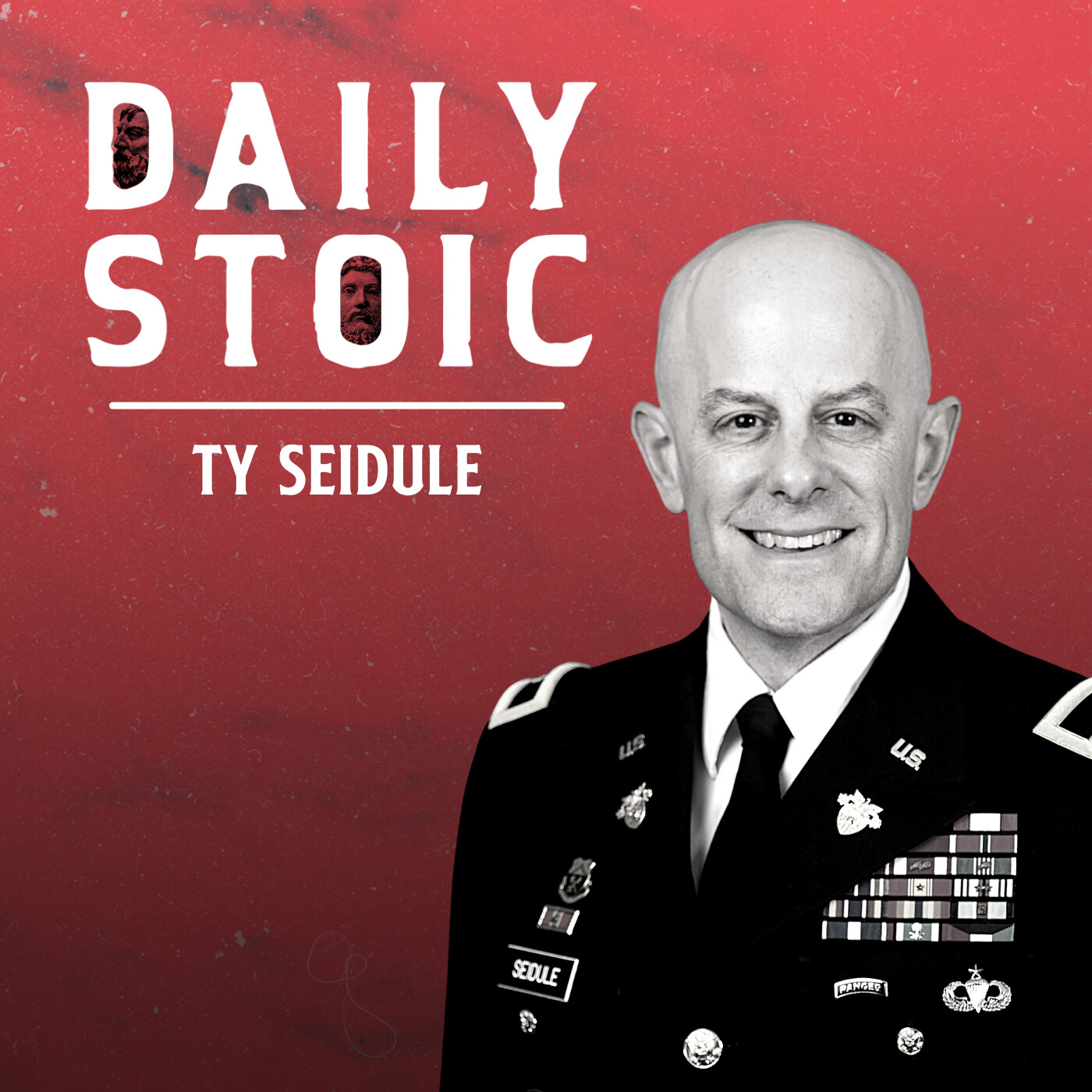
General Ty Seidule On Our Responsibility To Study, Understand And Grapple With History
In short
Host: Ryan Holiday
Guest
General Ty Seidule
Episode Focus
Discussion on Seidule's book Robert E. Lee and Me: A Southerner's Reckoning with the Myth of the Lost Cause, his insights on American Civil War history, the importance of grappling with history, and the implications of commemoration.
Written by AI. May contain mistakes.

Ask about this episode
Get the gist, explore an idea or ask about something said.
 Claude
On The Daily Stoic, what are the key points of this episode?
Searching your listeningTranscript
Automatic transcript. May contain errors.
0:00My family owns a 2023 Toyota 4Runner and honestly it's my favorite vehicle I've ever owned. Around town, it's smooth and reliable, but where it really shines is on our trips into the backcountry. We've taken it on backpacking adventures to Colorado and New Mexico, loaded it up with gear, and never had to think twice about whether it could handle the terrain. That's what Toyota Trucks are built for. Off-road confidence, rugged durability, and the freedom to explore. Toyota has a long history with the outdoor community, and they're committed to helping more people get out there and experience what nature has to offer.
0:29From remote trails to scenic byways, Toyota Trucks empowers you to take the detour, roam freely, and discover places that still feel wild and untouched. And they're not just making great trucks, they're working to expand access to adventure so more people can connect with the outdoors and pass that passion on to the next generation. Discover your uncharted territory. Learn more at toyota.com slash trucks slash adventure dash detours. That's toyota.com slash trucks slash adventure dash detours. You hear that? That's not just a Toyota truck. That's the sound of no crowds. No alerts. No distractions.
1:11And no telling what you'll find next. You know, like a detour. So why would you ever take a tour when you could take a detour? Toyota trucks.
1:32Welcome to the Daily Stoic Podcast, where each weekday we bring you a meditation inspired by the ancient Stoics, a short passage of ancient wisdom designed to help you find strength and insight here in everyday life. And on Wednesdays, we talk to some of our fellow students of ancient philosophy, well-known and obscure, fascinating and powerful. With them, we discuss the strategies and habits that have helped them become who they are, and also to find peace and wisdom in their actual lives. But first, we've got a quick message from one of our sponsors.
2:22Hey, it's Ryan Holiday. Welcome to another episode of the Daily Stoic Podcast. About every three or four months, I have to have this little conversation with myself. I'm thinking about what I want to read next, and I go, Ryan, you cannot justify reading another book about the American Civil War. And I almost always lose this discussion, and I end up reading another book about the Civil War, because I remain, as ever, just endlessly fascinated by what happened, the characters, the heroes and the villains of it, the humanity of it, the tragedy of it, And then the remnants of it, the consequences of it, the bloody implications of it that continue to this day, right down to the fact that there is a Confederate monument about a block and a half from the painted porch that I have been working on getting removed.
3:23In fact, I donated a bunch of the money to have it removed. Not everyone understands that. Some people have gotten very mad. I've got a number of really angry emails about it. But the more I have read about the Civil War, the more I have studied American history, the more I realize that the path tells us a lot about the present and a lot about the future. and my, you know, just sort of fascination of, with the Civil War as just an event of history as opposed to something that tells us a great deal about who we are, where we're going, and about human beings and their flaws, the mistakes we make, the patterns we fall into.
4:01All of that led up to today's guest, who is not just a professor of history at West Point, where he taught for 20 years, but served for almost 40 years in the U.S. Army. He's a Brigadier General. He has been in the news because he was appointed by the current Secretary of Defense, Lloyd Austin, to the National Commission on Base Renaming. He was the vice chair that done some really important and fascinating work. He has taught the American Civil War, not just at West Point, but also at Hamilton College. And then he wrote a wonderful book called Robert E. Lee and Me, A Southerner's Reckoning with the Myth of the Lost Cause.
4:47It was originally published in January of 2021. But it is an incredible book, and I got so much out of it. I think any American citizen should read it. I think it's better than a lot of the sort of trendy political books these days. It's not in that class. It is a great book of American history, of reckoning with the past, of why studying history and that stoic discipline of wisdom is not for the faint of heart. I put it up there with Clint Smith's How the Word Was Passed, which is one of my favorite books of the last couple years. This book deserves to be up there. General Ty Sigily is a fantastic writer, great historian, great American, and someone whose credentials, I think, are unquestionable on this topic.
5:36And it doesn't matter where you come down politically. I think you should absolutely read this book. And we have a fantastic discussion. I think one of the best episodes of the Daily Stoic podcast ever. So I hope you give this a listen. If you check out his book, Robert E. Lee and Me, which we sell at The Painted Porch, you can go to his website, tysegily.com. That's T-Y-S-E-I-D-U-L-E dot com. It's a great episode. Enjoy.
6:03I'm picking my kids up from school today and then doing our weekly routine, which is I take them over to Whole Foods and we get all our groceries for the week. Then we have dinner. It's one of their favorite things to do. It's one of my favorite things to do. And then my wife loves it because she doesn't have to take care of it. This holiday season, whether you're a guest or hosting the big dinner Whole Foods Market has what you need to delight everyone at your table. They even have heat and eat sides from the prepared foods department. You can make Whole Foods your one-stop shop. Everything follows Whole Foods Market's strict ingredients standards so you know it'll be delicious and good for you.
6:37You can also order online for pickup and even delivery in select zip codes to skip the crowds. Shop everything you need at Whole Foods Market, your holiday headquarters. You know, you don't have to let big wireless and your overpriced phone bill suck the joy out of the holidays. this year because right now all of mint mobile's unlimited plans are 50 off you can get three six and 12 months of unlimited premium wireless for 15 bucks a month it's their best deal of the year and it makes it really easy for you to give your expensive wireless bill the scrooge treatment all mint plans come with high speed data and unlimited talk and text at the nation's largest 5g network plus you can bring your current phone and number over to mint actually we just signed up for a mint mobile plan to use the social media phone here at the office and we didn't notice any kind of change in the quality of service or network or any of that just a whole bunch of savings turn your expensive wireless present into a huge wireless savings feature by switching to mint shop mint unlimited plans at mint mobile.com slash six that's mint mobile.com slash six limited time offer upfront payment of 45 for three months 90 for six months or 180 for 12 months plans required $12 per month equivalent.
7:45Taxes and fees extra. Initial plan term only. Greater than 35 gigabytes may slow when network is busy. Capable device required. Availability, speed, and coverage very easy at MintMobile.com.
7:57All right. Well, it's an honor to chat with you, sir. I'm really excited to do this. Well, thank you, Ryan. What an honor to be here with you today. So I thought I'd start with an easy question, which is, who is the greatest general to ever come out of West Point, and why is it Ulysses S. Grant? That is not only the best question, but the best answer I have ever heard. He is the finest soldier ever to wear Army blue. And Army blue was, by the way, was created by George Washington in the American Revolution. And Ulysses S. Grant did beautifully at the tactical level, like organizing forces within the sound of artillery.
8:34He did great at the operational level in Bixburg, moving troops to the battle. He did great at the strategic level by making sure all attacks happen simultaneously. And then he did great at the political level. So every place he did, he's the only general I know who has done all of those things simultaneously. easily. I also what I love about Grant is that he embodies to me the American dream doesn't come from money, bumps into all sorts of adversity. You know, he does go to an elite university, but he is not a member of the elites. And he works his way up from from the bottom, essentially, and does good in doing so.
9:17Yeah, not only does he do well in that, he's also probably the greatest military writer in history. I mean, you read his prose and it's so crisp, it's so understandable. And he did that on the battlefield. He did that in the finest military memoir ever written. He did that everywhere. So yeah, I mean, I can't tell you how. And in 2019, I was happy to be at West Point when we finally put a monument to Ulysses S. Grant on the plane there. and rightly recognizing him as, as you just said, the greatest graduate from West Point and the finest soldier to ever wear U.S. Army blue. Yeah, there's something about Grant's memoirs that's so good that even in his own time, the rumor was that Mark Twain had ghostwritten it.
9:59Yeah, yeah, but it's not true. It's not true because if you read his orders during the Civil War, they're just like, like binging a crystal. It's like, bing. It's just so clear you know exactly what he means. And that's why people that underneath him did so well is because they understood exactly what the boss wanted. And that's really what you want. What's the direction from the boss? Don't micromanage, but ensure you understand the direction you're supposed to go. And that's exactly what he did. Oh, I could talk about Grant. And I'm just so happy that he was, within the last month, he was actually given sort of like his sixth star.
10:33So there are only three people that are considered general of the armies. and that is George Washington, Ulysses S. Grant, and John J. Pershing. And he is rightly up there in that pantheon. Well, I was thinking about Pershing, actually, because I was just with my family in Big Bend and we happened to be staying at this little park that was Pershing's headquarters in his adventures over the border. But why was Grant so great? What was the core of what What's his secret strength? What's the essence of Grant that makes him great? You know, I don't think there's just one thing, but I would certainly say a couple of things.
11:13The first is he was he was so calm under pressure. So and the best example of that is is at the Battle of Shiloh when they're just getting walloped the first the first day of that. And Sherman comes up to him all, you know, hair on fire. What's going to happen? Oh, my God. We just got we just got licked. And he's up against a tree and he looks at Sherman and says, lick him tomorrow. You know, we'll get him tomorrow. And that's one ability. Two, he was able to think about how to run this war as an entire – all at once. And the way that we think about that is attack the enemy across the width and depth of the battle space simultaneously.
11:51And he got that. He also understood his – he understood what this war was about. And he fought it in that direction. And he never gave up. And another instance of that is when, you know, the first battle in 1864 to the Overland Campaign and the Confederacy is tough because Lee is tough. They're tough. And as soon as that battle ends, the army of the Potomac is thinking, oh, we're going to go back to D.C. No, he rides ahead, goes forward and he's going south because we're not going anywhere else, but we're going south. And it was like an electric shock went through that army saying, no more retreat.
12:28We are going to go and fight until this war is over. There's a Grant story I tell in my book, The Obstacle is the Way, that I think encapsulates his calmness. He's sitting in Matthew Brady's photography studio, you know, and you'd have to sit very still for a very long time. And there's not enough light in the studio. And so Brady sends an assistant up to the roof to adjust a skylight, to uncover a skylight to let some light in from the ceiling. And the man accidentally steps on the skylight and the glass comes falling down on Grant's head. These big shards of glass stabbing into the floor all around him.
13:06And Grant looks up, sees the commotion, and then he just looks back at Brady. He doesn't move. He doesn't scream. He doesn't jump. And then he just says, well, let's get this photo over with. Yeah, what a great, I love that story. He is so calm, But let's also put – he is also brilliant when it comes to leading men in combat, and he understands the purpose. In the Army, we often say that you've got to – when you're giving something – a mission to a subordinate, you give a task and a purpose. The task, go take that hill, go hear of it. And then the purpose is, why are you doing this? And that's what Grant was always able to do.
13:44He was able to give the task and the purpose as clearly as possible and stick to that even though everything else – you know, the other famous stories I know you know so well, which is, you know, somebody comes up to him, again, hair of fire, and says, you know, Grant, Lee is doing this. He's in our rear. He's over here. He's doing this. And finally, Grant just looks very calmly and says, I am not so concerned about what Lee is doing. Let's concern ourselves with what we're going to do. And then, and then it calms everybody down and then go, go do what you need to do because, because that's the toughest thing is doing what we need to do.
14:18And I think he does that so well. And I'm so happy that now, finally, Grant is getting his moment. And I hope that moment lasts for another century. Yeah, I think in that exchange, he says something like, you all seem to be convinced that Lee is going to do a triple somersault and land behind you. I'm more concerned with what we're going to do. And I forget, you would probably know, So doesn't he give a famous order something like, where Lee goes, you will go also. Your objective is Lee and his army, nothing else. Right. That's the strategic brilliance of him. He knew that the Confederacy could not be defeated until Lee's army is destroyed.
14:59And don't worry about Richmond. Don't worry about some geography. It's the army that is holding this insurrection together. And if you can destroy the army, the insurrection ends. And I think that's totally – and Lincoln got that too. That's the other thing that he did so well is that he understood the boss. And there's another Army saying, which is if it's interesting to your boss, it's fascinating to you. And I think that's certainly what Grant understood what Lincoln's ultimate objective is and how to go about doing that. And they know too – I don't know that rarely has a commander-in-chief and the commander in the field been so on the same page.
15:45Yeah, I think you're right. What's interesting, I think if you say someone is a strategic genius, that seems like it should mean they're creative and complicated and they have this big sweeping, you know, sort of grasp of something. What's so interesting about Grant, I think it's a counterintuitive statement about what genius actually is, is how simple and clear and straightforward his understanding of the fundamental issues at play in the Civil War, both understanding that it ultimately was fundamentally about slavery, fundamentally the war had transformed into an issue of right and wrong, that it was no longer about territory, that it was about the opponent's army.
16:29and then fundamentally understanding his strengths and the enemy's weakness, which is that the North had all the mechanical power, all the manpower and all the money. And therefore, if it just exploited those assets, it would inevitably win. You know, Grant understood it at almost, there's this saying on the internet, explain it to me like I'm five. Grant understood the civil war and managed to explain it to Lincoln and everyone as if they were all five years old, which to me is the mark of truly deeply understanding something. Yeah. Well, one of the things I think he did so well is he understood, like in 1864, when he becomes a commanding general, is that he is going to fix Lee's army.
17:12And the only way you can fix it is to attack it. But by doing that, he allows Sherman to go and take Atlanta. And by taking Atlanta, that was what ended the war. So the war is not over until Lincoln is reelected. And the only way to have Lincoln reelected is to have a major point. And it wasn't him that did that. It was Sherman that did that with a minimum of bloodshed. But he – so he is both brilliantly simple, but to execute something simple is incredibly complicated. So, you know, whether it's the logistics, whether it's multiple armies – and he's got, by the way, political generals like Ben Butler and there's others that are just not as competent.
17:53But he's got to use them as well and not whine about it. So he really has both the simplistic understanding of what it's going to take and then the complex logistics simultaneous movements across – remember, that they're fighting on a location that's twice the size of modern Germany and France. I mean, it is incredibly – no army had done anything like this. So it's both very simple and incredibly complex. Yeah, there's an exchange with Lincoln for people who aren't sort of familiar with the strategic issues at play in the Civil War or the strategy that Grant and Sherman used to ultimately win it.
18:31I think Lincoln captures it perfectly in his sort of folksy way. He says something like, as happens out West, Grant has the bear by the hind leg while Sherman takes off the hide. And if you think about Grant as not just strategically understanding it, but having both the confidence and the security and the egolessness to take the unsung role that's going to get him branded as a butcher and branded as incompetent and be really violent and terrible while a subordinate gets the glory and the excitingness of the actual essential role, you know, that is also strategic brilliance at another level. Right.
19:18And it's also when Sherman takes Atlanta and it's Sherman's idea to do the march to the sea, leave his logistics behind, which Sherman and Grant had done in the Vicksburg campaign, leave it behind and just show the South, the white South. Remember, usually when we say the South, the white is silent. But show the white South that you cannot stop this at all. That's Sherman. And when Grant hears this, it's like, oh, yeah. Oh, go do that. I like that. So it's also the ability to listen. I mean, it just, they're just, to read about Grant is to think about both warfare and leadership at just another level.
19:56And we have been so lucky. Think about that in our most important war to have the greatest president in our history and the greatest general in our history simultaneously. How lucky are we as Americans to have had that at that time? Well, I could really nerd out with you about the Civil War and I probably will here, but I thought of you actually this weekend. I told you I was in Big Bend. I thought of you this weekend as I was preparing for this interview. And I wanted to talk to you about something that's a little bit after the Civil War. By the way, I loved the book. I thought it was brilliant.
20:28I really, really enjoyed it. I think it's super important. And you might know where I'm going with this. But as we were driving, we went from Balmory, which is this beautiful state park here in Texas. It's got the largest swimming pool in the United States. Spring fed, it's like 3 million gallons. It's this amazing natural wonder. Anyway, we're driving from there down to Big Bend and we stopped at Fort Davis. the former Indian fort here in the United States on the San Antonio road that settlers would happen. And I'm walking around with my kids or showing them all these sort of collapsed old buildings.
21:05And we come across this chapel and there's a little plaque there. And the plaque explains that this chapel was the site of the court-martial of Henry Flipper. and I thought maybe we might talk about that story a little bit because it's fascinating to me and I think is maybe the less explored history of what comes after the Civil War which is really really important. Yeah so I think there are a couple things to think about. First on a hopeful note that there are enslaved people at West Point in 1861 that the superintendent at the time PGT Beauregard brings. Less than 10 years later, there are black cadets there that are going to be commissioned in the U.S.
21:51Army. That is a remarkable turnaround to think you go from enslaved to future officers in less than 10 years. But the Army was forced to do this, and West Point, part of the Army, was forced to bring black cadets in, even though it didn't want to. And one of the two first ones, James Smith and Henry Flipper, came there in the 1870s, forced by Ben Butler, who had sort of brought black soldiers into the U.S. Army early in the Civil War, and they come there, and they are treated abysmally. James Smith fights for his rights. There's a new book coming out about him, and he is kicked out. Henry Flipper sort of takes all this abuse and eventually becomes the first black graduate that is done.
22:31But he does this in the face of systemic racism that is just hard for us. He was silenced the whole four years he was there. And so, but he does graduate. And as soon as he goes into the army, he is cashiered, court-martialed for, he was wrongly accused of stealing and court-martialed and kicked out. And then again, hopeful is that a hundred years later, he is, that is gone and Flipper becomes, gets his second lieutenant commission back posthumously. And that wrong is righted. And there is an award at West Point for this now. There are busts of him at West Point and he is seen as the hero that I think we all should see him.
23:10So there's both the promise of America, there's the racism of America, there's the promise again, there's this amazing American story all in Henry Flipper. And by the way, he is from the, one other story about Flipper, he is from the same hometown, grew up right next door to another famous black soldier, Lloyd Austin, who is now Secretary of Defense. Wow, I didn't know that. Yeah, what I found so fascinating and heartbreaking and also, as you said, inspiring about his story is here you have the first black graduate of West Point. Almost nobody knows this person's name. I'd never heard of him. I would have guessed the first black graduate of West Point would have been in like the 50s or something.
23:51And then what is he ultimately cashier? Why do the men go after him? It's because he's friends with another officer and that officer's wife, right? The crime is made up, but also exists only because one person actually wasn't tainted by the racism and the prejudice of the time. He treats his fellow officer as an officer and as a gentleman. But it also just struck me, you're walking around this fort in the middle of Texas. You don't think, oh, this fort was manned by black cavalry. in the mid-1800s because this is just a whole part of American history that doesn't really get discussed. And yeah, I just found the whole story to be totally fascinating.
24:44Yeah, Buffalo Soldiers. The Buffalo Soldiers are an amazing story. They just put a monument up at West Point to Buffalo Soldiers in the last two years. And to read the story, the 9th and 10th cavalry and their exploits in Cuba, their exploits on the plains. And then eventually, you know, before the desegregation happens in World War II, it's just an incredible story. And remember, we are a segregated society and we're a segregated army. And that's sort of what reflects in the treatment of them. And they were at West Point for 50 years and taught equestrian training there. And yet you can also go to the cemetery and there's a segregated part of the West Point Cemetery, where several of them are buried.
25:24So it is this story of America. And you know what, by telling us people that story, it makes us better citizens. It makes us more empathetic Americans to be able to understand the story of these great Americans, the Buffalo soldiers. And I'm not sure why it's critical race theory to talk about this story, right? Like when I hear the story of Flipper Wilson, yes, I focus on the injustice, but I also focus on who was this officer who was friends with him, who was his wife that would go out riding with Henry Flipper. And I think it does young people a disservice to assume that when they hear that story, the lesson they will take out of it is America is awful, America is irredeemable, and not, hey, there were people ahead of their time.
26:12There were people who pushed back against sort of cultural assumptions and practices and saw people for the content of their character and not this color of their skin. And that you can be one of those people if you choose. Like, I think I'm speaking at the Naval Academy in a couple of weeks. And every time I speak there, I tell the story of Wes Brown, who's the first black graduate of the Naval Academy. And the part I always tell about that story is not just the racism and the disadvantages and the obstacles that were rolled in front of that man's path, but I think of a young Southern plebe who walks up to him one day after he has been hazed and bullied and tried to be driven out.
27:00I think of Jimmy Carter throwing his arm around that man and saying, don't let them make you quit, right? There's inside these terrible stories of systemic justice, systemic injustice, there are also heroes and fundamentally decent people. And we have to choose here in the present which one of those roles we are going to play in the future. And commemoration, so I think this is a great point, right? Commemoration, history is what we study in the past. Commemoration is who we value now. Who do we want to inspire us now? And that's why statues and names are so important. So you're going to go to the Naval Academy.
27:40And what was Maury Hall is now Jimmy Carter Hall. And so we're no longer naming it after someone who chose treason to preserve slavery. We're naming it after Jimmy Carter, who led an incredible life of meaning. And Jimmy Carter inspires me. And I would love to study in a building. And we can tell that story because it's so important. And so that's why commemoration is so important, because we all need heroes. We all need inspiration. And we as a society can choose who those people are. There's a great expression from Seneca. He says, none of us can choose our parents, but we can all choose whose children we would like to be.
28:20Right? And to me, that ties perfectly with the distinction that you just put there, which I've never heard and I think is beautiful, the distinction between history and commemoration. And choosing who you commemorate is choosing what tradition you celebrate, what tradition you are deciding to continue, as opposed to being a prisoner of circumstances or history or the past. Absolutely. So if you say, you know, because much of my work is talking about the history of the Confederacy and slavery and the memory of the Confederacy, the memory of that, and the commemoration we did of that. And if you think about it, you know, we, we, we have the choice in 2023 to celebrate those people who, who, who, and every day, every time we choose someone, it tells, it doesn't tell you about that person.
29:11It doesn't tell you about Jimmy Carter. It tells you about us. And it's the same way when you put up a Confederate monument, it doesn't tell you as much about the Confederates as the people and the society that put that statue up. So that's why I, and at West Point every year, they're going to discuss the battle of Chancellorsville and Lee's going to win every year and Hooker's going to lose, you know? But the idea of who we commemorate, commemorate Grant, commemorate Frederick Douglass, those are the people that represent the values of society I want to be a part of.
29:42Thanks to Toyota Trucks for sponsoring this episode. When I bought my ranch in 2015 out here in Bastro County, I drove my car about halfway down the dirt road that we live on, thought this isn't going to work, stopped, parked it, walked the rest of the way home, borrowed my wife's car, drove in Austin and bought a truck. What I bought was a Toyota Tacoma. And this truck wasn't just transportation getting me to and from my house. It unlocked a whole different style of living for us, not just on the ranch, but in our little Texas towns. There were places I could go now that I couldn't go before, especially out here in the piney forests, through the fields and on the unpaved roads like the one that I lived in.
30:27We got to go deep into the hill country's wild beauty. We've driven all the way out to East Texas. We've driven it across the country. And by we, I mean not just my wife, but both my kids who I drove home from the hospital in that truck. Toyota trucks are built for those who understand that the best adventures happen when you're willing to veer off course because you never know when you'll end up on a Toyota adventure detour. And of course, this is stoicism too, because every detour, every obstacle is an opportunity, but it's helpful if you can handle the difficulty inherent in that. If you've got the resilience and the right companion to make it wherever the road takes you, discover your uncharted territory.
31:09Learn more at toyota.com slash trucks slash adventure dash detours. You hear that? That's not just a Toyota truck. That's the sound of no crowds. No alerts. No distractions. And no telling what you'll find next. You know, like a detour. So why would you ever take a tour when you could take a detour? Toyota trucks.
31:48There's a story I tell in the book that I'm writing now, which is about the, I'm doing this series on the cardinal virtues. So I've done courage, I've done discipline, I'm now doing justice. There's a story I was reading about the writer, Ralph Ellison. So he's speaking at Harvard. They're throwing a dinner in his honor and he steps outside to get some air, sort of an overwhelming dinner. And he's sort of wandering around Harvard and he comes across this building and he walks into the building and he sees there's sort of this arch and there's all these names written on it. And he realizes that the names are the names of Harvard students who had died fighting for the union in the civil war.
32:32And Ellison grows up in Oklahoma and parts of the South and the West, goes to school at Tuskegee. And it's kind of remarkable that this is like one of the first civil war monuments that he's ever come across in his life that celebrates the union, right? And he says he's just overwhelmed, basically breaks down in tears. He realizes that these men that he's never heard of, that he's never thought of before, had died so he could be free. And he says he's conscious then in this moment for the first time of this debt that he has, this debt that he has to these great men and their sacrifices. And I think when we think about monuments and we think about what we commemorate versus what we don't commemorate or what we do commemorate that we shouldn't commemorate, it really comes down to that.
33:27What is the debt you are trying to tell the future that they have to pay, right? What are the values that you're embodying the statement that you're trying to make? And there is just a world of difference. Do you celebrate the courage, but the ultimate sort of pointlessness and unconscionable moral cause that is the Confederacy? Or you decide to celebrate the equal courage and the sacrifice, but the inherent nobility of the people who tried to keep the country together and tried to eradicate a great evil? And I think that is what a great story. I love that story. And we should also remember that it's to me, it's not the union.
34:12It's the United States of America. Sure. There is there is one. There is the United States of America and the U.S. Army fighting against an insurrectionist force that would not accept the results of a democratic election and chose armed rebellion. And then the next thing is they were the enemy. They killed U.S. Army soldiers to destroy the country that we love. And that's the thing. We love this country. And to think about those who fought in the U.S. Army to save the nation and destroy the evil of chattel slavery, they're good guys in this story and they're bad guys in this story. It's just a fundamental moral difference.
34:44And I want to celebrate those who, like me, wore that blue uniform. We go back to the blue uniform. It's the blue uniform guys that are the good guys. To me, they're the good guys. And so we should celebrate them. And if we're not, then we should think carefully about what that means. Yeah, I think Frederick Douglass said something like, look, neither side was perfect. Both sides were fundamentally racist in their own ways. But he said, let my tongue cleave to the roof of my mouth if I make a false equivalency between these two causes, right? One was fundamentally evil and the other was at least on the right side of history.
35:24Man, do I love Frederick Douglass. I read him all the time. I get my students read him. And I love what he calls the Civil War, the slaveholders rebellion. Oh, is that amazing or what? And so I totally get that, that this is that understanding. And that's what this lost cause myth has done is to make it as though we just look at the martial valor of these two sides instead of looking at the purpose. Because if you hide the purpose of the Civil War, then guess what? They're morally equivalent. There is no moral equivalency in any way. But if you take slavery out, then it's just – it's blue and gray, Johnny Reb, Billy Yank.
36:02I remember I was walking through a university library. I was looking for some book and a project I was researching. And I came across like this big Civil War section. And they had a very old, probably 120, 30-year-old copy of what the U.S. had published, the sort of official war records, like all of the correspondence, all of the orders, the official U.S. history of the Civil War. And what struck me about it is that the title of said book does not call it the Civil War. It says the official U.S. records of the war of rebellion. Yeah. And that's the, at West Point, there's a monument, 70 foot monument to, to the U.S.
36:44Army soldiers who died in the war. And that's what it says. First it says U.S. Army, and then the next it says to the War of the Rebellion. And that's the official name. But you know, if somebody says war between the states, that's what, that's what Jefferson Davis, the president of the Confederacy said, because he's trying to make it as though France and Germany were dissimilar. Remember, no other state, other country recognized a Confederacy. Another one is the War of Northern Aggression. Well, that's just baloney. Remember, the Confederate States fired first at Sumter. And then the weirdest one, the late unpleasantness, which is another one they said.
37:18The troubles, yes. The troubles, the late unpleasantness. Well, I think people have to understand, just as you're watching in real time on the news today, people fight over the usage of words. one of which favors their cause and the other doesn't, right? Is someone an illegal immigrant, an illegal alien, an undocumented worker, a refugee, right? We understand that the words that one uses, is this a pro-life? Is this anti-abortion? You know, is this pro-choice? The words that we understand that words are inherently politically charged and the words that people use are often in pursuit of an agenda or a version of reality that they are trying to project.
38:05And nowhere was this battle, both a hot and a cold war, quite like the US Civil War. Is it a war of rebellion? If you heard something called the war of rebellion in Star Wars, you'd have one connotation. And then you hear about it in history, you think, oh, the other way, right? And so how the words that we use to describe these things, especially when so many of the names and places and causes are unfamiliar, it's a subtle way of manipulating and obscuring what was actually going on. Totally true. The words we use so matter. And that's why for one of the ones that I use is treason. You know, treason.
38:45Article 3, Section 3 of the Constitution has only – there's only one crime in the Constitution, and that is levying war against the United States. Clearly what the Confederates did, and many of them were – like Lee and Davis were indicted after the war for that. Never actually convicted. But so, yeah, these words matter. And some of the words also matter, like a plantation. You know, when we hear the word plantation, we often think of Terra and Gone with the Wind and the wind whispering through the Spanish moss and Scarlett O 'Hara saying fiddle-dee-dee on the porch. Well, no, a plantation was an enslaved labor farm, a site of mass atrocity, a place of rape and murder and families being sold apart for profit.
39:30These are gulags. And so the idea of what the language we use really matters in how we visualize something. So I'm so happy you talked about that. And what you call the war, what you call these plantations, what you call either side, they really, really matter. And it changes our conception if we can do that. That's why I say treason for slavery. That's why I say U.S. Army, never union. Yeah. And let's say you're watching the events of January 6th, right? And you're watching in real time how people who are complicit in that or for whom the awfulness of that day is politically inconvenient, you're watching as they use words to minimize or mitigate or dismiss what happened, right?
40:15And some of this is straight up sort of political self-interest. And a lot of it is just what psychologists call cognitive dissonance. Nobody wants to be complicit in something bad that's happened. Nobody wants to be guilty. No one wants to have to atone or change or confess. And so nowhere would there be more cognitive dissonance than a scenario where hundreds of thousands of people fought to preserve a fundamentally indefensible thing, right? The owning and the raping and the killing of other human beings. No one would want to own up to that. And certainly their children and grandchildren would struggle the most to own up for it because you love your dad, right?
41:06You don't want to, if you're a Southern woman 30 years after the war, want to have to see your father as the bad guy. And so, so much of the lost cause to me is just cognitive dissonance projected outwards in the world. And we have been fighting that ever since. Well, I think some of that is true. And this lost cause myth is absolutely, part of it is true, but part of it is it has a pernicious purpose. So the idea that you would say that the Civil War wasn't about slavery, that slaves were happy in their condition, that it was a good thing, this comes in the early 20th century. And you put Confederate monuments up in the early 20th century, and it's the same time that lynching reaches its height, 1890 to 1920.
41:54Every southern state redoes its constitution to disenfranchise black people. And this terror campaign enforces it all, even though there was biracial democracy during Reconstruction, 1865 to 1877. So this new thing that comes between 1890 and, let's say, 1920 and continues even after that, the pernicious purpose is to create – it creates a racial police state, an apartheid state whose purpose is to enforce white political power at the expense of black people. So there is a pernicious purpose that is created by this, that this lost cause is the ideology of a white supremacist society that ensures the political domination of whites over black people.
42:37No, that does make sense. I was just thinking there's a, to quote Ellison again, at the beginning of Invisible Man, which I think is one of the great novels of the 20th century, he has this, maybe it's at the end, he has this thing, he goes, and what does it feel to be free of illusion, right? All his sort of understandings and myths and stories he told himself of the world. And he goes, and then I felt it clanging in the air like metal, painful and empty, painful and empty. And I think about if you're a southerner coming out of the wreckage of a war that you caused, that you fought in folly, that had an immense and terrible cost to it.
43:24It takes a very strong person and a very strong society to say, we were wrong. We are morally bankrupt. We did a terrible, terrible thing. you know, may God have mercy on our soul. It's hard to do that. And so what we are living with, I think the legacy of that has been this series, pernicious, yes, but also very self-serving and comforting lies so people don't have to face what was there and their culpability in what happened. Yeah, I do. I absolutely think that's true. And it, and it, and it went, but it, the, the sons and grandsons and particularly granddaughters, the United Daughters of the Confederacy, they also do this to ensure political power.
44:18Remember when, when the war ends, both South Carolina and Mississippi are majority black population. And if they are to accept the results of the 13th amendment ending slavery, the 14th amendment giving equal protection of the law, 15th Amendment, all men get the vote, then they means they no longer have political power. And the only way to maintain political power is through lynching, terror, de jure, and de facto segregation. So it is trying to deal with defeat. And remember, they go to war to protect and expand the institution of slavery. They sow the wind, they reap the whirlwind. But they fight with incredible tenacity and violence.
44:55See, that's the other thing. Why did this end? Why did the The promise of biracial democracy in the Reconstruction era, 2 ,000 black men held elected office. Why does it end? It ends because the white terror campaign is so successful. Yeah, I think my fundamental understanding of American history is that pre the Civil War, America is, although a democracy or republic in many of the northern and some of the western states, it is fundamentally a slave-owning oligarchy, right? The slave owners through the three-fifths clause are grossly overrepresented in Congress and therefore in the Supreme Court.
45:39And they have seized political power even though they are a minority party, to say the least, right? They are basically saying all these slaves, they count for how many representatives we get to send to Congress. And then we're going to pass laws. We're going to enforce a version of sort of states' rights that no federalists can possibly challenge because they just plain don't have the votes. Then a civil war happens, and that is wiped clean. And there is this brief moment where America is fundamentally a representative democracy for this brief moment. And then, as you said, through the rewriting of the state constitutions, through a campaign of terror through ultimately the suppression of any Black representation or electoral say in politics, the status quo is reverted.
46:33The South gets the same number of representatives in politics, but instead of voting for their slaves, they are just preventing any Black Americans from voting at all. And the same sort of minority stranglehold on the political system is reverted despite the sacrifice of the North in the Civil War. That was a brilliant, I couldn't agree with you more. That was absolutely a masterclass. I'm going to have to take that in my lectures. That was great. No, it was absolutely true. And I think, you know, sometimes it is hard for Americans to come to grips with this. But you know, it's okay. We can do this.
47:16We don't have to look at the Confederate heritage and say, that's who I want to emulate. It goes back to our commemoration. You probably had, or whoever you may be, you had somebody fighting World War I or World War II or Korea or Vietnam or Iraq, Afghanistan. Those are the people that we should look at to be heroes and and not those who fought for this, this, this part of this apartheid government. And remember, we as Americans, we only became a democracy in the late 1960s. That's when we became a democracy, a true representative democracy. And so I think it's, you know, it's important for us to realize that it makes, it doesn't make you a bad person to say these things.
47:55It makes you a better person. Well, yeah, I think there's two things there. I think there's this sort of simple understanding of American history, which is like there was the North and the South and they were different, but they, but it's more complicated than that because ultimately we have a federal system. And so what happened is that the South, even though they were sort of not operating, you know, sort of per the constitution and all these things, but what the South did was it had a stranglehold on federal policies that made it, the North was incapable of, basically the will of the people was fundamentally stymied for generations in American history.
48:34It's not just like, oh, the South was bad, but things that the North wanted or sort of constitutional rights that were guaranteed to all citizens were not possible because of the Southern hold on the judiciary, on different parts of Congress as a result of like just saying, hey, Black people can't vote. It's more complicated than that. What it means is black people can't vote. So white people or the people who can vote are able to enact policies that have the force of law against those people's will. Yeah. And one example of that is Social Security Act that comes in the 1930s. And when that is done, and I've read the congressional testimony, the only way it could get through these segregations, because our South is a one party racial police state that Democrats are in charge at that time.
49:23And so they ensure that the Social Security Act, when it's passed, that that laborers, domestics and farm workers are excluded from Social Security. So the wealth generation that occurs over generations because Social Security gives that to the elderly, it's excluded for those people that are at the bottom of the of the economic totem pole and who are mainly black people, particularly in the South. So it's generational. And the other part to think about, though, is that remember when the South goes to war, 40 percent of the South are enslaved and have no version of that. Then there are a lot of other people in the South, East Tennessee, Northwest Georgia, Western North Carolina, West Virginia, who don't want this at all because they're not part of the slaveholding people that are there.
50:09And, you know, and there are many others that don't as well. So I talk about Robert E. Lee and there are eight U.S. Army colonels from Virginia, West Point graduates in 1861. Seven remain loyal to the United States and Lee and only Lee choose treason. So just as you will, the more you look at it, the more complex it gets. And that is great history and it's great storytelling, too. When it's happened, I think we understand the past. We can understand what's happening right now. You take Marjorie Taylor Greene, probably our worst congresswoman, you know, recently said something about not just a national divorce, but as she tried to articulate what she meant, she said something about like northerners moving to southern states, not being able to vote.
50:49Right. And and she is basically seeing the South as a monolith. But the South and the North, the East and the West, fundamentally, the American system, although California might be blue on the map, has what? probably 15 or 20 million registered and voting Republicans, right? Like I live outside Austin, Texas. I'm from California, but I live in a blue or purple area in an overwhelmingly red state. And so when we talk about sort of seizing federal power, sort of a minority hold, what's happening today is also what was happening then, which is people are saying, we speak for all of our people. They fundamentally don't.
51:40And they are enacting a minority agenda at the expense, sometimes of a majority, but sometimes just a sizable other minority. And that's what it was fundamentally about, was about political power that doesn't have to be accountable to the people that you don't like. That is exactly it. And that's what the enslaving class was doing in the South. It's what they did during the Lost Cause and the era of segregation. And we keep saying states' rights. Well, remember, states' rights during the enslaved era was the states' rights to have slaves. That's the only difference between it. And if we say states' rights now, I think what you did a great job of saying there is if you go to Texas, if you say it's the state that gets to figure out, then you're disenfranchising big cities.
52:27If you go to the city and they say, no, it should be cities that do that. You have the same thing because we're just such a huge country, 340 million people. No matter which way you do it, somebody is going to be a minority wherever you do that. And that's what's so terrible about what Marjorie Taylor Greene was saying about secession or about our states. No, no, it doesn't work that way. And to think about that is both crude, it's terrible, it's un-American. I keep saying it's un-American, what she's saying. And because I'm not going to let her say, hey, what she's saying is patriotic. No, that's not patriotic.
53:03You could. And I love the quote by James Baldwin, who one of my favorite writers, who said, I love my country more than any other. And therefore, I retain the right to criticize her perpetually, you know, because that's because that's what love of country means, too. Well, I thought we were talking earlier about Grant's fundamental understanding of the Civil War and how brilliantly he writes about it in in his memoirs. what really struck me, what changed how I understood the Civil War is something Grant says in his memoirs, which is he basically says, look, maybe you can make some complicated, I don't think legally correct argument that some of the original Southern 13 colonies have the legal right to secede.
53:43He's like, maybe you can say that. He's like, but Louisiana was purchased by the federal treasury, right? Texas was acquired in a federal war, right? And And all these different ports, whether we're talking about Fort Sumter or the fort in Mobile Bay, these were not southern forts, just as Fort Hood is not a southern military base. These are properties that we own in common, right? Big Bend is a national park in Texas, but you own it as much as I do, just as someone living in Oregon owns. These are things, what America is, is yes, it's a collection of states, but inside the collection of states is things that we hold in common, not just rights, but also property and investments and, you know, armies and, you know, different properties.
54:41And so I think fundamentally what Grant sees the war as, which I thought was an interesting way to do it, was the illegal theft of property and assets that were owned by the whole of the United States. And the army went down there to get our shit back. Right. The other thing he says, which is, will democracy win? So will the idea that elections matter and when elections happen, then you accept the results of election? Or will it be that every time you have an election that you don't like, you will not be willing to accept that? So he gets that. He also gets the fact that, again, this is an insurrection.
55:22And that's what they said back then. They said treason. They said insurrection. This isn't a presentist argument. I get to accuse of that all the time. This is an argument that is talking about what they said back then, which is just as you said, they seized federal territory. Robert E. Lee resigned his army. Can you resign your army commission and then go kill U.S. Army soldiers? No, you can never do that. That's treason. It is wrong. And that's the other thing about sometimes we get, we just get confused. Sometimes things are morally wrong and being treason for slavery, wrong. Right. I mean, I can understand that Lee faces a vexing choice, right?
56:07I can imagine him falling down on his knees, deciding this way or that way. But again, to go to what Douglas said, it's also very, very clear and should not be controversial that he made the wrong choice. It was a vexing choice. A lot of people made the wrong choice, but that doesn't excuse him as the individual from making what was obviously the wrong choice. Yeah. And he, other thing that to remember about him is a couple of things. First is he got two and a half years of paid administrative leave from 1859 to 1857 to 1860 to run those three plantations. So he was a slave owning plantation owner.
56:48The second thing to remember is his army was an immoral army. Its logistics were enslaved. The third thing is when it went north in the Antietam and Gettysburg campaign, they captured free black people and brought them back down for sale in the South. And then after the war, when he testifies before Congress, he says, they say, hopefully they say Mr. Lee, because he was a colonel in my army, he wasn't a general. And they say, what should we do with the black people in Virginia? And he says, if it was up to me, I would kick them all out. This is in 1866 that wants ethnic cleansing in a huge way.
57:22So, you know, those aren't the values. We go back to commemoration. This is not the values that we as Americans should cherish. It's Grant that we should cherish, not Lee.
57:36This episode is sponsored by BetterHelp. This time of year is wonderful. It's quiet. It's peaceful. It's beautiful. It's also stressful and bleak and dark. And then there's the whole family stuff. You got to make sure you're taking care of yourself and you got to make sure you're taking care of your mental health. This time of year can be not just stressful, it can also be lonely. And therapy can help you make space and time to focus on getting well and feeling good. Consider trying BetterHelp Online Therapy in December as a way to close the year with clarity rather than chaos. With over 30 ,000 therapists, BetterHelp is one of the world's largest online therapy platforms, having served over 5 million people globally.
58:20And it works. It's got an average rating of 4.9 out of 5 for a live session based on over 1.7 million client reviews. This December, start a new tradition by taking care of yourself. And our listeners get 10 % off at BetterHelp.com slash Daily Stoic Pod. That's BetterHelp.com slash Daily Stoic Pod. You probably heard the headlines about all the different cuts to foreign aid and food benefits. This is having a profound impact on the world's poorest people and the world's poorest communities. But, you know, just hearing about that, that's not what stoicism is about. Stoicism is, to me, what you're going to do about it.
59:01And that's where GiveWell comes in. GiveWell is trusted by tens of thousands of donors each year because they provide free and independent research that helps you understand how to have a big impact. GiveWell has spent the last 18 years researching global health and poverty alleviation, and they direct funding to the highest impact opportunities. Over 150 ,000 donors have already trusted GiveWell to give more than$2.5 billion over the last several years, and research suggests that these donations will save over 300 ,000 lives. I myself am one of those donors. I donate to GiveWell every year. It means a lot to me.
59:37And you can find all their research and recommendations on their site for free. and thanks to the donors that sponsor this research, GiveWell doesn't take a cut from your tax-deductible donation to their recommended funds. And if this is your first gift through GiveWell, you can have your donation matched up to$100 before the end of the year or as long as matching funds last. To claim your match, go to givewell.org and pick Daily Stoic from the drop-down menu under Podcast. That's how they know that you heard about GiveWell from the Daily Stoic and you'll get your donation matched. That's givewell.org.
1:00:07Code the Daily Stoic to donate or find out more.
1:00:14it's interesting though is i was thinking about this as i read books like yours and uh um i don't know if you read uh clint smith's how the word is passed which is an amazing book um and then obviously i did deep dive in all the primary civil war sources what i what i came to think about was on my mother's side my great-grandfather fought in the german army and on my father's side uh my grandfather landed at Normandy. So I never met my great grandfather, but I did meet my grandfather. And when we think about who we're going to commemorate, this idea of commemoration versus memory, when we think about whose children we're going to be, I just, it seems pretty straightforward to me.
1:00:53Which of those sides of my family tree am I going to decide represents who I am, right? I don't, I don't wake up and feel guilt that my grandfather or my great grandfather fought for the wrong side in a terrible thing because I focus instead on my grandfather who did do the right thing. And that seems like a very clear choice to me. And I also say to people, look, if I told you I was going to Germany to put up a statue of my great grandfather, you'd be like, something is wrong with this guy, right? You'd see me as a Nazi. You wouldn't be like, oh, I'm just celebrating my history. But it was interesting.
1:01:33I was talking to my mother a few weeks ago, and she said something about, she's like, you know, when my grandfather came back from the war, it was so terrible. It was interesting to watch her try to explain this thing as if it was something that simply happened to her family and not a thing that her family participated in. And I think we have to understand that history is not neutral. It's people making moral decisions. And ultimately, our job as students of history is to hold people accountable for those decisions so we don't make them again in the future. And one of the things that we at West Point we have to talk about is this myth of the good Wehrmacht, that somehow the German army wasn't bad.
1:02:18It was just Hitler. No, it was a kleptocracy. And they were absolutely knee-deep in the Holocaust. And in fact, what I think is amazing is going to Germany. I've been stationed in Germany for the 80s. And I went back there at six months in 2016. And they have really come to look at their history there. They have these stumbling stones in front of each one of the Jewish houses. Can you tell that story? Because I think those are really interesting. Yeah. So there's a guy that's sorry, I can't remember his name. But what they do is everybody that finds that a Jewish person lived in this house, they put a stone, it's kind of brass or gold in front of it.
1:02:55It's called in English, it's stumbling stone. And it has the name of who that person is and where they were sent and where they died. So now there are tens of thousands, maybe even hundreds of thousands of these throughout Germany. So Germany, and the Germans have a word, if you can see my fingers, they're about 12 inches apart because the Germans have a word, because all German words are this long, that means dealing with your history. And so I was living in Wiesbaden for six months in 2016, and they had all these stones and they had recreated the synagogue that burned in Kristallnacht with the names of every Jew who was killed and where they were sent.
1:03:28Every town has this. And every Jewish child goes to a camp. So they've been dealing with this history. But there's a tangible benefit for that, which is when I was there in 2016, the year before in 2015, they brought a million Syrian refugees in at the same time. And could you imagine if it was us, we would have brought four million brown people to this country at the same time. It's unimaginable. The reason they did it is their DNA has changed because they've been dealing with their past honestly. If we were to do the same thing, it would fundamentally change who we are. And that's why I think how do we get to the right commemoration?
1:04:08How we make sure that we look at the D-Day, your grandfather and not some great-great grandfather, is to look at our history honestly and make us better citizens, better people. That's why this fear of history, I understand why people are fearful. They're fearful because history is dangerous. It goes after our myths and our identities. But if we do challenge it, we can win. We can get better. I think it's important, right? The stumbling stones, that's not just a name. The idea is like in the cobblestone streets of Germany, these plaques or these stones are raised ever so slightly. So you trip over them.
1:04:42You stub your foot on them. The idea is, to your point about dangerous, history is unpleasant. It's painful. It can be searing. It can be indicting. And I think what Germany has done and America has obviously failed to do, not just in regards to the Civil War, but as we're talking about with Henry Flipper or, you know, Henry Flipper was at a fort on the frontier that was there to subjugate and ultimately eliminate the Native Americans. We're all wrapped up in what happened. But by denying those things because they are unpleasant, we're not studying history. We're studying some version of propaganda or myth that is more comfortable and accommodating, but ultimately not based in reality.
1:05:32And it makes it hard for us to do great and noble things in the future because we don't have a sense of our of our bearings and and the true nature of the debt that we were talking about earlier. Yeah. And it's just for me. I grew up with Robert E. Pictures of Robert E. Lee in my house with the Confederate flags over the mantle. I went to Washington and Lee University to be a Southern gentleman. I took the oath of office surrounded by Confederate flags. Oh, by the way, the Oath of Office written in 1862, which is anti-Confederate. So listen, I understand that the way people grow up is a myth. And I had to challenge my own myths.
1:06:14I had to make sure I went back and looked at the history to change myself because I didn't want to be that person any longer. And guess what? You can do it. It's uncomfortable. But uncomfortable causes no lasting damage. Uncomfortable is education. Well, and I think the idea, and you talk about this a lot in the book, which I think is important, this stuff doesn't end in 1866, right? There's the things that happened to someone like Henry Flipper. I was talking to my father about this for all his understanding of his father being this war hero. I was like, hey, dad, grandma went to Little Rock High School in the 40s, right?
1:06:49She went to a segregated high school, right? And then granddad came home and went to the University of Michigan on the GI Bill. Do you think the black soldiers in segregated units that didn't have the same accommodations, didn't have the same access to things that he did during the war itself, do you think they had such an easy time getting into different universities? Do you think they got a loan from the VA to buy their first house? No. And that directly related to or affected the amount of money that you inherited when he died. That affected the amount of money that was in my birthday card from my grandfather, right?
1:07:37Like he gave me$20, whereas if I'd come from a different family, that might have been$5, right? Because he was the recipient of federal benefits that were not distributed equally, even if the sacrifices or the needs were greater. And by knowing that, does that hurt? Does it make you uncomfortable? Does it make you a bad person? No. It makes you a better American. It makes you a better citizen. And I think knowing that, and so that's where, you know, I think each of us have a responsibility to know our own hometown, to know our history, our own history. And if we know our own history, we end up being a better person if we do that.
1:08:19And so that is what made me, I think, change is to understand, listen, I was bused as a sixth grader from across from the white elementary school, Douglas MacArthur, to the segregated all black school. And what was the name of that school? Robert E. Lee Elementary. Named in 1961 as a reaction to integration. These things are all around us. If we understand our hometown and our family's history, just as you've done, as I've done, then boy, does that make us a more empathetic and a better people, I think. Yeah, I don't wake up every day dripping with guilt and self-loathing, but it shapes how I see issues today.
1:09:00It makes me kinder, I feel like. It makes me more forgiving. It makes me more likely to support. I'm not saying I'm cheerleading California's discussion of reparations, but I do. understand the arguments at play in a way that if my identity was tied up in certain illusions, I would not be able to see objectively and I would be making a reactionary or persecutory opinion about those events as opposed to what history should be, which is an understanding of what actually happened. Right. And that's why people go after history and why, whether it's K through 12 or now even higher ed and say, listen, here's the only thing you can teach because it goes back.
1:09:51History is dangerous. And that danger is that it's going to affect how you think about yourself. And instead of embracing that, there are people that are fearful of that. And I feel sorry for them when they do that. But it does have policy ramifications. One of the stories I told at the Naval Academy last time I was there, you know, there's this sort of idea that the Army and the Navy are becoming woke, right? That by studying all these ideas, it's weakening our armed forces. And I told them, you know, James Stockdale is sort of indisputably one of the bravest, greatest, toughest Americans to ever live, certainly a hero of the school of stoic philosophy that I talk about.
1:10:29And I told him that when Stockdale was sent by the Navy to Stanford, he was introduced to two ideas which shaped his experiences in the Hanoi Hilton. One, he was given the writings of Epictetus, which changed who he was and allowed him to endure this terrible thing. And he also took a class on communism. And he said, I read Marx in the originals, right? And he would joke after he got out that when he would be interrogated and there was attempts to indoctrinate and break him by his captors, he said, I got in all sorts of debates with them about communism because I was more familiar with the ideas than they were.
1:11:13I he's like, I'd actually read Marx and they had just been given, you know, refractions of refractions of refractions of party doctrine. And I go, look, James Stockdale was not afraid to get uncomfortable and go to the primary text to read, you know, potentially even propaganda itself. Right. Because he knew who he was and he knew what he stood for and he knew he had a strong sense of right and wrong. And the idea that one is woke or weak or soy or whatever slur you want to come up with to study these original ideas and familiarize yourself with them, the snowflake is the one who wants to prevent people from doing that, right?
1:11:55Not the other way around. Totally true. You can't read something because it's going to cause you – I mean what? Oh, I'm so weak and so that I can't read about what critical race theory is. I can't read about systemic racism. I can't read about whatever it is. I mean come on. The other thing is there's this thing called the internet and it is all available on there. I think about the crash courses. Clint Smith is now doing the crash course on black history. These are all amazing resources. And it's as though, do you think your kids aren't going to get this from some other place? It is mind boggling.
1:12:32But this idea of what history is and what Americans mean is so fraught for some people that they can't look at it honestly and they don't want anybody's kids to look at it honestly. But man, that is, to me, that is not the America I want. I want people to open. That's why we have a great society. That's why we're a great nation is because we're open to all these ideas and to try to shut it down. And we've done this before. the Know Nothing Party, the Red Scare, the McCarthyism. We have these nativist periods where we want to shut it down, but it's always to our detriment. Yeah, I mean, another great West Point graduate.
1:13:05I think Eisenhower said it's sort of the height of McCarthyism. They were trying to ban Marx and all these books from these different American embassies. And he was like, I kind of need our diplomats to be reading these books, right? They have to be understanding what the other side thinks and why they understand it. Just as one of the reasons that both Churchill and FDR, I think we're so able to see what the threat of Hitler was and to take it seriously, was that both of them had actually read Mein Kampf. FDR read Mein Kampf in German, right? his English publisher, I wrote a big piece about this, I'll send it to you, but the publisher of Mein Kampf in America, which was Houghton Mifflin, still exists to this day as a multi-billion dollar company, had published sort of a light version of Mein Kampf where they edited out some of the terrible things.
1:14:07And they sent it to FDR and he sent them back like a scribbled version. And he said, I've read this book in German. This is not what Hitler is talking about, right? So when we go fearlessly and we look at the original sources and we understand what evil is saying and thinking, we're actually equipped to do something about it or prevent it from happening again. Yeah. The idea that we shouldn't read things, that we shouldn't study, whatever it is, it just, it's mind-boggling. I mean, it's against every educational concept of saying, And you're saying about Ike, I mean, nobody, another great soldier, another great army soldier who read Clausewitz three times, who was an incredible intellect.
1:14:48He hid it during this presidency, an incredible intellect, also a brilliant writer, you know. And here's someone who read everything he could possibly do and who knew more. He read the Bible three times because that's what he had as a kid in Kansas. reading more, everything is better. This isn't a hard thing. Read more about everything. And the idea that you're going to limit it is just, just drives me crazy. Well, you talk briefly about Truman in the book. And I think of Truman as, as again, you know, whose children do we want to be here? You have a guy, as you say in the book, his grandparents owned slaves.
1:15:28His parents were racist. His mother refused to sleep in the Lincoln bedroom because she didn't like the Yankee that had, you know, ruined her family's life. And yet it was not just Truman's experiences, you know, his best friend that he meets in the army is Jewish. The state of Israel exists because basically Harry Truman had a Jewish friend. It's the stories he reads in the news. It's the books he reads about the true ideals at the core of American history and of the Enlightenment that I think eventually get him to a place where he can be at least, according to his time, progressive on the issue of race, still by no means perfect and was fond of saying the N-word casually and other things of this nature, but was able to make some real steps in the right direction because of the reading that he did, because he wasn't intellectually captured by the place and time that he grew up.
1:16:31Yeah, I think it's a great point. And, you know, anytime somebody goes into a job that is that thing, that important, you basically, everything you read before that is going to prepare you for that job. Because once you're in that kind of job, you rarely get a chance to read as much as you want. So I think it's something for both policymakers, for students to understand that you're going – you're basically building up your intellectual bank, your capital when you're not in one of those jobs so that when you're in one of those jobs, you can then – whether it's in combat or whether it's in policy, that you can use all that when you need it.
1:17:05But if you're not preparing for that by reading widely, broadly, then you are not going to be prepared when you get into that role. And Truman is a great example of that, of seeing some moral – the moral degradation of racism, whether it's the blinding of Sergeant Woodard, who was blinded in South Carolina. People were not convicted of it. Or in my hometown of a mass lynching where no one was indicted, that it also touched his moral center. And that also led him to action. And, you know, we're just coming up on the 75th anniversary of Executive Order 9981, which ended segregation or started to end it in the army.
1:17:44And again, something that we should look at Truman and say, here's a hero. Let's emulate him, not Jefferson Davis. Well, as Truman said, not all readers are leaders, but all leaders must be readers. Right. And and that building that bank is so important. The other quote I love is is from one of your fellow generals, General Mattis. He said, if you have not read hundreds of books, you are functionally illiterate. Yeah. Yeah, it's so true. And, you know, you think about this, we military folks that somehow that we're just going to be all brawn. But there's an old saying that the most important six inches on the battlefield are between the ears.
1:18:22You know, it's that intellect that's going to make the difference. You have to be in shape, but you have to be smart and you have to have that bank of books read before you get there. Well, one of the more recent translators of Marcus Aurelius, both a general reader and a philosopher, he renders the stoic concept of sort of reason or our mind, he renders that as the command center, right? That this is the command center on top of the command center. And if you haven't put the right inputs in there, your ability to make the right decisions are, it's going to be wrecked. And I think you can make an argument that that's fundamentally what happens to generations and generations of Southerners is that, you know, bad info gets in there and it corrupts.
1:19:09It's all fruit of the poison tree that was, you know, this idea of white supremacy, which goes to the very beginnings of this country, unfortunately. Right. But, I mean, you get Jefferson, who at the Constitutional Convention, is writing about the evil of slavery. And then by the 1850s, you have Hal Cobb from my hometown of Monroe, Georgia, saying it's a positive good, Calhoun saying it's a positive good. And you read the secession declarations of the southern states, and it says slavery is a positive good. Slavery is the best form. And the lost cause and white Southerners get away from that. But that's why you must link the most important event in American history, the Civil War.
1:19:48You've got to understand the purpose of that. And you can't walk these battlefields. You can't read these books without having that fundamental cause in your mind every time. Otherwise, it's X's and O's. It's a football game. This isn't a football game. Well, as we wrap up, I've got another softball question for you, which is, who is the best writer about the American Civil War and why is it Bruce Catton? I love – oh, you know, it is. Bruce is an absolutely – Bruce Catton is such a great writer. I can't remember who his research partner is. He had a researcher who worked with him the entire time.
1:20:22And he, you know, there's something that comes about when you read Catton is that you can smell the gunpowder. You can smell the gunpowder when he is writing, but he still understands the cause of this war. And that's the other thing that he does. He has the cause of the war, unlike Douglas Southall Freeman, a white Southerner, or some of these other people, is that Catton does that. And I got to give a shout out to James McPherson, who is the Battle Cry of Freedom, absolutely incredible. David Blight, who's writing about the Civil War memory, also incredible. So we have great Civil War historians writing now, but they all got started because they read Bruce Catton as a kid.
1:21:01Yes. This Hallowed Ground is one of the great books of all time, A Stillness at Appomattox. You really can't go wrong with any of them. And I think he, of all the Civil War writers, understood the fundamental greatness and brilliance of Grant more than, more than basically any of the others. And if you think about when he was writing it, it's much more impressive. Yeah. And in fact, there's a, they just came out with new editions of this. Gary Gallagher at UVA has just come out with new editions of Catton's books. And they are, they are everything, they're, you know, they're everything and a cup of coffee.
1:21:36Let me tell you, they, they, they really do. It's that, I always think about that, the smell of gunpowder, if you're right, because we think about writers and you, you do this a great job of this too. We're competing with YouTube and Netflix when you're writing. And the idea that Bruce Catton, man, he competes. I'm telling you, that guy, you would much rather read his stuff than watch the latest Netflix show. Now, some of these, you're like, that was a sentence that a person wrote? That is one of the most incredible. You're right. It is a testament to the power of narrative fiction or nonfiction.
1:22:12It is just so good. And not really about the exonosis fundamentally, but about what was happening, why it was happening, and who the people were making those decisions. It's the people, because you know this as well as I do, when you're writing, if you don't have people that you care about, even if you hate, If you don't have people you care about in those books, then people – it's not interesting. We humans want to tell – that's the other thing. Facts don't change people's minds, but storytelling does. And good storytelling will change people's minds about the Civil War. It'll change the mind about everything.
1:22:49That's the way you've got to do it. Yeah, and they're fighting – we're fighting against a very insidious and comforting and well-trod story. And so you need a narrative to displace a narrative. And ultimately, as we began, I think the story of Ulysses S. Grant is so amazingly more inspiring and relatable and American than the story of Lee or any of the Southerners we've decided to lionize. And it's wonderful to see that tide turning, however, slowly. Oh, yeah. You know, a salute to U.S. Grant. I'd love to do it every day. In fact, I've got my Grant bobblehead right behind me. I just got a cool I just have a thing in my office um I have uh an original ticket from Grant's funeral procession oh wow oh it's a nice one more story so in fact when when he when the funeral train is coming by um the West Point cadets go across the river to garrison and the entire corps they're wearing black armbands and they they and the first captain at West Point the first captain is a cadet in charge and he comes to a to a salute and who is that first captain John J.
1:23:58Pershing. Cadet John J. Pershing is the one that does that salute, leads the cadets as the funeral train goes into New York City. Who ultimately leads black troops in battle. He leads black troops in battle, but then he is the one that gives away the 93rd Division in World War I because he does not want to have black troops fighting for him in World War I. It's this up and down of American history. There's a great story and there's another story. Yes, yes. We got to look at both. General, thank you so much. This was incredible. Thank you so much, Ryan. What a great way to spend an afternoon. I really enjoyed talking to you.
1:24:36Thank you.
1:24:43Thanks so much for listening. If you could rate this podcast and leave a review on iTunes, that would mean so much to us and would really help the show. We appreciate it, and I'll see you next episode.
1:25:20they need to exist. That's why I don't begrudge them when they appear on the shows that I listen to. But again, as a person who has to pay a podcast producer and has to pay for equipment and for the studio and the building that the studio is in, it's a lot to keep something like the Daily Stoic going. So if you want to support a show but not listen to ads, well, we have partnered with Supercast to bring you a ad free version of Daily Stoic. We're calling it Daily Stoic Premium. And with Premium, you can listen to every episode of the Daily Stoic podcast completely ad free, no interruptions, just the ideas, just the messages, just the conversations you came here for.
1:26:06And you can also get early access to episodes before they're available to the public. And we're going to have a bunch of exclusive bonus content and extended interviews in there just for Daily Stoic Premium members as well. If you want to remove distractions, go deeper into stoicism and support the work we do here. Well, it takes less than a minute to sign up for Daily Stoic Premium, and we are offering a limited time discount of 20 % off your first year. Just go to dailystoic.com slash premium to sign up right now or click the link in the show descriptions to make those ads go away.
From the publisher
Ryan speaks with Ty Seidule about his book Robert E. Lee and Me: A Southerner's Reckoning with the Myth of the Lost Cause, Henry Flipper and the less-told story of the aftermath of the Civil War and slavery in America, the importance of choosing carefully who to commemorate, how to grapple with challenging family history, and more.
Ty Seidule is a retired United States Army brigadier general, the former head of the history department at the United States Military Academy, the first professor emeritus of history at West Point, and the inaugural Joshua Chamberlain Fellow at Hamilton College. He has published numerous books, articles, and videos on military history including the award-winning West Point History of the Civil War. Ty graduated from Washington and Lee University and holds a PhD from the Ohio State University. Ty’s work can be found on his website: tyseidule.com.
📚 For more reading on the Civil War, check out Bruce Catton’s classics.
✉️ Sign up for the Daily Stoic email: https://dailystoic.com/dailyemail
🏛 Check out the Daily Stoic Store for Stoic inspired products, signed books, and more.
📱 Follow us: Instagram, Twitter, YouTube, TikTok, Facebook
See Privacy Policy at https://art19.com/privacy and California Privacy Notice at https://art19.com/privacy#do-not-sell-my-info.
More from The Daily Stoic
All episodes
We use cookies.They keep VO running smoothly and help us improve it. Privacy policy